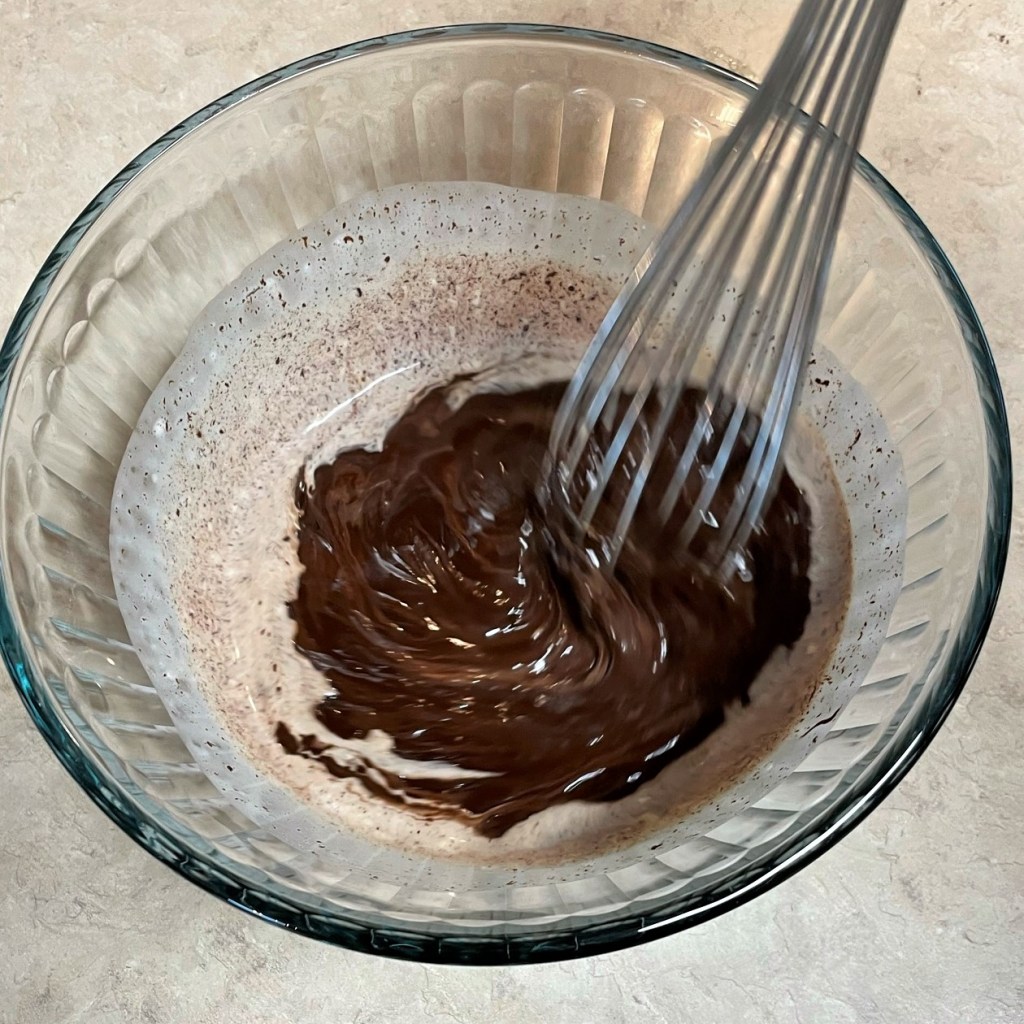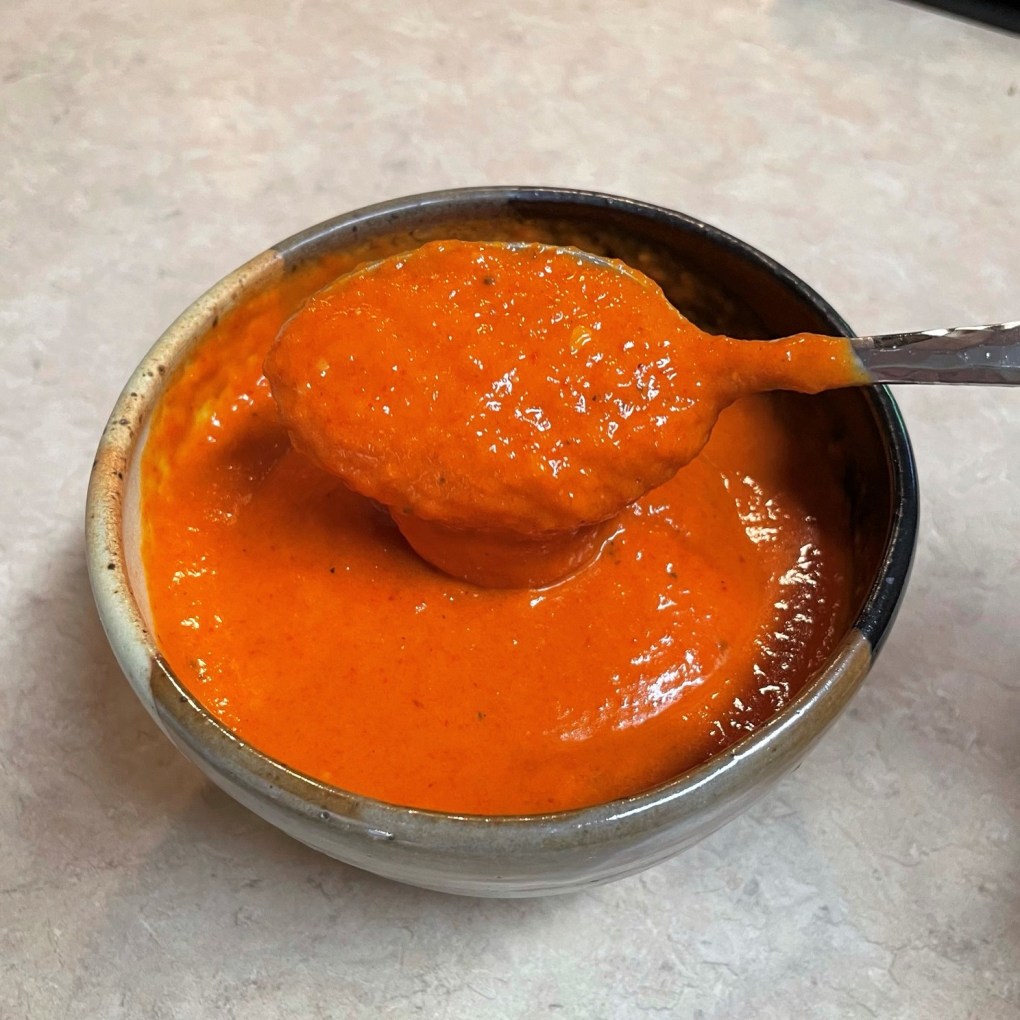
Roasted Red Pepper Sauce

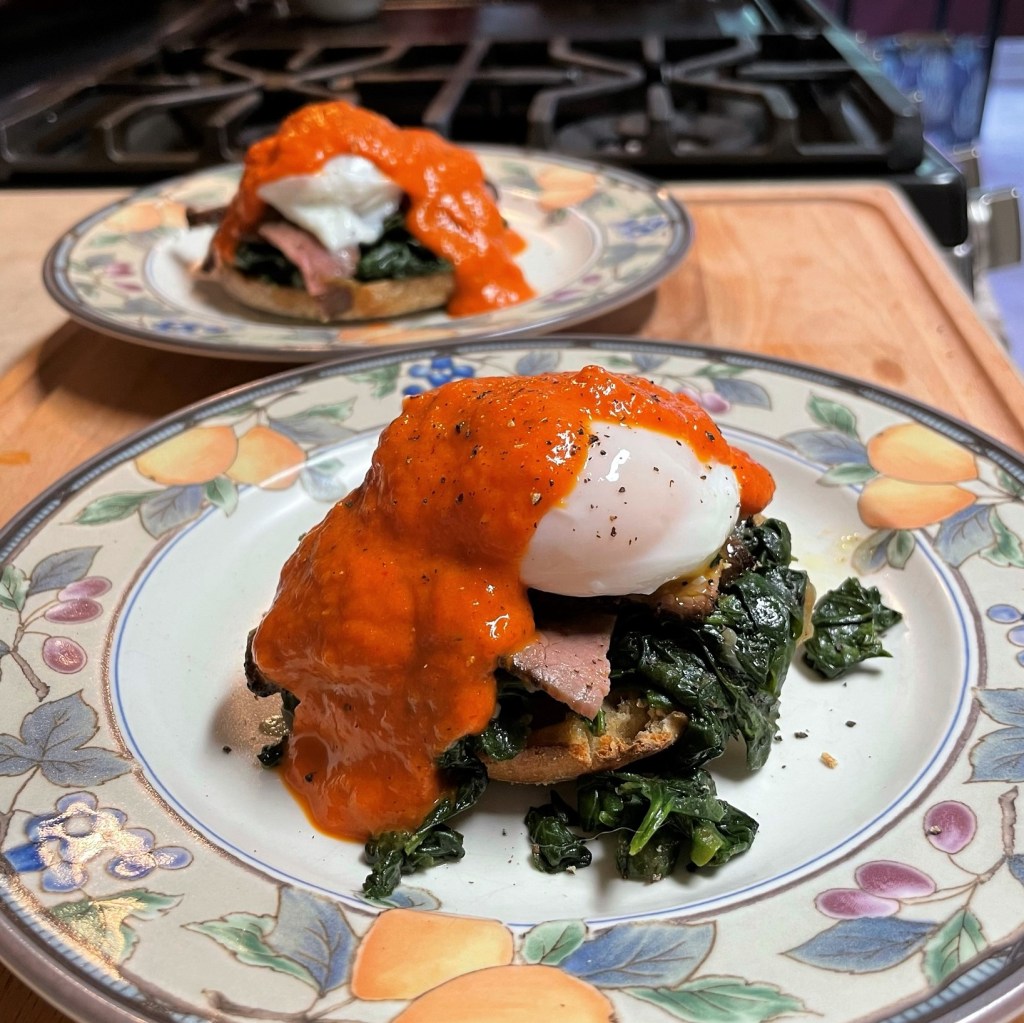
Every now and again, I accidentally cross paths with a recipe that has so many uses I have no choice but to add it to my repertoire. This is one of those sauces, and I can thank my husband, Les, who discovered this one last fall, tucked inside an email he received from New York Times Cooking. The sauce was intended for some kind of “couscous cake,” which sounds interesting for another day, but Les trusted his instinct to believe it a perfect dipping sauce for his spinach ball appetizer recipe, and indeed it was.
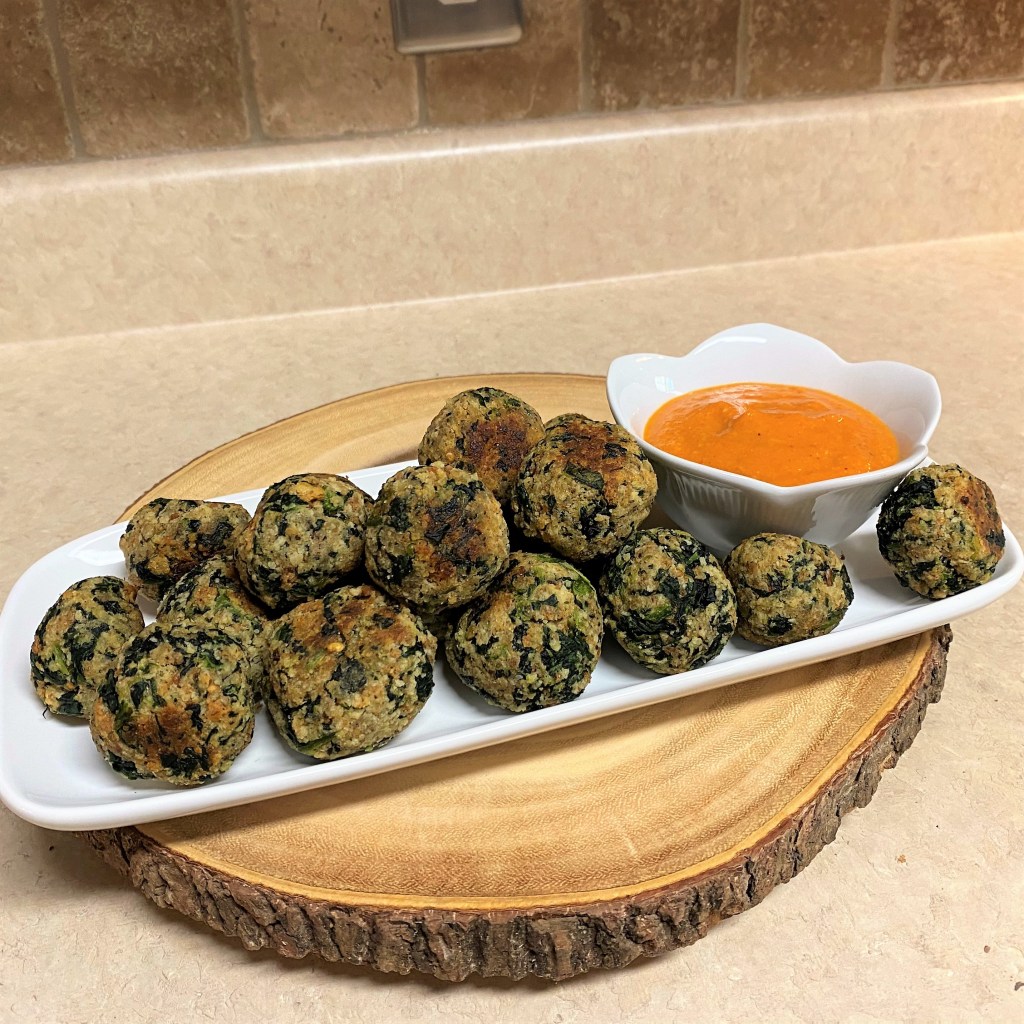
First time making the red pepper sauce to accompany these, and it was fantastic!

As Les and I have repurposed this flavorful sauce for various uses, I have laughed to myself recalling an inside joke from the “Pinch” kitchen, which was how the staff usually referred to A Pinch of Thyme, the catering company where I spent my spare time for about two years. In the Pinch kitchen, it did not matter what kind of sauce you were preparing—it might have been one of the fancy French “mother sauces,” such as a hollandaise or béchamel or velouté, or maybe even a turkey gravy or a cheese fondue—if it was sauce of any type, Chef Rodney had a code word for it: “weez.” I imagined that the moniker might have been adapted from the name of the overly processed spread known as “Cheez Whiz,” but Rodney never confirmed that. It was amusing though, and we all secretly looked forward to the recipes that required creation of a weez, just because it was a funny word to say.

There was such irony in those scenes; while my friend Tammy, the Pinch events manager, was on the phone selling clients on the elegance of a dish such as filet mignon with béarnaise, Rodney was in the kitchen offering instruction for making a “tarragon weez.” He definitely kept things interesting.

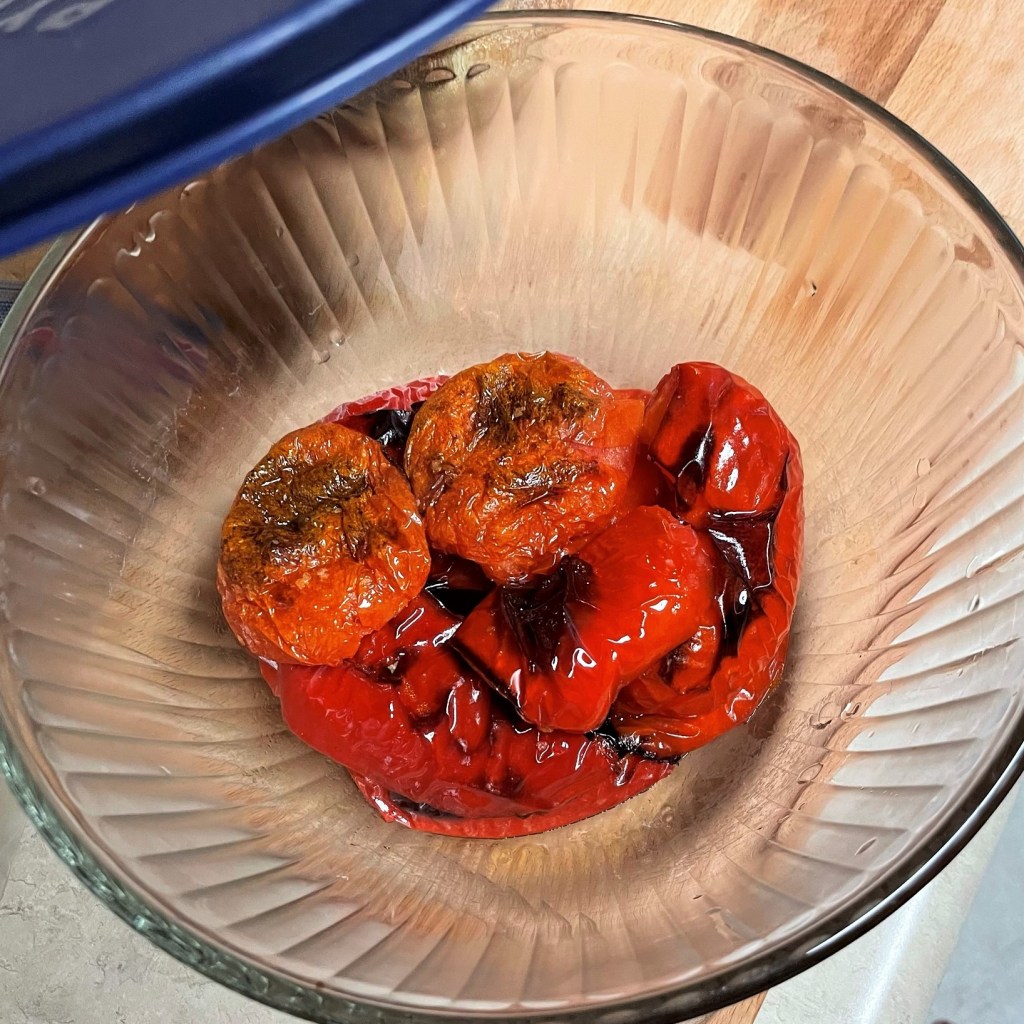
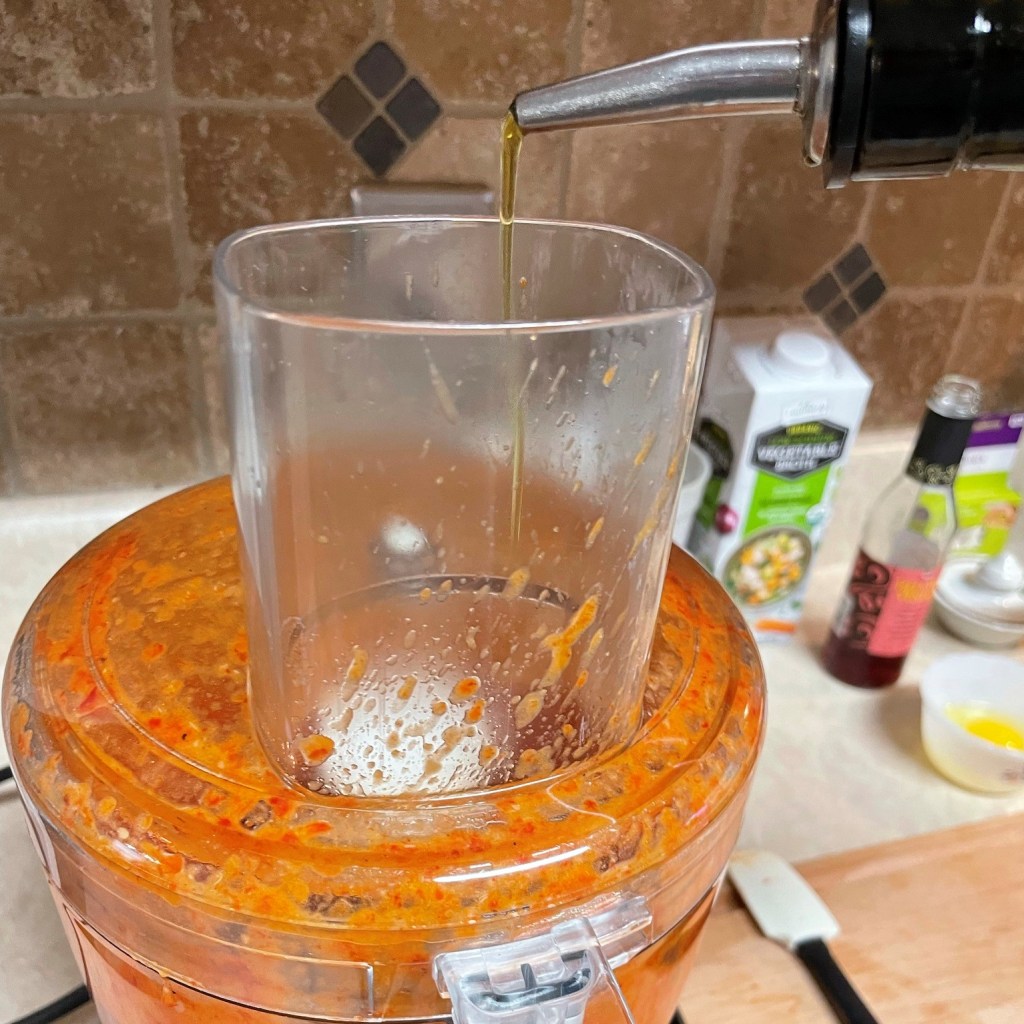
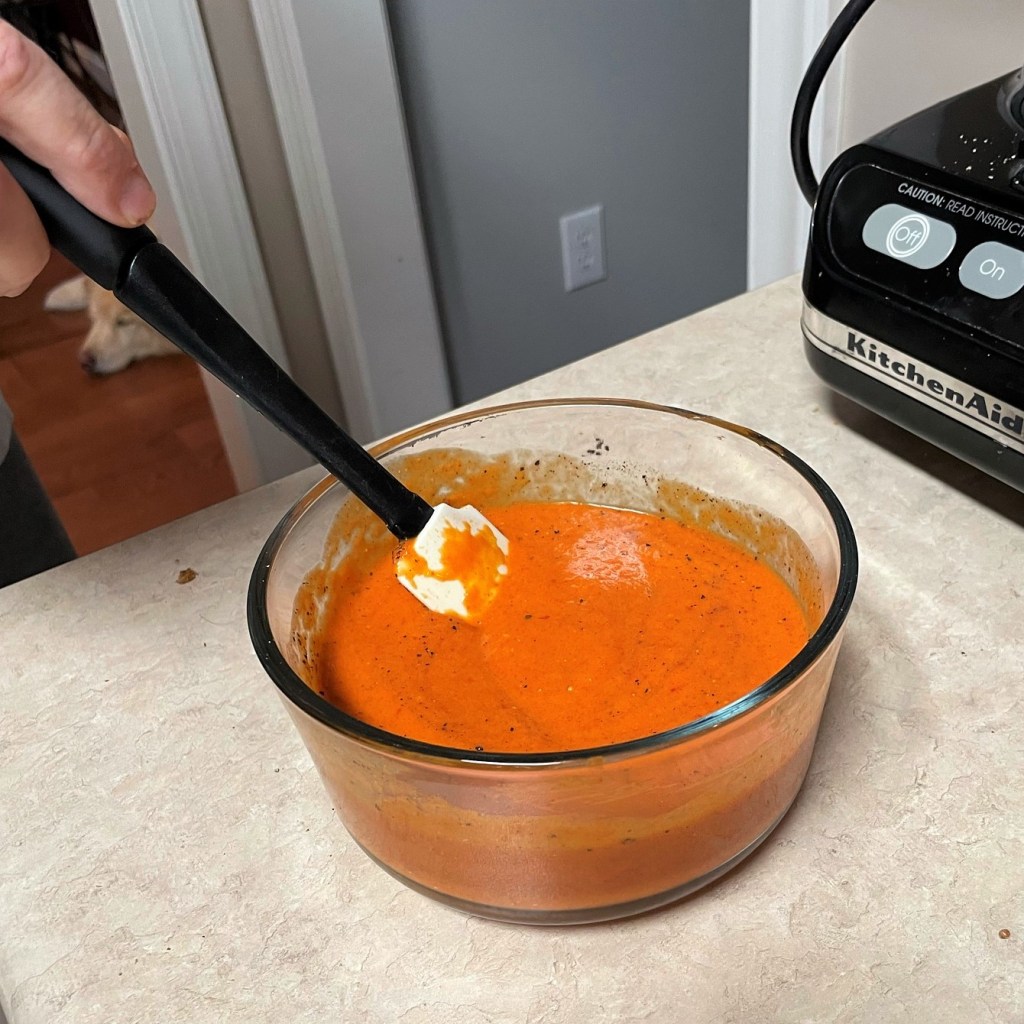
This roasted red pepper weez is simple to make, which is surprising, given its depth of flavor and incredible versatility. The sauce begins in the oven, with the roasting of red bell peppers, a tomato and two whole bulbs of garlic, and it’s finished in the blender, where those ingredients come together with a splash of red wine vinegar, olive oil and the smallest kiss of maple syrup. The result is perfectly balanced and utterly addictive.

Easy, weezy, and delicious! 😊
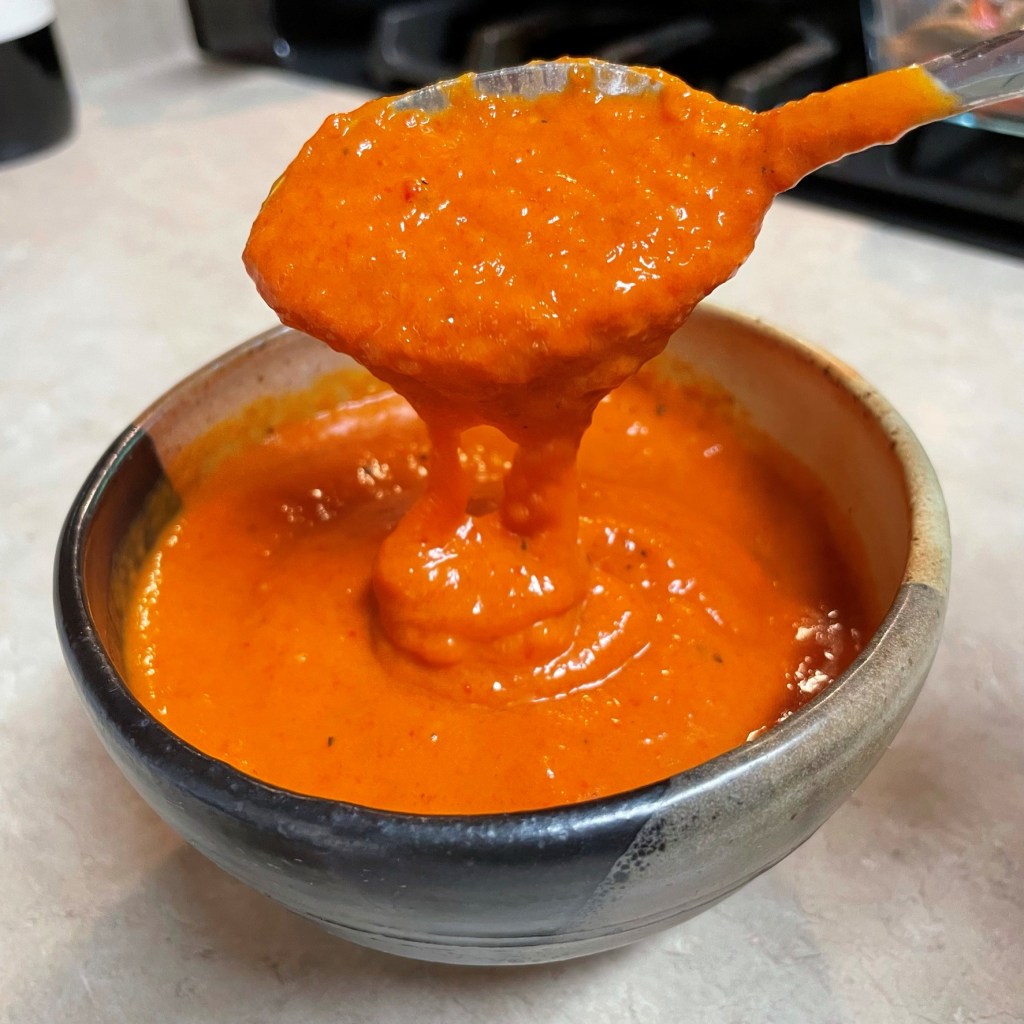
Did I eat some of this yummy sauce straight from the spoon? Maybe. 😉

Adapted from Giant Couscous Cake with Roasted Red Pepper Sauce
Recipe makes about 2 cups

Ingredients

2 medium red bell peppers

1 Roma tomato, halved and seeded

1/4 cup good quality extra virgin olive oil, divided

Kosher salt and freshly ground black pepper

2 bulbs roasted garlic (link to this post for easy DIY instructions)

1 Tbsp. red wine vinegar

1 tsp. real maple syrup (or substitute honey)


 Instructions
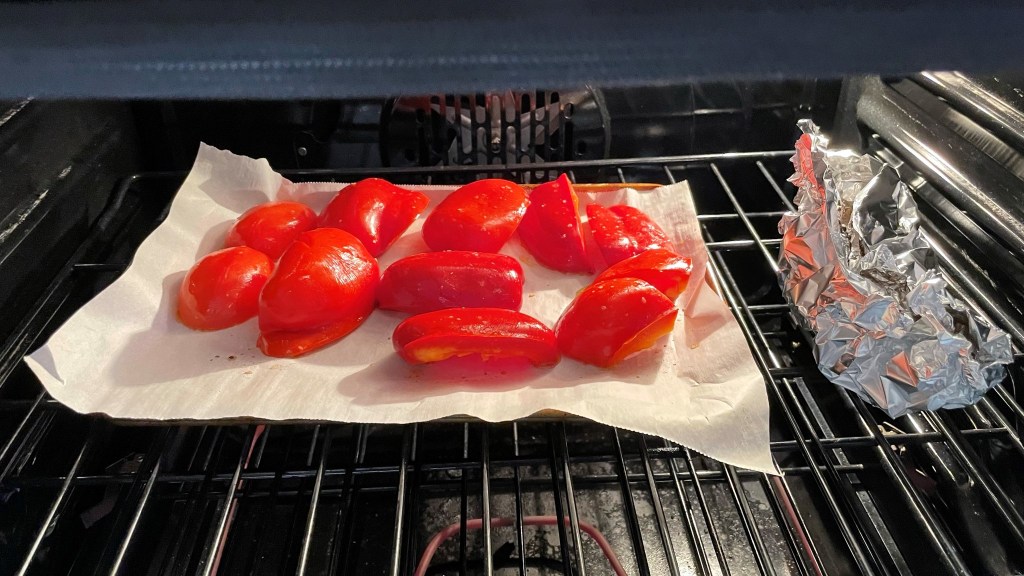
  1. Preheat oven to 425°F, and line a baking sheet with parchment paper.
  2. Cut the bell peppers into segments, along the natural lines of the fruit. Discard the seeds and membranes. Lay the tomato halves and pepper segments, skin side up, on the parchment-lined baking sheet. Brush all pieces with 1 tablespoon of the olive oil. Roast about 40 minutes, until the skins on the peppers are nicely charred.
  3. Transfer the tomatoes and pepper segments to a bowl. Cover the bowl and set it aside for several minutes, giving the skins time to soften for easy release.
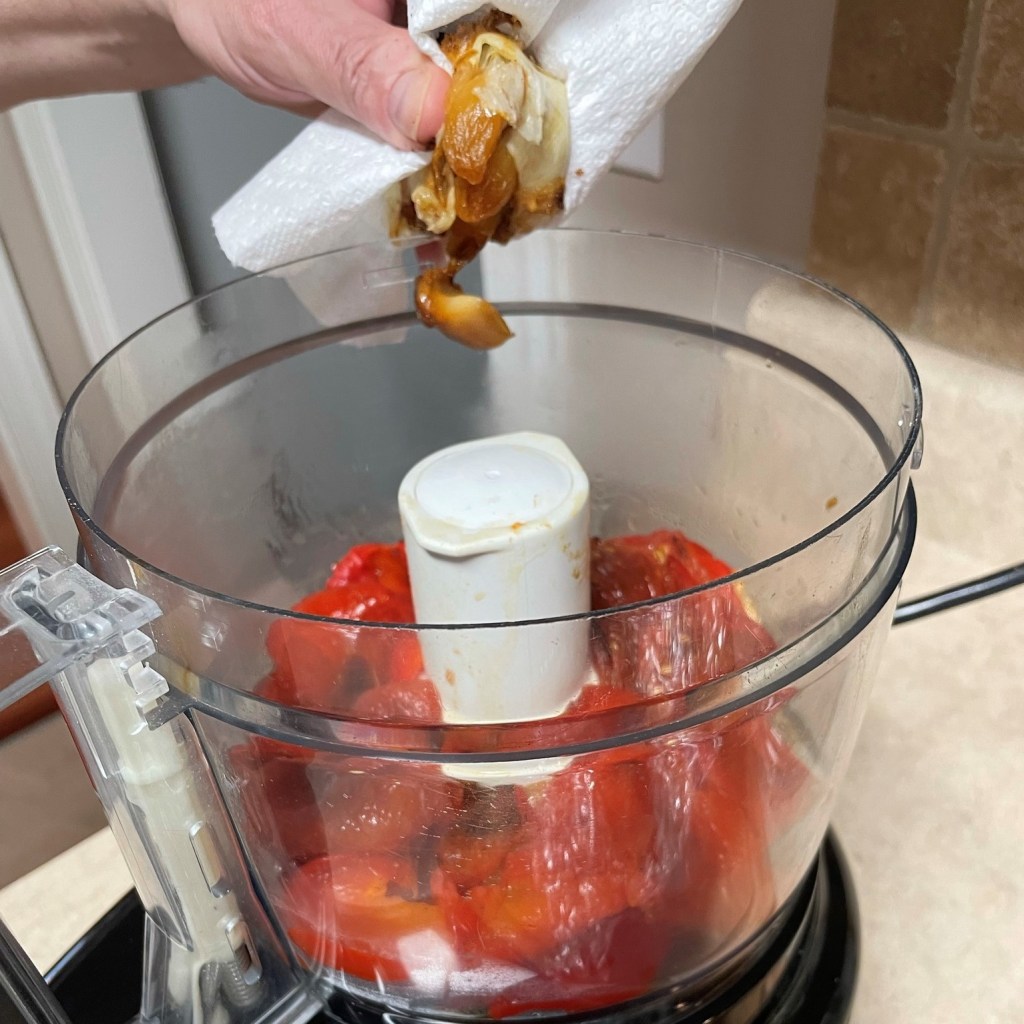
  4. Once cooled, carefully peel the skins off the peppers and tomato halves. Transfer them to a food processor or standard blender. I do not recommend a “smoothie” blender for this step, because you will need to drizzle oil in later. An immersion blender would also work. Pulse a few times to chop the peppers and tomatoes into smaller pieces. Carefully squeeze in both bulbs of roasted garlic.
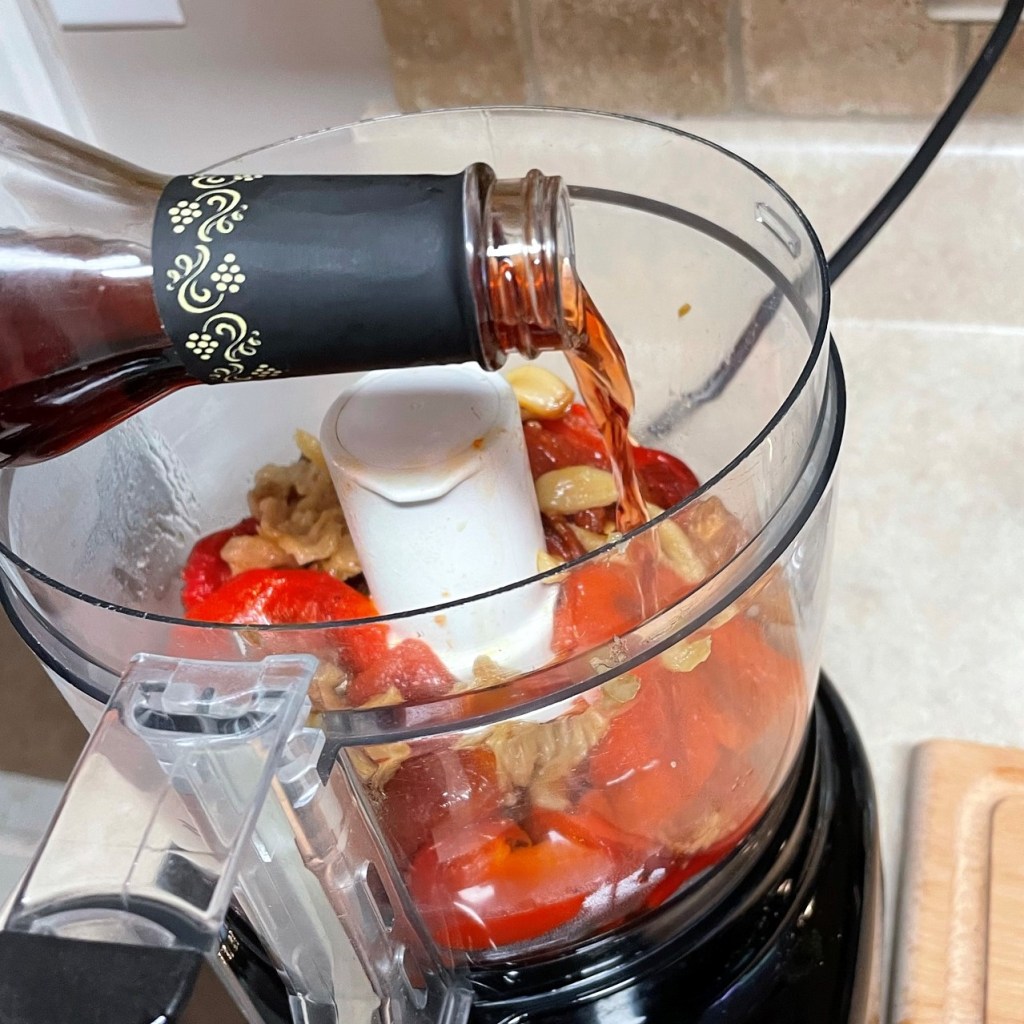
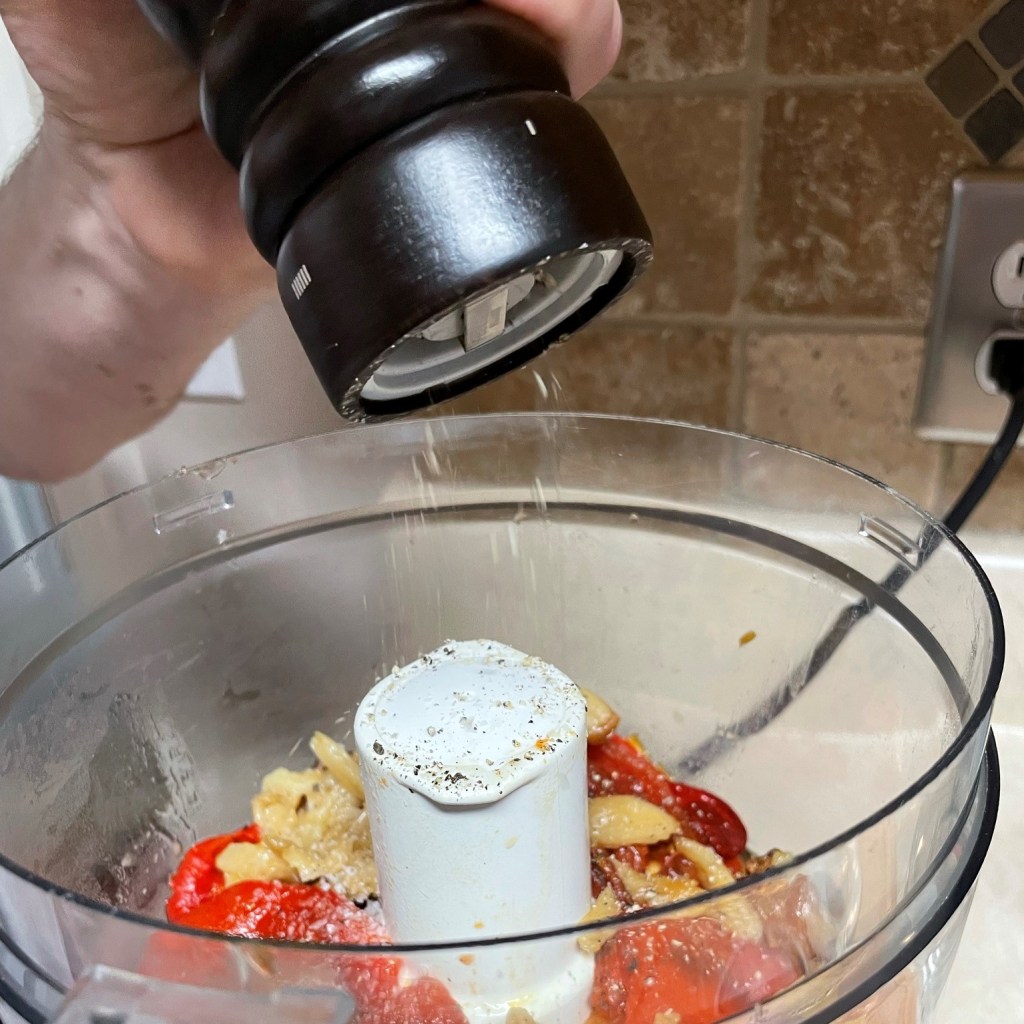
  5. Add the red wine vinegar, salt, pepper and maple syrup. Pulse a few times, then run processor or blender continuously while drizzling in the remaining 3 tablespoons of olive oil. Adjust salt and pepper to taste. Transfer sauce to a jar or bowl.
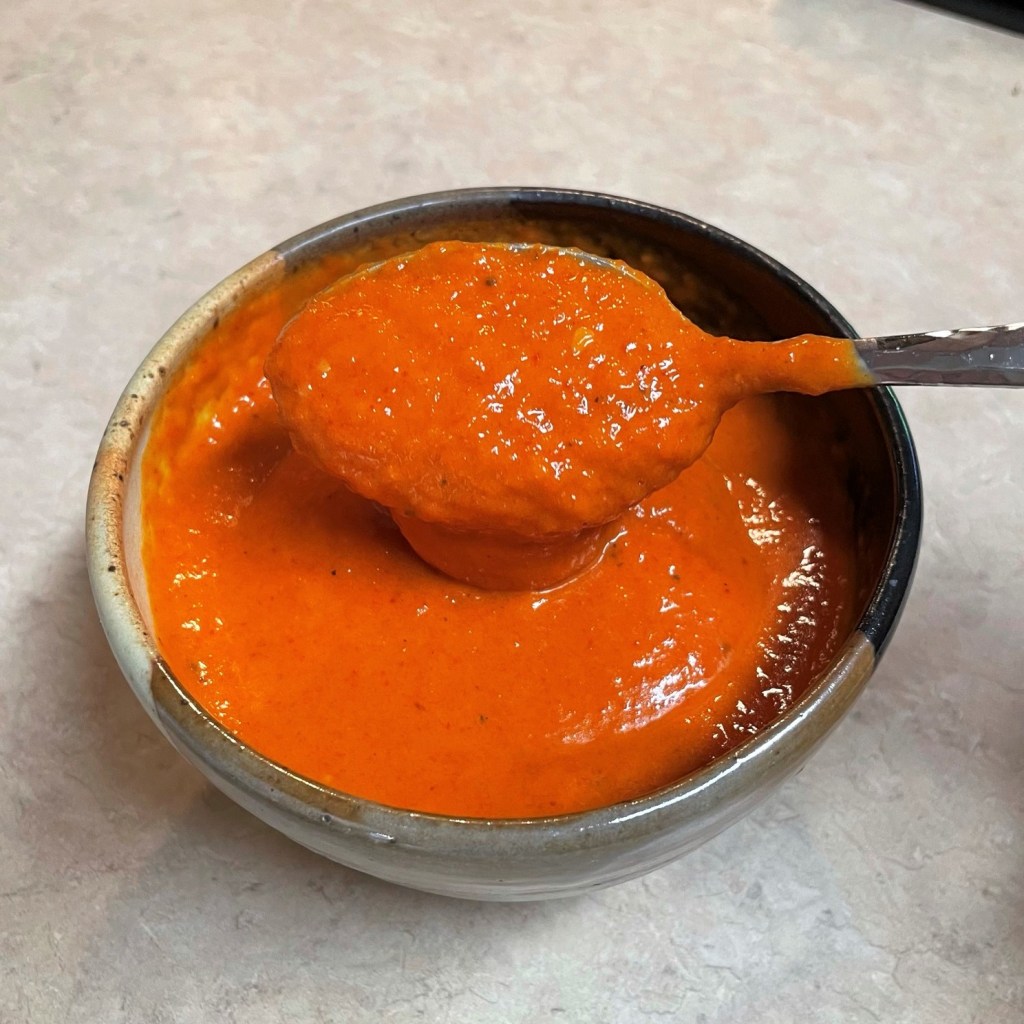

This roasted red pepper sauce has so many easy uses, from appetizers to pasta to pizza and more. It will keep in a jar in the fridge for a couple of weeks, though we have not been able to make it last that long at our house. Next time, we will make a double batch!


Handmade Corn Tortillas

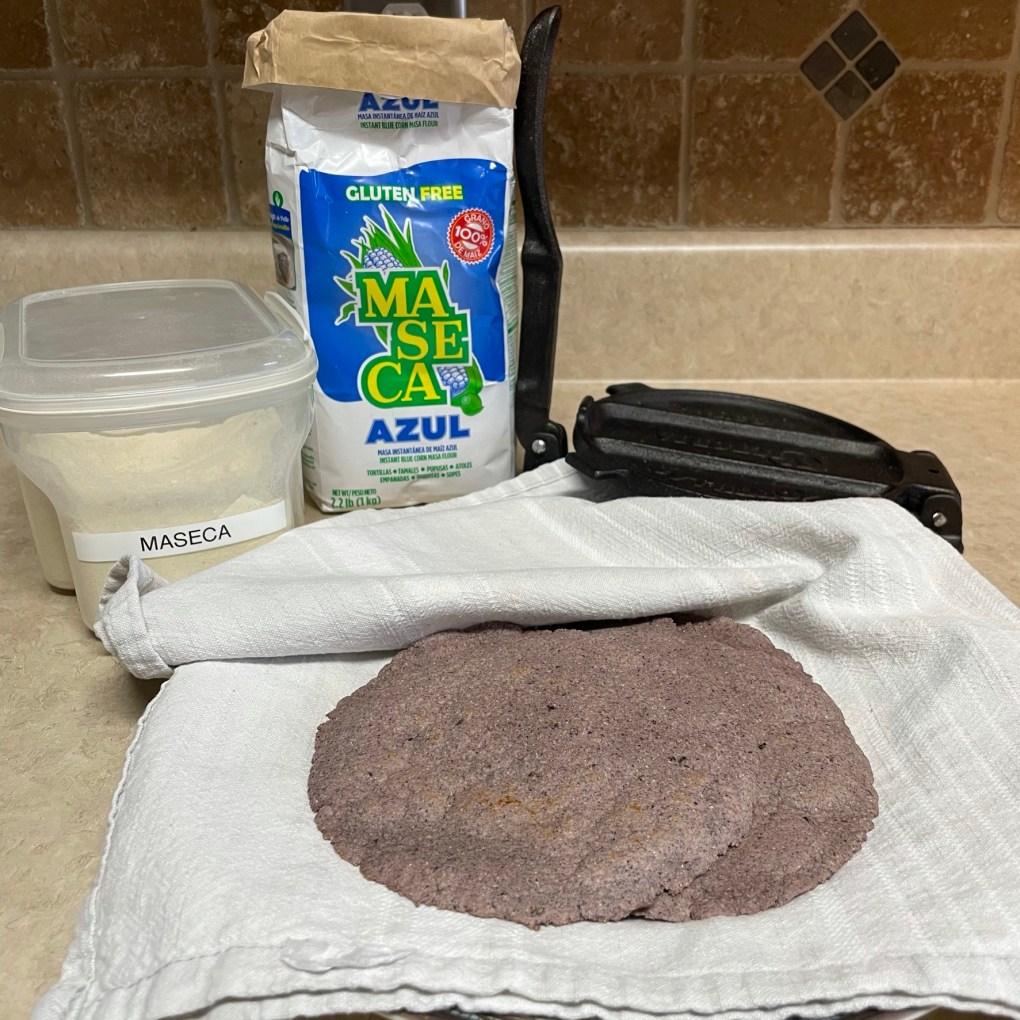
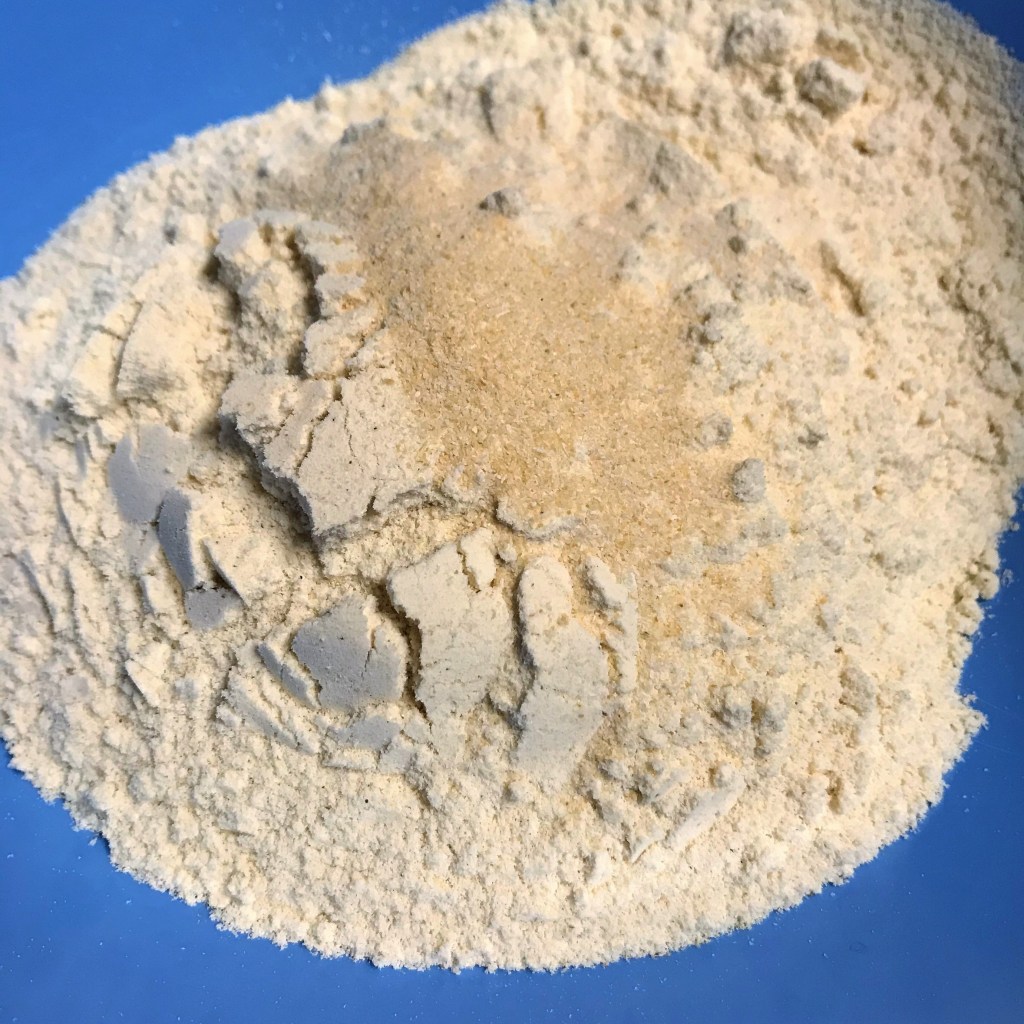
There are plenty of things I don’t buy pre-made anymore—bread, salad dressing, pizza dough, ice cream, pasta—but corn tortillas are among the simplest, and the flavor is far superior to the ones I find in the supermarket. Even the “authentic” corn tortillas at the grocery are mass-produced with all kinds of processed ingredients, conditioners, preservatives and heaven knows what else. When you make them from scratch, you only need two ingredients—masa harina, which is finely ground corn that has been alkalized with lime (the mineral, not the citrus), and water. The dough rests for a short time, then it is rolled into balls and flattened into discs. Cook them on a hot griddle or cast-iron skillet, and you’ll enjoy tortillas that will make you skip store bought forever.

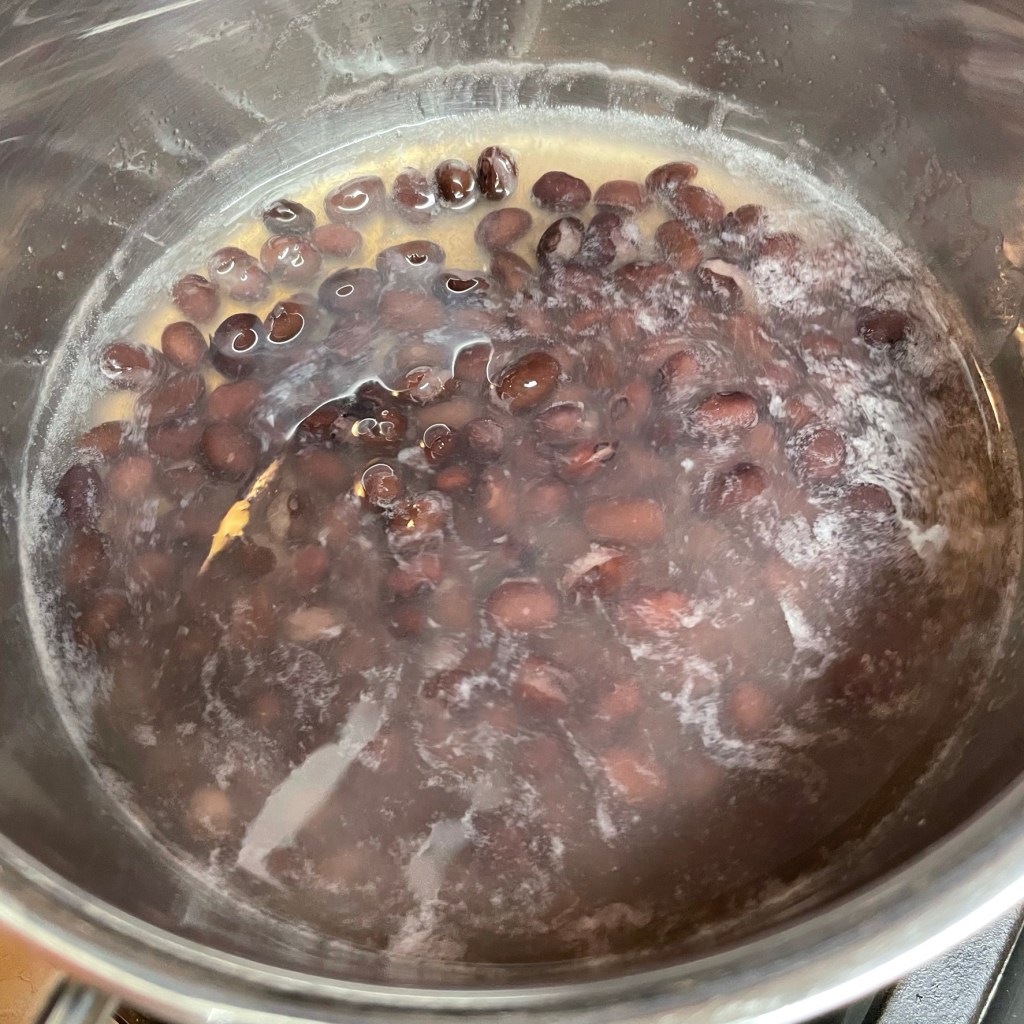
Flavoring the tortillas is simple, also. I like to put a couple of shakes of onion powder into a basic batch, for a quick little savory “something.” But if you want more noticeable flavor—spinach, for example—simply puree a small amount of cooked spinach with some water and measure it out in the same measurement as water in the recipe. You could do the same with cilantro, pumpkin, garlic, tomato or black beans. If you can imagine it, you can make it. Experimenting in the kitchen has resulted in some of my favorite foods!

I use a tortilla press to create the perfect round shape, but you can also use the flat bottom of a large glass bowl to do this. Once cooked, the tortillas can be used for soft tacos or enchiladas, fried crisp for hard-shell tacos or tostadas (one of my faves), or cut into wedges and fried to become homemade tortilla chips, perfect for dips and salsas.

Making tortillas can be a little challenging at first. The ratio of ingredients is printed on the masa flour bag, but your technique can only be developed with practice. See my tips for success at the end of the instructions. No reason you should go through all the frustrating mistakes I’ve made. One of these days, I’ll make a list of all the cuss words I’ve made up in the kitchen. 😊


Ingredients for Basic Tortillas

1 cup masa harina (I like Maseca brand, white, yellow or blue)

2/3 cup very warm water (or 50/50 mix of water and puree of choice)

A pinch of kosher salt


Instructions

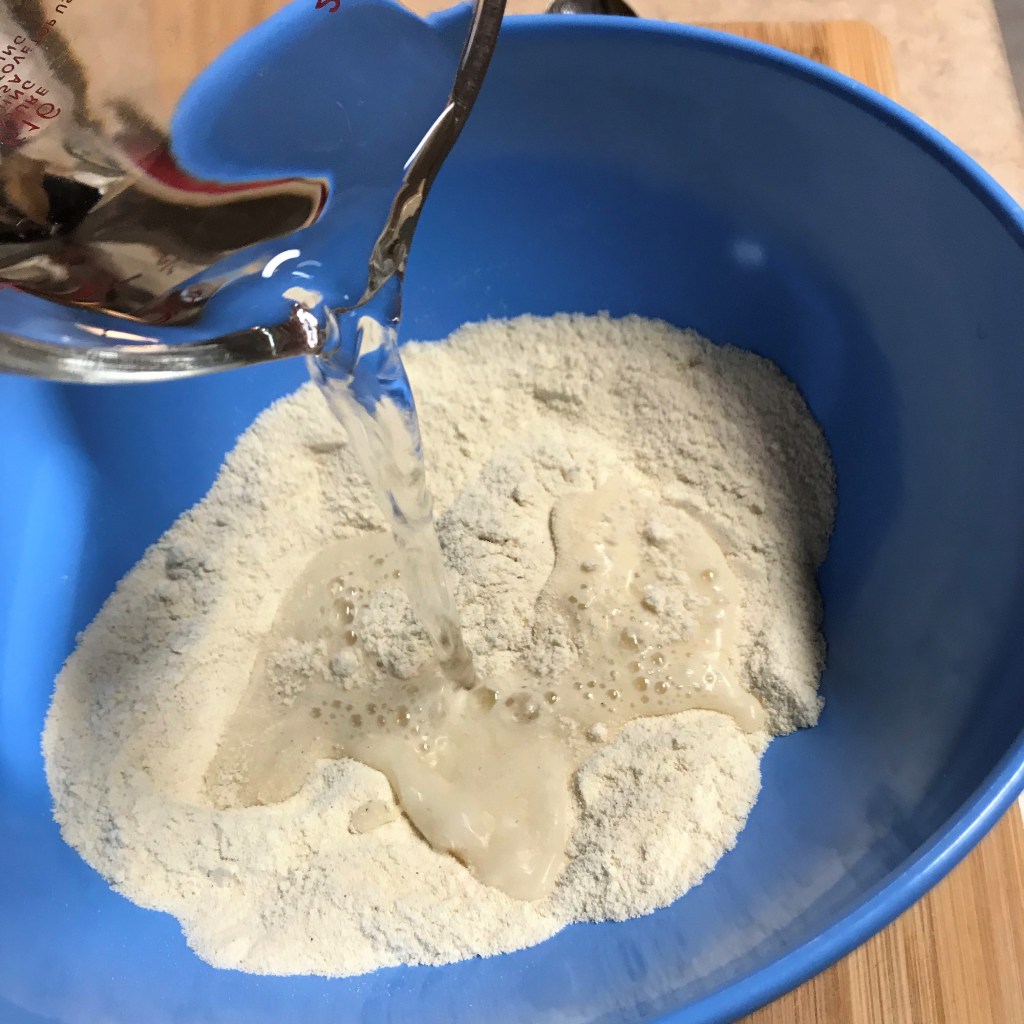
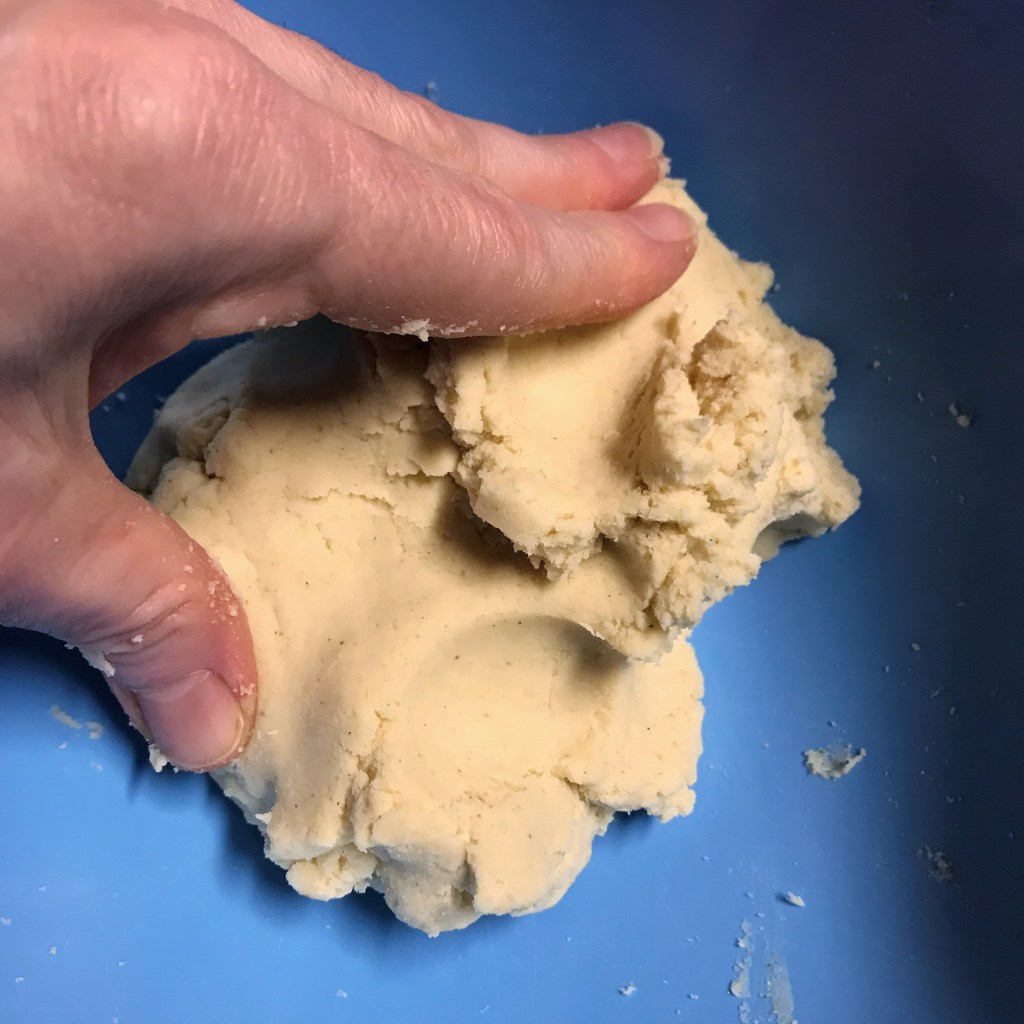
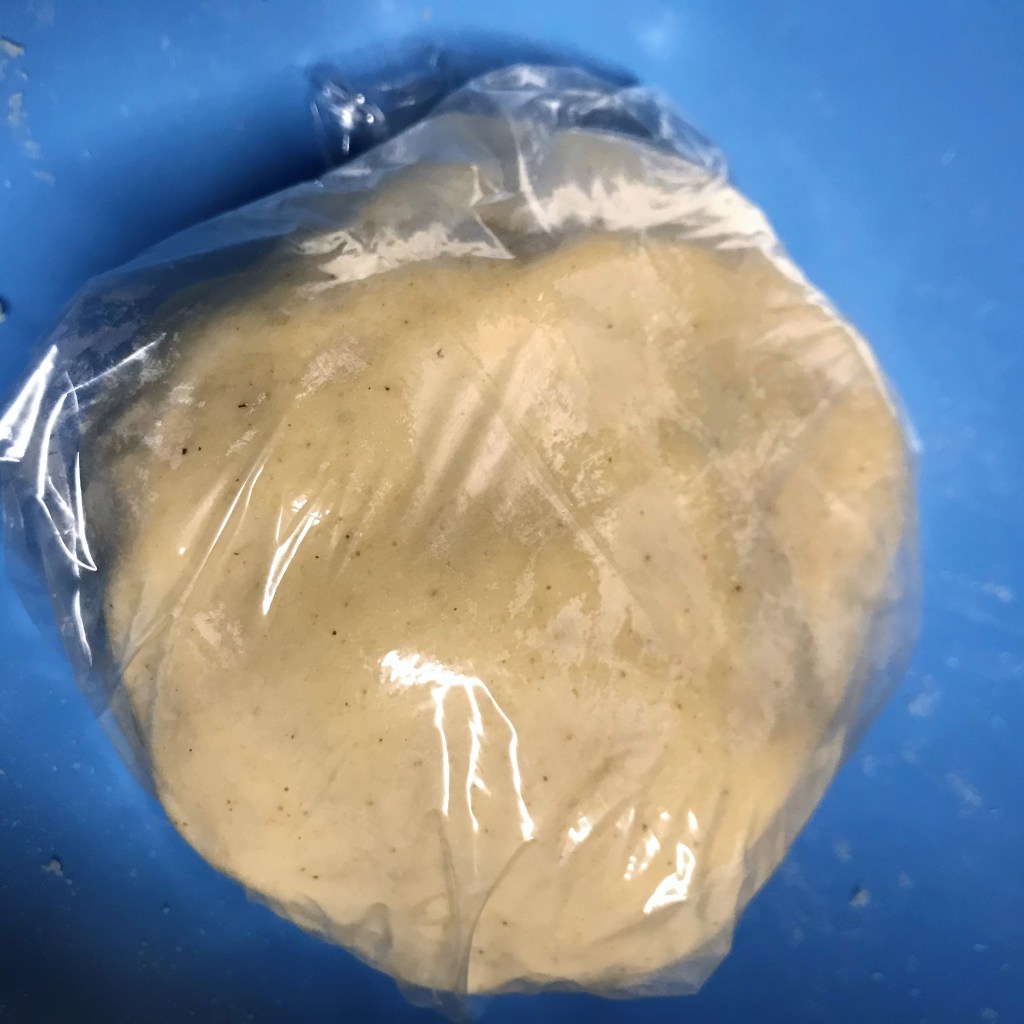
  1. Combine all ingredients in a bowl and stir until liquid is absorbed. Knead the dough ball a few times until mixture is smooth, soft and uniform in texture. Cover the dough ball snugly with plastic wrap and allow it to rest at least 20 minutes.
  2. Preheat a cast-iron skillet or griddle over medium-high heat, about 375° F.
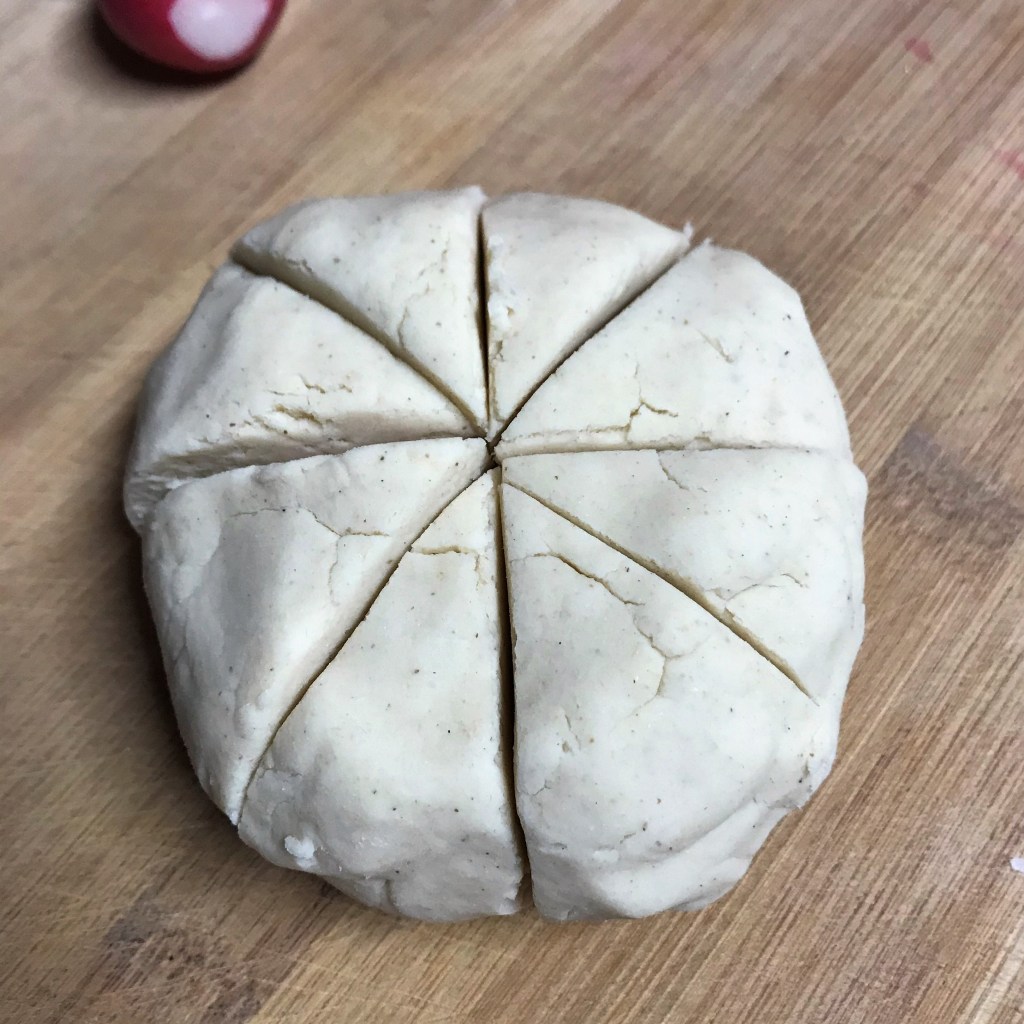
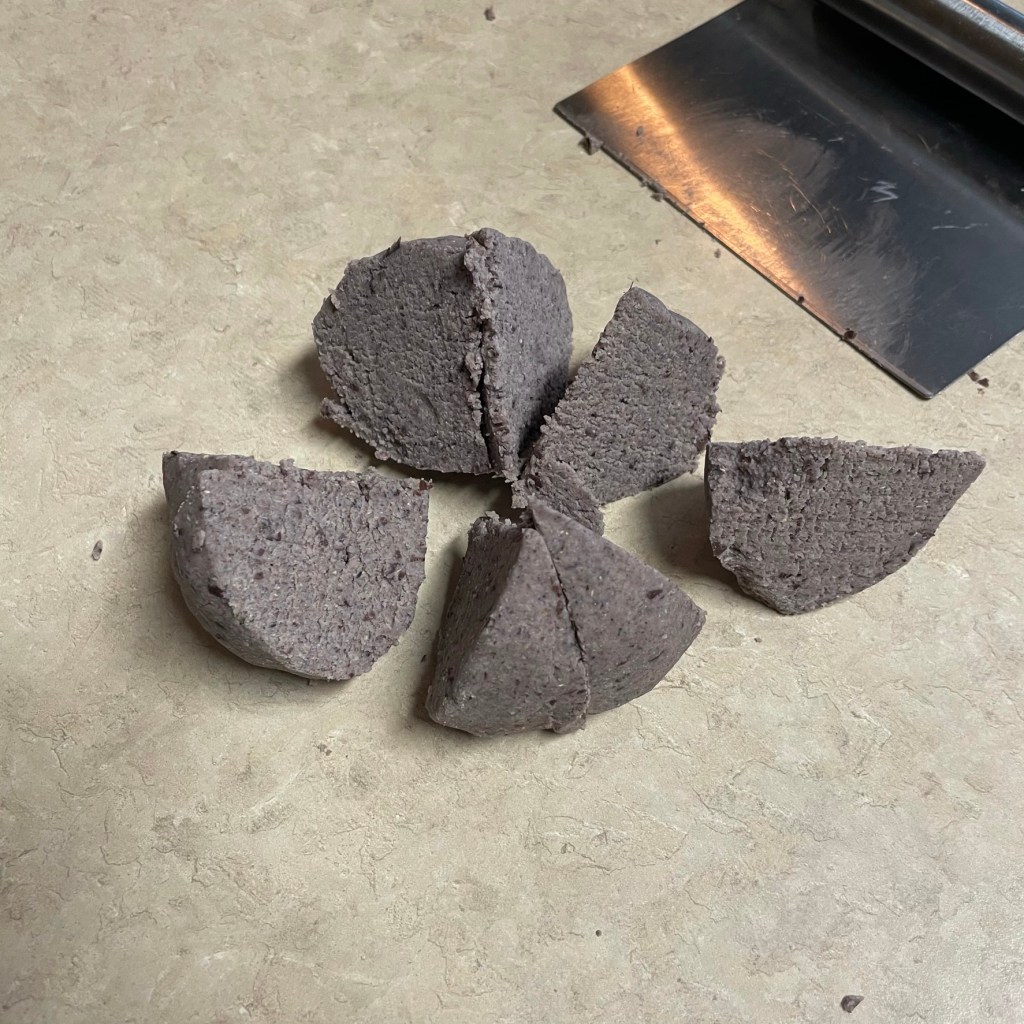
  3. Divide masa dough into 8 equal pieces, then roll each piece into a smooth ball. Keep the dough balls covered to prevent drying out as you shape and press them into flat tortillas.
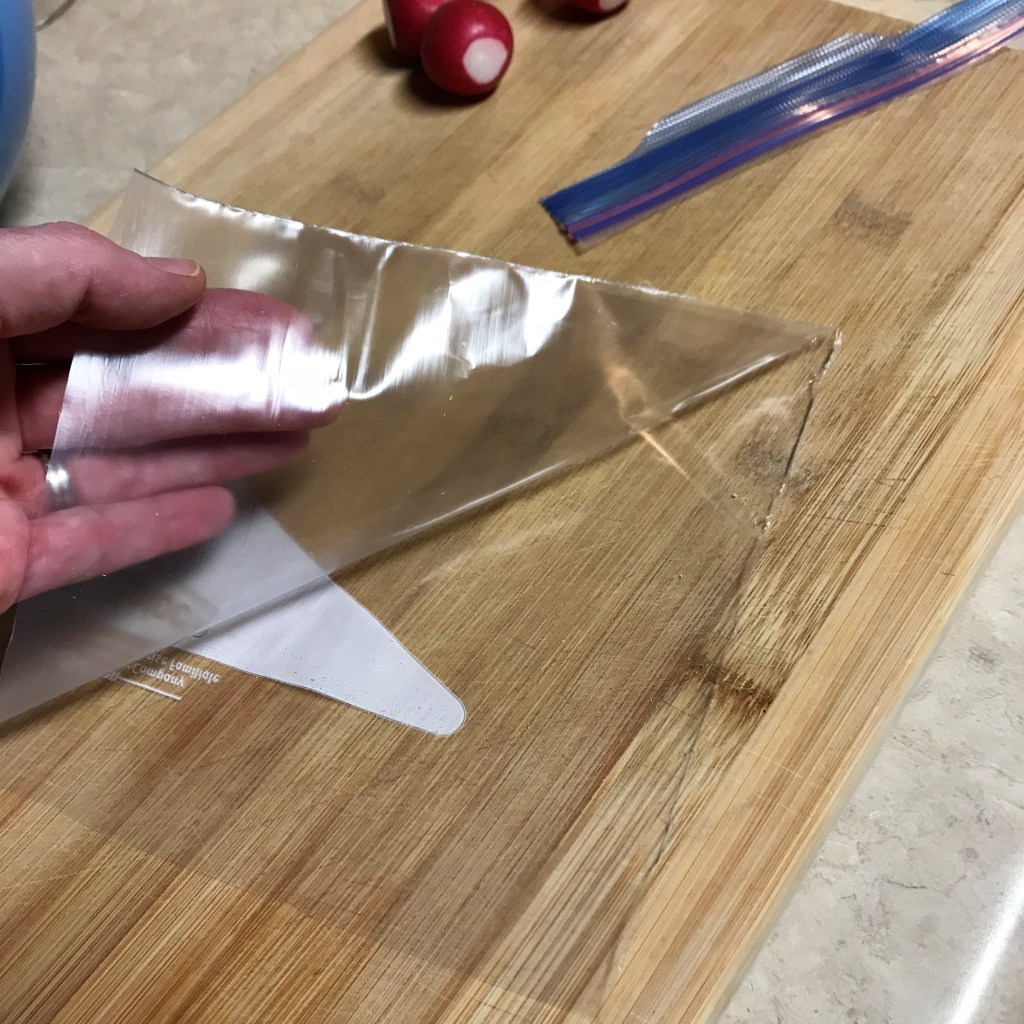
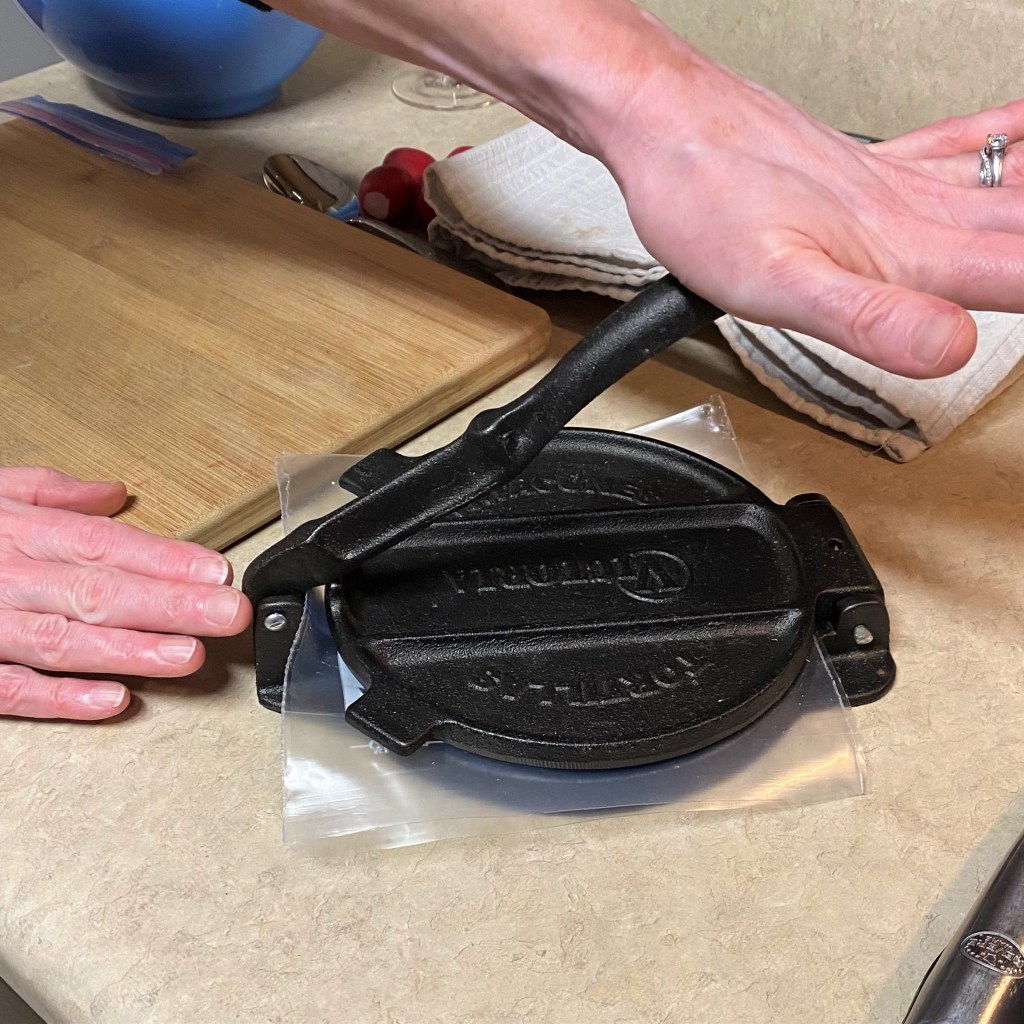
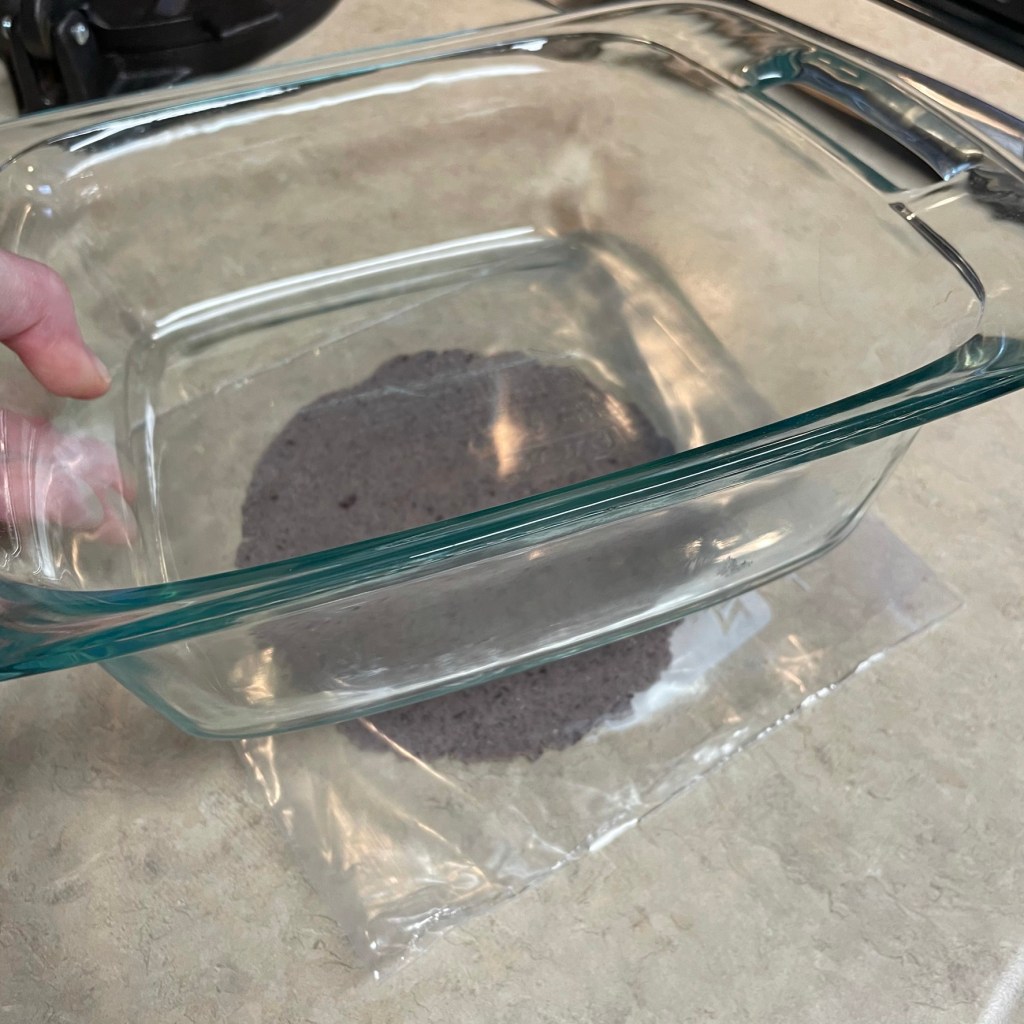
  4. Place a dough ball between two squares of plastic wrap, or cut apart a zip-top bag. The thicker plastic gives better results. Use the tortilla press to slowly flatten the dough to a disc that is about 5 to 6 inches across. Alternatively, press the flat bottom of a clear glass bowl evenly over the surface of the dough ball until the tortilla is about 5 to 6 inches across.
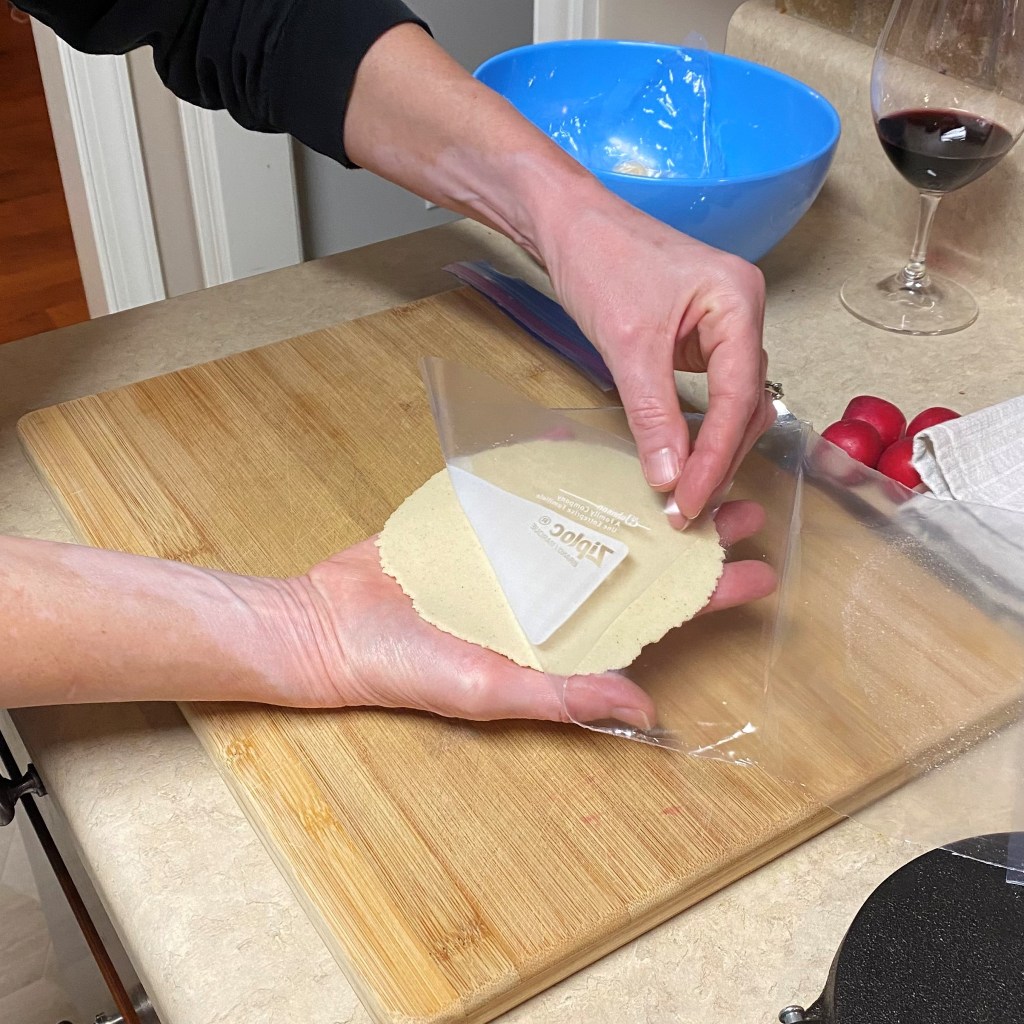
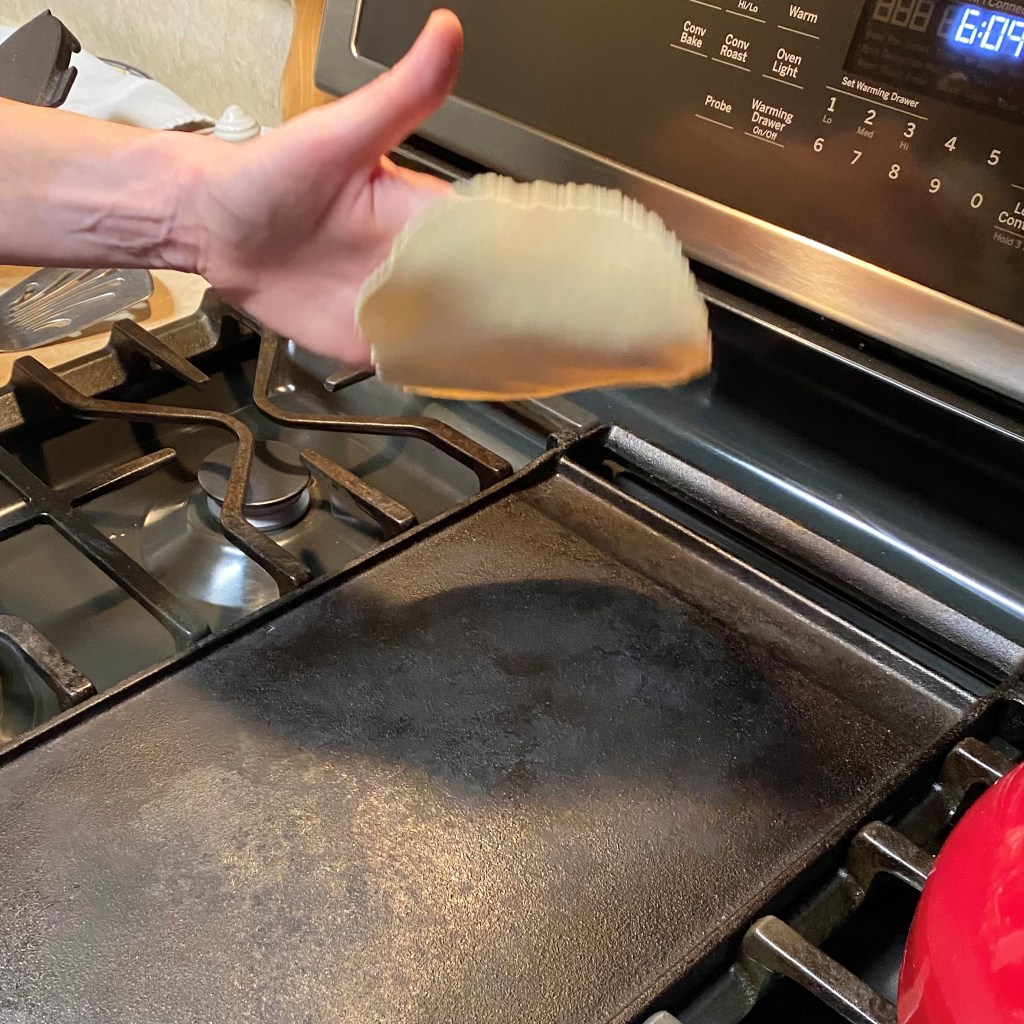
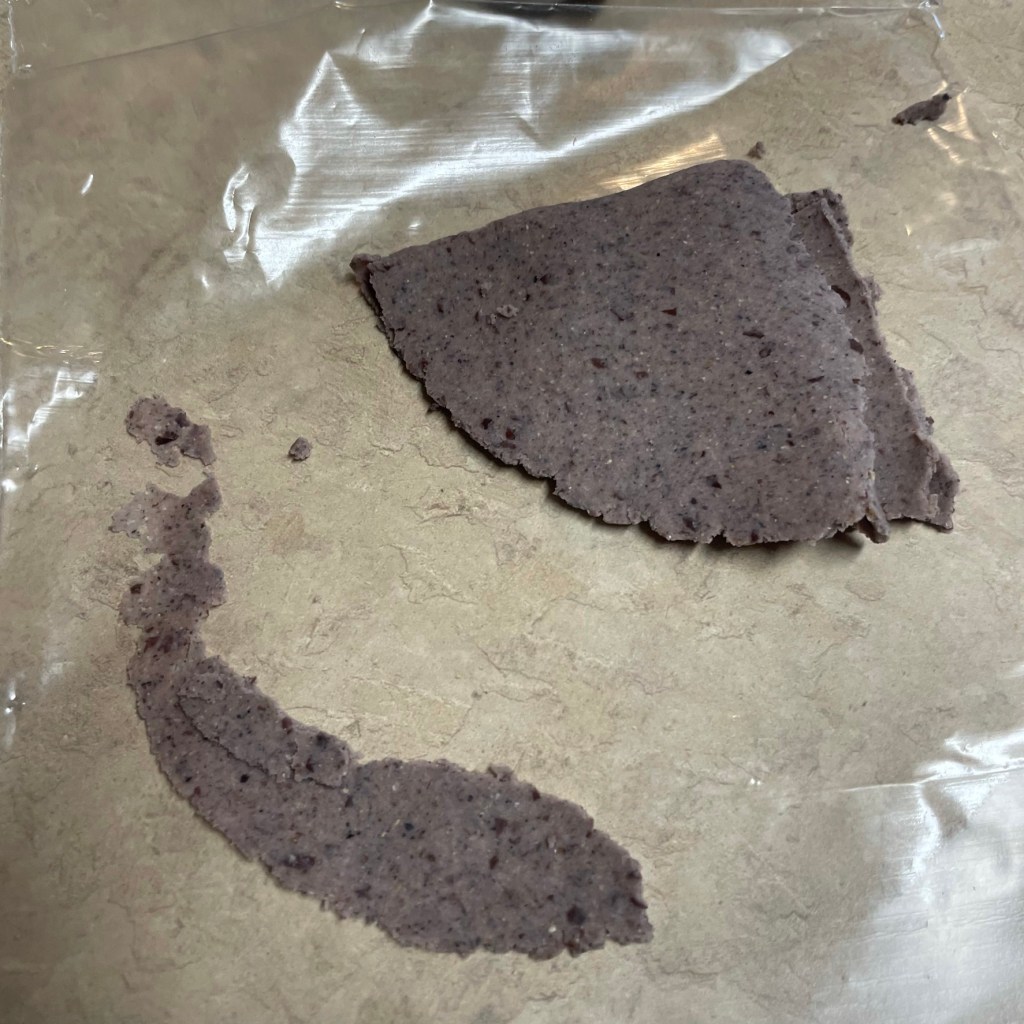
  5. Carefully peel one side of the plastic away from the tortilla, then turn the tortilla out into your hand and peel away the second piece of plastic. Be prepared to ruin a few, but don’t panic if you do (see Tips below)!
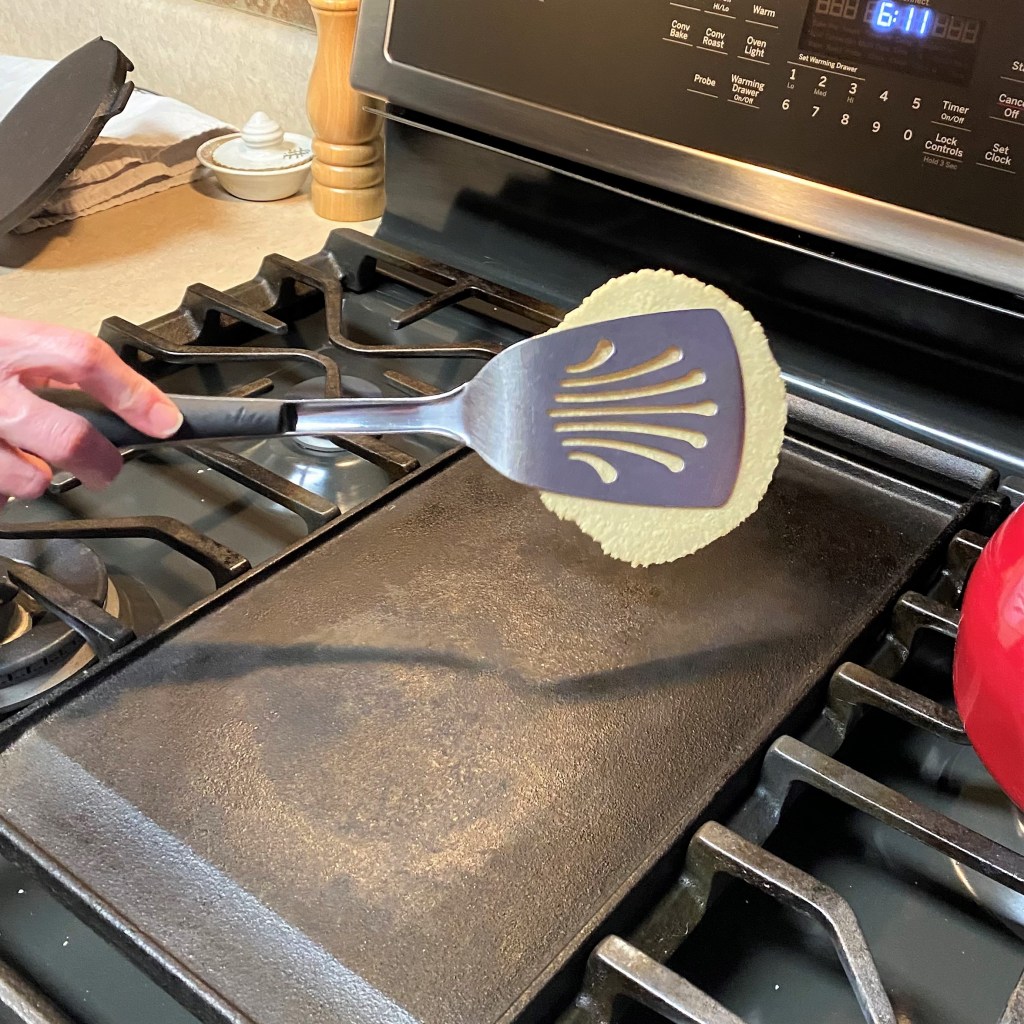
  6. Turn the tortilla onto the preheated griddle and cook the first side 60 to 90 seconds, until the edges look dry and steam is emerging from underneath. Use a spatula to flip the tortilla over and cook the second side about 60 seconds.
  7. Transfer the hot tortilla to a plate lined with a clean kitchen towel and fold the towel over to keep them warm as you finish the remaining tortillas.


If you love corn tortillas and want to make them at home more regularly, I recommend investment in a tortilla press because it makes it so simple. I picked mine up in a specialty market that carries a wide array of foods and products for Mexican cuisine, and you can easily find them online, too. But what if you’re jonesing to make them right now? Here’s one easy way to do it, using a flat-bottomed glass dish as your “press.” For this batch, I used the blue corn masa harina, and I demonstrate how to incorporate another ingredient: black beans!


Once you get the hang of it, you’re good to go!

Tips for Success

Follow the same guidelines for measuring the masa harina as I offer for measuring flour—fluff it up, sprinkle over the measuring cup to overflowing, and then level it off. If you dig a measuring cup directly into the masa bag, you’ll end up with too much and the dough will be dry. The masa should be soft and loose in the measuring cup, not packed tight.

Use warm water, not cold, to mix with the masa flour. I’ve found that the warm water is more easily absorbed and helps to create better dough. Knead the dough until it is soft and smooth, which is usually only a minute or two, though longer kneading will not cause any harm.

Don’t skip the rest time after mixing the masa. This gives enough time for the masa to hydrate fully. If you rush this step, you may find the dough crumbly or sticky (or both) during pressing.

When you roll the dough into balls, it should hold together easily without sticking to your hands, and only showing slight cracks. Trust your instinct; if it feels too dry, wet your hands and knead a few more times. If it’s sticky, lightly dust it with additional masa flour, then knead and rest it again.

I have found a modified zip-top bag more useful than plastic wrap for pressing the tortillas. Use a freezer bag if possible, as it is thicker than a sandwich bag. Cut off the zipper top entirely, and cut down the sides, leaving only the bottom of the bag attached.

Shape the sections of dough into balls all at once, and then place one dough ball inside the zip top bag layers. Keep the other dough balls covered with a damp paper towel or plastic wrap so they don’t dry out. When placing the dough ball in the tortilla press, arrange it slightly off center toward the hinge side. Close the press and use the lever to apply gentle pressure. If the tortilla is noticeably thinner on one edge, turn it and gently press again to even it out. Until you get used to this process, it may help to make slightly thicker tortillas. If you are using a flat-bottomed dish to press them, press your hands on it in a rocking motion all the way around until the tortilla is about 5 inches across. It’s helpful to have a clear dish so you can see the progress.

Focus on peeling the plastic away from the dough, not the other way around, and accept that you may find the first few tries unsuccessful. Hold the plastic bag flat in one hand, and use the other hand to peel, keeping the plastic at a sharp angle to the tortilla. Don’t peel straight up or the tortilla will tear. If the tortilla falls apart, just scrape it into a ball and try again. There is no gluten in corn tortillas, so they will not get tough from extra handling. If the dough feels dry after a few failed attempts, wet your hands and knead it a bit.

The initial cooking of the tortillas should be on a dry skillet or pancake griddle. If you want to fry them later to suit a dish you are making, that will be a separate process. Think of it as a form of bread, which must be baked before it can be toasted or grilled.

Give your griddle or cast-iron skillet enough time to pre-heat, and plan to let your first tortilla be a test. It may take some practice to get the right temperature on your stove or griddle. Be ready to flip them when they look “right,” not by the clock, but aim for somewhere between 60 and 90 seconds.

Have a plate ready, lined with a clean kitchen towel. You’ll want to keep the freshly cooked tortillas wrapped as you complete the rest of the batch—for warmth and also for softness.

If you decide to use pureed vegetables to make flavored tortillas, start with a liquid mixture that is at least 50% water. Pureed vegetables such as spinach or pumpkin are wet, but there is also fiber in them that may change the consistency of the masa. I recommend making basic tortillas a few times to get used to it. As you gain experience making them, you will instinctively know what the dough should feel like, and how to best adjust ratios of other ingredients to produce fun colors and flavors. Here are a few of my favorites: spinach, black bean, pumpkin, cilantro, roasted garlic.


Roasted Pork Loin with Gingered Rhubarb Chutney

I had all but given up hope on finding more rhubarb this spring, after my earlier, monthlong, city-wide search that resulted in my first few stalks of this tart, springtime treasure. But my sweet-toothed husband, Les, made a bold announcement after his first taste of the Rhubarb-Berry Crunch dessert—“OK, I like rhubarb,” so the hunt was on for more. I lucked out, at the same store I had found it before, and I bought the last of what they had. As with any rare find, I have been trying to ration my rhubarb stash to enjoy it in as many forms as possible, and I have a few more ideas brewing in the back of my mind that I’ll spring on you soon.

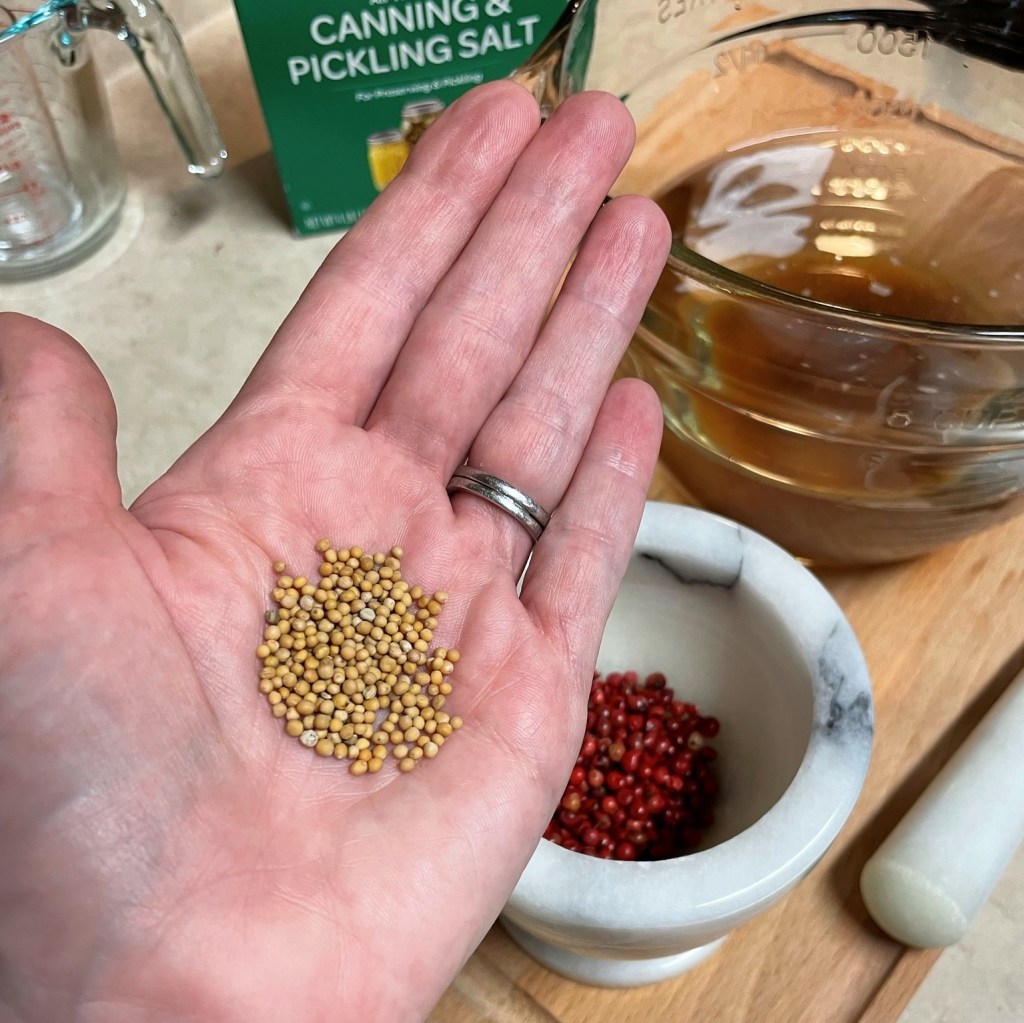
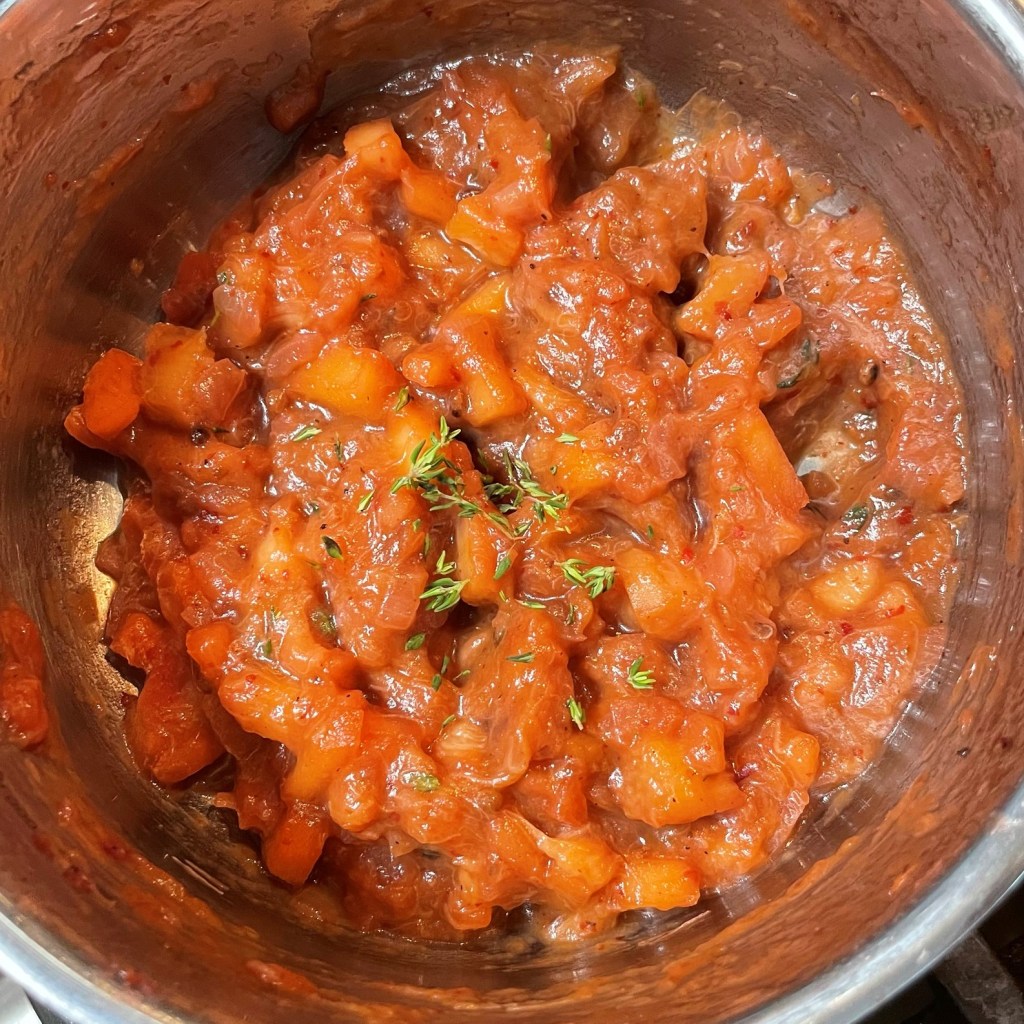
The ginger addition to the rhubarb filling in the crunch dessert was so delicious; I wanted to pair the flavors again in a sweet-meets-savory chutney for pork roast. A smart lesson I learned in my part-time catering years was the easy trick of “echoing” flavors across various dishes in a meal, and I put that idea fully to work here, giving the chutney a shout out with complementary flavors in both the brine and dry rub. I incorporated cardamom, star anise, more ginger and one colorful ingredient I purchased recently from the gourmet kitchen section of TJ Maxx:

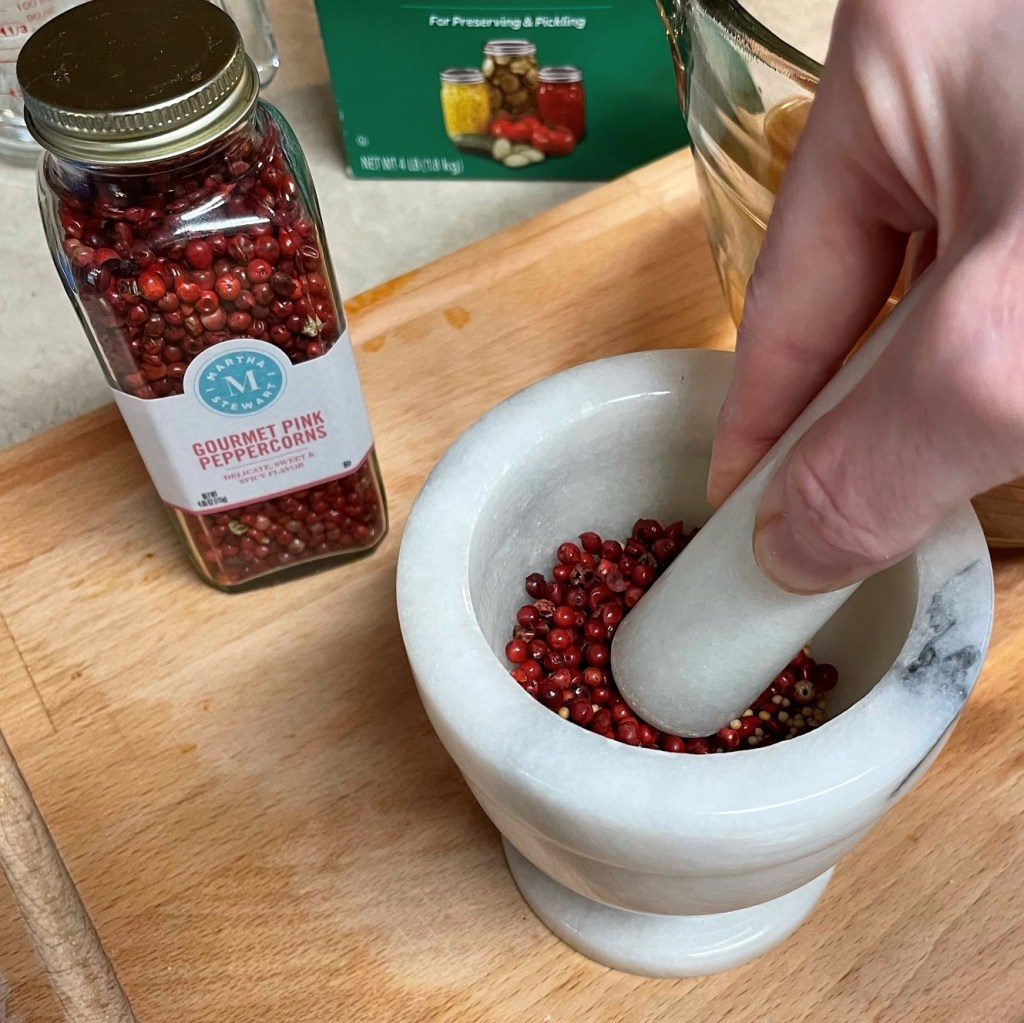
These pretty little dried berries are not related to black peppercorns, and they are very easy to crush.

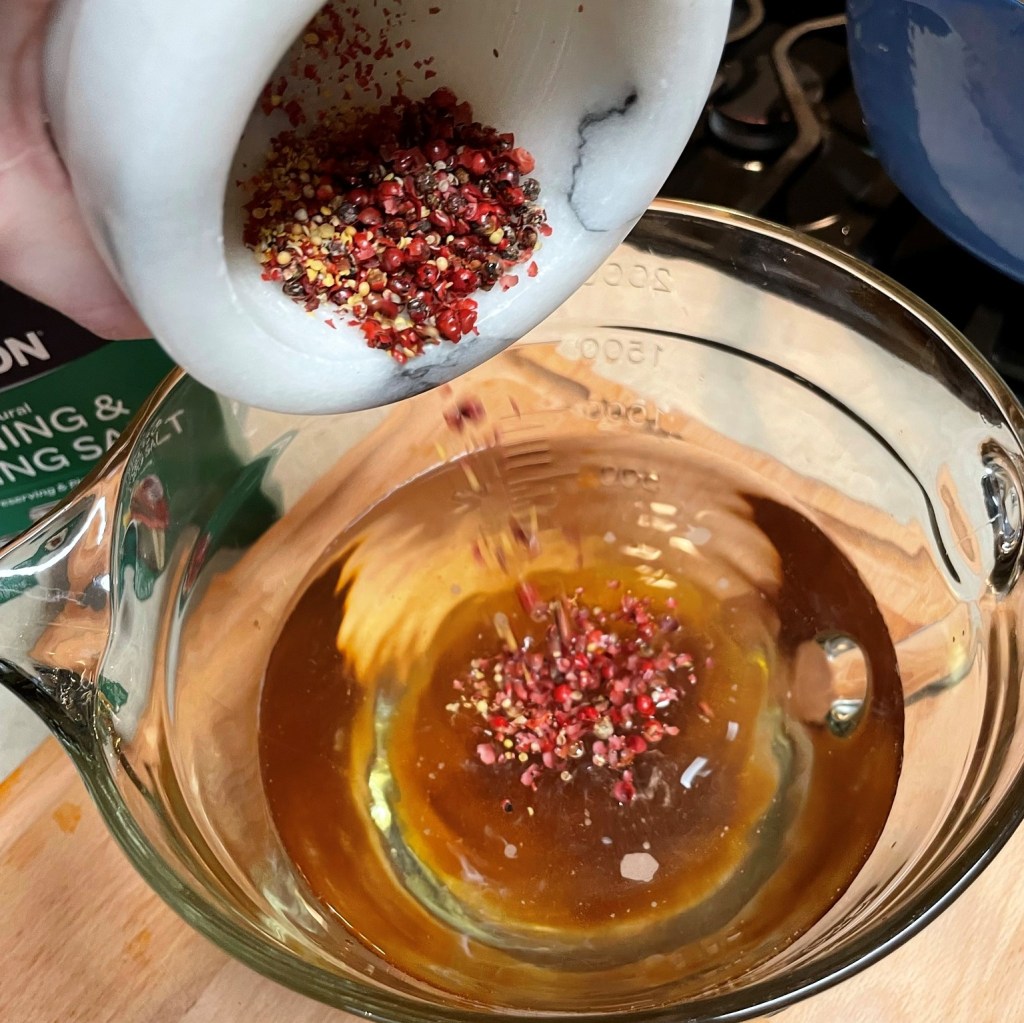
I’ve seen them, of course, but didn’t know much about pink peppercorns, other than their occasional appearance in one of the “mélange” blends that goes into my Peugeot peppermill. As it turns out, pink peppercorns are not related to black pepper at all! They are named merely for their resemblance to peppercorns and also for their slight peppery flavor, but they are brighter and fruitier than ordinary pepper, and they turned out to be a nice complement to the tart rhubarb. They are also much softer than regular peppercorns, as I learned when I easily crushed them with my mortar and pestle. Another fact about pink peppercorns—one that is more on the serious side—they are closely related to cashews, so they pose a significant safety risk to anyone with allergies to tree nuts (yikes).

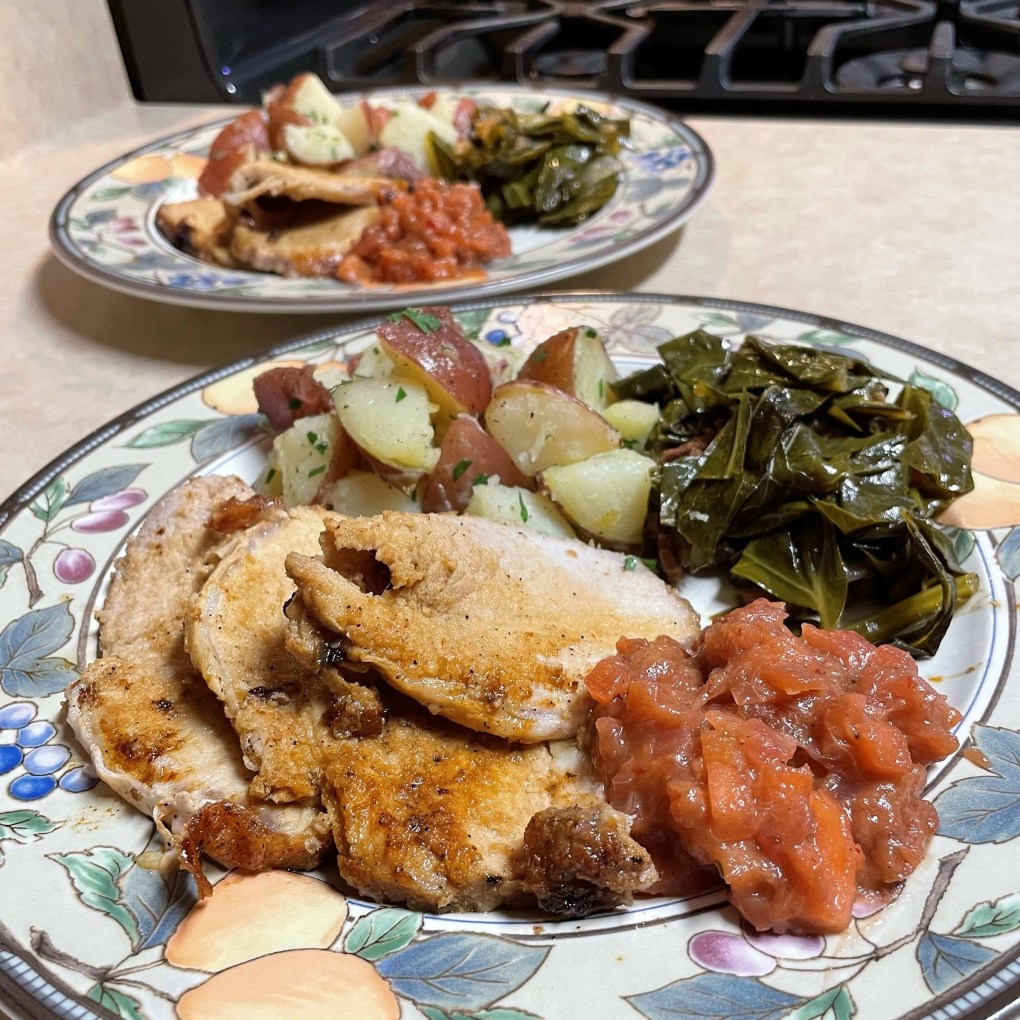
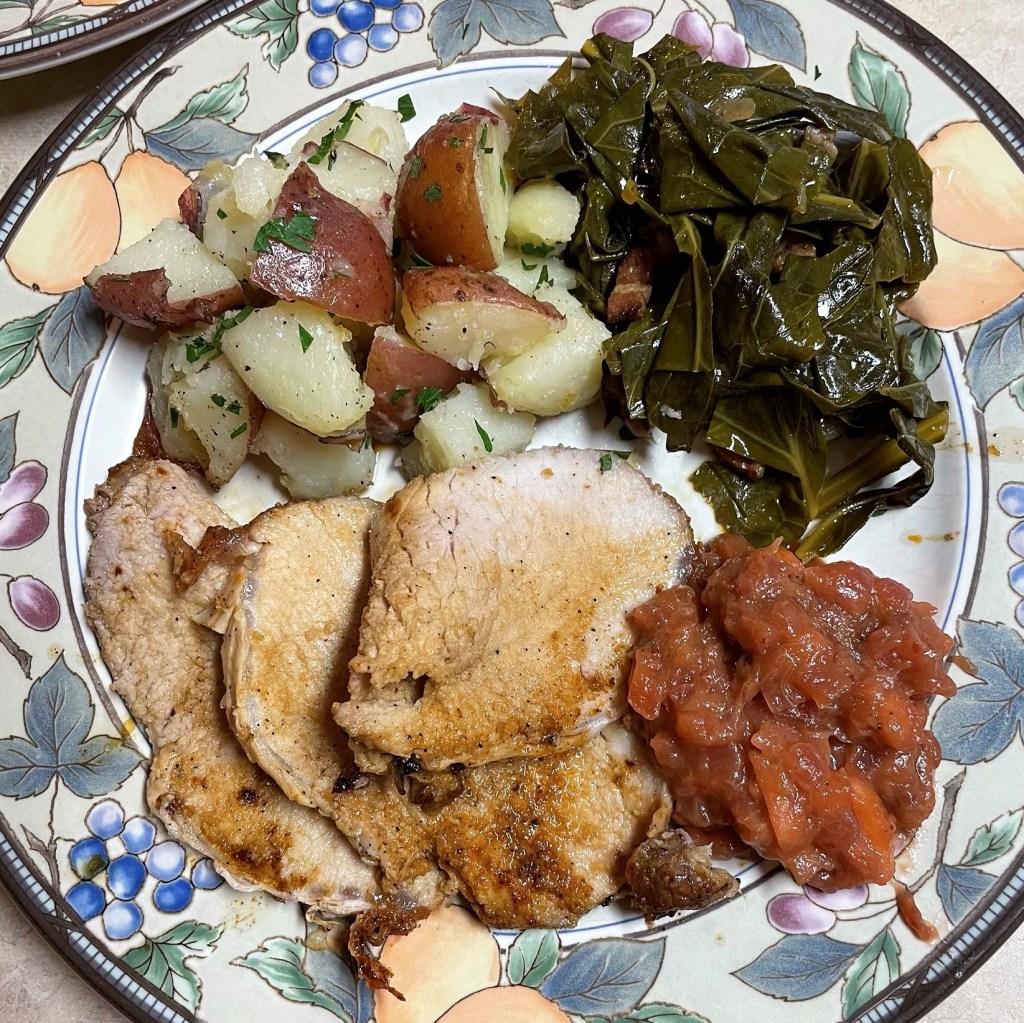
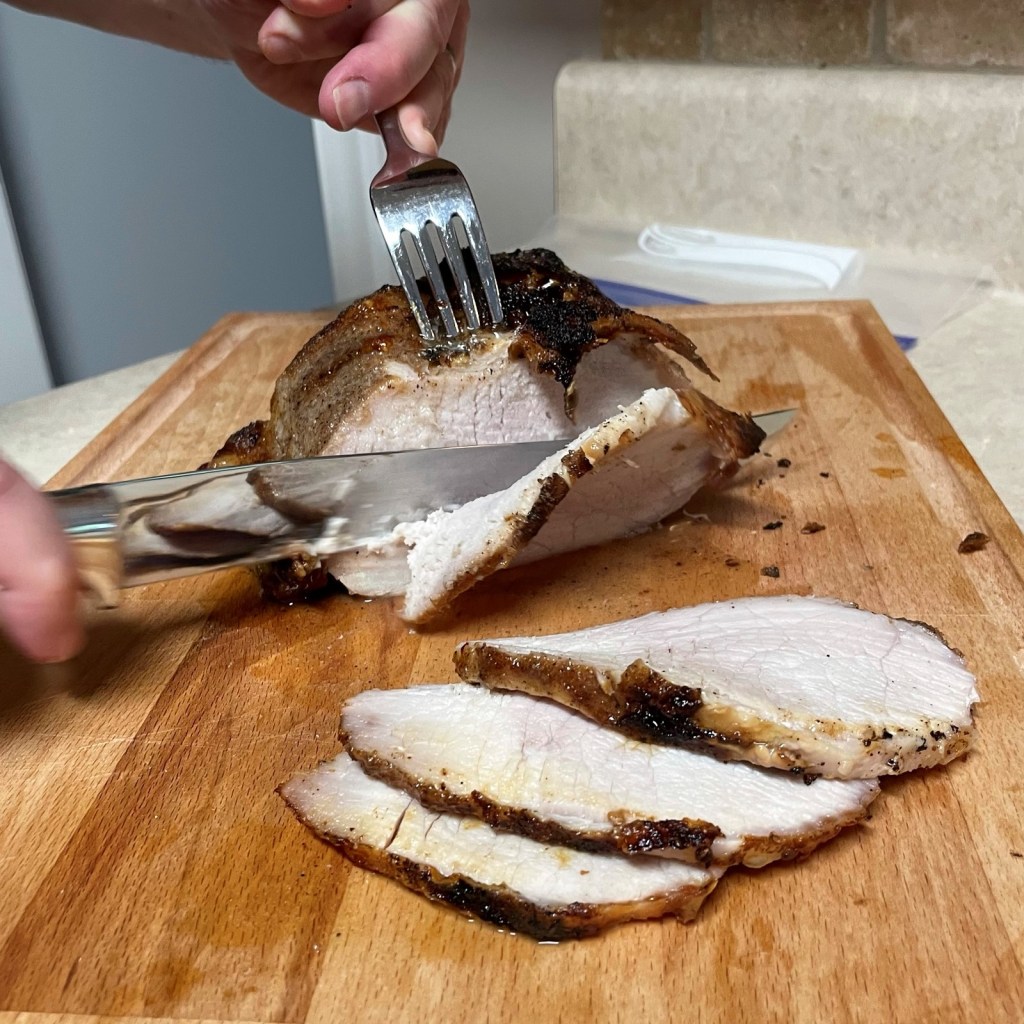
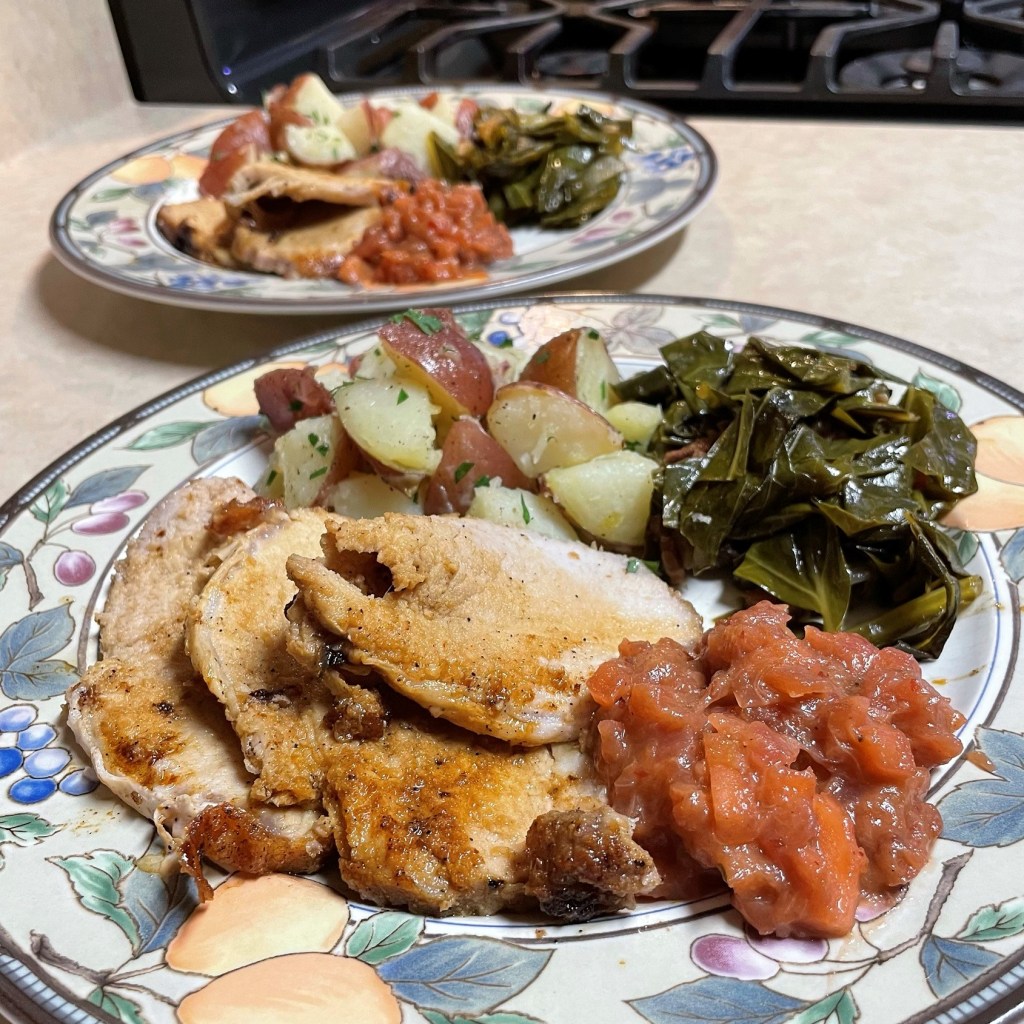
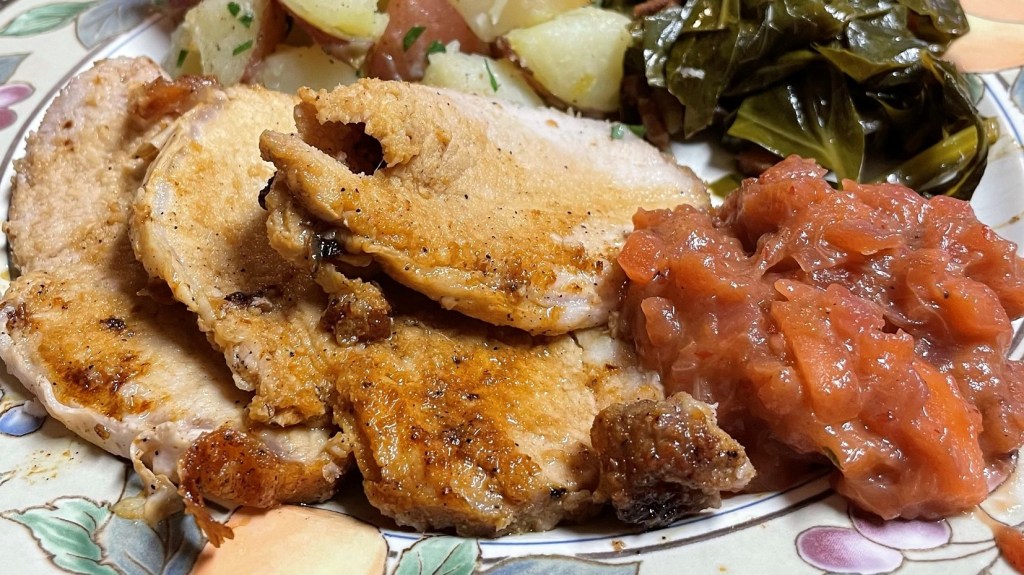
The pork loin was a great find at a local farmer’s market. The seller was mindful to point out the advantages of local, pastured pork, which is more humane and sustainable than most conventional processes, and I have no problem paying the higher cost for those benefits. It is also more flavorful than typical, bland grocery store cuts. The loin is a very lean cut, prone to become dry, so I brined it for a few hours before roasting. The end result was perfectly tender, juicy and flavorful, and the gingered chutney was just the right touch, though a bit intense for Les, so I would ease up on the ginger next time. We served this delicious roast with simple boiled red potatoes and our favorite homemade collard greens, another prize from the farmer’s market.

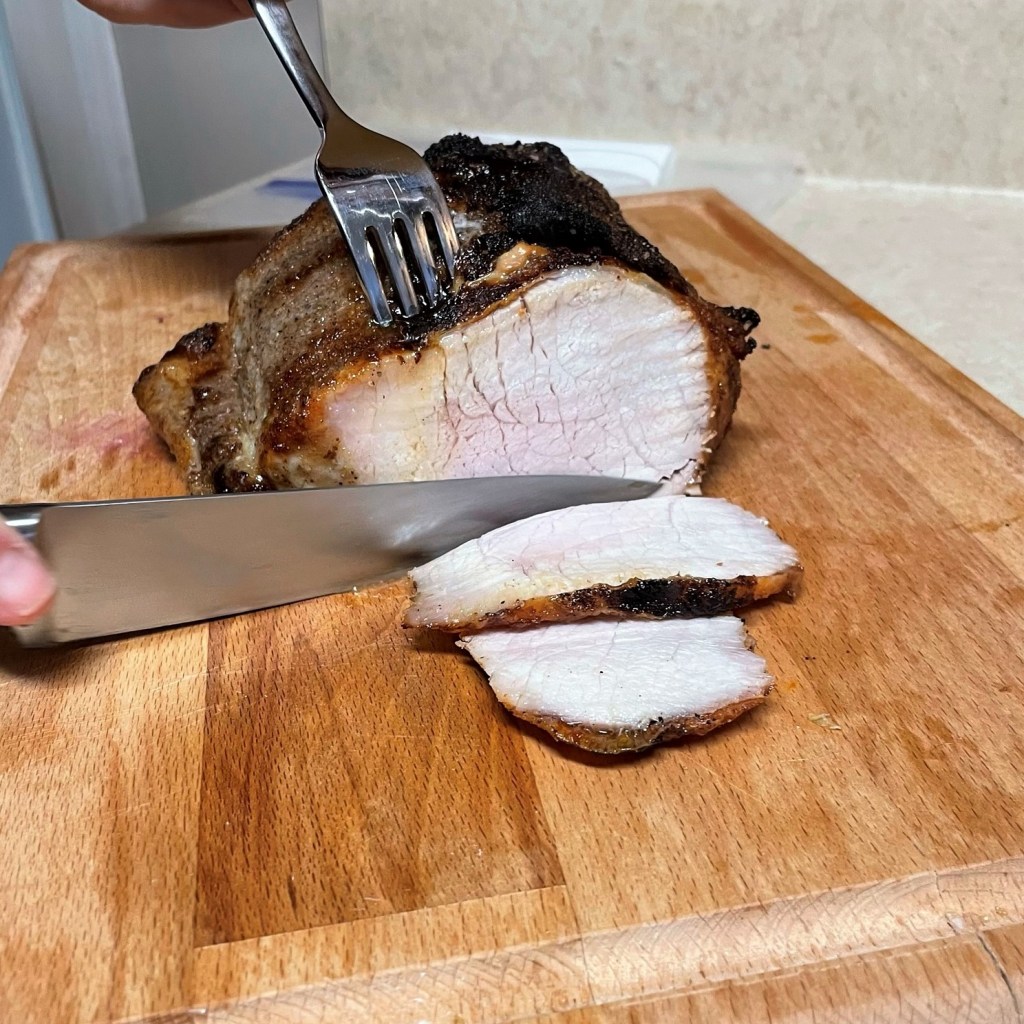
I dipped each slice in the roast pan juices before serving with the gingered rhubarb chutney. A perfect Sunday Supper!

The extra layers of attention that I gave to this meal earns it a spot in my Sunday Supper category, which I suspect has been feeling a little neglected recently. We have done a lot of very casual cooking at our house in recent months, but after so many weeks of playing “hard to get,” this rhubarb deserved a special seat at the table. Enjoy!


Ingredients & Instructions

Brine for pork loin

2 1/4 lb. pasture-raised pork loin

4 cups cold water

1/4 cup canning and pickling salt (or kosher salt)

1/4 cup brown sugar

1 Tbsp. crushed pink peppercorns

2 cardamom pods, crushed

1 piece star anise

Be sure your brine container is non-reactive; a large, deep glass bowl works great. It isn’t necessary to heat the water, as pickling or kosher salt will dissolve pretty easily. If you do choose to heat the water for quicker dissolving, be sure the brine has time to cool completely before you add the roast to it.

Stir brine ingredients until salt and sugar are dissolved; submerge pork loin, cover and refrigerate 4 to 5 hours; remove from brine, pat dry all over with paper towels. Rest a few minutes, pat dry again, then follow rub instructions.


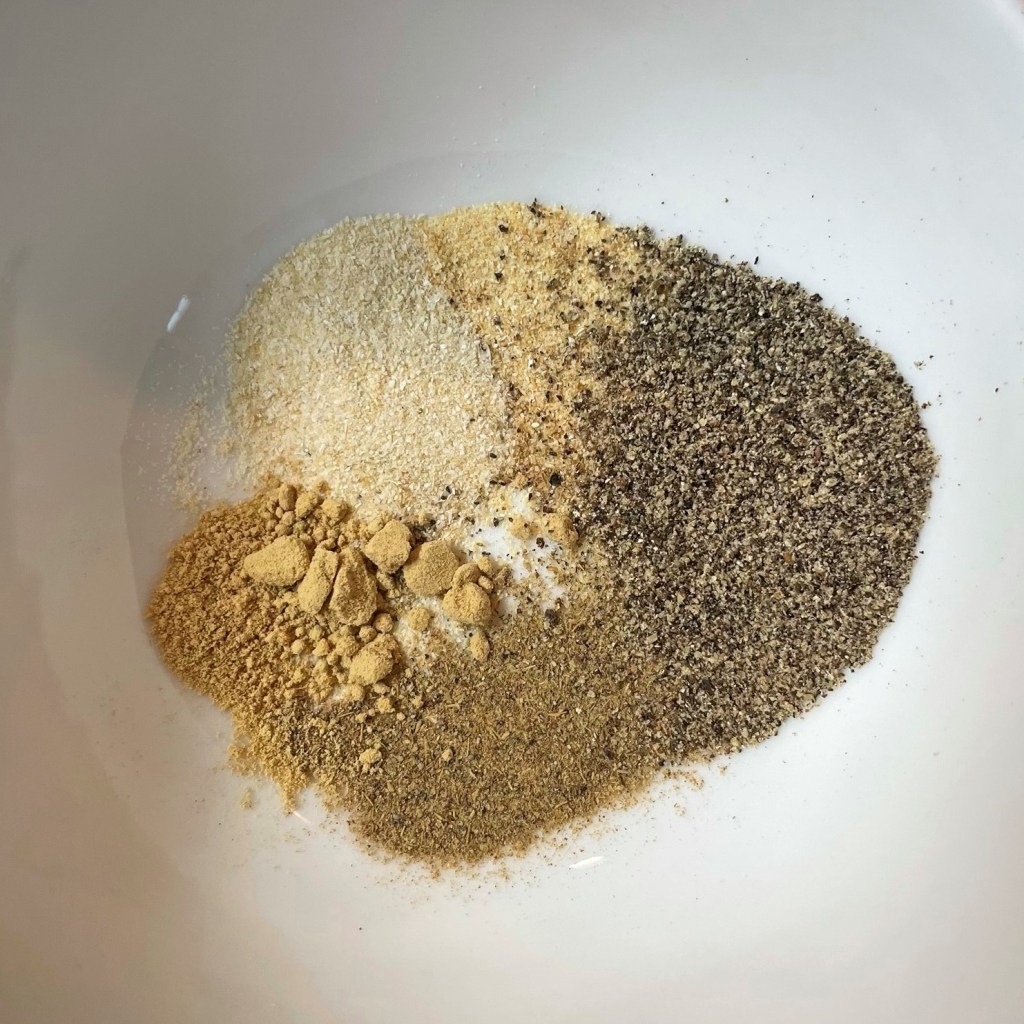
Rub for pork loin

1/2 tsp. garlic powder

1/2 tsp. onion powder

1/4 tsp. ground cardamom

1/4 tsp. ground ginger

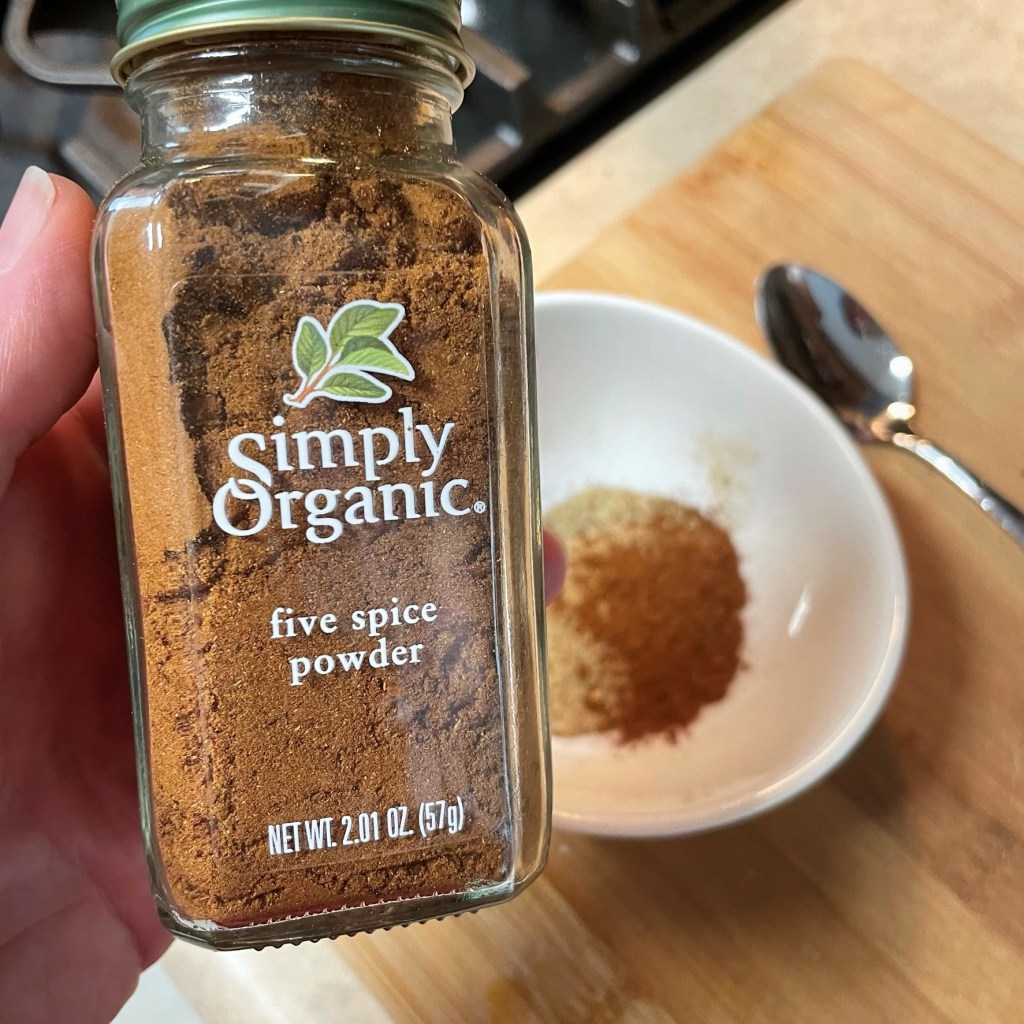
1/2 tsp. five spice powder

1/2 tsp. ground black pepper

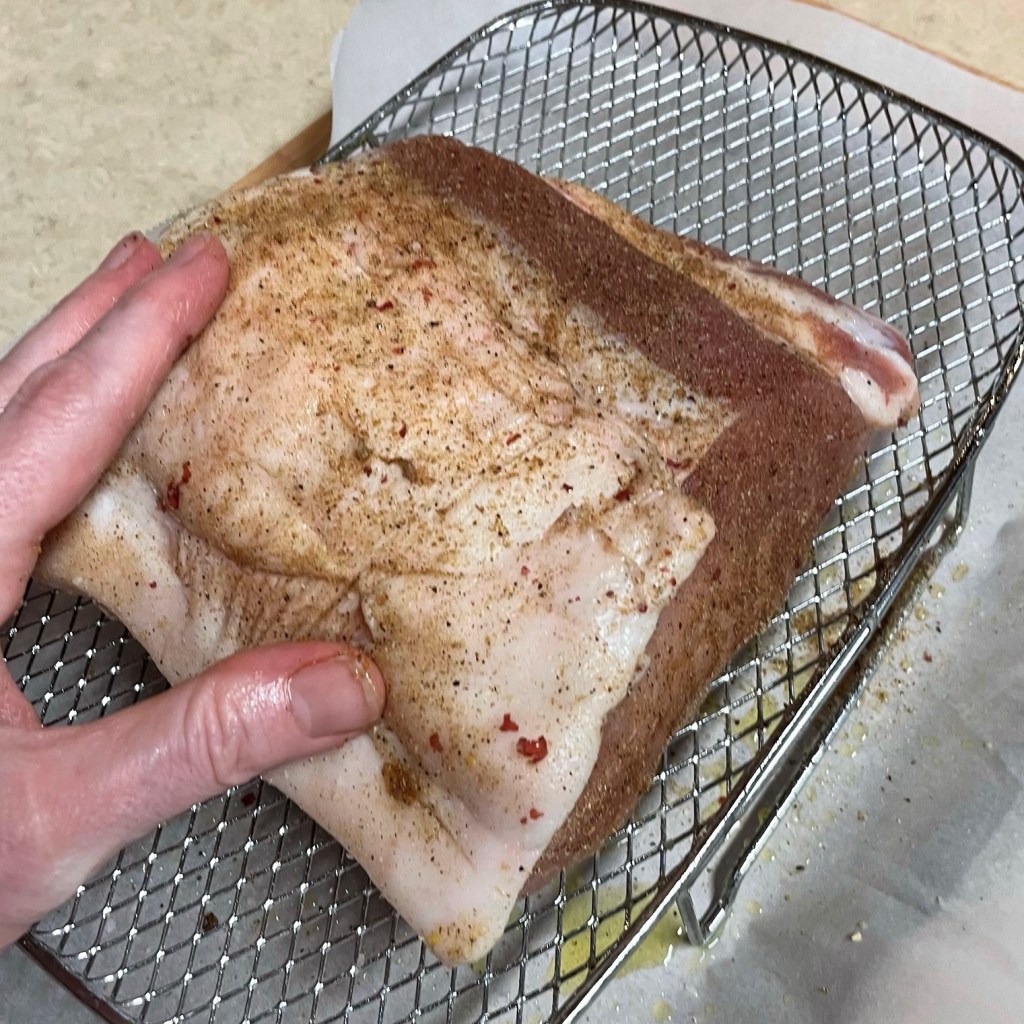
Spray olive oil onto dried pork loin, and sprinkle rub all over, especially the lean surfaces. Let roast remain uncovered at room temperature for about an hour before roasting.

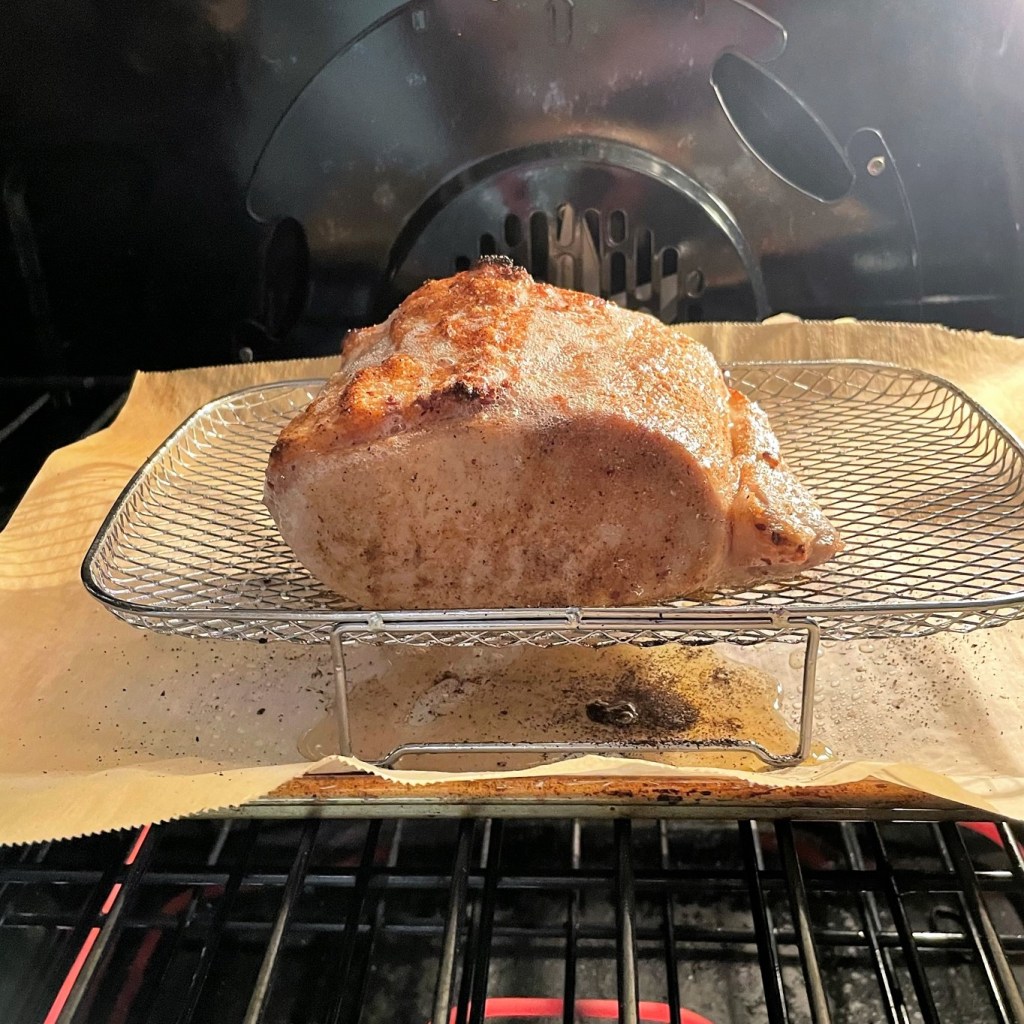
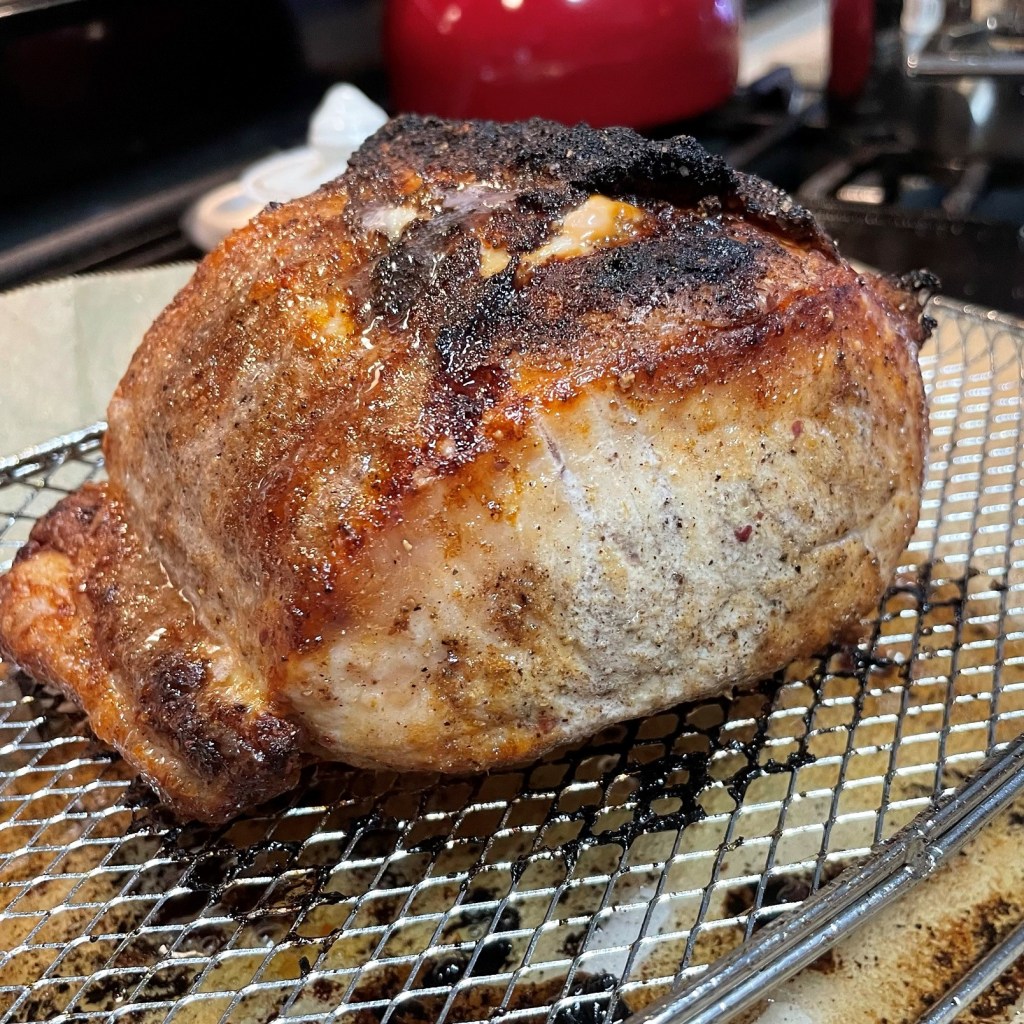
Preheat oven to 450° F. Place loin roast (fat side up) on rack above parchment-lined baking sheet, or inside a shallow glass baking dish. Roast at 450° for 15 minutes, then reduce heat to 400° and roast or convect roast for 30 to 45 additional minutes, or more as needed to reach 145° F internal temp. Rest at least 10 minutes, then slice thinly. Dip slices into any clean pan drippings for extra flavor at serving.


Rhubarb Apple Chutney

1 Tbsp. extra virgin olive oil

1/2 cup diced sweet onion

½ tsp. pink peppercorn, crushed

1 cardamom pod, crushed

1 heaping cup diced rhubarb

1/2 cup chopped apple

1/4 cup packed brown sugar

2 Tbsp. minced crystallized ginger

2 Tbsp. apple cider vinegar

Kosher salt and black pepper

Leaves from about two sprigs of fresh thyme

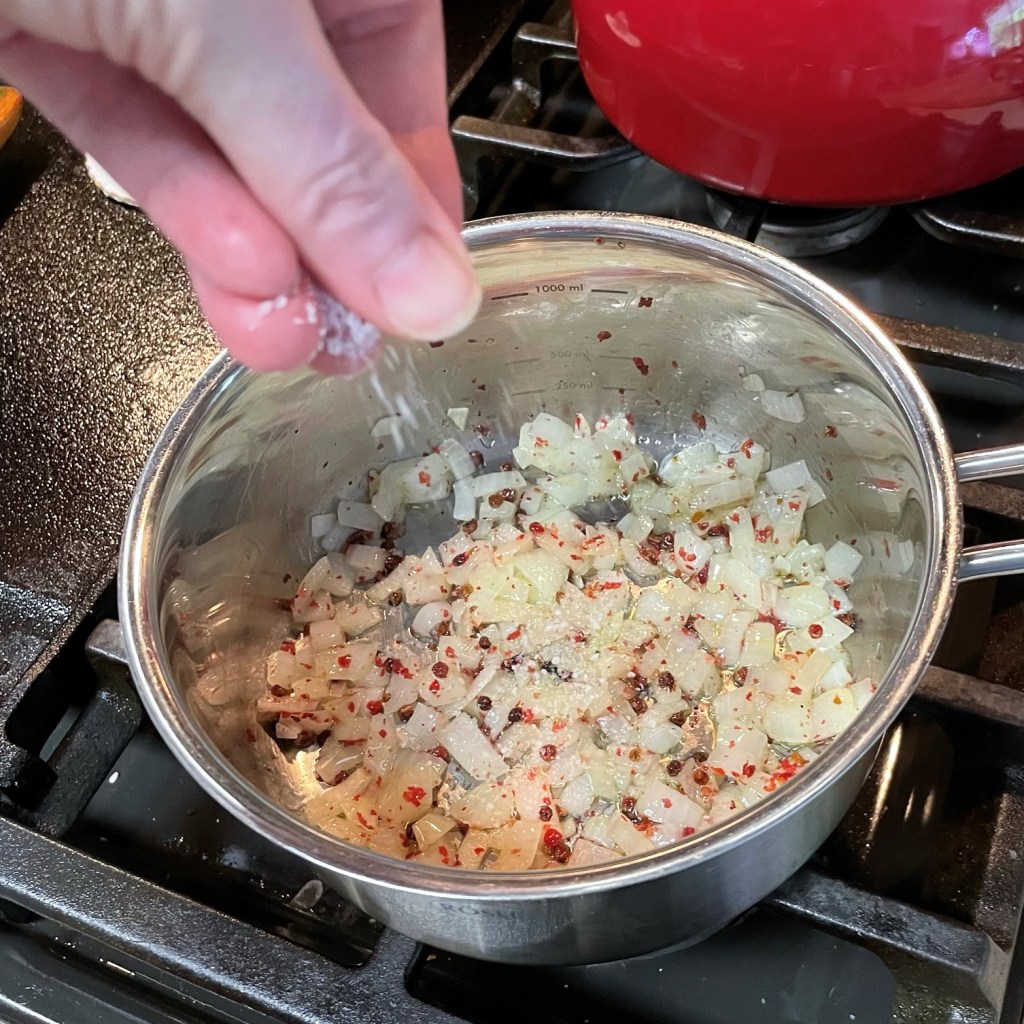
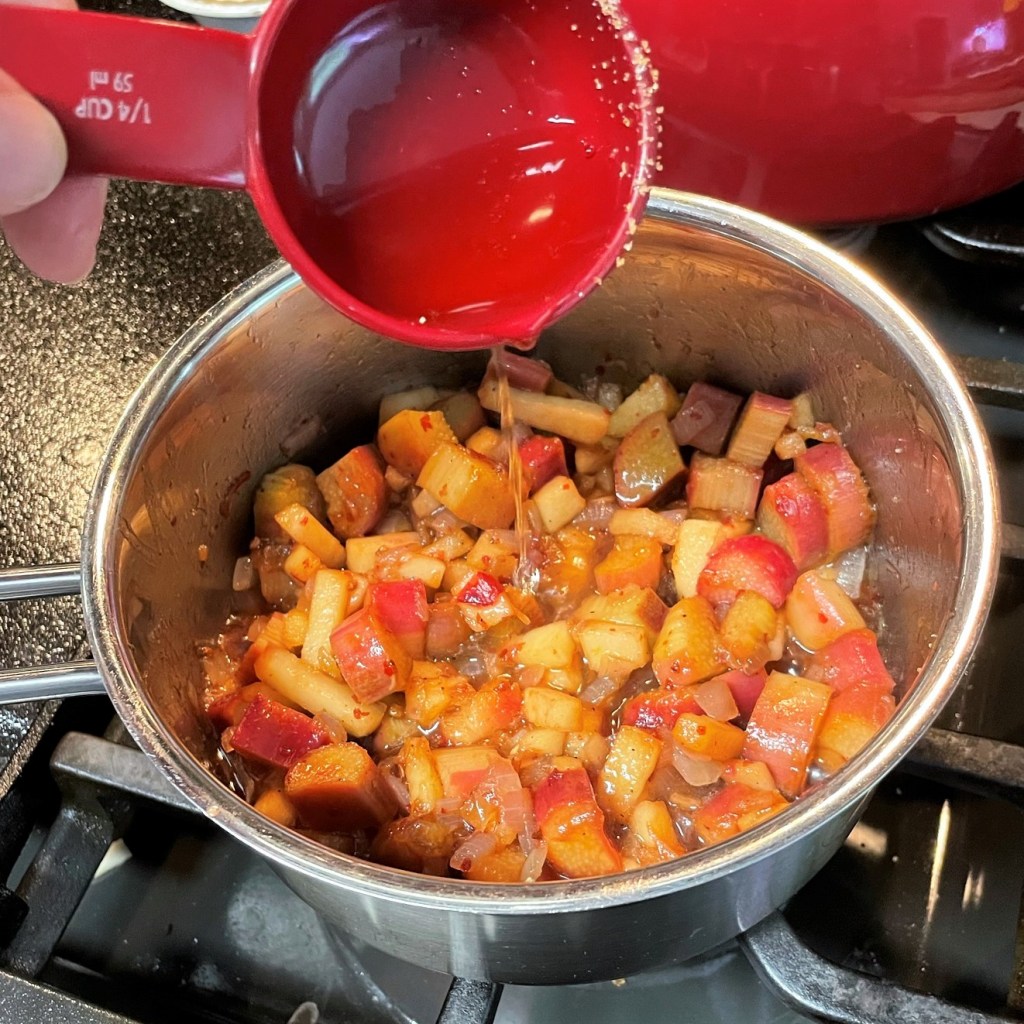
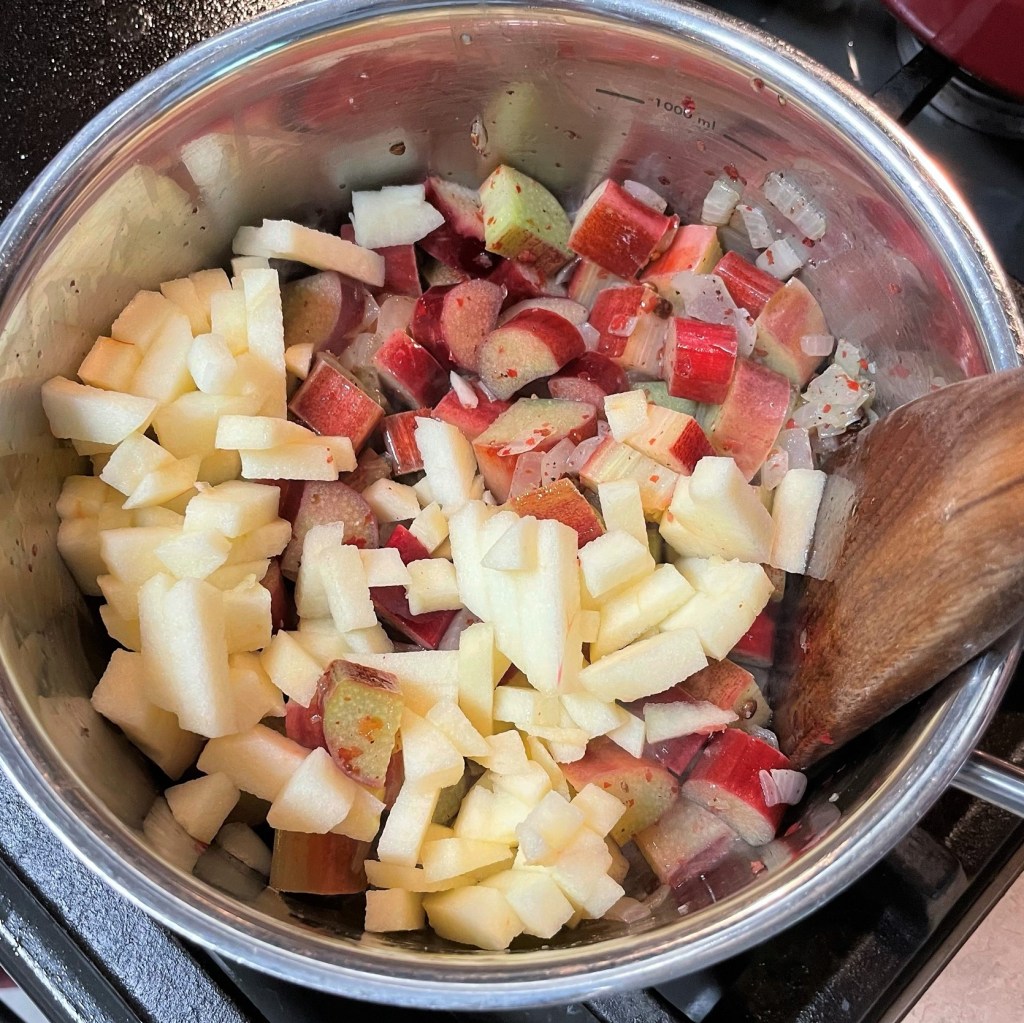
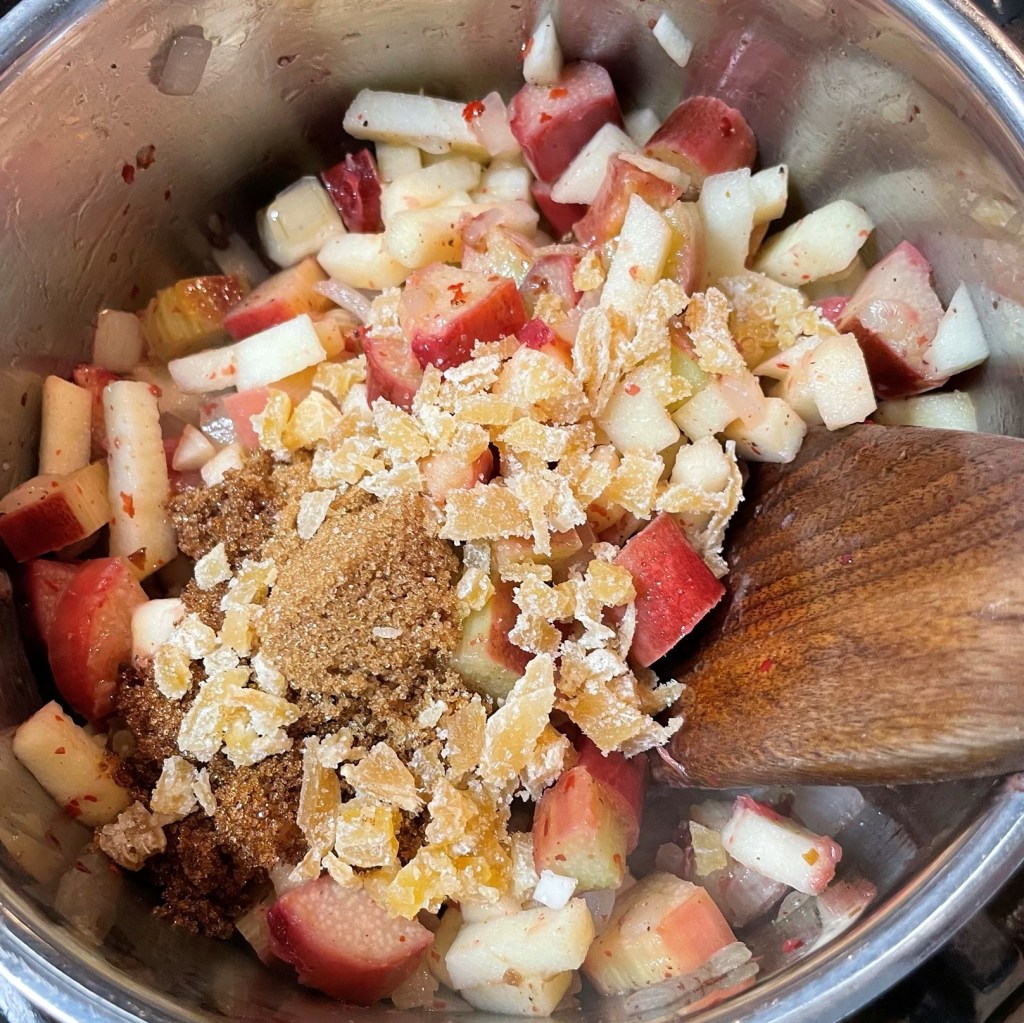
Heat olive oil in a small saucepan and sauté onions until softened. Season with salt and pepper, pink pepper and crushed cardamom pods. Add rhubarb and apple and toss to combine. Add brown sugar and crystallized ginger. Cook over medium-low heat until sugar is dissolved and fruit begins to break down. Add vinegar and continue to cook over low heat until fruit is completely softened and mixture is thickened. Stir in thyme leaves. If not using immediately, chill then reheat.


Waste Not.

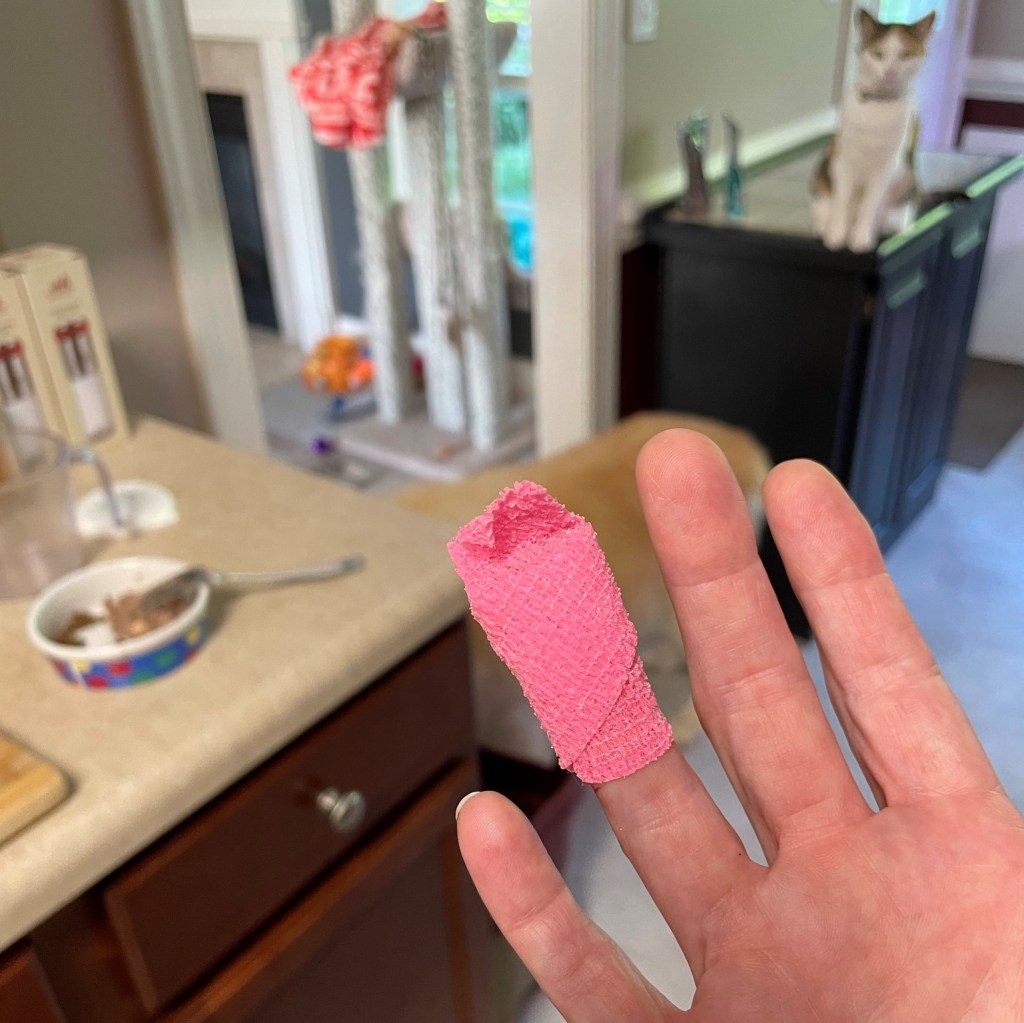
For someone trained from a young age to “waste nothing,” dealing with sourdough discard has become quite the dilemma. From the time I first “birthed” my beloved starter, I have been in a regular habit of making homemade bread at least once a week, and that has kept me on a healthy schedule for feeding and refreshing the starter. But cutting off the edge of my finger on a mandoline slicer has messed up more than just my cooking goals—it has also suspended my favorite activity of baking, and that is tougher for me to accept.

I have my KitchenAid stand mixer, which is my trusty assistant for many of my bread recipes, but the mixer cannot replace my hands for stretching and folding, final kneading or shaping my loaves. I miss doing those things. And I imagine that my starter, Pete, is confused and lonely, sitting untouched in the dark, cold refrigerator with no attention. OK, probably not. It’s me that is wrecked inside, and I look forward to reuniting with bread dough, and I will probably go nuts and make so much extra that I’ll be dropping it off for all of the neighbors.

Until that time, I am finding other ways to use my discard starter—that is, the portion of starter that must either be used or thrown away at feeding time. When the natural yeast has consumed all the usable nutrients in the previous feeding, the starter becomes “flabby” and lifeless, and isn’t suitable for leavening anything. I don’t often waste starter, given that I am baking frequently, but these are desperate times. So this morning, I made my favorite sourdough waffles. The recipe begins the night before, when a generous lump of flabby sourdough discard is combined with flour, a dab of sugar and a cup of buttermilk. In the morning, egg, oil, salt and baking soda go into the mix and then—waffle magic!

Old-Fashioned Maine Sourdough Waffles | King Arthur Baking

This King Arthur recipe is the best I have found for making exceptionally light and flavorful waffles with a crispy exterior. Half the recipe is more than enough for the two of us, and we usually have at least an extra serving that we can toss into the freezer for a future “lazy” breakfast. We served up today’s sourdough waffles with real maple syrup (of course) and the best bacon we have had in a very long time. Simple, but delicious, and I am relieved of guilt because I have not wasted my starter. If you’re riding the sourdough train, but haven’t yet tried waffles, they are a fun way to enjoy the fermented goodness of spent sourdough. And please, share with me your favorite uses of sourdough discard, too. I will appreciate the ideas.

It’s Saturday, and we missed our chance this morning to visit the weekly farmers’ market for more of this amazing breakfast meat. I don’t know what has been going on in the world of bacon lately, but we have been repeatedly disappointed with our usual, favorite “no-nitrite” brands from the grocery store. And that’s a good thing, in the sense that it led us to the farmers’ market last week. We made a terrific haul of local, sustainable, home-grown foods. Something about the just-picked freshness makes me feel like I’m doing good in the world.

I was especially excited about the beets and the pork loin roast.

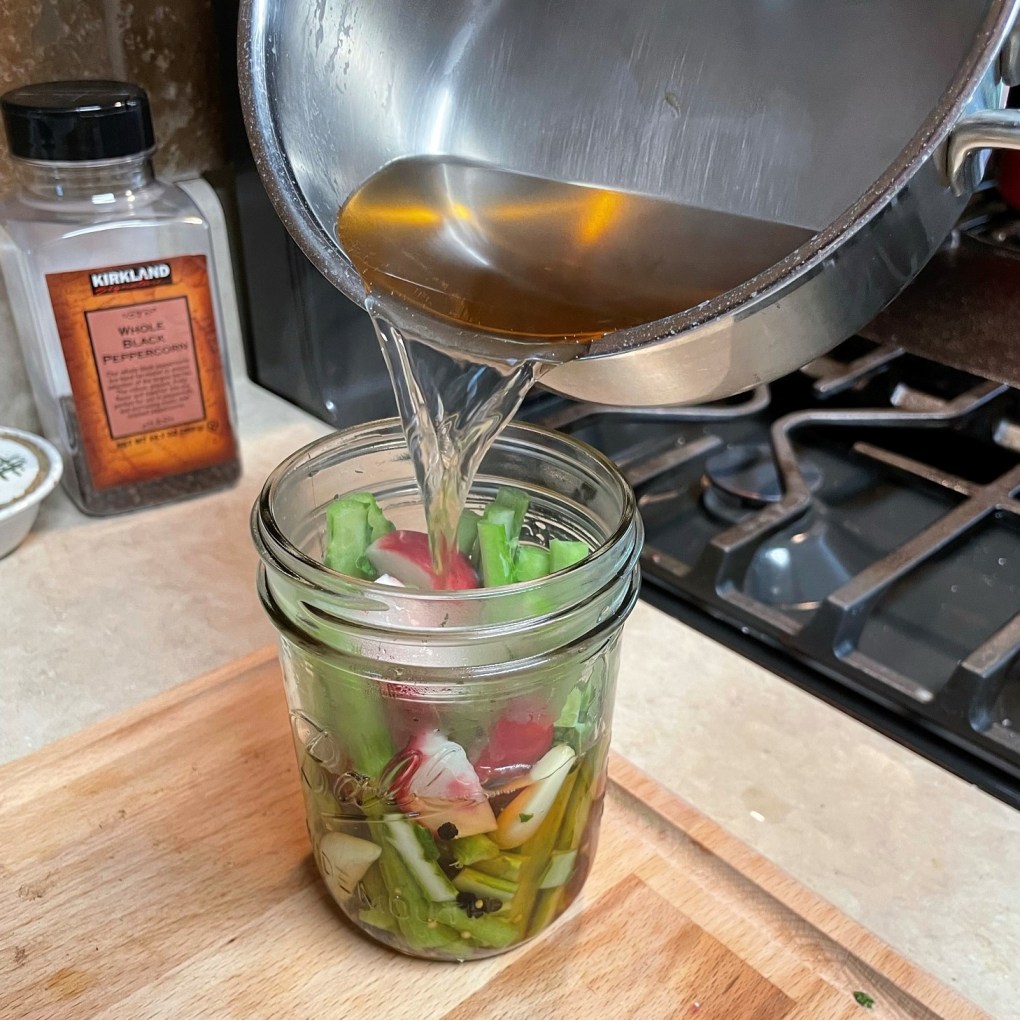
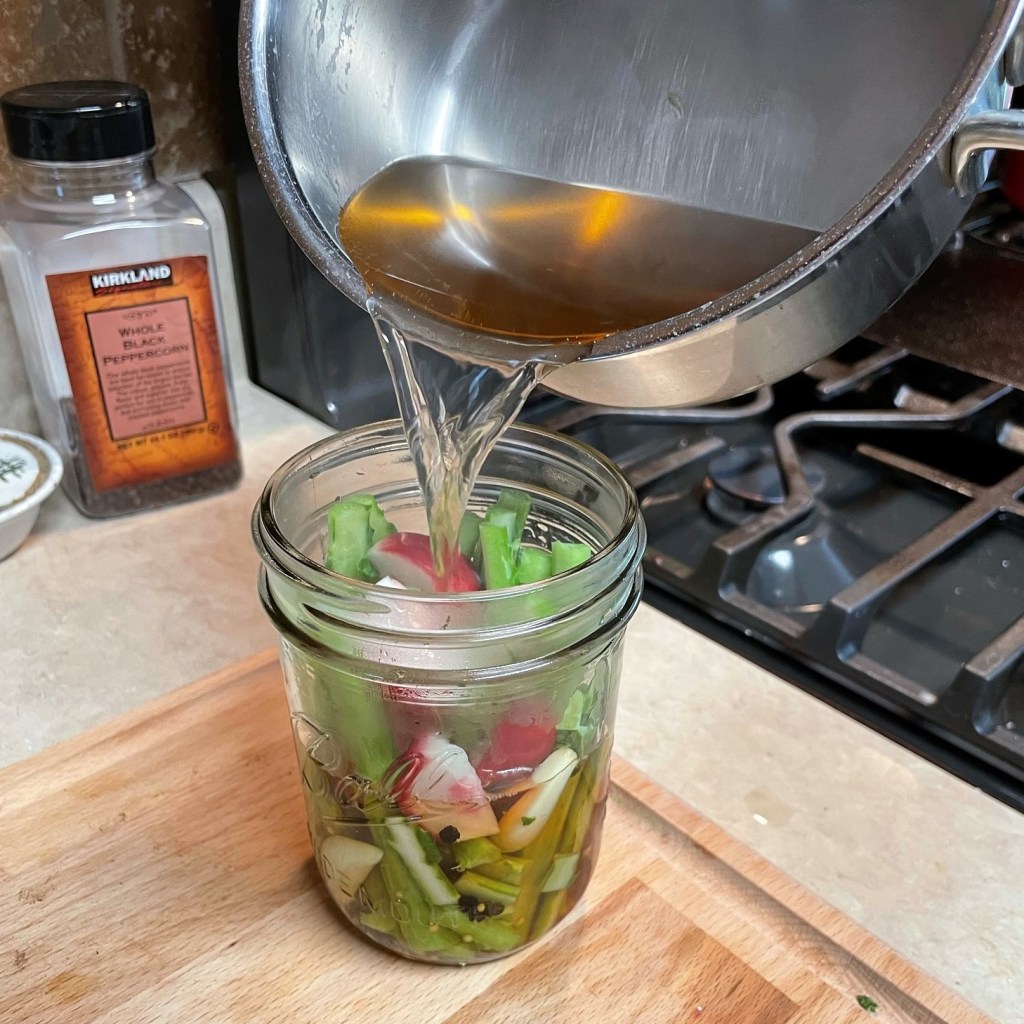
I’m always tempted to buy up everything that looks amazing, but we kept it reasonable this time, purchasing only what we knew we would finish in a week, and I took it to the limit with the collard greens, which I cooked as usual, but then I quick-pickled the stems with a couple of radishes and garlic cloves. You know, waste nothing. I will probably never be the wonder kid that my grandmother was—but I’m working on it!


My Big Fat Greek Pizza

If this were a normal year, the Greek Orthodox church in our city would not have had a long line of cars snaking around it this past weekend, with drivers waiting to purchase prepared food in white Styrofoam take-out boxes. It would not have been nearly so quiet, and it would not have been the impersonal experience my husband, Les, had when he picked up our Saturday night meal. The string of taillights ahead of him and the line of vehicles in his rear-view mirror were a stark contrast to a “normal” mid-May visit to the church’s annual fundraiser.

The Greek Festival should have been a noisy, three-day celebration for all ages, packed with singing, music, dancing, eating, drinking and intermittent yells of, “Opa!!!!” There would be authentic heritage costumes and colorful art for sale and scheduled history lessons inside the Orthodox Church sanctuary. But this has not been a normal year, nor was it last year, when the Greek Festival was cancelled altogether for safety reasons. This year, at least, the church gave it a go by offering drive-through pickup of its most popular food items—some prepared and some frozen. Sadly, the take-out box did not do my hot meal any favors, but I have higher hopes for the spanakopita we tossed into the freezer.

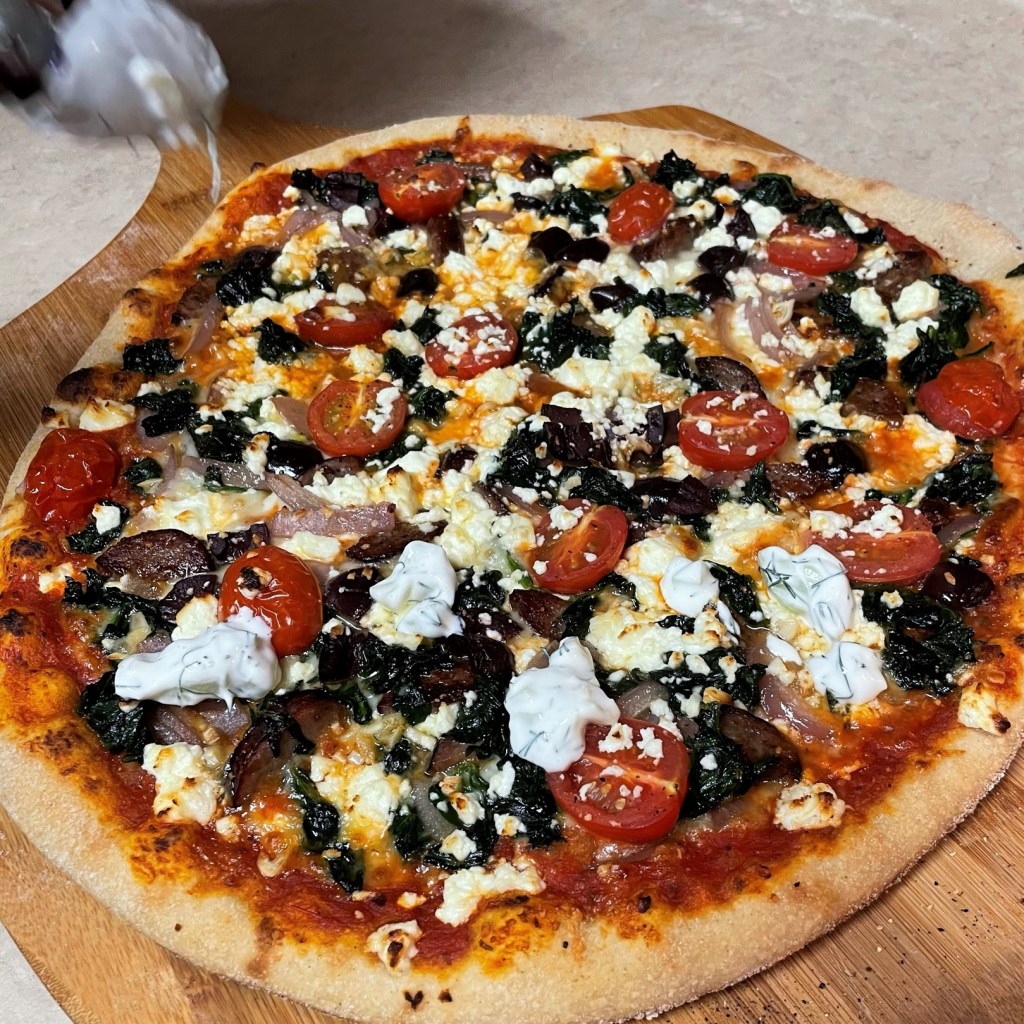
The food is one of the things I usually love most about the Greek Festival, and you can bet I will be there next year when things (hopefully) look more normal. The flavors of the Greek culture are so bold and fresh, and I cannot resist applying them to foods that don’t necessarily speak Greek, including this inspired pizza.

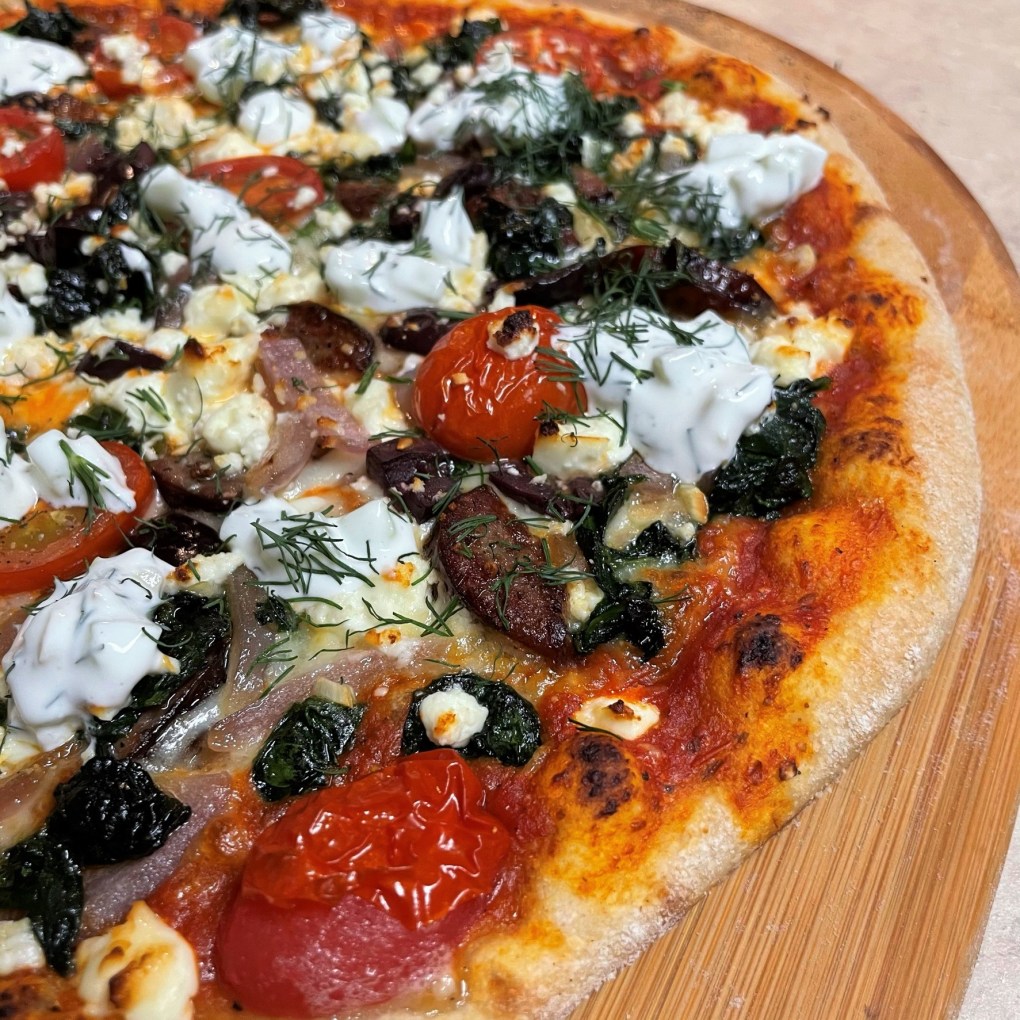
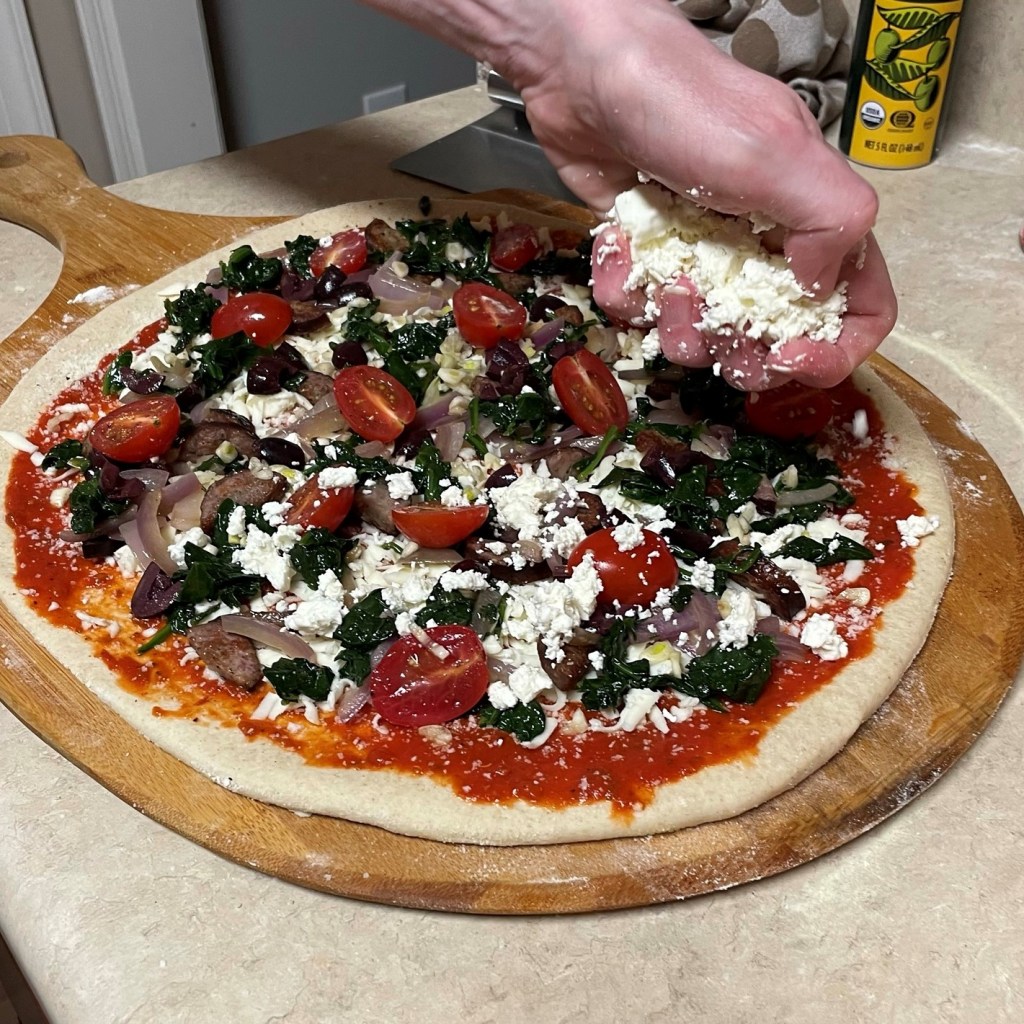
This pie has all my favorite Greek flavors in one bite!
Les and I enjoyed this one a couple of months ago, and I am finally sharing it here on Comfort du Jour. We have a regular tradition of Friday night pizza at our house, and though we do enjoy a classic Italian sausage or pepperoni pie, you know I also love to twist them up with other flavors. Visit the Pizza Party page for a quick review if you are looking for some new topping ideas.

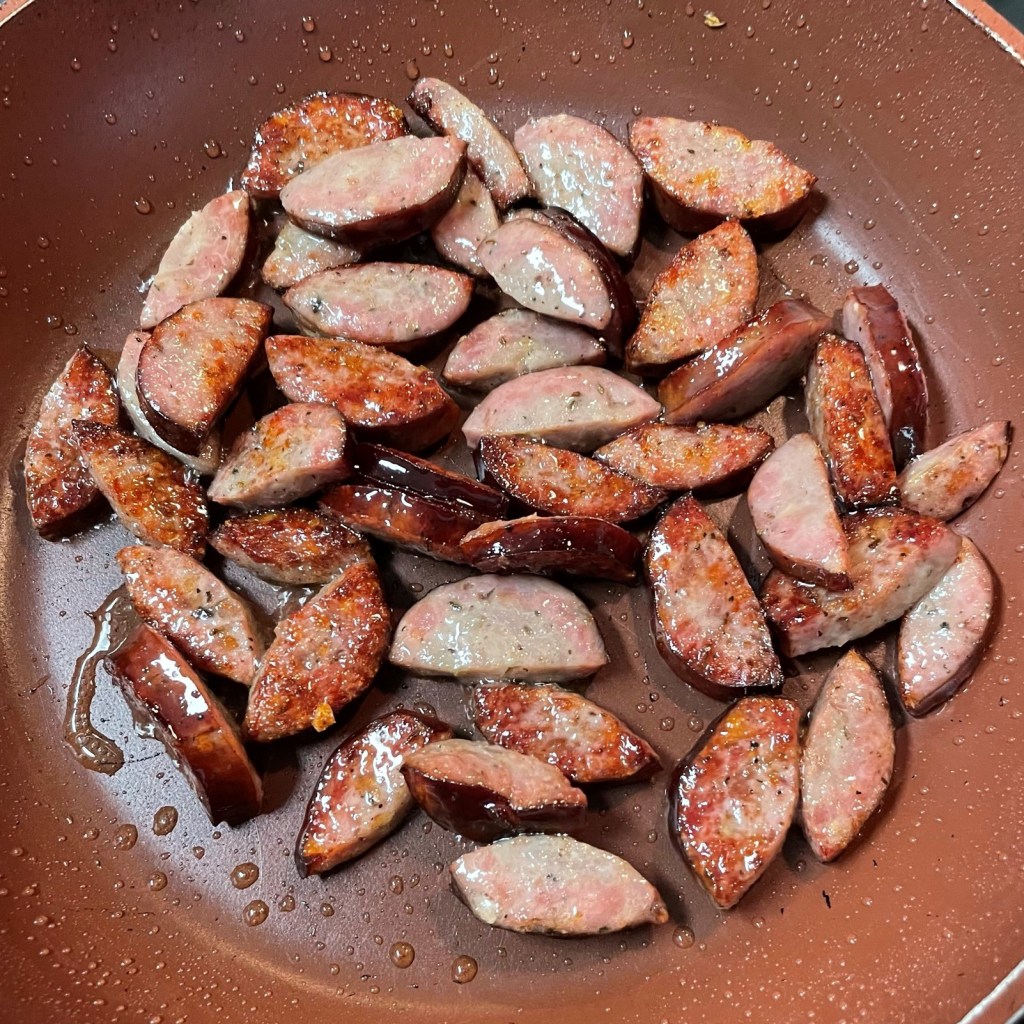
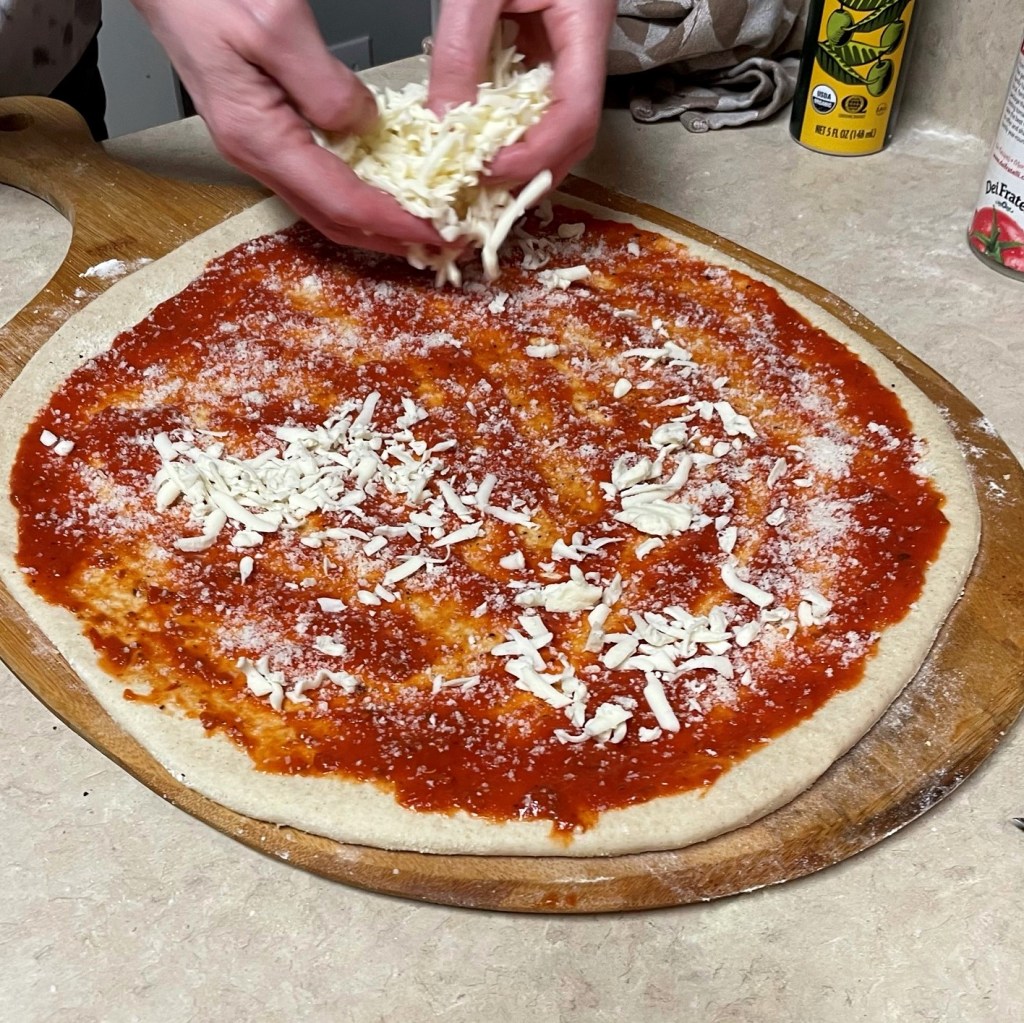
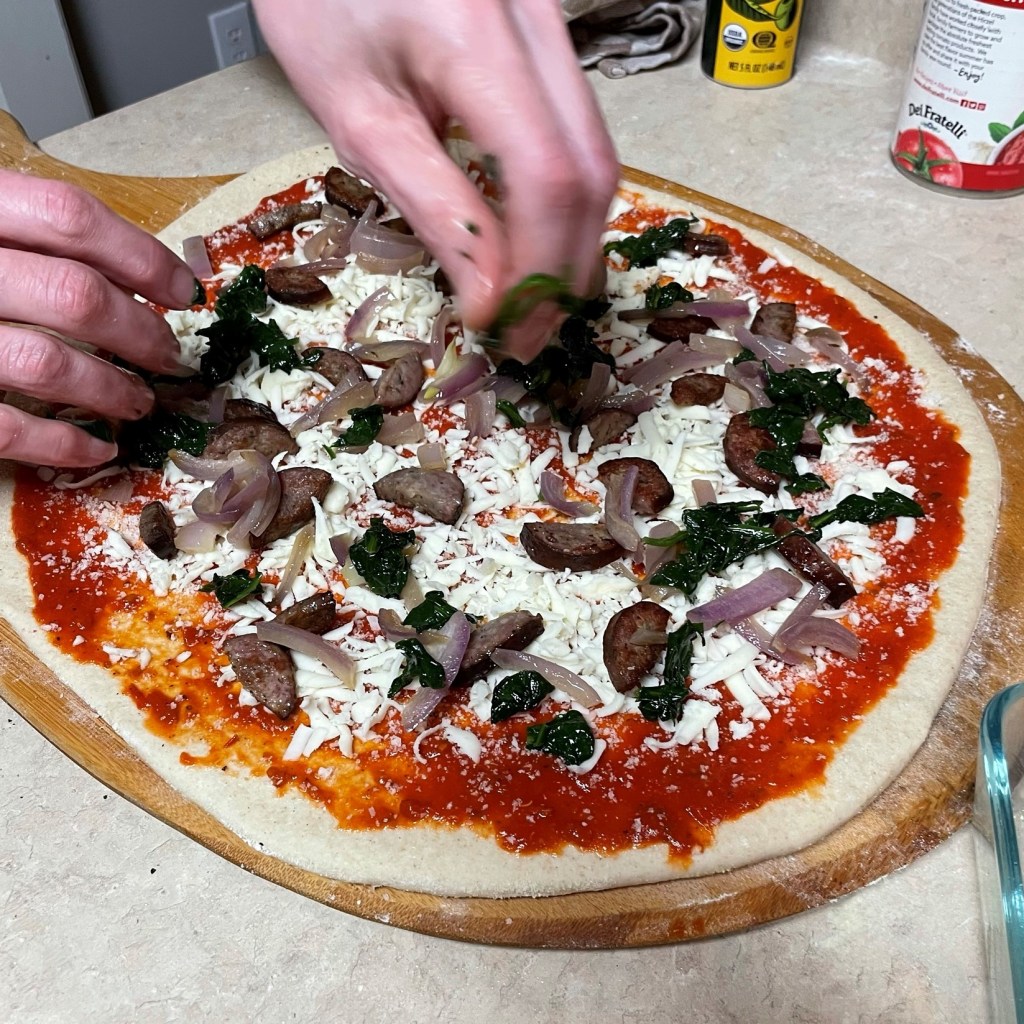
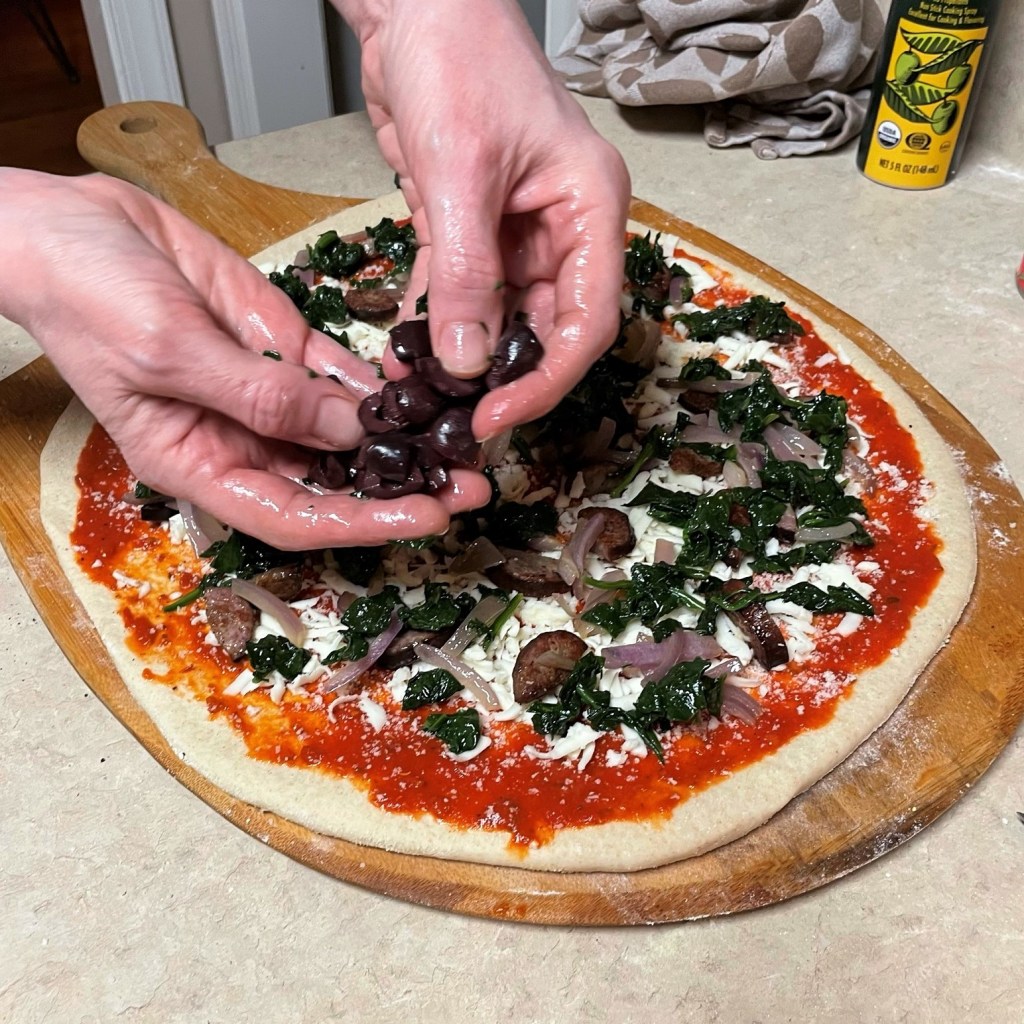
For this tantalizing “Big Fat Greek Pizza,” I started with my own N.Y.-style pizza dough and a simple tomato sauce base, the same as I would use on a traditional Italian pie. Next, I crisped-up bits of “Greek God” sausage, an offering of one of our local butcher counters. The sausage is full of bright herbal flavors—oregano, basil, garlic and rosemary—and I had been imagining it on a pizza for quite some time, though I’m quite sure this pizza would be just as good with no meat. I piled on spinach, red onions, Kalamatas, fresh cherry tomatoes and a whole bunch of feta, and that should have been “Greek” enough. But my favorite part was the dollops of cool cucumber-garlic tzatziki that went into place after the pizza emerged from the oven. The combination of all these ingredients was like a flavor explosion, giving me my very own Greek festival, all in one delicious bite.

Opa!!!

Ingredients

Tzatziki:

1/3 cup plain Greek yogurt, stirred

2 Tbsp. half and half

1/4 cup diced cucumber, seeded and patted dry

1 or 2 cloves garlic, finely minced

1 Tbsp. fresh dill leaves, chopped (chop some extra for sprinkling over the finished pizza)

Combine ingredients and keep refrigerated until ready to serve pizza.

Pizza:

1 ball pizza dough (here’s a link for My Real N.Y. Pizza Dough*, if you’d like to try it)

About 1/4 cup pizza sauce or fresh tomato sauce

A few shakes of grated parm-romano blend

1/2 cup shredded firm mozzarella

1 link cooked and sliced Greek God sausage* or similar product (see notes)

1/2 medium red onion, sliced

1 fat handful baby spinach leaves

Handful of pitted Kalamata olives*, roughly chopped

6 or 7 cherry or grape tomatoes, washed and halved

3/4 cup fresh feta, crumbled*

Additional chopped fresh dill, for serving


*Notes

If you decide to try my version of N.Y. pizza dough, note that it takes a few days’ time in the fridge, so plan accordingly. This recipe is intended for a thin-crust pizza, and my heating and bake time instructions are specific to baking on a pizza steel or stone. If you prefer to bake on a pan or at lower temperature, adjust your baking time to your preferred method.

The “Greek God” sausage I used for this pizza is a specialty product from a specific local grocery. It is a fresh pork sausage, seasoned with basil, oregano, garlic and rosemary, and we cooked (actually, smoked) it prior to using it. Any mild pork, chicken or turkey sausage would make a fine substitute, or you could easily omit the sausage altogether. The other flavors on this pizza are more than enough to elevate your happy.

Kalamata olives are specifically grown in the Kalamata region of Greece, and they are not the same as inexpensive, canned “black” olives. They are more oblong than round, and they are usually packed in a briny liquid with wine or olive oil. It’s easy to find them in jars or on specialty olive bars, if your supermarket has one. They can be a little pricey, but as far as I’m concerned, they are worth their weight in gold. Be sure to select pitted olives for this recipe, unless you find it exciting to crack a tooth.

I prefer to use fresh blocks of feta, as it has better flavor and texture than most crumbled feta. If the feta block is packed in brine, be sure to pat it dry with paper towels before crumbling, to minimize excess moisture.


Instructions


  1. Preheat pizza steel for one hour at 550° F, or the recommended temperature for your pizza stone, with oven rack about 8 inches from the top heat element. If using a metal pan, place rack in lower third of oven.
  2. Prepare toppings: sauté red onion just until softened, then sauté spinach until wilted. Transfer both to a dish to cool.
  3. Shape pizza dough into a 14-inch round and transfer to a floured pizza peel that is dusted with cornmeal (or place on a greased pizza pan). Brush or spray dough with olive oil, and season with kosher salt and a few twists of black pepper.
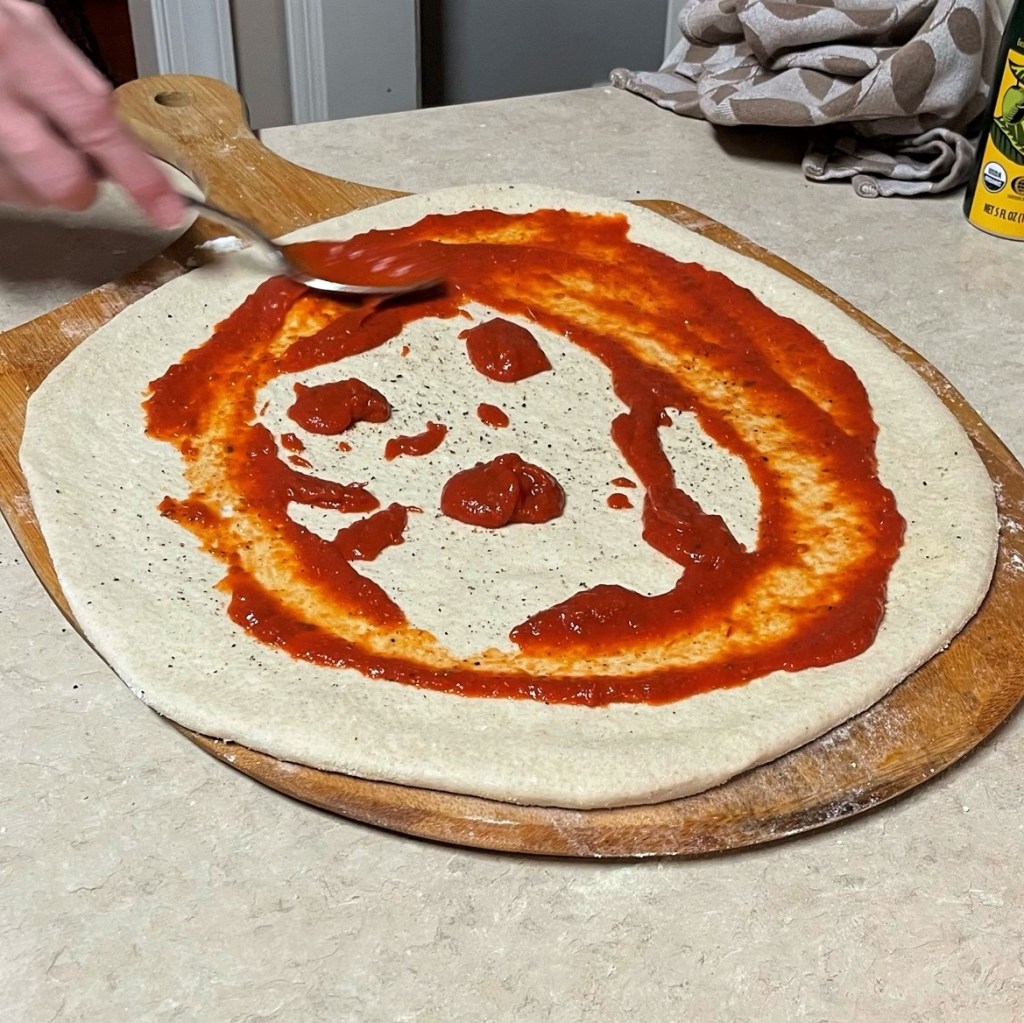
  4. Spread tomato sauce evenly over the dough, all but 1 inch around edge.
  5. Distribute the shredded mozzarella, then the cut-up, cooked sausage pieces (if using), onions and spinach, Kalamatas, tomatoes and feta cheese.
  6. Transfer pizza to preheated steel or stone, and bake for about 7 minutes, until crust is golden brown and toppings are bubbling.
  7. Arrange small dollops of tzatziki sauce over pizza, sprinkle with remaining dill leaves.

Interested in more delicious, Greek-inspired recipes?


Bleu Cheese Potato Salad

Here’s a truth I have learned in the past couple of weeks: you don’t realize how much you use all of your fingers until one of them is out of commission. It has been almost two weeks since my little accident with the mandoline slicer, and I’m constantly reminded of my limitations in the kitchen. I am not in any kind of pain, mind you, but the urgent care doctor was specific to instruct that I should not let my injured right ring finger get wet during the healing process. That means asking for help (not one of my strong points) with washing dishes, prepping vegetables and moving hot pots. Everything takes longer than usual, and my husband, Les, has done half (or all) of the cooking, or we have ordered takeout.

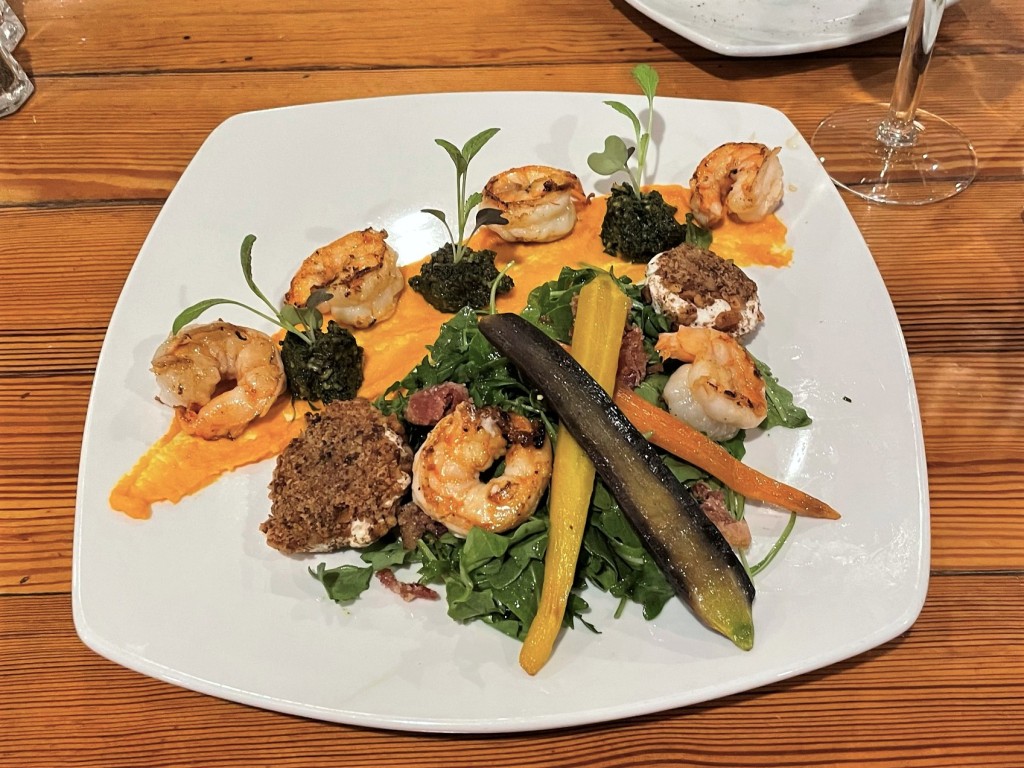
I am pleased to report that on Thursday, the two-week mark after my second COVID jab, we ventured out to a real, honest-to-goodness restaurant—one of our favorite casual, but delicious, places in our city. We sat inside (gasp!) and enjoyed a lovely dinner that included this incredible plate:

This plate was a work of art, and as delicious as it was beautiful!

OMG, it was sooo delicious! The grilled shrimp accompanied a salad of arugula with candied bacon and vinaigrette, flanked by walnut-crusted goat cheese medallions, chilled, roasted carrots and dollops of fresh pesto with microgreens, artfully arranged on a roasted carrot puree. We even ordered an appetizer and a glass of wine, and I literally wanted to lick my plate. It was a real treat, and so good to see the friendly, familiar staff at West End Cafe after such a long separation.

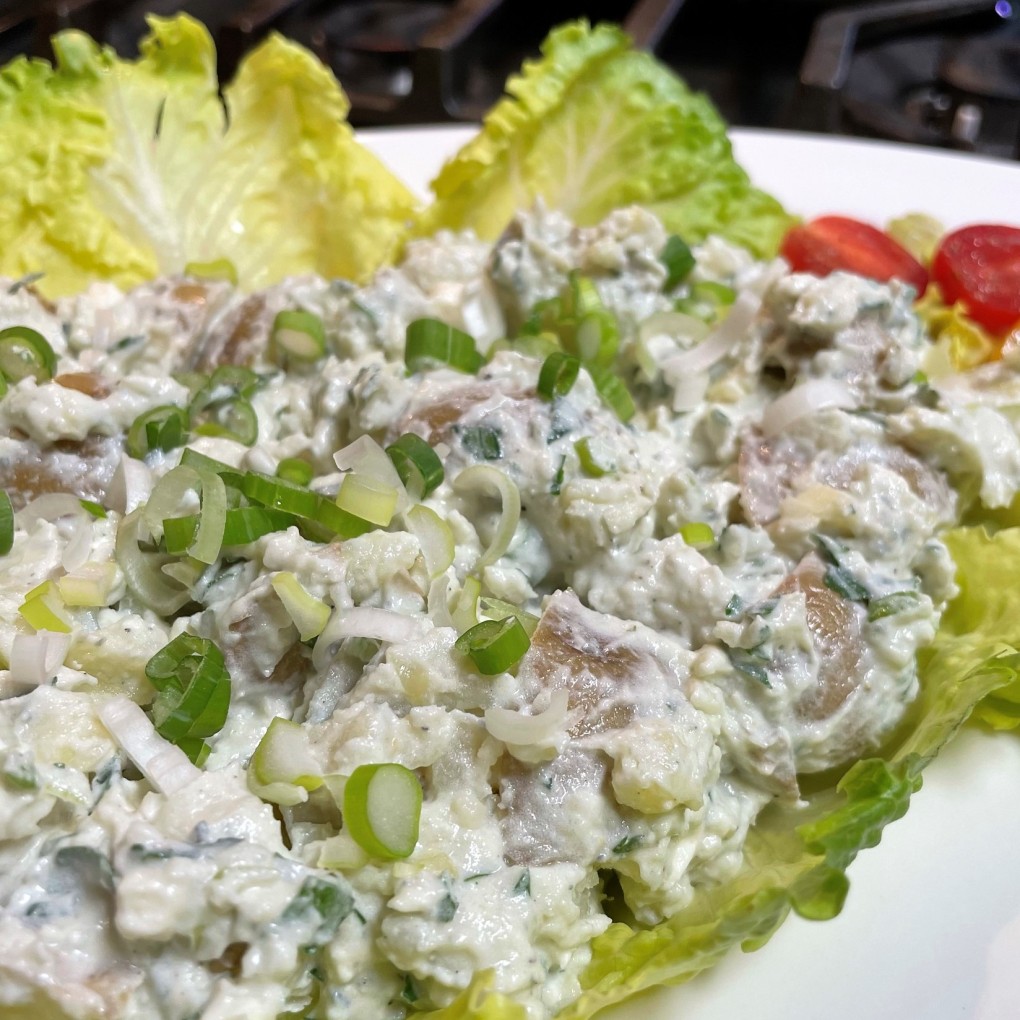
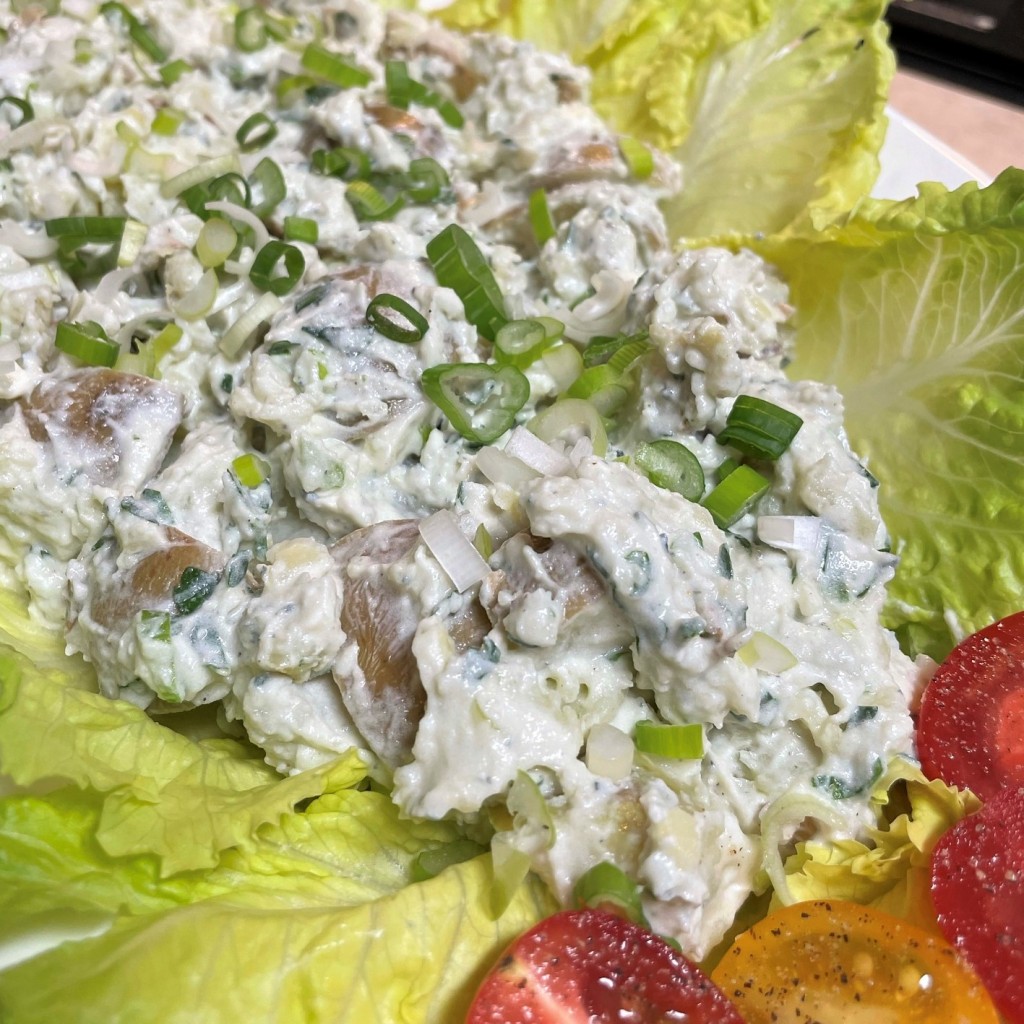
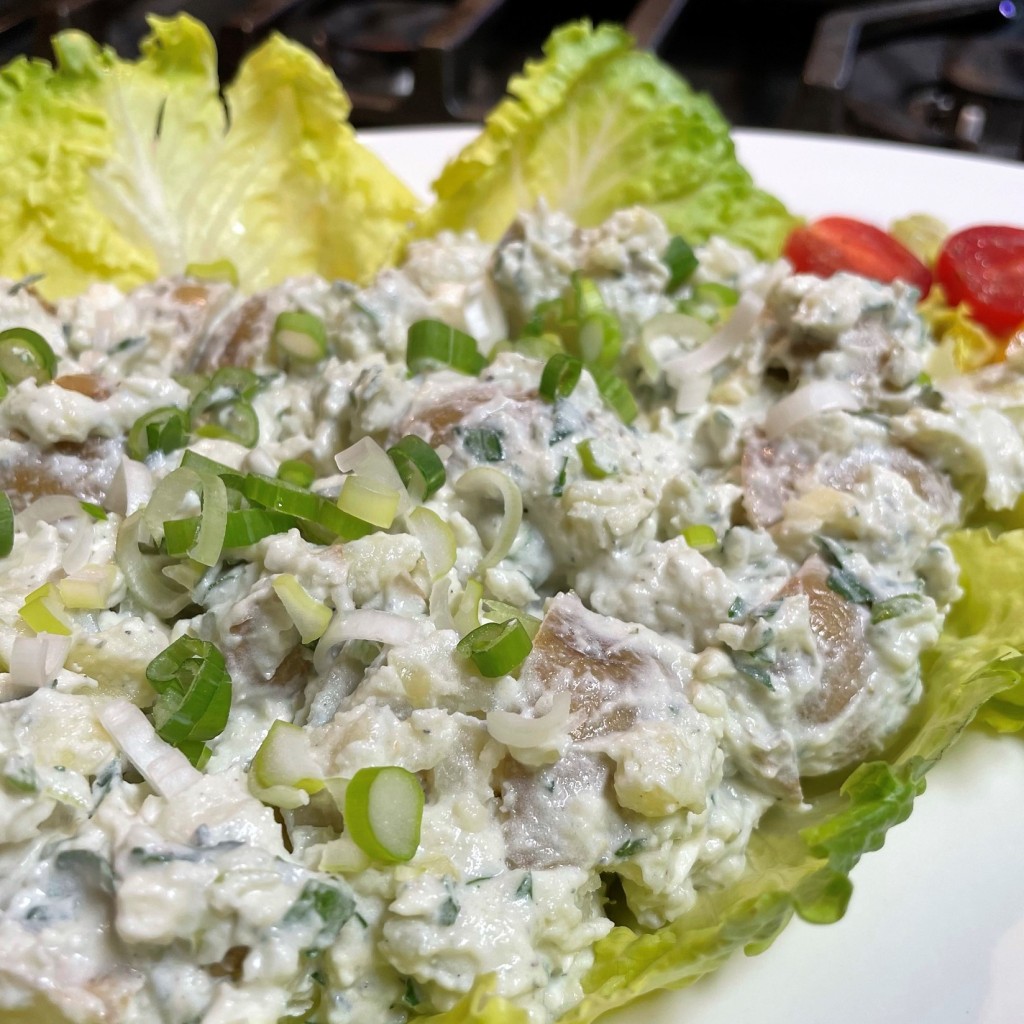
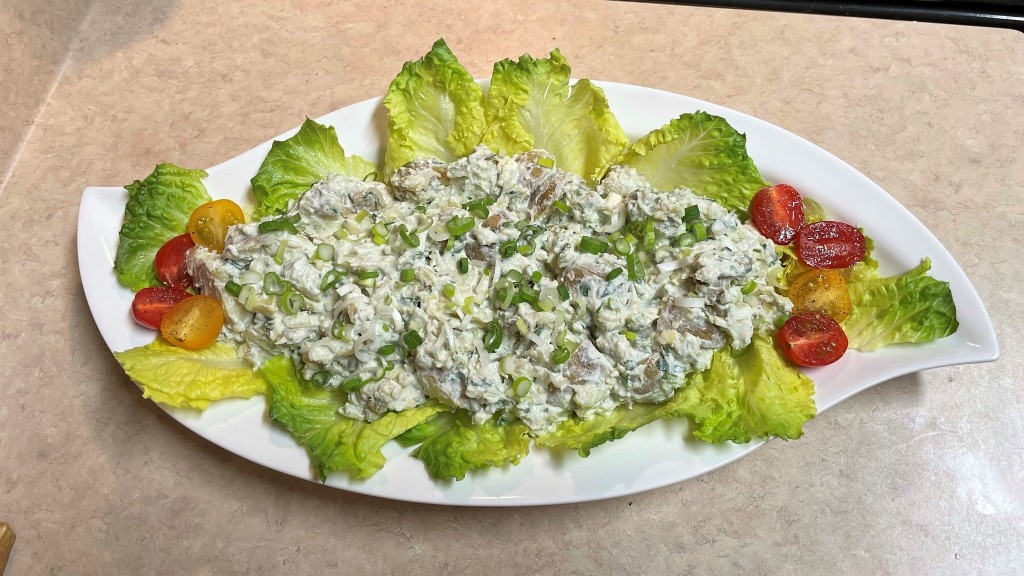
At the same time, with the CDC announcement last week that vaccinated people can relax a bit, we are eagerly anticipating some in-person time with friends, and excited that our social re-entry will coincide perfectly with the start of summer grilling season. For practice, we prepared one of our favorite grilled items—the coffee-rubbed grilled tri-tip steak that Les shared yesterday, and an easy side that takes a favorite steakhouse combination down into casual mode. This bleu cheese potato salad was Les’s idea, as we were pondering what to make as a side for the bold and spicy tri-tip. Think of it as a bleu cheese-stuffed baked potato, but cold. And creamy.

The slight funk of bleu cheese is such a great complement to grilled steak, and it worked out great in this easy potato salad.

The bleu cheese flavor is assertive, which is exactly what we wanted, but the combination of mayo with sour cream gives the salad a creamy texture without the slick greasiness of too much mayonnaise. This potato salad was a perfect complement to the tri-tip, and equally good over the next couple of days with sandwiches. I love that his creative flavor idea and my kitchen instincts made it such a winner on the first effort. Yeah, this teamwork thing is working out pretty well.


Makes about 6 servings

Ingredients

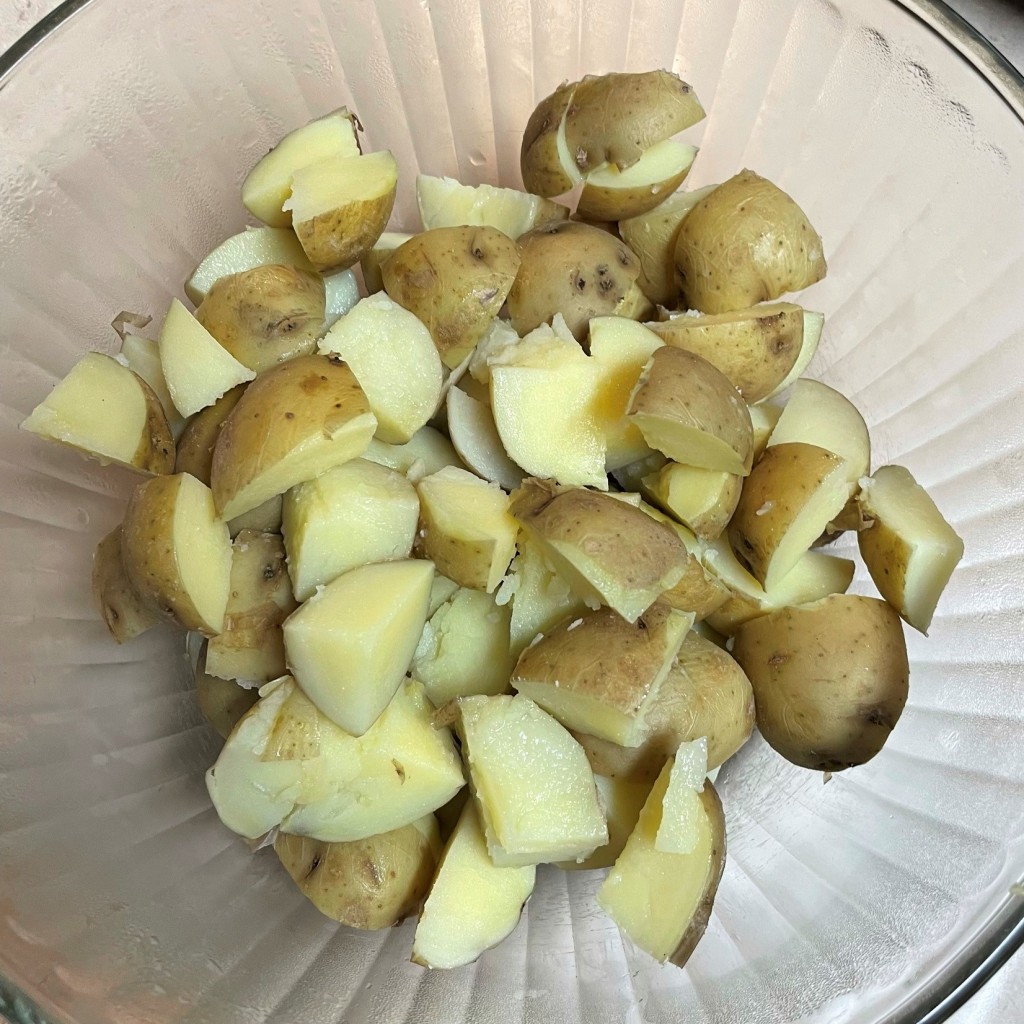
1 1/2 pounds small Yukon gold potatoes, boiled tender and chilled

1/3 cup mayonnaise

1/3 cup sour cream

A few shakes granulated garlic

Kosher salt and black pepper

1/2 cup bleu cheese crumbles

2 large scallions, cleaned and sliced (white and green parts)

Small handful of fresh flat-leaf parsley, chopped

Romaine or leaf lettuce leaves, for plating (optional)


Instructions

  1. Cut up the chilled cooked potatoes into bite sized chunks.
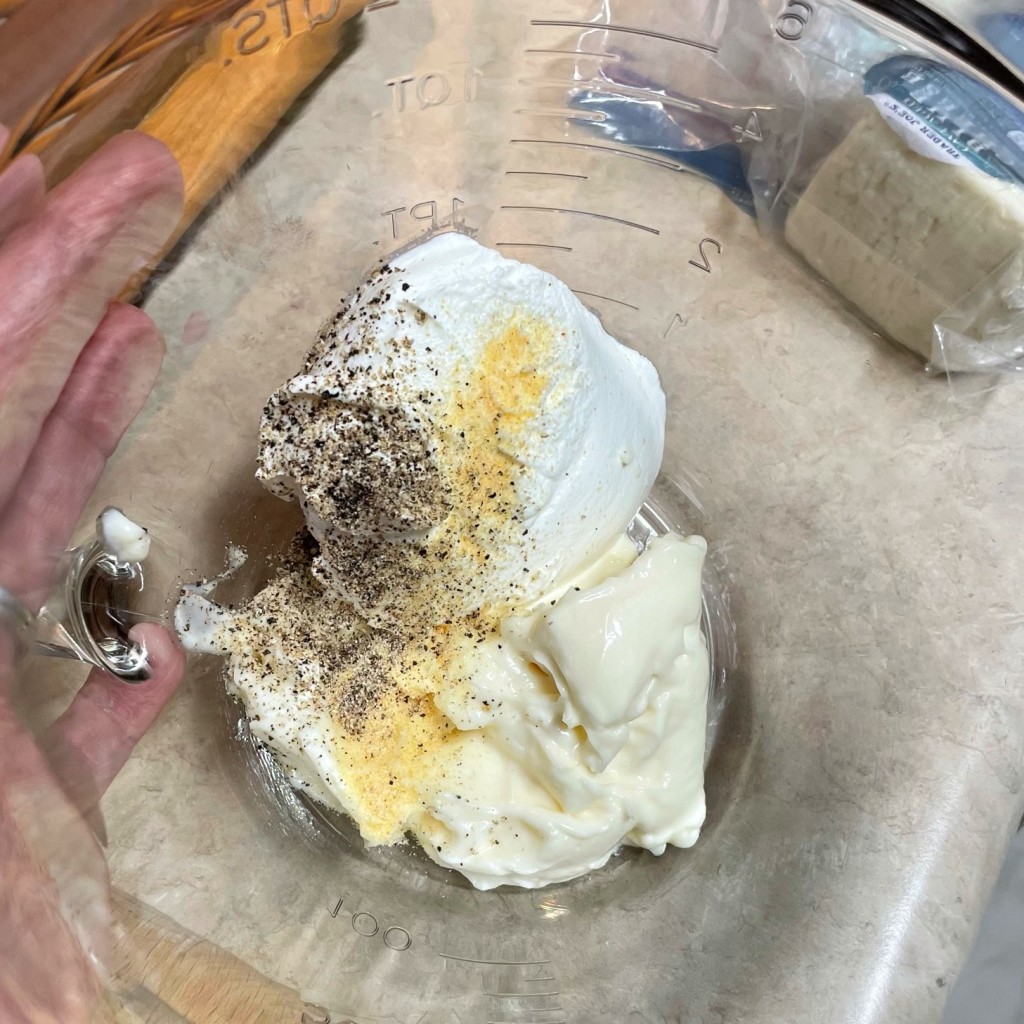
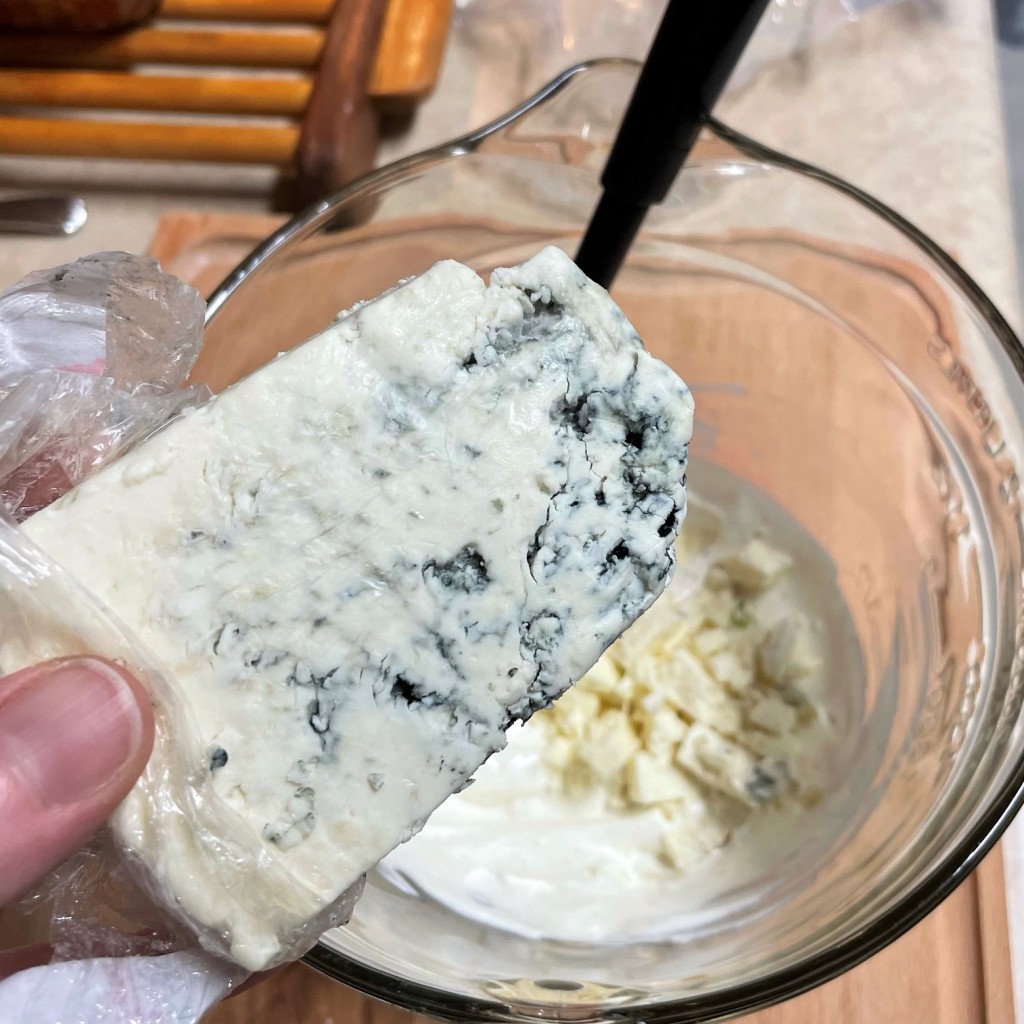
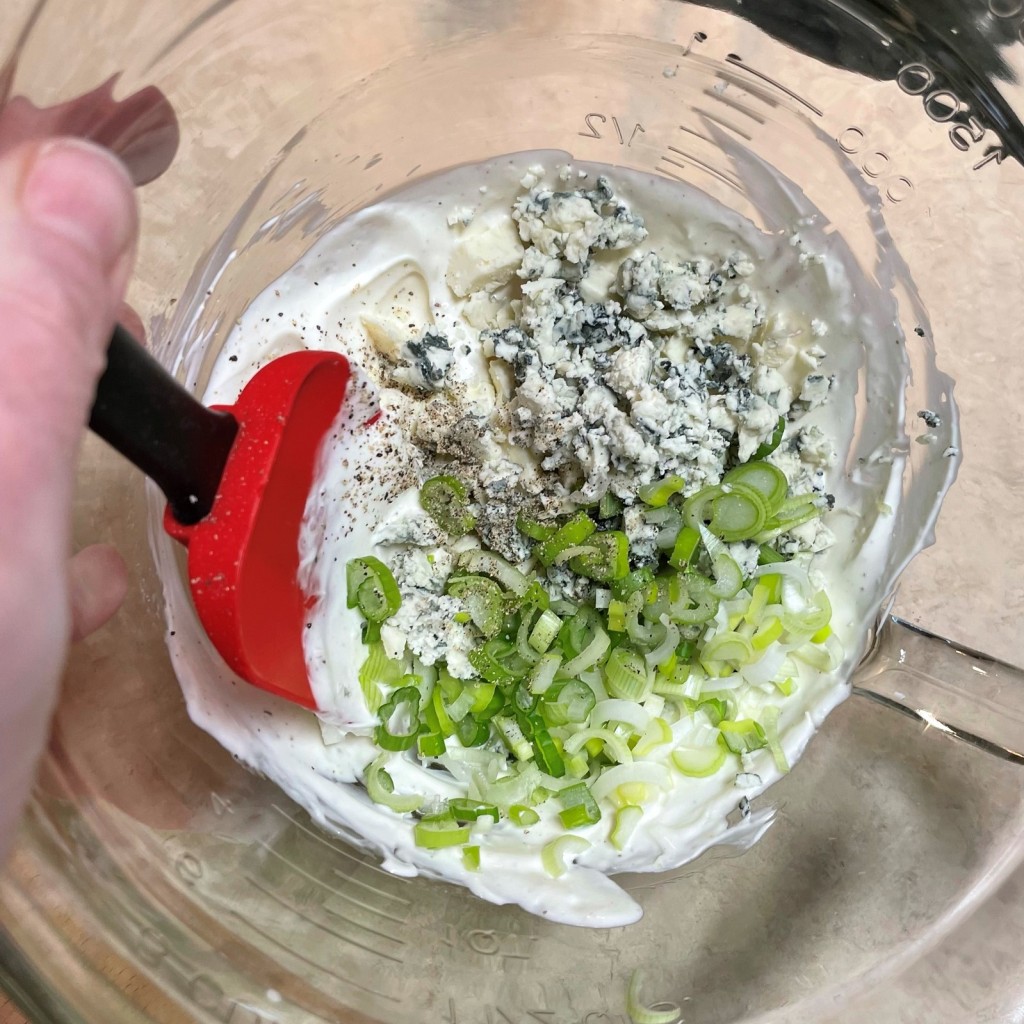
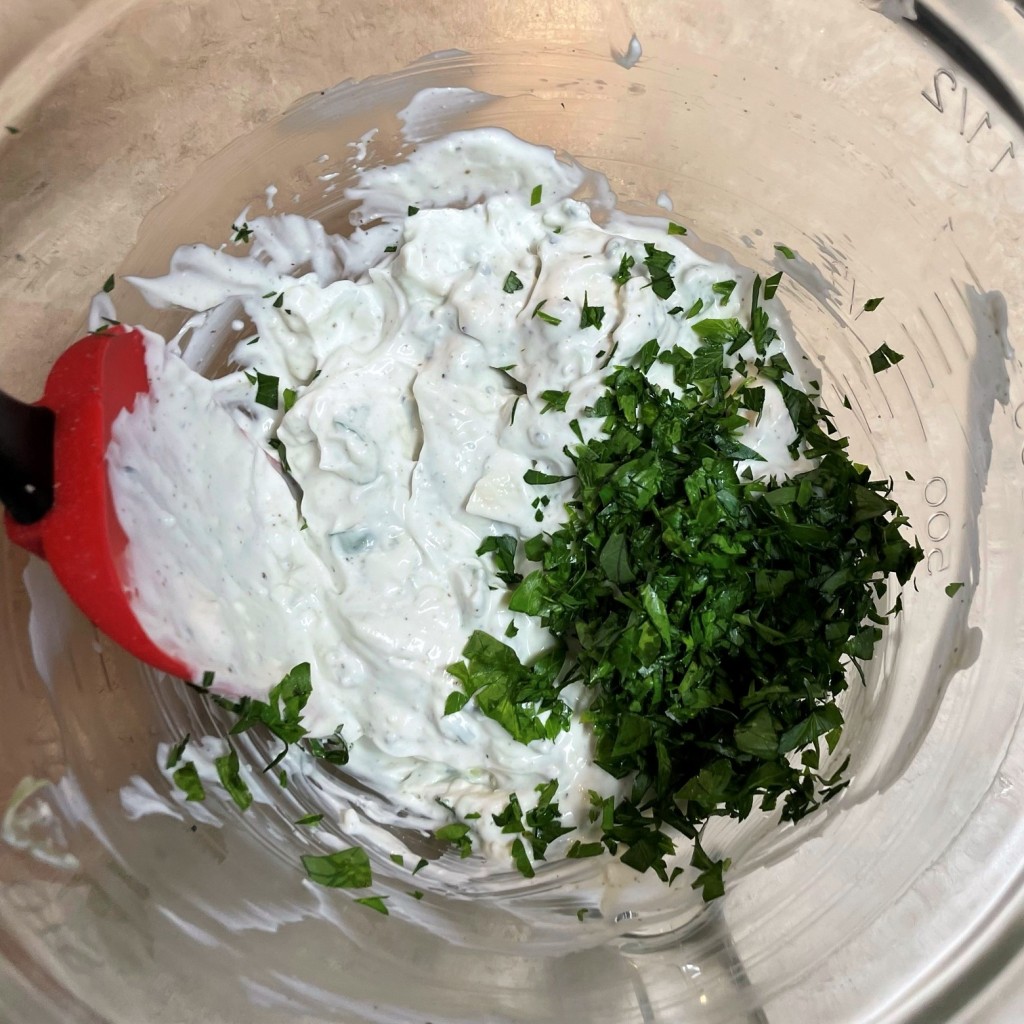
  2. In a large mixing bowl, combine mayonnaise and sour cream, plus granulated garlic, salt and pepper. Fold in bleu cheese crumbles and half of the scallions. Fold in chopped parsley.
  3. Add the chilled, cut-up potatoes and gently fold to combine with the dressing mixture. Adjust salt and pepper to taste.
  4. Plate onto a lettuce-lined platter and sprinkle with remaining sliced scallions.

Easy to notice that I was working with one good hand. My lettuce-lined plate is a little lopsided!

Catering tip: When serving any kind of side or salad for a group, present it on a platter rather than in a bowl. It allows guests to serve themselves from both sides of the table, and it looks prettier and larger!


Rhubarb-Berry Crunch

For at least three weeks, I had been watching all the markets I shop, waiting and hoping to see fresh stalks of spring rhubarb. It doesn’t seem to be a very popular item here in the South, or at least not as much as in my old stomping grounds in upstate N.Y., and there’s good reason—the winter soil is too warm in North Carolina. Rhubarb thrives in areas that have very cold winters, making it a common plant in the snow belt. Some folks around here have never even had the pleasure of tasting it.

When I was young, I remember my Gram always had rhubarb growing near a small outbuilding shed behind her house, and plenty of it. To find it locally, however, takes patience. When I do see it here, it is usually a small quantity, quite expensive, and often placed in one of the obscure sections of the refrigerated case, near the other “weird” produce items (think horseradish root and kohlrabi). I had even checked at the local farmer’s market, to no avail. One grocery produce manager, when asked about the expected arrival of rhubarb, looked puzzled and asked, “what does it look like?”

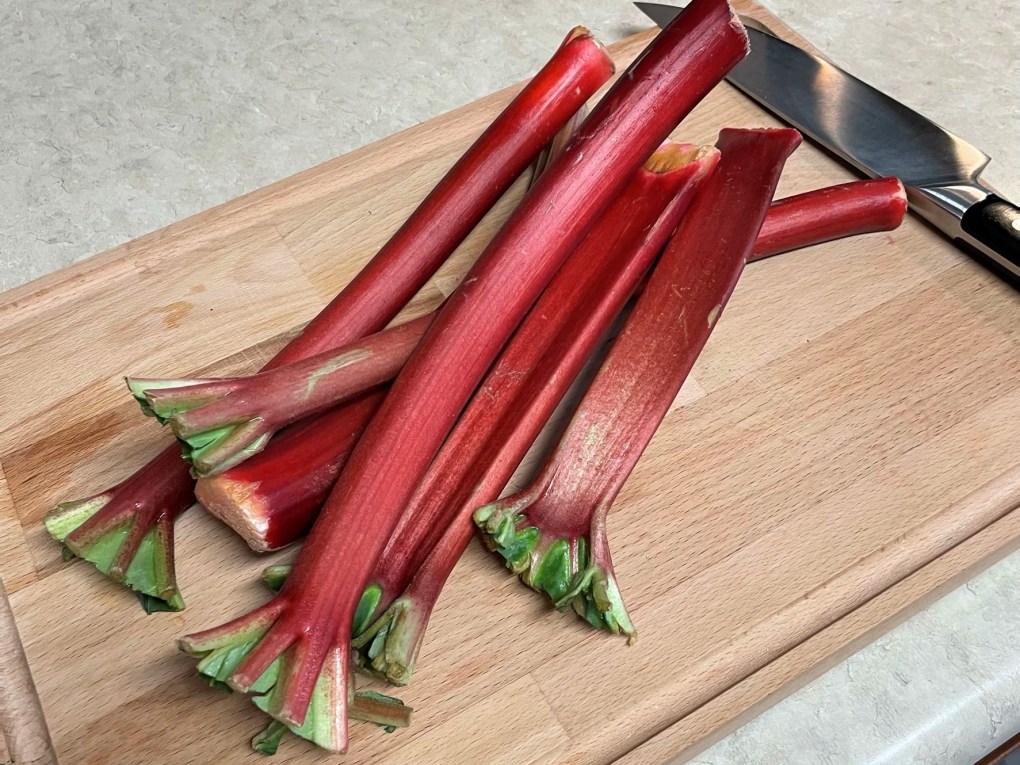
I always look forward to seeing these red beauties in the spring!

By the time rhubarb makes it to the supermarket, the leaves have been stripped, and just as well—they are loaded with oxalic acid, so they are inedible and even toxic. The stems, which range in color from bright red to pink to pale green, look like smooth celery stalks and they are equally crisp in texture. I am hard-pressed to describe the flavor of rhubarb other than to say that it is tart, maybe like a cross between a green apple and a lemon. Although technically a vegetable that can be eaten raw, most people cook rhubarb with sugar and use it as a fruit, especially in pies, crumbles, jams and preserves.

My Gram made a delicious rhubarb sauce that was as delicious to me as any applesauce, and I remember asking for it as a topping on vanilla ice cream. In the summer of 2011, on my last visit with my grandmother, who had relocated to Montana to be near my aunt, we enjoyed this dessert together. Lucky for me, my aunt happily shared her recipe for this yummy dessert, which is very adaptable to include other fruits, especially strawberry. Aunt Joy and I were reminiscing the other day about the times I visited her house when I was young, and she made memorable, mouthwatering strawberry-rhubarb jam. It’s a fantastic flavor combination!

Just a couple of days before my mandoline accident, when I decided to shave that extra 1/8” off the end of my finger, I had been overjoyed to finally find fresh rhubarb in one of the markets I shop. My usual time in the kitchen has been abbreviated by my injury (which is driving me crazy, if you want to know the truth), but I have a wonderful and willing husband, Les, who has been my “hands” for some the kitchen tasks that are tricky for me right now. I won’t say that it has all been smooth sailing (I am a bit of a bossy britches), but we are getting better at working together to make some great food, including this fabulous dessert. Les did all the washing and cutting of fresh ingredients, and I did more of the mixing.

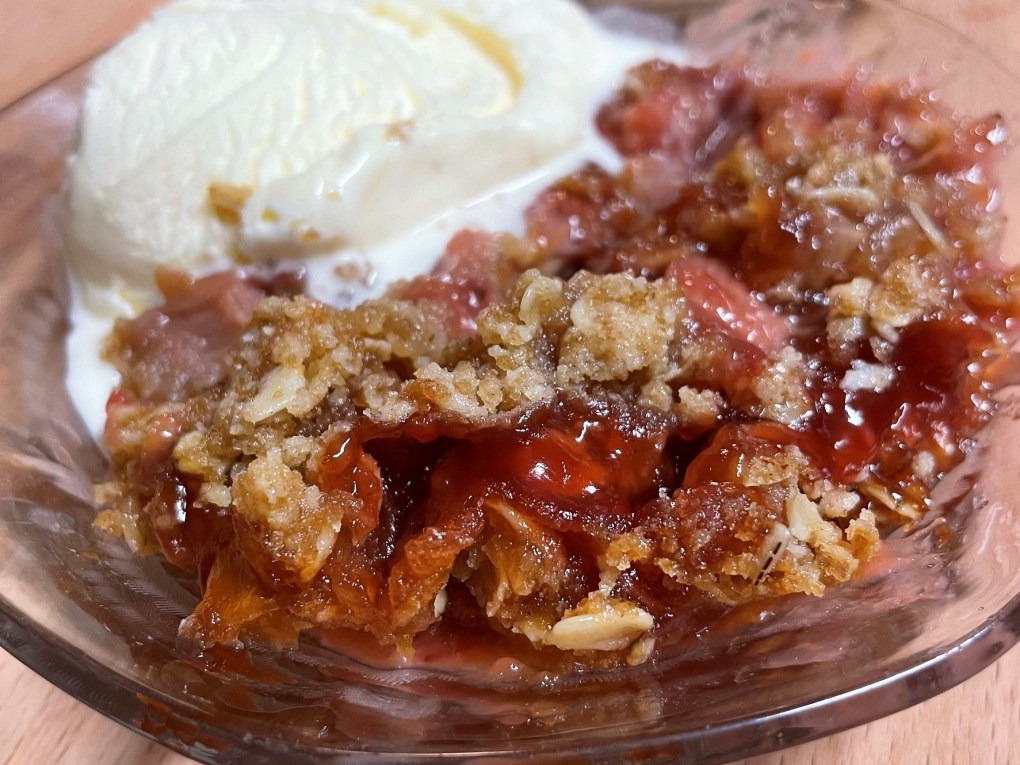
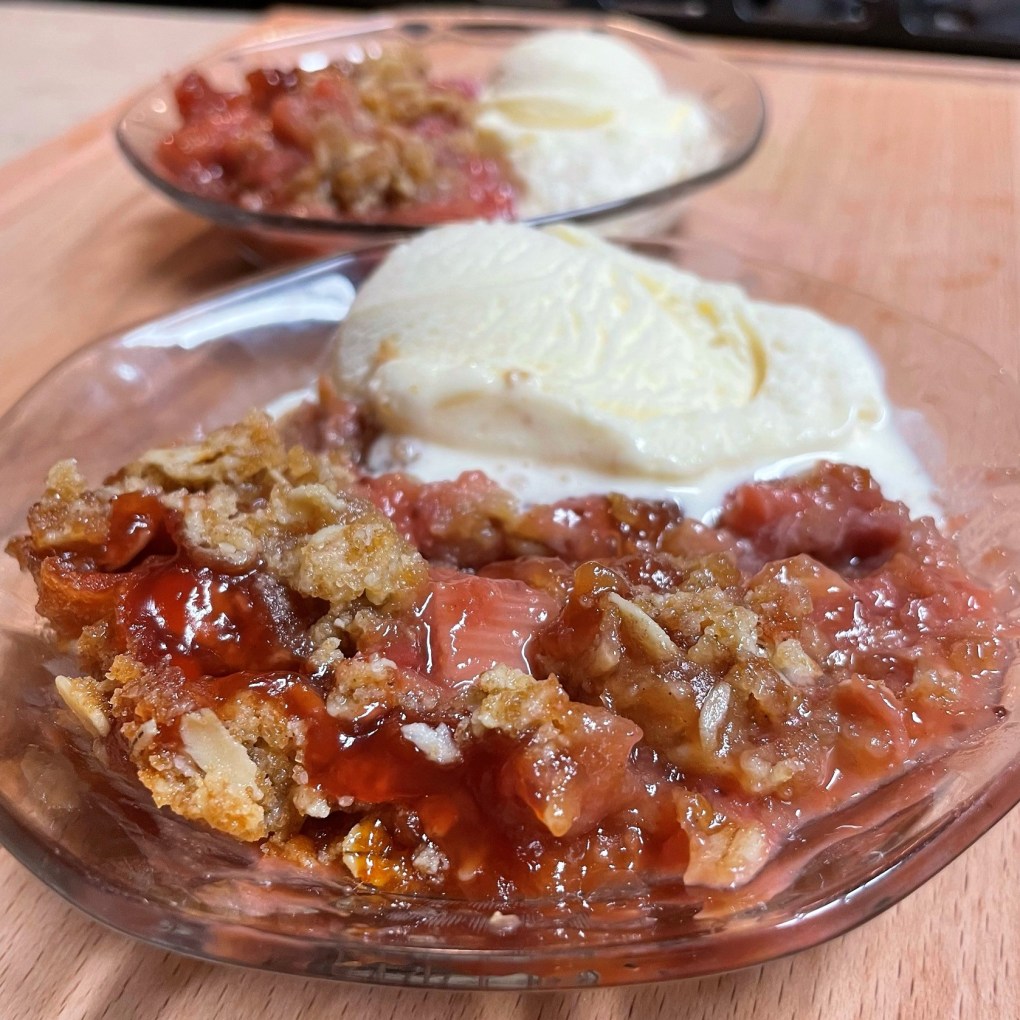
The filling is perfectly cooked and slightly sticky, and the oat topping is crunchy in all the right places. Served warm with vanilla ice cream, this is springtime heaven for my taste buds!

This delicious crunch was Les’s first-ever taste of rhubarb, so I leaned a little heavier on the strawberry than I otherwise would. I expected that his sweet tooth might reject the tartness of rhubarb on its own, but he really enjoys the flavor, so next time, I will go all-in with rhubarb. Assuming, of course, I can find it. 😊


Filling Ingredients

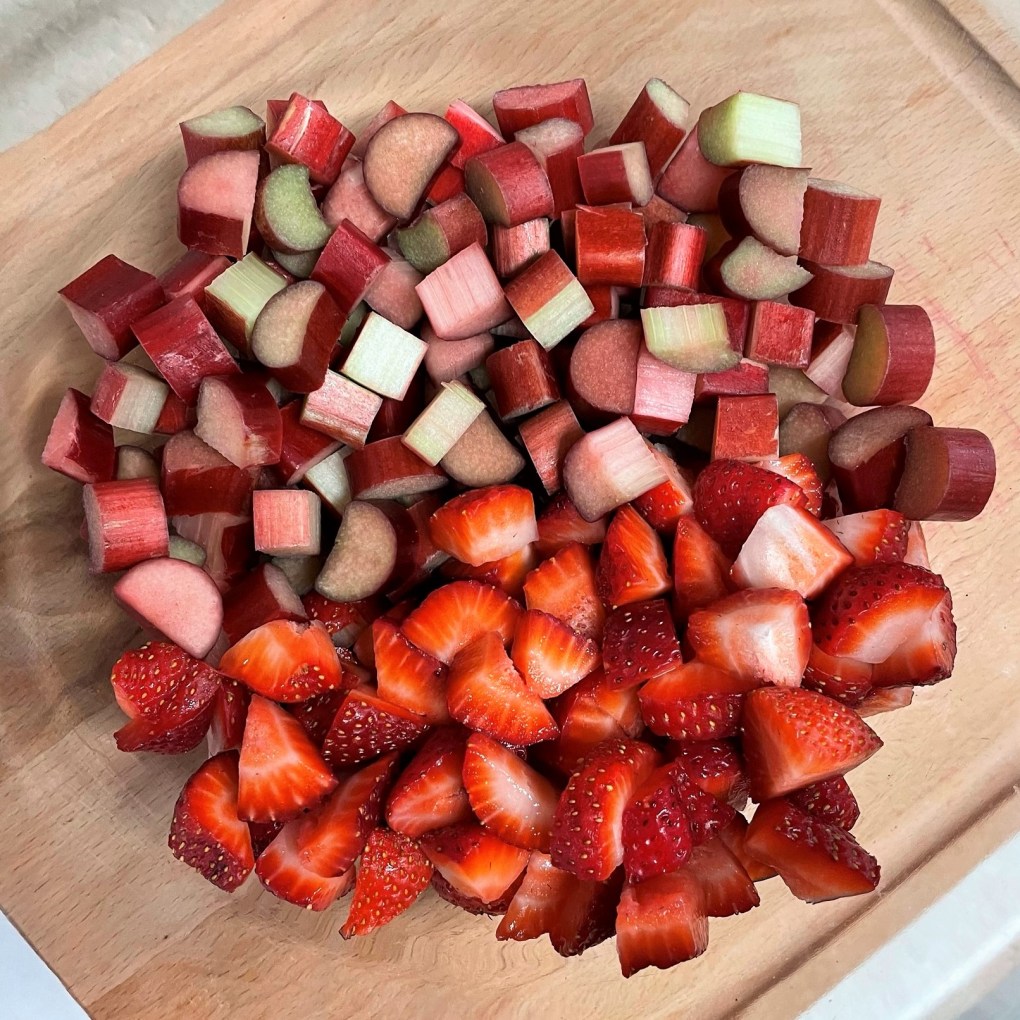
1 1/2 cups fresh rhubarb, cleaned and diced

1 1/2 cups strawberries, cleaned and halved

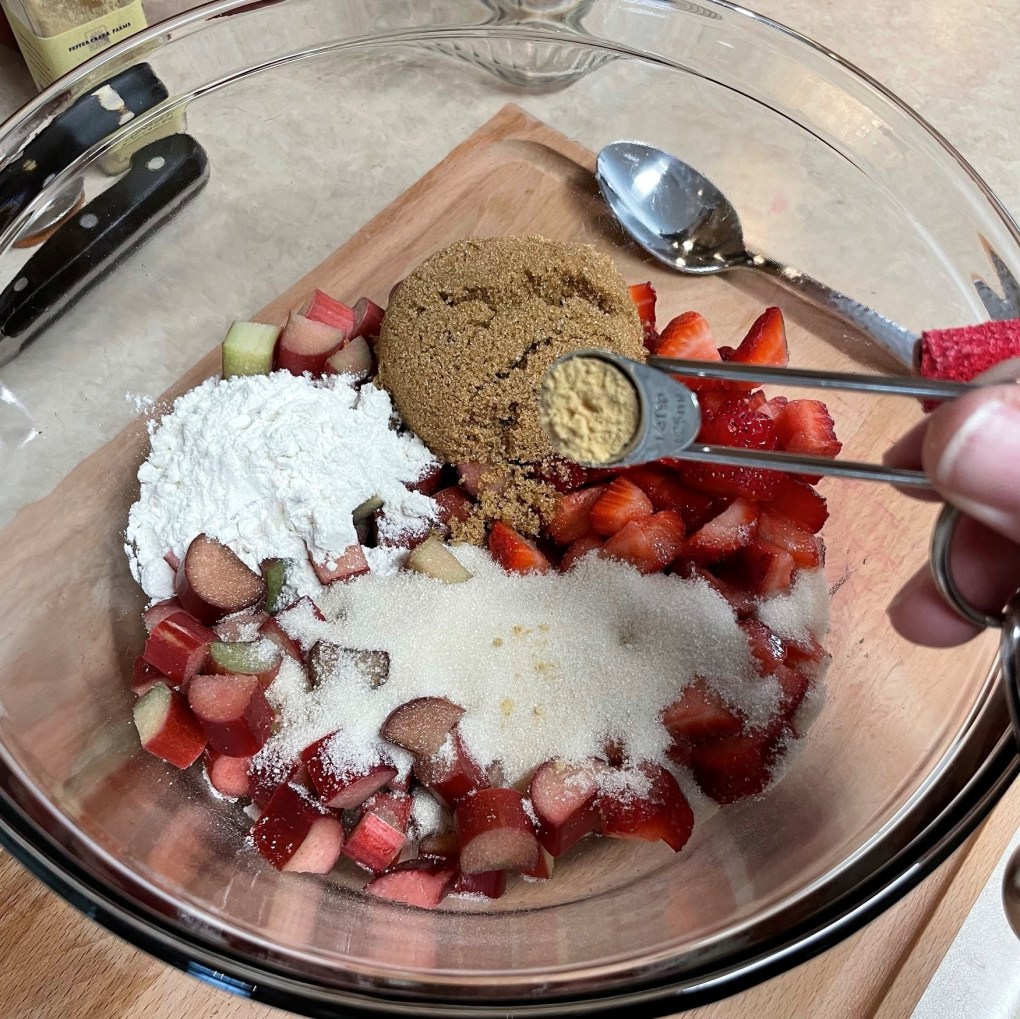
1/2 cup cane sugar

1/2 cup brown sugar* (see notes)

3 Tbsp. all-purpose flour

1/4 to 1/2 tsp. ground ginger


Topping Ingredients

1/2 cup brown sugar

1/2 cup rolled oats

1/2 cup all-purpose flour

1/4 cup whole wheat pastry flour* (see notes)

1/2 tsp. ground cinnamon

1 stick (8 Tbsp.) salted cold butter

Pinch of kosher salt


*Notes

My aunt’s original recipe calls for 1 cup sugar, but I split the amount between regular and brown sugars. I use brown sugar in strawberry shortcake and love the rich, warm flavor. Use all regular sugar if you prefer.

I like to use some portion of whole wheat flour in all my baked goods, but if you don’t have whole wheat pastry flour, increase the amount of all-purpose to 3/4 cup.


Instructions

  1. Preheat oven to 350°F, with rack in center of oven.
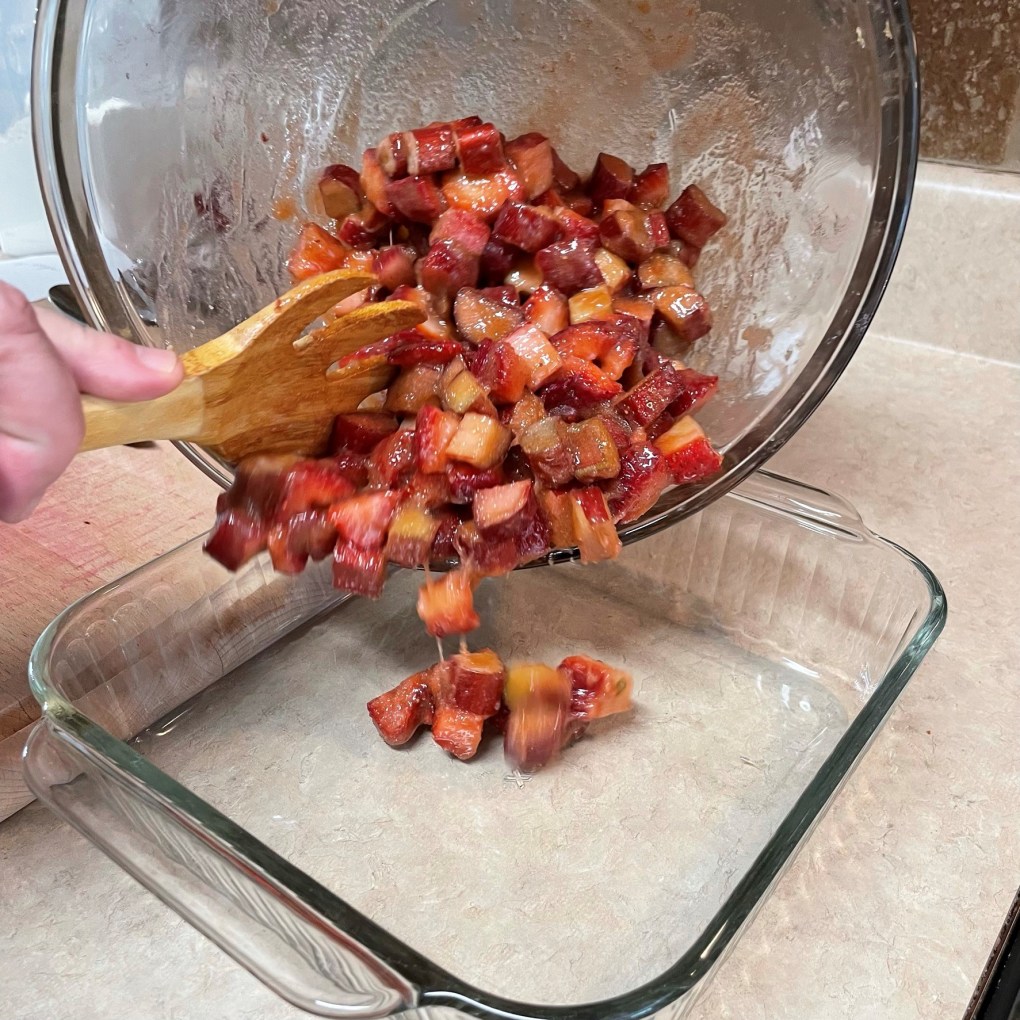
  2. Toss together rhubarb, sugar, flour and ginger transfer into a buttered 8 x 8 glass baking dish.
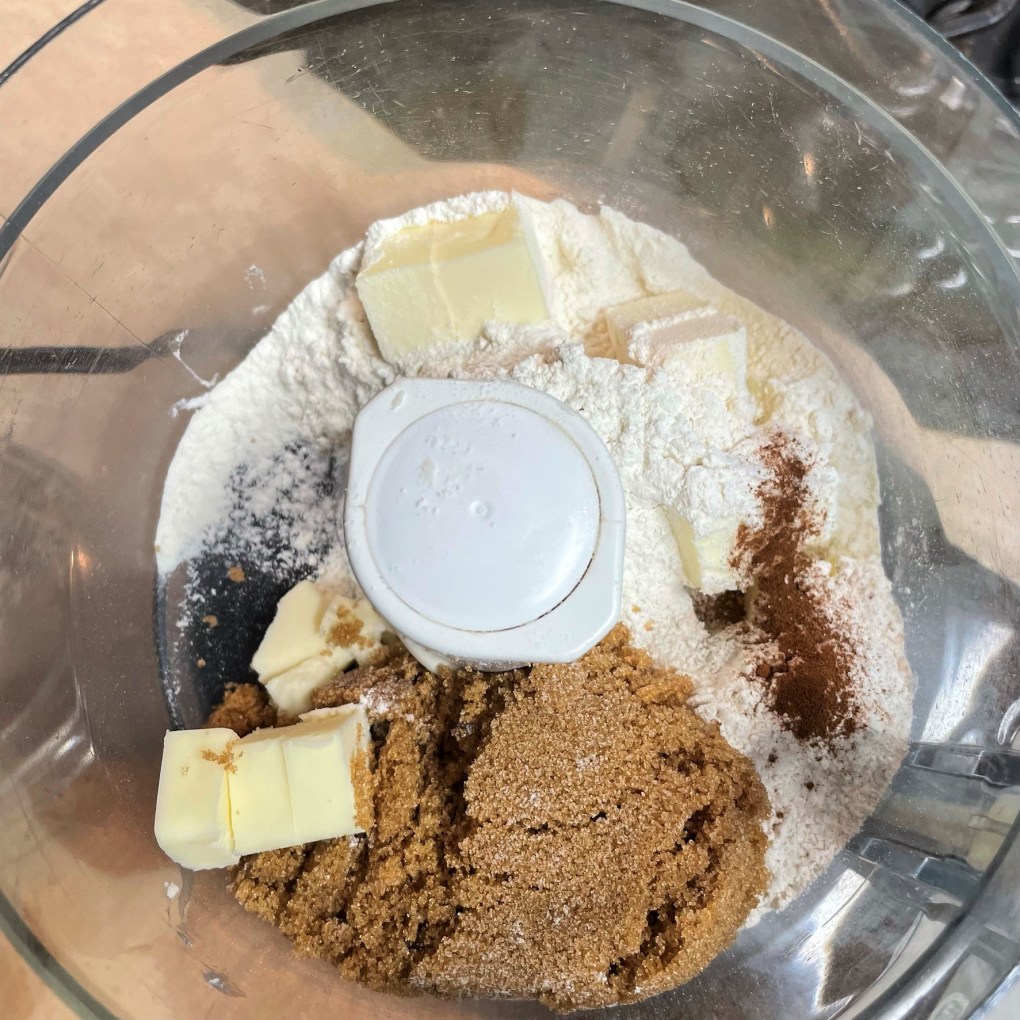
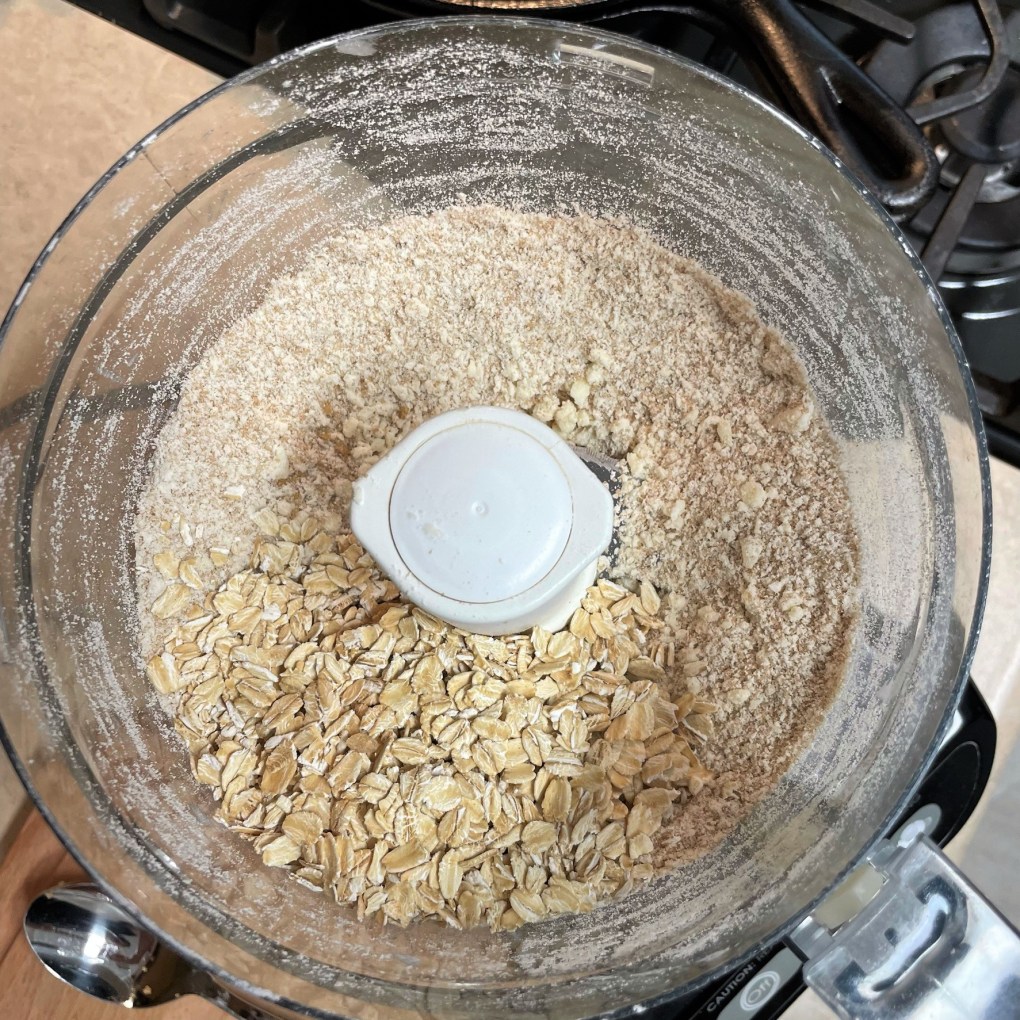
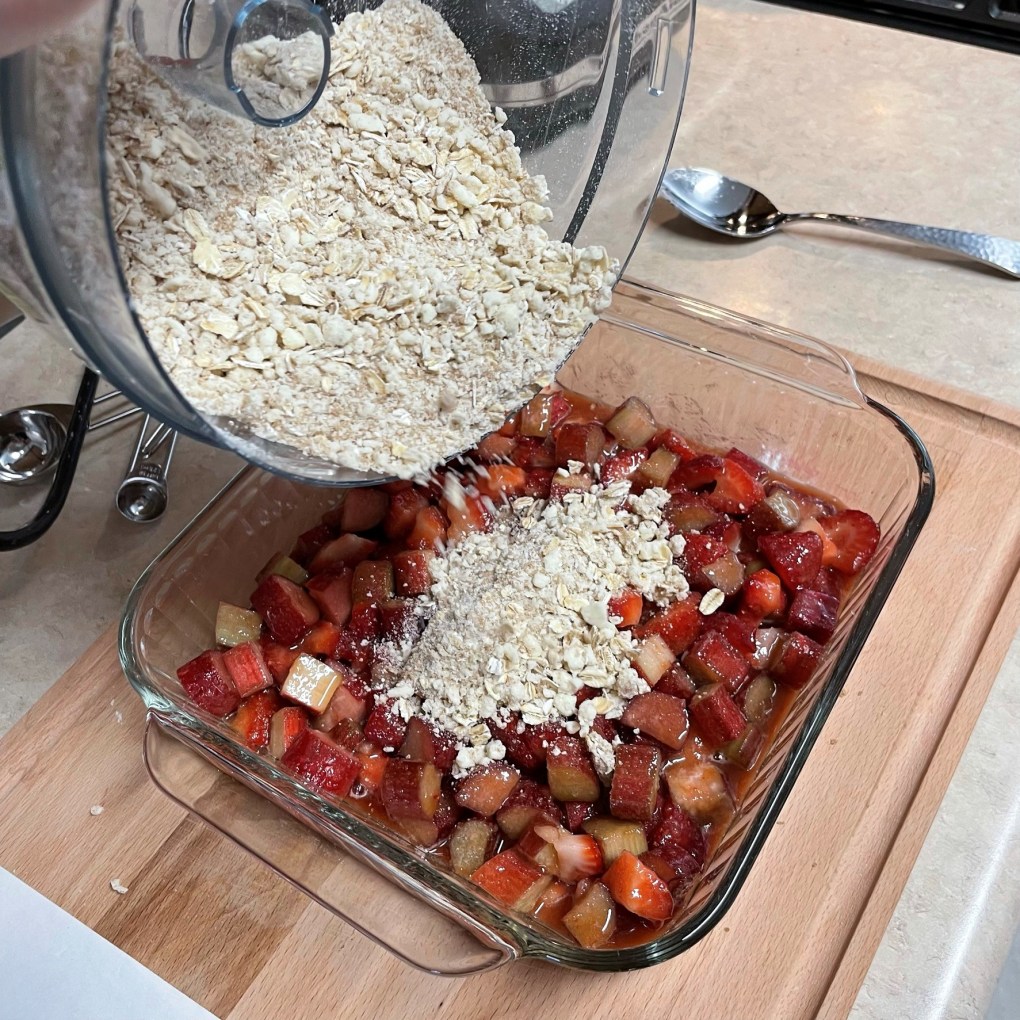
  3. Use a pastry blender or pulse with food processor to combine flour, brown sugar, cinnamon and butter until mixture appears as crumbs. Toss or lightly pulse with oats just to combine.
  4. Spread oat topping over rhubarb filling. Sprinkle the top with a pinch of kosher salt.
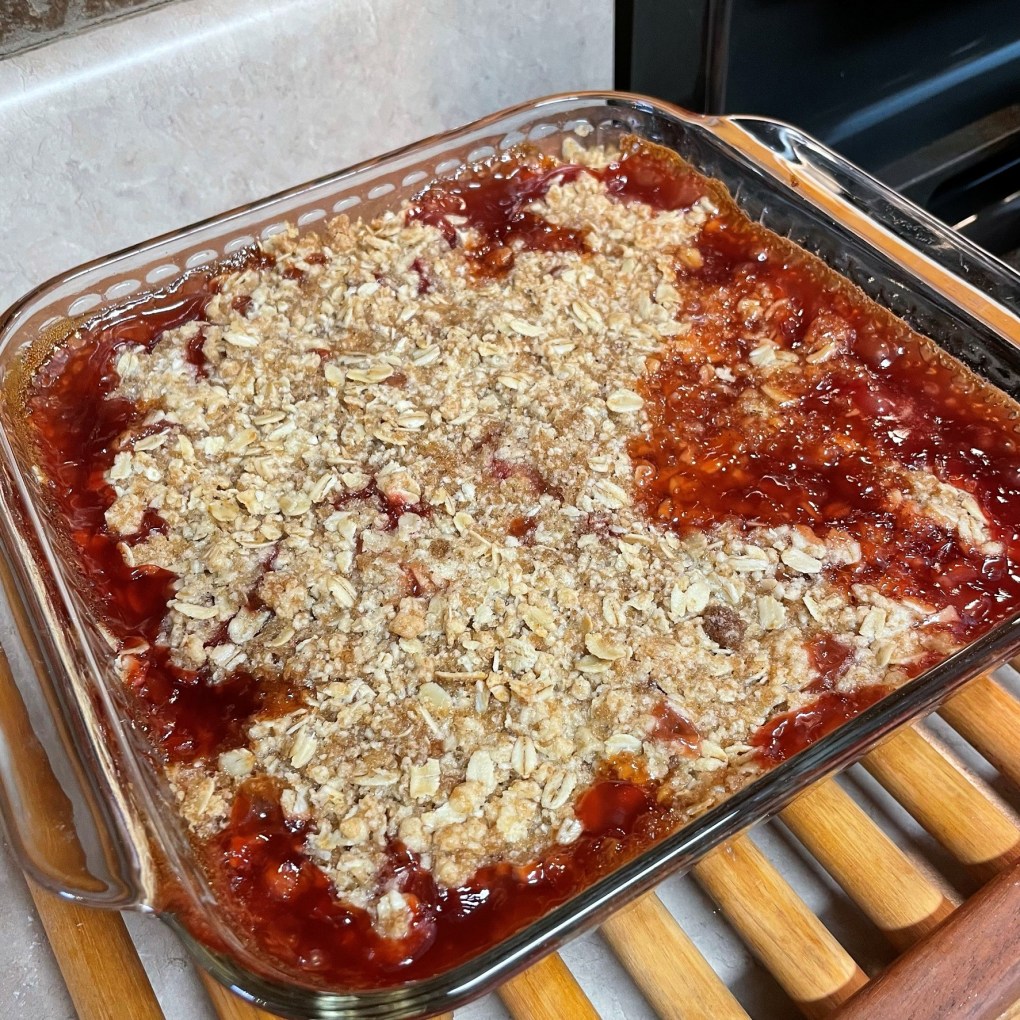
  5. Bake at 350° for about 40 minutes, until oat topping is browned and crunchy, and filling is bubbling up around it.
  6. Serve warm, perhaps with vanilla ice cream. Store leftovers in the refrigerator, and reheat for additional servings.
I especially loved serving this in my Gram’s dainty, vintage dishes. Aunt Joy sent these to me after Gram passed away.


Buttered Red Bliss and a Pinch of Thyme

My friend, Tammy, was accustomed to bossing people around—politely, of course, because this is the South.

“We need you in the kitchen on Friday,” she declared. “Can you be there around noon?”

Her proposal, more like marching orders, was nonetheless music to my foodie ears. It is not a stretch to say that meeting Tammy, events manager for a local catering company, was a pivotal point in my culinary experience.

As I have mentioned many times, I learned all the basic, important cooking skills from my grandmother. In Gram’s kitchen, I learned to sear meat before roasting, to blanch vegetables before freezing and to sift flour before measuring. I learned plenty about cooking safety, too—including proper use of an old-school pressure cooker and how to not blow up the kitchen when lighting the gas oven. That second lesson was temporarily forgotten when I was 9 and I was “teaching” the babysitter how to make cinnamon rolls. I was lucky that I only lost my eyebrows that day.

My finer culinary skills, however, were honed in a different place and time, when I was all grown up and living in Greensboro, North Carolina, hundreds of miles away from Gram. At 28, I was already a pretty good cook (said my friends), and I was well on my way to becoming a full-fledged foodie. Being a disc jockey had led to delectable restaurant experiences, as record company reps were always wining and dining us at the nicest places in town. Plus, we frequently had the unbearable responsibility of accompanying contest winners on fabulous vacations and getaways, including cruises, week-long events at Walt Disney World (where I met Alex Trebek) and even a live broadcast from Jamaica. It was rough, but someone had to do it, and the food was always incredible.

Meeting our listeners was one of the best parts of the job for me, and I had plenty of occasions to do so. Tammy and another friend, Lee, were regular, loyal listeners of our morning show (P-1 is what we called them in the biz), and they started “stalking” me at my live-on-location visits to car dealerships and retail stores. After several of these visits, Tammy and Lee (or “Lee-Lee,” as we all called her) invited me to join them for after-work drinks at their favorite Friday hangout, which happened to be exactly three blocks from the radio station. In no time, we became “The Three Amigos,” and as it became obvious to Tammy that I knew my way around the kitchen, she decided that I could be an asset to the crew in the catering kitchen.

A Pinch of Thyme was one of the premiere caterers in the area during that time, and the kitchen was slammed during the spring and fall “furniture markets.” That was the International Home Furnishings Market in nearby High Point—it drew upward of 70,000 buyers, dealers, designers and manufacturers from all over the world—and it was an all-hands-on-deck situation for caterers, who scrambled to meet the crushing demand for fancy foods. There were many cocktail parties, receptions, box lunches and fully catered dinners to be prepped, and Tammy’s invitation was my cue to get in there and help them get it all done.

I showed up on Friday, donned my white apron and got to work, following whatever instructions Chef Rodney barked out. Tammy stopped by the kitchen periodically to check on things, and she was well-known for telling us, as she handed over yet another client order, “y’all can handle it.” And we always did, despite some near-disasters that I’ll save for another day.

The stories in my head are many, but what I’d like to share today is one of the first, most essential lessons I learned during my time in the “Pinch” kitchen: simple is always best, and it is usually the smallest “tweak” that makes the most important impact on a dish, whether that is a squeeze of lemon, a quick scatter of finishing salt or, yes, a pinch of fresh herbs. There is no need for grand gestures, and the client requests proved that time and again.

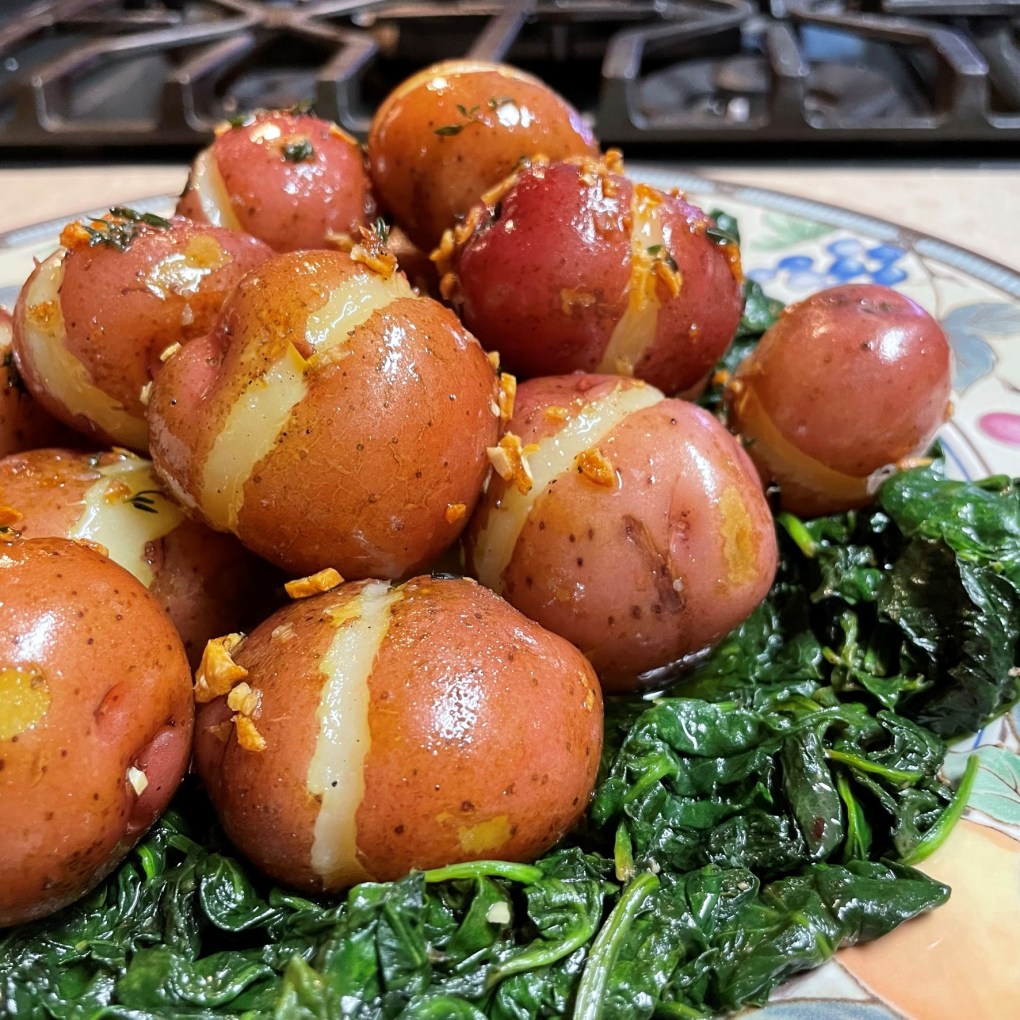
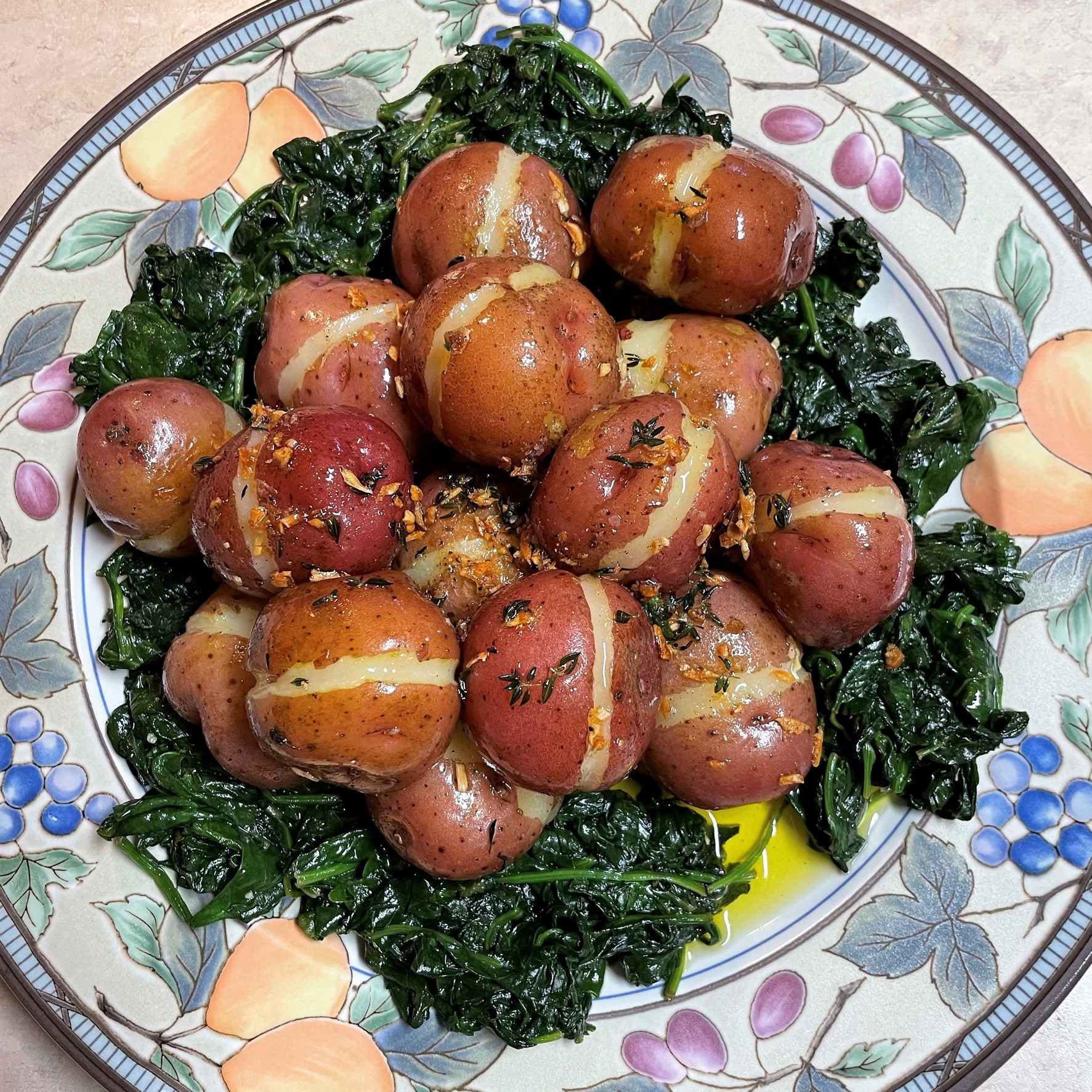
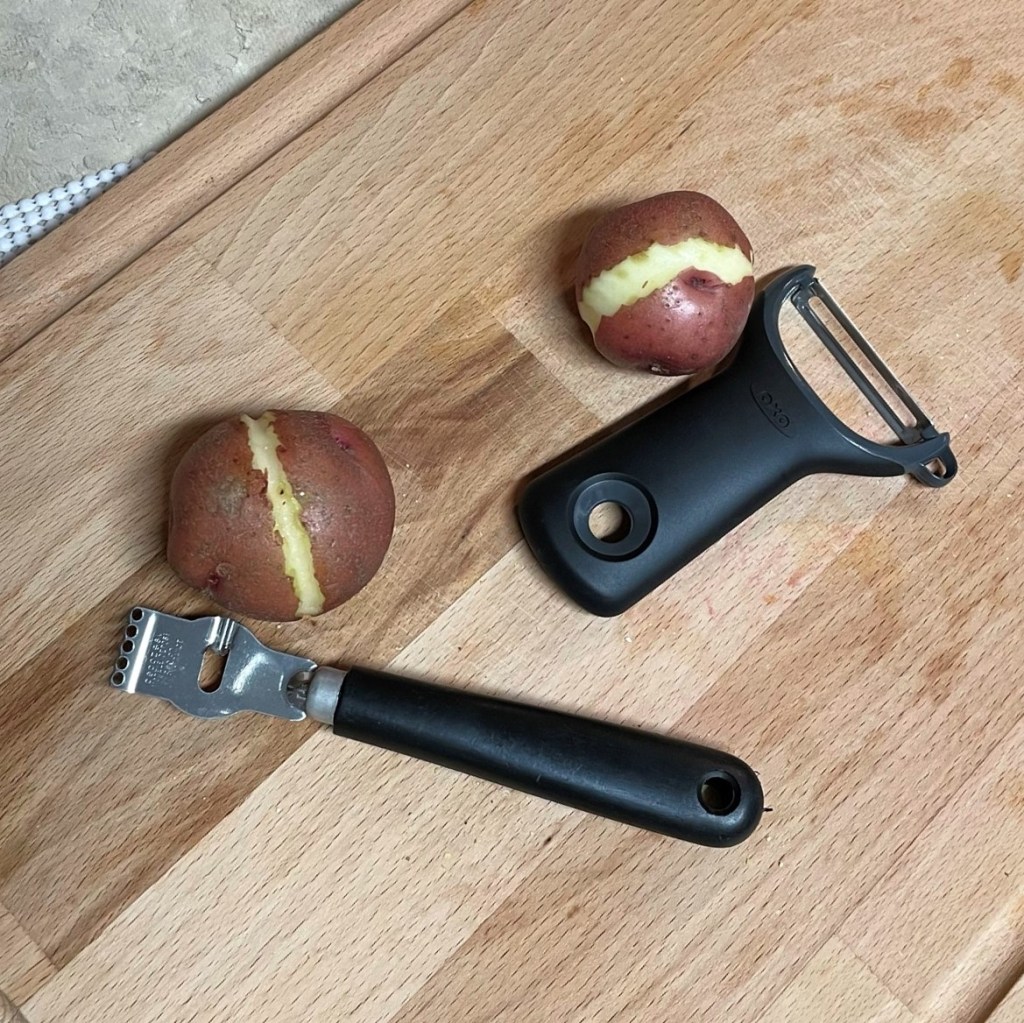
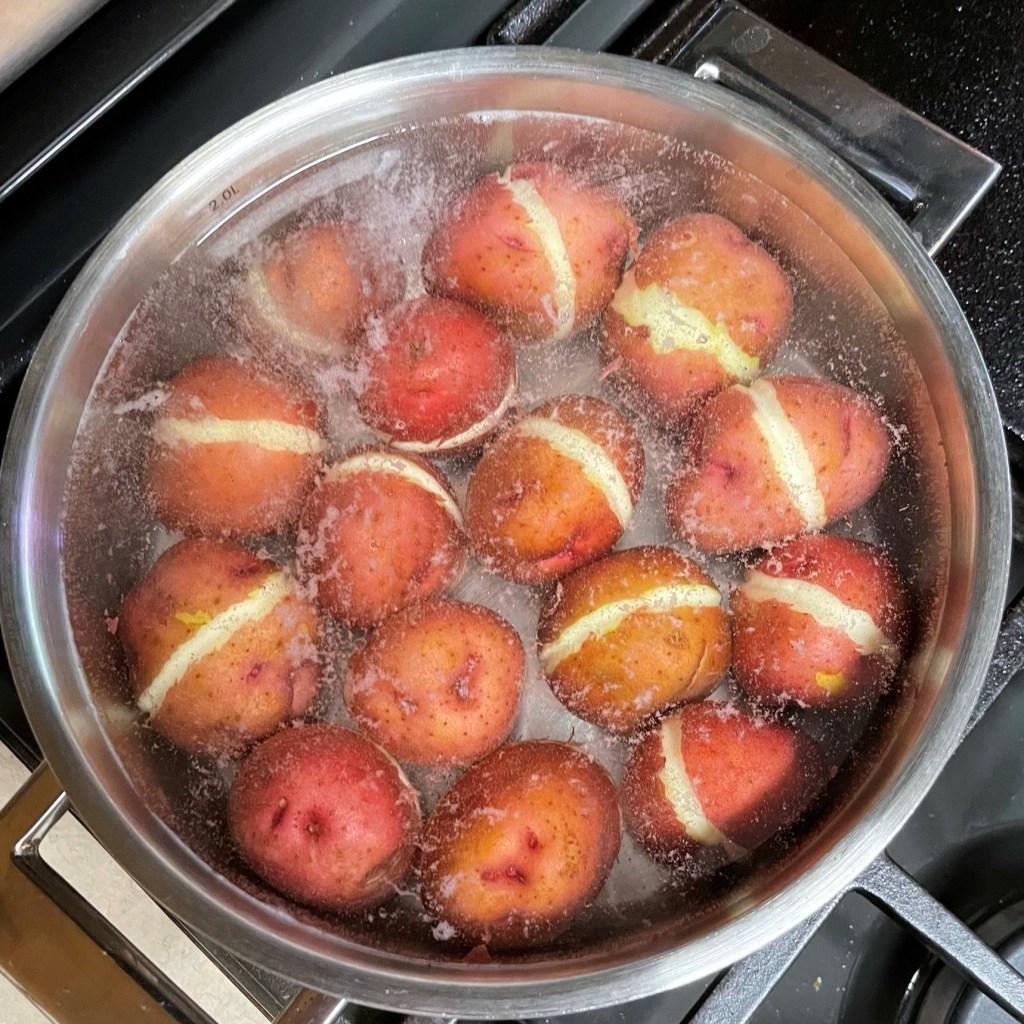
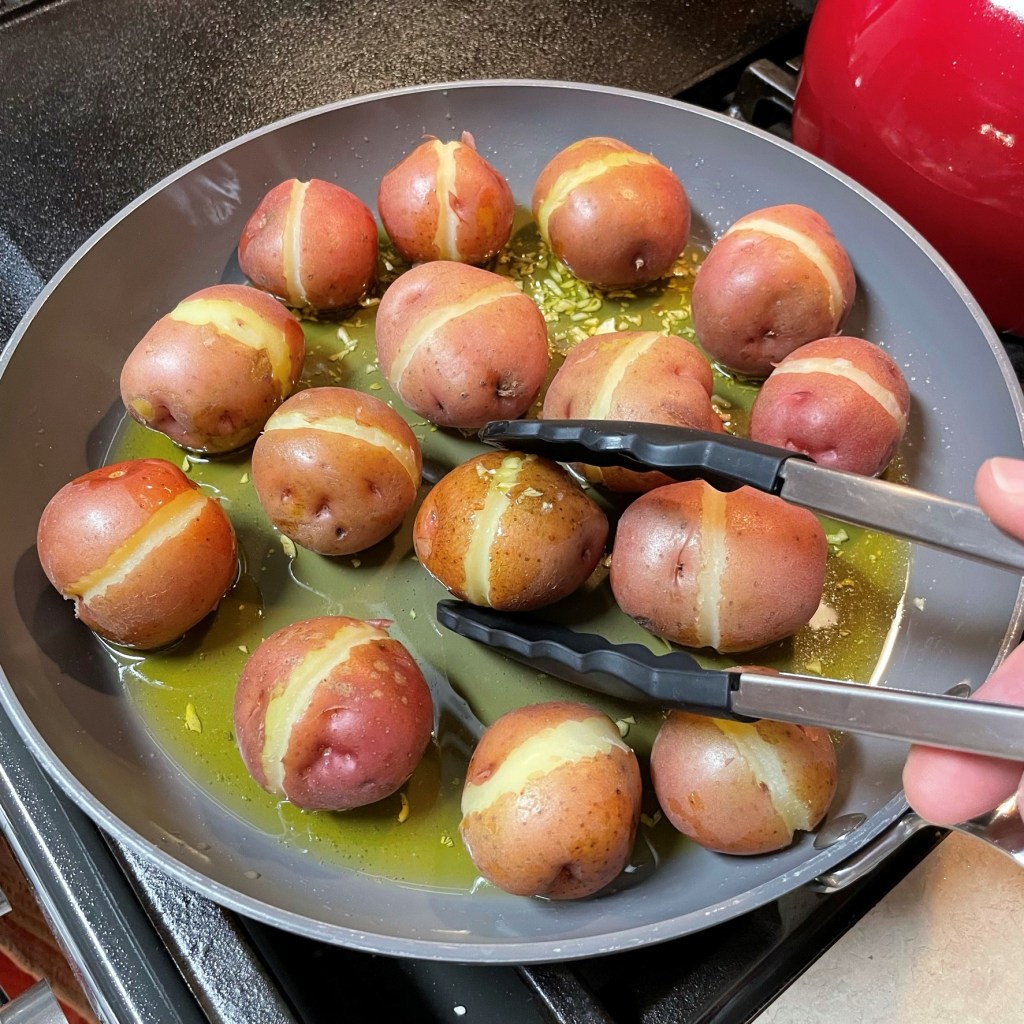
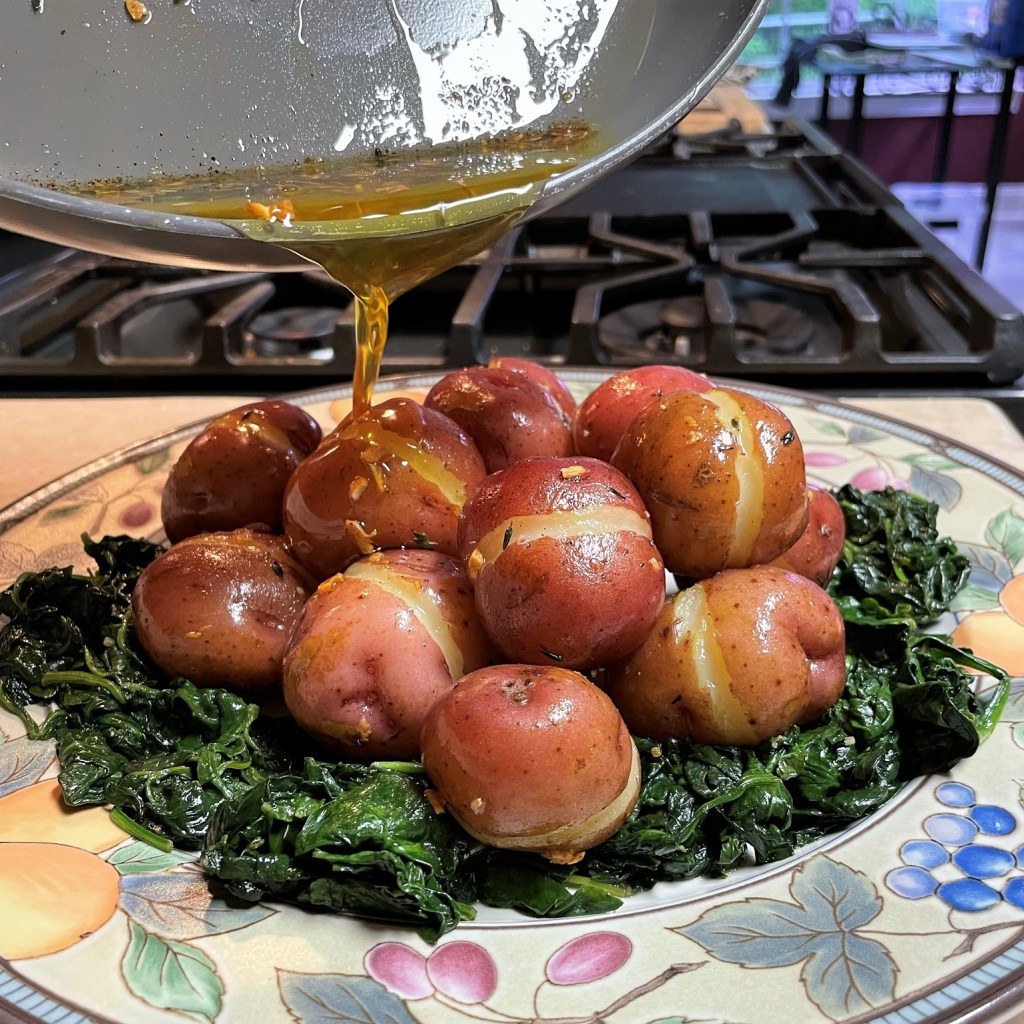
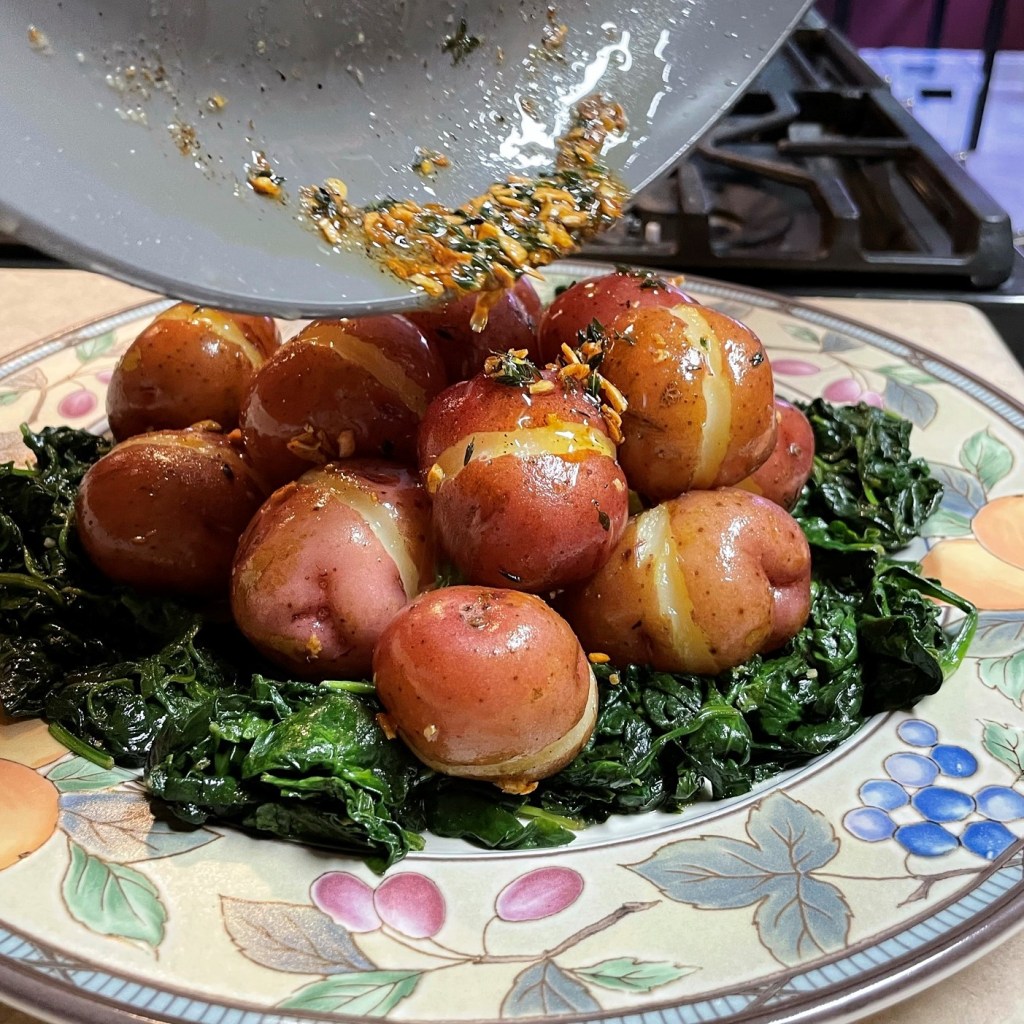
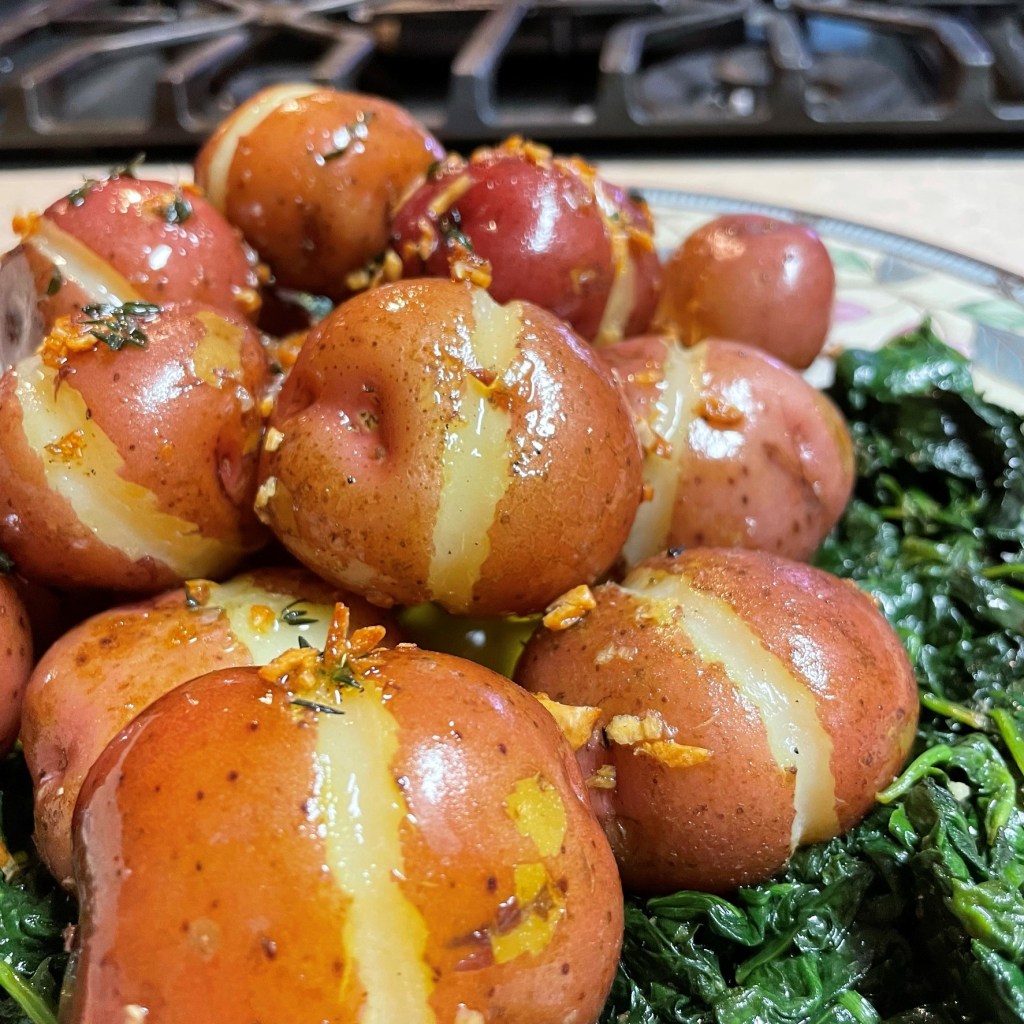
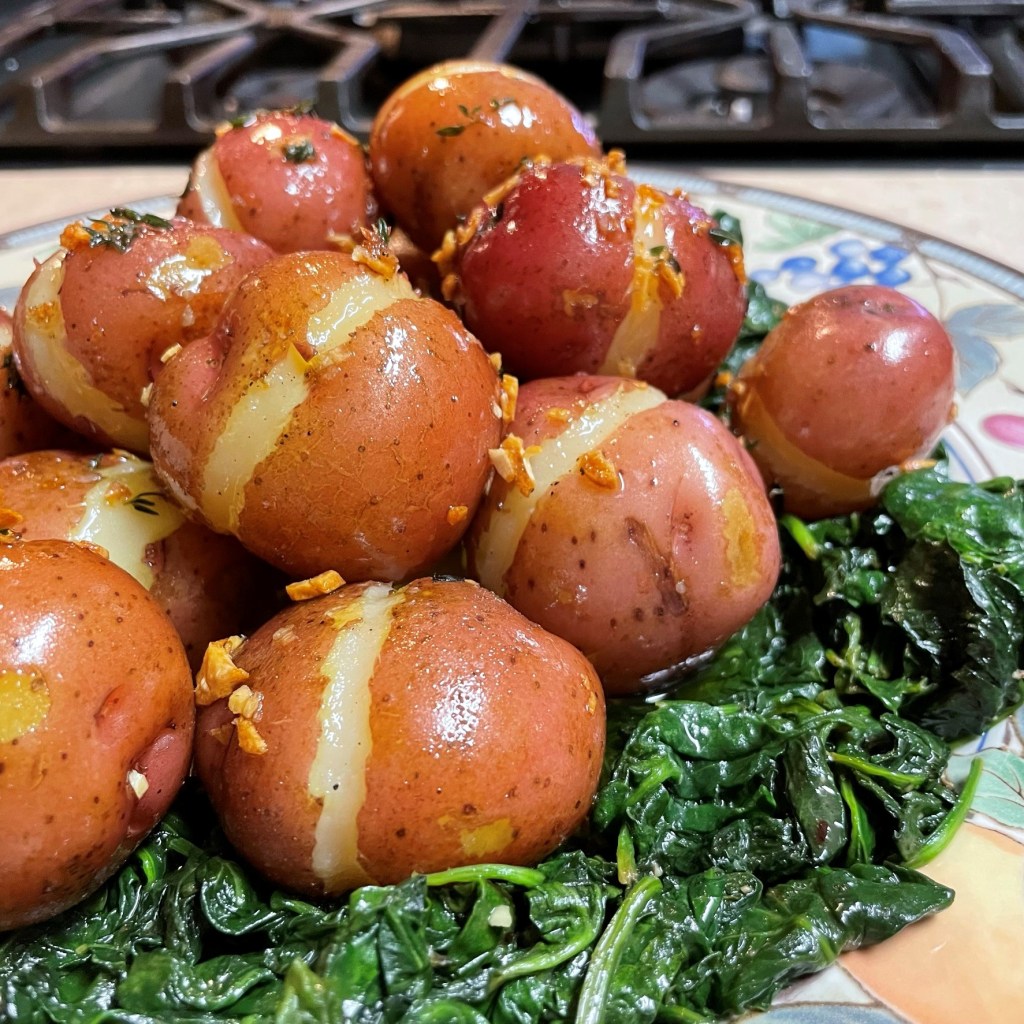
We served up all varieties of side dishes, but it was always the buttered red bliss potatoes that made our clients swoon. That’s what I’m serving up today. The presentation of these humble early potatoes is elevated, with a distinctive, thin strip of peel removed from each perfect little spud. But the ingredients list is short and sweet: new potatoes, butter, garlic, salt and pepper.

Also, obviously, a pinch of thyme. 😉

Catering trick: If you want your food to make a statement, put a frame around it. These buttered red bliss beauties are escorted by a bed of simple sauteed spinach.

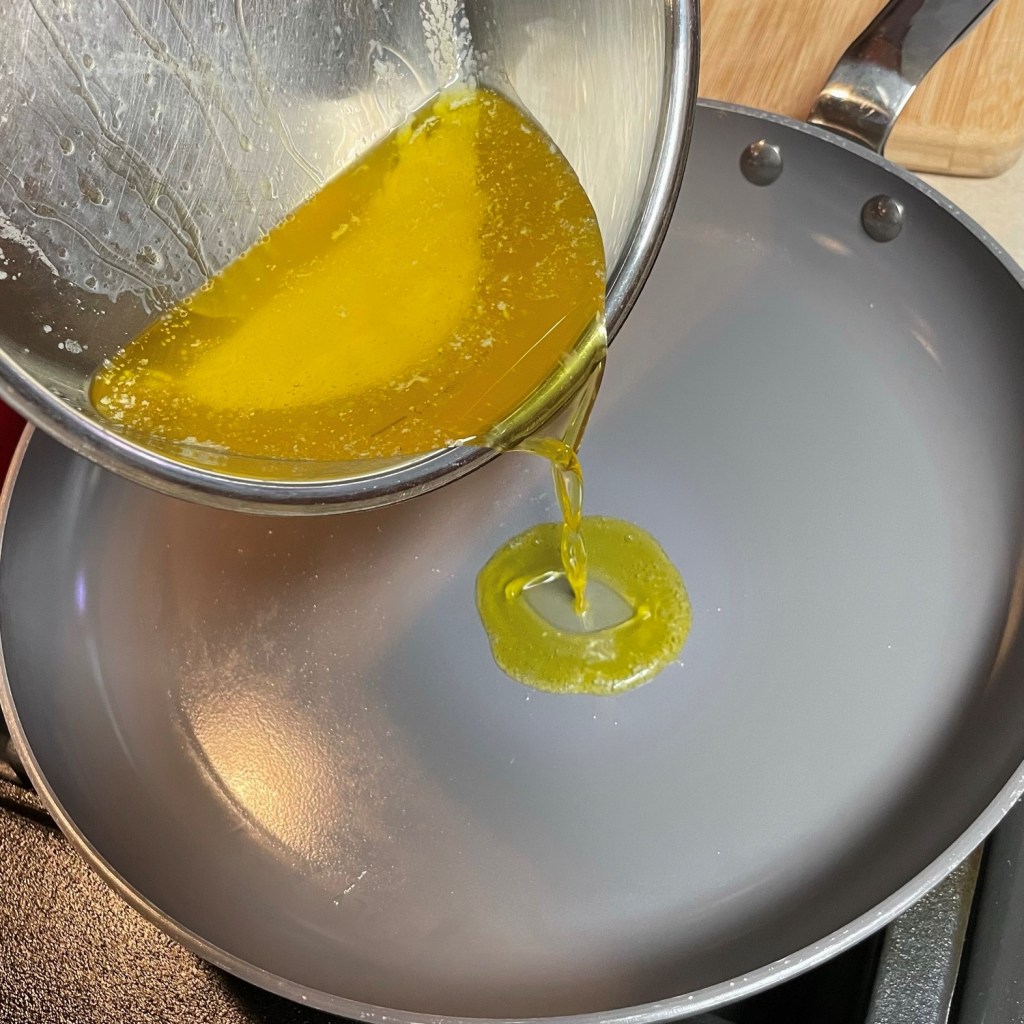
These potatoes are cooked twice—simmered to produce a tender, creamy interior, and then lightly pan roasted in clarified butter, infused with garlic and herbs, for a perfect finishing touch. The delicate flavors do not overpower the potato, and the result complements any main dish on your table. If you wish to make it vegan, substitute a mild-flavored, extra virgin olive oil for the butter.


This post for simple, but elegant, buttered red bliss potatoes is dedicated to the memory of my friend. We would be celebrating Tammy’s birthday today, and you can bet there would be some amazing food on the table, and Tammy’s favorite chardonnay would flow freely, as would the reminiscing and giggling over inside jokes. Sadly, we lost her three summers ago, following her very brave (second) battle with cancer. I think about Tammy every time I put on my white apron, though today it is a bit tattered and stained. It is still my favorite. 🙂

(L to R) Tammy, Terrie and Lee-Lee, back in the day! We were, as they say, thick as thieves! ❤

Makes about 6 servings

Ingredients

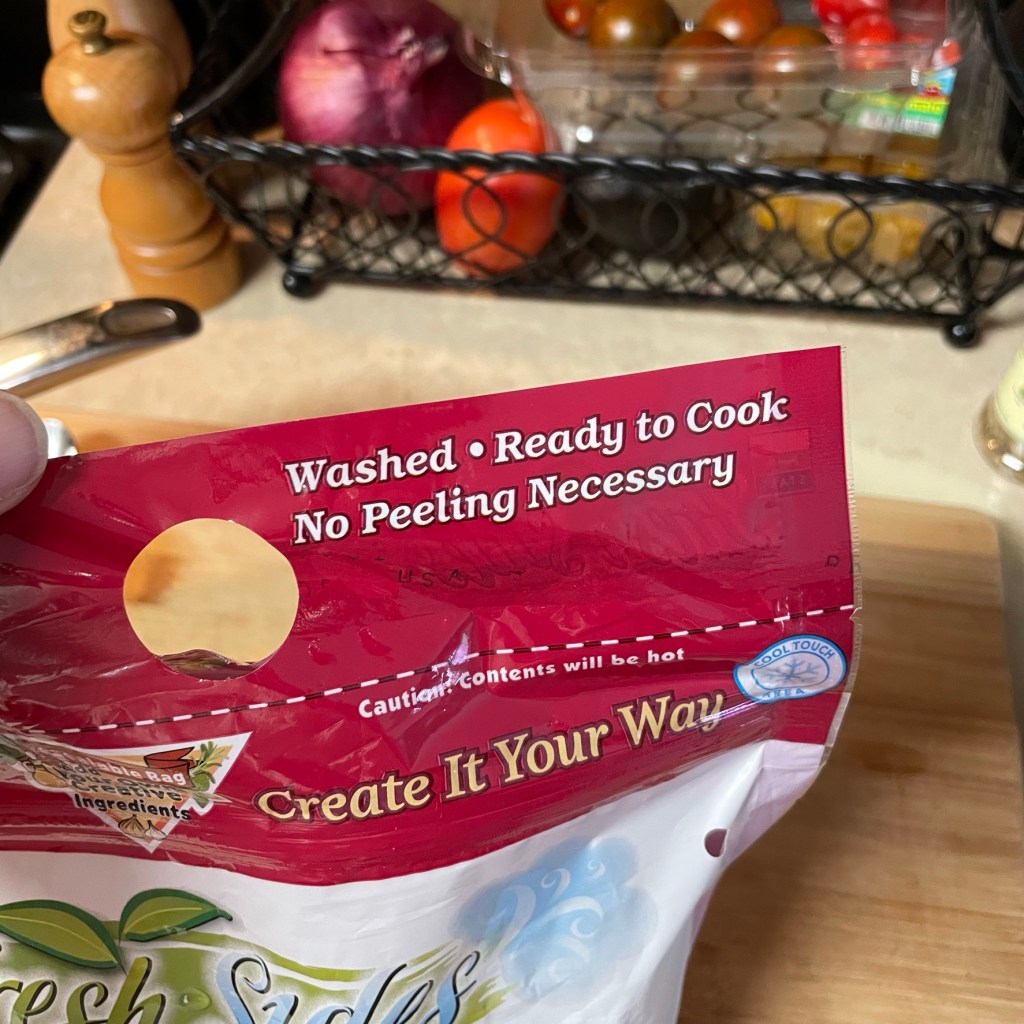
2 lbs. red baby (new) potatoes* (see notes)

6 Tbsp. clarified butter*

2 cloves fresh garlic, finely minced

Kosher salt and freshly ground black pepper

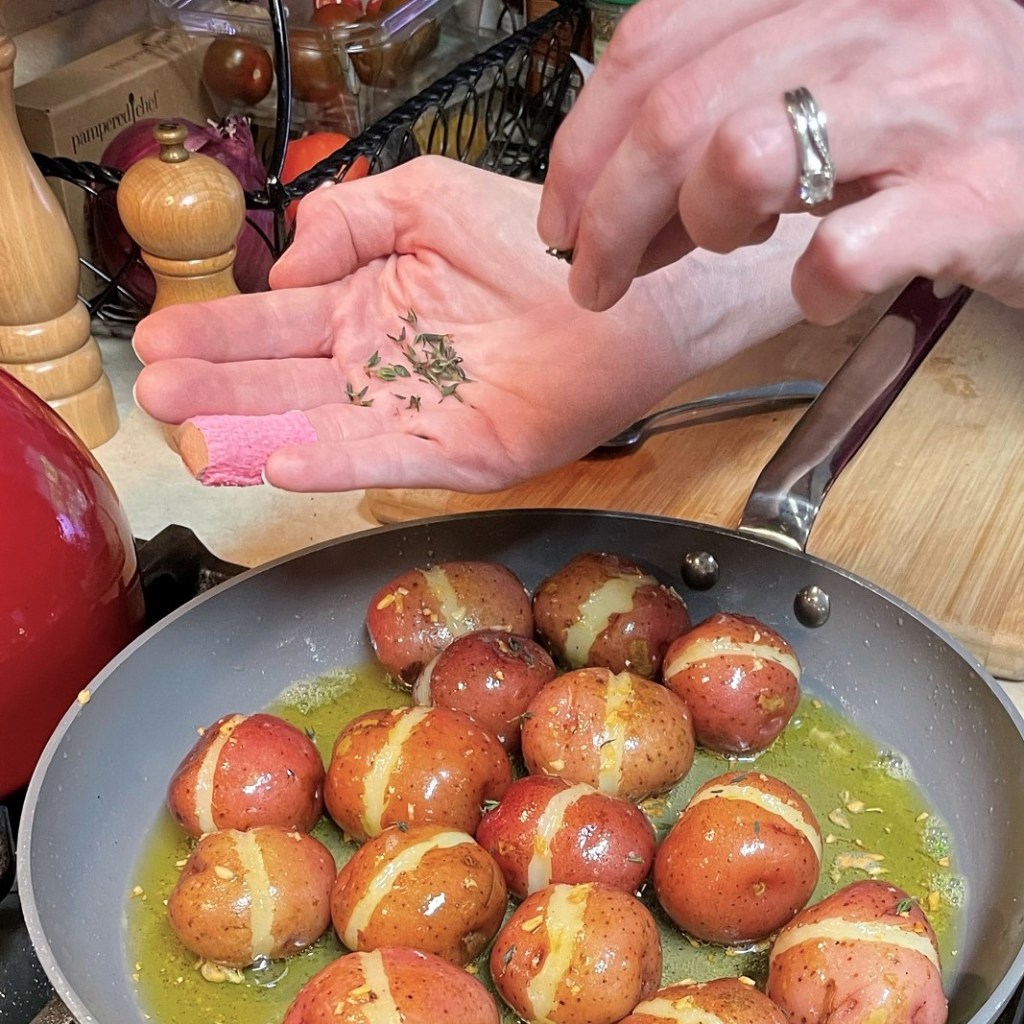
About 4 sprigs fresh thyme, leaves removed (you will measure about 1 tsp. leaves)

*Notes

Choose the most uniform, small, round potatoes possible. Ideally, they should be no larger than 2 inches across. Other small, waxy potatoes, and even the medium-starchy Yukon gold, will also be delicious in this recipe, but the contrast of color provided by the red ones is perfect for visual appeal. Russet potatoes are not recommended here; their skins are too thick and the interior too starchy.

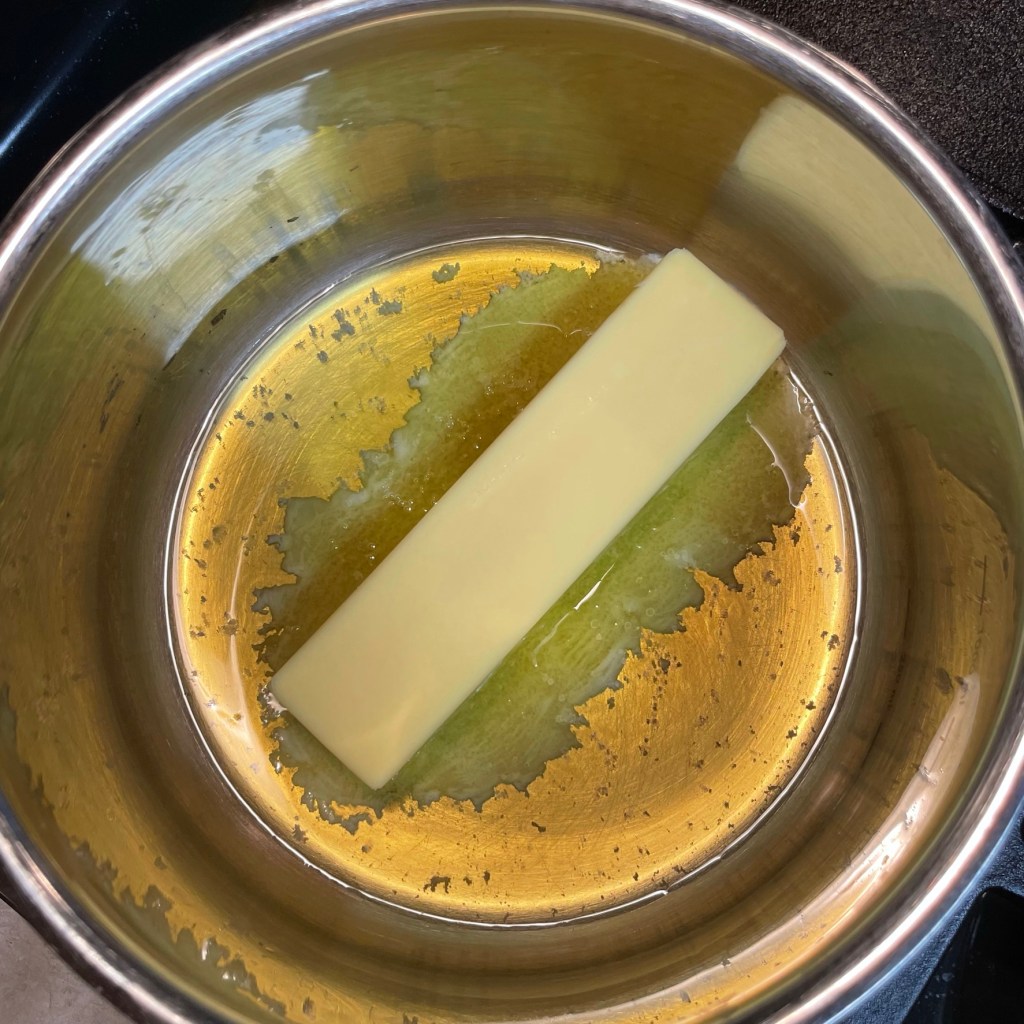
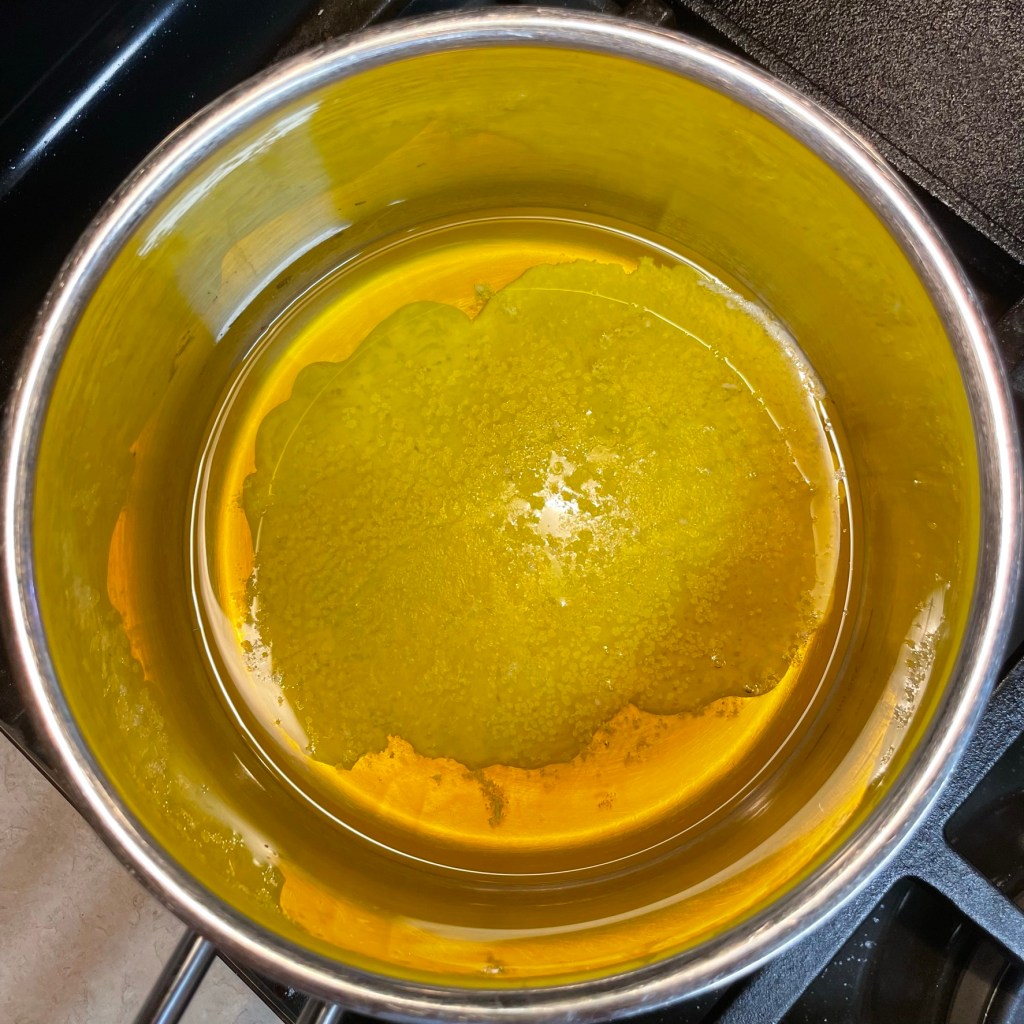
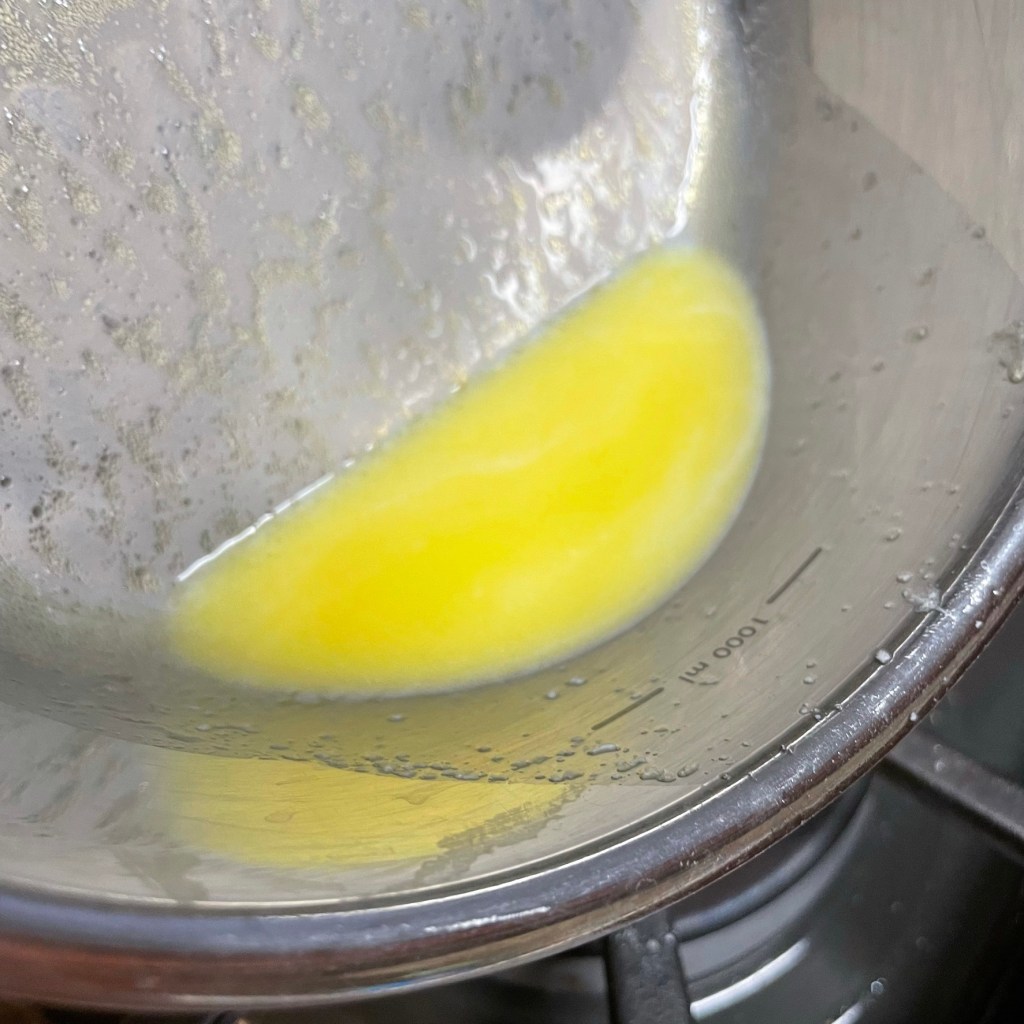
To clarify butter, melt an entire stick (8 tablespoons) in a small saucepan over very low heat. Allow the milk solids to settle to the bottom of the pan, and carefully pour off the clear butter. Discard the solids or save them for another use later. You may clarify the butter ahead of time and refrigerate until you are ready to use it. Reheat it on the stove over medium-low heat or microwave, about 15 seconds at a time, until melted. To save time, you could also use purchased ghee, which is essentially the same thing, but more expensive than making your own.

Here’s an interesting tidbit about clarified butter (or ghee): The casein proteins in butter are concentrated in the milk fat solids, so melting to separate them, and straining them from your final product reduces or removes the lactose, making it more easily digestible.


Instructions

  1. Rinse the potatoes, rubbing gently to clean, and keep skin intact. Use a sharp vegetable peeler or channel knife to carefully remove one thin strip of peel, all the way around the potato, like a band.
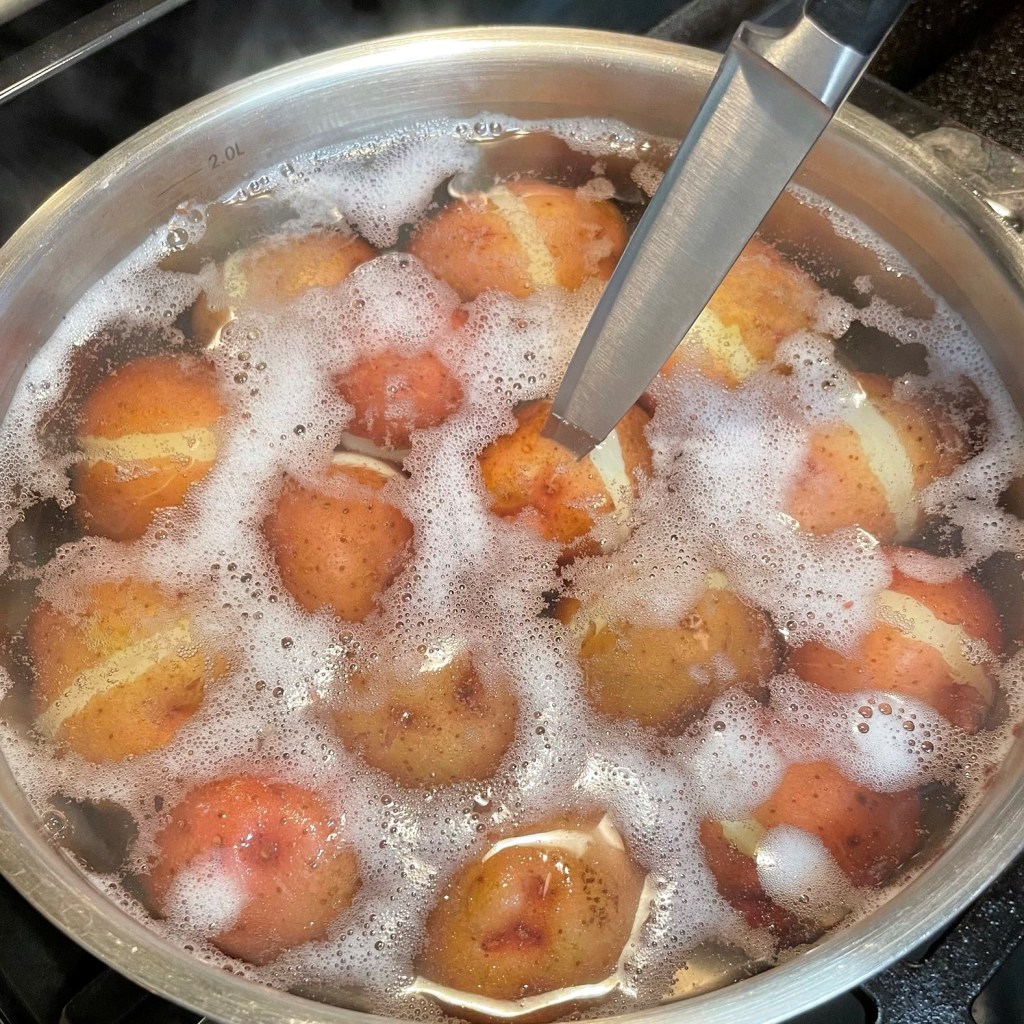
  2. Cover potatoes with cold water and bring potatoes to a gentle boil. Cook until easily pierced by the tip of a paring knife. Be sure potatoes are tender to the center.
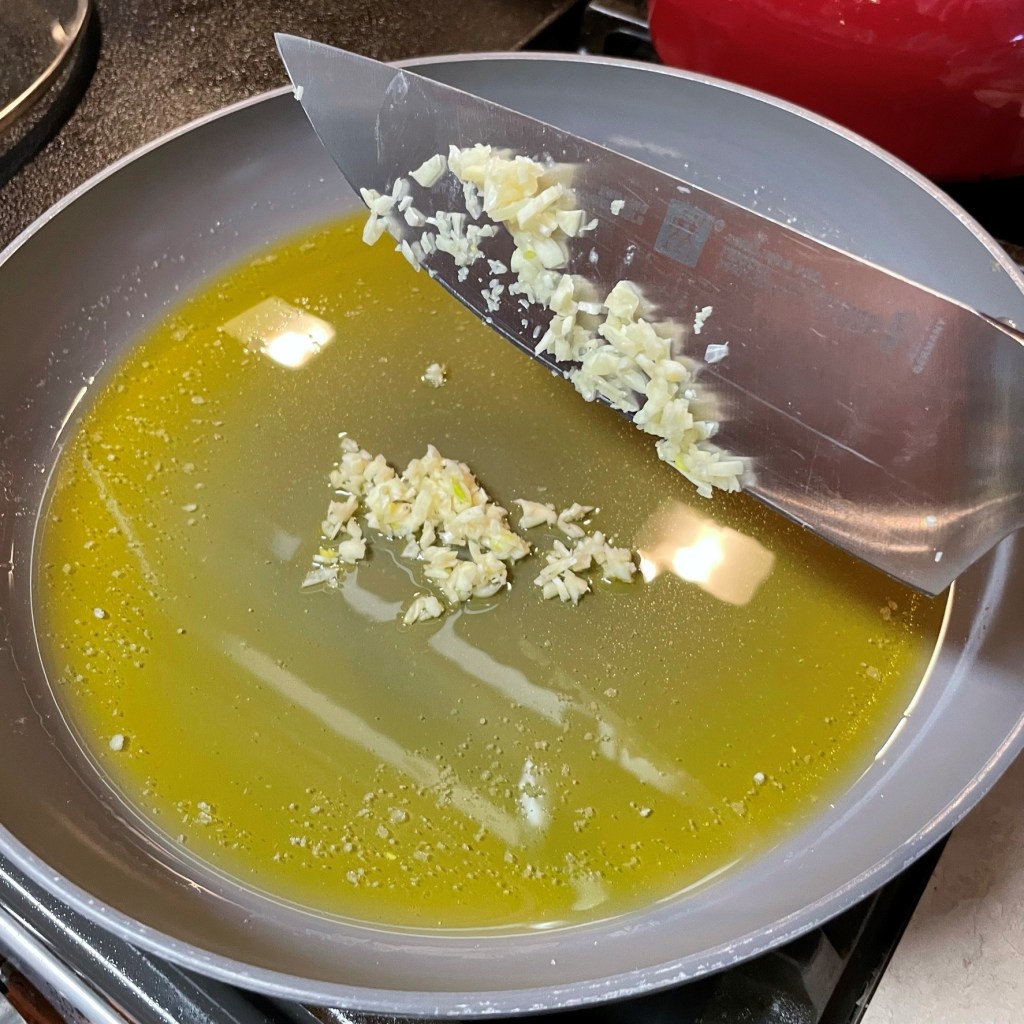
  3. While potatoes cook, make the clarified butter. Pour off the clear butter into a large, non-stick skillet and place it over low heat. Add garlic to the butter, season with a pinch of kosher salt and slow-cook on very low heat, just until garlic is softened and plump.
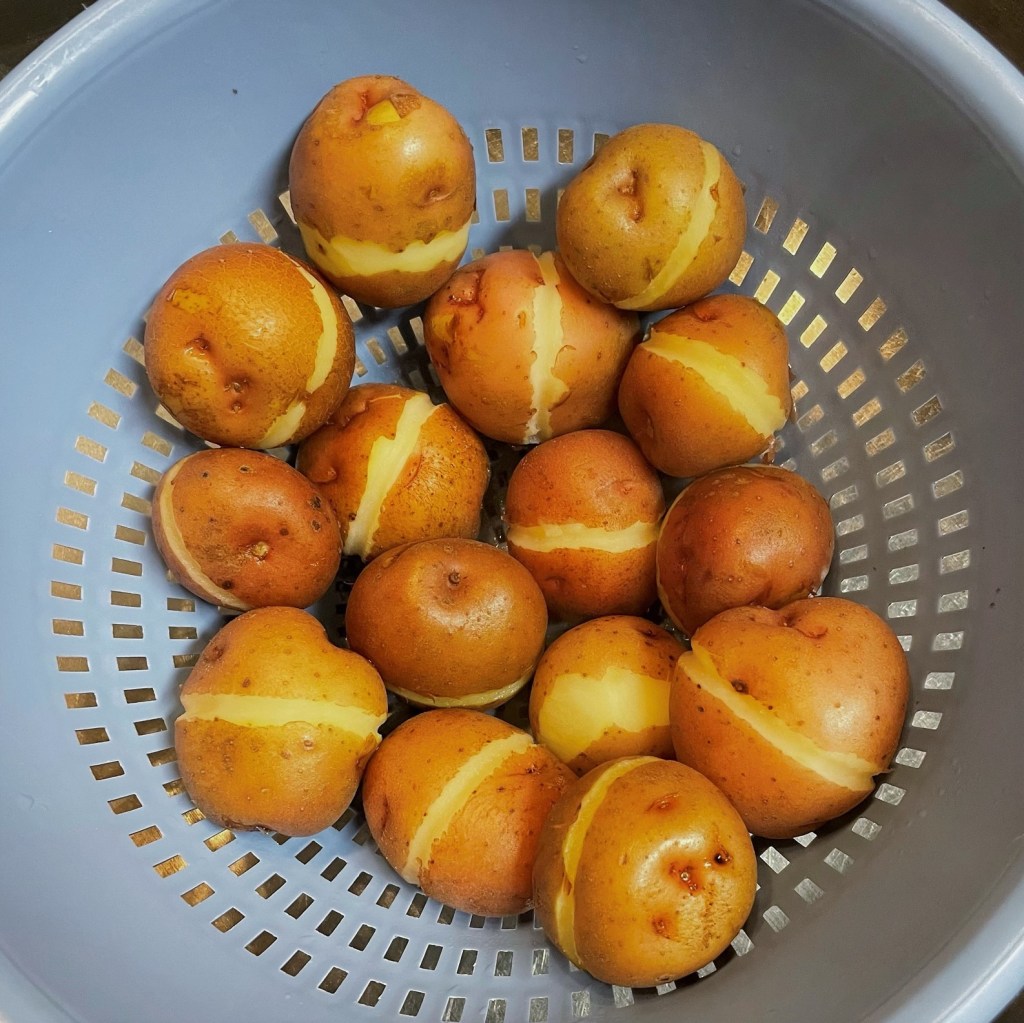
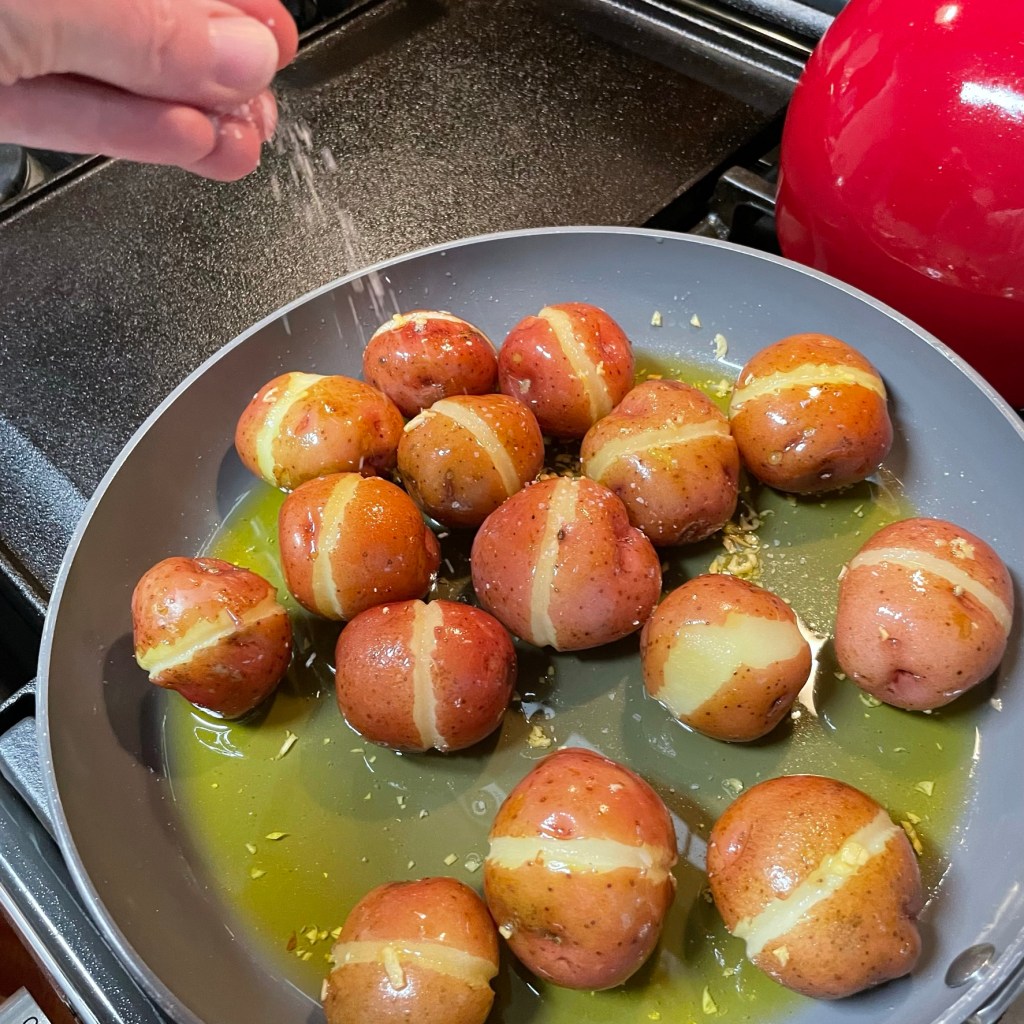
  4. Drain potatoes gently in a large colander, taking care not to tear off the skins. Transfer the potatoes to the butter skillet and swirl the pan to coat the potatoes. Season with kosher salt and black pepper and cook until potatoes take on a slight “roasted” appearance. Keep the temperature in the medium-low range.
  5. Sprinkle the fresh thyme leaves over the potatoes, give the pan another swirl to distribute the thyme, and transfer to a platter for serving.


A Quick Flick of the Wrist…

First of all, I’m fine. As the Black Knight declared after King Arthur slashed off his entire arm in Monty Python and the Holy Grail, my injury also is “just a flesh wound.” And it is already on the mend. But as I scrambled this past Wednesday to rip off wads of paper towels to stop the profuse bleeding of my right ring finger, it sure seemed a lot worse.

My afternoon had been going swimmingly up to that point, as I had just finished making a perfect stack of fresh, handmade corn tortillas for our intended Cinco de Mayo-themed dinner. The wild-caught American shrimp were thawing in a colander over the sink, ready to be peeled and deveined. I had a lovely homemade ranch dressing that was ready to be spiked with green chiles. And as I sipped down the last of my dry martini, happily distracted by two separate texting conversations I was having on my smartphone—one by text and the other by email—I brimmed with confidence because all the prep for our shrimp tacos was done in advance of my husband, Les, walking through the door.

All, that is, except for shredding the fresh cabbage.

Does this mean my supper will be late?

If only I had reached for the food processor to handle this task. But I really didn’t want to deal with having to take so much time to clean it later, and my multi-function mandoline was right over there anyway. Uh-huh. Friends, those things have a safety warning (not to mention a perfectly good safety feature) for a very real reason. It is a lesson I should have learned long ago, and one that I promised the doctor at our urgent care facility I would hold dear going forward.

“Cabbage doesn’t even fit in a mandoline,” Dr. Obvious declared. And of course, he was correct, and that was the reason I had skipped the safety guard in the first place. He was good-hearted in his teasing, though, and he fixed me up in no time, with assurance that my finger will be fine—I just need to take it easy in the kitchen for a few days. Les, who was ironically lamenting just last week that he never gets to cook anymore, is being a sweetheart and picking up my slack. In the meantime, I am constantly reminded how much we use even the lesser fingers for everyday essential tasks—including zipping up jeans, latching the seat belt, washing the dishes and using a cimputer keyb0ard (oops, there I go again).

There’s still plenty that I can do, including complain (ask Les), pour wine (from a screw-top bottle, anyway) and shop for more clear plastic containers (to hold all the extra kitchen things I don’t really need). I’ve been doing my share of all three since my little kitchen accident.

At least I can still feed the pets.

I’ve also been remembering a similar, but much worse experience many years ago—one that ultimately resulted in me leaving my upstate N.Y. home for greener pastures here in the South. I was 21 and nearing the end of my long shift in my tiny town’s only grocery store. I was about to clock out and get home to ready myself for an especially important job interview the next day. It was a Tuesday, and I know this because Charlie, the produce manager, was off on Tuesdays and he had trained me to be his backup for his days off. I wore a green apron and I loved working with the fresh produce, and Charlie had trained me well. I was a conscientious worker, proud to keep the fresh cases looking nice, and I noticed as I was about to remove my apron that the “moonlight mushrooms” were nearly emptied from their endcap display. On sale at 88 cents a pound, they would certainly be sold out before I even punched the time clock.

So, me being me, I went back to the walk-in, grabbed another wax-coated case of the white button mushrooms, rolled them on a produce cart onto the sales floor, and swiftly slashed open the case with my brand-new box cutter. First the right-hand side of the box, then across the front, and then down the left side—except by that time, my blade must have picked up too much of the waxy coating on the box because it slicked off the edge and landed on my left thumb, straight down and hard, through my skin, the tendons, the artery, the nerve, all the way down to the bone. I spent eight long weeks healing, four of which had me in a cast over my whole hand. Fortuitously, a hand specialist was on rotation that day in the E.R.

In the moment, as the doctor sewed my thumb back on, my biggest concern was how I was ever going to manage my next-day interview for what I had hoped would be a steppingstone to my dream career—as a radio deejay.

As an only child, who spent a lot of time (grounded, and for no good reason) in my room, I found comfort and kinship in the voices behind the radio that sat on my nightstand, and I yearned to one day be on the other side of the speaker. I grew up counting down the hits with Casey Kasem’s weekly “American Top 40” show, and listening to the real-life stories narrated by the legendary Paul Harvey. I stayed up late to listen to Dr. Demento and I can still sing the jingle for Chicken Man (“he’s everywhere, he’s everywhere”).

The day after my dreadful thumb accident, I was scheduled to audition for a small, part-time job at a radio station in Springville, N.Y., a burg that sits about halfway between Buffalo and my tiny hometown. A friend of a friend that knew the guy who ran the station had hooked me up with an interview and I was elated, though I had no previous experience and no idea how I would manage working weekends on the radio in another town when I was already on the weekend schedule at the grocery store. Thanks to my hand injury, that concern resolved itself. I was so doped up on pain meds on the day of my audition that I could barely recite my own name, let alone talk up a record intro in front of two strangers. The program director admired my persistence in making it to the interview (I had paid my cousin to take the day off from her waitressing job to help me wash my hair, get dressed and get there on time), but he wished me well and politely invited me to try again another time. And this turned out to be a blessing in disguise.

If I had gotten that job—and that is a big IF because radio is extremely competitive, even in small towns—I may have stayed in western N.Y., where I would still be bitching about the snow and the utter lack of adventure that made me so restless in my life. I wanted more than my tiny town would ever be able to offer, and so I packed up the next summer and moved to North Carolina. It was here that I later satisfied my career dream of being a deejay in ways that I did not ever imagine or expect, and in an unexpected but related turn, I also wound up in a concurrent, part-time gig at A Pinch of Thyme, the catering kitchen I’ve mentioned here previously.

I used a mandoline for the first time in the “Pinch” kitchen, and I remember being cautioned, ad nauseum, about the safety risks associated with them. And, given that I am not busy making food this week, I’ve had plenty of time to recall some very specific adventures and even a few of those recipes, which I can’t wait to share with you. First though, I’ll have to explain how I got there. And that, as Paul Harvey would say, will be “the rest of the story.”

Stay tuned.


Mexican Chocolate Skillet Brownies

Before we talk about these amazing chocolate-and-spice brownies, let’s clear this up: Cinco de Mayo is not Mexico’s Independence Day. This has long been the belief of many Americans who assume that all the revelry and celebration associated with the 5th of May must be hugely significant to Mexico’s overall history, but it is not correct—Independence Day in Mexico happens in September. Cinco de Mayo is observed in commemoration of what happened half a century later, in 1862, in one Mexican state.

But the story of Cinco de Mayo is a great tale of triumph by a people whose love for their land outweighed the military might of a wealthy bully, and my brownies pay tribute to their passion. It is a tale so inspiring, it cannot be properly told without an incredible, dramatic anthem, like this one by Ennio Morricone (take a listen as you read). Yes, he is Italian, but Morricone’s composition is perfect for this story of a proud and dedicated people. You may also recognize this stunning piece from the ads for Modelo Mexican beer.

Mexico’s newly elected president, Benito Juárez—who was also the first indigenous political leader of the country—had inherited some economic troubles and overdue loans by European governments, and they were demanding payment. Juárez was able to cut a deal with the leaders of the U.K. and Spain, but the French president at that time wanted to call their loans by foreclosing on the region of Puebla, which was along the main road between the capital of Mexico City and the port city of Veracruz. This obviously did not sit well with Juárez. He rallied the loyal locals to stand with the Mexican Army in holding their ground (figuratively and literally) in Puebla, and when the French troops arrived the morning of May 5, outnumbering the Mexican troops and patriots by nearly 3-1, they were in for a surprise. What the Mexicans lacked in numbers, they more than tripled in might and spirit, and the French troops were forced to retreat by the end of the same day.

It was only one battle in a lengthier saga that later ended with the French taking the land for a short few years, but the story rings patriotic for anyone with a heart for civil rights, which was also playing out in the U.S. during those years. Cinco de Mayo is considered a minor holiday in most of Mexico, but here in the States, someone else’s one-day battle victory has become reason enough to throw a party. This one, not surprisingly, works out especially well for the distributors of Mexican beer. Come to think of it, the Cinco de Mayo story itself should be in one of those Modelo commercials. That would make a lot of sense.

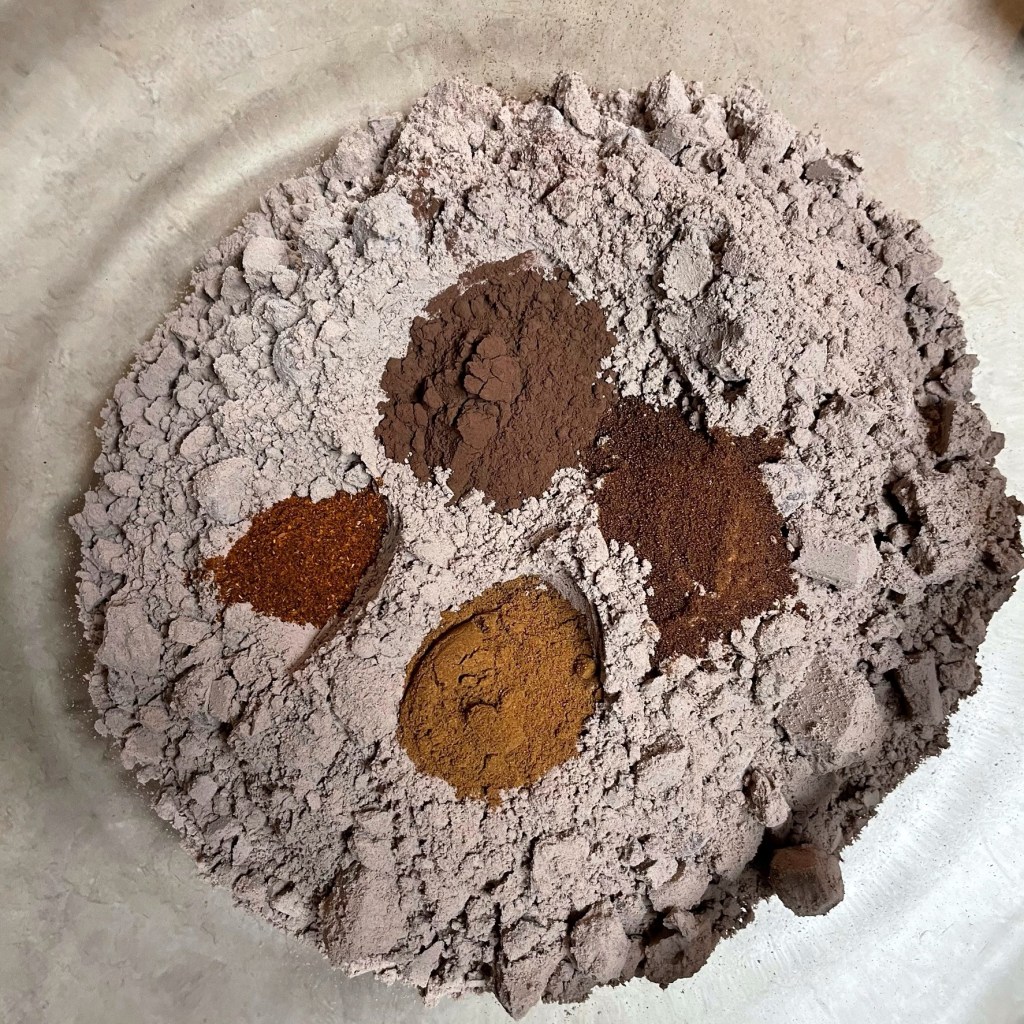
My idea of a party, naturally, always comes back to the food. For Cinco de Mayo, I’ve skipped the obvious margaritas in favor of a sweet treat that honors the Mexican tradition of chocolate, which was so revered by the ancient Mayans and Aztecs that they used it as currency. Today, chocolate continues to play a significant role in the traditional moles of the Puebla region. Chile peppers complement chocolate exceptionally well, so I’ve added a hint of chipotle powder to these brownies, which are also kissed with extra dark cocoa, a good dose of cinnamon and real vanilla. And all the Mexican grandmothers shouted, “amén!”

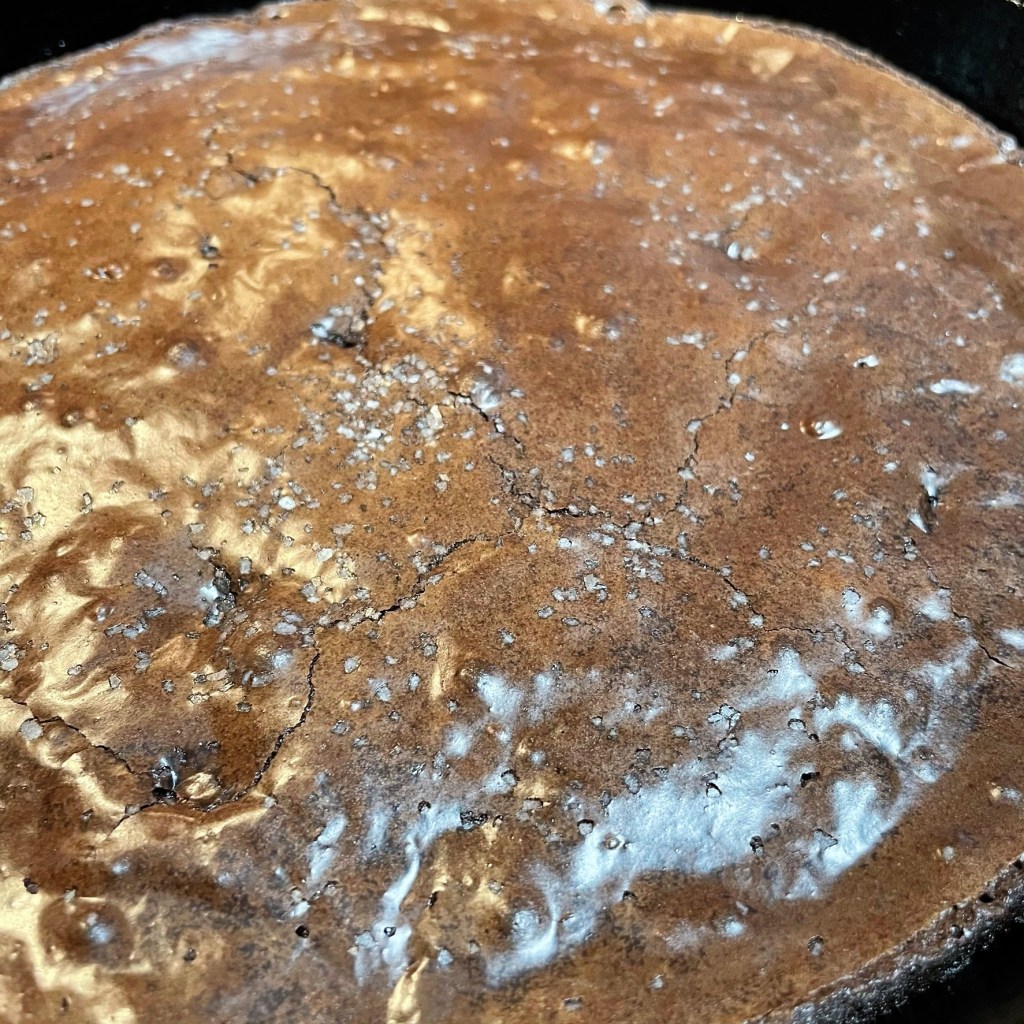
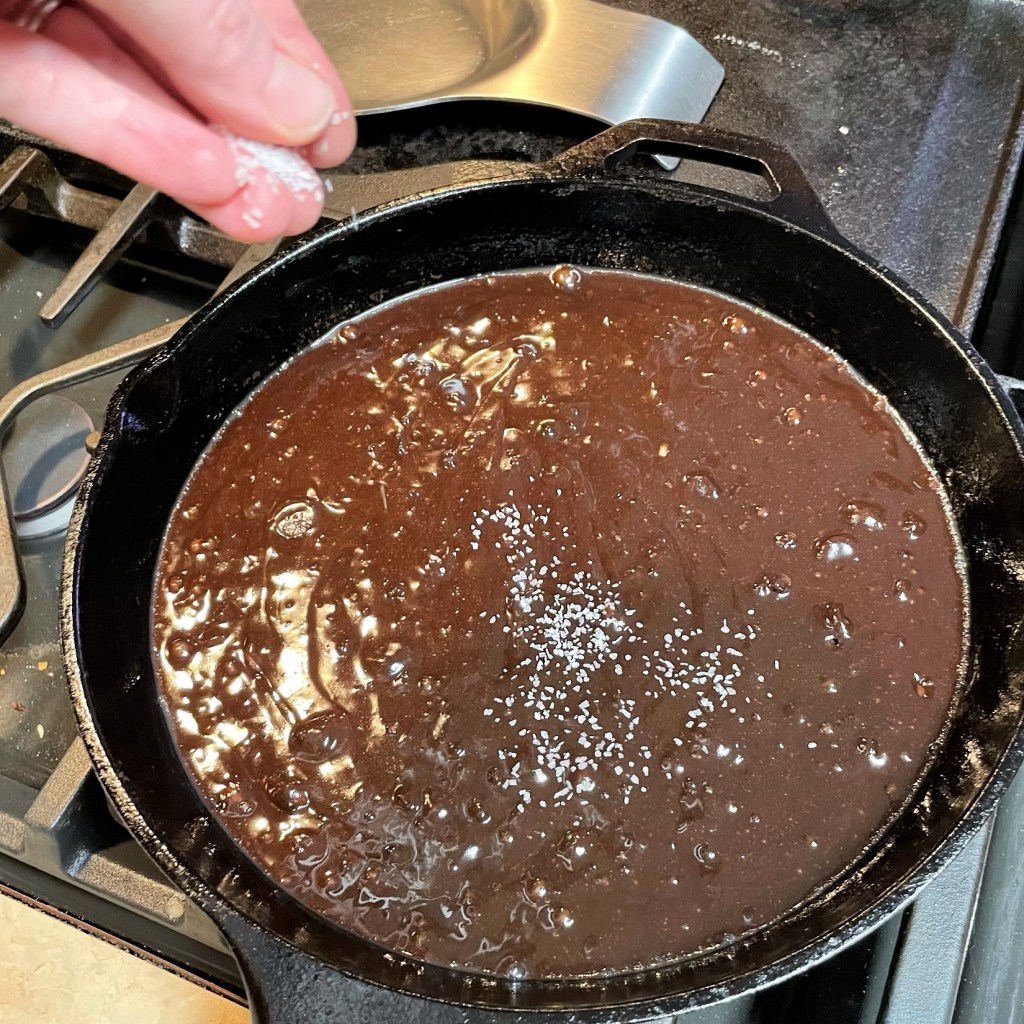
Crazy as it sounds, the crunch of the sea salt is what sends it over the top.

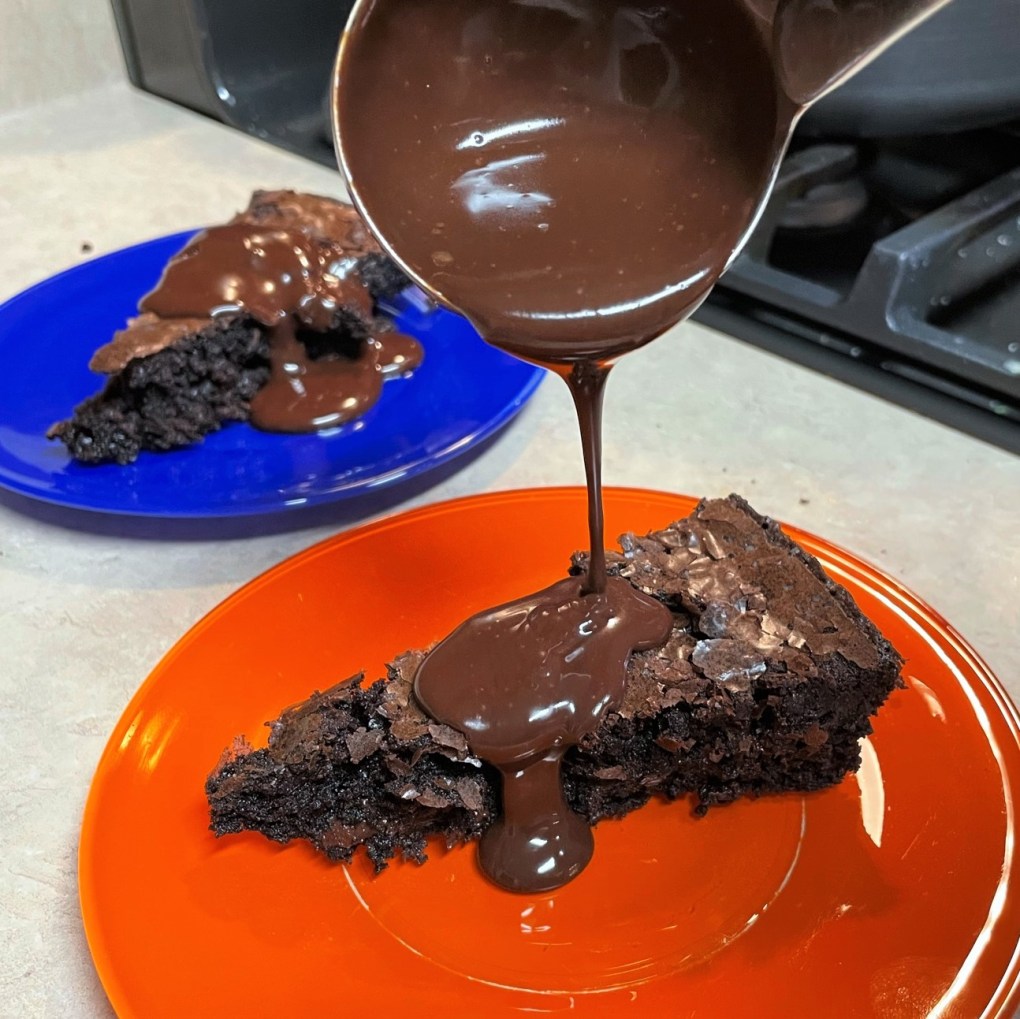
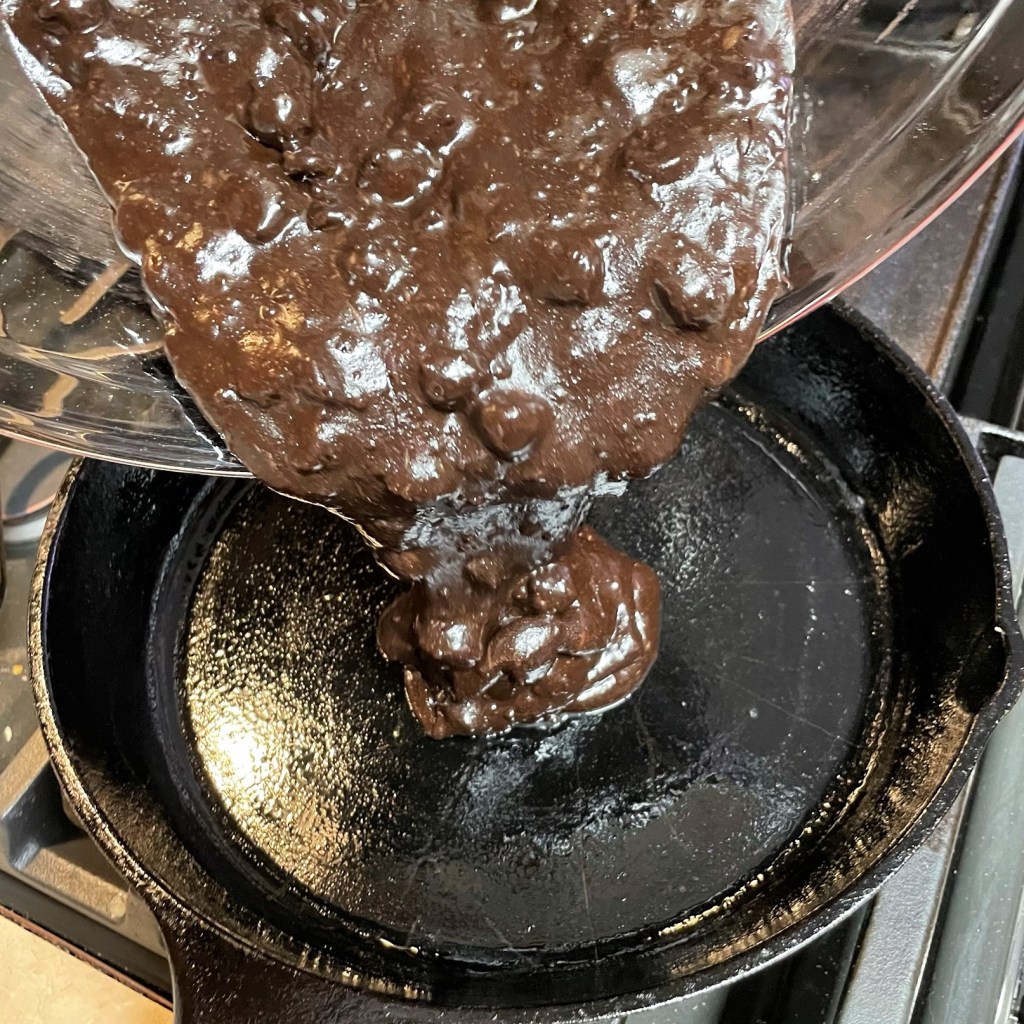
If these brownies sound a bit too gourmet for your kitchen skills, relax, because this decadent dessert begins with a box of Ghirardelli. I’m all in favor of a shortcut that makes sense, and they are, in my opinion, the best box brownies, but use the one you like. The oh-so-easy ganache is optional, but allow me to tempt you further by mentioning that I spiked it with a splash of Patron XO Café Dark, a coffee- and cocoa-infused Mexican tequila. To keep it humble, I’ve baked it up in a cast-iron skillet, but don’t be fooled—this is a rich and decadent dessert for the ages, and it is worth fighting for. Call it “the ecstasy of chocolate,” if you wish.

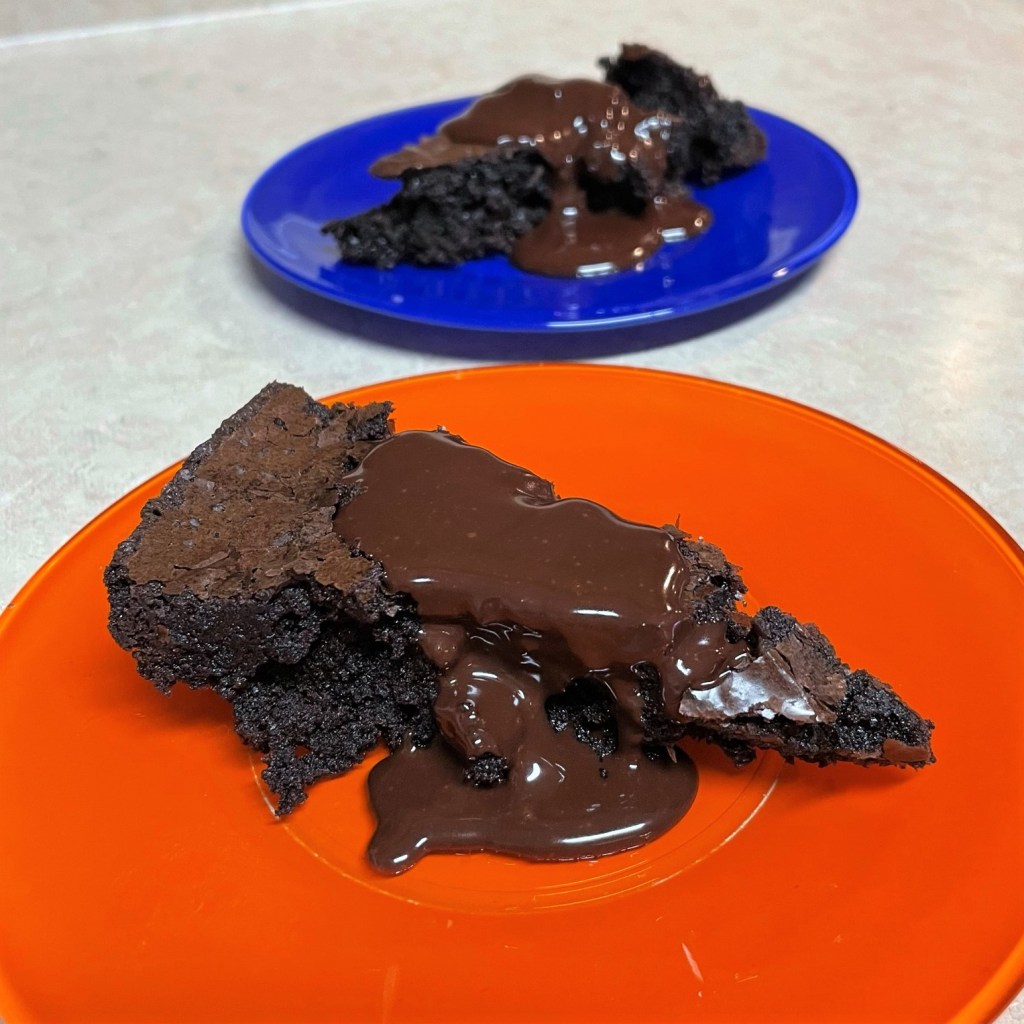
Can you believe how fudgy and delicious this is?

Ingredients

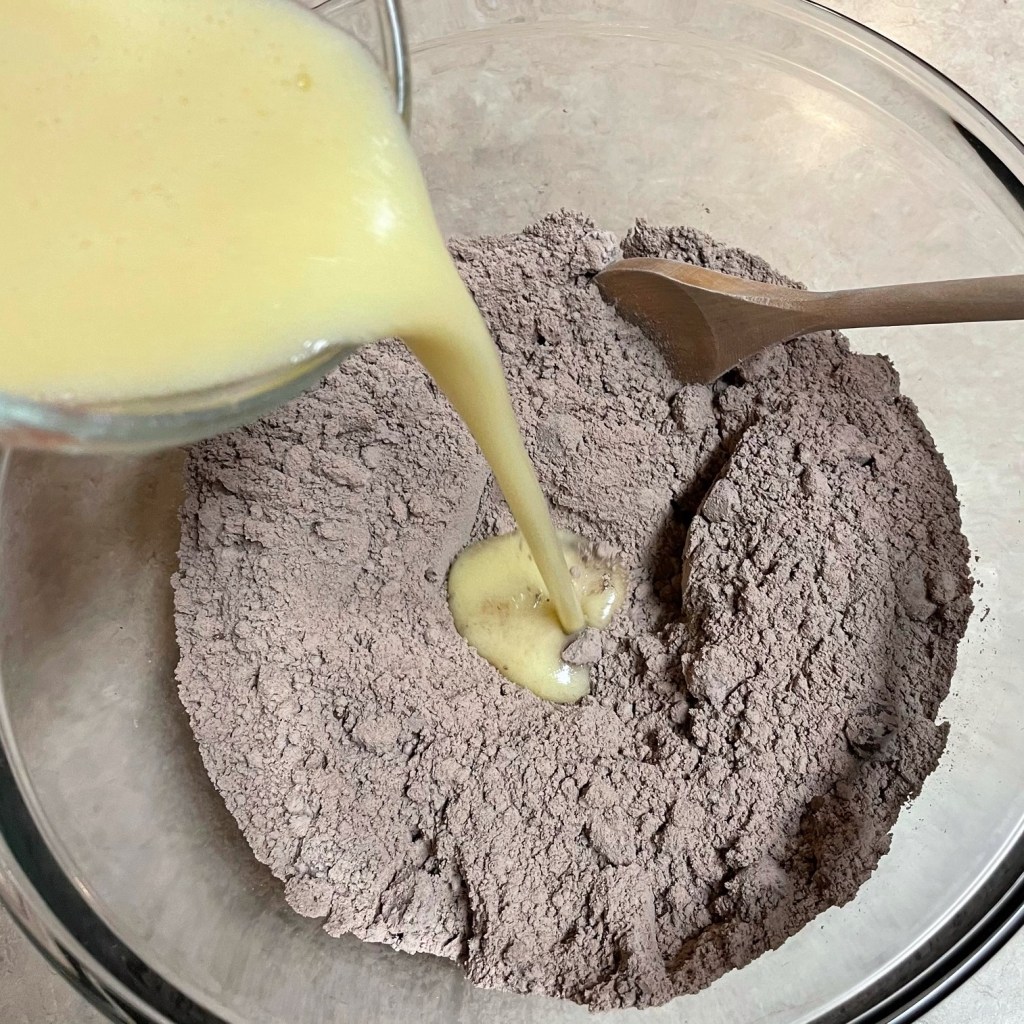
1 box brownie mix* (I love Ghirardelli dark chocolate, but use your favorite), plus listed ingredients to make them

1 Tbsp. dark cocoa powder (Mine is from King Arthur Baking, but Hershey Special Dark would be OK)

1 tsp. espresso powder*, optional (deepens the chocolate, but does not add coffee flavor)

1 tsp. ground cinnamon

1/2 tsp. pure ground chipotle* (see notes)

1 tsp. real vanilla extract

1/3 cup Ghirardelli semi-sweet chocolate chips

A few pinches of coarse sea salt or kosher salt

Butter, for greasing the skillet or brownie pan*

Ganache

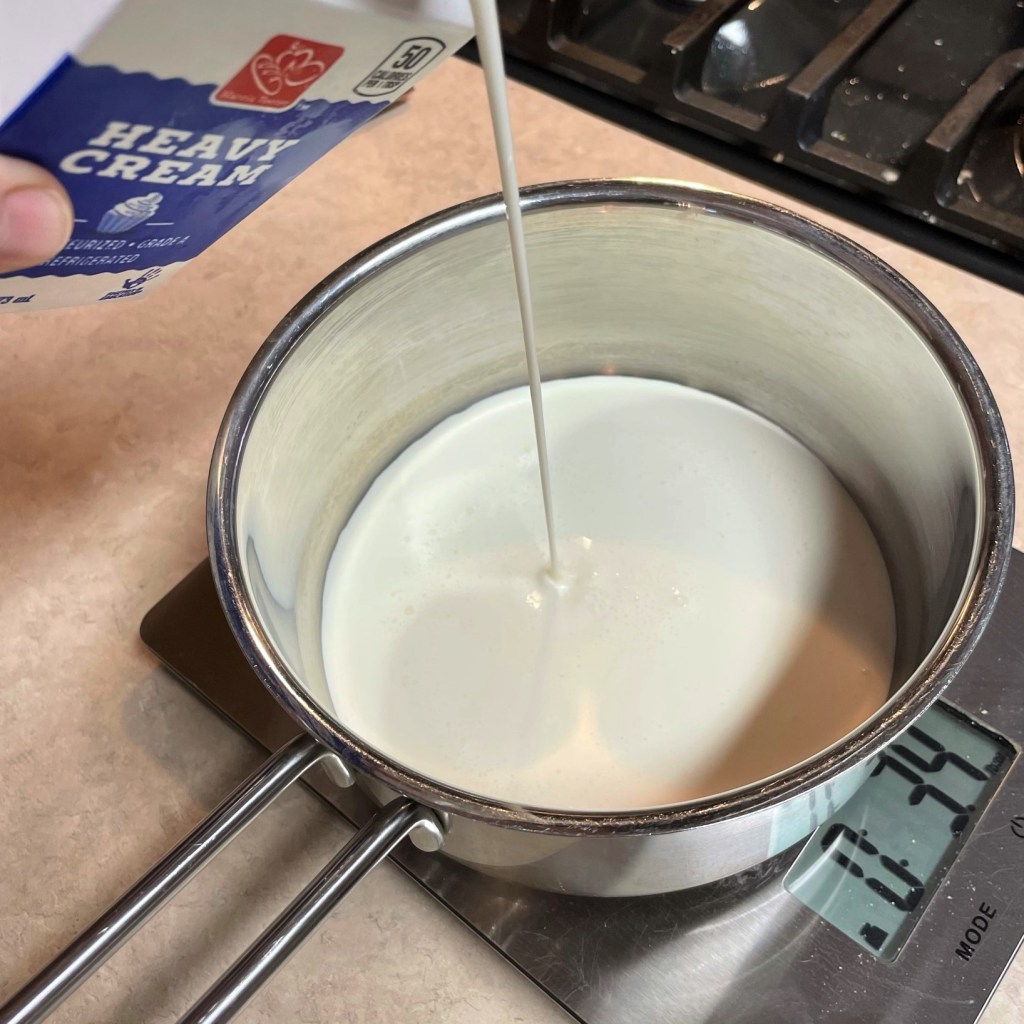
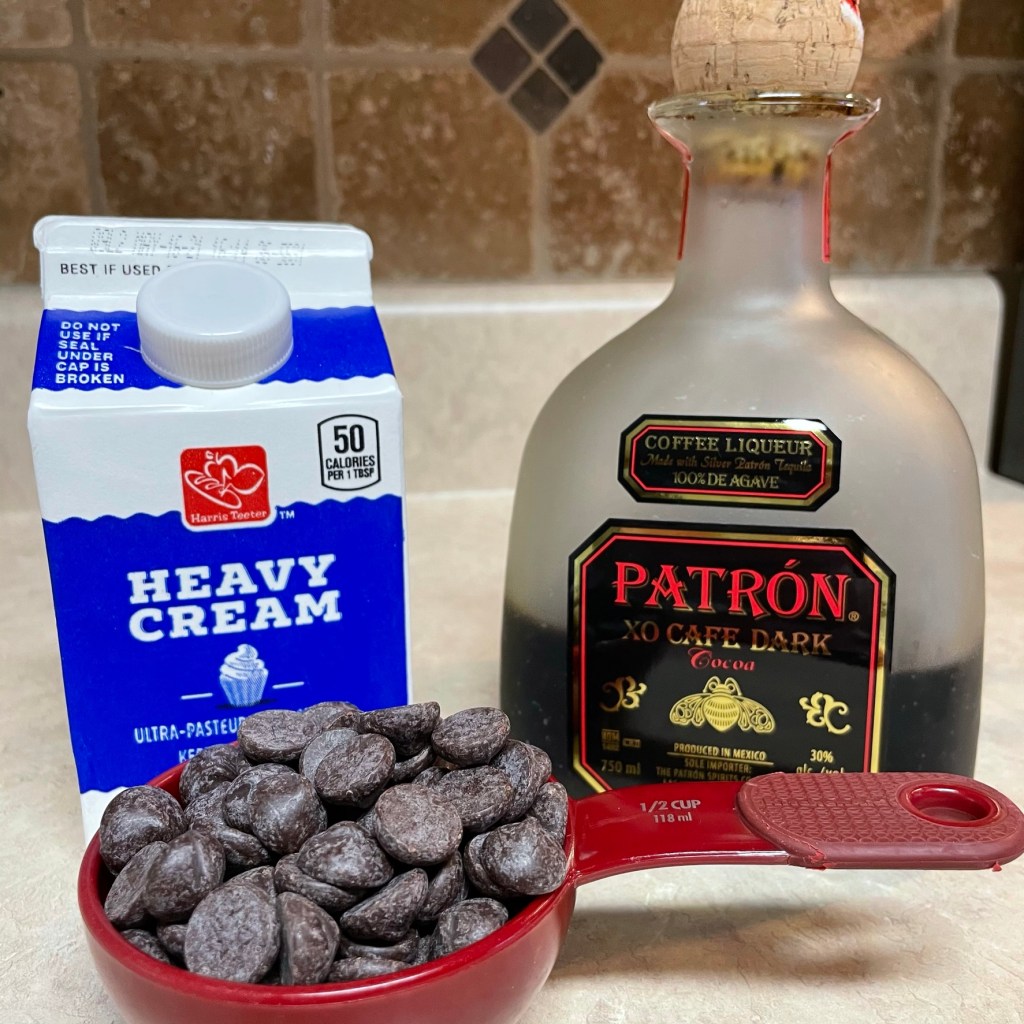
1/2 cup heavy cream

4 oz. Ghirardelli semi-sweet chocolate chips*

1 Tbsp. Kahlua or Patron XO Café Dark liqueur, optional

*Notes

The brownie mix I use produces a chewy, fudge-style brownie. In addition to the mix, be sure you also have the ingredients listed on the box for making them.

Espresso powder is a specialty ingredient that I found in the baking aisle of a gourmet supermarket. You could also substitute a good quality instant coffee, such as Starbucks Via brand, or simply omit it.

I am crazy about the combination of chocolate and chiles! Chipotle, which is smoked jalapeno, is especially nice here. You could also use up to the same amount of pure cayenne powder, which is spicier, or pure ancho powder, which is milder and more fruity. Please do not use what is generically labeled as “chili powder,” as these random blends usually also include salt, garlic, oregano and other spices you wouldn’t want in brownies. Check your labels, always.

My decision to use the cast-iron skillet presented a few other adjustments, because a 10.25” skillet means a slightly different distribution of brownie batter. Also, the cast iron is heavy and retains heat differently than my usual 8 x 8 glass dish. I have adjusted the baking time accordingly in my instructions, but please consider your mix recommendations as well as your baking vessel.

According to my digital kitchen scale, 1/2 cup of chocolate chips was only three ounces, which falls short of “equal parts” with the cream. If you don’t have a scale, measure out 1/2 cup, then pile on as many more chips as you can without them spilling, and you’ll be in good shape.

Instructions


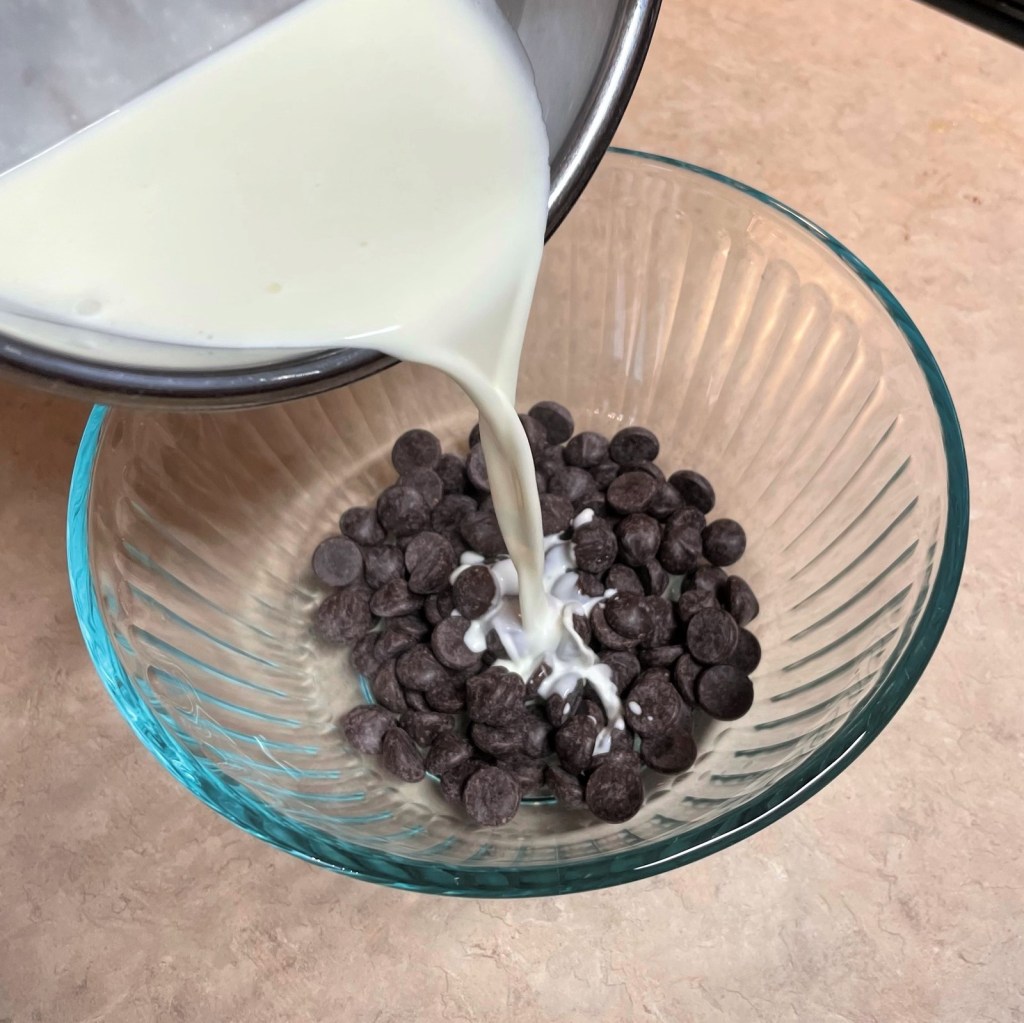
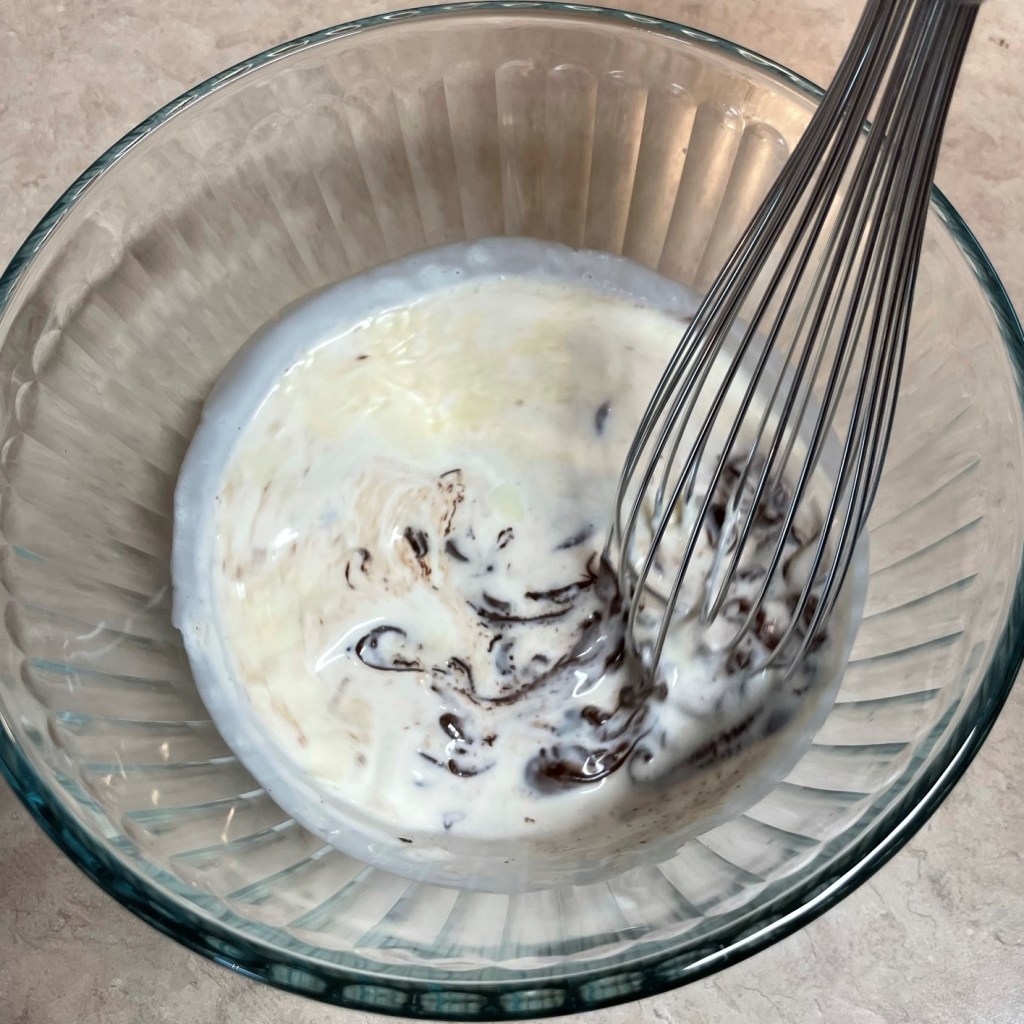
As if the brownies are not decadent enough, believe that the next step makes them even better. If you have ever thought of ganache as “fancy,” you can lay that idea to rest. It is nothing more than equal parts hot cream and rich chocolate. I’ve spiked it with a Mexican liqueur, and it sends these brownies into purely heroic territory.

Make the ganache:


I have no words for this image.