Smashed Cucumber Salad

Over the past few months, I’ve seen numerous recipes for something called smashed cucumber salad and wondered, what’s so special about that? Sure, I love cucumbers and the way they freshen up a salad with an extra level of cool and crunch. But why not just, you know, slice them? Of course, that was before I tried one, and I may never be the same.

I enjoyed my first-ever smashed cucumber salad last month, when I joined my blog buddy, Dorothy, and her husband at one of their favorite restaurants, Starry Night Cafe in Ferrisburgh, Vermont. That salad had a rustic Italian flair with Calabrian chili flakes, anchovy, parmesan and ripe heirloom tomatoes. It was a masterful arrangement of fresh, seasonal food just doing its thing.
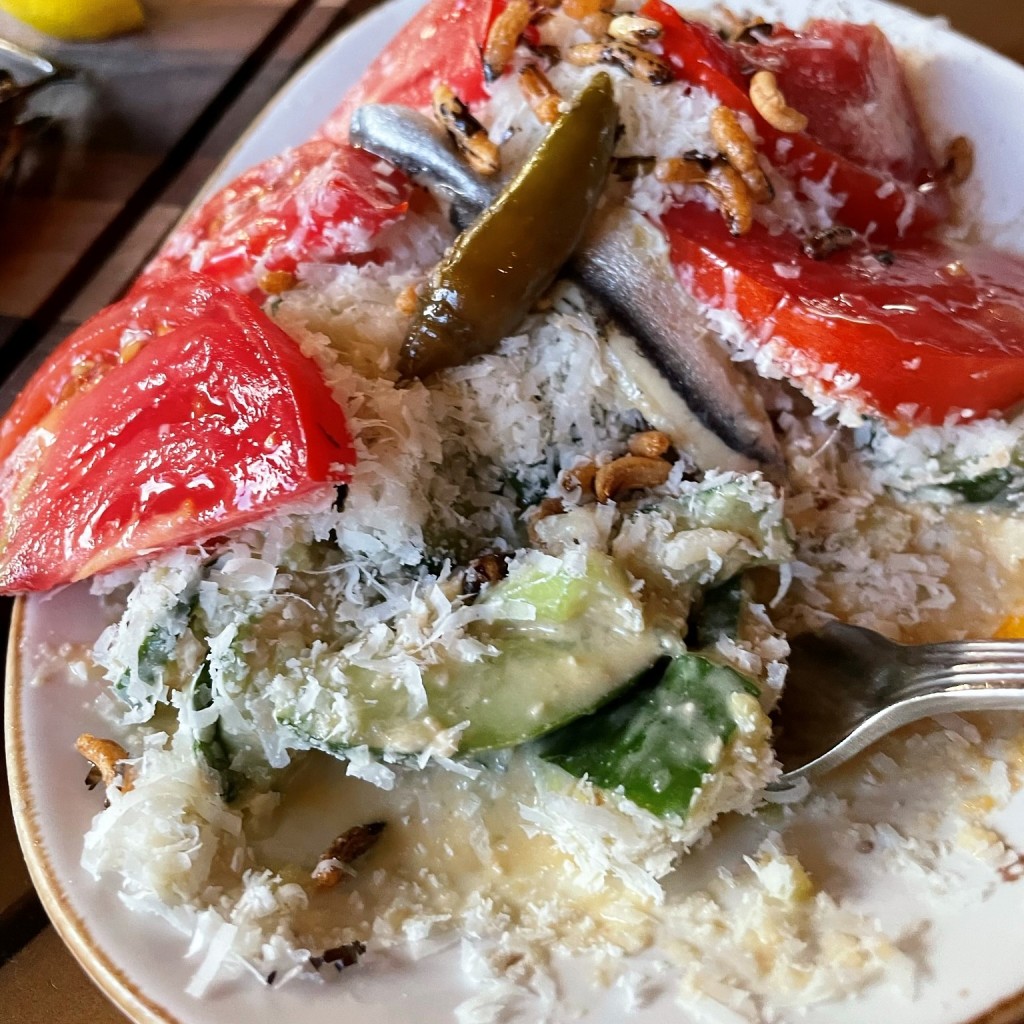

Every flavor complemented the next, but what struck me most about “smashed” cucumber salad was the texture— the open, craggy edges held onto the dressing, and the big chunks made it sooo crunchy and satisfying. And that was only the opener of our incredible meal.

Starry Night Cafe demonstrated its commitment to partnering with local farmers and producers in every single thing brought to our table. From the specialty cocktail (don’t you worry, I’ll share it soon) to the coal-roasted oysters and grilled shrimp spiedini all the way to the stunning main course of wild halibut, I found myself wishing we lived closer!


Food really does taste better when it’s fresh and seasonal, grown without pesticides or chemical fertilizers and picked at peak ripeness. My entire visit through Vermont reignited my excitement for local food, and our Starry Night experience was the icing on the cake— er, salad. I started imagining what other flavors would play nice with the versatile cucumber, and I think I came up with a winner in this pretty plate.


My smashed cucumber salad is not a remake of the Italian-ish salad we shared at Starry Night Cafe, but an Asian-inspired interpretation, built on some fun ingredients I found when Les and I visited our own farmers’ market here in Winston-Salem. I wanted a dressing that was savory, sweet and tangy. Creamy but without cream. And with a touch of heat to accent all of the above. So I poked around on the internet for a bit and found a lemon-miso dressing on a blog called A Nourishing Plate


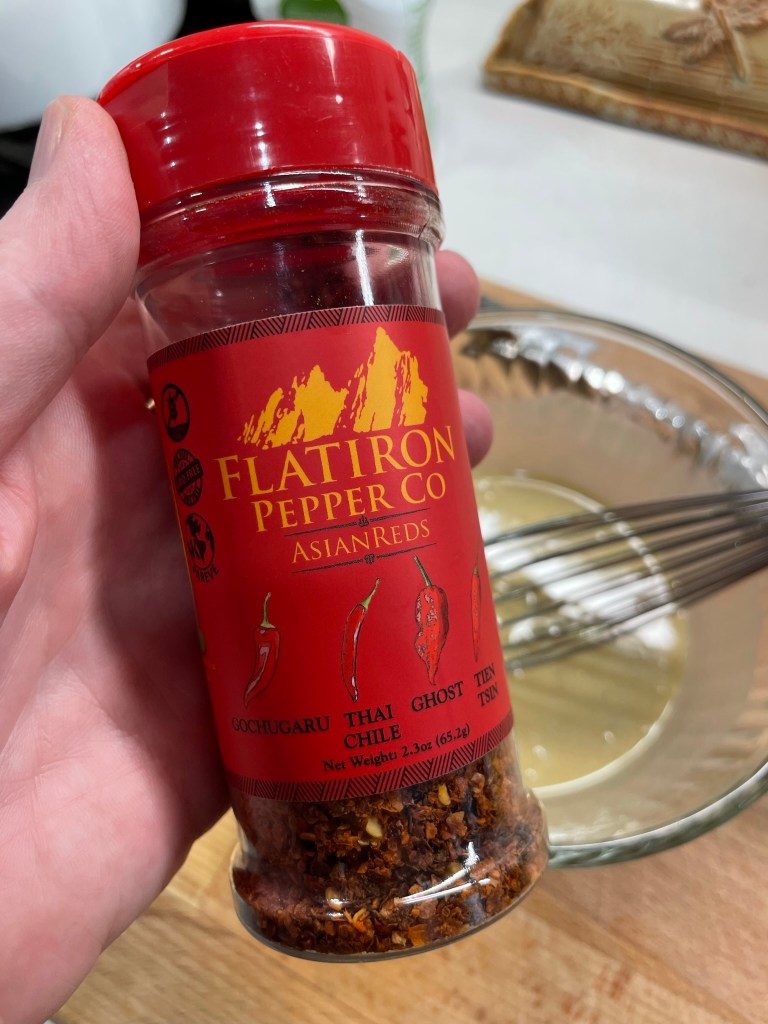
The author’s recipe satisfied most of my wish list, and I followed it mostly as written, subbing tahini in place of cashew butter because I always have a jar of tahini in the fridge. I used slightly less sugar and oil, and for a pop of heat, I added a few shakes of Asian Reds hot chile flakes from Flatiron Pepper Company. This is different from generic “red pepper flake,” as the chiles are specific to various parts of Asia. The dressing is so good, and easily adjusted for sweet and heat. I love the contrast it provided this cooling cucumber salad, and I can imagine it would also be good as a roast vegetable topper. The dressing thickens up a bit in the fridge, so I’d recommend making it ahead.

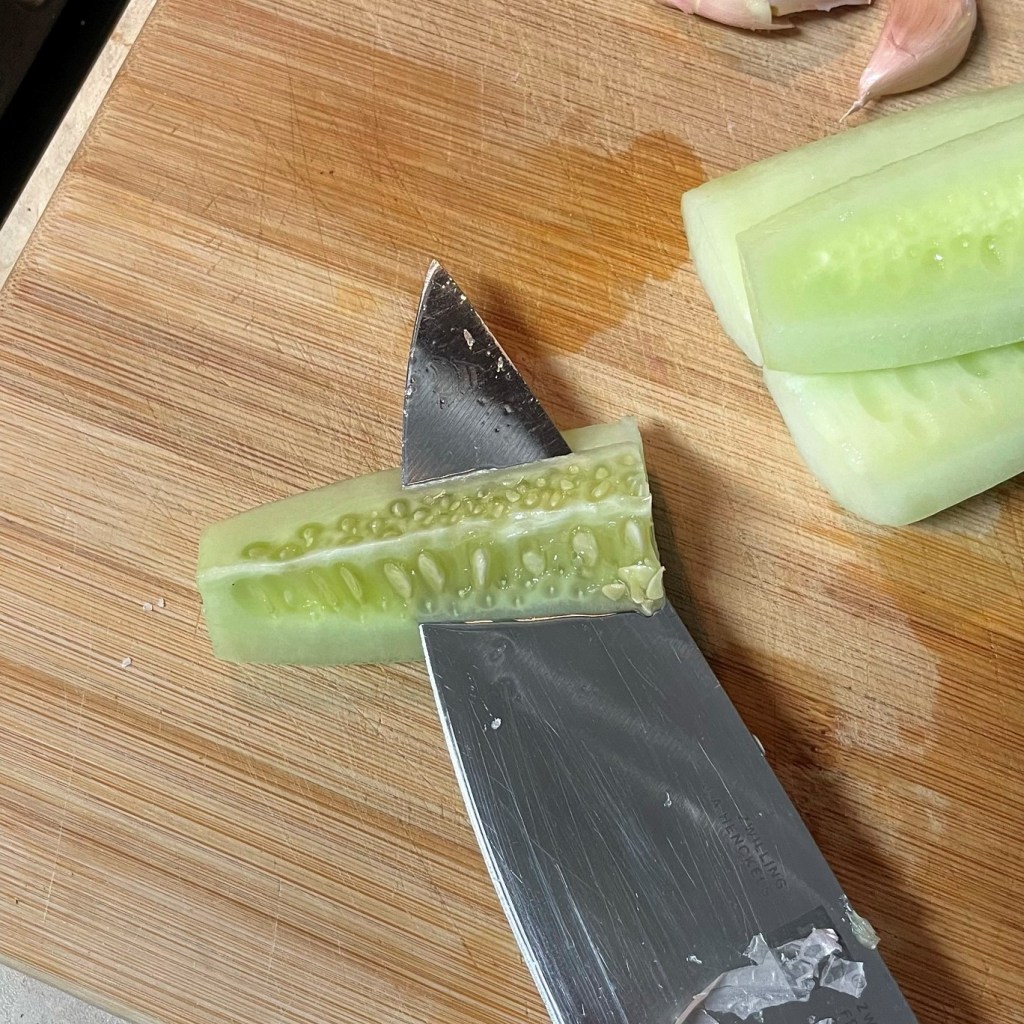
English cucumber is ideal for this type of salad, for its smaller seeds and thinner skin. My grocery stores all sell this type of cucumber, but usually they have a waxy coating to keep them fresh during transport from God-knows-where (yet another reason to choose local). You can use anything you have on hand for smashing it— the flat side of a chef’s knife, bottom of a skillet, whatever— but don’t use a heavy hand unless you want cucumber juice all over yourself and the kitchen. Just enough to crack it open is good, and then use a knife to cut the smashed cucumber into generous chunks. Season it, and toss with the other ingredients. Could it be more simple?
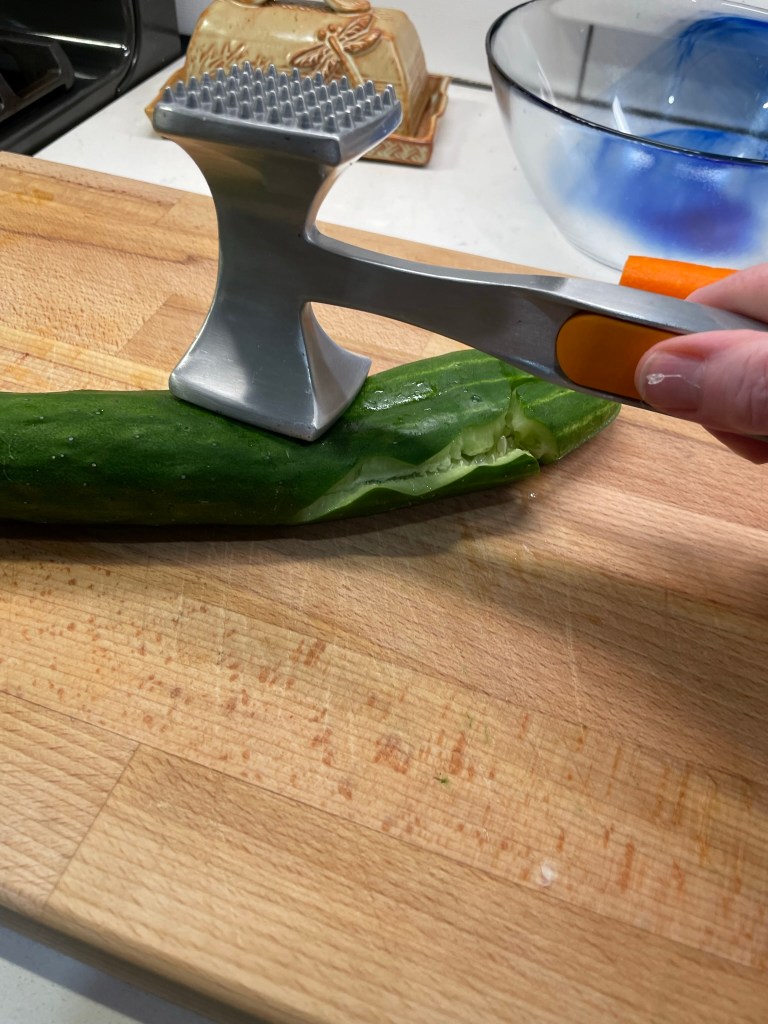
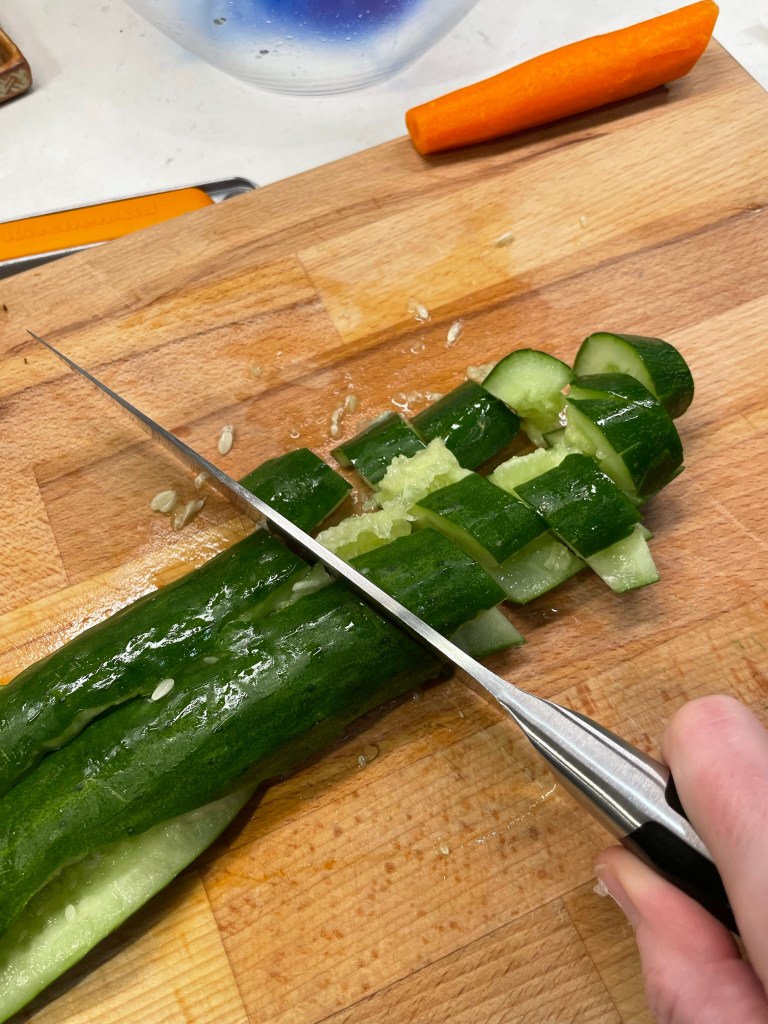
The most brilliant element of this dish— and I mean brilliant in the sense of “wow, look at that shocking pink color!”— is the watermelon radish. That neon pink color seems to be everywhere right now, thanks to the Barbie movie, and though I’ve seen these radishes in food magazines and cooking shows, I have never run across one in the supermarket.

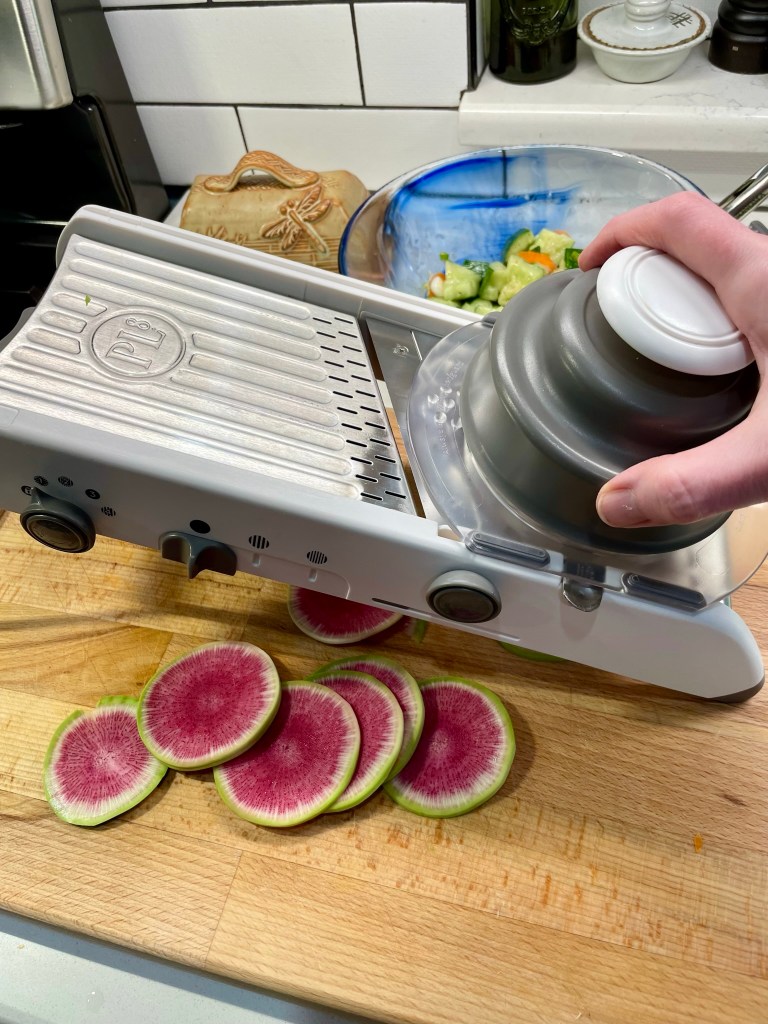
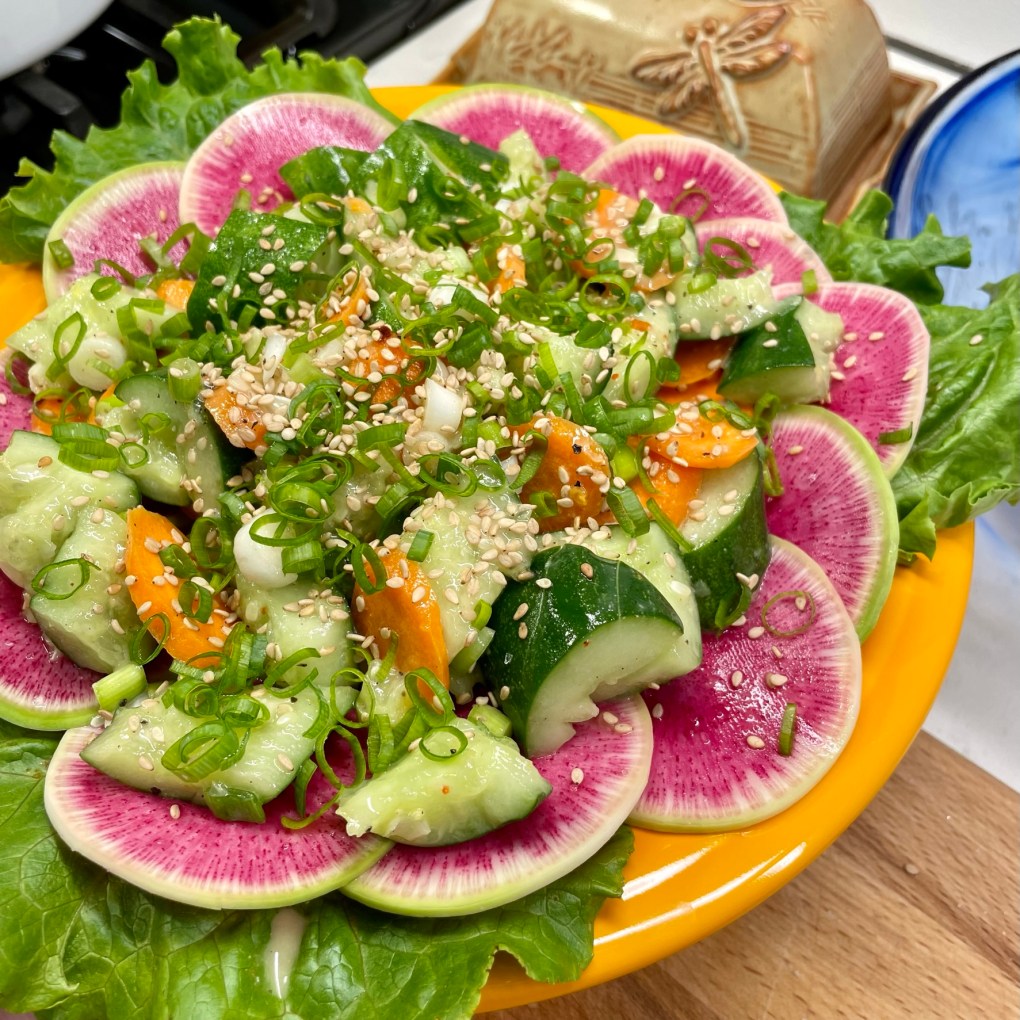
Turns out the farmers’ market is also the place to score Barbie-colored vegetables, and I couldn’t resist slicing one up to complement my smashed cucumber salad. It made a lovely border, don’t you think? And it carries the same pungent, spicy flavor as a typical radish— just larger and way prettier. I’m still deciding what to do with the other watermelon radish (stay tuned).

I love trying new foods! What ingredients are you curious to try, and will you scout them out this weekend at the farmers’ market in your neck of the woods? I hope so!


Smashed Cucumber Salad

  • Servings: 4
  • Difficulty: Average
  • Print

An Asian-inspired dressing puts a flavorful jacket on this super-refreshing and oh-so-fresh cucumber salad. Don't skip the smashing part, as it contributes to the amazing texture of this new summer favorite.


Ingredients

  • 1 large organic English cucumber, cleaned and dried
  • 1 large carrot, peeled and sliced thin
  • 3 scallions, washed and sliced thin (green parts reserved for garnish)
  • 1 medium watermelon radish, peeled and sliced thin
  • Spicy lemon-miso dressing (see below)
  • Lettuce leaves for plating, optional
  • A few shakes toasted sesame seeds (for garnish)

Directions

  1. Prepare the spicy lemon-miso dressing and refrigerate until you’re ready to make and serve the salad. If using the red pepper flake, remember that the flavor will become more intense after the flakes rehydrate.
  2. Lightly smash the cucumber, just enough to split it open. Cut into chunks and add them to a large bowl with the carrots and the white parts of the scallions. Sprinkle with kosher salt and gently toss to distribute the seasoning.
  3. Spoon about half of the dressing over the salad and toss to coat.
  4. Arrange lettuce leaves and watermelon radish on a serving platter. Spoon the smashed cucumber salad onto the plate and garnish with reserved scallion tops and sesame seeds.

Notes: Make the lemon-miso dressing ahead; the flavors mingle nicely in the refrigerator, and the red pepper flakes will rehydrate for maximum punch. You will only need about half of the dressing recipe for this smashed cucumber salad. Save the rest for another salad or to drizzle on grilled vegetables.

Ingredients

  • 2 Tablespoons white miso paste
  • 1 Tablespoon rice vinegar
  • 1 Tablespoon tahini paste
  • 2 teaspoons organic cane sugar
  • Juice and zest of one large lemon
  • Kosher salt and black pepper
  • A few shakes of red pepper flake, optional but wow!
  • 3 Tablespoons extra virgin olive oil

Directions

  1. In a small bowl, combine miso, vinegar, tahini, sugar and lemon juice plus zest. Season to taste with salt and pepper. Add a few shakes of red pepper flake if you want a bit of heat. I like Flatiron Pepper Company’s Asian Reds here.
  2. Slowly drizzle oil into the dressing, whisking constantly to create an emulsion. Adjust seasoning to taste and refrigerate. Dressing will thicken slightly in the fridge.
Benedictine Spread

How do you know when a dish is a winner? Is it compliments received or perhaps a request for the recipe? Maybe it’s no words at all as the eaters enjoy each bite in blissful silence. It could be any of the above, but in my experience, an empty plate tells no lies!
When Kentucky Derby rolled around last year, my husband and I were invited to join some friends for an afternoon of snacking, sipping and generally feeling fancy with gussied-up hats and minty bourbon cocktails. I offered to bring an appetizer and though it isn’t really my style to share a straight-up classic, I decided on Benedictine, a cream cheese-based spread developed by an early-20th century Louisville caterer.

As Wikipedia tells it, Jennie Carter Benedict served this concoction to her catering clients and later to guests in her tea room, though at that time it was more of a silky dip than a spread, made with the juices of cucumber and onions and sometimes a few drops of green food coloring for effect. The combination of cream cheese and cucumber is cool and refreshing and makes Benedictine a delectable filling in pretty cucumber sandwiches. Its popularity continues all these years later, with a few modernizations. There will be plenty of it served up at Kentucky Derby gatherings alongside mint juleps and hot brown sandwiches, and probably even at Churchill Downs itself when the riders take their positions on the first Saturday of May.

Benedictine is made with very simple ingredients, requires no cooking, and can be made a day ahead and stored in the fridge until post time. And, as I mentioned, the empty plate I brought home after last year’s Run for the Roses was proof that this appetizer was a clear winner.


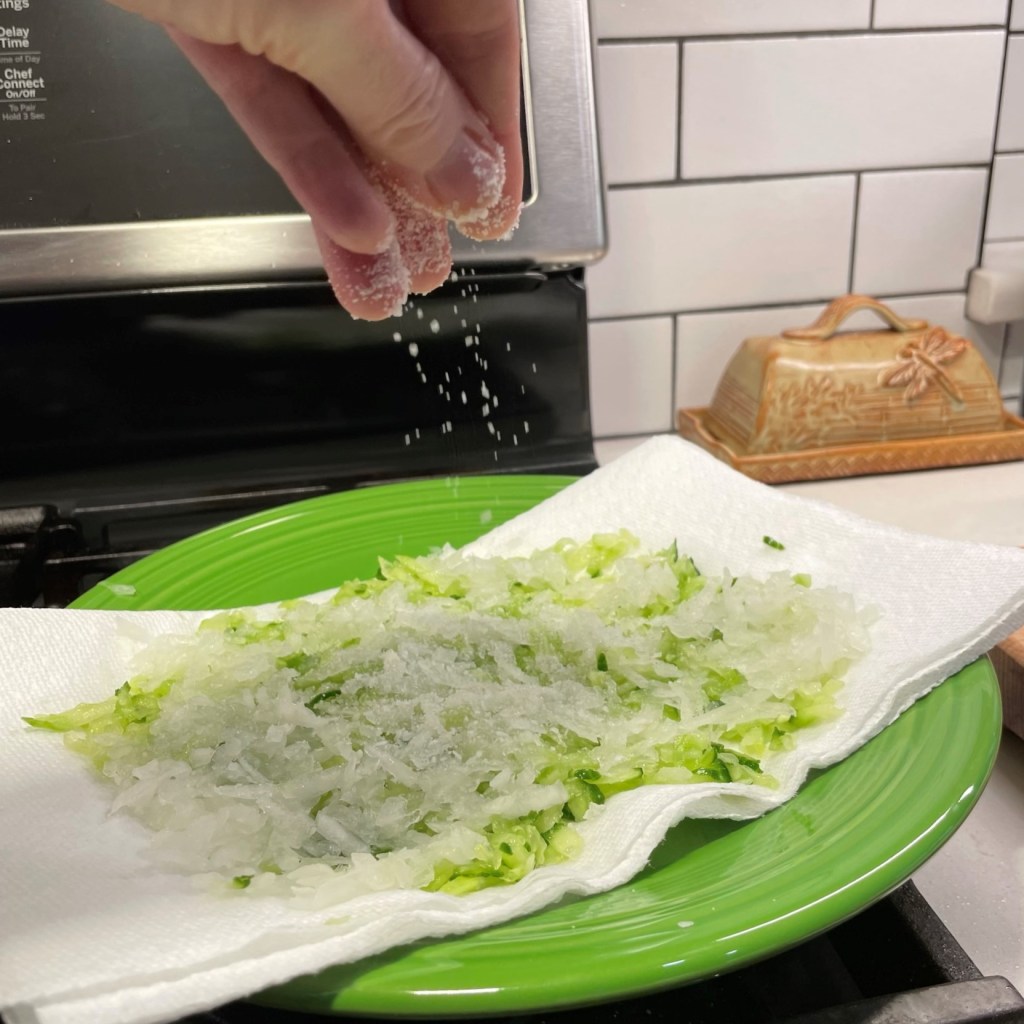
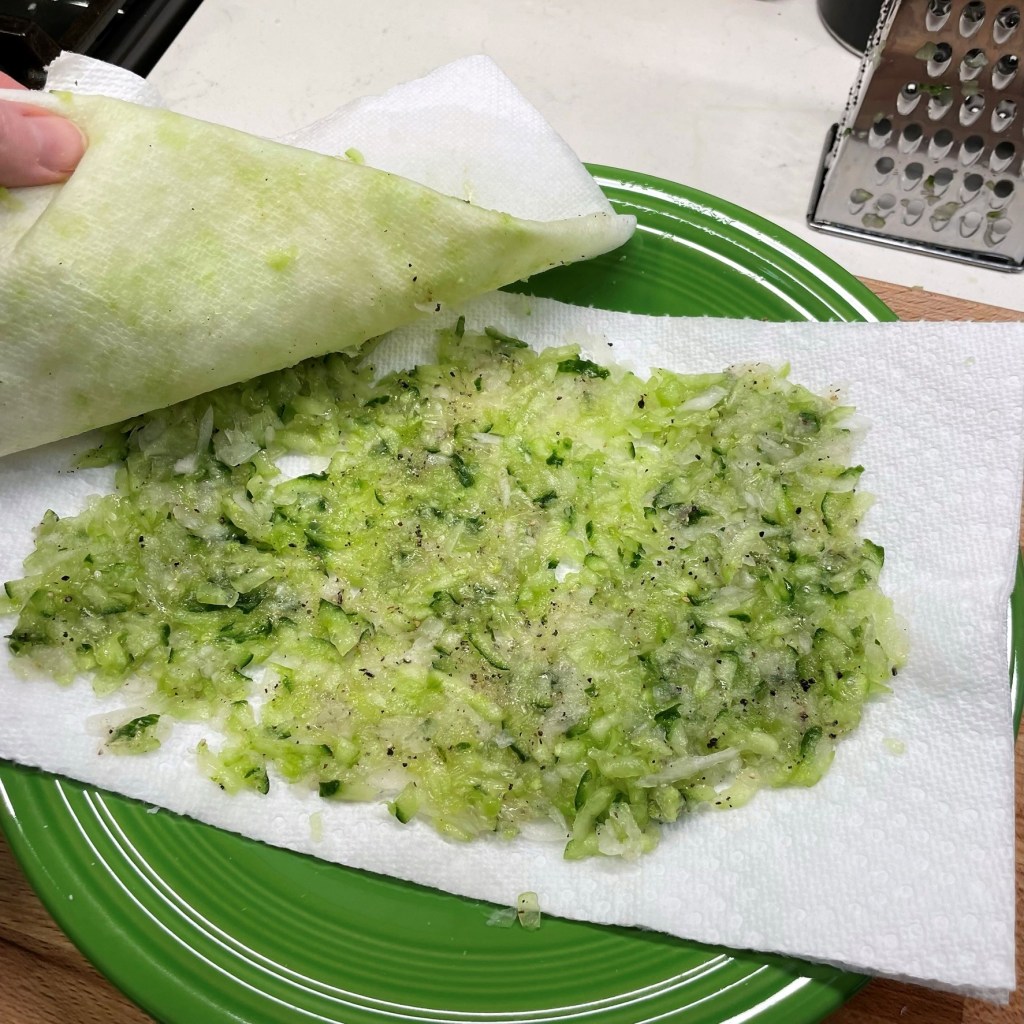
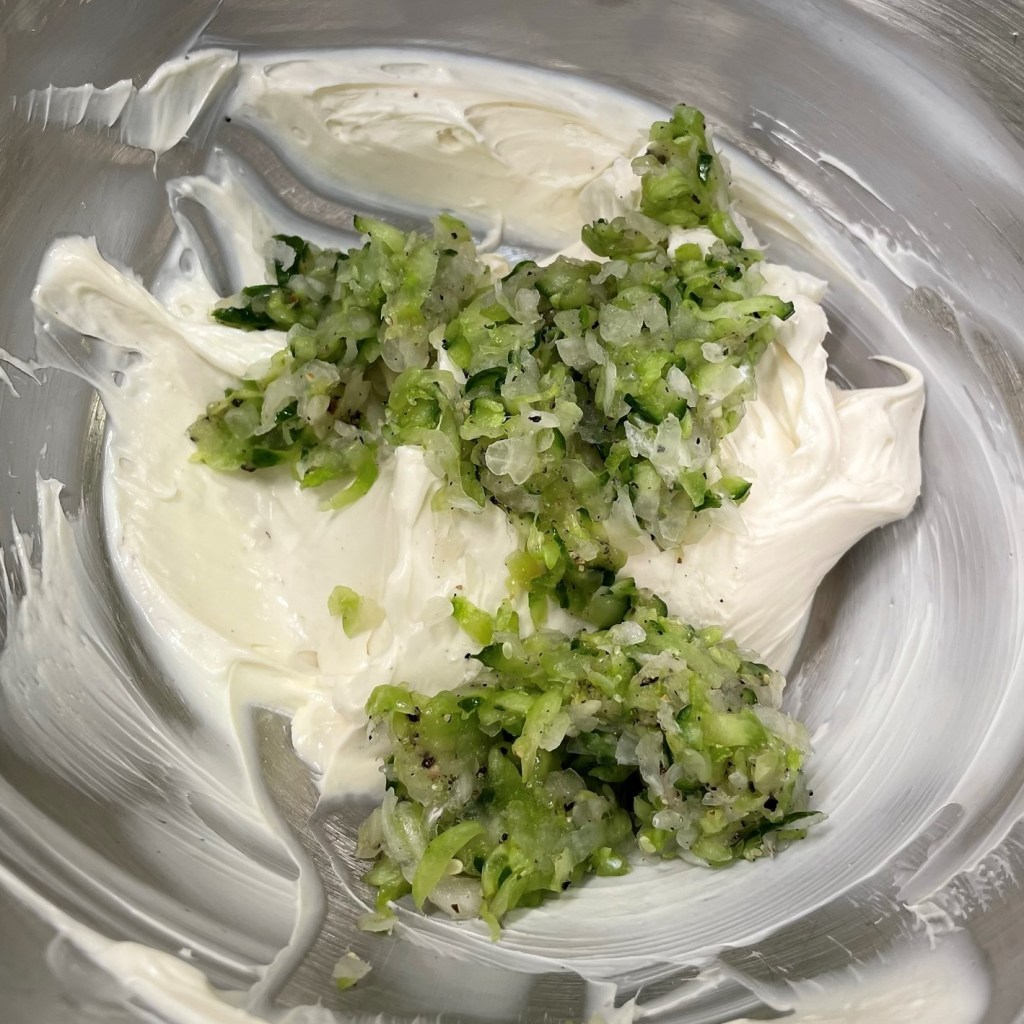
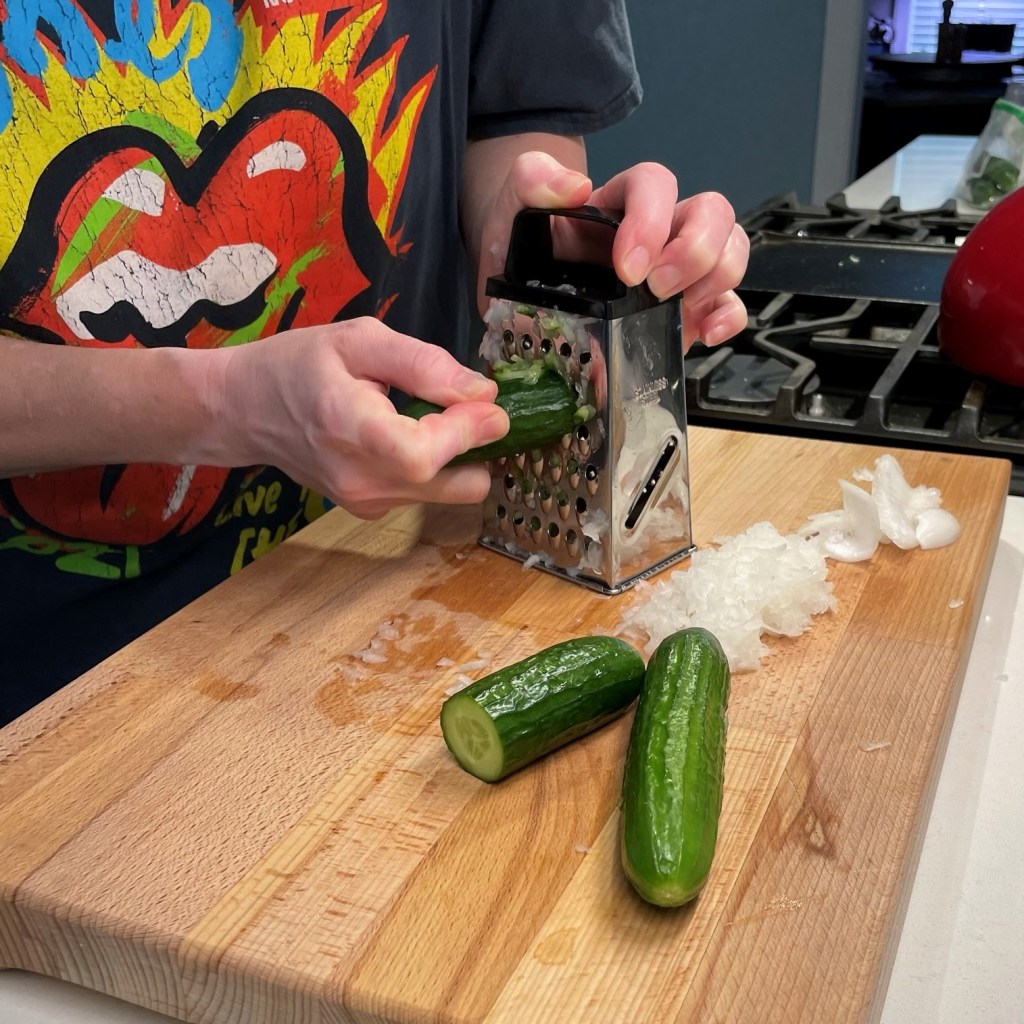
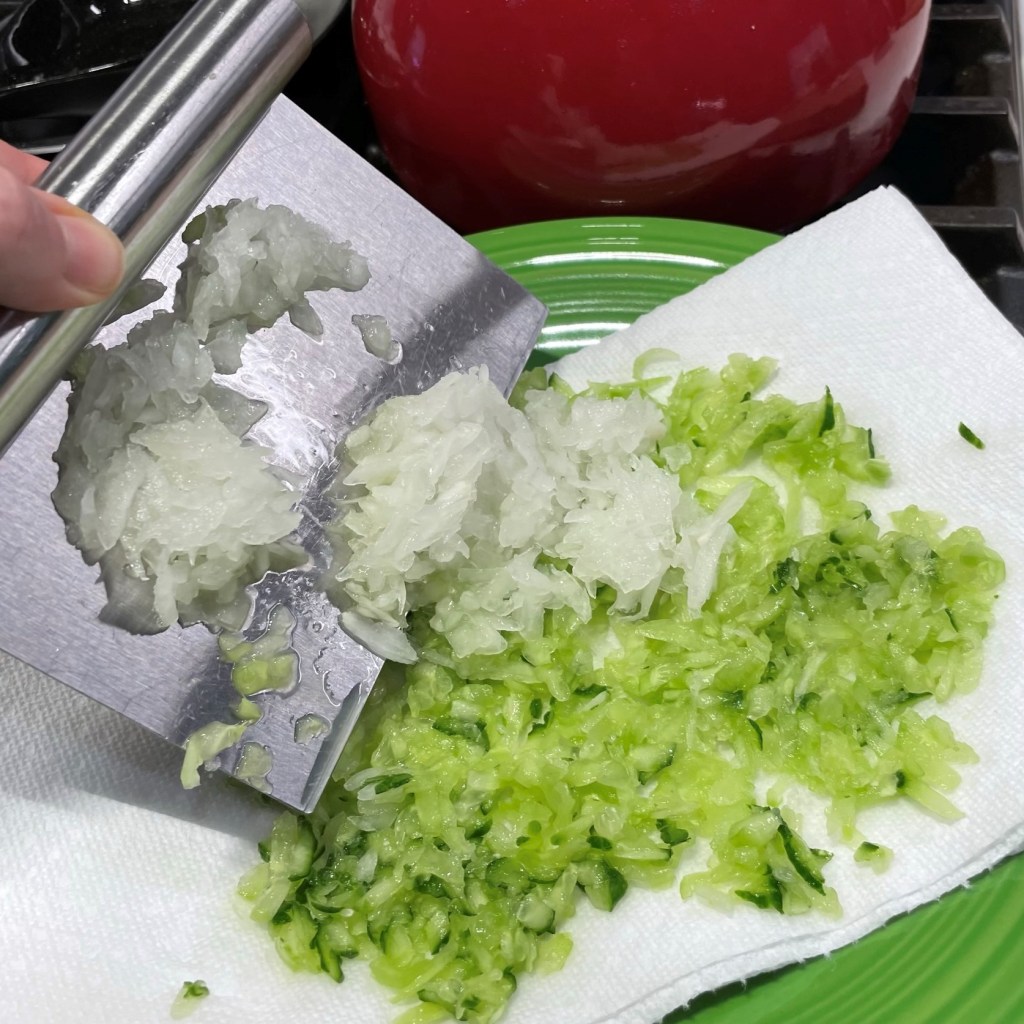
This recipe for Benedictine is inspired by the original, but follows my own general formula for a cream cheese-based dip. As with my tzatziki dip, I salted and drained the grated cucumbers to ensure the shreds would not turn the spread soupy. I did the same with the onions, swapping new paper towels over the mixture until they no longer felt soaked. I did this part of the recipe first, and let the cukes rest in the fridge for a couple of hours before proceeding. I used Persian cucumbers because they have fewer seeds and the skin is tender enough for some of it to be included.


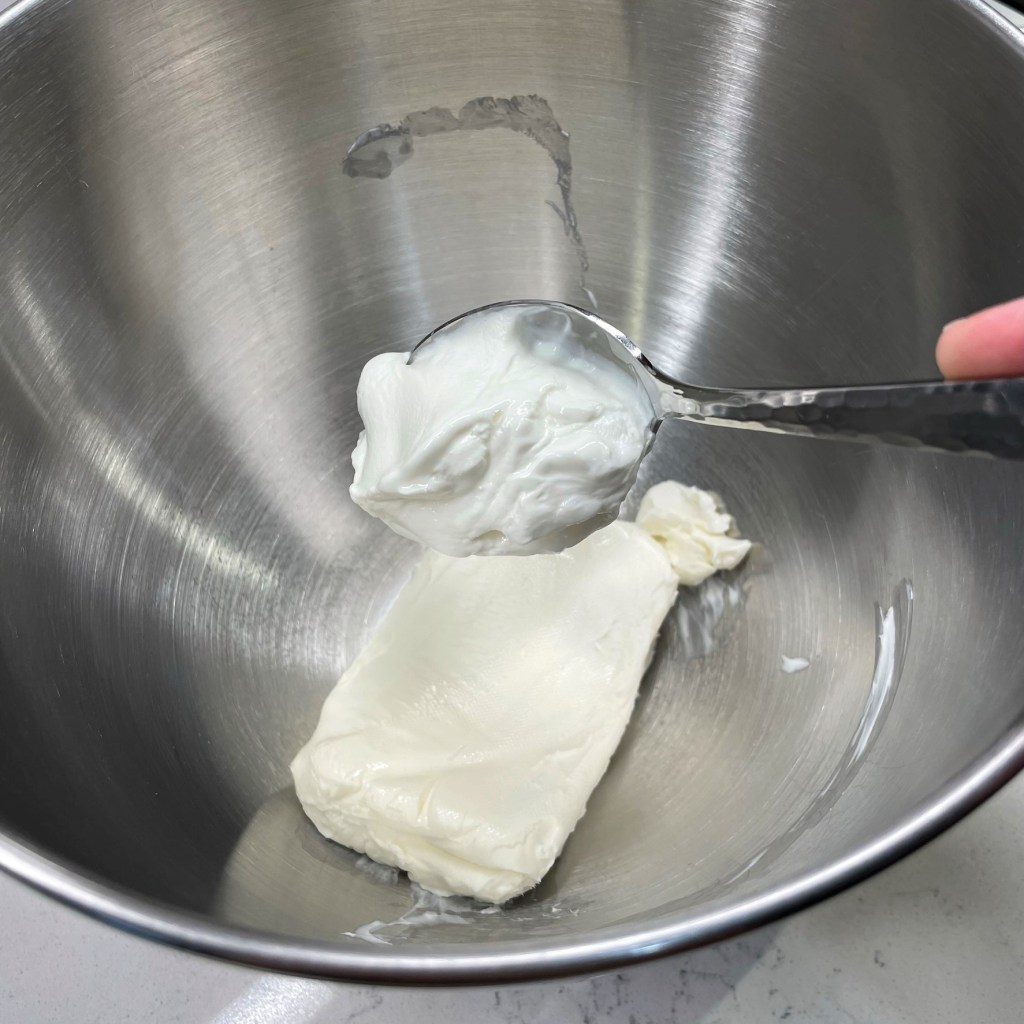
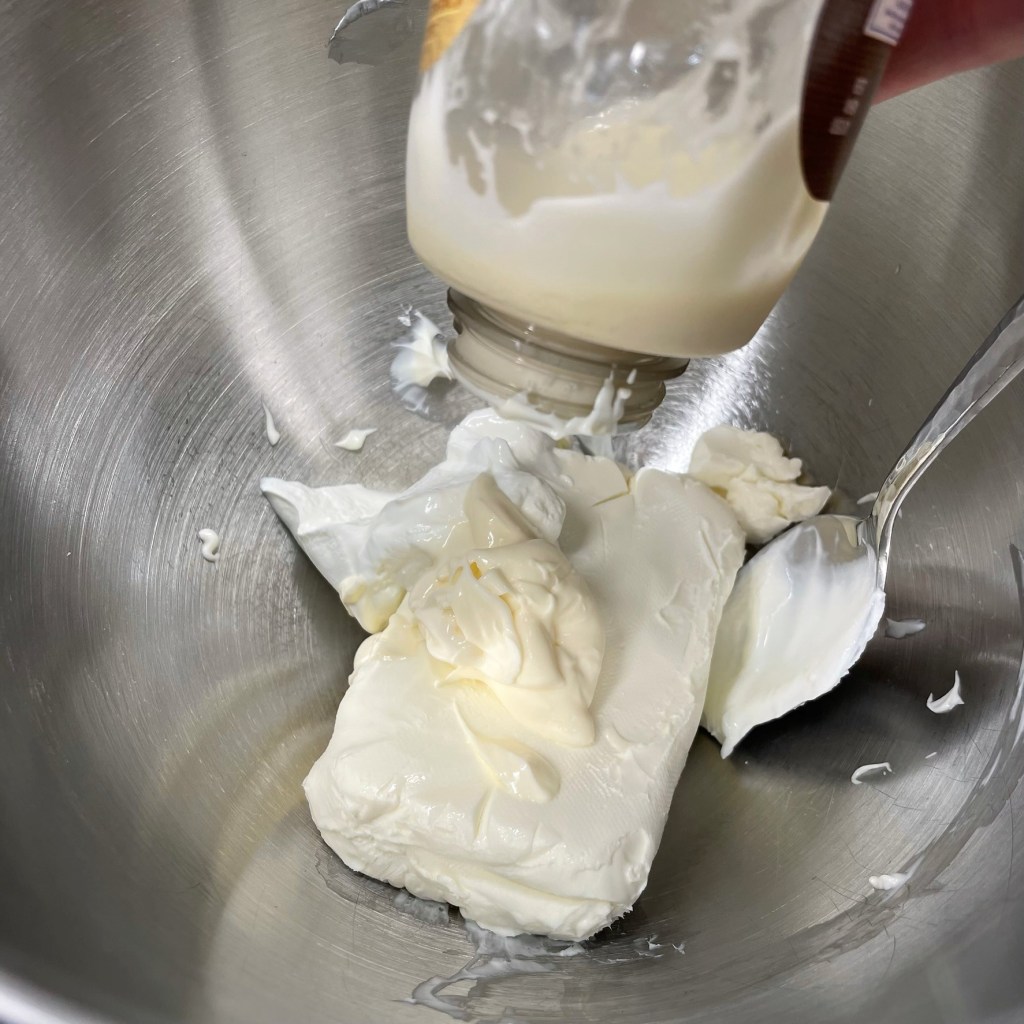
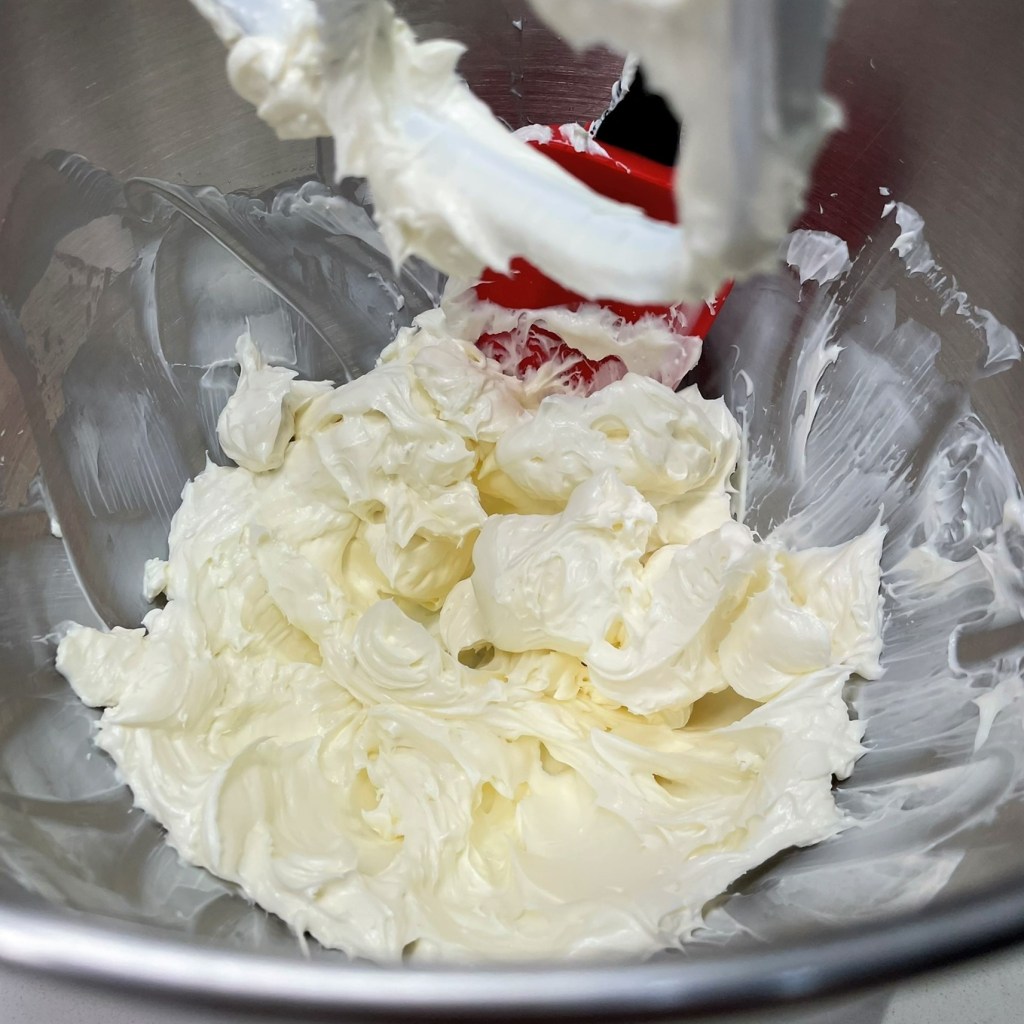
The creamy base was a blend of light cream cheese, sour cream and a bit of mayonnaise. Rather than drops of hot sauce (mentioned in the Wikipedia article), I gave my Benedictine a little zing from a bourbon barrel-rested Worcestershire sauce made in Louisville—that seemed apropos for a Derby Day recipe and it was a pleasant, savory complement to the freshness of the cucumbers. This sauce also happens to be vegetarian, as it omits the usual anchovies.


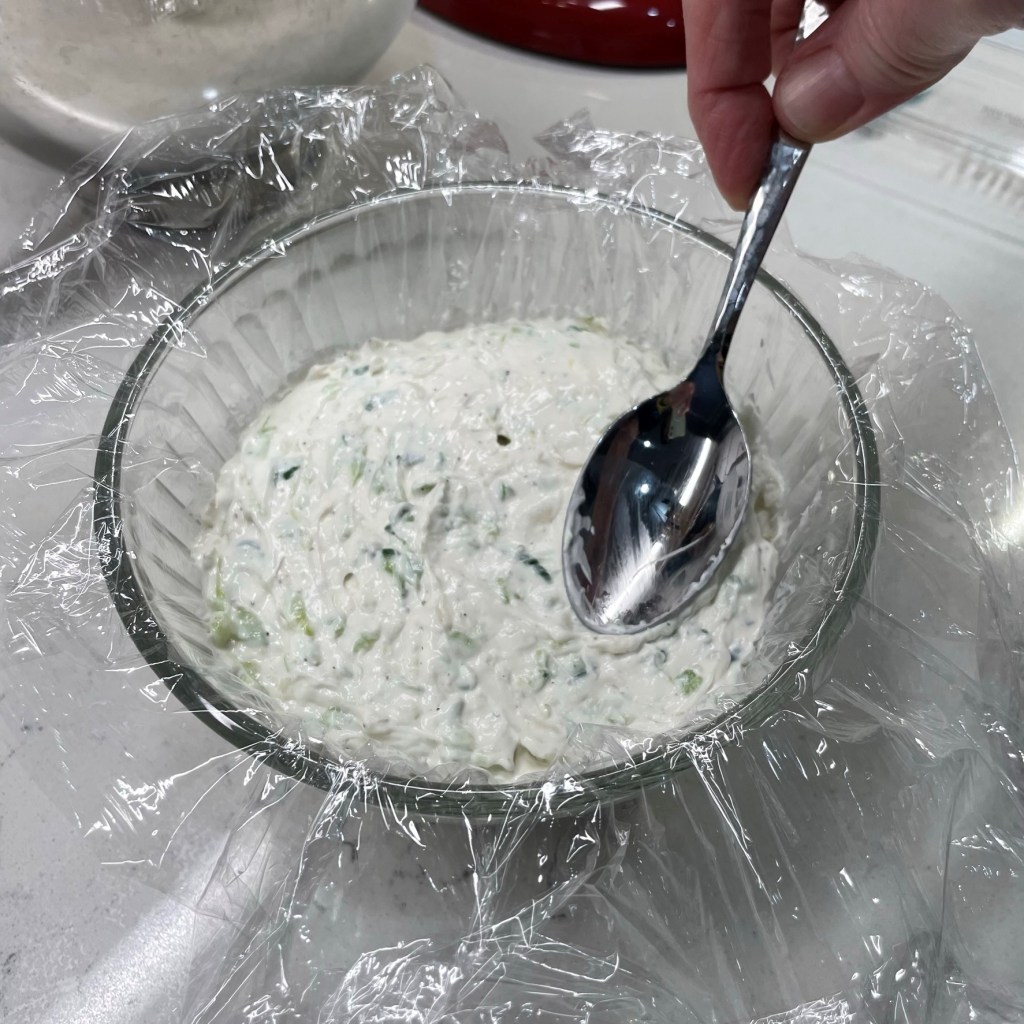
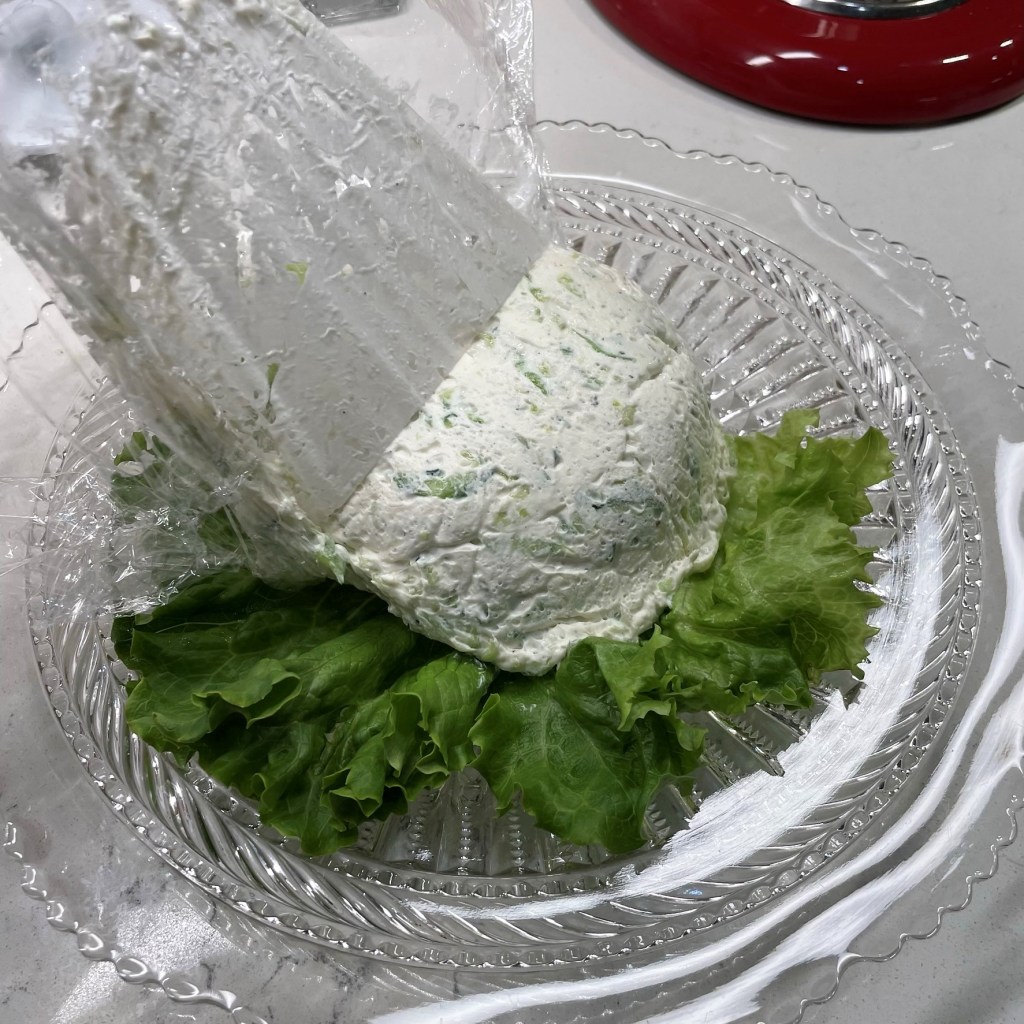
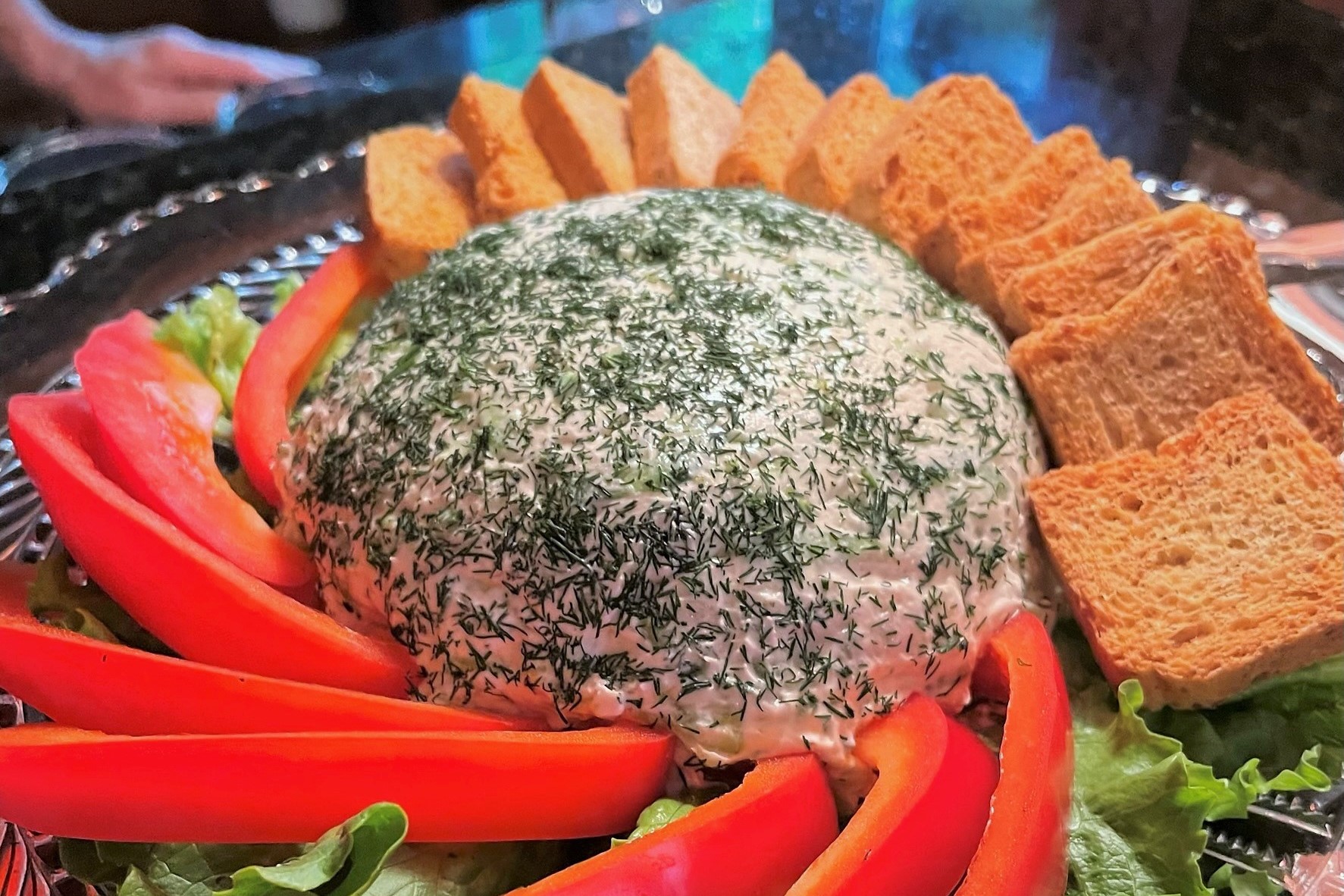
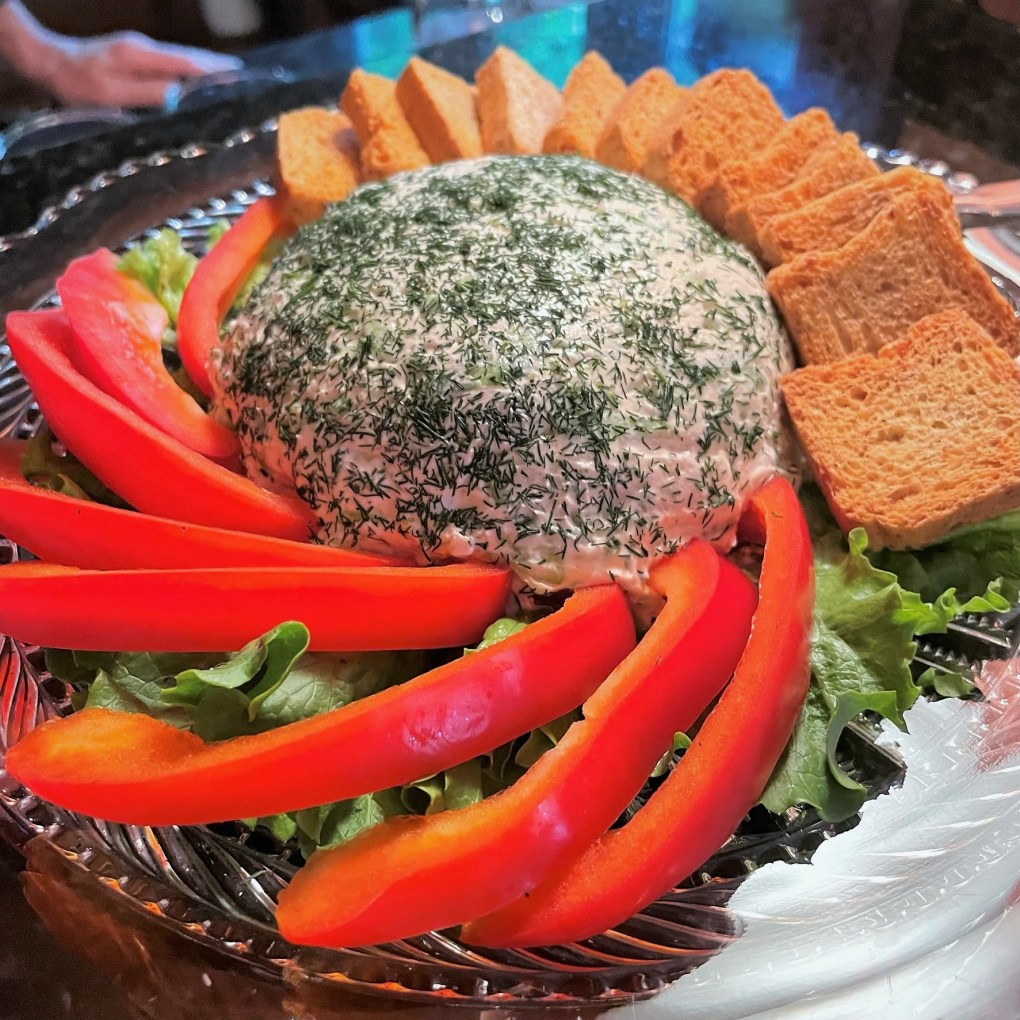
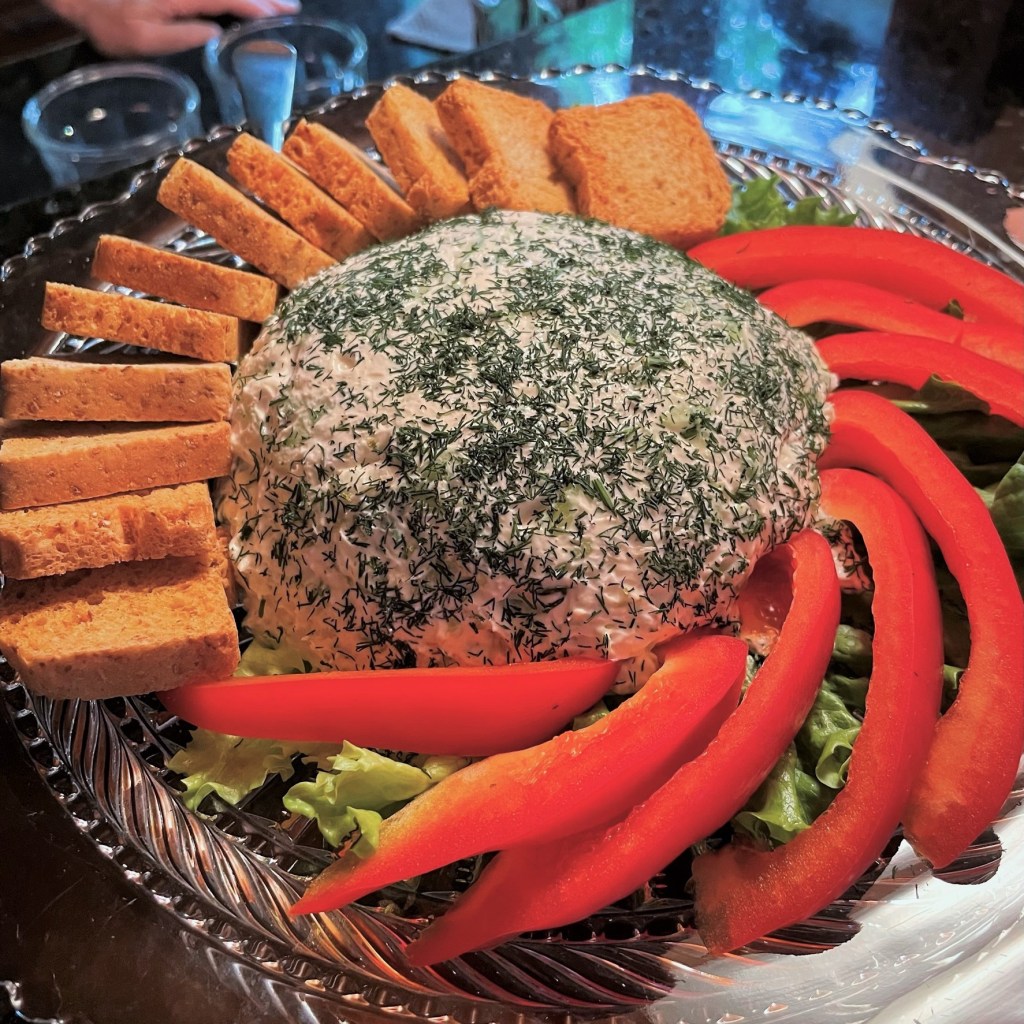
If I were in a hurry or making cucumber sandwiches, this would have been ready as soon as the drained cucumber and onion shreds were mixed in, but I wanted to serve my Benedictine on a platter with fresh veggies for dipping and some toasted mini brioche squares, so I pressed it into a bowl lined with plastic wrap and gave it some fridge time to set up for prettier presentation.


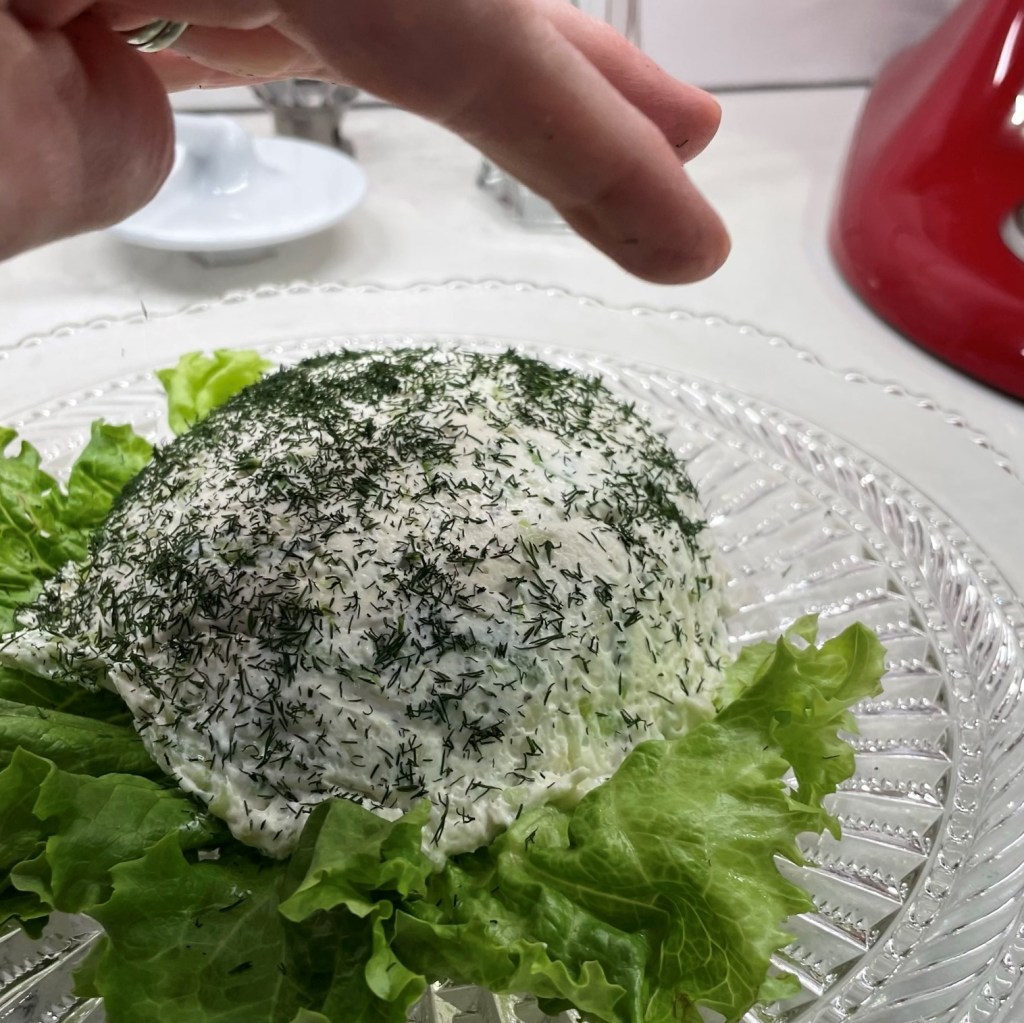
When I inverted it onto a lettuce-lined platter a few hours later, it occurred to me that fresh herbs would finish it nicely. Unfortunately, all I had in the fridge that day was cilantro (not the best match here), and it was too late for a last-minute dash to the store, so I had to concede to using dried dill leaves. The flavor was still very good, but fresh dill would take the win—by a nose. 😉


Benedictine Spread

  • Servings: 6 to 8 as an appetizer
  • Difficulty: Average
  • Print

DESCRIPTION


Ingredients

  • 2 Persian cucumbers*, cleaned and partially peeled (a little of the tender peel is fine and adds lovely color)
  • 1/2 medium sweet onion
  • 1/2 tsp. kosher salt and black pepper to taste
  • 8 oz. brick light cream cheese (or full-fat)
  • 1/4 cup stirred sour cream (or plain Greek yogurt)
  • 1/4 cup mayonnaise
  • 1 tsp. Worcestershire sauce (mine was aged in a bourbon barrel, available in specialty stores or online at https://bourbonbarrelfoods.com/product/bourbon-barrel-worcestershire-sauce/)
  • 2 Tbsp. fresh dill leaves, chopped

Persian cucumbers are usually about five inches length and they have fewer seeds and more tender skin than typical “slicing” cucumbers. Consider peeling and seeding other types of cucumber. This recipe requires about 1 cup of grated cucumber. I peeled one of my Persians, and kept the other intact.

Directions

  1. Use a box grater to shred the cucumbers and onion. Place shreds in a bowl or plate, lined with layers of paper towels. Sprinkle with salt and pepper, and then wrap in the paper towels; refrigerate a couple of hours to draw out as much excess moisture as possible.
  2. By hand or with a stand mixer, combine cream cheese, sour cream and mayonnaise until smooth and fluffy. Stir in Worcestershire. Cover and refrigerate until ready to combine with cucumber mixture.
  3. Use clean paper towels to blot away any lingering excess moisture from cucumber-onion shreds. Blend evenly into cream cheese mixture.
  4. Transfer Benedictine spread to a small bowl lined with plastic wrap. Press and smooth the mixture so that it assumes the shape of the bowl with no air bubbles. Cover and refrigerate a couple of hours to firm up.
  5. Invert Benedictine onto a lettuce leaf-lined serving plate. Remove plastic and sprinkle with fresh herbs. Serve with fresh vegetables, crackers, crostini or toasted brioche squares.


Tzatziki Potato Salad

There are as many ways to make potato salad as there are grandmothers, and although my own Gram never made this version, I know she would have liked it. Gram introduced me to yogurt when I was a young girl, and it’s a good thing she did, for a couple of reasons. First, I love it in all its forms—plain, Greek, drinkable, etc.—and second, I likely would not have tried yogurt at all because my mother hates it.

If the passion for food and cooking is passed down genetically, then all I can say is that it skipped a generation in my branch of the family tree. My mom is not a bad cook, just a basic (and infrequent) cook, and the meals she served when I was young never strayed from what she herself liked to eat. My friends, that was a short list. On the good side of things, this allowed me to experience Mexican food at an early age, and it is still a favorite. On the flip side, I nearly missed out growing up on so many things I love today, including cream cheese, eggplant, bleu cheese and, well, I could go on for days. Not only did my mom not enjoy those foods, but she would make disgusted faces about the very idea of them, and I might have grown up believing they were poisonous, if not for my grandmother’s influence.

Yogurt is about as far from poison as you can get; it’s rich with protein and gut-nourishing probiotics, and I learned to love the little cups of it that my grandmother always seemed to have in the fridge when I visited. My favorite flavors, as I recall, were lemon and the ones with blueberry or peaches that you stirred up from the bottom. These tasty treats paved the way for me to love Greek yogurt in my adult years, and most often with no fruit or sugar added. This powerhouse food is strained to a thicker texture than regular yogurt, so that the protein is concentrated, making it a fantastic base for healthy breakfast smoothies. In our house, we regularly reach for Greek yogurt as an even exchange for sour cream, and we whip it into our scallion cream cheese to make it more spreadable.

As summer inches toward its end this year, I had been considering ways to liven up my basic potato salad recipe, and it occurred to me that tzatziki—the bold and zesty, Greek yogurt and cucumber sauce—could be a terrific addition to a potato salad. I am not crazy about having a lot of mayonnaise in my salads, and the idea of refreshing tzatziki sounded pretty darn good. I was right.

Cool, creamy, refreshing!

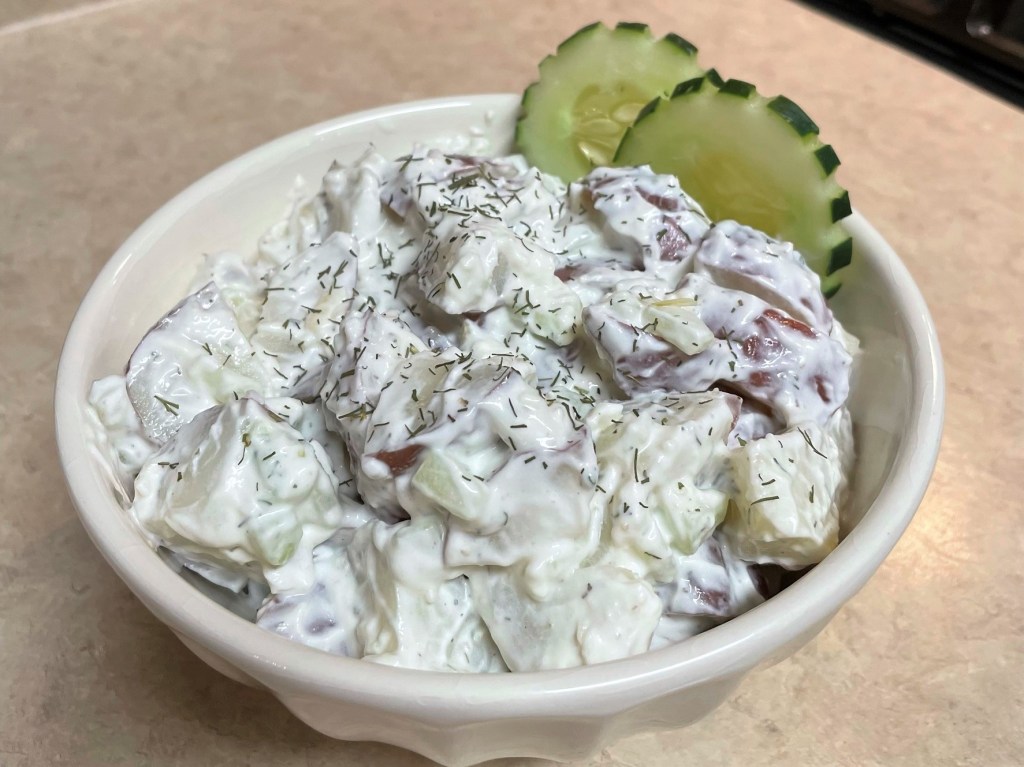
While you cook the potatoes, make the tzatziki. Begin by chopping or shredding a peeled and seeded cucumber, then use salt to strip it of excess moisture and blend it together with a healthy dose of Greek yogurt, garlic and dill. Combine that with a touch of mayonnaise and fold it into cold, boiled potatoes, and you will have a side salad that’s perfectly cool and fresh, served with burgers or any kind of meat kebab on the grill.


Ingredients

About 1 1/2 pounds red or yellow potatoes

1/2 good sized slicing cucumber, peeled

Kosher salt and black pepper

2 cloves fresh garlic, finely minced

2/3 cup Greek yogurt

Fresh or dried dill leaves

1/4 cup mayonnaise (I used canola mayo from Trader Joe’s)


Instructions

  1. Scrub the potatoes but leave the peel on. Cut the potatoes into large chunks and cook them in salted water at a low boil until they are just tender enough to pierce with a knife. Drain, cool and chill them at least two hours.
  2. Cut the cucumber lengthwise into quarters (like pickle spears). Use a paring knife to carefully slice off the center strip that contains the seeds. Discard them. Slice, then dice the remaining parts of cucumber into very small bits. Alternatively, you may cut the cuke in half lengthwise, use a spoon to scoop/scrape out the seeds, and then grate it on the large holes of a box grater.
  3. Transfer the cucumber bits or shreds to a paper towel-lined bowl and sprinkle with two generous pinches of kosher salt. Toss the cucumber in the salt, fold the paper towel over it and put the bowl in the refrigerator. After about 30 minutes, gently press the cucumber between layers of clean paper towel to remove the excess moisture.
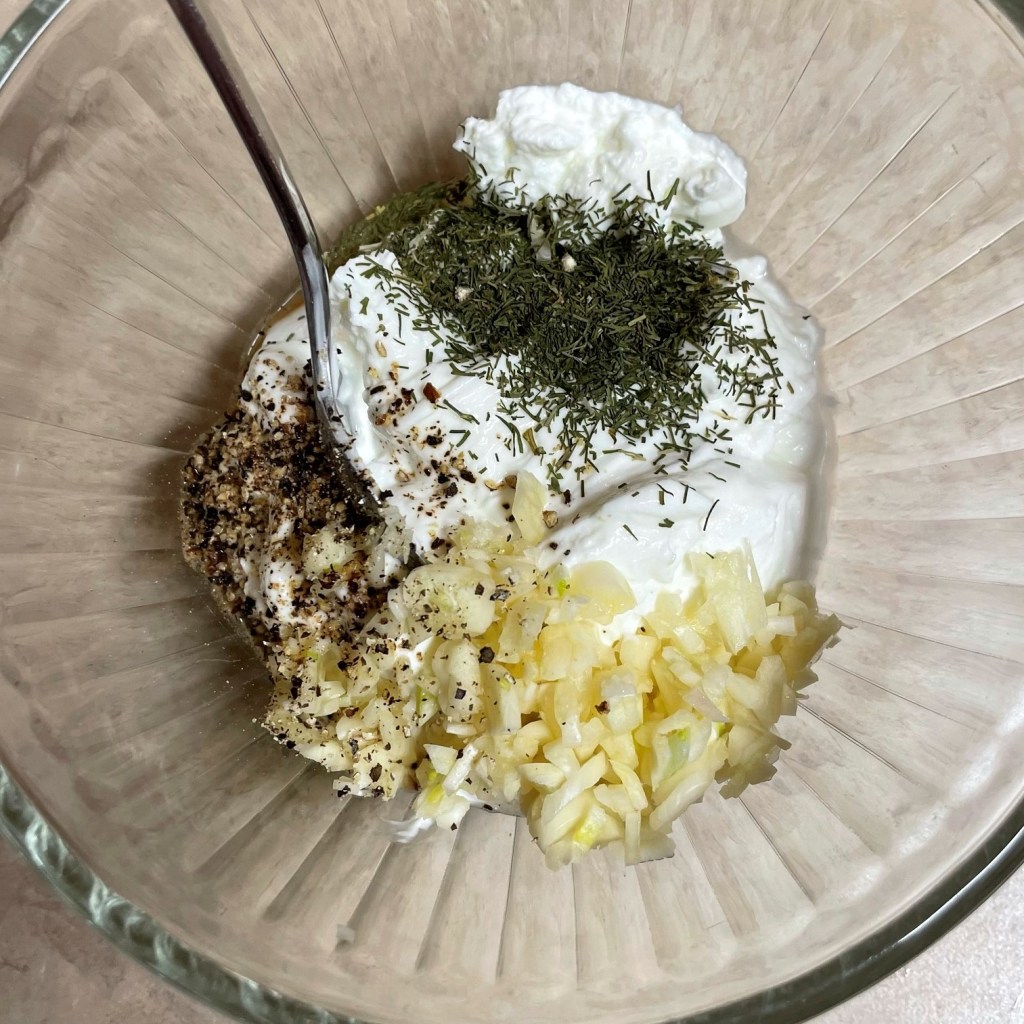
  4. In a medium bowl, combine the Greek yogurt, minced garlic, black pepper and dill. It is unlikely that you will need additional salt, as the cucumber will bring that flavor to the dip. Fold in the salted, drained cucumber bits.
  5. Combine the tzatziki with mayonnaise. Adjust pepper and dill to taste.
  6. Fold the dressing into the chilled cut-up potatoes. Garnish salad with additional sprinkles of dill and a few cucumber slices.


Hearts of Palm Citrus “Ceviche”

In case you haven’t tried them (or maybe even heard of them), hearts of palm are exactly as the name implies—the inner core of a palm plant. For whatever reason, you don’t often see them on restaurant menus, unless you’re in a swanky place with chandeliers and linen napkins and one of those servers who is compulsively whisking the crumbs off your table. I first learned of them during my tenure as a part-time catering kitchen helper, and though I didn’t mind hearts of palm, I have largely ignored them.

Until now.

There’s nothing terribly exciting about hearts of palm on their own—they’re neither strong in flavor nor impressive to look at. They’re just slender, creamy white-colored stalks which you might occasionally find playing a background role in a salad. But ever since I spotted a faux crab cake recipe on Pinterest, where hearts of palm stood in for crab, I’ve had it in my mind to give them a starring role in a vegan version of ceviche, and you know what? It works!

Ceviche is traditionally a tropical appetizer type of dish, centered on raw fish cured with citrus juices, and it is usually flavored up with some combination of onions, hot peppers, cilantro and avocado. But this is a Kentucky Derby party, so we are putting a classy twist on those ingredients, serving it up salad style, and swapping out the tropical notes for fresh spring flavors—cucumber and mint. Along the way, I’ll show you some of the easy tricks I learned from my catering mentors for making a dish prettier—which, obviously, also makes it tastier. Enjoy!


Ingredients

1/2 large pink or ruby red grapefruit, cut into sections, reserve juice
Juice of 1 fresh lime, divided
1 tsp. Dijon mustard
1 tsp. sugar* (see catering tips)
1/4 cup (4 Tbsp.) extra virgin olive oil (mild flavor)
2 Persian cucumbers, peeled* and cut lengthwise, then sliced into half moons
1 can (14 oz.) hearts of palm, chilled in fridge
2 Tbsp. finely chopped red onion
1/2 small, firm avocado
Mixed baby greens or leaf lettuce
Chopped parsley and mint leaves for garnish


Instructions

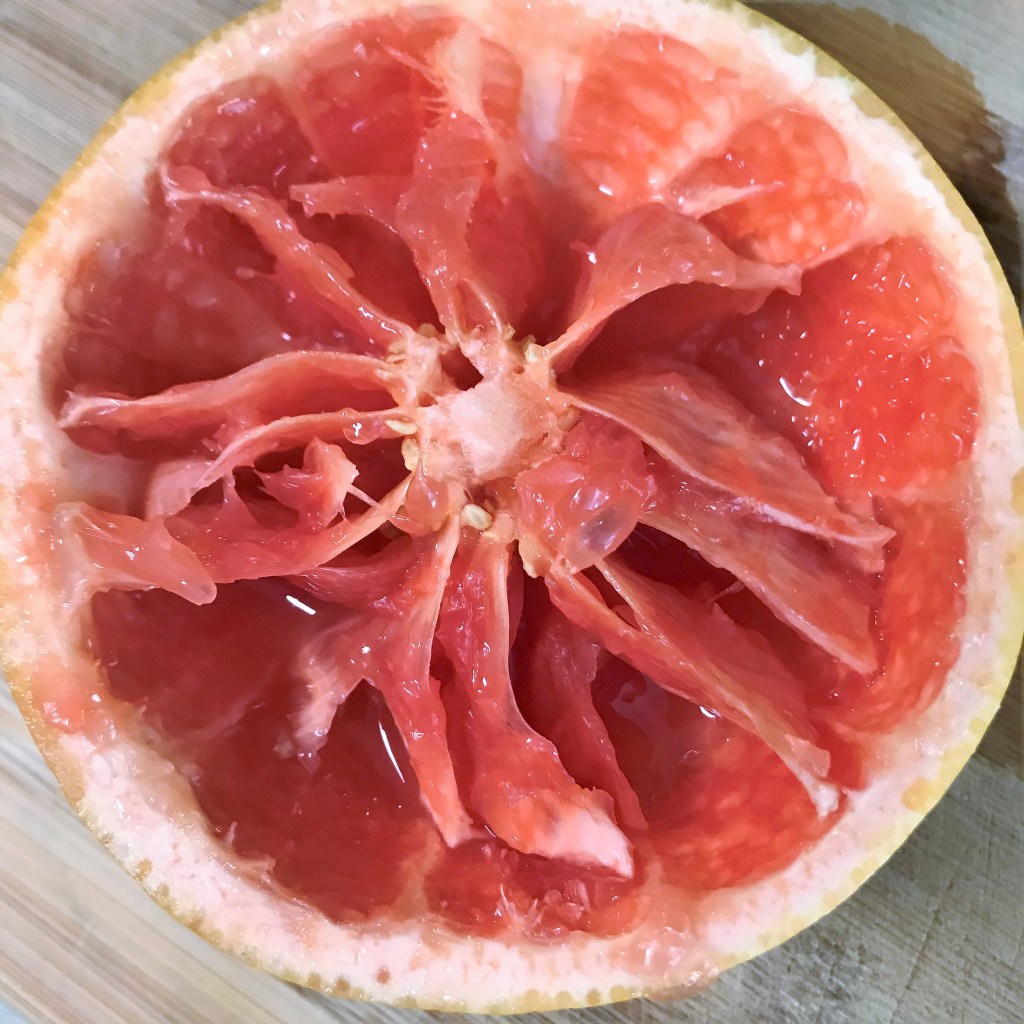
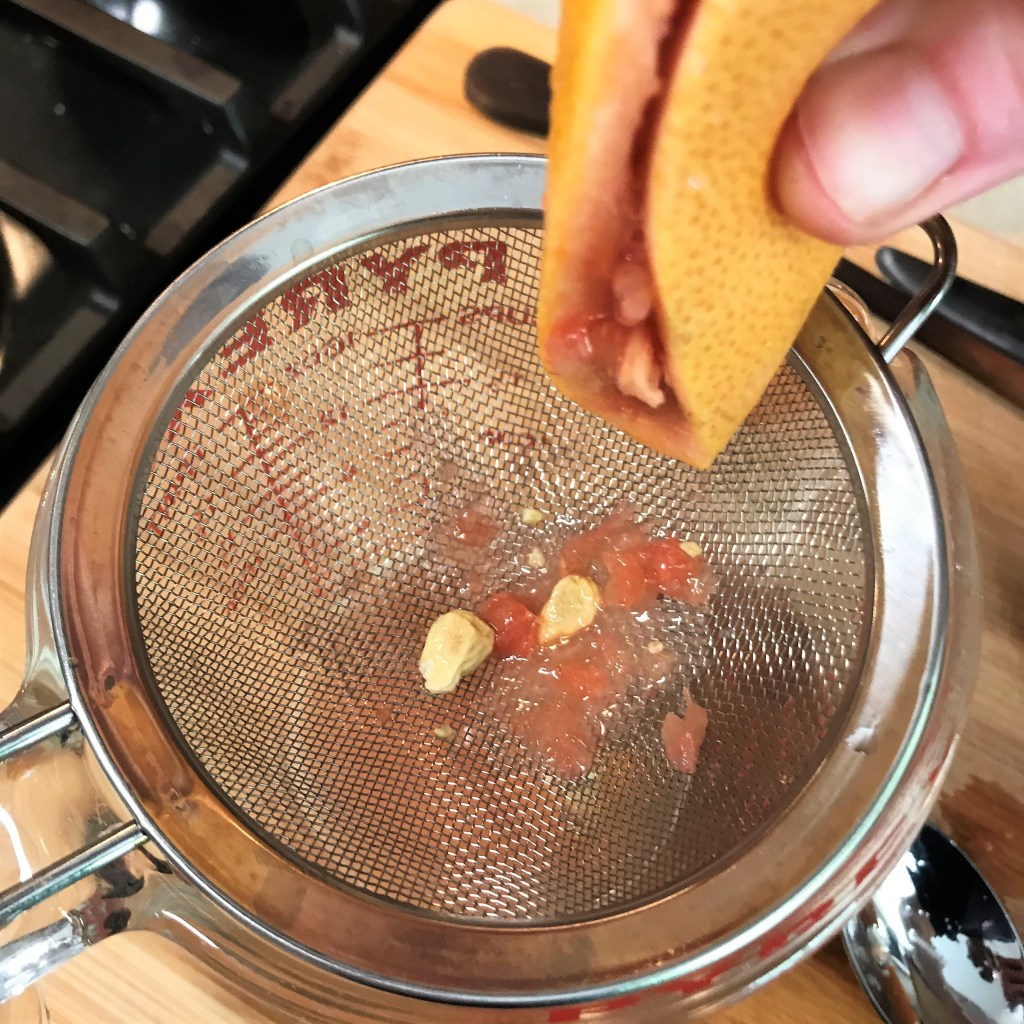
Section your grapefruit by cutting in half crosswise, then running a knife first around the outside edge of one half, then up close to each side of the section membranes. Spoon out the sections into a medium bowl and strain the remaining grapefruit peel over a measuring cup to save all the juice. Wrap the remaining grapefruit half and save it for another use.


Juice 1/2 of the lime, and add about 1 Tbsp. of the reserved grapefruit juice. Whisk in Dijon mustard and salt and pepper to taste. Add olive oil in a stream, whisking constantly, until dressing is thick and emulsified. If your olive oil is very robust, substitute something neutral—avocado or canola oil would be good.

Cut the avocado in half, carefully split the halves apart and use a paring knife to cut a crosshatch design into the flesh, then spoon around the edges to release the avocado pieces into the bowl with the grapefruit pieces. Immediately squeeze the remaining half of lime over the avocado to prevent browning. Squeeze any remaining lime juice into the dressing.

Drain hearts of palm. Blot dry on paper towels, cut lengthwise into quarters, then slice into 1/2” pieces and empty into a medium bowl with red onions, grapefruit sections, cucumbers and avocado pieces.


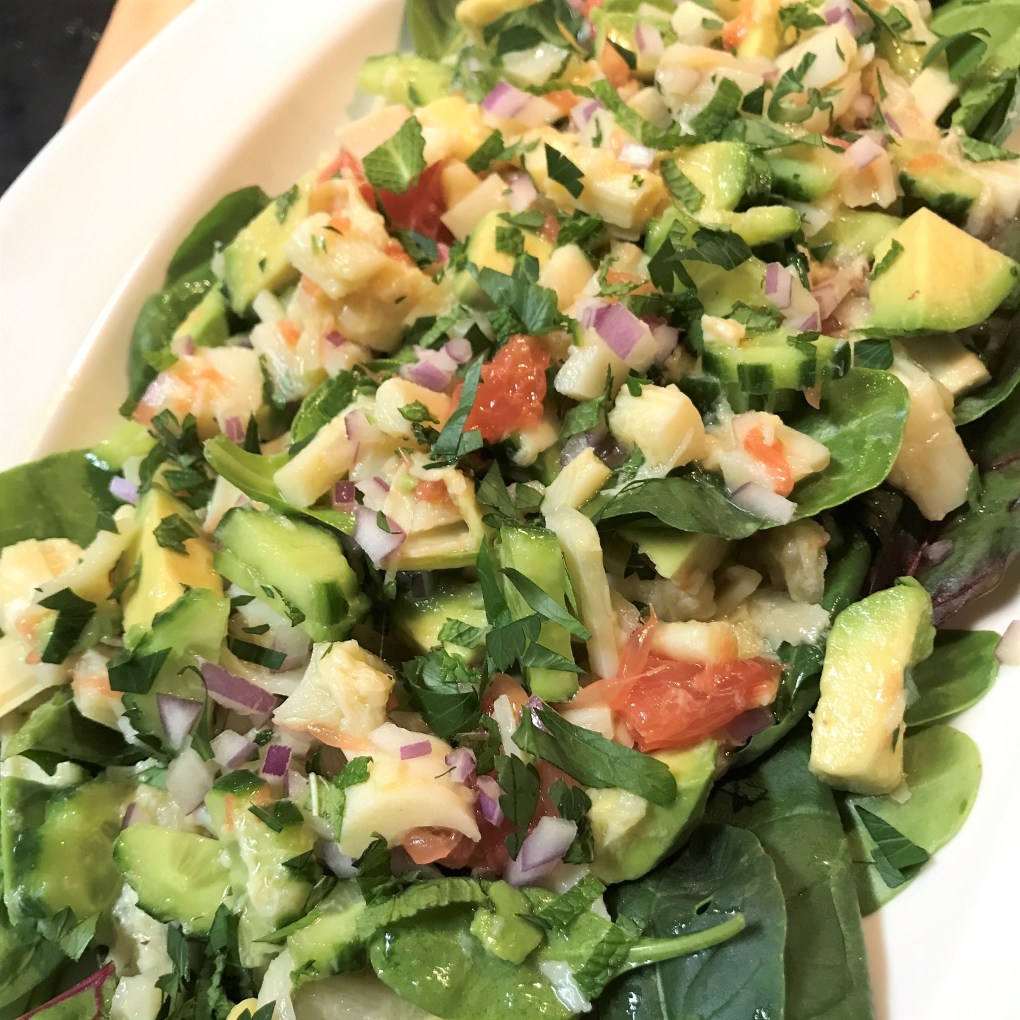
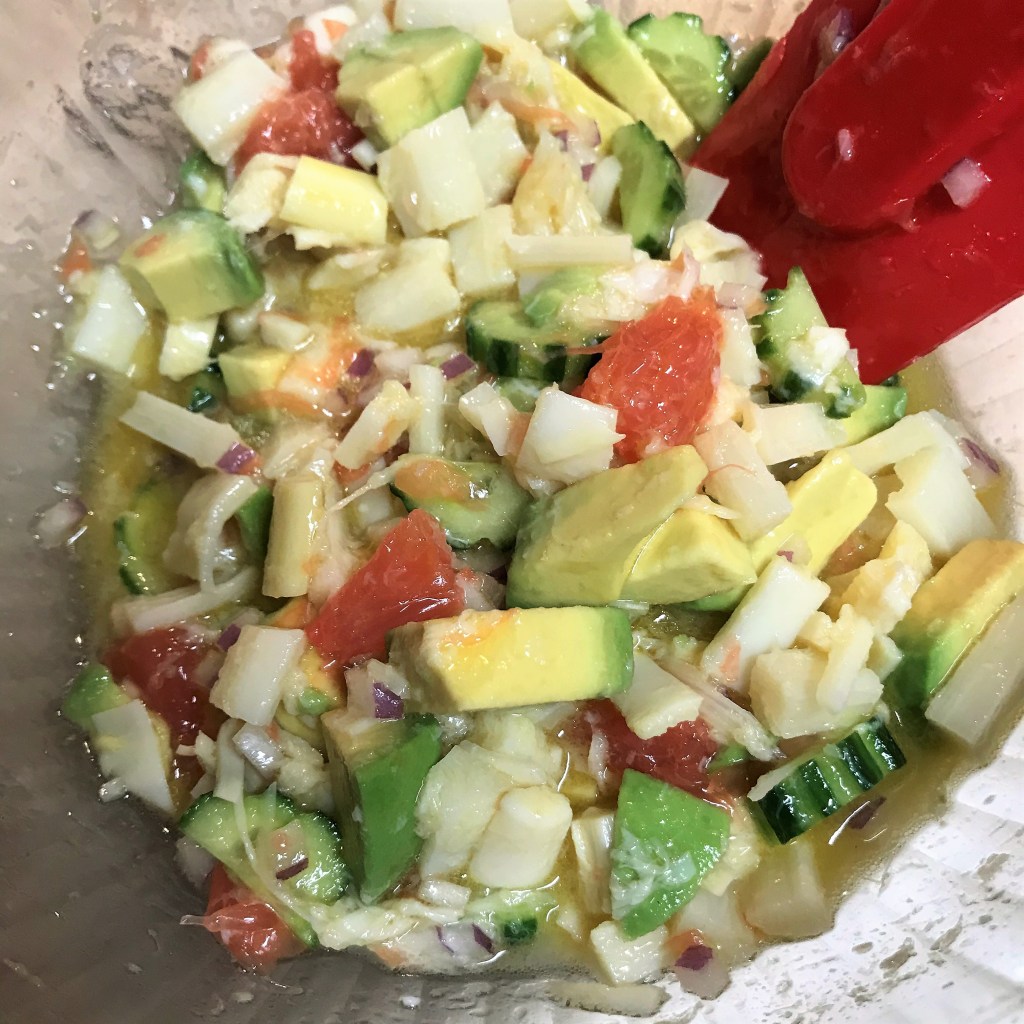
Pour dressing over hearts of palm mixture and gently fold with a rubber spatula to coat the salad with the dressing. Don’t stir the mixture, lest you reduce the avocado and hearts of palm to a mushy mess. Refrigerate up to an hour before serving a generous spoonful of “ceviche” atop a mound of mixed greens, and garnish with the chopped parsley and mint. If you happen to have some of my grandmother’s beautiful Depression glass fruit bowls, use those!

On a bed of baby greens and spinach, this is so pretty.

*Catering Tips

If you’re making the cucumber or mint simple syrups for the Kentucky Derby Sips recipes, substitute a couple teaspoons of that for the sugar here. When you repeat a flavor across different elements of your meal, it’s called “echoing,” and it helps tie things together in your senses. You don’t want to go overboard, of course, or everything will taste the same. But here, it will be cool and refreshing, a contrast to the rich hot browns, and in harmony with your Sparkly Britches or Kentucky Love Child (you can’t imagine how goofy it feels to write that sentence). If that last sentence didn’t make sense to you, please circle back and check out my post for fun Kentucky Derby Sips!

This weird looking little thing is one of my favorite tools for creating a prettier presentation. You should get one of these.


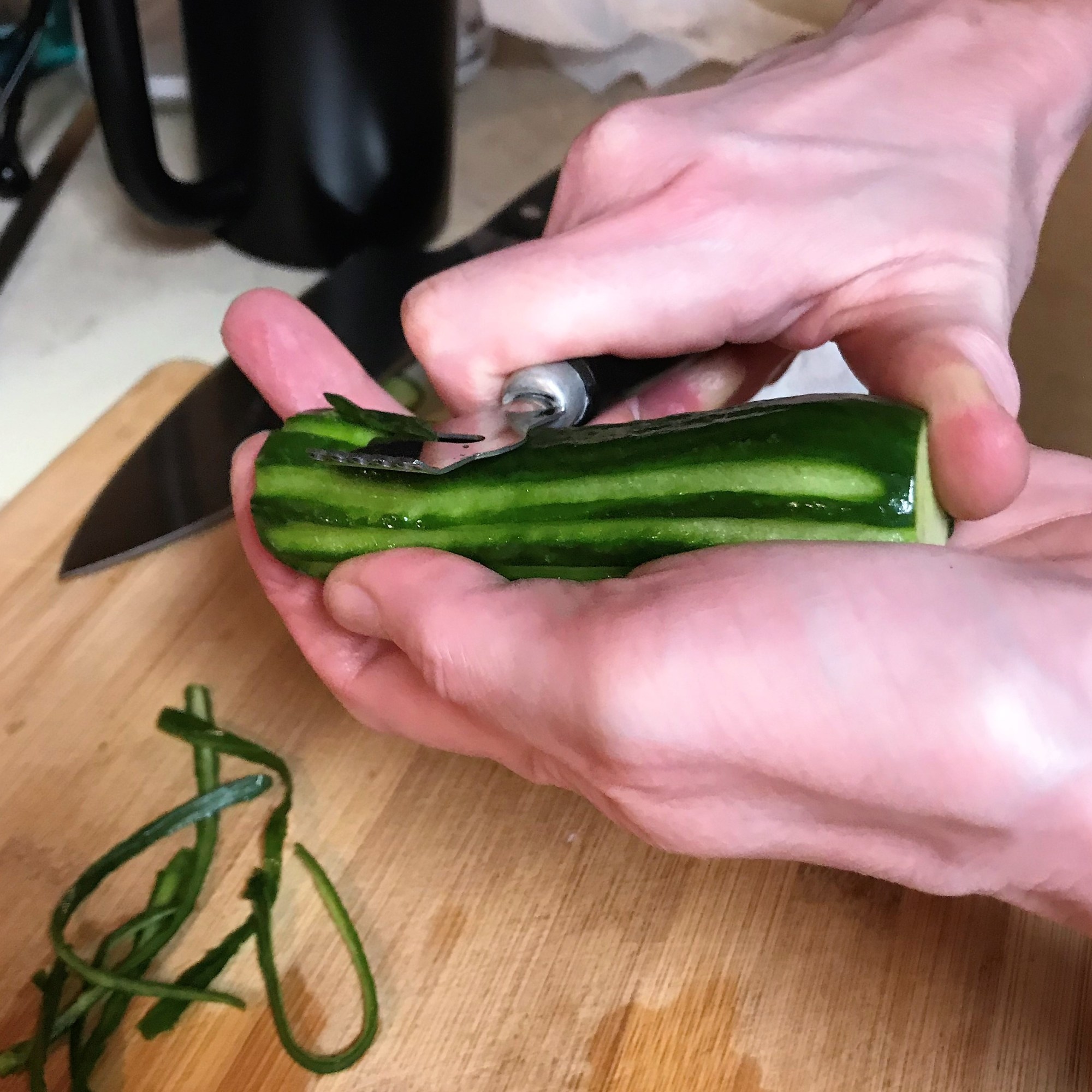
A garnish zester can be used in a couple of ways—a quick scrape of a lemon with the five tiny holes produces tiny shreds of zest, and in this recipe, I’ve used the channel blade to strip away part (but not all) of the cucumber peel. It’s also fine to peel the whole thing, but I think this elevates the look of the pieces. In hindsight, I could have also prepped some of the grapefruit zest for the top of the salad. Next time!

The bed of baby greens is edible of course (everything you put on a plate should be, including flowers), but it also serves two other purposes—visually, it’s prettier than the salad in a bowl by itself, and the lettuce also allows excess dressing to run underneath, which keeps your salad from getting mushy.

If you’re serving a salad for a crowd (Have hope—one day we will meet again this way!), consider a platter rather than a bowl. Line it with greens, as suggested for single serving on this recipe, and spoon the mixture over the leaves. It’s an easy way to really show off the pretty dish you’ve made and gives the impression of a larger dish. (Don’t forget to use a clean damp towel to tidy up the platter!)

A professional would never leave drips on the plate. Be a professional. 🙂

Want to print this recipe?