Crub – My Norwegian Family Tradition

There are some recipes that look almost too good to eat. Friends, this ain’t one of them. 😏

I have spent a lot of time sharing other people’s traditions here on Comfort du Jour, but today I’m paying tribute to my dear grandmother, whose hands made this recipe, just as her mother’s hands before her, and her grandmother’s, and so on. As I tried to describe to my foodie friend, Dorothy, what crub, my family’s favorite food tradition looked like, it became crystal clear that this is a dish I love not for its splendor, but for the family history it represents.

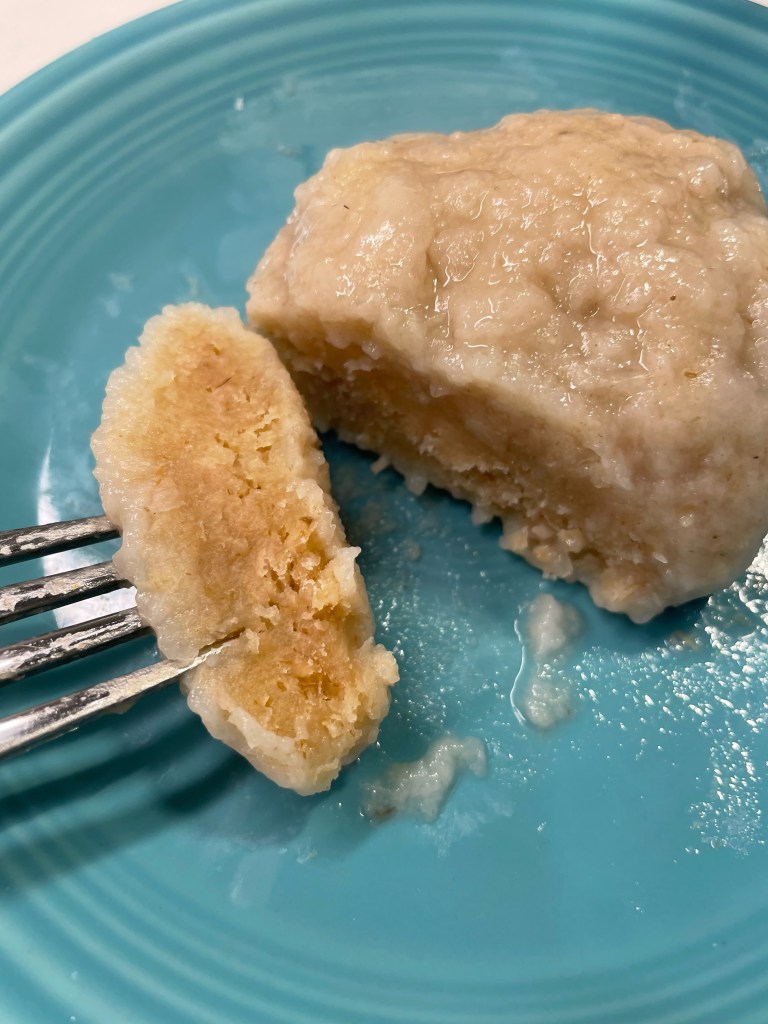
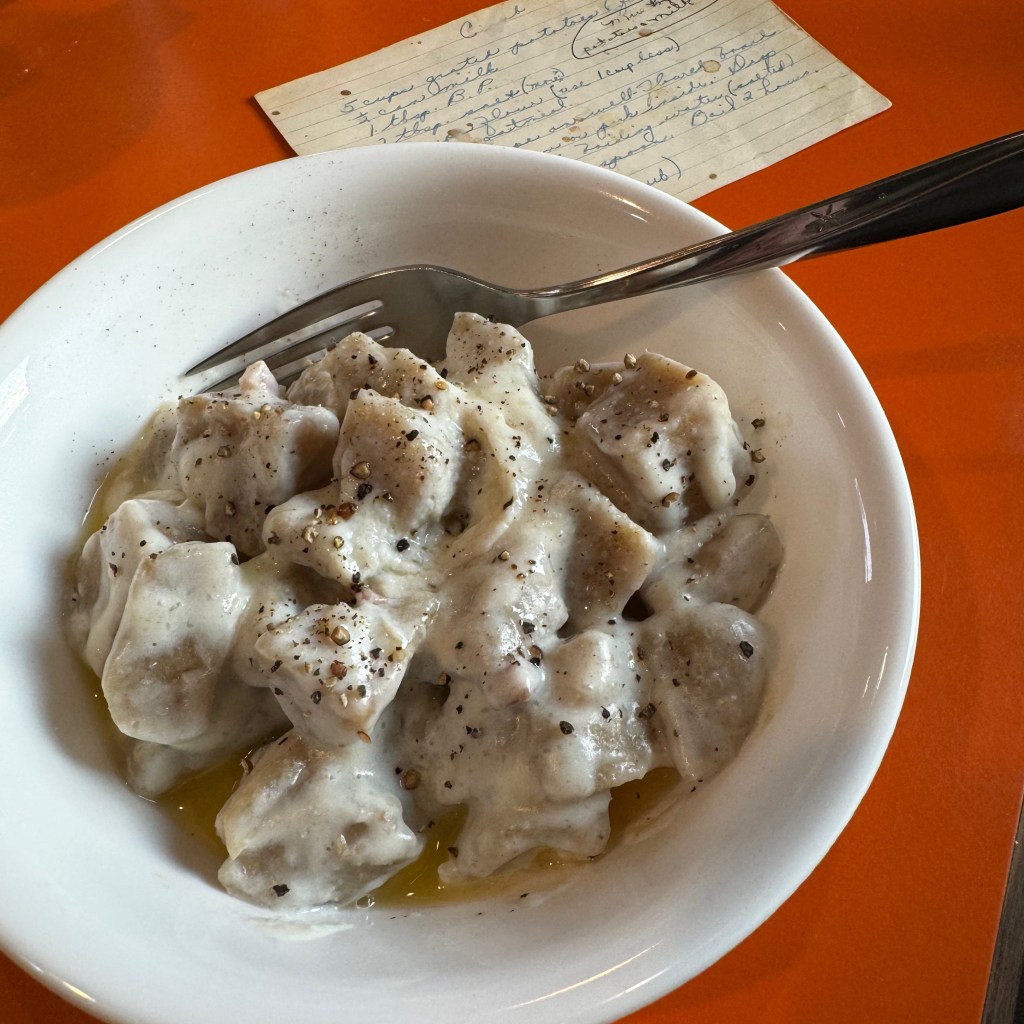
“Imagine a gray, lumpy, salt pork-filled potato and oatmeal dumpling blob,” I said, further noting that the lumps are boiled in salted water for two hours until they are done through. Dorothy replied coyly that she was salivating at the very thought of it. 😂 There’s no denying, crub does not have instant appeal. My cousin, Dave, rightly proclaims that crub is, at best, an “acquired taste.” In our case, though, as fourth-generation descendants of Norwegian immigrants, we are naturally prone to like it, just as Italian descendants are born to love pasta.

From my earliest memories, a visit to my maternal great-grandparents’ home in rural Upstate New York would have sometimes meant being greeted at the door by the aroma of these gray, lumpy blobs simmering on the stove. Despite its appearance, crub is hearty, filling and deeply satisfying. I don’t expect oohs and aahs in the comments section, but I will say that anyone who has ever waxed nostalgic over family tradition can appreciate the place that this humble food has in the hearts (and bellies) of my people.
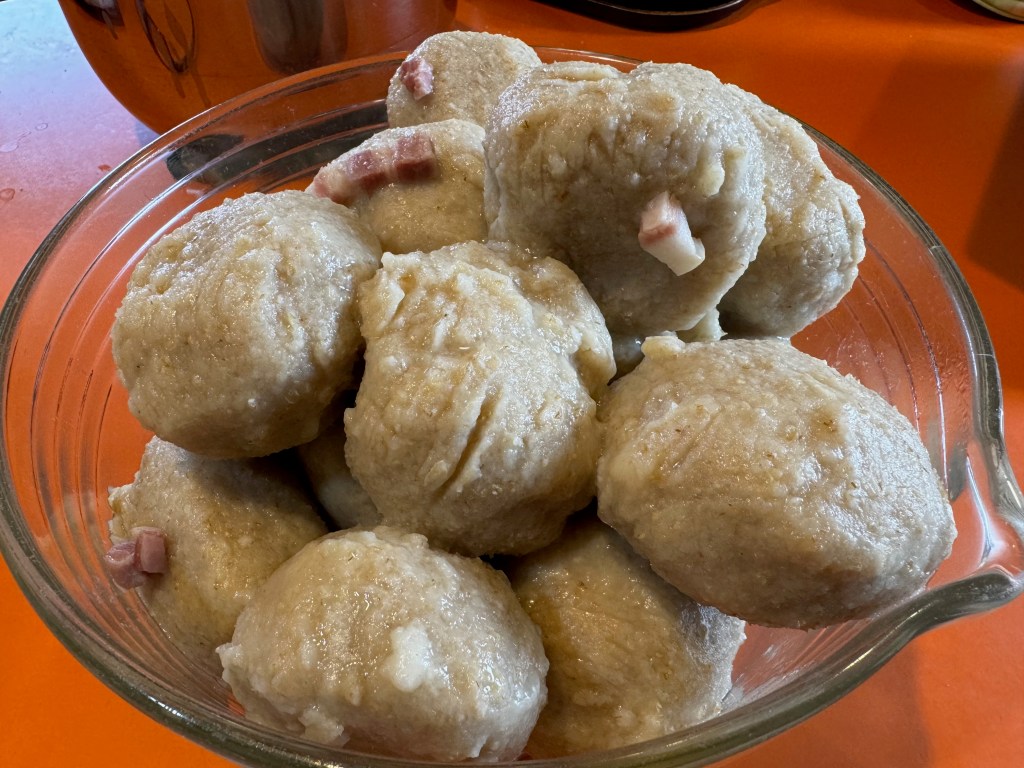
This makes me miss my grandmother so much.

It’s a family thing

I had special reason to enjoy making crub recently, as I spent a few days with my Aunt Joy at her home in Montana. In the days ahead of my first visit in 13 years, our anticipation for this familiar meal became stronger, and rolling up our sleeves to make crub together proved to be a wonderful way to share happy (also sad, and sometimes funny) memories of our loved ones. We pulled out various spatter-stained recipe cards and attempted to decipher all the “helpful” notes in parentheses, knowing that we would ultimately have to channel the wisdom and experience of our ancestors to get it right. There are specific rules that must be followed, as I painfully learned a few years ago when I tried to make this on my own. That first effort resulted in a sticky mess and very dense, gummy crub.  


What are the ingredients for crub?

“Use old potatoes,” suggested one of Aunt Joy’s recipe cards, and this is likely for the starch content in older potatoes vs. new ones. Also, it has to be russet potatoes— waxy ones just won’t do. Quick oats work much better than old-fashioned rolled oats, as their smaller size and pre-cooked form allows them to more easily take up the recipe’s liquid. Your baking powder must be fresh, of course. Finally, the amount of evaporated milk must be sufficient for moistening the dry ingredients without overdoing it, and this was a tough point, even for Aunt Joy, because the amount on the recipe card was in “cans.” But did that mean the 5-ounce can or the 12-ounce can? We imagined that my great-grandmother was there with us, coaching us to “add enough to make it look right,” and we figured out the larger can is the standard. Salt pork is ideal, both for stuffing inside the crub dumplings and also for adding flavor to the cooking water.
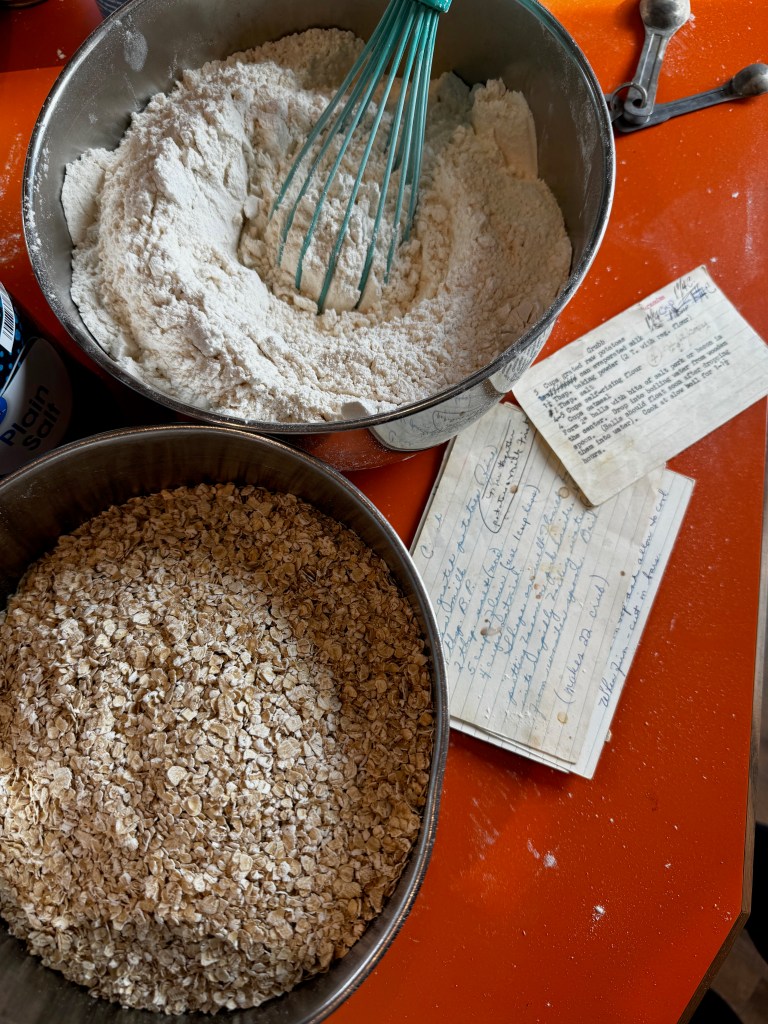
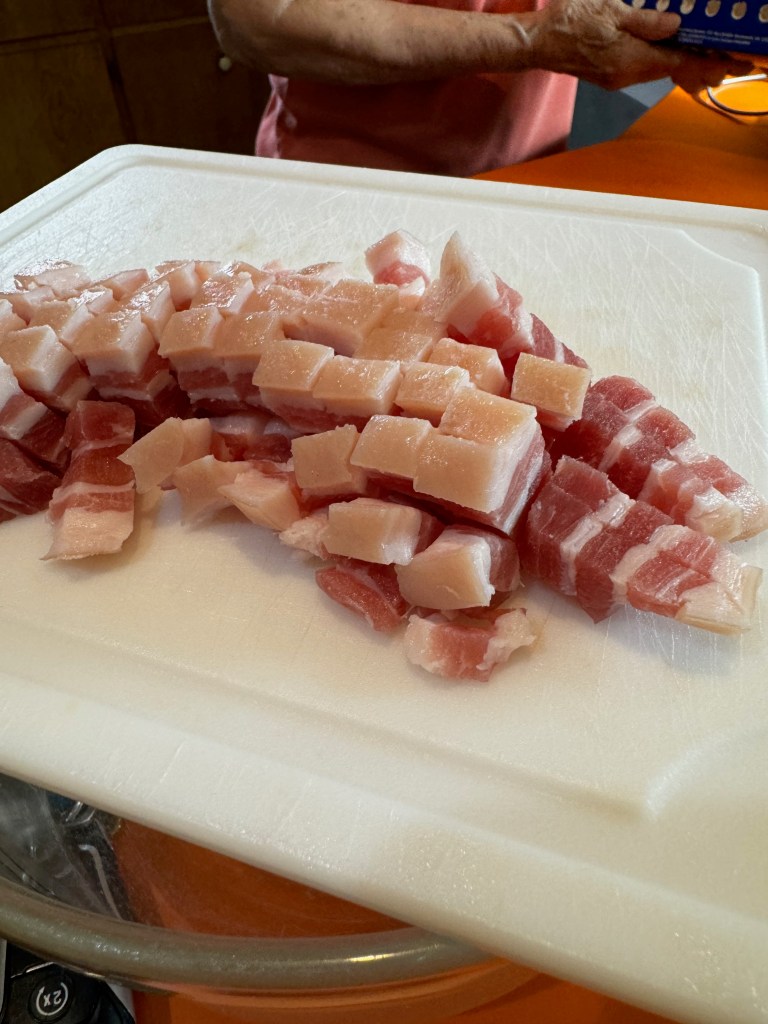
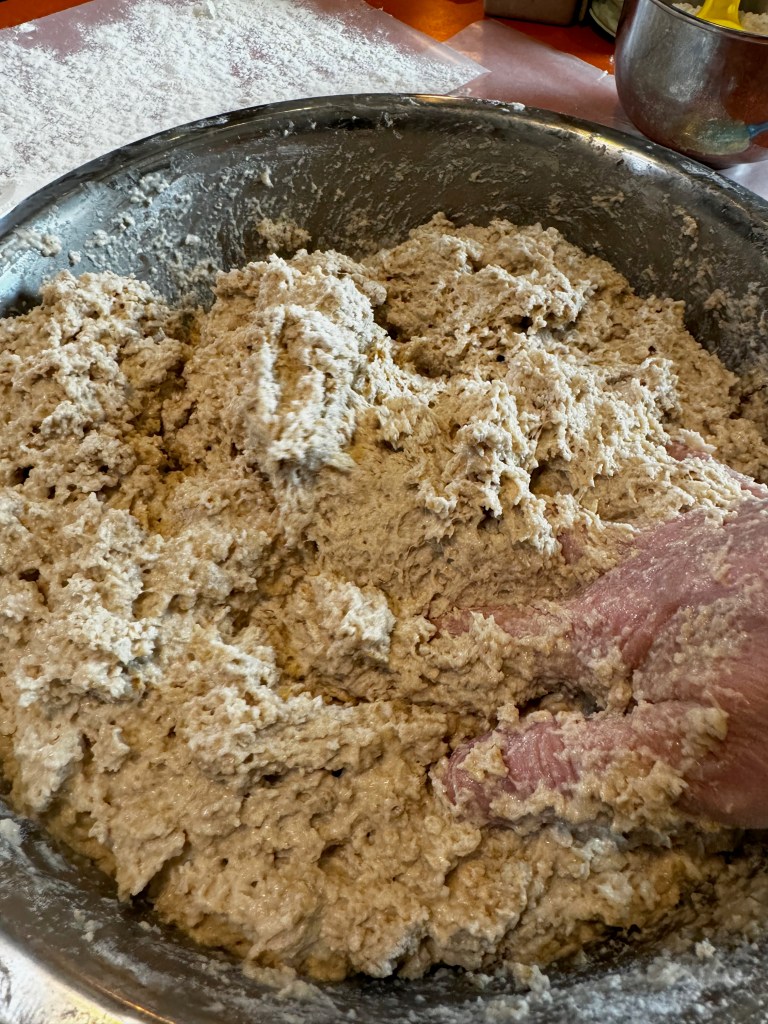
As with many traditional family recipes, crub is a bit of an ordeal to make (which helps explain why it was not an “every Sunday” kind of meal). It requires multiple bowls, large cooking pots and several square feet of counter space. It takes as long as two hours to prep and two more to cook. And don’t expect cleanup to be a breeze, either. The recipe involves peeling, grating and blending lots of potatoes, which inevitably turn pink from oxidation no matter how quickly you work.
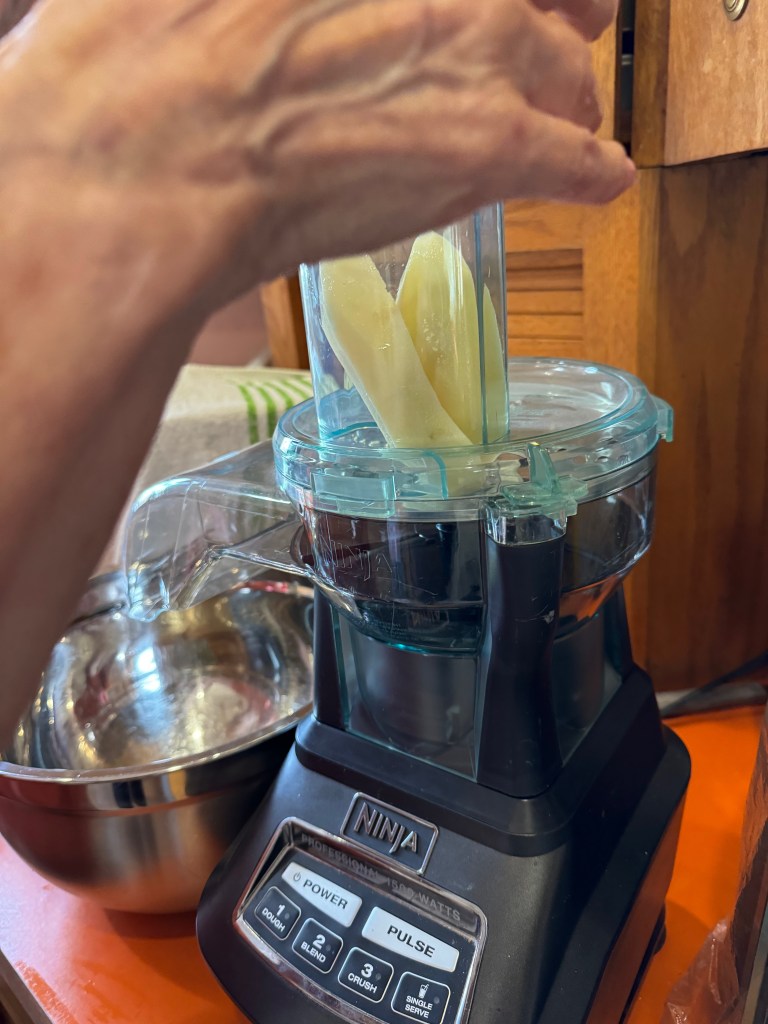
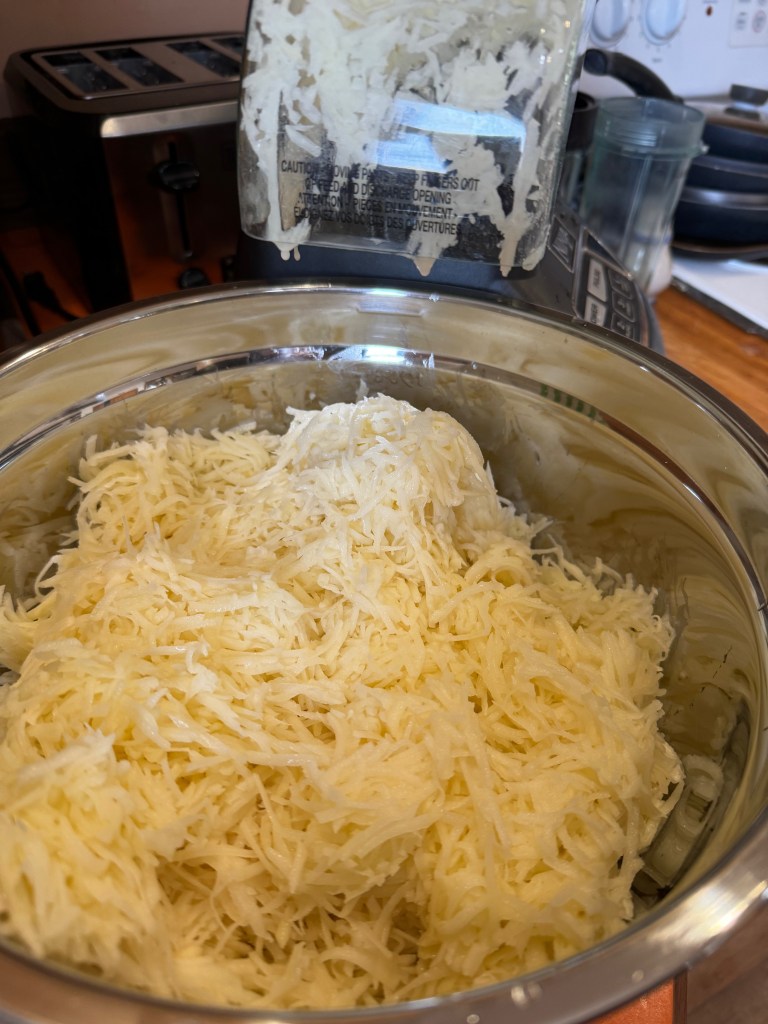
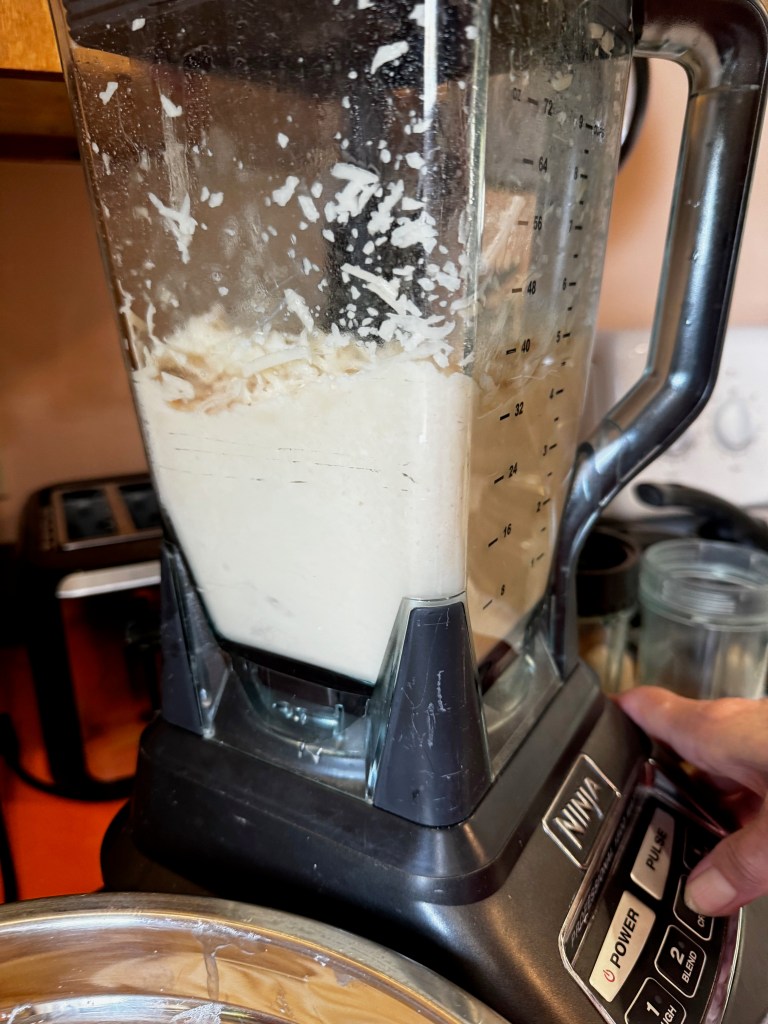
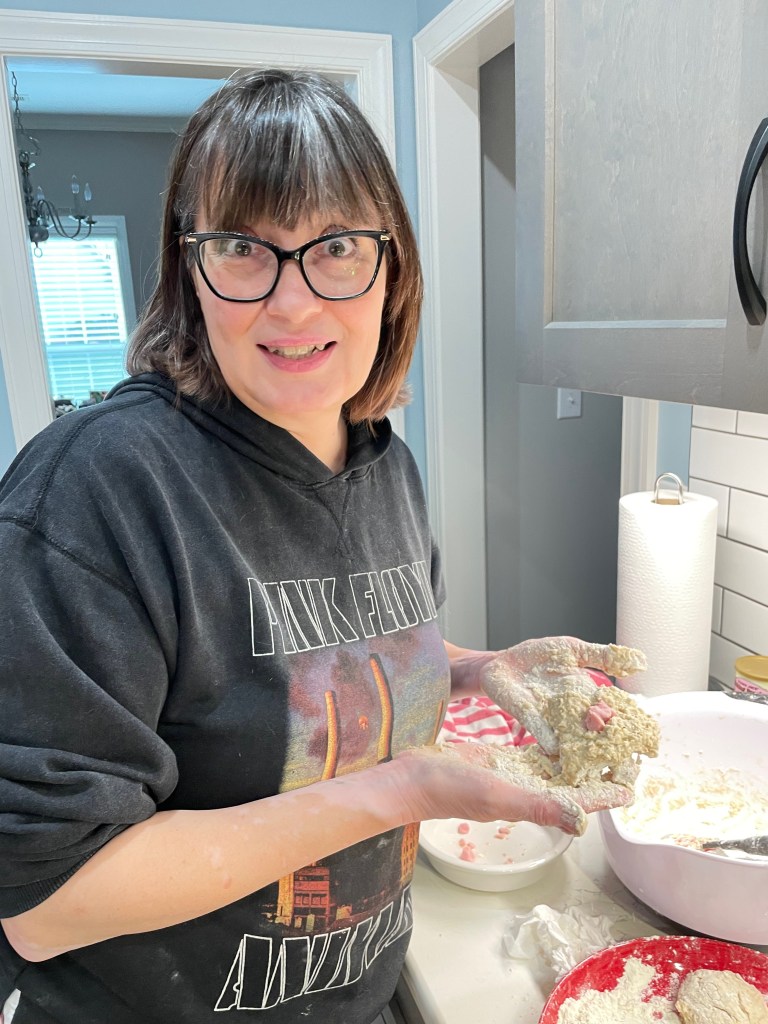
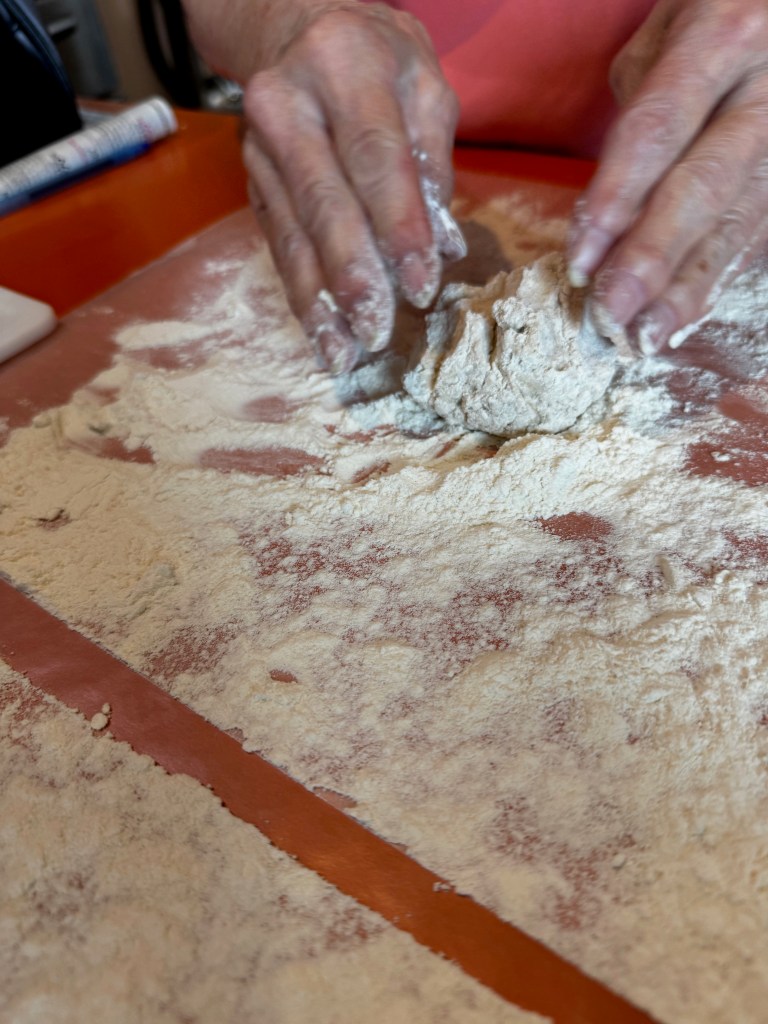
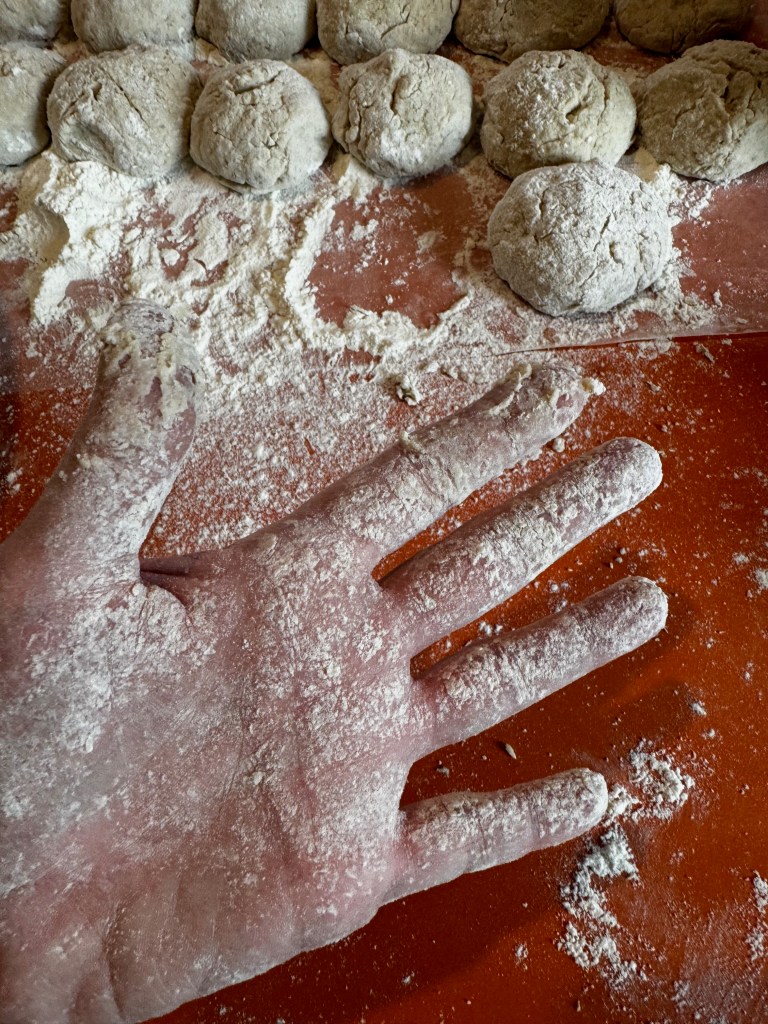
It helped a lot to have our tools and ingredients mise en place, and this was especially important for not making a mess of everything with our very sticky hands! A couple of sheets of waxed paper did the trick for keeping the flour where we needed it.
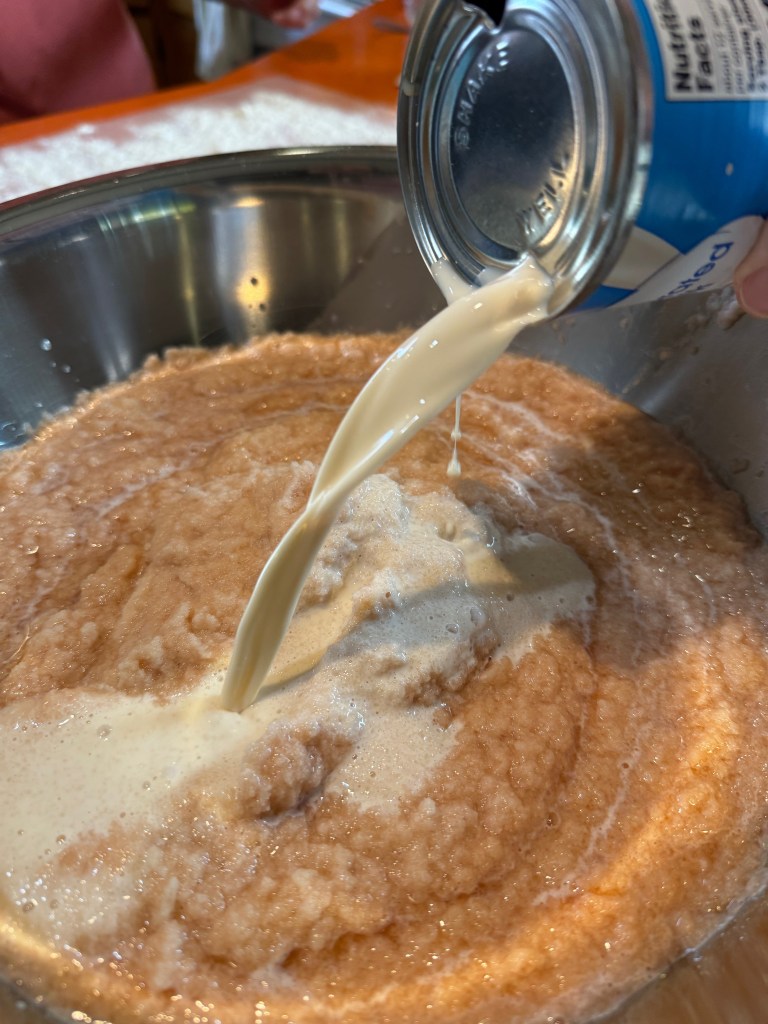
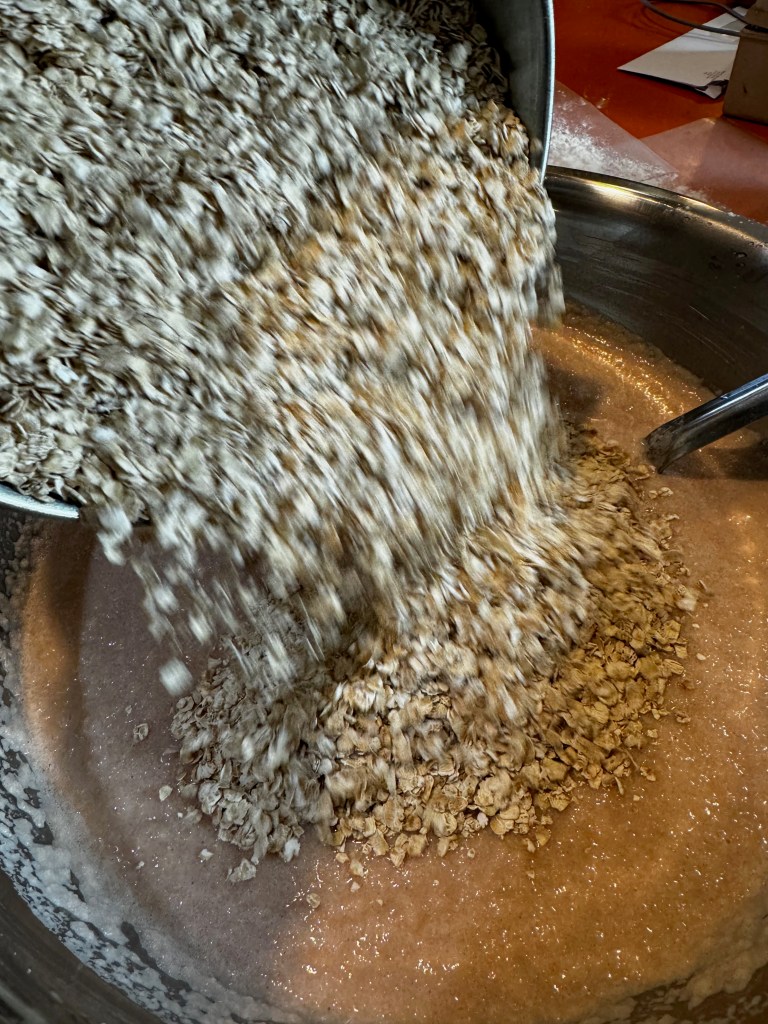
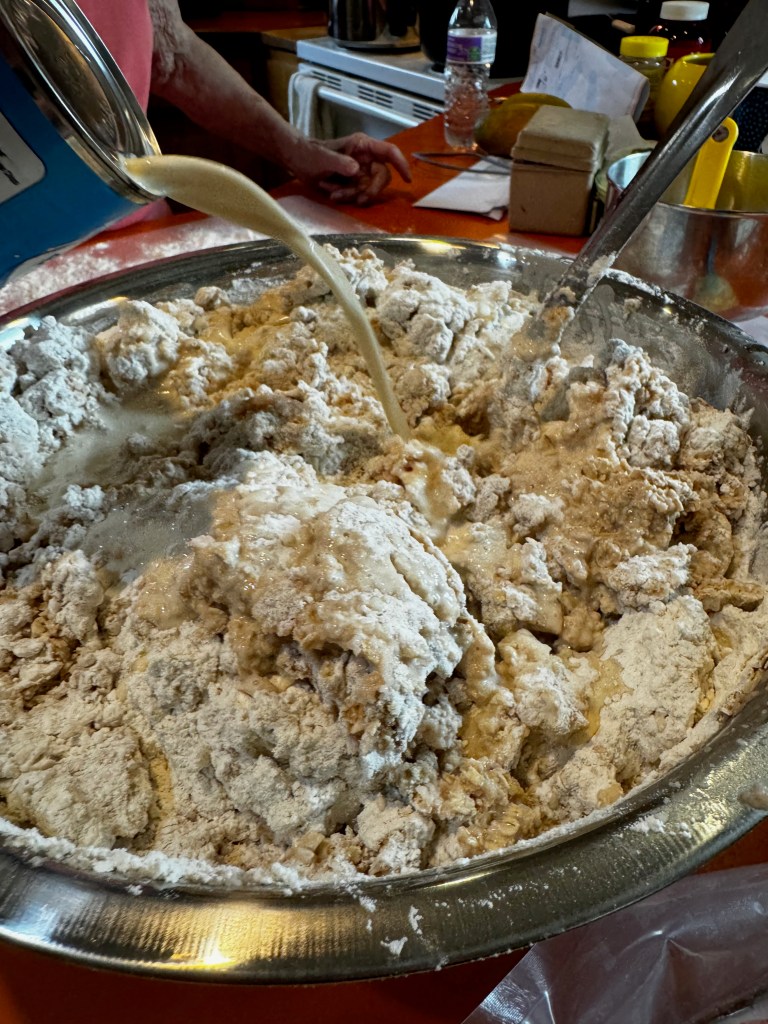
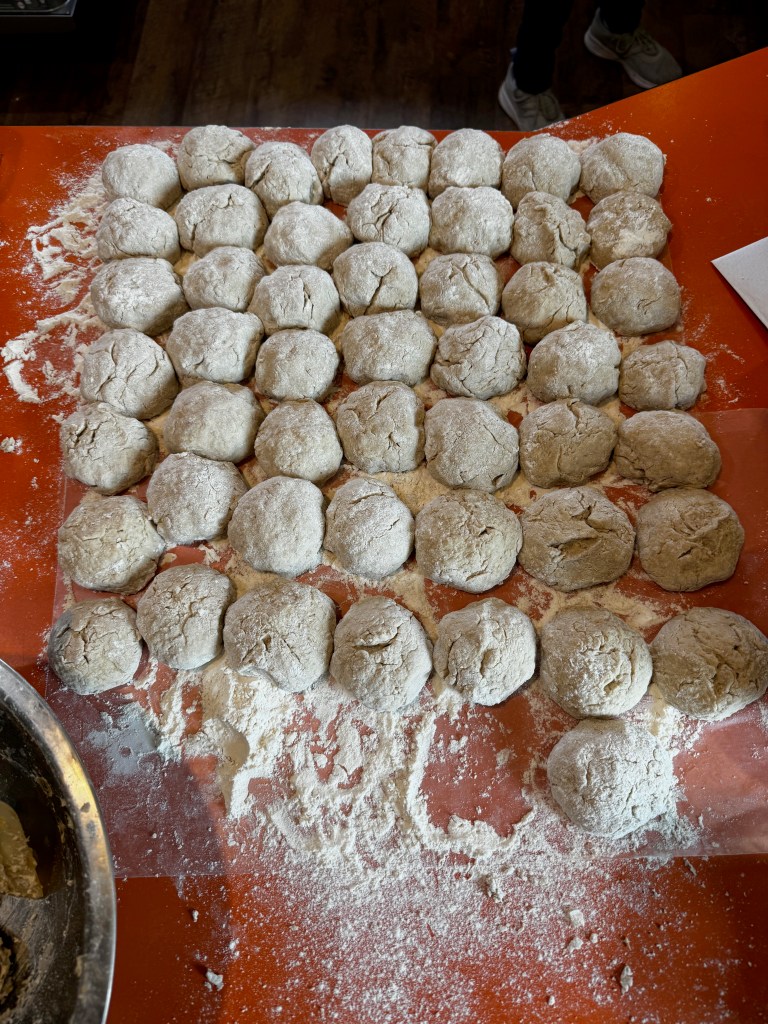
Aunt Joy broke out her big ice cream scoop to measure out the crub dough into equal lumps, and then, with floured hands, we pressed to make an indent in each for a piece of salt pork. Shaping the crub into balls was easy to do with plenty of flour, and we lined them up until the pots were at a good, steady boil. 
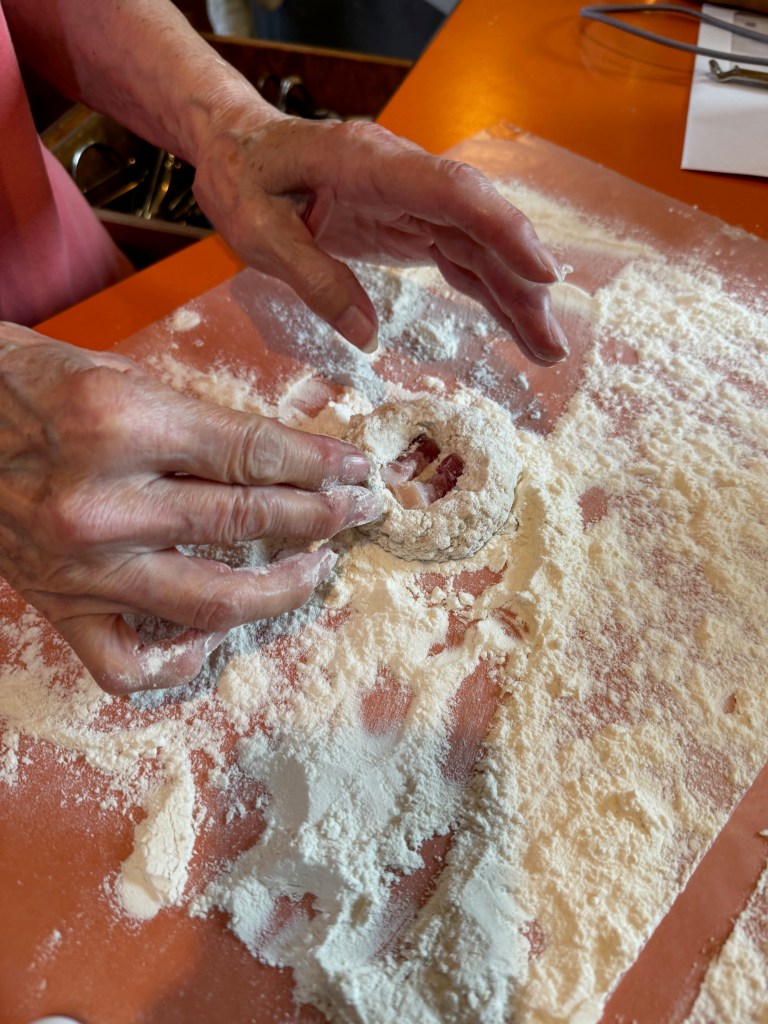

The first few crub clung for dear life to the long-handled wooden spoon we used to transfer them into the boiling pot, but eventually the spoon developed a slippery layer of cooked dough and the remaining crub slid right off with almost no effort. After every few crub, we gently nudged the ones that had settled onto the bottom of the pot, loosening them to float up into the water. We made a double batch and ended up using three very large pots.
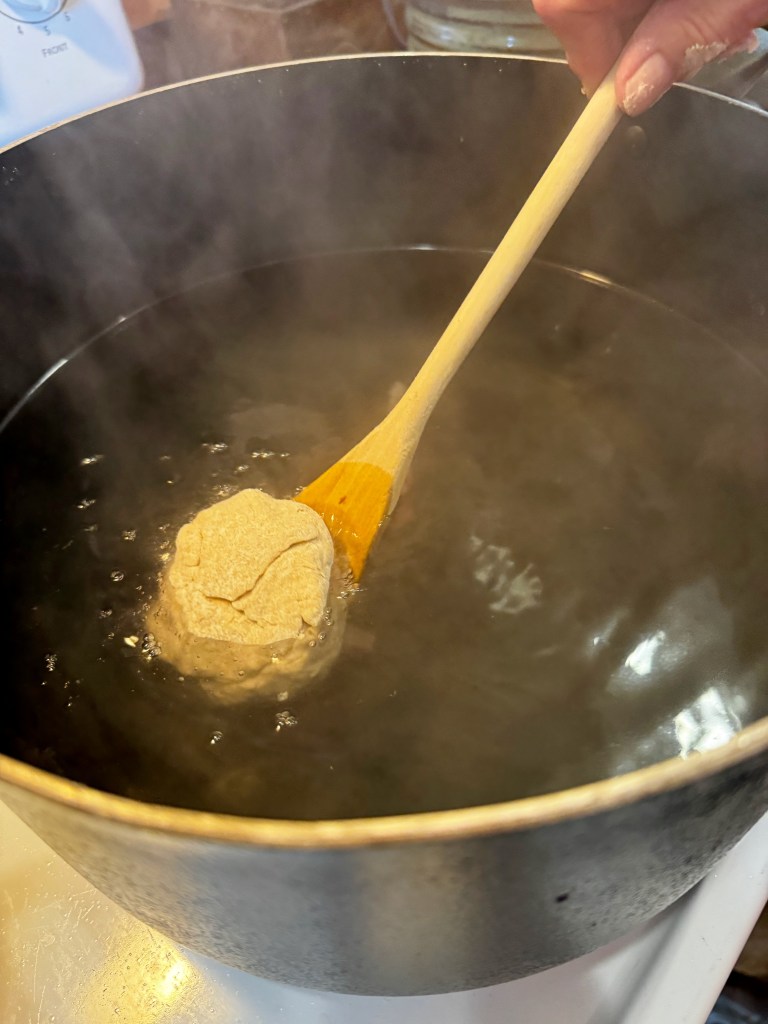

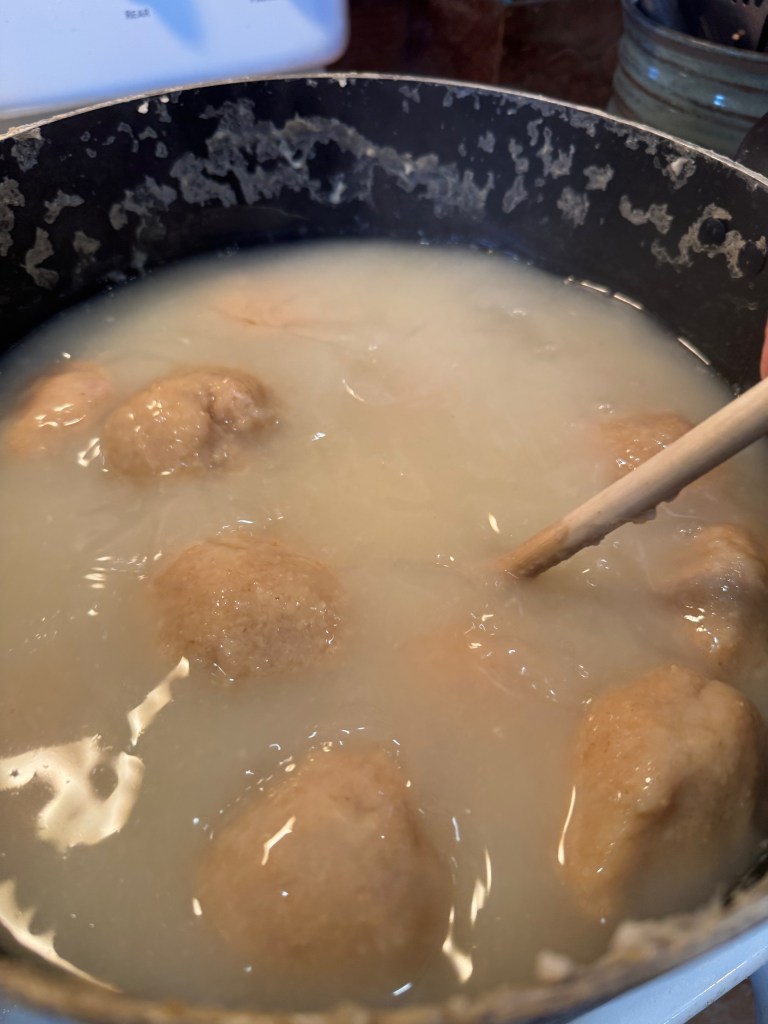
The dumplings simmer for as long as two hours, until a cross cut reveals that they are cooked all the way through. If they seem dense and very firm inside, they need additional simmer time. Once done, enjoy them with butter, salt and pepper.
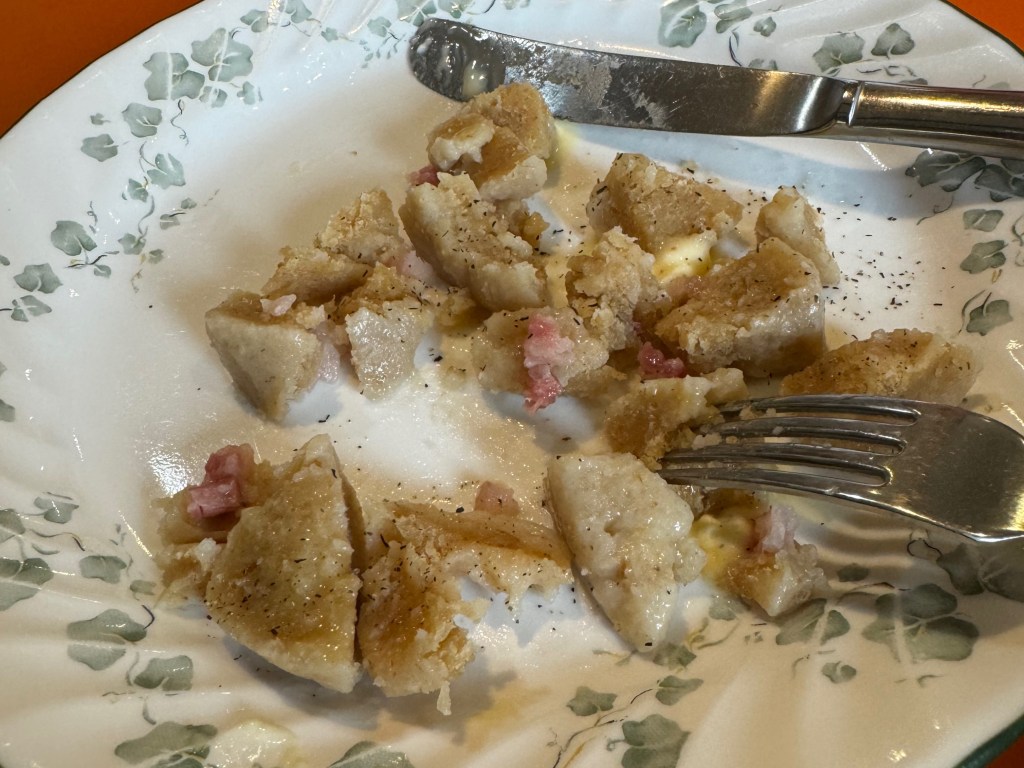
Worth the work and the wait! ♥️

Transfer leftovers to a large covered bowl and refrigerate, or load them into a gallon size zip top freezer bag and freeze for later. 


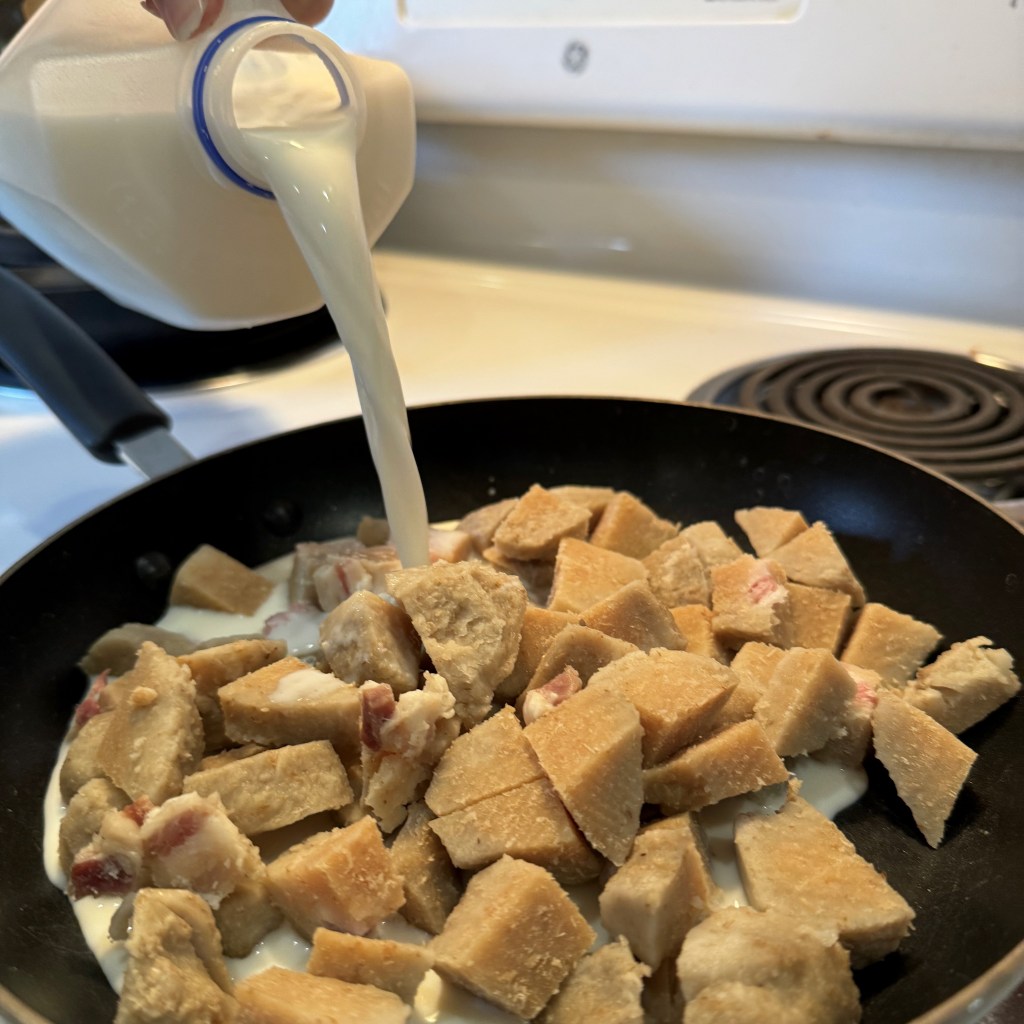
Reheat by cutting crub into chunks or slices. It’s best simmered in a bit of milk and then served with butter, salt and pepper. If you’re feeling ambitious, you can bring a pot of water to boil and simmer them again until they are warmed through. Or, if you’re in a hurry for crub, place cut-up pieces on a plate and microwave until warmed through. 

Norwegian Crub
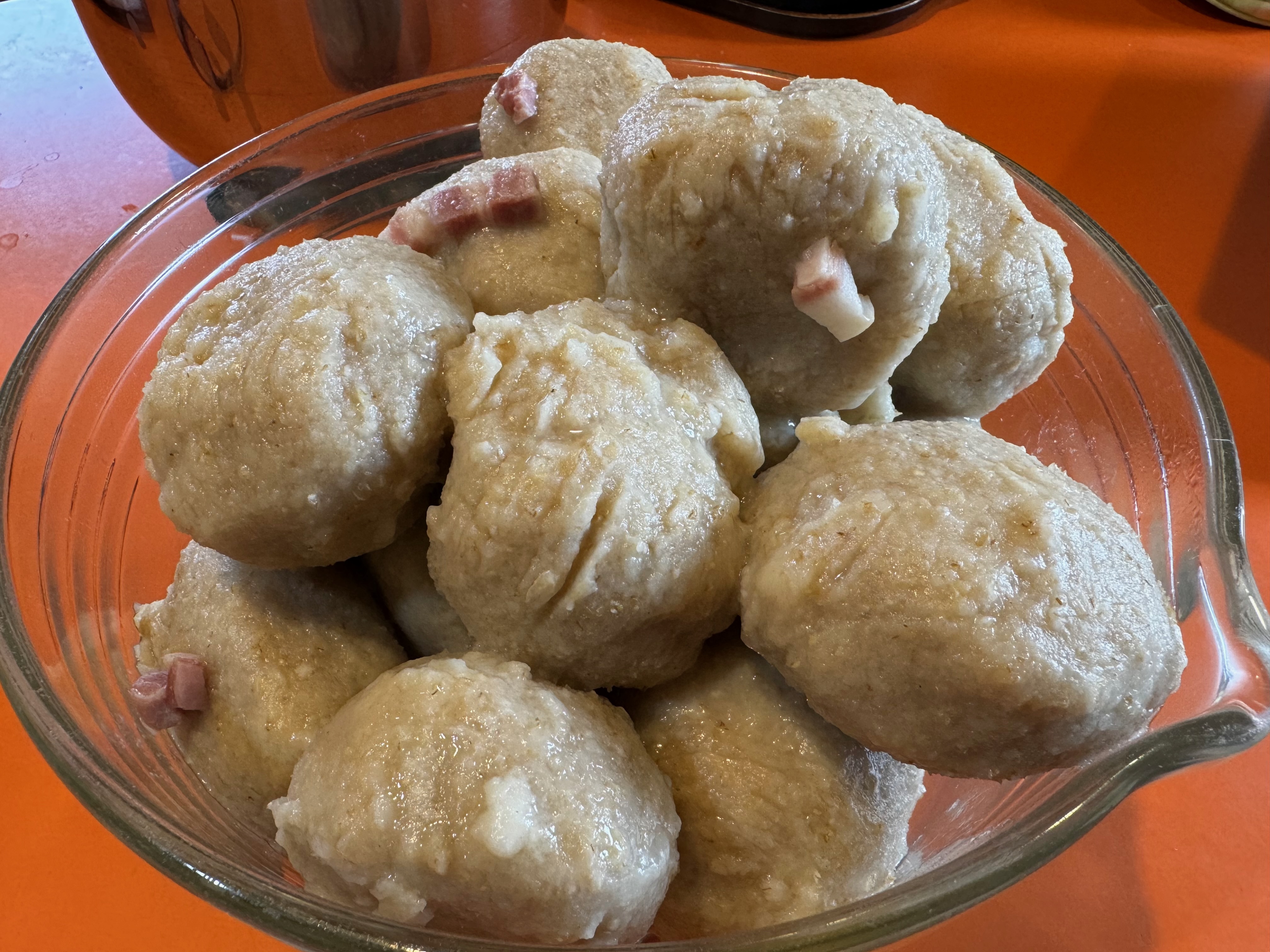
  • Servings: 12 regular people, or 6 Norwegians
  • Difficulty: Intermediate
  • Print

This is one of the truly traditional recipes that my maternal family has made for years. Why, you might ask, would we spend all day for these gray-beige lumps? Easy, because they taste like home.


Ingredients

  • 5 cups peeled and finely grated russet potatoes (this will be about 3 pounds)
  • 12 oz. evaporated milk, or equivalent amount of plant milk (oat milk would be just right)
  • 5 cups all-purpose flour (scooped directly from bag)
  • 4 cups quick-cooking oats
  • 2 Tbsp. baking powder
  • 2 Tbsp. table salt
  • 1/2 pound salt pork, cubed (optional for stuffing inside crub)
  • About one cup additional flour, for rolling and shaping
  • Additional salt, for seasoning the cooking water

Notes: Be sure that you have plenty of time before you begin this recipe. Prepping and cooking both take a long time.

Do not substitute rolled or old fashioned oats, as their hearty texture does not absorb the liquids well enough for even doneness.

Line up all your other ingredients before you shred and process the potatoes, to minimize the oxidation that turns them pink.

Directions

  1. Bring one or two very large pots of water to boil on the stove while you prep the crub. When the water comes to boil, salt it generously and add a few pieces of the salt pork or even a pork bone if you have one.
  2. Combine flour, baking powder and salt in a large bowl and whisk to distribute the leavening ingredients. Measure the oats out into another bowl, so that the proper amount is ready to be added all at once to the potatoes.
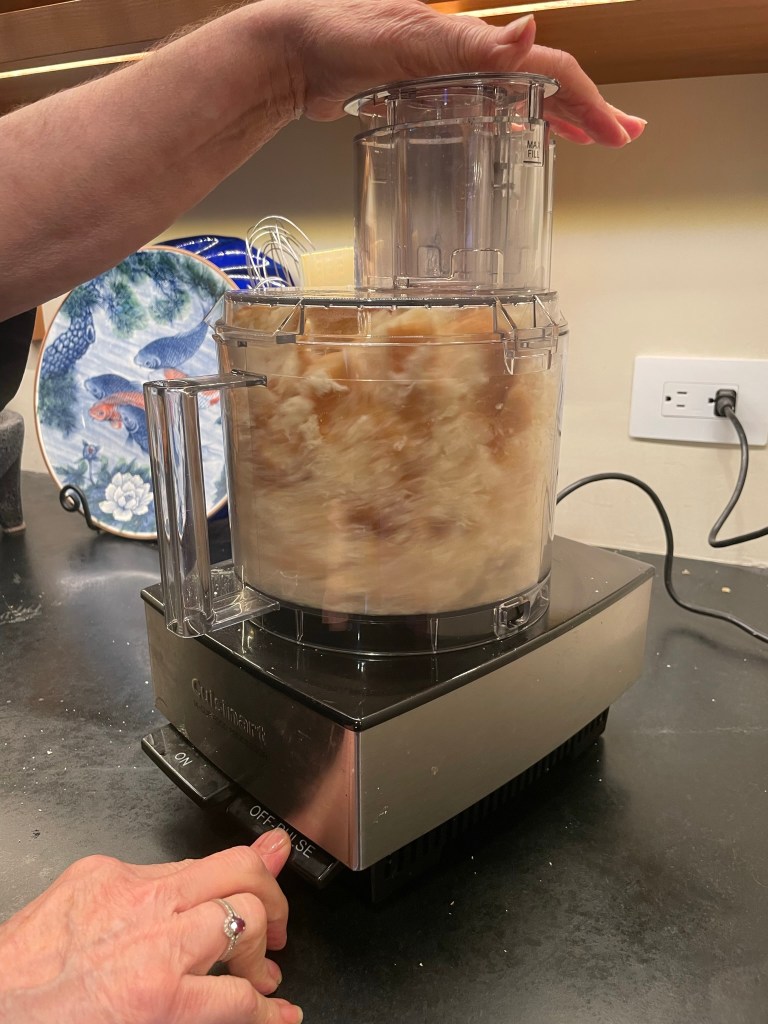
  3. Process the shredded potatoes by pulsing in a blender or food processor. You don’t want a puree, but a coarse, wet mixture of finely ground potatoes.
  4. IMPORTANT: Measure the ground potatoes (with liquid) into a very large mixing bowl. You need five cups, no more and no less. If you have potatoes leftover, consider adding them to a chowder or soup. Add evaporated milk to the measured potatoes and stir to blend.
  5. Add oats and flour mixture to the potato bowl all at once and stir, fold or mix by hand until the dough is evenly mixed with no unincorporated flour. Use an ice cream scoop to measure out evenly sized dumplings onto a heavily floured counter or board. Each crub should be approximately two and a half inches across.
  6. As you go, press a shallow hole into the center of each dough ball and add a piece or two of salt pork inside. Use floured hands to shape the dough ball around the pork, forming the balls into tight, meatball-shaped dumplings. Line them up on waxed paper until all dumplings are formed.
  7. Use a long-handled wooden spoon to gently transfer the dumplings into the seasoned boiling water. Work quickly until all dumplings are in the water. After every few dumplings, gently nudge any that remain stuck near the bottom of the pot. They should begin to float fairly soon after introduction to the water.
  8. Bring the pot(s) to a full boil, then reduce heat and simmer at a gentle boil for about two hours. Sample a crub when you think they may be cooked all the way through. It should be somewhat dense but not heavy or sticky.
  9. Crub can be served immediately, but it also keeps very well in the refrigerator or freezer. Leftovers can be warmed in a number of ways; dip them into simmering water to revive them, cut them up and simmer in milk or (as a last resort) place cut up crub on a plate and warm in the microwave until heated through.


Vermont Maple & Blueberry Bread Pudding

When the 5 o’clock bell rang at the end of my fourth and final King Arthur Baking class— and I’m speaking figuratively, because there actually was no bell— I felt an overwhelming sense of accomplishment at having baked the equivalent of 12 loaves of bread. “Equivalent,” because my classmates and I were taught shaping technique not only for loaves, but also for different kinds of rolls, and by the end of my deep-dive into the “principles and practice” of bread, my arms were filled with a brioche braid, a loaf of basic white, a whole wheat braid, a multi-grain boule, Nutella twist, cinnamon rolls, a whole wheat loaf with cinnamon-raisin swirl, two kinds of dinner rolls and three (count ’em, three) loaves of crusty French bread. Oh, and a ball of wet pizza dough in a plastic bag. Holy freakin’ moly.

I had produced enough baked goods to fill a Toyota Corolla, and I wasn’t sure what I’d do with all that bread.

Most of my classmates were headed home, so theirs was an easy decision. But I had packed up my rental car that morning for the third and final leg of my solo summer adventure, and that would lead me north, through the driving rain, farther from home rather than nearer. I would be a weekend visitor in the home of someone I’d never met in person before— what in the world was she going to think when I rolled up, looking like a drowned rat, in my rented Corolla with bread piled up to the windows?! Well, she wasn’t mad! 🙂

Meet Dorothy, from The New Vintage Kitchen! 🙂

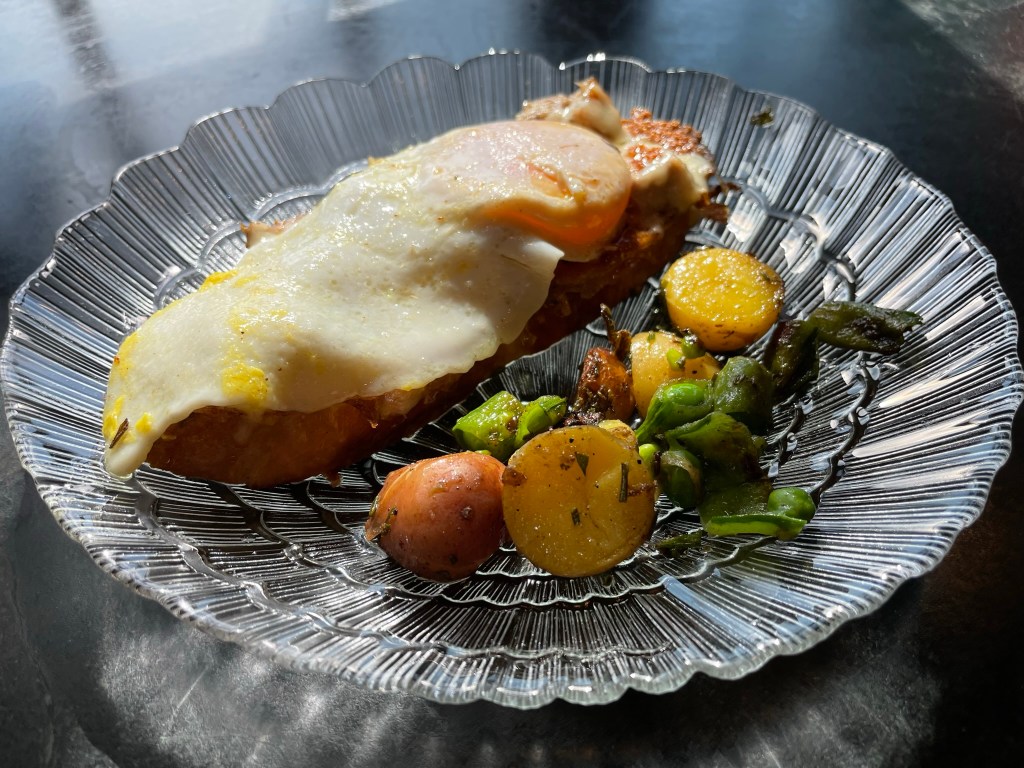
Speaking from experience, if you ever need help breaking down too many loaves of bread, you want to be spending the weekend with Dorothy from The New Vintage Kitchen! Dorothy’s blog followers know that one of her mottos in the kitchen is “waste nothing,” and she showed me how she lives by it. That first evening, we enjoyed some steamer clams and a lovely nicoise salad with freshly grilled tuna. I suppose you can guess who brought the bread?


Our Friday was spent“foraging” for ingredients at some of Dorothy’s favorite farm stands, and the experience was all that I had imagined and more! We found terrific local produce, farm-fresh eggs, beautiful handcrafted items (like the wooden spoon that practically leapt into my hand) and adventure at every turn. And yes, we broke down that bread, one item at a time. Some of the loaves and rolls were stale before I even got to her house, and those ended up as bread crumbs, which are always in demand in a kitchen as busy as Dorothy’s.


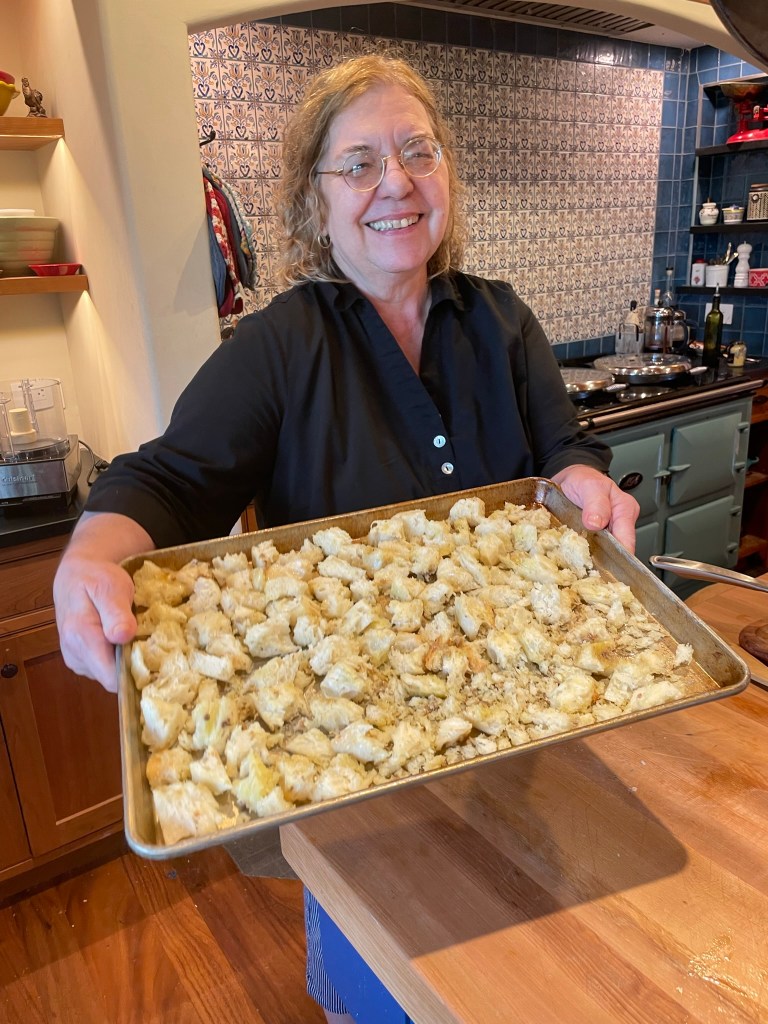
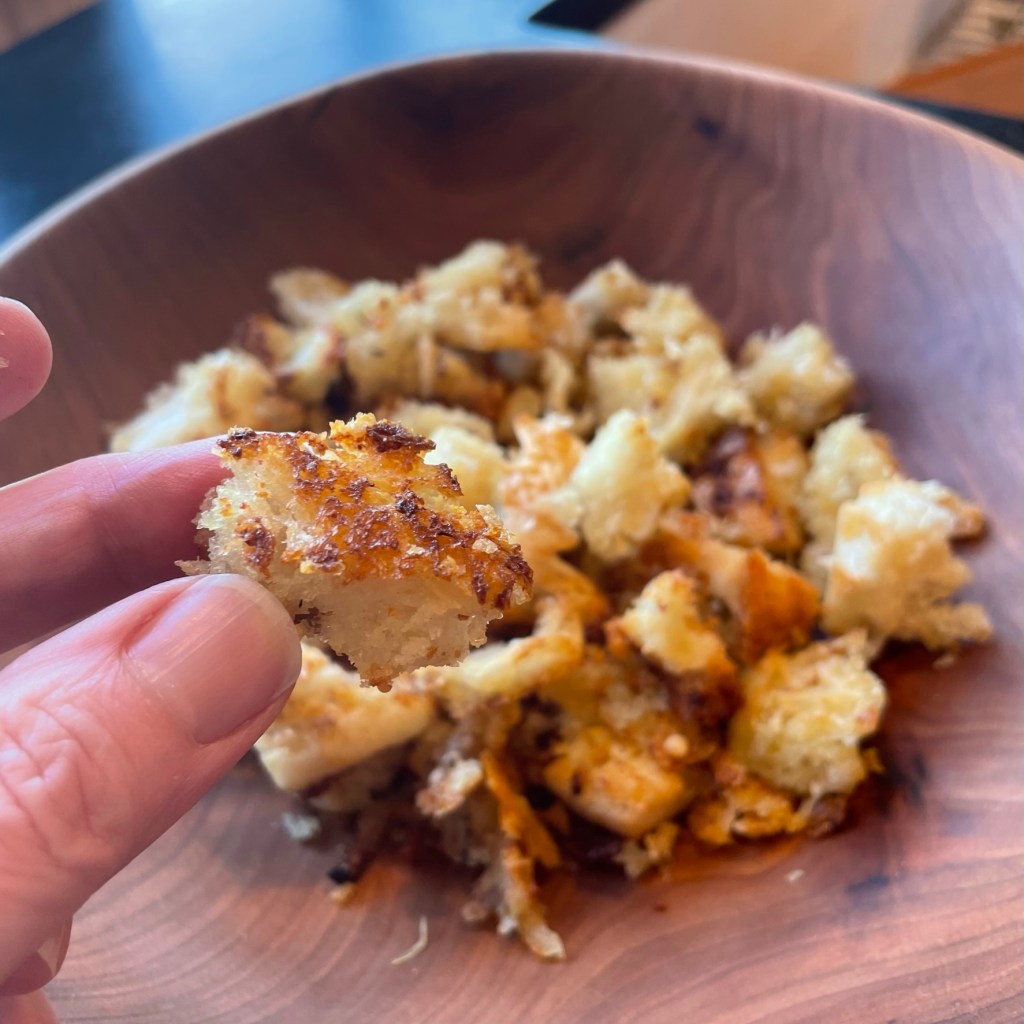
She taught me her method of making anchovy croutons, using up the rest of the French bread loaves I brought. And of course, there was the title bread pudding, which was my own contribution to Friday night dinner, where I was pleased to meet Dorothy’s daughter, son-in-law and adorable granddaughter. They received the whole wheat raisin swirl loaf as a door prize. Thank goodness!


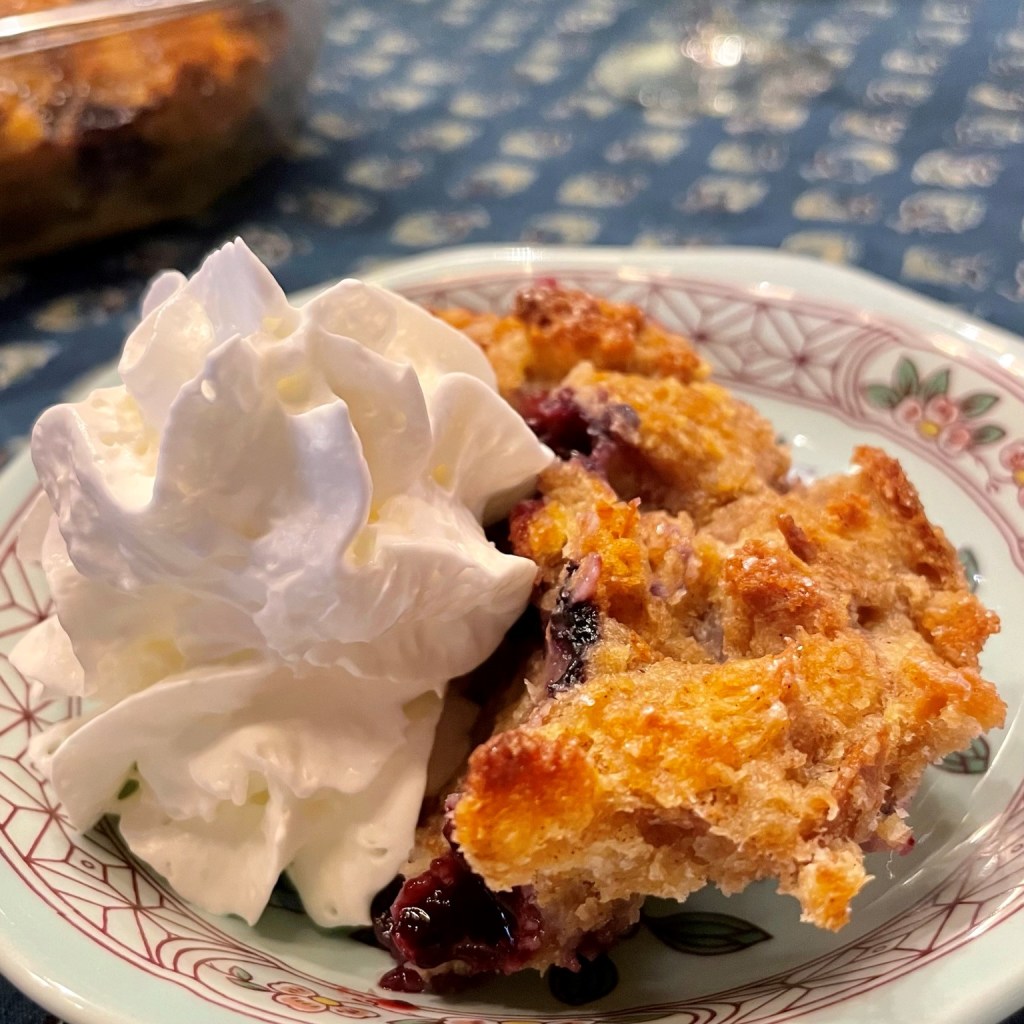
This bread pudding was exactly the right thing, because it brought me full circle from my grandmother’s kitchen, where nothing was wasted, including all the little this-and-thats of bread that she would have tucked into the freezer until she had enough to make a batch of her perfect bread pudding. As luck would have it, I had plenty of bread options and it was a very efficient (and delicious) way to finish up the braided brioche, some of the braided whole wheat and about four of the un-iced cinnamon rolls. It was roughly six cups of crumbs.


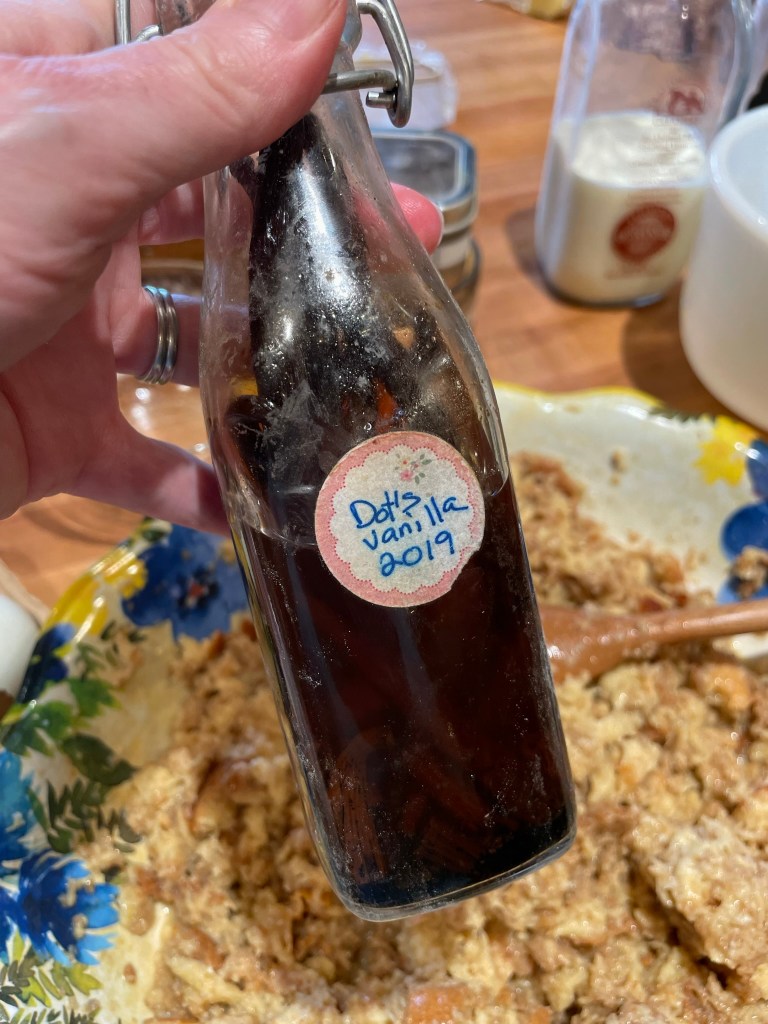
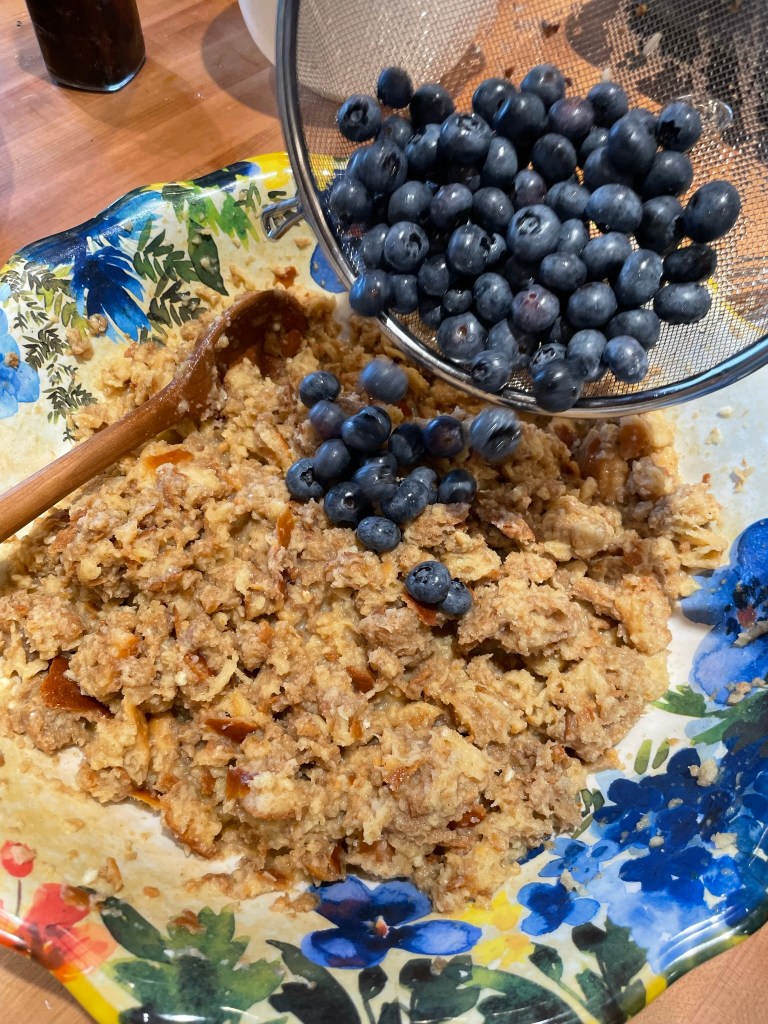
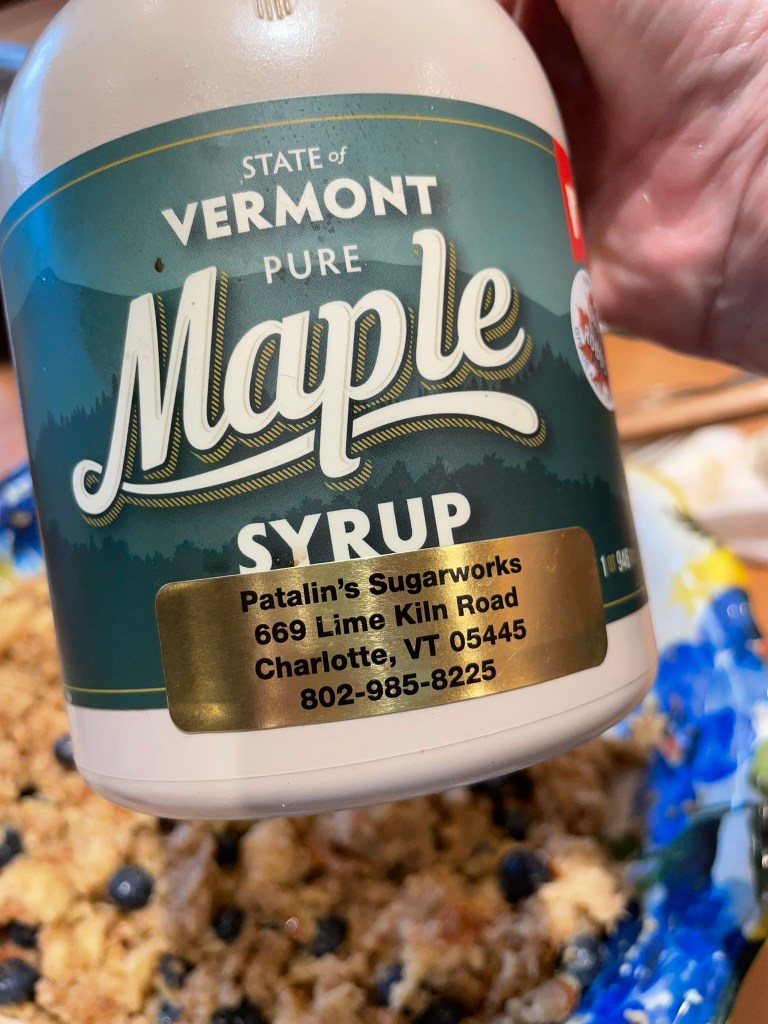
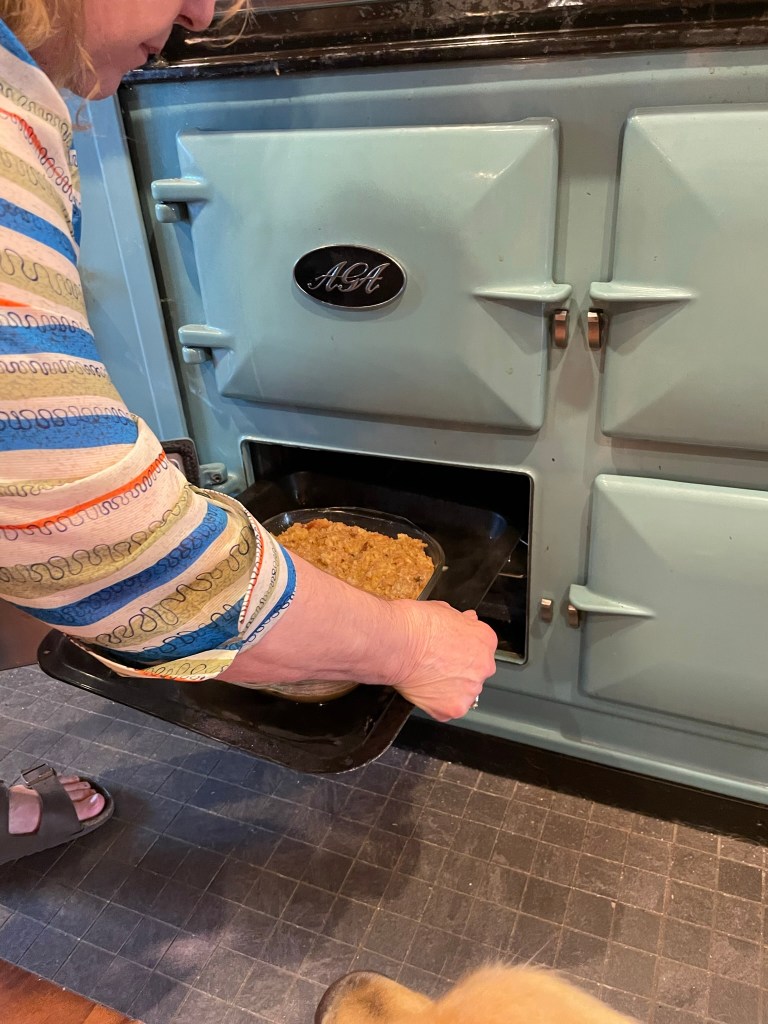
The base recipe was Gram’s, but there were a few fun twists— first of all, we used fresh, plump blueberries rather than the usual dried fruit. Real Vermont maple syrup supplemented the sugar for a warm touch of sweetness. The vanilla was homemade (of course, because this is Dorothy’s kitchen!) and we baked it up in her incredible, radiant-heat AGA range. My Gram would have loved everything about this, and she would have genuinely appreciated Dorothy’s no-nonsense, no-waste approach to cooking and entertaining. Truly, I could not have felt more welcome! Dorothy’s husband had something to do with that as well—he was always right there, topping off my French press coffee—and their two sweet dogs treated me like a member of the family, too! I got a little misty-eyed when it was time to leave, but I know I’ll be back!

After the click-to-print recipe, check out my whirlwind recap of the fun weekend we enjoyed, despite All. That. Rain!


Vermont Maple & Blueberry Bread Pudding

  • Servings: About 10
  • Difficulty: Average
  • Print

When you're in Vermont, you have to sneak a little bit of maple into everything! This version of my Gram's bread pudding also uses fresh blueberries, and it worked beautifully!


Ingredients

  • About 6 cups dry, stale bread pieces
  • 2 1/2 cups milk
  • 3 beaten eggs
  • 1/4 cup melted butter
  • 1/2 cup sugar (reserve a tablespoon to sprinkle over top)
  • 2 teaspoons vanilla extract
  • 1 teaspoon ground cinnamon
  • 1/4 teaspoon ground cardamom
  • 1 cup fresh blueberries
  • 1/4 cup Vermont maple syrup
  • Whipped cream for serving

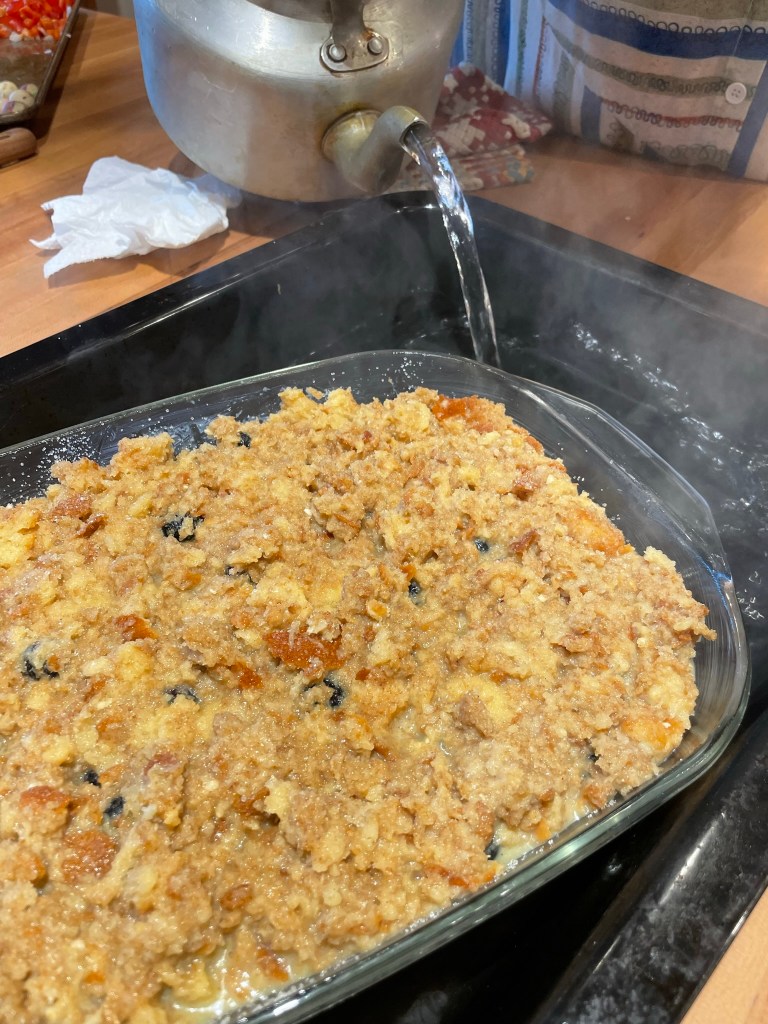
This recipe works best with bread that is stale but not bone dry. Tear up the pieces rather than cubing them, and allow them to dry out on the counter overnight (or all day, while you’re foraging for dinner’s ingredients). The bread pudding requires a water bath during baking, so put on a tea kettle to boil when you’re ready to move the pudding to the oven.

Directions

  1. Preheat oven to 350 F, with oven rack in center position. Butter a 1 1/2 quart baking dish.
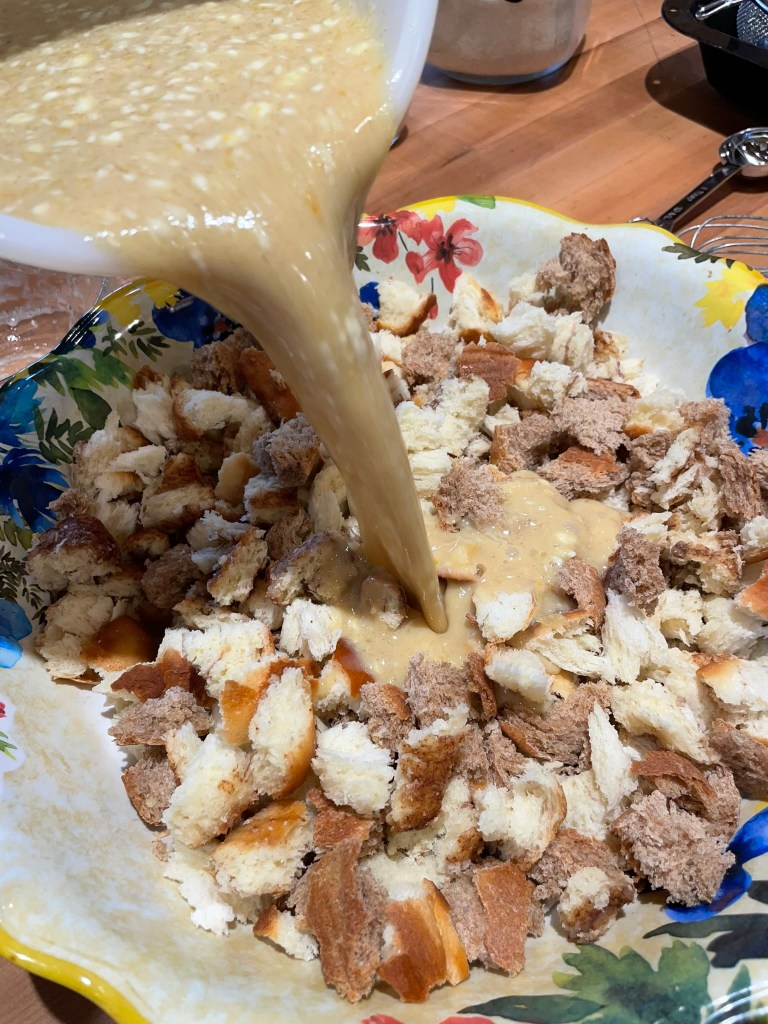
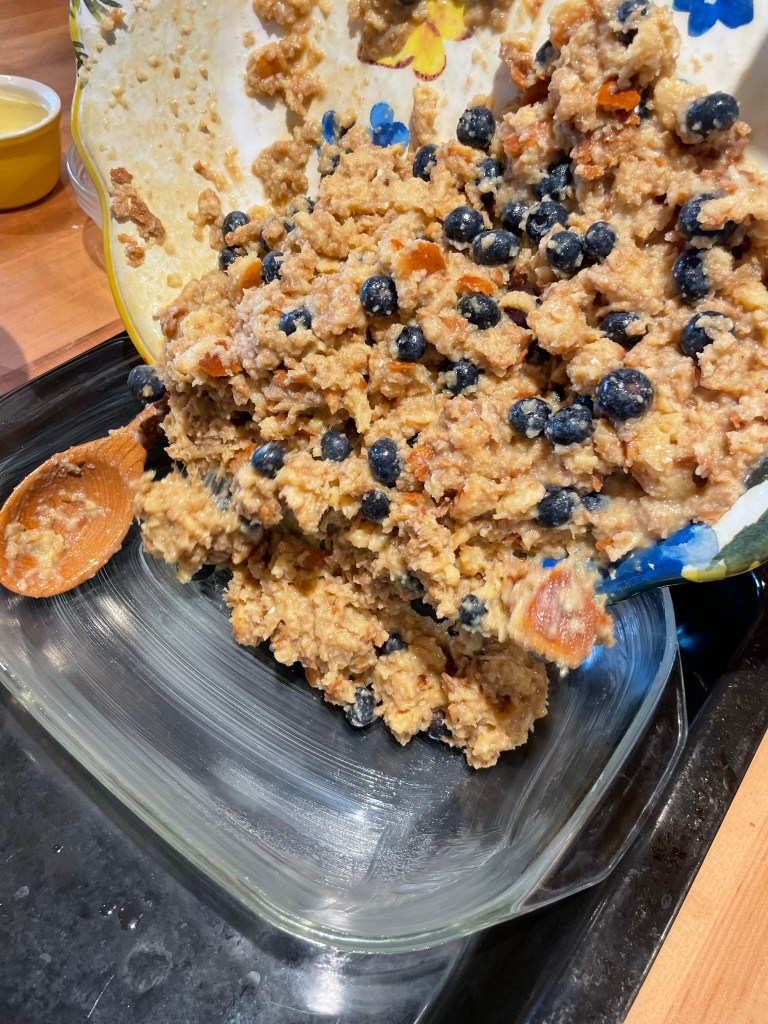
  2. Add stale bread pieces to a mixing bowl that will be large enough to toss with liquid ingredients. Whisk together milk, eggs, sugar, melted butter, vanilla, cinnamon and cardamom. Pour milk mixture over bread and gently fold with a spatula or wooden spoon to evenly coat bread. The mixture will initially seem too wet, but the bread will continue to soak in the liquids. Allow the pudding to rest about 20 minutes to absorb the custardy liquid.
  3. When most of the liquid has been absorbed, fold in fresh blueberries and maple syrup. Transfer mixture to buttered baking dish, and place the dish inside a larger dish with room for boiling water on all sides. Heat water to boiling in a tea kettle. Sprinkle reserved tablespoon of sugar all over the top of the pudding.
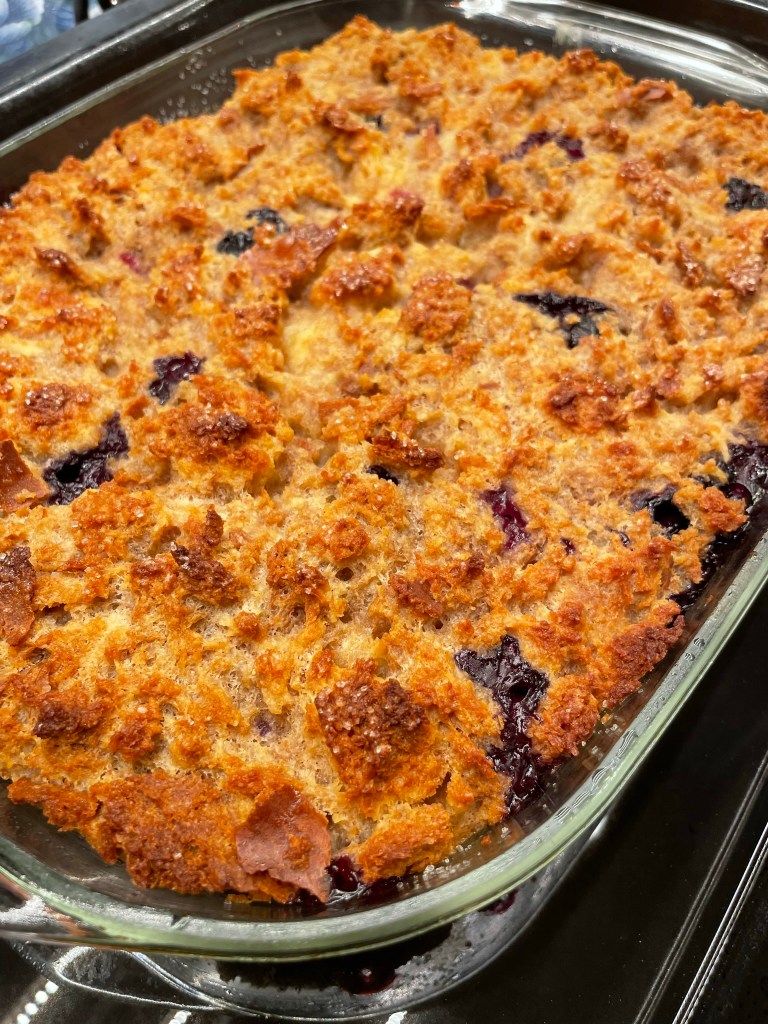
  4. Carefully pour boiling water into larger dish, about halfway up the sides of the bread pudding dish. Bake approximately one hour, until pudding is set and top is golden browned and crispy.


My Grandpa’s Cranberry Jell-O Salad

I know, I know— Jell-O? 

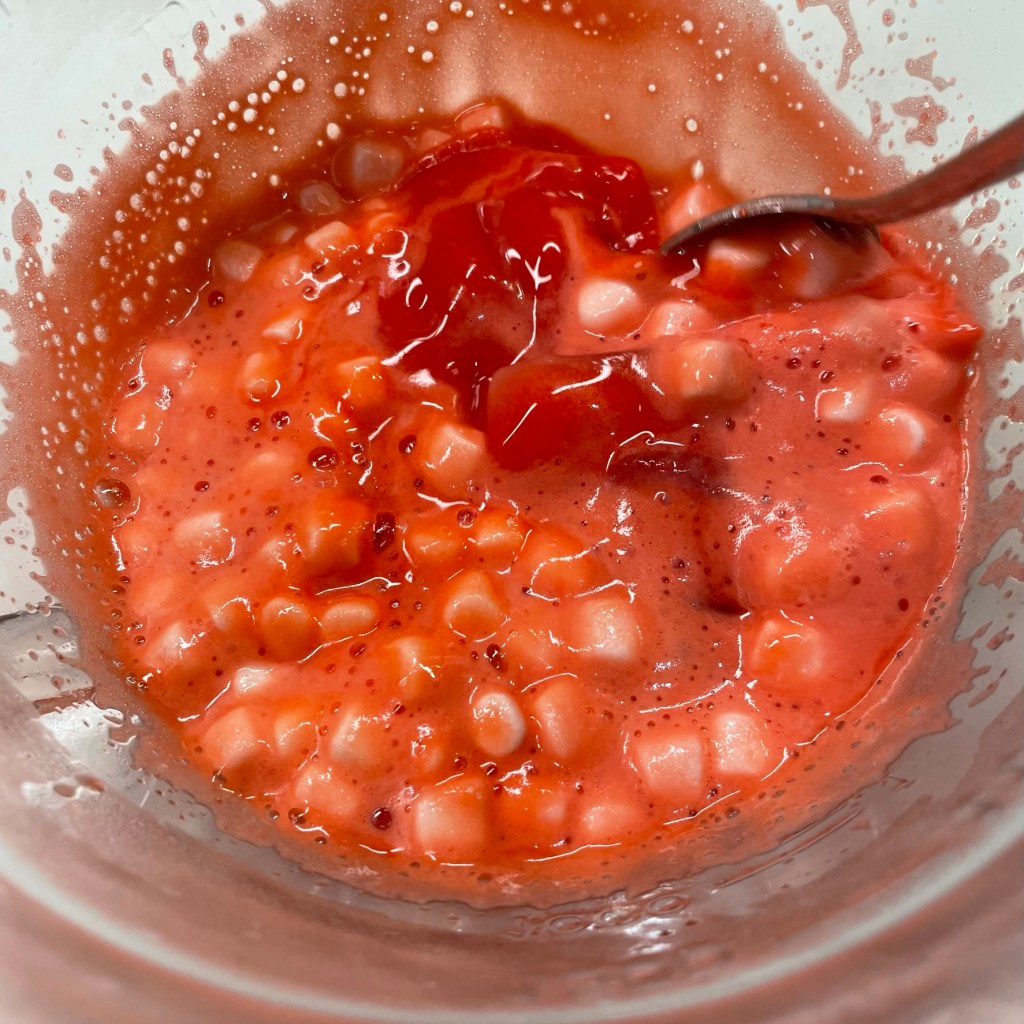
This is exactly the kind of recipe I swore that I would never post on Comfort du Jour. Its use of pre-packaged, artificially flavored and colored gelatin goes against every culinary instinct in my being and I hope you don’t see me as a food snob for saying so. After more than two decades of avoiding highly processed foods (like, um, Jell-O), my body gets raging mad over even a taste of artificial ingredients— usually with a display of symptoms ranging from inflammation and painful joints to headaches and digestive upset. It’s frustrating and kind of weird. But I am the unlucky bearer of an autoimmune disorder, and I just have to deal with it.

They’re trying really hard to make this seem like a health food. News flash: it ain’t!

Despite all of that, I made this recipe and I am sharing it for one reason only: nostalgia.

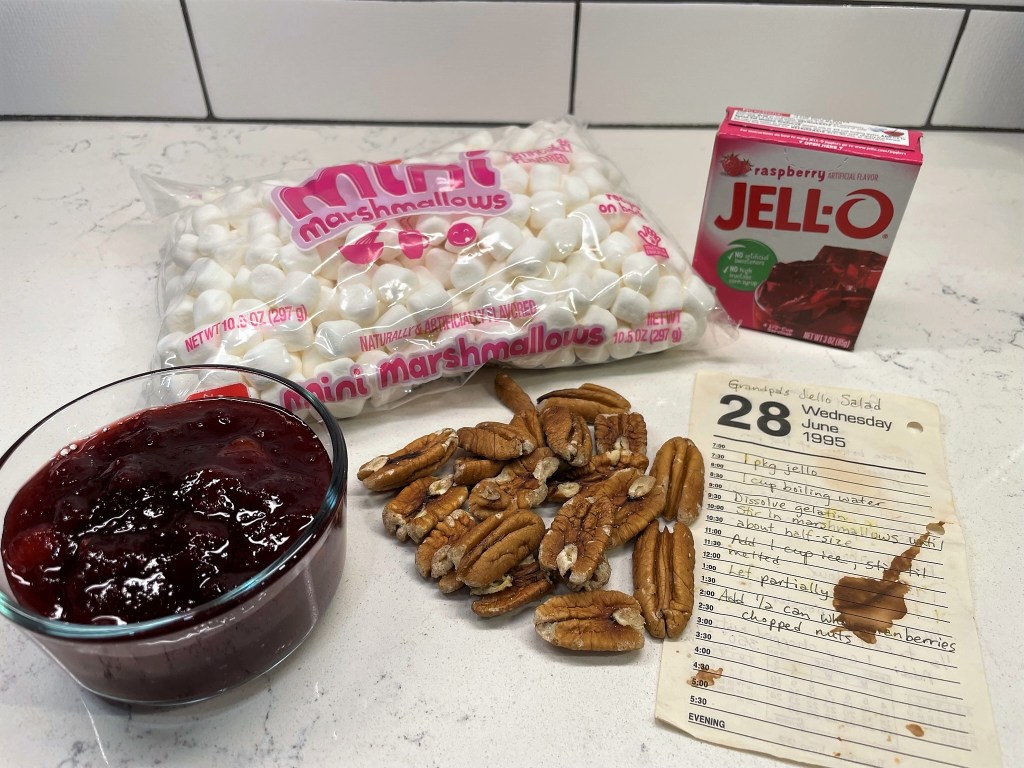
I ran across this stained, crumpled note in the depths of my recipe box when I was looking for something else last week, and it gave me “all the feels.” You see, my grandpa on my dad’s side shared this recipe with me on one of my visits to see him in his post-retired days in Florida, back when I was oblivious to the effect of the aforementioned highly processed foods. Grandpa was a real character, and I enjoyed visiting him at his home in Cocoa, visiting interesting places such as Cape Canaveral and Ron Jon (the beach shop, which he assured me was the only one of its kind). I loved touring his beautiful rose garden that he tended with fierce dedication, and getting dressed up for dinner with him at some really, ahem, “fancy” establishments.   

This neon-colored, congealed mess of a “salad” is something you’d expect to see in a cafeteria line-up, and that makes a lot of sense if you knew my grandpa. He loved cafeterias and buffets, and I chuckle when I remember the time he was so excited to take me out to eat at a place that he said “serves everything you could ever imagine— steak, pasta, fried chicken, salads, ice cream— all in one restaurant!” He raved about it during the entire car ride, and then he turned into the parking lot for Golden Corral. Thank goodness some high school prom kids came in for dinner that night or I might have felt overdressed!

Sincerely, I miss his fun-loving spirit, and when I shared this recipe with my husband, he commented that it was the first time I’d mentioned my grandpa as a culinary influence. But he wasn’t, really. During the years that my passion for cooking was developing, Grandpa owned and worked on a dairy farm and in his free time (that’s a joke), he also delivered mail on a rural route. As far as I could tell, he wasn’t in the kitchen much at all, except to bring in a fresh pitcher of milk to serve with dinner. He simply didn’t have much extra time, and when he did, we enjoyed fun things like picking peaches and riding in his boat. I was his first grandchild (daughter of his eldest son), and I like to believe I was his favorite. He sure treated me like it, and I suspect that my cousins all felt the same way.

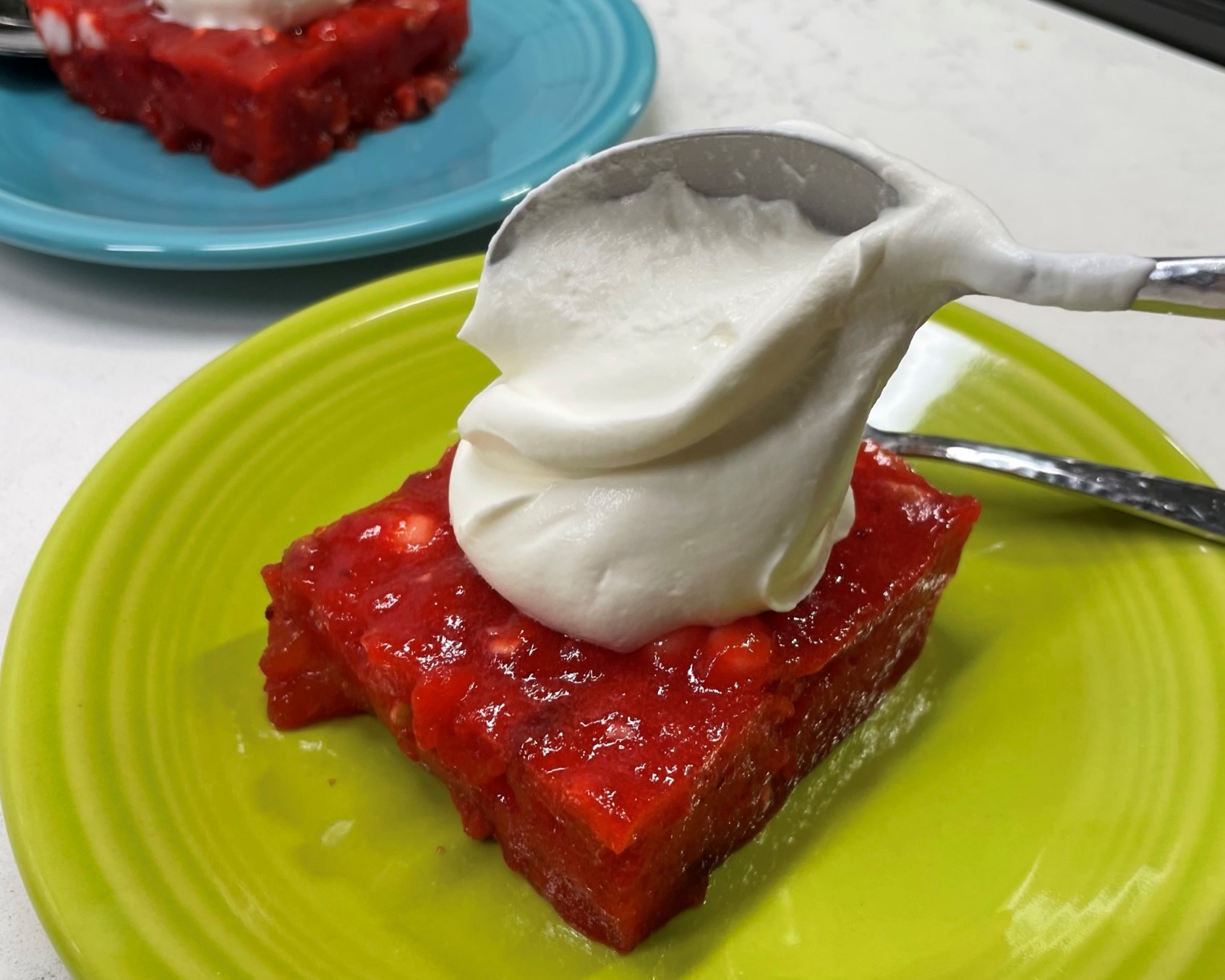
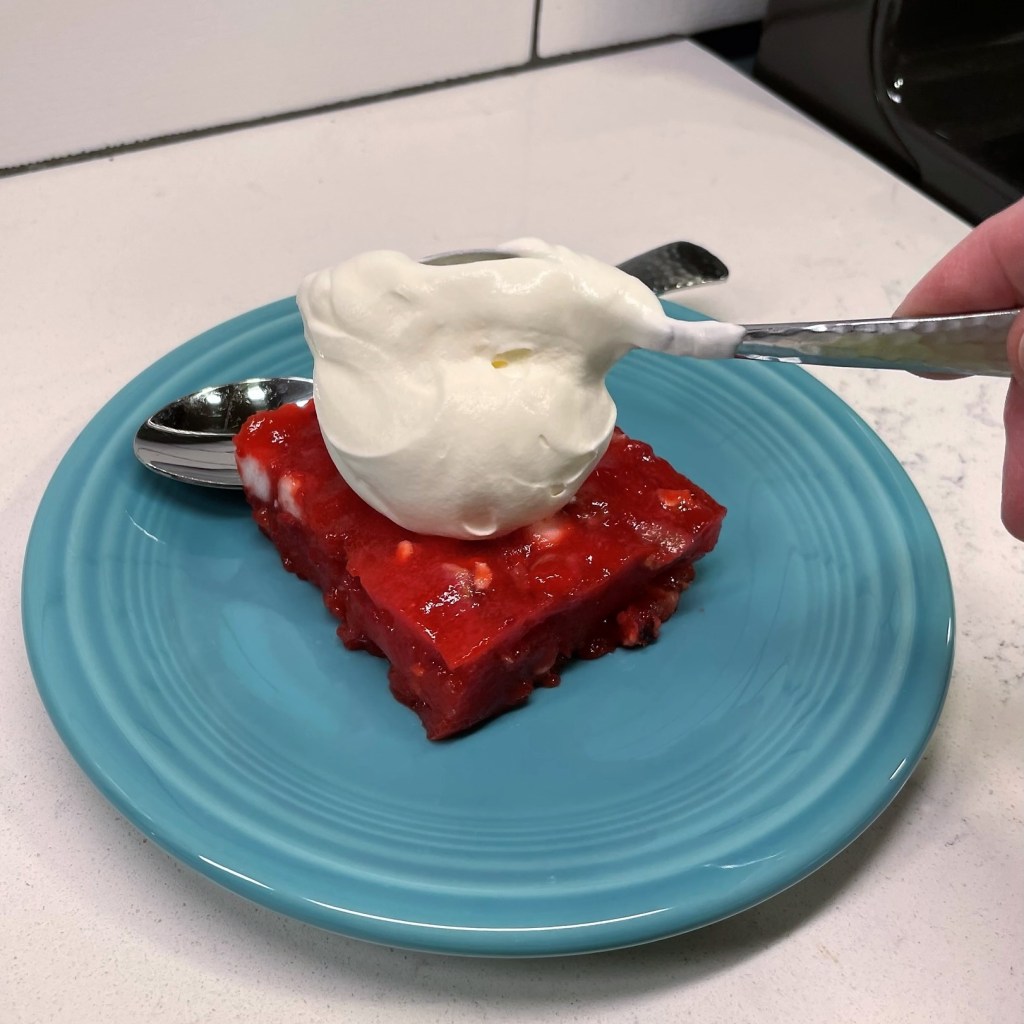
I topped my Jell-O “salad” with sweetened cream mixed with sour cream.
But if you’re fancy like my grandpa, you could use Cool Whip. 😉

It wasn’t until I was a young adult and Grandpa was retired that we started to bond over food. He had made banana bread one morning when I visited, and when I commented on the cranberry Jell-O salad in his recipe box, he told me to write down a copy. This recipe, he said, was a great way to use up leftover cranberry sauce from Thanksgiving. 

I’m sure glad we had some this week. 🙂


My Grandpa's Cranberry Jell-O Salad

  • Servings: About 6
  • Difficulty: So Easy!
  • Print

This recipe is pure nostalgia for me, shared a long time ago by my paternal grandfather. It's an easy, fun way to use up leftover cranberry sauce after Thanksgiving.


Ingredients

  • 1 small box flavored gelatin (see ingredient note for suggestions)
  • 1 cup boiling water
  • 1 cup miniature marshmallows (Grandpa used the pastel multicolored ones)
  • 1 cup ice cubes
  • 1 cup leftover cranberry sauce (the whole berry kind)
  • 1/2 cup chopped pecan pieces
  • Whipped cream for serving (optional)

Choose a gelatin flavor that will complement your cranberry sauce. If your leftover sauce is on the sweet side, raspberry gelatin works well. For pairing with a tart cranberry sauce, consider cherry, strawberry or orange.

Directions

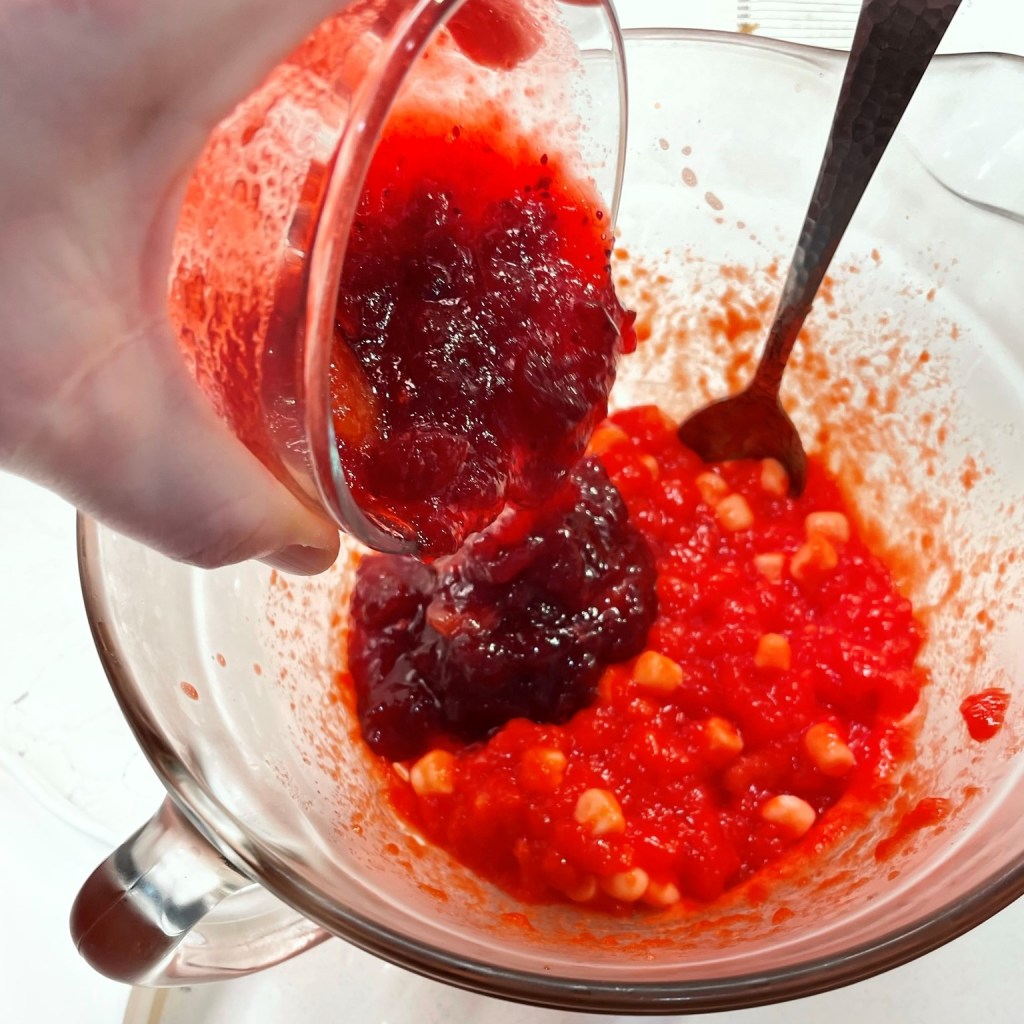
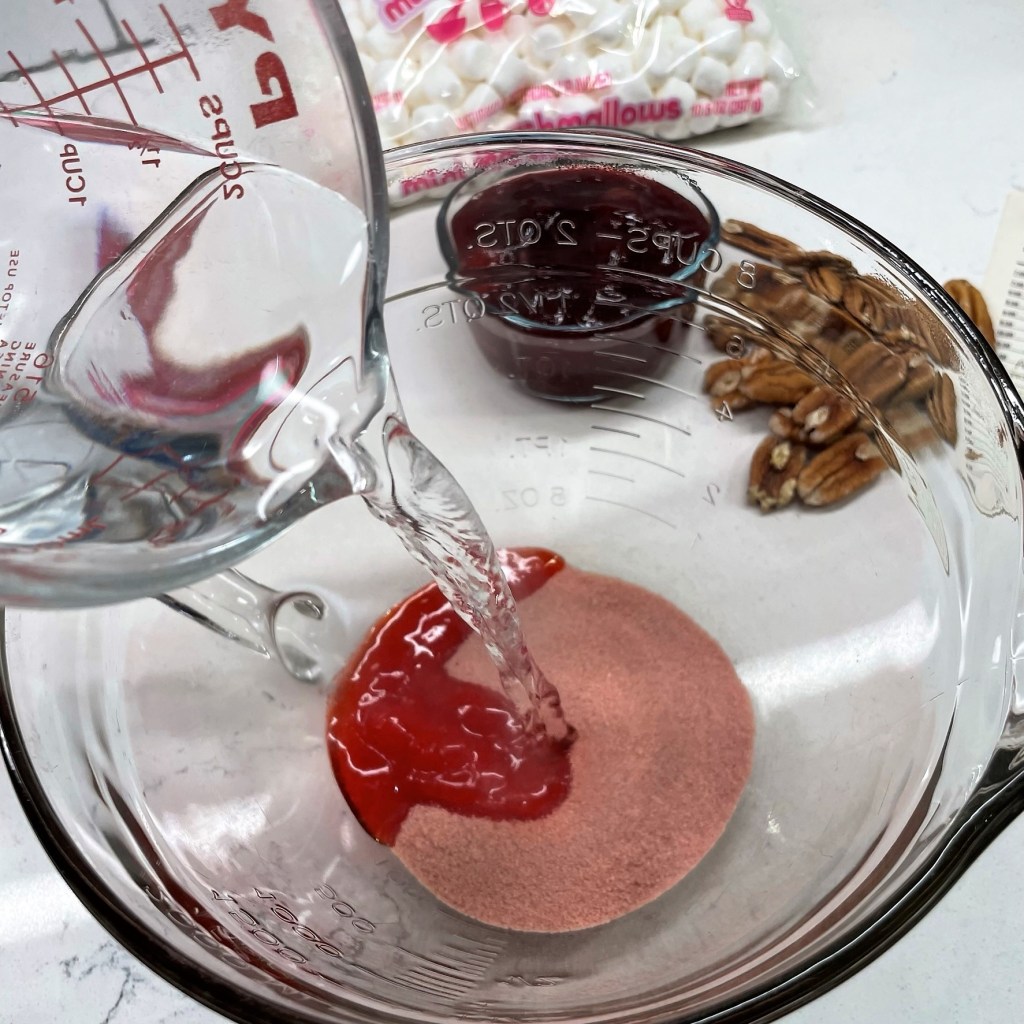
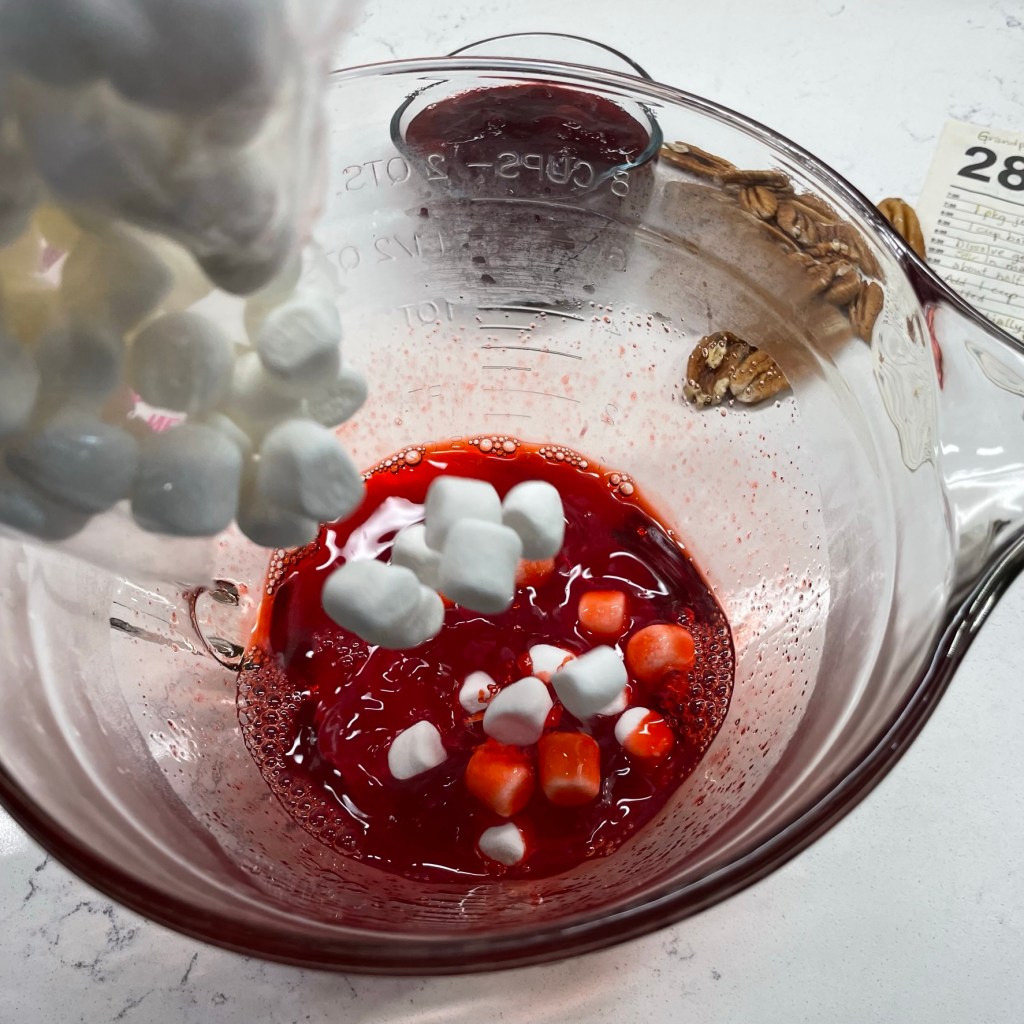
  1. Stir boiling water into gelatin in a medium size bowl until dissolved. Add miniature marshmallows and stir until they have melted to about half their original size. Add ice and stir to melt. Chill the mixture for about 30 minutes, until partially set.
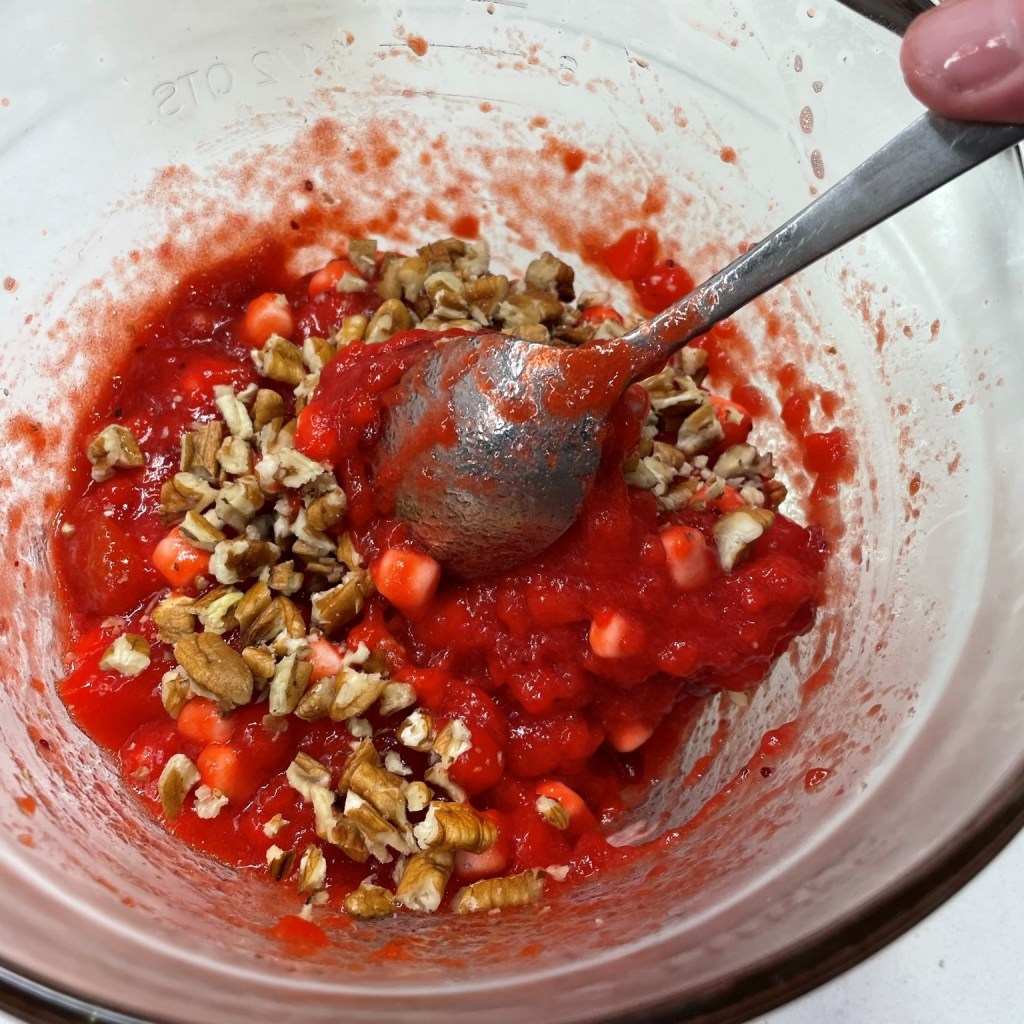
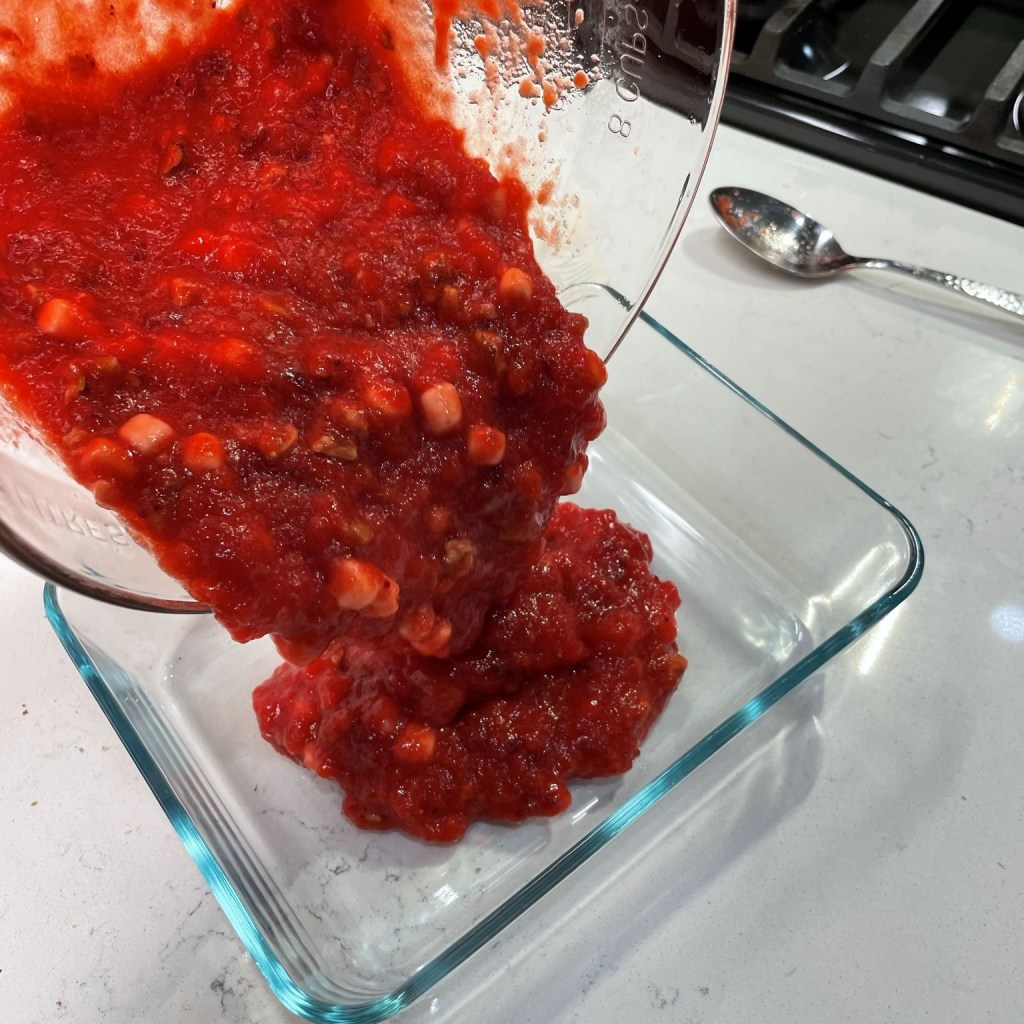
  2. Stir partially set gelatin to loosen it up. Fold in leftover cranberry sauce and pecans. Transfer mixture to a small square or rectangle glass dish. Smooth the top, place a cover on it and refrigerate until firm.
  3. Cut into squares and top with a dollop of whipped cream.

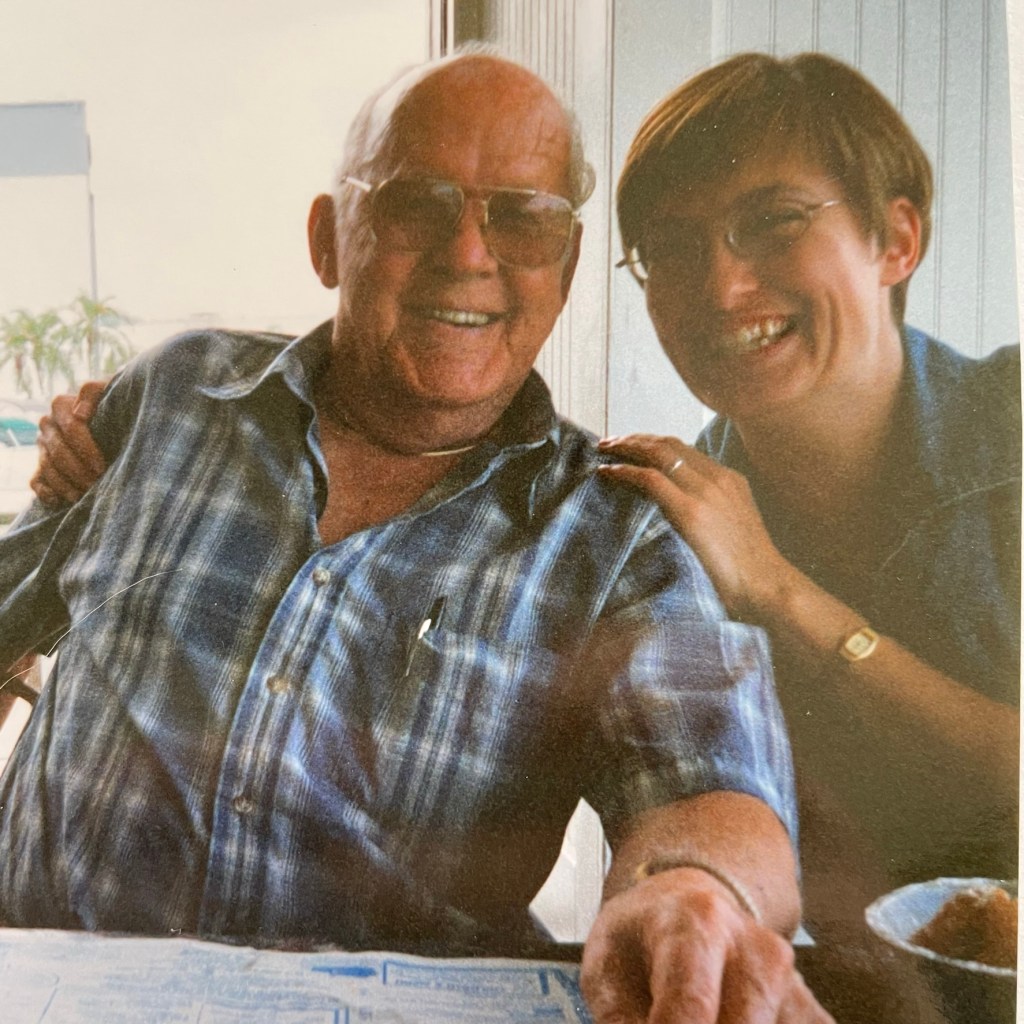
Grandpa and me, sometime in the 90s. I miss him so much! ❤


Healthy-ish Zucchini Bread with Drunken Raisins

When it comes to eating healthier, getting started is the hardest part. I’ve had fun making rich and decadent foods for me and my husband, especially since I started Comfort du Jour. But I’m on a roll with healthy swaps in the kitchen lately, and we are certainly not suffering for it; I dare say we may be enjoying our foods more than ever, and some of that is because we are giving up guilt, but not flavor. It helps a great deal that my commitment to lightening things up is timed exactly to the start of garden season and especially to the arrival of so much fresh zucchini.

I will admit that I have been surprised by the prolific yield of our zucchini plants, given that one of the four we planted was crushed when (apparently) a startled deer fell on the trellis. The plant was tied to grow up through the trellis and there was no way to release it from that mishap without pulling up all four plants. I figured that one was a goner, but nature always amazes me with its resiliency, and I am pleased to report that after a rough start, the crushed plant has rebounded and is still producing blooms. We have literally picked squash each day for the past week, and I’m scrambling to come up with fun ways to use them all.

These beauties are coming in faster than I can use them!

I have loved zucchini bread since I was a kid, and I set out to modify an old family recipe to reduce the oil and sugar without sacrificing flavor or texture. The original recipe was handed down from my maternal great-grandmother, and it has always been delicious as written, but includes some things I don’t use in my own kitchen today, like “vegetable oil.” I had a few ideas in mind, such as subbing in Greek yogurt for a portion of the oil, and melted butter for the rest—the way I see it, if a recipe must have fats, they should at least contribute richness and flavor—and I reduced the overall amount of sugar by a fourth, using a combination of cane sugar and brown sugar (the latter keeps the zucchini bread nice and soft). As always, I also substituted whole wheat pastry flour for half of the total amount, because white flour is just empty carbs.


There was one more special switch-up in my modern version of my Great-Gram’s zucchini bread; I had this idea to embellish the bread with rum-soaked raisins for a fun twist. But would that have been OK with Grandma? As a young adult, I had the great fortune to know my great-grandmother, but I had no recollection of her ever taking a drink, so I paused over these rum-drenched raisins. On this twist, I consulted my aunt, who also likes to make healthy changes to time-honored dishes, but still respects the family heirloom recipes, as I do.

“I think she would be delighted,” was Aunt Joy’s reply, as other family members had recently confirmed to her that Grandma did enjoy a little nip on occasion. I have no doubt that she would have accepted my other changes, and I could even imagine exactly what she’d say, in her sassy, Norwegian accent:

“Sure, just use whatever you’ve got. You’ll know what to do.”

Despite being at least 6 inches taller than her, I looked up to my great grandmother in every way. ❤

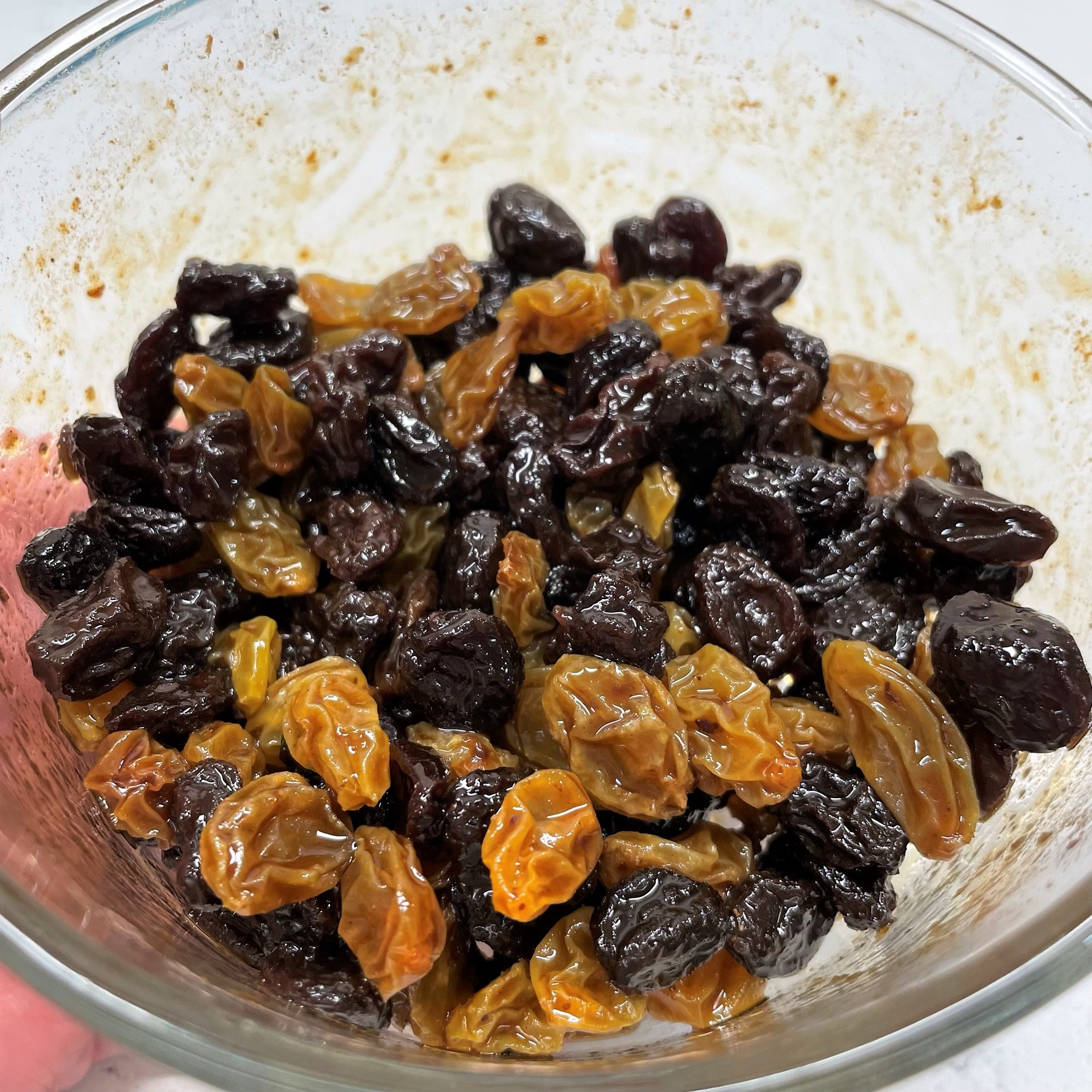
The only thing Grandma might have fussed about was just how long I had been soaking these raisins in rum, which I’m only slightly embarrassed to admit has been since, ahem, Christmas or so. I had doused them in Jamaican rum in an effort to revive them (they were desperately dry), and I intended to use them in a holiday treat but got distracted. Then I figured I’d put them in banana bread, but I kept either forgetting or changing my plan. We have moved these raisins around in the fridge for months, and by the time the zucchini started coming in, they weren’t just tipsy, they were plain drunk!

There are worse things to be soaked in than rum.

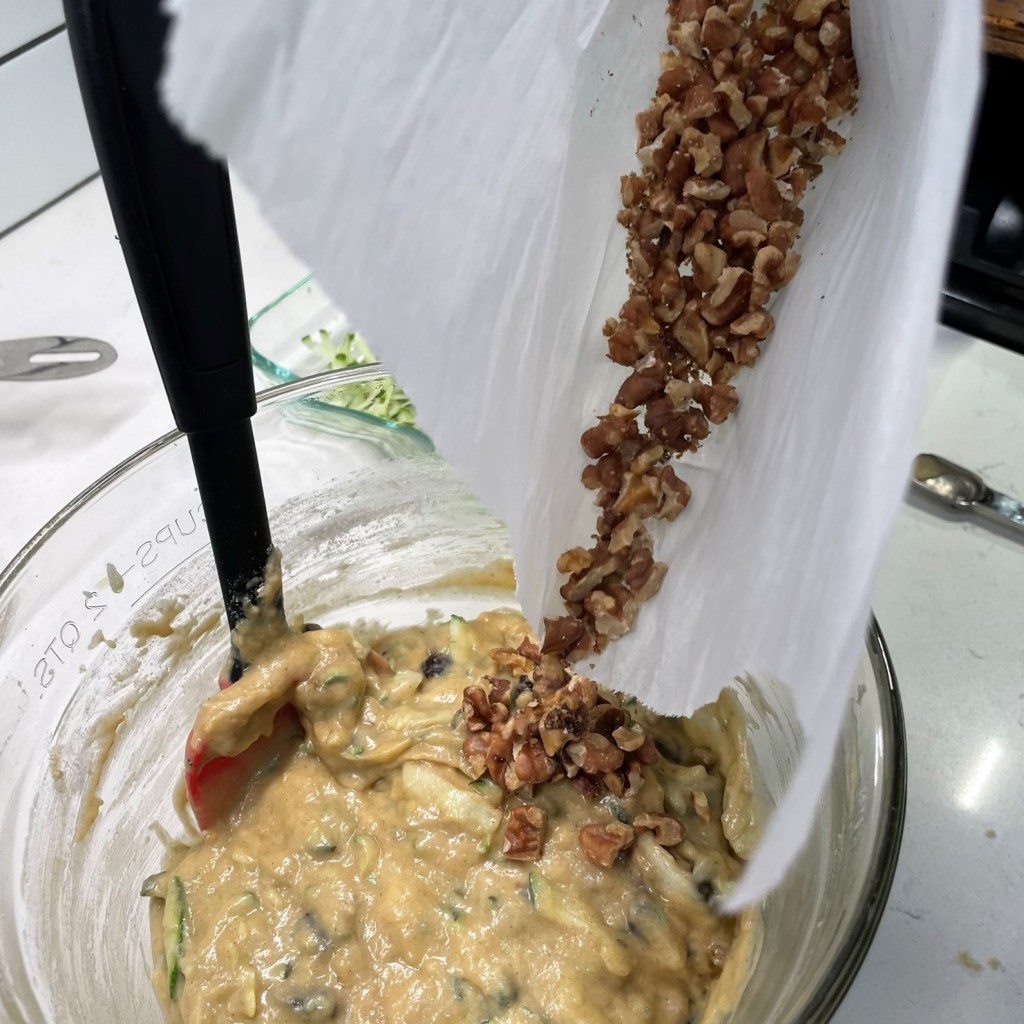
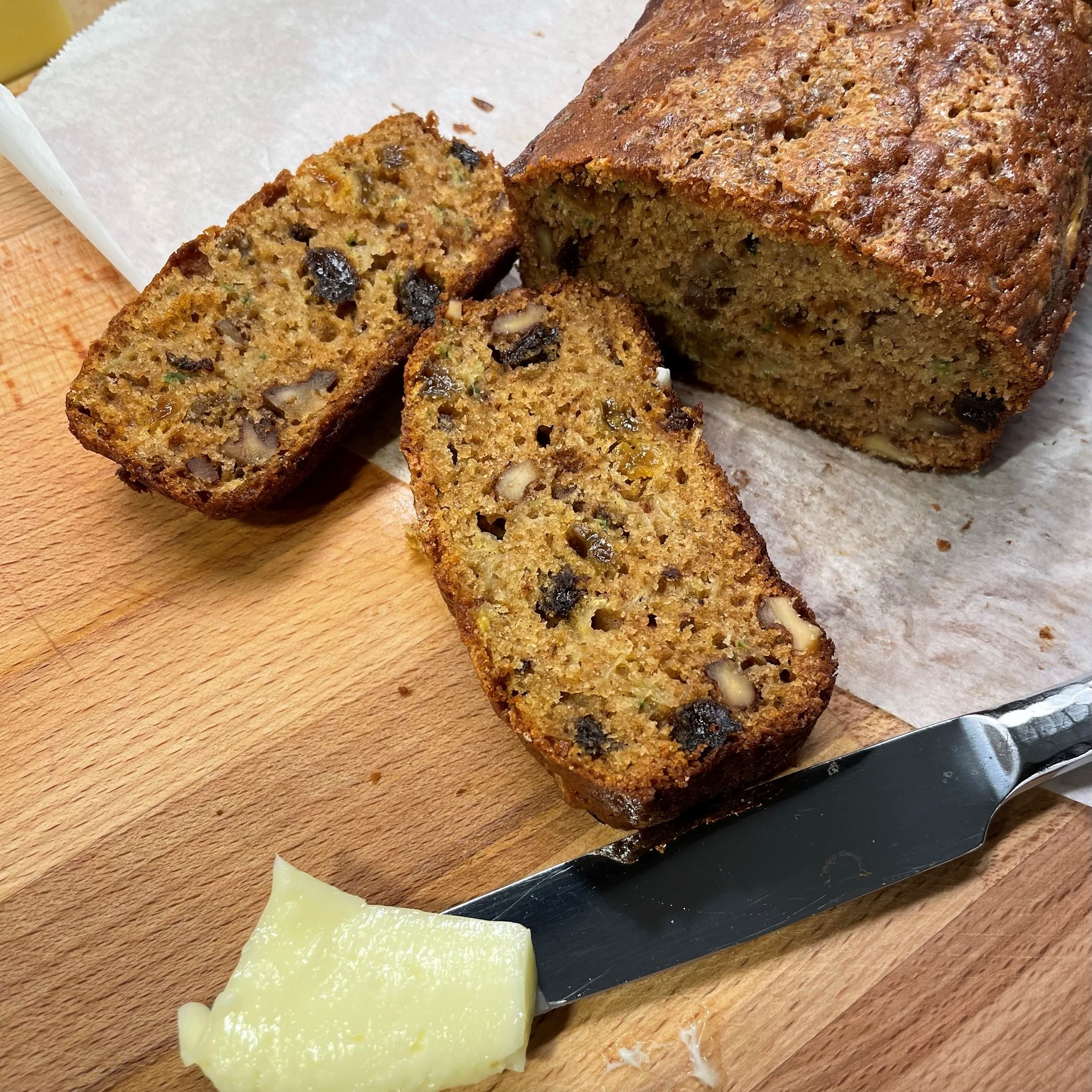
Obviously, not everyone has a bowlful of drunken raisins hanging around, and that’s perfectly fine. Soaking for a few hours or a couple of days will get the job done, and as the rum (or bourbon or orange juice or whatever you use) absorbs into the dried fruit, the natural sugars seep out into the liquid, forming a syrup of sorts. That sweetness adds the special something to this zucchini bread, and you honestly don’t taste any alcohol. It’s more about making them super plump before baking, as you can see in these juicy jewels of sweetness, nestled in among the toasted walnuts and all those shreds of fresh zucchini.

The raisins are so soft and sweet!

To get this recipe started, I first wrote down all the substitutions I planned to make, and I also cut my Great-Gram’s recipe in half, because her instructions were for two loaves. I find it challenging to change a recipe on the fly, and I probably should have mentioned that when I wrote about “the problem with recipes,” given that it is a frequent challenge for me. We have a small household—just me and my husband—and unless I am cooking to entertain, I like to make things in small amounts. I wrote out the exact amounts of all the ingredients I’d be using for a single loaf, and arranged them on the counter. At our house, we call it mise en place, the French term that means, “all in its place, lined up, ready to go.”

If I don’t set it up this way, I will forget something!

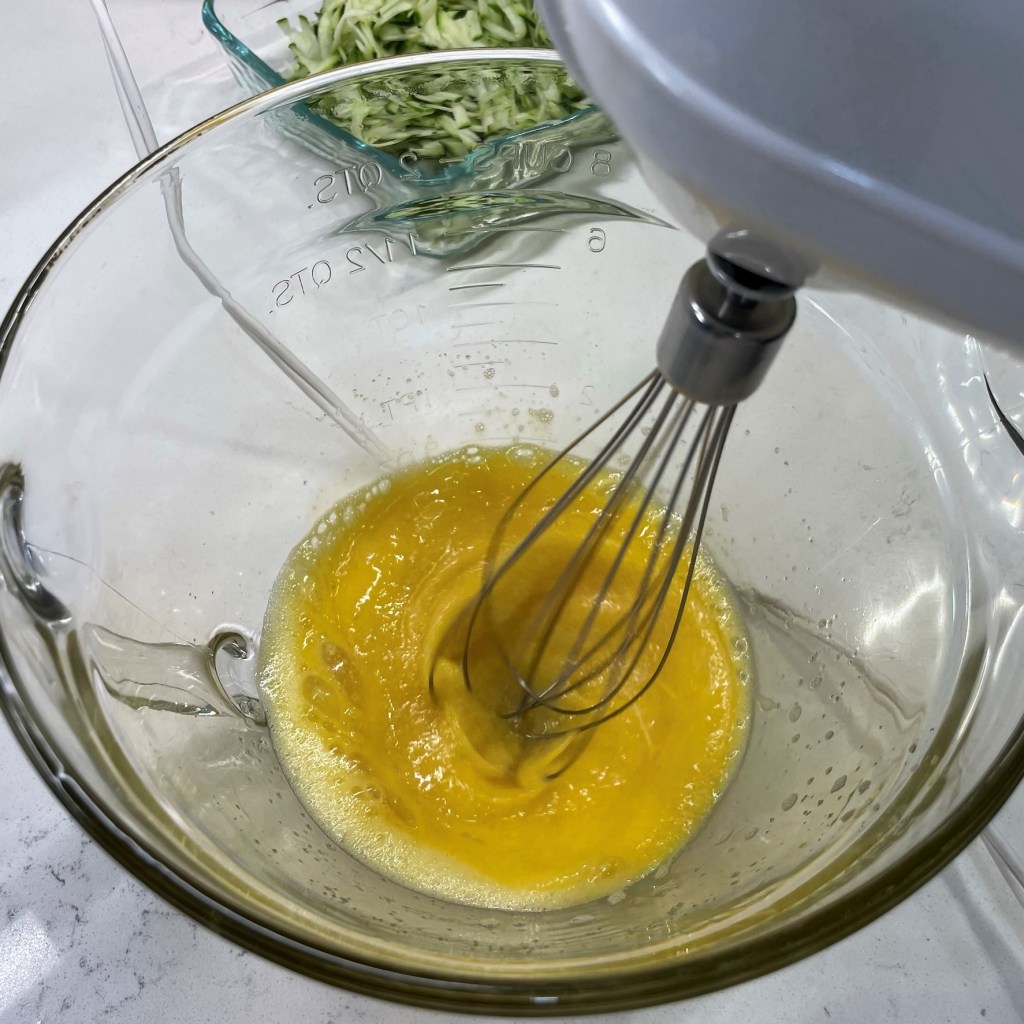
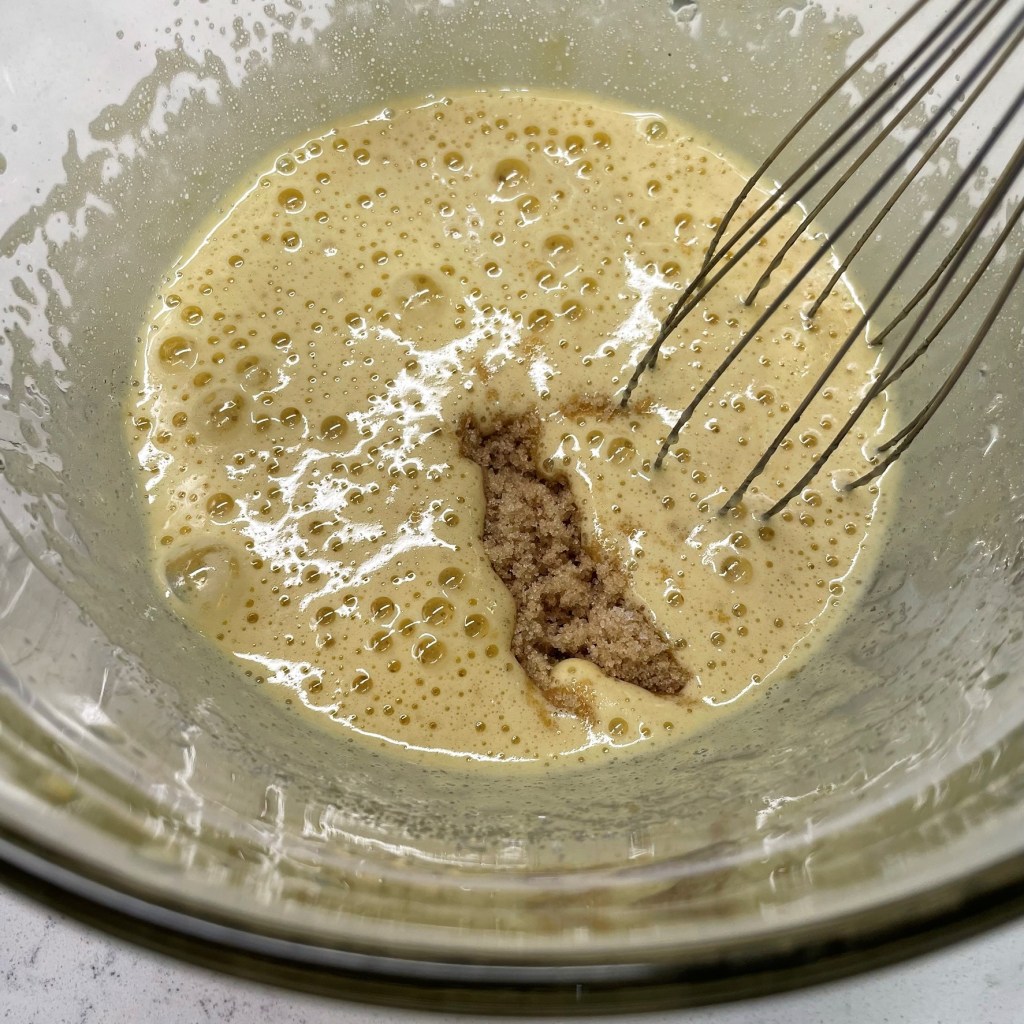
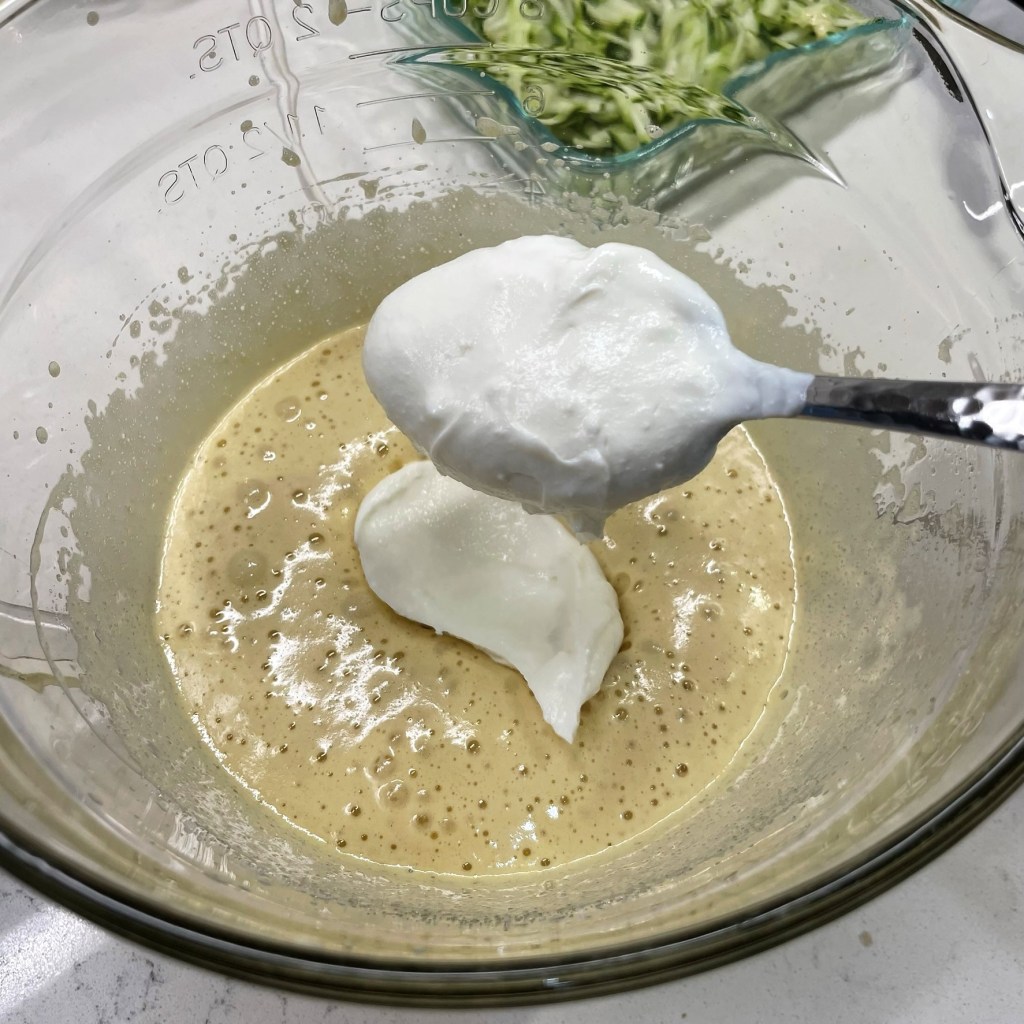
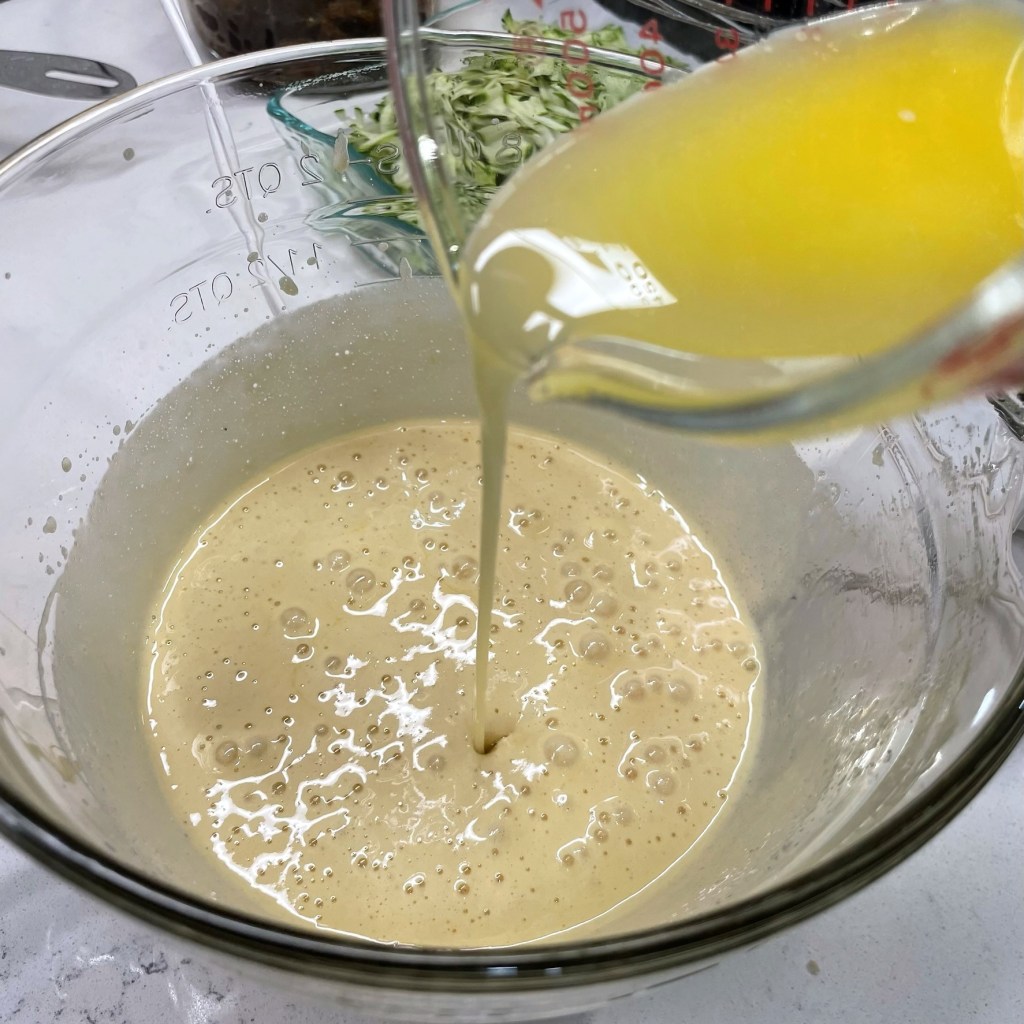
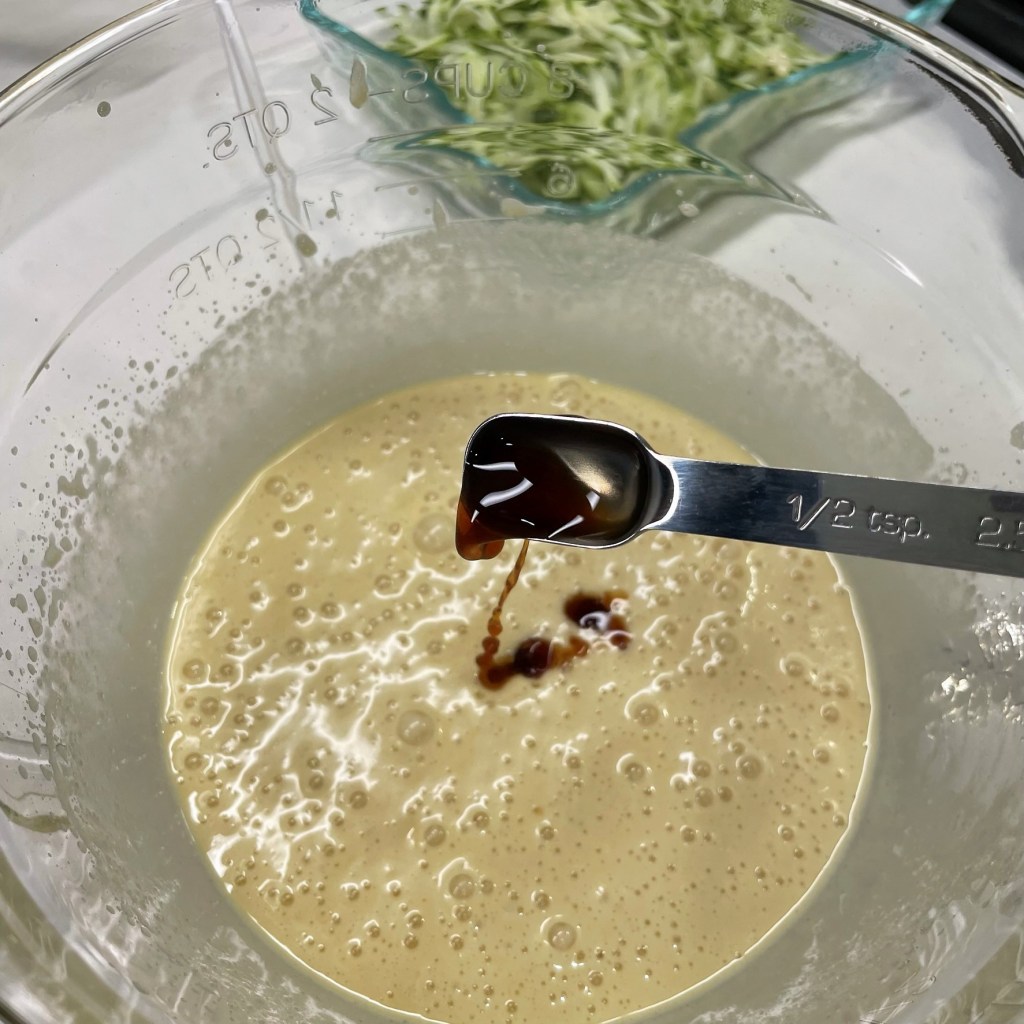
The eggs were whipped first, and I started with a hand whisk but quickly switched to my electric mixer with the single whisk head attachment. Despite my excitement in outfitting my kitchen with new, upgraded small appliances, I have thus far refused to replace my handheld mixer that I have had since the late 90s. There isn’t anything special about it, except that it was made in the USA and still works great after all these years. My Great-Gram probably had one just like it, and she would heartily agree that “they don’t make things like they used to.” After the eggs are whipped and foamy, I added the sugar, a little at a time. Then the yogurt and melted butter. The original recipe didn’t call for the vanilla yet, but I find it easier to mix that into a batter with the wet ingredients, so in it went.

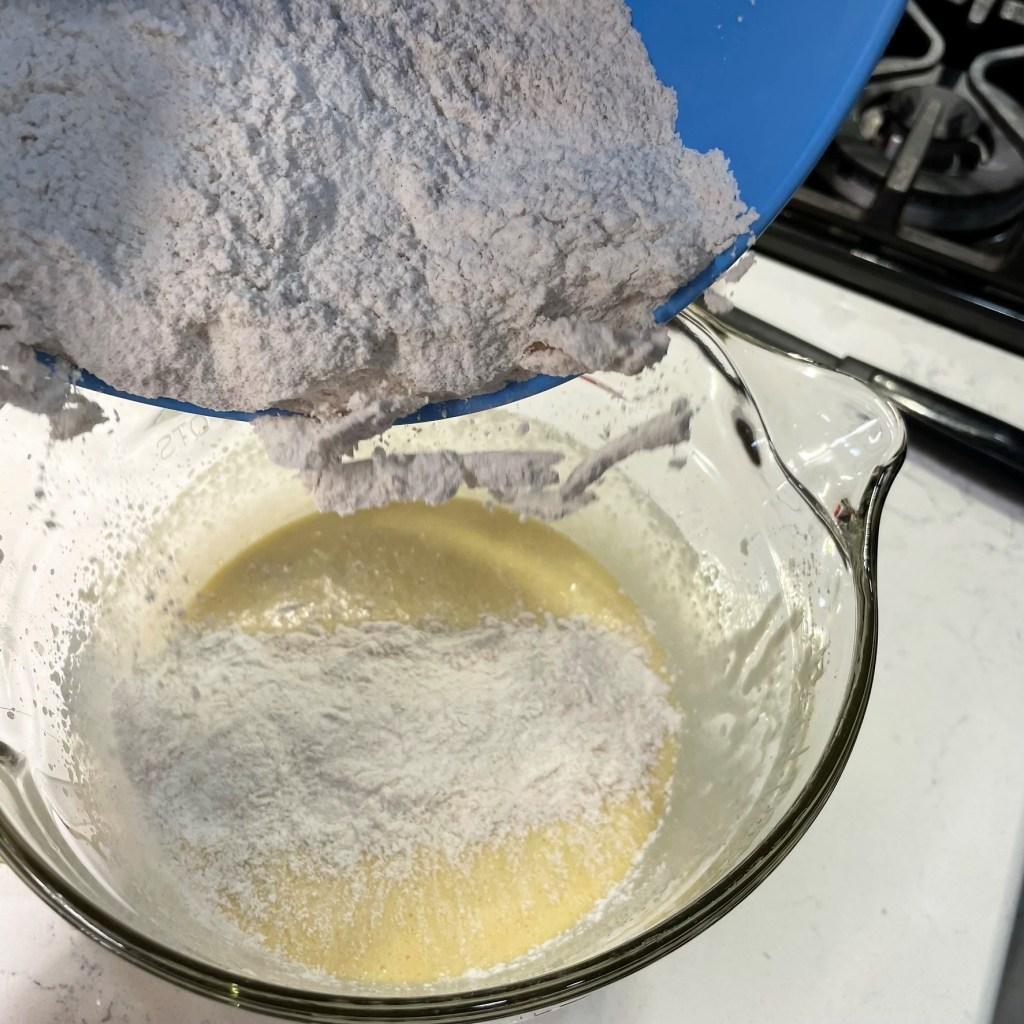
The dry ingredients got whisked together in their bowl—this is important, because you don’t want the baking soda or cinnamon to clump up when they hit the wet ingredients—and they were added to the egg mixture a little at a time, alternated with the shredded zucchini. Blending and folding a little of each in stages ensures more even mixing without overworking the batter (which would make the bread tough).

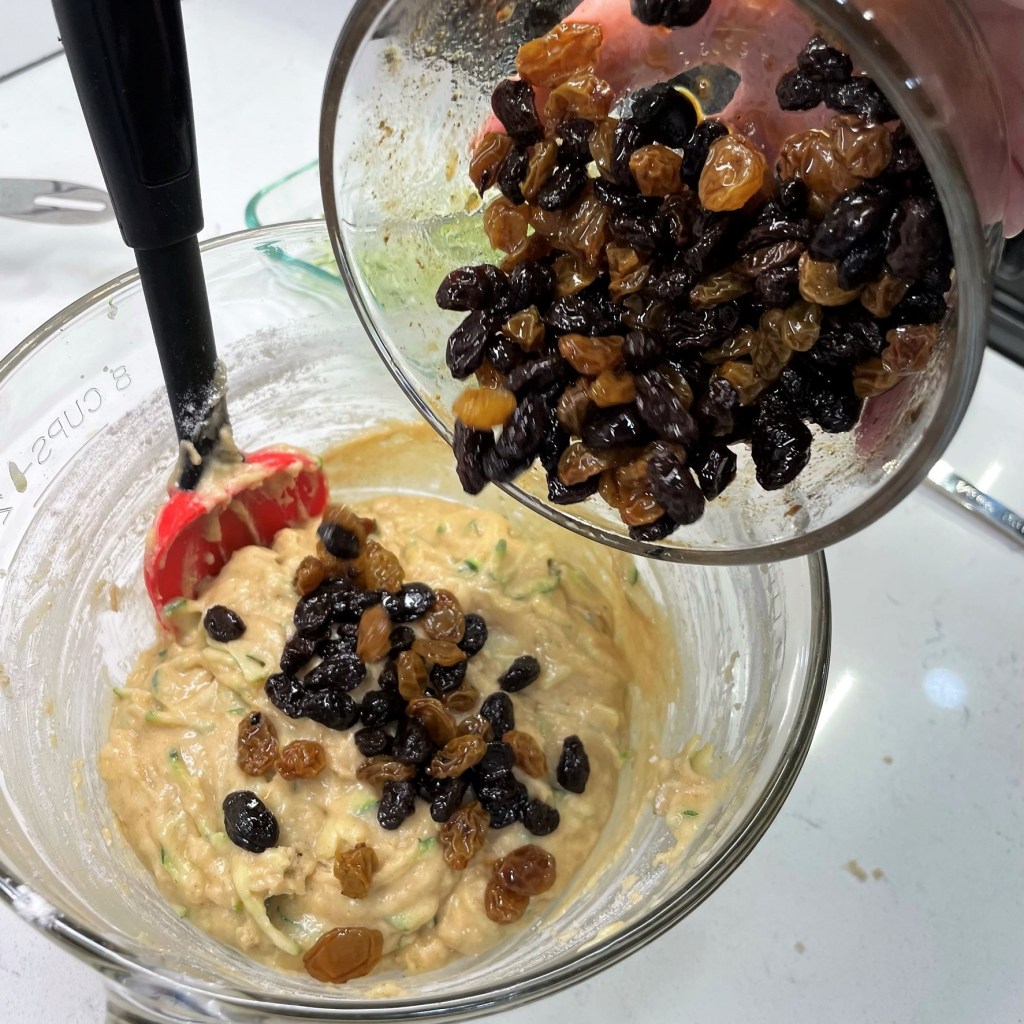
Finally, the drunken raisins and toasted walnuts were folded into the batter, and my modernized, somewhat health-ified version of zucchini bread was ready for the oven!

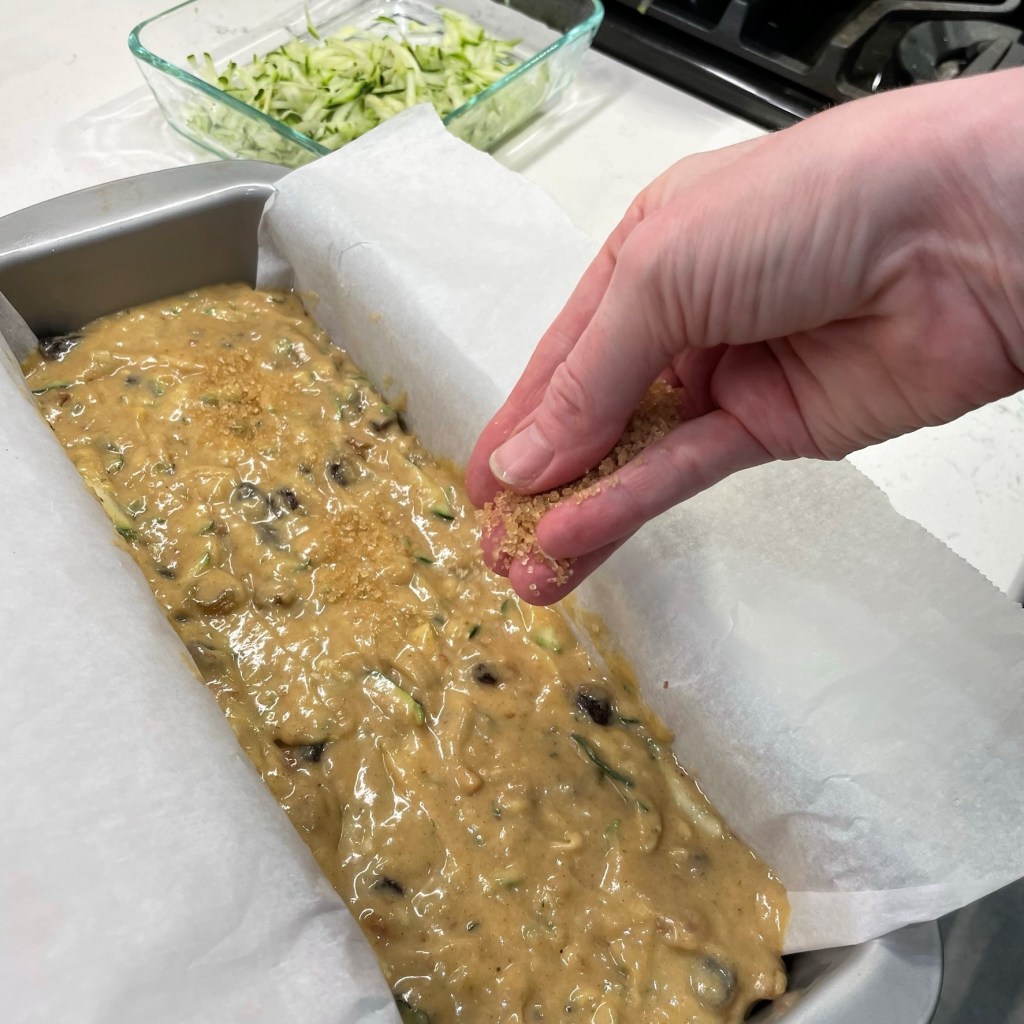
Grandma’s recipe said to grease and flour the pan, but I made a hammock of parchment paper instead, for easy lifting of the finished loaf. I’ve never liked inverting a soft loaf of quick bread; it’s too easy to break it and I don’t care for the unsightly rack marks it leaves on top. No oil or greasing is necessary here—just lay the parchment into the pan with a bit of a flap hanging over each long side, and then pour in the batter. For a nice crunch on top of the loaf, I sprinkled on a tablespoon of turbinado sugar just before baking.

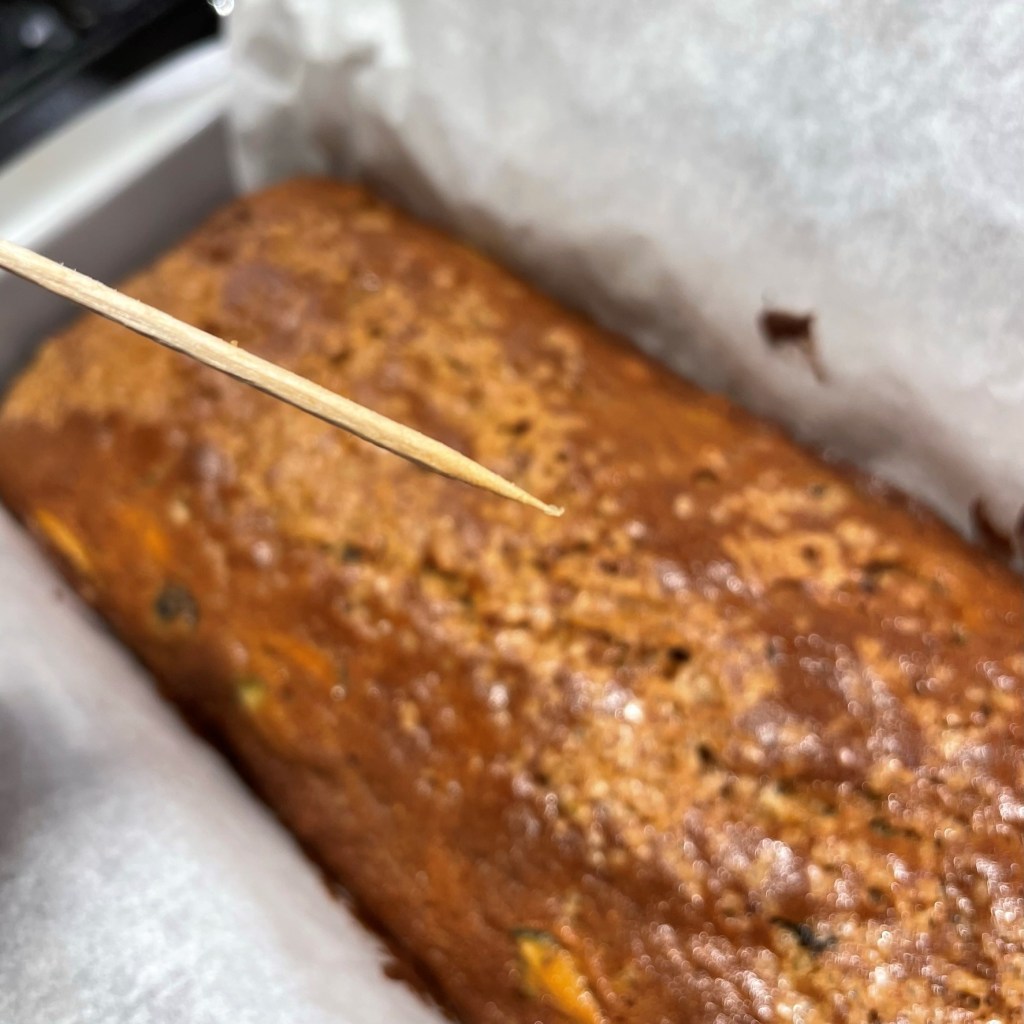
The house smelled sooo good while this was baking, and 55 minutes later, a clean toothpick confirmed it was done. There’s no doubt, this quick bread would be a winner with my great grandmother. It’s packed with plenty of garden-fresh zucchini, and with reduced fat and sugar—plus the substitution of whole grains—I can enjoy it for breakfast or dessert without guilt.


Healthy-ish Zucchini Bread with Drunken Raisins

  • Servings: about 12
  • Difficulty: average
  • Print

I’ve made a few “lighter” adjustments to a family heirloom recipe, and the result was delicious. My raisins were soaked in rum, but you could also use whiskey or bourbon, or skip the alcohol and soak them instead in orange or apple juice.

Ingredients

  • 2 eggs
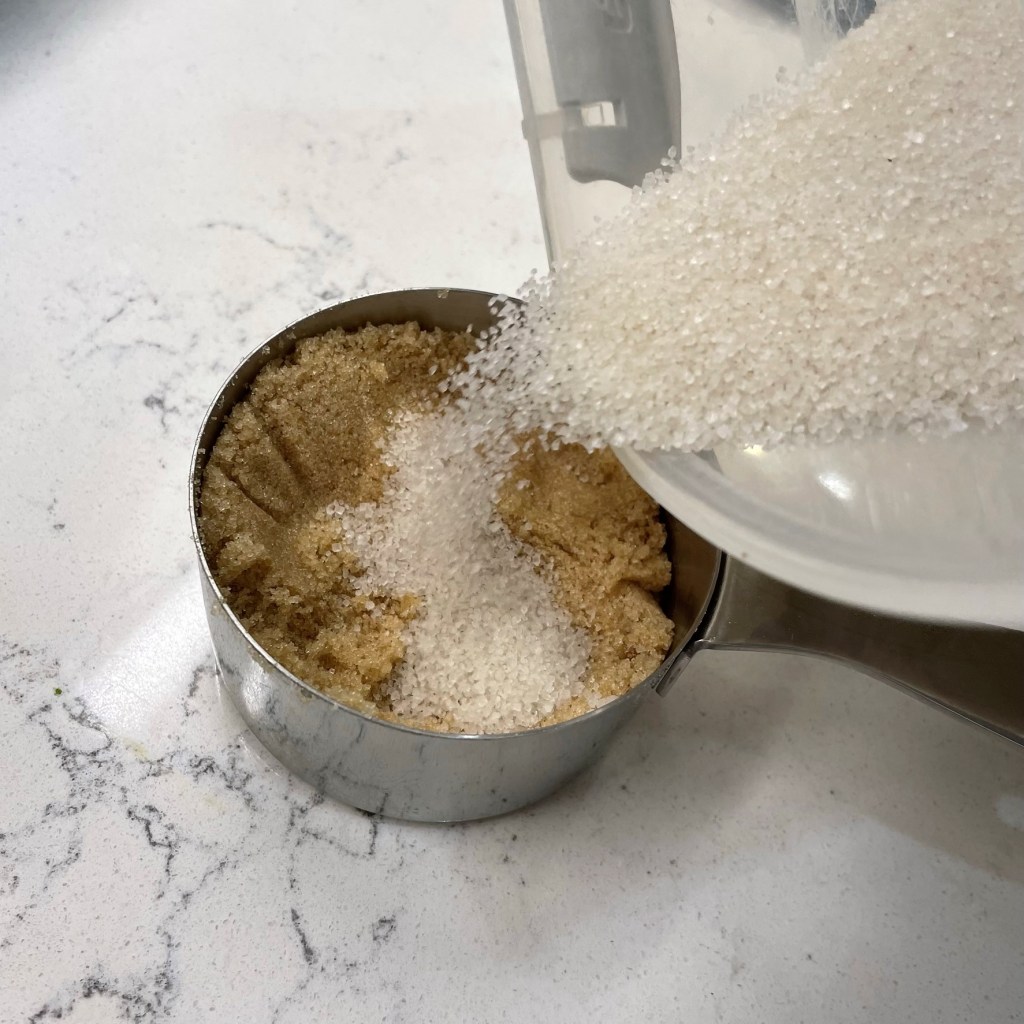
  • 3/4 cup sugar; I did halvsies of white and brown sugar
  • 1/4 cup plain Greek yogurt (stir it well before measuring)
  • 4 Tbsp. melted butter
  • 3/4 cup all-purpose flour
  • 3/4 cup whole wheat pastry flour
  • 3/4 tsp. baking soda
  • 3/8 tsp baking powder
  • 1/2 tsp. kosher salt
  • 1/2 tsp. ground cinnamon
  • a few scrapes freshly grated nutmeg
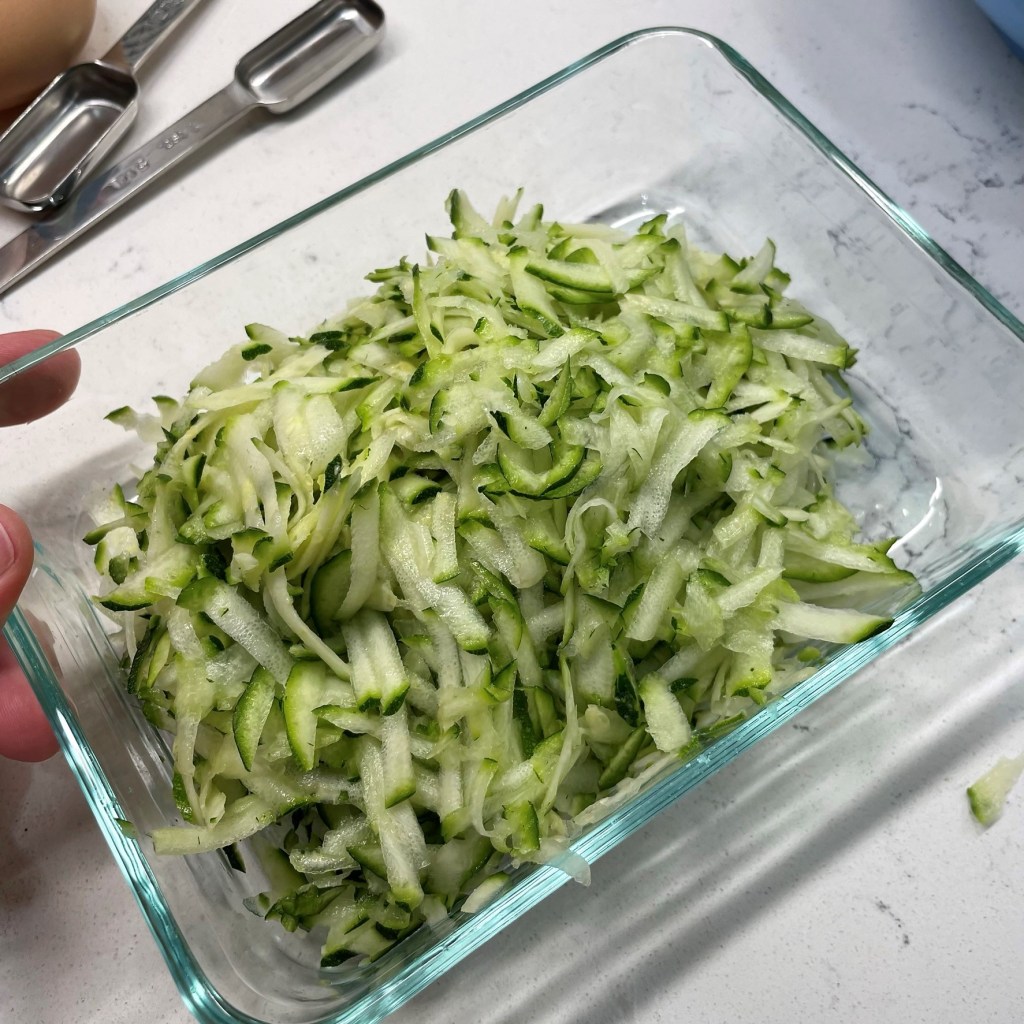
  • 1 cup grated zucchini (unpeeled, large holes on a box grater)
  • ½ cup raisins (soak them at least a few hours, with just enough rum to cover them)
  • ½ cup chopped walnuts, optional (I toasted them in the oven 8 minutes first)
  • ½ tsp. vanilla
  • 1 Tbsp. turbinado sugar (for sprinkling over the surface of the batter before baking)

Directions

  1. Preheat oven to 350° F. Toast walnuts if using, and allow them to cool while you prep the batter.
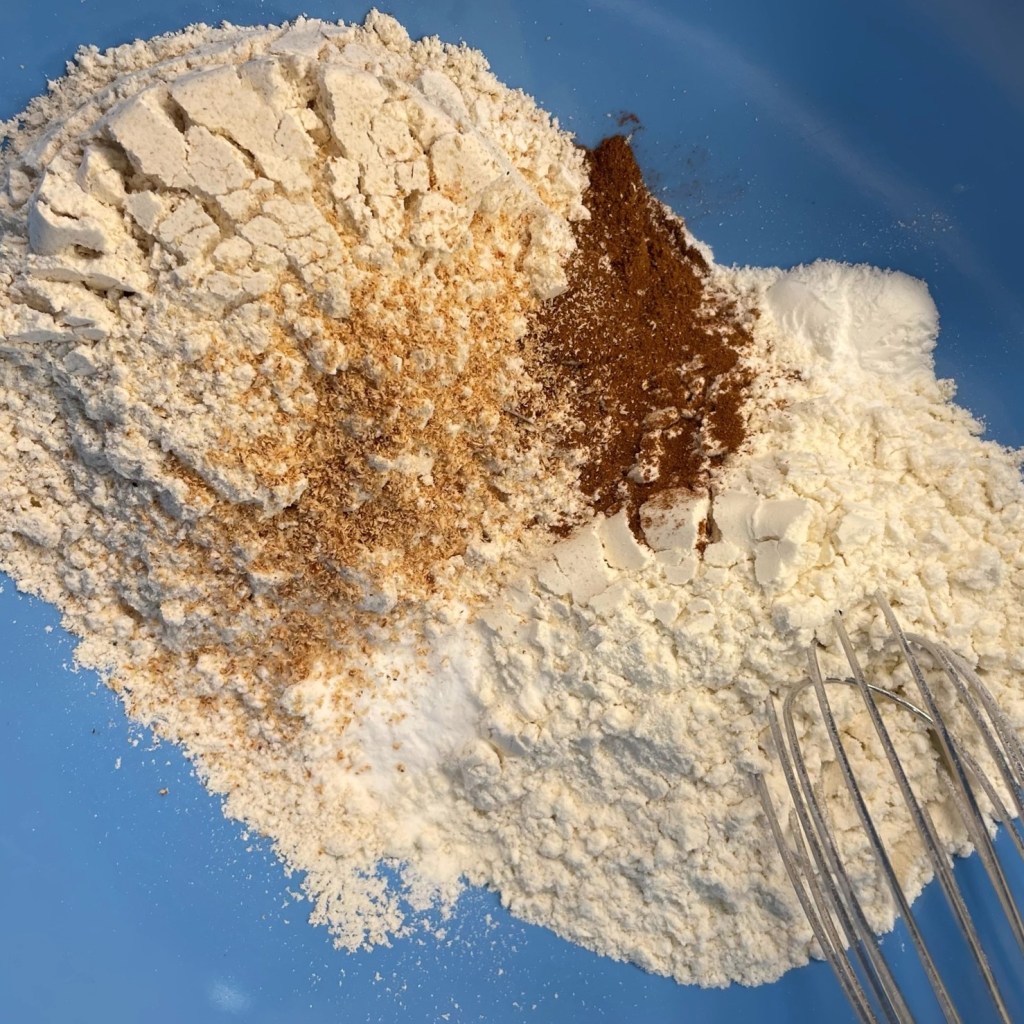
  2. Whisk together flours, baking soda, baking powder, salt and spices.
  3. Use a handheld mixer to beat the eggs until they are light-colored and fluffy. Add sugar gradually, blending to dissolve and fully incorporate it. Blend in yogurt and then butter.
  4. Using a silicone spatula, fold 1/3 of the dry ingredients into the egg mixture, alternating with 1/2 grated zucchini and repeat, ending with the dry ingredients. Fold in raisins and walnuts.
  5. Pour batter into non-stick (or greased, floured) bread pan. I laid in a sling of parchment, so I could lift the baked bread out rather than inverting it. Sprinkle the surface evenly with turbinado sugar.
  6. Bake in lower third of oven for 55 minutes, until toothpick inserted in center comes out clean. Cool at least 20 minutes in pan, then transfer to a rack to cool completely.


This zucchini bread is delicious when served warm. Wrap leftovers snugly in aluminum foil at room temperature or refrigerate for longer storage.


Snow Day Peanut Butter Cookies

Much of the Southeast U.S. has been under a winter storm warning since we went to bed last night, and as I have watched tentatively out the window today, half expecting the power to go out from wind-toppled trees that have been coated with sleet and ice, I wrestled with my desire to be at the stove and the oven. There’s something very cozy about simmering a stew or pulling a loaf of bread from the oven on a blustery day, and this is definitely one.

It’s pretty on paper, I guess.

The day was beautiful at first, with mainly fluffy snow falling at a steady pace. We knew it would morph into a nasty mix, though, so we bundled up and headed out early for a walk around the neighborhood with our dog, Nilla, who absolutely loves cold and snow. It was beginning to sleet when we got back to the house.

This is Nilla’s favorite kind of day!

After much consideration, I finally gave in to the temptation to bake. It feels risky for many reasons. Our gas range is technically dual-fuel, with a natural gas cooktop but an electric-powered oven, so I had to choose something that could be done quickly (or at least put aside to bake later, should the power go out). Also, I come from a long line of highly accomplished cookie bakers, and that’s a lot to live up to, given that I hardly ever venture into treat baking. On top of that, my dear husband has made a reputation for himself with his own cookie baking, so I’m living on the edge in several ways today.

When Les makes cookies, they are almost always a version of chocolate chip; sometimes they have chips and chunks, with big, chewy bits of dried cherries or cranberries. Sometimes he adds cocoa powder to the dough itself, making them chocolate on chocolate with more chocolate. No wonder he is so popular, right? But he seldom strays from the chocolate chip category, and I wanted something different today.

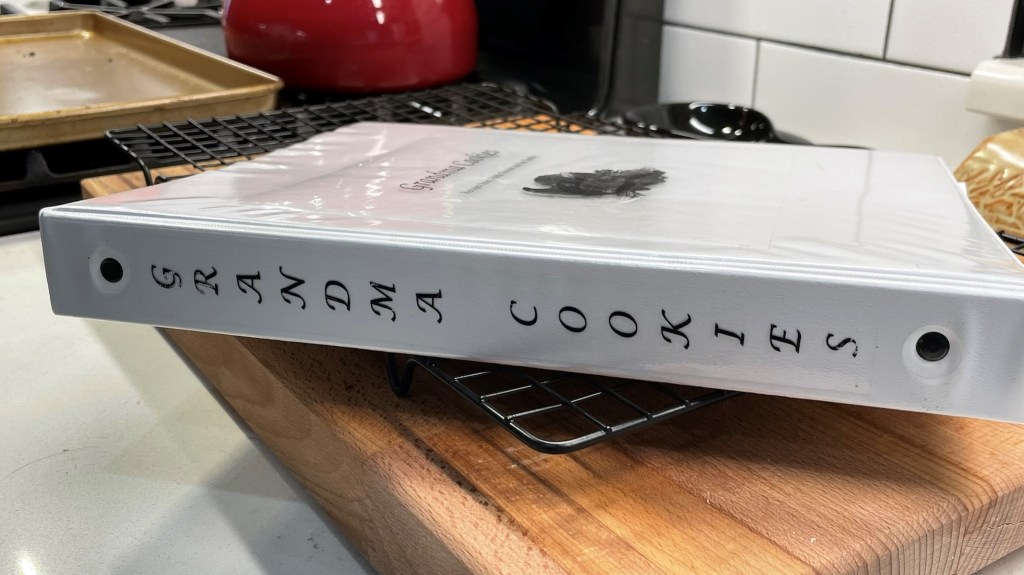
Several members of my mother’s side of the family have contributed to this collection, but it is mostly sweet treat recipes of my great aunt.

Without my own arsenal of go-to cookie recipes, I reached for a family cookbook—this homemade, 3-ring binder notebook, chock-full of recipes submitted by various members of my maternal family, and especially my great-aunt Adele. She was my Gram’s sister, and she was a master cookie baker if there ever was one. She was so known for her baked goods that her grandchildren called her “Grandma Cookies,” and I have my own memories of the treats she joyfully baked and shared with everyone. At Christmastime, you could count on receiving a box of various homemade cookies—and it didn’t matter if you lived across the street or on the other side of the country. She saved up cracker boxes and tea bag boxes and coffee tins and filled them up with her goodies so you could always have a taste of home.

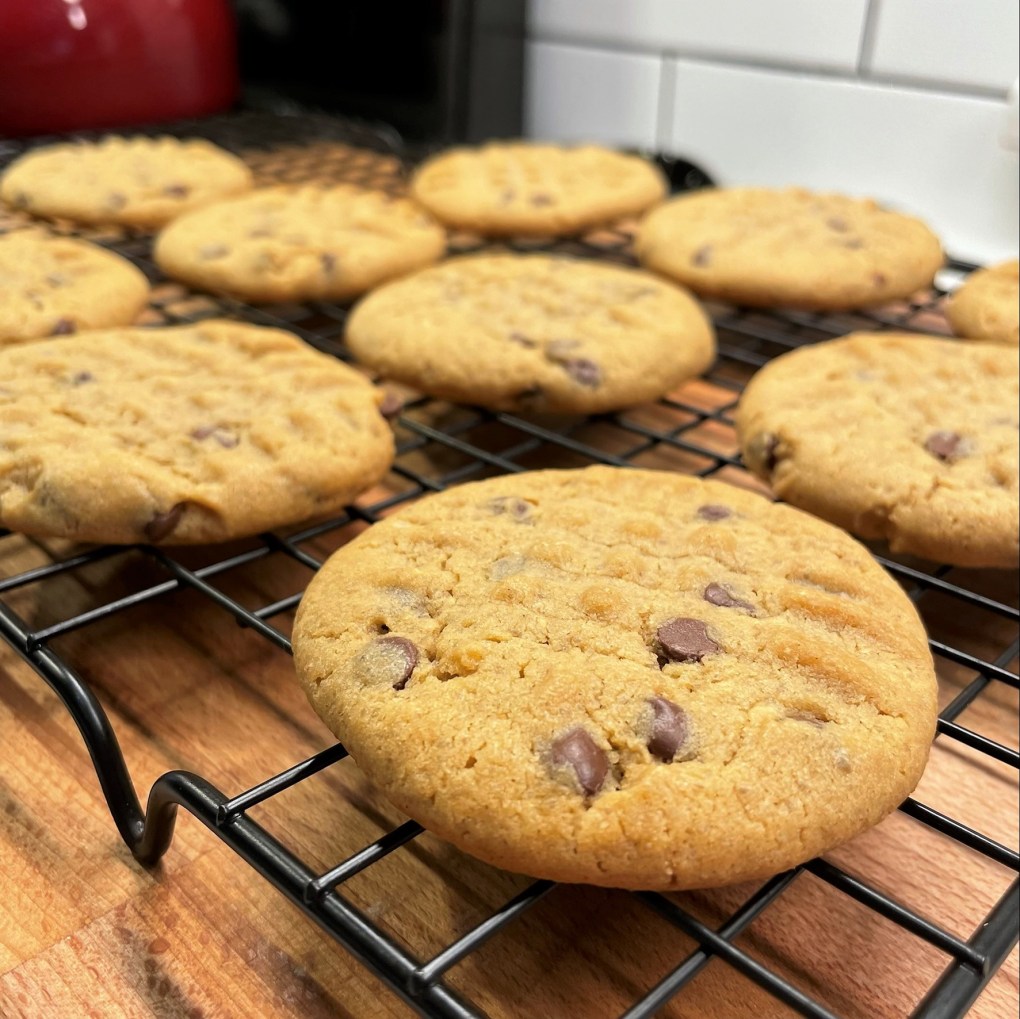
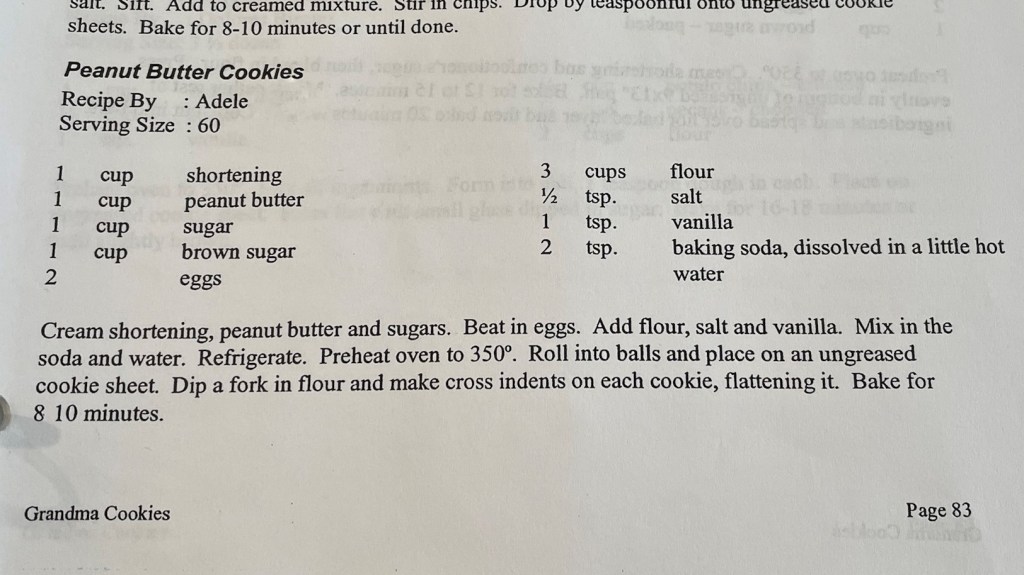
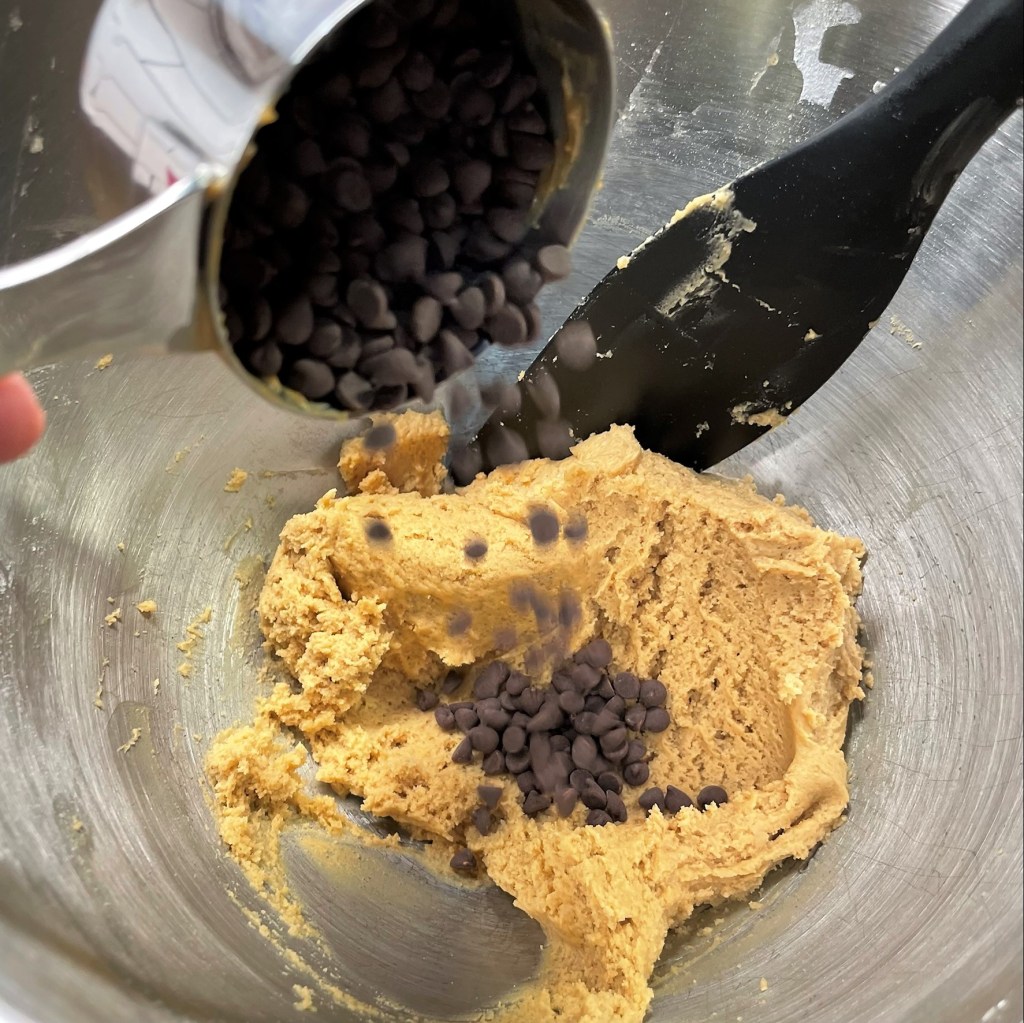
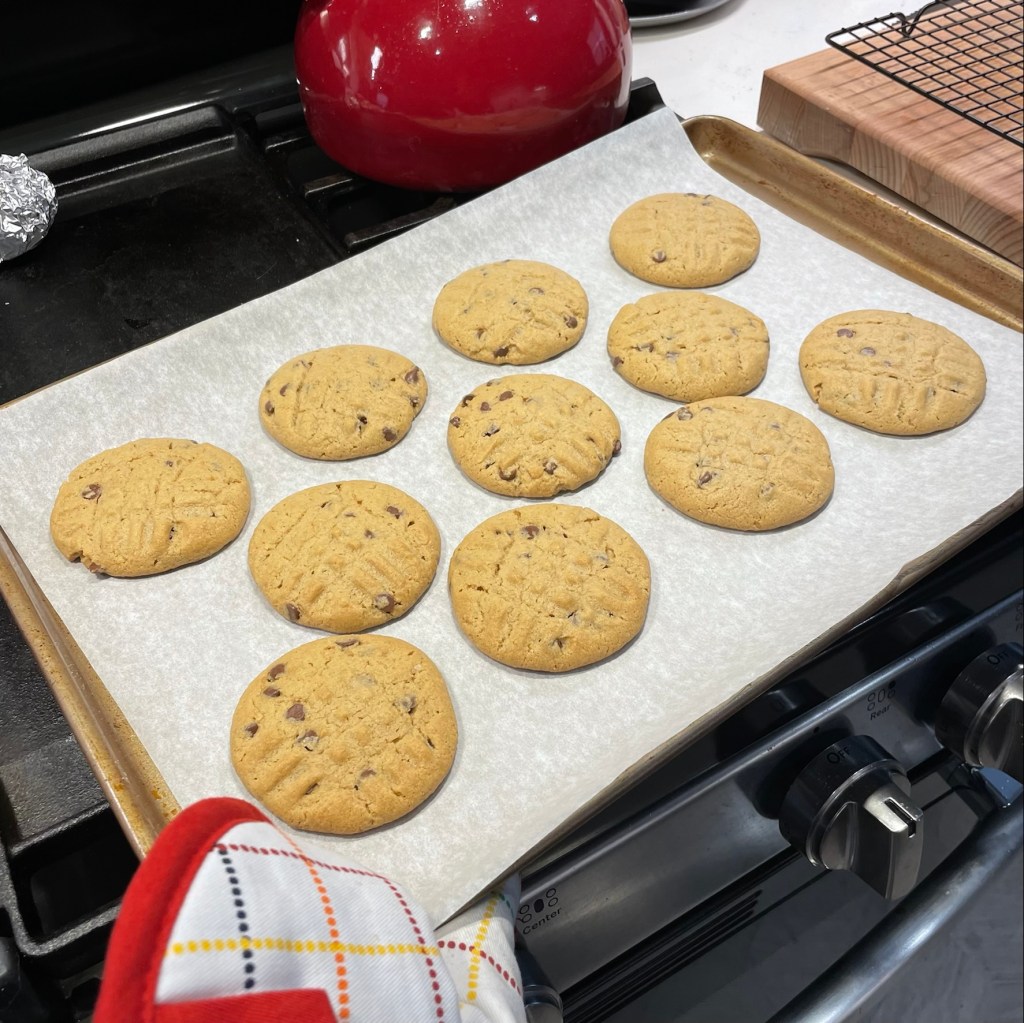
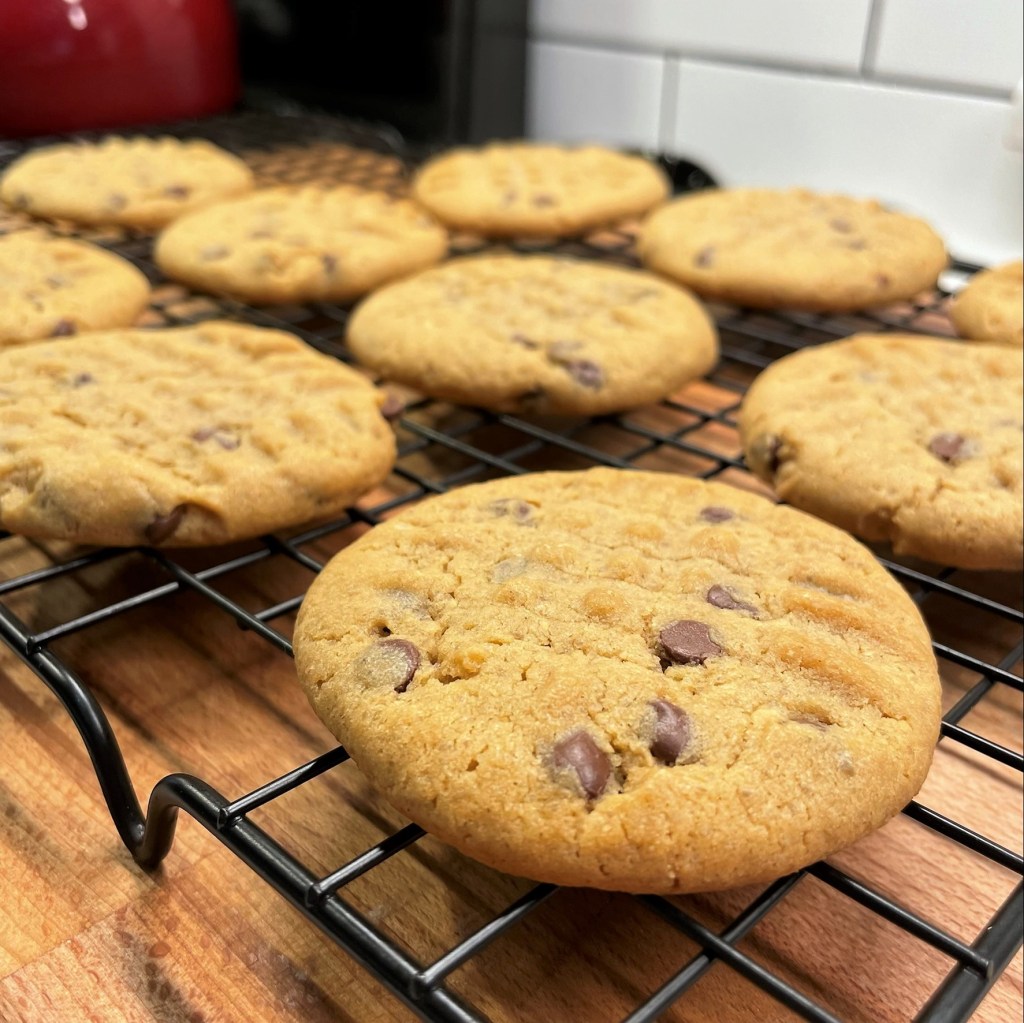
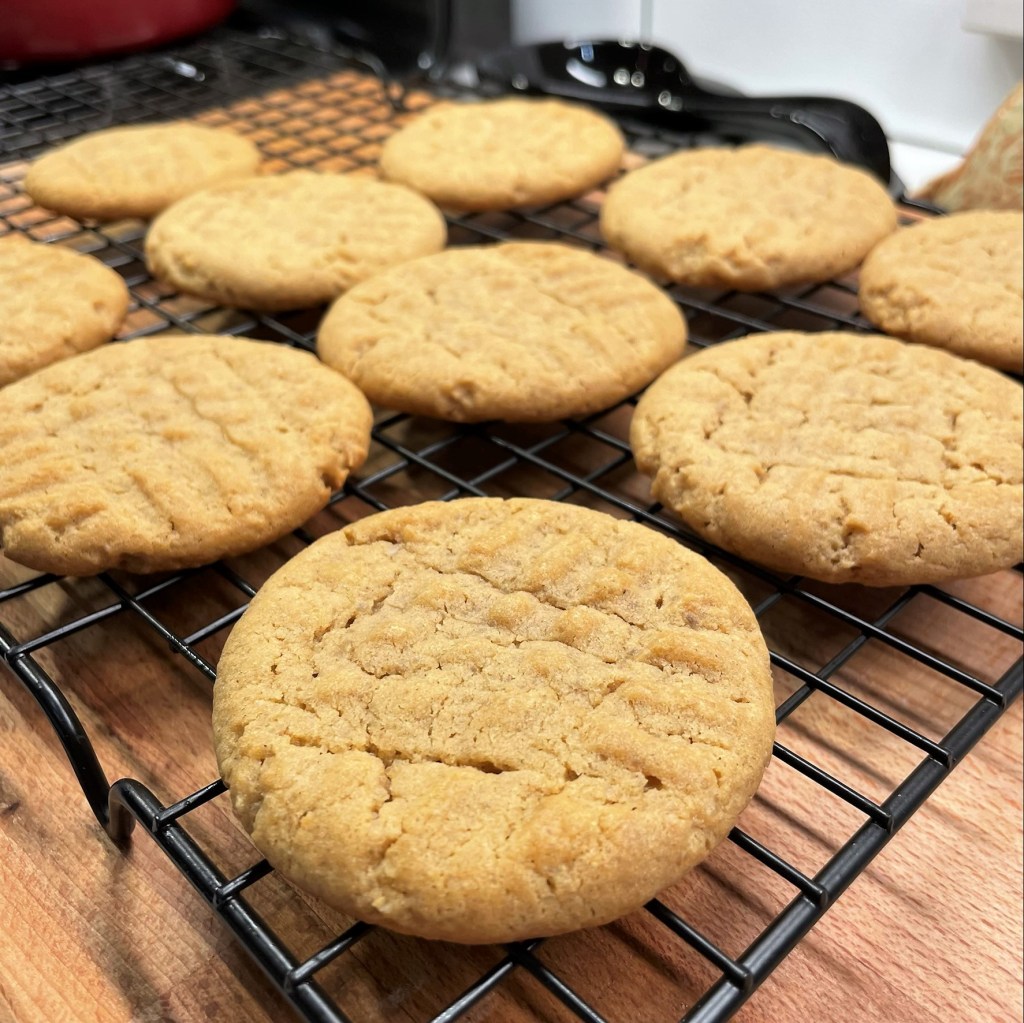
I’ll never live up to that standard, but I did a decent job with her peanut butter cookie recipe, with a few adjustments of course. First, I made a half batch, because we don’t need 60 cookies when we are stuck in the house. I never use only white flour in any recipe, so I subbed in an amount of whole wheat pastry flour which is nice and soft for tender baked goods. I don’t use shortening either, but real butter worked great. And, because my hubby is so fond of chocolate chips, I divided the dough in half and added mini chocolate chips to one portion of it for his taste, and the cookies turned out great both ways.

Some of the instructions in Aunt Adele’s recipe were a bit vague for this cookie novice but, thankfully, my Aunt Joy offered her experience to help me fill in the blanks.

My great aunt’s original recipe. I halved it and took a few liberties with the ingredients list.

Ingredients

1 stick salted butter, slightly softened* (see notes)

1/2 cup peanut butter

1 cup light brown sugar, packed*

1 large egg

1/2 tsp. real vanilla extract

1 tsp. baking soda, dissolved in a small amount of hot water*

1 cup all-purpose flour

1/2 cup whole wheat pastry flour

1/2 tsp. kosher salt (or 1/4 tsp. regular salt)*

1/4 to 1/2 cup mini chocolate chips (optional)*


*Notes

Butter should not be so cold that it’s hard, but not room temperature either. When you cream it with the sugar, you want it to be smooth and just slightly firm. I was impatient so I took a shortcut with my straight-from-the-fridge stick of butter.

My great-aunt’s original recipe suggested equal parts sugar and brown sugar, but I like a soft cookie, so I used all brown sugar. When you measure brown sugar, be sure to pack it snugly into the measuring cup. When you turn it over into your bowl, it should mostly hold its shape.

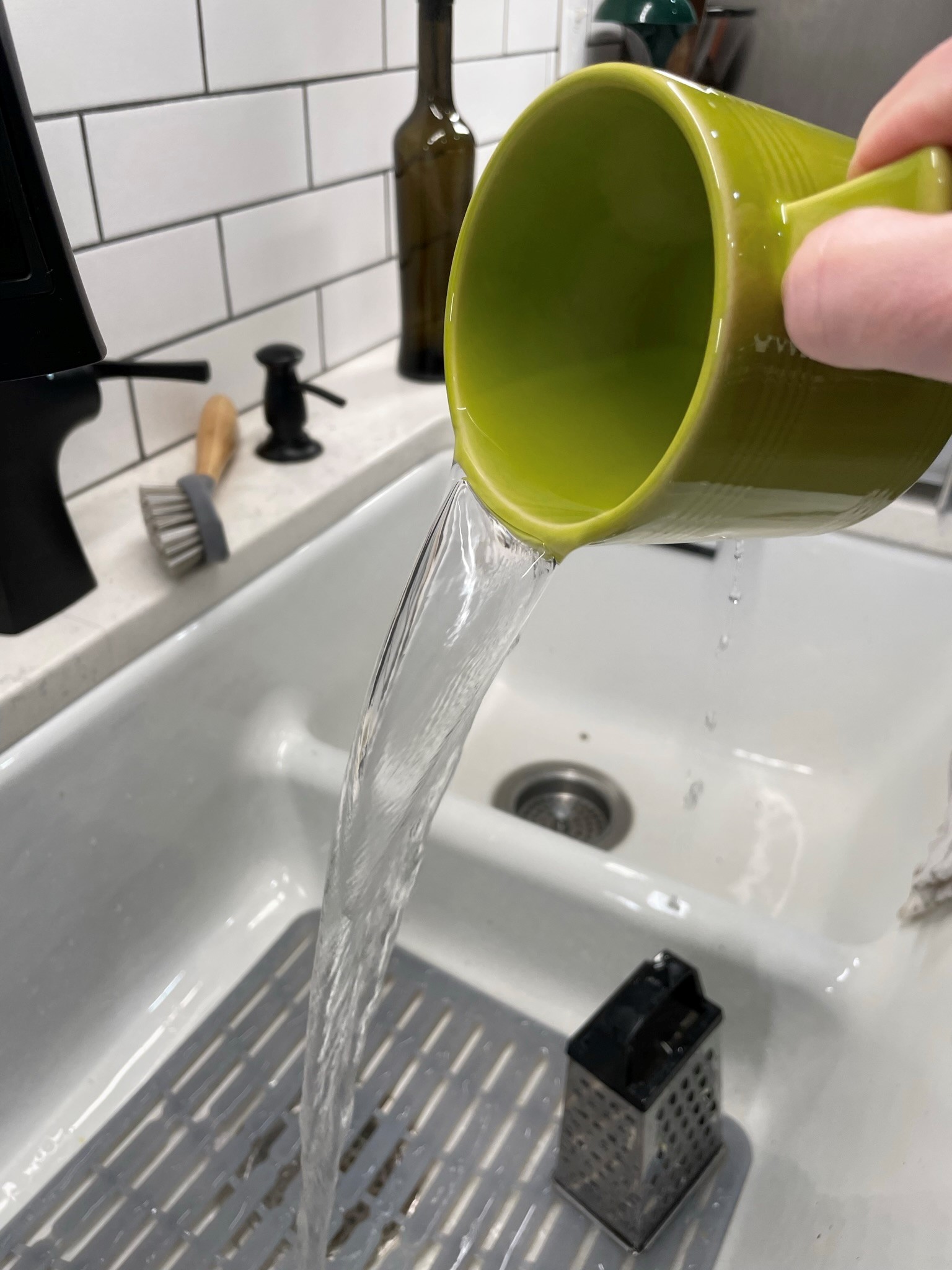
I have long wondered why some cookie recipes call for dissolving the baking soda in hot water. Given that it appears on many of the recipes my grandmother and her family have shared, I even considered that perhaps it was something they all learned from my great grandmother or something. But a quick bit of research (thank you, internet) turned up the real reason—dissolving the soda helps ensure that it can be evenly dispersed throughout the dough. If I were to mix it in with the dry ingredients, it would be prone to clumping. Now we know!

I cook and bake mostly with kosher salt, which has larger crystals than table salt. Those crystals take up more space in the measuring spoon, but some of that space is just air, so I use a little extra. My conversion is probably not exact, but I generally like to add a bit of extra salt to a baked good anyway to enhance the other flavors.

I used mini chocolate chips in half the cookie dough, and kept the rest as simple peanut butter dough. If you want chocolate chips in all the cookies, use 1/2 cup rather than 1/4 cup, as I did for my half-batch.

Instructions

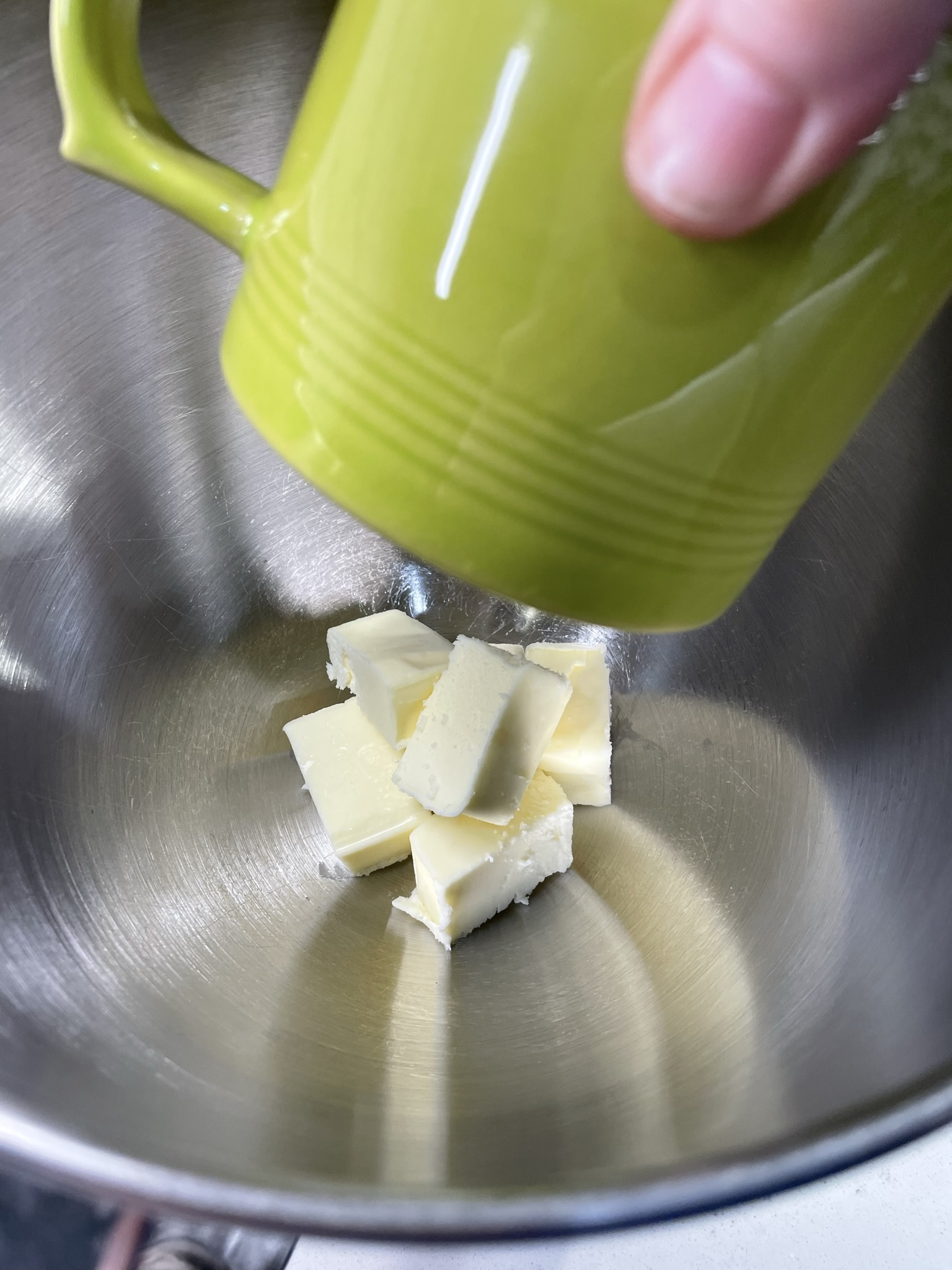
Cream together the butter, peanut butter and sugar until evenly combined and somewhat fluffy.

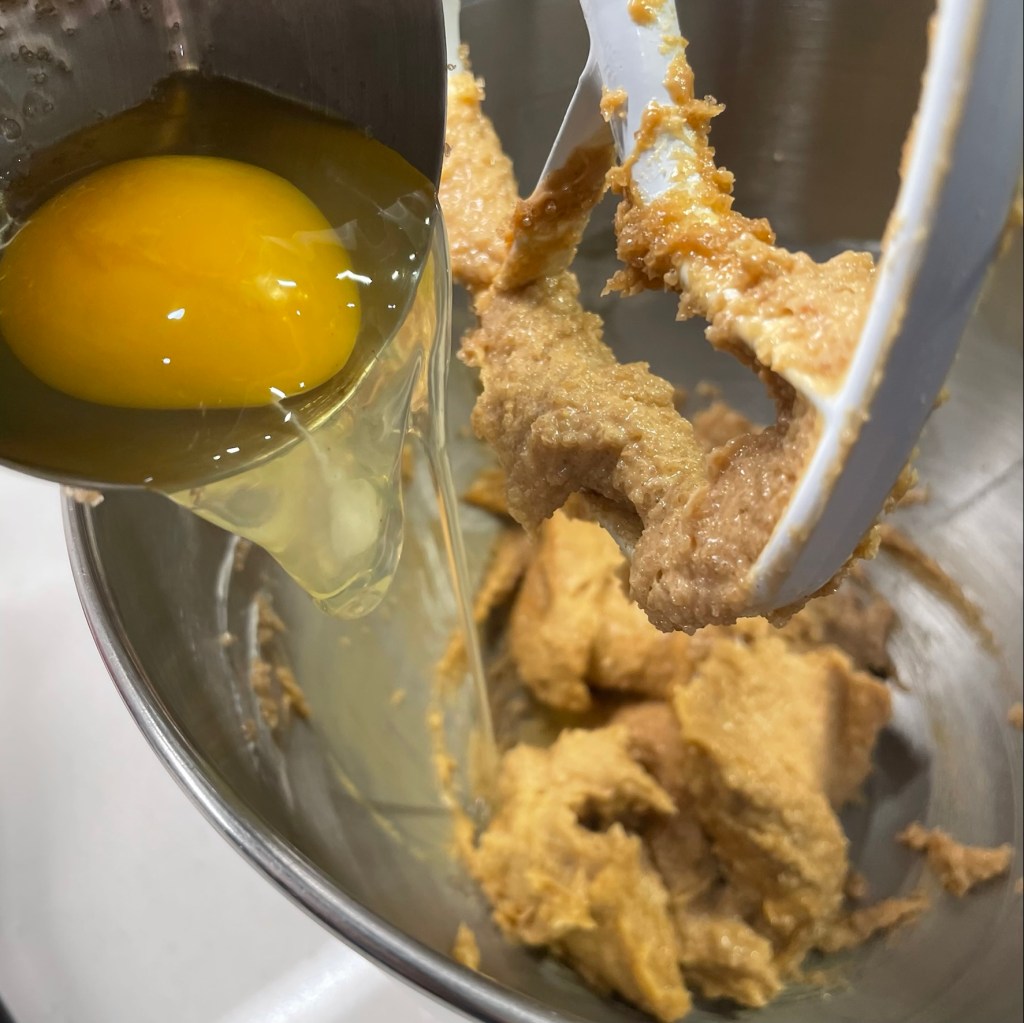
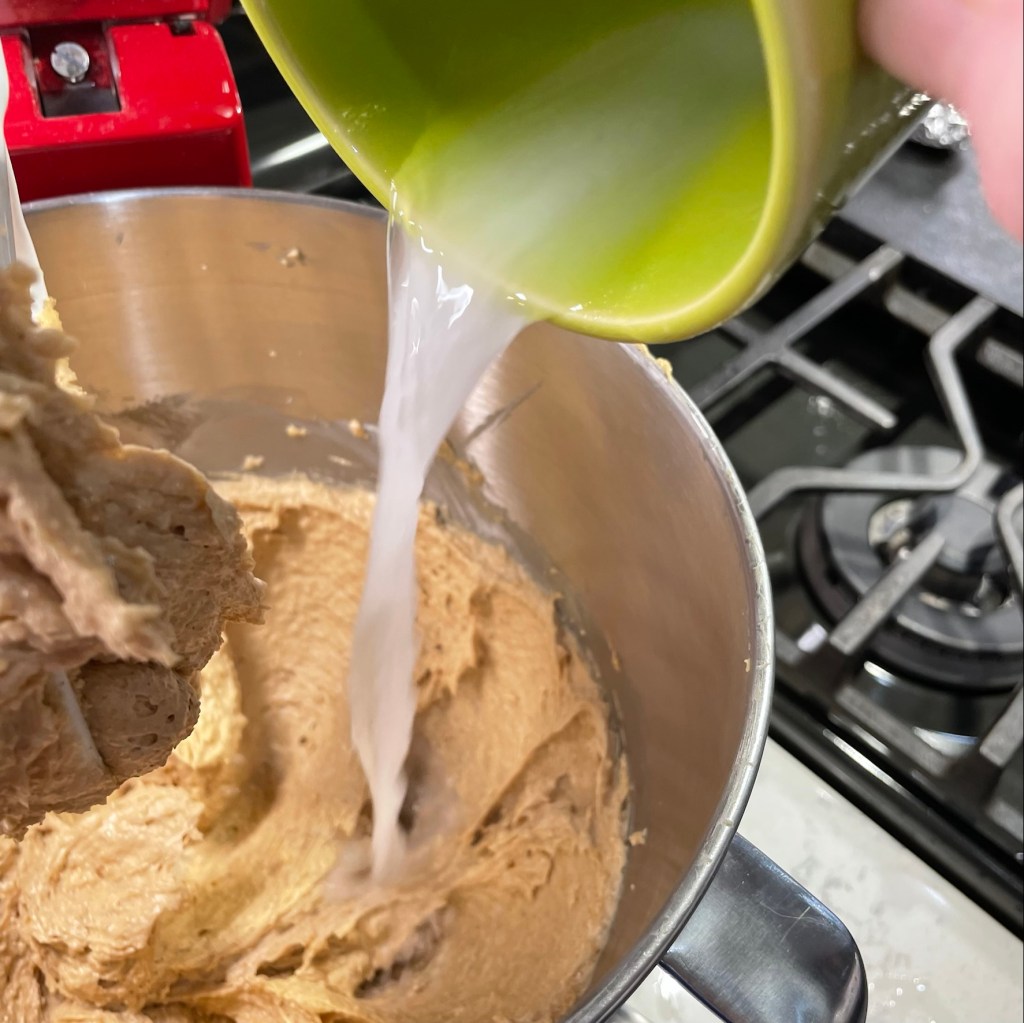
Add egg and beat until blended. Stir in vanilla, then stir in dissolved baking soda.

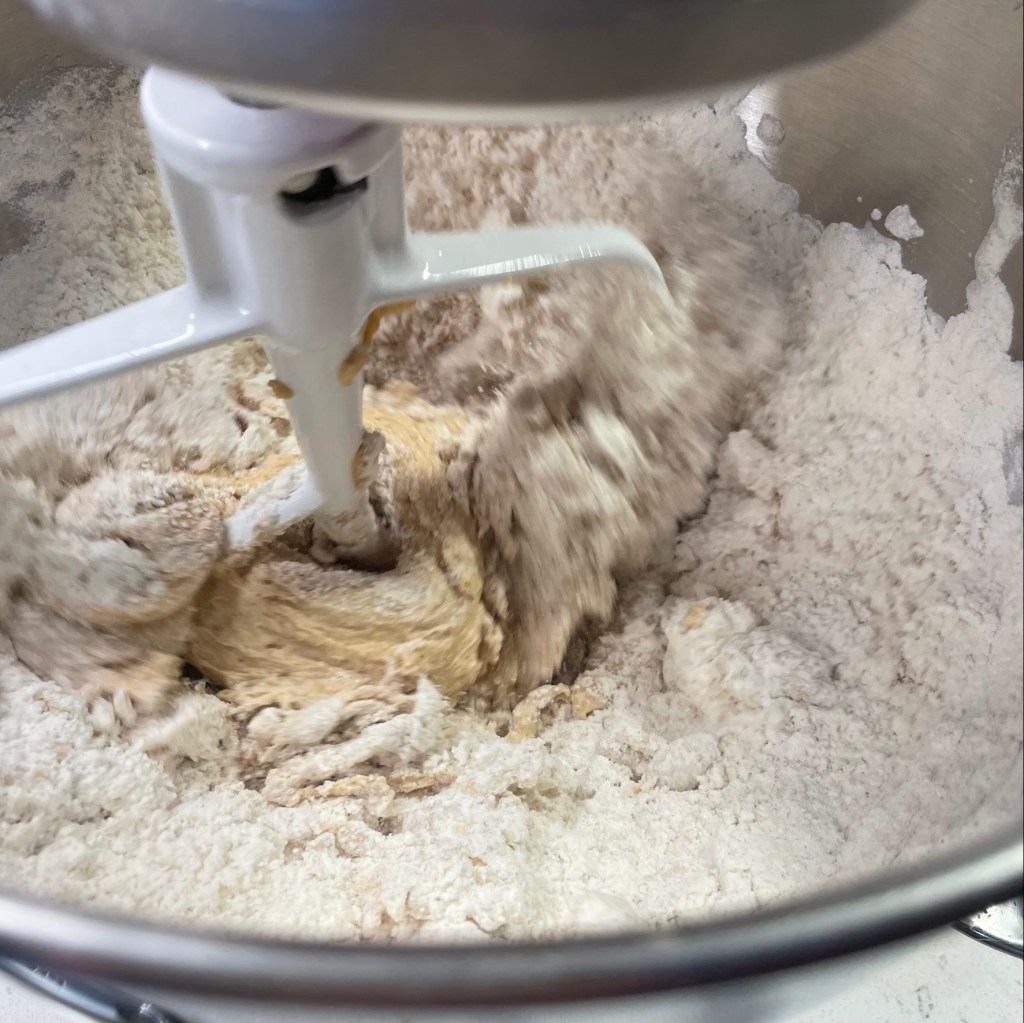
Add flour, beating only until incorporated. Stop the mixer and scrape down the sides, then mix again only long enough to blend in loose flour.

If using the mini chocolate chips, fold them into the dough. Cover the bowl and refrigerate for about one hour before baking.
Preheat oven to 350° F, with oven rack in the center position, or two racks roughly positioned near the center of the oven.

Roll cookie dough into balls about 1 1/4” diameter. Place them on a parchment lined cookie sheet. Flatten in a criss-cross pattern, using a fork dipped in flour to prevent sticking.

Bake 9-11 minutes, depending on your oven. The cookies will be very puffy, and slightly dry at the edges when finished. Cool on the sheet about two minutes, then transfer to a cooling rack.


Not a bad way to spend a snowy, blustery Sunday!


Rhubarb-Berry Crunch

For at least three weeks, I had been watching all the markets I shop, waiting and hoping to see fresh stalks of spring rhubarb. It doesn’t seem to be a very popular item here in the South, or at least not as much as in my old stomping grounds in upstate N.Y., and there’s good reason—the winter soil is too warm in North Carolina. Rhubarb thrives in areas that have very cold winters, making it a common plant in the snow belt. Some folks around here have never even had the pleasure of tasting it.

When I was young, I remember my Gram always had rhubarb growing near a small outbuilding shed behind her house, and plenty of it. To find it locally, however, takes patience. When I do see it here, it is usually a small quantity, quite expensive, and often placed in one of the obscure sections of the refrigerated case, near the other “weird” produce items (think horseradish root and kohlrabi). I had even checked at the local farmer’s market, to no avail. One grocery produce manager, when asked about the expected arrival of rhubarb, looked puzzled and asked, “what does it look like?”

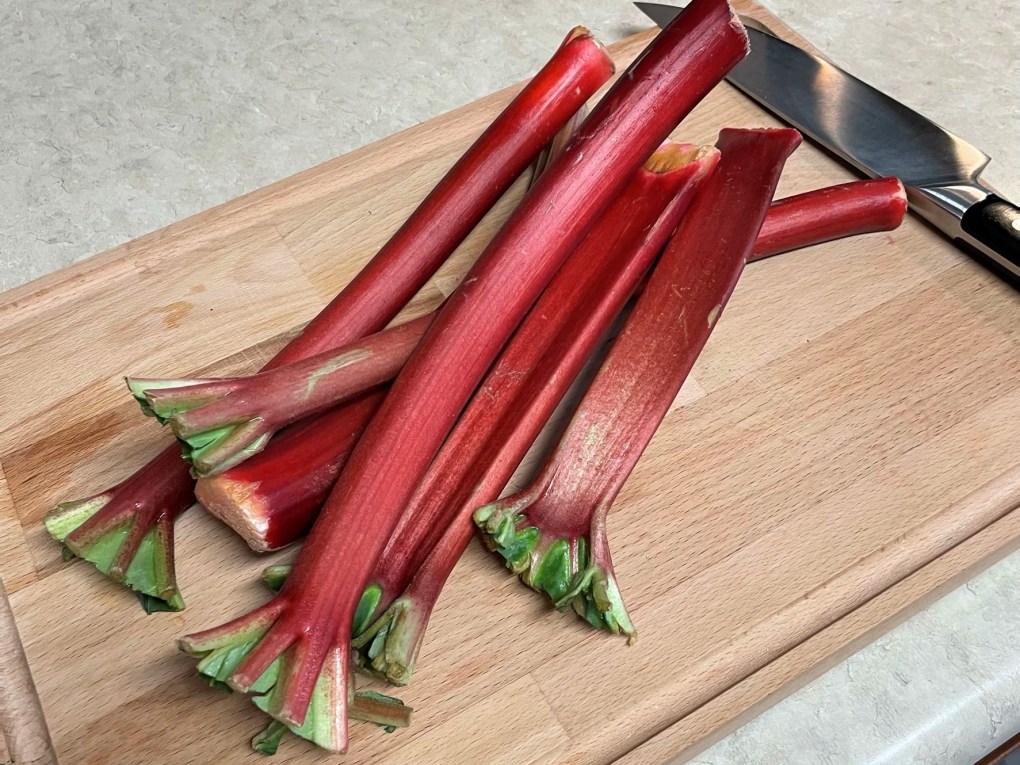
I always look forward to seeing these red beauties in the spring!

By the time rhubarb makes it to the supermarket, the leaves have been stripped, and just as well—they are loaded with oxalic acid, so they are inedible and even toxic. The stems, which range in color from bright red to pink to pale green, look like smooth celery stalks and they are equally crisp in texture. I am hard-pressed to describe the flavor of rhubarb other than to say that it is tart, maybe like a cross between a green apple and a lemon. Although technically a vegetable that can be eaten raw, most people cook rhubarb with sugar and use it as a fruit, especially in pies, crumbles, jams and preserves.

My Gram made a delicious rhubarb sauce that was as delicious to me as any applesauce, and I remember asking for it as a topping on vanilla ice cream. In the summer of 2011, on my last visit with my grandmother, who had relocated to Montana to be near my aunt, we enjoyed this dessert together. Lucky for me, my aunt happily shared her recipe for this yummy dessert, which is very adaptable to include other fruits, especially strawberry. Aunt Joy and I were reminiscing the other day about the times I visited her house when I was young, and she made memorable, mouthwatering strawberry-rhubarb jam. It’s a fantastic flavor combination!

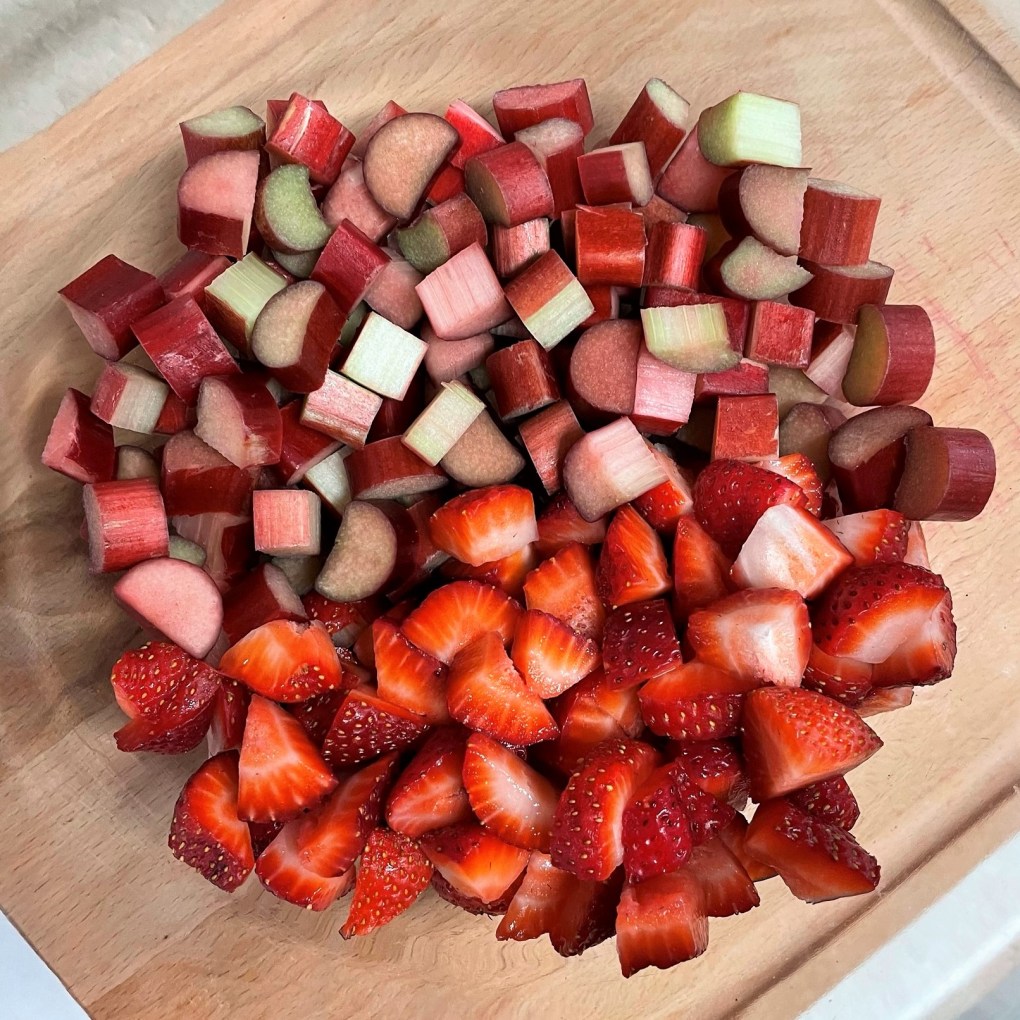
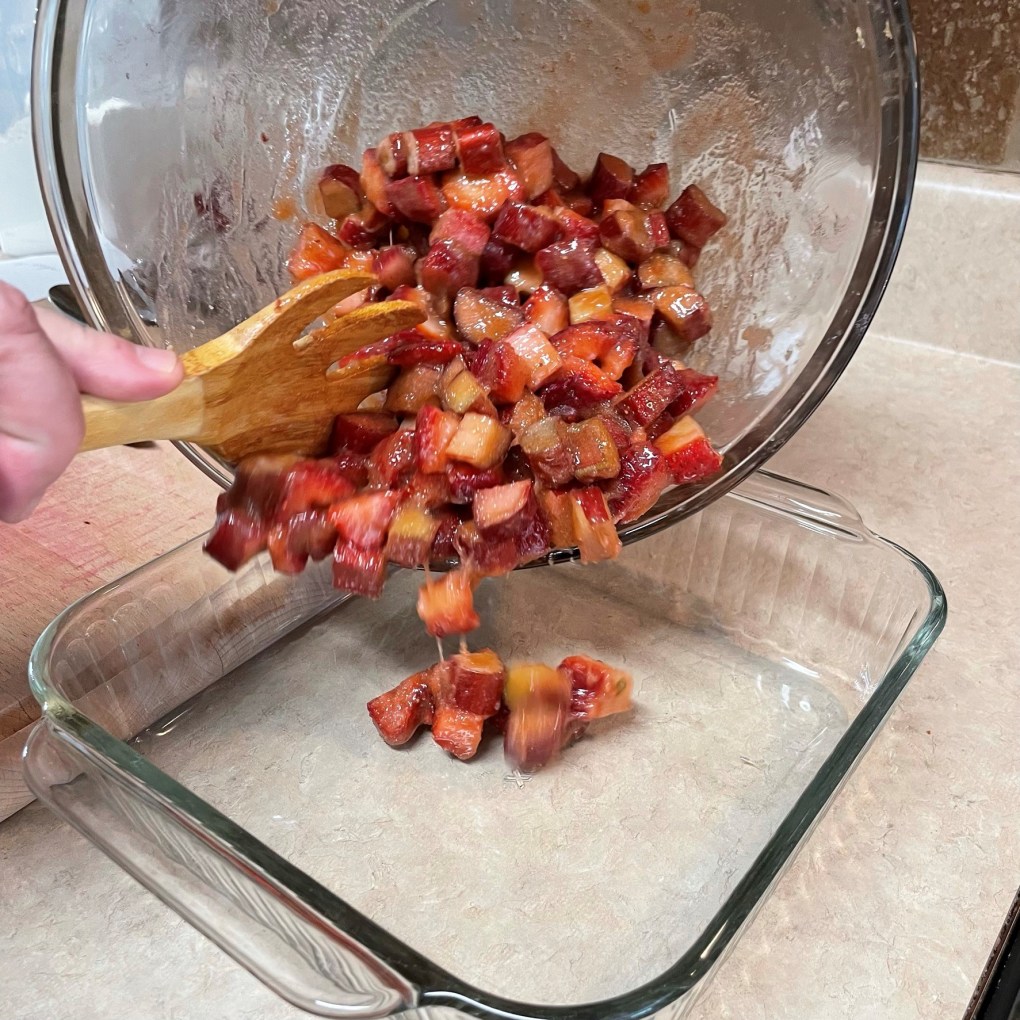
Just a couple of days before my mandoline accident, when I decided to shave that extra 1/8” off the end of my finger, I had been overjoyed to finally find fresh rhubarb in one of the markets I shop. My usual time in the kitchen has been abbreviated by my injury (which is driving me crazy, if you want to know the truth), but I have a wonderful and willing husband, Les, who has been my “hands” for some the kitchen tasks that are tricky for me right now. I won’t say that it has all been smooth sailing (I am a bit of a bossy britches), but we are getting better at working together to make some great food, including this fabulous dessert. Les did all the washing and cutting of fresh ingredients, and I did more of the mixing.

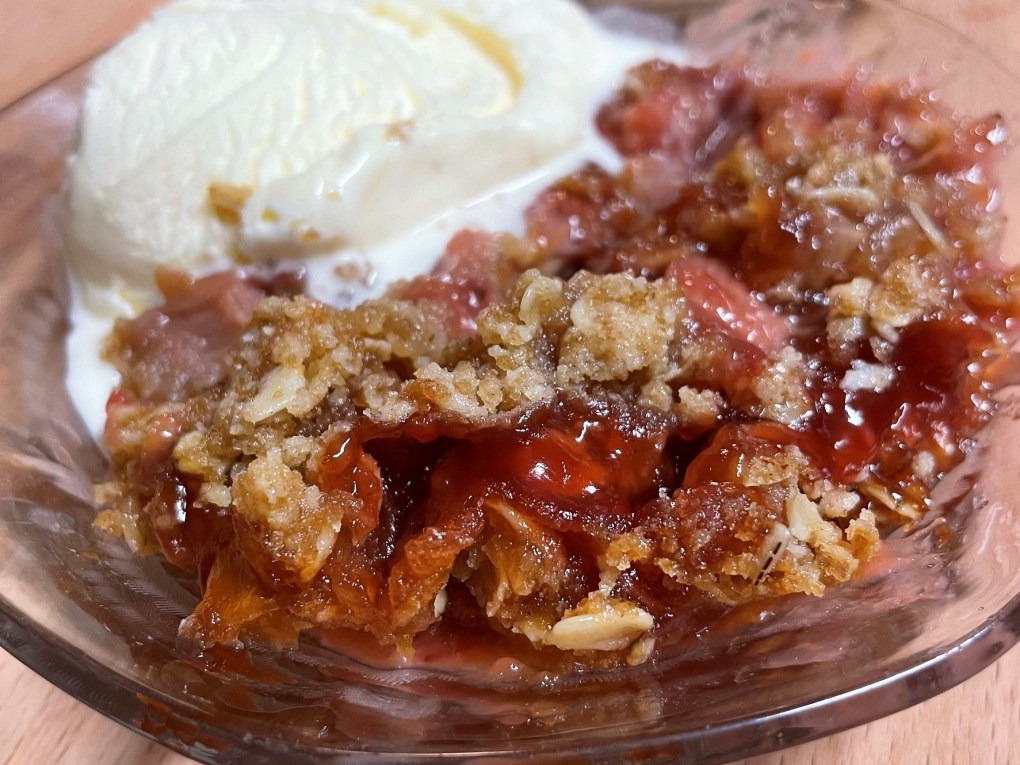
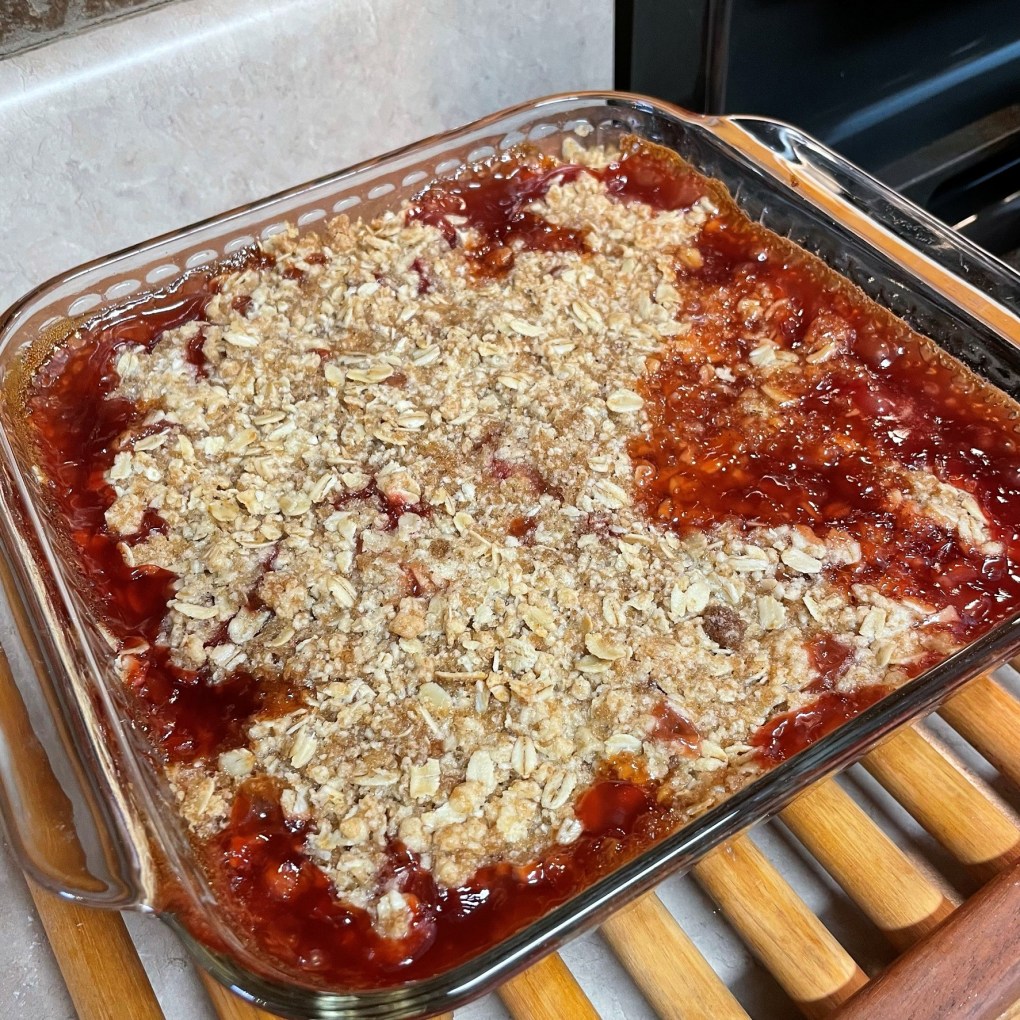
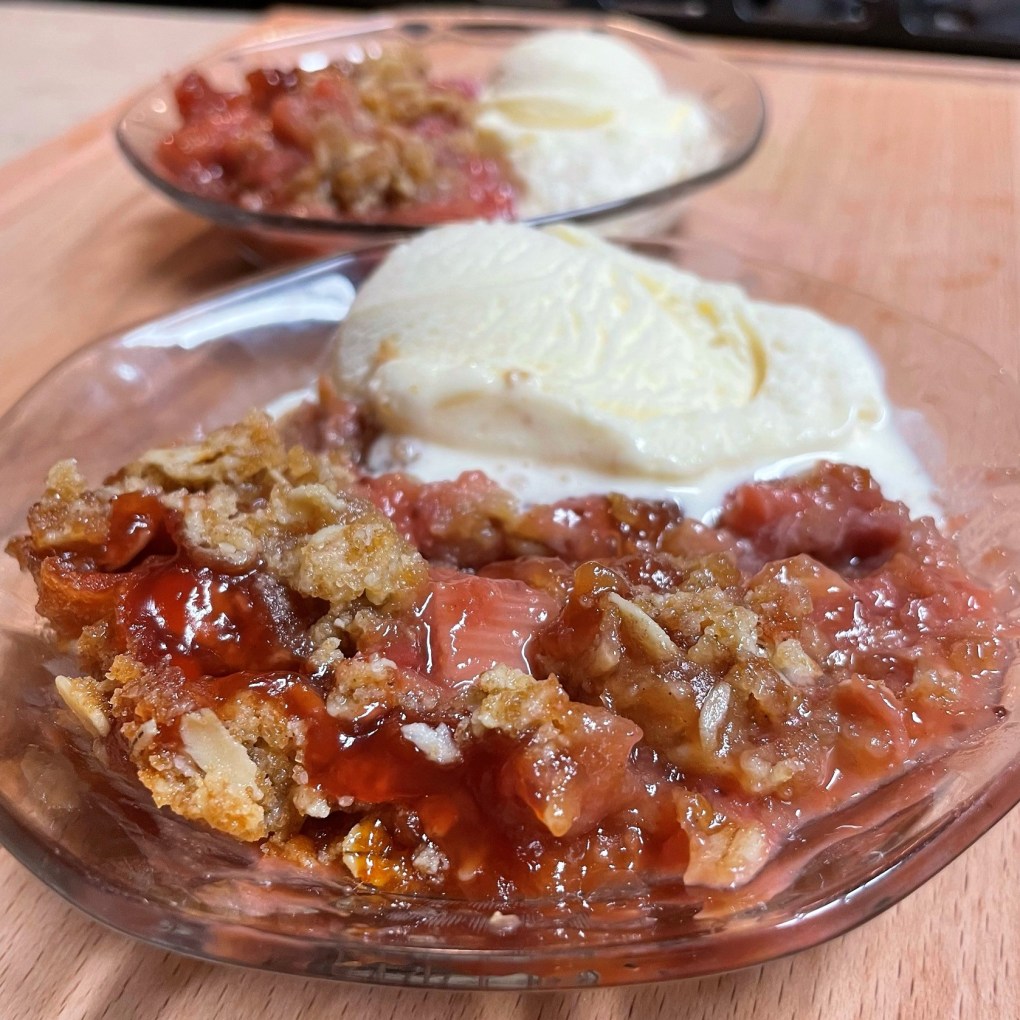
The filling is perfectly cooked and slightly sticky, and the oat topping is crunchy in all the right places. Served warm with vanilla ice cream, this is springtime heaven for my taste buds!

This delicious crunch was Les’s first-ever taste of rhubarb, so I leaned a little heavier on the strawberry than I otherwise would. I expected that his sweet tooth might reject the tartness of rhubarb on its own, but he really enjoys the flavor, so next time, I will go all-in with rhubarb. Assuming, of course, I can find it. 😊


Filling Ingredients

1 1/2 cups fresh rhubarb, cleaned and diced

1 1/2 cups strawberries, cleaned and halved

1/2 cup cane sugar

1/2 cup brown sugar* (see notes)

3 Tbsp. all-purpose flour

1/4 to 1/2 tsp. ground ginger


Topping Ingredients

1/2 cup brown sugar

1/2 cup rolled oats

1/2 cup all-purpose flour

1/4 cup whole wheat pastry flour* (see notes)

1/2 tsp. ground cinnamon

1 stick (8 Tbsp.) salted cold butter

Pinch of kosher salt


*Notes

My aunt’s original recipe calls for 1 cup sugar, but I split the amount between regular and brown sugars. I use brown sugar in strawberry shortcake and love the rich, warm flavor. Use all regular sugar if you prefer.

I like to use some portion of whole wheat flour in all my baked goods, but if you don’t have whole wheat pastry flour, increase the amount of all-purpose to 3/4 cup.


Instructions

  1. Preheat oven to 350°F, with rack in center of oven.
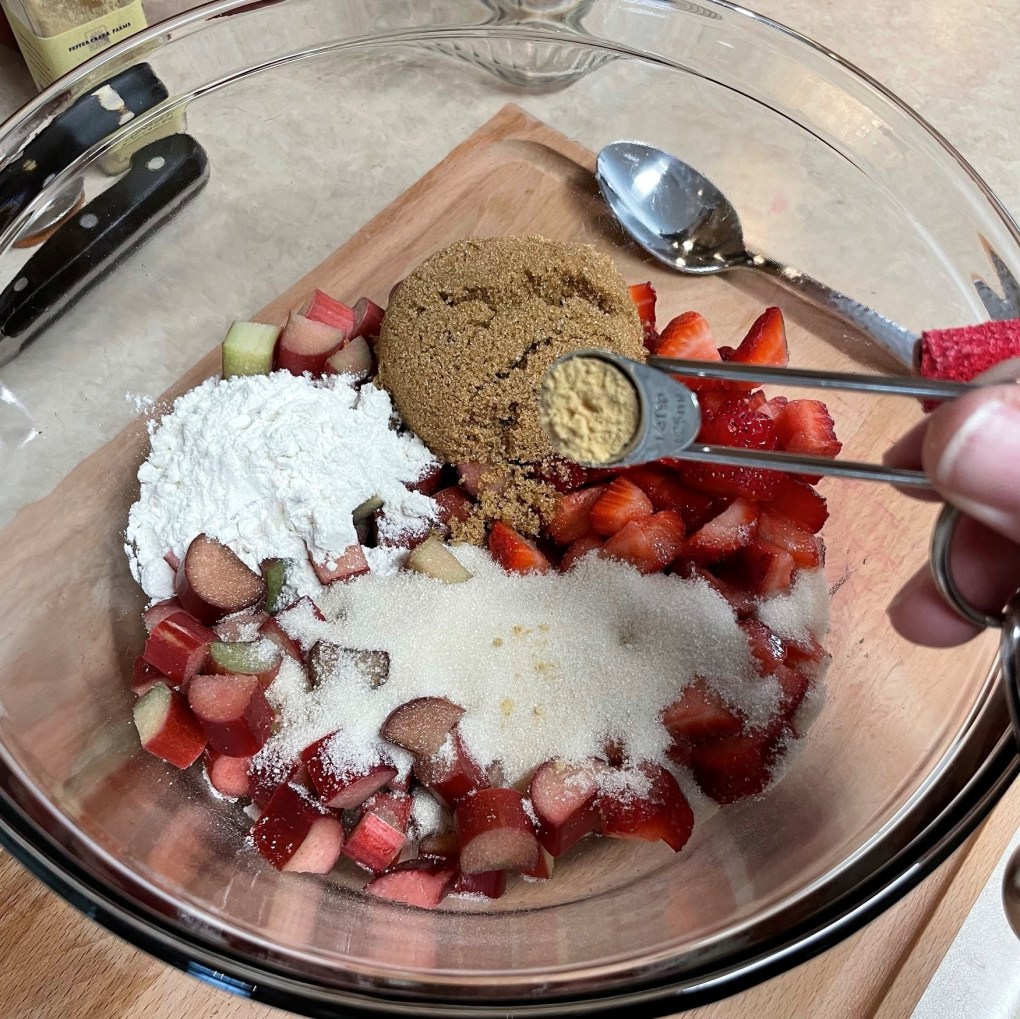
  2. Toss together rhubarb, sugar, flour and ginger transfer into a buttered 8 x 8 glass baking dish.
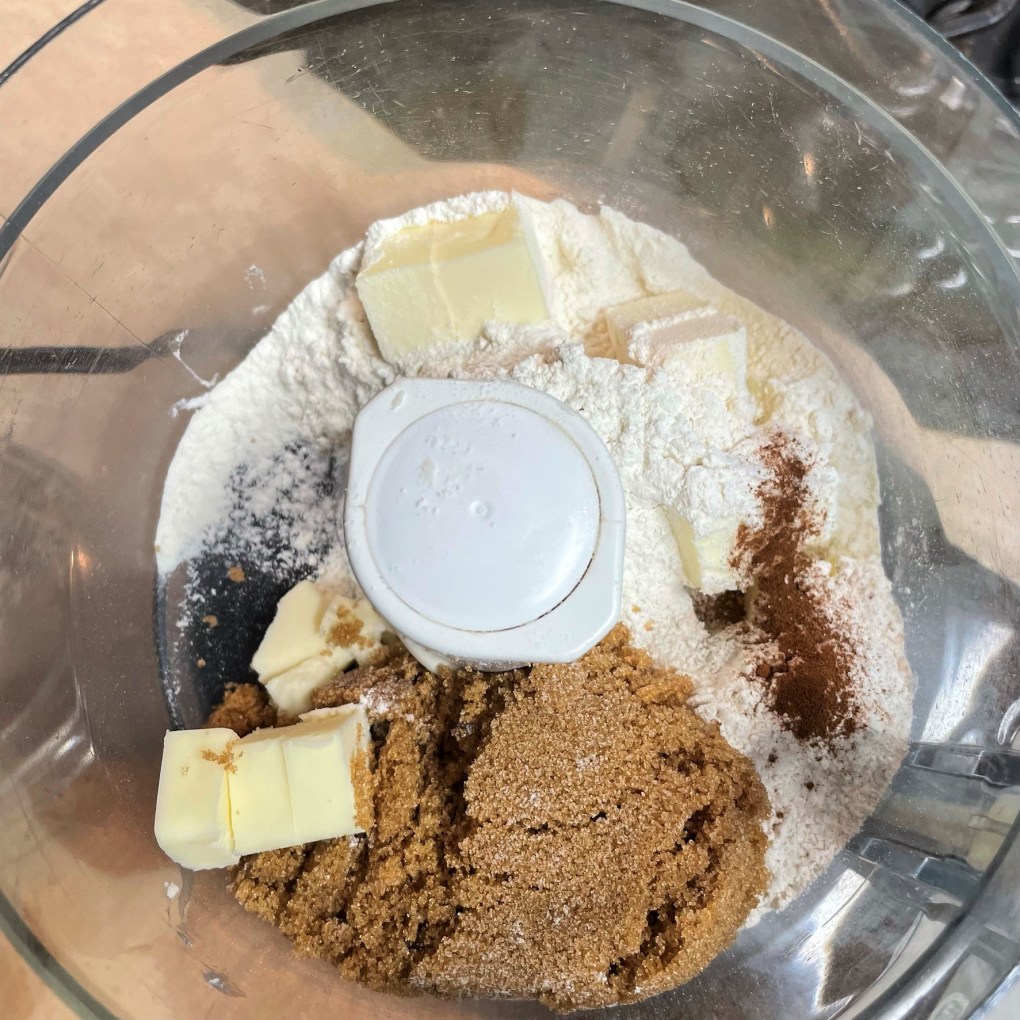
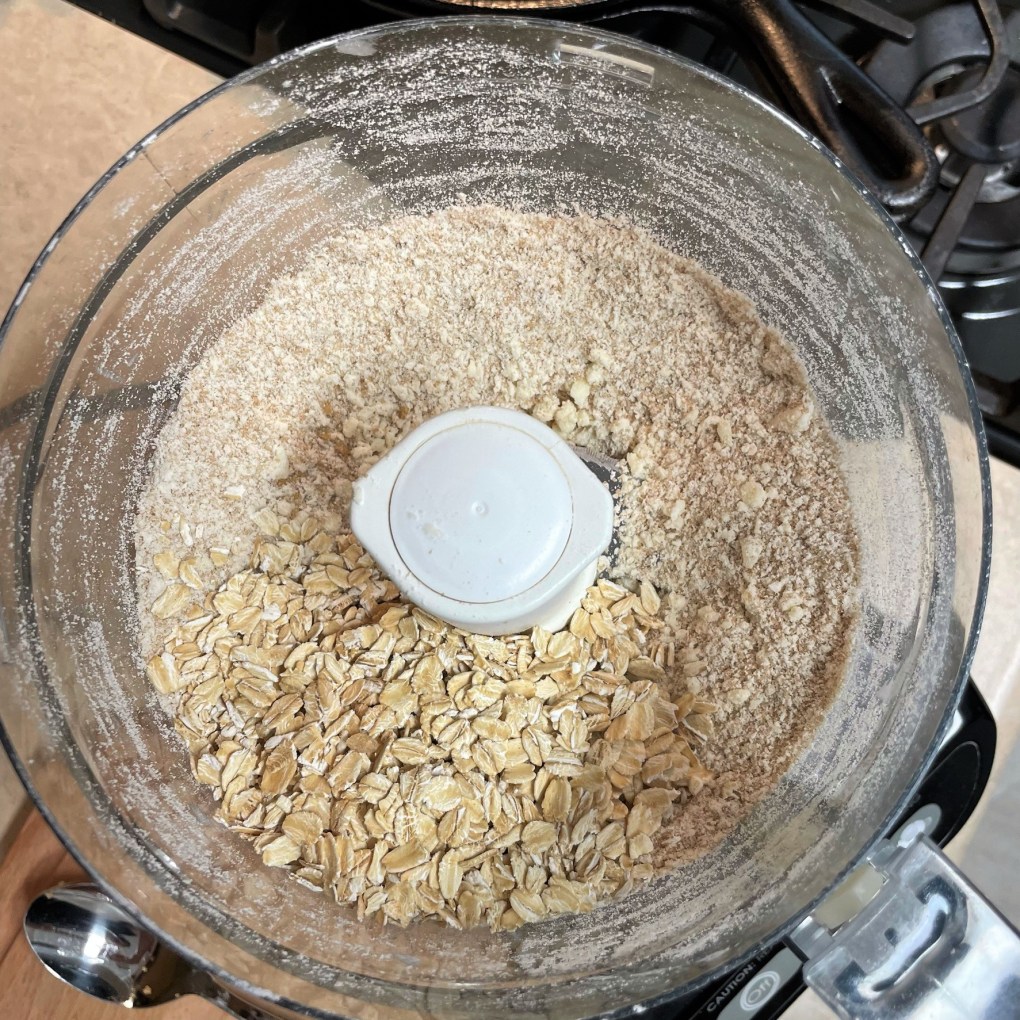
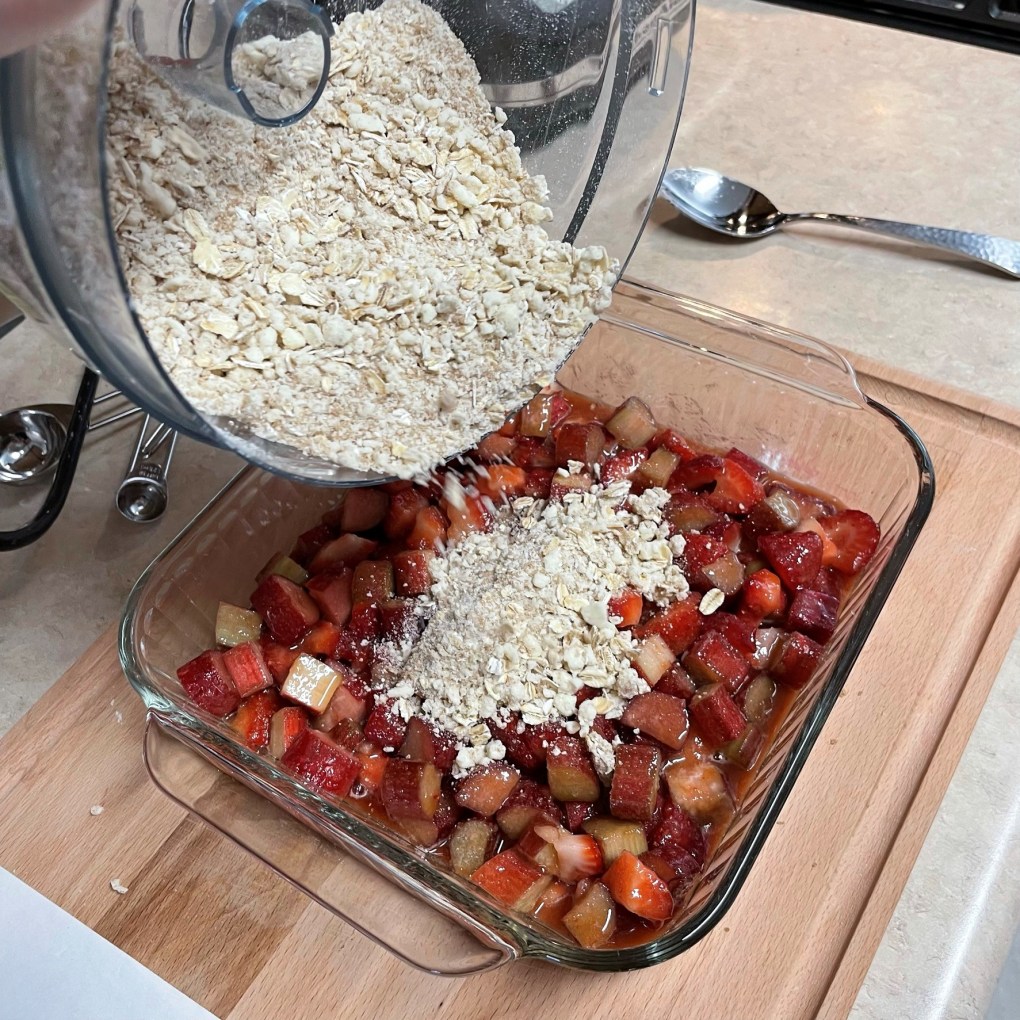
  3. Use a pastry blender or pulse with food processor to combine flour, brown sugar, cinnamon and butter until mixture appears as crumbs. Toss or lightly pulse with oats just to combine.
  4. Spread oat topping over rhubarb filling. Sprinkle the top with a pinch of kosher salt.
  5. Bake at 350° for about 40 minutes, until oat topping is browned and crunchy, and filling is bubbling up around it.
  6. Serve warm, perhaps with vanilla ice cream. Store leftovers in the refrigerator, and reheat for additional servings.
I especially loved serving this in my Gram’s dainty, vintage dishes. Aunt Joy sent these to me after Gram passed away.


My Gram’s Molasses Cookies

Childhood is one of the greatest examples of selective memory banking ever. I remember the smells and sounds of baking these molasses cookies at my grandma’s house, all the way back to when I needed to stand on a chair to reach the counter and make the cookie shapes. What I don’t remember is working so hard to get the dough right. Perhaps I’m overthinking it and not taking a simple, intuitive approach. Or could it be that these were a cinch for Gram because she made them all the time and I haven’t dared an attempt for 25 years?

As I was rolling out the dough for these—my favorite cookies ever—I found myself missing the metronome-like cadence of the cuckoo clock that hung on the back wall of my grandparents’ family room, and the rising aroma of potatoes simmering on the stove, much less the patient encouragement of Gram saying something like, “That’s it, now change direction and roll it the other way—good job.” What I had last weekend at my house was the sound of Led Zeppelin blasting from the Bose speaker in the next room, me cursing up a storm and vowing to NEVER make these freaking cookies again, and my husband and the dog just staying the heck out of the way. Yes, I’m certain that Gram had this process down to a science, and she probably handled all the hard parts of this exceptional recipe and let us grandkids show up just in time to have all the fun.

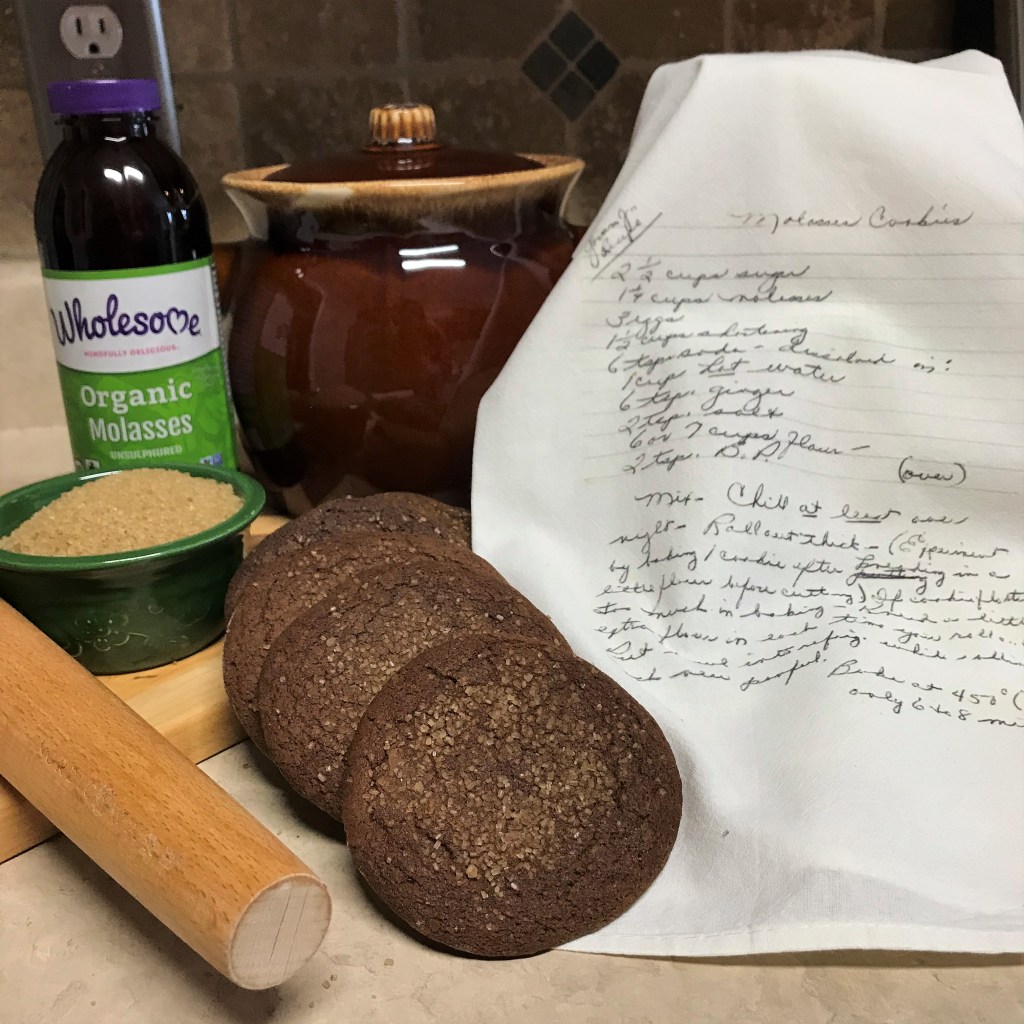
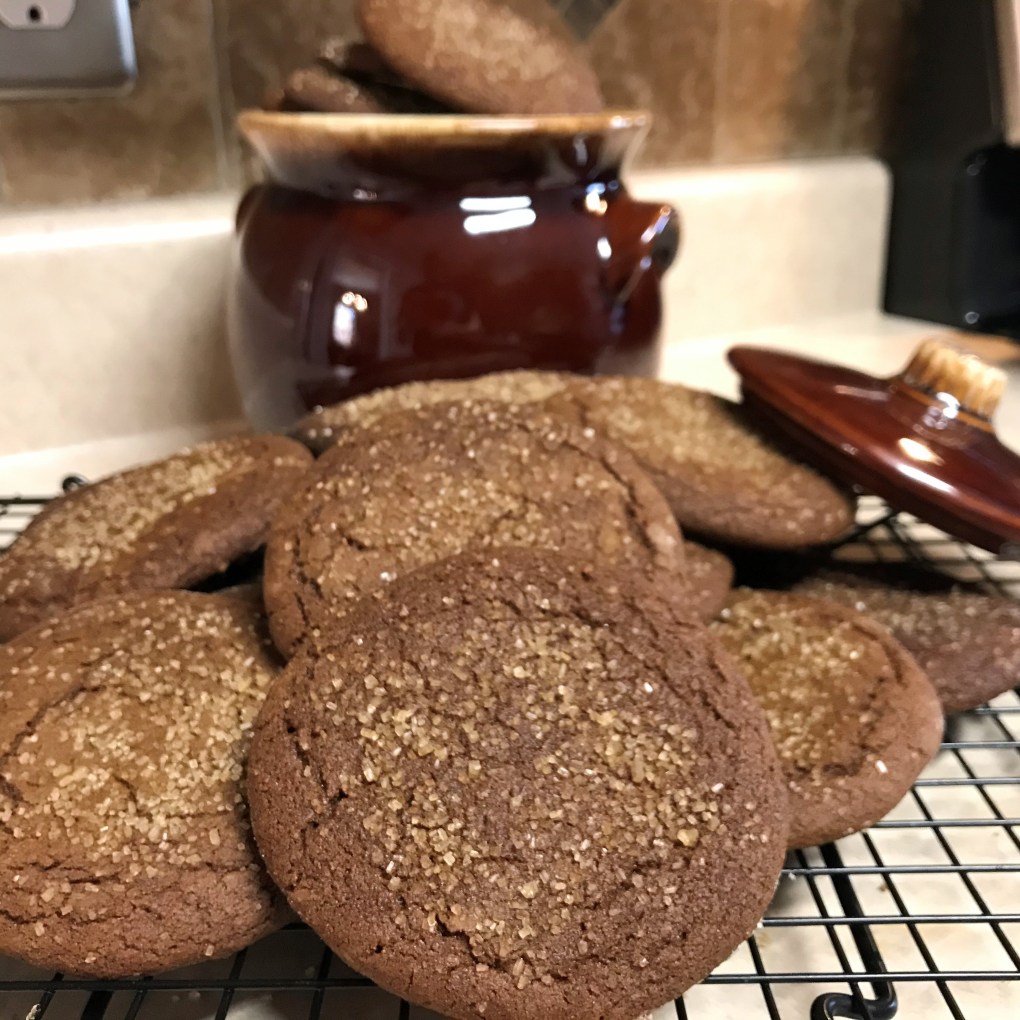
This was the first time I’d flown solo on this family heirloom recipe for Molasses Cookies—and yes, I do believe it should be capitalized, same as a classic novel or an epic film, because they’re just that good. For as long as I can remember, visiting my Gram’s house (anytime, but especially at Christmas) meant that I could reach my short, grubby fingers into the brown and tan beanpot she used as a cookie jar, and pull out one of these super-sized, super soft, sugar-crowned molasses cookies. Several years ago, I spotted a similar bean pot in an antique store and bought it without even checking the price tag. Last year, I found another bean pot and sent it to my younger cousin, Brad, who was my sidekick for so many baking adventures at Gram’s house. Just after we lost Gram in the summer of 2019, I found on Etsy a sweet creative soul who helped me turn our family recipe into a tea towel keepsake. Yes, these cookies deserve serious respect.


Brad and I have been reminiscing a great deal as the holidays approach, and though he was eager to share other memories of Christmas with Gram, he deferred to me the task of recreating her wonderful cookies. I’ll admit that I was terrified.

Mixing the dough was not complicated. It was just a little confusing, without solid direction on which order to add certain ingredients. The recipe card says, in Gram’s distinctive scrawl, “Mix. Chill at least overnight.” A more thorough explanation might have suggested first creaming together the butter and sugar, then adding eggs one at a time, blending completely after each one, and scraping down the sides, etc., but I suppose that knowledge is meant to be in my genes (and apparently it is). I did OK to that point, but lost my confidence when I got to the baking soda. Oh, how I wished I could just call her up and ask, “should the soda be dissolved in boiling water, or just hot tap water? Also, is it alright if I use butter instead of shortening? And the card says 6 or 7 cups of flour, but how do I know when the dough is right? I’m so confused, Gram, and I need you here.”

For these challenges and more, I had a helpful assist from my aunt, who offered her own experiential wisdom, plus a bonus family history lesson that I never knew. It seems that my great-grandmother, original author of this recipe, ran some kind of underground cookie business. These molasses cookies and her famous-to-our-family sugar cookies were her top sellers. Great Gram also saved up her own money to buy laying hens, and had an eggs-for-sale business. She was an entrepreneur long before women were supposed to be! I do remember the old hen house in back of her house, come to think of it. And suddenly, I realized again that these are big family shoes to fill.

I took deep breaths and followed the advice Gram gave me so many times on so many things—she’d say, “try it and see.”

For starters, I halved the recipe, which is a little tricky given that the original calls for 3 eggs, but I’ll explain what I did when we get to the instructions. Gram’s recipe card lists shortening, which was a common ingredient when money was tight (and before research showed how awful the stuff is), so I subbed in real unsalted butter. I never bake anything with only white flour, so I swapped about a third of it with whole wheat pastry flour, which is nice and soft and perfect for cookies, quick breads and pastry dough. Finally, to aid in keeping the dough soft, I used a combination of white and brown sugar, hoping that the latter would help compensate for the softness that would be lessened with the butter swap. Yes, I think Gram was also my first science teacher.
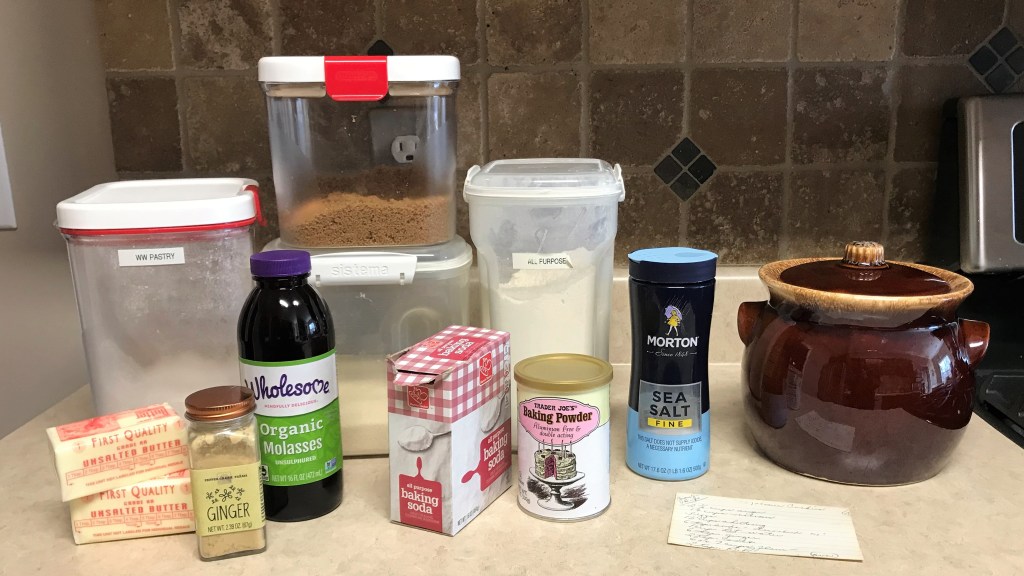
This was it for ingredients, plus the eggs. Be sure your baking powder is fresh for any cake or cookie recipe.

This is at least a two-day recipe (the dough must be thoroughly chilled), and several kitchen tools will be needed on baking day. I recommend review of the entire recipe before committing to the baking step. Once you begin rolling the dough, things move quickly and you’ll want to have your ducks in a row.

The ingredients list reflects my own changes I made to the recipe, and I’m certain my grandma would have approved these choices. 🙂


Ingredients

1 1/2 sticks (3/4 cup) unsalted butter, softened, but not room temperature

3/4 cup cane sugar* (see notes)

1/2 cup brown sugar

1 1/2 large eggs*

1/2 cup plus 2 Tbsp. molasses (unsulphured)

3 tsp. baking soda, dissolved in 1/2 cup hot tap water

2 1/2 cups all-purpose flour* (measure for success; see notes!)

1 cup whole wheat pastry flour*

3 tsp. ground ginger*

1 tsp. baking powder*

1 tsp. salt

Coarse sugar for decorating


*Notes

For all baking and cooking, I prefer organic cane sugar, which is not as processed as common white sugar. The fineness of cane sugar varies by brand, and I’ve found the Florida Crystals brand to be my favorite, as it is closest in texture to typical fine baking sugar. It’s slightly tan in color, compared with pure white sugar that has been heavily refined.

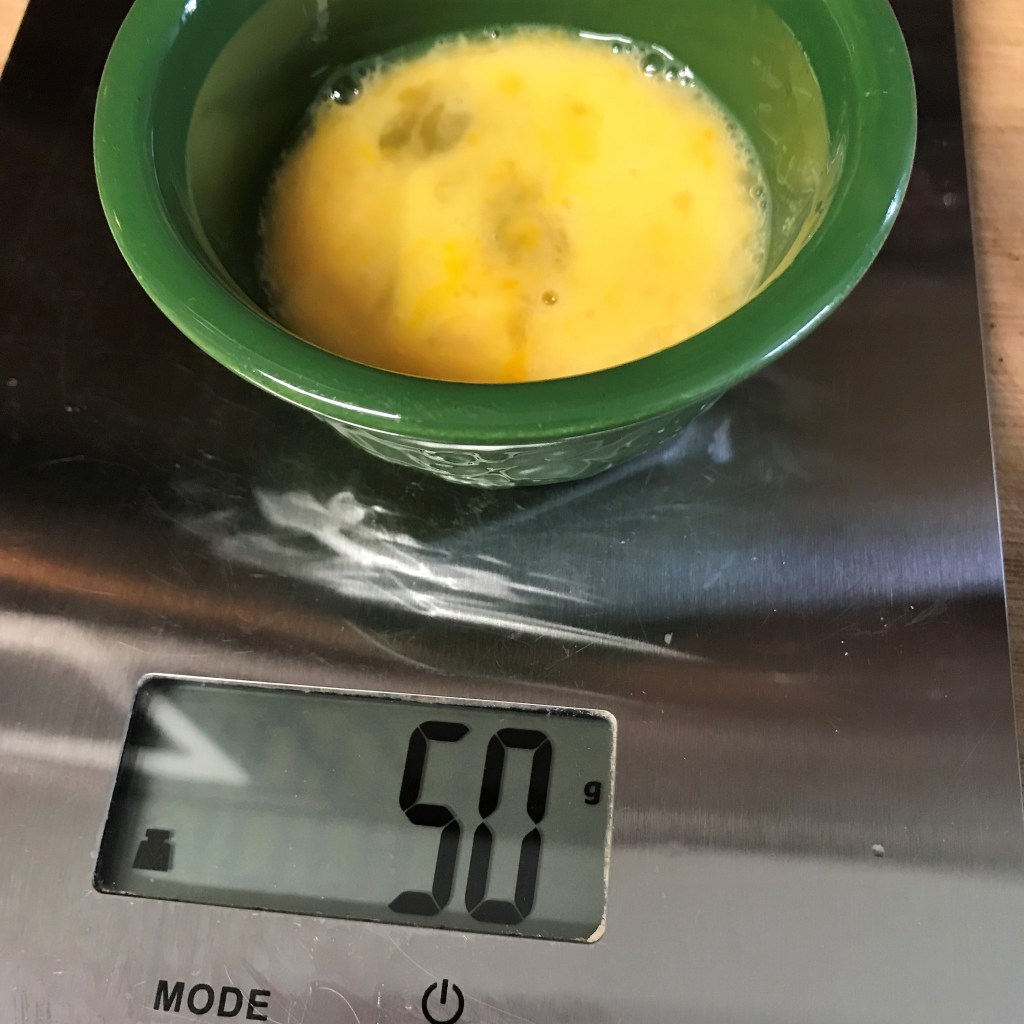
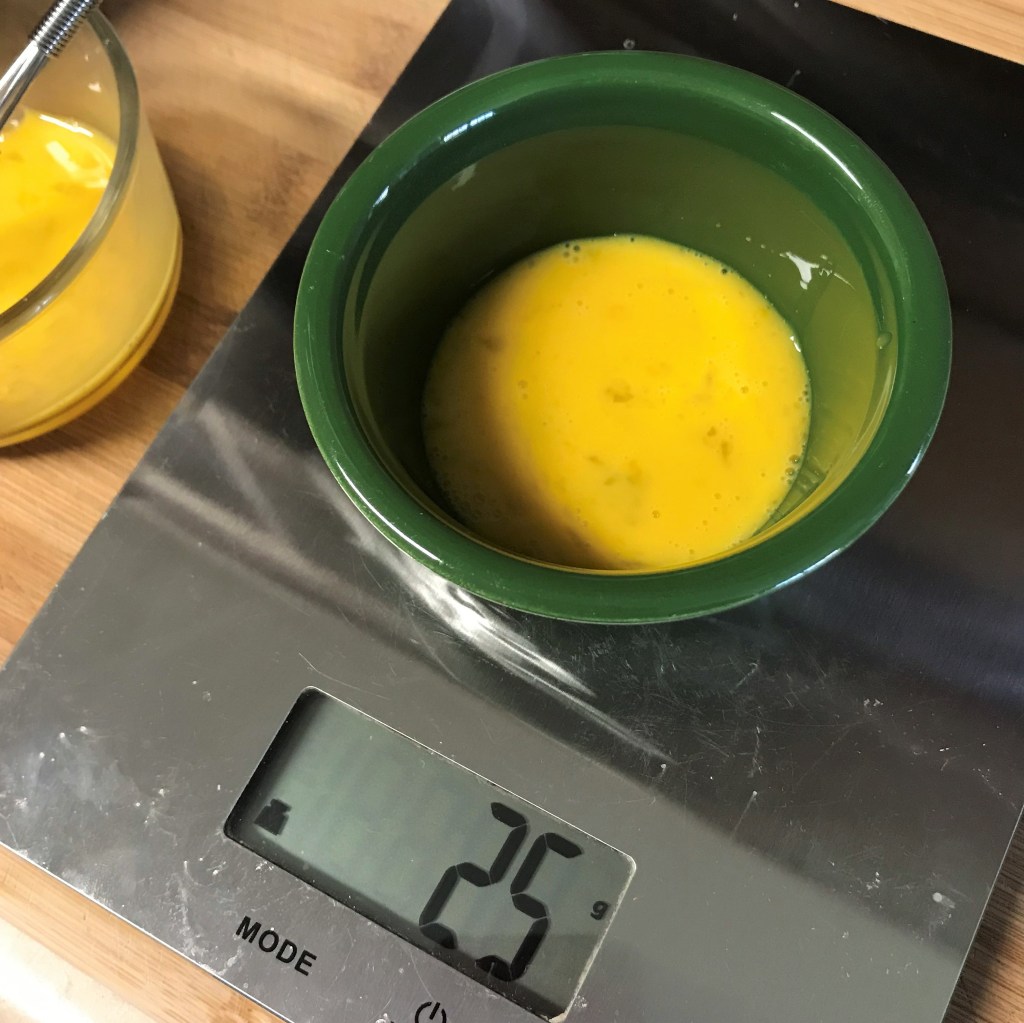
My recipe adaptation is half the original recipe, which called for 3 eggs, meaning I had to get to 1½ eggs. Here’s how to divide one of them to get the proper amount: crack 1 egg into a glass measuring cup, and beat it well to fully blend the white and yolk. Note the total volume of the egg, and pour half of the volume into a separate bowl for another use. Voila!—half an egg. Add a whole egg to it, beat lightly and you’ll be ready to go.


One of my grandma’s golden rules of baking was correct measuring of flour, so listen up. Always begin by sifting or fluffing up the flour before you measure. Spoon the fluffed flour over your measuring cup and fill to overflowing. Then use the back of a knife to scrape off the excess flour. Do not plunge your measuring cup directly into the flour bag or canister, or you will not have successful cookies.


Whole wheat pastry flour is a low-protein variety of flour, and can be substituted 1:1 for all-purpose flour in many recipes. It doesn’t have the strength needed for yeast-risen breads, but it is perfect for cookies, quick breads, pancakes and pastry dough. It also meets one of my primary goals of introducing whole grain into our foods. For this recipe, the whole wheat pastry flour is approximately 1/3 of the total flour in the cookies. If you prefer, combine for a total amount of white, all-purpose flour.
Ginger and baking powder both lose their power after a period of time. Ground ginger should provide a pleasant “zing” to the cookies, and active baking powder is needed for leavening. If you can’t remember buying the containers you have, they are probably too old. This is less a concern for the ginger, as that will only affect flavor. Baking powder that is old will give you poor results, because your cookies won’t rise during baking. I use aluminum-free baking powder with excellent results.


Dough Instructions


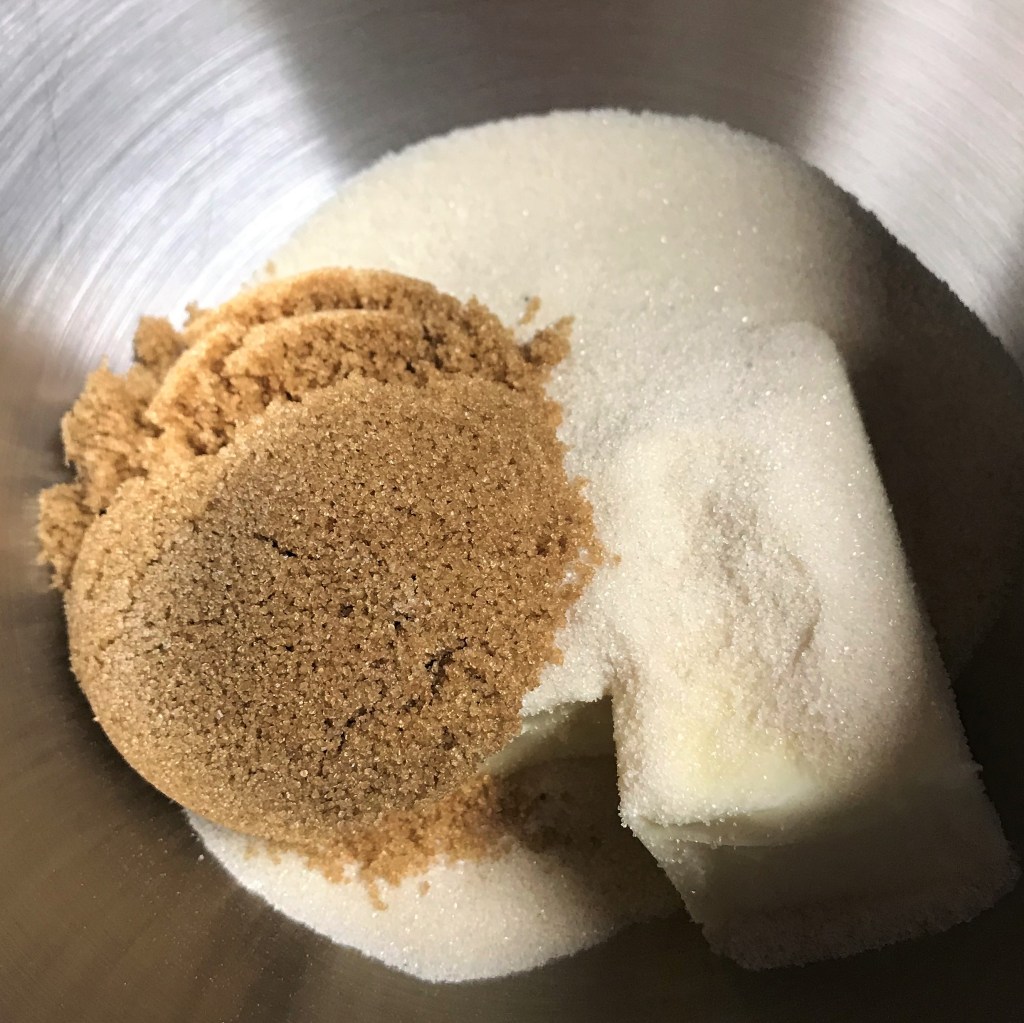
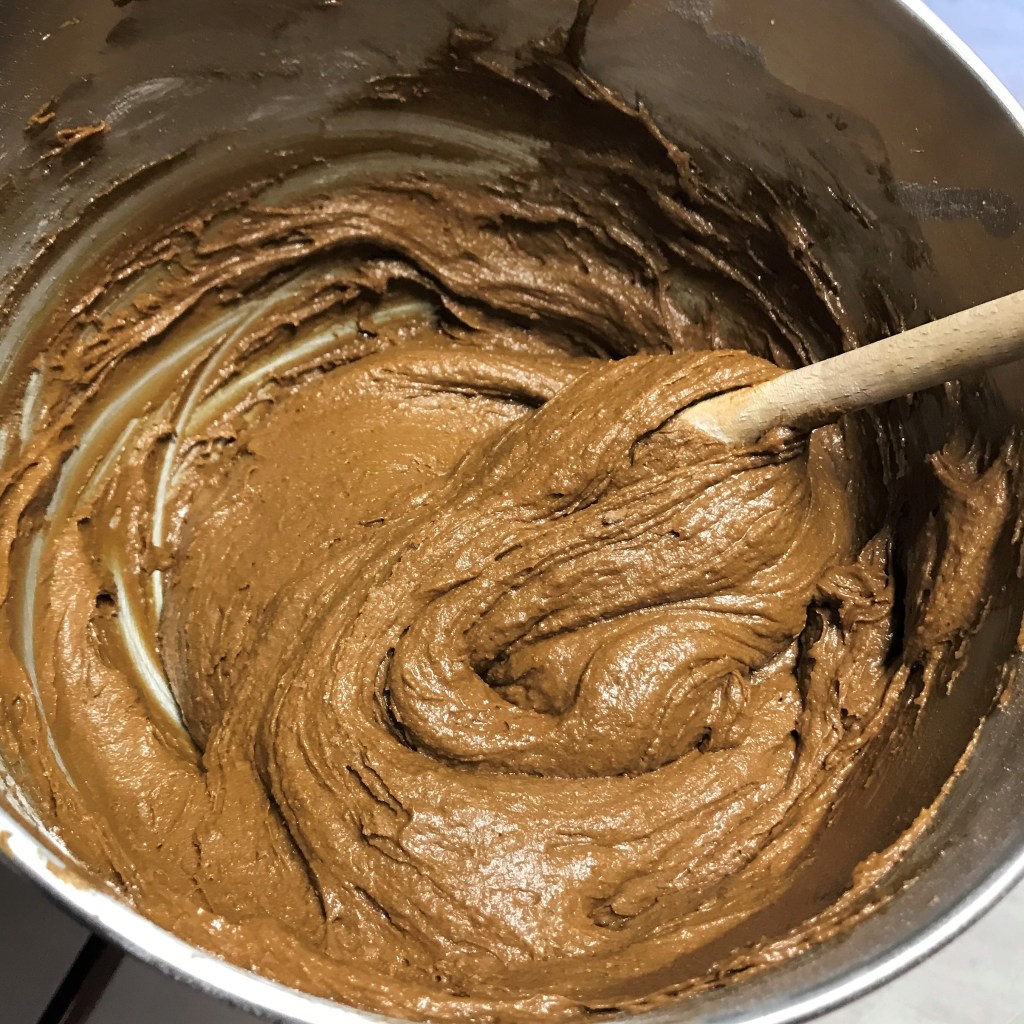
  1. Using a stand mixer or handheld electric mixer, cream together the softened butter and both sugars. If you want to go old-school, as my great grandmother would have done, you can do this in a large bowl with a good strong wooden spoon, and it would help you to have biceps like Rosie the Riveter. The mixture should be beaten until it looks uniform and slightly fluffy.
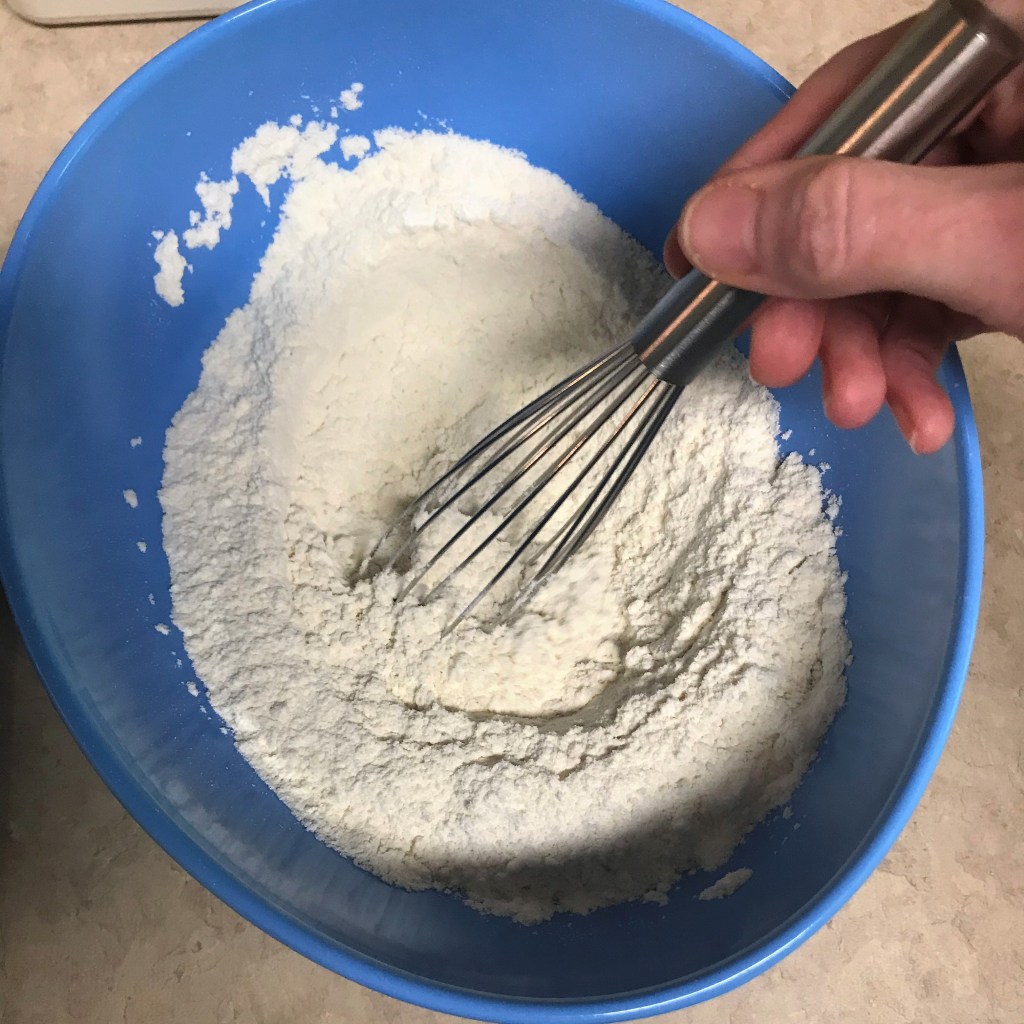
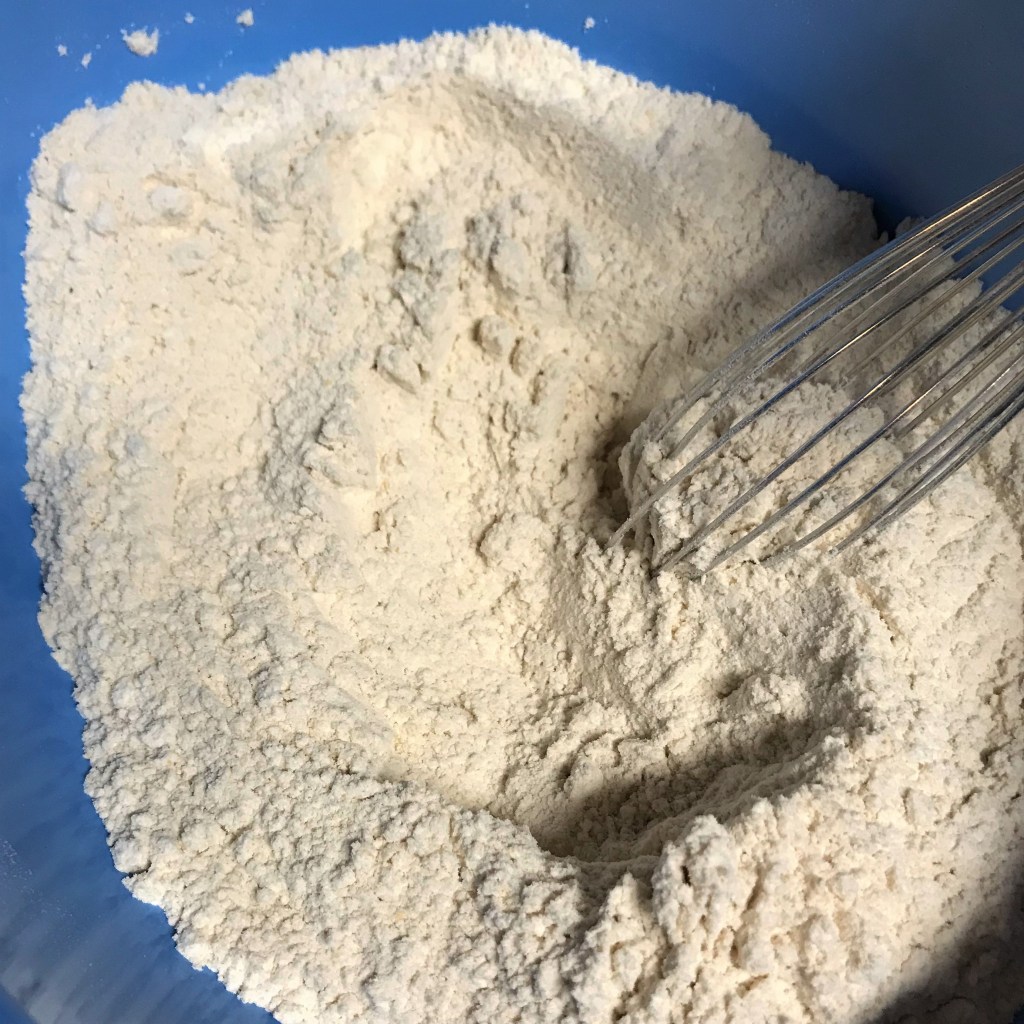
  2. Combine all-purpose and whole wheat pastry flour in a medium bowl. Scoop out a heaping cup of the flour blend to a second bowl, and add the ginger, baking powder and salt, stirring to combine. This ensures the ginger and leavening agent will be evenly mixed into the dough. Set both flour bowls aside.
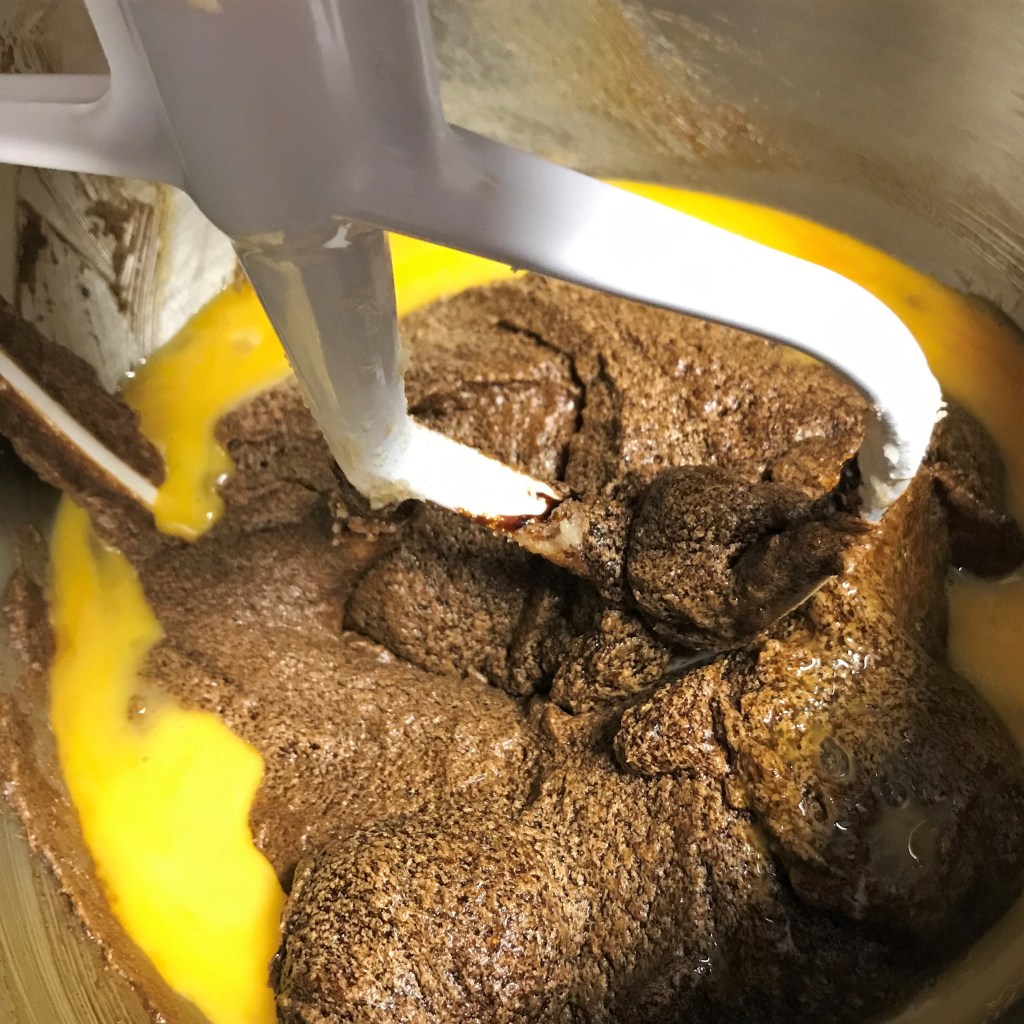
  3. Add beaten egg mixture, half at a time, to the creamed butter-sugar mixture. Beat until well blended, and stop to scrape down the sides of the bowl after each addition.
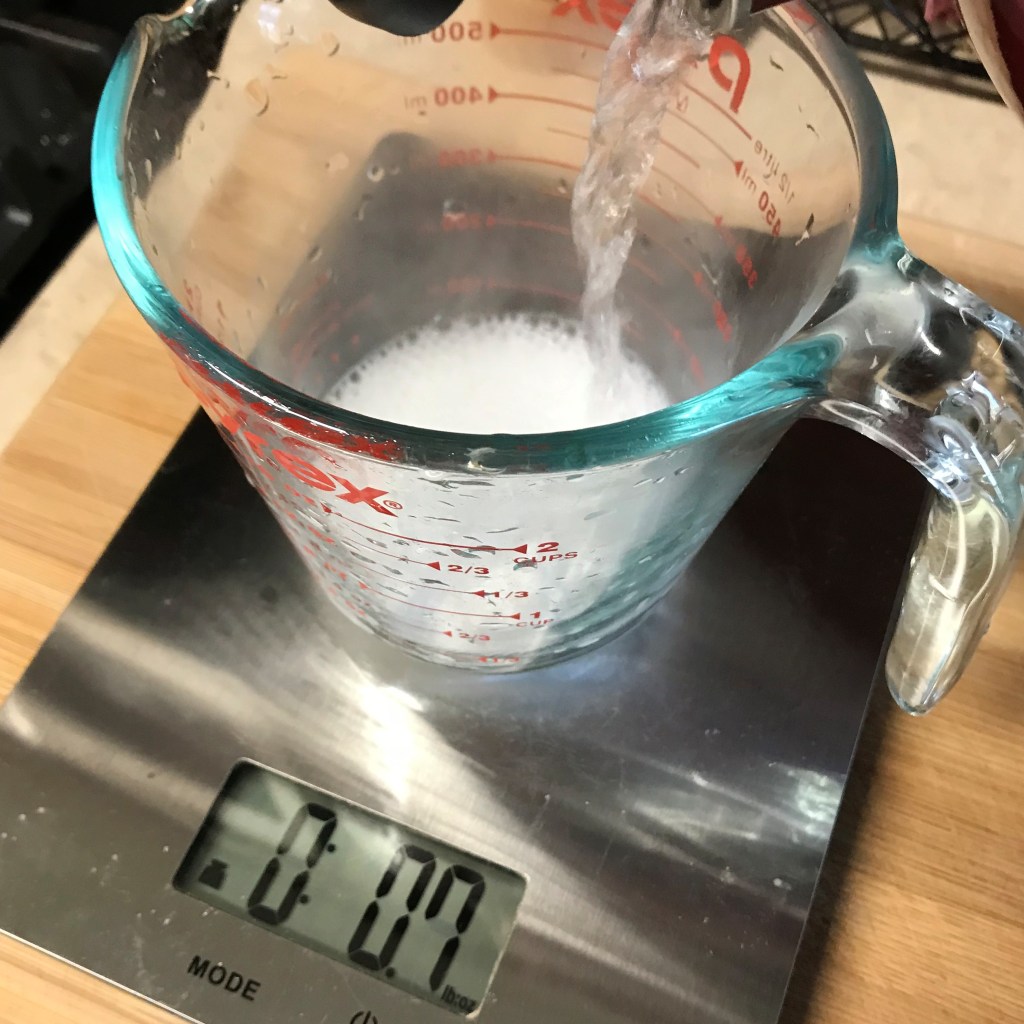
  4. Dissolve baking soda in hot water and set aside briefly.
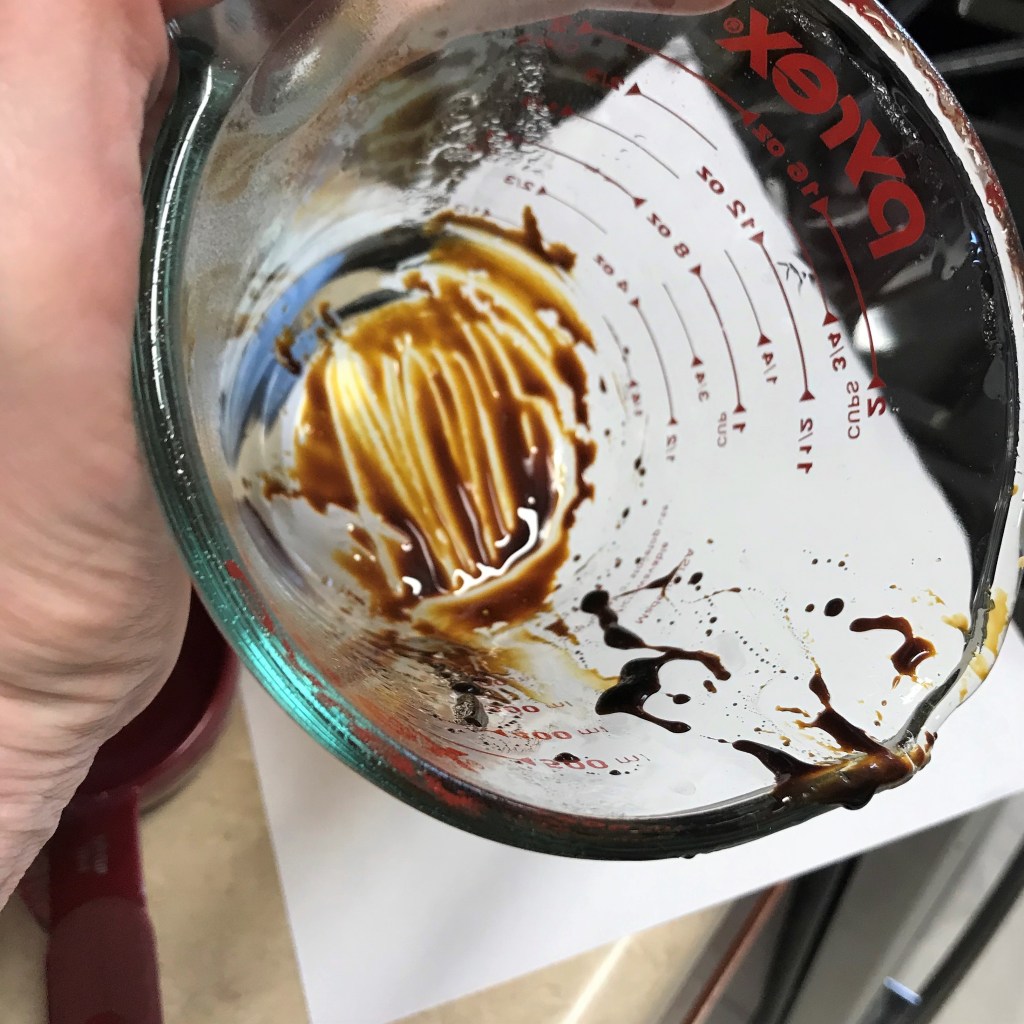
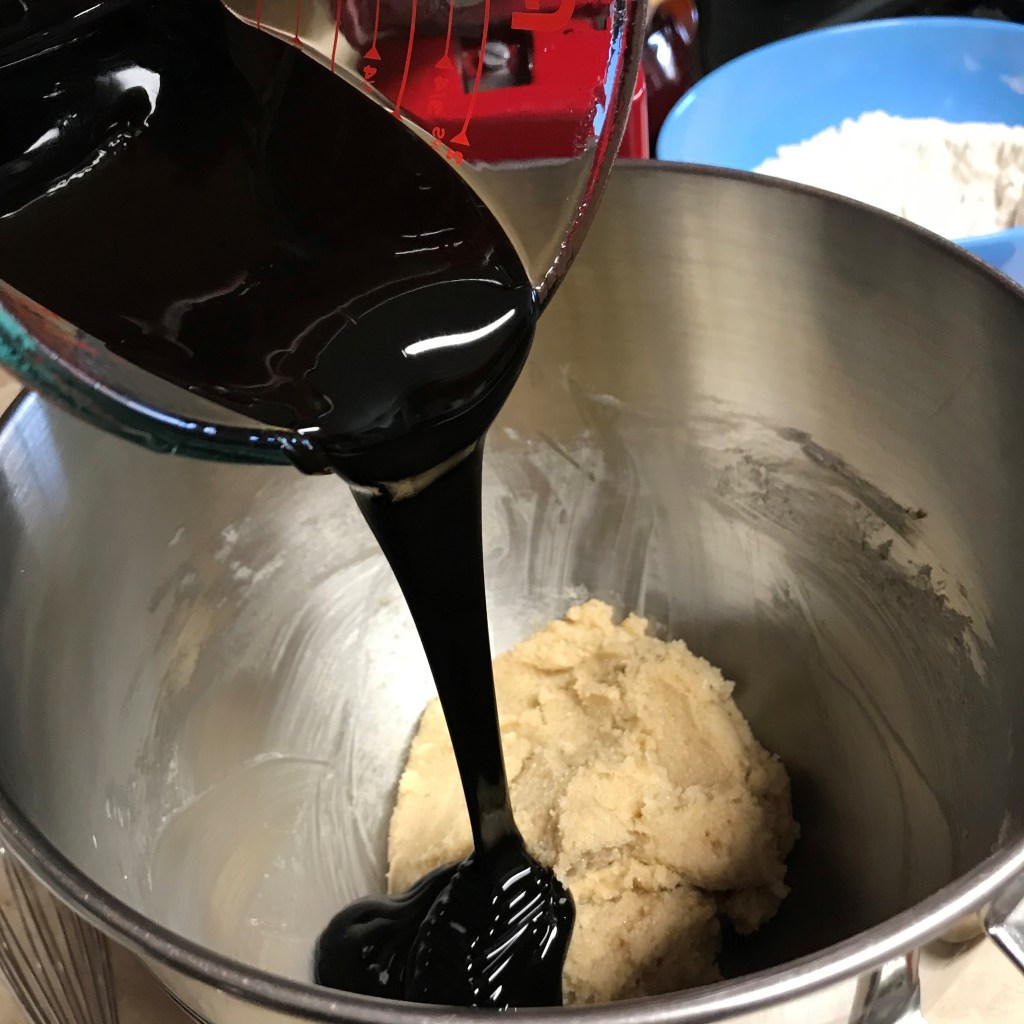
  5. Add molasses to the creamed mixture and beat until fully blended.
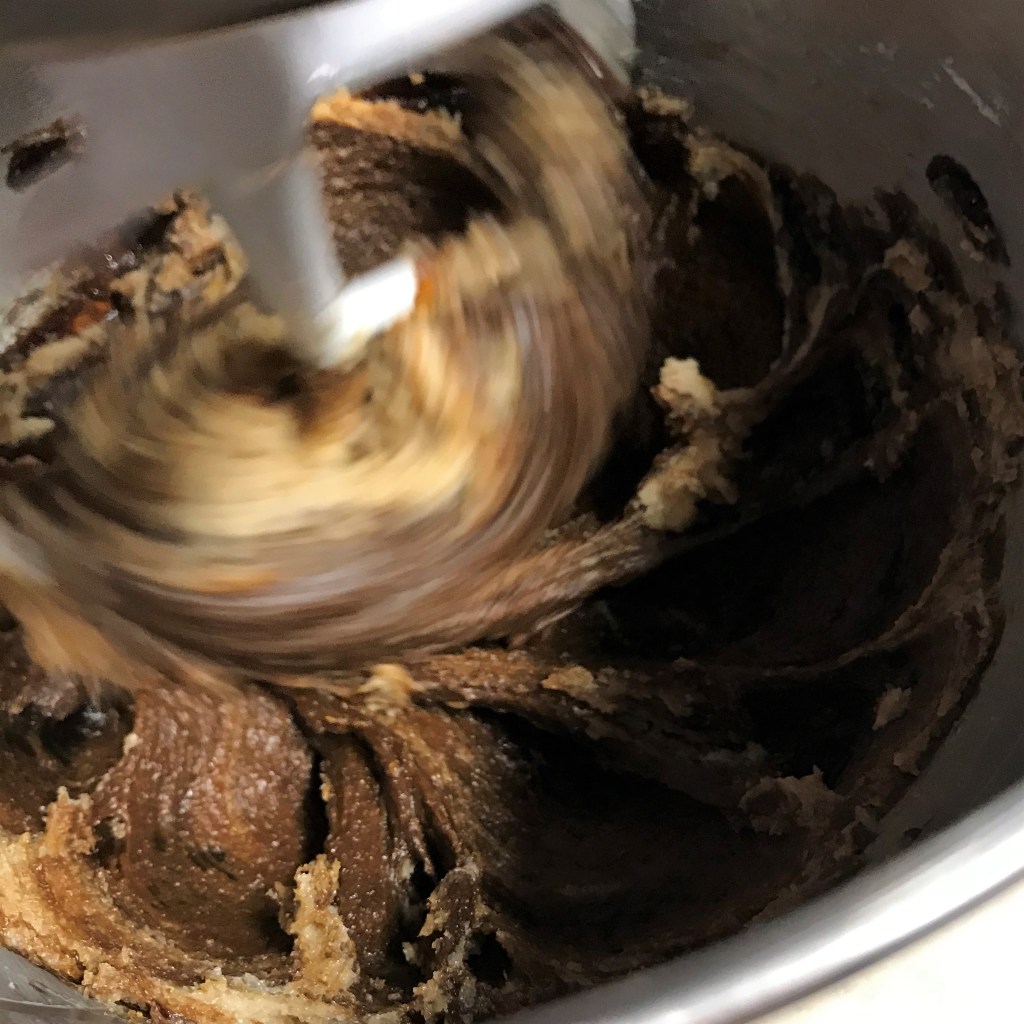
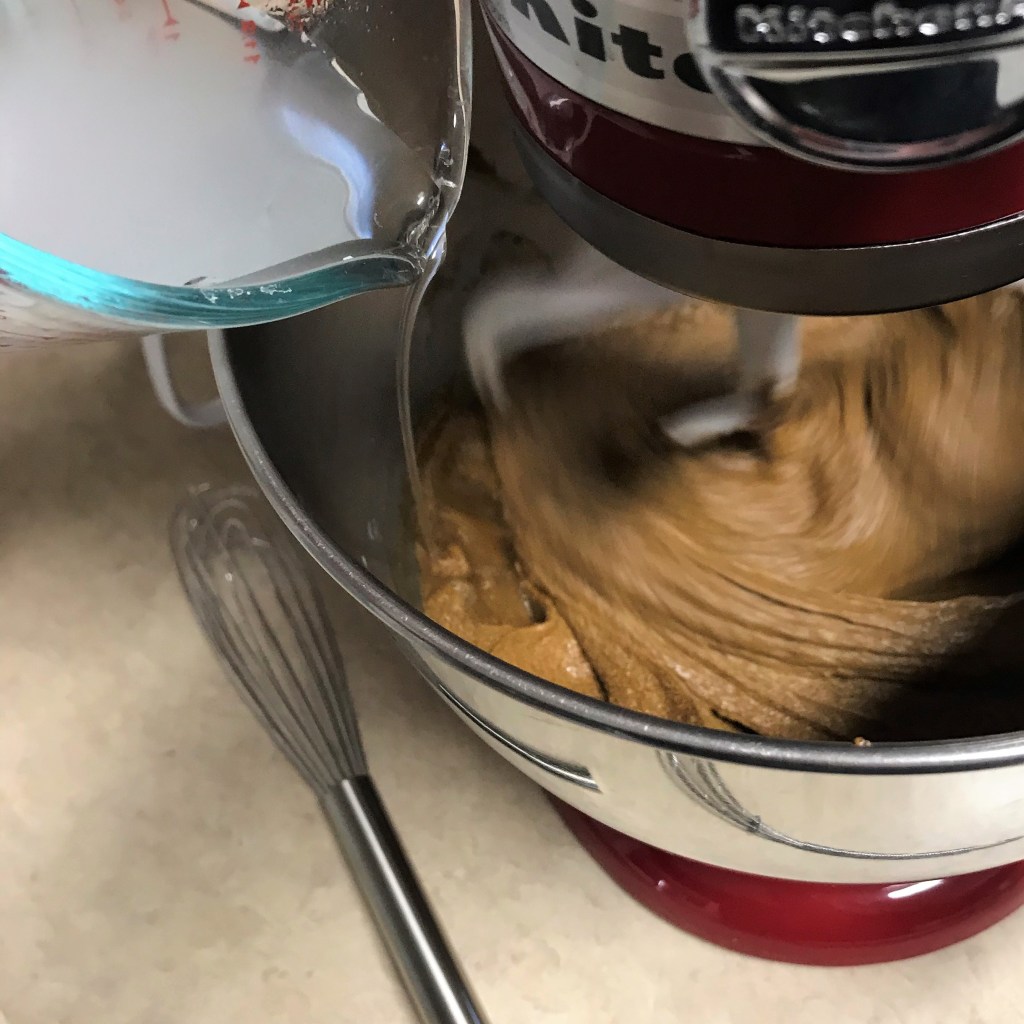
  6. With mixer running, slowly pour in the soda water. This mixture looked very unorganized and messy; it reminded me of quicksand.
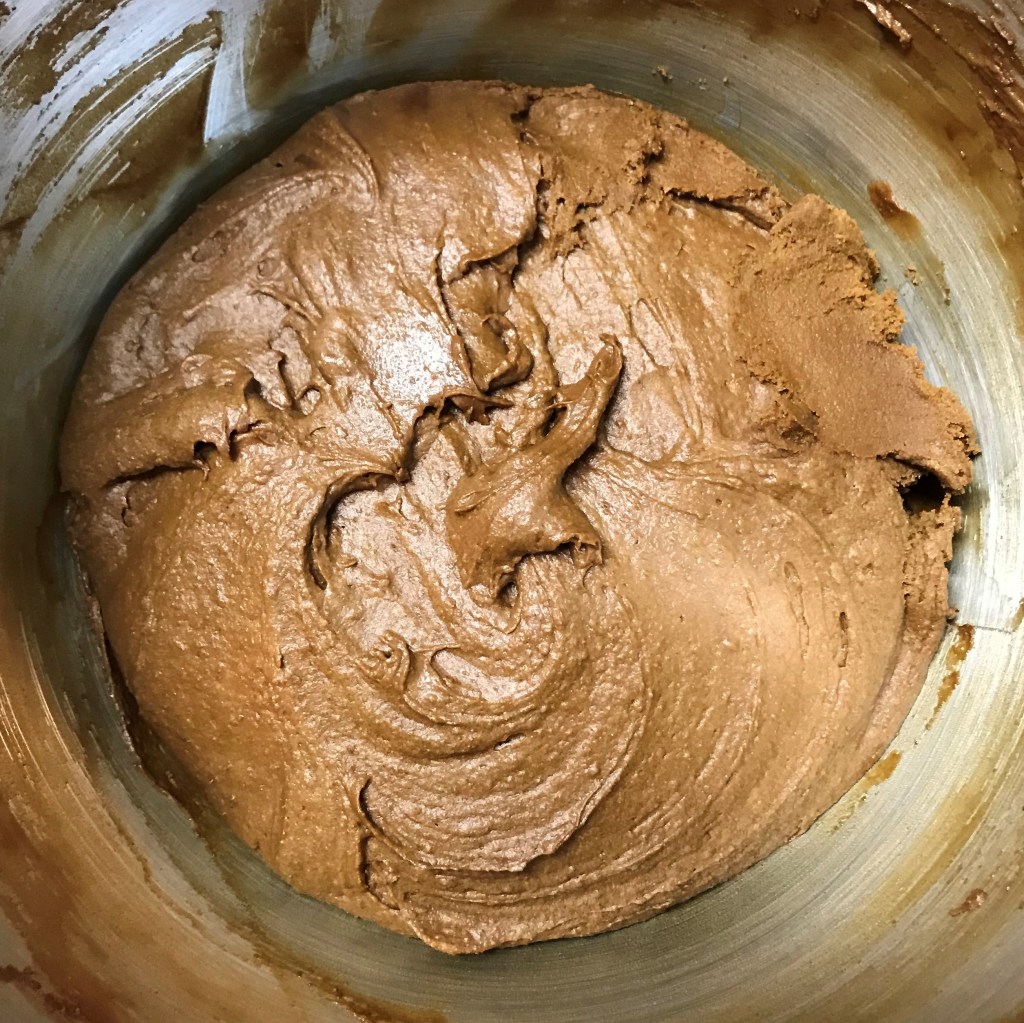
  7. Add the second bowl of flour (with ginger and baking powder) to the molasses mixture and stir until blended. Stop mixer and scrape down the sides. Stir in remaining flour, a few tablespoons at a time, until all flour is blended. Scrape down the sides. Cover the bowl tightly and refrigerate at least overnight, or preferably a day or two.

On baking day, gather your supplies:

  • 2 or 3 large cookie sheets, lined with parchment paper
  • Rolling pin (a round wine bottle works nicely in a pinch)
  • Dough mat (or board, or a really clean countertop)
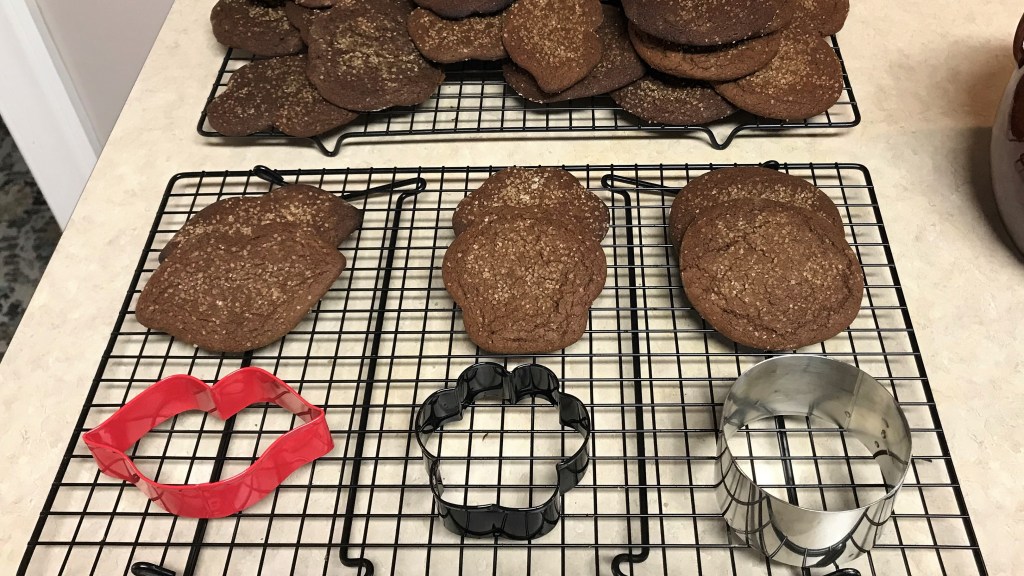
  • Cookie cutters (preferably round, or anything not too intricate as the cookies will spread)
  • Extra flour for dusting (keep it handy, you’ll use this a lot)
  • Paper towels for wiping your hands
  • Small, thin spatula to assist with moving cookies to baking sheet
  • Large spatula for moving baked cookies
  • Cooling racks (at least two will be helpful)
  • Coarse-grained sugar for decorating (I used turbinado sugar)
  • A baking timer
  • Christmas music for inspiration (I recommend Vince Guaraldi’s “A Charlie Brown Christmas” soundtrack)
  • A glass of wine (seriously, I found this very helpful when things got ugly)
  • My aunt on speed-dial (oh wait, that was just for me!)
Best Christmas music, ever!

Baking Instructions

Preheat oven to 450° F (much hotter than most cookie recipes, and they bake fast)

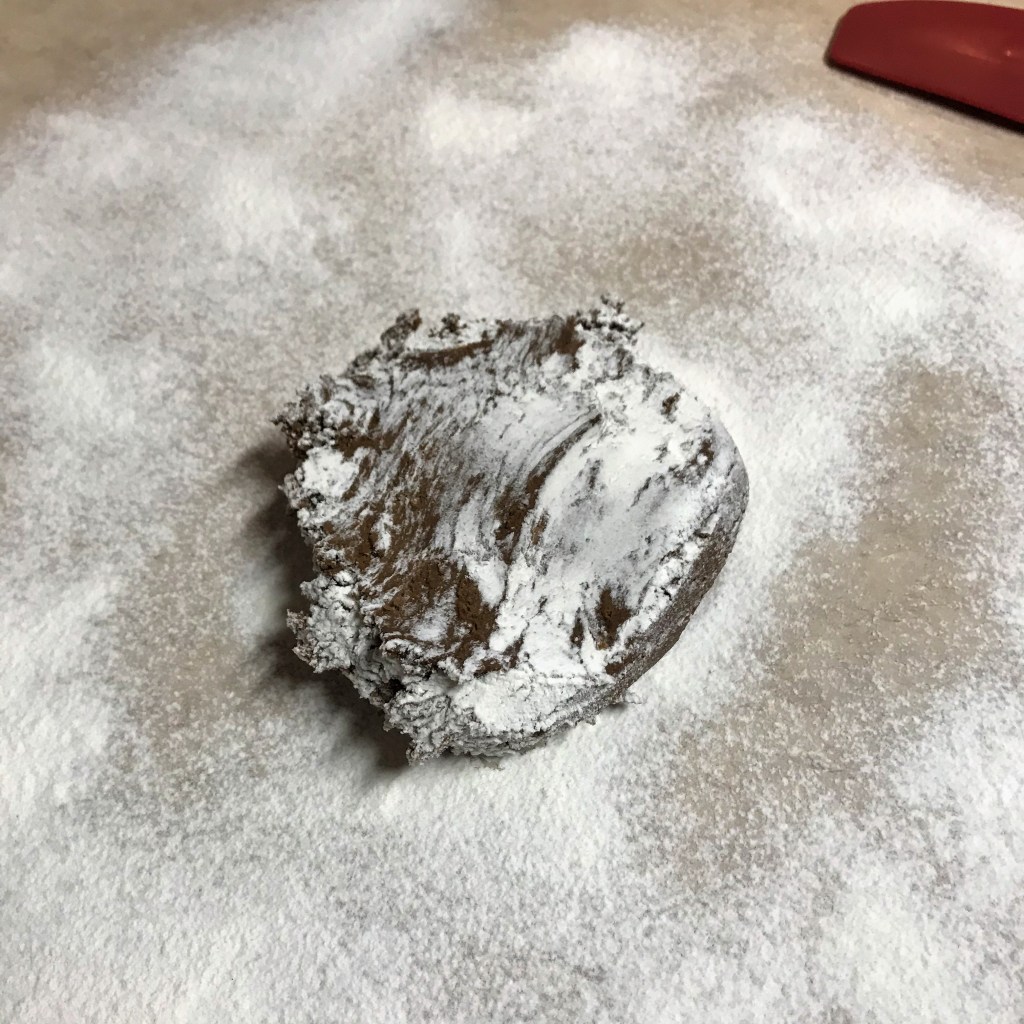
Generously flour your rolling mat or board, and begin with about 1/4 of the chilled dough. Put the rest back in the fridge until you’re ready for the next batch.
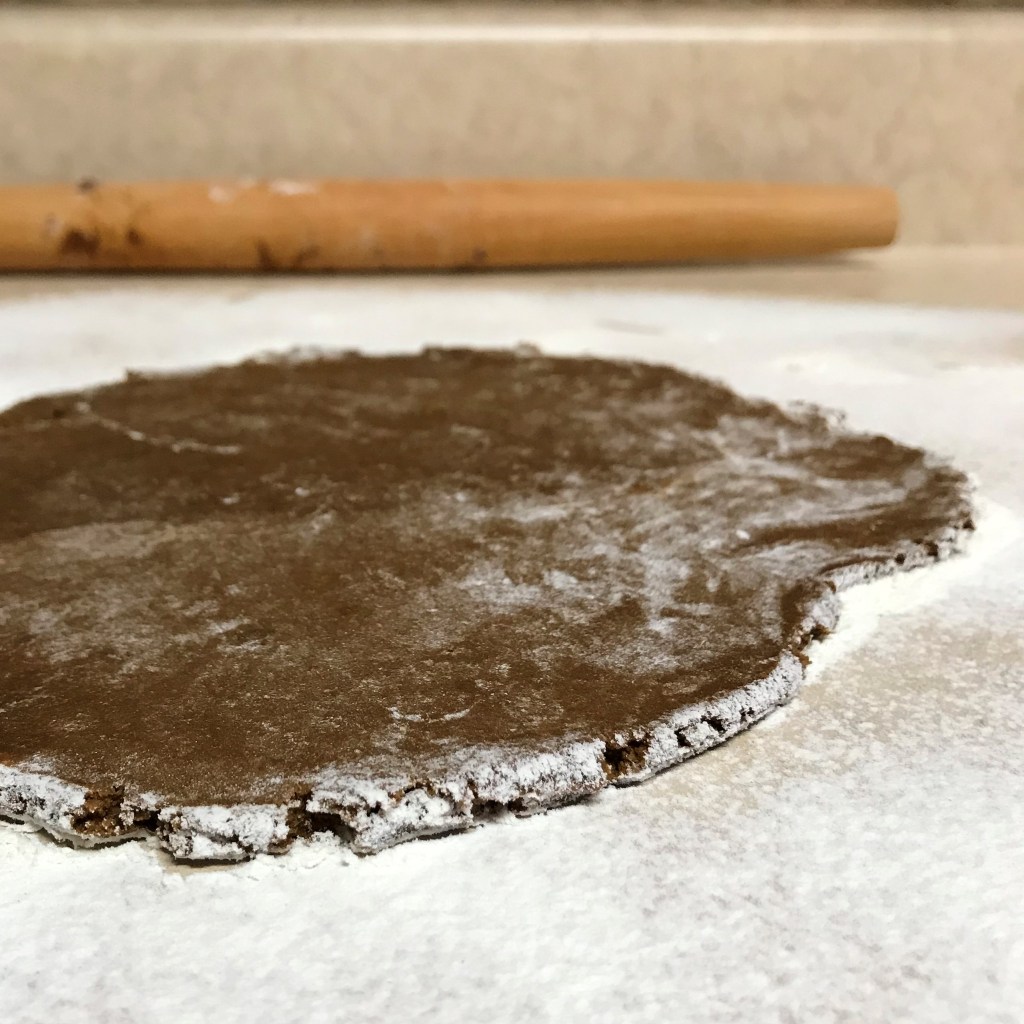
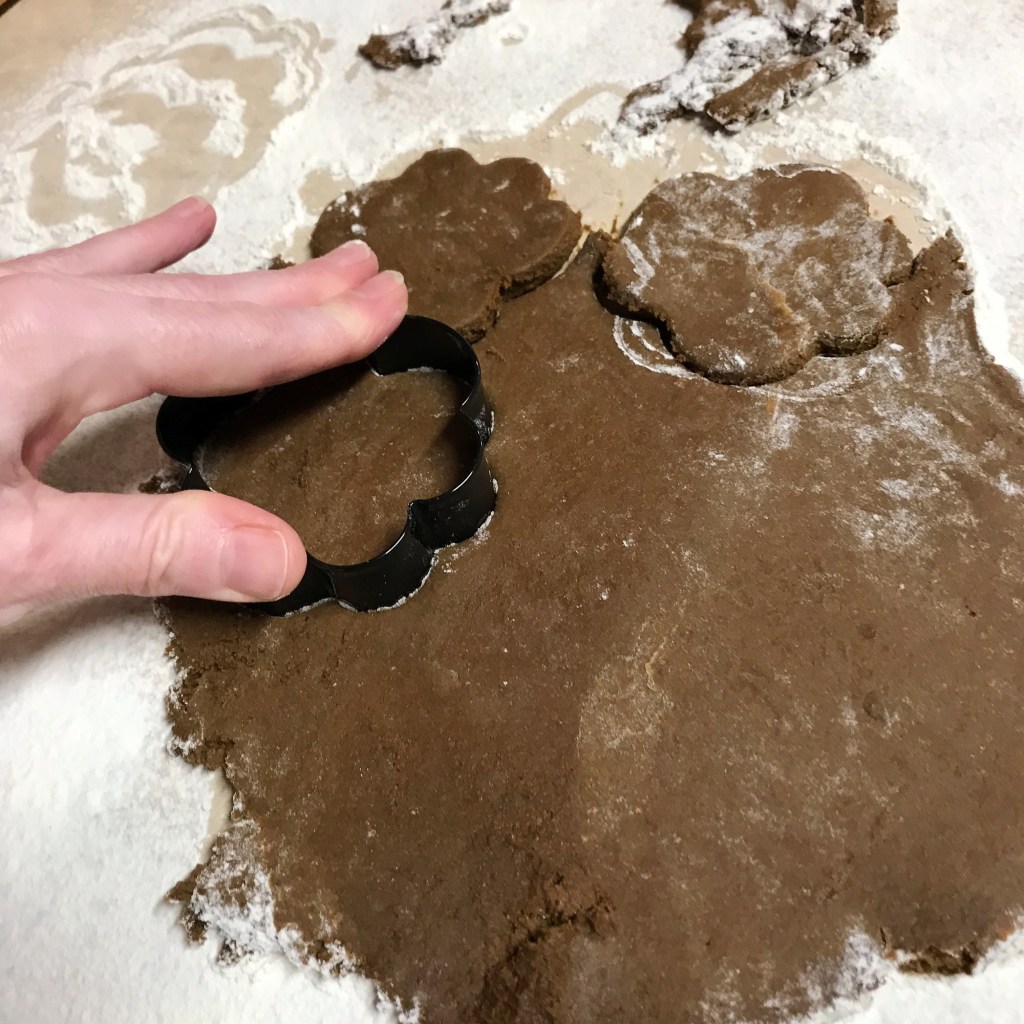
Sprinkle the top of the dough with flour. My aunt suggested that I use “a lot of extra flour,” and I think she meant to say, “Make it look like you had a blizzard in the kitchen.” You need a lot of flour to keep this ultra-soft dough from sticking. Roll it gently to about 1/2” thick.


Dip your cutter gently into the cookie dough bowl, then liberally into the extra flour to prevent sticking. Cut as many shapes as you can from the first rolling, and transfer the cookies to the prepared cookie sheet. Aim for only 6 cookies at a time, as they will puff and spread quite a bit during baking. Knead up remaining dough scraps and add them to the next batch.

Generously sprinkle each cookie with turbinado sugar.


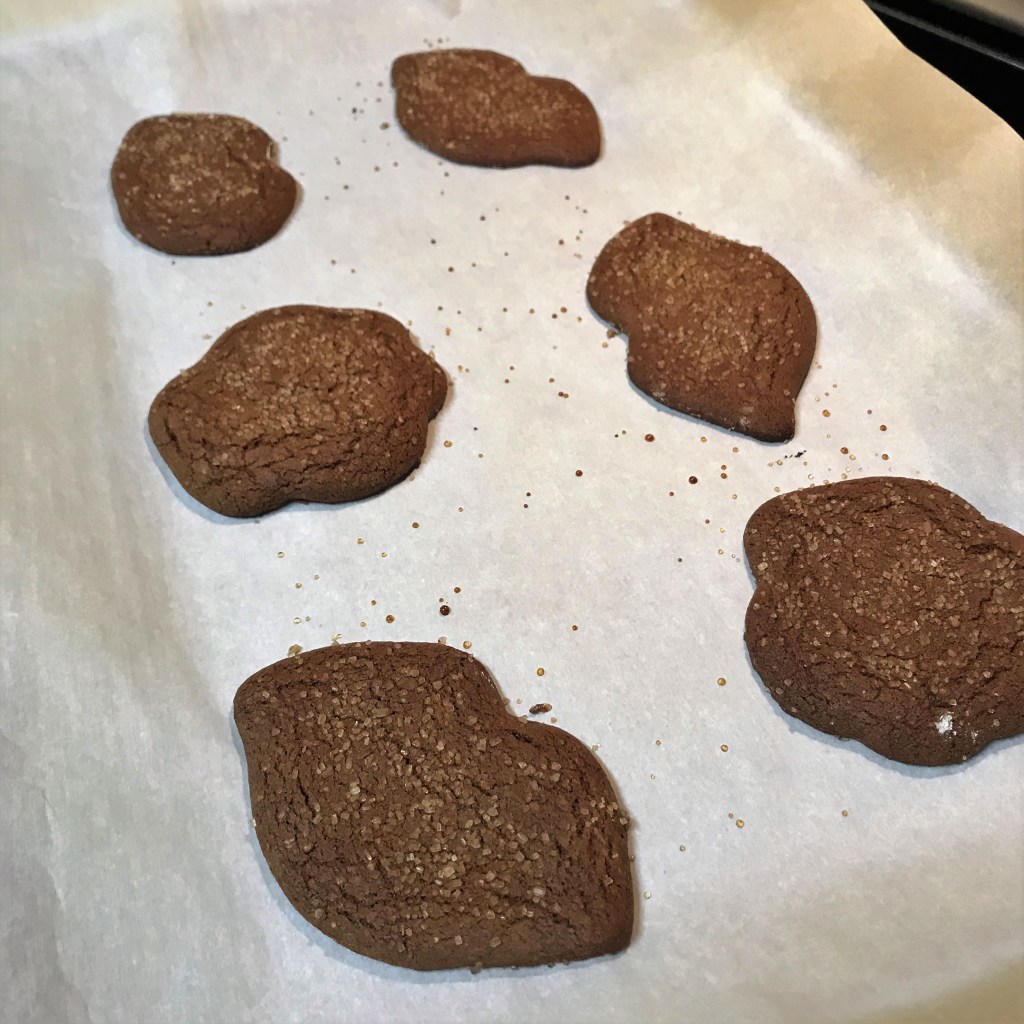
Bake for 5 to 8 minutes (depending on your oven) until cookies are soft and puffy but not brown on the edges. Transfer cookies as quickly as possible to a cooling rack. Place the hot cookie sheet somewhere to cool.


Prepare a second batch of cookies on the extra pan. This whole scene was very stressful for me, and I found myself wondering how my grandma did this with such grace and ease, and with excitable grandchildren “helping.”

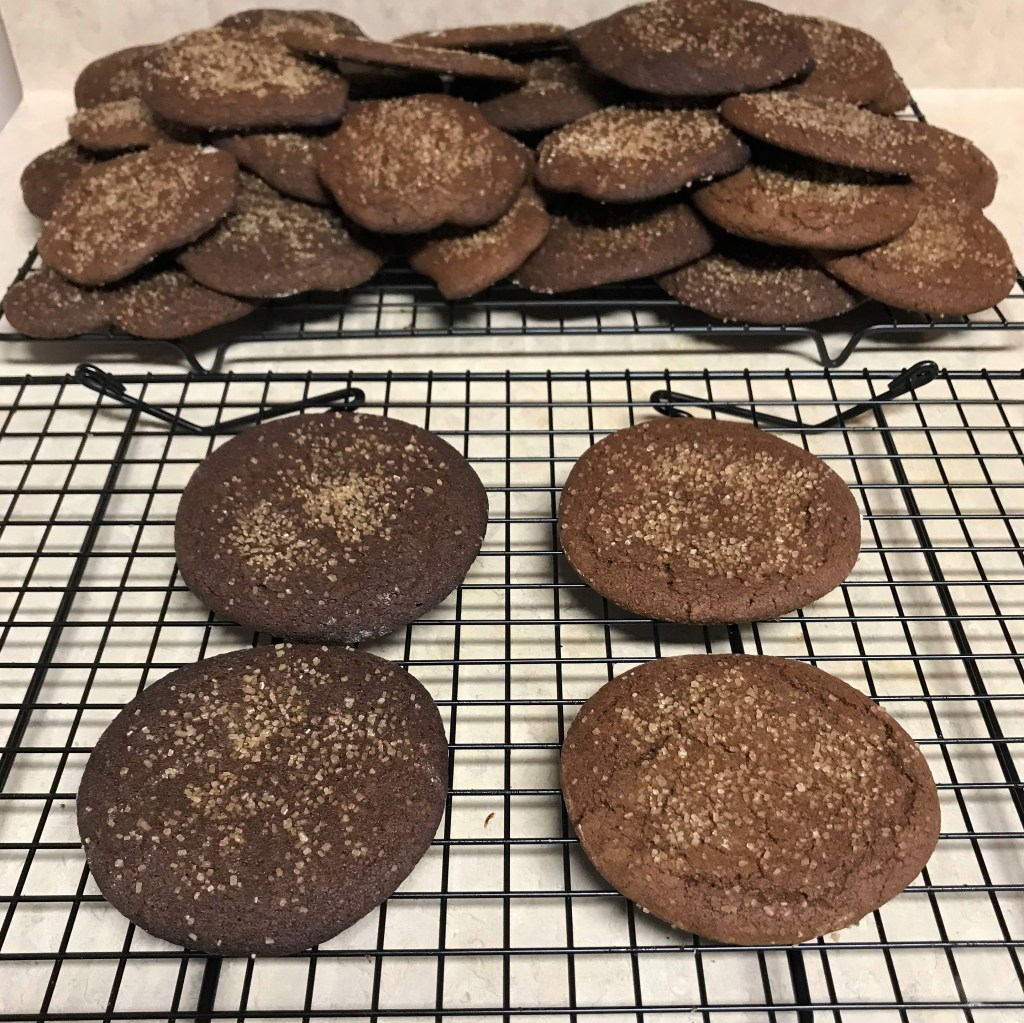
Repeat this process until all cookies are baked. You should have flour everywhere (including your hair), about 5 molasses-coated spoons stuck to the counter, a sink full of bowls and random sticky objects, a dining table covered in molasses cookies and an empty wine glass bottle. If you’re crying, well, join the club. If you’re crying and laughing simultaneously at the end of it all, you get bonus points and a commemorative recipe tea towel.


Is it OK for me to share your recipe, Gram?

She would say—no, wait, she would sing, “Oh, ya, sure!”


On Christmas with Our Grandma

The whole family is abuzz about the ways my Gram made Christmas special. I’ve been reminiscing this season, as I’ve hung on our own tree the precious ornaments Gram gave me throughout my childhood. My aunt coached me through the making of Gram’s molasses cookies, a recipe that was handed down from my great-grandmother. And today, I’m misty-eyed over this sentimental essay shared by my younger cousin, Brad. Our grandmother made an indelible mark on all of us. ❤

Terrie

Christmas conjures memories, often of things from childhood. Like presents received, trips visiting family, or perhaps getting terribly sick with the flu and swearing off mincemeat pie or anything that even smells like it for rest your life. OK, that was a little personal memory. But you get the idea.

Like my cousin, Terrie, I have many fond memories of our grandma. She was a special, kind, fun, silly and loving person to us both. Grandma taught Terrie and me a lot of lessons about cooking, and I say to this day, just as my cousin does, that my love for cooking stems from the many hours spent in her kitchen. 

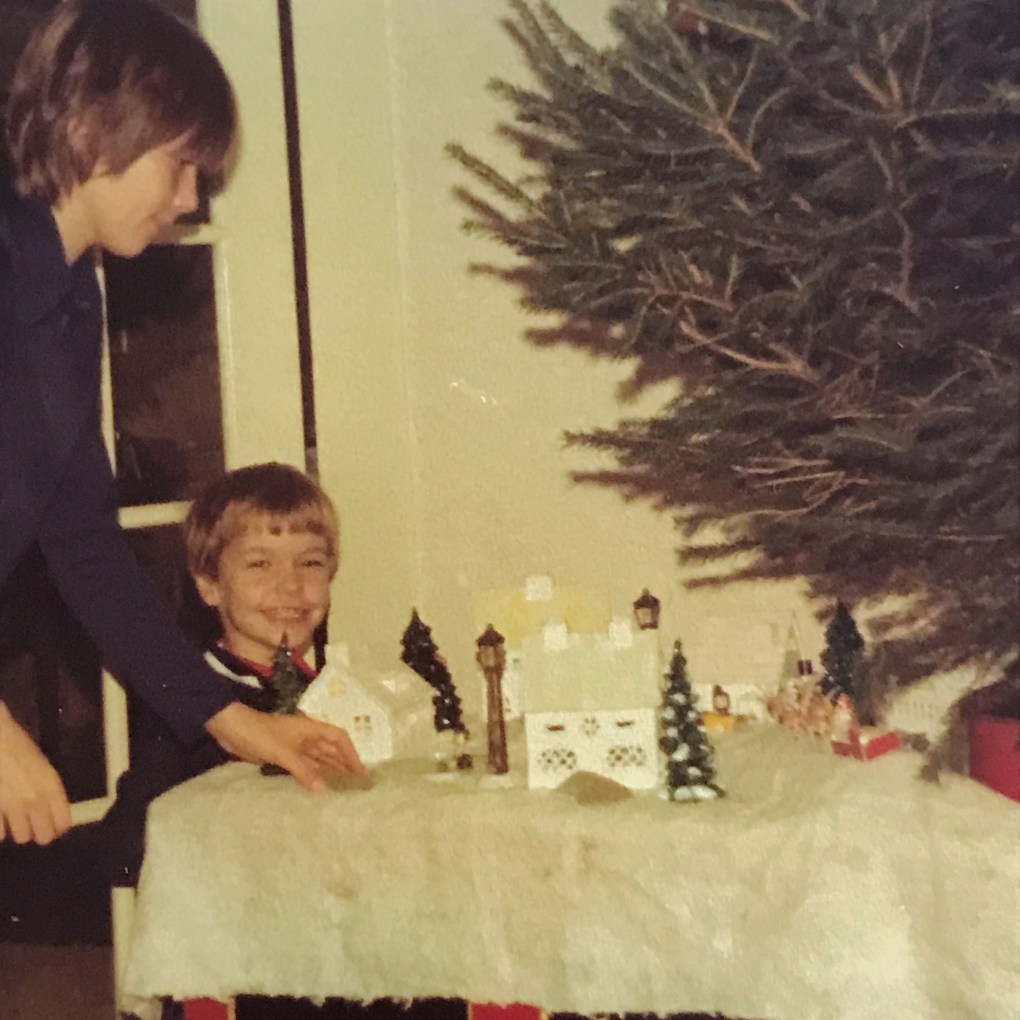
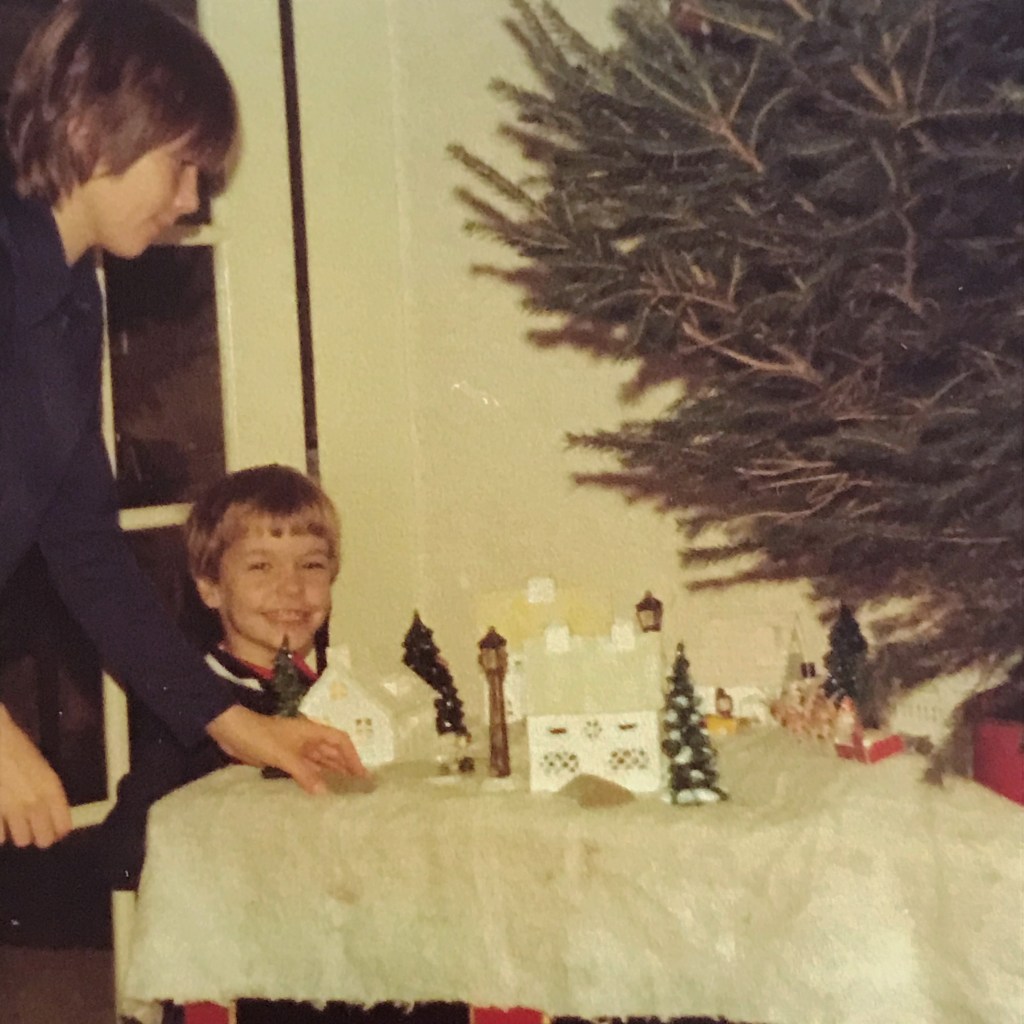
When I was young, one Christmas tradition was that the week after Thanksgiving, it was time to go spend an entire day at Grandma’s kicking off the Christmas season. I would be dropped off early in the morning and Grandma would have the day planned. It started with me putting up the Christmas village she made at a ceramics shop, which, coincidentally, was owned by family members from my dad’s side of the family. (It was a pretty rural community.)


The village is one of my favorite things to do each holiday season, and I am very particular about the arrangement, the color of the lights, where the little pipe cleaner townspeople live and what they are doing in their little Christmas town. I think each year as a child, I had new and more elaborate soap opera-type stories.

At Grandma’s house, after the Christmas village came the tree. As I remember, it was the silver tinsel-type tree that was considered chic during the ‘70s. That, or knowing Grandma’s frugality, it was found at a yard sale. I do remember she had some beautiful and, what I thought at the wise age of 5 or 6, were super-fancy and expensive ornaments. The fragile ones Grandma would hang up, and the less-likely-to-break-in-an-excited-youth’s-hands ones, I would place around the tree. And then move. And move again. And move again. To this day, I rarely hang an ornament that isn’t moved about two or three times before the holiday season is over.

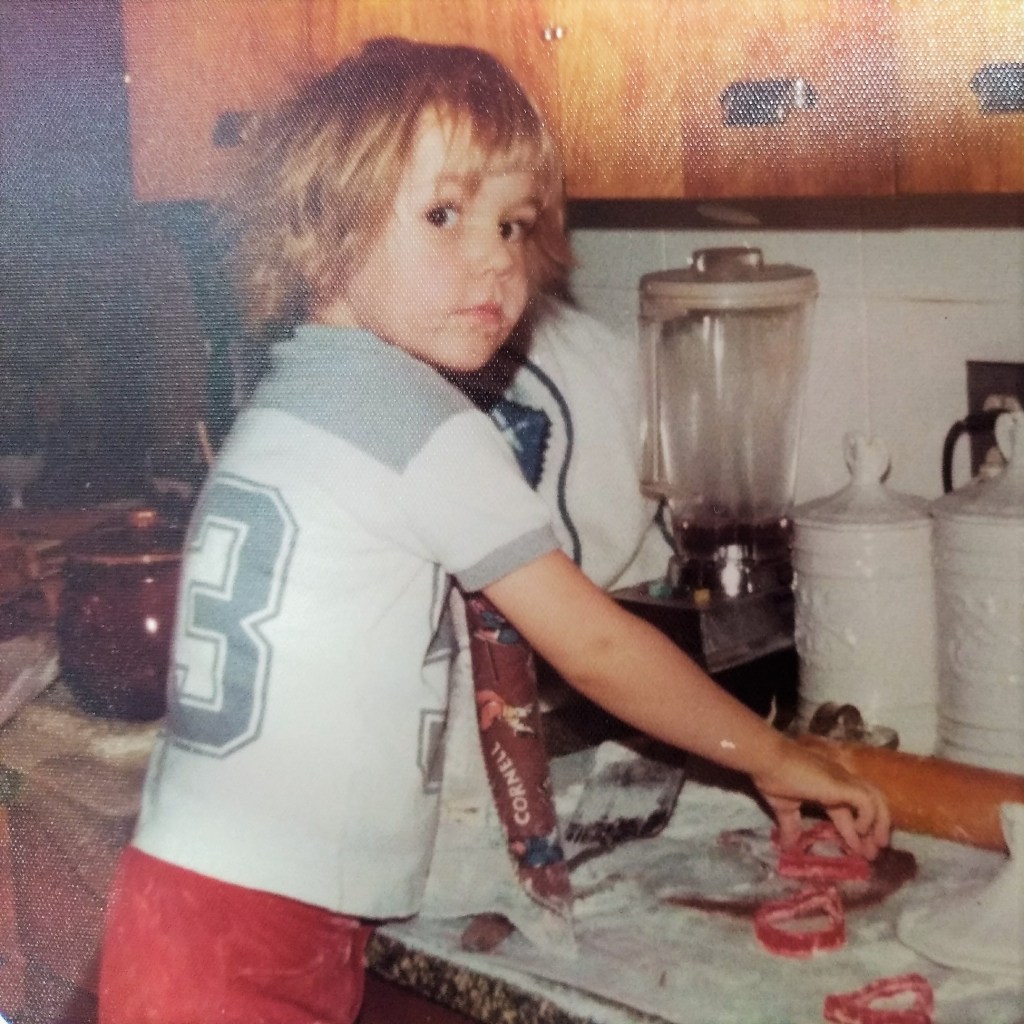
The afternoon brought the cookie baking, and Terrie is going to share one of our favorites—Gram’s Molasses Cookies. During my early years, I was the only grandkid living close to Grandma, so I got to spend the whole day as “host” of my own baking show in her kitchen. I seriously would pretend I was on TV telling my audience what I was doing. Making the cookies was so much fun—learning to sift the flour and why you had to sift, measuring the ingredients, asking about the difference between “oleo” and butter. Terrie has a photo that Gram took of me baking those cookies, and to say I was not the tidiest 4-year-old “chef” would be an understatement.

I am so thrilled that Terrie is sharing this recipe, and I hope they bring warmth and happiness to your family this year and for years to come, as they have with Terrie and me.

Brad, making molasses cookies at Gram’s house.
(Terrie’s note: he was so freaking cute!)

If you’d like to go behind-the-scenes in making the molasses cookies that are so special to our family, you can link to the recipe by clicking the photo below. Enjoy!


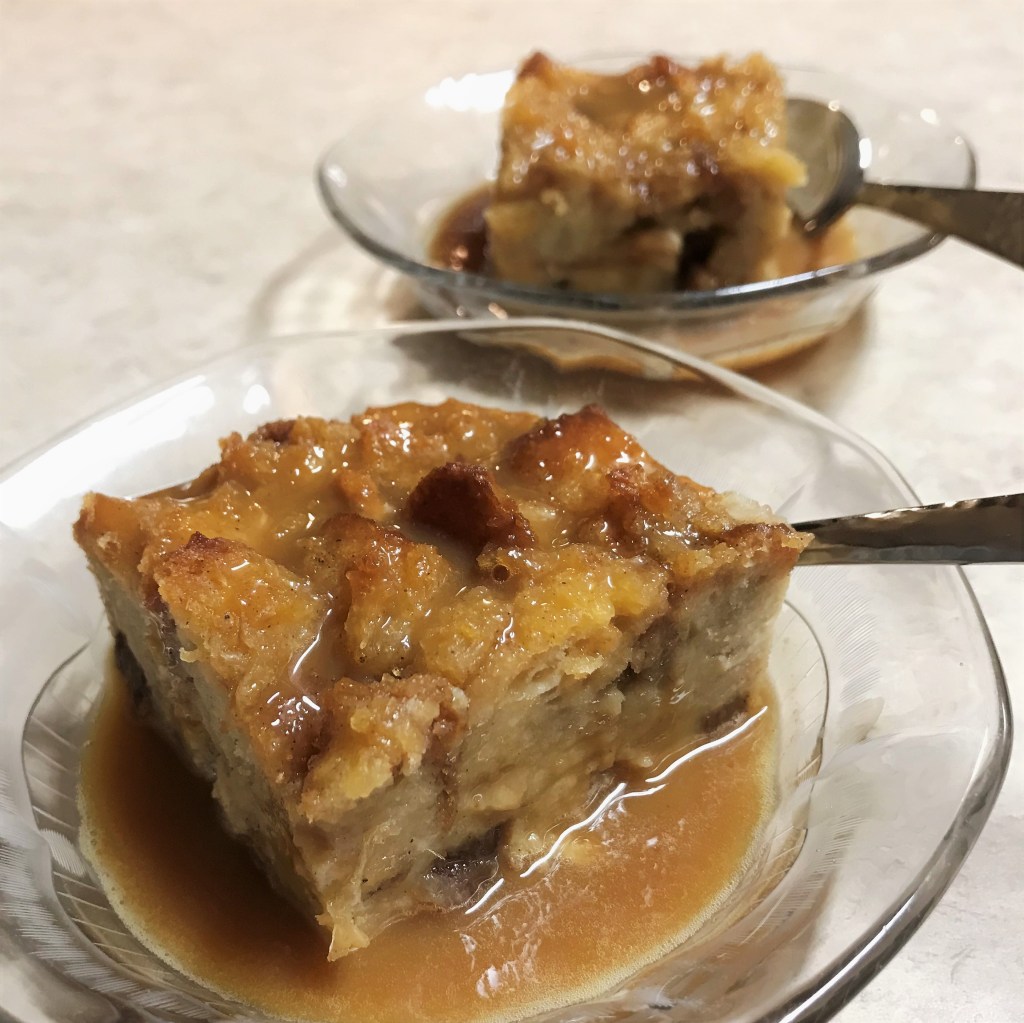
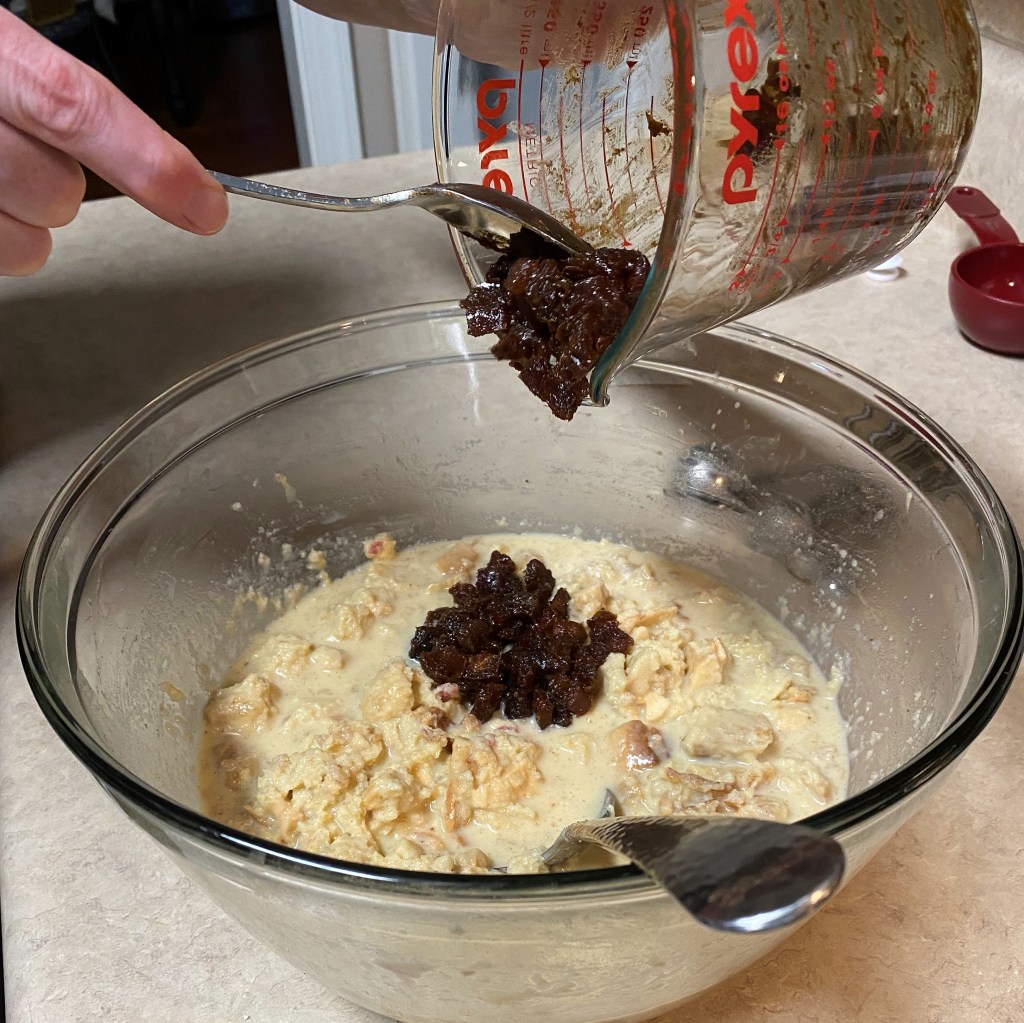
The Best Bread Pudding

It strikes me funny that a dessert as simple and humble as bread pudding shows up so frequently on upscale restaurant menus. Rarely do you find it an option in a sandwich shop or a casual dining joint. But go to a “nicer” place, and there it is—usually spiked with some kind of liqueur and almost always drenched in a rich creamy sauce. They can make it as fancy as they like, but as far as I’m concerned, my grandmother set the bar on bread pudding. Hers was never quite the same twice, but it was always delicious.

Of all the cooking lessons Gram gave me in her small upstate New York kitchen, one of the most important—that she lived out every day—was to “waste nothing.” As a survivor of the Great Depression, she saved things that most people threw away, including scrap pieces of aluminum foil, fabric remnants, even used twist ties. But the best things she saved went into a bread bag in her freezer, until she had collected four cups worth, enough to make a batch of her famous bread pudding. End pieces of stale bread, that last uneaten sweet roll and even the occasional hamburger bun were revitalized into a delicious, custardy dessert that was cinnamon-y and sweet and tasted like a day at Gram’s house.

I was taken aback recently to realize that I only have four handwritten recipe cards left to me by my cooking mentor, but I’m thrilled that one of them is titled “Basic Bread Pudding.” When I got the news last summer that she had passed away, just as I was awaiting delivery of my new gas range, I pulled out every bread scrap we had in the freezer, and this pudding is the first thing I baked in it.

Like everything else she made, Gram’s recipe for bread pudding is flexible; it’s meant to make use of whatever ingredients you happen to have on hand. The formula is simple, and you can dress it up (or not) however you like. If you like it more custardy, she had a suggestion for that on the back of the card (I’ve included it below, as a direct quote from Gram).

In honor of what would have been Gram’s 99th birthday this week, I’m proud to share her recipe with you. She would have been tickled pink, and also a little surprised, because to her, bread pudding was a given.

No matter what I add to the recipe, somehow it always tastes like Gram made it! ❤

There’s a reason that bread pudding today is showing up on upscale restaurant menus. It’s rich, dense, custardy, and so, so comforting. You can flex the flavors to match the season, serve it warm with a creamy sauce or chilled, straight from the fridge. Frankly, I’m in favor of having it for breakfast. Bottom line, it’s a fantastic dessert that you can make yourself, and (by way of my pictures and descriptions) my grandma is going to show you how easy it is.

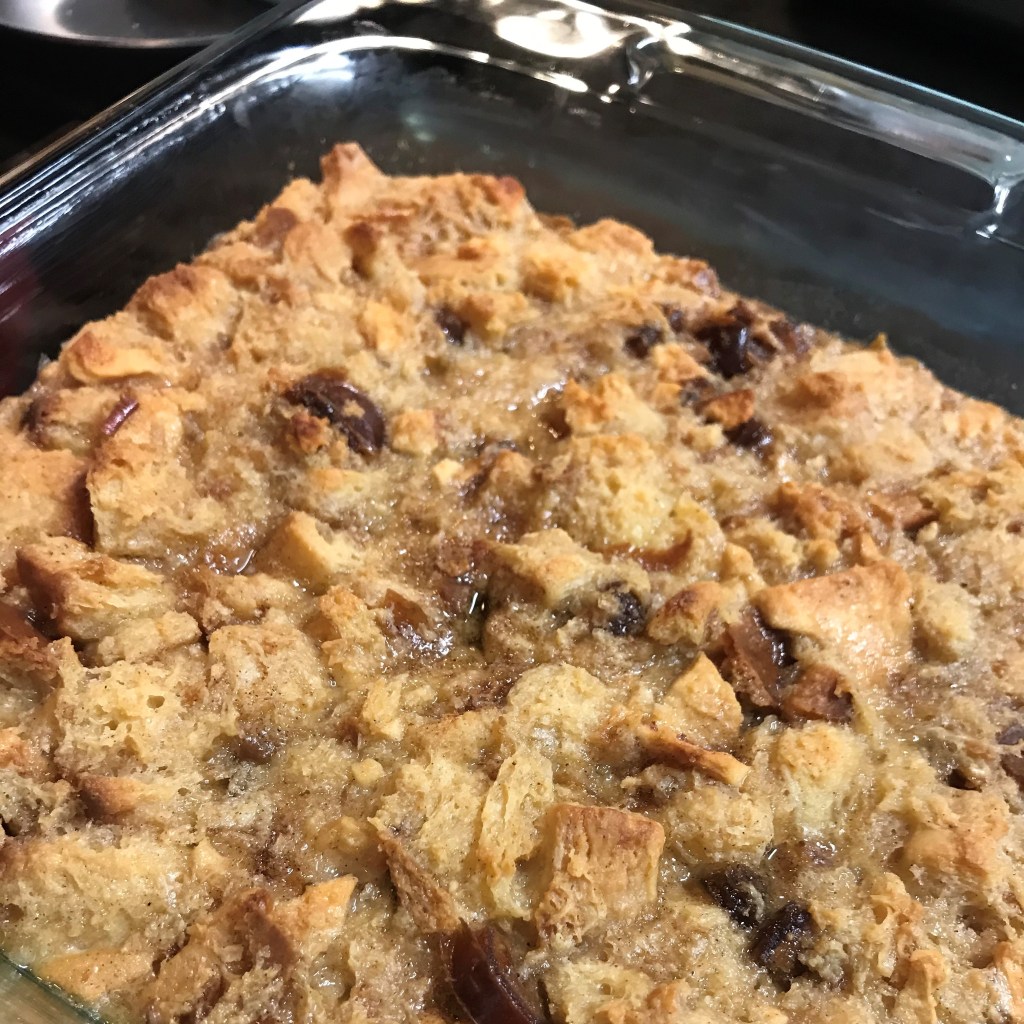
For this batch, I’ve followed Gram’s lead in pulling some scraps from the freezer. I made sourdough challah a couple months back, and I also found some leftover cinnamon rolls, just minding their own business in the freezer. I swapped out the raisins for chopped dates and dried apples, and some of the cinnamon for cardamom. Oh, and I also boozed them up a little bit by soaking the dates in some Grand Marnier (of course, I did).


Ingredients for “Basic Bread Pudding”

2 cups milk

4 cups coarse bread cubes

1/4 cup melted butter

1/2 cup sugar

2 beaten eggs

1/2 cup raisins (or other fruit)

1 tsp. cinnamon or nutmeg

Pour into 1 1/2 quart casserole. Set in pan of hot water. Bake at 350° F for about one hour or until knife inserted in center comes out clean.

For more “custardy” pudding, use 4 cups milk and reduce bread cubes to 2 cups.

Gram (on the back of the recipe card)

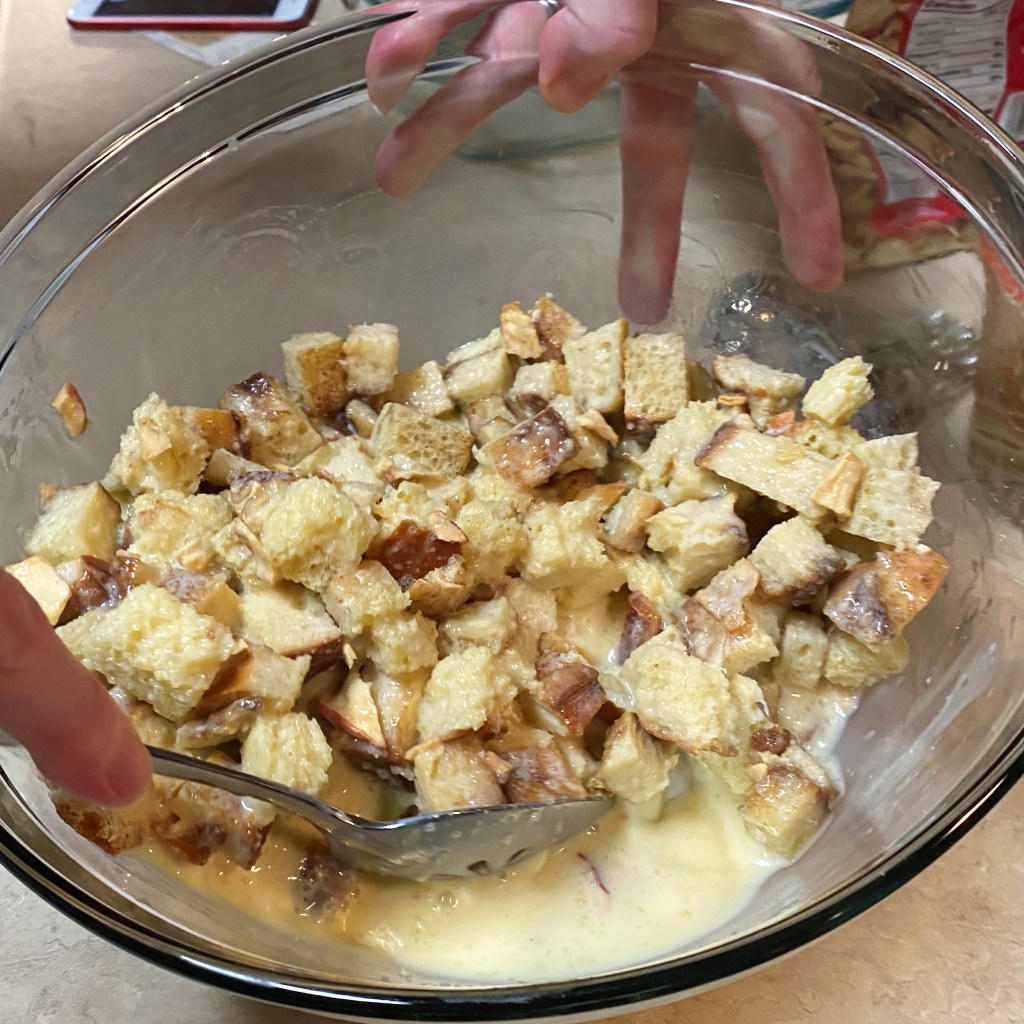
Follow along, to see how easy it is to create this luscious dessert! You’ll find a downloadable recipe to print at the end of the post. Enjoy!


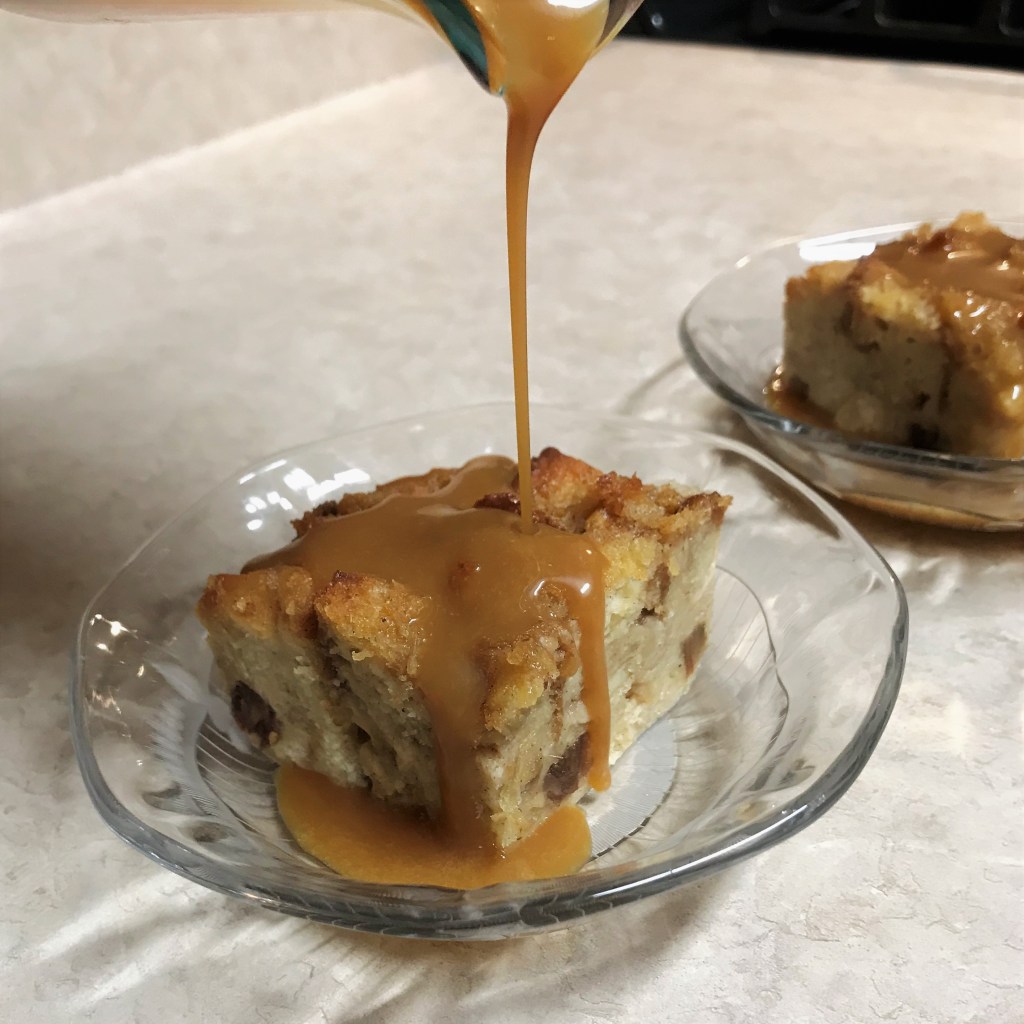
I suppose you want to know about the rich caramel sauce that’s drizzled all over the pudding? It’s salted caramel sauce, which I might have made from scratch (but didn’t). This time, I took an easy shortcut by warming salted caramel ice cream topping in the microwave with a few tablespoons of heavy cream. It thinned out nicely and provided the perfect finishing touch. Gram would’ve loved that idea, I’m sure of it. Just wait ‘til Christmas, when I share her recipe for molasses cookies!


Want to print this recipe?