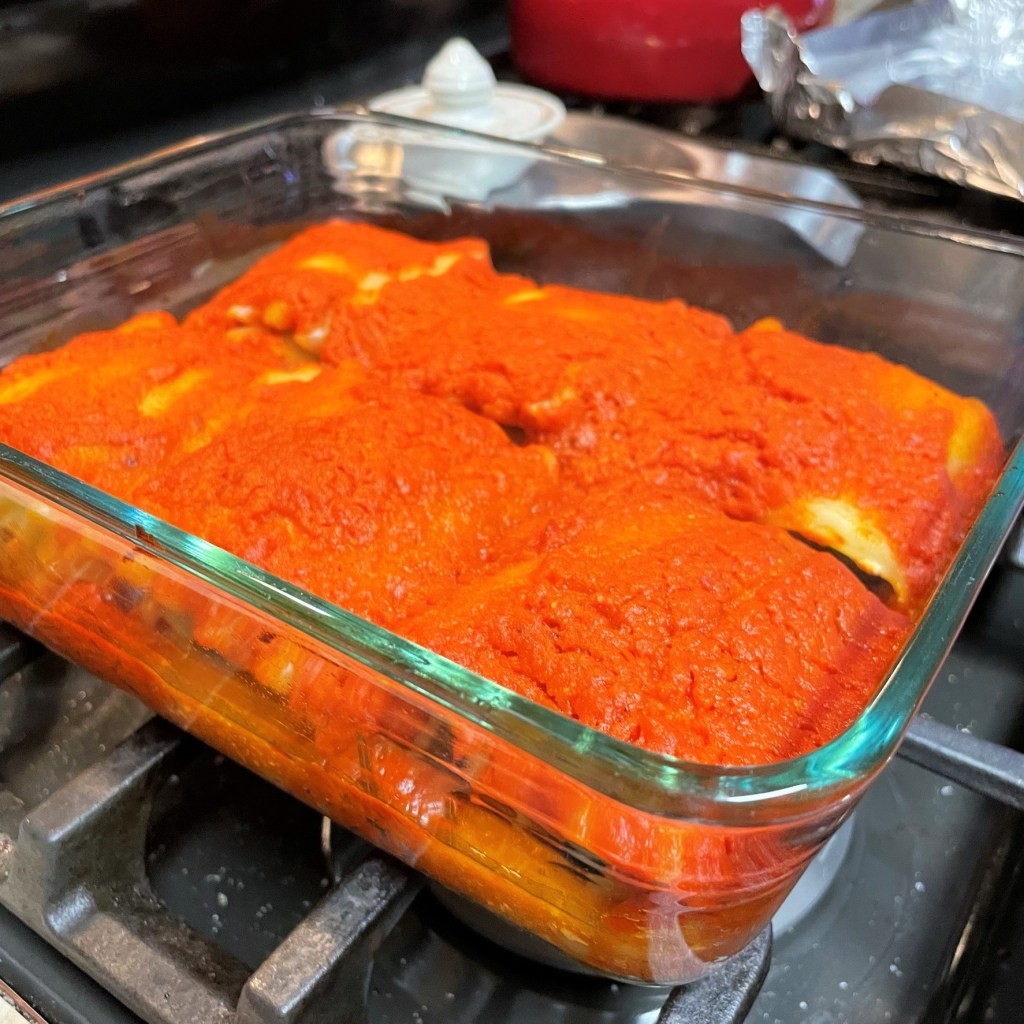
Roasted Ratatouille Ravioli

If I had a nickel for every time this year that I’ve told my husband, “I really wanna make some homemade pasta,” well, I’d have at least $1.35. Handmade pasta is a time-consuming project, but it’s so satisfying and gives me such joy that I just had to find the time. Ravioli is my favorite kind of handmade pasta because it gives me creative license not only for the pasta dough but also the filling that gets tucked inside. And— bonus points— I married it with ratatouille, my favorite summer dish. Yeah, this one was extra fun!

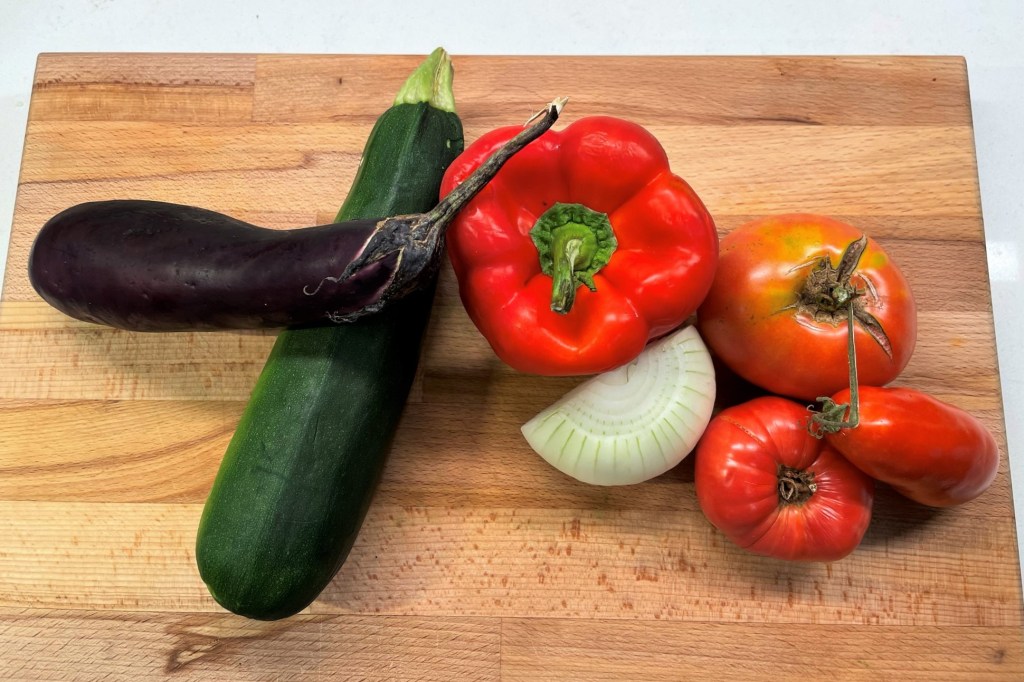
Ratatouille— a stew of eggplant, zucchini, peppers, onions and tomatoes— was indeed the inspiration for my ravioli adventure. I adore the melded flavors of the vegetables, along with the subtly floral Herbs de Provence that is traditional for ratatouille, and I look for new ways to enjoy it every summer. Once the idea hit me to pair all of that with handmade ravioli, there was no going back. 
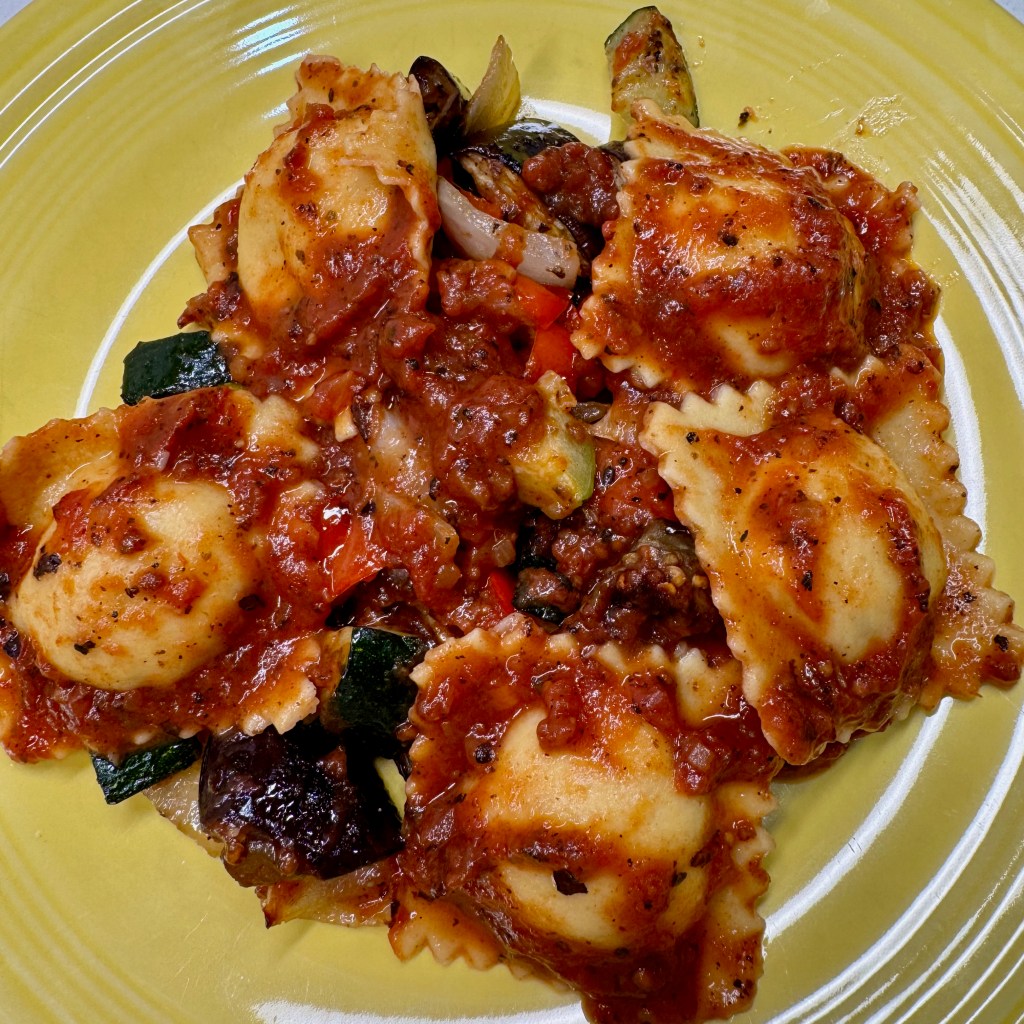
I wish I had made a triple batch of this!

First, the pasta dough

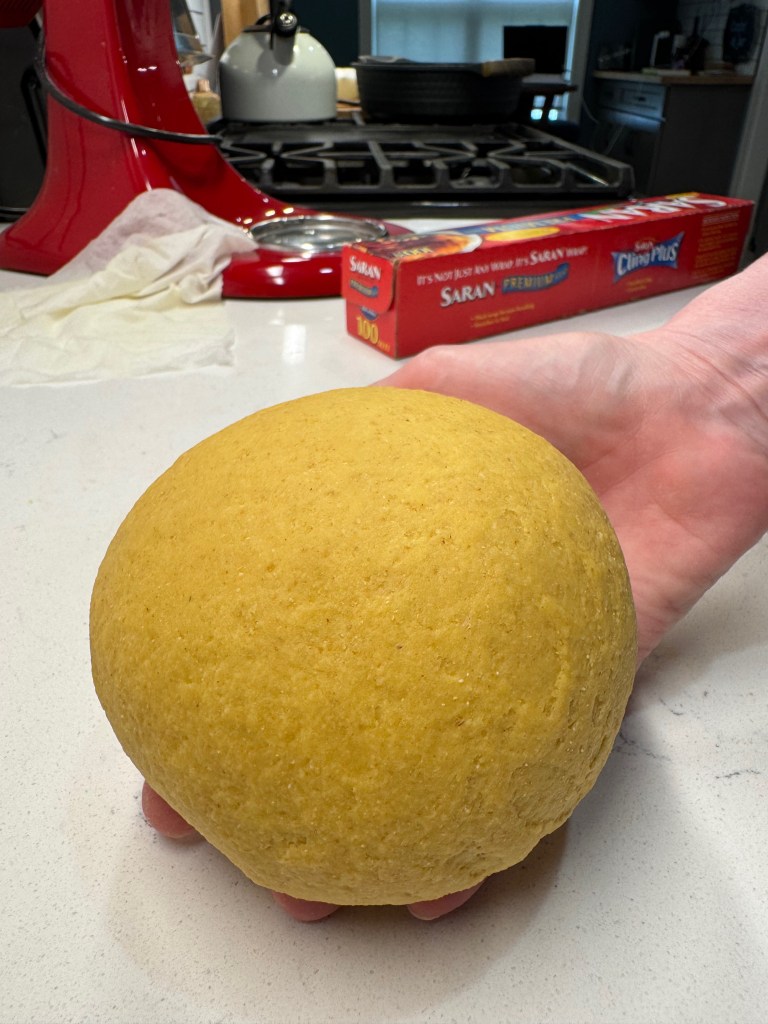
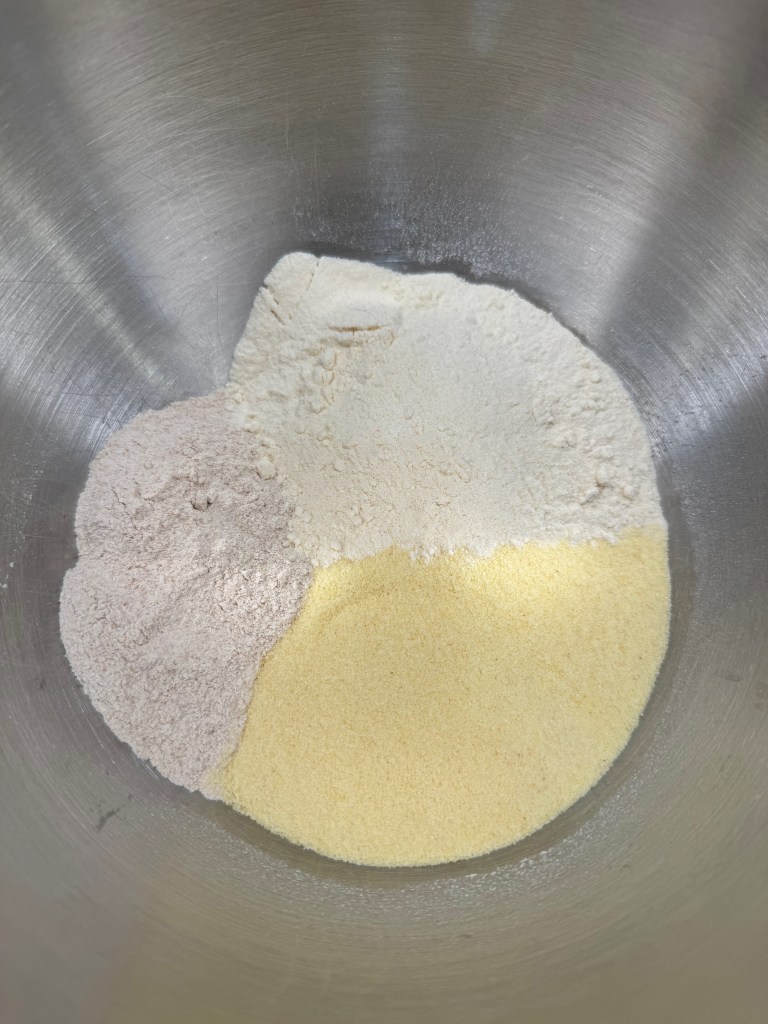
I used a mix of flour, including all-purpose, white whole wheat and semolina. A generous sprinkle of onion powder gave the dough an underlying flavor to support the ratatouille theme, and I gave it a good long kneading to build strength in the dough. I wrapped it up and tucked it into the fridge for a few hours to rest. If you need to save time, you could make the dough a day ahead.
The ravioli filling

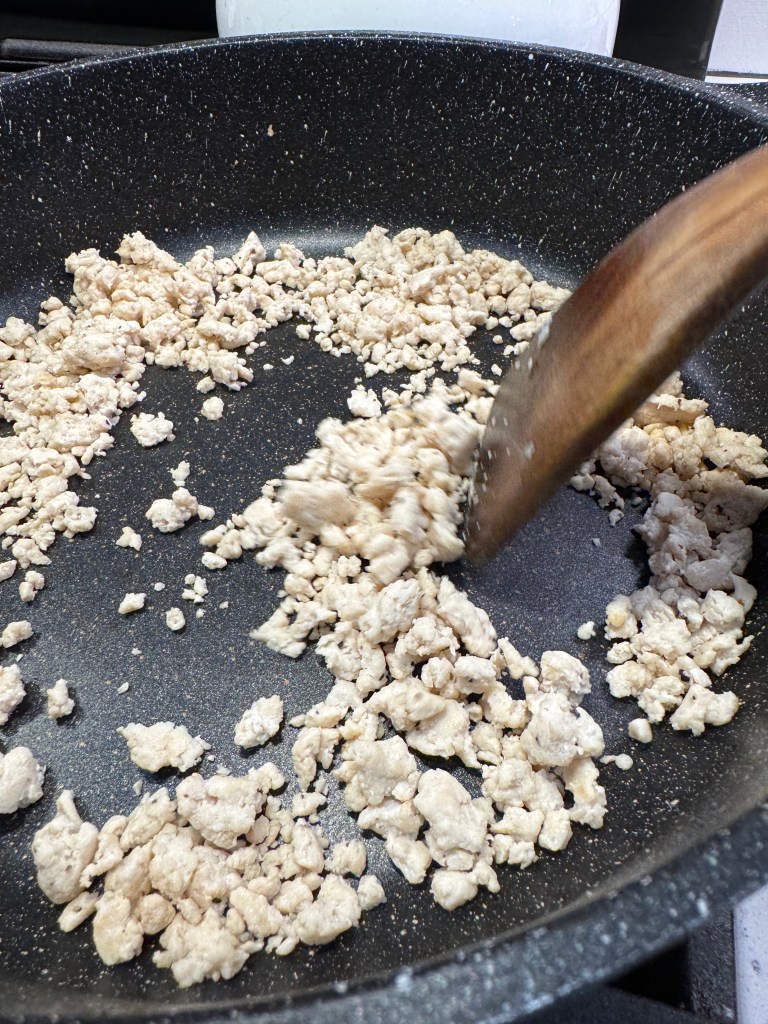
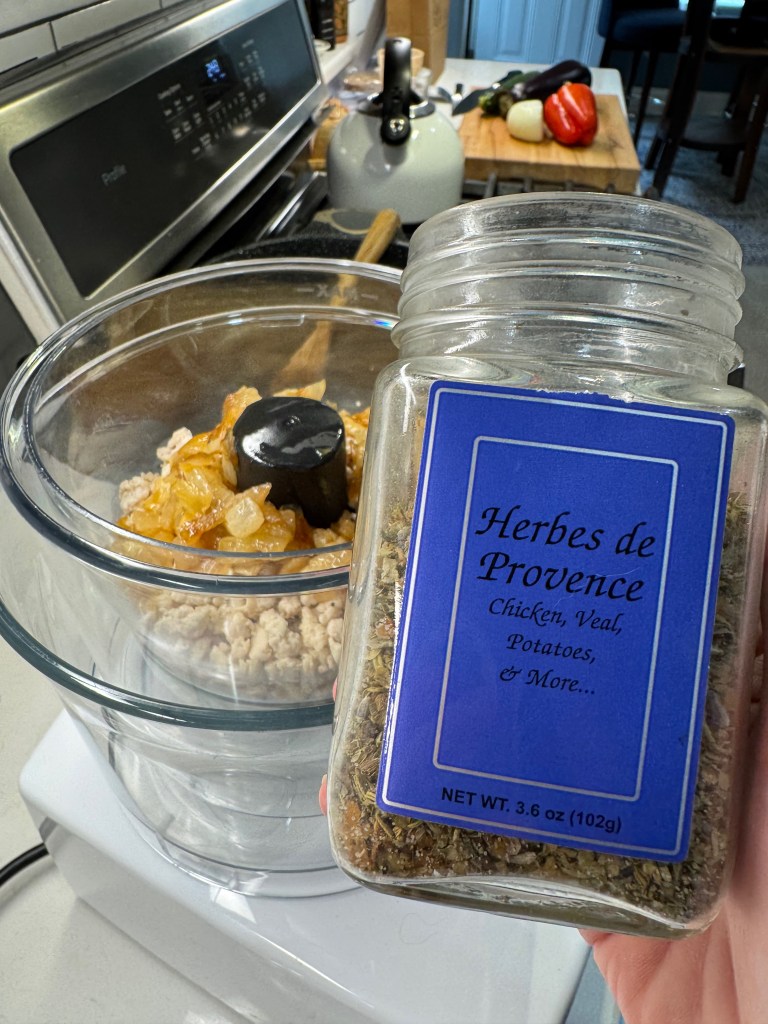
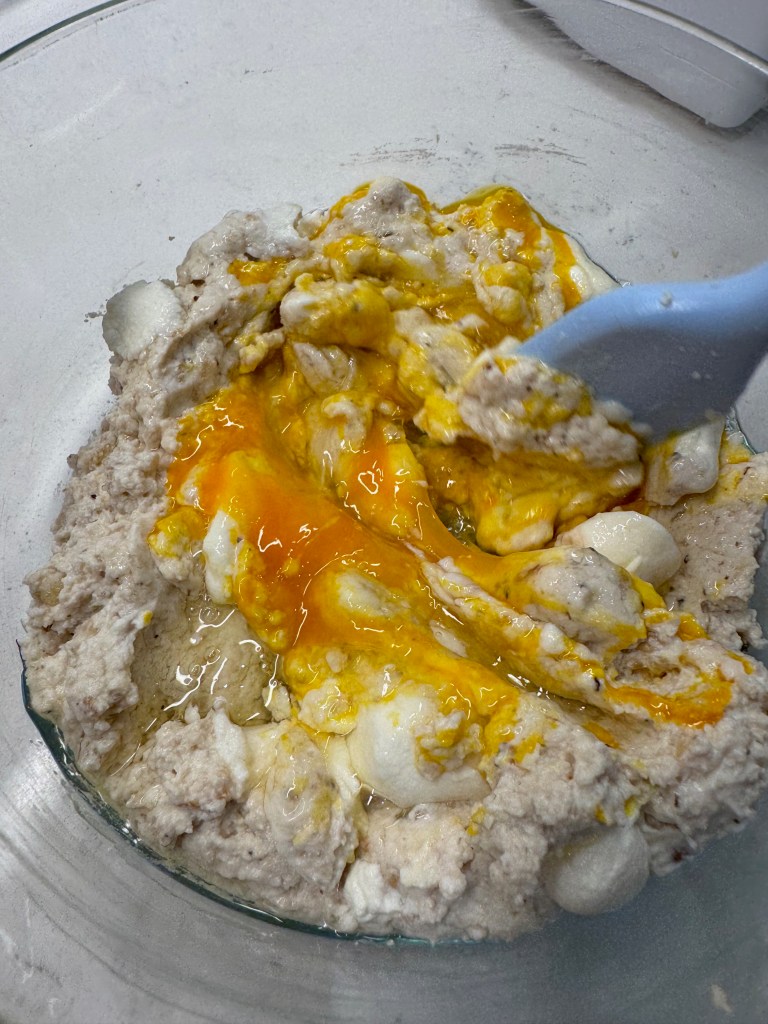
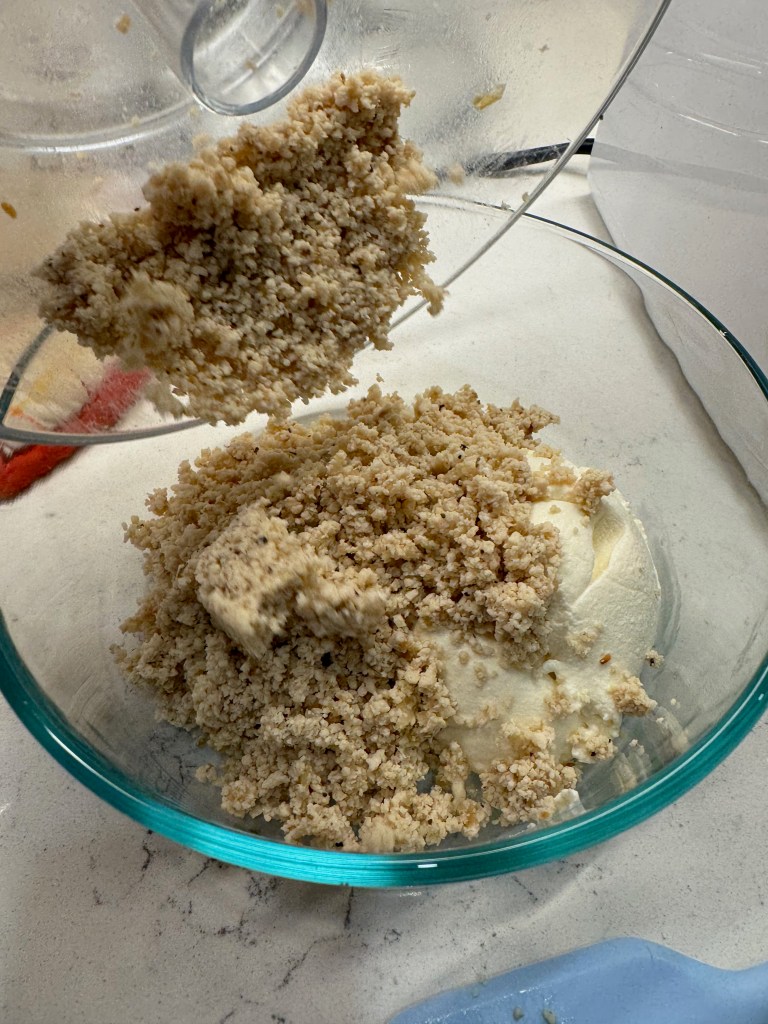
Next up, I pondered the filling for ravioli, which had to be more than just ricotta. After my less-than-great lab report this year, I’ve been more conscious of the saturated fat I consume, and so it occurred to me that maybe I’d incorporate a different protein into the mix. Lean ground chicken worked great, and I pulsed it in the food processor to make it as fine as possible. Also in the mix were golden caramelized onions and a pinch or two of Herbs de Provence, plus some lemon zest, and I blended all of those with strained ricotta and an egg to hold it together. This part of the recipe could also be done a day ahead.


Bend me, shape me, anyway you want me

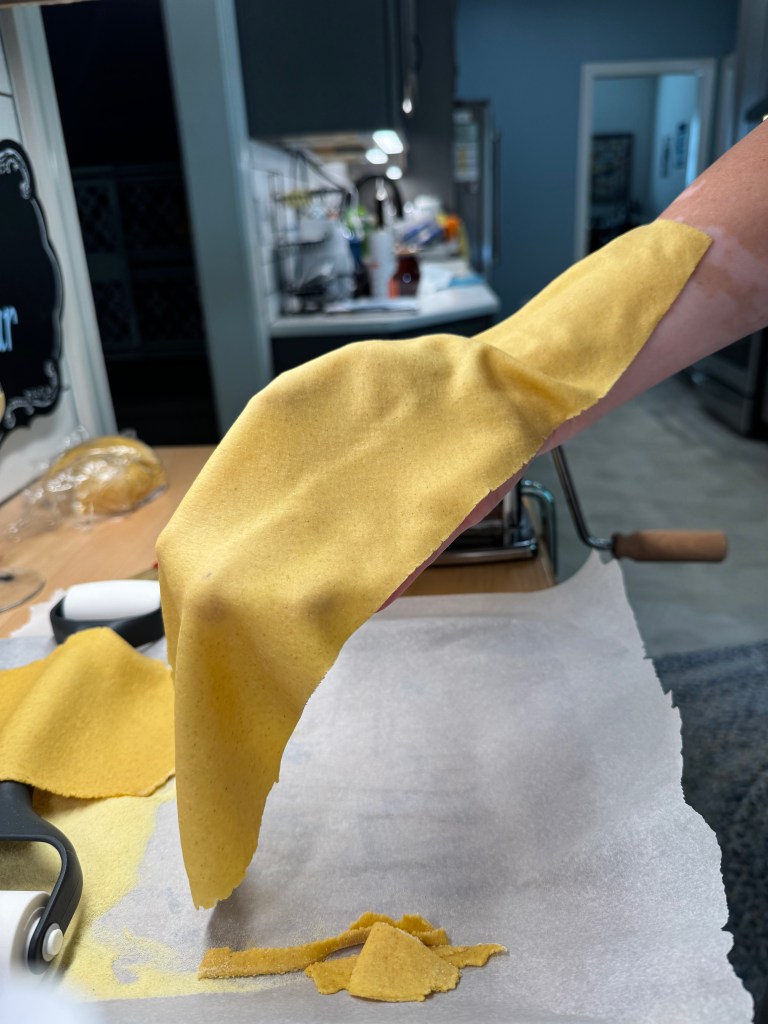
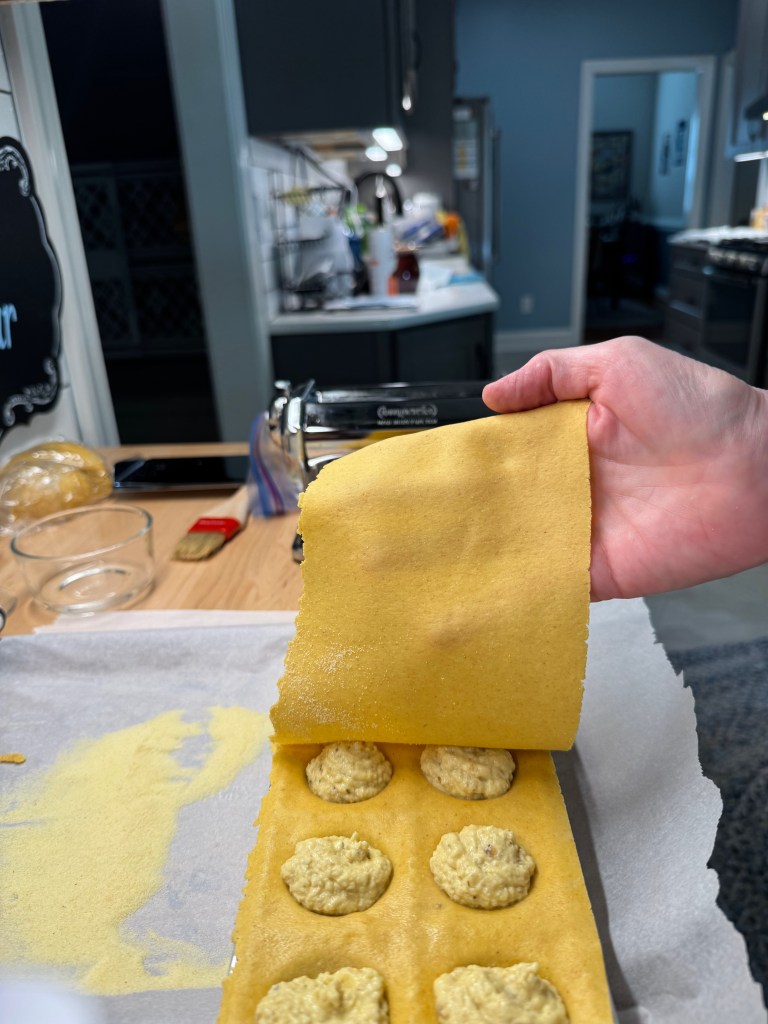
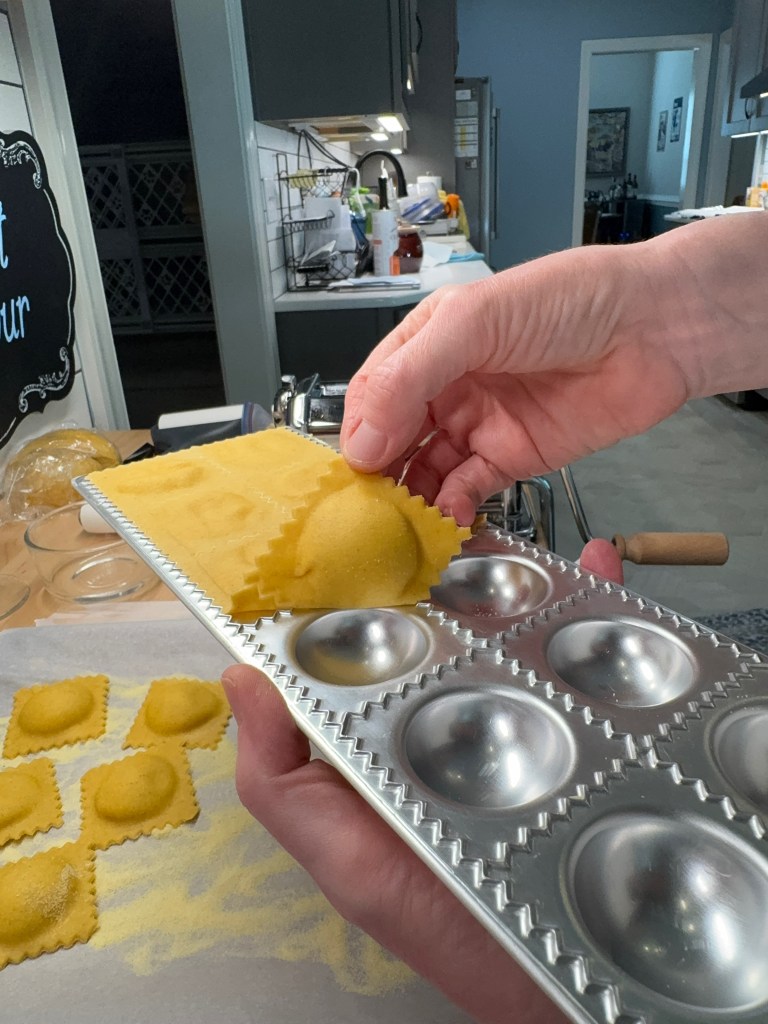
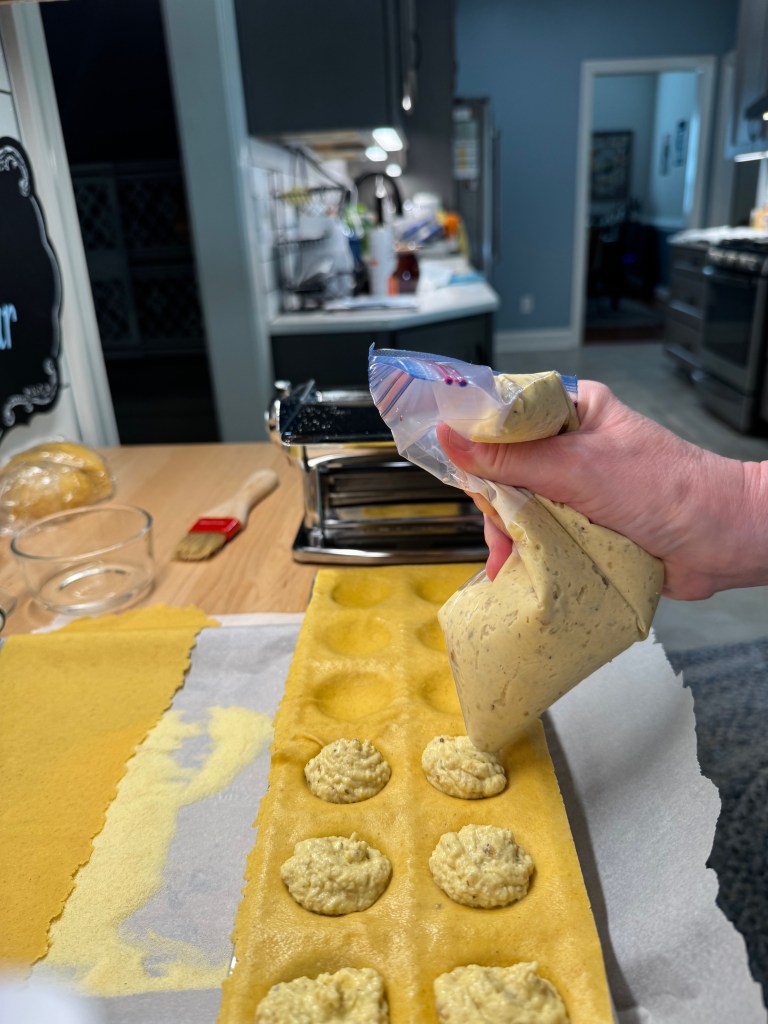
By the time the filling was prepared, I was ready to roll out the pasta dough into thin sheets, and I used my handy ravioli mold to make uniform little pillows. This is the fun part! It’s important when you make handmade pasta that you give it a little bit of time to dry before dropping it into boiling water, so when the ravioli were done, I placed them on a semolina-dusted cookie sheet. For more detailed instruction on how to make ravioli— with or without special gadgets— check out my post for handmade spinach ricotta ravioli, which includes tons of photos and tips, along with lessons I learned myself along my pasta-making journey. 


Ratatouille = EZ-POT

Finally, I made the ratatouille itself, which is delicious as a stew but perfection when roasted. I always remember this French country dish by the acronym “EZ-POT” because of Next Food Network Star season 5 winner, Melissa D’Arabian, who simplified the ingredients of into a five letter description of a dish that really is “e-z,” and usually is made in a “pot.” This little memory trick has saved me on more than one occasion when I craved ratatouille but forgot to make a farmers’ market shopping list. 😉

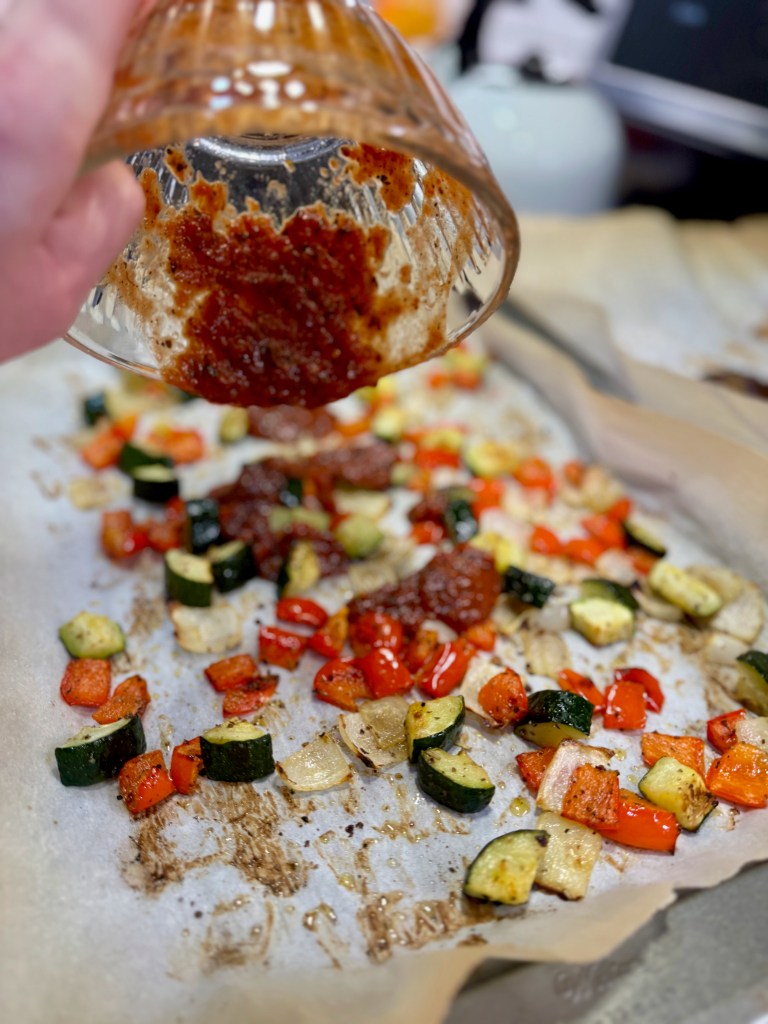
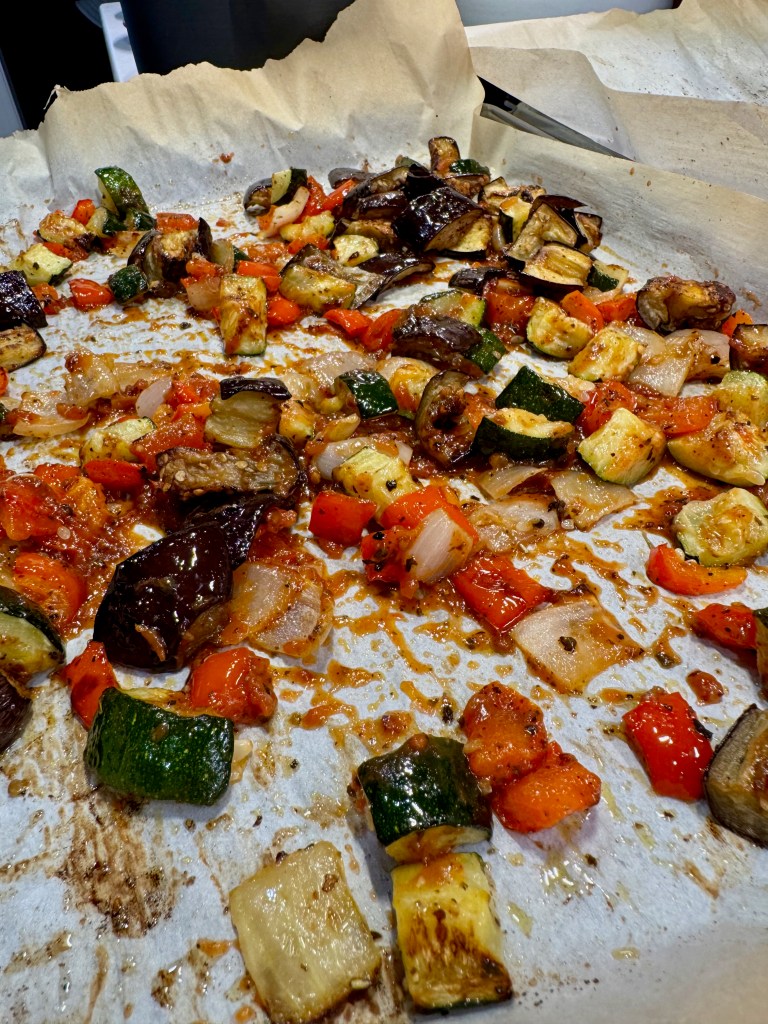
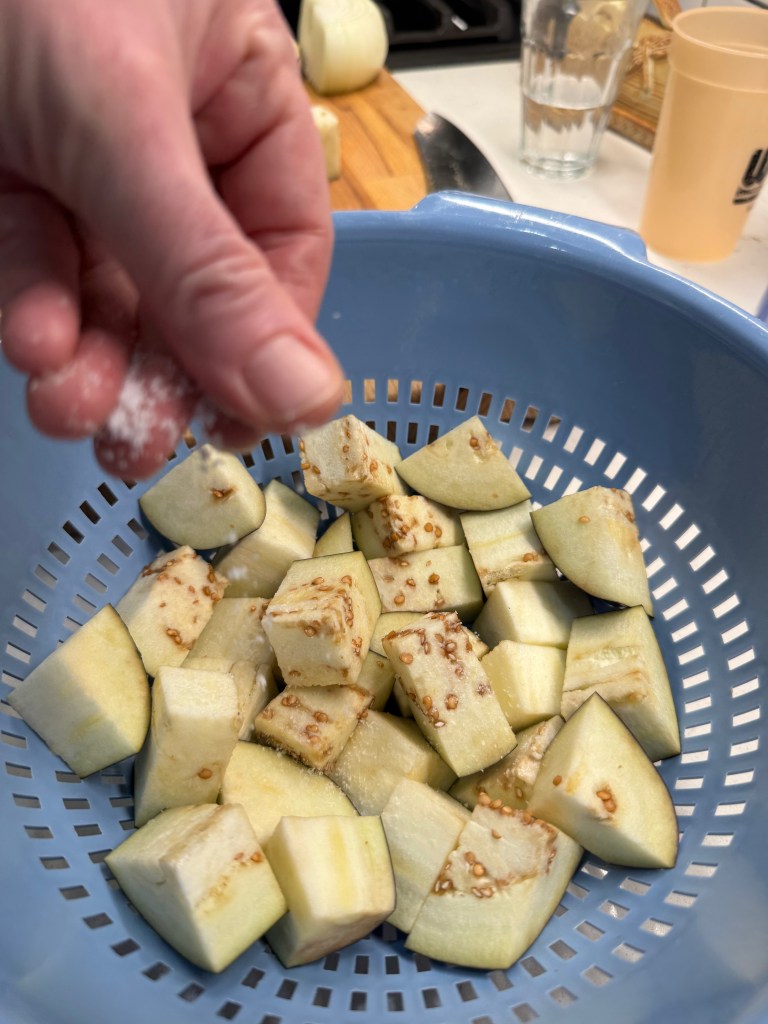
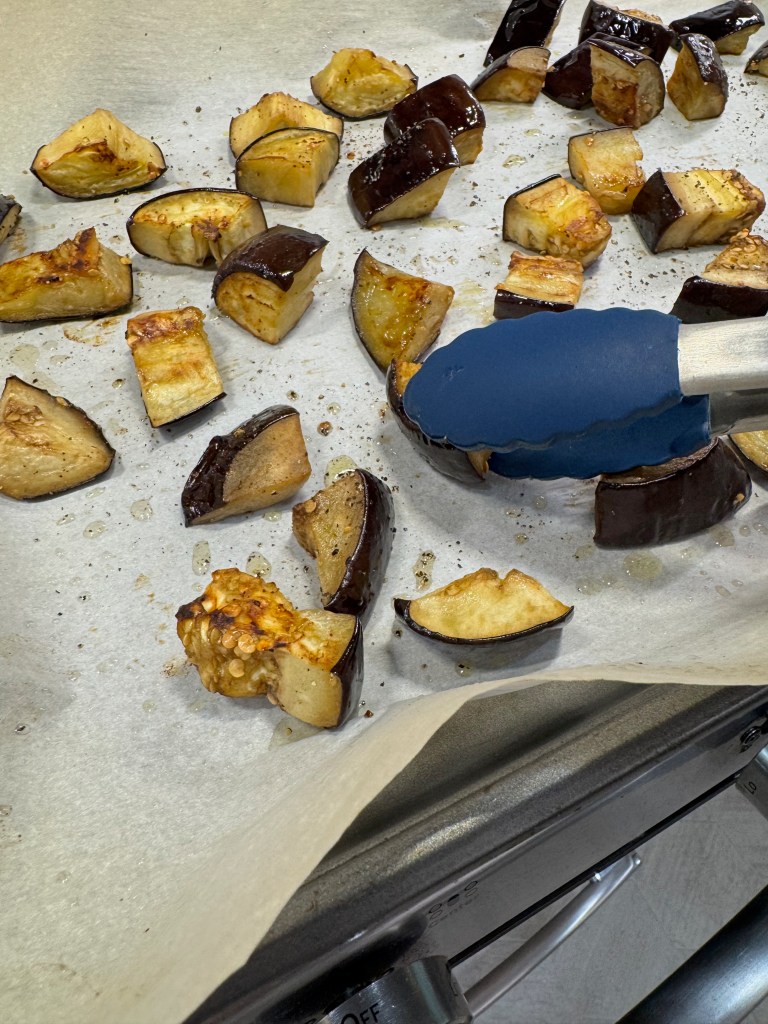
I salted my eggplant chunks for a few minutes first, to help draw out excess moisture, and this worked really well for achieving crispy edges when they roasted. The other vegetables were roasted on a separate sheet, and then I tossed everything gently in a fire-roasted tomato sauce which, if you can believe it, was from a can! Sure, I could have made my own sauce, but I was trying to be thrifty and use up some leftover pizza sauce, and it was a winner! If you make your own sauce, keep the flavors simple and try to make it on the thicker side.

While all of this was happening, I had the water on to boil for the pasta. I love this part of seeing a meal come together, especially one that I’ve pondered for a while, and though it satisfied my desire to make handmade pasta, it somehow also inspired me to want to make more handmade pasta. Stay tuned! 


Roasted Ratatouille Ravioli

  • Servings: 4
  • Difficulty: Intermediate
  • Print

This recipe is split into three parts for the pasta dough, the ravioli filling and the ratatouille vegetables with sauce. If you love the hands-on experience, this is worth the trouble. If the steps are too much for you, it's easy to make the pasta dough and filling ahead and finish the dish one or two days later. Not ready to make your own pasta? No problem! The chicken-ricotta filling and roasted vegetables would be awesome in a lasagna, using store-bought noodles. Adapt it however makes you happy.


Ingredients

  • 165g all-purpose flour
  • 60g white whole wheat flour
  • 45g semolina flour
  • 1/2 tsp. onion powder
  • 3 large eggs, at room temperature
  • 50g to 70g room temperature water

Notes: Depending on your overall environment, you may need to adjust the water somewhat to achieve a dough that is smooth and supple, without being too dry or too wet. If the dough is too dry with the maximum amount of water recommended, wet your hands and knead until smooth. Repeat as needed. You may end up with more pasta dough than is needed for ravioli. Simply roll it out with flour and cut into strips. Let it dry and freeze in zip-top bags. Cook from frozen.

Directions

  1. Combine flours and onion powder in the bowl of a stand mixer, fitted with the dough hook
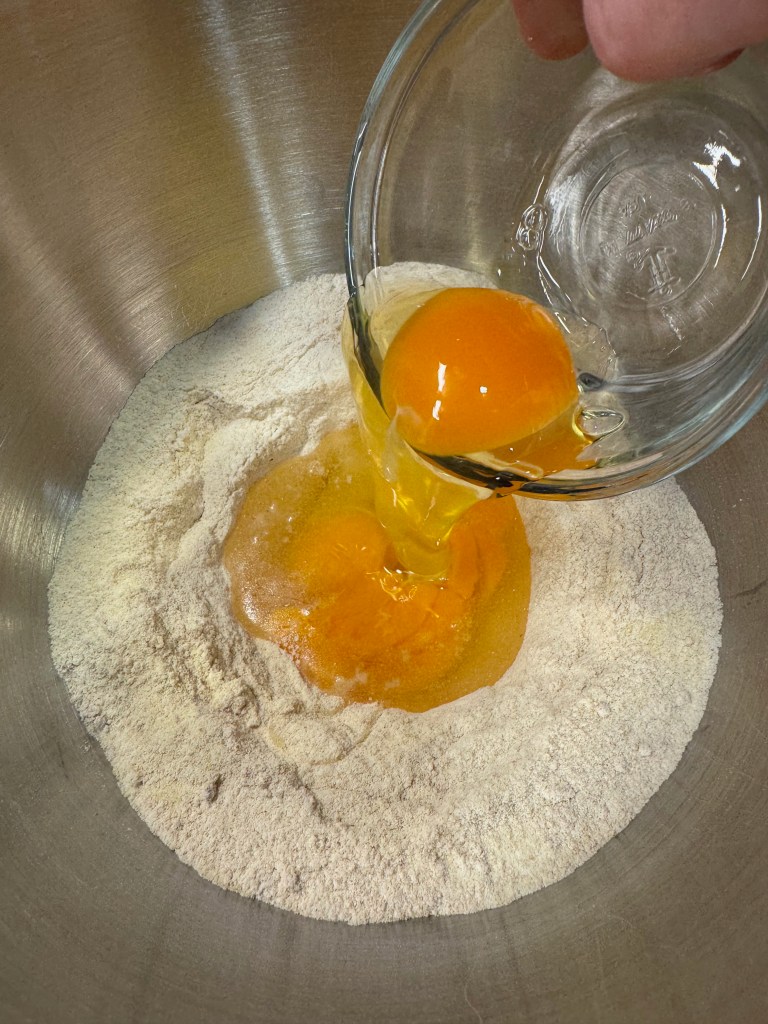
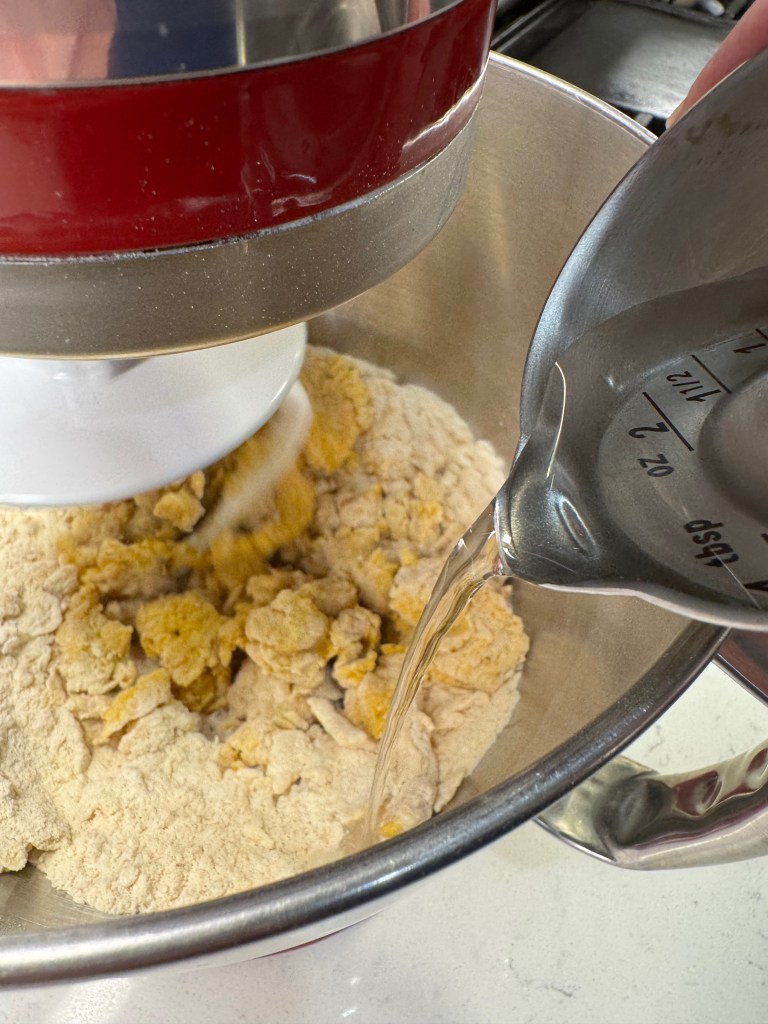
  2. Make a well in the center of the flour mixture and add eggs. Knead with the dough hook on speed 3 until dough starts to come together (it will be dry). Drizzle in water, a little at a time, until all flour is incorporated and dough is gathered up on the hook. This may take extra water.
  3. Transfer dough to the counter and knead by hand for about eight minutes, until smooth, firm and supple. Wrap dough tightly in plastic wrap and refrigerate at least 30 minutes or up to a day before rolling and shaping.
  4. Divide dough into sections and roll out with a pasta machine or rolling pin to approximately 1/16″ thickness. Use a piping bag to apply filling, then lightly brush another sheet with cold water and seal up each pillow, pushing out any air as you go. Transfer raviolis to a parchment-lined cookie sheet sprinkled with semolina.

Ingredients

  • 1 medium sweet onion, chopped
  • 1 Tbsp. extra virgin olive oil
  • Kosher salt and pepper
  • 1 lb. ground chicken breast
  • 1/2 tsp. Herbs de Provence seasoning
  • 1 tsp. lemon zest
  • 1 cup whole milk ricotta, strained for 30 minutes to remove excess moisture
  • 1 large egg

Note: If you wish, you could skip the ground chicken and double the strained ricotta for a vegetarian version of this dish.

Directions

  1. Sauté onions in olive oil over low heat with a sprinkle of salt. Toss frequently, until all the moisture has evaporated and onions soften and take on a deep golden color. Transfer to a bowl and increase heat to medium.
  2. Add ground chicken to the same pan, cooking gently until meat is no longer pink, but do not let it brown. Season the meat the salt and pepper and allow it to cool.
  3. Add meat mixture and caramelized onions to the bowl of a food processor. Add Herbs de Provence and lemon zest. Pulse a few times until the meat is ground to a fine texture and onions are no longer visible in whole.
  4. Transfer processed mixture to a bowl with ricotta and egg and stir together until evenly blended. Refrigerate this mixture until you’re ready to fill the ravioli.

Ingredients

  • 1 small eggplant (keep the peel on), cut into large cubes
  • 1 medium zucchini, but into large chunks
  • 1 red bell pepper
  • 1/2 medium sweet onion, cut into chunks
  • Extra virgin olive oil
  • Kosher salt and pepper
  • A couple pinches of Herbs de Provence seasoning
  • 2 cups fire-roasted tomato sauce (ours was a thick pizza sauce)

Note: Keeping the peel on the eggplant and cutting it into large chunks is key to getting a crispy outer texture. Aim for pieces large enough that every piece has a bit of peel on it, as this will help the eggplant hold its shape during roasting so that it doesn’t turn mushy.

Directions

  1. Heat oven to 450° F, with rack in center position. Prepare two baking sheets by lining with parchment paper. Place eggplant cubes in a colander and toss gently with 1/2 tsp. salt. Let it rest half an hour, then gently rinse and pat dry before proceeding. Toss with a tablespoon of olive oil on one of the baking sheets and season with pepper only (they will have plenty of salty flavor from the prep stage).
  2. Toss zucchini, bell pepper and onion chunks in a tablespoon of olive oil on the second baking sheet. Season with salt, pepper and Herbs de Provence. Roast both sheets of vegetables for about 30 minutes, turning pieces over halfway through.
  3. Meanwhile, bring a pot of salted water to a gentle boil and add the ravioli by hand to prevent sticking. Cook for six to seven minutes; the pillows should all be floating and the sealed edges of pasta should be tender.
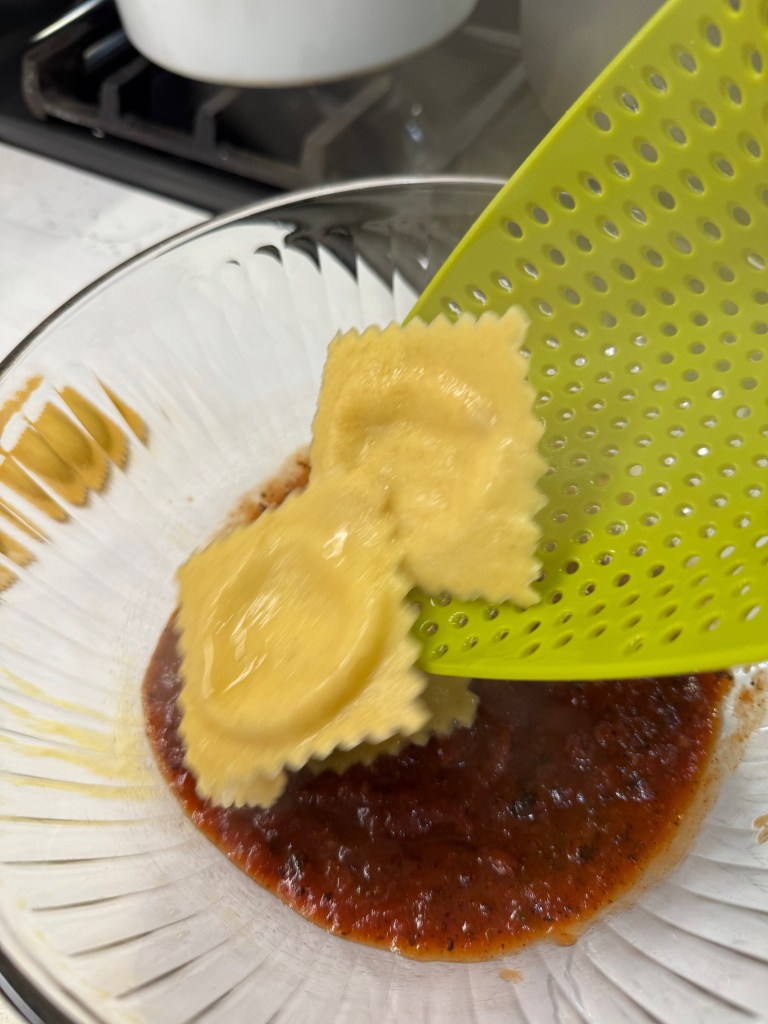
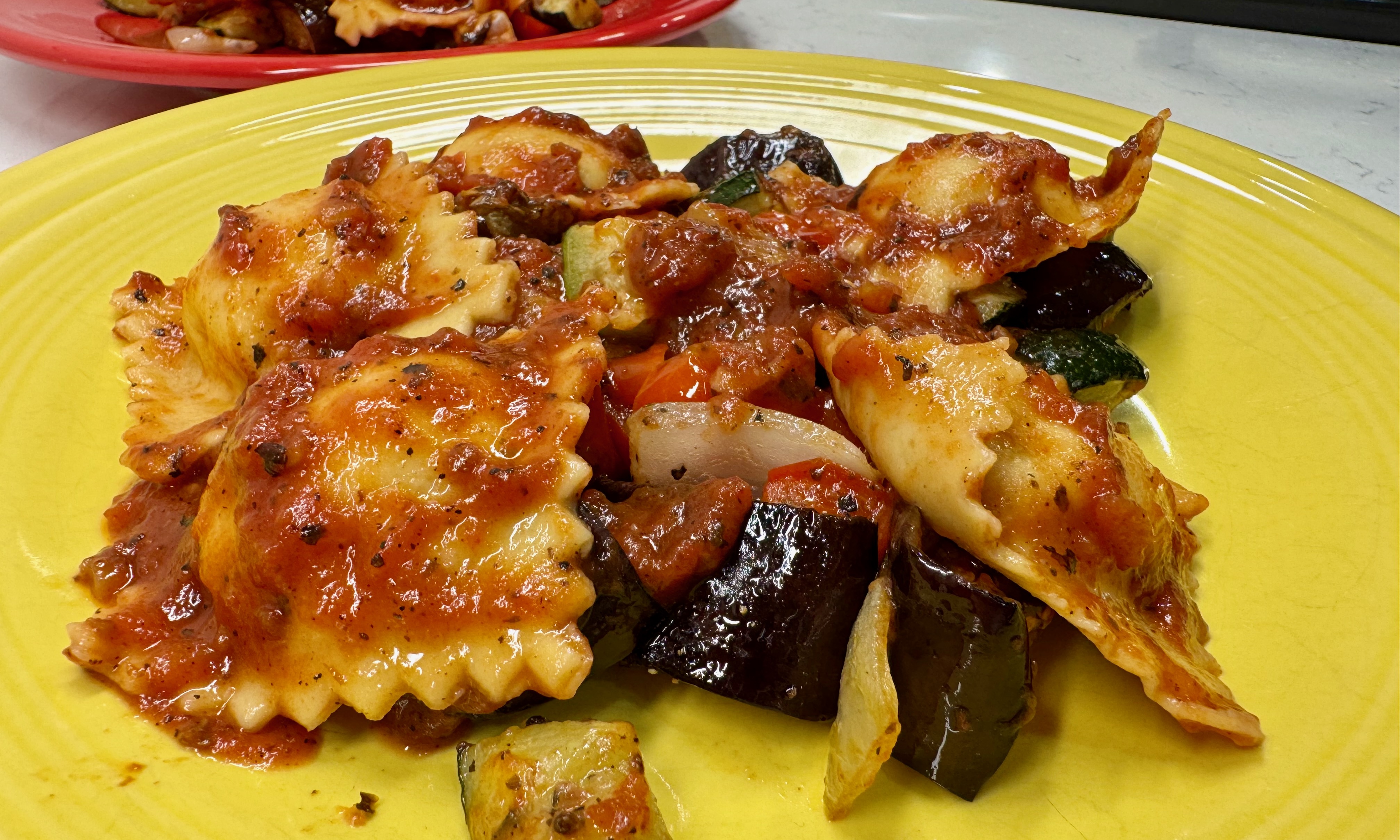
  4. Retrieve the pasta with a vented spoon and transfer directly to the tomato sauce. Toss gently and arrange the ravioli on serving plates. Toss the roasted vegetables in the remaining sauce and spoon over the ravioli portions. Serve at once.

Clams Casino Pizza

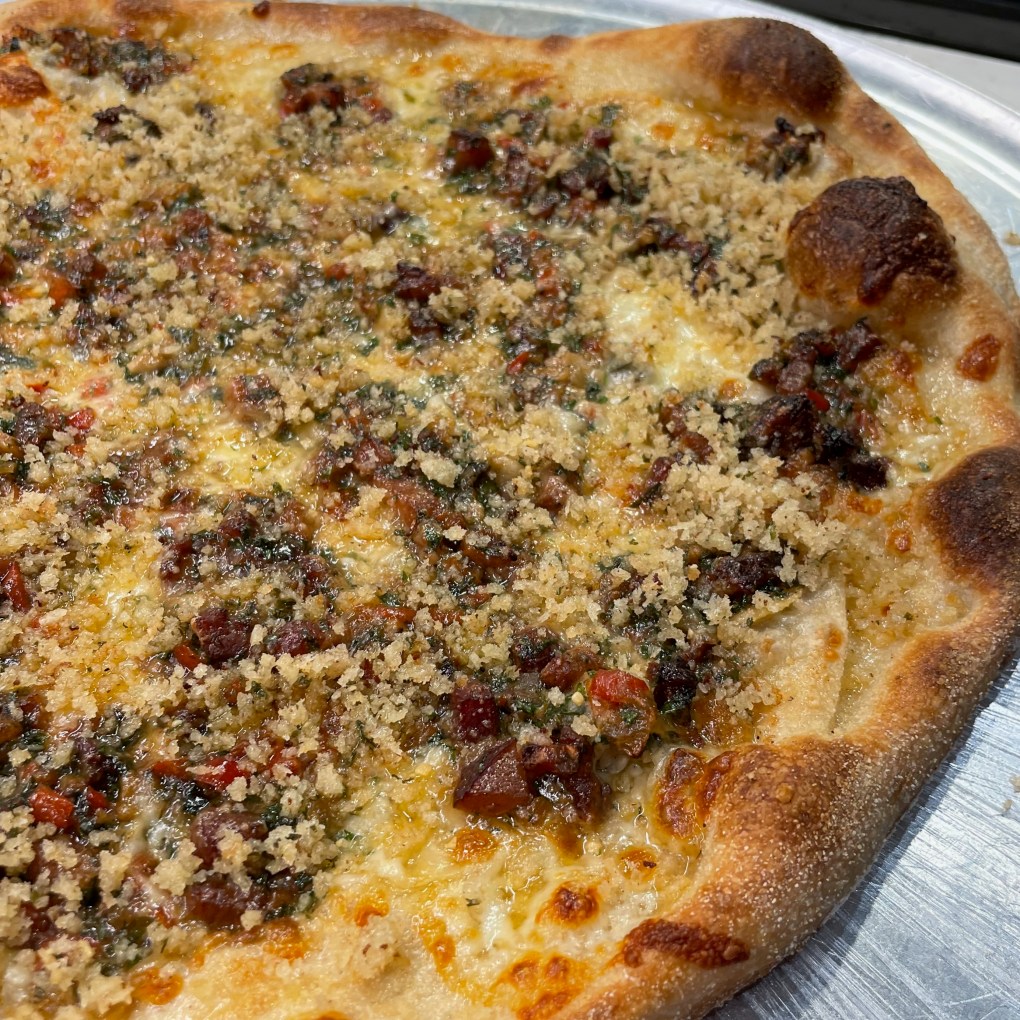
Call me sentimental, but I’ve been digging some of the retro standards lately. Nostalgia hits heavy during the holidays, and my recent tradition of reimagining some old-school favorites on top of a pizza for New Year’s continues with this combination of clams, bacon, pepper, shallots and garlic— it’s a clams casino pizza!

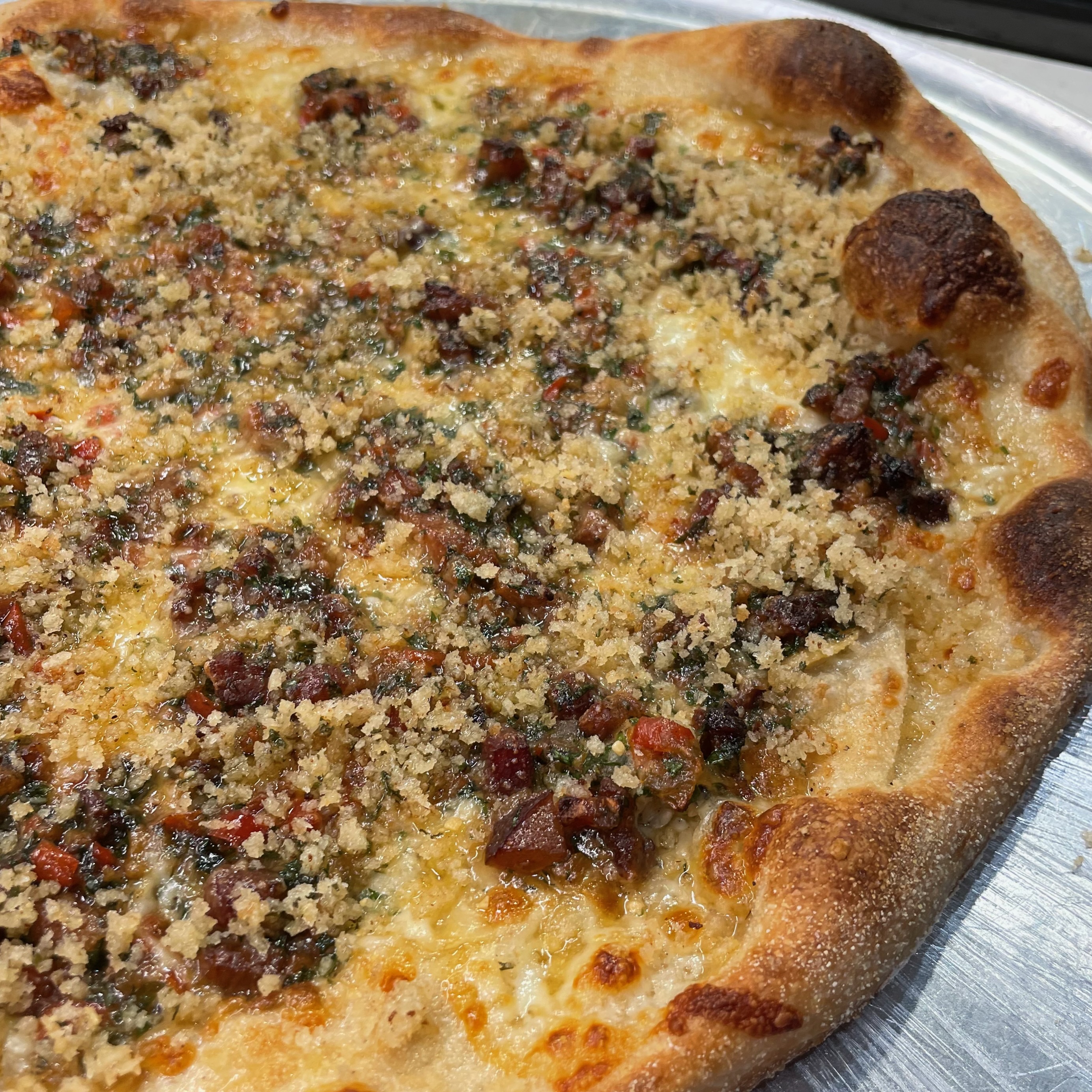
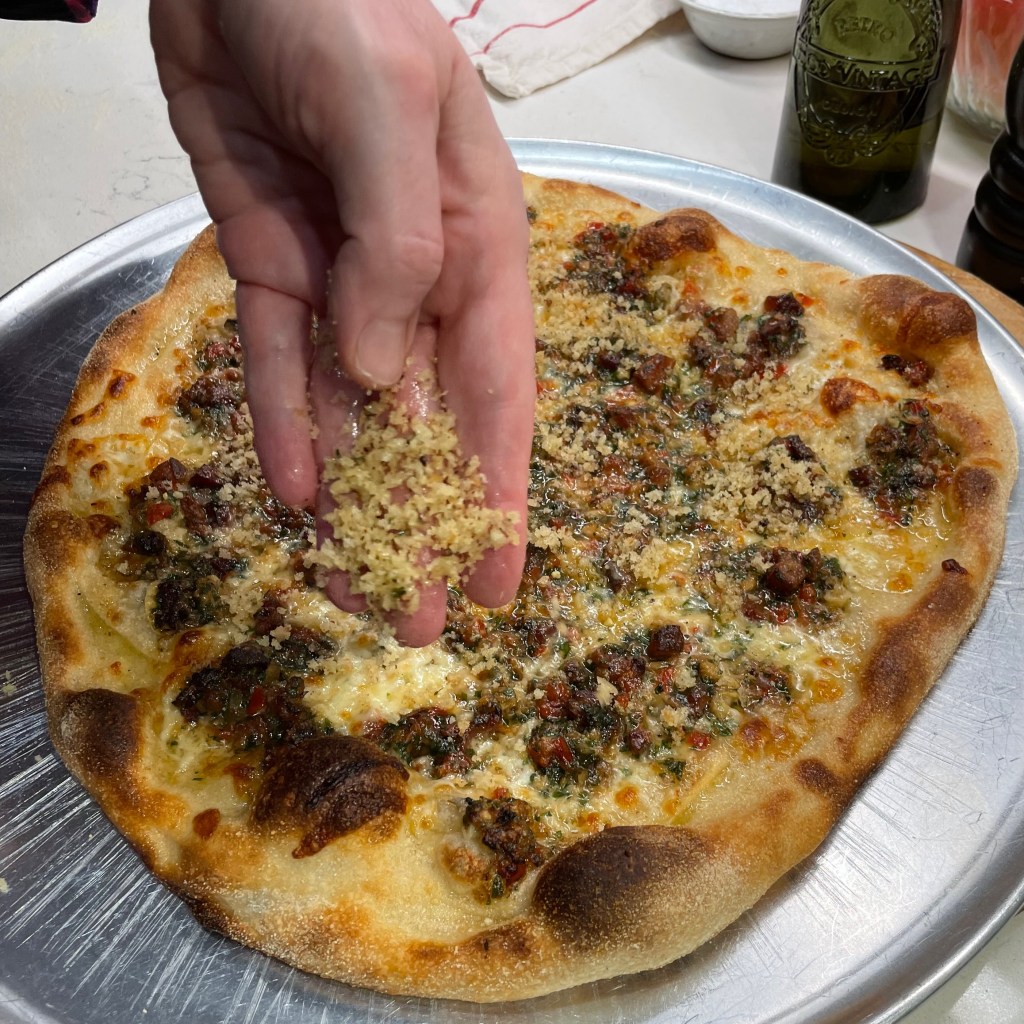
It even has crisp, bacon-y panko crumbs on top!

The literal translation of “casino” from Italian is “big mess,” and I find that more fitting of the dazzling Las Vegas strip than the flavors of the dish that that was first created in 1917 at  Narragansett Pier Casino in Rhode Island— or was it 1900 in New York’s Central Park Casino? As usual with recipe history, the details are murky, but with such a delectable combination of flavors, I can understand why people would fight to lay claim to it.

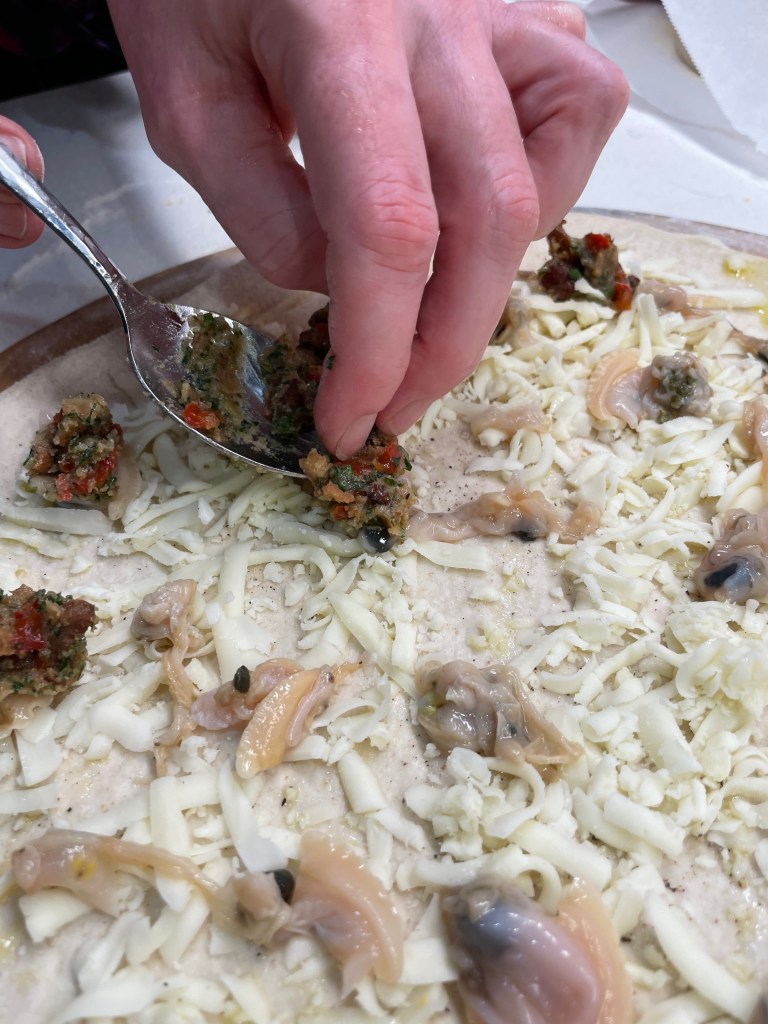
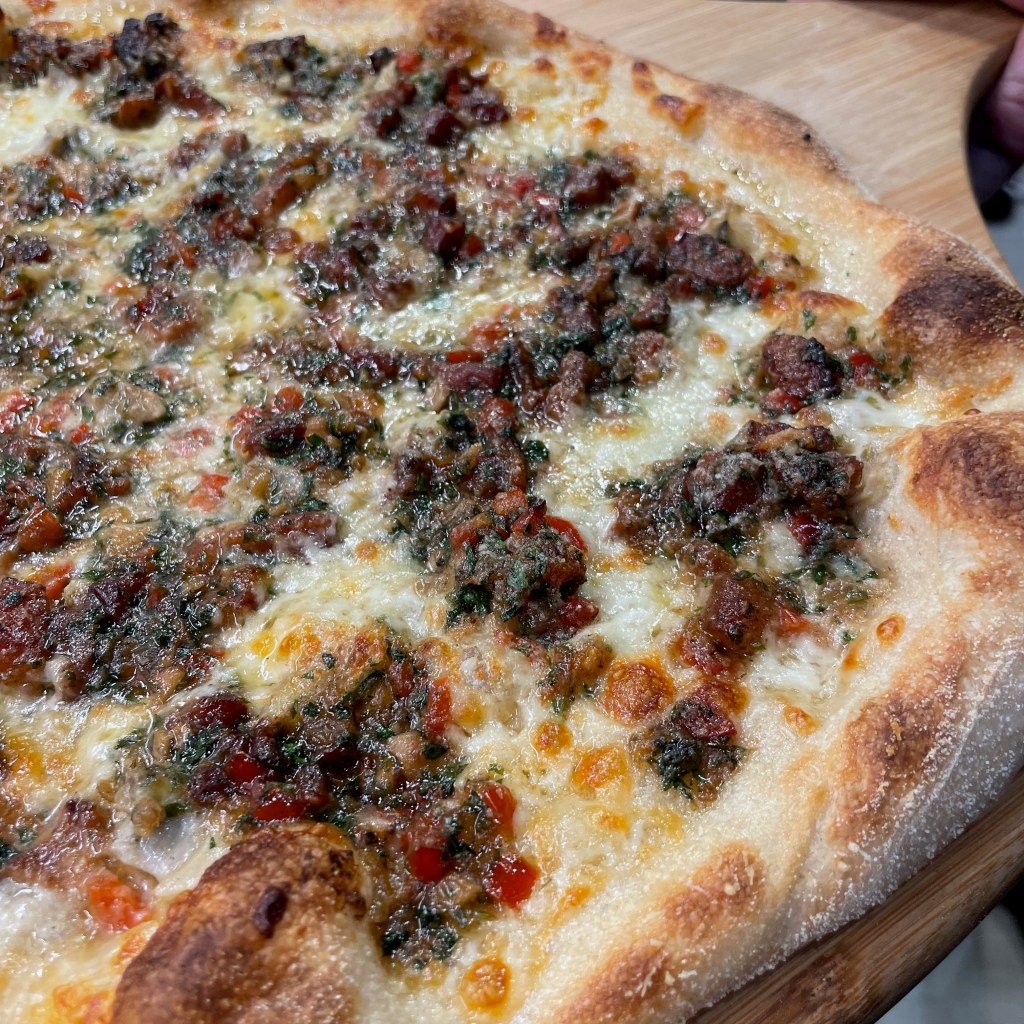
Transforming these flavors onto a pizza was actually pretty simple. As with my other fancy New Year’s Eve pies, there is no red sauce; only cheese as the base layer, followed by freshly shucked littleneck clams and then the casino flavors that go on by the spoonful. How did I pack all that flavor into one delicious pizza topping? Let’s get into it!

I’m always ready to make pizza!

Clam Prep 101

First, you want smallish clams for this recipe; littlenecks are ideal. To prep fresh clams for cooking, you want to clean them, inside and out. Cleaning the outside is straightforward, but how do you check the insides for grit and sand? This is called “purging.”

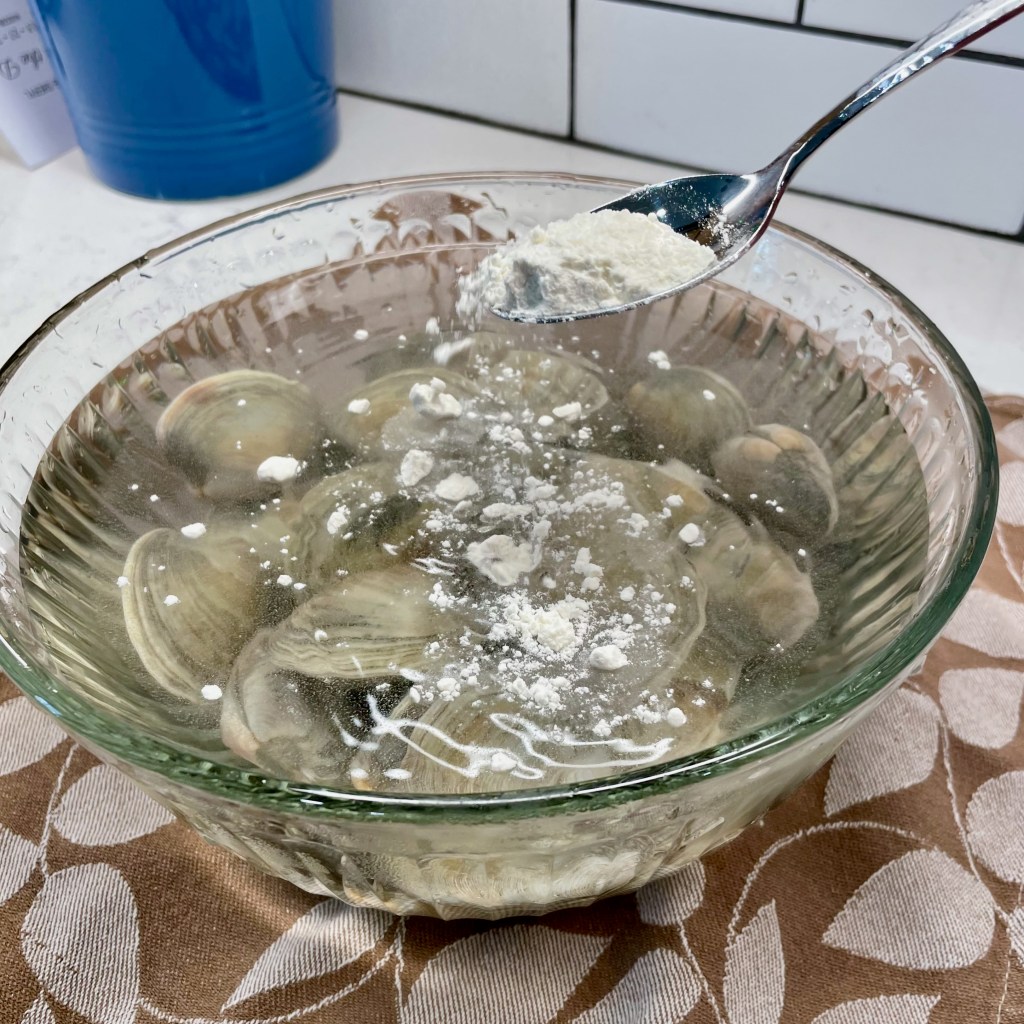
Place the clams in a bowl with cold water and a teaspoon of salt. Sprinkle a hefty spoonful of flour over the clams, to give them a reason to open and flush out the water they take in. After 30 minutes or so, lift the clams out into a colander and check the bowl for sand and grit. Repeat this process until water appears clear, and then empty the water and give each clam a quick scrub with a stiff-bristled brush, such as a potato brush. Do this purging process right before you plan to cook the clams, and keep them cold throughout.

This process can take more than an hour, so build in some time for this important step.

Clams casino butter

Moment of truth here, this stuff is where the magic happens. I was inspired to make my clams casino pizza when I was scrolling through my search results for “classic seafood appetizers,” and this article by Daniel Gritzer at Serious Eats caught my eye. I have loads of respect for Daniel’s approach to food, and I share his passion for finding better outcomes with less work. The moment I saw that he was making a compound butter for Clams Casino (the appetizer, not a pizza), I knew exactly what to do. 


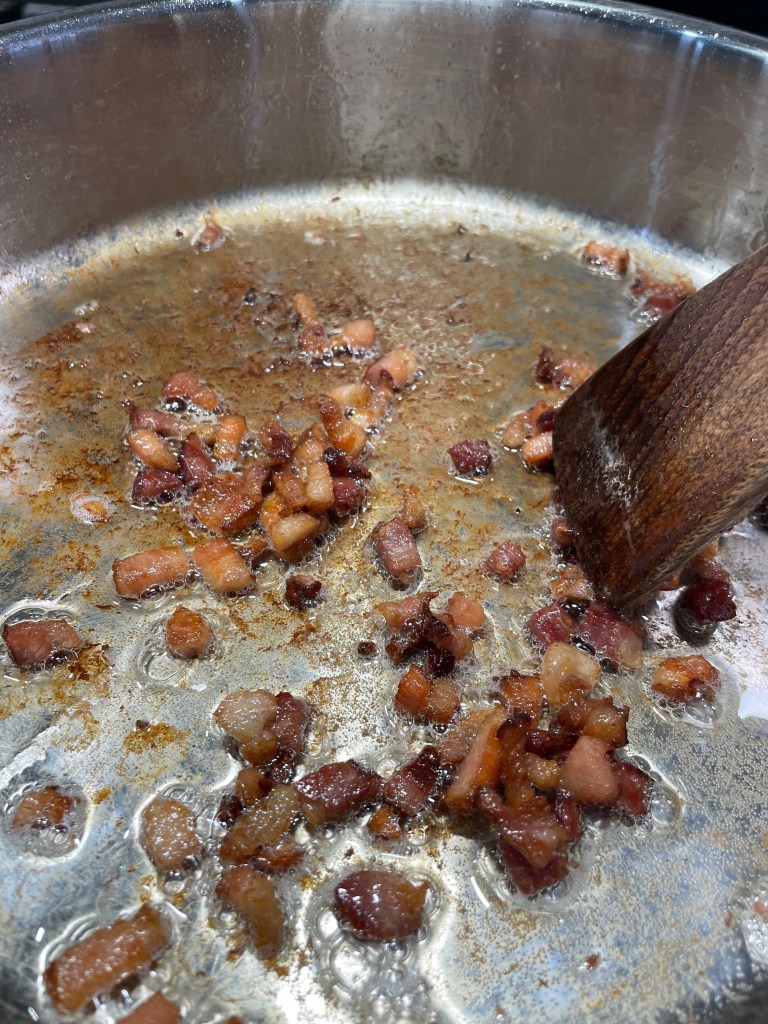
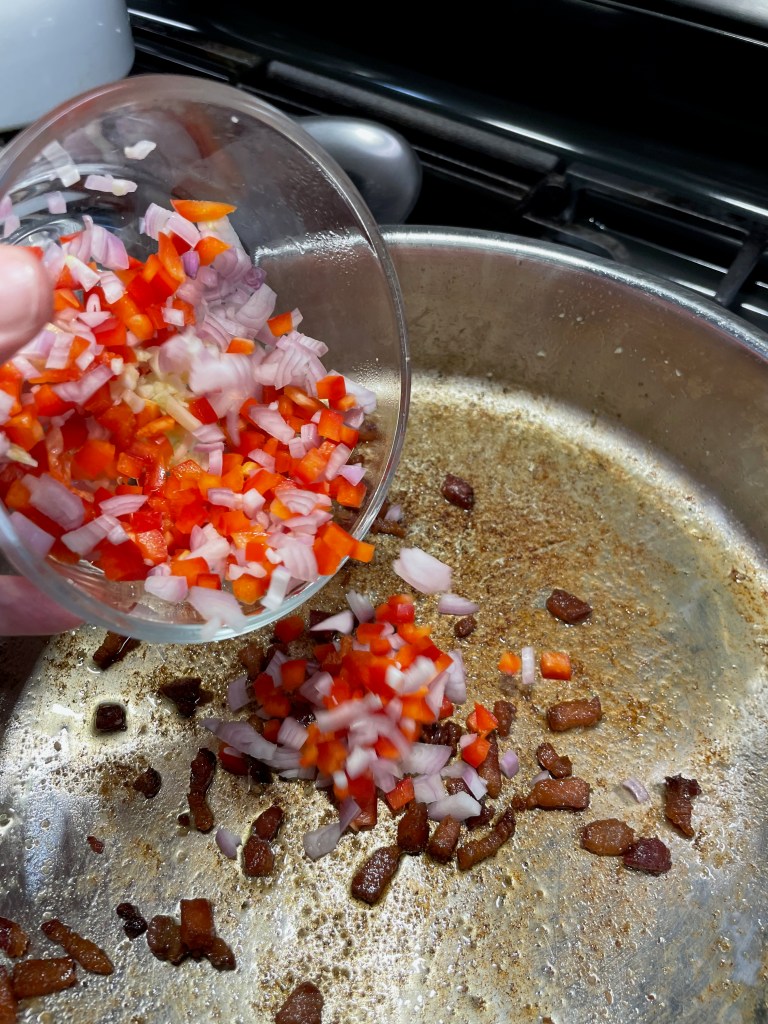
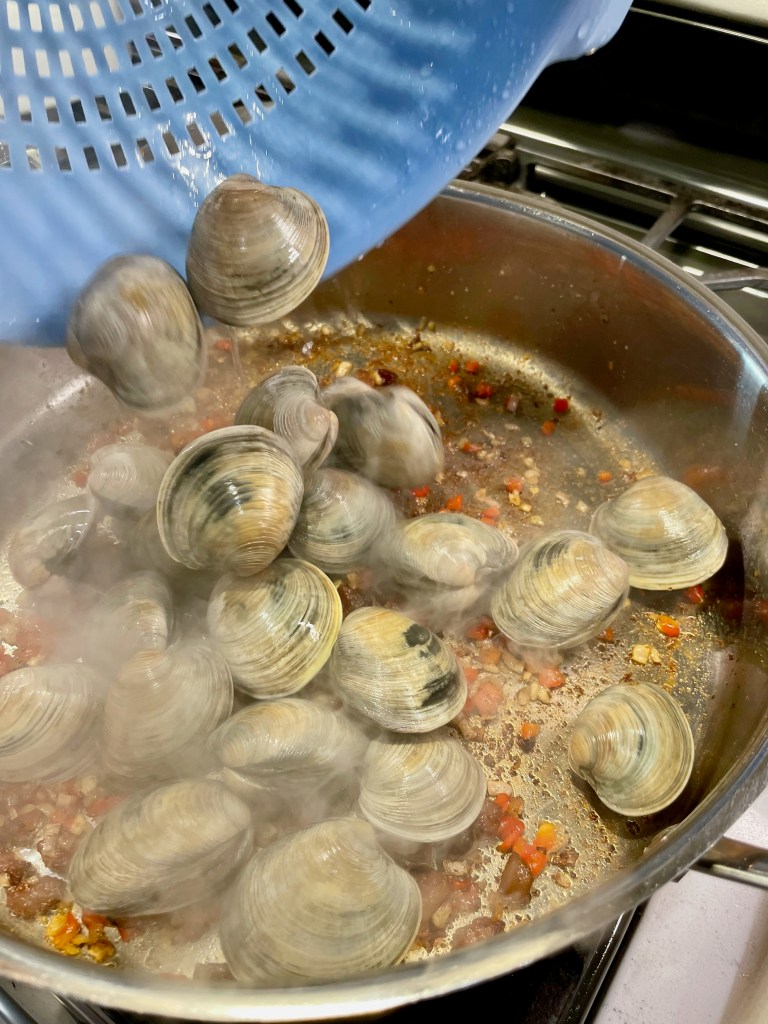
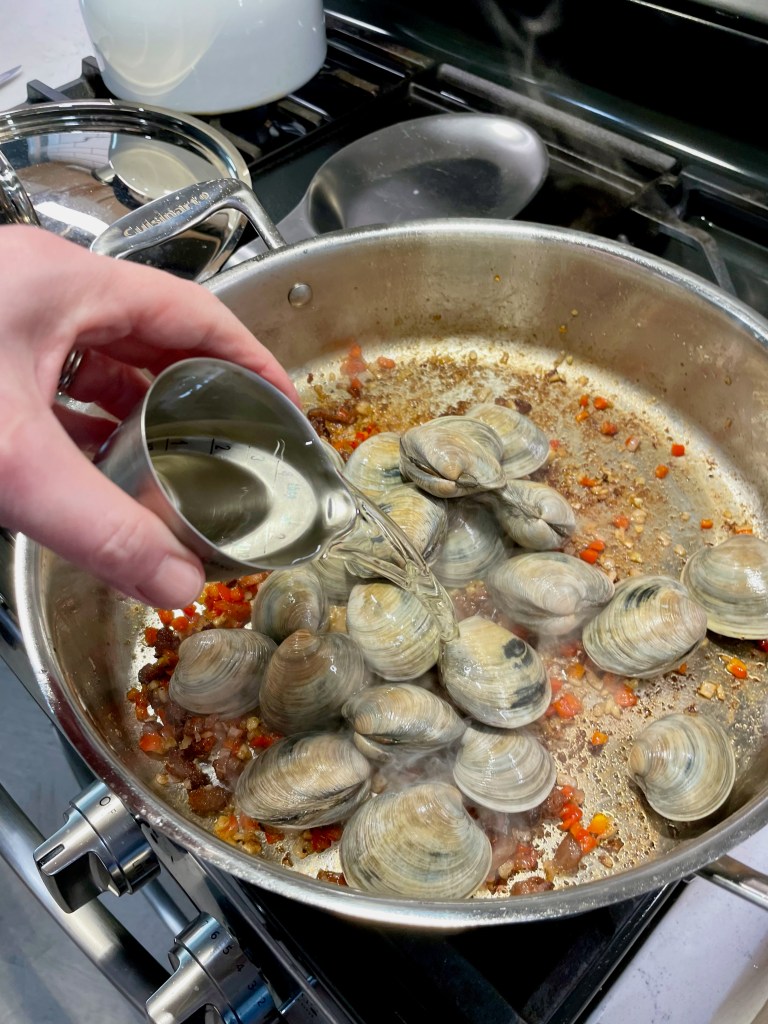
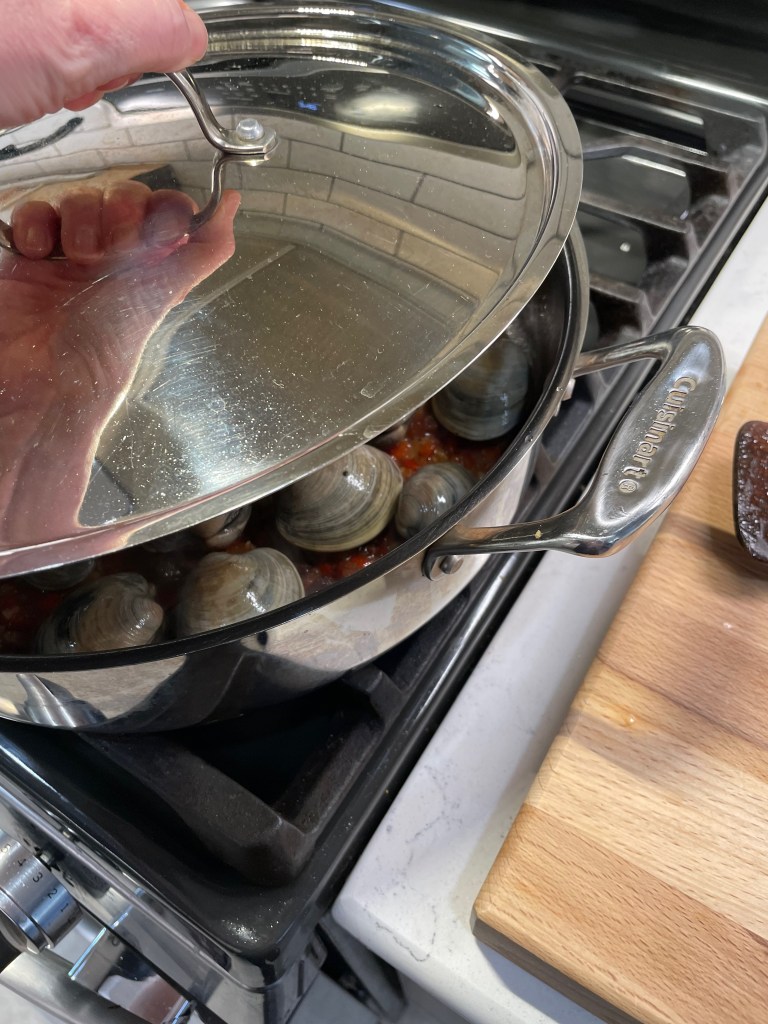
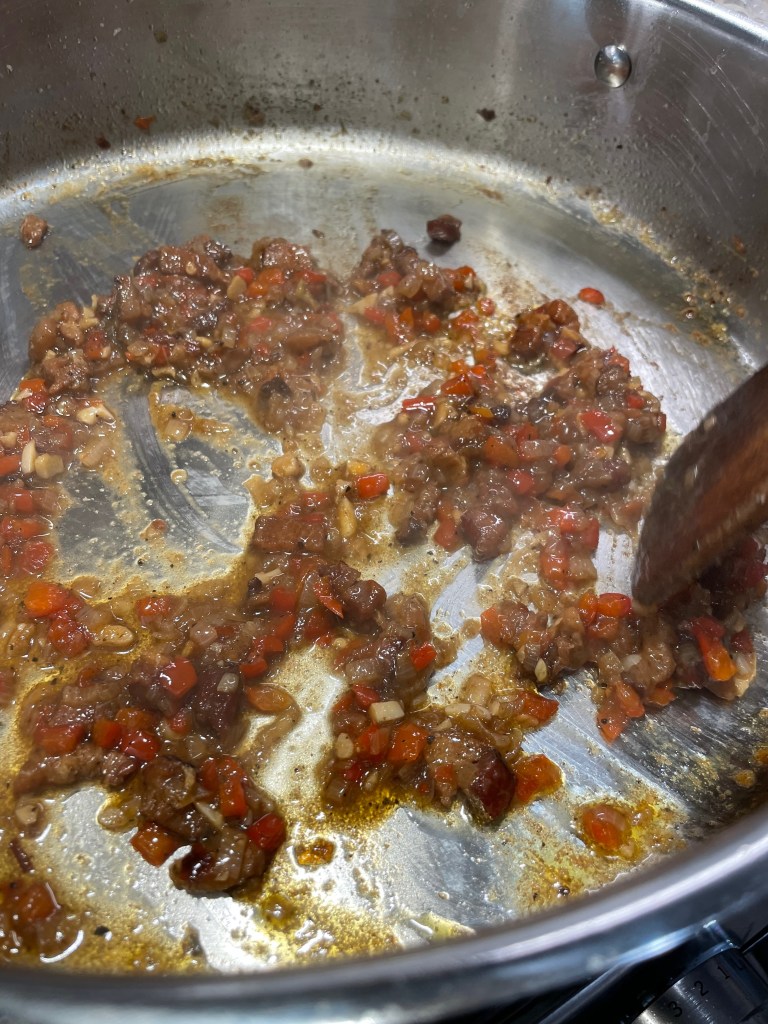
After crisping up some small cubes of really good bacon, I cooked panko crumbs in the grease (they get sprinkled on the pie after baking), and added finely minced red bell pepper, shallots and garlic and cooked them together until the bacon was crispy and the veggies were softened. Next came the clams, and I tossed the lot of them right into the pot with the bacon-veggie mixture and poured in about two ounces (a quarter cup) of dry vermouth— the same thing I use in my martinis. If you wish, you could use pinot grigio or any other dry white wine you like. I just happen to have vermouth open more often than wine, and I love the savory edge it adds when I cook with it.


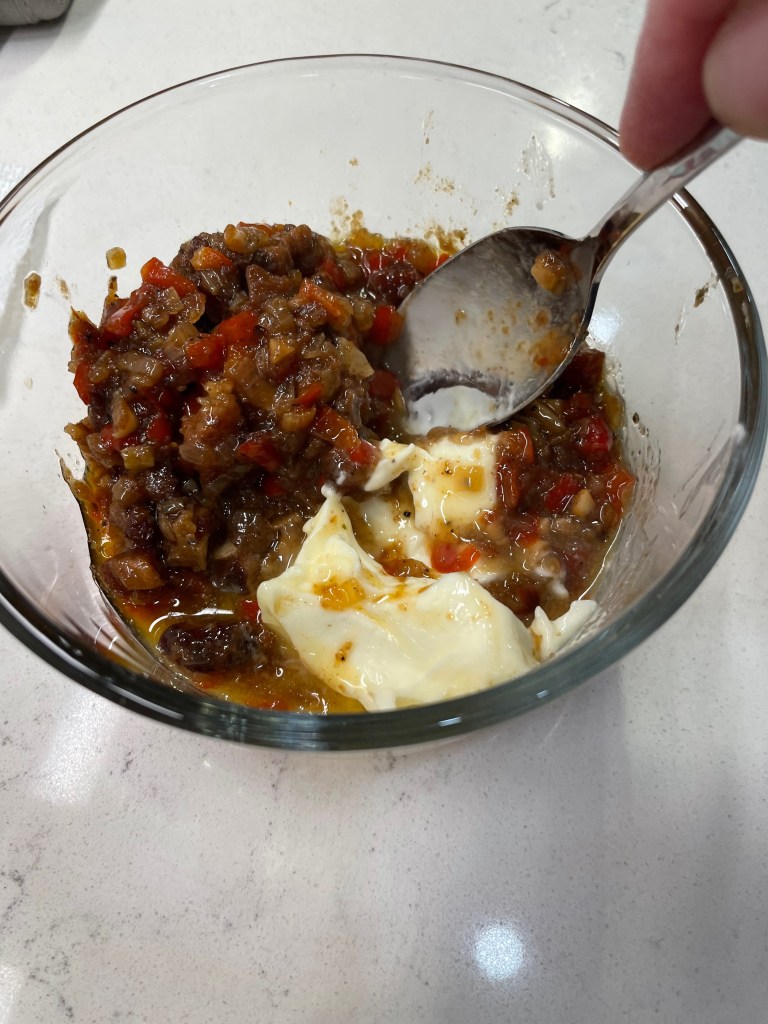
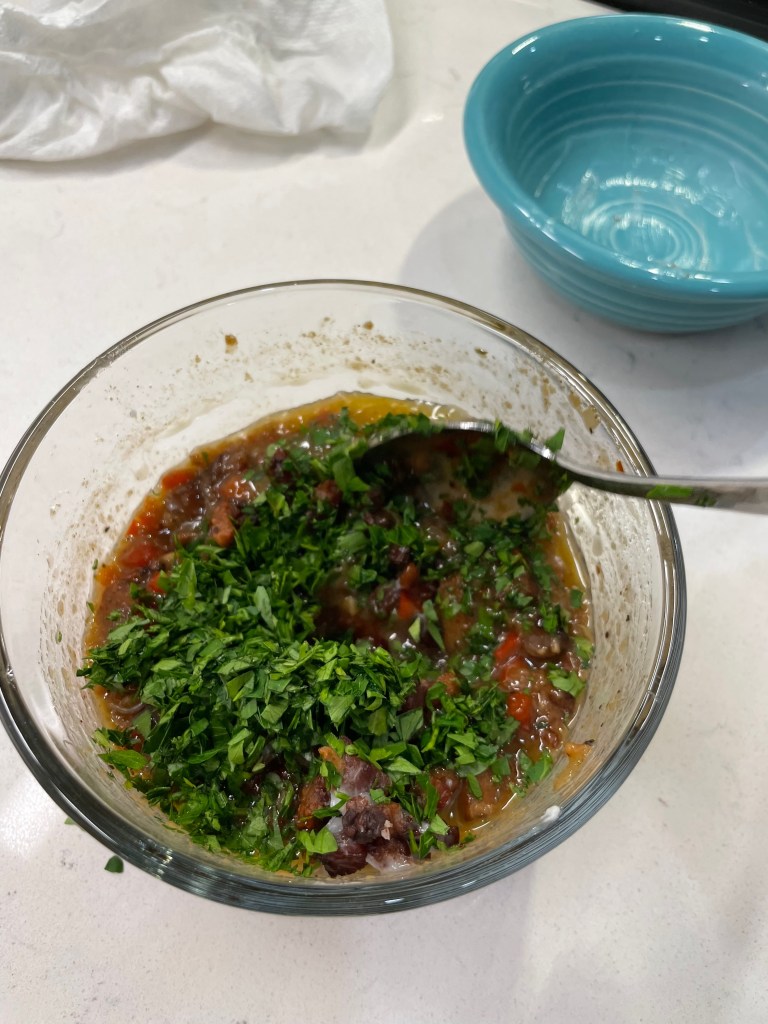
After just a couple minutes of steaming, the clams open up and spill out that glorious, briny liquid. Use tongs to lift them up, and empty that liquid right into the pan. As it reduces with the rest of the pan ingredients, it melds into an intensely flavored mixture that will turn my clams— and my pizza— into something really special. When this mixture cools, I stir in a bit of softened butter and fresh parsley, and chill it until it’s time to build the pizza. 

All of the above can be done ahead, but for sure, you want to take care of the clams so that they remain fresh and tasty, so I wouldn’t recommend working ahead more than one day. Get the clam meats removed from their shells and protect them with layers of damp paper towel or parchment paper so that they don’t dry out. 

What if you don’t eat bacon?

Substitutions are always possible! The main assets of bacon are the smokiness and the deep umami flavor, so a good understudy would be able to do both, but there’s no harm in making up those flavors with more than one addition. I brainstormed about this with my pal, Dorothy, from New Vintage Kitchen because she is mainly pescatarian and she knows all the tricks. We came up with a short list of suitable step-ins, including soy bacon or turkey bacon (both of which I’m sure have the smoke and umami), smoked paprika (never a bad idea in anything, as far as I’m concerned), or a dash of liquid smoke in the veggies, and some chopped up crisp mushrooms, which you can likely find in the snacks section of a larger supermarket. And I thought of one more, just in the last 10
seconds— one so obvious, I’m embarrassed that I didn’t think of it immediately. Anchovies! Bobby Flay even calls them “bacon of the sea.” They are potent, so use them sparingly, and for sure, include one in the toasted panko crumbs that will finish the pizza.

Time to build the clams casino pizza!

If you’ve followed me for any length of time, you know that I do a long preheat on a baking steel, and all my pizzas all begin with sourdough. The flavor imparted to pizza from the long, cold ferment is amazing, but if you already have a favorite dough recipe, or if you prefer the convenience of buying ready-made dough at your nearby deli or supermarket, have at it. These toppings will work, regardless. If you don’t have a steel, a sturdy baking stone will work, but you may need to dial back the temperature a bit and cook an extra few minutes.


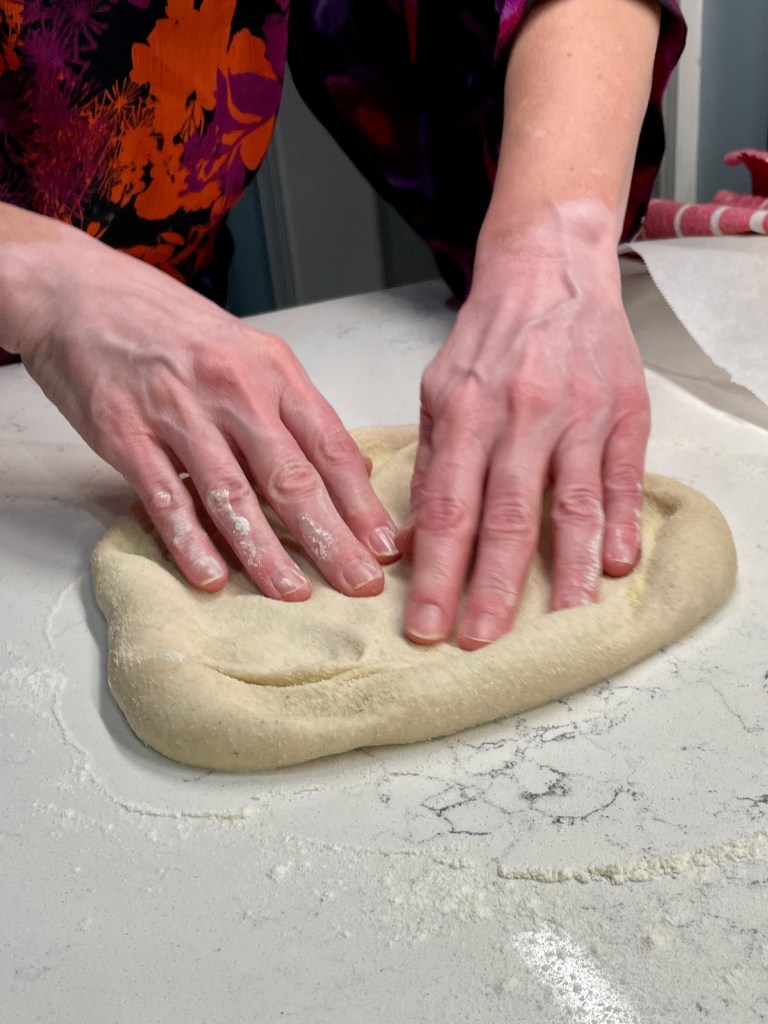
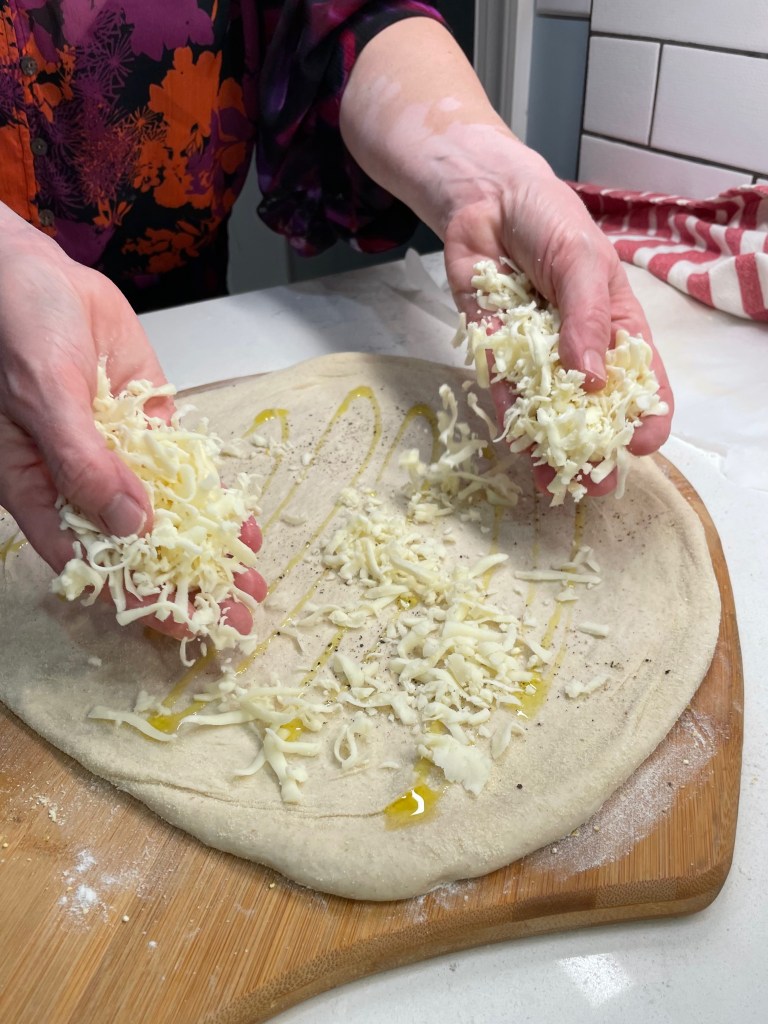
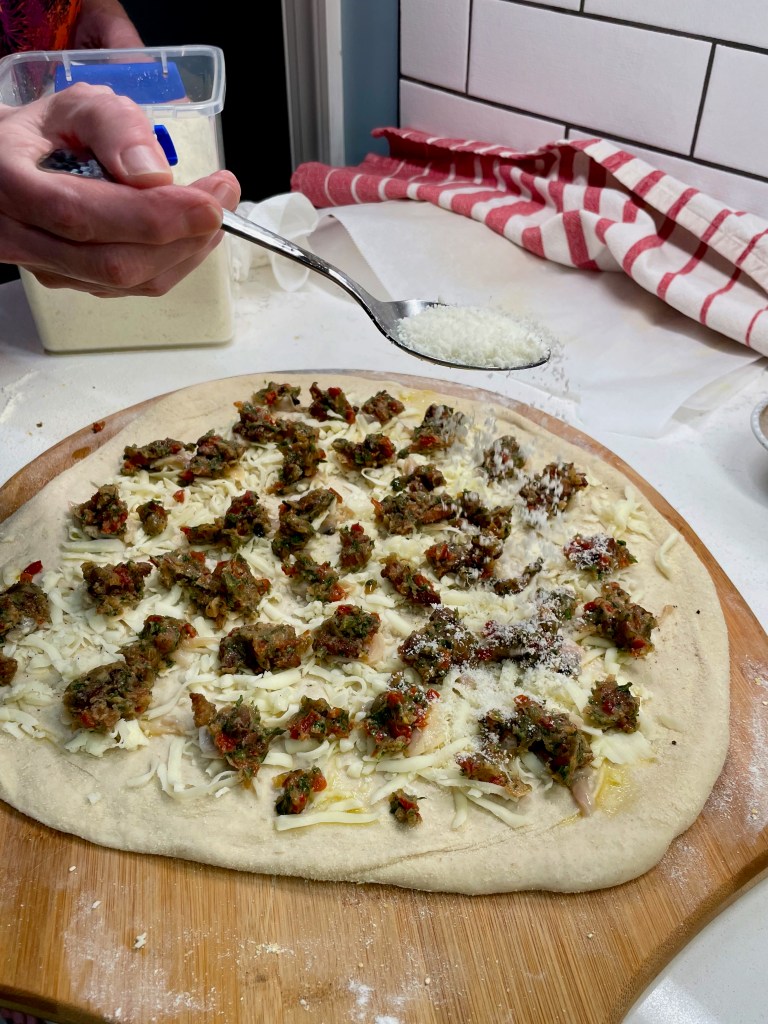
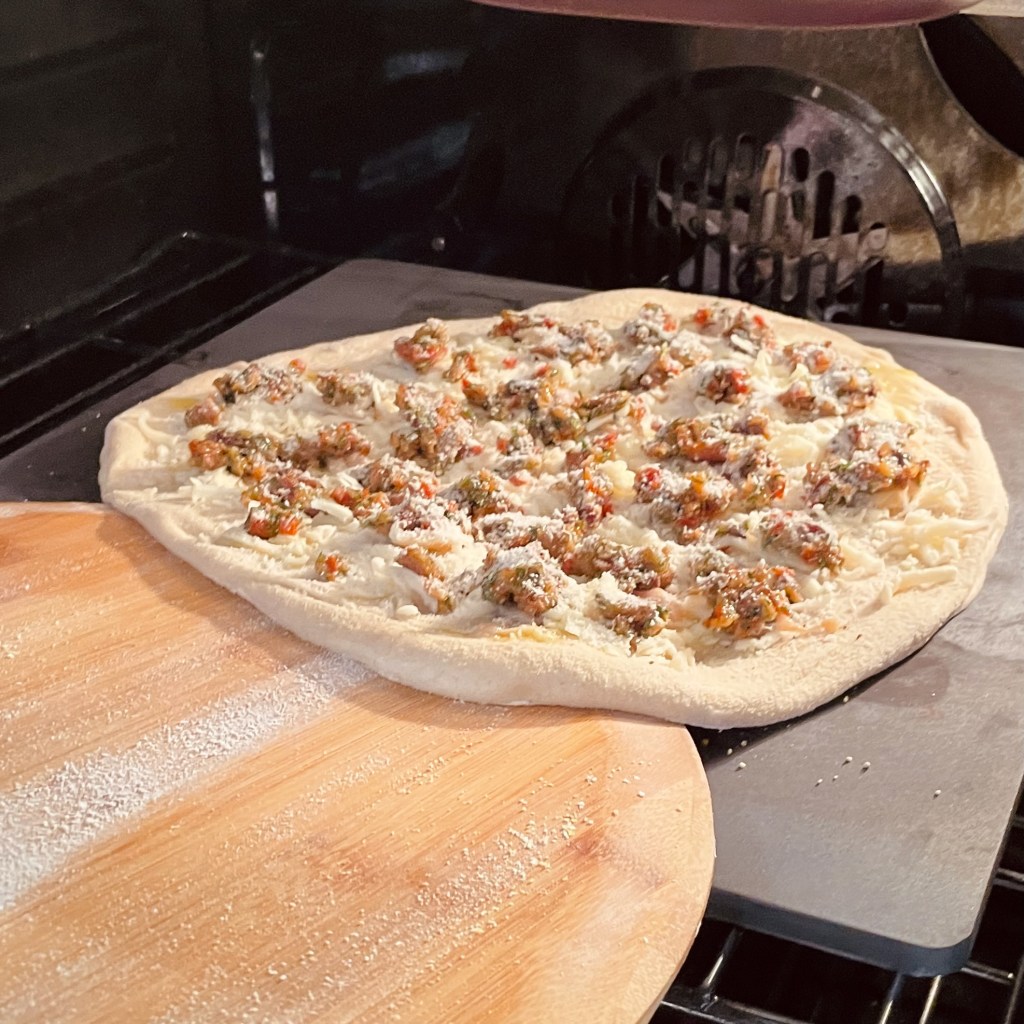
Shape the dough by hand, rather than rolling it out, as this ensures some of the air pockets will remain in the dough for an airy texture after baking. Scatter mozzarella all over the dough, then arrange the clams and top each one with a bit of the clams casino compound butter. Sprinkle a bit of Parm-Romano blend cheese over the top, and slide that gorgeous thing into the oven.


Six to seven minutes is all it takes on a 550° F preheated steel. When it comes out of the oven, scatter the bacon-scented panko crumbs over the top and serve at once. 

Clams Casino Pizza

  • Servings: 6 slices
  • Difficulty: Average
  • Print

An easy compound butter is what makes this classic appetizer-inspired pizza special enough for New Year's Eve. Use the freshest clams you can get, and don't skip the bacon-scented panko crumbs on top!


Prep for this pizza should happen earlier in the day, or perhaps even the day before, so that the clams casino compound butter only needs to be divvied out onto the clams when you build the pizza. Note that parsley appears twice in this list; there are different purposes for each amount. You will want to use a heavy-bottomed pan to cook the compound butter ingredients, preferably one that is more wide than high. This will make it easier to steam the clams in a single layer.

Ingredients

  • 1/2 cup cubed thick-cut smoked bacon
  • 1/3 cup Italian seasoned panko bread crumbs
  • 1 Tbsp. finely chopped Italian parsley (for the panko topping)
  • 1/3 cup minced shallot
  • 1/3 cup minced red bell pepper
  • 2 large cloves garlic, minced (about 1 Tbsp)
  • A few shakes red pepper flakes
  • 1/4 cup dry vermouth or white wine + 1/4 cup water
  • 24 littleneck clams, purged of sand and grit (see first step of directions)
  • 2 Tbsp. finely chopped Italian parsley (for the compound butter)
  • 2 Tbsp. unsalted butter, halfway softened

Directions

  1. Purge the clams by placing them in a large bowl of salted cold water. Sprinkle a generous spoonful of flour over the clams and swirl gently to mix it in. Allow to rest 30 minutes, and then scoop out the clams to a platter. Empty and rinse the bowl, inspecting the water for grit and/or sand. Repeat as many times as needed, until water is clear.
  2. Cook bacon to render the fat. Remove the crispy bacon bits with slotted spoon, reserving fat in skillet. Toss panko crumbs in bacon fat. Cook until crumbs are golden and crispy. Set aside to top pizza after baking.
  3. Put half of the bacon bits back into the pot, along with shallots, bell peppers and garlic, and sauté until vegetables are translucent and tender. Shake in red pepper flakes.
  4. Add clams to the pot and pour in the vermouth and water. Cover with a lid for about 90 seconds, then remove lid. Use tongs to remove clams as they open, and pour off clam liquid into the pot as you remove them. Set the clams in a bowl filled with crushed ice; this will abruptly stop the cooking so that they don’t get tough during baking.
  5. When all clams have been removed from the pot, simmer until liquid is evaporated and only the soft vegetable-bacon mixture remains. Transfer mixture to a bowl to cool, then blend in the butter and chopped parsley. Refrigerate butter until you’re ready to build the pizza.
  6. Slide a knife under the clam meat to remove them from their shells. Refrigerate clam meats until you’re ready to make the pizza. Discard the shells.

Remove the compound butter and clam meats from the fridge a few minutes ahead so that the butter is manageable and can easily be spooned. I bake my pizzas on a steel, which is preheated for an hour at 550° F. If you are using a stone or regular pizza pan, reduce heat and adjust baking time accordingly.

Ingredients

  • 11 oz. pizza dough ball, at room temperature
  • Semolina flour for shaping dough
  • 1 Tbsp. extra virgin olive oil
  • Kosher salt and black pepper
  • 1/2 freshly shredded low-moisture mozzarella
  • Reserved clams
  • Clams casino compound butter
  • 2 Tbsp. grated Parm-Romano blend cheese
  • Reserved panko crumbs

Directions

  1. Shape pizza dough by hand (not by rolling), into a 14-inch round. Transfer round to a flour- and cornmeal-rubbed pizza peel for easy transfer into the oven.
  2. Drizzle olive oil all over dough, then season with salt and pepper. Scatter mozzarella evenly over dough.
  3. Arrange clam meats on dough, and then place a small dollop of the clams casino compound butter over each clam. If you have extra butter, place smaller dollops in between the clams.
  4. Slide onto pizza steel and bake for 6 minutes or until crust is blistered and browned and toppings are bubbly. Sprinkle with bacon panko crumbs and serve immediately.


Broccoli, Artichoke and Red Pepper Pizza

What’s your favorite veggie pizza?

While you ponder, I’ll explain how I answered the same question, posed by my high school bestie, Christine. She reached out a couple of weeks ago for ideas, as her daughter had a vegetarian friend coming to visit for a few days and she wanted to help her feel welcome. When you aren’t in the habit of making meatless meals (or if, like Christine, you have allergies to all the common plant-based proteins), the concept of meatless menu planning can feel daunting. I know that feeling well— it’s exactly how I feel about making desserts! 

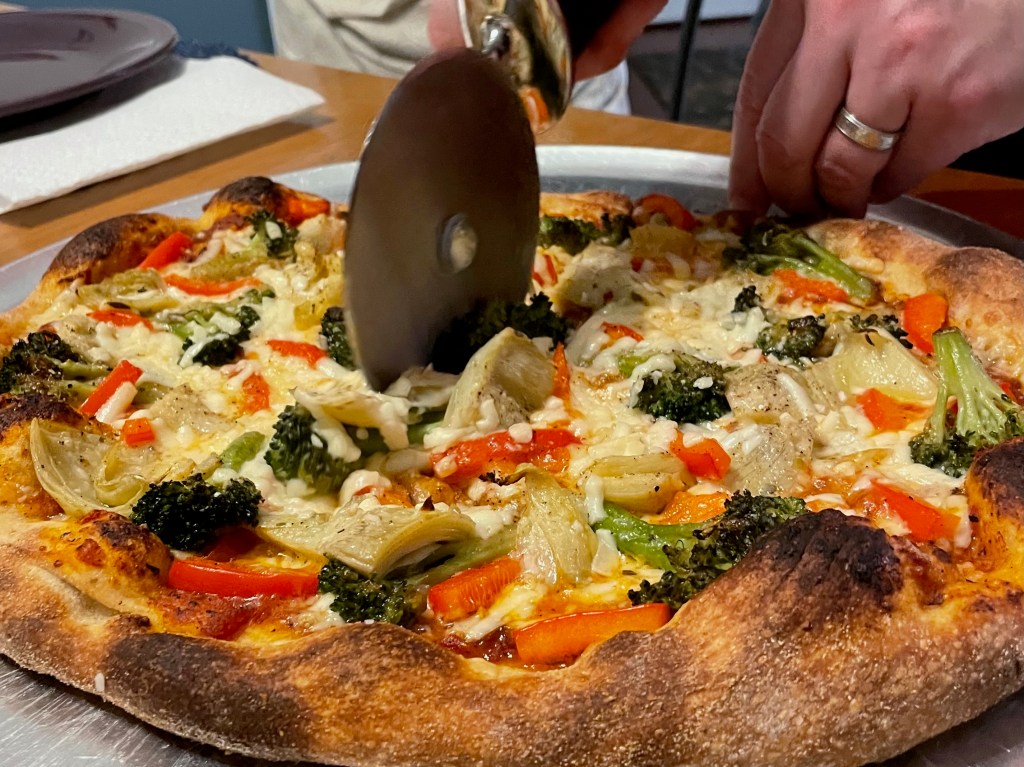
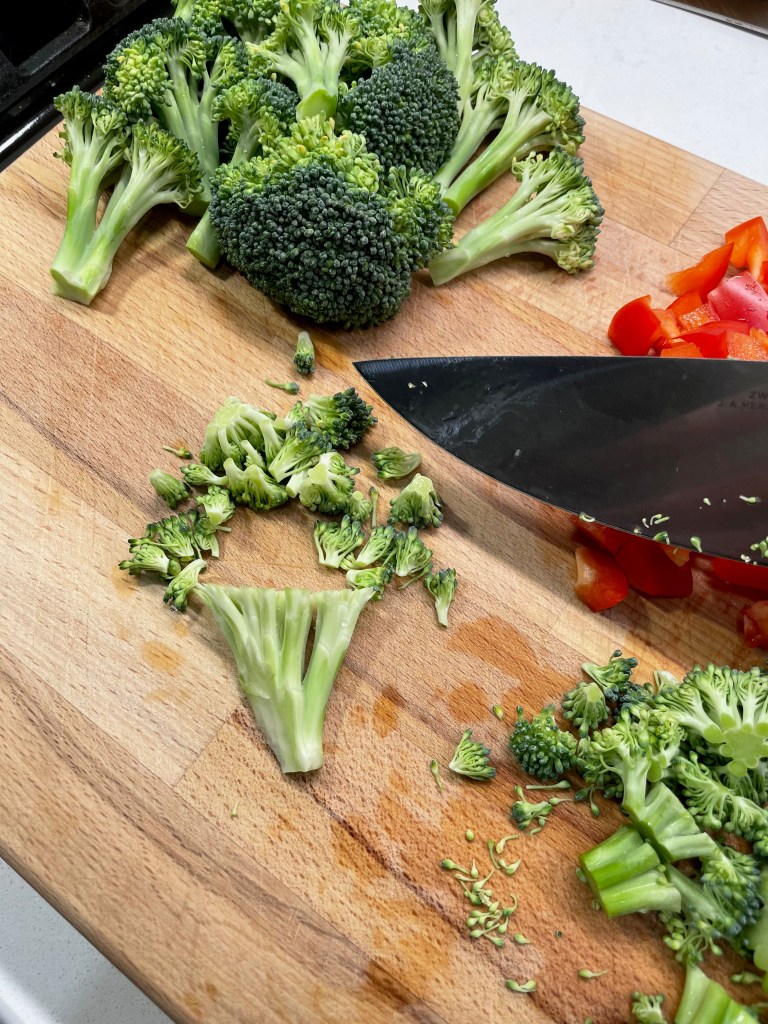
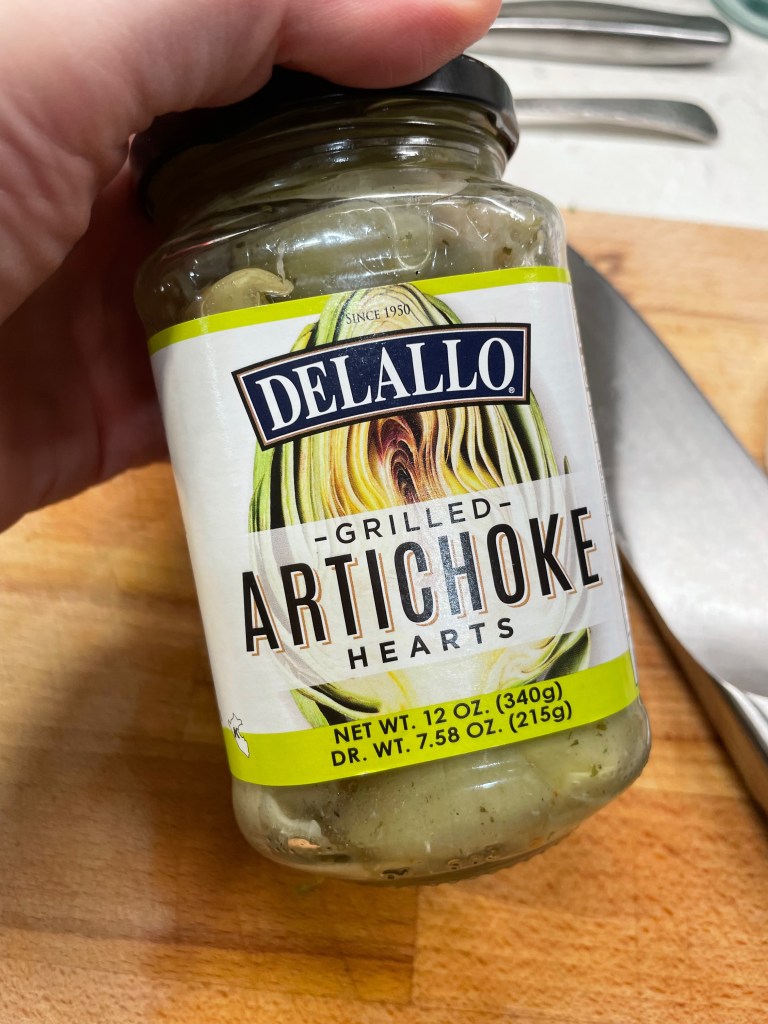
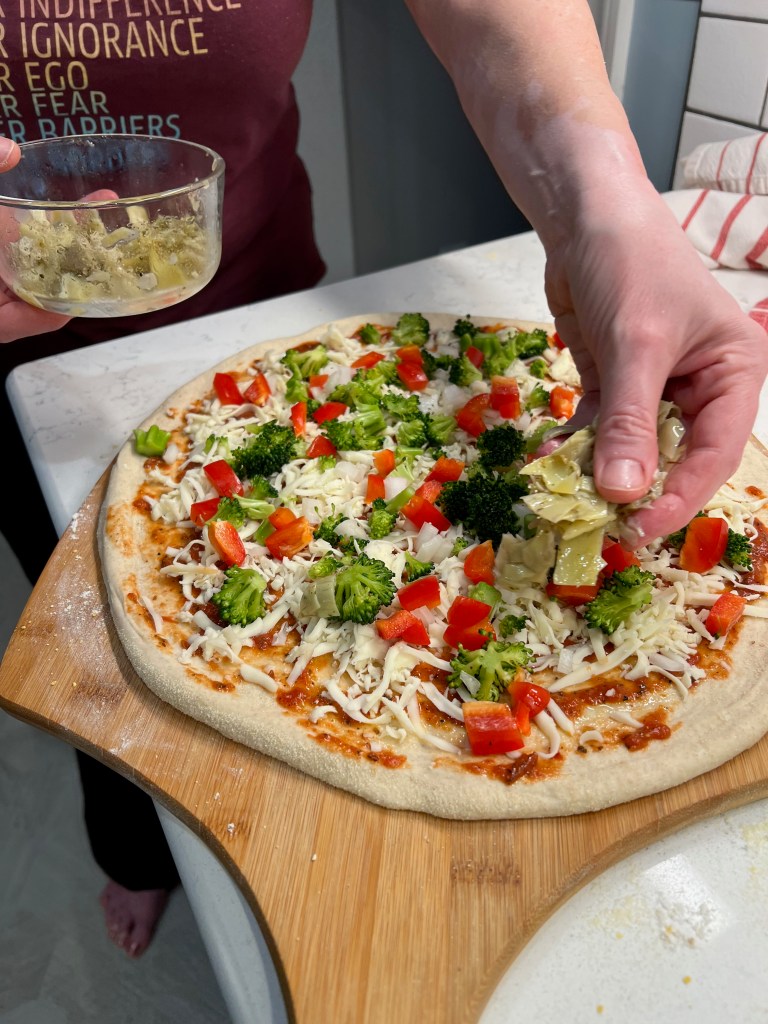
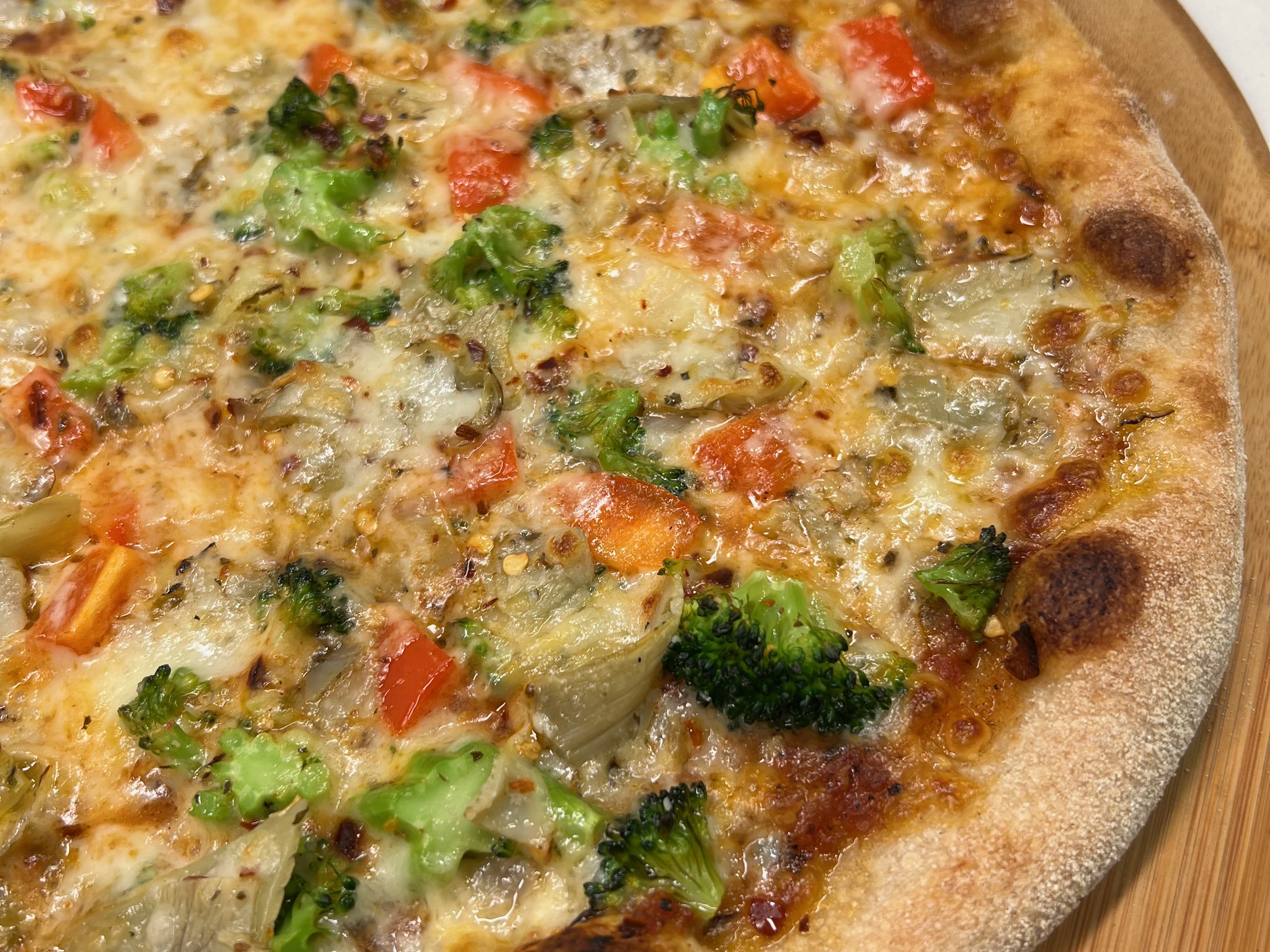
This pizza— with generous scatterings of chopped fresh broccoli, red bell pepper and marinated artichoke hearts— is my current favorite all-veggie pizza. What makes it work for me is the balance of flavors and textures that these ingredients bring to the slice. The red bell pepper bits are vegetal but sweet. The artichoke hearts, especially if you use the ones marinated with olive oil and herbs, are soft and slightly tangy. And the broccoli has a firm enough texture to make the pizza substantial and filling. 

With a healthy dose of fiber, protein (both the artichoke and broccoli contribute a good amount) and vitamins (the red bells have more Vitamin C than oranges), plus all that flavor, this pizza is a winner, any way you, ahem, slice it. 😉

I love the sound when my husband rolls the pizza cutter through the crispy, oven blistered crust! YUM!

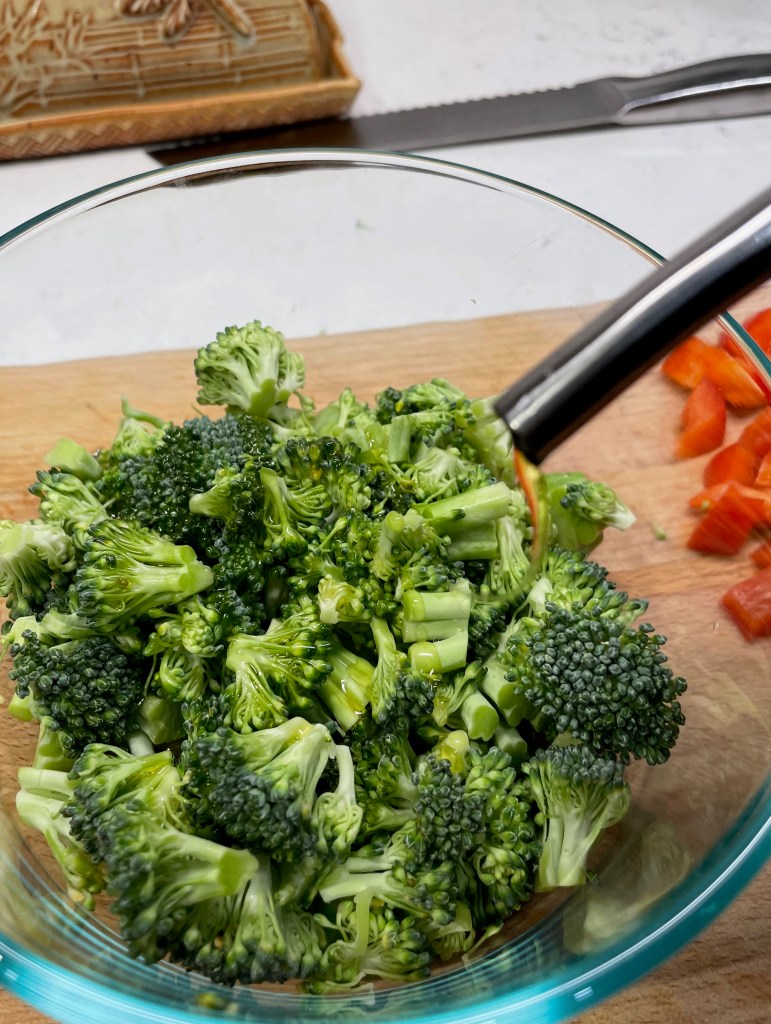
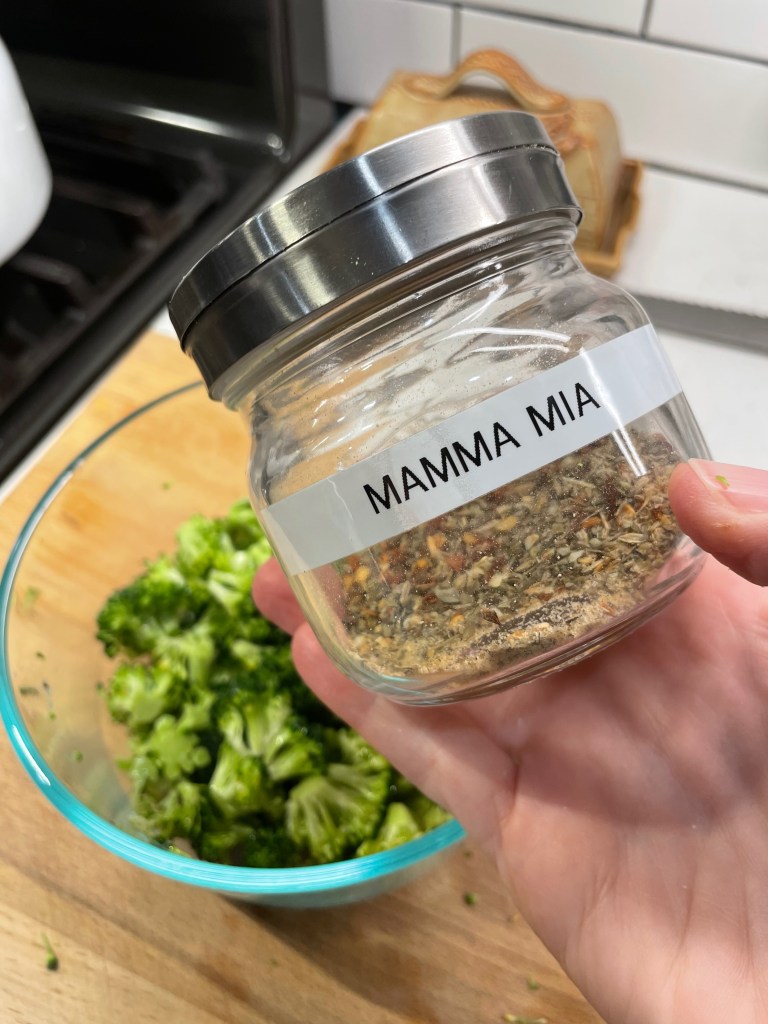
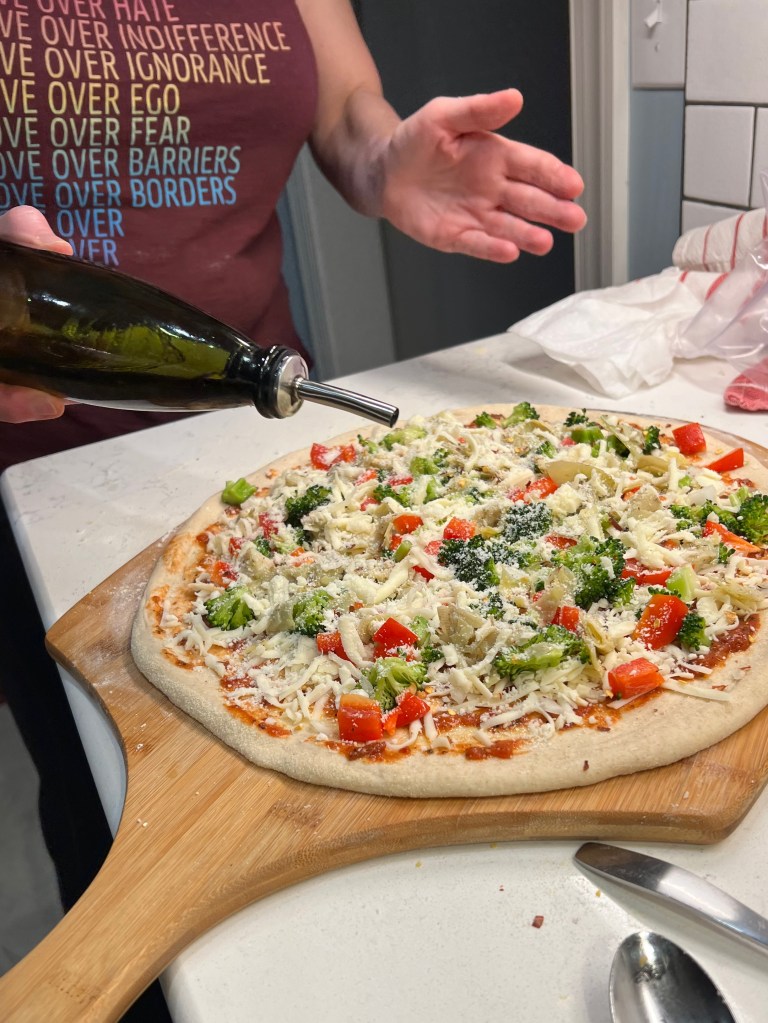
The first time I made this pizza, I used Asiago cheese (delish) and I prepped the ingredients in larger chunks, which made for tantalizing photos (as you can see above), but every bite tasted different because the pieces were farther apart. I also had to add an extra step of par-cooking and chilling the broccoli before topping the cheesy base of the pizza. On this go-around, I kept it simple, with smaller chopped pieces of raw broccoli and smaller chopped artichokes, and the end result was not only easier but a better outcome for the variety of flavor we enjoyed in each bite. A quick drizzle of olive oil and some Italian seasoning revved up the flavor of the broccoli.


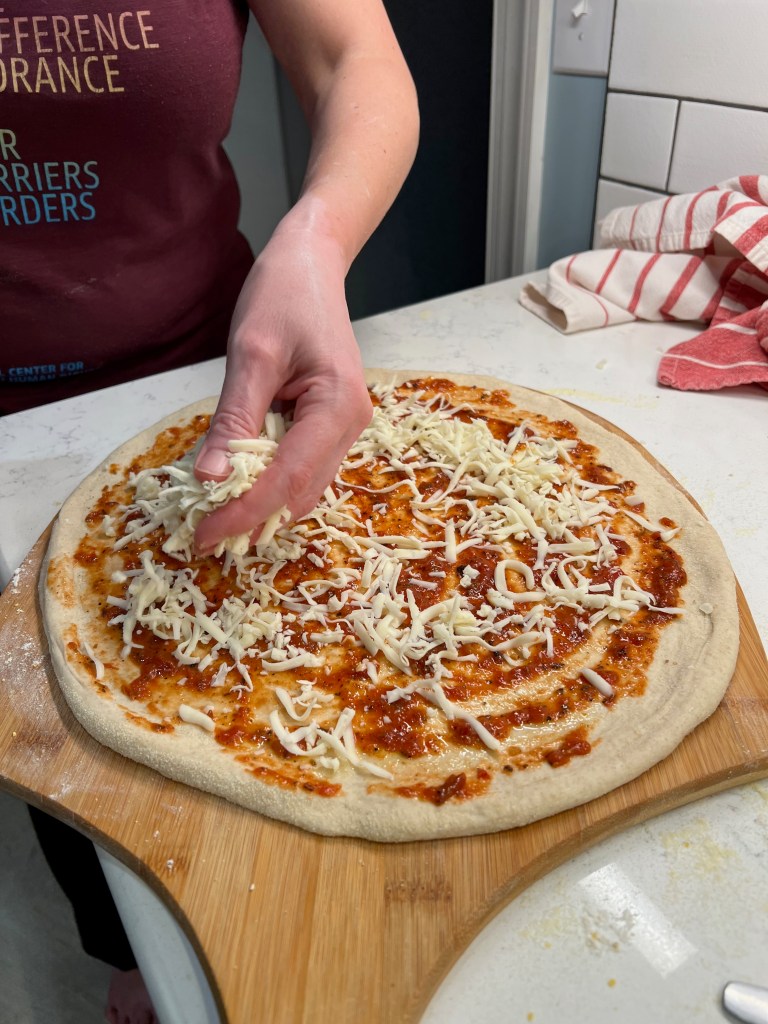
As for the rest of the pizza, you know how that goes at my house. My crust is almost always sourdough, cold-fermented for two days in the fridge drawer, hand shaped and topped with a thin layer of tomato sauce plus hand-grated whole milk mozzarella. A little Parm-Romano blend cheese sprinkled on at the end, plus a quick drizzle of extra virgin olive oil, which is a little trick I picked up during my “backstage” visit to Modern Apizza in New Haven a few summers ago. Here’s a link to my adventure at Modern, in case you missed it! 


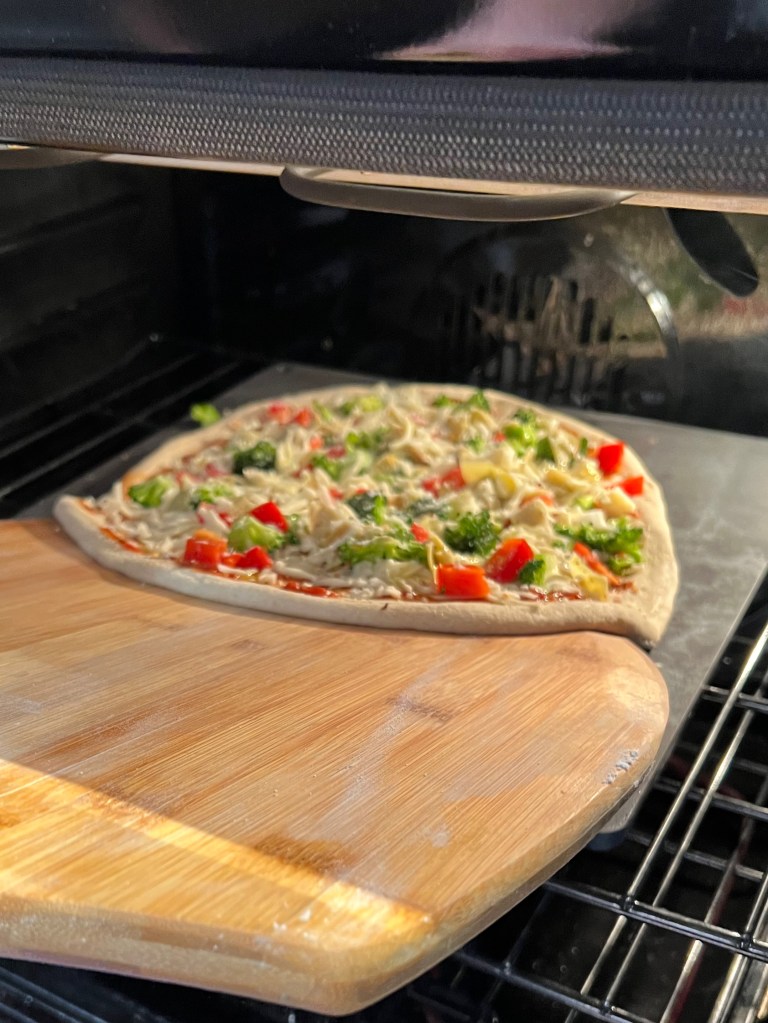
We use a steel for all of our indoor pizzas, preheated for about one hour at 550° F, which is the hottest our home oven goes. The intense heat permeates the steel slab for an exceptional crust, and our pizzas are finished to blistery perfection in about six minutes. It’s the closest we can get to brick oven-style pizza at home.

While that bakes, a quick (but important) mention about using cheese on a pizza for vegetarians, especially those who have chosen a meatless lifestyle out of concern for animals. Your guests may be OK with egg and dairy products, but be aware that many hard cheeses, including traditional Parmesan and Pecorino, are not technically vegetarian because animal rennet (an enzyme from the digestive system of young sheep or cows) is used in their production. This enzyme cannot be harvested from living animals, and that means it’s off the table for those following strict vegetarian practices. Thankfully, there are a few producers who have managed to adapt to using a plant-based enzyme to make such cheeses in a way that is approved for vegetarians. It’s a good rule of thumb to scan the label— if it does not explicitly state that it is suitable for vegetarians, you can bet that it isn’t. I only learned this myself a few years ago, so it bears sharing with my foodie friends. 

The smaller bits of veggie definitely work better, making every slice consistently delicious!

So there you have it, my current favorite veggie pizza! After the click-to-print recipe below, I’ll share links to a few others we’ve enjoyed at our house, including the one that Christine found irresistible for her pizza party with her daughter and visiting friend.

Now, your turn— what’s your favorite veggie pizza? I’m always on lookout for a new recipe, so please share! 

Broccoli Artichoke and Red Pepper Pizza

  • Servings: 8 slices
  • Difficulty: Average
  • Print

There's so much flavor and texture going on in this pizza, who needs meat?


Ingredients

  • One fresh pizza dough ball, about 11 oz., at room temperature
  • 1/4 to 1/3 cup favorite pizza sauce (we like Dei Fratelli’s “fire roasted”)
  • 2/3 cup hand-grated whole milk mozzarella
  • 2 cloves garlic, minced
  • 1 cup chopped raw broccoli, tossed with a teaspoon of olive oil and Italian seasoning
  • 1/2 cup diced red bell pepper
  • 1/2 cup chopped marinated artichoke hearts
  • 2 Tablespoons chopped fresh onion (sweet or yellow work well here)
  • 2 Tablespoons grated Parm-Romano blend cheese
 (check labels to ensure suitability for vegetarians)
  • Extra virgin olive oil to drizzle

We bake all of our pizzas at very high temperature on a steel slab, which gives us a near-brick oven quality pizza. If you will be using a pizza stone or pan, you may need to adjust temperature and baking time accordingly. I would highly recommend, for anyone who loves making pizza at home, investment in a pizza steel. I promise, you won’t regret it!

Directions

  1. Preheat oven with steel on center rack for one hour at 550° F. Dust pizza peel with flour and medium grind cornmeal for easy transfer in and out of oven.
  2. Shape dough by hand into 14-inch round, taking care not to deflate too many air bubbles. Salt and pepper the dough, and then spread sauce evenly over dough. You should be able to easily see the dough through the sauce.
  3. Scatter mozzarella all over the sauce, then top with fresh garlic, broccoli, peppers, artichoke hearts and onions. Sprinkle Parm-Romano over the toppings and give the whole pie a quick drizzle of olive oil.
  4. Transfer quickly to preheated steel and bake for six minutes, turning pizza after four minutes if needed for even browning of the crust.


Other veggie pizzas you might enjoy, left to right:

Zucchini and yellow tomato pizza, which I’m really looking forward to making again this summer, when both of these vegetables reach their peak flavor! 

Spanakopizza, loaded with fresh and sautéed spinach, leeks and feta, with a scatter of fresh dill for authentic Greek flavor. This is the one Christine made, and she declared it a big hit!

New Haven-style fresh tomato pizza, another one we enjoyed when we visited Connecticut, and a classic flavor for summer— almost like a margherita pizza but with fresh slices of tomato. So good!

Ratatouille pizza, especially if you take time to grill the eggplant, zucchini, peppers and onions before piling them onto your favorite tomato sauce. 

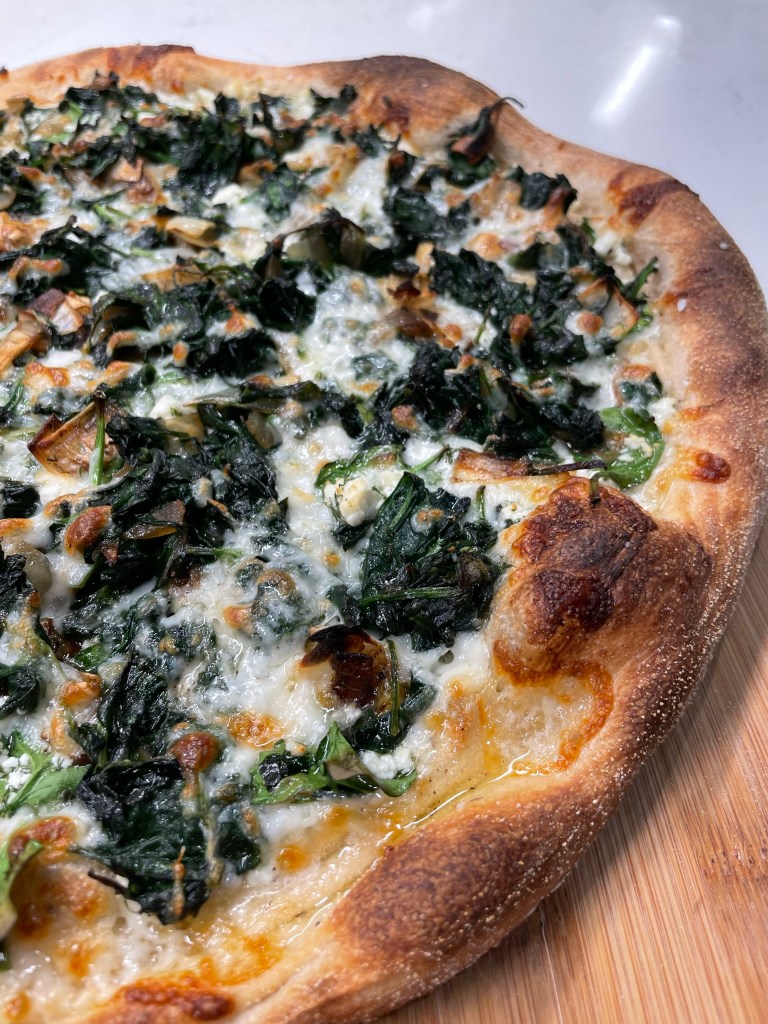
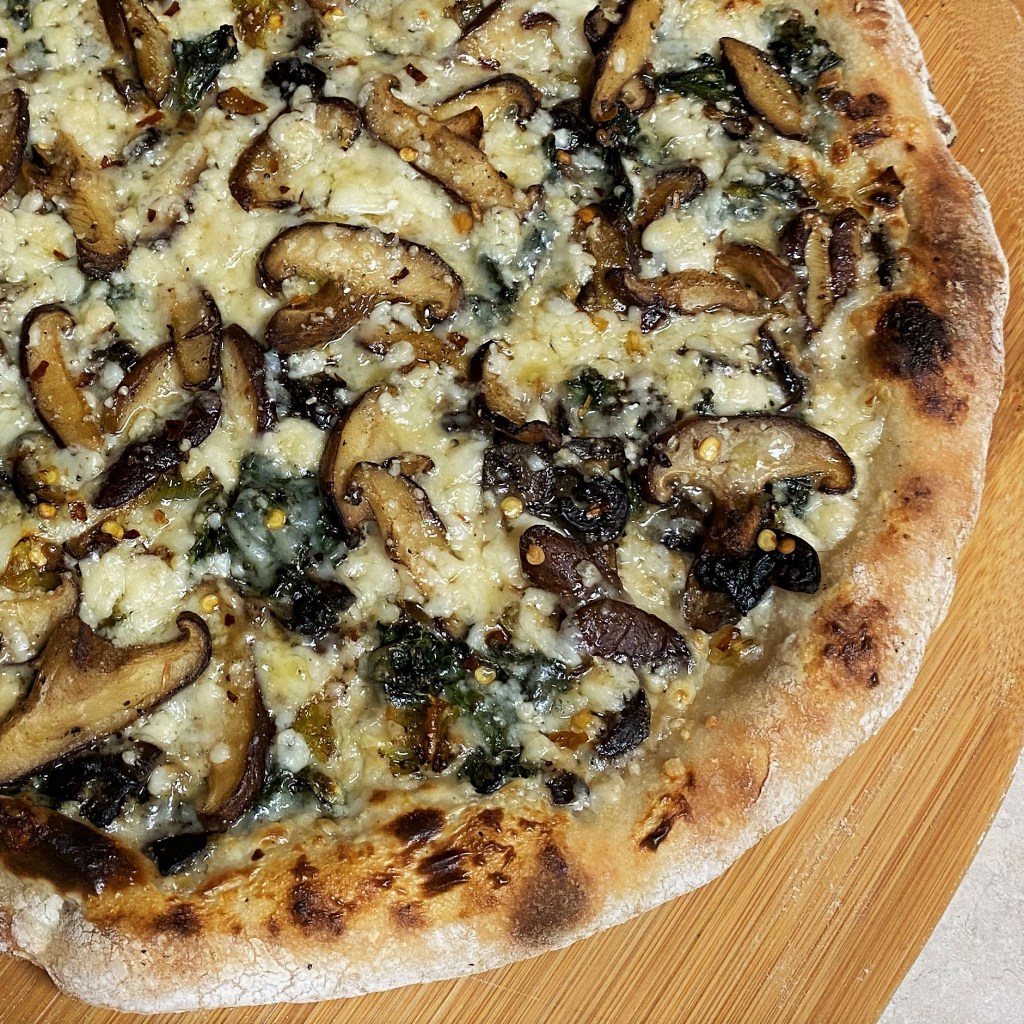
Creamy garlic mushroom pizza, with a roasted garlic béchamel base and two kinds of mushrooms (plus spinach) turns pizza night into a special occasion. My husband has been begging for this one to come back up in rotation, so I’ll be making it again very soon.

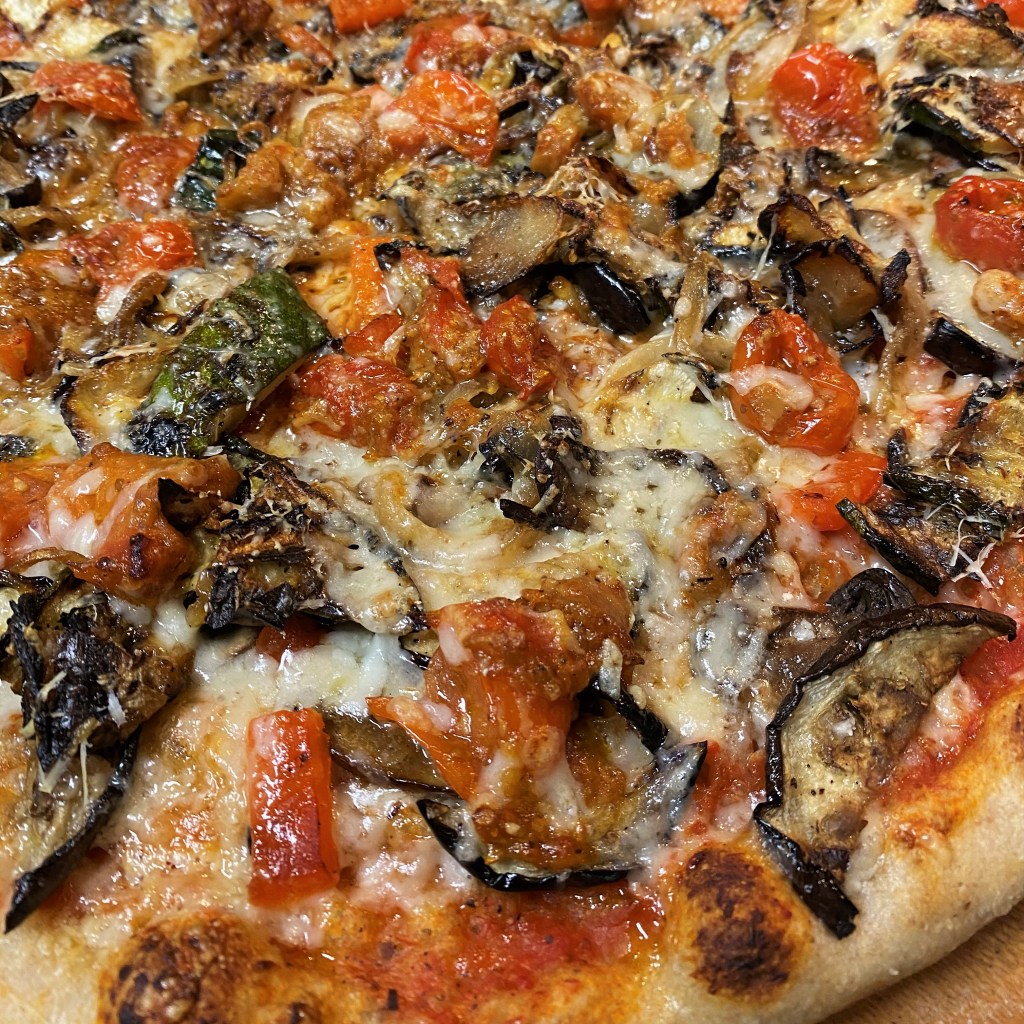
Eggplant parm pizza, but omit the crumbled Italian sausage, which I only used for that recipe because we had a very small amount left over from another meal. Trust me, this pizza would totally rock without the sausage. For this to be truly vegetarian, be mindful of the Parmesan label, to be sure that it uses plant enzymes rather than animal rennet.


Romesco Potato Salad

Well, here we are, staring down the unofficial end of summer. Labor Day weekend is upon us in the U.S., and though it signifies the waning days of summer, we are hardly ready to trade in our shorts and flip flops for boots and cozy sweaters. It’s still plenty hot, and we still have weeks— if not months— of good grilling weather remaining.

If you’ll be grilling out this weekend, and perhaps looking for a different take on potato salad, I have a fun one for you. This salad was the result of wracking my brain for another mayo-free potato side, not unlike the potato salad with chive and parsley pesto that I shared at the start of summer. That was a NY Times Cooking Recipe, and this one happens to be inspired by another recipe from the same site.  

It had already occurred to me that romesco sauce would be a delicious flavor to apply to potato salad, when lo and behold, a recipe appeared in my inbox for a “romesco egg salad.” There was confirmation for my inspiration, and I was off and running.


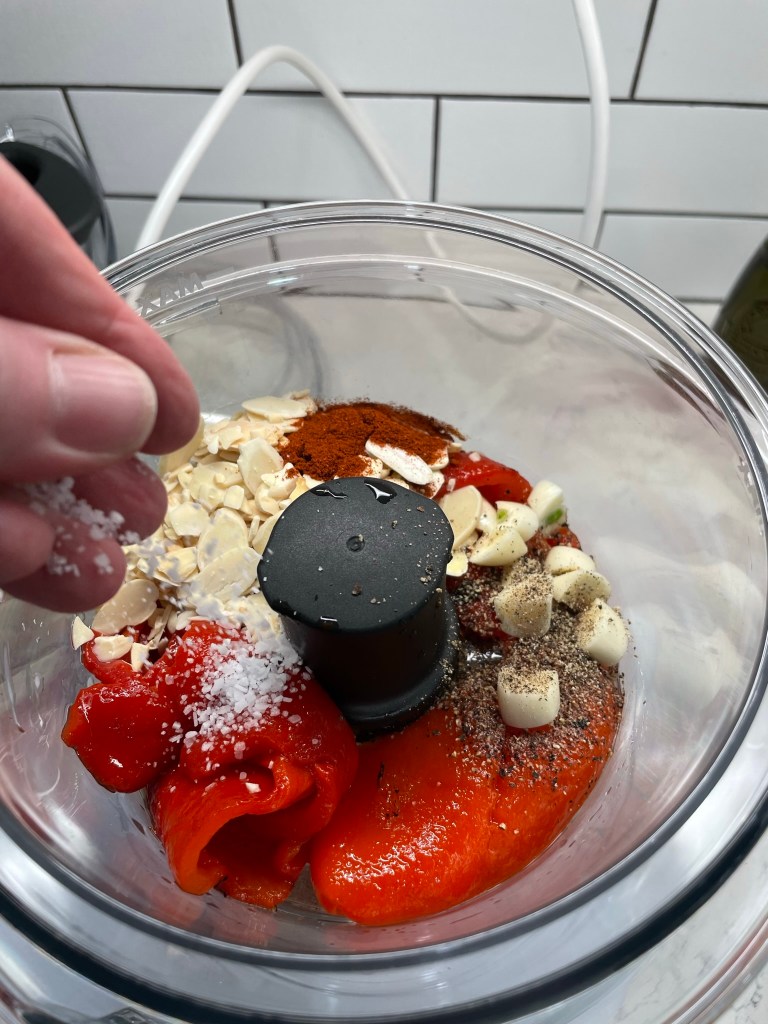
Romesco, in case you are not familiar, is a Spanish-inspired sauce made of pureed roasted red pepper, almonds and paprika. Typically, it would include roasted tomatoes, but I omitted those to keep my sauce thicker. It is sometimes also blended with stale bread to give the sauce more body, but I didn’t want carbs on carbs, so I skipped that, too, which also kept it gluten free. My romesco is spiked with garlic, vinegar, sherry and capers for extra bright flavor, and a peppery extra virgin olive oil holds the whole thing together. The sauce was delicious and substantial for dressing a potato salad.


What I like about this salad, besides it being free of greasy mayonnaise that separates at the first hint of heat, is that it packs a ton of flavor that you might not expect on a potato salad. The roasted red pepper lends more than enough moisture to keep the tender boiled potatoes from feeling sticky or dry, and the smoked paprika, capers and hard boiled egg give it an unmistakable flair of Spanish cuisine.


It comes together easily, especially if you use jarred roasted red peppers, as I did for this one. Simply process together the romesco ingredients, seasoning as you go, and then fold it into tender cooked baby potatoes. A few hours to chill it down is all you need, then top it with chopped eggs, onions, capers and parsley, and this is potluck-ready! 

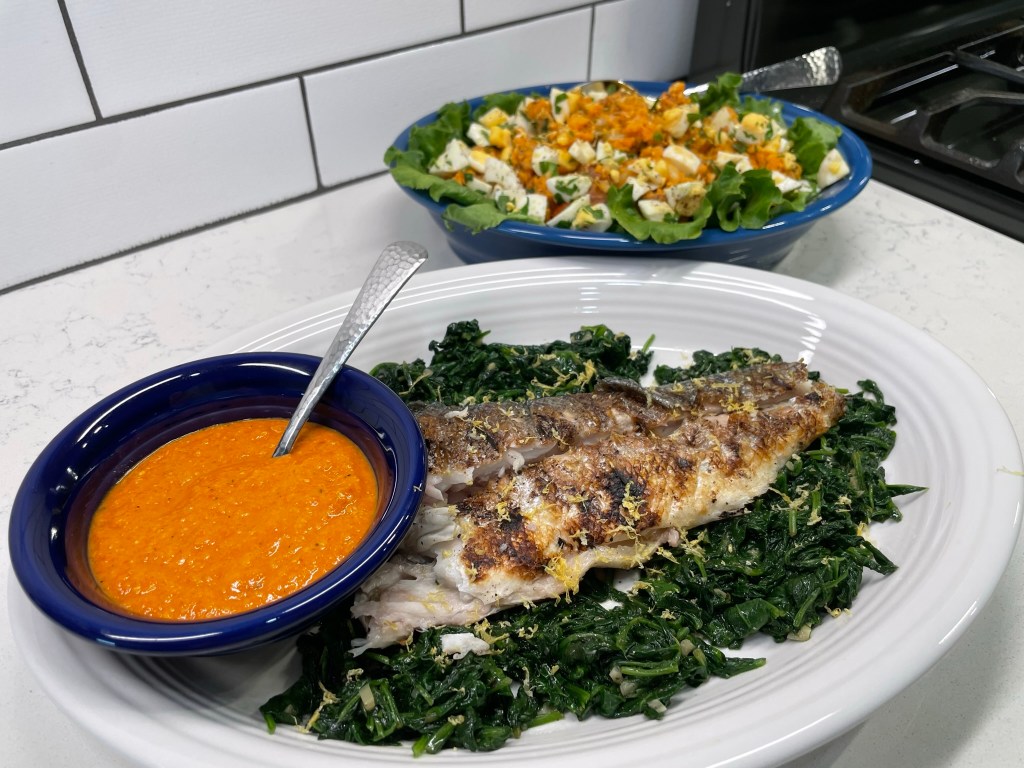
We enjoyed this romesco potato salad at our house on Fourth of July weekend, but it would be a perfect way to celebrate the end of summer while also welcoming in some of the bolder flavors of fall. It would be excellent alongside a grilled skirt steak or zesty marinated chicken breasts, or keep it light and healthy— as we did, by serving it alongside a grilled whole branzino. 


This recipe made enough romesco to dress the salad plus a little extra to serve on the side with the grilled fish. If you don’t want the extra, simply prepare an extra half-pound of potatoes. But trust me on this, you’re going to want the extra. 😁


Romesco Potato Salad

  • Servings: About 6
  • Difficulty: Average
  • Print

The Spanish-inspired flavors of roasted red pepper, paprika, sherry and almond lend a zesty flair to this mayo-free potato salad!


Ingredients

  • 1 pound itty bitty red potatoes
  • 3 eggs, hard boiled, cooled and peeled
  • 1/2 cup roasted red peppers
  • 1/3 cup almonds
  • 1 Tbsp red wine vinegar
  • 1 Tbsp sherry (see recipe notes)
  • 3/4 tsp smoked paprika
  • 2 cloves garlic
  • 1/3 cup evoo; add 2 Tbsp at first, drizzle remaining in while processor runs
  • Kosher salt and freshly ground black pepper, to taste
  • Additional roasted red bell pepper, chopped
  • 1/4 cup parsley leaves and stems, chopped
  • 1 Tbsp capers, rough chopped
  • 1/4 cup diced Spanish onion

Recipe Notes: Sherry vinegar is traditional for romesco, but I substituted a 50/50 mix of red wine vinegar and good quality drinking sherry. Odd, isn’t it, that I had sherry but not the vinegar? You will likely only need about 2/3 of the romesco to dress the potato salad. Save the rest for another purpose (it’s great on sandwiches or with grilled fish), or do an extra 1/2 pound of potatoes.

Directions

  1. Add baby potatoes and water to a medium pot. Bring to a gentle boil, then reduce slightly to simmer until potatoes are tender. Drain immediately and let them relax in the colander to dissipate the steam. Lightly smash the potatoes, not to the point of mashing them, but enough to break them open just a bit.
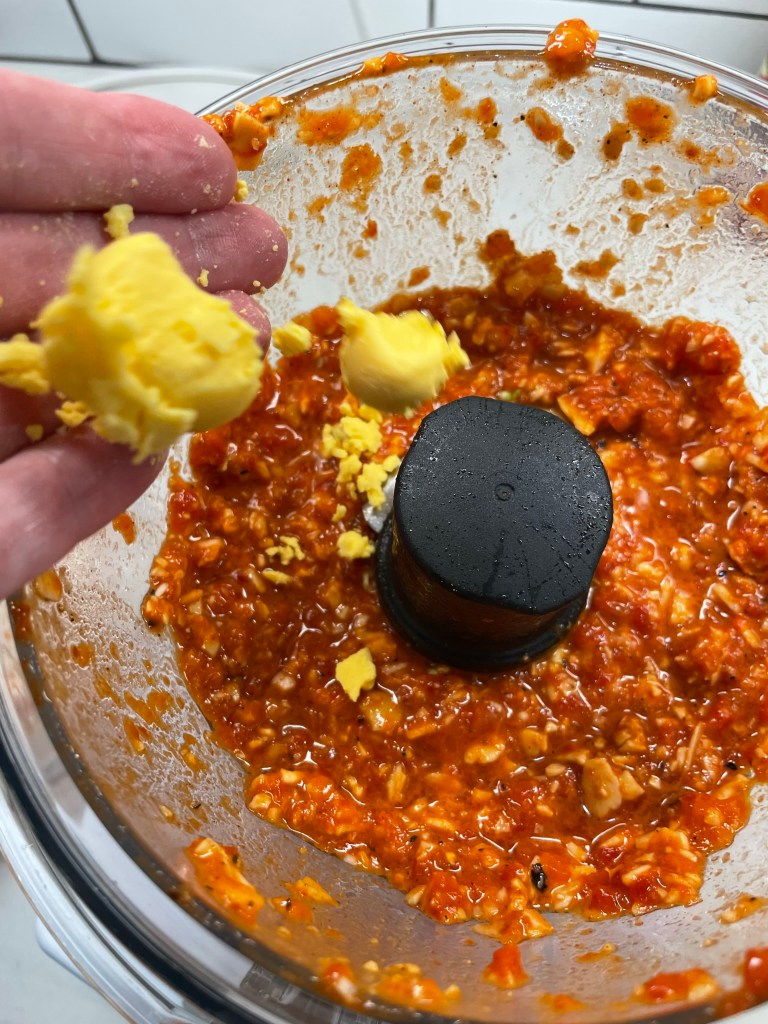
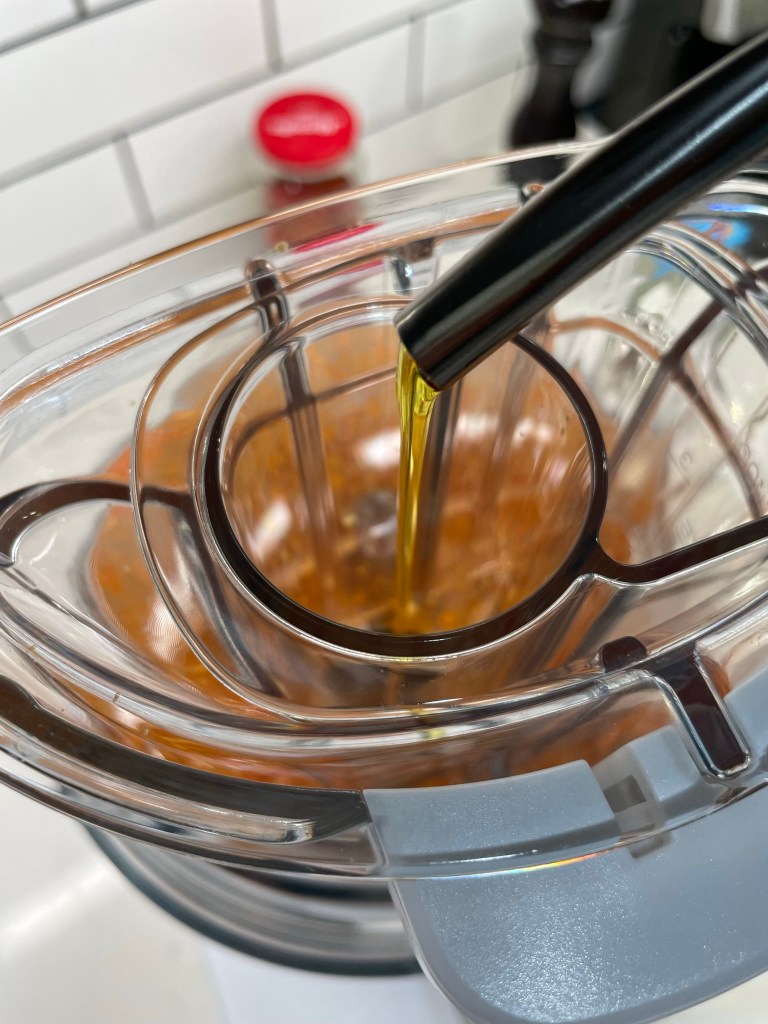
  2. In the bowl of a food processor, combine roasted red pepper, garlic, almonds, vinegar, sherry and paprika. Season with salt and pepper. Pulse a few quick times to roughly blend the sauce. Add one yolk of hard boiled egg if desired. Add two tablespoons of the olive oil and pulse again, then run the machine continuously while you slowly drizzle in the remaining oil.
  3. When potatoes are warm but no longer hot, gently fold in the romesco sauce. You’ll probably want to use a little more sauce than you initially think it needs, as the warm potatoes will absorb some of the moisture in the sauce.
  4. At serving time, top with additional red pepper, onion, chopped hard-boiled egg, capers and parsley. Add one last drizzle of olive oil, if desired.


Not Quite Pizza Sauce

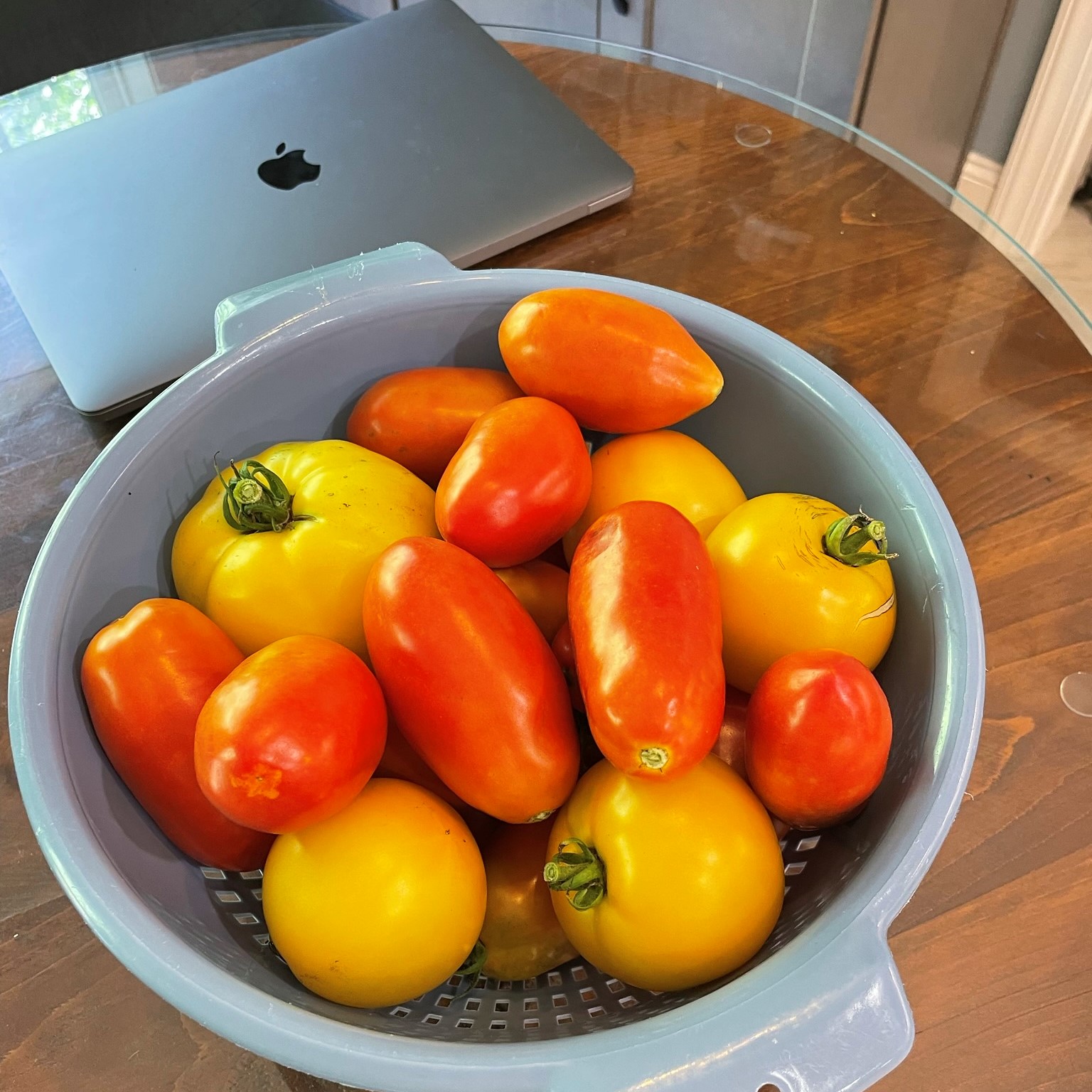
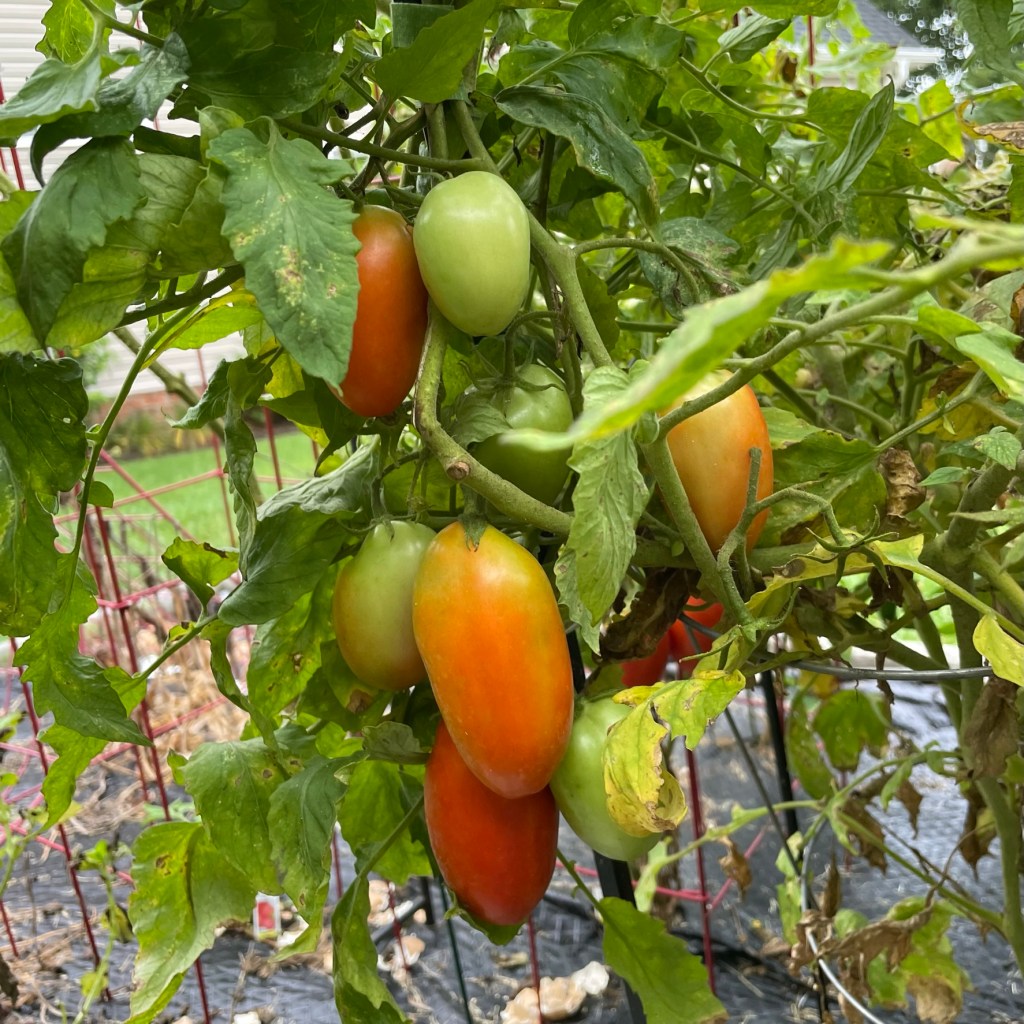
Now that we’re fortunate enough to have a garden again, thanks to Terrie’s persistence, we have a bounty of summer tomatoes to deal with.

And recently I had the chance to create a pizza sauce. I used to always make my own sauce when I made pizza (pre-Terrie, pre-sourdough) with store-bought dough. But we’ve been using sauce we buy at a market because there’s quite a variety now and they’re way more flavorful than even just a few years ago. But homemade sauce, that’s the good stuff. And we have fresh Roma tomatoes, so why not?

Every day, we’ve come in from the garden with another haul.

As an aside, I should note that I’ve been gardening and canning off-and-on for 25 years, but several years ago conceded gardening to Terrie for two reasons—the persistence of the deer wore me out, and in 2013, I had an allergic reaction to yellow jacket stings and was advised by my doctor that activity in the grass where yellow jackets hung out could be dicey for me. And our raised-bed garden is right in the middle of a lot of grass. Every time I go near it, I always see bees buzzing and I’m on high-alert mode.

I know you mean well, Buddy.

But back to the story. Sauces are a big thing for me. Before Terrie, I would concoct all kinds of sauces for things I grilled. My go-to sauce for grilled chicken, for example, was a combination of five ingredients that I can still name from memory even though I’ve not made it that way for years: a base barbecue sauce such as Sweet Baby Ray’s, Italian dressing, Kraft Catalina dressing, duck sauce (most often Saucy Susan brand), and some splashes of either soy, teriyaki or hot sauce depending on my mood.

Under Terrie’s watch, however, we have eliminated anything containing ingredients such as high-fructose corn syrup (bye-bye Sweet Baby Ray’s) and soybean oil (see ya, Kraft Catalina). The result is that we’ve eliminated a lot of my go-to’s, and to be honest, I don’t mind that. When I create a sauce now, it’s with more natural ingredients and usually means I’m investing my own labor, starting with sautéing vegetables and ending by blending. That’s how it was to be when I told Terrie I wanted to make a pizza sauce.

To increase my knowledge, I searched the inter-webs for pizza sauce recipes. I know how to create “Sunday gravy,” but a homemade pizza sauce from scratch is a different animal. Do you know that almost every recipe out there, including in the cookbooks we have at home, all start with one can (28 ounces) of plum tomatoes? So I changed the search to include “pizza sauce using homegrown tomatoes.”

We’ve had so many fresh, meaty Romas. I’ll use canned tomatoes in January.

The problem is I was mostly interested in a recipe by one of Terrie’s favorite chefs, J. Kenji Lopez-Alt. And he also used canned tomatoes. I remembered another bit of Terrie’s constant advice—don’t be married to a recipe; use your instinct. As a result, I used the Lopez-Alt recipe as a baseline but was able to embellish it with my own touches, like fresh tomatoes.

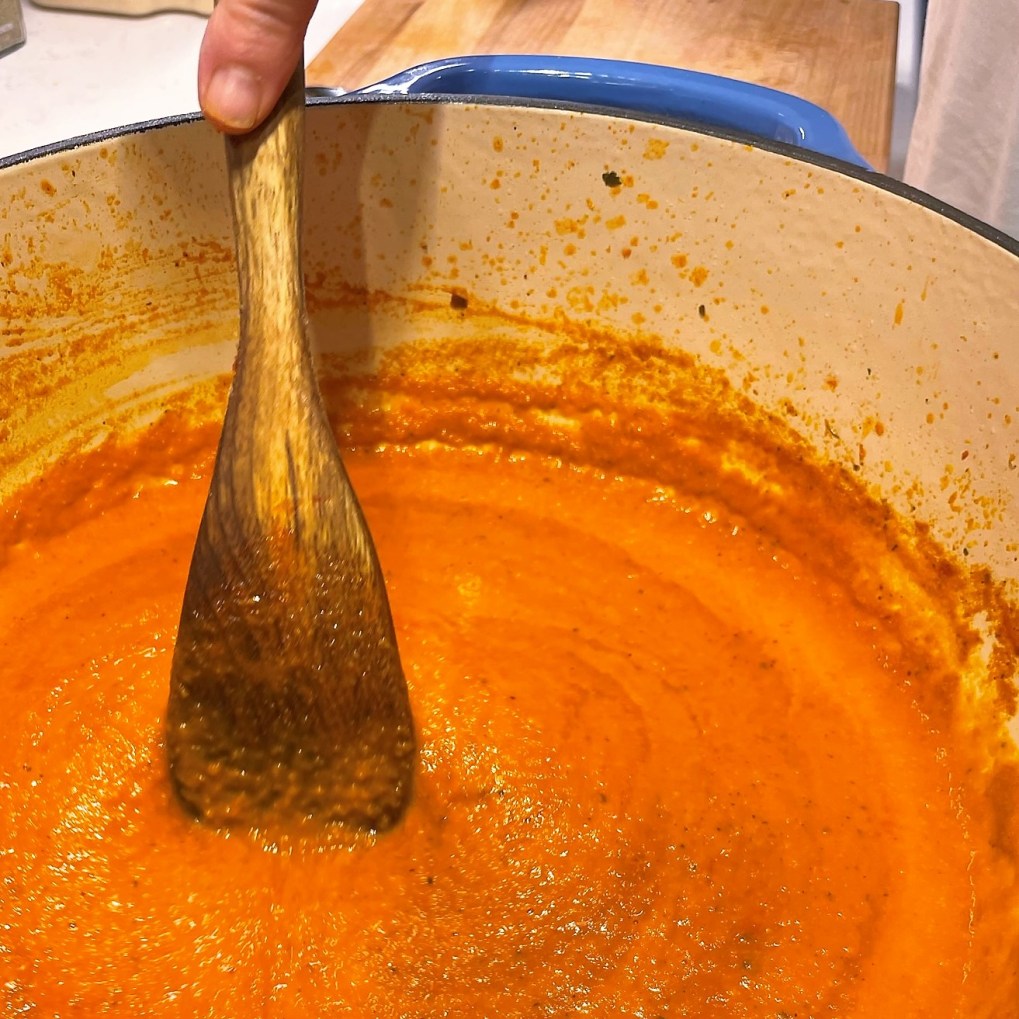
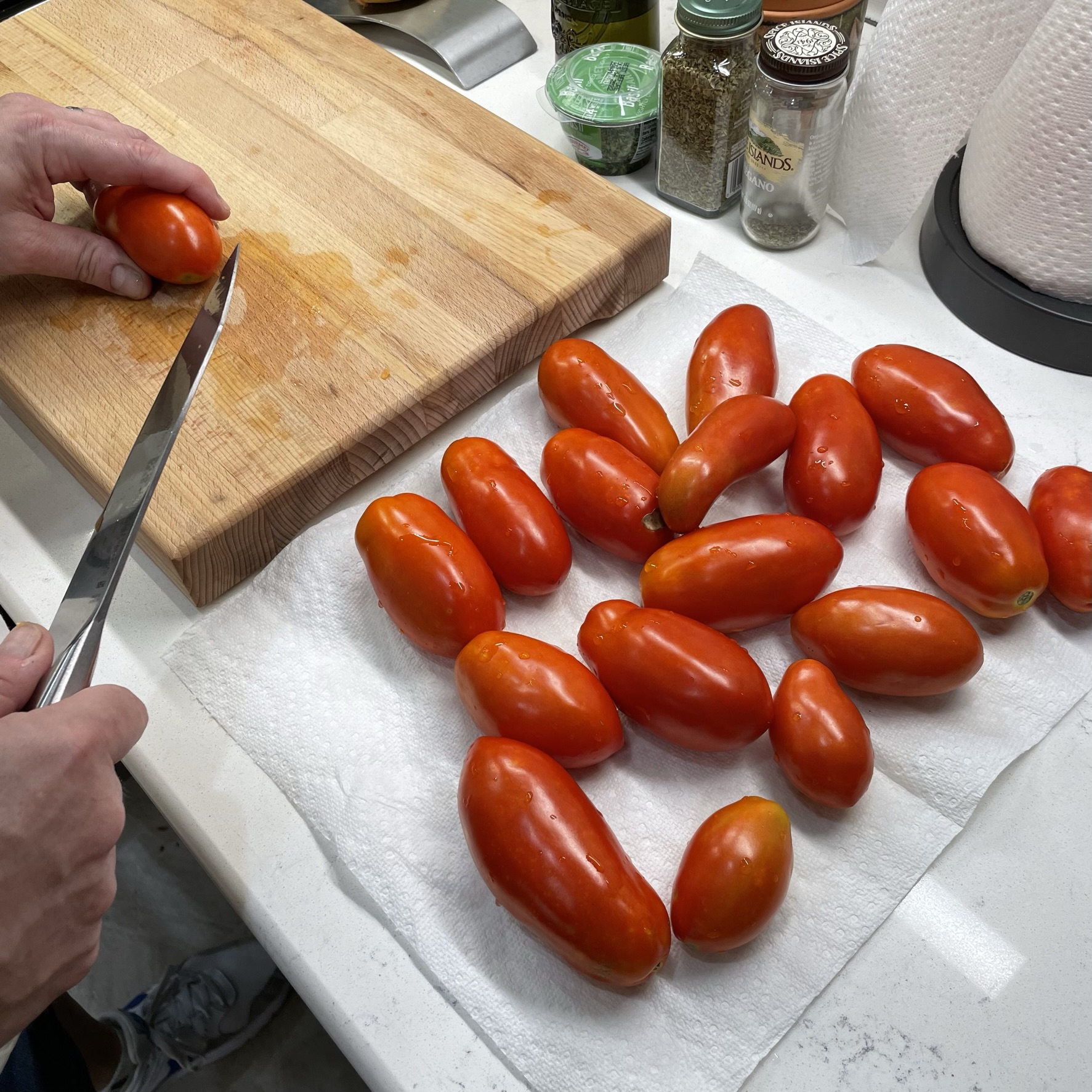
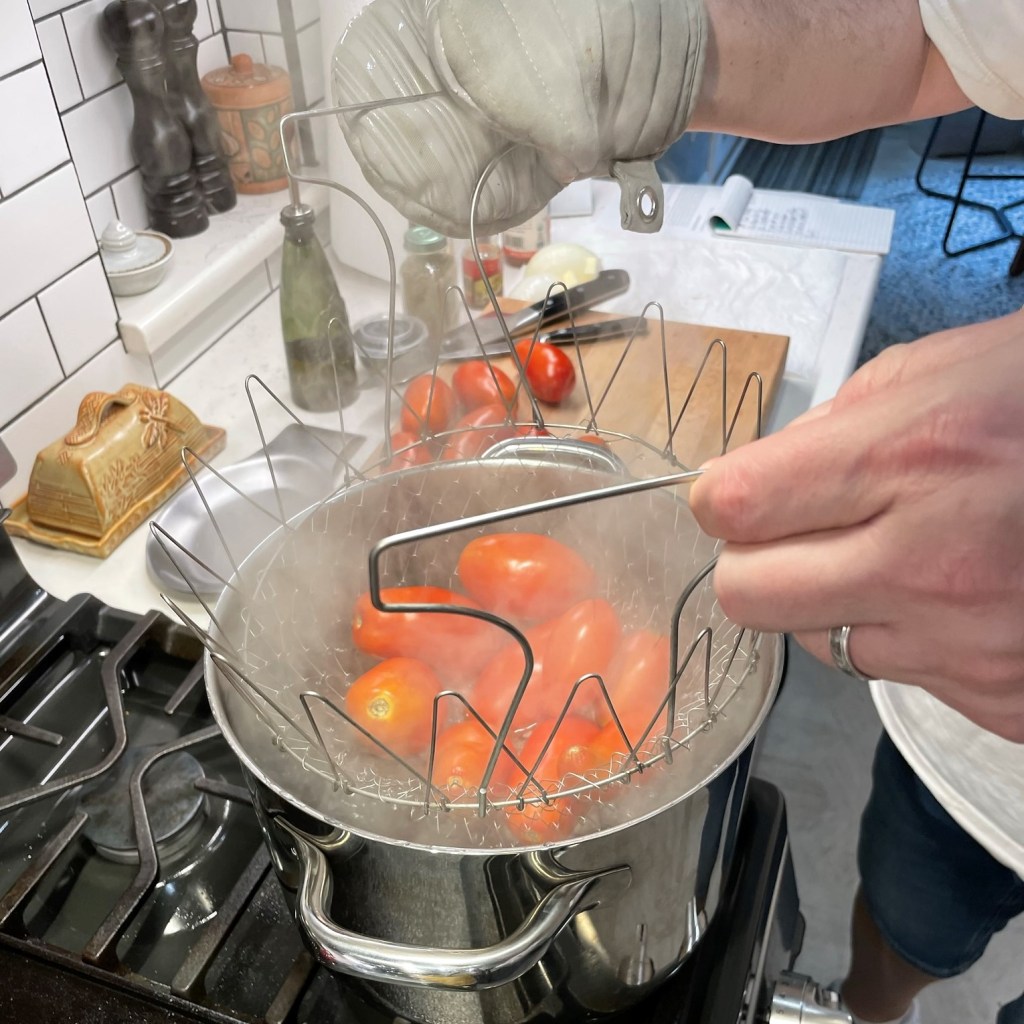
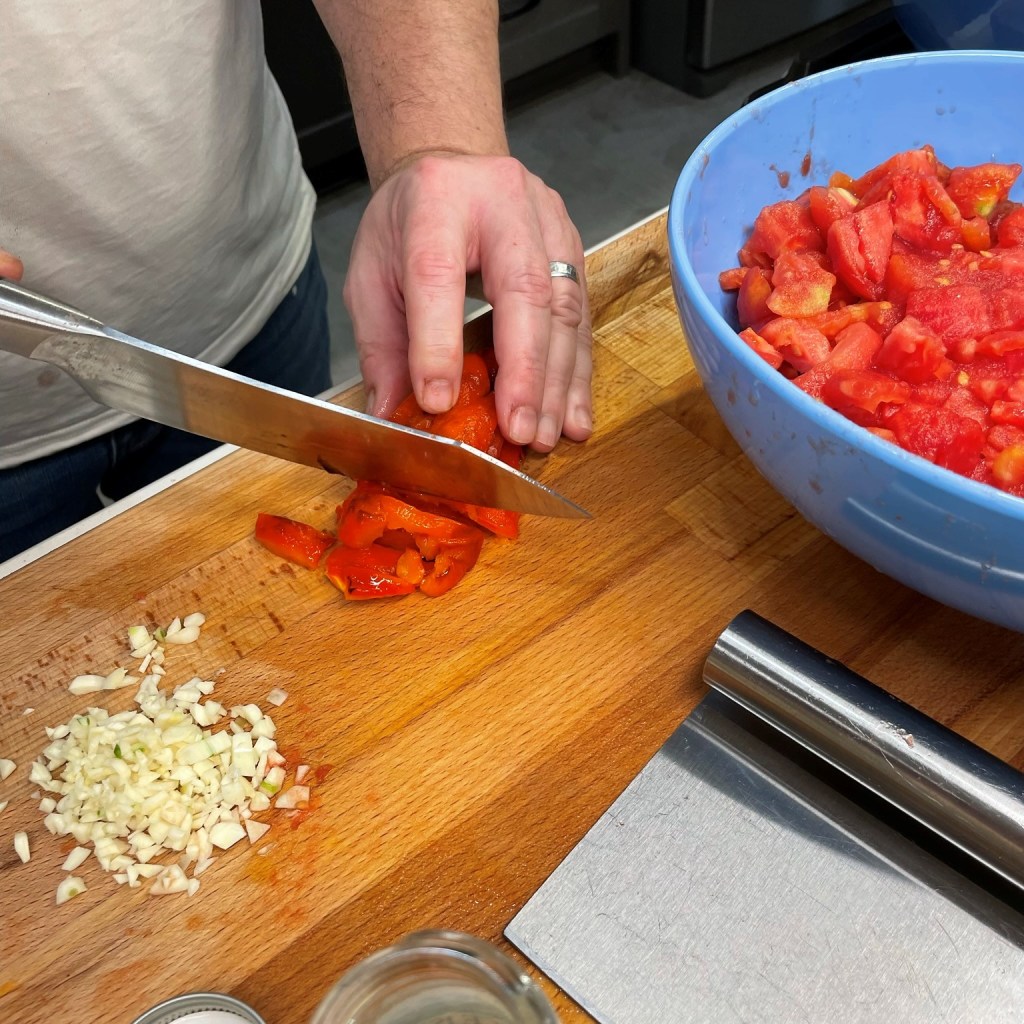
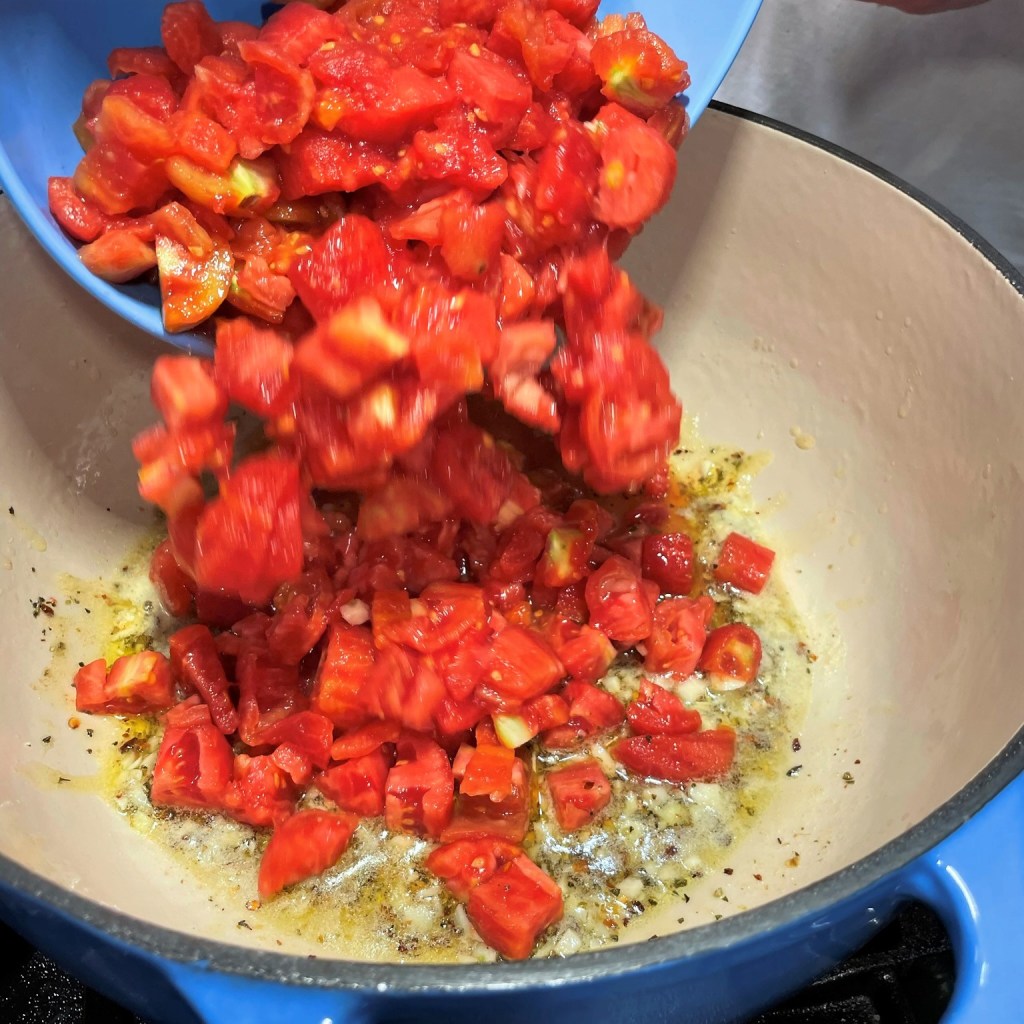
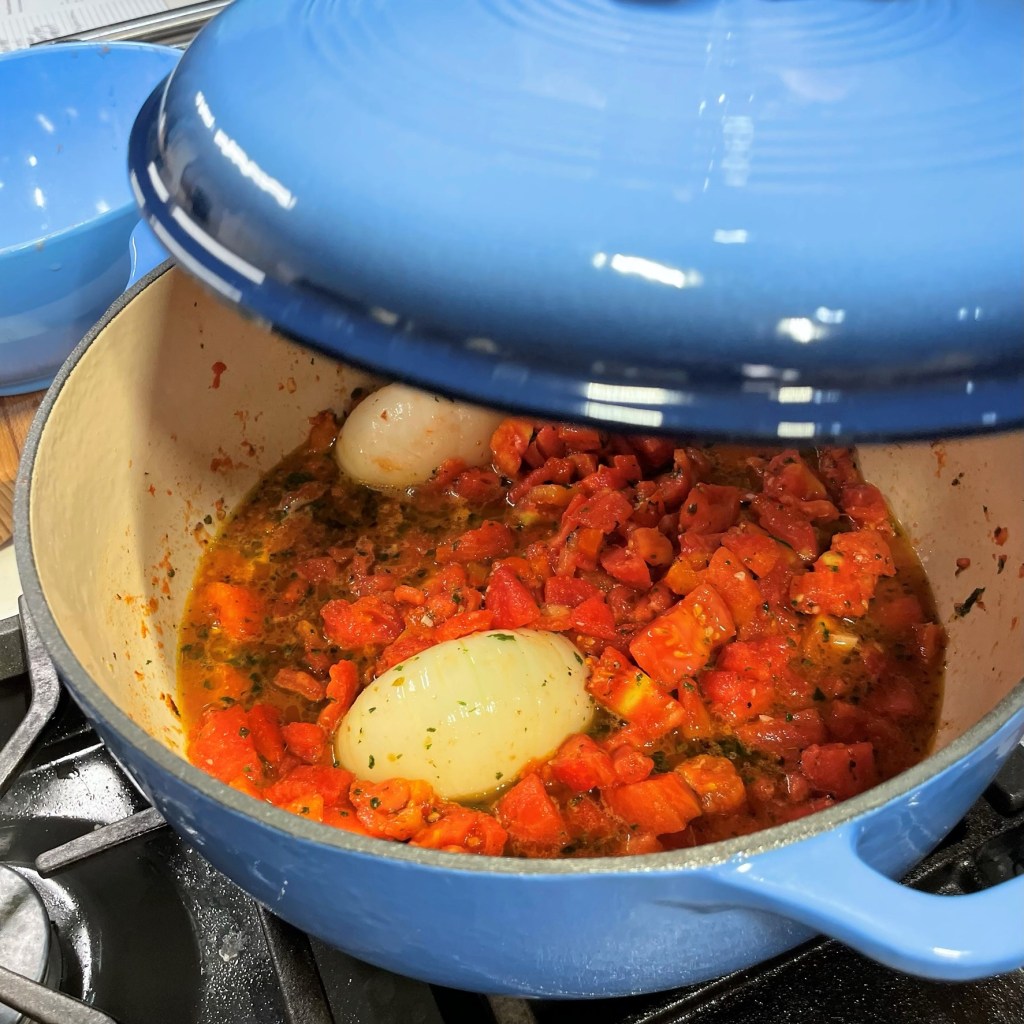
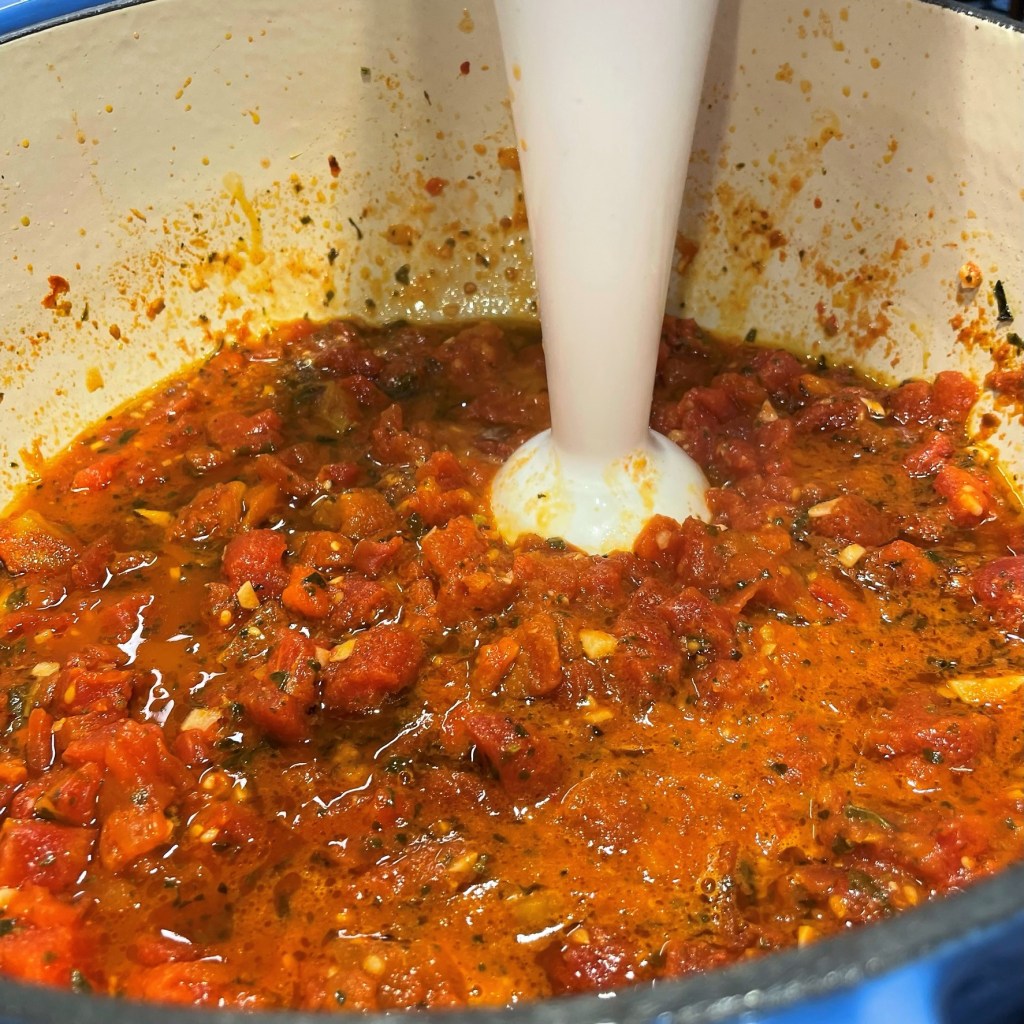
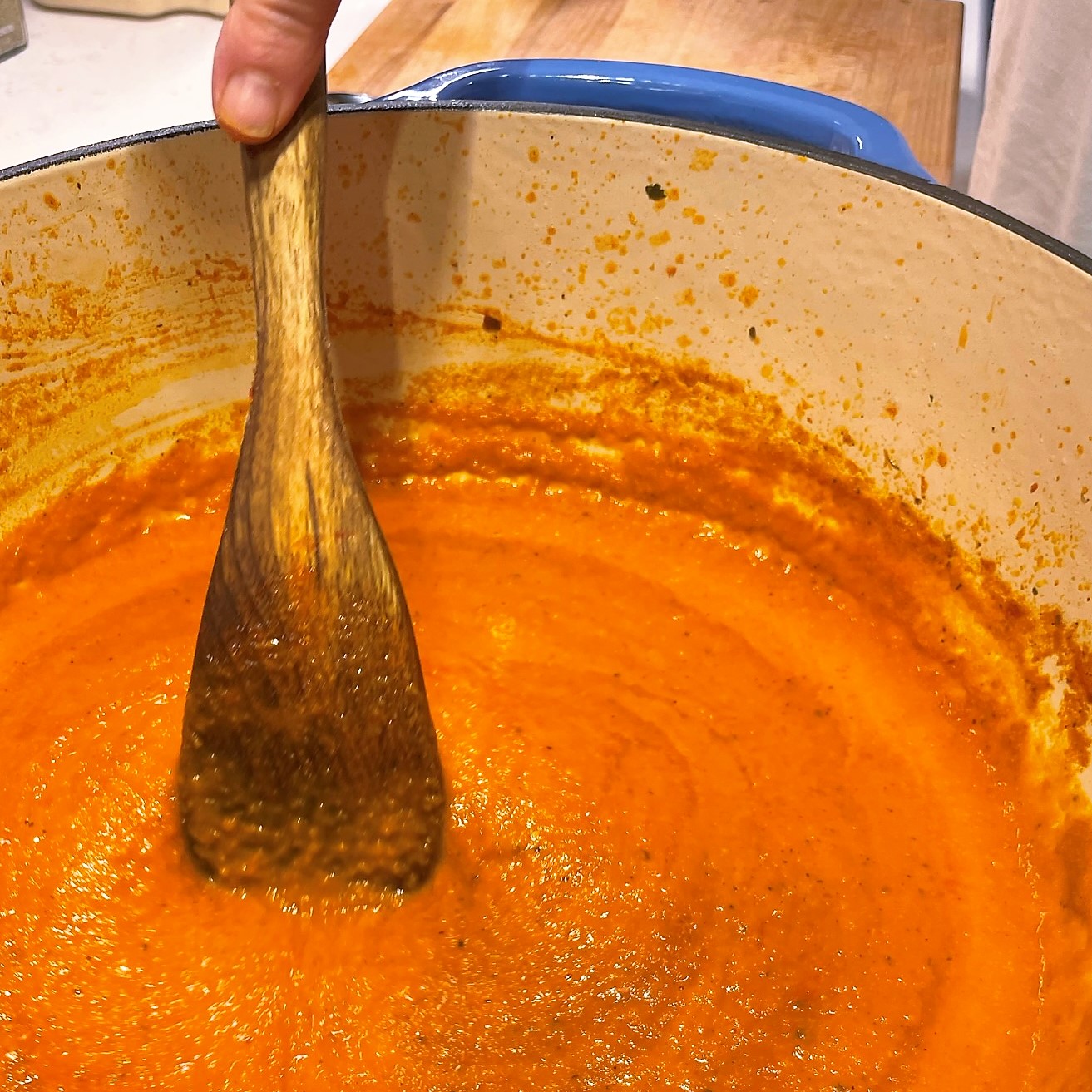
This included blanching (and then ice bathing) the tomatoes, sautéing garlic and some seasonings in a combination of olive oil and butter, roasting and dicing a sweet red bell pepper, and then adding an onion cut in half for the cooking (but removing at the end), then whizzing it up smooth with an immersion blender. The end result was amazing!

Use an immersion blender to puree it nice and smooth.

There was just one teeny problem. It’s not quite pizza sauce.

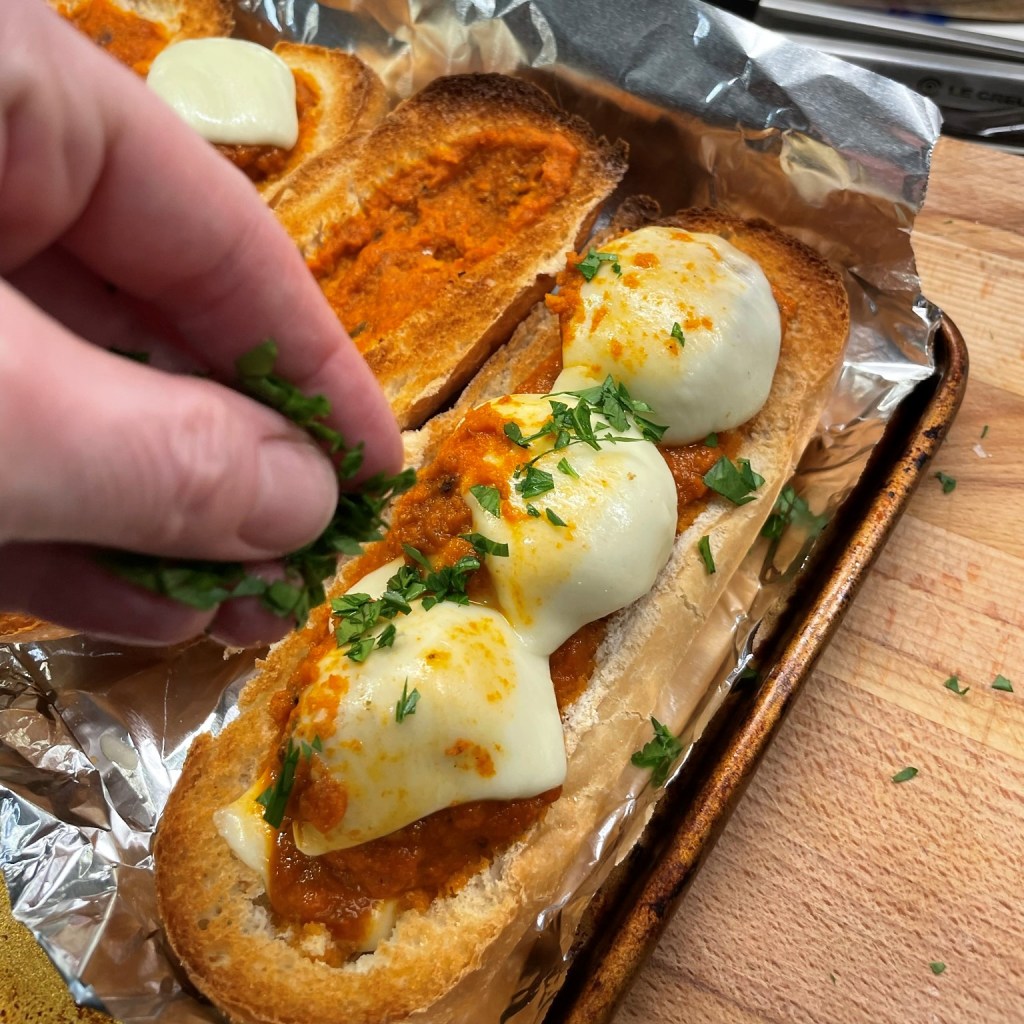
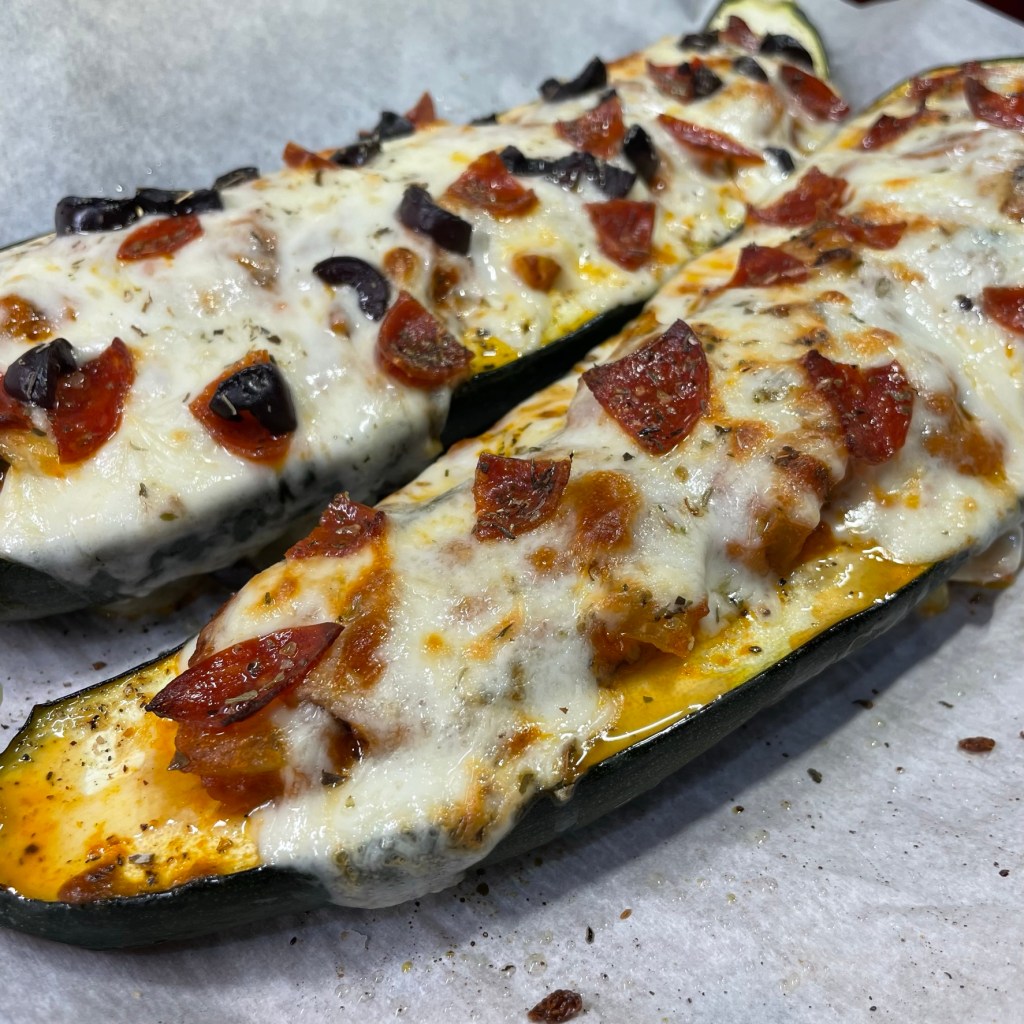
Rather, the sweetness of the red bell pepper and spice of the red pepper flakes meant it read uniquely, a cross between roasted red pepper sauce (like the one linked here that I made last summer) and something akin to vodka sauce (but without vodka, go figure). It was more complex than I wanted for pizza, which to me is a more tomato-forward and simple taste. We wound up using this sauce instead for turkey meatball subs. The subs had a tangy, bright pop thanks to our garden ingredients, and Terrie promises to share her recipe for the meatballs soon. The rest of the sauce (and meatballs) found its way into a stuffed zucchini boat, thanks to inspiration from a recent post on Dorothy’s New Vintage Kitchen.


As for my desire to make pizza sauce, well, we still have plenty of Roma tomatoes coming in. Stay tuned.


Not Quite Pizza Sauce

  • Servings: 6 to 8, depending on use
  • Difficulty: average
  • Print

My intention for pizza sauce turned into something more interesting and complex, perfect for topping pasta, Italian meatball subs or even lasagna. I used fresh Roma tomatoes from our garden, rather than canned tomatoes. If you use canned tomatoes, choose a 28 oz. can of Italian plum tomatoes and reduce the simmering time by half.

Ingredients

  • 3 pounds fresh Roma tomatoes, cleaned
  • 2 Tbsp. extra virgin olive oil
  • 2 Tbsp. unsalted butter
  • 1 small red bell pepper, roasted (instructions below)
  • 3 cloves garlic, smashed and minced
  • 1 1/2 tsp. dried oregano flakes
  • 1 1/2 tsp. dried basil leaves (or 2 good-sized sprigs fresh basil)
  • Kosher salt and black pepper to taste
  • 2 generous pinches red pepper flakes
  • 1 large sweet or yellow onion, peeled and cut in half from stem to root end
  • 3 Tbsp. grated Parmesan cheese (or the Parm-Romano blend that we are so fond of at our house)
  • 1 or 2 tsp. sugar, to taste

Directions

  1. Bring a large stock pot of water to a boil for blanching the tomatoes. Score the blossom end of the tomatoes to make it easy to peel them. Plunge the tomatoes into the water and let sit until you can see clear signs of the skin splitting. Have a good-size pot or bowl filled with ice water to chill the hot tomatoes and keep them from cooking once they are blanched. Then peel the tomatoes, give them a rough chop and set aside.
  2. Quarter the bell pepper and press the pieces to flatten them, skin side up, on a foil-lined baking sheet. Set the oven to broil setting and roast peppers for about 10 minutes, until charred but not burned. Transfer the pepper pieces to a bowl and cover to steam, which will allow easier peeling. Dice the pepper.
  3. In a large non-reactive pot on a low flame, heat the oil and butter until the butter melts. Add the garlic, oregano and pepper flakes. If using dry basil, add it now, too. Continue cooking on low for 2 to 3 minutes, then add the tomatoes, and salt generously. Add the onion halves, Parmesan cheese, fresh sprigs of basil (if using that) and roasted red pepper. Bring to a low boil, then reduce heat and cook on low until volume is reduced by up to half (about two hours).
  4. Remove the onions (and basil sprigs if you used fresh), and then process the sauce with an immersion blender until smooth. Continue to simmer on low, and taste and season it from that point to suit your palate.
  5. Serve immediately over pasta or whatever dish needs a bright Italian sauce. This also can be refrigerated (the flavors really shine after a couple days in the fridge), but probably should be used within a couple of weeks. Or you can freeze it.


Ratatouille Shakshuka

How is it possible that the simplest combination of ripe-at-the-same-time ingredients turns out to be such a mouthwatering flavor explosion, no matter how you put it together?

Any way you plate it, this is a great combo!

I never get tired of rearranging ratatouille—eggplant, zucchini, red bell pepper, onions and tomatoes—and this time, I married the classic Provencal stew with a classic Jewish breakfast dish, shakshuka.

The first time I heard of shakshuka was during a pre-wedding meeting with Rabbi Mark, who formerly led Temple Emanuel in Winston-Salem, where my then-fiancé, Les, is a member. When our ceremony-planning conversation took a detour toward food and cooking (as literally every conversation with me eventually does), Mark asked if I’d ever made shakshuka, the Middle Eastern dish that is a breakfast staple in many Jewish households. I was stumped because I had never even heard of this dish, let alone made it. But that changed quickly, and it has become an occasional favorite at our house.

Shakshuka is a humble and hearty, tomato-based skillet meal, and a great way to use up whatever other vegetables you have on hand, with eggs simmered right into the sauce. It is very similar to a dish the Italians call “eggs in purgatory.” I especially appreciate how simple it is to pull together when I have had a busy week with little time to plan a menu. Up until now, I have made it only with the spicy flavors that are traditional to the northern African region, where shakshuka originated—cumin, paprika, hot pepper, garlic and oregano.

But this time, I took the concept of shakshuka northward across the Mediterranean Sea, into the south of France, using Herbs de Provence alongside all the beloved vegetables of ratatouille. The result, as you can see, was awesome!

Served with a light sprinkle of Parm-Romano blend cheese at the table.

There was so much nourishing comfort in the stewed vegetables, which simmered long enough to become soft and melded, and the delicate herbs were just right. I’m already craving it again!

As with most recipes, it’s helpful to have all your ingredients chopped and ready before you begin. For any stew, I like to cut up the vegetables into roughly similar size. This ensures more even cooking, and also makes it possible to get a little bit of everything in each delicious bite. I used a large zucchini, a large “millionaire” eggplant (the slender, Japanese variety), half of a large onion, half of a huge red bell pepper and three fresh, red tomatoes from my garden. In addition to the fresh ingredients, you’ll need a 15 oz. can of tomato sauce, a splash of dry white wine (I used dry French vermouth), a pinch or two of Herbs de Provence, and up to six eggs.

We’re going to need a bigger pot!

That’s a lot of veggies! I made this version of shakshuka in a larger pot than usual because I knew that tossing all of these fresh vegetables in my go-to cast iron would be a serious challenge, and I wanted to avoid making a big mess. The ratatouille also needs to be stirred as it cooks, so be sure your cooking vessel can handle the volume of ingredients as well as the mixing requirement. Choose a pot that has a snug-fitting lid, as this will be important for simmering.

The width of the pot is what matters, so you’ll have plenty of room to place the eggs.

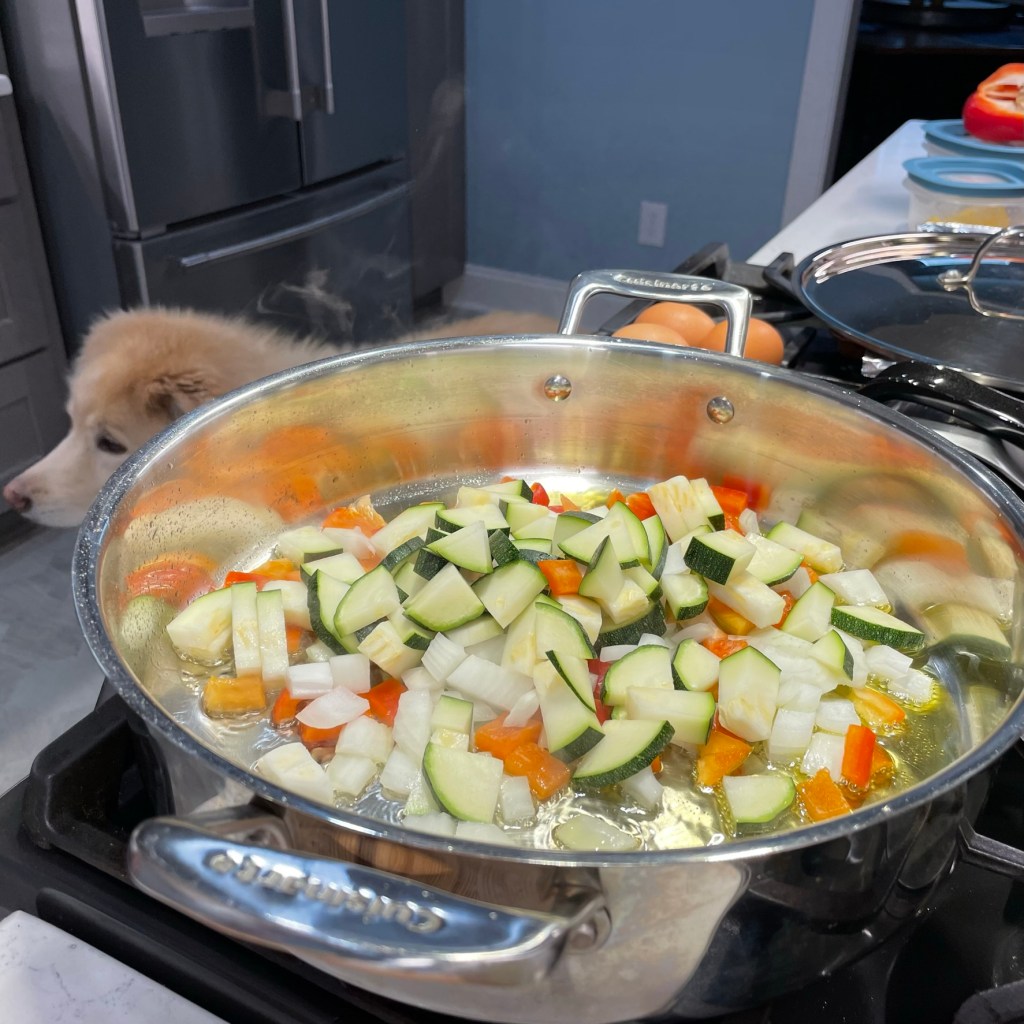
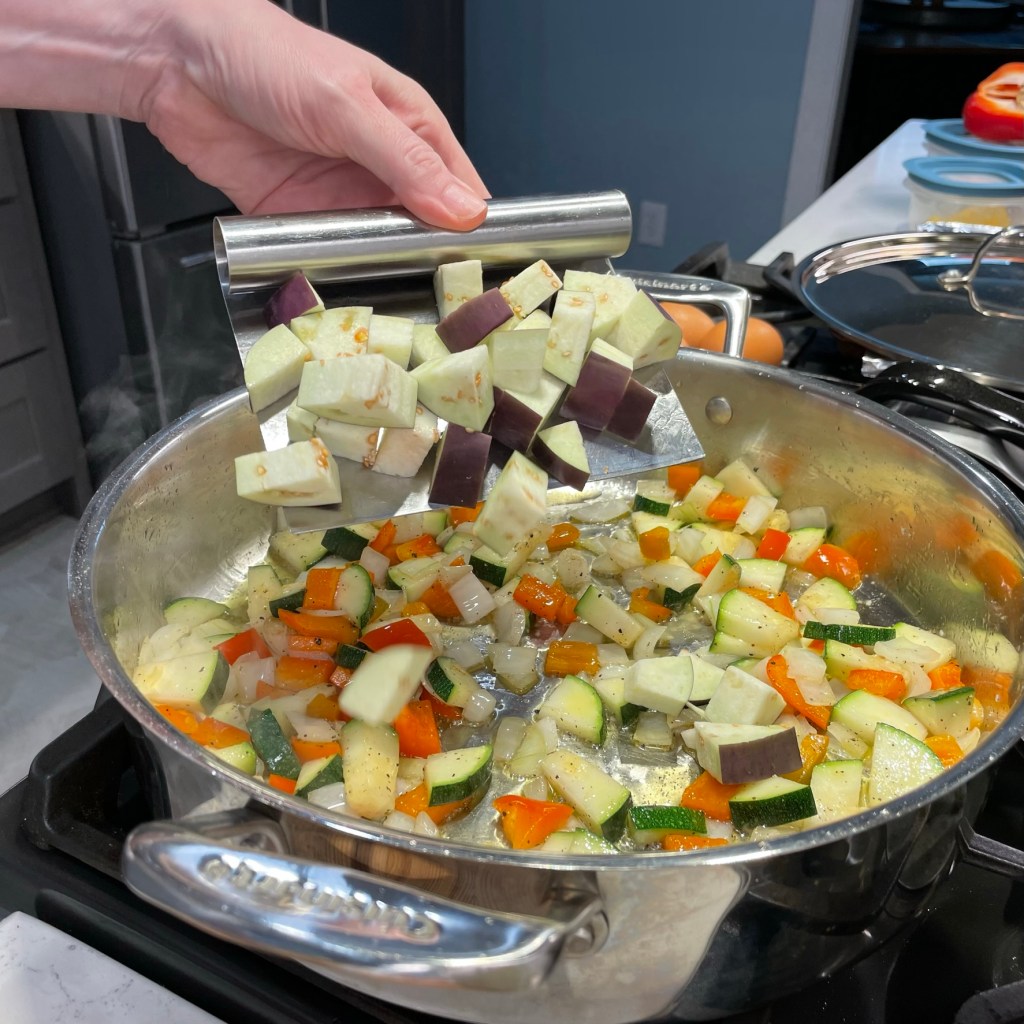
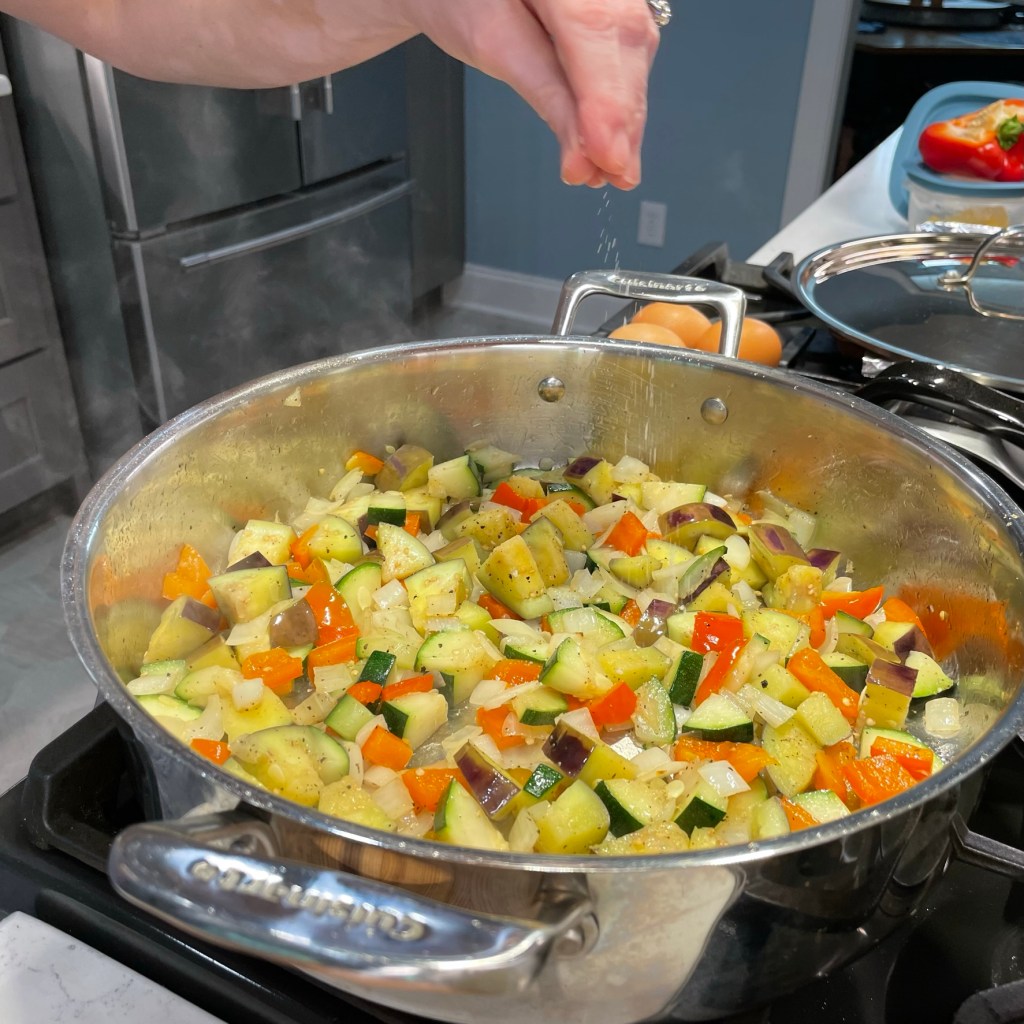
Begin by heating the pan over medium flame. Add oil and start sautéing the vegetables. Eggplant soaks up oil fast so I held that back until the peppers, onions and zucchini had a chance to soften. Remember to season each layer with a pinch of salt and pepper, not only for flavor, but also because salt helps to draw excess moisture from the vegetables as they cook. During this stage, also add a few pinches of Herbs de Provence, a French blend that includes any combination of thyme, savory, rosemary, marjoram and lavender. These are delicate herbs, but they do pack a fragrant punch, so start with a small amount and inch up to taste.


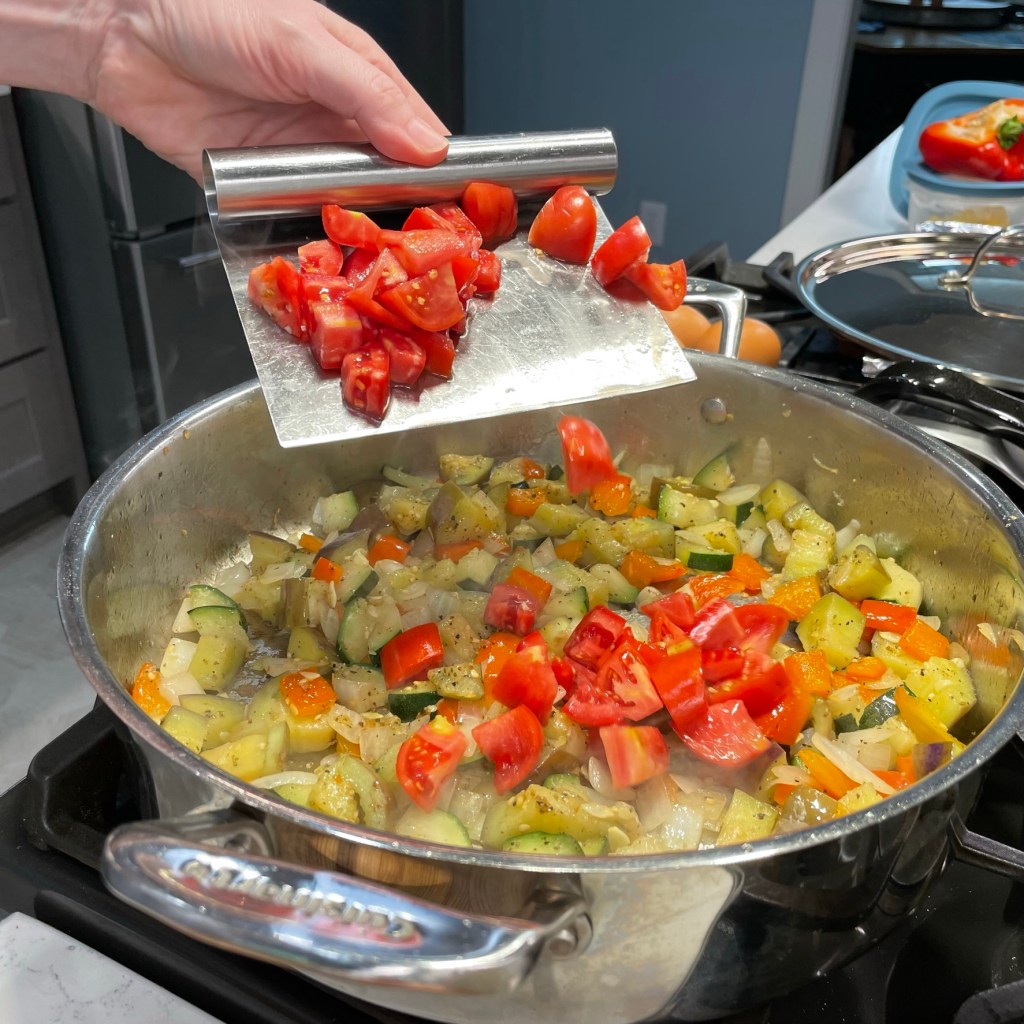
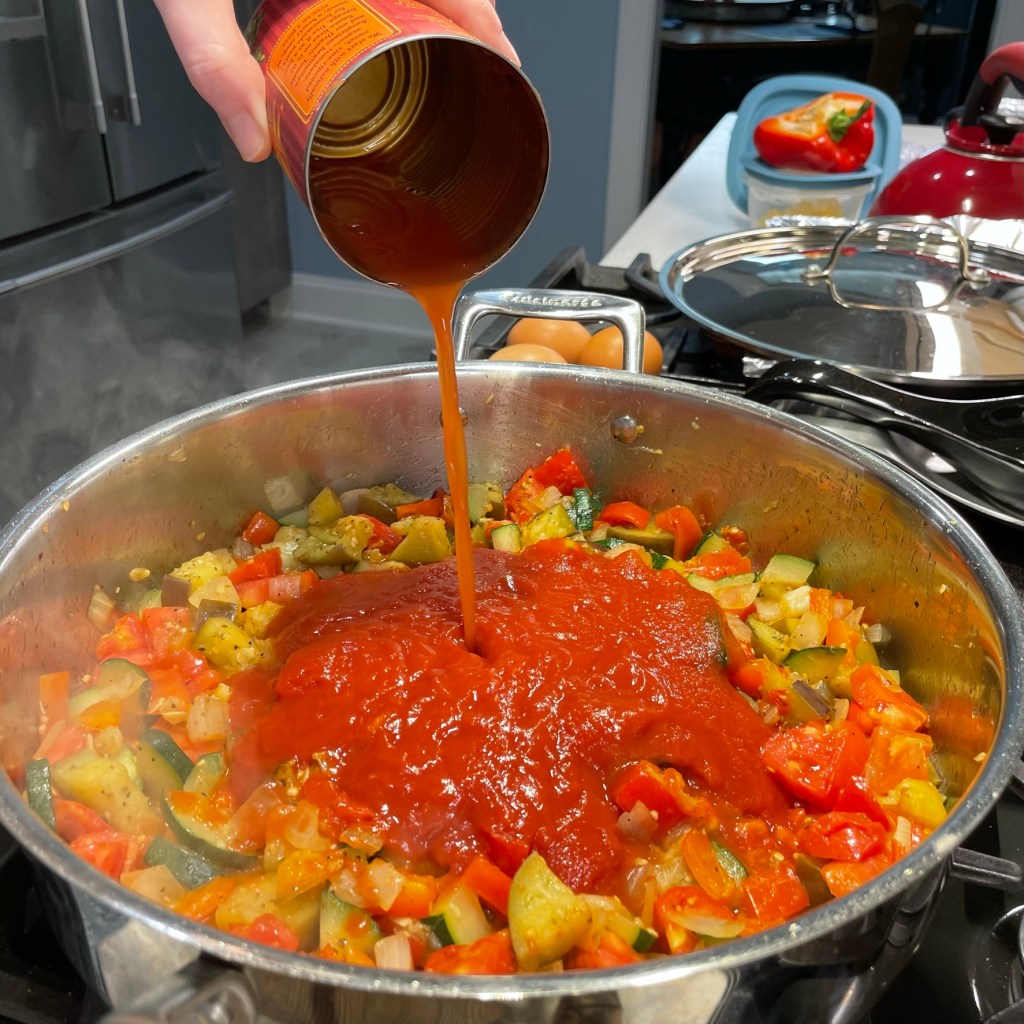
When the vegetables are visibly softened, add the fresh garden tomatoes and give it a stir. Add the tomato sauce and dry white wine. If I have used a canned ingredient, I usually swish the wine around in the empty can to rinse out the last bit of flavor. Another quick pinch of salt and pepper, and then reduce the heat, cover the pan and allow it to simmer for 15 to 20 minutes. The vegetables will continue to soften, melding the flavors together, but the sauce should not reduce too much. While it simmers, take the eggs out of the fridge; they will set in the shakshuka better if they are closer to room temperature.


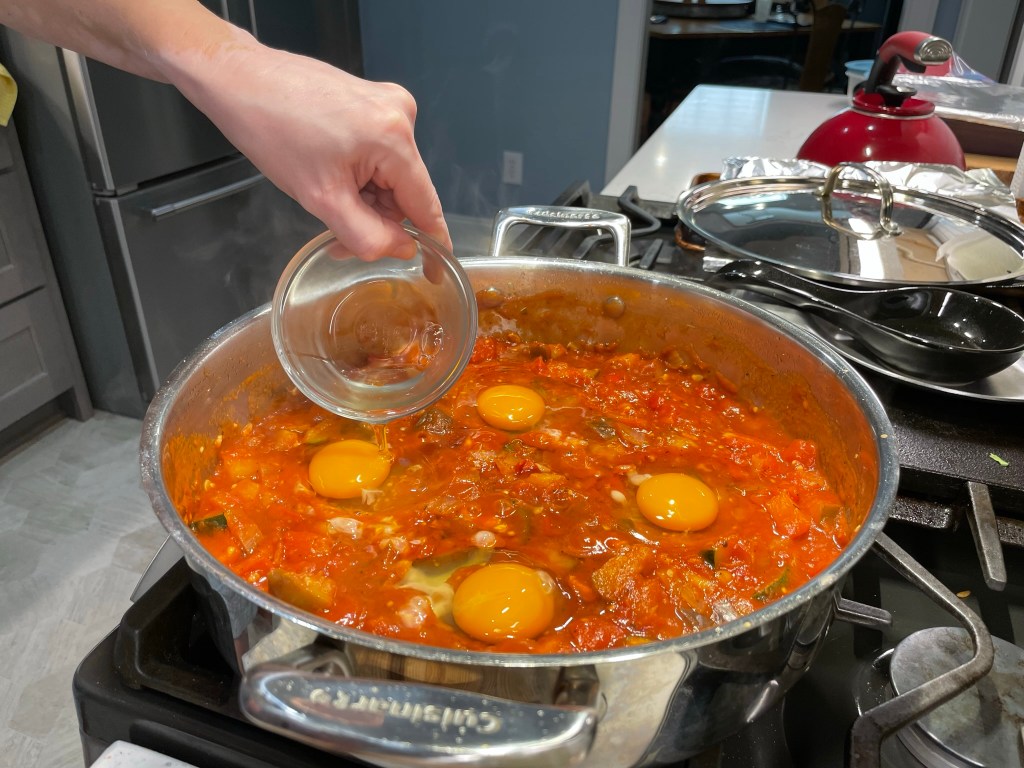
When the ratatouille stew has become very soft, crack each egg into a ramekin dish for easy transfer to the shakshuka. This may seem unnecessary, but trust me when I tell you that it is no fun at all trying to fish out itty-bitty pieces of egg shell that went astray into a big saucy mixture. If anything goes sideways with your cracked eggs, you want it to happen in the ramekin, not in your beautiful recipe!

Give the stew a gentle stir, and then use the back of a large serving spoon to create a slight depression for each egg to rest. This doesn’t have to be perfect, and you only need a spot about 3 inches across for each egg. I had room for six eggs in my large pot, but I only used four because I knew the extras would not warm up well without overcooking. Better to add fresh eggs when you heat up the leftovers.

Cook as many eggs as you plan to serve initially. Make more eggs when you reheat the leftovers.

Slip an egg into each depression and give the shakshuka one final pinch of salt and pepper before covering the pot. Keep the flame set on low and cook for 8 to 10 minutes, until the whites are set but the yolks still have a bit of jiggle to them.

I wish you could smell this! 😋

Scatter fresh, chopped herbs over the dish (I used fresh basil from the garden, but flat-leaf parsley would be nice, too), and serve immediately with a slice of crusty French bread. The best way to serve this dish is to use a wide, somewhat flat spoon to scoop underneath an egg, grabbing as much of the surrounding stew as possible at the same time. Sprinkle on a teaspoon or so of grated Parmesan for a big burst of umami flavor.


Ratatouille Shakshuka

  • Servings: 6
  • Difficulty: average
  • Print

Choose a wide, covered pot for making your ratatouille, and prepare your workstation by chopping all vegetables before you begin.

Ingredients

  • 1 large zucchini, trimmed and chopped
  • 1/2 large sweet onion, chopped
  • 1/2 large (or 1 medium) red bell pepper, chopped
  • 1 large Japanese eggplant, chopped (or about 2 cups of alternate variety)
  • 3 Tbsp. extra virgin olive oil
  • Kosher salt and black pepper to taste
  • Up to 1 tsp. Herbs de Provence (or Italian seasoning, if preferred)
  • 3 small, fresh tomatoes, chopped
  • 15 oz. can low-sodium tomato sauce
  • 2 Tbsp. dry white wine (or dry vermouth)
  • 6 large eggs* (see recipe note below)
  • Fresh basil or Italian parsley, for garnish

Note: If you wish, cook only the number of eggs you intend to serve initially. When you use the leftovers, fresh eggs will yield a better result at that time.

Directions

  1. Heat large pan over medium heat. Add olive oil and saute vegetables, beginning with only zucchini, onion and bell pepper. When the first vegetables begin to soften, add the eggplant and saute until all veggies are tender. Season with salt, pepper and Herbs de Provence.
  2. Add fresh tomatoes, tomato sauce and dry wine, stirring to combine evenly. Reduce heat, cover and simmer 15 to 20 minutes. Remove eggs from fridge during the simmer time.
  3. When vegetables are fulley softened, crack each egg into a ramekin cup for easy transfer into the pot. Use the back or a large serving spoon to make a depression for each egg. Slip the eggs into the depressions, season with salt and pepper and cover the pan.
  4. Cook over low heat about 8 minutes, until egg whites are set and yolks are still slightly jiggly. Serve immediately.


Thai Basil Chicken

To say that I’ve been under stress lately would be a gross understatement. I know that many of you feel the same angst related to the stories that plague our newsfeeds, and that alone is enough to make anyone shaky. On top of the stressors of life, things at home have been a little, um, hectic.

Besides the uncharacteristically high pressure of late in my day job (which is usually quiet in June), and beyond the fact that we are now past the 90-day mark since the start of our master bath remodel (with issues still happening every day), I had an unwelcome bit of news this week at my first primary care visit in nearly a decade. It’s nothing serious—at least, not yet—but I am considering the results of my blood workup to be an important wake-up call.

At the risk of TMI, I’ll summarize to say that several key markers are out of whack, and I need to get my act together quickly as it relates to my diet and my overall health. As luck would have it, going through menopause, starting a food blog, and signing up for not one, but two major home renovations during a world pandemic did not have positive effect on my body. I should have seen it coming.

For the first time in my life, a doctor told me that I must make changes, and that was a little scary. There’s plenty of time to turn things around, and I am truly thankful for that, but it means healthier options will be my first choice and decadence is on the bench for a while. I need to embrace regular exercise, too, but that’s another post entirely. Today, I’m focusing on healthier eating. It does not mean that we can’t have pizza or ice cream or some of the other fun things my husband and I love; rather, it only means that I must be more mindful of what goes into those dishes in the first place. Luckily, I do love experimenting!

For me, what makes a meal truly satisfying is variety of texture, big flavor and interesting spices. I’m not suddenly turning vegan or entirely giving up any food groups—I have never been one for a total elimination diet. I can move toward better health with a few lightened-up favorites, more meatless dishes and plenty of vegetables, and that’s what I intend to do. Truth be told, part of the reason I’m telling y’all this is that it builds in an extra level of accountability. Now that you know, I’ve painted myself into a bit of a corner. So here comes the first of several fresh and healthy meals served up at our house recently.

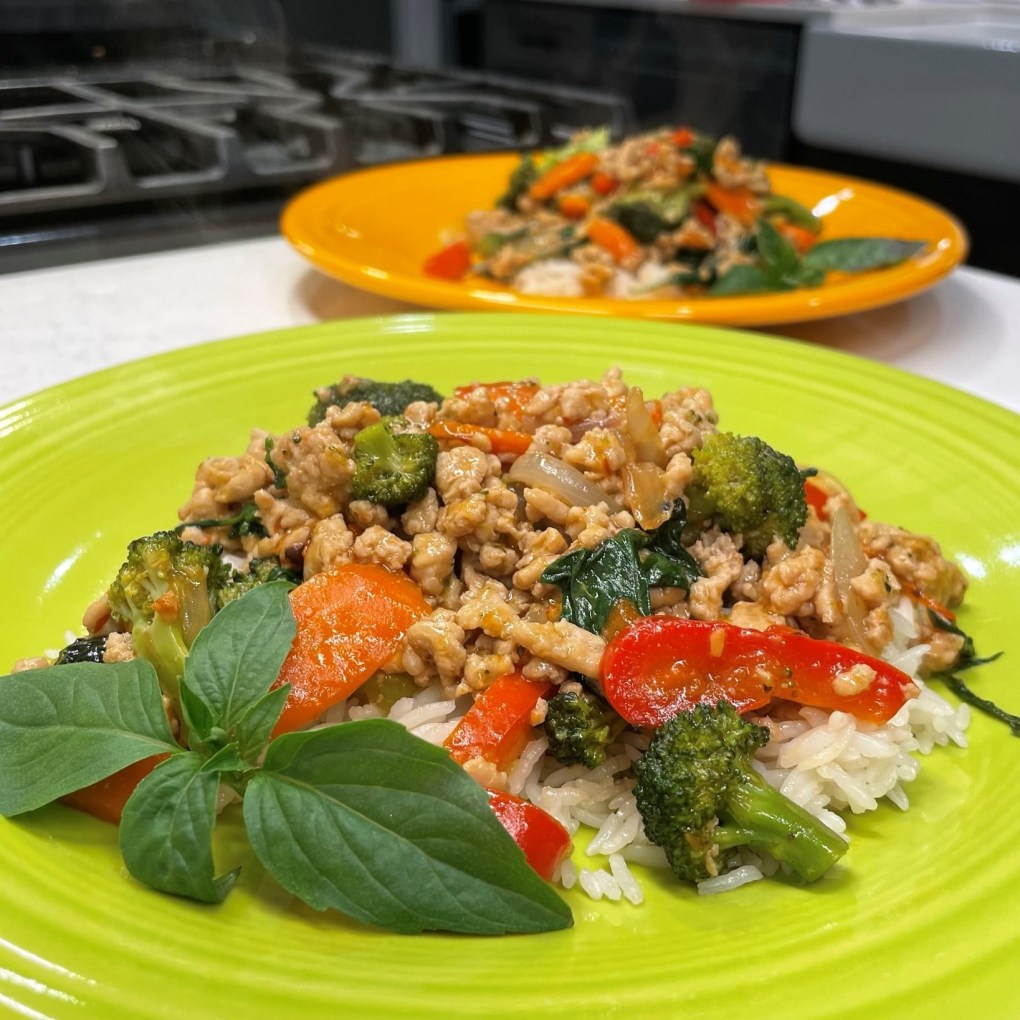
It smells even more delicious than it looks!

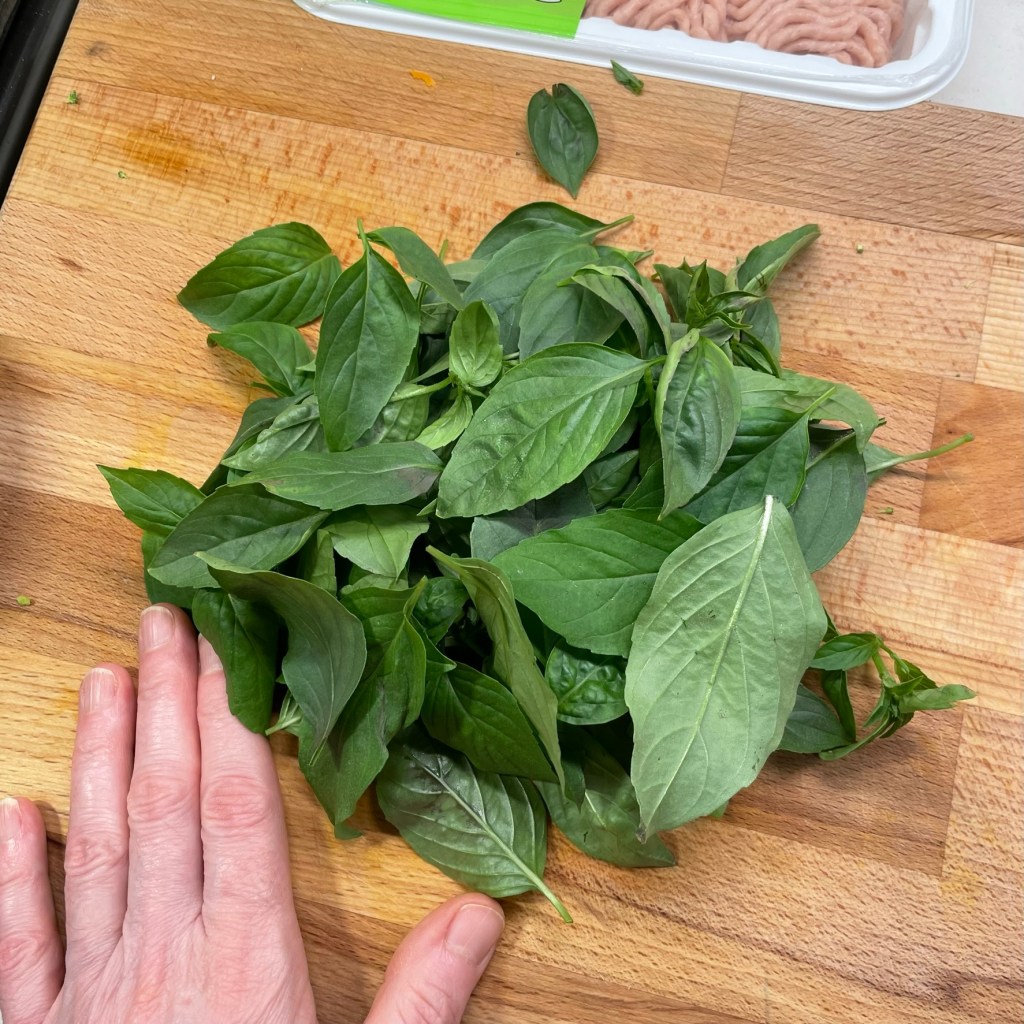
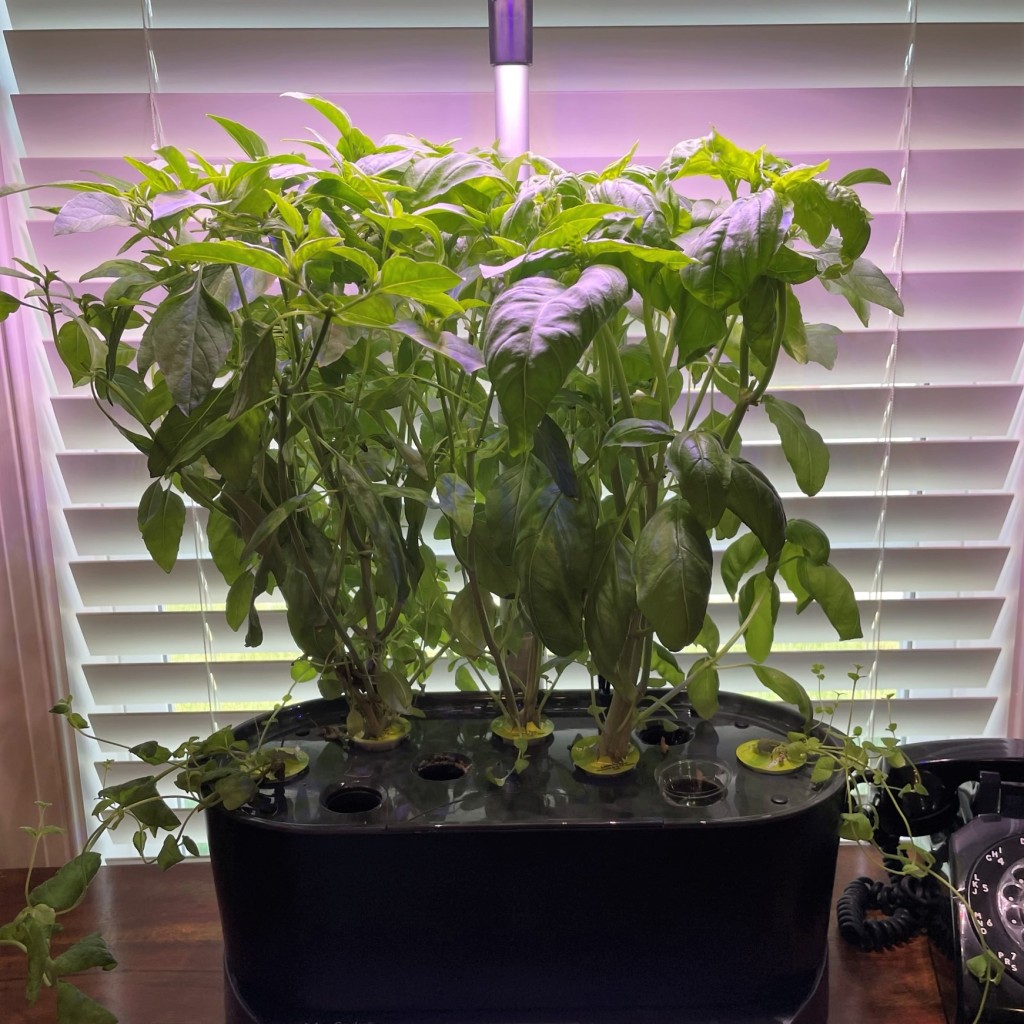
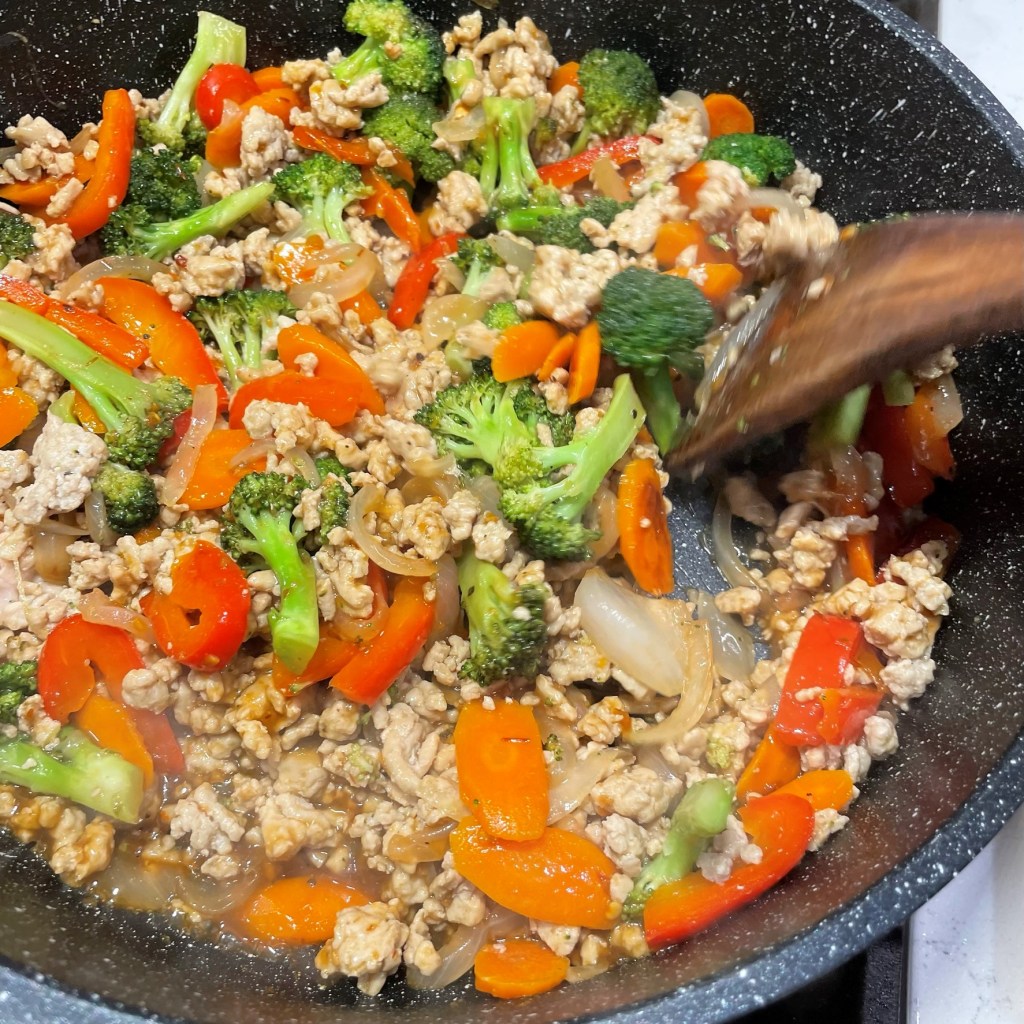
Thai basil chicken meets all the criteria I mentioned for a satisfying meal. The texture is amazing and packed with crunchy vegetables, including carrots, broccoli and red bell pepper. The flavor is phenomenal, with a complex blend of spicy ingredients in the Thai-inspired sauce that gently coats the vegetables and lean ground chicken. The signature flavor that gives this dish a little extra “zhuzh” is Thai basil, a fresh herb in the mint family that is similar to the Genovese basil you’d recognize in Italian food, but with a spicy undernote and a hint of anise or licorice. I’ve had an abundance of this ingredient lately, since my husband and I reinstated the Aerogarden that he gave me for Christmas a couple of years ago. This gorgeous herb has taken over the whole dining room, even visible from outside the window because it’s growing through the blinds (which, I suspect, is causing the neighbors to whisper). I prune the plants every couple of days, which only makes them grow faster, and so I needed a dish that uses a lot of Thai basil at once. This recipe is perfect for it!

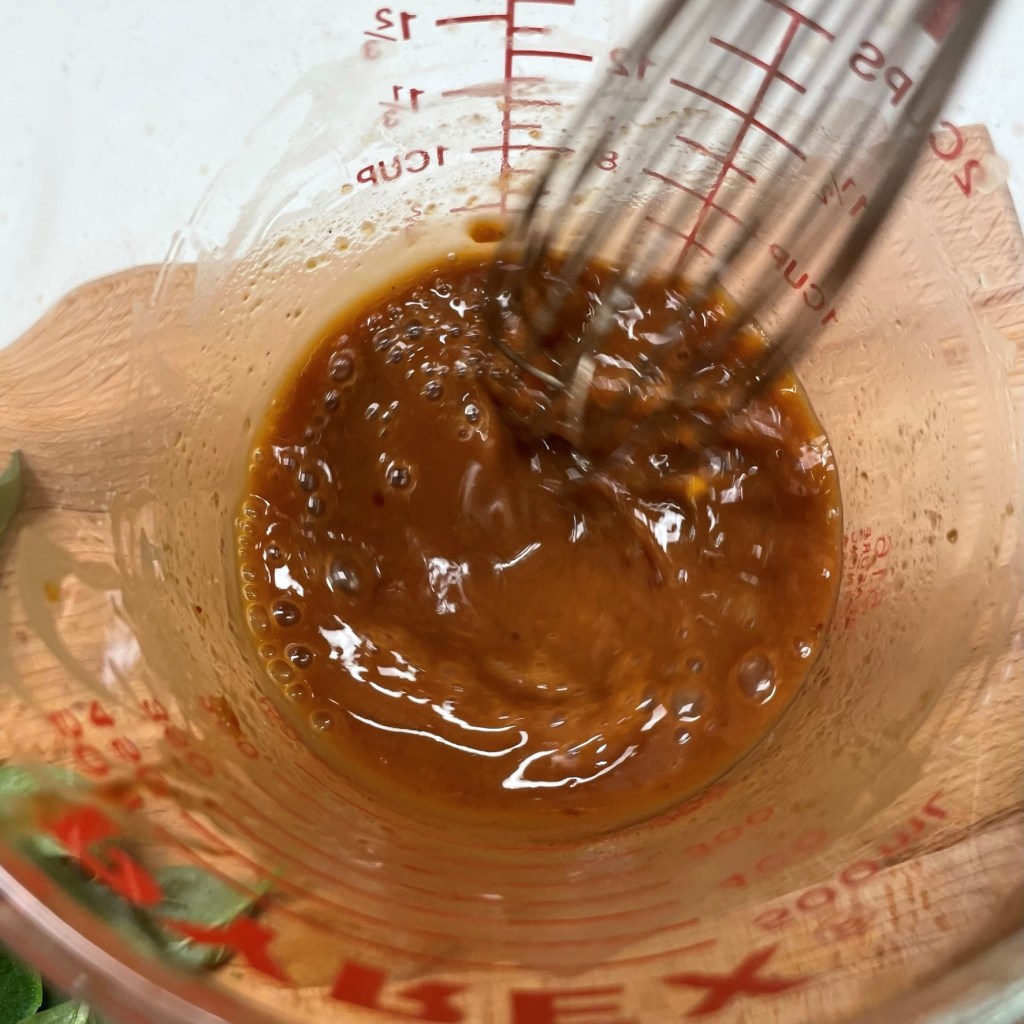
The prep for Thai basil chicken is easy; it’s just a bit of chopping and slicing of fresh vegetables that have plenty of texture, color and nutrition. The other essential prep is making the sauce. My recipe includes chili-garlic paste for heat, soy sauce and coconut aminos for an umami burst, oyster and fish sauces for a little funky depth, rice vinegar for a slight acidity and a touch of coconut sugar to round it all out. There’s also a bit of corn starch in the mix to keep it silky. If you like Asian flavors even a little bit, you won’t regret having these ingredients in the door of your fridge, and in no time at all, you’ll be mixing and matching them to come up with your own amazing recipes. One final note on the point of these Asian sauces, and this is not a joke. There is an imminent shortage of both sriracha sauce and chili-garlic paste, so you may want to grab a jar of each now to avoid the drought that’s coming on these ingredients. Now, let’s get cooking on this dish!


I used carrots, red bell pepper, onions and broccoli in my recipe, but there are other veggies that would feel right at home here, including scallions, cauliflower, celery, crunchy green beans or snow peas. Sliced fennel would also be terrific, and if you can only find Genovese basil, having fresh fennel in the mix would help fill the gap of the licorice flavor that Thai basil offers. Basically, aim for lots of color and texture and you’ll have a winning dish. The only vegetable I wouldn’t recommend is tomato, which is too soft, and hardly ever used in Asian cuisine.

Cooking the dish is simple, beginning with a little bit of oil in a large, fairly deep skillet or wok. Because this recipe is cooked over medium-high heat, you need an oil with a high smoke point, such as peanut, coconut or canola oil, but you won’t need more than a few tablespoons. Extra-virgin olive oil is not best for this kind of cooking because it overheats easily and turns bitter.


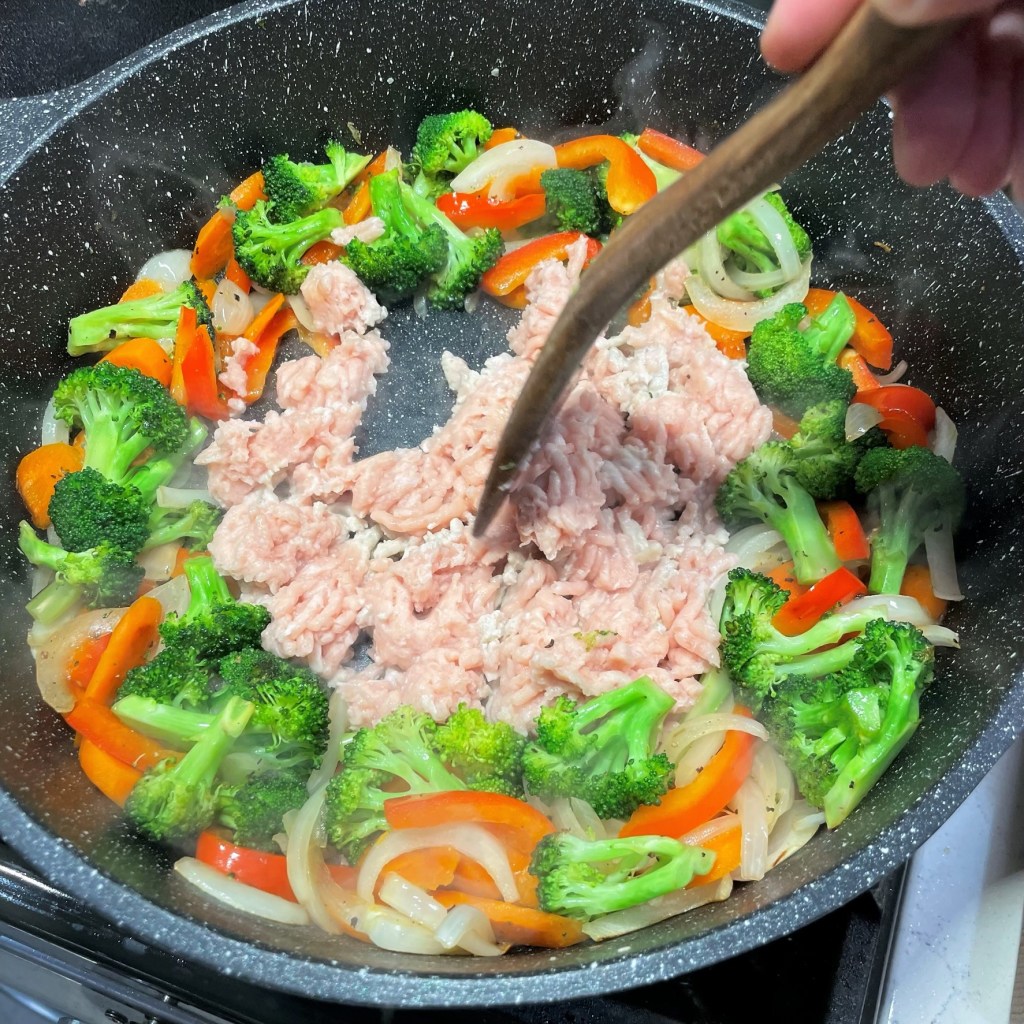
You’ll cook the veggies first, only a few minutes until they begin to soften, then move them to the outside edges of the pan and cook the ground chicken, half at a time. You could use cut-up pieces of chicken breast, also, but I find that ground chicken cooks more quickly and evenly. I normally use a wok when I make this dish, but that is one of the few tools that didn’t earn prime kitchen real estate after our remodel, and the overflow of stuff in the garage is a bit of a nightmare right now. If you have a wok, of course it would be the best vessel for cooking, but any large, sturdy skillet or pan with deep sides will work fine.


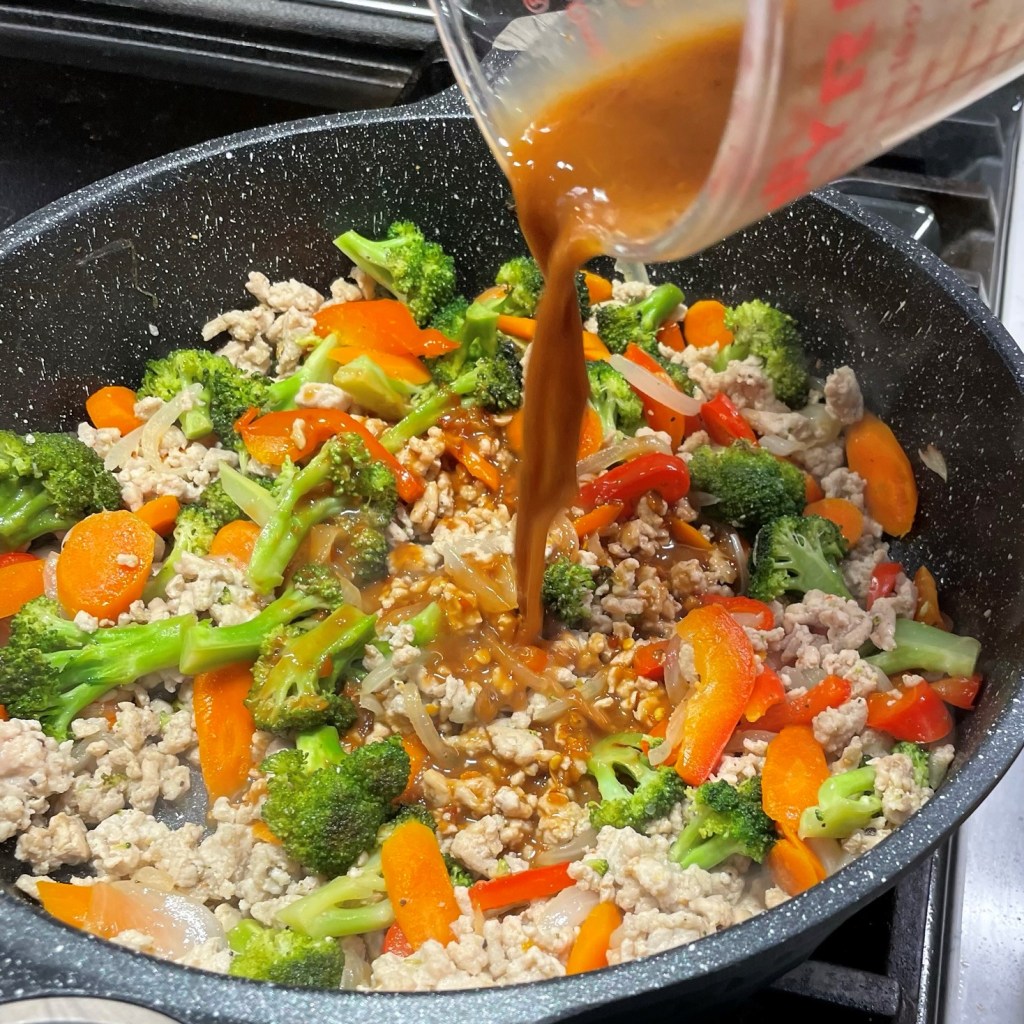
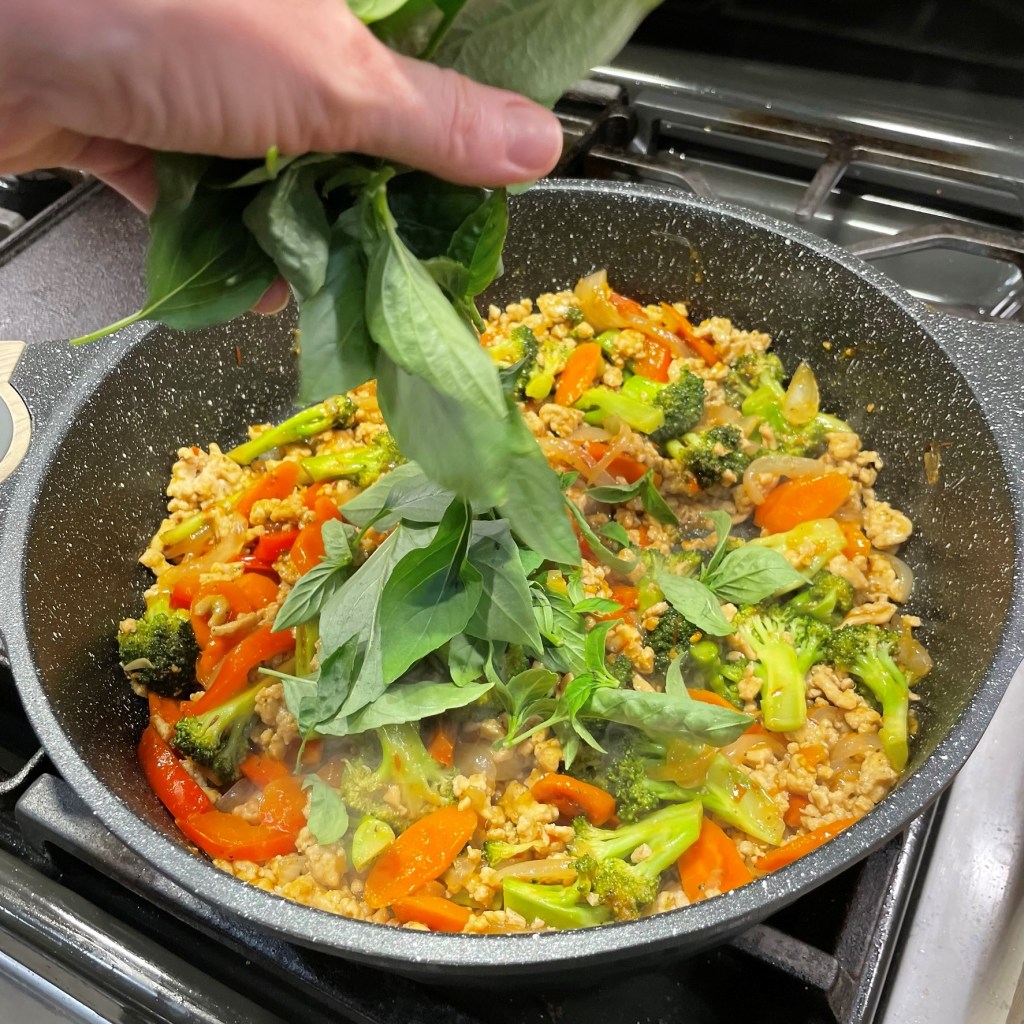
After the chicken has lost its pink color, whisk the sauce to mix it up again, and pour it all at once over the pan ingredients. Toss a few times to coat, and you should see the sauce thicken quickly, thanks to the cornstarch in the mix. Add the Thai basil at the very end, and when it wilts down and turns darker green (which takes no more than 30 seconds), this meal is ready to serve!

I’ll be looking for other fun ways to use my Thai basil, and I’m already planning to do something with the shrimp we have in the freezer—maybe a drunken noodle kind of thing? Oh, aaand, I don’t think I have mentioned that I planted a vegetable garden this year, and we have found a new weapon against deer invasion. More on that next time. 🙂

Fingers crossed, we will have fresh zucchini, tomatoes, peppers and eggplant soon. Stay tuned!


Thai Basil Chicken

  • Servings: 4
  • Difficulty: average
  • Print

This recipe moves quickly, so it’s best to have your fresh ingredients and sauce ready before you begin. If you have a favorite store-bought, spicy Thai sauce, you could substitute that, using about 2/3 cup. If you cannot find fresh Thai basil, a regular Italian basil can be substituted but the flavor will not be quite as authentic. As long as we are talking substitutions, the chicken could also be swapped out for shrimp or even extra firm tofu cubes. Go on, make it yours!

Ingredients

  • 1 pound ground chicken
  • 1 small onion, halved and cut into slivers
  • 1 large broccoli crown, trimmed and cut into florets
  • 1/2 large red bell pepper, cut into strips
  • 3 small carrots, peeled and cut on bias into thin slices
  • a fat handful fresh Thai basil leaves
  • 3-4 Tbsp. high-heat oil, such as coconut, peanut or canola (you will divide this to cook the vegetables and the chicken)
  • Spicy Thai basil sauce (ingredients listed below)
  • Cooked jasmine rice, for serving

Whisk the sauce ingredients together in a glass measuring cup or other bowl that is suitable for pouring. Have it ready before you begin cooking.

Ingredients

  • 2 Tbsp. garlic chili paste
  • 1 Tbsp. oyster sauce
  • 1 Tbsp. low-sodium soy sauce
  • 1 Tbsp. coconut aminos
  • 2 Tbsp. rice vinegar (not seasoned)
  • 1 Tbsp. coconut sugar
  • 1 tsp. fish sauce
  • 1 Tbsp. corn starch
  • 2 Tbsp. COLD water

Directions

  1. Place a large, high-side pan over medium-high heat. Add half of the oil, and when it shimmers, add all vegetables to the pan. Sprinkle with a slight pinch of salt (not too much, because the sauce has plenty), and toss in the pan until they begin to soften, or about 7 minutes.
  2. Push the vegetables toward the outside edge of the pan. Add half of the remaining oil in the center of the pan, and add half the ground chicken, tossing to cook just until it’s no longer pink. Repeat with the remaining chicken.
  3. Whisk the sauce to reincorporate ingredients that have settled. Pour the sauce all over the pan mixture and stir or toss to coat. The sauce should begin to thicken very quickly.
  4. Add the Thai basil to the skillet all at once and toss to wilt it into the recipe. This will happen very quickly.
  5. Spoon the Thai basil chicken over portions of hot cooked rice, and enjoy it while it’s hot!


“Air Fryer” Jerk Chicken Wings

After much discussion, and consideration of all the newfound extra space in our remodeled kitchen, my husband and I have finally decided for certain on the matter of an air fryer.

Several of our friends with air fryers have extolled the virtues of their machines and enticed us with descriptions of the ultra-crispy and mouthwatering dishes they have produced with them. We got the rundown on the various styles and sizes and functions, and even made a special trip to Williams-Sonoma to compare the features for ourselves and measure and imagine exactly where we’d put such a device in our newly remodeled kitchen.

And after all that planning and considering, our final decision was that, well, we didn’t need one after all.

Most of the foods our friends described were not the kind of things we imagined we’d really make at home (though crispy French fries with minimal oil sounds pretty darn good), and when we really dug in to learn how air fryers work, we realized that we already have a version of an air fryer in our full-sized electric convection oven. If we use the convect-roast or convect-bake setting, in combination with a higher temperature, the effect is nearly the same as in an air fryer, at least for the foods we expected we would actually make. And to prove it (to ourselves as much as anyone else), we made these crispy chicken wings, using a tried-and-true method I learned from Food Network’s Alton Brown.

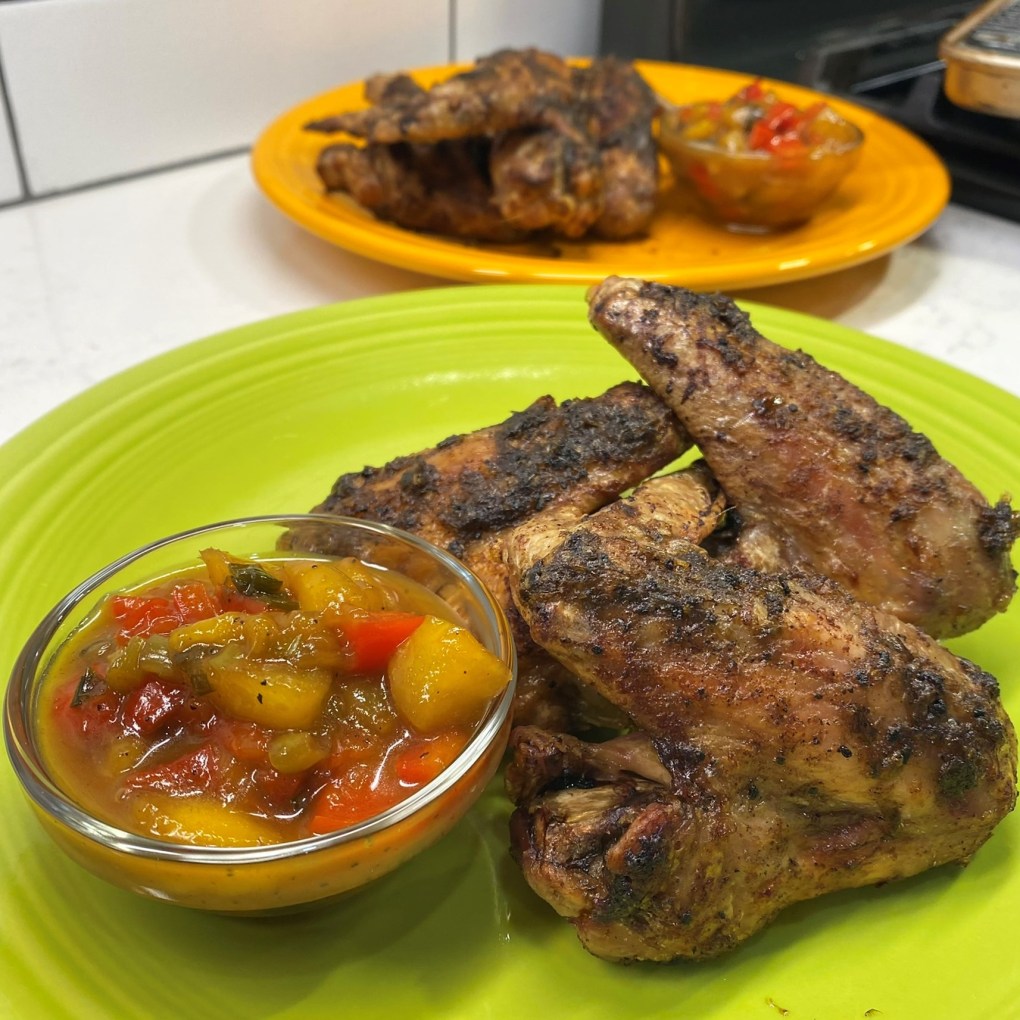
Tons of spicy flavor, without all the grease or drippy sauce of the usual Buffalo wings.

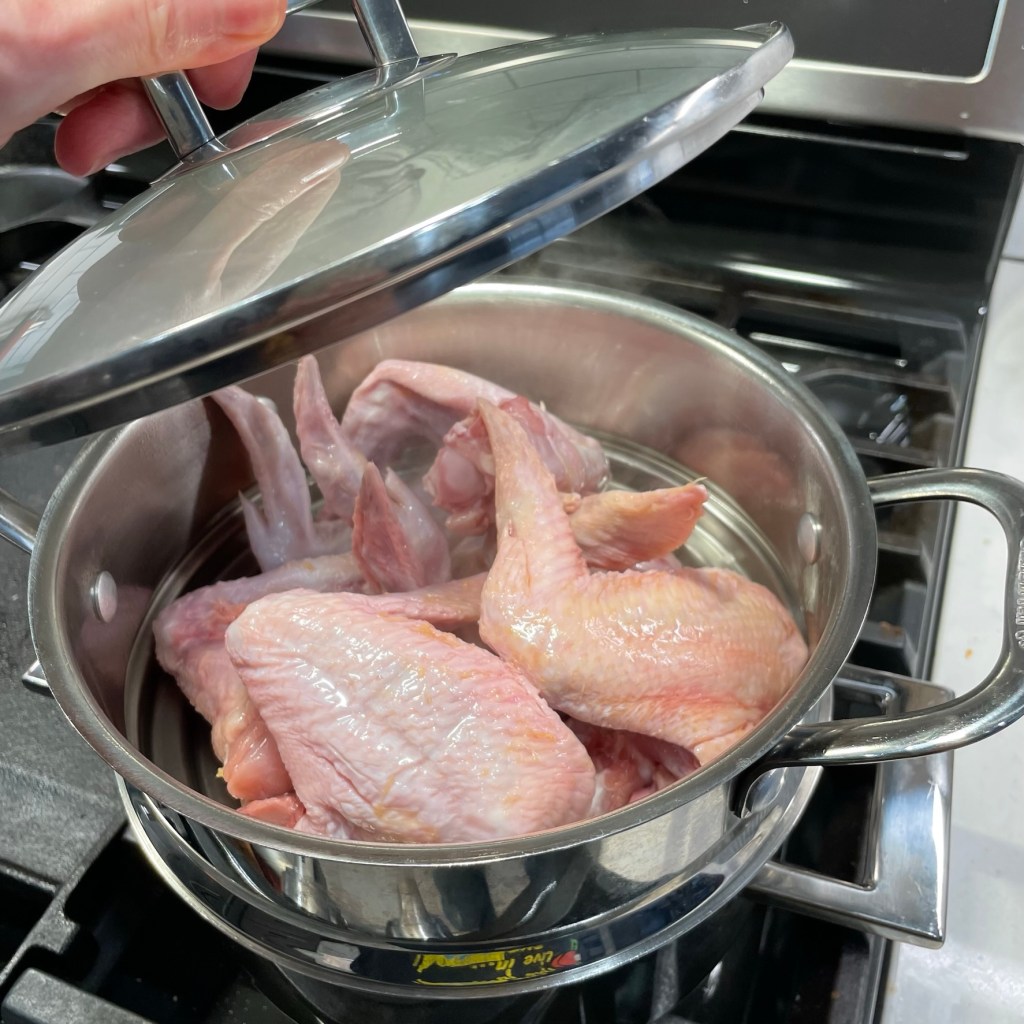
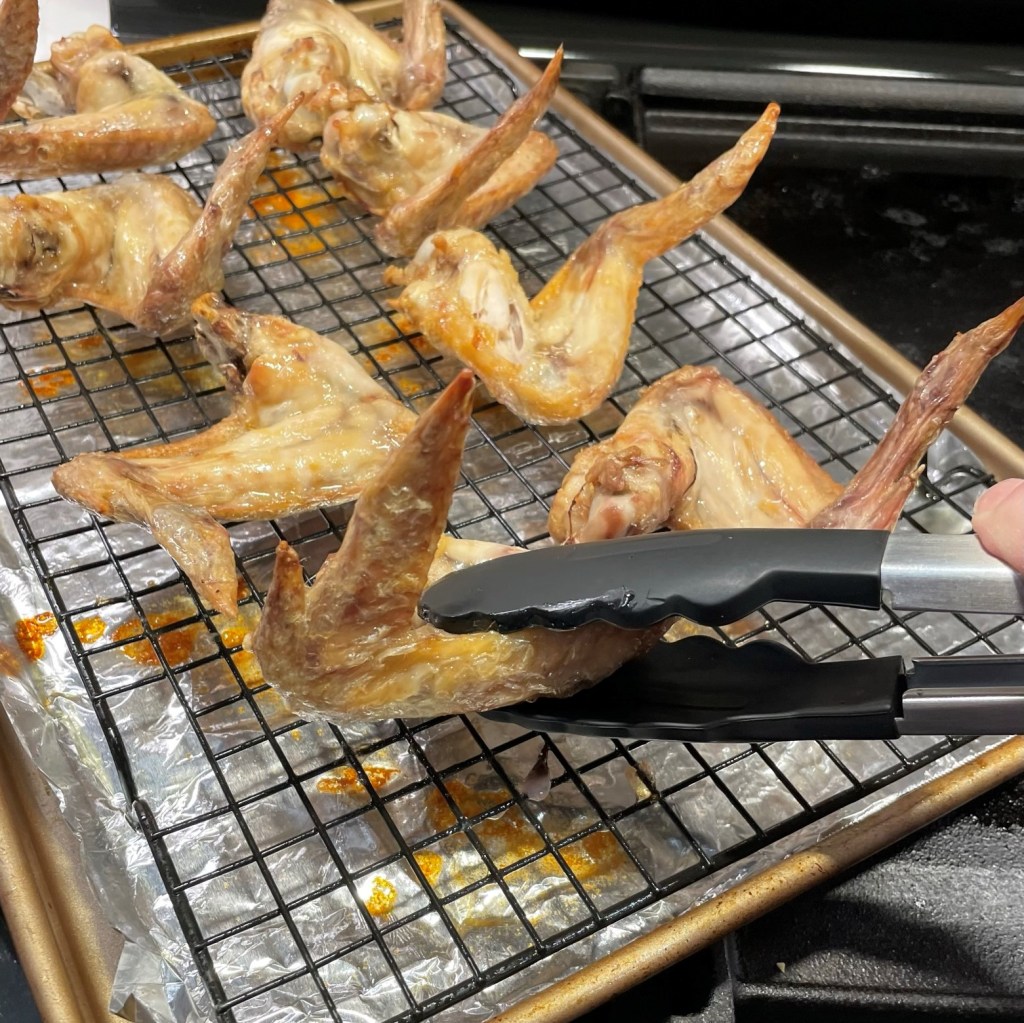
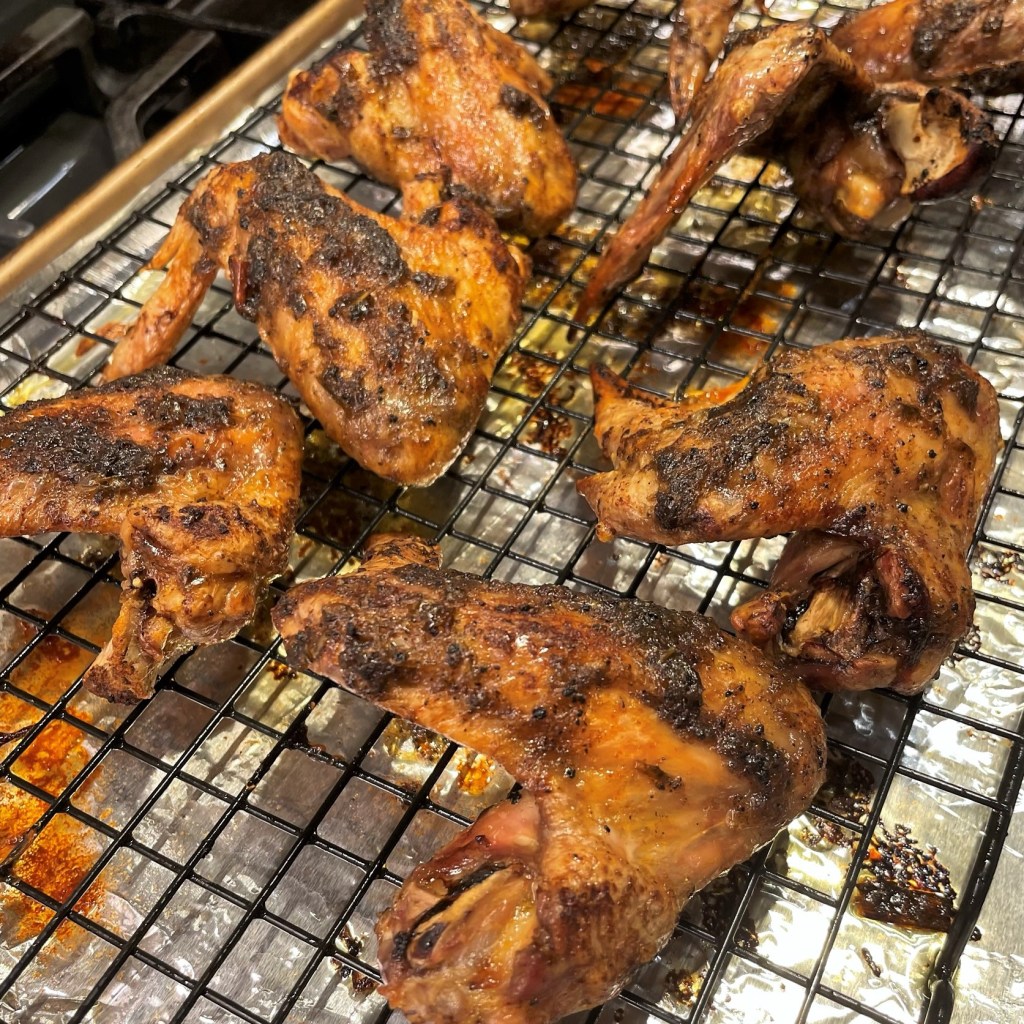
This method differs from others because it involves first steaming and chilling the wings, a process which renders excess skin fat so that better crisping can take place in the oven. No oil is required because there is plenty of natural fat remaining in the chicken skin. Roasting them at high temperature further tightens the skin, and you are left with a crispy-crunchy exterior and tender, juicy meat inside.

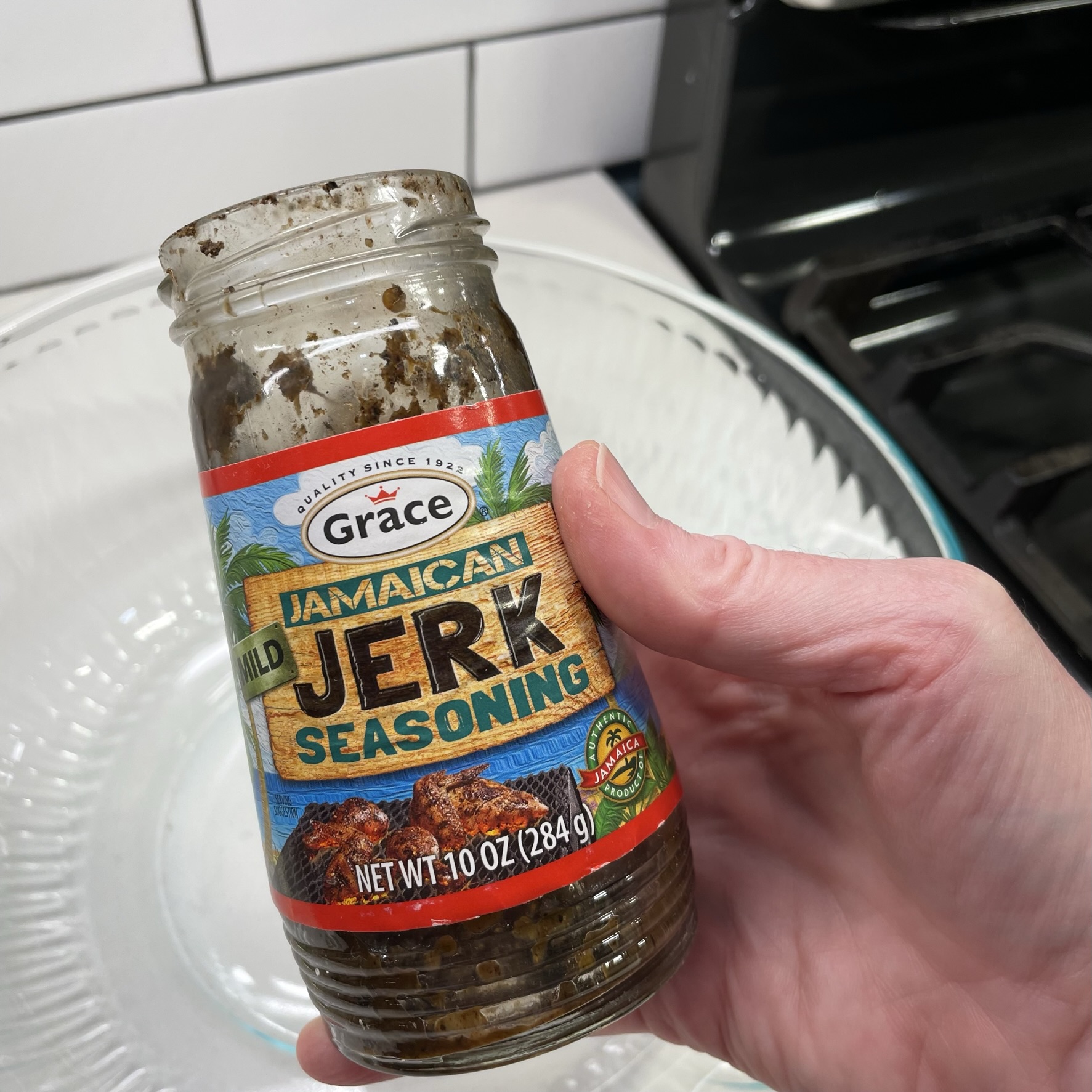
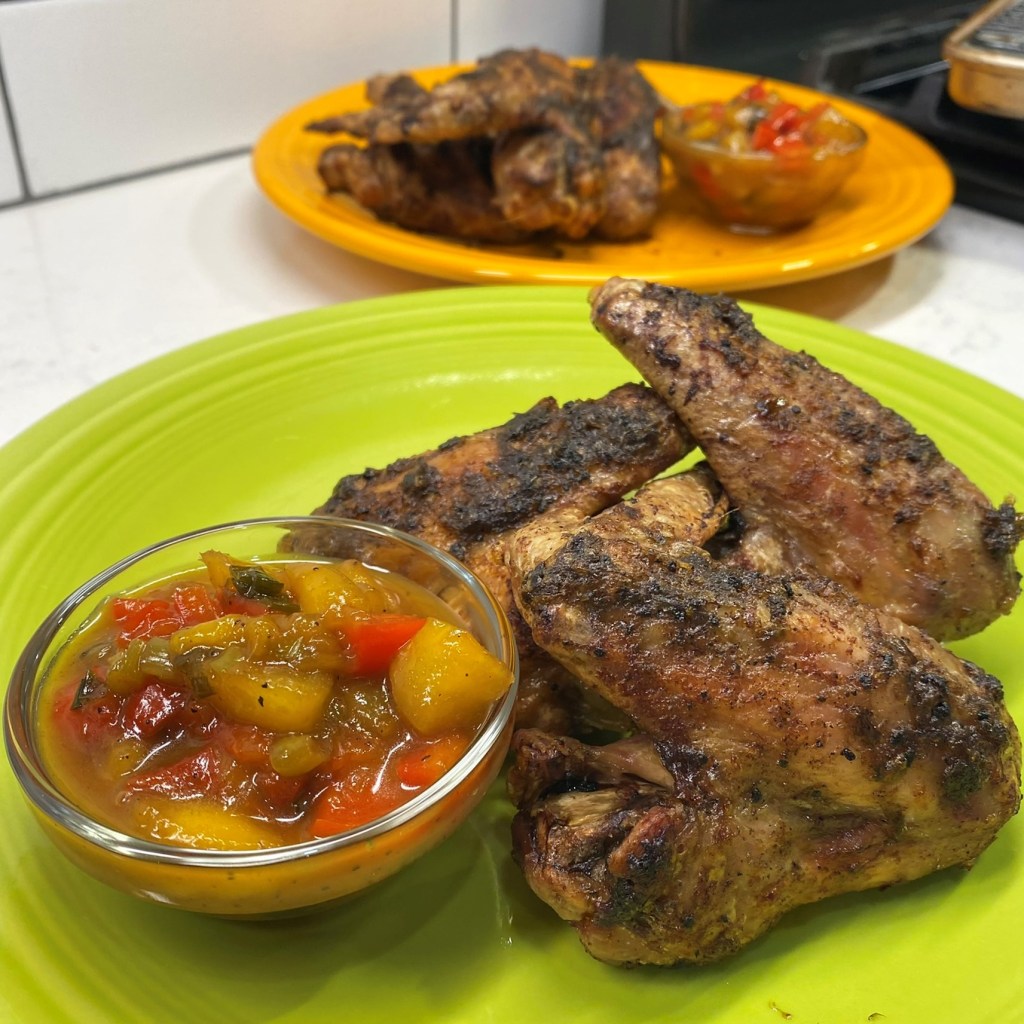
With football’s biggest game only days away, I thought it would be appropriate to share a different kind of wing recipe—one that packs plenty of flavor and as much heat as you want, but without the same old “Buffalo” flavors. These wings are covered in Jamaican jerk seasoning, featuring allspice, scallions, scotch bonnet peppers and brown sugar, which may sound complex, but I used a ready-made jerk rub that is easy to find in stores. The flavors are intense but not overpoweringly hot, and because we like to dip our wings into a dip or sauce, I made an easy mango and red pepper chutney to go with them.

I’ve made steamed and roasted wings before, but without convection and usually for my Just South of Buffalo Wings (which are still a favorite at our house). We also have done the jerk flavor wings many times, but usually on the grill during the summer months. This time, we combined methods and flavors and put the convection method to the test. As you’ll see, it passed with flying colors, and the convection chopped nearly 15 minutes off the previous steamed-and-roasted recipe. No need for one more appliance here!

This recipe is written for 16 pieces, but it should be very easy to double or triple as needed.


Ingredients

8 whole chicken wings (trimmed and cut into flats and drummettes if desired)

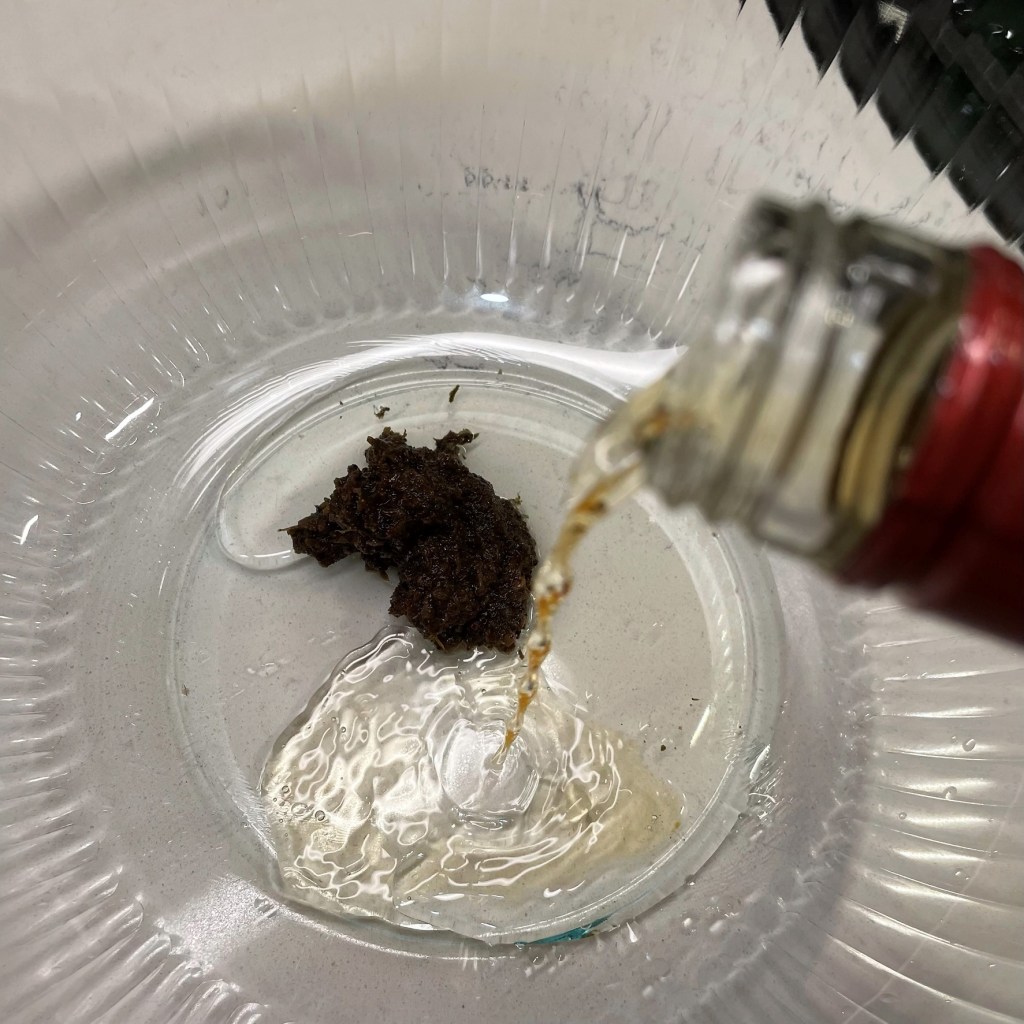
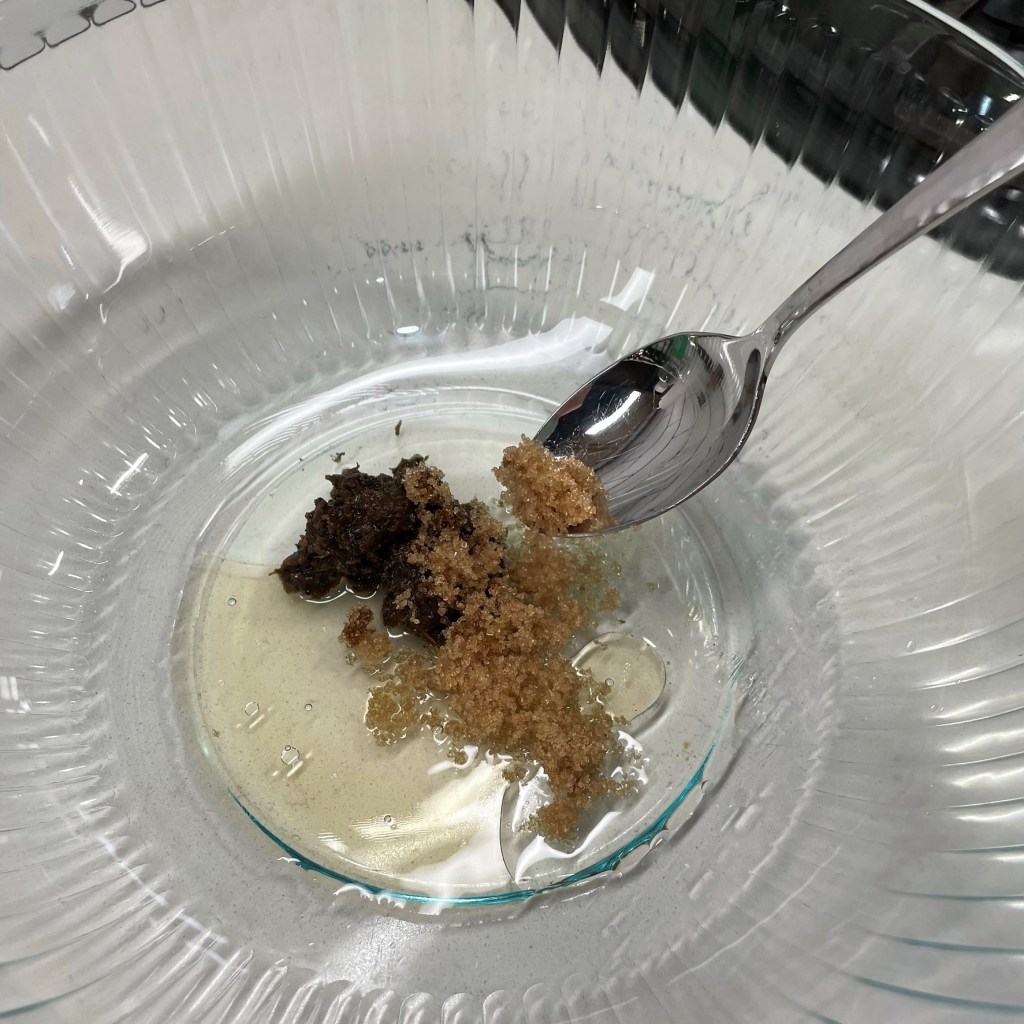
4 Tbsp. prepared jerk rub (a wet version from a jar)

2 Tbsp. canola, avocado or peanut oil (to thin the jerk rub)

1 Tbsp. light brown sugar

1 Tbsp. dark rum (preferably Jamaican)


Mango-Red Pepper Chutney

1/2 red bell pepper, diced

2 scallions, chopped (white and green parts)

Kosher salt and black pepper

1/2 cup mango, chopped (fresh or frozen, thawed)

2 Tbsp. brown sugar

1 Tbsp. red wine vinegar

2 Tbsp. dark Jamaican rum


Instructions

  1. Set a lidded steamer basket over a pot with about two inches of water and bring it to a low boil.
  2. Spray the basket with oil and arrange the chicken wings in it, overlapping them so that the rising steam can permeate the whole batch. Cover the steamer and keep at a low boil for about 10 minutes.
  3. Transfer the steamed wings to a parchment-lined baking sheet and rest until they are cooled to near-room temperature. Cover and refrigerate the wings for at least one hour or up to overnight.
  4. Preheat oven to 425° F on a convection setting, with oven rack in the center position. Spray a cookie cooling rack with oil and set over a foil-lined cookie sheet. Arrange wings on rack, with space between the pieces to allow easy air flow.
  5. Convect-roast for 15 minutes (or regular roast for 20 minutes). While wings are roasting, make the mango-pepper chutney.
  6. After 15 minutes, turn wings to roast the other side 15 more minutes (or 20 for regular roast setting). The wings should be nicely browned all over and the skin on the wings should appear tight but not too dry.
  7. During the second half of roasting, combine jerk wet rub seasoning, canola oil, brown sugar and rum in a large bowl. Whisk until evenly combined.
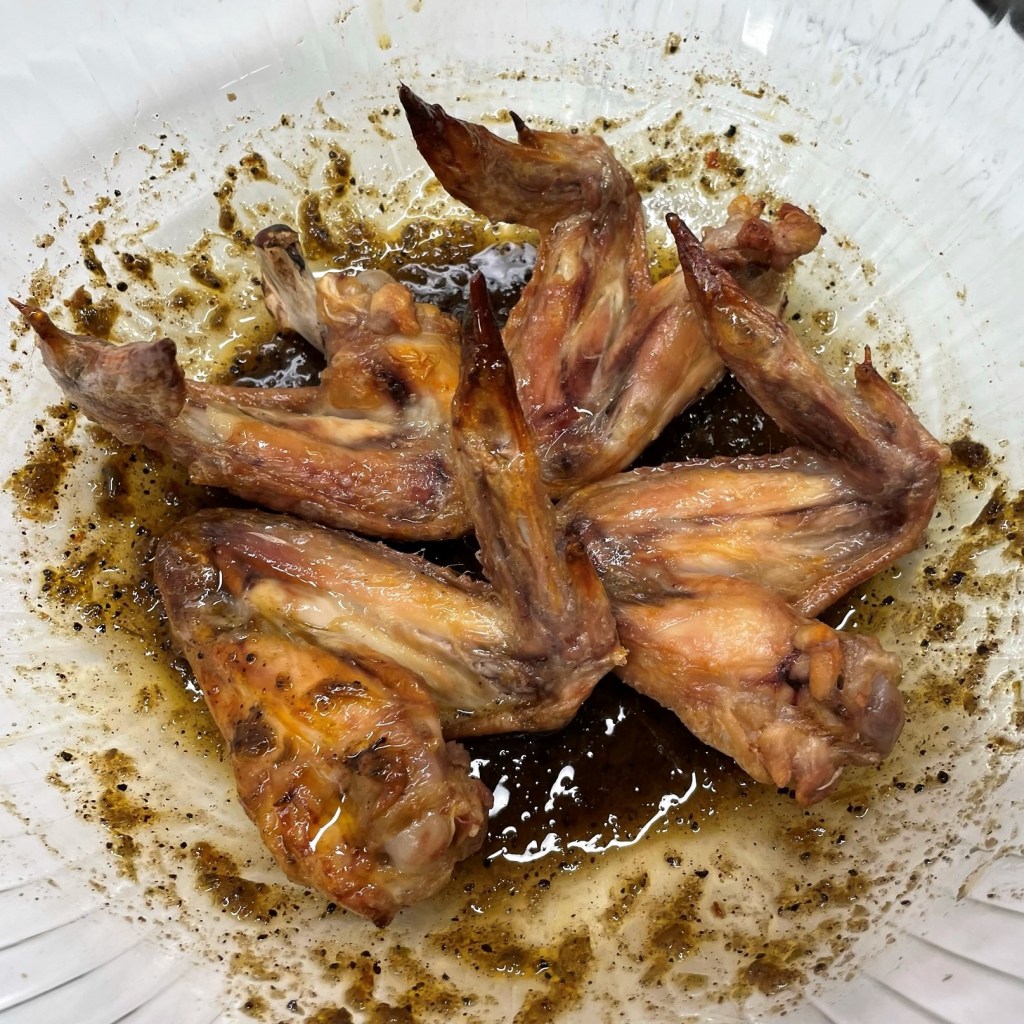
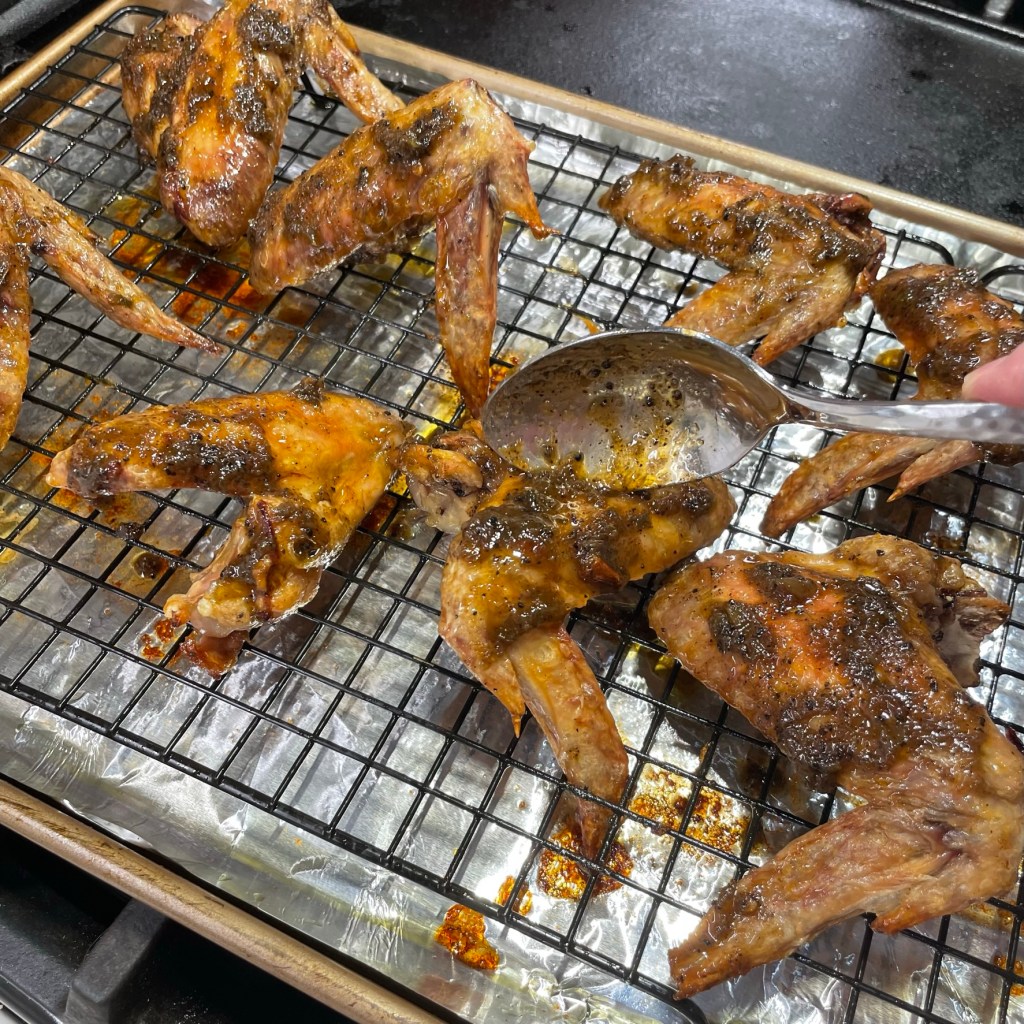
  8. Toss wings in the bowl of jerk rub, spooning the seasoning over any unglazed areas. Return the wings to the rack on the cookie sheet and roast about 3 more minutes to set the glaze in the oven.
  9. Serve immediately with the mango-pepper chutney.

Mango-Red Pepper Chutney Instructions

  1. Place a small saucepan over medium heat. Swirl in oil and saute peppers and scallions, just long enough to soften them. Season with salt and pepper.
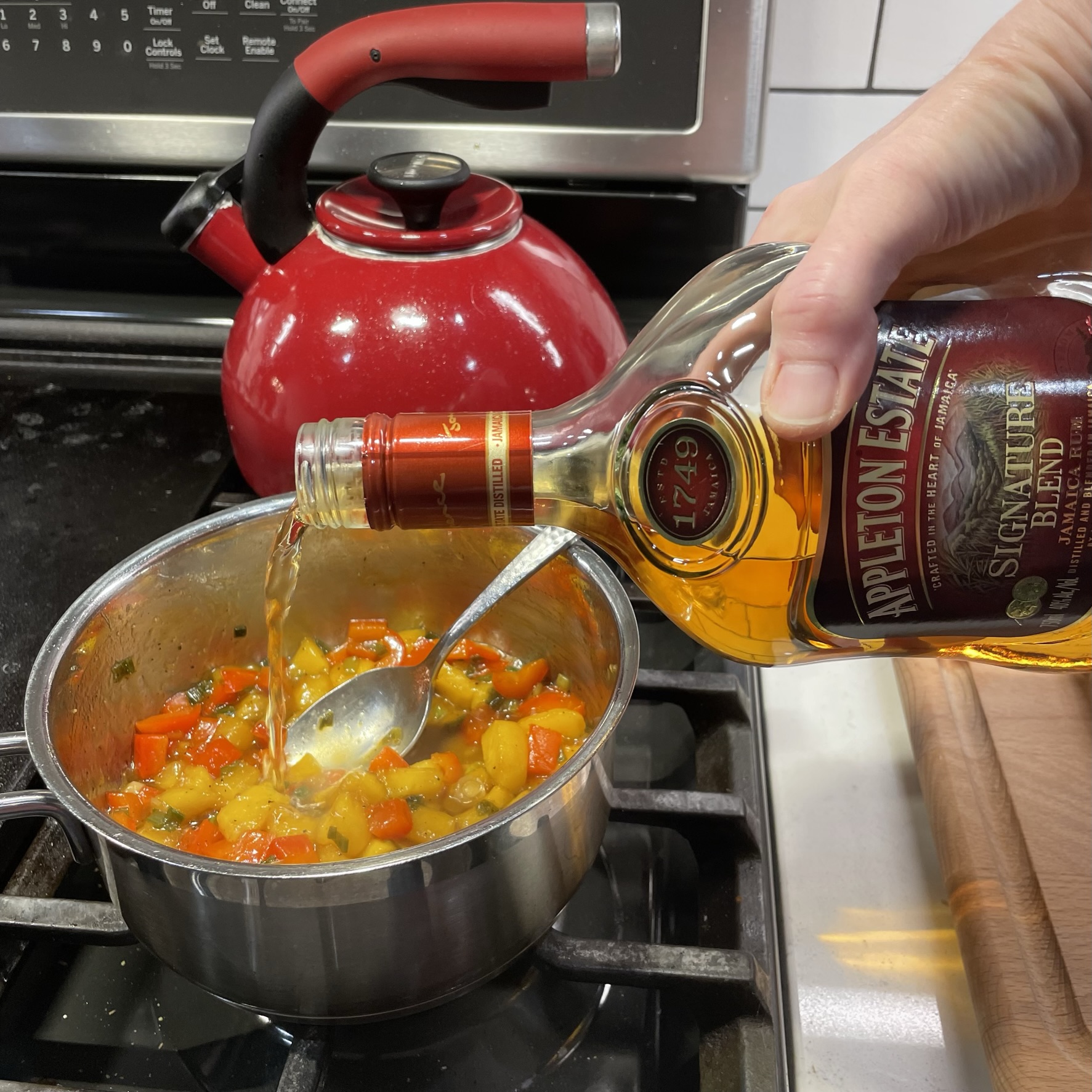
  2. Add the cut-up mango pieces and stir until the mixture is heated through. Stir in brown sugar, vinegar and rum. When mixture begins to bubble, reduce heat and cover, simmering until thickened. Remove from heat and cool to room temperature.


Ratatouille Lasagna Roll-ups

The summer season brings all the garden-fresh vegetables I love, including zucchini and eggplant, which I would definitely be growing in our little garden plot if it weren’t for the deer. Year after year, I have tried in vain to grow my own veggies, and the increase of deer activity on our property and that of our neighbors has been almost humorous. Almost.

Gardening, for me, started as a fun, nature-loving adventure but has rapidly declined into a frustrating drama, and now we have this elevated box in our yard, where we cannot grow anything but marigolds and basil, which have proven to be the only things our local deer detest. Last year’s garden was demolished, right down to the flowers and budding fruit of the eggplants and even the jalapeno pepper plants (which I had been told deer would never eat). We have tried all the folk remedies on the internet—human hair, shavings of bar soap, peppermint oil, so-called deer repellent, and even a weird concoction I made from rotten eggs, cayenne and dish soap. That last remedy had near-catastrophic results, but I won’t embarrass my husband again with that story (you can read it here, if you’d like). This year, we didn’t even bother planting a garden, and I’m contemplating turning the raised bed into some kind of wildflower bed. I get exasperated just thinking about it.

To make up for a lack of homegrown veggies, we are regularly visiting our weekly Cobblestone farmers’ market, which features a variety of vendors offering fresh produce as well as pastured meat, eggs, organic mushrooms, jams and preserves, and even handmade alpaca wool products. It’s a fun way to spend an hour on a Saturday morning, and this past weekend, we came home with everything I needed for a new batch of ratatouille. Ah, my favorite veggie-centered summer meal!

Classic ratatouille ingredients = zucchini, eggplant, pepper, onions (leeks this time), tomato and herbs de Provence!

Me being me, though, I cannot simply chop up these ingredients and make a “traditional” ratatouille, which would be a rustic casserole-meets-stew kind of thing. I have to twist it up! My culinary muse inspired me this time to combine the French classic dish with another favorite comfort food—lasagna. I figured that I could infuse my herbs de Provence seasoning into a ricotta mixture with lemon zest and some grated cheese and that it would be the “glue” to hold the other ingredients together inside a rolled-up lasagna noodle. The eggplant and zucchini would be sliced and roasted, and the red pepper would be worked into the sauce. This is how my mind sees a pile of ingredients, and the end result was exactly as I had imagined, both visually and in perfect summer flavor. Delicious!

Inside, you can see and taste all the flavors of a summer ratatouille!

This reimagined one-dish meal took mostly time to put together; it was not at all difficult. I cannot say definitively how much time is needed because I was cooking all day, in between work emails and other home tasks. I will say that it was mostly passive time; I was either waiting for things to lose moisture or to finish roasting or to boil or bake. The rest was just slicing, chopping and stirring, and there’s no particular order that must be followed. You could even make everything a day ahead and just assemble and bake it the next day.

The entire ratatouille-meets-lasagna project weaved itself nicely into my busy day, and because each ingredient received its own treatment, the simplest way I can describe it is to share the process of each component. I’ll share a PDF version of the recipe at the end if you want to try it, but I’ll let the pictures tell the story in today’s post. Here we go! 🙂


The Ricotta Filling


The Eggplant


The Zucchini


The Red Bell Pepper


The Onions


The Tomatoes

The only classic ratatouille ingredient remaining is tomato, and though my ingredients photo displays a big, lovely heirloom tomato from the farmers’ market, I thought better of it when I began cooking my ratatouille. The heirloom tomato would have been full of seeds and too juicy for this dish, so I cast it aside and used half a can of San Marzano tomatoes instead to produce a fusion sauce, together with the roasted red pepper and a healthy dose of garlic. This sauce was similar to the roasted red pepper sauce that my husband, Les, discovered last year, but it leans more toward tomato than pepper. It was exactly what this recipe needed.


Putting it all together

Assembling and finishing my ratatouille lasagna roll-ups was a cinch! I par-cooked the lasagna noodles until they were soft and flexible, spread the ricotta mixture onto them, layered the eggplant, zucchini and leeks and rolled them up!


First ratatouille of the summer! 🙂

Oh, and that plump, juicy heirloom tomato I mentioned found its way instead to a BLT, which we enjoyed as a separate meal on freshly baked sourdough bread with local greens and some pastured pork bacon (also from the farmers’ market).

Who needs a garden, anyway? 😉


Roasted Red Pepper Sauce

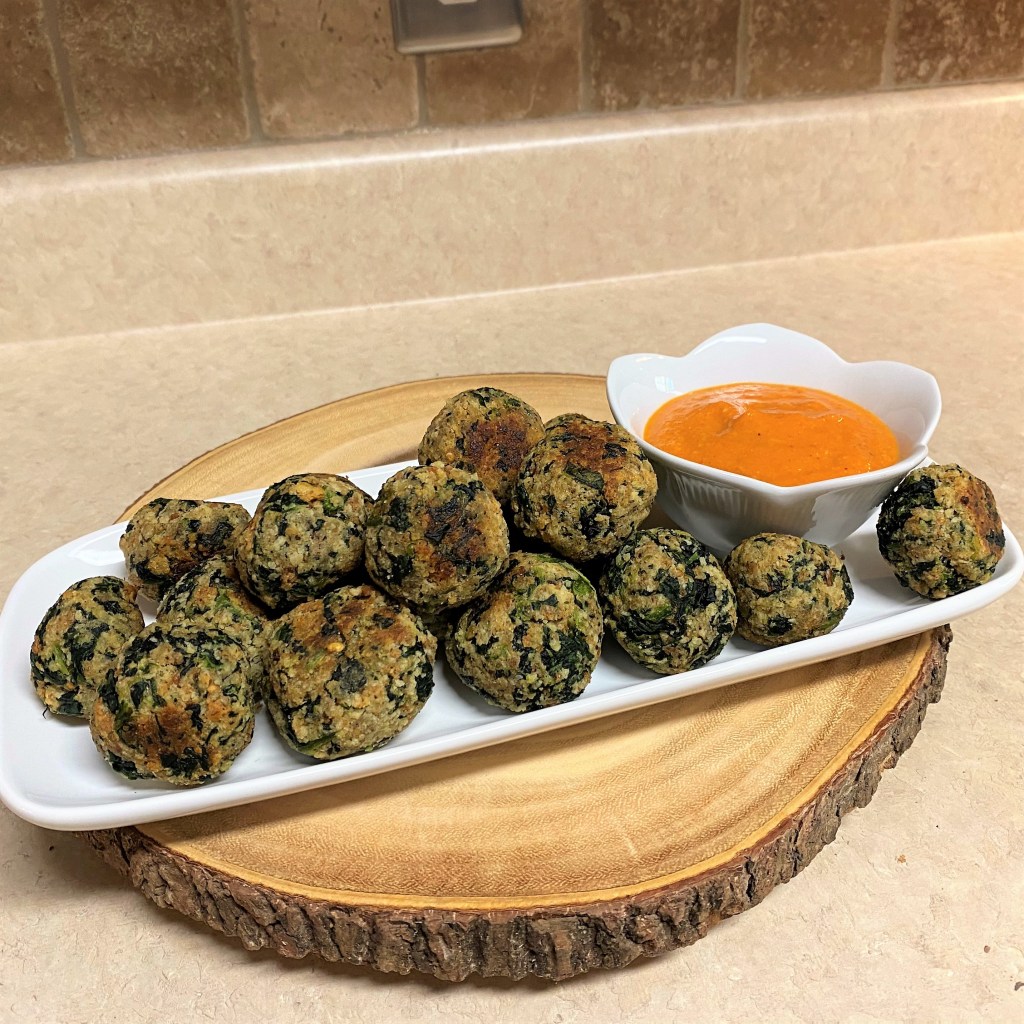
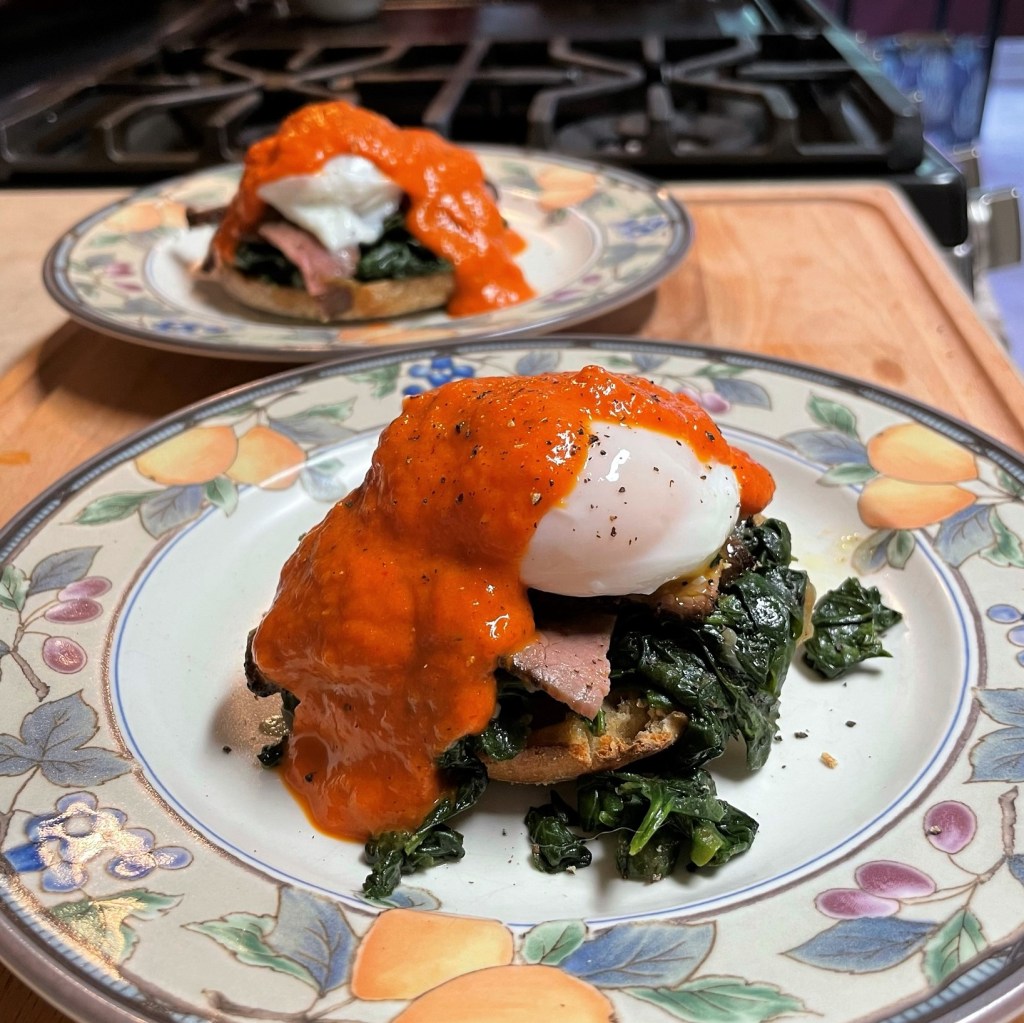
Every now and again, I accidentally cross paths with a recipe that has so many uses I have no choice but to add it to my repertoire. This is one of those sauces, and I can thank my husband, Les, who discovered this one last fall, tucked inside an email he received from New York Times Cooking. The sauce was intended for some kind of “couscous cake,” which sounds interesting for another day, but Les trusted his instinct to believe it a perfect dipping sauce for his spinach ball appetizer recipe, and indeed it was.

First time making the red pepper sauce to accompany these, and it was fantastic!

As Les and I have repurposed this flavorful sauce for various uses, I have laughed to myself recalling an inside joke from the “Pinch” kitchen, which was how the staff usually referred to A Pinch of Thyme, the catering company where I spent my spare time for about two years. In the Pinch kitchen, it did not matter what kind of sauce you were preparing—it might have been one of the fancy French “mother sauces,” such as a hollandaise or béchamel or velouté, or maybe even a turkey gravy or a cheese fondue—if it was sauce of any type, Chef Rodney had a code word for it: “weez.” I imagined that the moniker might have been adapted from the name of the overly processed spread known as “Cheez Whiz,” but Rodney never confirmed that. It was amusing though, and we all secretly looked forward to the recipes that required creation of a weez, just because it was a funny word to say.

There was such irony in those scenes; while my friend Tammy, the Pinch events manager, was on the phone selling clients on the elegance of a dish such as filet mignon with béarnaise, Rodney was in the kitchen offering instruction for making a “tarragon weez.” He definitely kept things interesting.

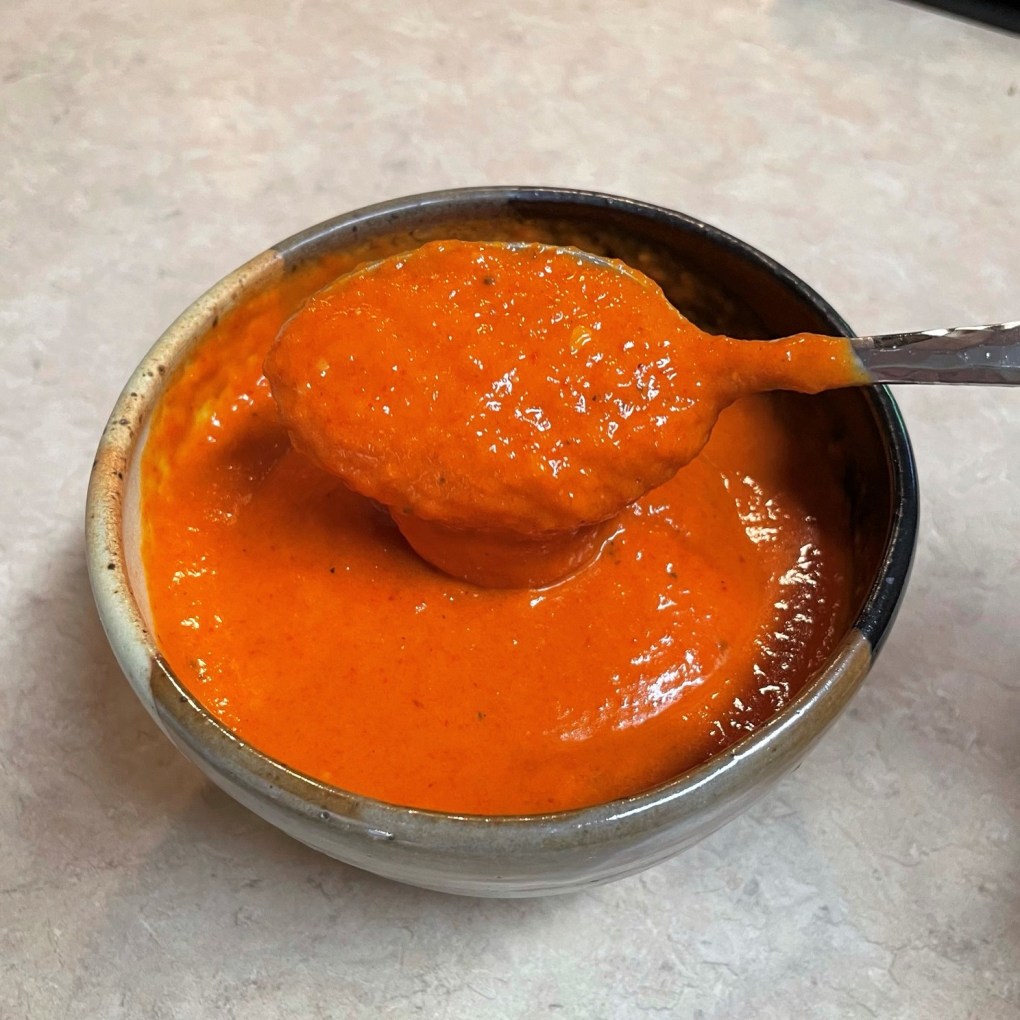
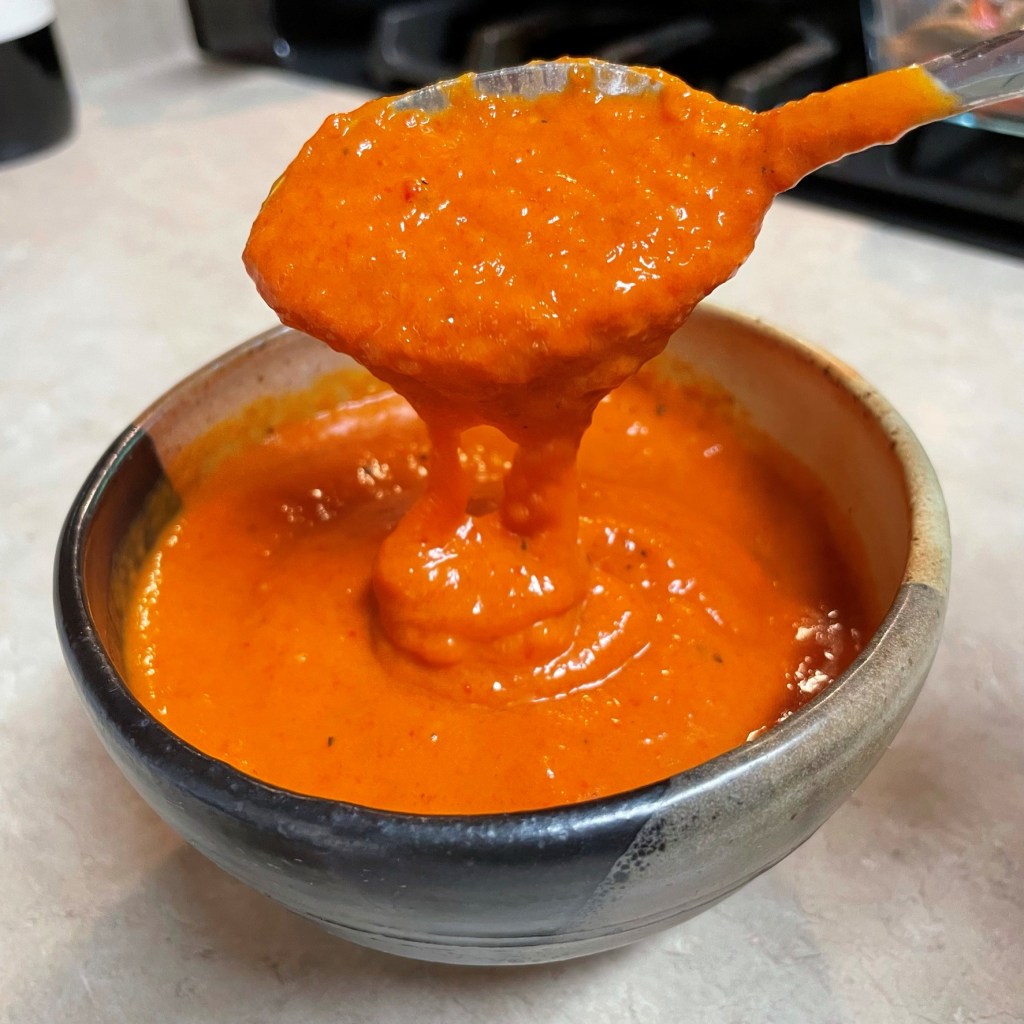
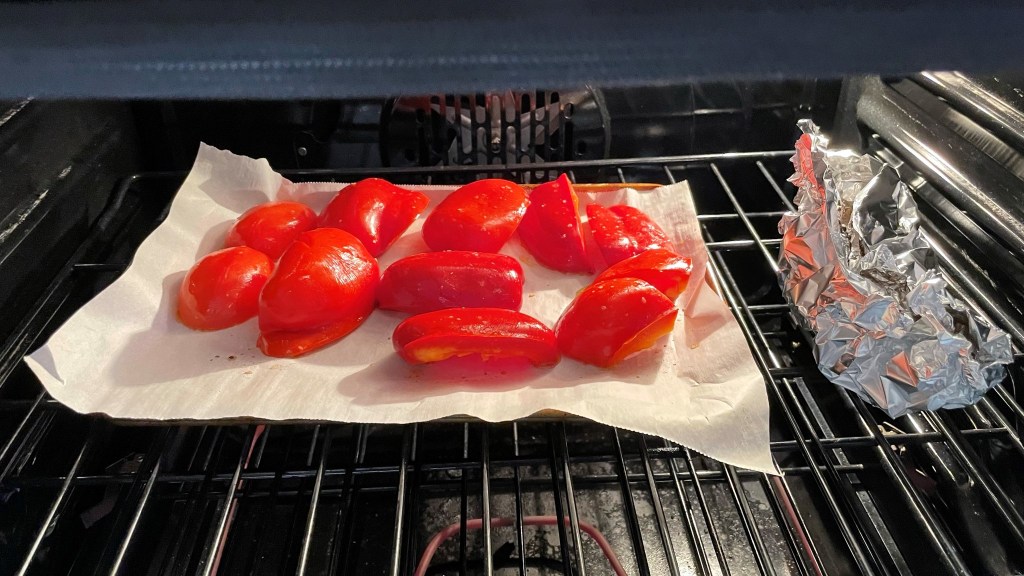
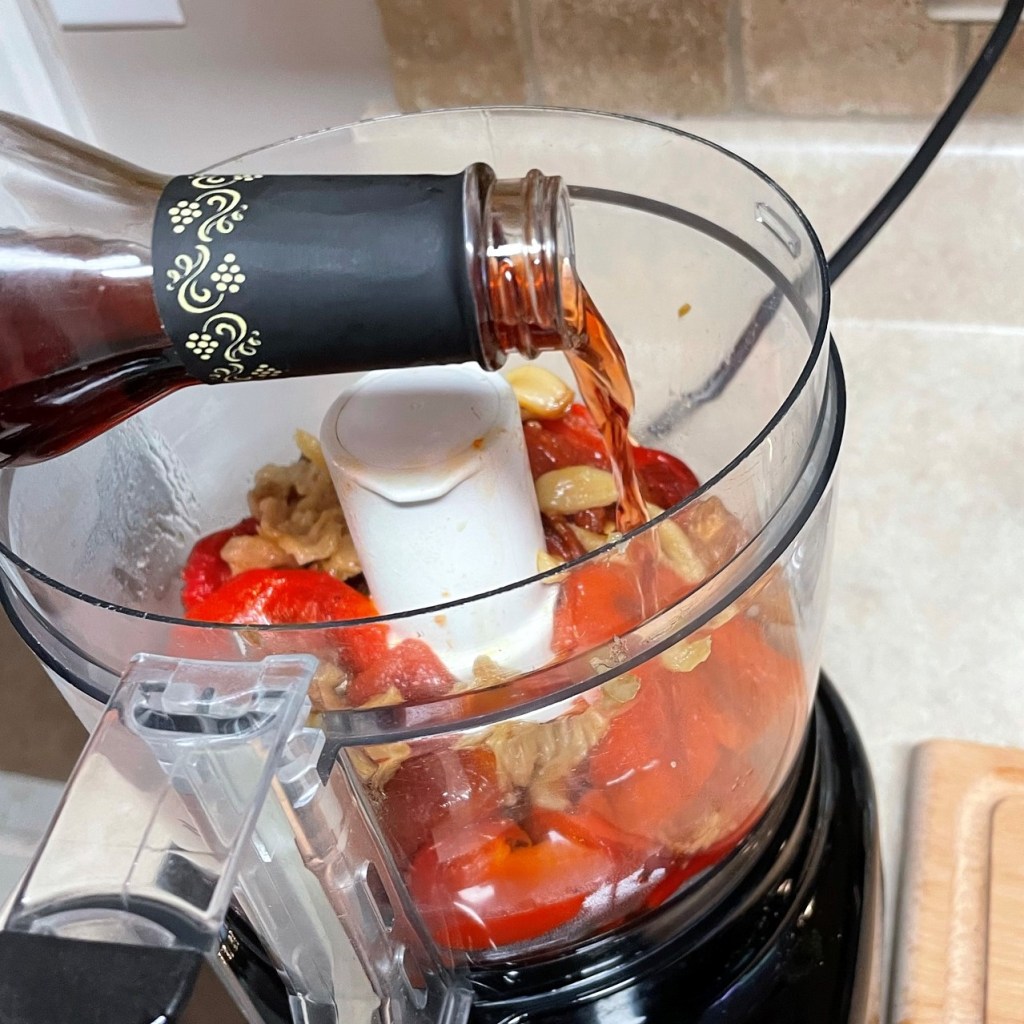
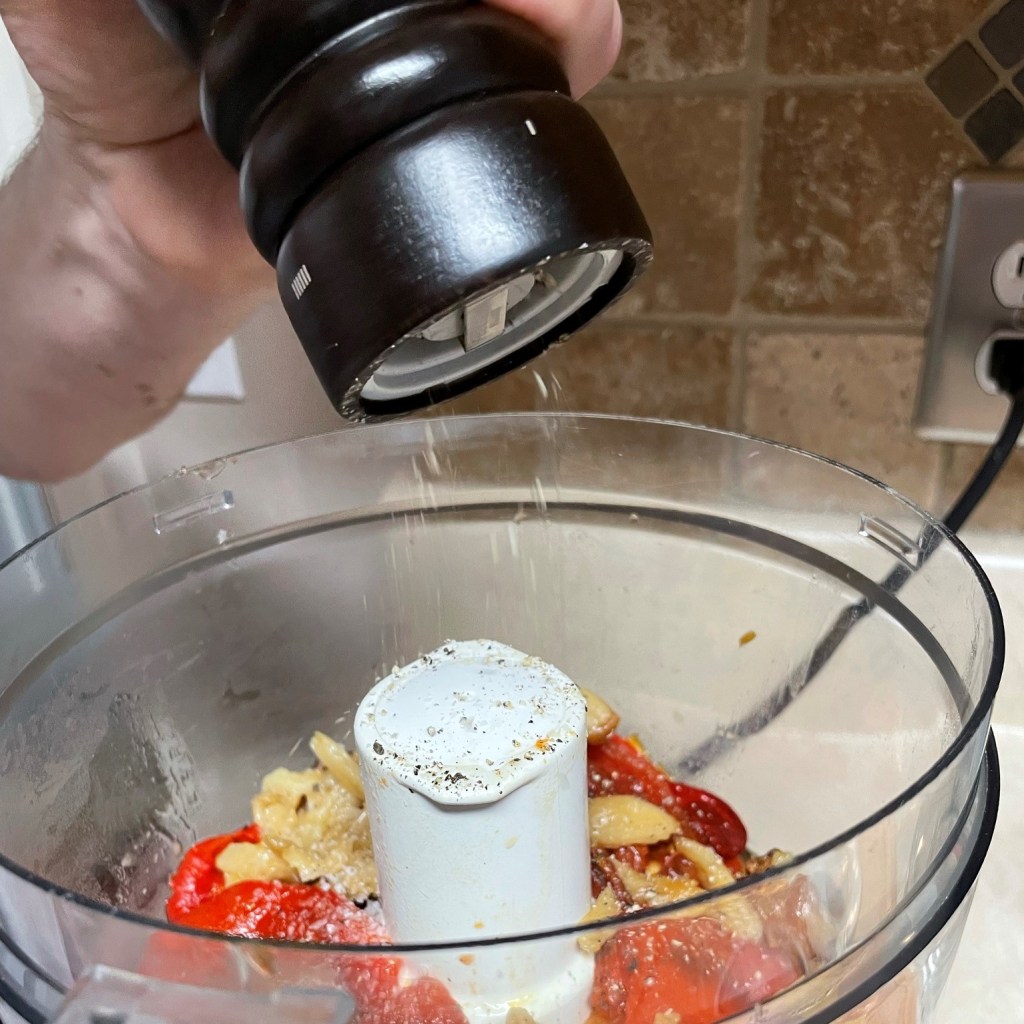
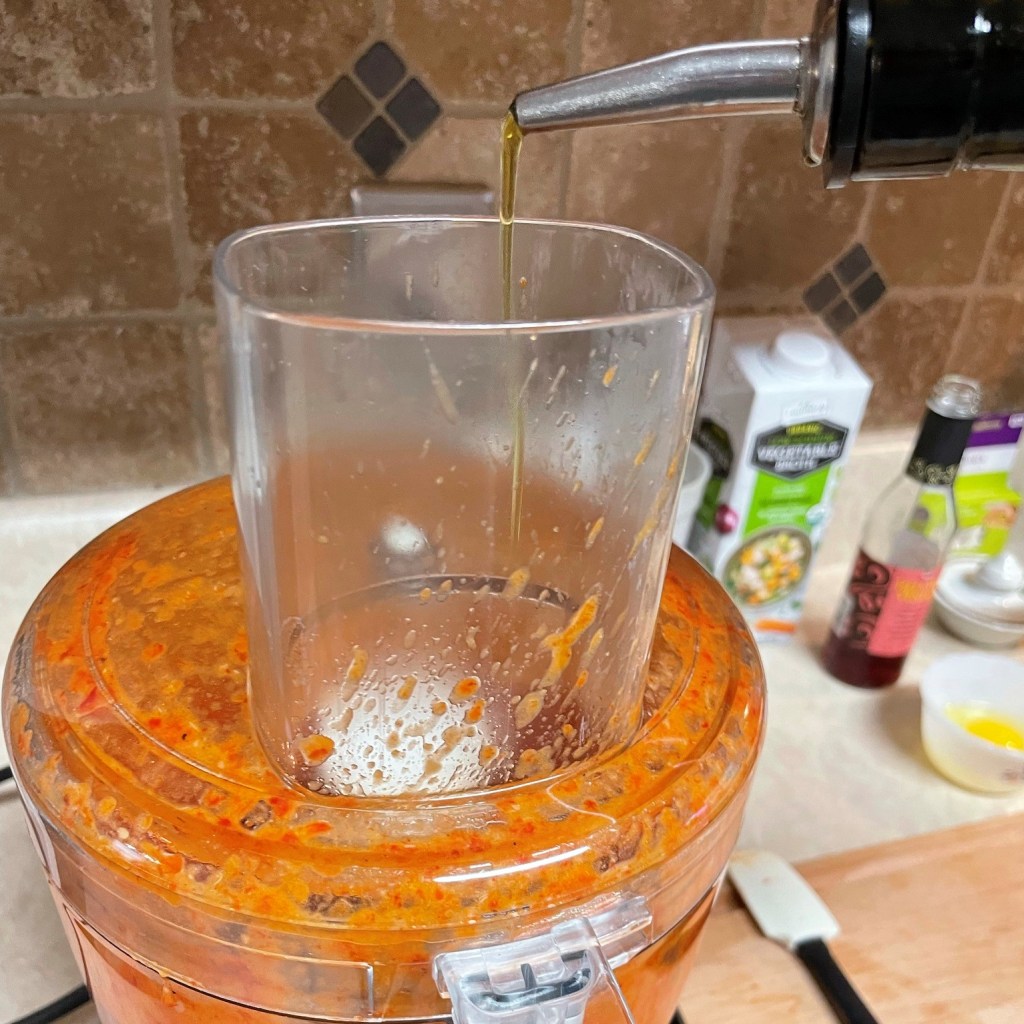
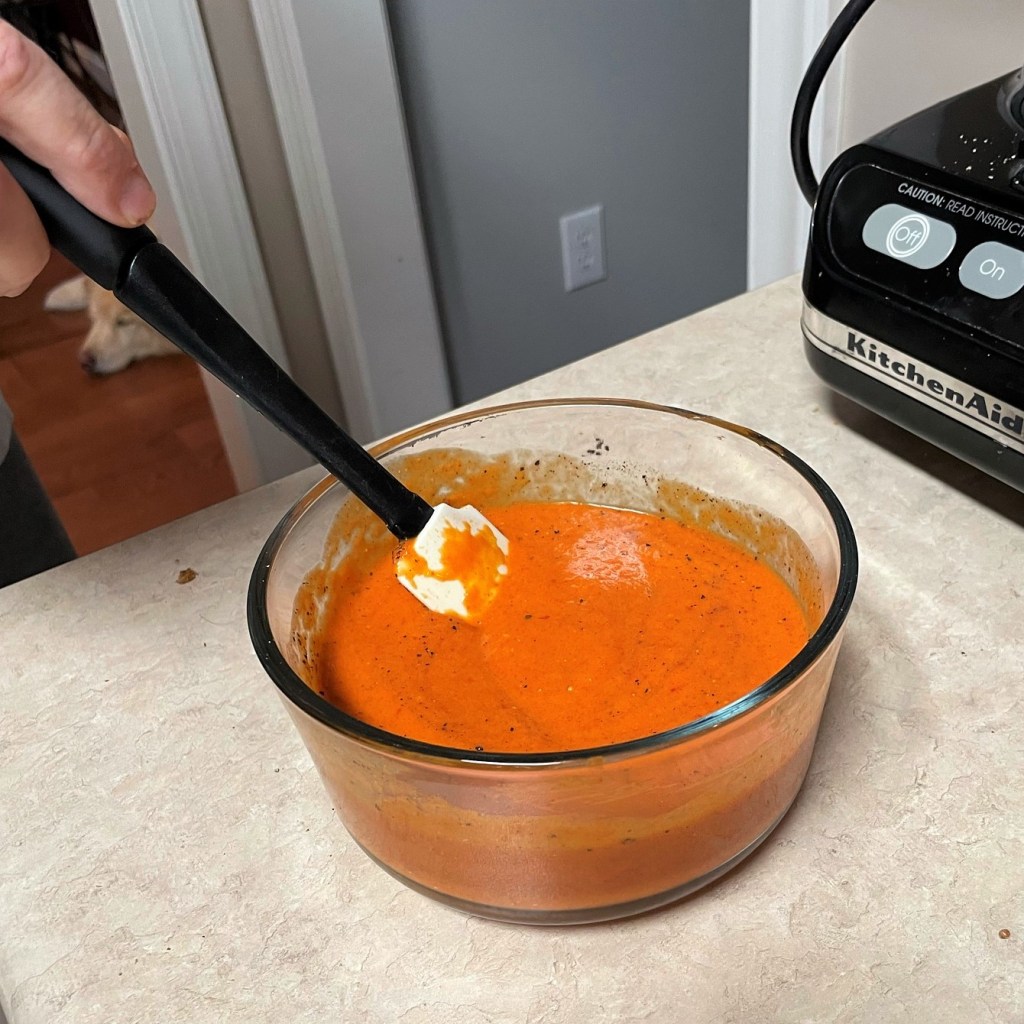
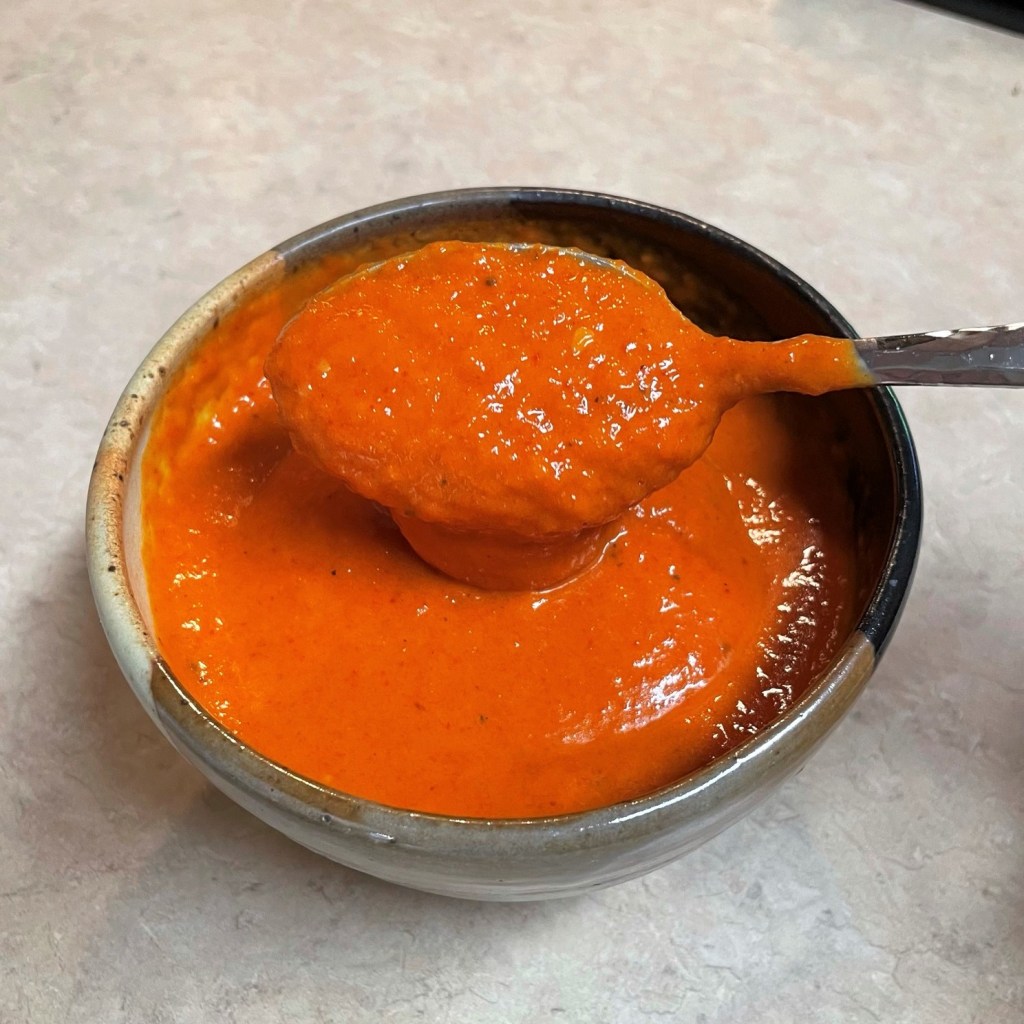
This roasted red pepper weez is simple to make, which is surprising, given its depth of flavor and incredible versatility. The sauce begins in the oven, with the roasting of red bell peppers, a tomato and two whole bulbs of garlic, and it’s finished in the blender, where those ingredients come together with a splash of red wine vinegar, olive oil and the smallest kiss of maple syrup. The result is perfectly balanced and utterly addictive.

Easy, weezy, and delicious! 😊

Did I eat some of this yummy sauce straight from the spoon? Maybe. 😉

Adapted from Giant Couscous Cake with Roasted Red Pepper Sauce
Recipe makes about 2 cups

Ingredients

2 medium red bell peppers

1 Roma tomato, halved and seeded

1/4 cup good quality extra virgin olive oil, divided

Kosher salt and freshly ground black pepper

2 bulbs roasted garlic (link to this post for easy DIY instructions)

1 Tbsp. red wine vinegar

1 tsp. real maple syrup (or substitute honey)


 Instructions

  1. Preheat oven to 425°F, and line a baking sheet with parchment paper.
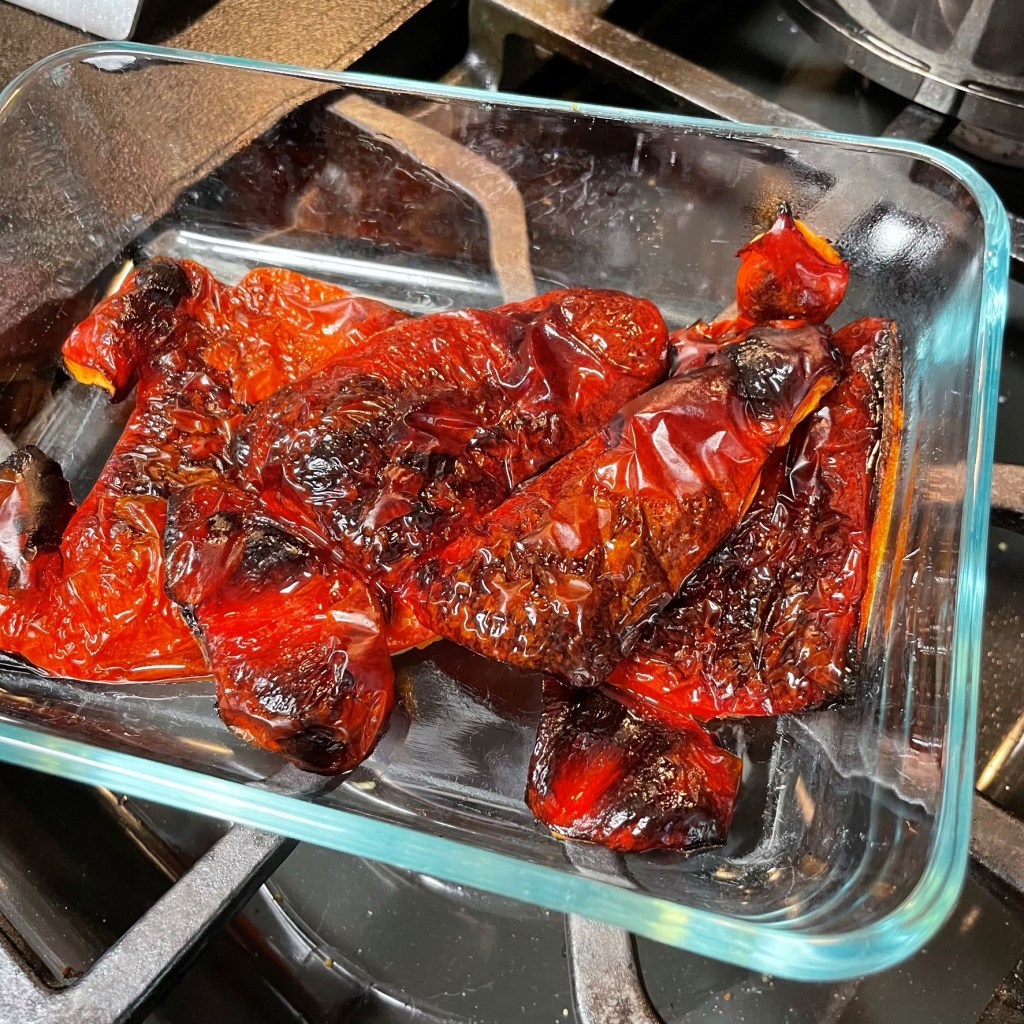
  2. Cut the bell peppers into segments, along the natural lines of the fruit. Discard the seeds and membranes. Lay the tomato halves and pepper segments, skin side up, on the parchment-lined baking sheet. Brush all pieces with 1 tablespoon of the olive oil. Roast about 40 minutes, until the skins on the peppers are nicely charred.
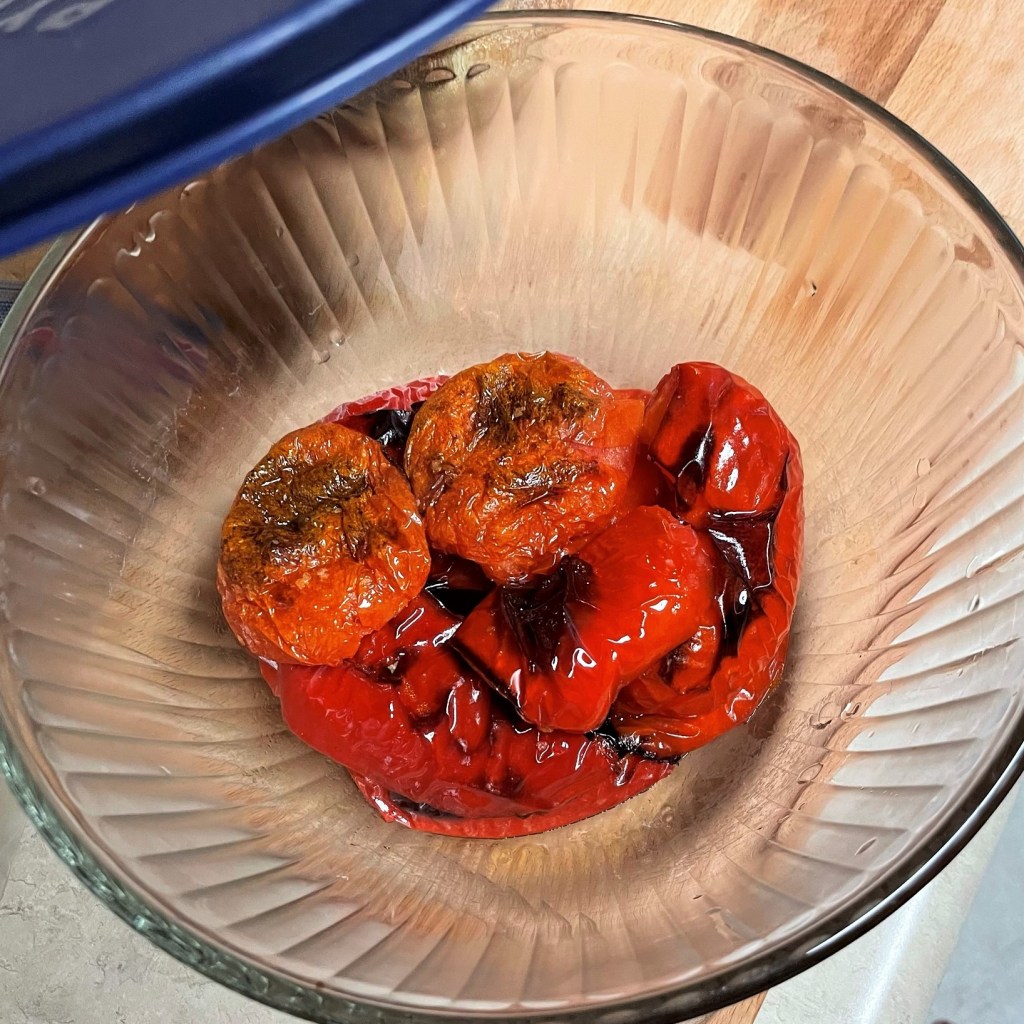
  3. Transfer the tomatoes and pepper segments to a bowl. Cover the bowl and set it aside for several minutes, giving the skins time to soften for easy release.
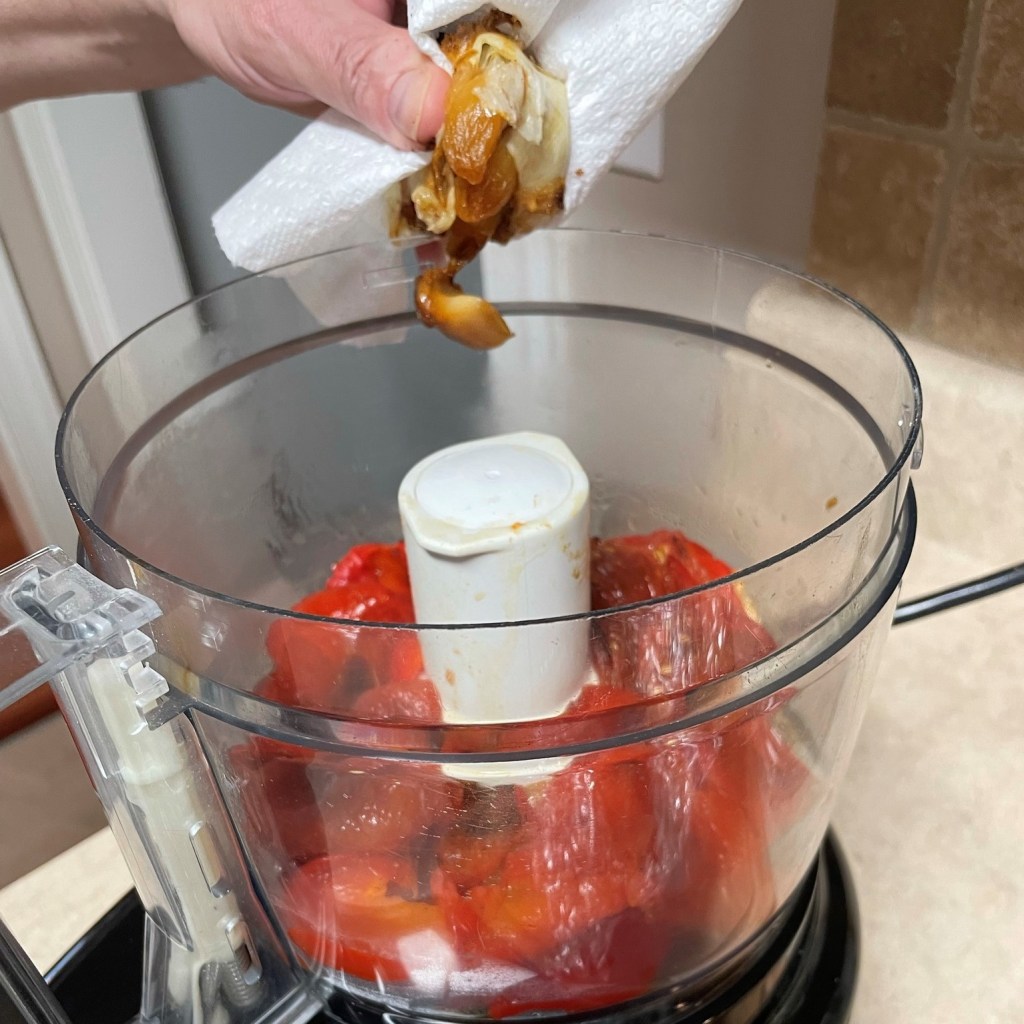
  4. Once cooled, carefully peel the skins off the peppers and tomato halves. Transfer them to a food processor or standard blender. I do not recommend a “smoothie” blender for this step, because you will need to drizzle oil in later. An immersion blender would also work. Pulse a few times to chop the peppers and tomatoes into smaller pieces. Carefully squeeze in both bulbs of roasted garlic.
  5. Add the red wine vinegar, salt, pepper and maple syrup. Pulse a few times, then run processor or blender continuously while drizzling in the remaining 3 tablespoons of olive oil. Adjust salt and pepper to taste. Transfer sauce to a jar or bowl.


This roasted red pepper sauce has so many easy uses, from appetizers to pasta to pizza and more. It will keep in a jar in the fridge for a couple of weeks, though we have not been able to make it last that long at our house. Next time, we will make a double batch!