Jambalaya Deep-Dish Pizza

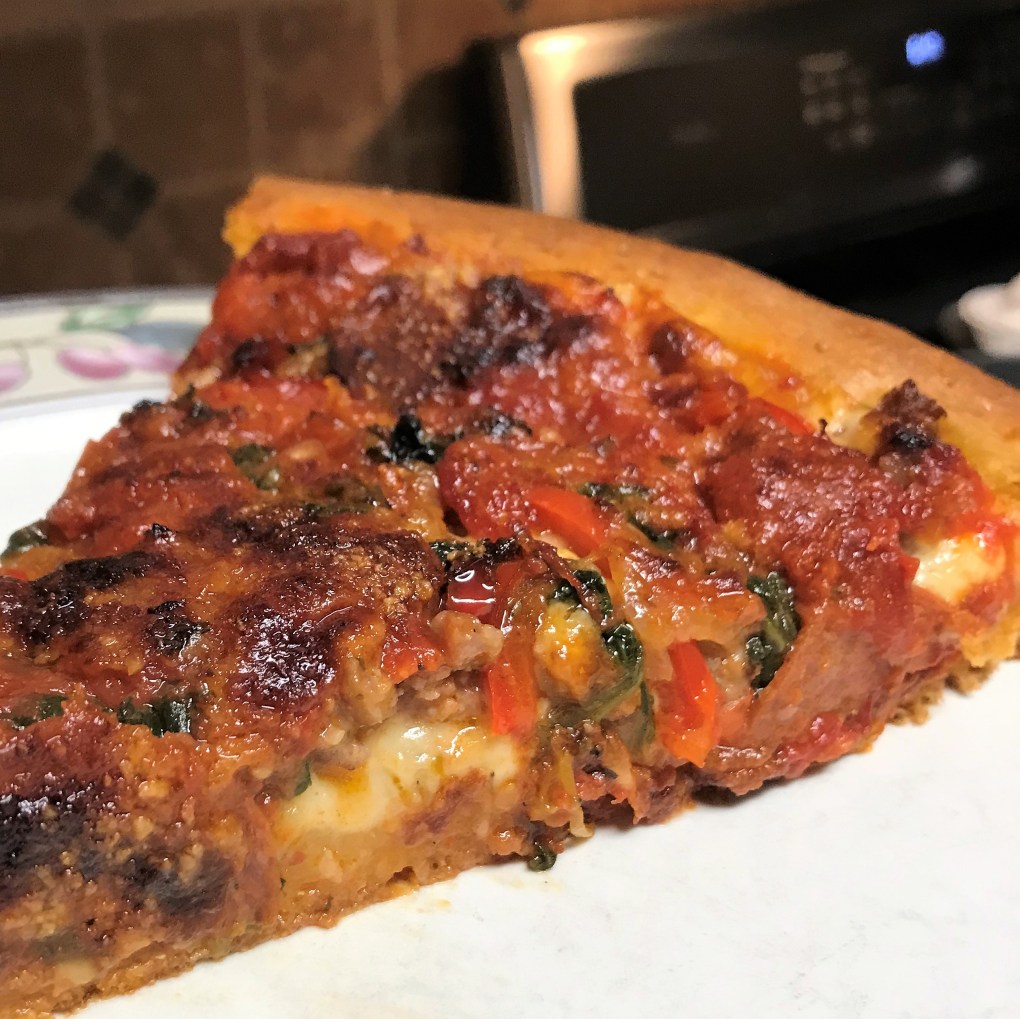
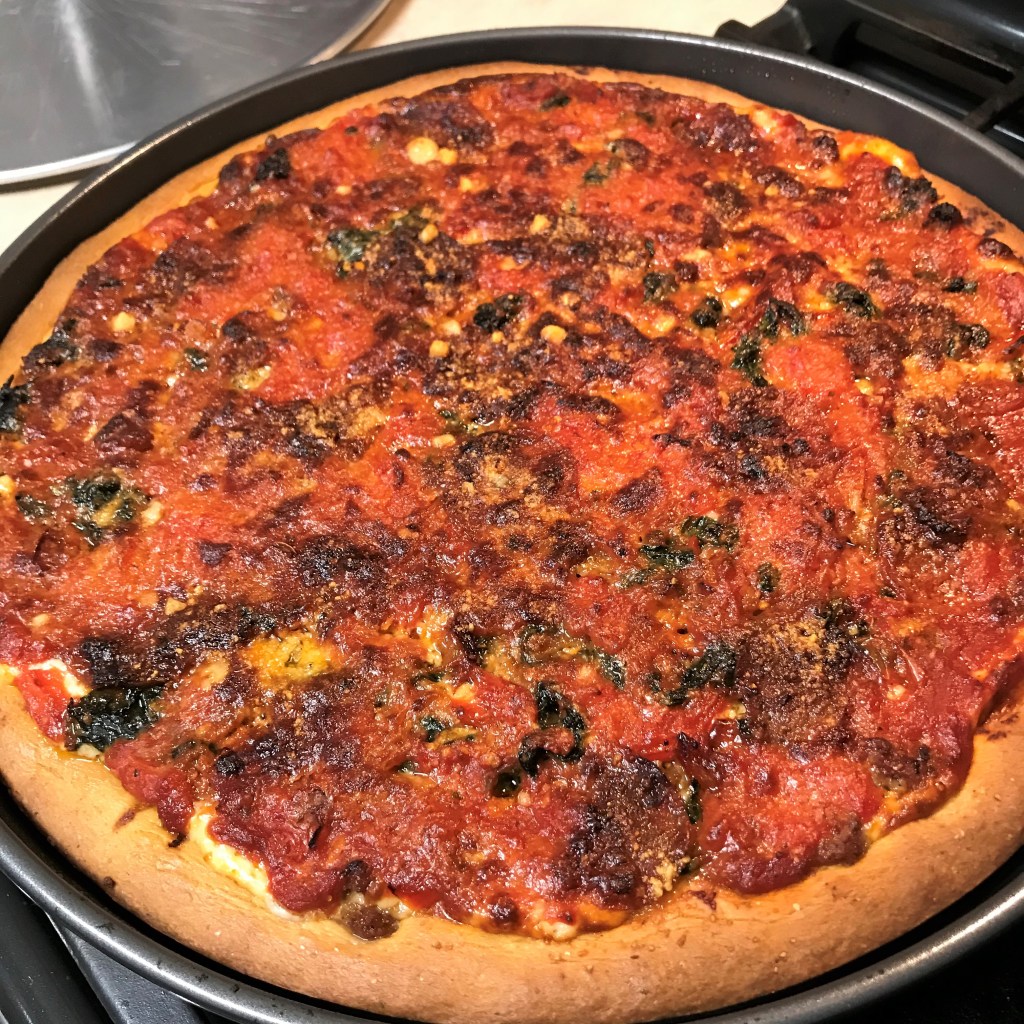
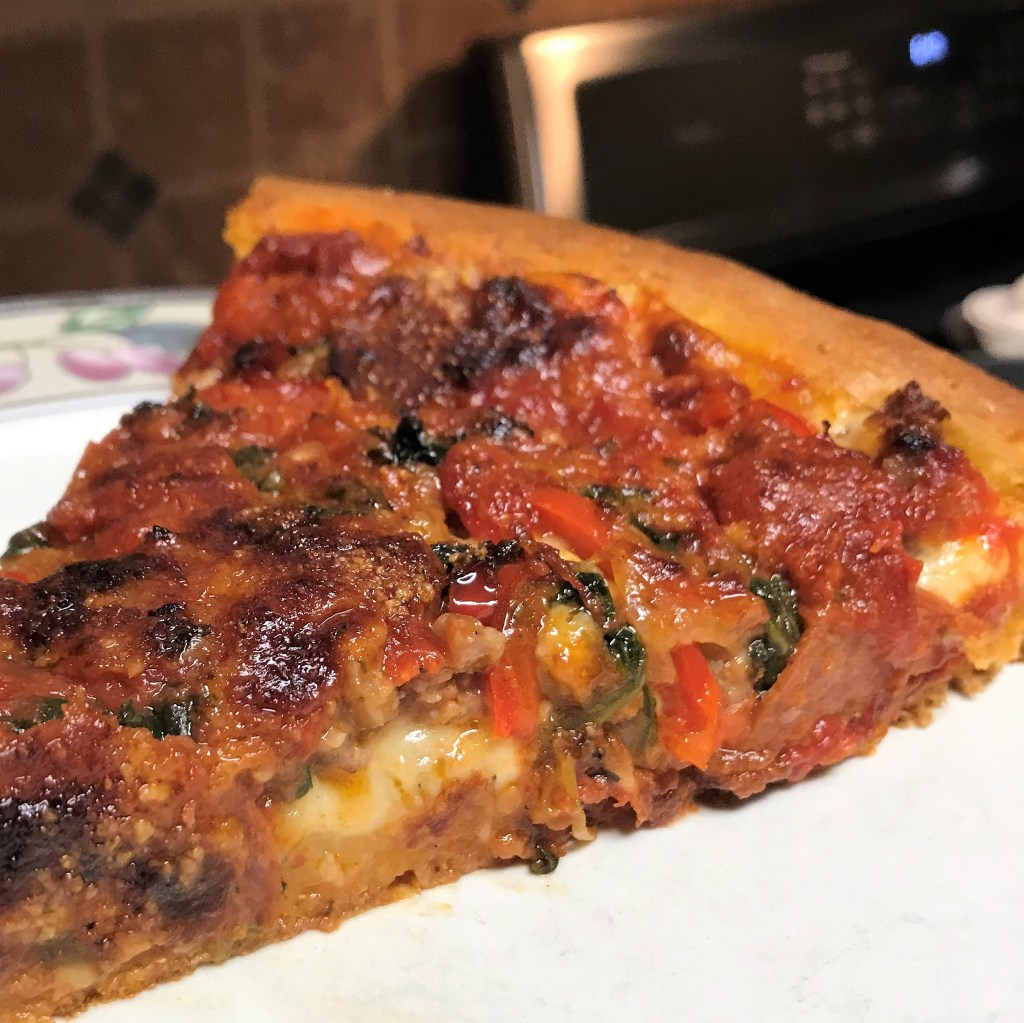
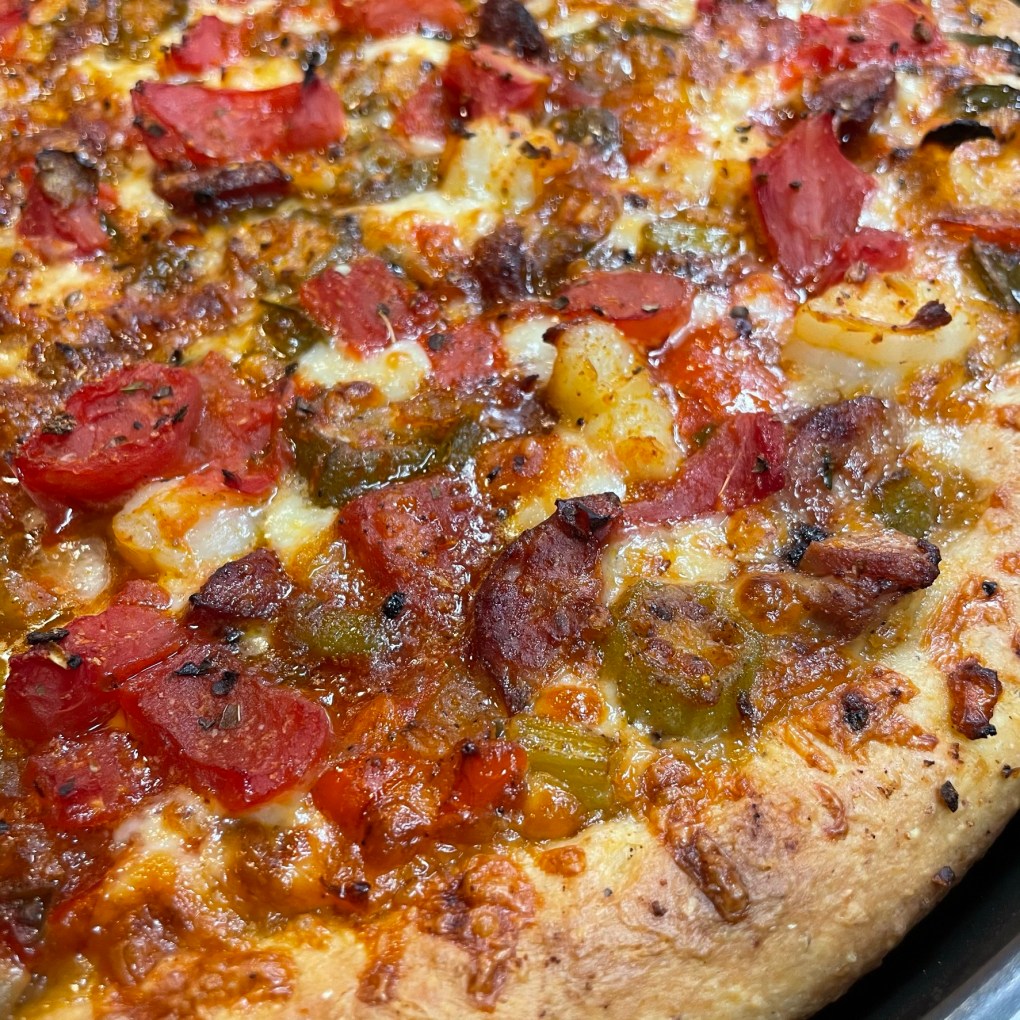
For such a short month, February has a lot going on, holiday- and event-wise. There’s Super Bowl, which is traditionally the first Sunday of the month; Valentine’s Day, which is fixed on the 14th; and Mardi Gras, which floats on the lunar calendar in tandem with Ash Wednesday. It’s enough to make even the most adept party planner a little dizzy, and for the average person at home, it isn’t easy to celebrate all three (at least, not when you’re hosting others). I’ve wanted to do some kind of Mardi Gras dish for a while, and with Super Bowl and Valentine’s Day behind us, here’s what I’ve come up with for our small celebration—all the exciting flavors of jambalaya piled into a deep-dish pizza.
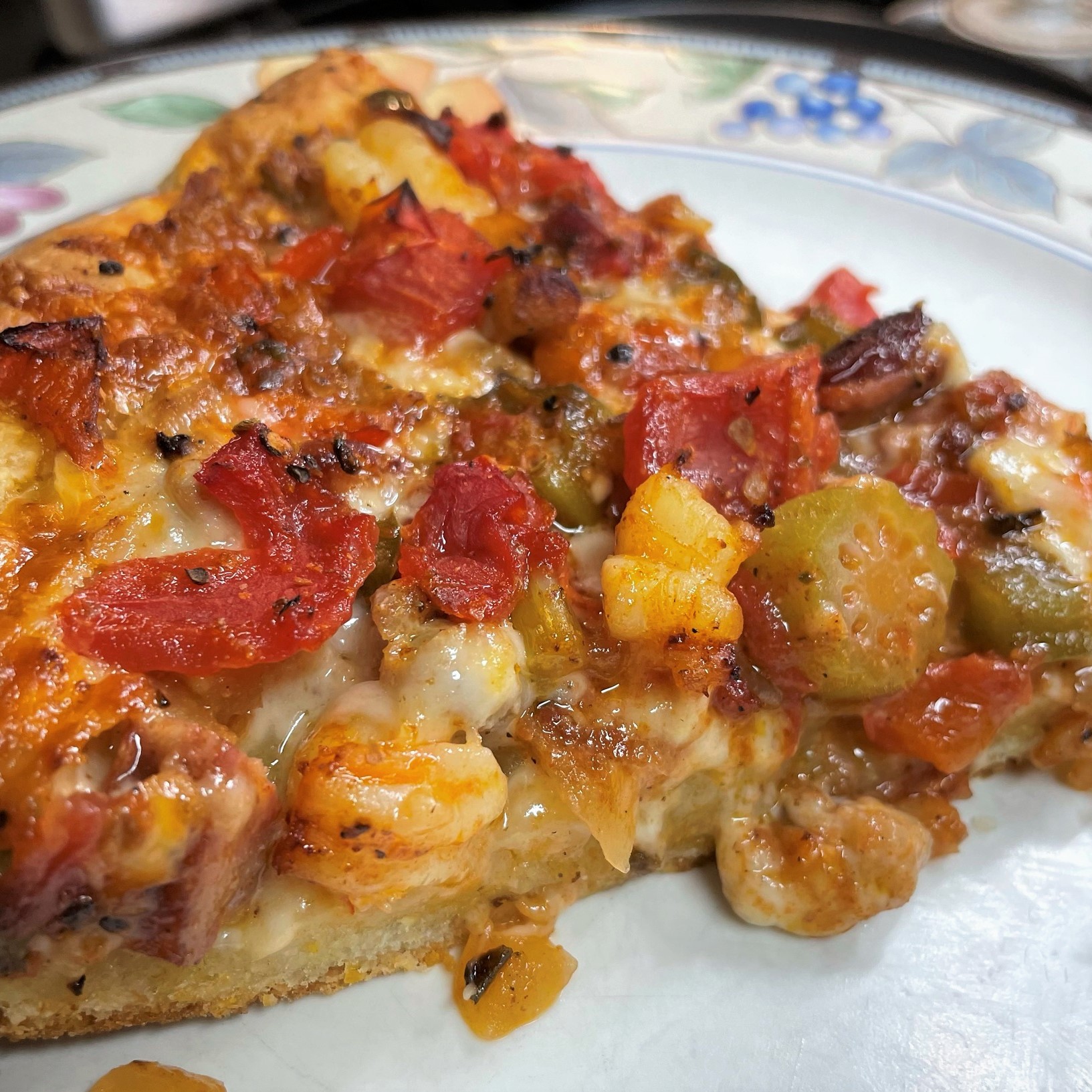
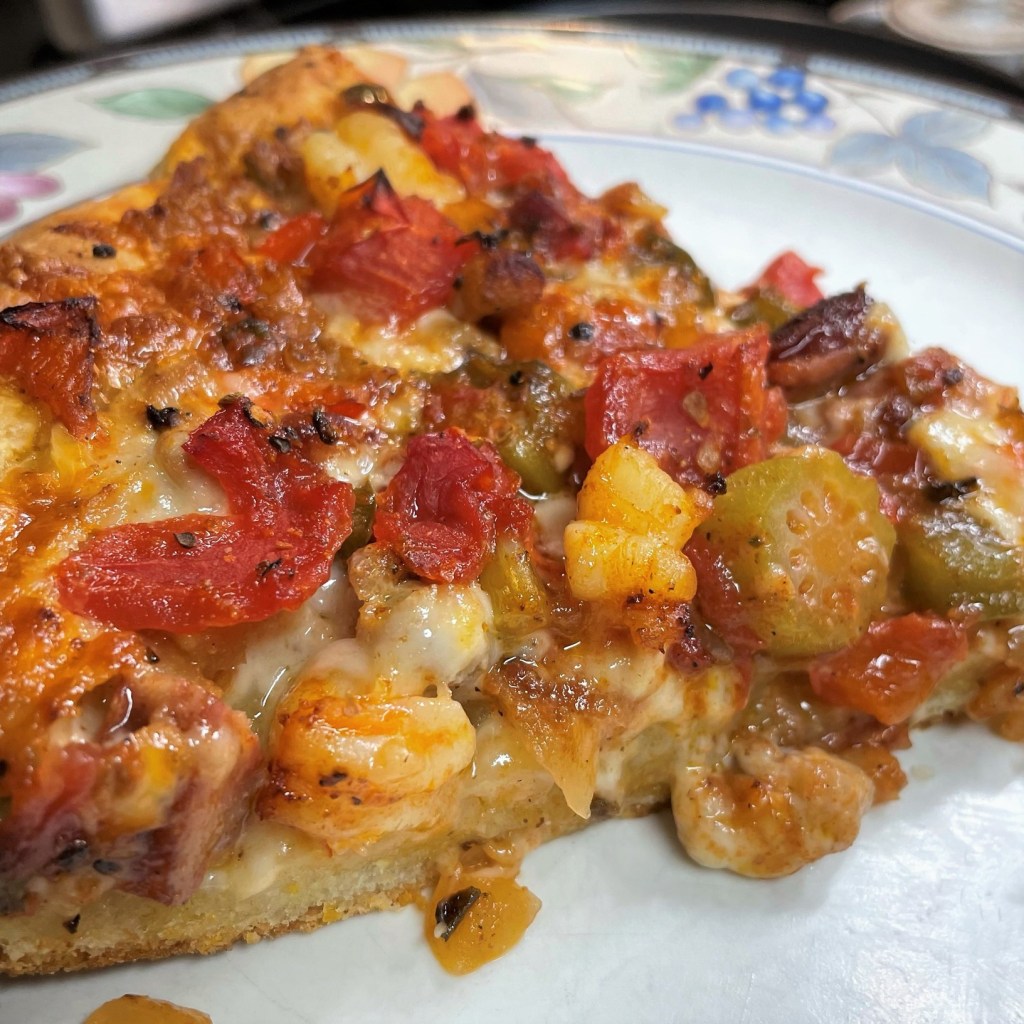
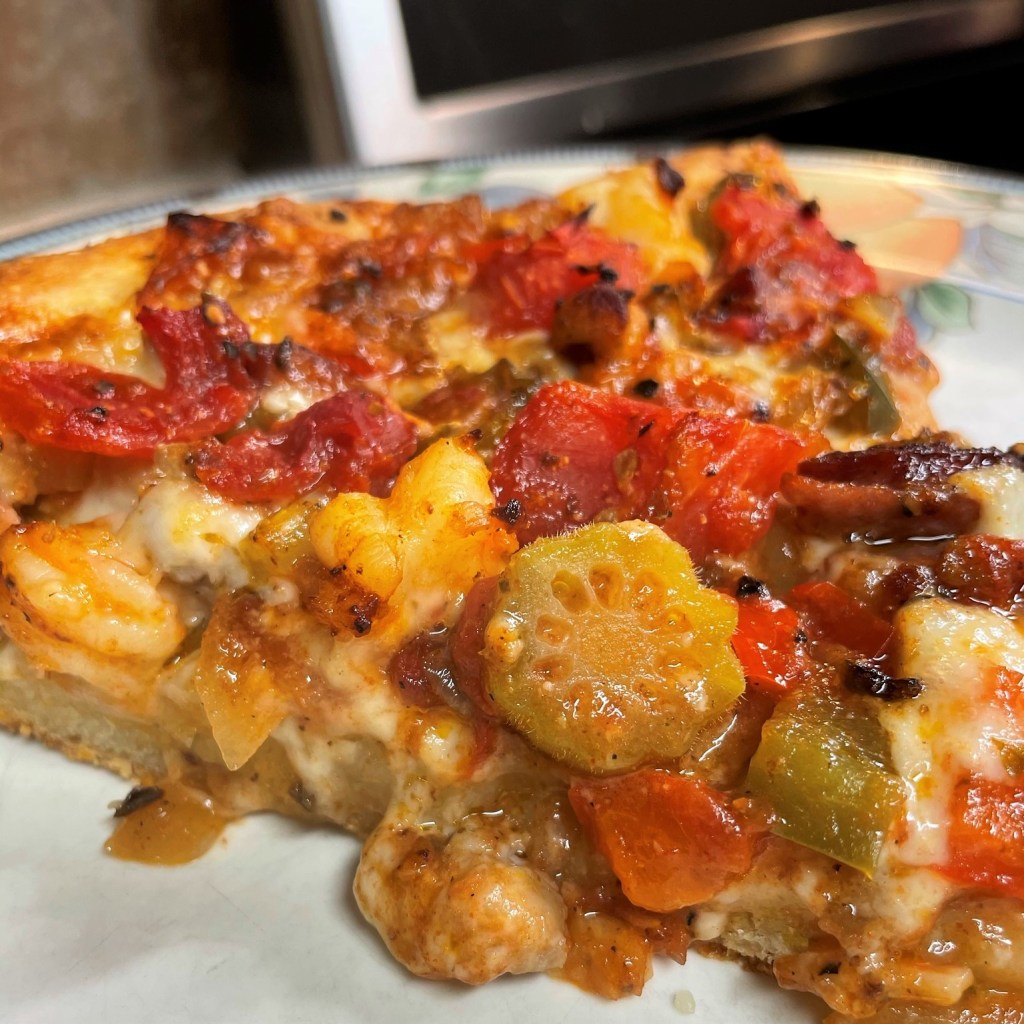
The only thing missing from this jambalaya-inspired pizza is the rice, and guess what? We didn’t miss it!

As with the other two February events, it is just the two of us celebrating, and that makes it less intimidating for me. Les and I both love Cajun and Creole flavors, and he brought home some authentic spice blends from a work-related trip to “N’awlins” a couple of years ago, so I already have the right accent. We have some fabulous jazzy blues music to help us get in the mood, and I’m sure we have some beads around here somewhere. Weeknights are always great for a casual meal, and pizza has become one of my “blank canvas” foods, begging for interesting flavor twists. I’m going deep dish on this one because you cannot skimp on Mardi Gras (which translates from French to “fat Tuesday”), and I’m not sure that our usual N.Y.-style crust can handle all this excitement. 

Most of the fillings are obviously traditional, from the zesty smoked andouille sausage, through the holy trinity aromatic vegetables and spices, and the plump and juicy Gulf shrimp. I omitted rice because we have quite enough carbs in my part-cornmeal deep dish pizza dough. Creole foods have tomato, so that’s an easy crossover ingredient for pizza. But what about cheese? I wracked my brain and could not think of a single regional dish that includes cheese, but on a deep-dish pie, the cheese on the bottom seems to shield the tender crust from wet filling ingredients, so I didn’t feel right skipping it.

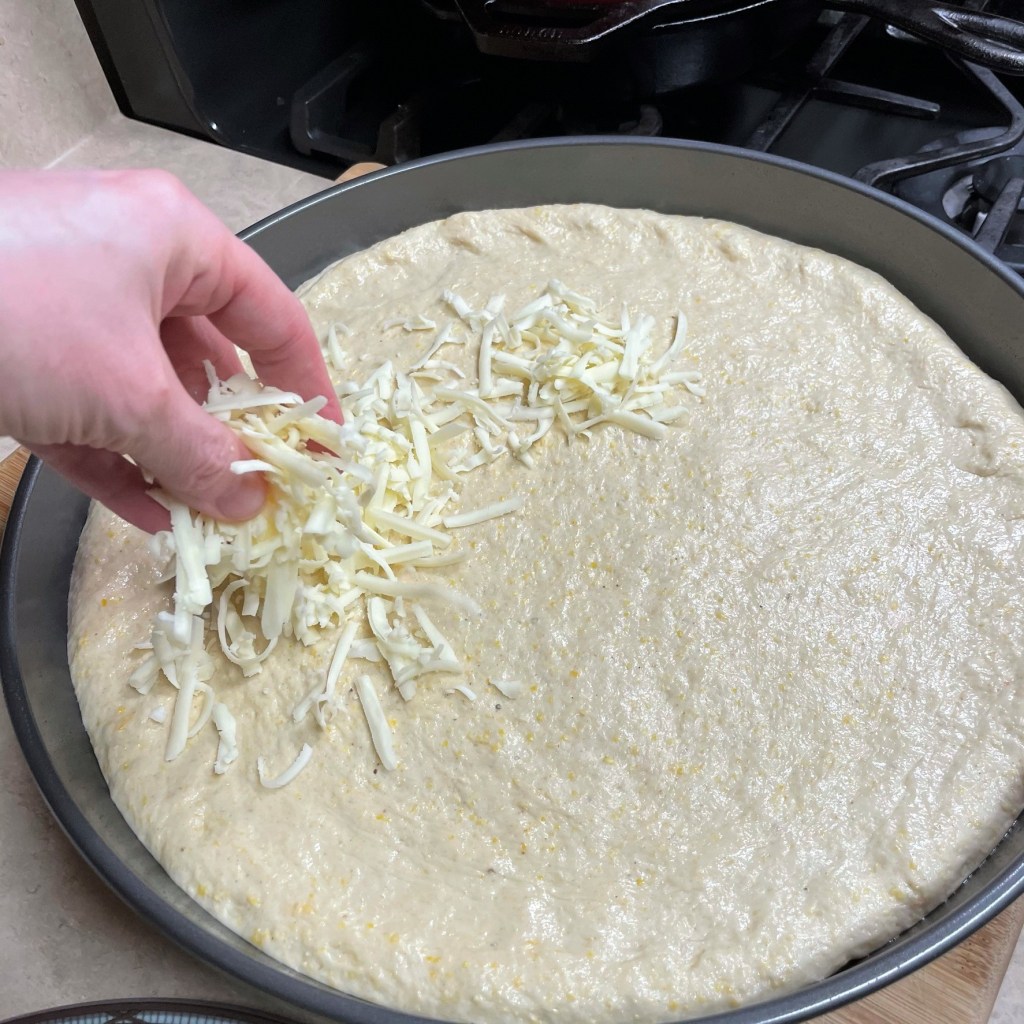
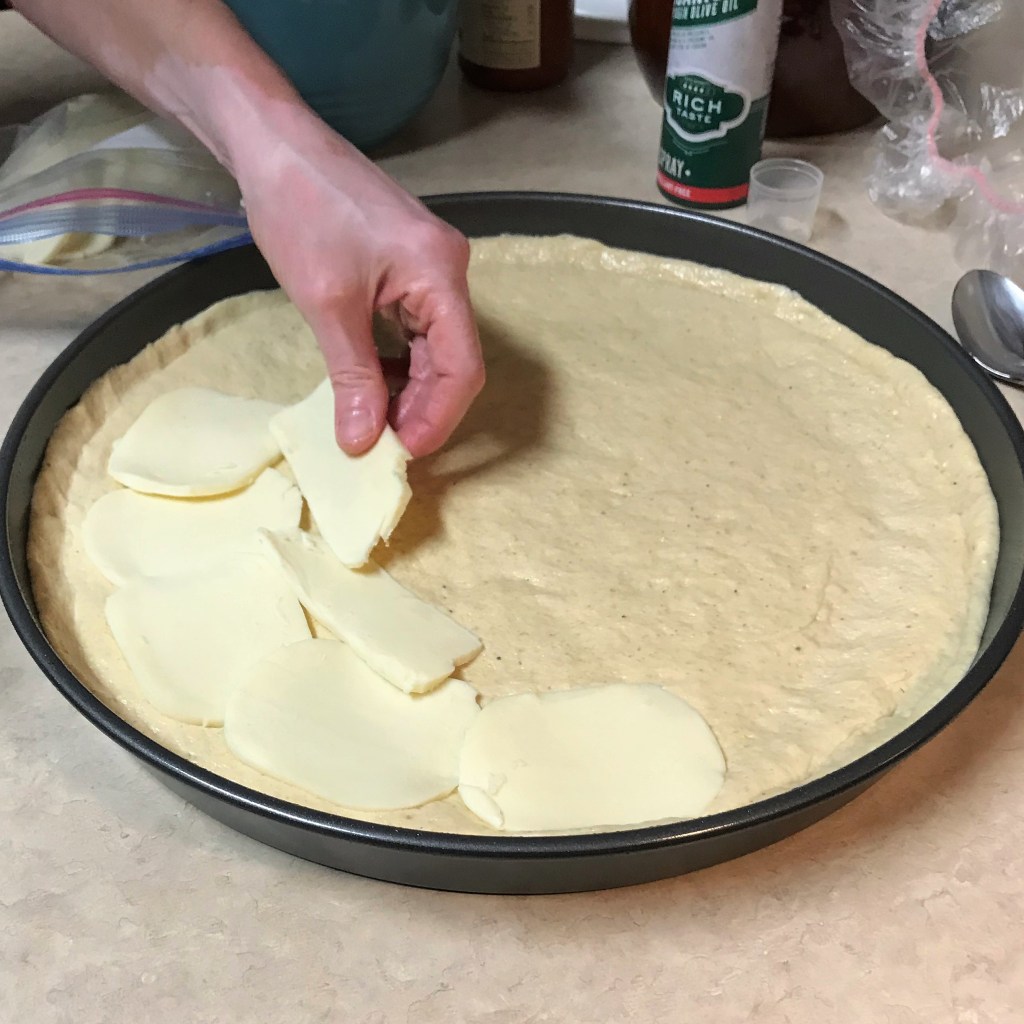
In the end, I opted for the mildest firm cheese I could think of—one that would not clash with all these great Louisiana flavors. Monterey Jack is sturdy enough to line the pizza dough, but it melts well, and it kept my deep-dish dinner from singing the soggy-bottom blues.

Speaking of the blues, we can’t celebrate Mardi Gras without music, so go put on your favorite New Orleans jazz, or enjoy what I listened to while making this pizza:


Ingredients
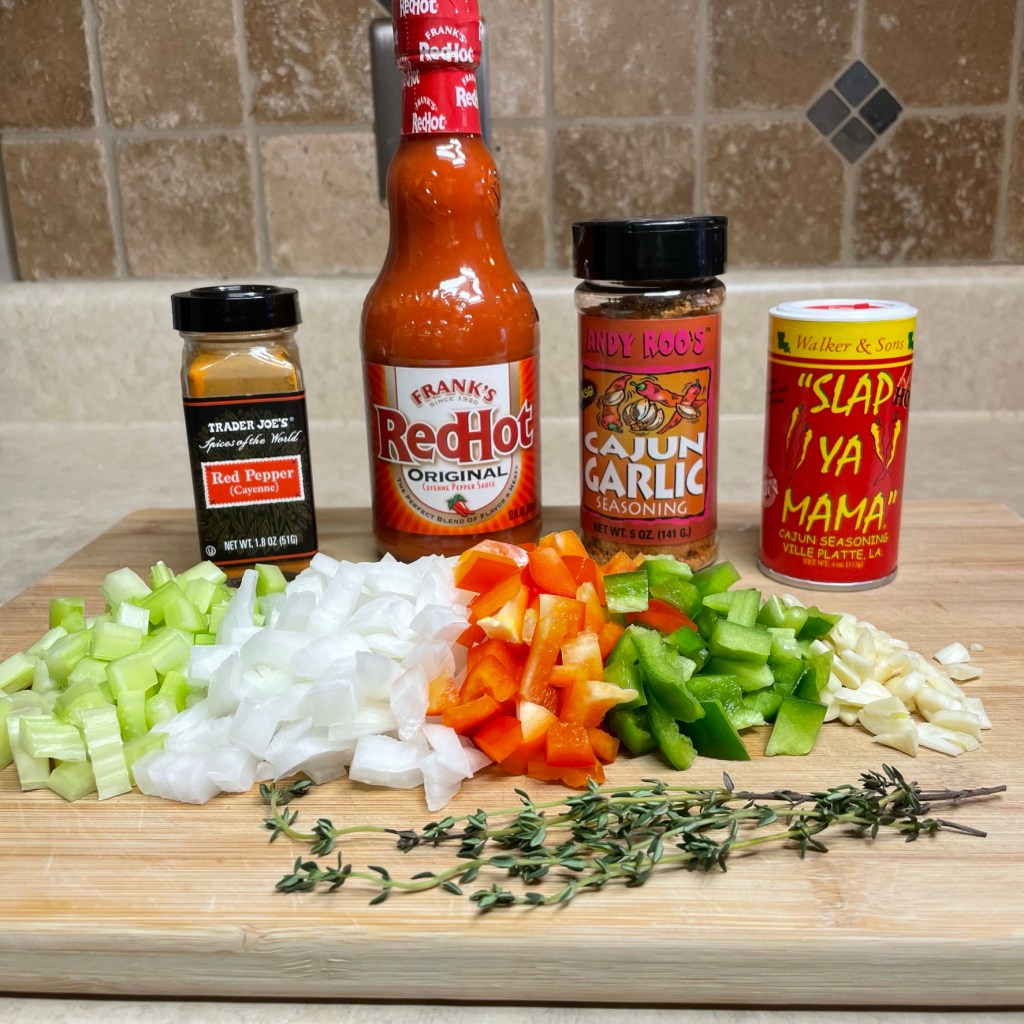
1 prepared deep-dish pizza dough (recipe and instructions in my post for Chicago-style Deep-dish Pizza)

2 Tbsp. extra virgin olive oil (mine was infused with cayenne)

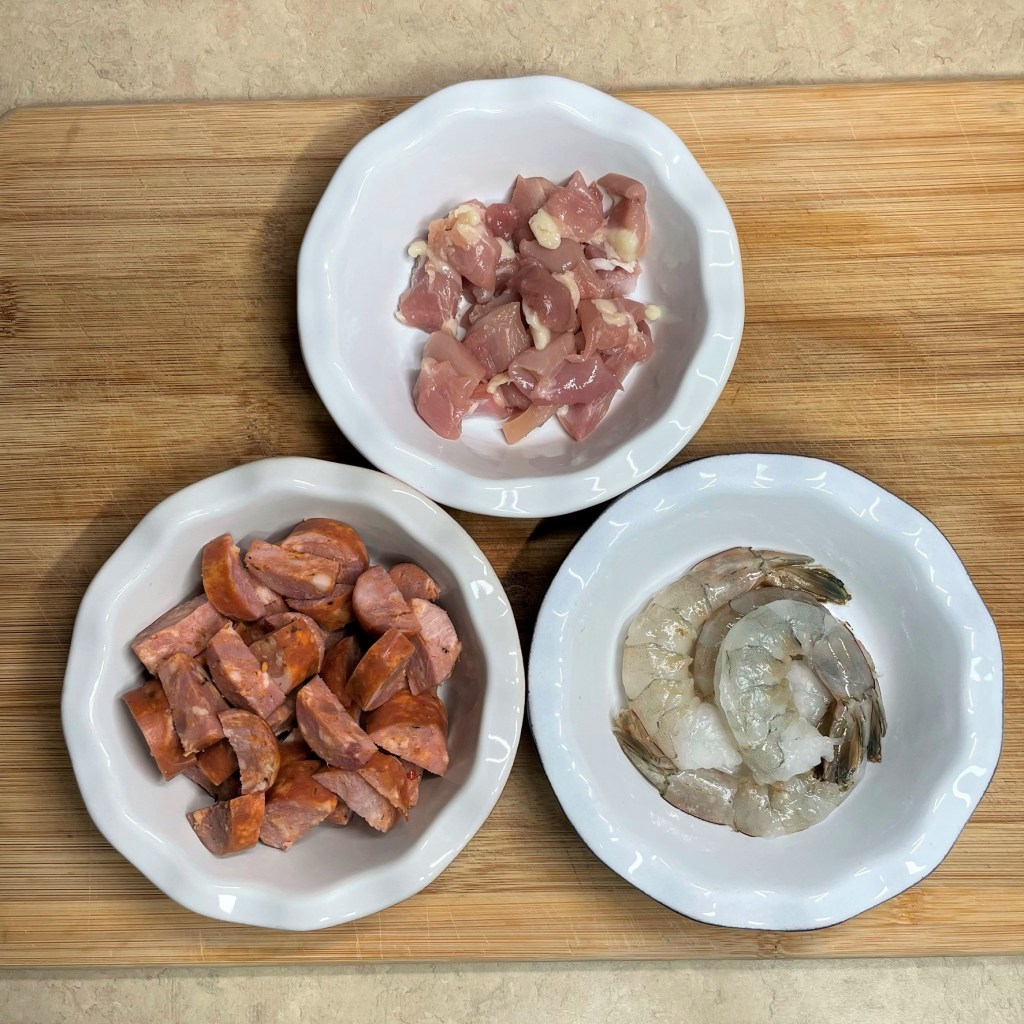
2 links smoked andouille sausage, sliced or chopped (I used Aidell’s)

1 boneless chicken thigh, cut into bite-sized bits

2 ribs celery, finely chopped

1/2 yellow onion, chopped

1/2 cup each red and green bell pepper, chopped

4 cloves garlic, chopped

Cajun or Creole seasoning (as much as you can stand)

3 sprigs of fresh thyme, leaves removed

1 1/2 cups canned diced tomatoes, divided (see instructions)

Handful of fresh okra, sliced (or about 3/4 cup frozen sliced okra)

2 Tbsp. red wine vinegar

Splash of veggie or chicken broth (optional, for deglazing the skillet)

4 large gulf shrimp (about 1/4 pound), peeled and deveined)

4 oz. shredded or sliced Monterey jack cheese


Instructions

Let’s run through it together in pictures while you enjoy the Bluesiana Triangle, then keep scrolling for written instructions and a downloadable PDF for your recipe files.


  1. Place a large non-stick skillet over medium heat and swirl in olive oil. When oil is hot enough to shimmer, add cut up andouille sausage and toss until edges are crispy. Use a slotted spoon to transfer the sausage to a bowl and set aside.
  2. Add the chicken pieces to the remaining oil and toss them about until no longer pink. Transfer chicken to the bowl with the sausage.
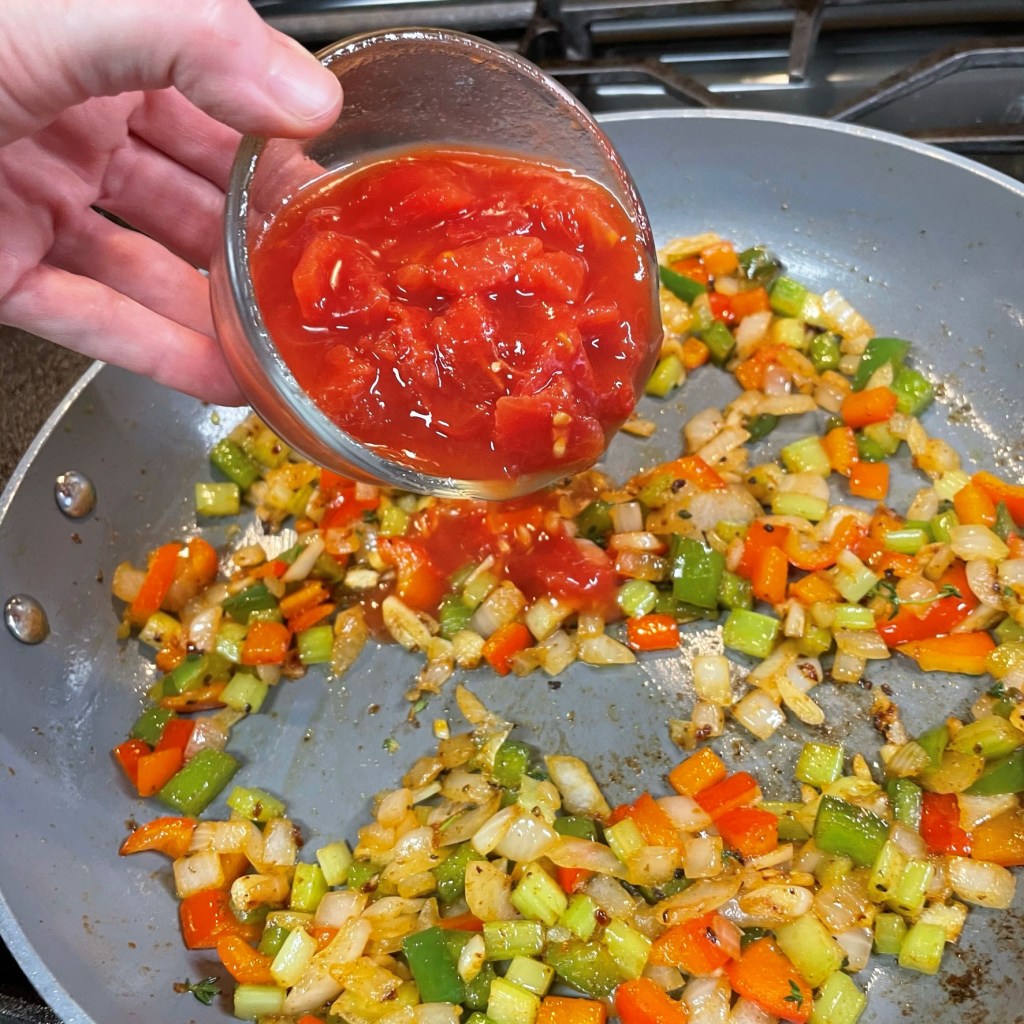
  3. Add trinity plus garlic to the skillet and toss in the hot oil. Shake on Cajun or creole seasoning to suit your spicy preferences. Grind some black pepper into the pan and sauté vegetables until they are soft and translucent. Scatter the fresh thyme leaves over the vegetables.
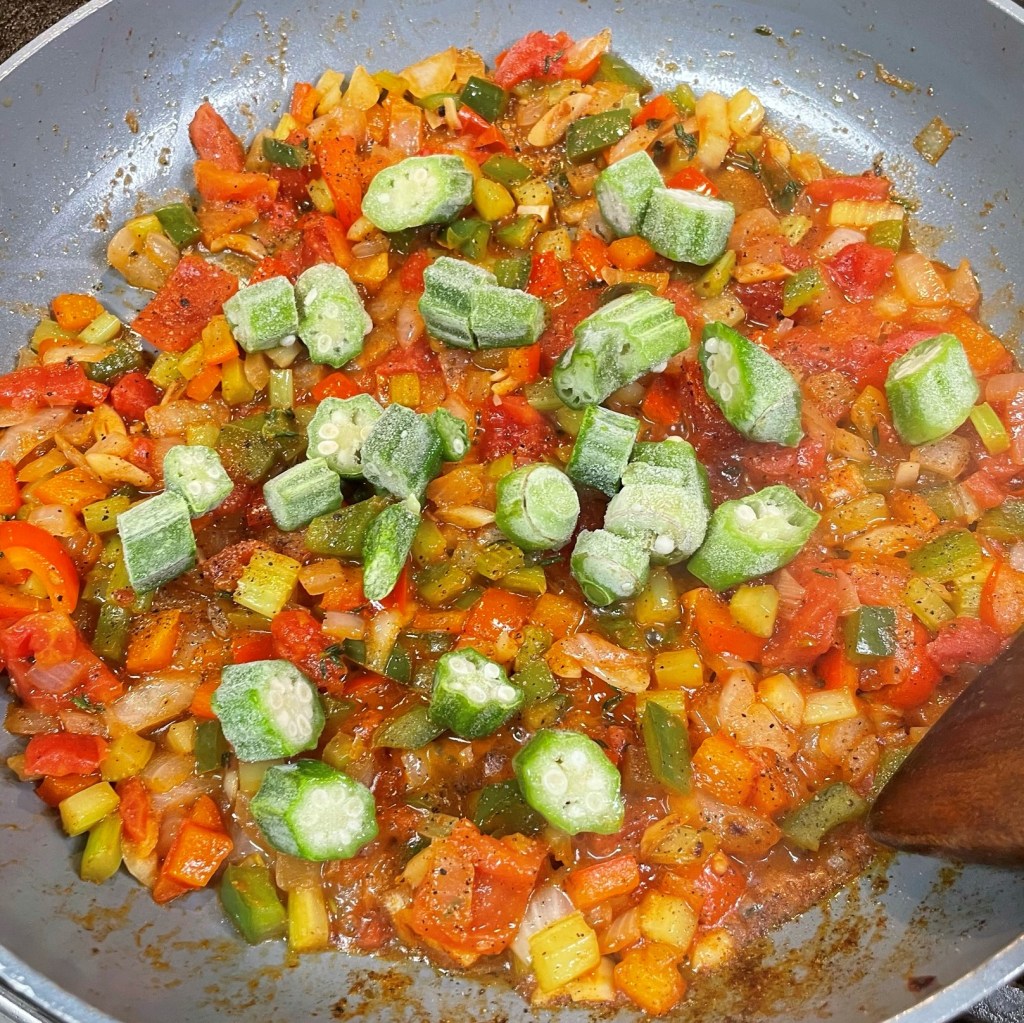
  4. Add diced tomatoes, okra and red wine vinegar. Toss and cook until okra is heated through, about five minutes. Turn off heat and allow vegetables to rest a few minutes, then transfer to a bowl and set aside.
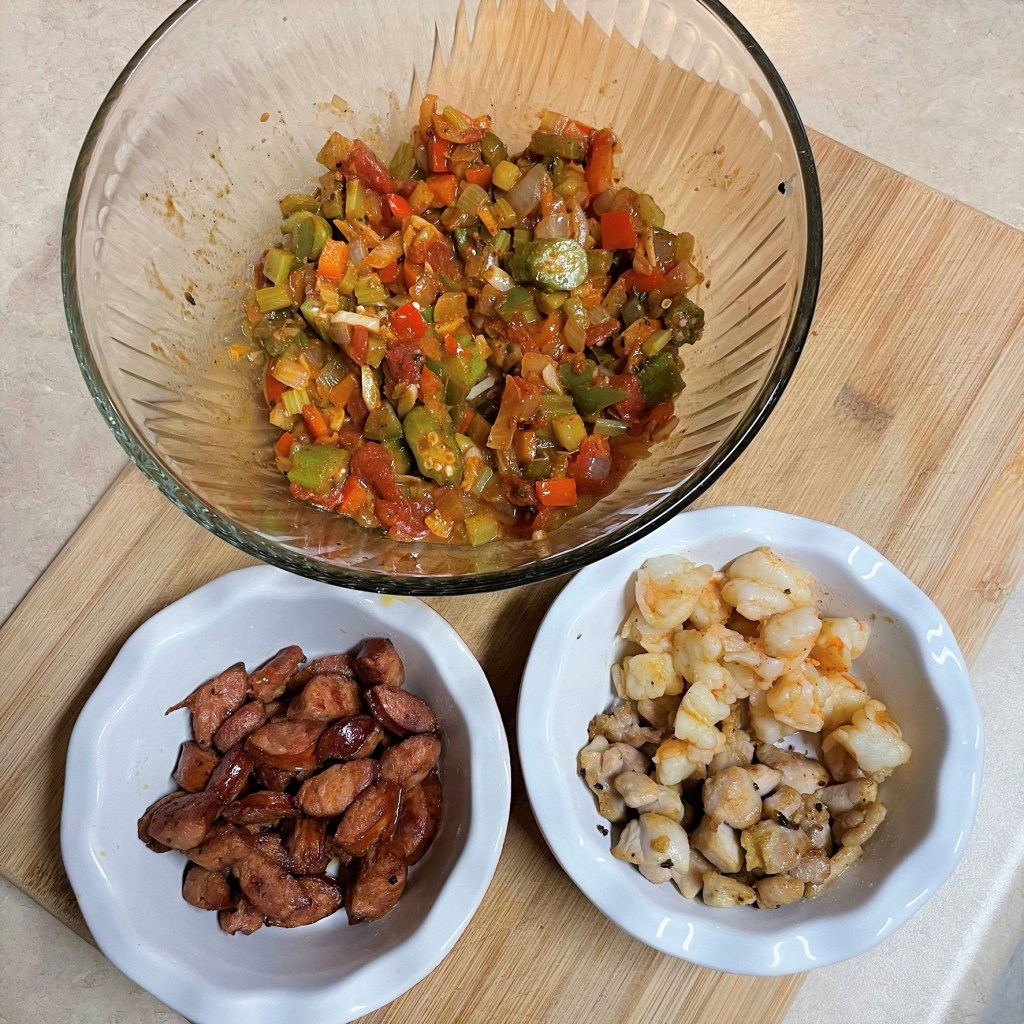
  5. If your skillet has any browned bits on the bottom, swirl in a splash of veggie broth and heat to a simmer. Cut the shrimp into bite-sized pieces and toss them into the simmering broth. Cook only long enough for the shrimp to be barely done, which may only be about two minutes. Transfer the shrimp to the bowl with sausage and chicken and set aside.

At this point, if you’re working ahead, you can refrigerate all cooked ingredients, and then bring them to near-room temperature when you are ready to assemble the pizza.

Ready to bake:

  1. Preheat oven to 450° F, with rack in center of oven.
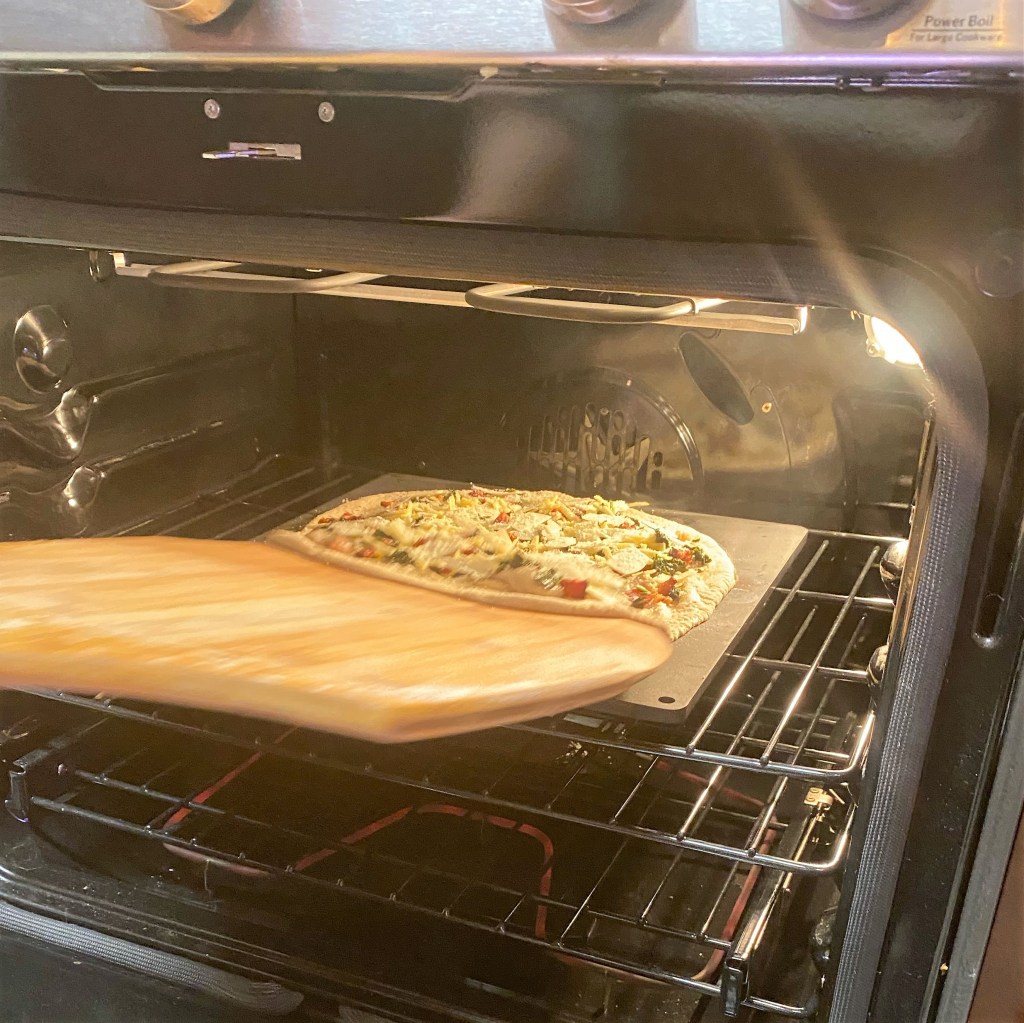
  2. Spread prepared dough into pan, with edges creeping up the side a bit.
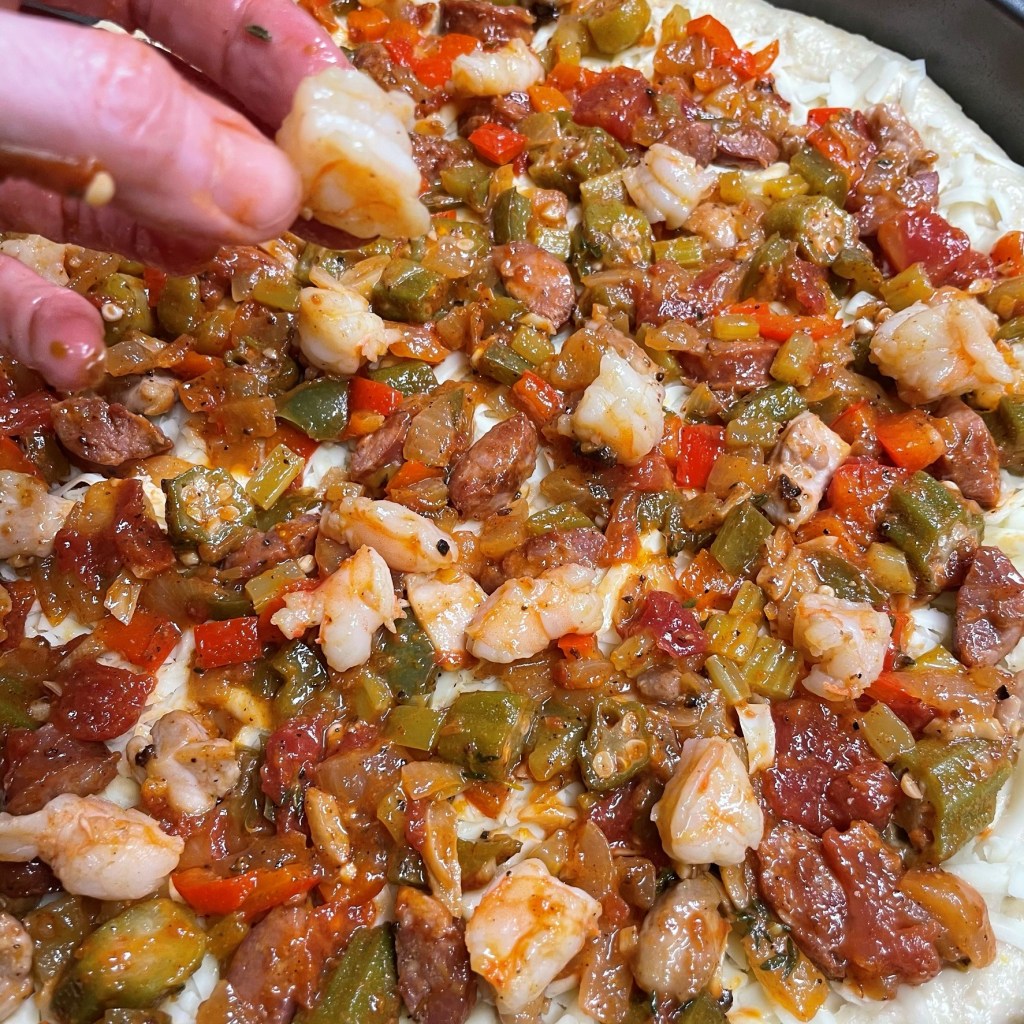
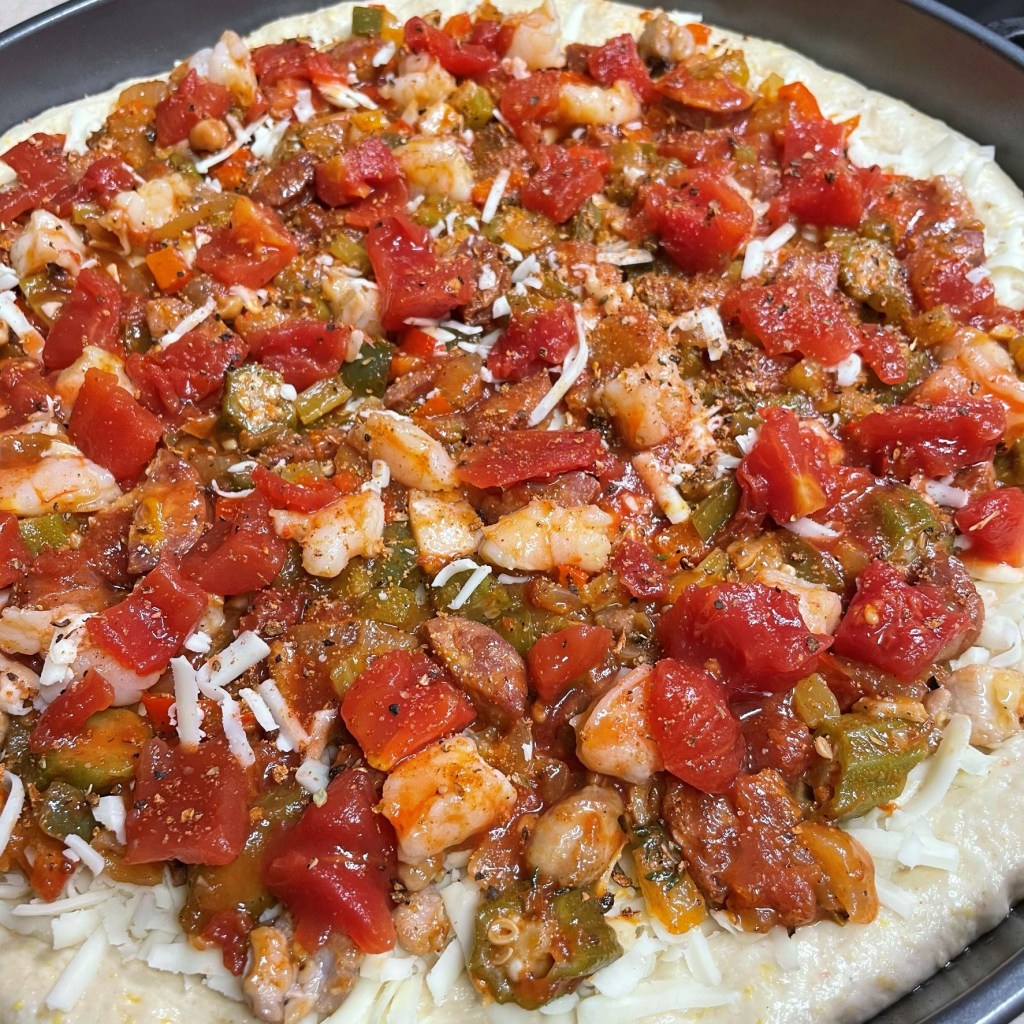
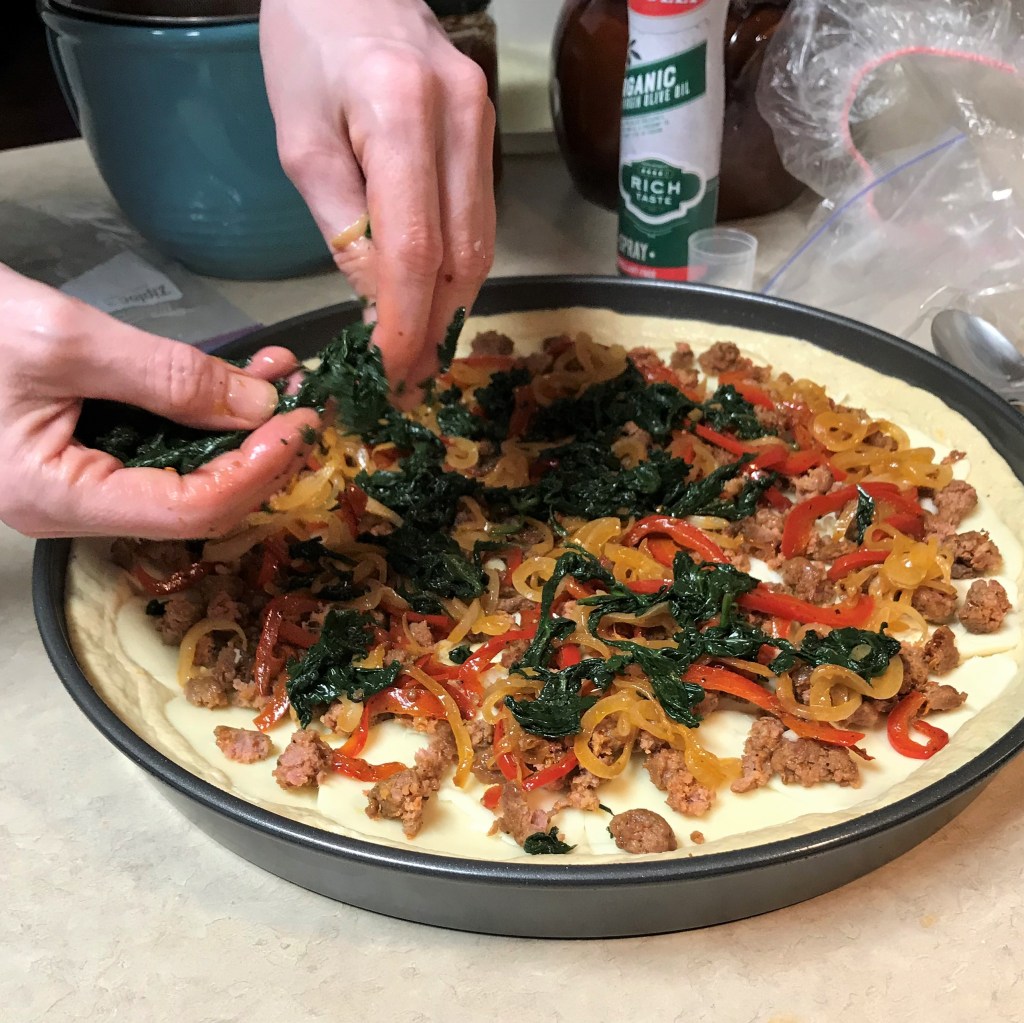
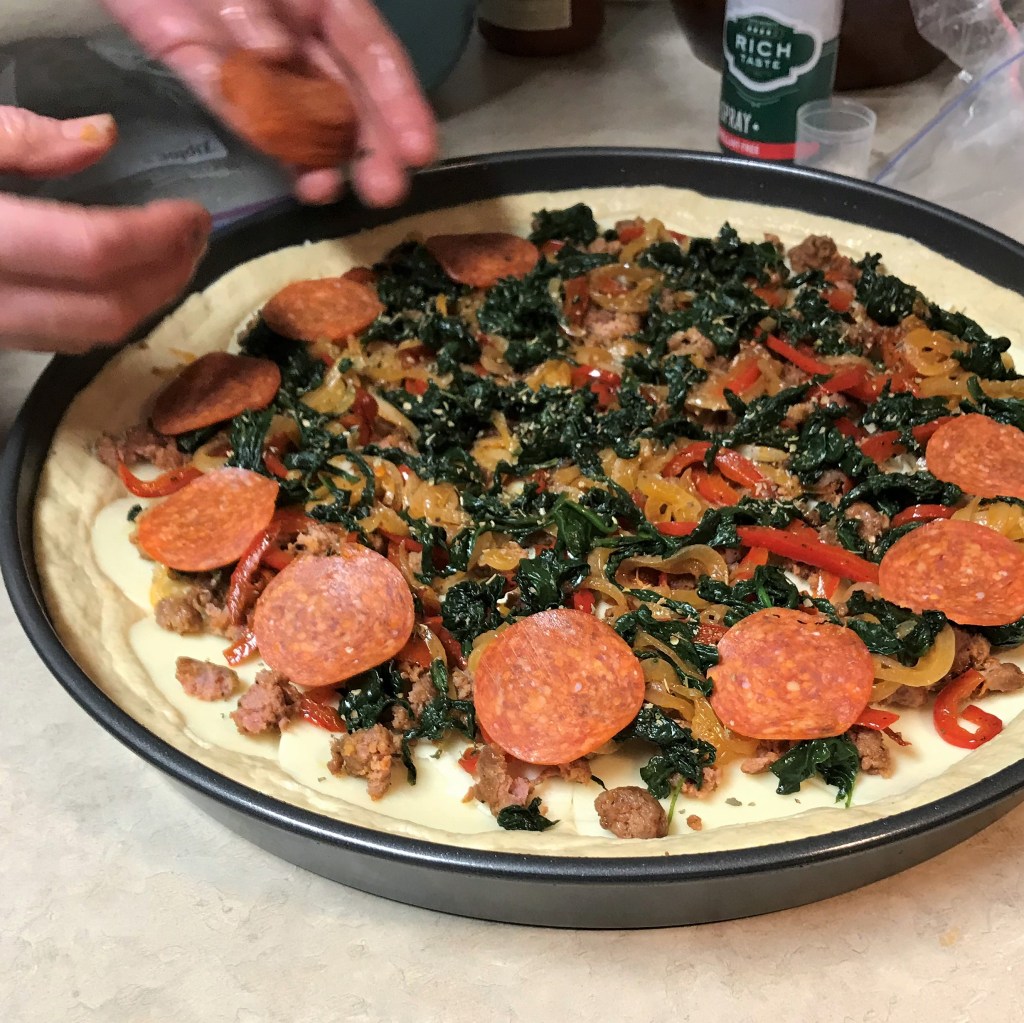
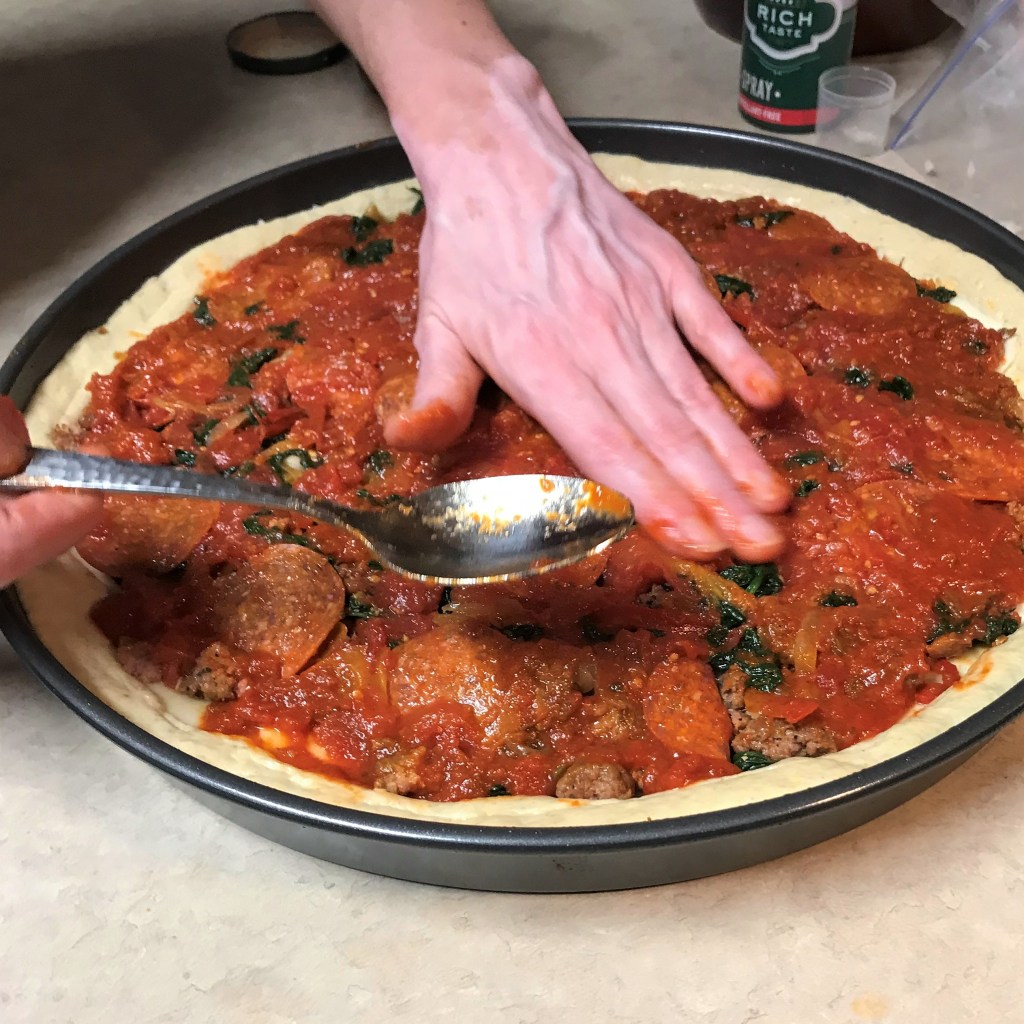
  3. Layer ingredients in the following order: Monterey jack, most of the andouille sausage, chicken, vegetables, shrimp, remaining sausage, additional diced tomatoes. Sprinkle with Cajun seasoning.
  4. Bake 25 minutes, rotating pizza halfway through baking time. Rest pizza 5 minutes, then carefully lift and transfer pizza to a flat pizza pan or serving platter. Cut into wedges.
Want to save this recipe?


Buffalo Deviled Eggs with Bleu Cheese

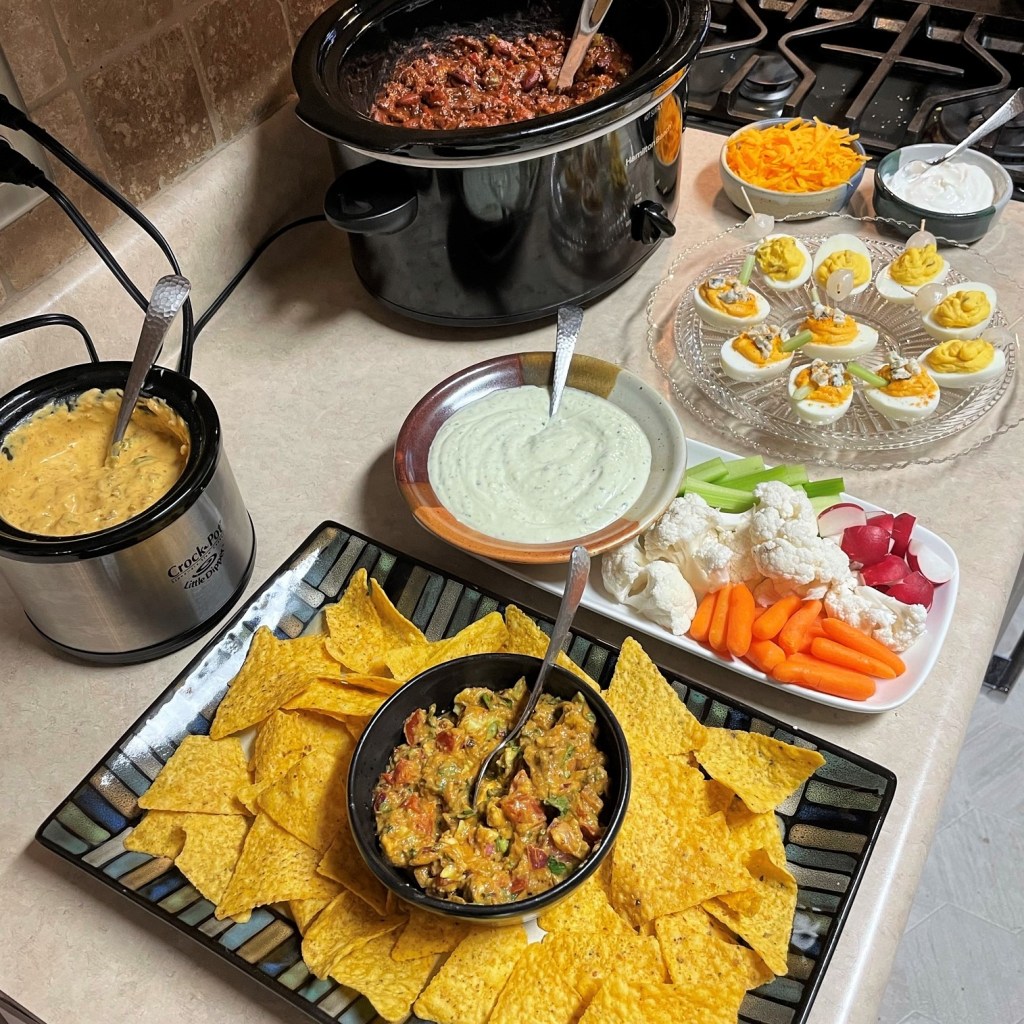
There was more than a little bit of disappointment this year in limiting the number and scale of dishes my husband, Les, and I create for our annual Super Bowl party. Obviously, we didn’t have 25 people in the house this year—that would be ludicrous in these times—but the Super Bowl wasn’t cancelled, and neither was our celebration, even if reduced to just the two of us. The challenge for us was finding new ways to enjoy the flavors we’ve come to expect on this ultimate football occasion.

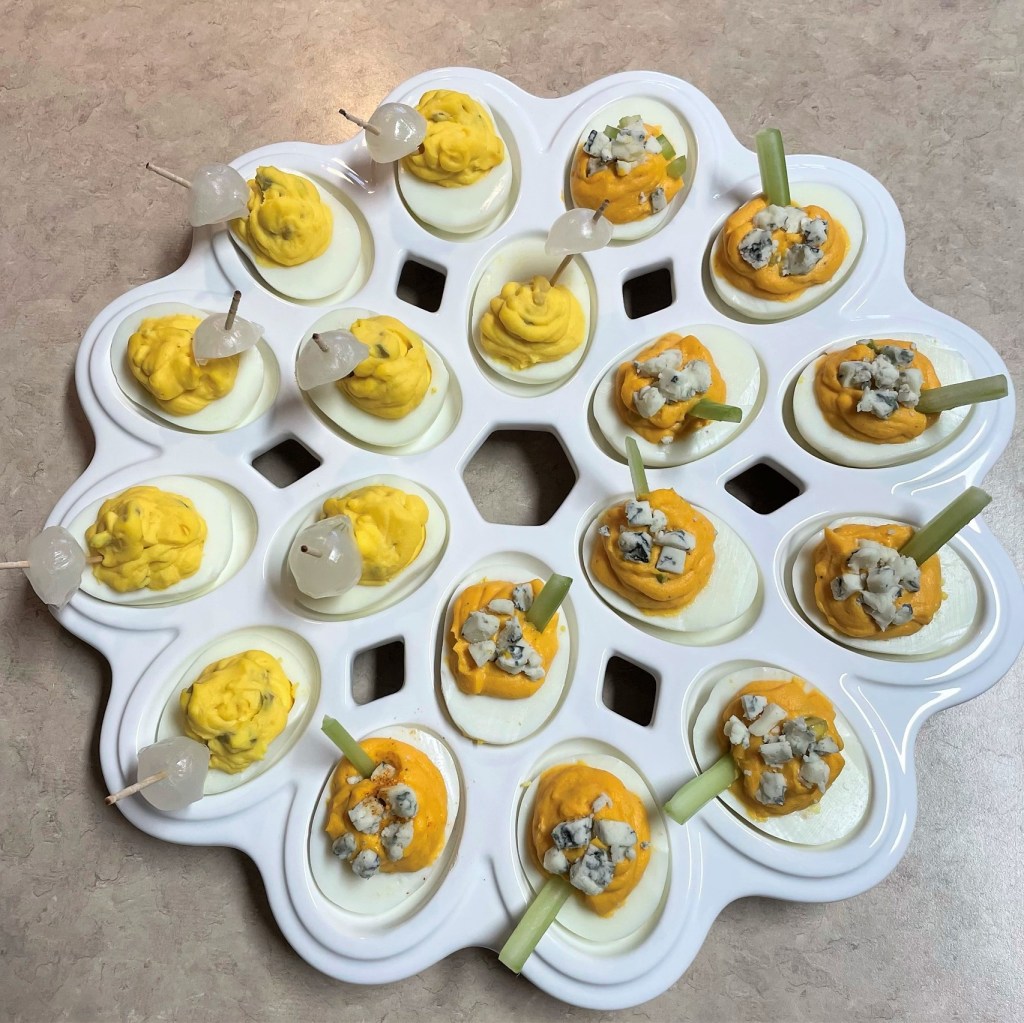
Deviled eggs are always on our party table and so are Buffalo wings. Why not combine the flavors into one tasty bite?

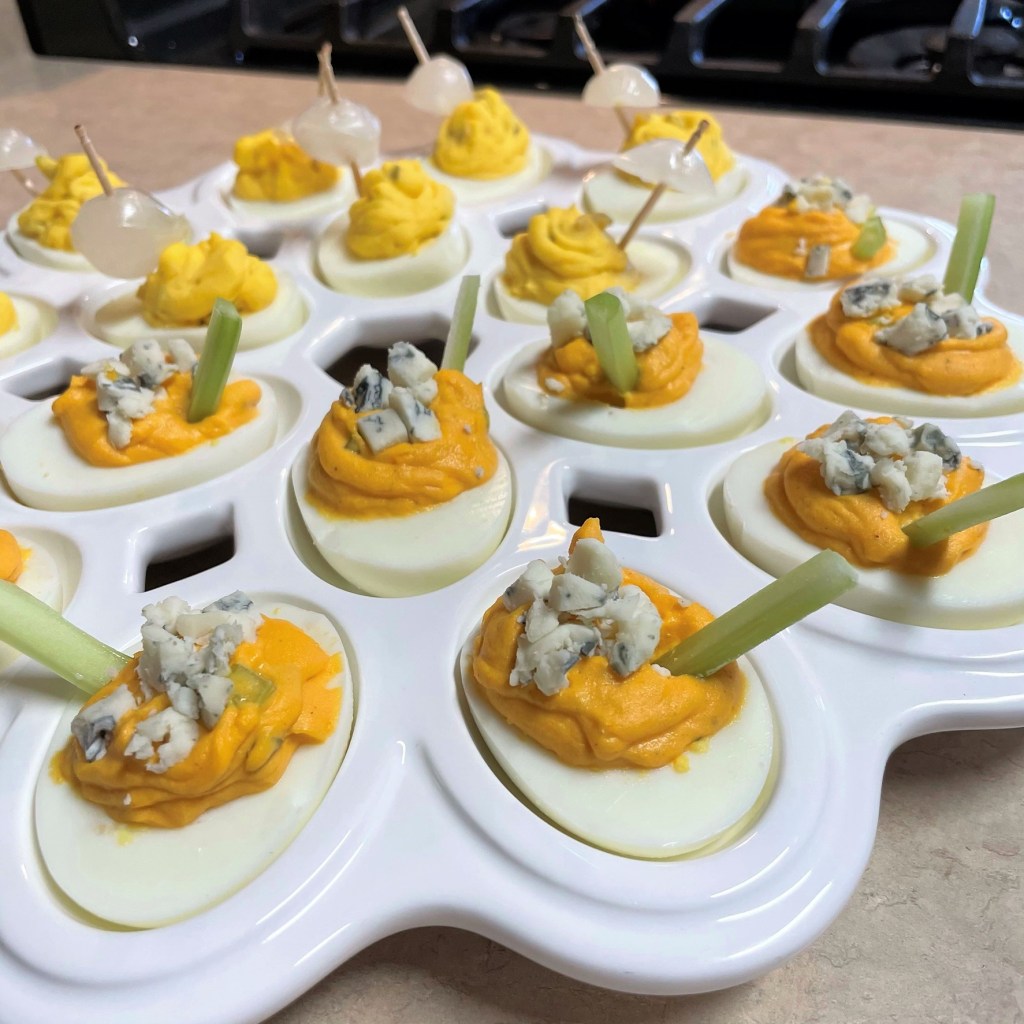
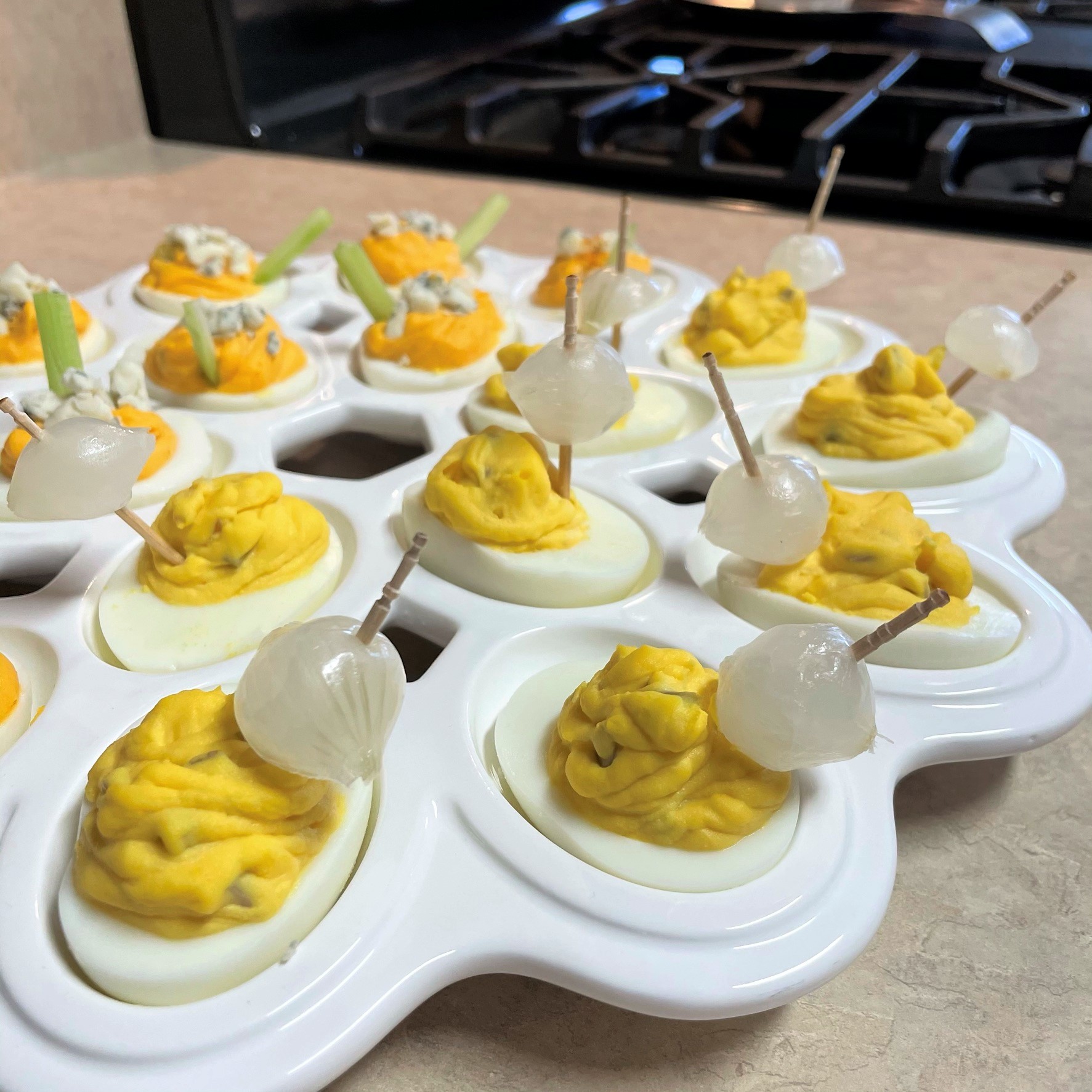
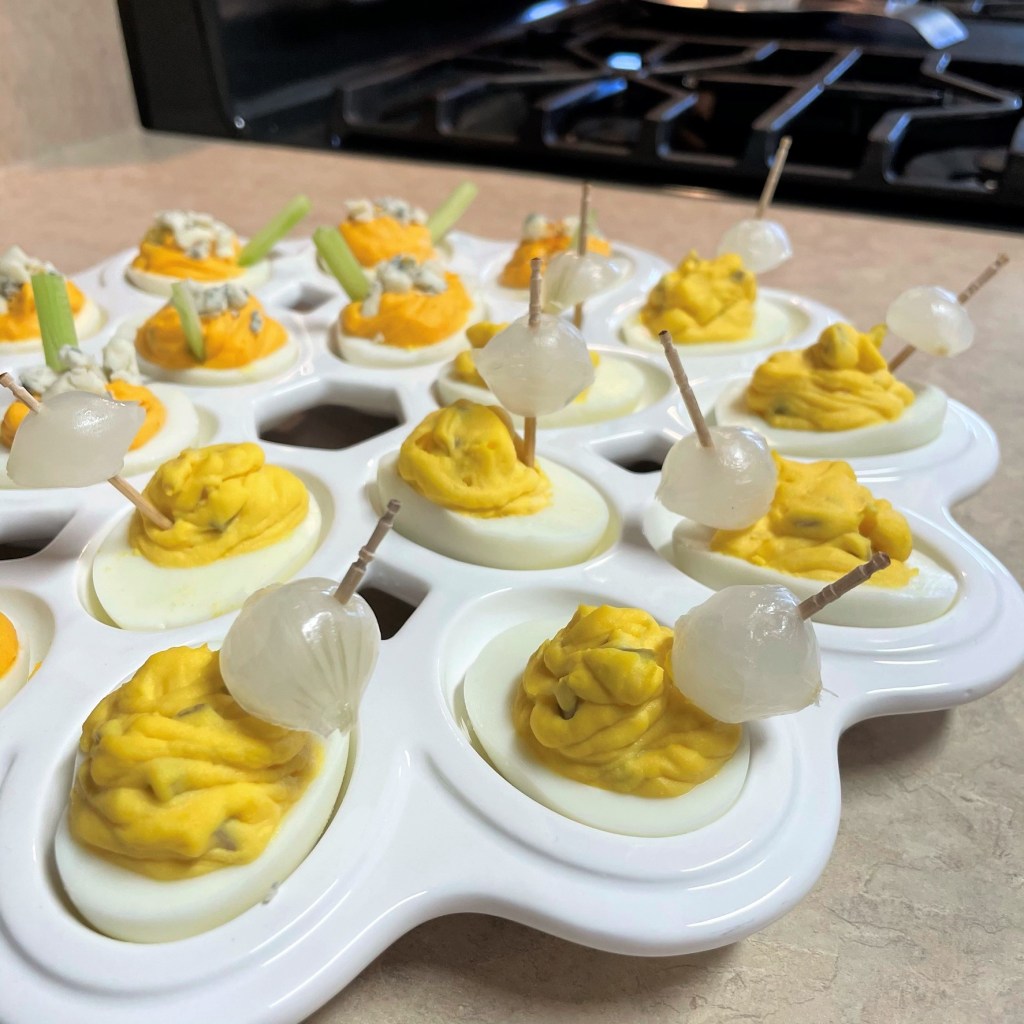
These little hors d’oeuvres have the big, bold flavor of Frank’s RedHot sauce, which is the only acceptable flavor for Buffalo wings, in this Western New York girl’s humble opinion. Little bits of crunchy celery do their part to mimic the experience, and crumbled bleu cheese is the proverbial icing on the cake.

Deviled eggs are one of my favorite “blank canvas” foods, meaning that you can twist up the flavors to suit the occasion. I made these Buffalo-flavored eggs at the same time as the Dirty Martini Deviled Eggs, which is in keeping with my usual practice of putting more than one flavor on the table. The ingredients and instructions below describe my process for splitting the two flavors, but if you’d prefer to make only the Buffalo deviled eggs, no problem—simply double the ingredients as noted below.

Two flavors are better than one!

If you are intrigued with the idea of trying new flavors, check out my post from last spring, Egg-stravaganza. I’ll bet you will find a flavor combination that’s right up your alley!

Ingredients

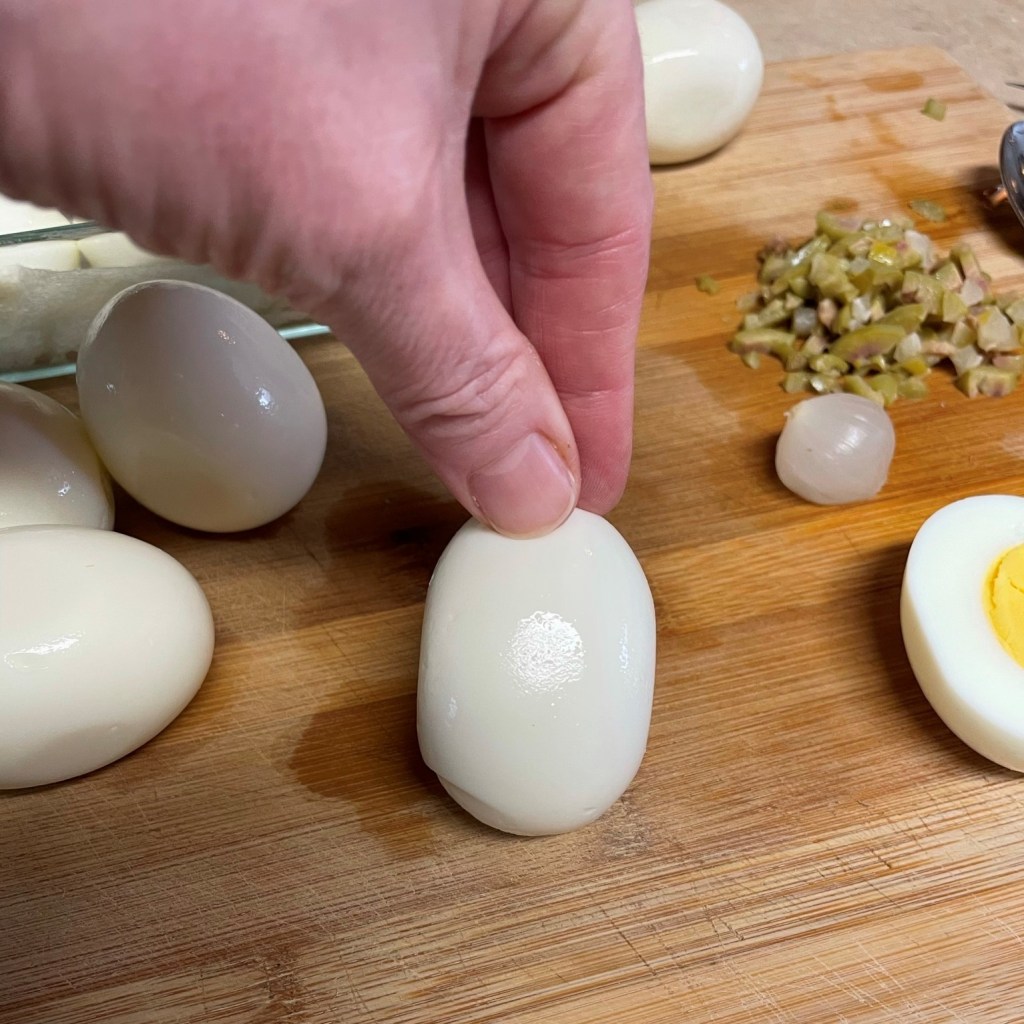
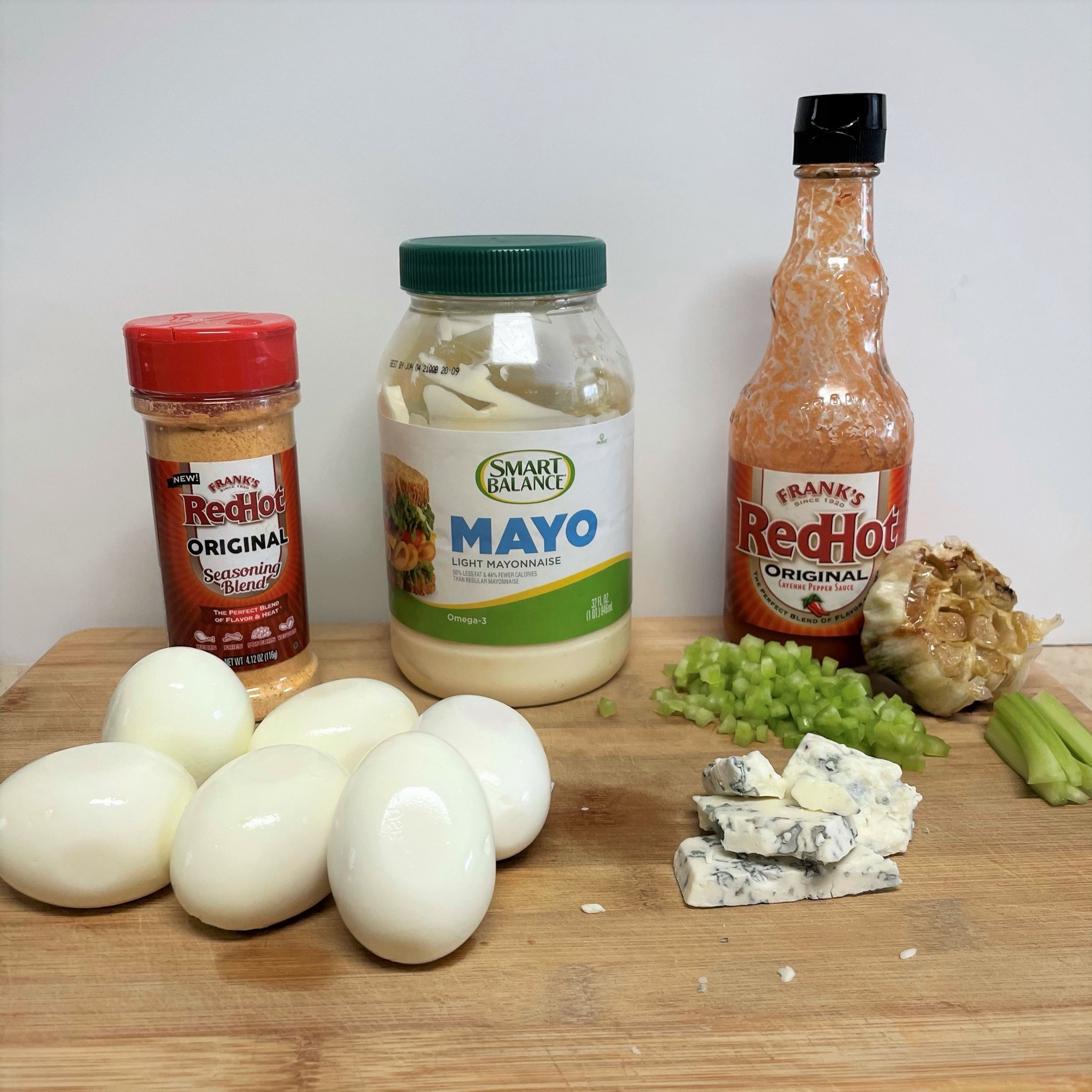
9 large eggs, hard-boiled and peeled

1/4 cup + 1 Tbsp. light mayonnaise


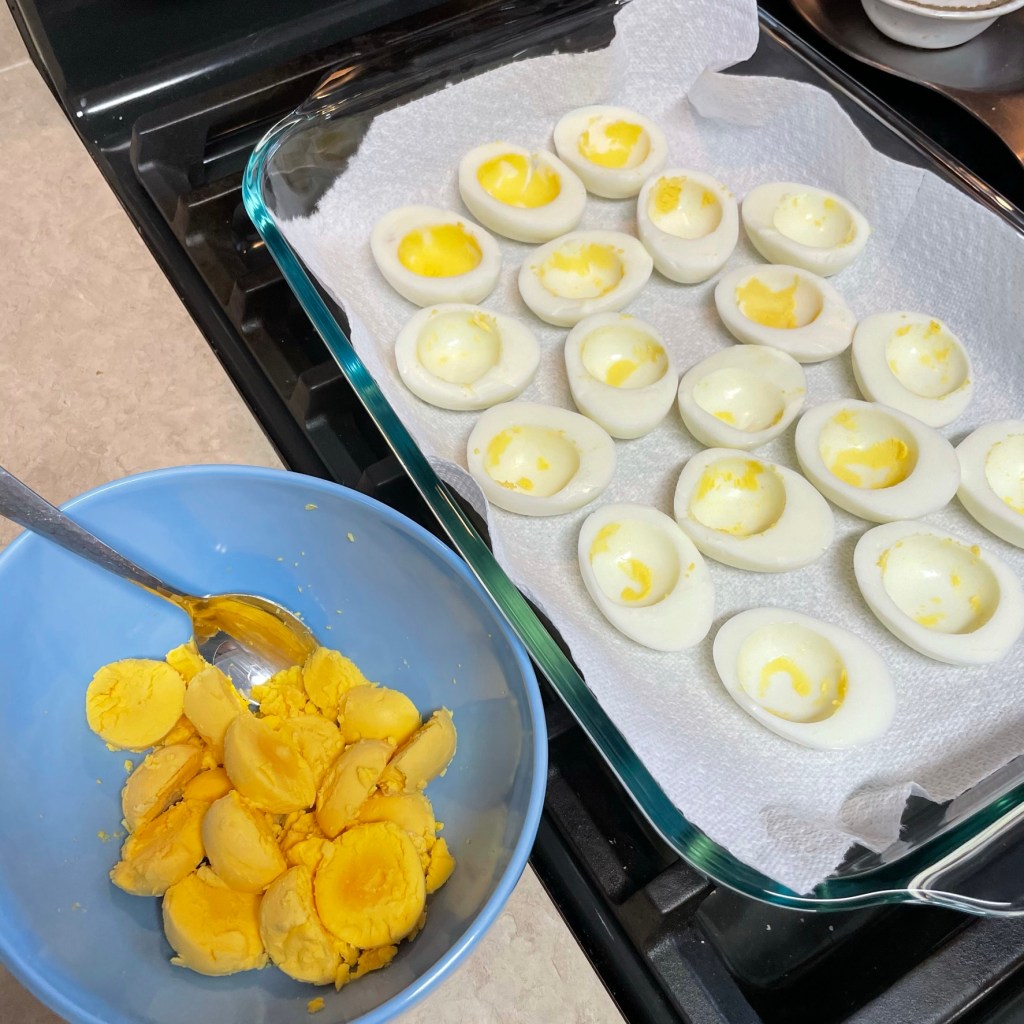
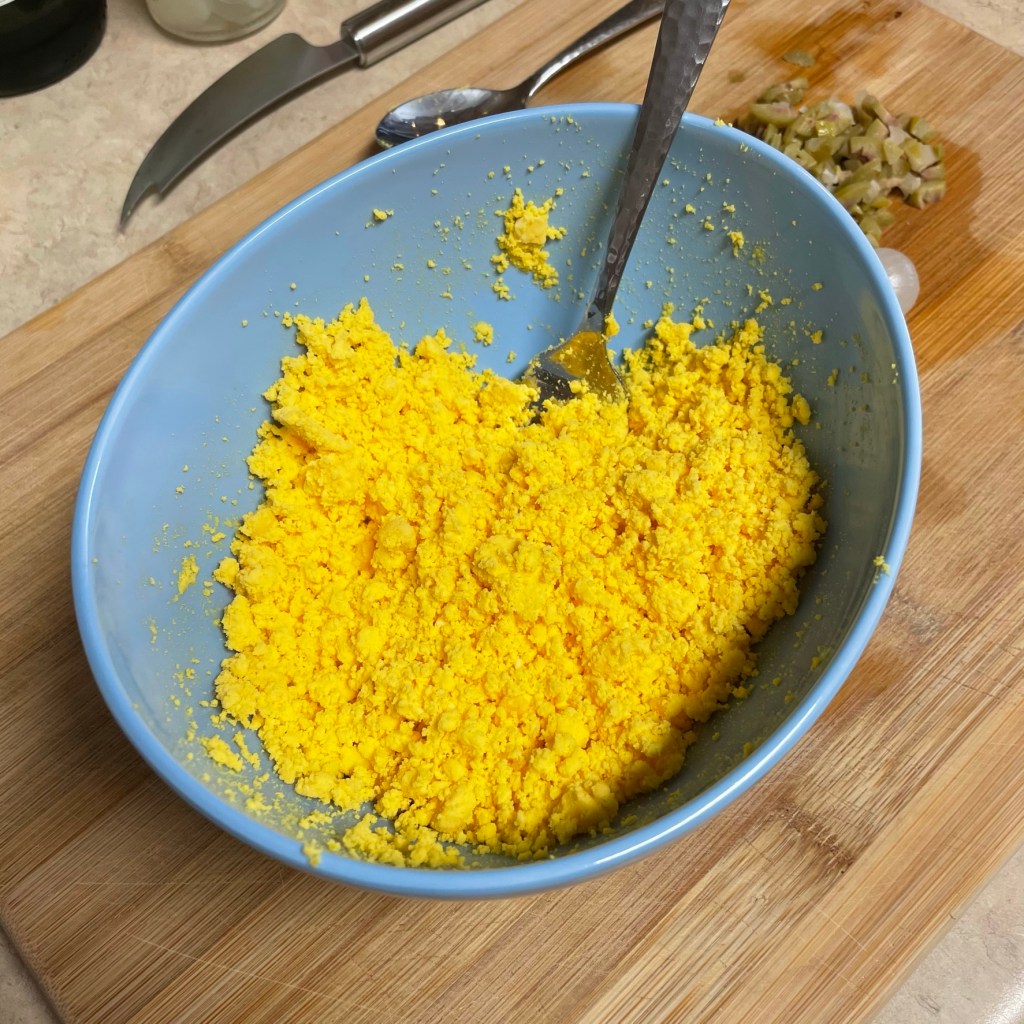
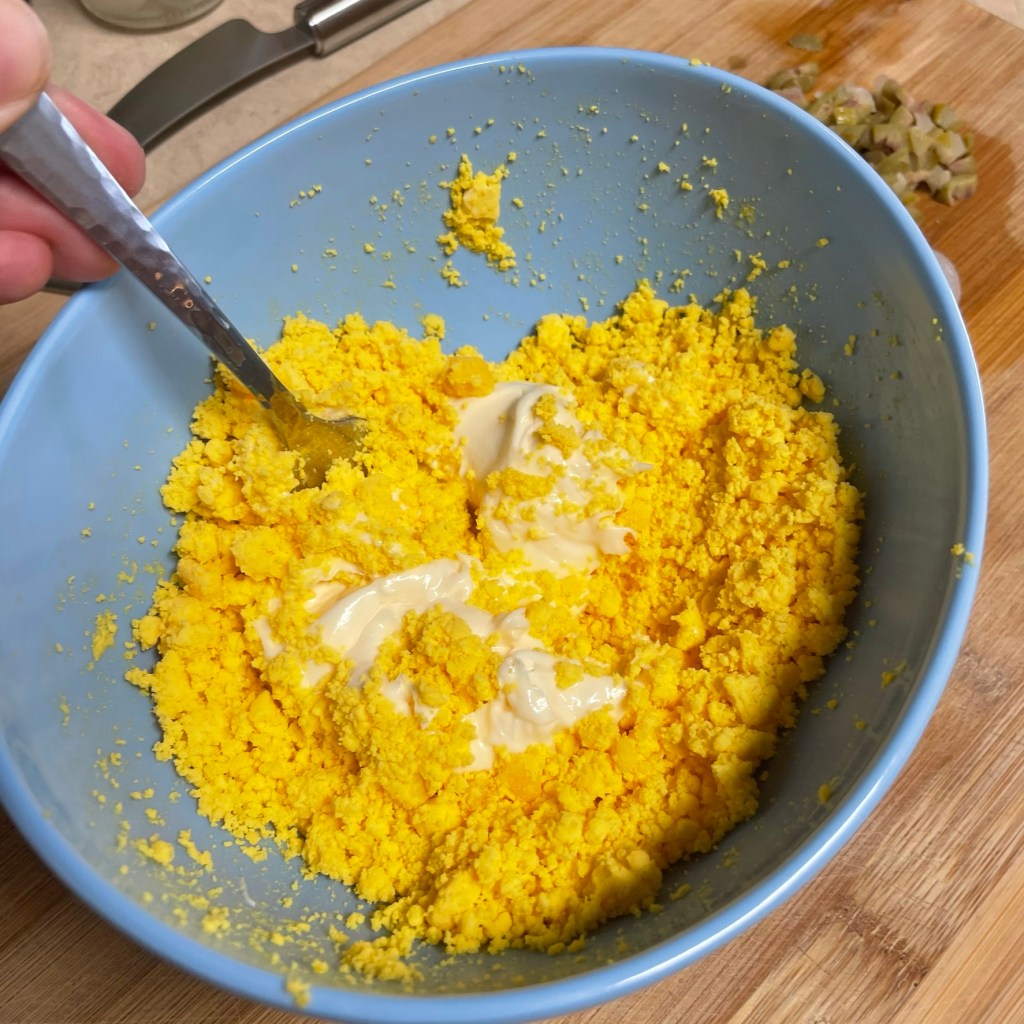
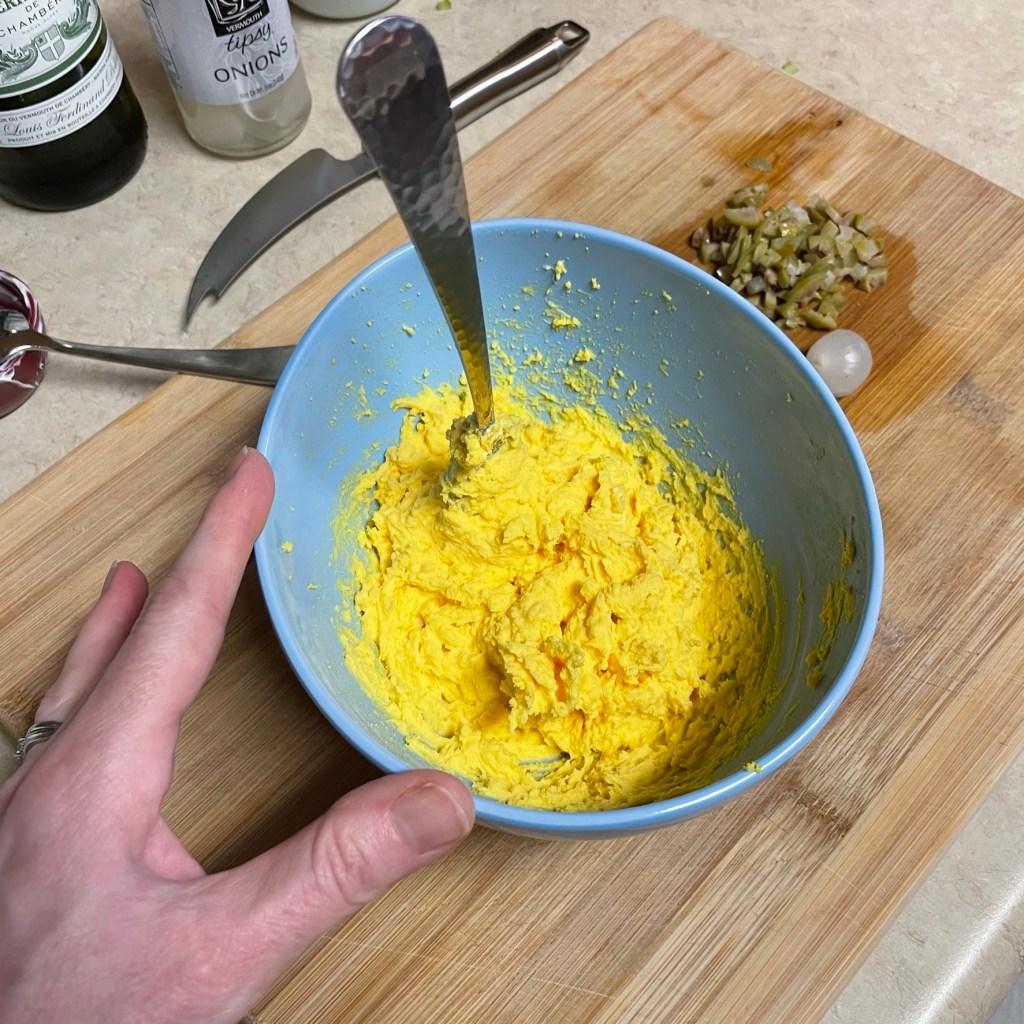
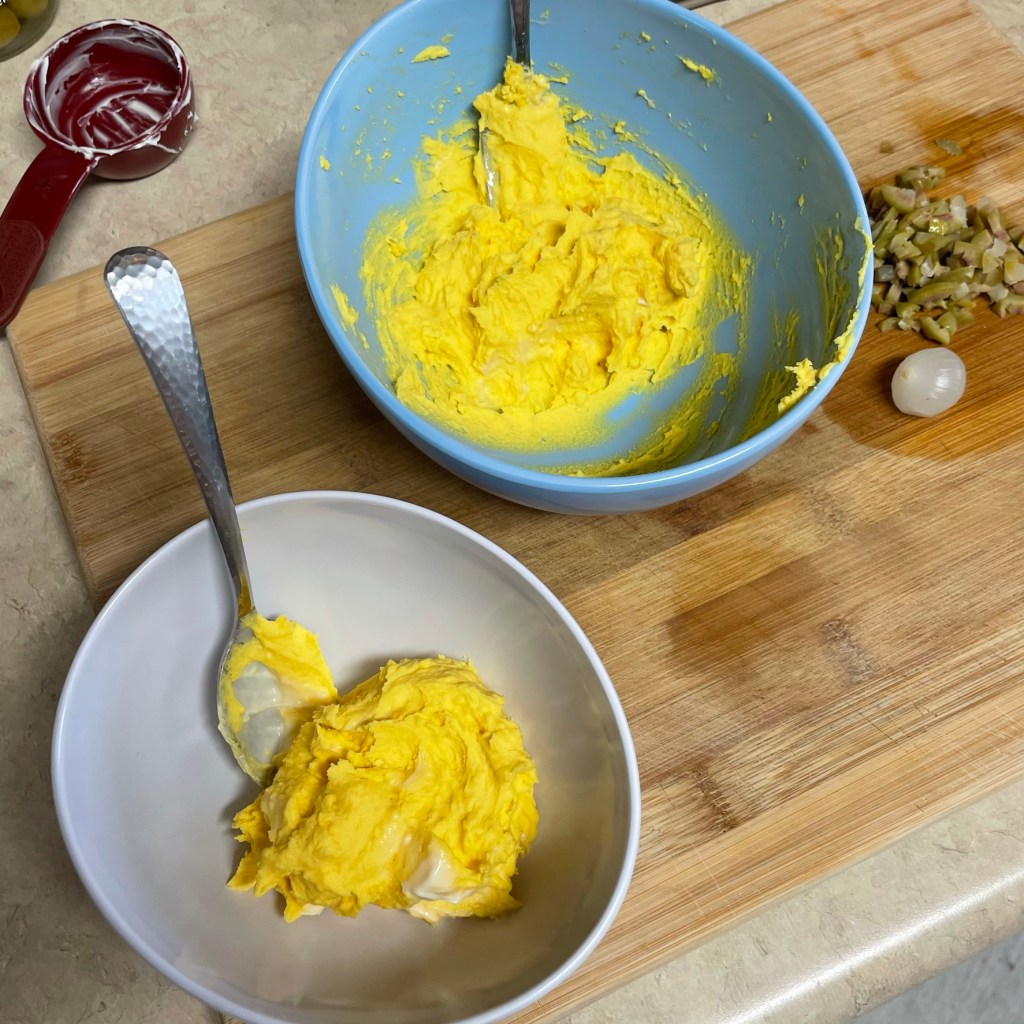
Carefully turn out the egg yolks into a medium-sized bowl. Mash thoroughly with a fork until yolks resemble dry crumbs. Add mayonnaise and blend until smooth. Divide yolk mixture by transferring half to a second bowl (unless you intend to make all one flavor). Follow additional instructions below for making the two kinds of deviled eggs I made this particular day.


For the Buffalo flavor (double if making all nine eggs)

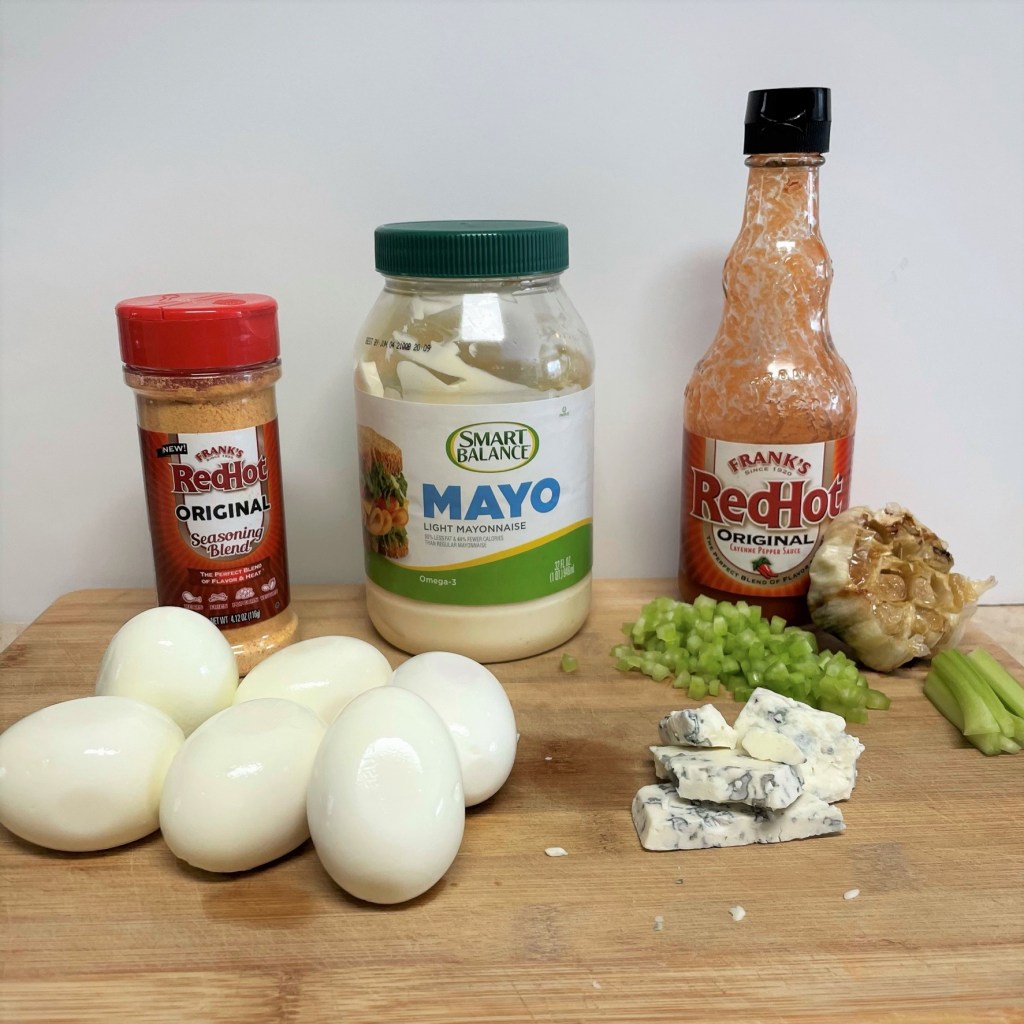
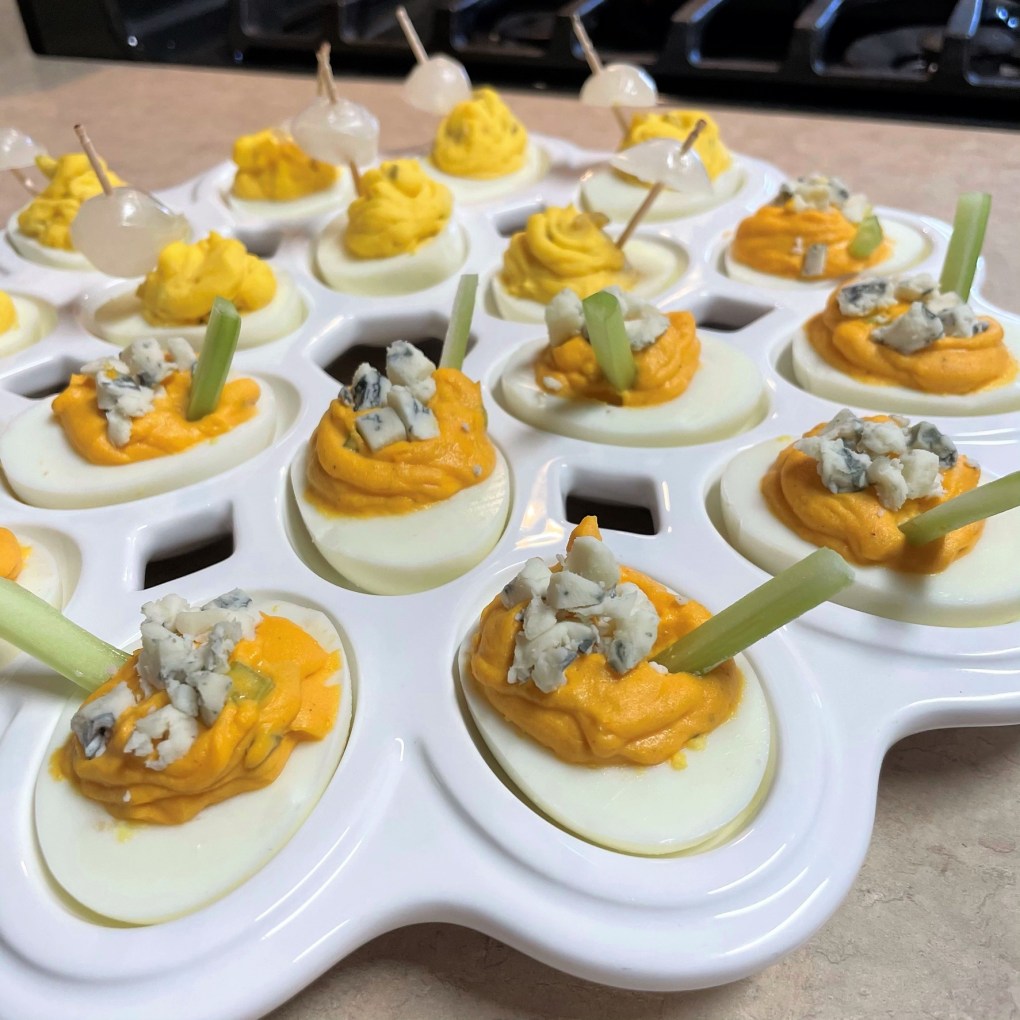
All the flavors of Buffalo wings, ready to take over my deviled eggs.

2 or 3 tsp. Frank’s original RedHot sauce (adjust to your heat preference)

2 cloves roasted garlic or 1/4 tsp. garlic powder

Freshly ground black pepper

1 Tbsp. celery, finely chopped (for filling) + small, thin sticks celery (for garnish)

1 1/2 Tbsp. finely crumbled bleu cheese

Frank’s RedHot dry seasoning, to sprinkle on at serving time (or substitute paprika)


Instructions for Buffalo eggs

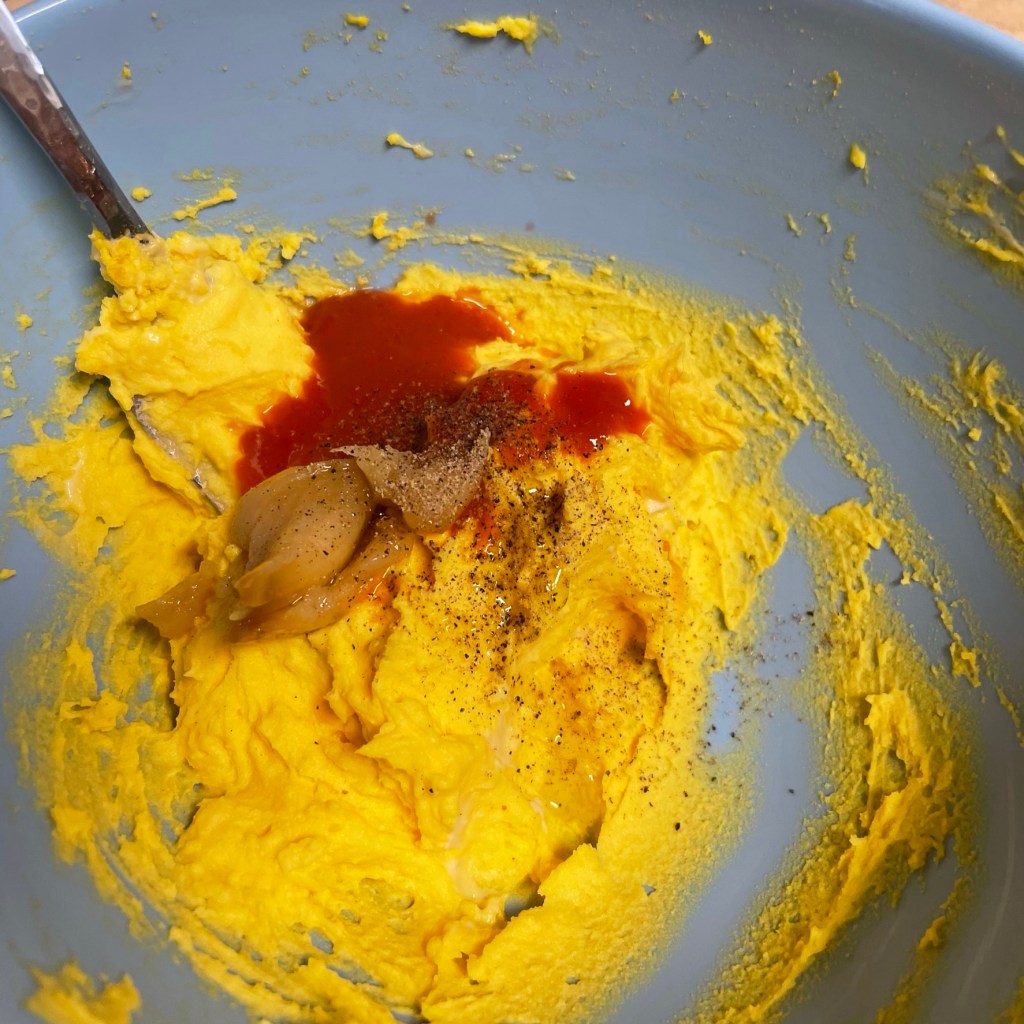
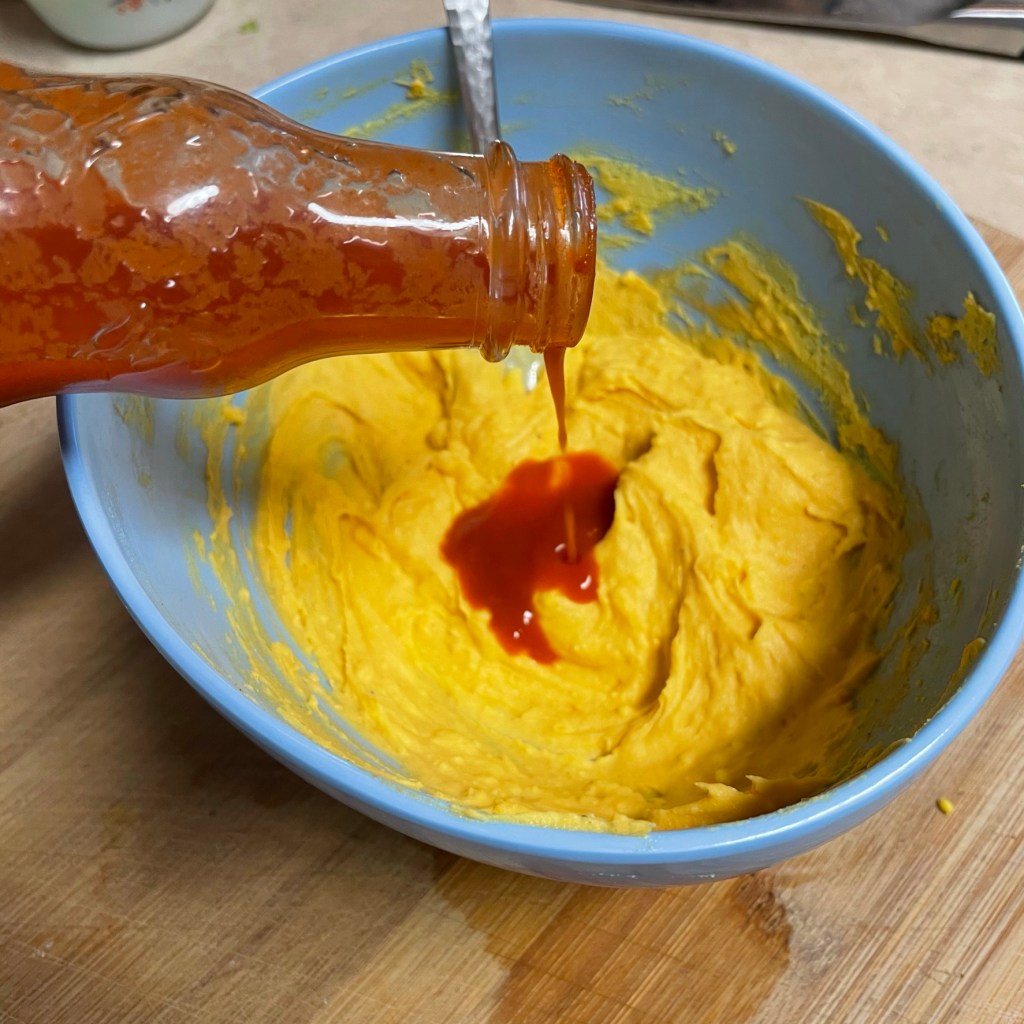
  1. Add RedHot sauce, roasted garlic and black pepper to one bowl of the yolk mixture. Blend smooth with a fork or spoon. Fold in chopped celery bits.
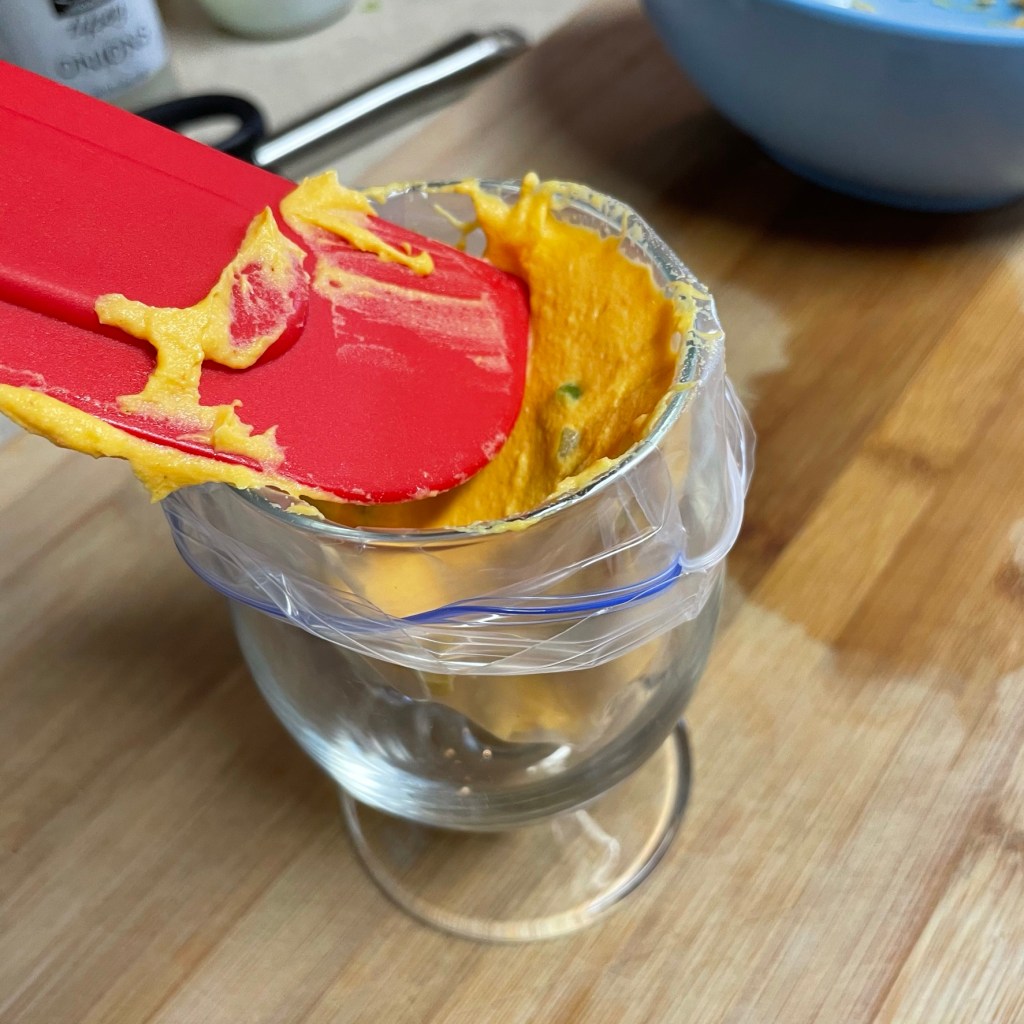
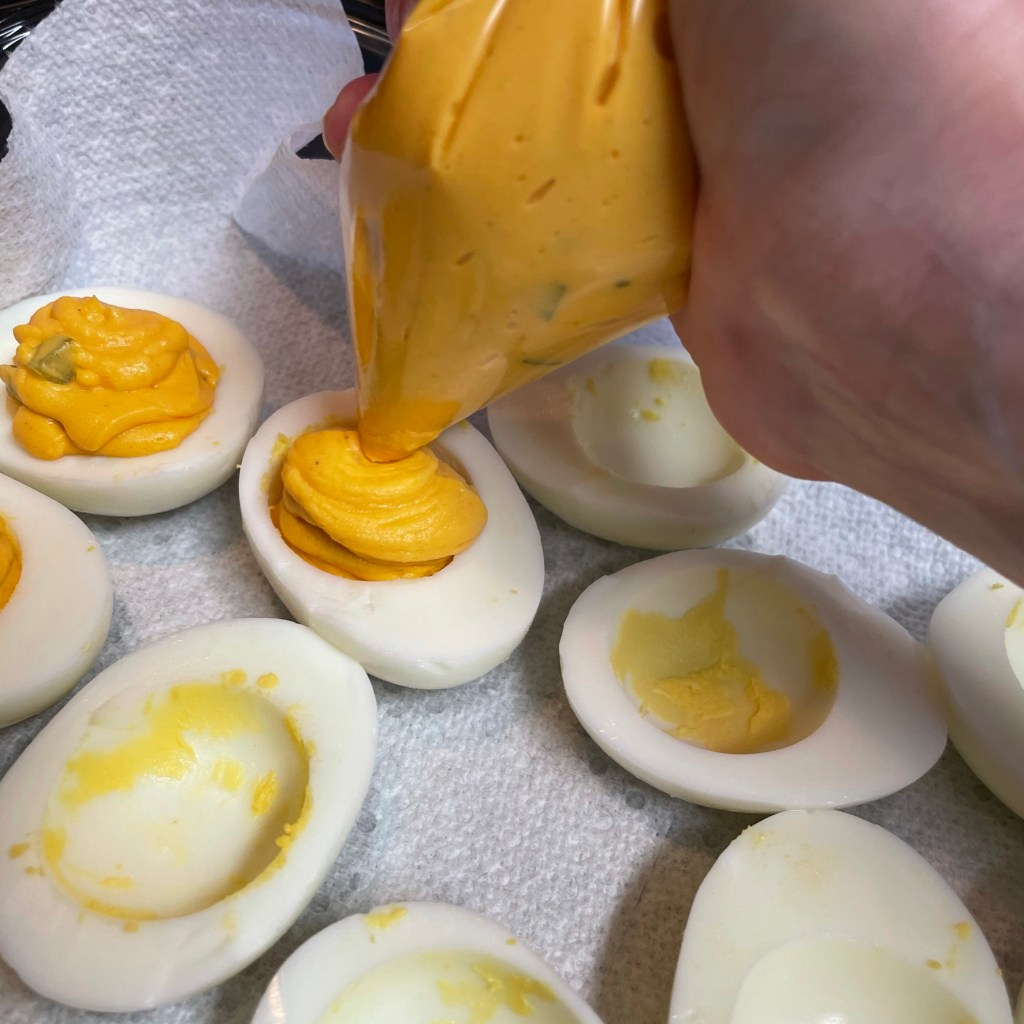
  2. Place a small zip-top bag into a glass, and use a spatula to scoop the filling mixture into it. Seal up the bag, snip one corner to create a makeshift piping bag, and gently fill half of egg whites. Garnish top of Buffalo eggs with crumbled bleu cheese and mini celery sticks.
For the Dirty Martini flavor (double if making all nine eggs)

No vodka or gin in my dirty martini deviled eggs, but the vermouth and garnishes add all the right flavors.
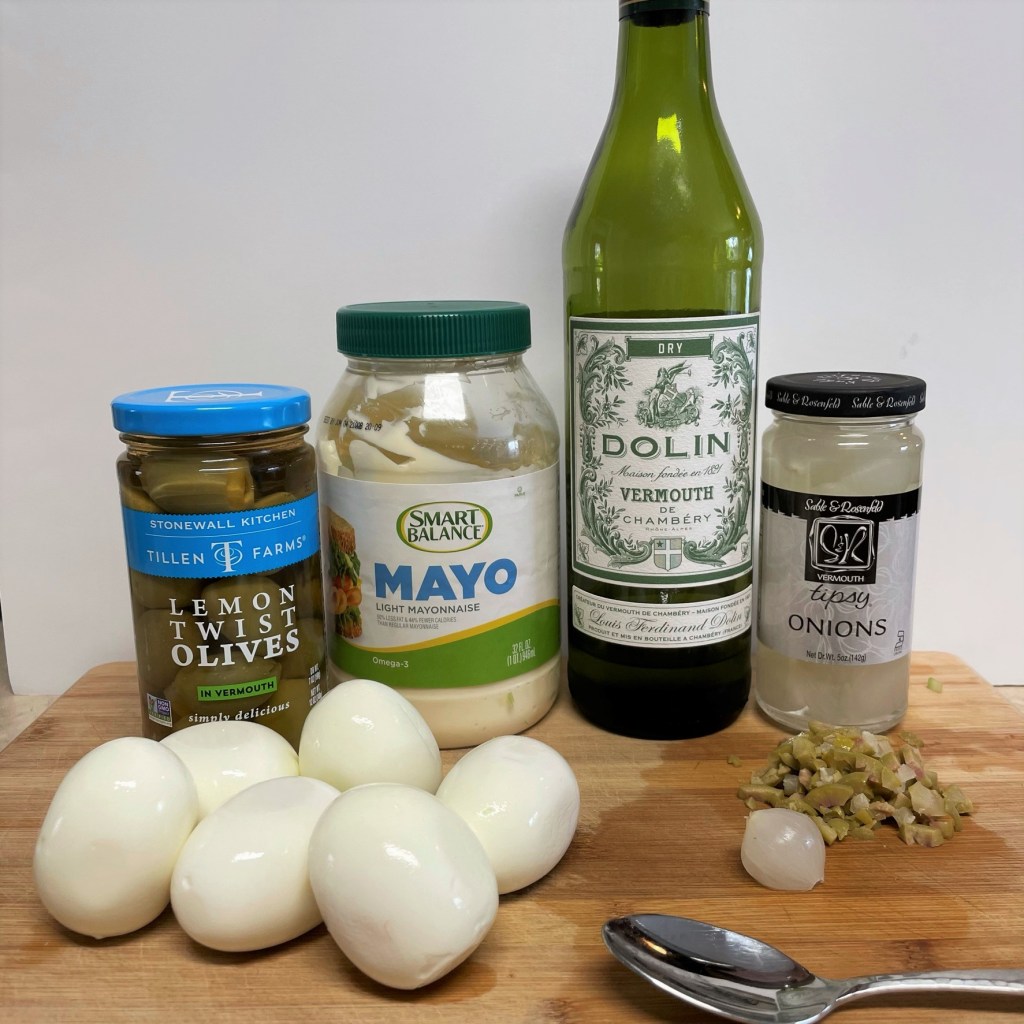
1 Tbsp. dry vermouth (or use additional olive brine)

2 cocktail olives, finely chopped

1 or 2 cocktail onions, finely chopped (for filling)

1 tsp. olive brine

4 cocktail onions, halved (for garnish)


Instructions for Dirty Martini eggs

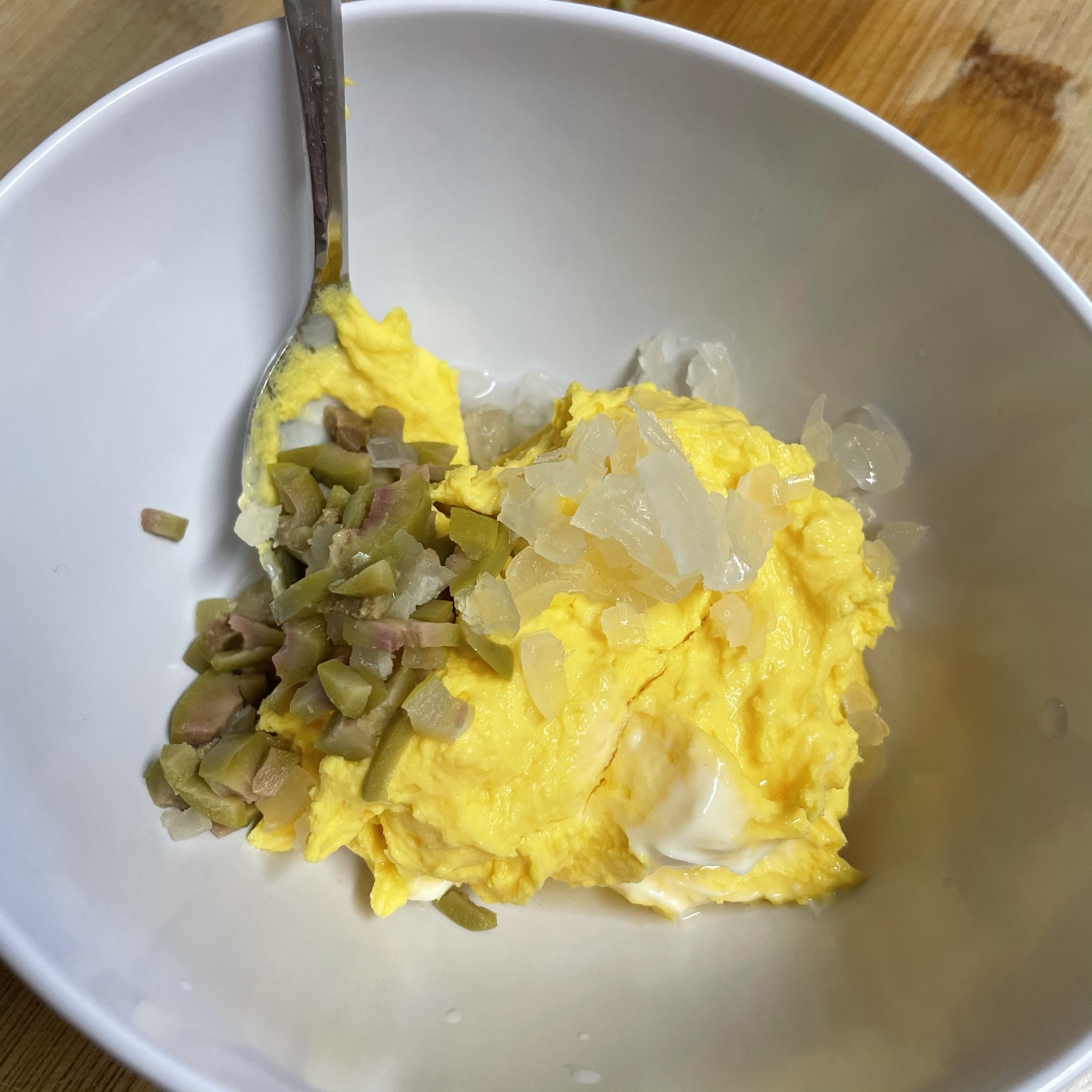
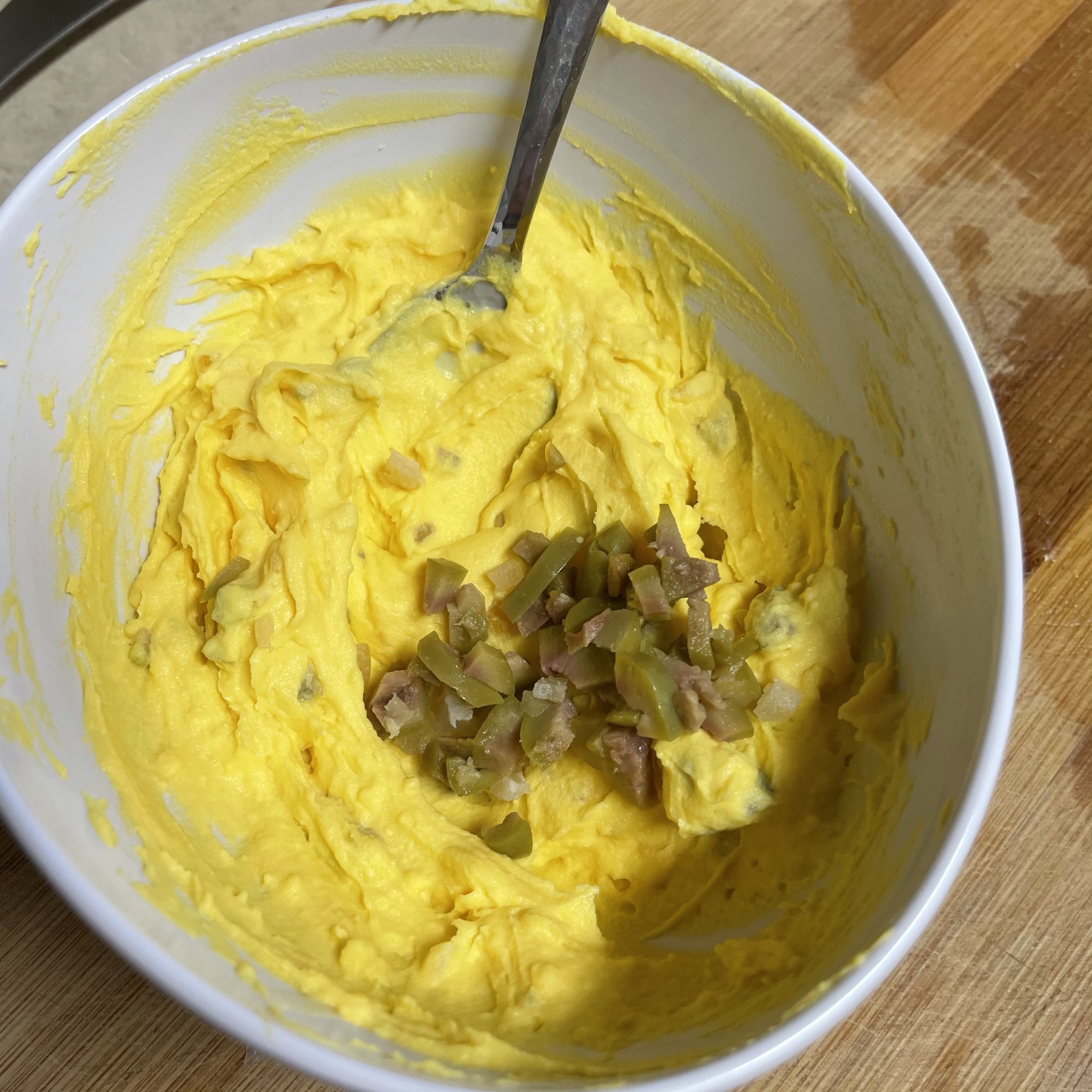
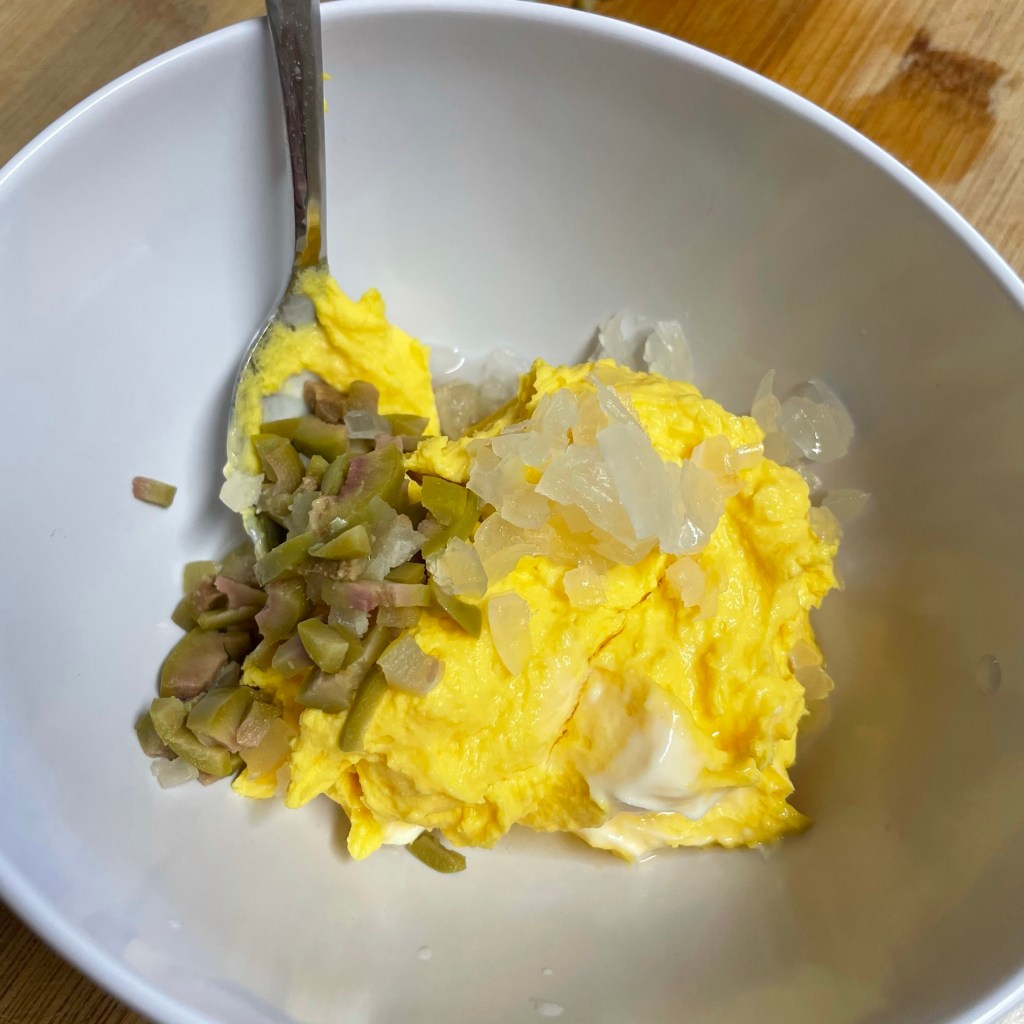
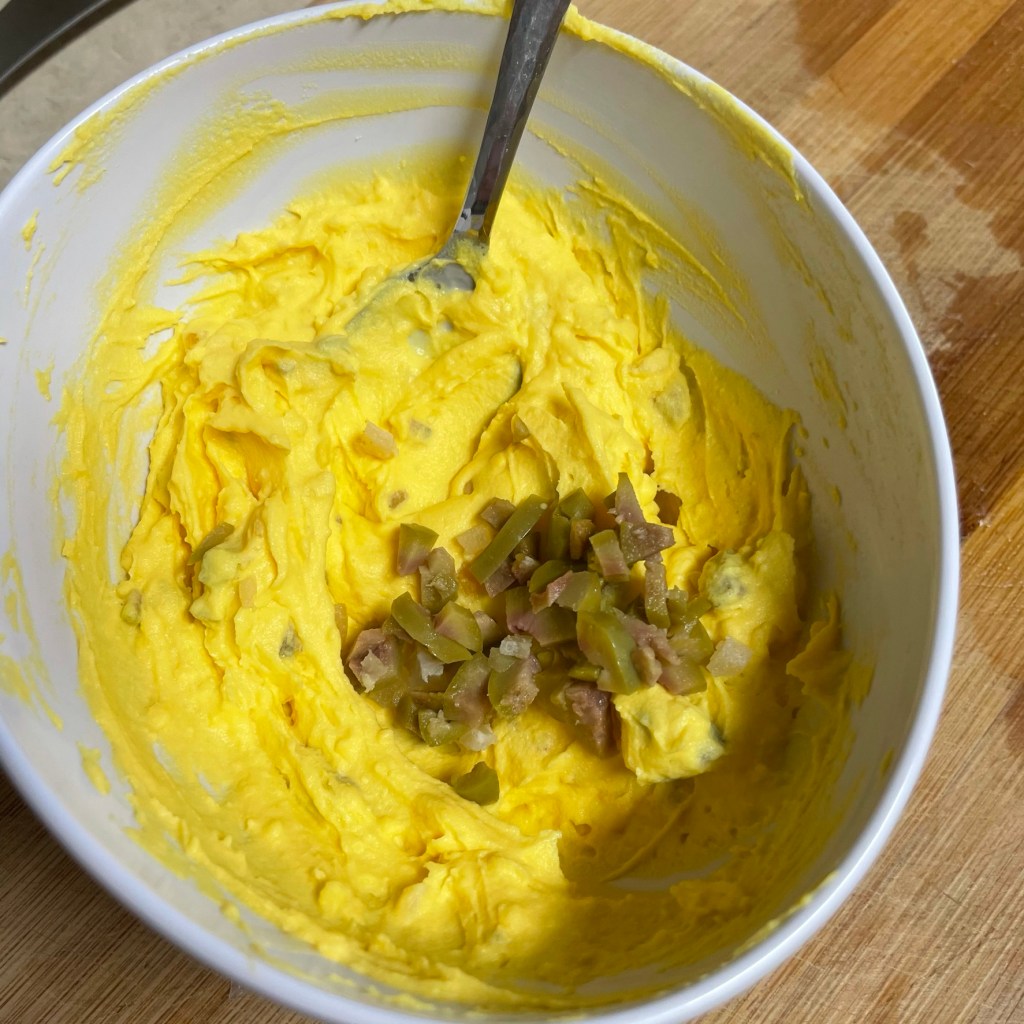
  1. Add dry vermouth, chopped olives, onion and brine to yolk mixture. Blend smooth with a fork or spoon.
  2. Place a small zip-top bag into a glass, and use a spatula to scoop the filling mixture into it. Seal up the bag, snip one corner to create a makeshift piping bag, and gently fill half of egg whites. Garnish with cocktail onion halves, skewered on a toothpick if you wish, to mimic the appearance of a martini.

Want to try these deviled egg recipes?


At serving time, I sprinkled the Buffalo eggs with the Frank’s dry seasoning. These deviled eggs made a fine appearance at our Super Bowl party for two! 🙂


Dirty Martini Deviled Eggs

Every Super Bowl party my husband, Les, and I have hosted together has been a little different in terms of food offerings, but you can count on two things—his incredible, thick and meaty chili (one day I promise I’ll squeeze the recipe out of him) and at least a couple of flavors of deviled eggs. This is one of those foods that everybody (except the vegans) goes a little nuts over, and I love making them because the deviled egg is what I call a “blank canvas” food. If you can dream up a flavor, a deviled egg can probably carry it.
When I shared my Egg-stravaganza post last spring, I made mention of my “Bloody Mary” deviled eggs, filled with all the signature savory flavors you’d find in the ubiquitous Sunday brunch cocktail. Today, I’m presenting a non-spicy counterpart in this Dirty Martini version of deviled eggs, which includes the tangy brininess of lemon-stuffed cocktail olives, pickled cocktail onions and a splash of dry white vermouth. This new riff on a classic hors d’oeuvres will undoubtedly make a repeat appearance on our table at some point in the future, and it’s a fun way to enjoy one of my favorite cocktail combinations, too.

Two flavors are better than one!

I made these tasty bites at the same time as my Buffalo Deviled Eggs with Bleu Cheese, and the ingredients and instructions below describe my process for splitting the two flavors. If you’d prefer to make only the dirty martini deviled eggs, no problem—simply double the ingredients as noted below.

Cheers!


Ingredients for base filling

9 large eggs, hard-boiled and peeled

1/4 cup + 1 Tbsp. light mayonnaise


Carefully turn out the egg yolks into a medium-sized bowl. Mash thoroughly with a fork until yolks resemble dry crumbs. Add mayonnaise and blend until smooth. Divide yolk mixture by transferring half to a second bowl (unless you intend to make all one flavor). Follow additional instructions below for making the two kinds of deviled eggs I made this particular day.


For the Dirty Martini flavor (double ingredients if making all nine eggs)

No vodka or gin in my dirty martini deviled eggs, but the vermouth and garnishes add all the right flavors.

1 Tbsp. dry vermouth (or use additional olive brine)

2 cocktail olives, finely chopped

1 cocktail onion, finely chopped

1 tsp. olive brine

4 cocktail onions, halved (for garnish)


Instructions for Dirty Martini eggs


  1. Add dry vermouth, chopped olives, onion and brine to yolk mixture. Blend smooth with a form or spoon.
  2. Place a small zip-top bag into a glass, and use a spatula to scoop the filling mixture into it. Seal up the bag, snip one corner to create a makeshift piping bag, and gently fill half of egg whites (See slides for Buffalo deviled eggs for a visual on this technique). Garnish with cocktail onion halves, skewered on a toothpick if you wish, to mimic the appearance of a martini.

For the Buffalo flavor

All the flavors of Buffalo wings, ready to take over my deviled eggs.

2 or 3 tsp. Frank’s original RedHot sauce (adjust to your heat preference)

2 cloves roasted garlic or 1/4 tsp. garlic powder

Freshly ground black pepper

1 Tbsp. celery, finely chopped (for filling) + small, thin sticks celery (for garnish)

1 1/2 Tbsp. finely crumbled bleu cheese

Frank’s RedHot dry seasoning, to sprinkle on at serving (or substitute paprika)


Instructions for Buffalo deviled eggs


  1. Add RedHot sauce, roasted garlic and black pepper to one bowl of the yolk mixture. Blend smooth with a fork or spoon. Fold in chopped celery bits.
  2. Place a small zip-top bag into a glass, and use a spatula to scoop the filling mixture into it. Seal up the bag, snip one corner to create a makeshift piping bag, and gently fill half of egg whites. Garnish top of Buffalo eggs with crumbled bleu cheese and mini celery sticks.

Want to make these deviled eggs?


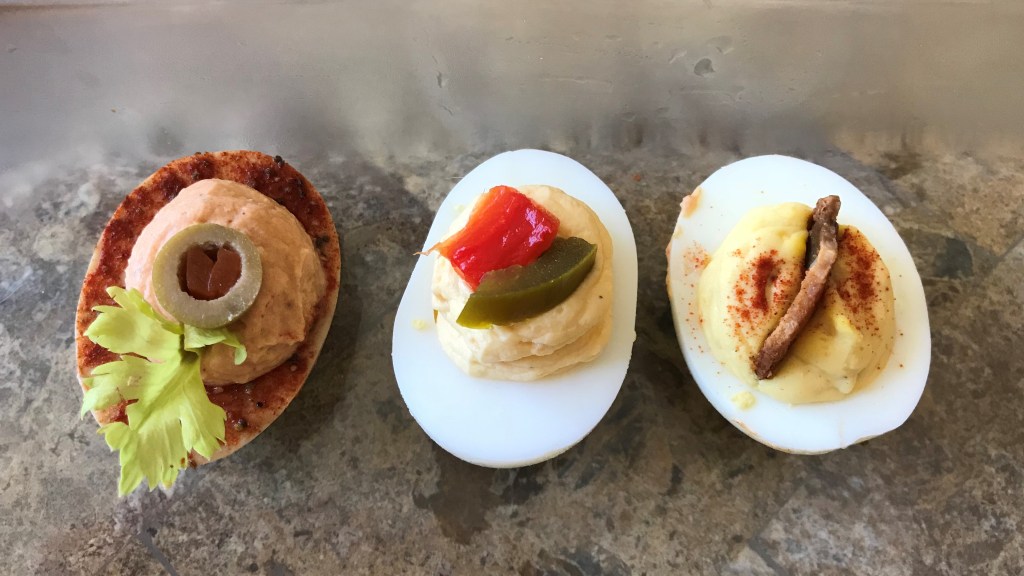
If you like the fun idea of switching up flavors on your next batch of deviled eggs, have a look at my previous post for Egg-Stravaganza, and see how I made these fun varieties!

(L to R) Bloody Mary, jalapeno pimiento cheese, bacon, egg and cheese.

Dark Chocolate Peanut Butter Pretzel Brownies

Pardon me for a moment, as I ponder the best part of Super Bowl LV—I don’t mean the game, though I’m sure that Tampa Bay fans everywhere are still celebrating and bragging on social media about the blowout win. I’m not talking about the fun party, because as much as I love chilling at home with my husband (and making great food together), we were definitely feeling the void and missing our usual houseful of friends and neighbors. Nope, I am calling out the best part. For me, it was these brownies.

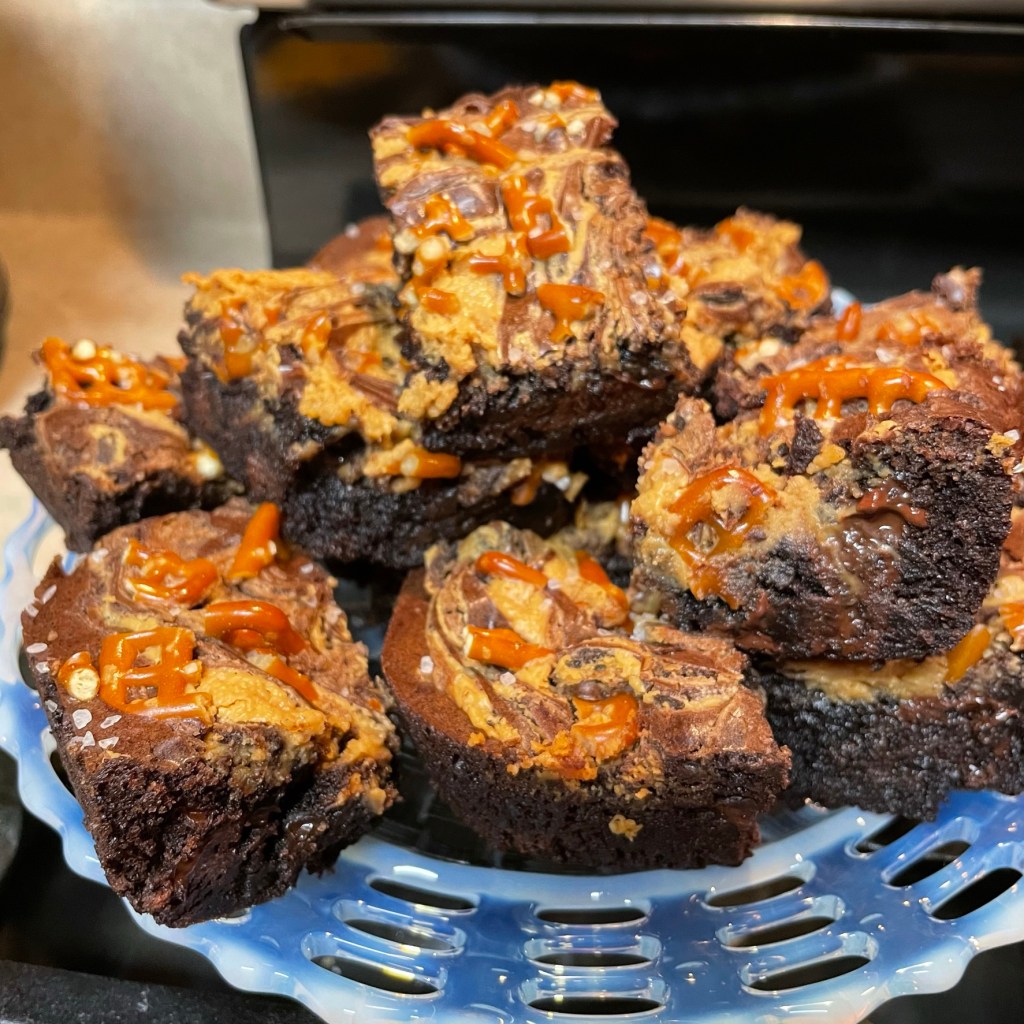
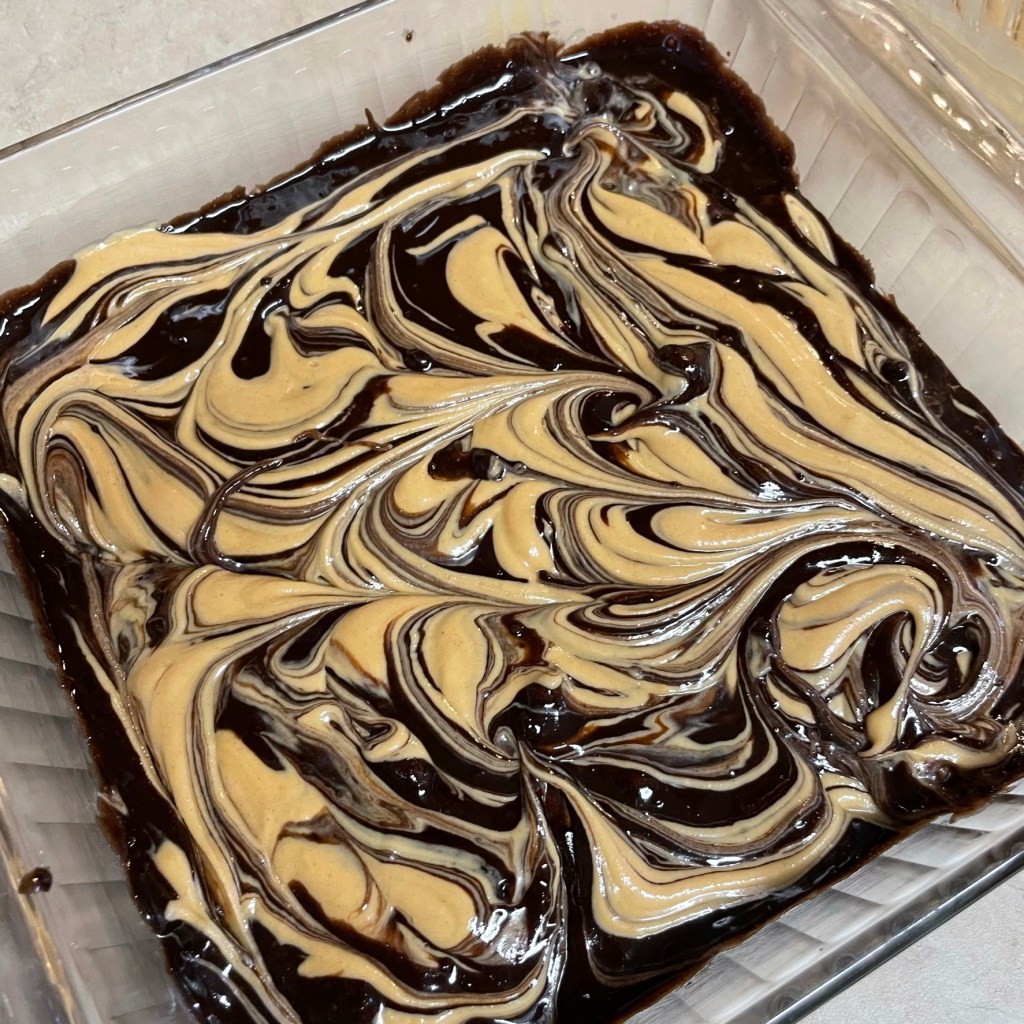
With a winning combination of all the right flavors, these brownies deserve their own trophy.

I’m not trying to ruin anyone’s diet or anything; just hear me out for a sec on these brownies. Soft and fudgy, peanut butter swirly, crunchy pretzel salty, holy moly, yum. They smelled fantastic while baking, and I don’t feel one bit ashamed for taking a major shortcut—a box brownie mix.

There, I said it. Though I love my time in the kitchen, especially creating fun, new twists on foods everybody loves (pizza, for instance), I don’t make desserts very often because I don’t have much of a sweet tooth. That’s probably what attracted me to these brownies in the first place—they are not only sweet, but also nutty and salty and crunchy. I’ve adapted these from a scratch recipe by Valerie Bertinelli, the actress who now has her own cooking show on Food Network. I considered (for about a second) making them from scratch myself for our quiet, at-home Super Bowl festivities, but the reality is that Ghirardelli does it way better than I do. It was the peanut butter swirl and salty pretzel topping that won me over, anyway.

I gleaned a few bits of wisdom from the reviews for Valerie’s scratch-made recipe, such as using a smaller pan and a lesser amount of the peanut butter swirl mixture, and then I settled in to enjoy a shortcut version of what so many fellow bakers had to say—”best brownies ever!”


Ingredients

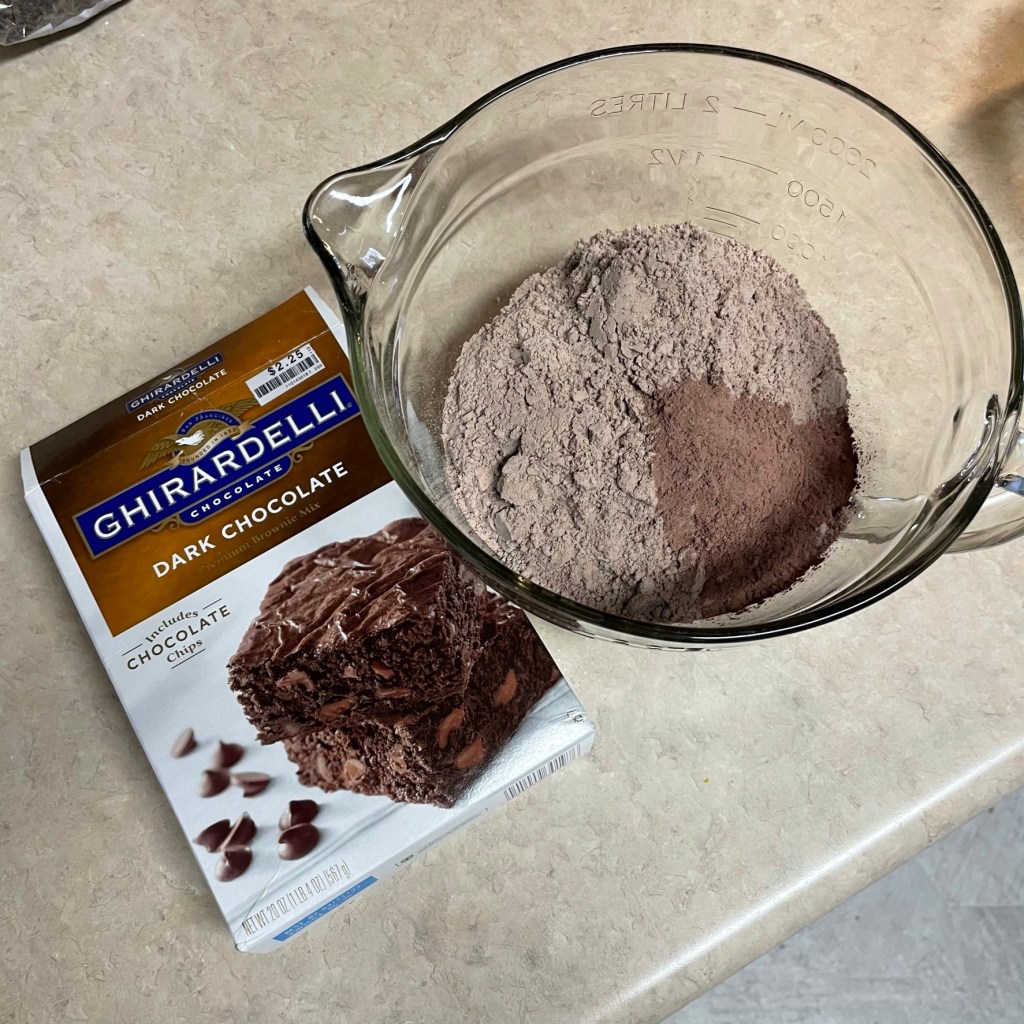
1 box Ghirardelli brand “dark chocolate” brownies, + ingredients to make them, which included an egg, 1/2 cup oil and 1/4 cup water.

1 Tbsp. dark cocoa powder

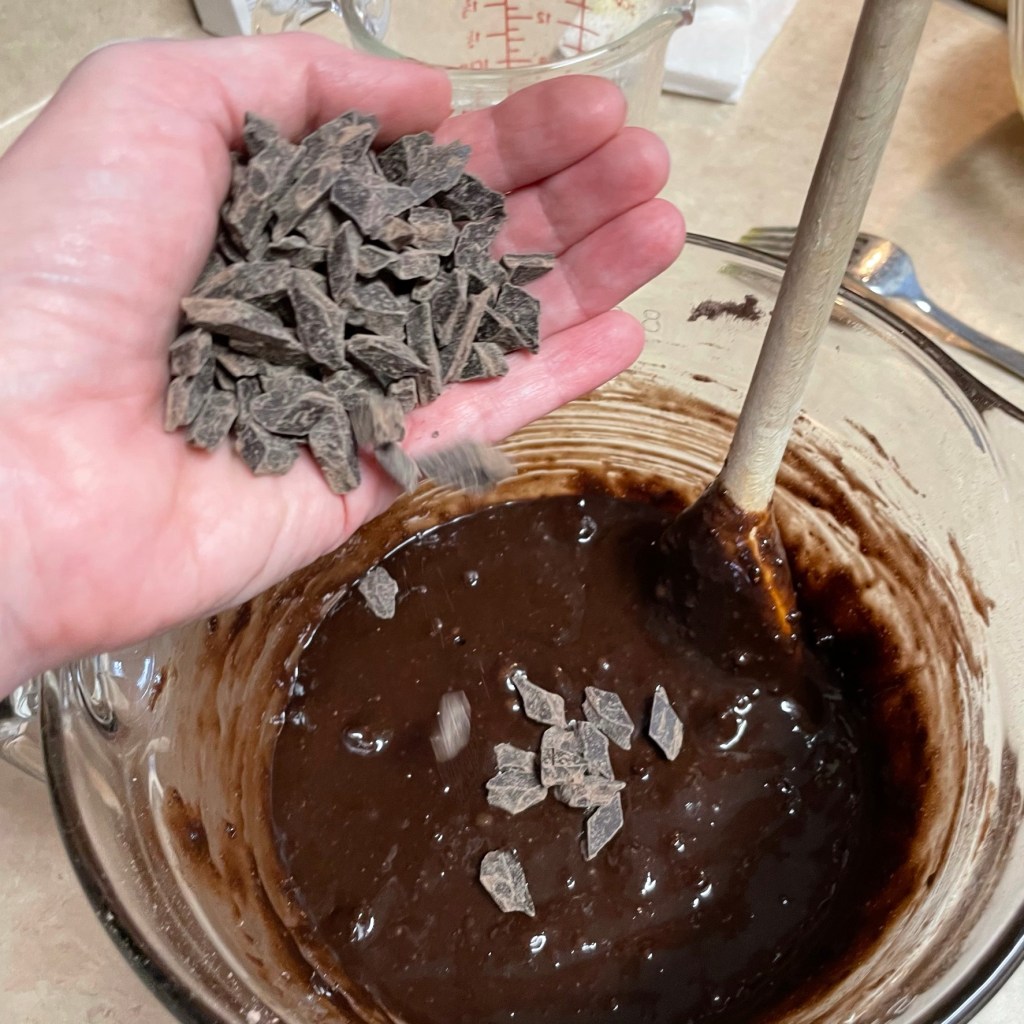
1/3 cup semi-sweet chocolate chips or chunks

1/2 cup smooth and creamy peanut butter (not the “natural” variety)

1/3 cup confectioner’s sugar, sifted to remove lumps

3 Tbsp. salted butter, melted

A handful of salted mini pretzels, broken by hand

An extra sprinkle of coarse sea salt, if you like a bit more of this contrasting flavor


Instructions

The photos tell the story, but if you keep scrolling, you’ll find a downloadable PDF you can save and print for your recipe files. Enjoy!


  1. Preheat oven to 325° F, with rack in center of oven. Butter a glass 8 x 8” baking dish.
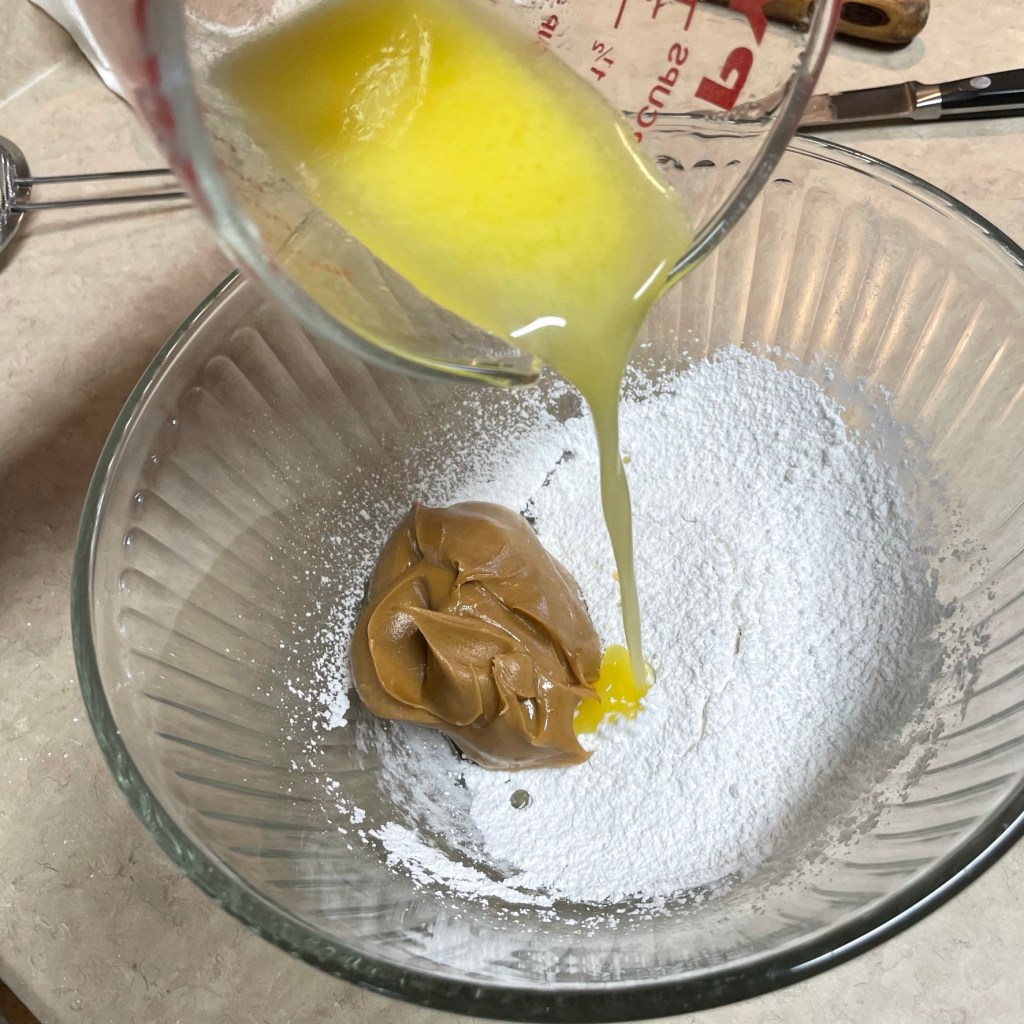
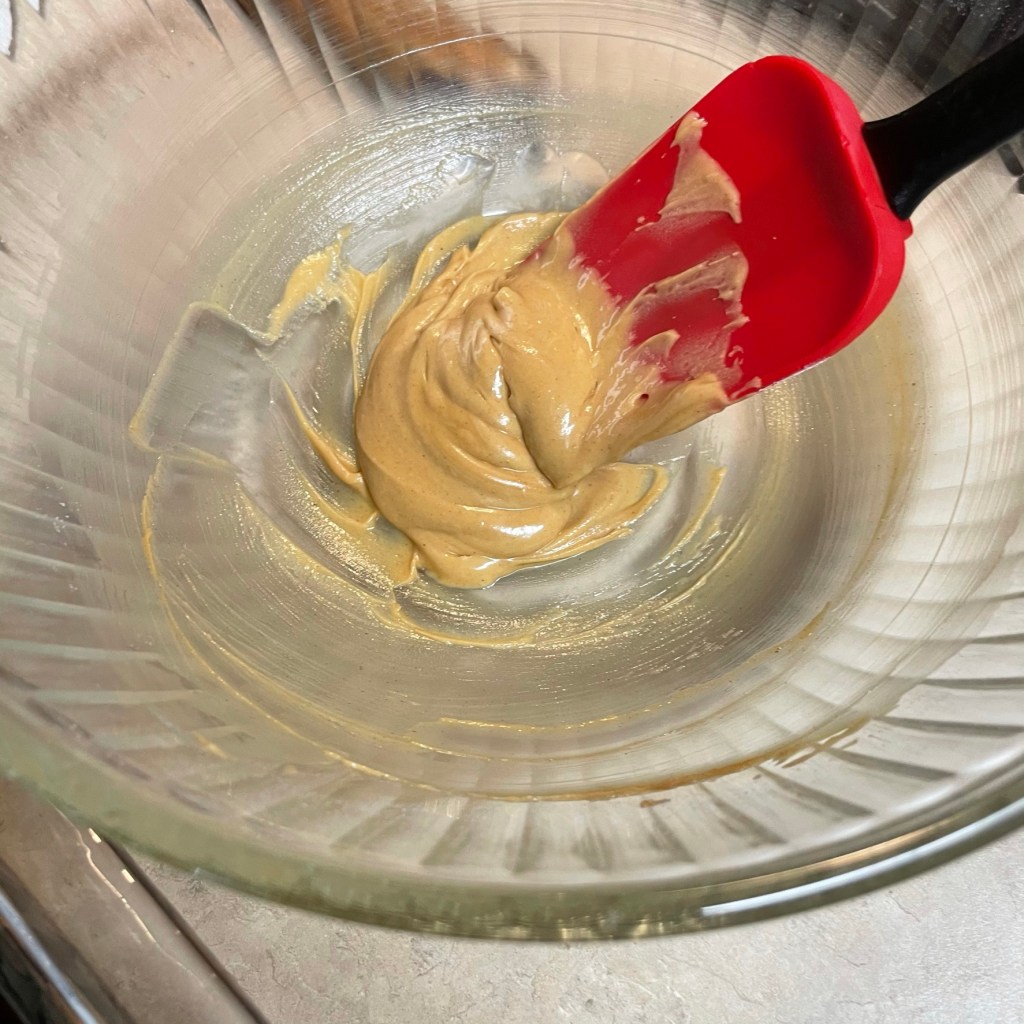
  2. In a medium mixing bowl, combine the peanut butter, confectioner’s sugar and melted butter. I used my handheld mixer for this step, but Valerie mixed it up just fine with a spoon, so do what you like there. Set this mixture aside while you prepare the brownie base.
  3. Add dark cocoa to the brownie mix. Add the egg, oil and water, blending together until all dry ingredients are moistened. Fold in the extra chocolate pieces. Spread batter evenly into baking dish.
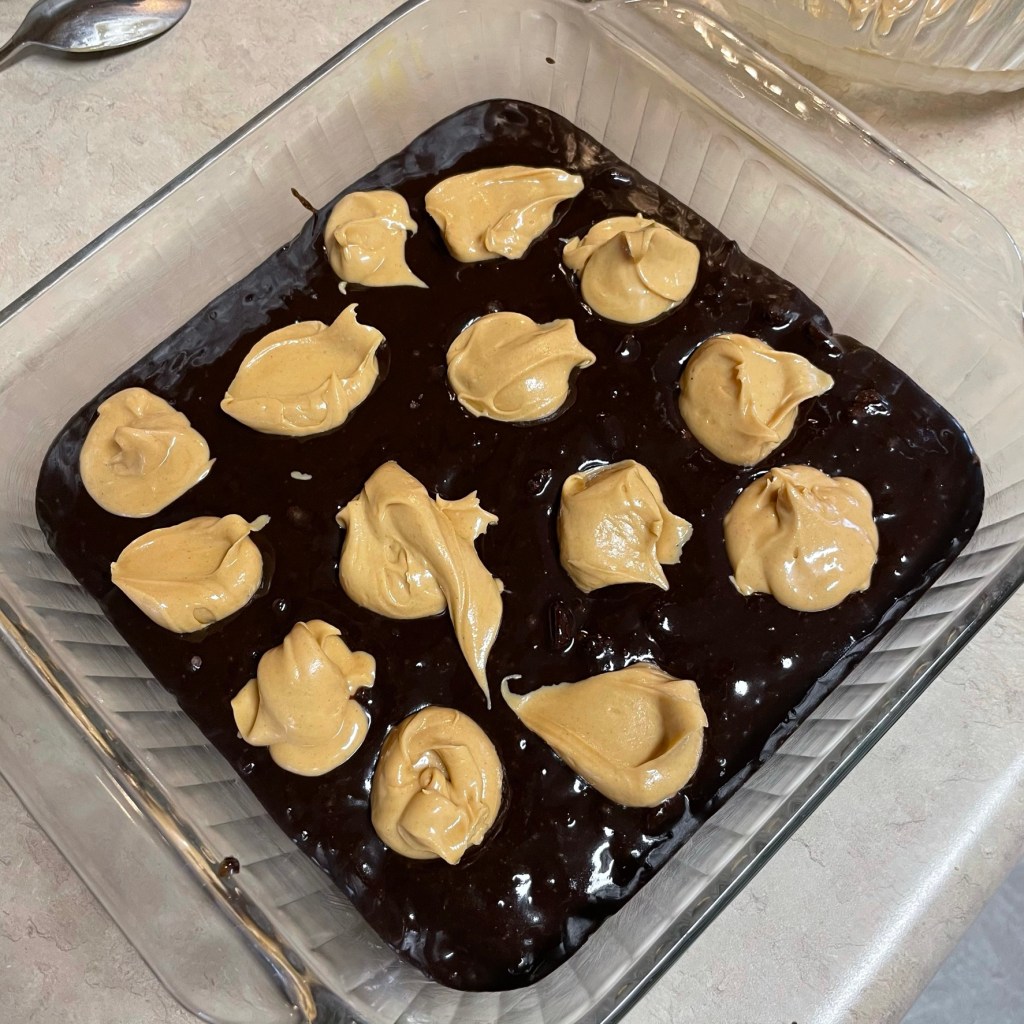
  4. Spoon dollops of the peanut butter mixture randomly over the top of the brownie base. You may find that you have a little bit of the peanut butter mixture left over, as I did. But if that’s the case, just follow my lead and eat it straight off the spatula, the beaters, the bowl, and that little bit that spattered on the counter. No problem (it’s delicious).
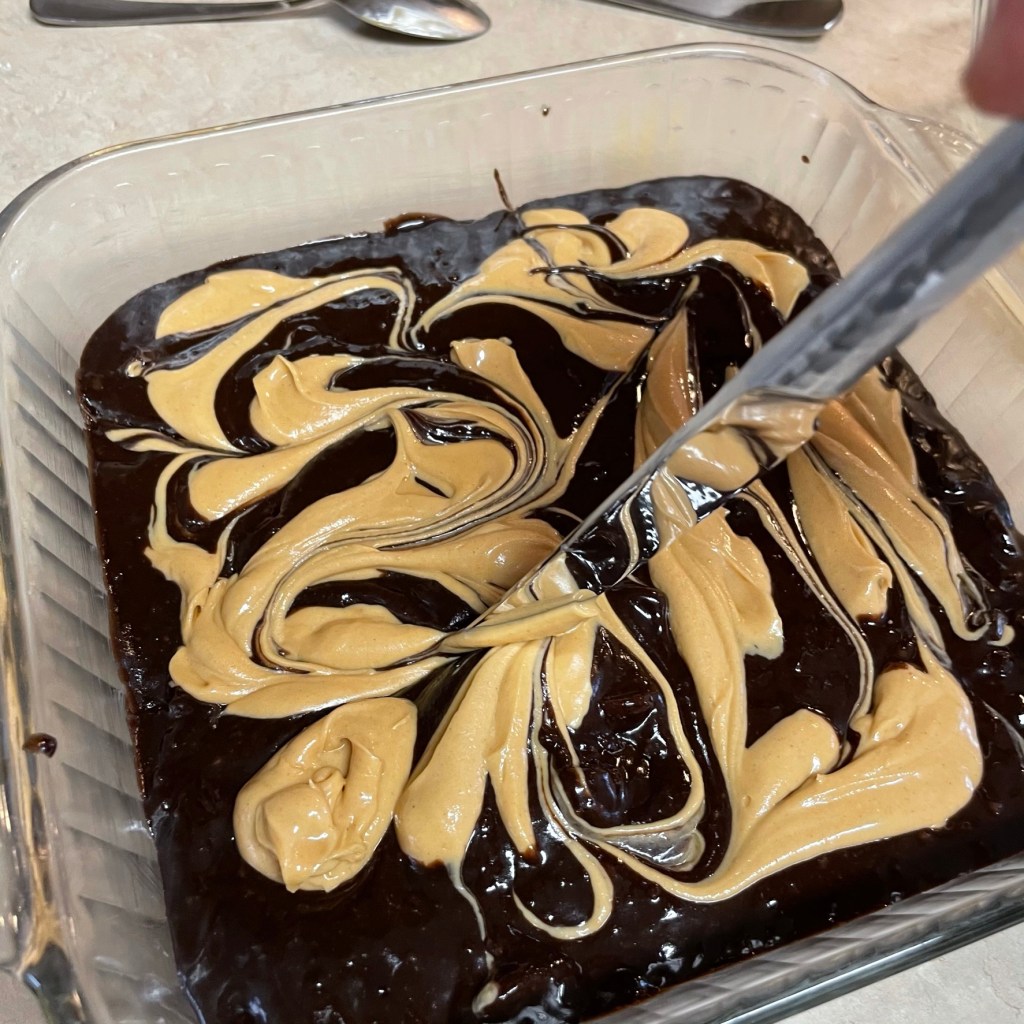
  5. Use a butter knife blade to drag the peanut butter dollops through the brownies, marbling as much or as little as you like.
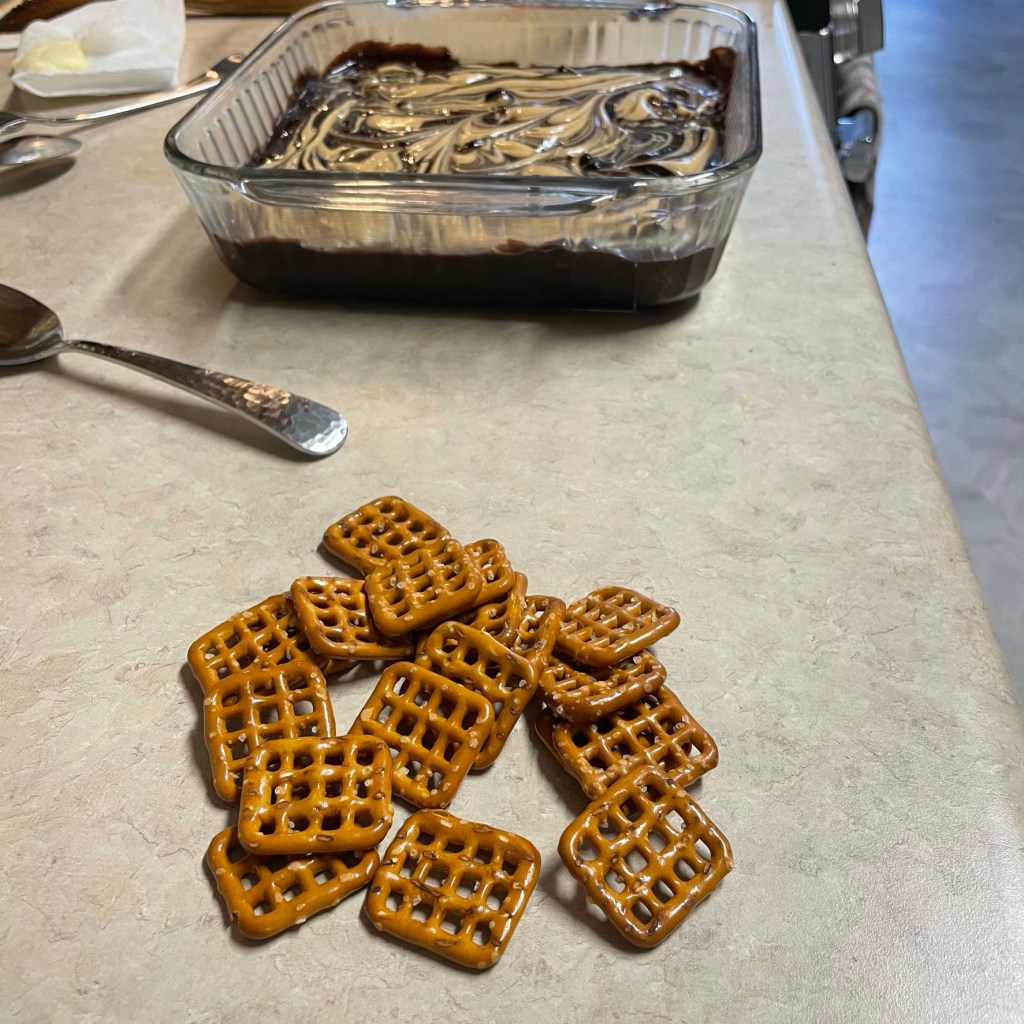
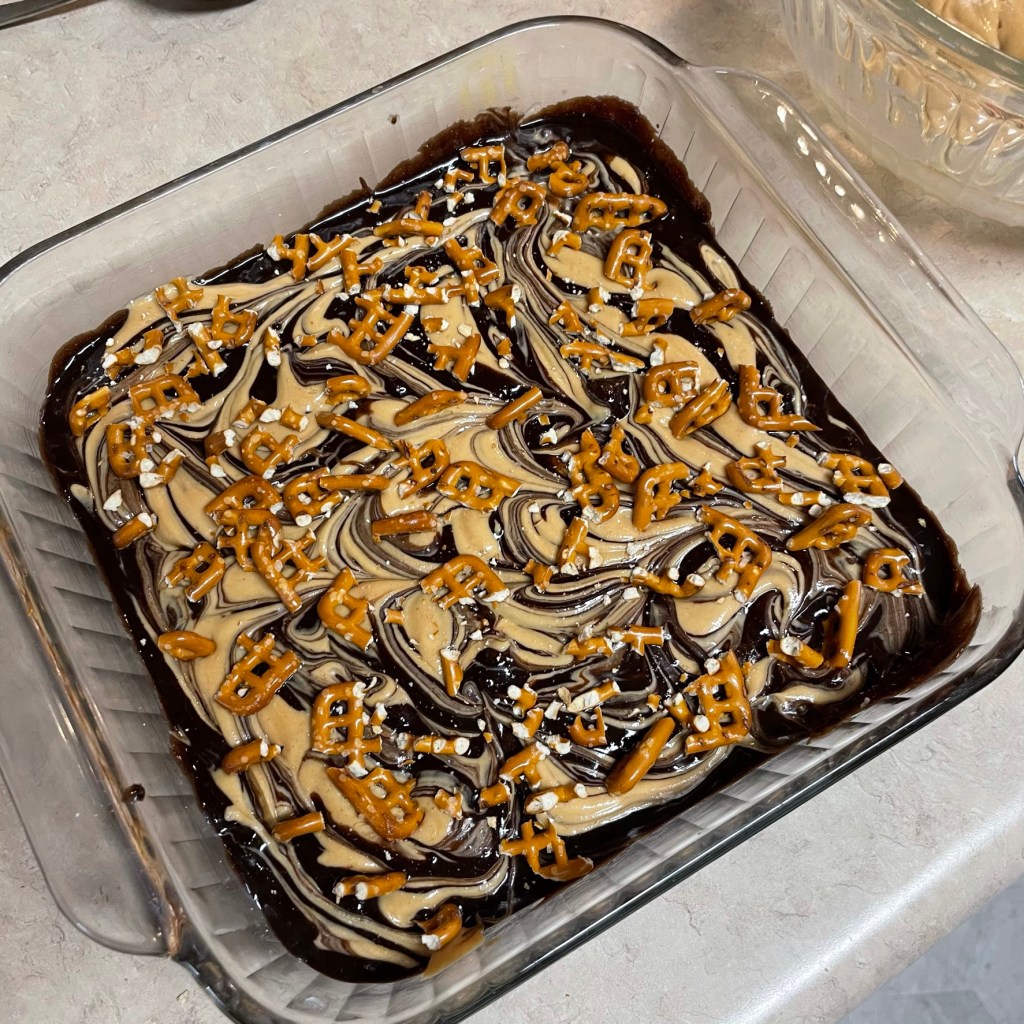
  6. Use your hands to break the mini pretzels into pieces, scattering them all over the brownies. Sprinkle on a few pinches of coarse sea salt (optional).
  7. Bake brownies 45 to 50 minutes, according to package instructions. Cool completely before cutting, and try not to eat the whole batch in one evening.

The center of the brownie is soft and fudgy, the corners and edges are perfectly chewy, and that whole peanut butter swirly pretzel thing? Totally elevating my happy!

Want to make these brownies?


Cobb with Artichoke-Crab Cake

A good many years ago, a work colleague from my radio days shared with me about his unusual mental habit of assigning colors to the months of the year—not surprisingly, several of the months were given colors that matched a holiday within the month, such as green for March (St. Patrick’s Day). My buddy gave July deep red, for its blazing summer heat. Orange was obviously the color of October, reflecting Halloween pumpkins and fall foliage. But January? You guessed it. Gray.

He’s right about that. The whole month of January looks and feels gray and lifeless, with the Christmas decorations down, no leaves on the trees, no flowers to enjoy. Gray is bland and boring, the color of a steak cooked in the microwave.

As many millions of other Americans, I let go an enormous exhale this week as our battered country took its first steps forward toward what we hope is a new chapter of compassion, cooperation and unity. The installment of a new president has me feeling hopeful for the first time in years, as if gigantic gray clouds have parted to allow sunshine and color back into our lives. I’m not naïve about politics, and I have seen enough in my years to know that smooth-sailing government is a goal rather than a given, but attitudes and intentions must be positive for progress to happen, and we are overdue. I’m ecstatic and proud about the historic swearing-in of our nation’s first-ever woman vice president (I’ll be raising a toast to her in a day or two here), optimistic about making up lost ground in our relationship with the rest of the world (and the planet), and relieved at the promise of giving science a louder voice than ego in our battle against this wretched virus.

Things are looking up, and I’ve needed something to be excited about after so much gloom.

And so, here begins a fun and color-filled parade of recipes to brighten up your plate. Nutritionists will tell you about the benefits of “eating the rainbow,” for all its varying vitamins, antioxidants and whatnot, and it’s undeniable that bright colors in general make people feel happier. I’m determined to bring that color!

Color my world! 🙂

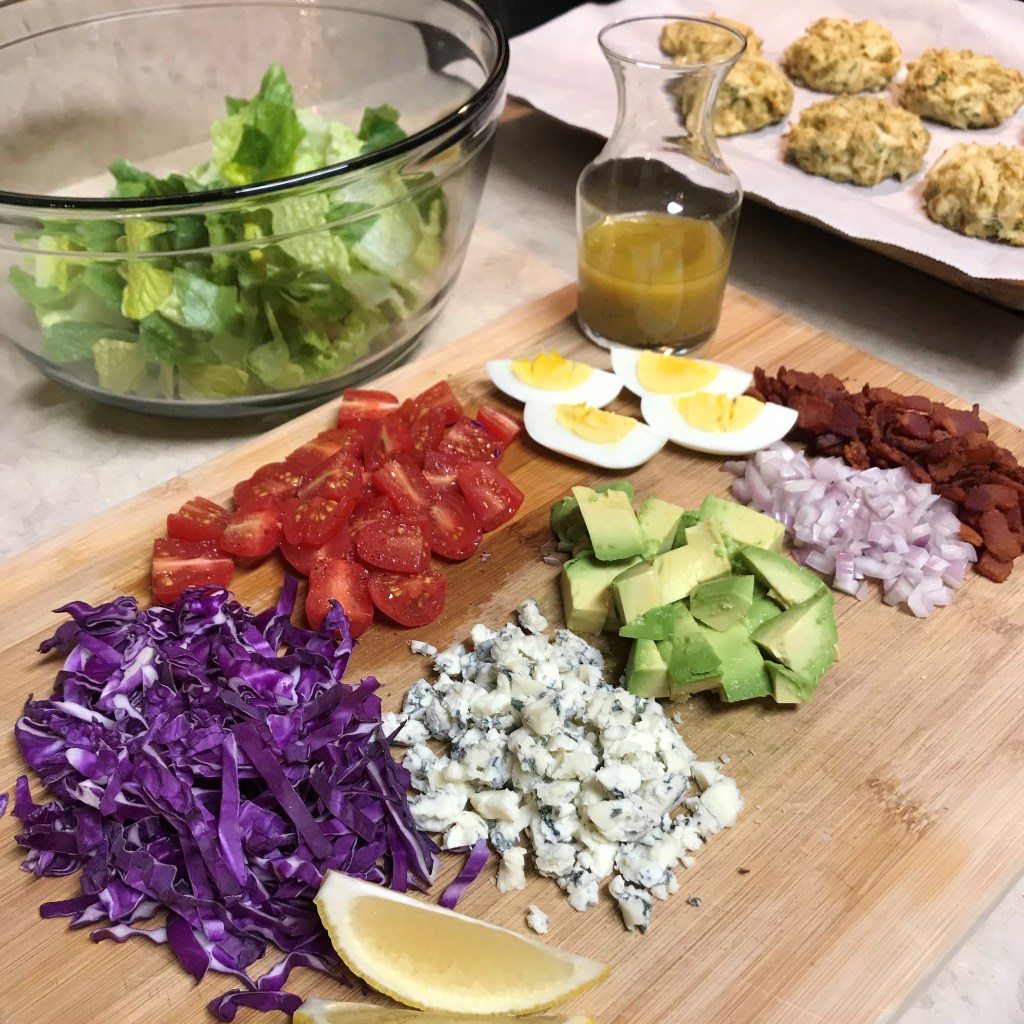
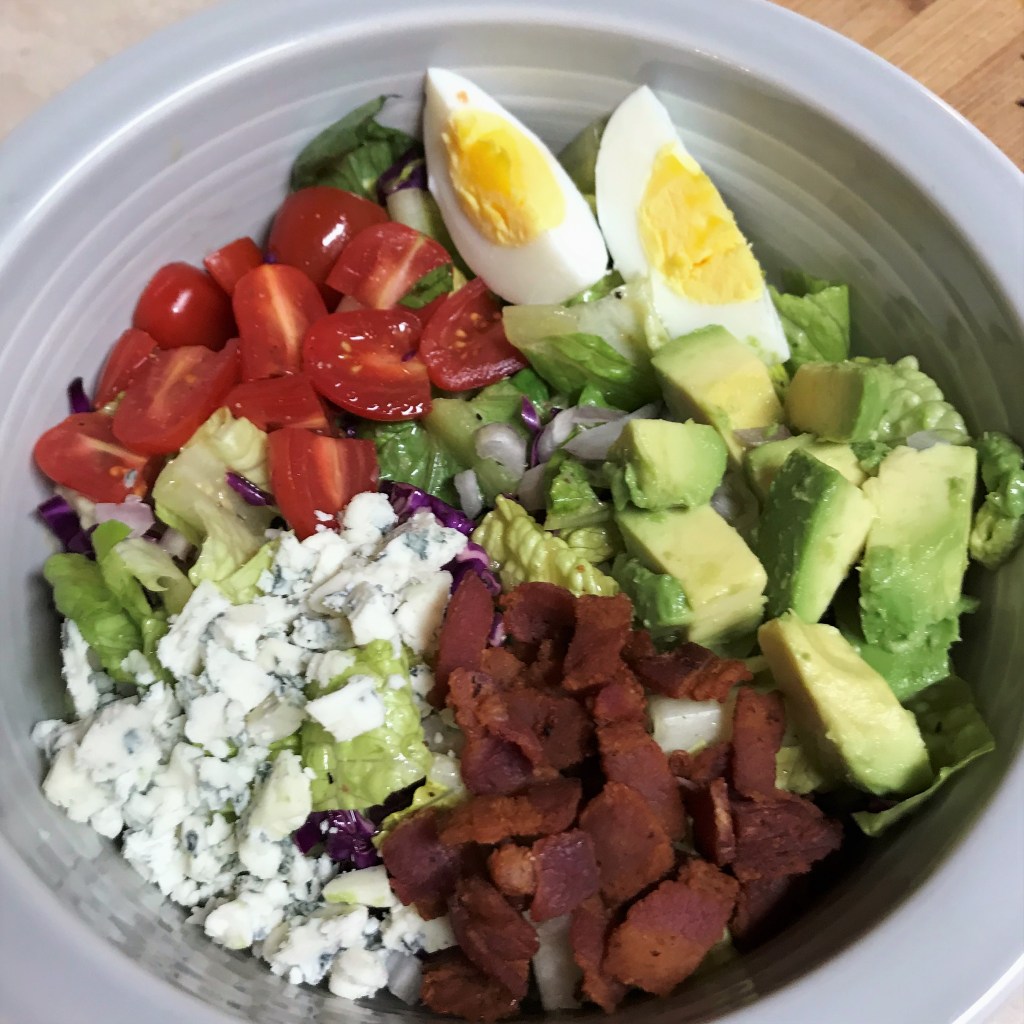
To kick things off, I’m chasing away the gray with a mostly classic Cobb salad, authentic in the sense that it has all the key Cobb ingredients—avocado, bacon, hard-boiled egg, bleu cheese and tomatoes. In step with my recent celebration of seafood, I’ve swapped out the usual chicken breast in favor of a homemade artichoke-crab cake. I love the flavor of artichokes, with their slight lemony tang, and the pairing with crab has been a favorite for years. To pull the flavors together, I’ve punched up the vinaigrette with fresh lemon juice and a few shakes of lemon-pepper seasoning.

The end result is fresh, bright and cheerful. The flavors all work great together, and the colors are breathing some much-needed sunshine into gray and gloomy January. Enjoy!


Serves: 2 dinner salads with extra crab cakes for another meal
Leftover idea: crab cakes benedict, with poached egg and english muffin, topped with sauce of your choice


Crab Cakes

1 1/2 cups lump crab meat, drained and picked over for shell pieces

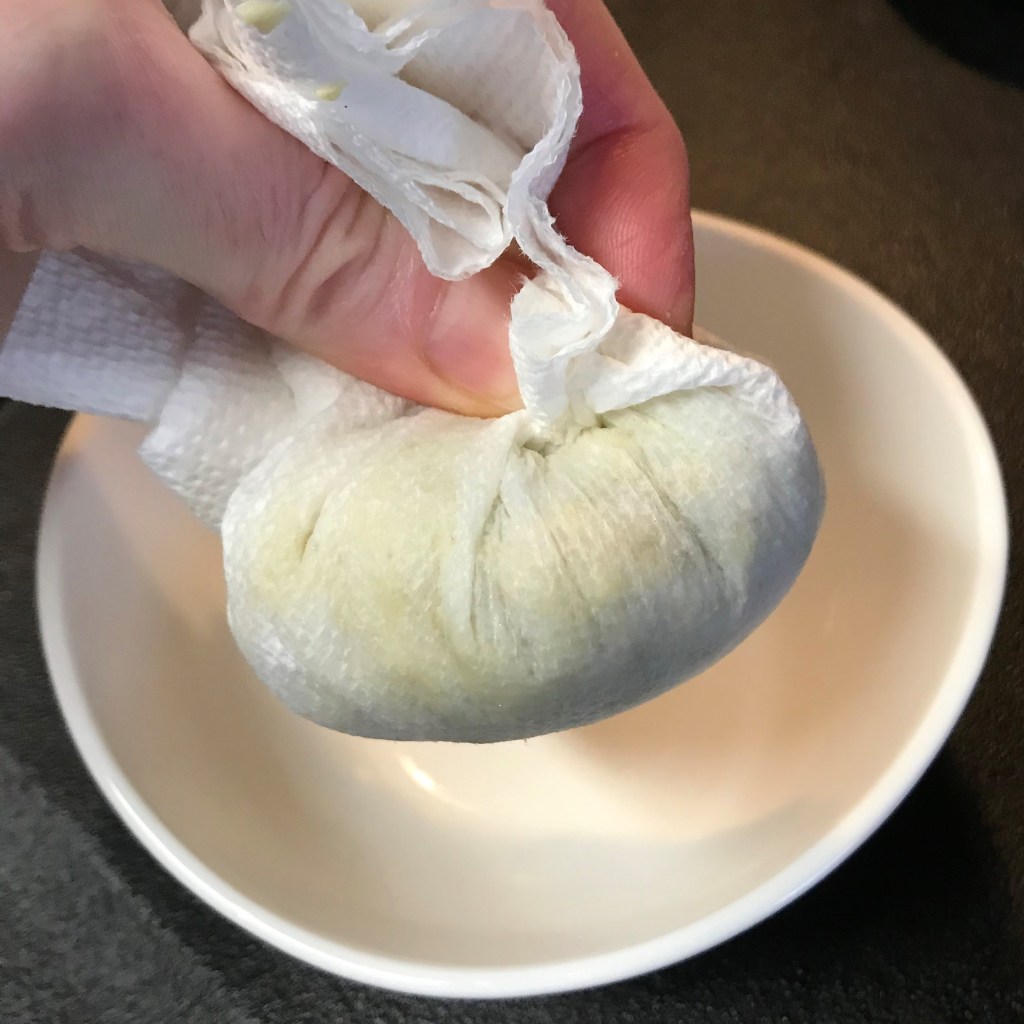
1/2 cup marinated artichoke hearts, drained well and chopped fine

4 Tbsp. mayonnaise

1 large egg

2 tsp. Dijon mustard

1/4 cup cracker or panko crumbs (I used seasoned crackers)

1/4 tsp. lemon pepper seasoning (or more if using bland crackers)

Small handful fresh parsley

Lemon wedges for serving

Mix it up!

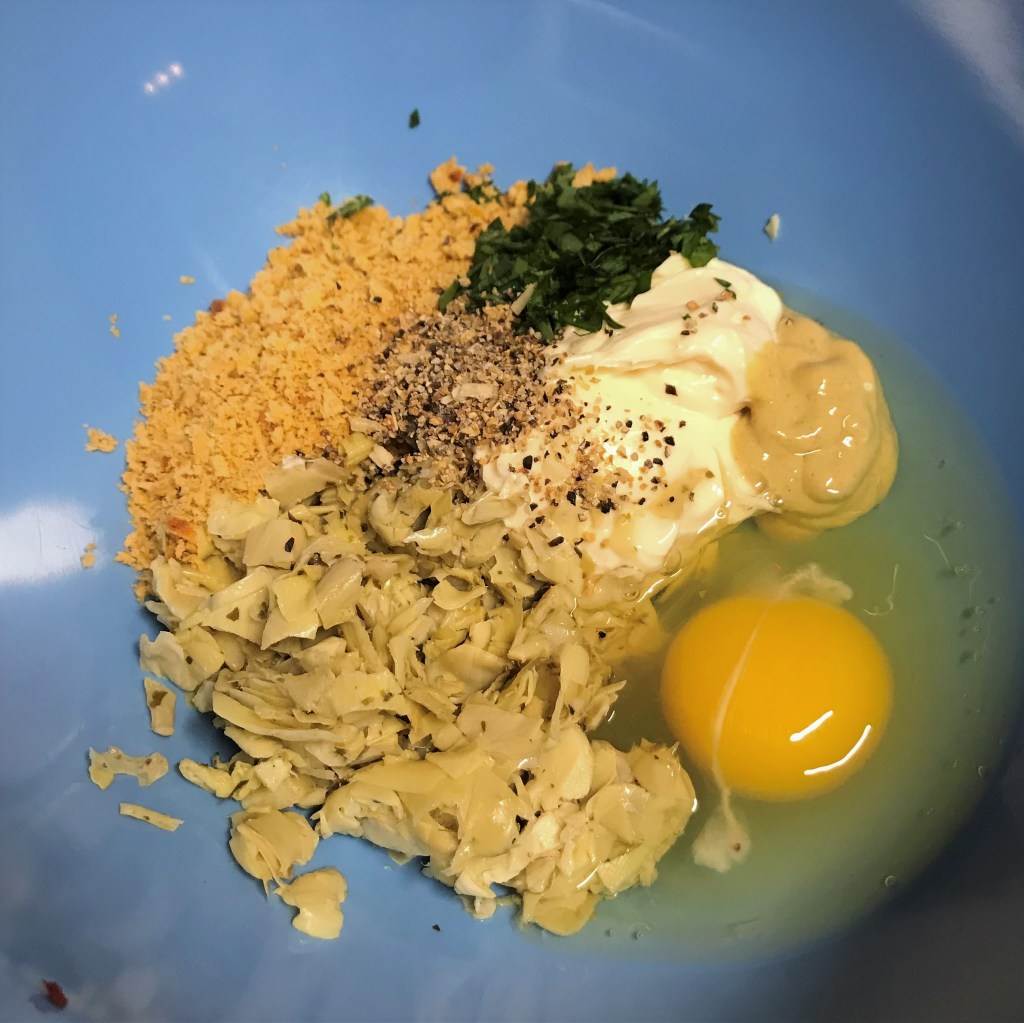
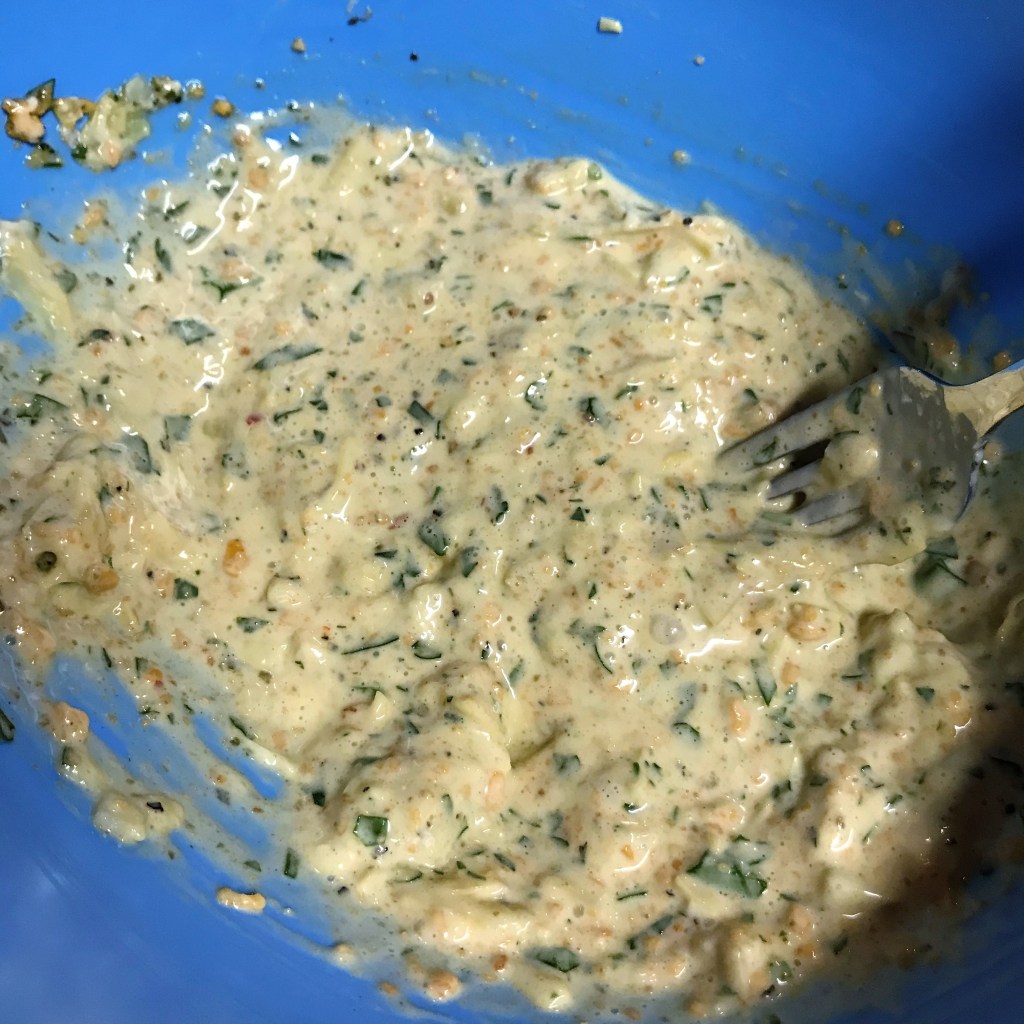
  1. Combine all ingredients except crab and mix with a fork until mixture is completely blended.
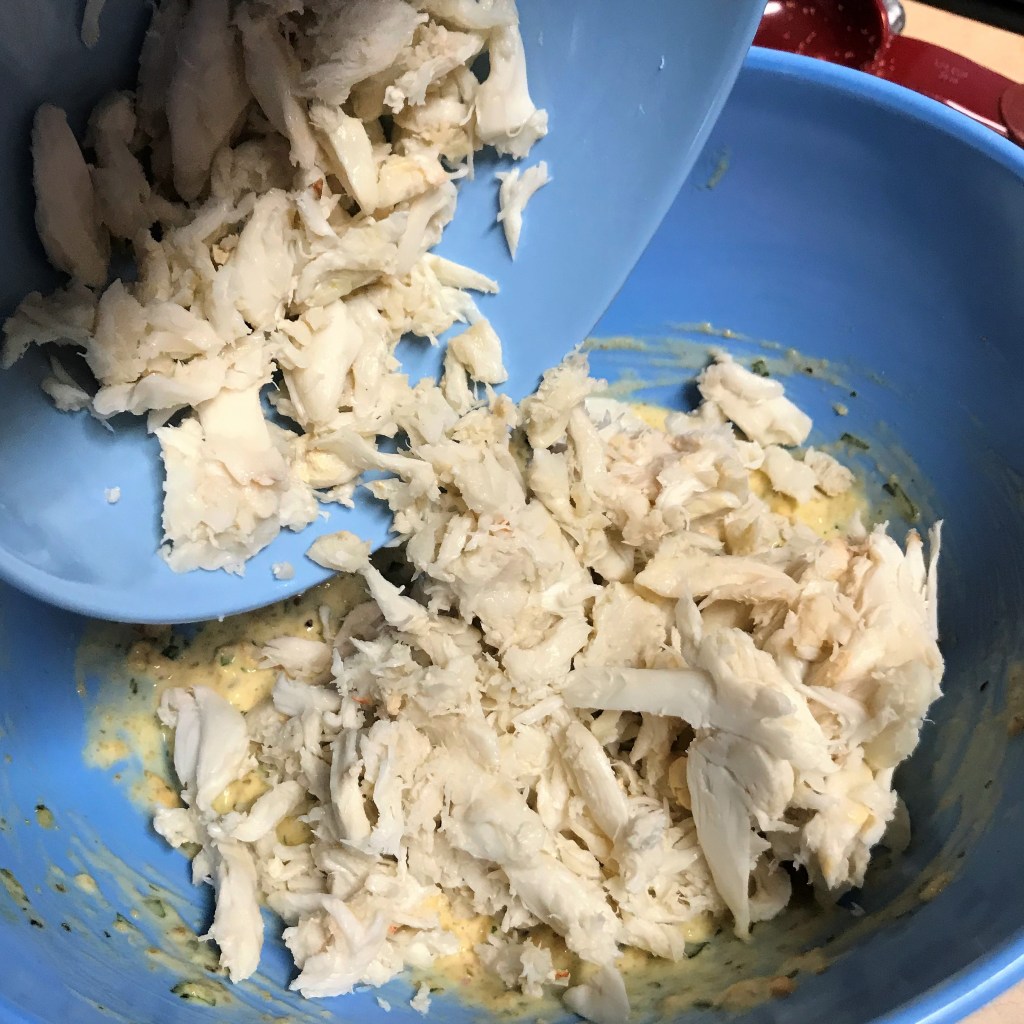
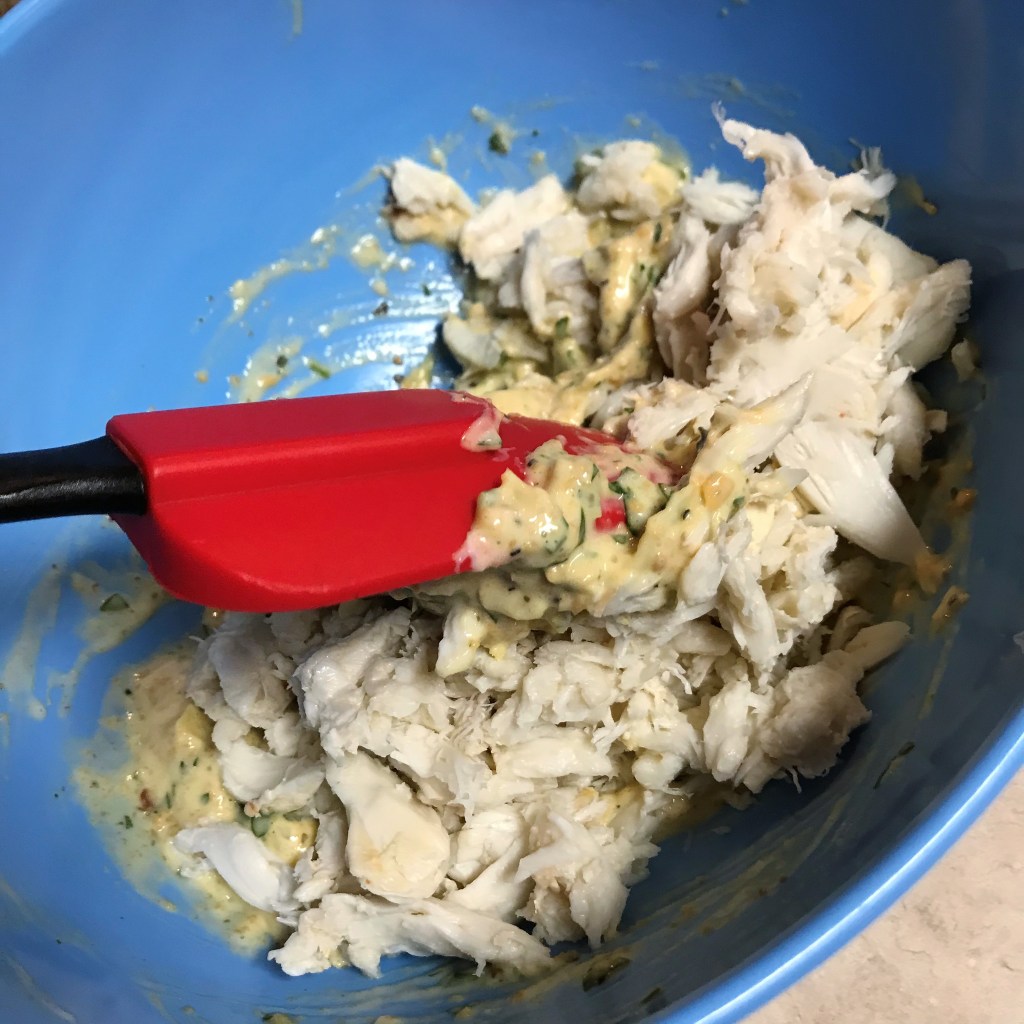
  2. Add crab meat and fold gently about 6 times, just enough to fully incorporate the mixture.
  3. Cover mixture and chill about 2 hours.
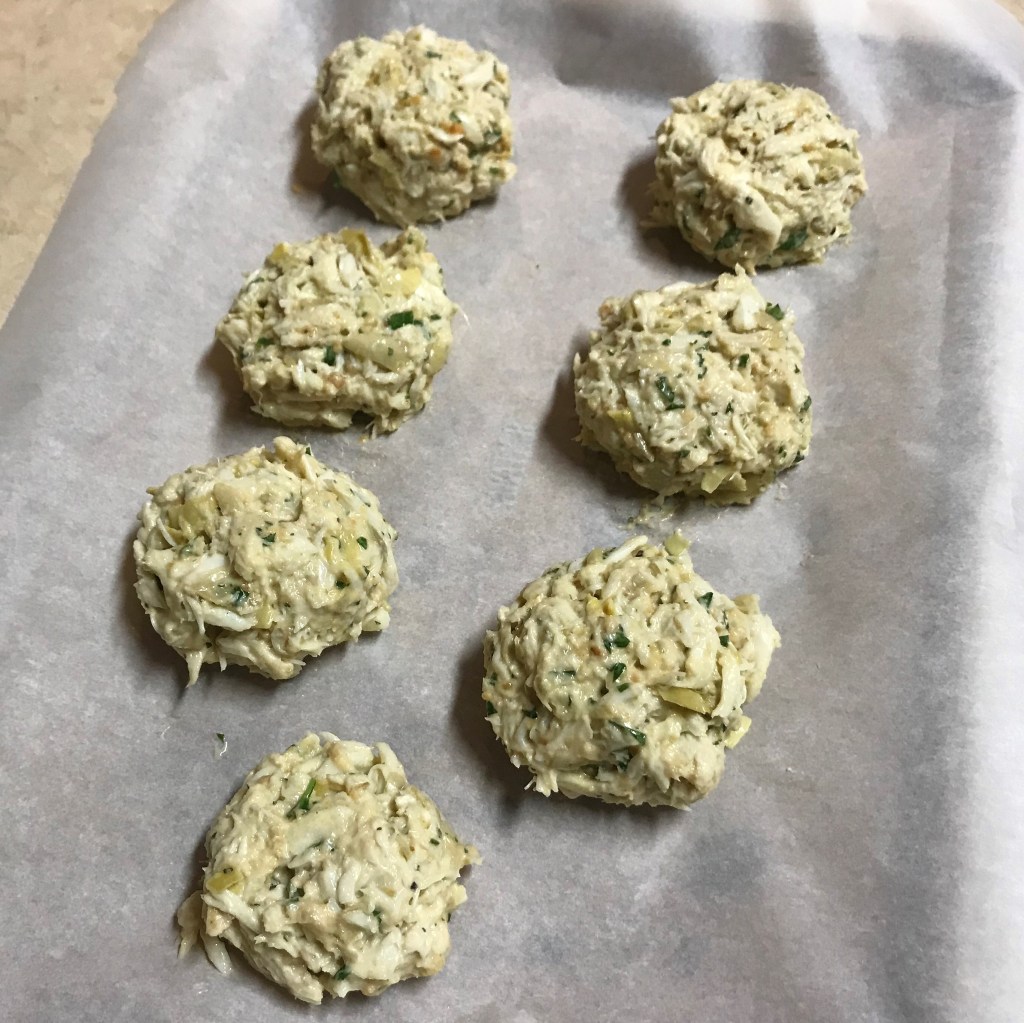
  4. Shape crab mixture into 6 equal-sized cakes*, then cover and chill again 2 hours until ready to cook.
  5. Preheat oven to 350° F. Bake crab cakes about 25 minutes, until set but not dry.

*I misjudged my portions and ended up with a smaller seventh crab cake. Better than trying to re-shape them!


Citrus vinaigrette

2 Tbsp. Trader Joe’s orange muscat champagne vinegar* (or substitute any light or citrus-y vinegar + a pinch of sugar)

Juice of 1/2 fresh lemon

1/2 tsp. Dijon mustard

3 or 4 shakes lemon pepper seasoning (I used McCormick, which already contains salt)

1 Tbsp. expeller-pressed canola oil + 2 Tbsp. extra virgin olive oil

  1. Whisk together vinegar, lemon juice, Dijon mustard and lemon pepper seasoning in a small bowl or measuring glass.
  2. Slowly drizzle canola oil into the mixture, whisking constantly to create an emulsion. Repeat with the olive oil. Cover and allow mixture to rest to “wake up” the seasonings. I typically make my dressings several hours or even days ahead, then bring to room temperature for serving.

Cobb salad

1 full romaine heart, washed, dried and chopped

1/2 cup finely shredded red cabbage (for color :))

1 small shallot, chopped (or substitute red onion)

8 baby tomatoes, halved

1/2 medium avocado, cubed

1/4 cup bleu cheese crumbles

3 slices uncured, smoked bacon, chopped and cooked crisp

1 hard-boiled egg, peeled and chopped


Want to make this colorful salad?


If you’re a fan of the crab-artichoke combination, check out my easy recipe for Creamy Crab and Artichoke Dip!


Oysters Rockefeller Pizza

One of my favorite things to do with food is twist up a classic, and this effort is a big-time winner! When my husband, Les, and I began talking about making our annual White Clam Pizza for New Year’s Eve (these conversations begin in October because we are obsessed that way), the gears of my foodie brain started spinning. What would happen, I wondered to myself, if we put all the incredible, decadent, special occasion flavors of Oysters Rockefeller—on a pizza?

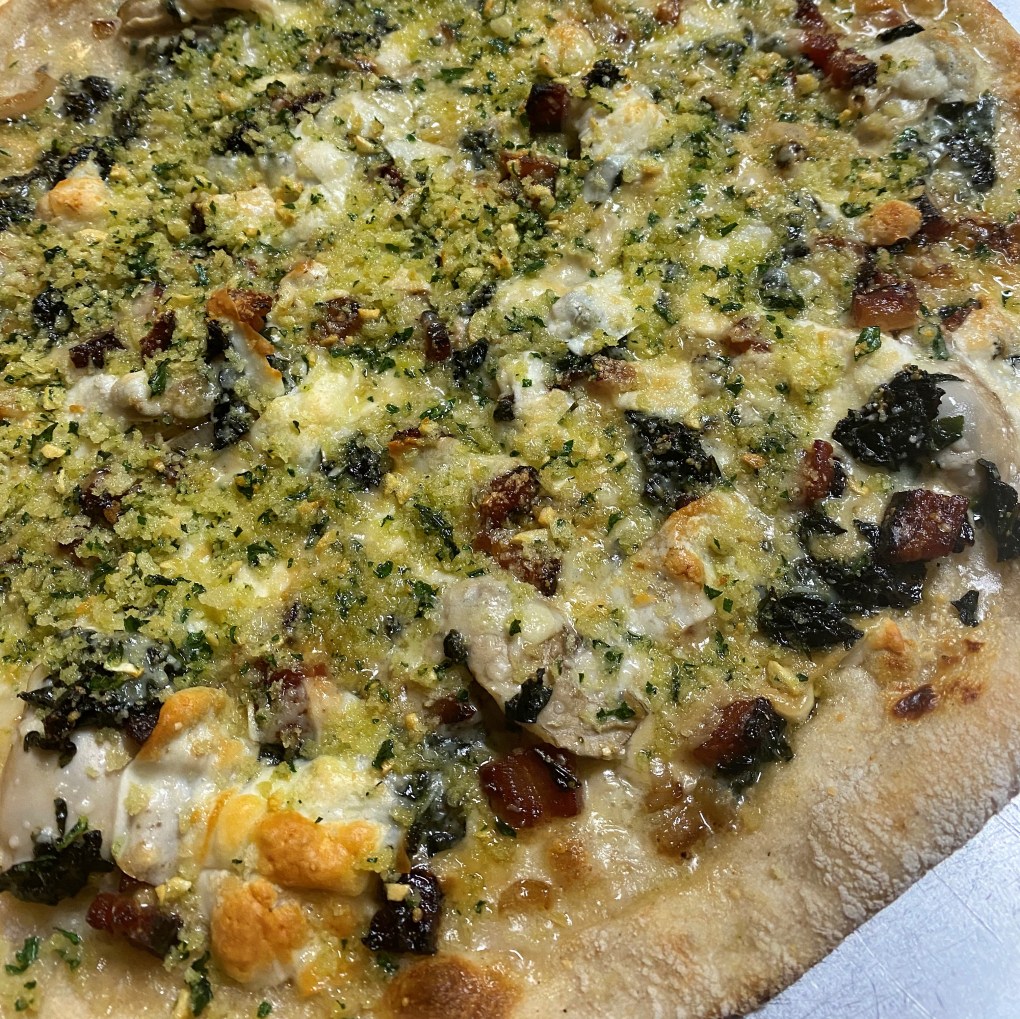
Oysters Rockefeller has always been a favorite of mine, an appetizer dish that feels so classic and ritzy and special. So what about a crispy New York-style pizza crust with a creamy base, briny oysters, smoky cooked bacon, earthy spinach, pungent garlic and sharp salty cheeses—oh my goodness, yes—why wouldn’t this be a thing?

Kinda makes you want to bite right into it, huh?

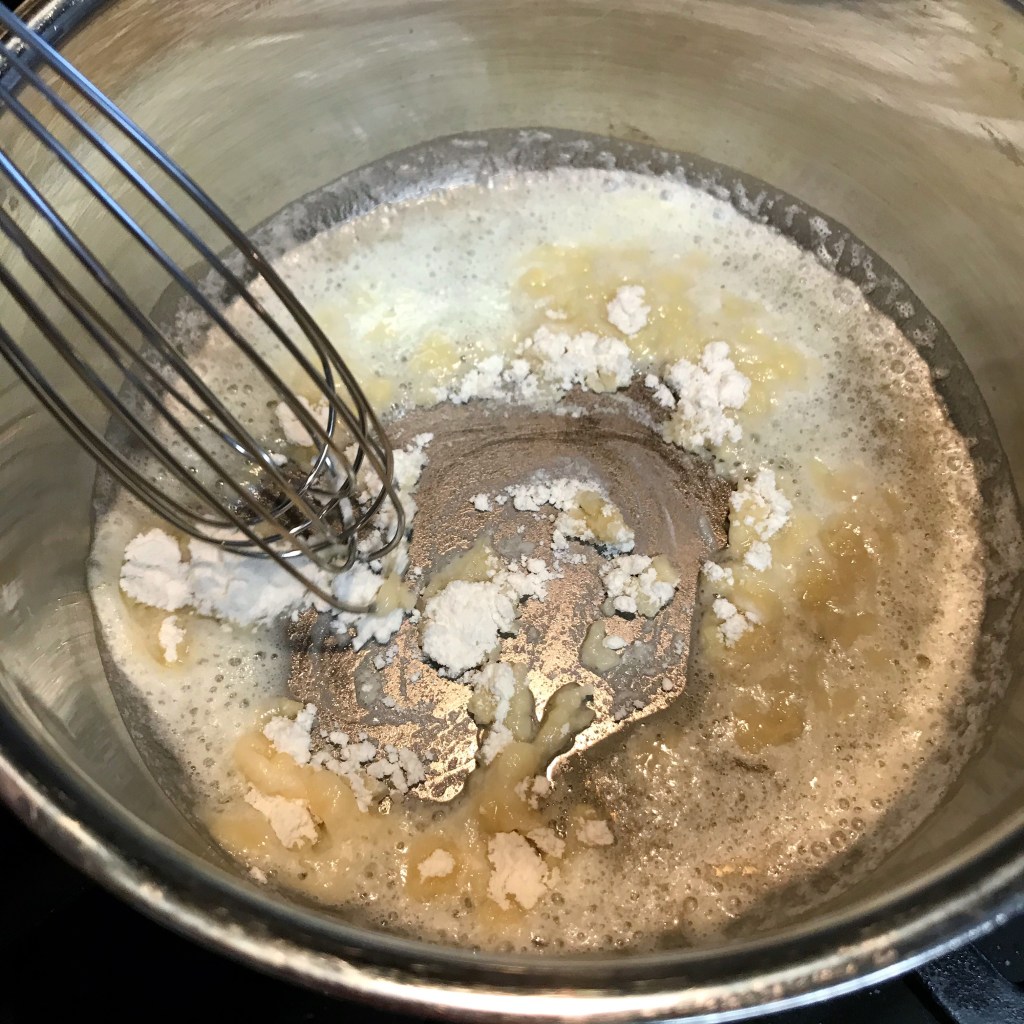
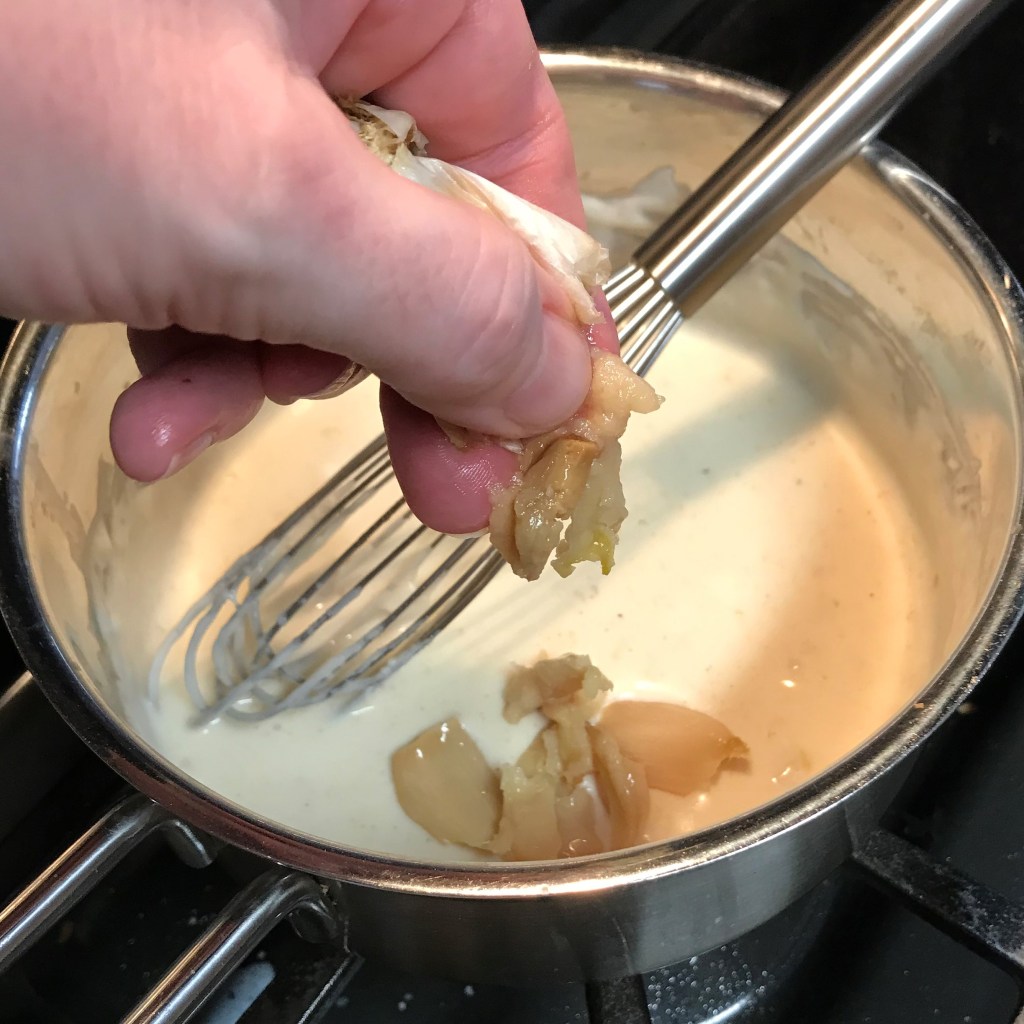
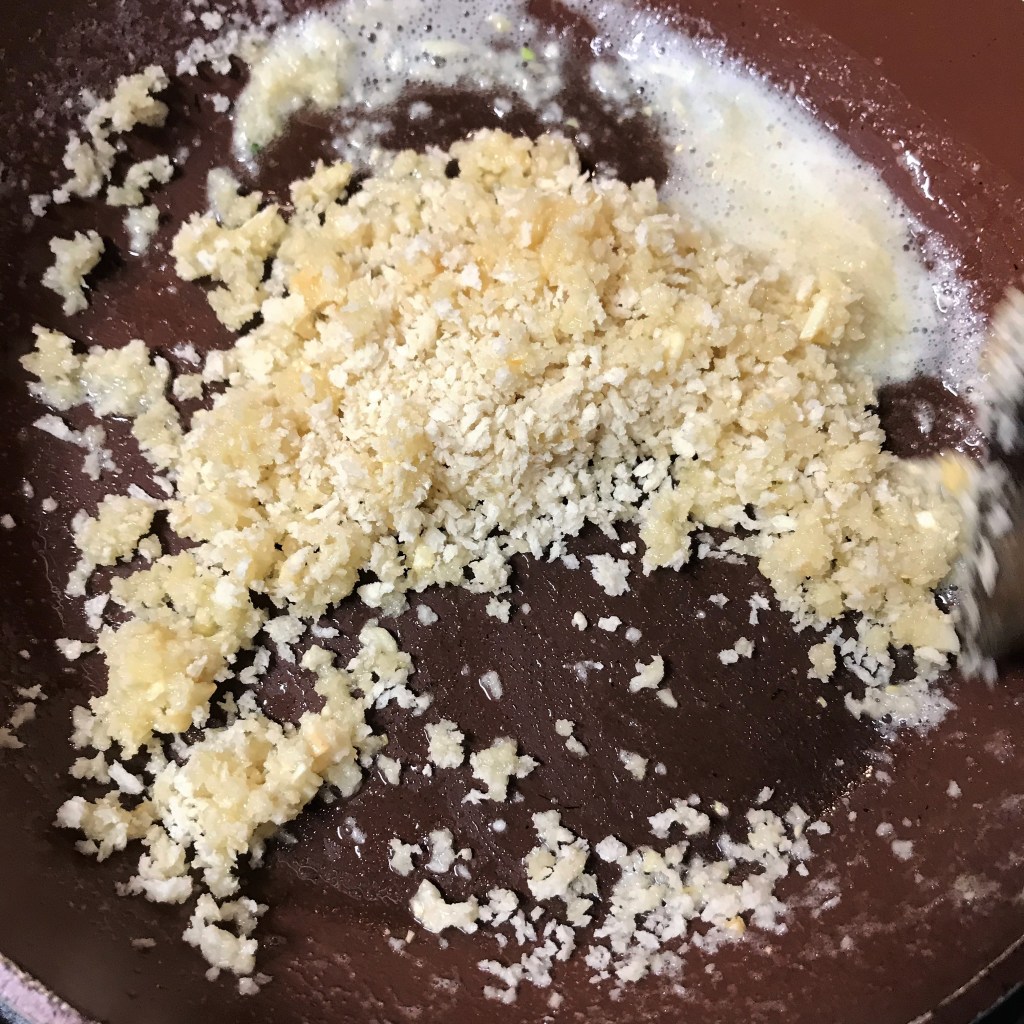
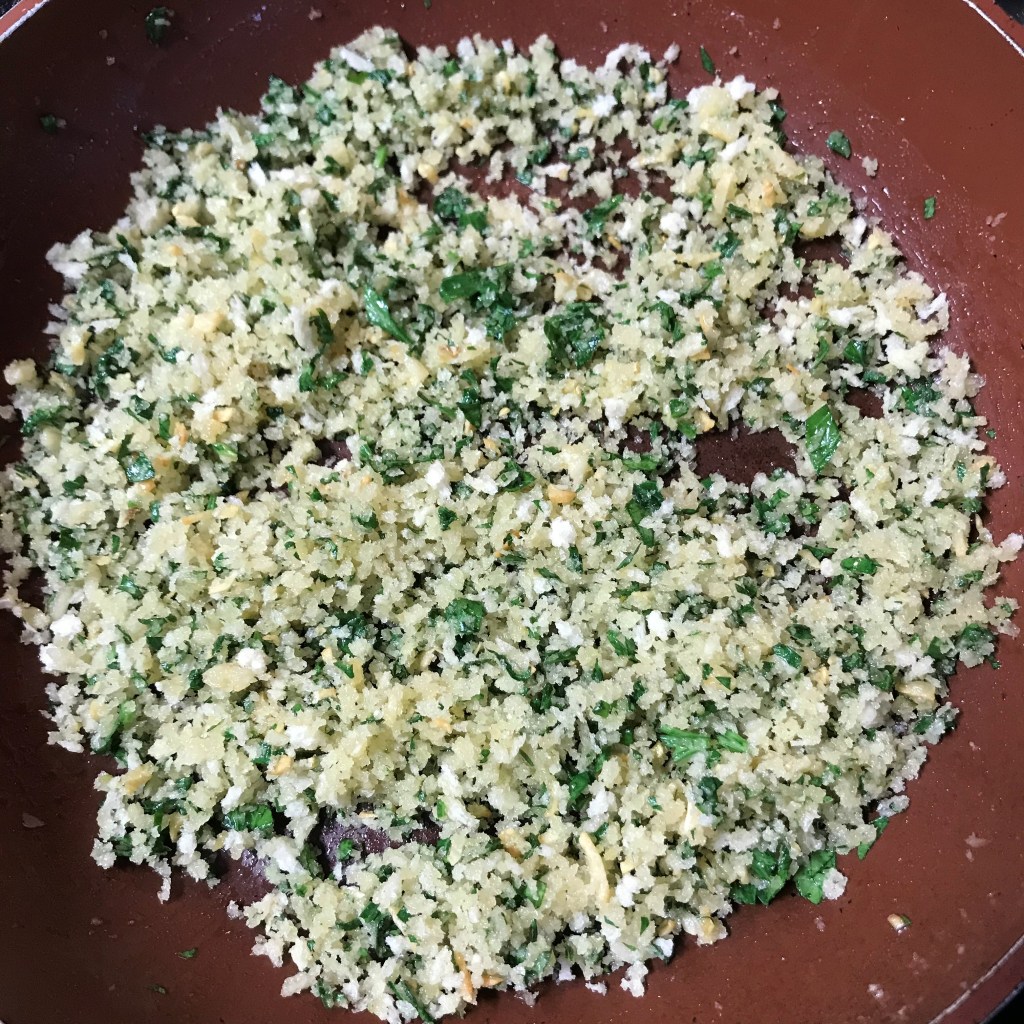
Unlike the white clam pie, which is cooked sans sauce, I felt that this one needed something creamy as a base. Tomato sauce won’t do, because that isn’t a flavor I associate with oysters. It had to be creamy, but not too cheesy. One thing I have learned about fish in general is that most “melty” cheeses do not pair well, but hard, salty cheeses such as Parmesan are perfect. We remembered how tasty the roasted garlic béchamel was on the creamy garlic and mushroom pizza I developed last year—so that’s where I started for the base. Next came some homework to discern the exact right flavors that make Oysters Rockefeller so exquisite. The bacon must be crisp, but not too crunchy. The cheese should be decadent and nutty, but not stringy or heavy the way mozzarella would be. Gruyere is common in the classic appetizer, so that’s a go, and Romano has that nice salty punch. Spinach—obviously a must, and I embellished the flavor of that with a splash of dry vermouth. Finally, a generous scattering of buttery, crunchy garlic panko crumbs when the pie emerged from the oven.

This pizza is a winner. We can hardly wait until next New Year’s Eve!

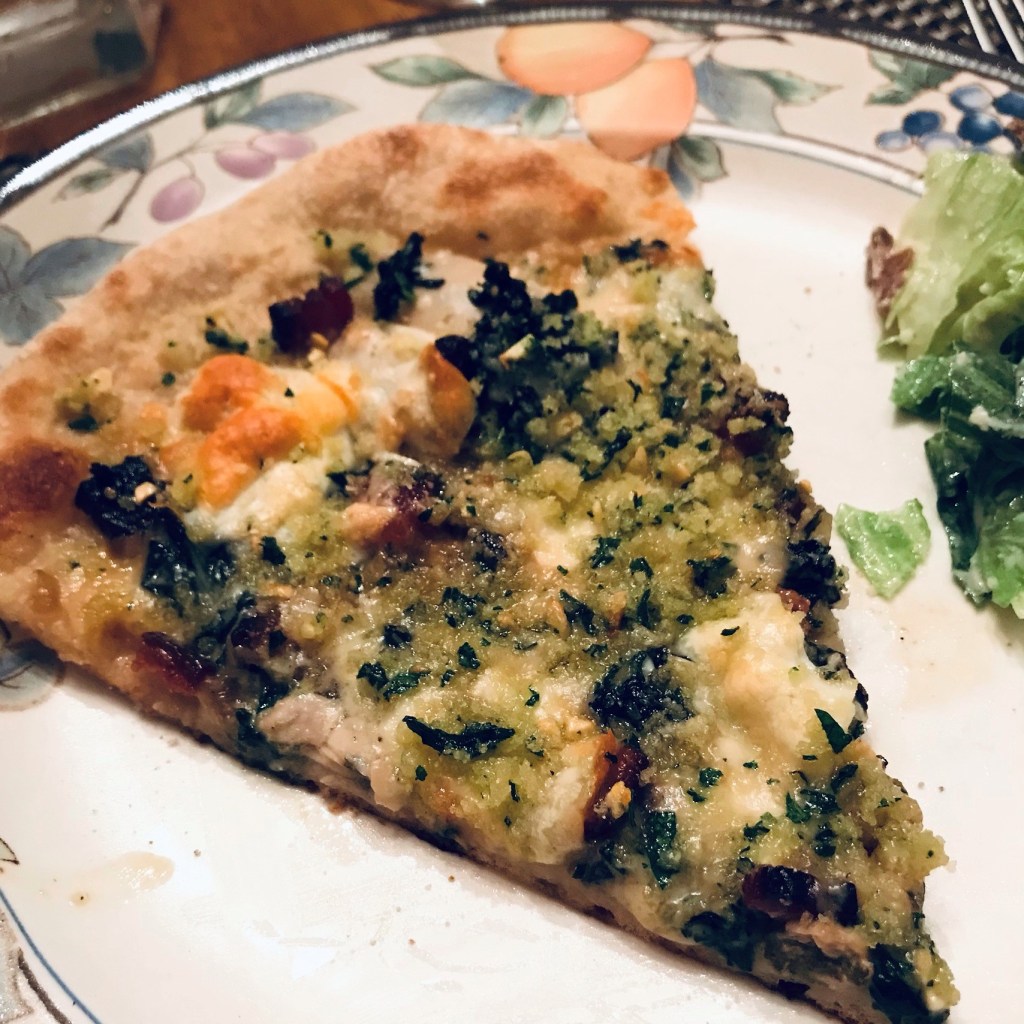
All the fancy flavors of Oysters Rockefeller, on a fun and casual pizza. Served with Caesar salad and champagne, of course.

This is how traditions are born, friends. Enjoy!


Ingredients

1 ball N.Y. pizza dough (or your favorite store-bought dough, about 11 oz.)


The béchamel base

1 Tbsp. salted butter

1 Tbsp. all-purpose flour

3/4 cup whole milk

1 whole bulb roasted garlic

2 oz. gruyere cheese*


The cooked toppings

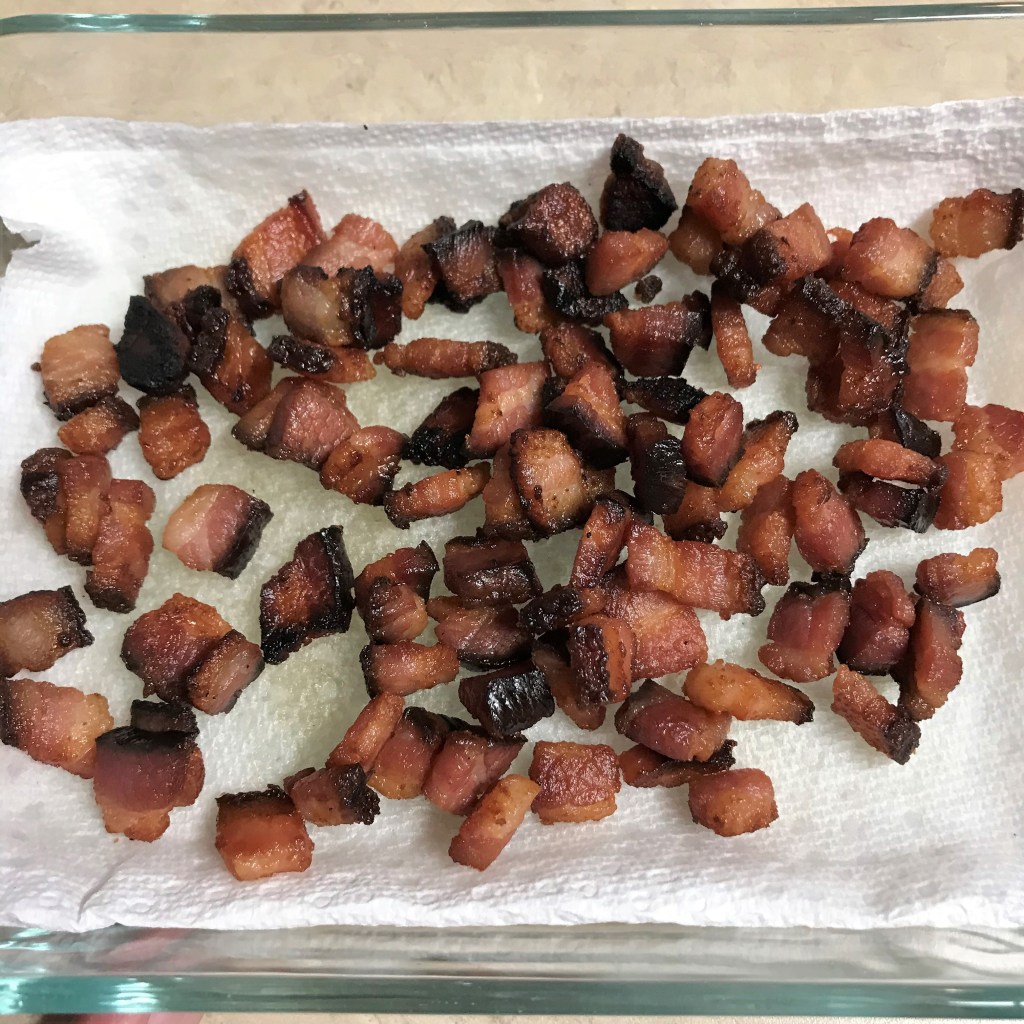
3 very thick slices uncured smoked bacon* (see notes)

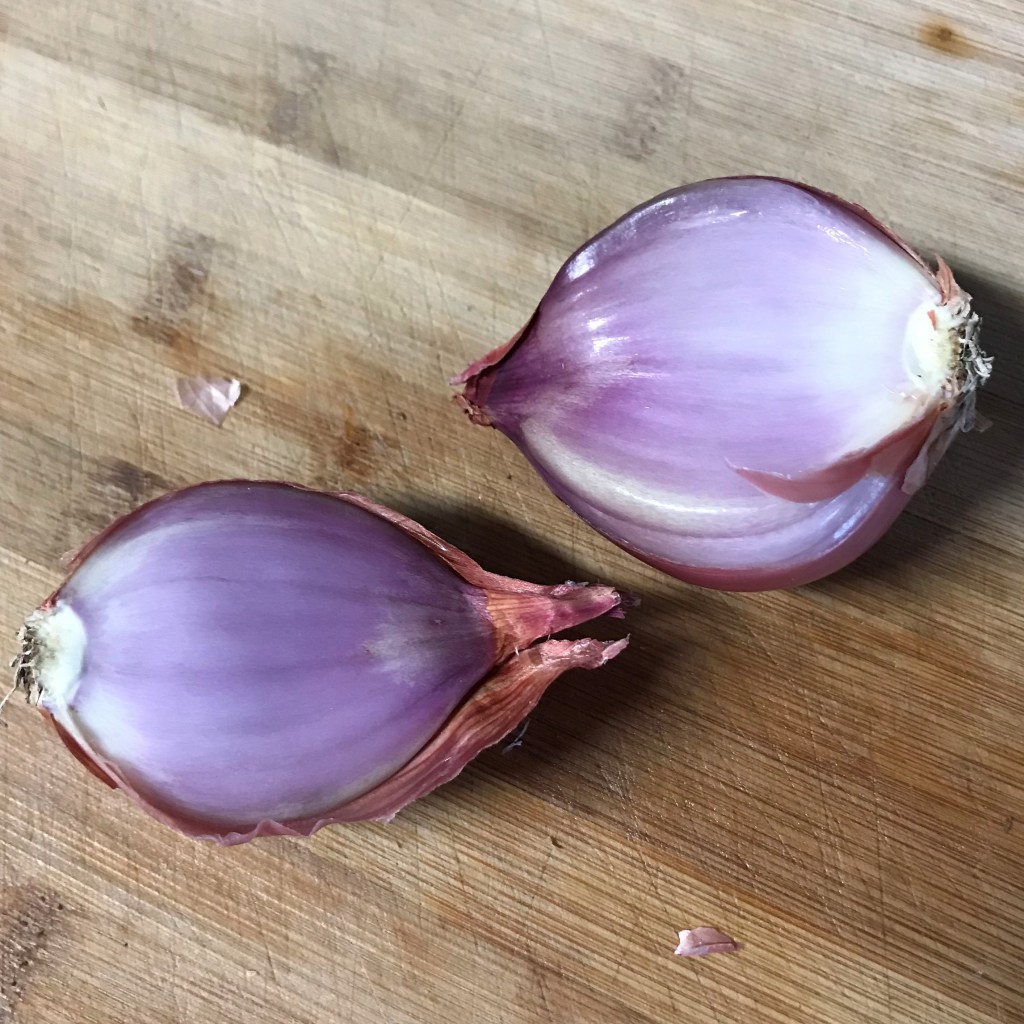
1 small shallot, minced fine*

1 fat handful fresh baby spinach leaves

A pinch of ground cayenne pepper (optional)

2 Tbsp. dry white wine (or dry vermouth)


The cheese toppings

1/2 cup grated gruyere cheese

1/4 cup grated or shaved Pecorino-Romano cheese

A few tablespoons of our favorite parm-romano blend cheese


The garlic crumb topper

2 Tbsp. salted butter

2 cloves garlic, finely minced

1/3 cup panko bread crumbs

1 small handful fresh flat-leaf parsley, finely chopped


The oysters

1 dozen large Blue Point (or similar) oysters, shucked*


*Notes

Gruyere is a nutty, semi-hard cheese that is similar to Swiss cheese. It is a typical ingredient in the topping for Oysters Rockefeller, and I used it twice for this pizza—in the béchamel and also grated on top of the pie. Substitute with Swiss or mild white cheddar if you cannot get it.

The bacon we used was possibly the best bacon I’ve ever tasted. I wish I could give you a brand, but this was a locally produced, heritage pork we found at Whole Foods. It was uncured (nitrite-free, which is a standard in this house) and smoked with peach wood—wow. So, so good. You may not be able to find this exact kind of bacon, but substitute a good quality, thick-cut bacon with smoky flavor and not too much sweetness. This bacon was also hand-cut by the butcher and therefore very thick slices. Once cubed, it measured a total of about 1 1/2 dry cups.

Please remember that shallots are not the same as scallions, but more similar to red or sweet onion.

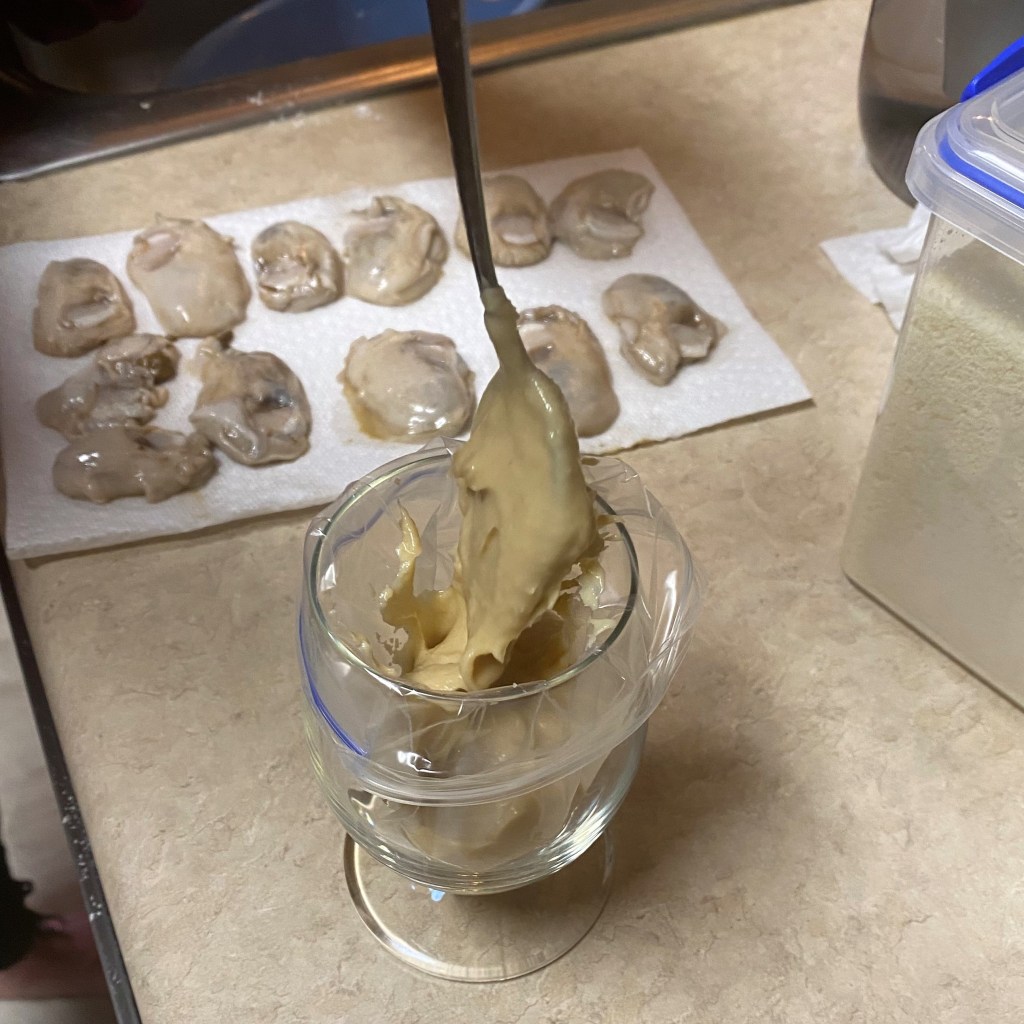
We agonized for weeks about the oysters, wondering whether we could purchase them fresh in the shell from a local restaurant that specializes in them, but we kept bumping into the same issue—for food safety reasons, no purveyor would sell them shucked but still in the shell. We had two options—either shuck them ourselves at cooking time (this is not for novices, which we are) or buying them already shucked, by the pint. We opted for the latter and they were fantastic. The container had more oysters than we needed for our creation, but don’t you worry—the extras will pop up on a salad or something very soon.


Instructions

I have learned (the hard way), when it comes to special recipes that I’ve never made before, that it is best to work ahead so that stress is minimized at cooking time. For this reason, I have broken the instructions down into segments, beginning with the béchamel base and the cooked toppings. It’s nice to have them done, out of the way and the kitchen cleaned up before the real cooking begins. The pictures tell most of the story, but keep scrolling for a downloadable PDF version of the instructions for your recipe files. I hope you’ll make it!

Béchamel and cooked toppings

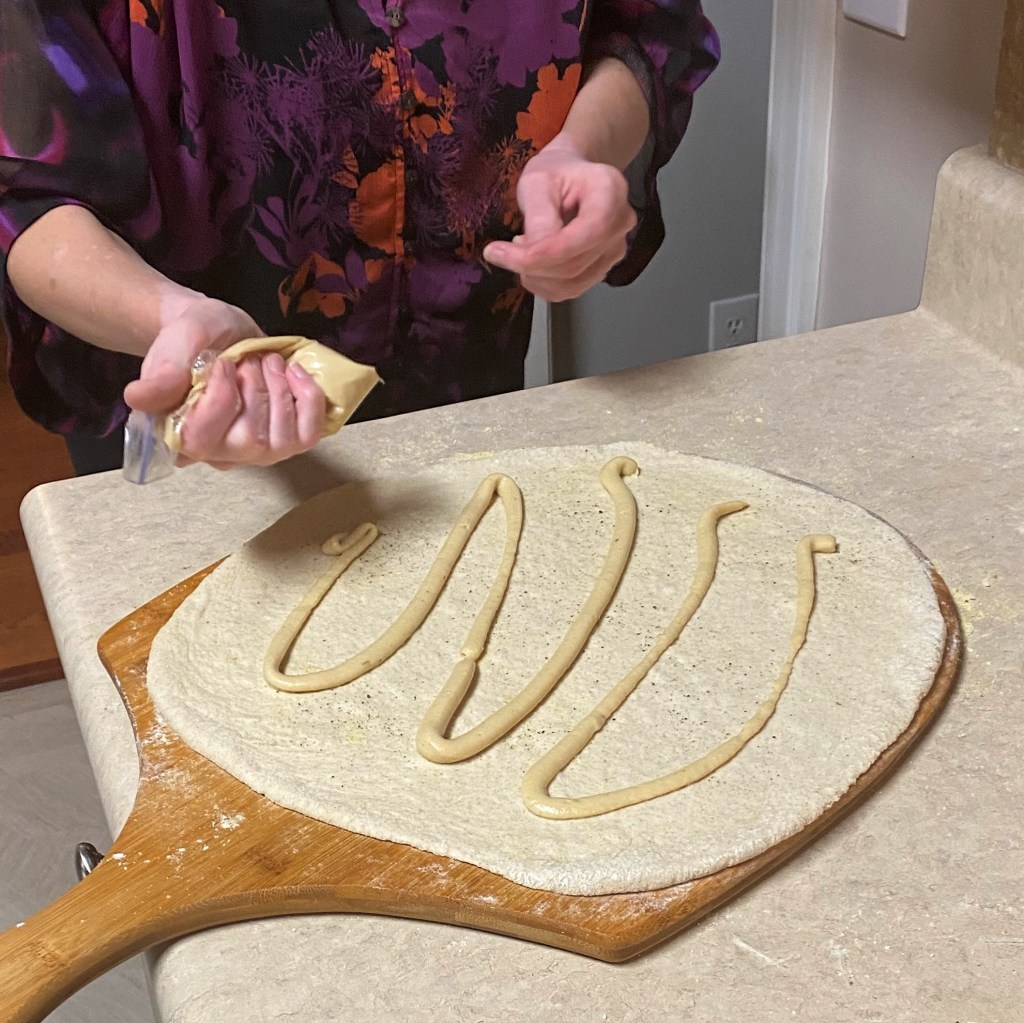
This is the same base I made for the creamy garlic and mushroom pizza I introduced back in the summer. A béchamel is one of the simplest and most adaptable things you can make in the kitchen—master this, and you’ll find yourself whipping up all kinds of creations. I only needed a small amount for this Oysters Rockefeller pizza, and I ended up not using all of it. When cooled, the béchamel is somewhat thick and difficult to spread, so check the photos to see how I managed to get it evenly onto the dough.

If you’d like, you can make the béchamel and cooked toppings a couple of days ahead. Be sure to bring all ingredients to room temperature when you’re ready to build the pizza.


This pizza has all the character of Oysters Rockefeller. Truly, a special occasion pie.

Ready to assemble this masterpiece?

There’s a downloadable PDF at the bottom of this post, but I always think the pictures are more interesting. 🙂


Want to make this recipe?


Chicago-Style Deep-Dish Pizza

It’s long been said that you can’t teach an old dog new tricks. Just don’t tell that to our dog, Nilla, who learned at age 10 how to politely request the fresh vegetable treats she loves so much. She latched on quickly to my command of “where are you supposed to be?” It usually only takes one ask to get her to back up out of the kitchen and plop down into position in the doorway to receive her healthy snacks, which she catches in mid-air at least 95% of the time. I love that about her! ❤

Nilla keeps her eye on the prize, and she is wicked fast!

And you better not tell my husband, Les, about new tricks, either. Because just last week, this N.Y.-born-and-raised-pizza-snob hubby of mine was scarfing down on a Chicago-style deep-dish pizza. Who’d have thunk it? (He tells me he has enjoyed Chicago pizza before, just not in the five years we’ve been together. Wait, does that mean I’m the old dog?) 😉

Oh. My. Goodness.


Distinctly different from a classic New York pie in so many ways—the tender crust, the order of layering the toppings, the longer time in the oven—this deep-dish pizza reminded me of a meat and cheese casserole with a crust that was crunchy on the outside and soft and chewy inside. After two-plus years spent tweaking my technique for a perfect New York thin-crust pizza, you may wonder what inspired me to give this deep dish a go. Easy, a sign in the supermarket announcing that the baking pans were 30% off! I’m a sucker for a sale, and the truth is I’ve wanted to try a deep-dish pizza for a while but refrained, given Les’s loyalty to the thin crust. Turns out, Chicago is a fine place to enjoy a pizza! He loved it (actually, we both did), and we are already dreaming up ingredient ideas for the next one. I want to make a deep-dish pie with roasted broccoli, bell peppers, onions and mushrooms, mmm.

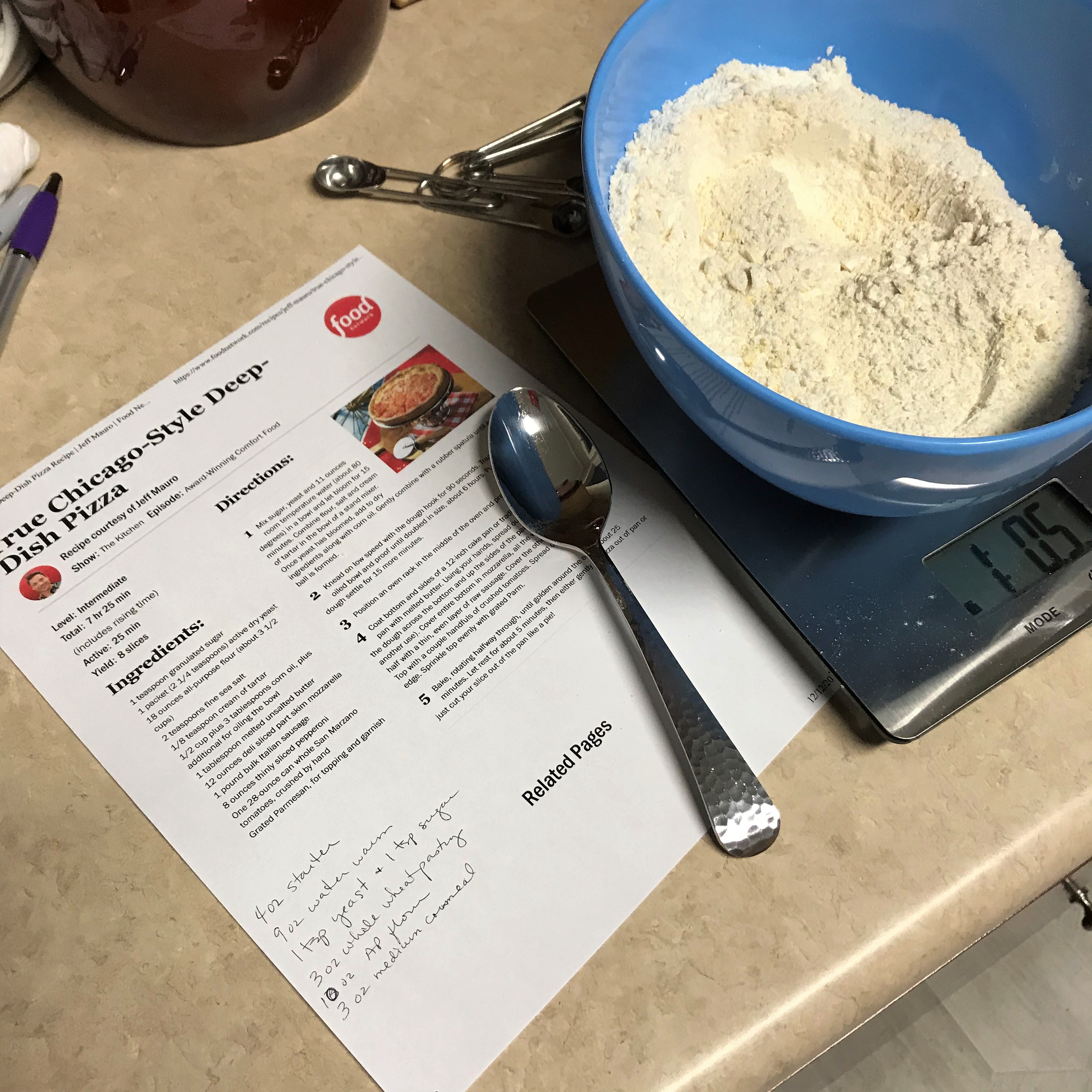
As with so many recipes, what’s traditional or correct for Chicago-style pizza depends on who you ask, and the internet is jam-packed with declarations about authenticity. My first go-to was Food Network celebrity chef Jeff Mauro, the self-proclaimed “Sandwich King” who also happens to be an expert on Chicago foods because he’s lived in the area most of his life. His recipe for Chicago-style deep dish caught my eye, mostly for its simplicity but also for the kudos given by commenters on the Food Network site. I tweaked it a bit (don’t I always?), swapping in some cornmeal and whole wheat flour—for texture and nutrition, respectively—and embellishing with topping ingredients that suit our taste. Or maybe for this style pizza, I should call them “filling” ingredients rather than toppings, because it all bakes down into a delicious, melty mass. Yes, this is a fork-and-knife kind of pizza, a whole new level of comfort food for our Friday night quarantine pizza party.

You will need a deep-dish pizza pan or a large (12-inch) cast-iron skillet for baking this pizza. Note that the recipe requires a lengthy rise time on the dough, so you’ll want to plan ahead to stay on schedule for dinner. I hope you enjoy it!

Look at those layers! This will be coming up in rotation again very soon.

Adapted from Jeff Mauro’s Chicago-Style Deep-Dish Pizza

Ingredients (crust)

11 oz. (about 1 1/3 cups) lukewarm water

A packet active dry yeast* (see notes for quick yeast or sourdough adjustment)

1 tsp. sugar

12 oz. (about 2 3/4 cups) all-purpose flour*

3 oz. (about 2/3 cup) whole wheat flour

3 oz. (about 2/3 cup) medium grind cornmeal

2 tsp. fine sea salt

3 oz. (6 Tbsp.) extra virgin olive oil


Ingredients (pizza)

1 1/2 pounds deli-sliced mozzarella (the firm style, not soft white)

12 oz. spicy Italian bulk sausage*

1/2 medium onion, thinly sliced

1/2 red bell pepper, thinly sliced

2 fat handfuls fresh washed baby spinach leaves

1/2 package thinly sliced pepperoni

28 oz. can San Marzano whole tomatoes, drained

1/4 cup prepared pizza sauce

1/2 cup parm-romano blend cheese


*Notes

Does your yeast packet say “instant?” If so, skip the first instruction step for blooming the yeast in warm water. Only “active dry” yeast requires blooming. Instant yeast may be added directly with the flour.

If you’re a sourdough nerd like me, here’s how I converted the recipe to accommodate 4 ounces of ripe sourdough starter: omit the yeast (or only add a small amount to boost rising action), reduce AP flour to 10 ounces and water to 9 ounces. Skip the step of blooming yeast. My starter had not been fed in a few days, so I added 1/2 teaspoon of instant yeast. I did not need to adjust the rising time.

If you prefer an all-white flour crust (first of all, you’re missing a lot of flavor), adjust the amount of all-purpose flour to 18 ounces. (about 3 1/2 cups).

Jeff Mauro’s recipe suggested adding the bulk sausage in raw form, but I couldn’t get behind this, so I crumbled and browned it lightly in a cast-iron skillet, then cooled it before topping the pizza.


Instructions


  1. Mix 1 cup water, active dry yeast and sugar in a bowl and let it rest a few minutes until foamy on top. If using instant yeast, skip to step 2.
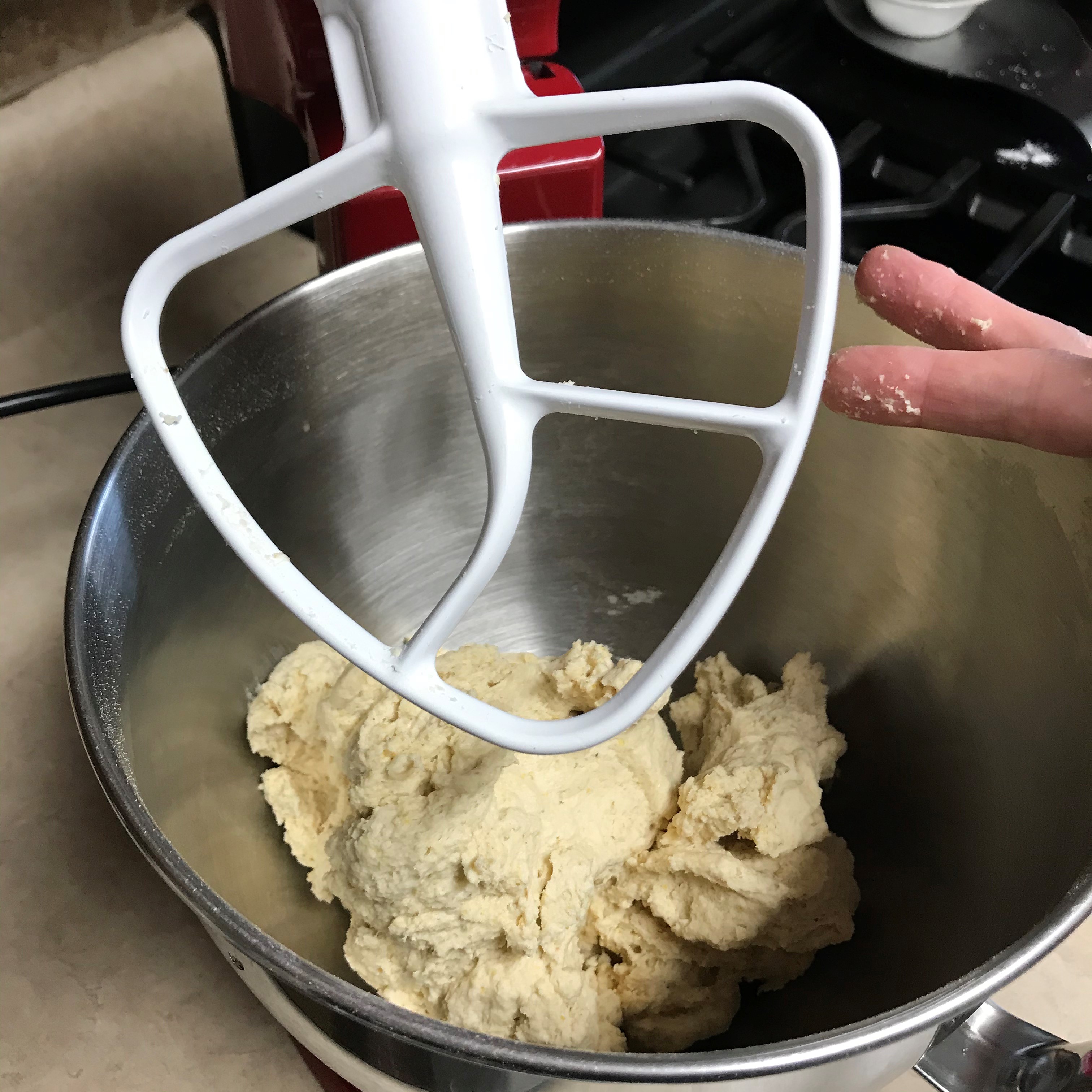
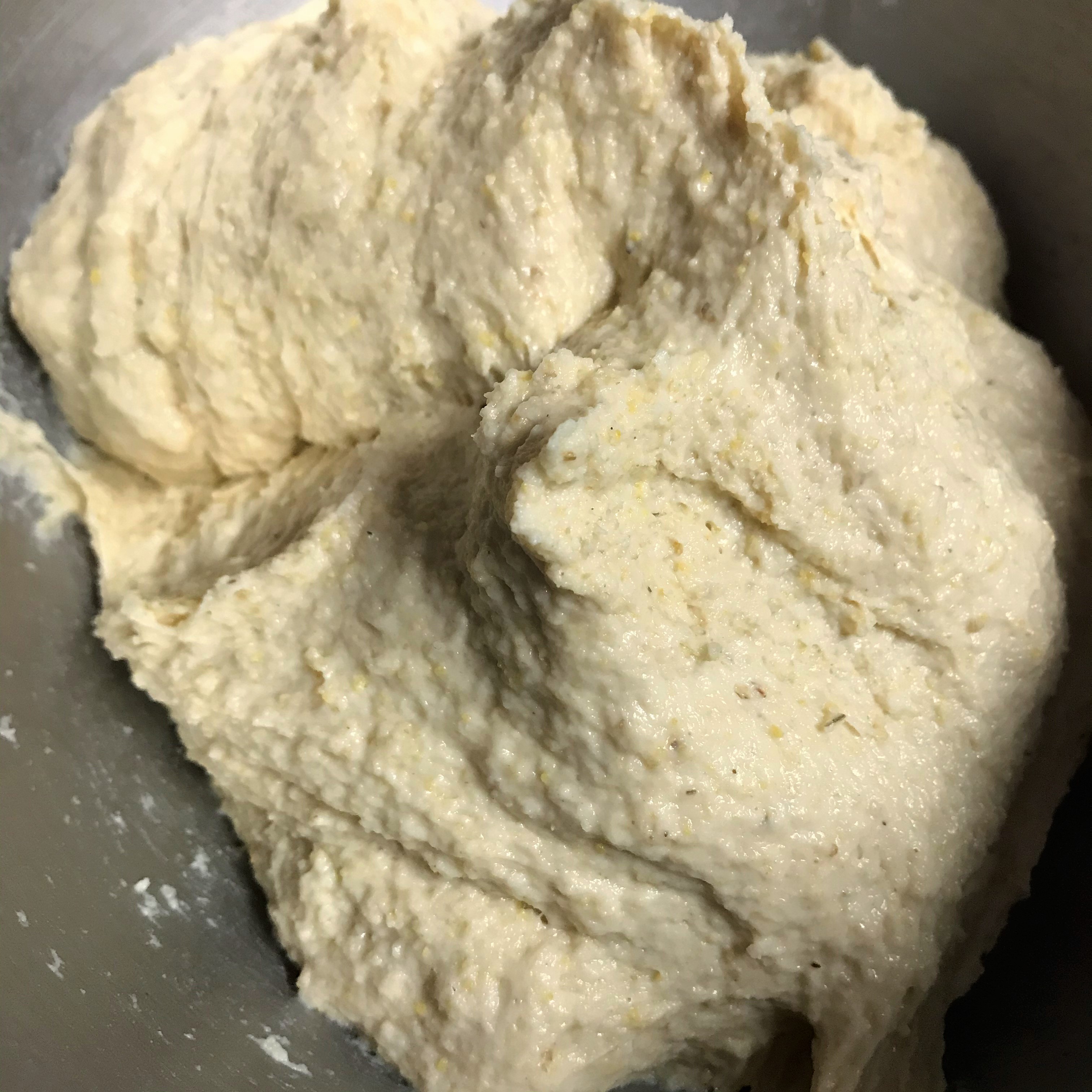
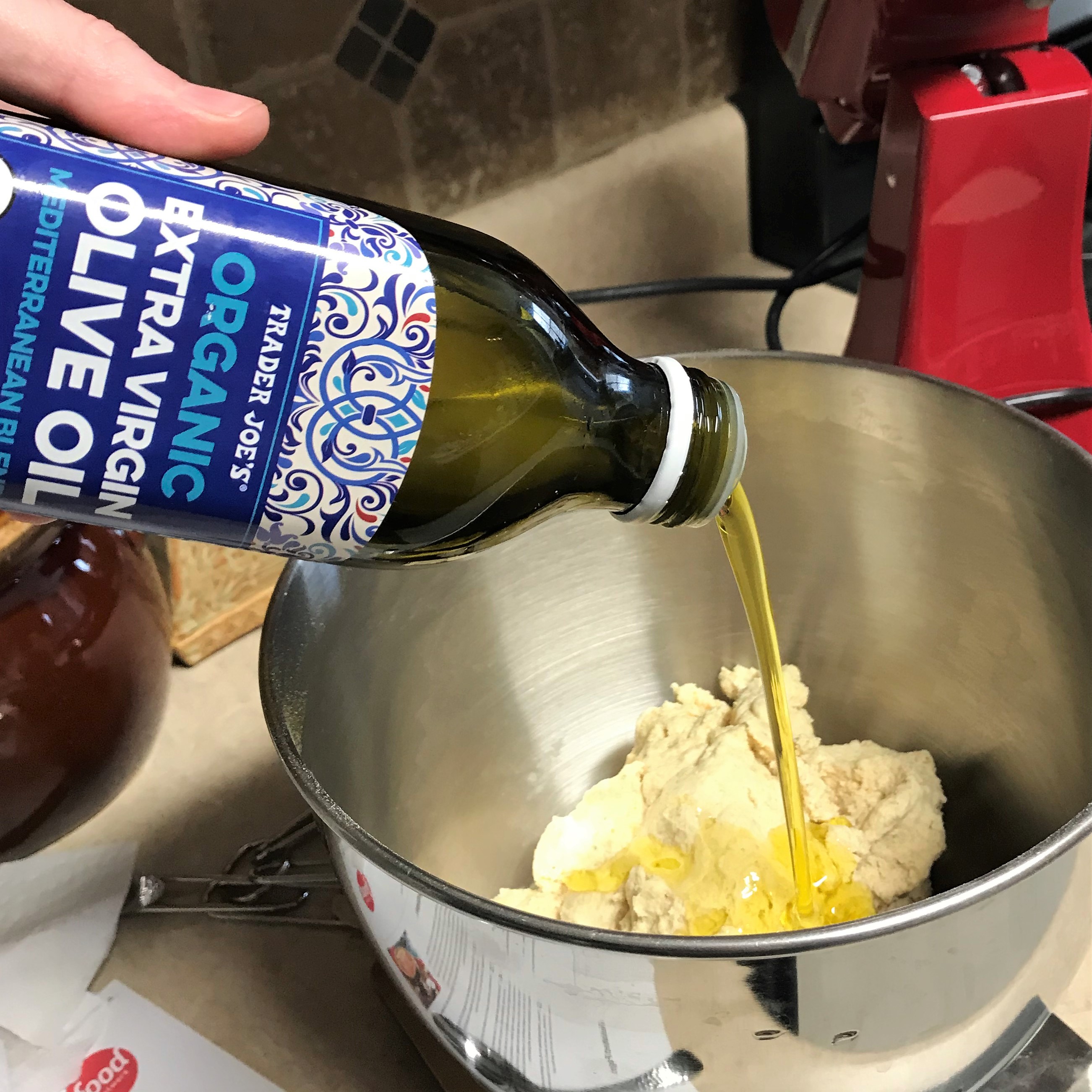
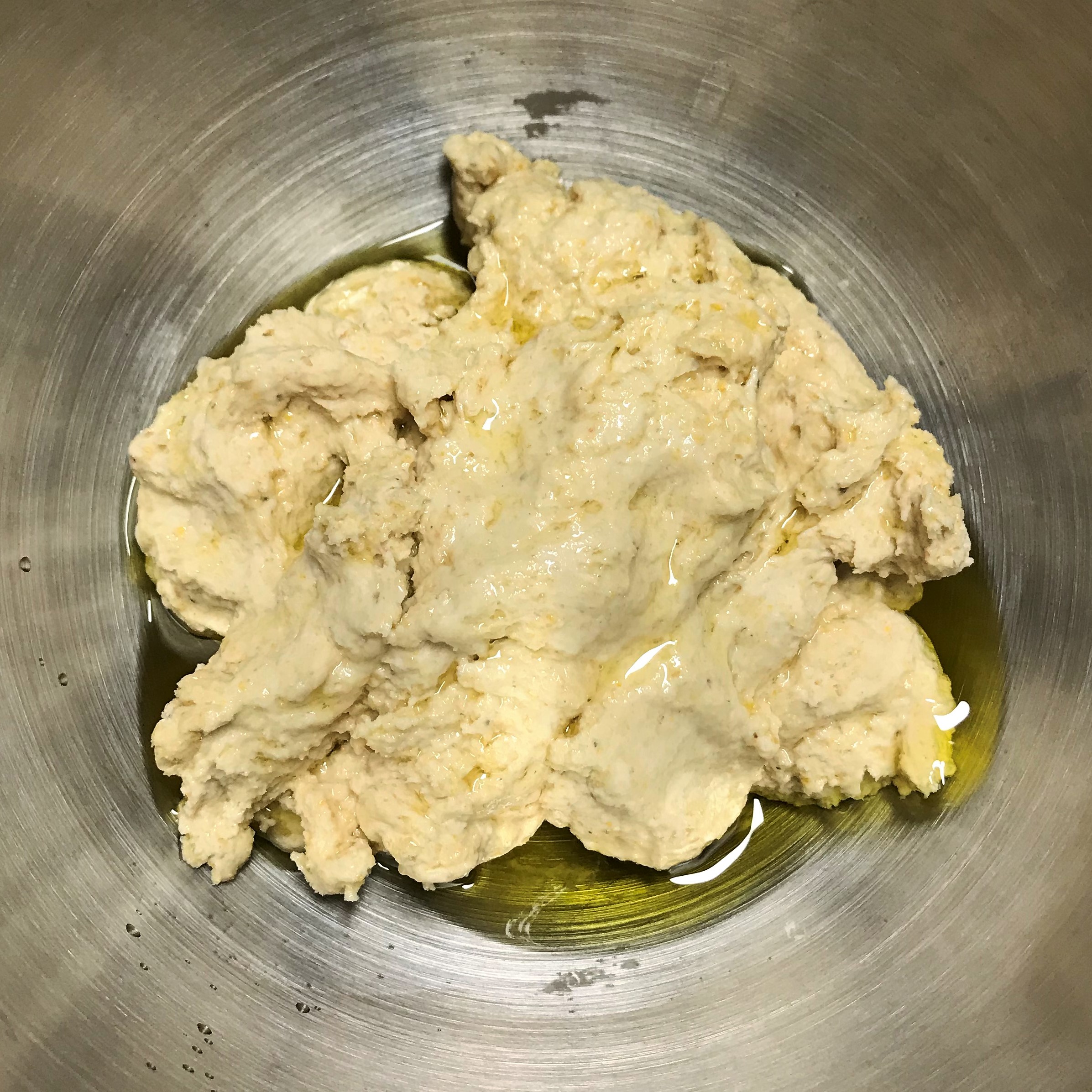
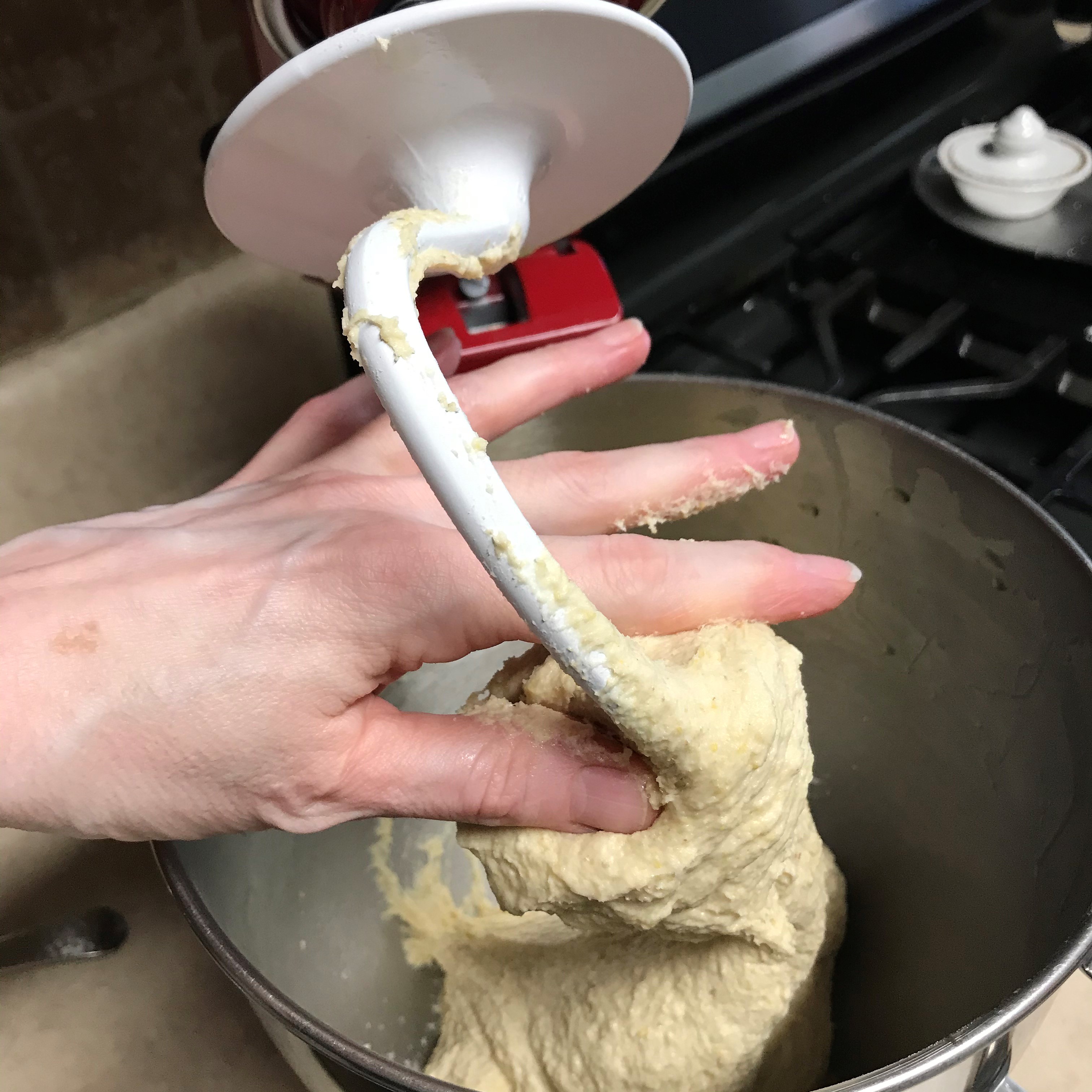
  2. In a stand mixer or large bowl, combine yeast mixture with flour, cornmeal, salt and remaining water (and sugar, if you didn’t use it to bloom the yeast). Mix until a soft, shaggy ball of dough forms. Pour in olive oil, cover and let rest about 15 minutes.
  3. Knead in olive oil until dough is soft, smooth and sticky. This should come together within about 3 minutes. Transfer dough to a lightly oiled clean bowl, cover and let rise at room temperature until it’s doubled in size. This may take up to 6 hours, depending on the yeast method and the warmth of your kitchen. If you want to speed it up a bit, put the covered bowl in the oven with the oven light on, and check on it at the 3 hour mark.
  4. Prep the other pizza ingredients by browning sausage, onions and peppers. Sauté spinach leaves until wilted and moisture is cooked out of them. Slice or shred your cheese. Drain the can of tomatoes, reserving puree and juice for another purpose. Set all topping ingredients aside until dough is ready to bake. Keep the cheese in the fridge until it’s time to bake.

  1. Preheat oven to 450° F, with a rack in the center position of the oven.
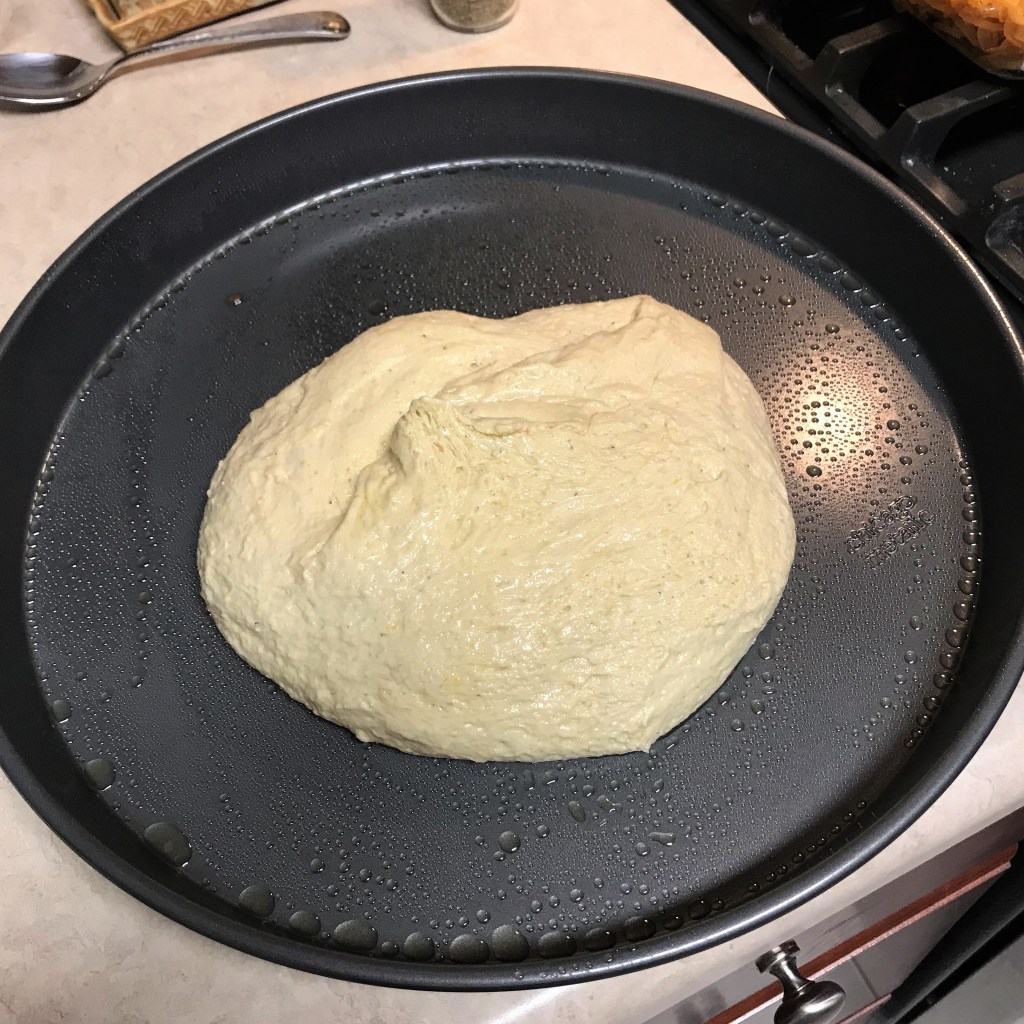
  2. Spray your deep dish pan or skillet with olive oil spray and transfer risen dough to the pan. Using your hands, spread dough out across the pan, gently stretching to meet the edges and up the side of the pan. The dough may spring back a bit but this is OK. Cover with a clean towel for 10 minutes to relax the gluten then proceed with the dough shaping. If you’re using a 12-inch skillet, you may only need about 3/4 of the total dough.
  3. Layer the sliced mozzarella all over the bottom of the pan, on top of the dough, with edges of the cheese overlapped for good coverage. I ran out of slices and filled in gaps with shredded mozzarella—no big deal.
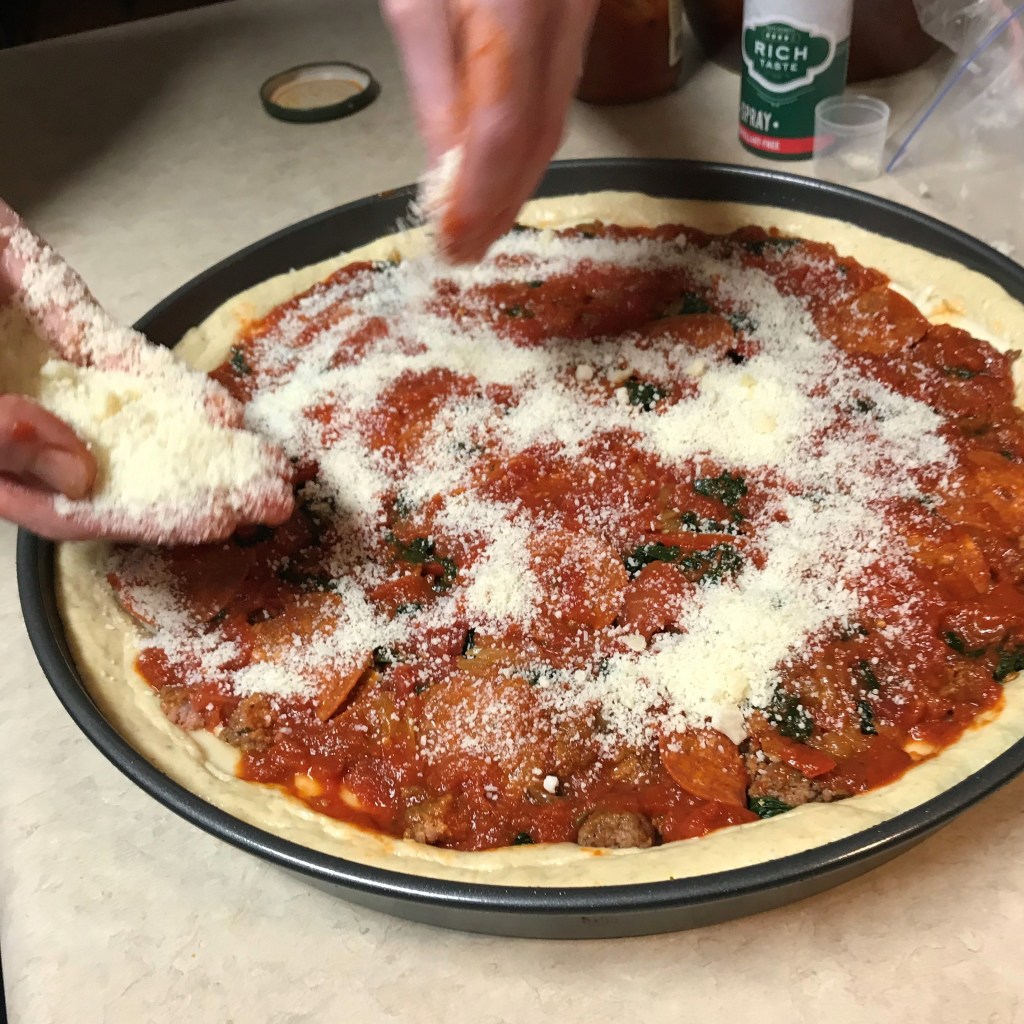
  4. Scatter the browned sausage crumbles evenly over the cheese, then layer on the sautéed onions, peppers and spinach. Finally, arrange the pepperoni slices evenly around the pizza.
  5. Use your hands to squish each plum tomato slightly, and arrange them all over the top of the pizza. Spoon the pizza sauce into the gaps between tomatoes.
  6. Liberally sprinkle the parm-romano blend cheese completely over all the pizza toppings, and finish with a swirled drizzle of olive oil. I saved the grease from browning the sausage and drizzled that on top. No sense wasting that flavor, right?
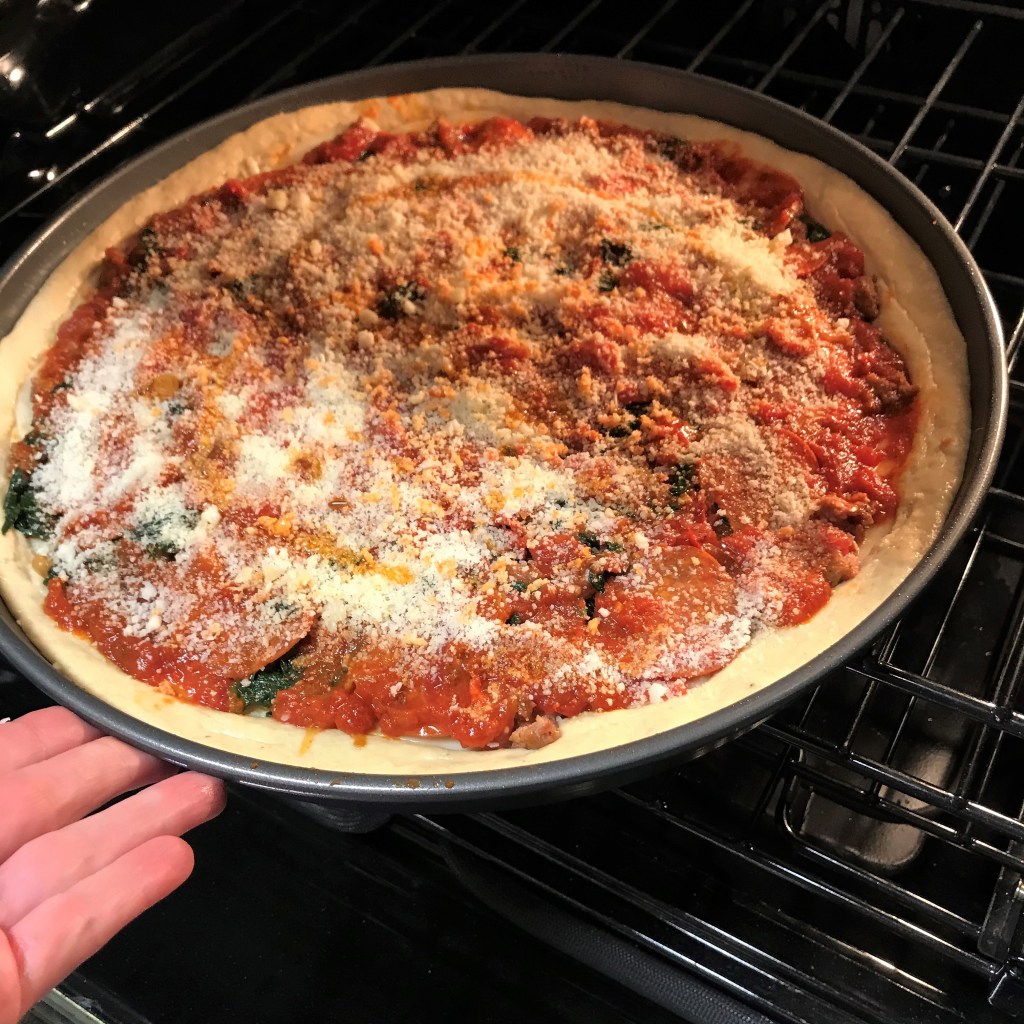
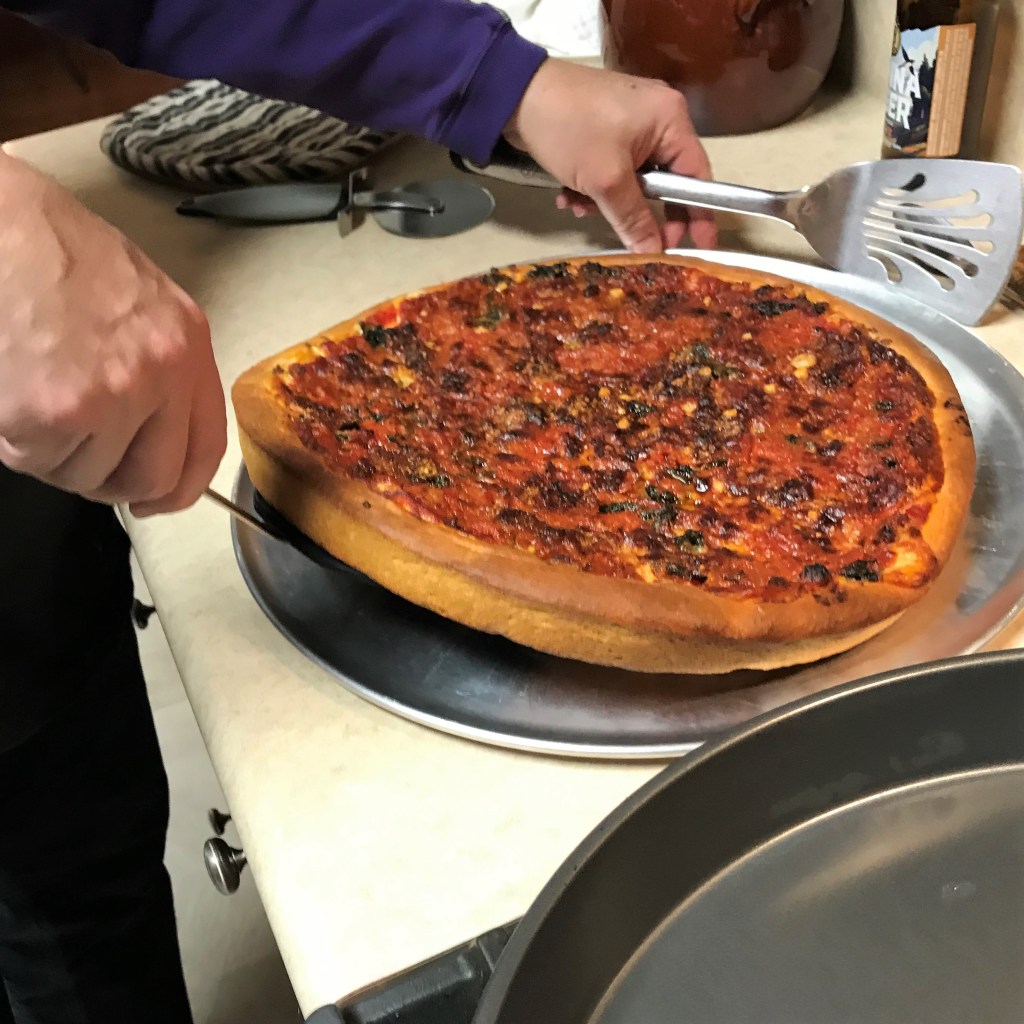
  7. Slide pizza pan into the oven and bake 25 minutes, until crust is evenly browned and parmesan cheese is golden and bubbly. Give it a turn at the halfway mark for even baking. Allow pizza to rest at least 5 minutes, then carefully slide it out of the pan to a pizza sheet for serving at the table. My husband is good at this part, and he was able to move the pizza using two large spatulas on either side of the pie. If it’s too difficult, cut and serve directly from the pan.

Of course, we could not resist an extra sprinkling of our spiced-up parm-romano blend for serving.

Want to give it a go?


Challah Dressing with Venison Sausage and Kale

Somehow, this combination of random freezer leftovers worked itself into the dressing my husband, Les, declared on Thanksgiving to be his “favorite ever.” When we made the decision to scale back Thanksgiving for pandemic safety and change up the menu to experiment with new flavors, I thought immediately of the crudely labeled white butcher-wrapped package in my freezer. The venison sausage had been gifted to me a few years ago by a friend I knew from pool hall, where I played in a 9-ball league. Johnny does both bow and rifle hunting, and in a good season, he’d have venison to spare for lucky friends like me. And if you were in the right place at the right time, you’d be lucky enough to taste his venison jerky. Wow.

I’ve wracked my brain to decide how to describe the flavor of venison to any reader who has never tasted it. Texture-wise, it’s similar to beef, but extremely lean so it’s firmer and drier. The flavor is more wild than beef, but less gamey than lamb. Some say venison is an “acquired” taste, but I’ve been eating it since I was about 6 years old, so I can’t say for sure. My stepdad was a deer hunter, and it wouldn’t have been unusual for me to come home from first grade and find a deer carcass hanging upside down from a tree. In my teens, I’d enjoy a free day off as my rural high school was closed for the first day of deer season. Kind of hard to have classes with half of the upperclassmen (and the teachers) all out. I remember eating venison in soup and chili from such a young age, and once biting into a piece of overlooked buckshot. My enjoyment of this wild game meat is as old as any other food memory I have.

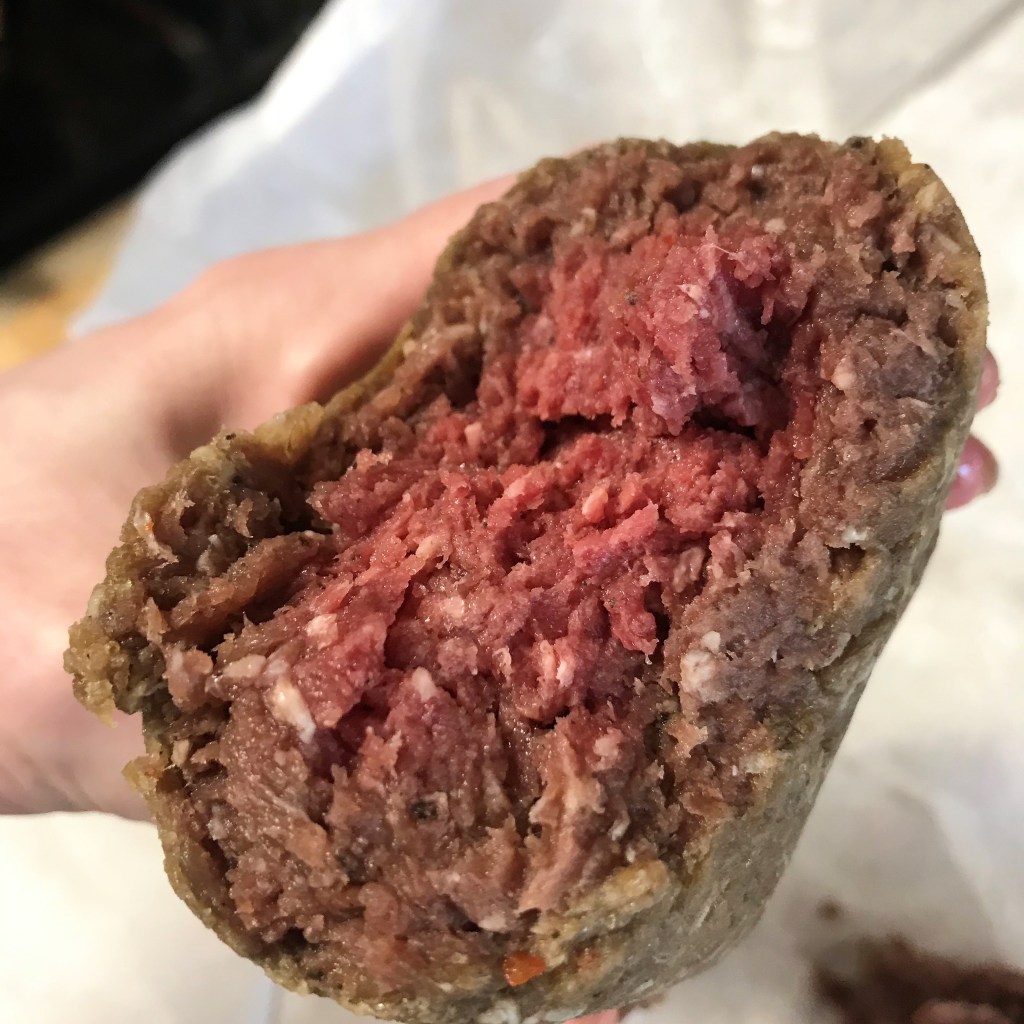
I have no excuse for not using the venison sausage sooner, except that I hadn’t felt inspired, and I feared that after four-plus years in the freezer, the sausage would be too far gone to use. But I may as well have a look, I thought, and when I finally was able to unwrap all five layers of plastic film, I found that it was not the total disaster I’d expected. The outer edges were browned and smelled like the freezer, but inside the meat was red, smelled sweet and was perfectly usable.

Only the outside of the venison was discolored from the freezer. I cut those outer edges off and used the red meat inside in the dressing.

So use it I did. I cut away the freezer-burned outer edges and used them to make some homemade cookies for our dog (don’t worry, I researched to learn that freezer-burned meat isn’t dangerous, and Nilla loved them). And the rest of the venison sausage, about 10 ounces, became the star of my dressing.

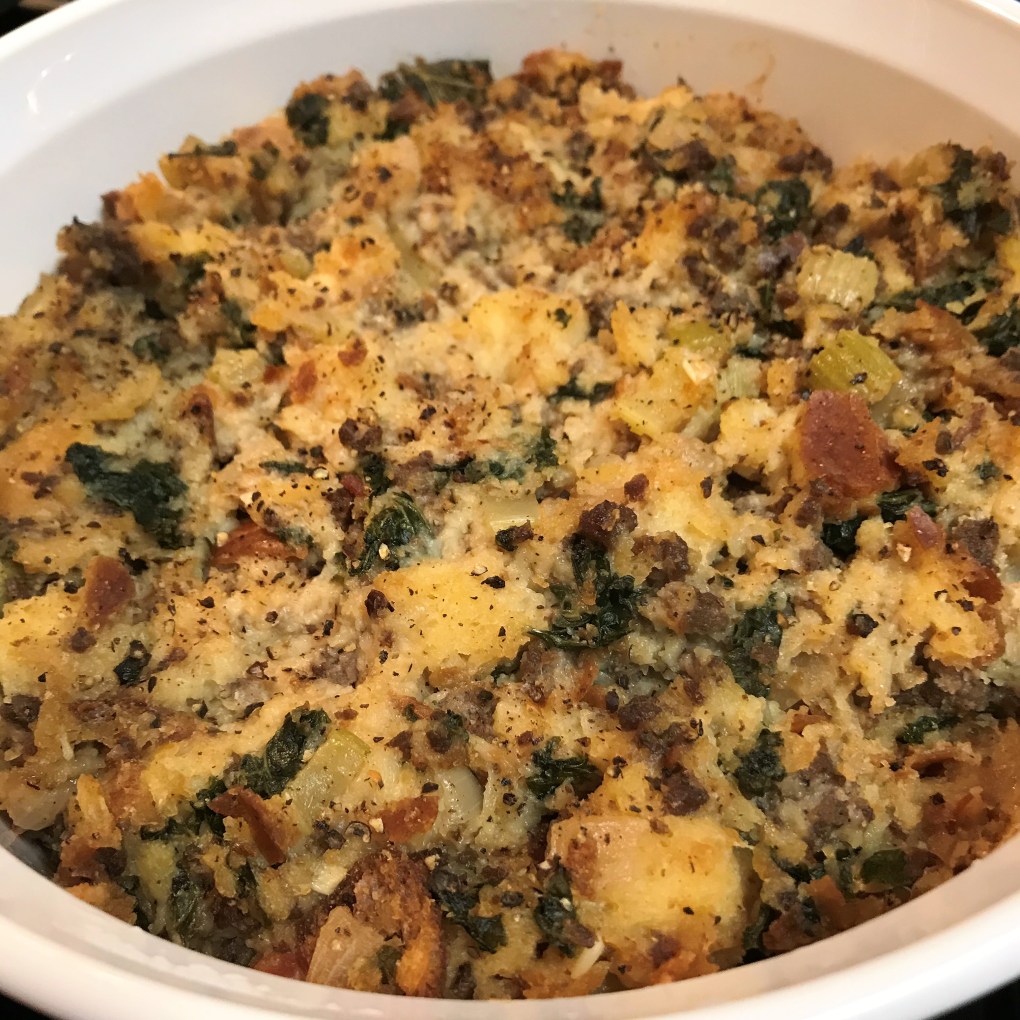
With non-traditional flavors already at the center of our holiday table, I browned up the venison sausage and used it to flavor this dressing, which also included cubes of challah (also from the freezer) and kale with celery and onions. For a spicy kick, I added a few pinches of dried chipotle flakes. Butter and vegetable broth completed the dish, and—well, it was awesome.


Ingredients

10 oz. ground venison or venison sausage

1 or 2 slices of uncured smoked bacon, cut into 1/2″ pieces

1 Tbsp. extra virgin olive oil

1/2 medium onion, chopped

3 ribs celery, chopped

Kosher salt and black pepper

1 fat handful kale leaves, washed and heavy stems removed

3 Tbsp. salted butter

2 1/2 cups vegetable broth (low sodium preferred)

4 cups challah cubes, dried in low oven

1 egg, lightly beaten


Instructions

  1. Crumble venison sausage and cook it with bacon slices in the cast-iron skillet. When browned, transfer sausage to a bowl.
  2. Heat olive oil in same skillet, and sauté onions and celery until slightly softened. Add chopped kale and continue to cook until wilted. Season with salt, pepper and chipotle flakes. Transfer mixture to the bowl with the sausage. Refrigerate if working ahead or proceed to the next step.
  3. Place a large saucepan over medium heat. Melt butter, then add vegetable broth and heat until butter is melted and liquid is warm.
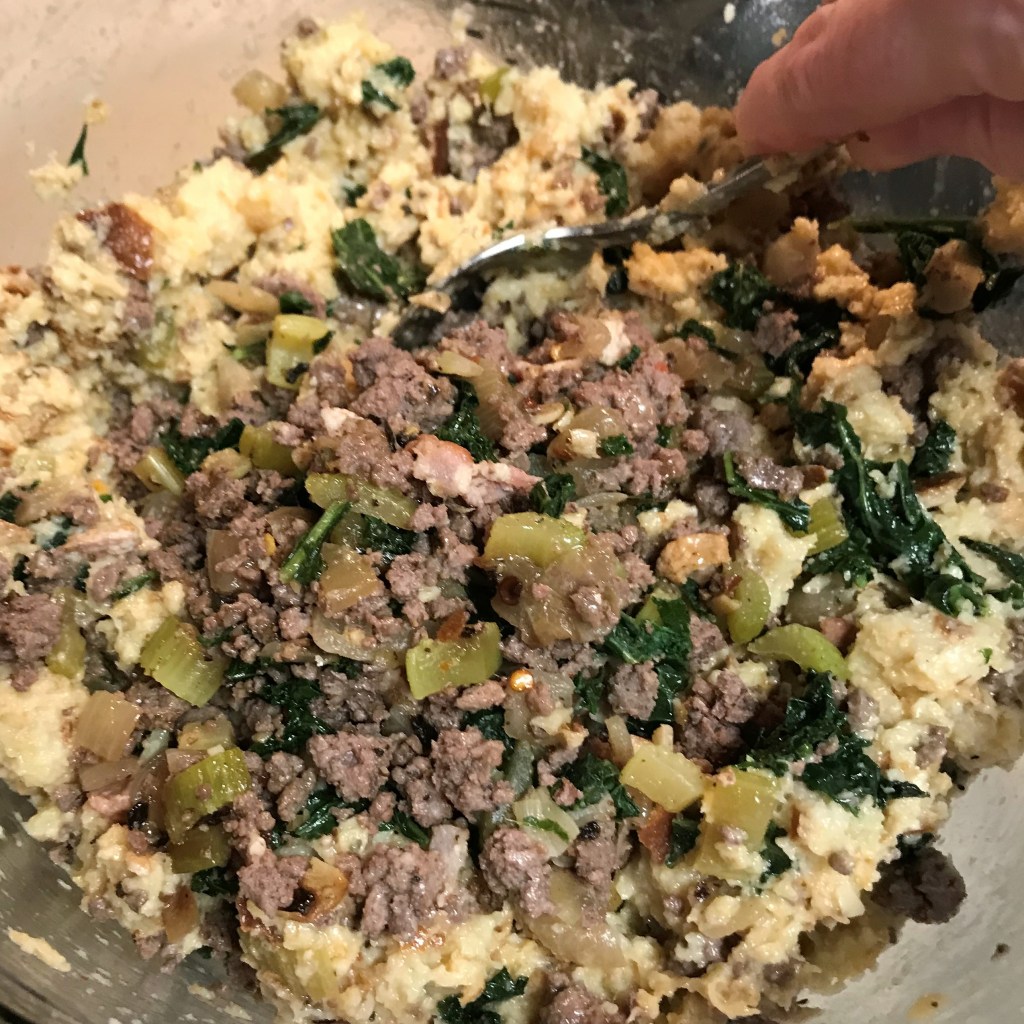
  4. In a large bowl, toss to combine challah cubes and half of the buttered broth. When moisture is mostly absorbed, add the remaining broth and toss again. Fold in beaten egg until mixture is uniform and fully moistened.
  5. Fold in venison sausage mixture and blend to combine. Transfer dressing to a buttered casserole dish. Refrigerate until ready to bake.
  6. Preheat oven to 350° F. Bake dressing, covered, for about 35 minutes. Remove cover and bake 15 minutes further, to crisp up the top.
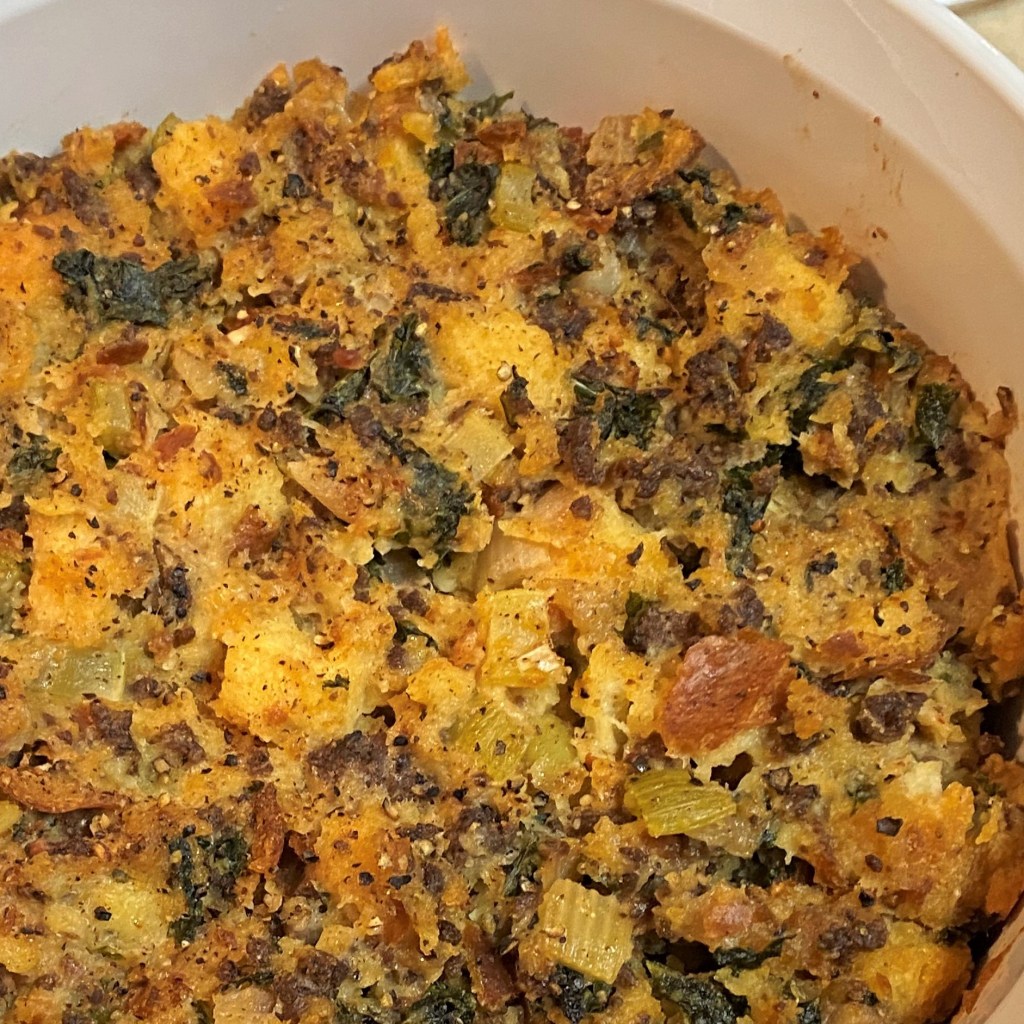
The delicate and eggy challah was a pleasant contrast to the earthy flavors of the venison and kale. A total winner!

Want to make this recipe?


Here’s a behind-the-scenes extra idea for leftover dressing:


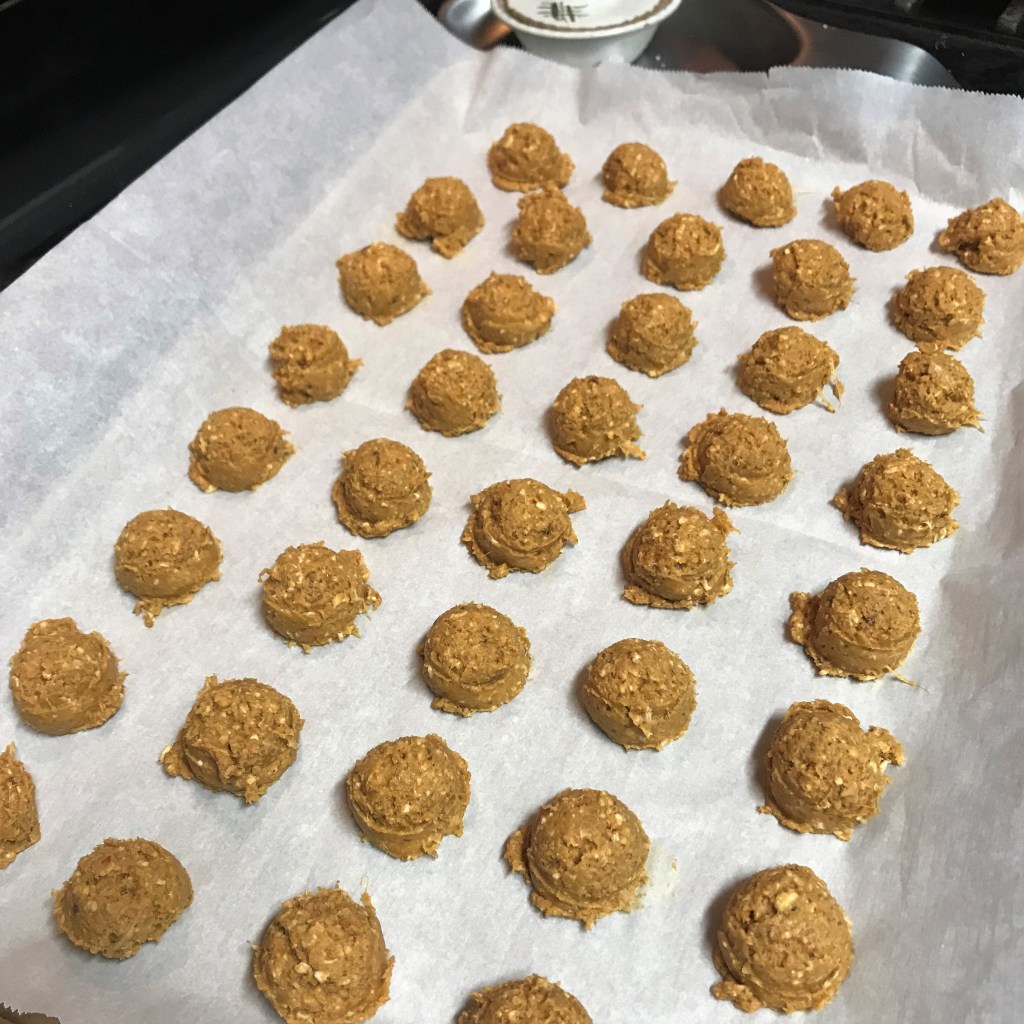
And, in case you’re wondering about the venison cookies for Nilla:

I mixed the freezer burned extra venison with some canned pumpkin, rolled oats, brown rice flour and an egg, then scooped and baked them at 300 for about an hour. I love to spoil our dog! ❤

“Un-stuffed” Cabbage Roll Soup

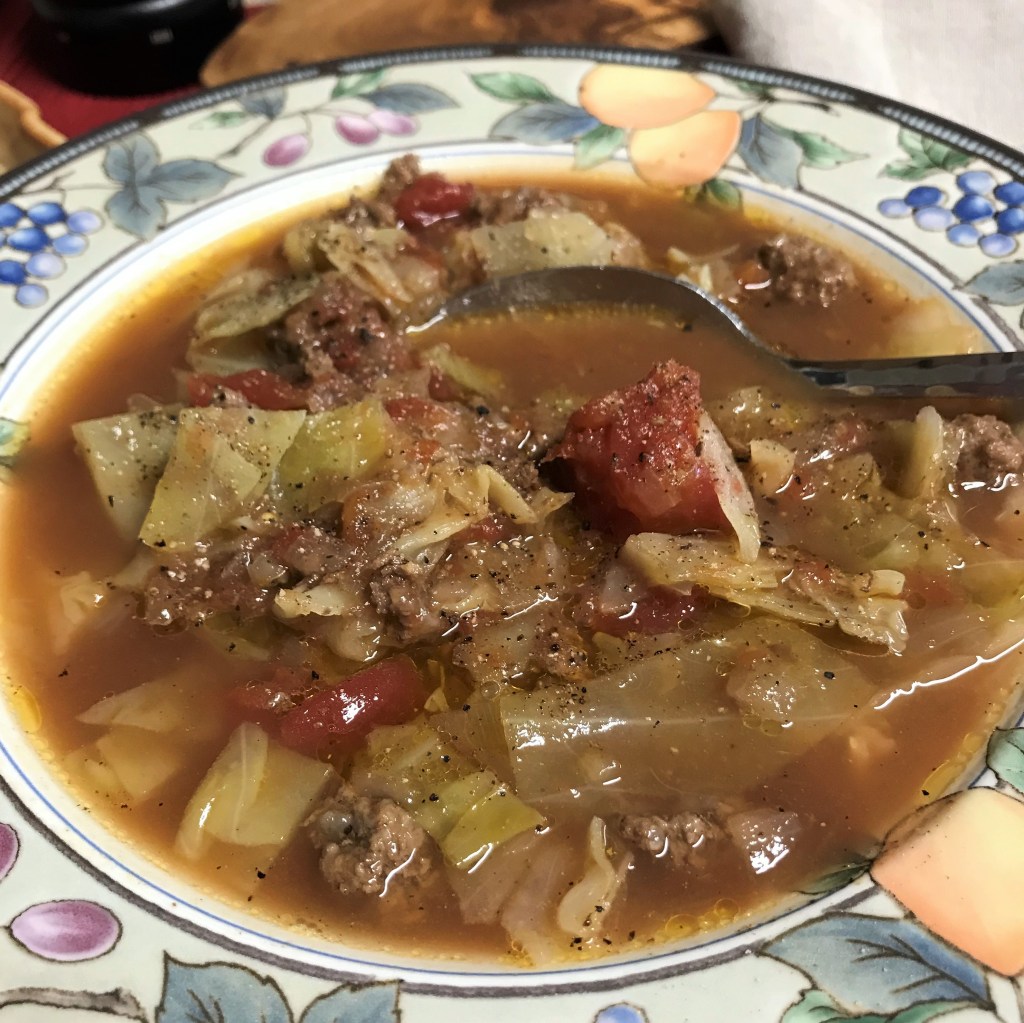
One of my favorite things to do in the kitchen is an unexpected twist on a food from my childhood. I remember seeing a recipe card in some family member’s collection for a dish called “glumpkies” or “go-umpkees” or something like it. Who knows the story on the name of the dish, but I remember that I really liked these rolled up packages of seasoned meat and rice inside tender leaves of cabbage and smothered in rich tomato sauce. It was pure comfort food, and though I’ve made them plenty of times in their classic form, I much prefer this simple, one-pot interpretation.

My Comfort du Jour twist on stuffed cabbage is what you might call a “deconstruction,” and it makes the classic dish a lot more approachable with minimal effort. It’s a pain to pre-cook the cabbage for traditional stuffed rolls, and in many ways, it even feels dangerous. I’ve burned myself in some of my early attempts to make the rolled-up version, and in some other attempts I’ve ended up with too much of the cabbage head remaining, and limited options for how to use it because it’s been boiled. That certainly won’t work for cole slaw, and what else are you gonna do with a bunch of extra, partially-cooked cabbage?

One of the flavors I always associate with cabbage rolls is caraway, the same seed that gives deli rye bread a distinct seasoning. I don’t know where the caraway was introduced to this dish for me, but it adds a little something that really works with the rustic chunks of cabbage, tomato and ground beef. If your family has a favorite traditional season, consider how you might put your own spin on my recipe with those beloved flavors.

The rest of the ingredients are simple, and you only need a medium stockpot and about an hour of simmering to get it on the table. Enjoy!

Served with a slice of crusty bread, this soup is hearty, satisfying and comforting.

Ingredients

1 lb. lean ground beef (90% lean is good)

1 tsp. caraway seed, crushed or milled in a spice grinder*

1 medium onion, rough chopped

Extra virgin olive oil

2 cups green cabbage, rough chopped

15 oz. can diced tomatoes, preferably low sodium

Salt and pepper

1 32 oz. carton beef broth, preferably low sodium

Cooked brown rice for serving


*Notes

Caraway seed is the same spice that gives rye bread a distinctive flavor. I’m not sure how I came to associate this flavor with stuffed cabbage rolls, but it is really delicious with the cabbage, tomato and meat. Substitute your own favorite flavor, or simply omit this ingredient. The soup will be delicious either way!


Instructions

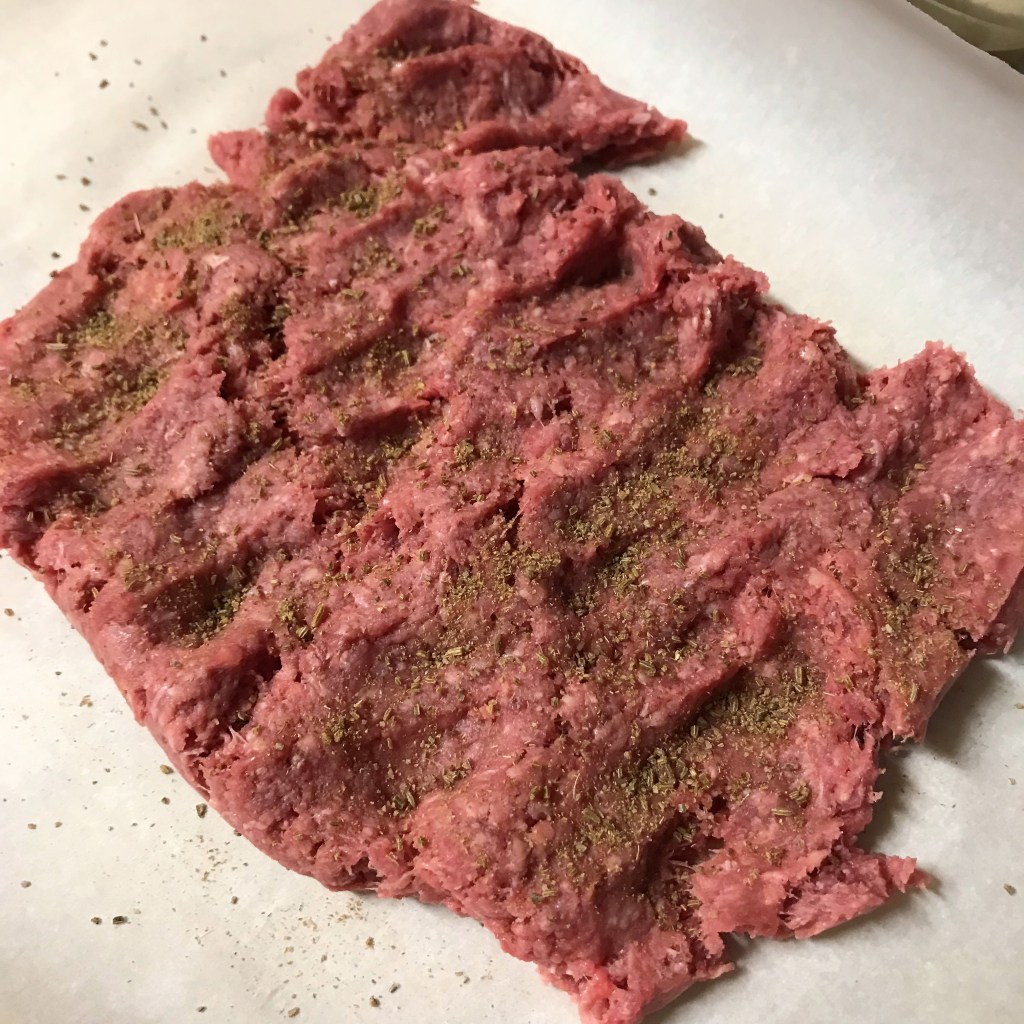
  1. Press ground beef on a cutting board or parchment into a flat shape, about 1/2″ thick.
  2. If you have a spice grinder or mortar and pestle, use it to crush or grind the caraway seed into smaller bits. This is not essential, but it contributes flavor without the seed texture.
  3. Sprinkle the caraway powder or whole seeds all over the surface of the ground beef, and press to fully adhere it.
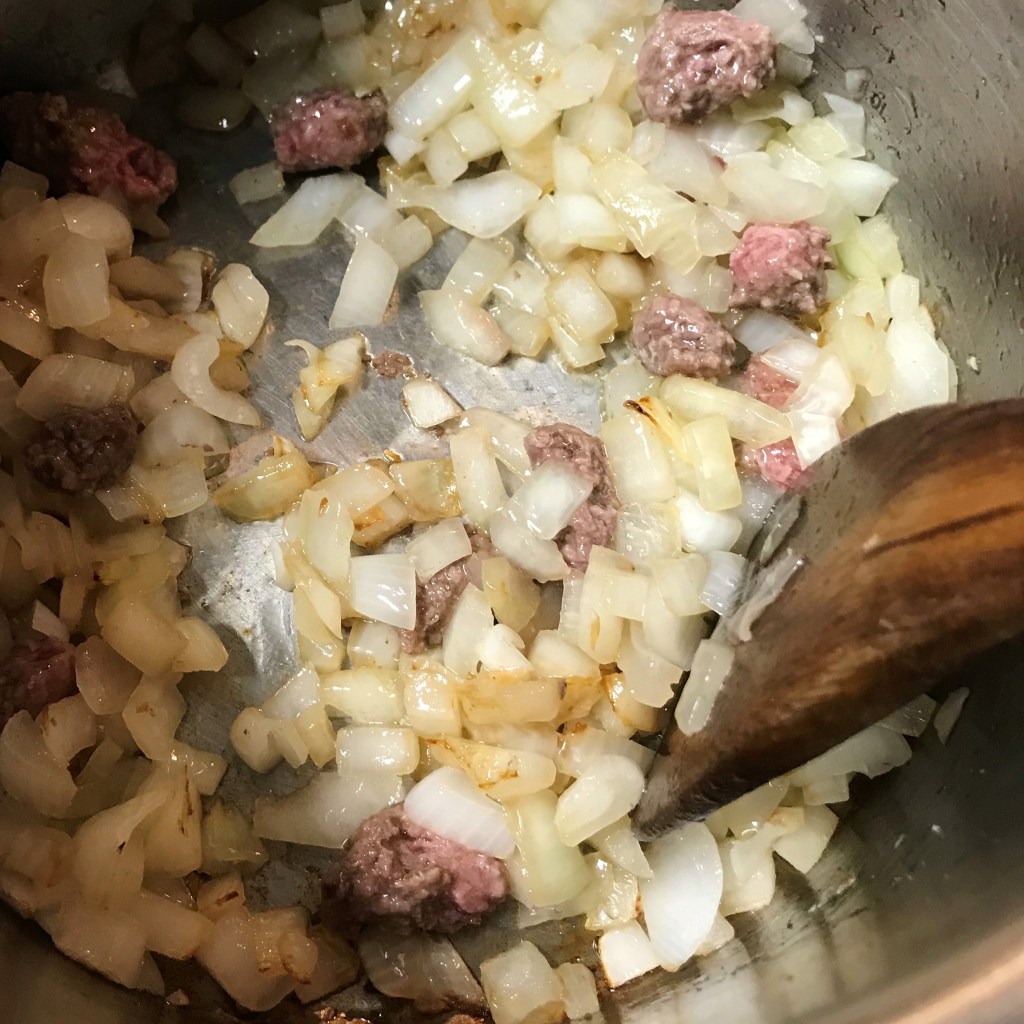
  4. Place a medium, heavy-bottomed pot over medium heat. Swirl in about a tablespoon of olive oil. Add onions and sauté until slightly softened and golden. Season with salt and pepper.
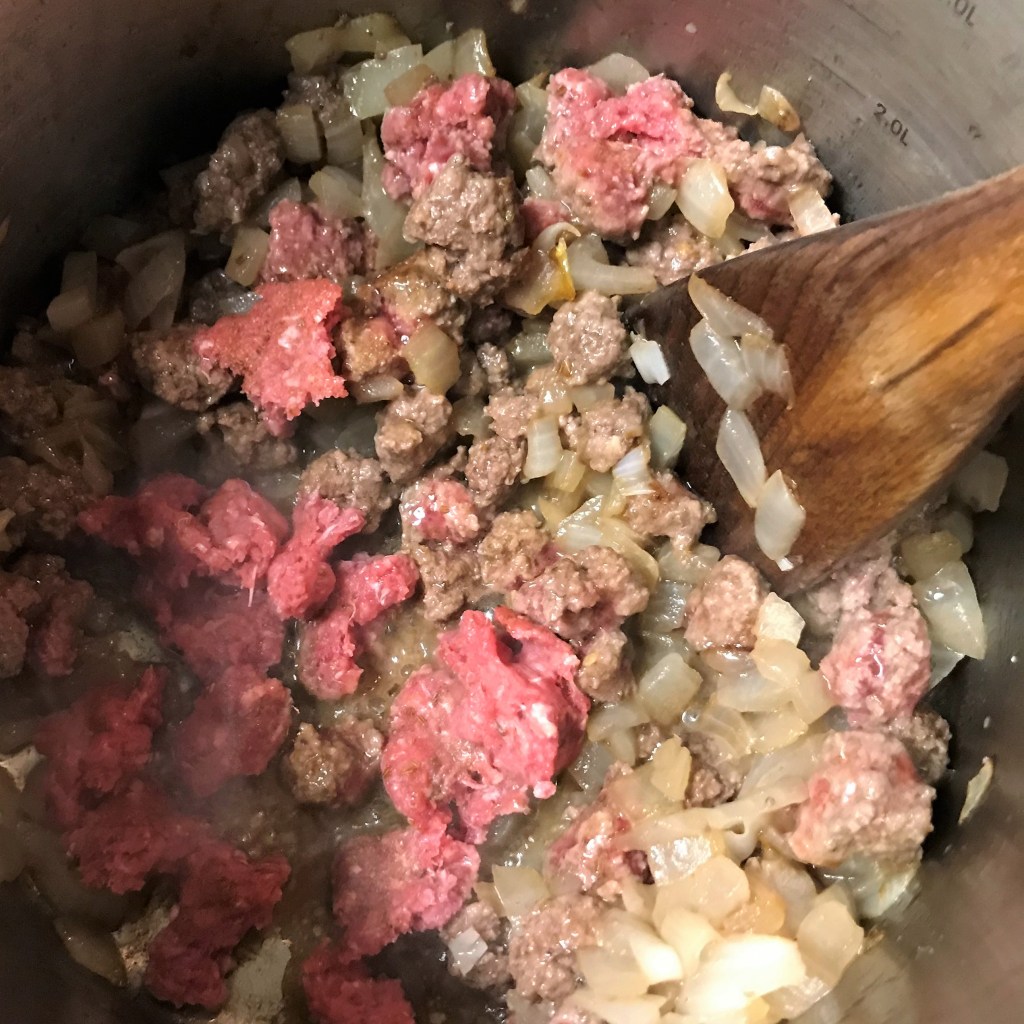
  5. Tear off bits of ground beef and add them, only a few at a time, tossing in the hot oil to cook the edges before adding another small handful. Repeat until all ground beef is lightly browned. Avoid the temptation to add all the meat at once, as this will result in mushy meat rather than browned, individual bits.
  6. Add the chopped cabbage to the pot and toss to begin cooking. Add tomatoes, sauce included.
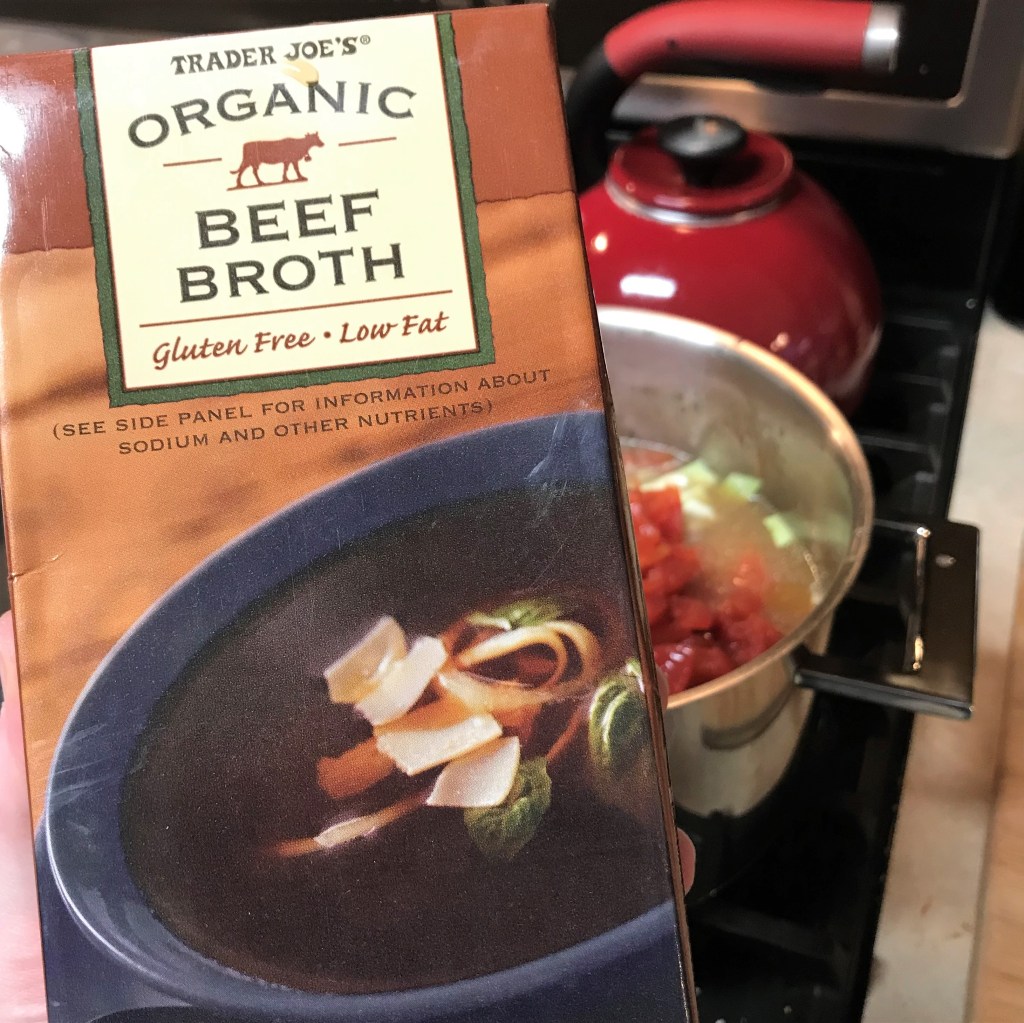
  7. Add beef broth and stir to combine. Allow mixture to come to a light boil, then cover and reduce heat. Simmer about an hour, until cabbage is tender.
  8. Serve over brown rice.

Want to make this recipe?


Just South of Buffalo Wings

It was circa 1977. I was just a kid in a small town south of Buffalo, New York, and I still remember my first bite of the mouthwatering spicy hot chicken wings my Uncle Mike made for me. Mike worked with nightclub sound and lighting systems during those days, which was a big freaking deal, given that we were hanging onto the tail end of the disco era. For his work, Mike traveled into the larger cities where the clubs were, and after an installation at a club in Buffalo, he brought home with him the recipe for these delectably crispy, tangy-hot treats.

And oh my God, did I love them! Clearly, I was not alone.

It didn’t take long for “Buffalo wings” to catch on across upstate New York, and eventually the entire country. Today, though restaurants everywhere have imagined new and unusual sauces for wings, I will forever favor the original flavor of Frank’s RedHot sauce with a side of celery and chunky bleu cheese dressing. Oh, and I can never, ever get behind the idea of breading them—not in flour or batter or crumbs or whatever, though plenty of sites suggest the original 1964 Anchor Bar recipe had them coated in flour and oven-roasted. That sounds suspicious to me, given that I’ve enjoyed them deep-fried for decades. The wings should be crispy, as they were on that hot summer night in ’77, and they should make my eyes water just from the smell of them. Just give me what I want.

Yep, this is exactly how I remember them! (photo from Wikipedia)

The only problem I have with Buffalo wings today is the whole deep-frying thing. I enjoy them, but I can’t indulge in them very often if I want to stay healthy. A few years ago, however, I came across a new technique for preparing wings that promised the same crispy exterior and juicy interior, but without deep frying or any amount of oil at all. Pinch me, I thought; I must be dreaming. And then I tried this simple little hack and it was as if angels were singing inside my head.

Friends, the non-fried wings are 100% as delicious as the crispy deep-fried Buffalo wings I tasted back in the day, and you don’t need an air fryer or any other special gadgets to make them. The big thanks goes to Alton Brown of Food Network. His technique involves steaming the wings to render some of the fat, and then oven roasting them to perfection before tossing them in your favorite sauce. I’ve named these “Just South of Buffalo Wings” because that’s where I’m from, and also because I’ve thrown a twist on the traditional wings, adding a generous blast of black pepper to the usual Frank’s RedHot sauce, and a little bit of brown sugar to balance that bite.

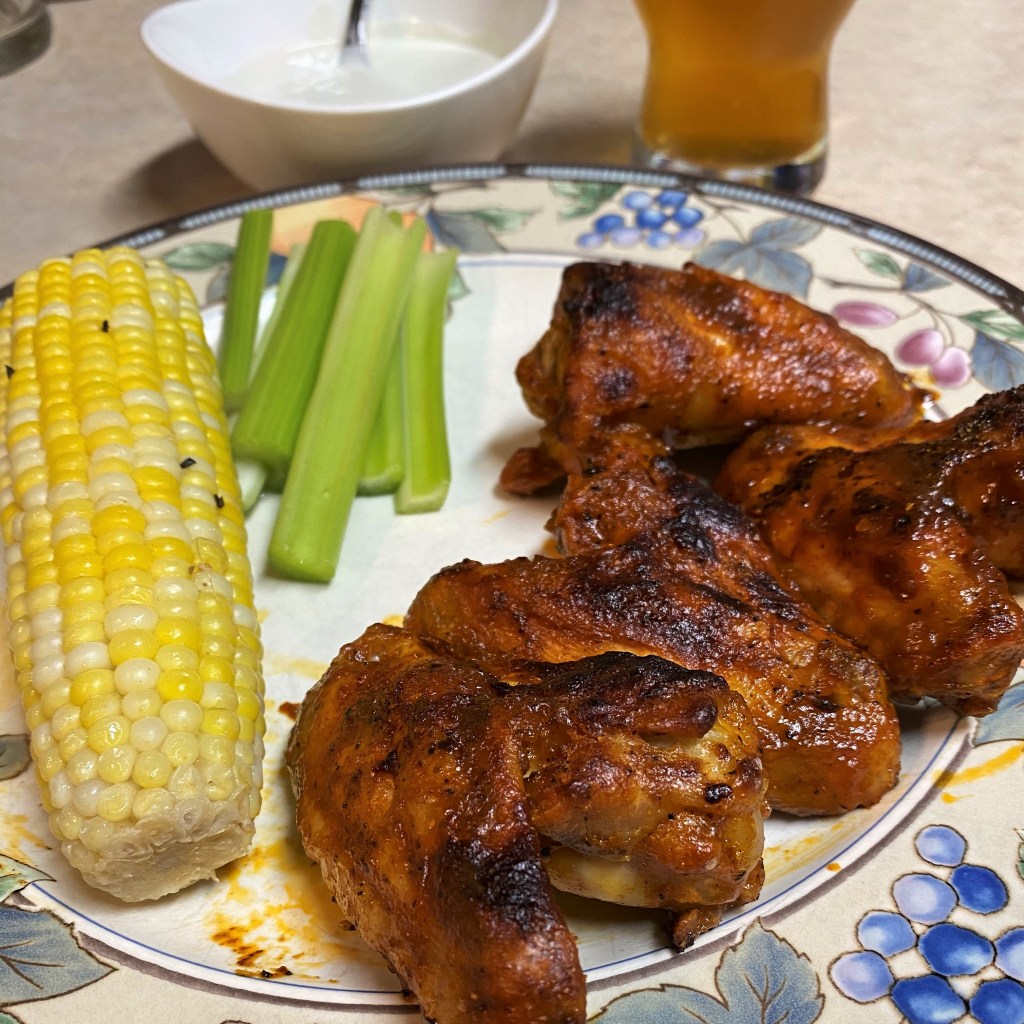
Serve these with fresh celery sticks and some homemade chunky bleu cheese dressing. And a cold beer, duh.


Ingredients

2 lbs. fresh chicken wings* (see notes)

1/2 cup Frank’s Original RedHot sauce*

1/4 stick salted butter

3 Tbsp. brown sugar

1 Tbsp. coconut aminos*

1 tsp. lemon juice

2 or 3 shakes garlic powder

1/2 tsp. black pepper


*Notes

For best results, use fresh (never frozen) wings for this recipe. If they are already split into drummettes and flat pieces, that’s fine. But it’s also OK if they are still whole pieces. I’ve done them both ways, and the only adjustment you may need to make is a bit more roasting time on the whole ones.

There are many newer versions of Frank’s RedHot sauce available today. Get the one that is labeled as the “original.”

Coconut aminos provide some depth of savory flavor to this sauce. It’s a dark-colored, liquid sauce, similar to soy sauce but sweeter and lower in sodium. It is made from the fermented sap of coconut trees, but doesn’t taste at all like coconut. You can find them in the same aisle, or substitute in this recipe with half as much lite soy sauce.


Instructions

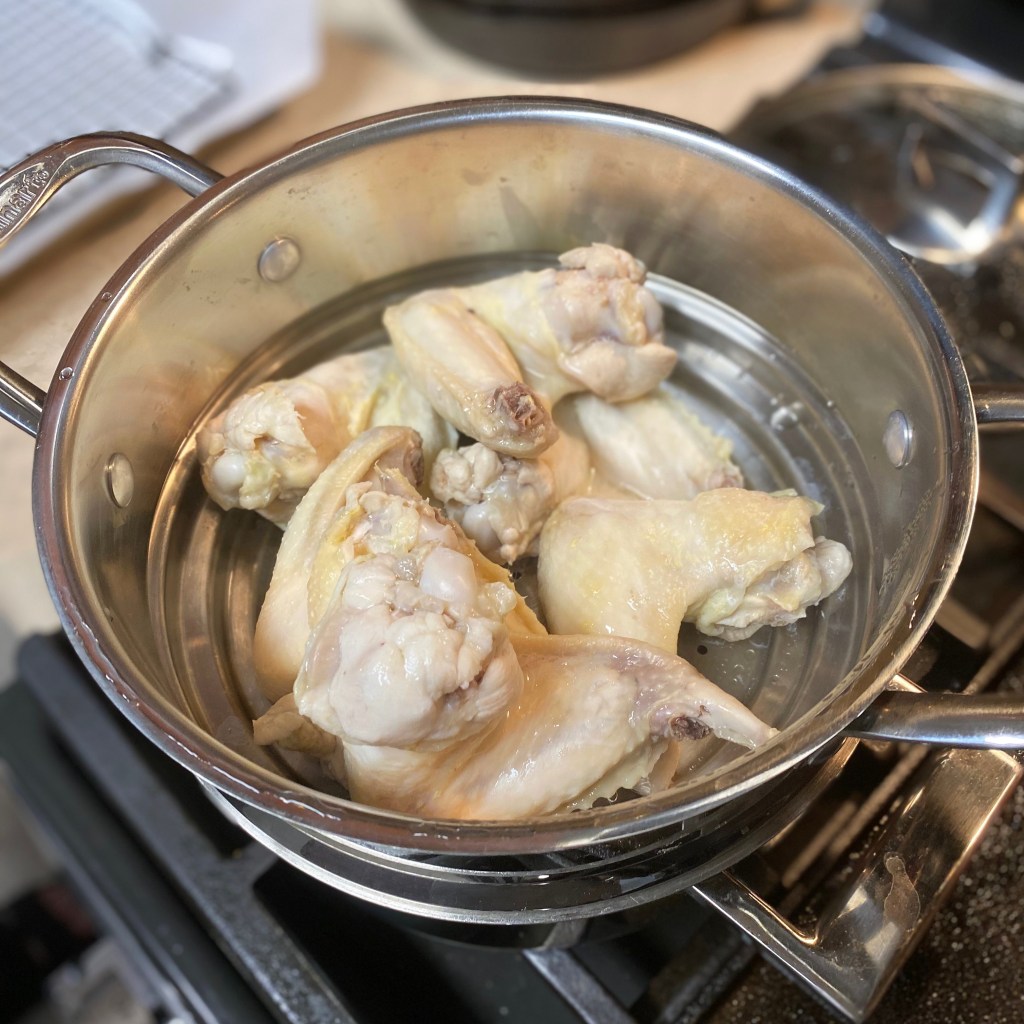
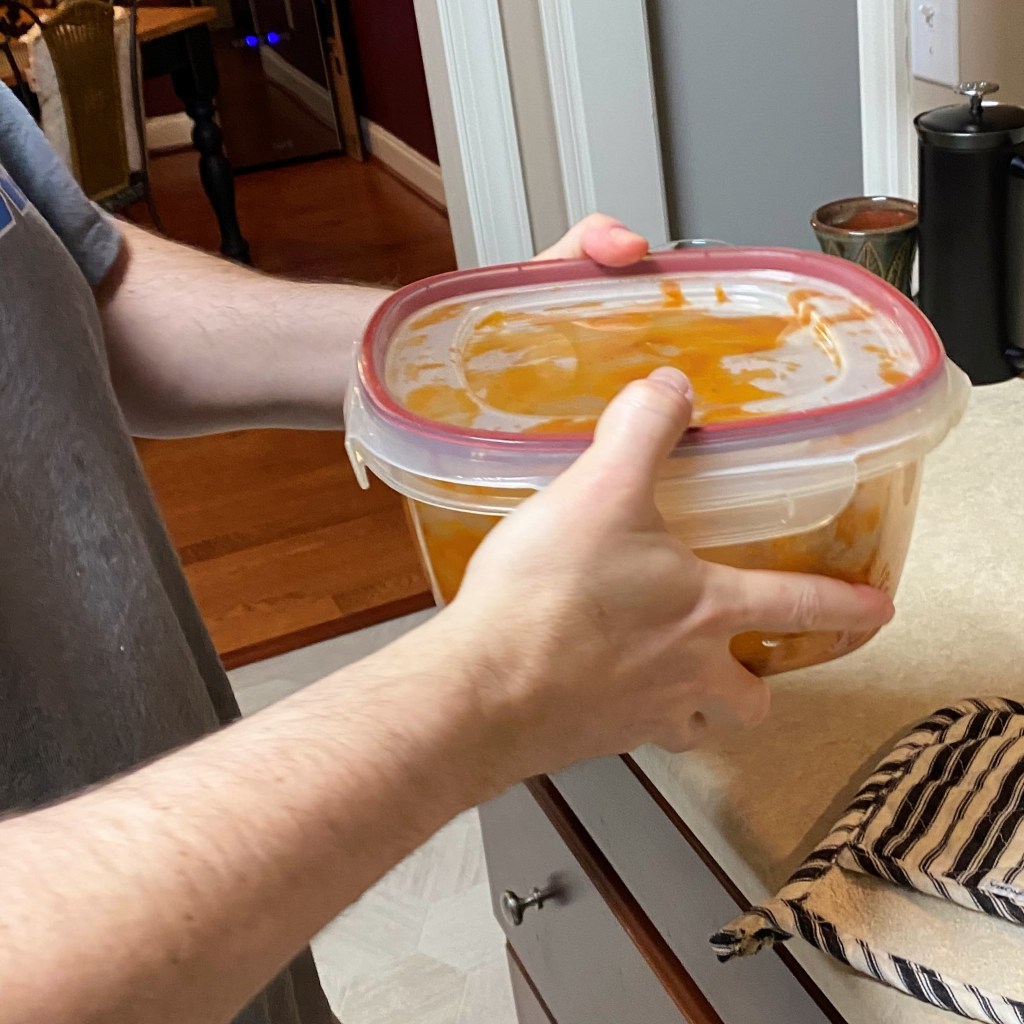
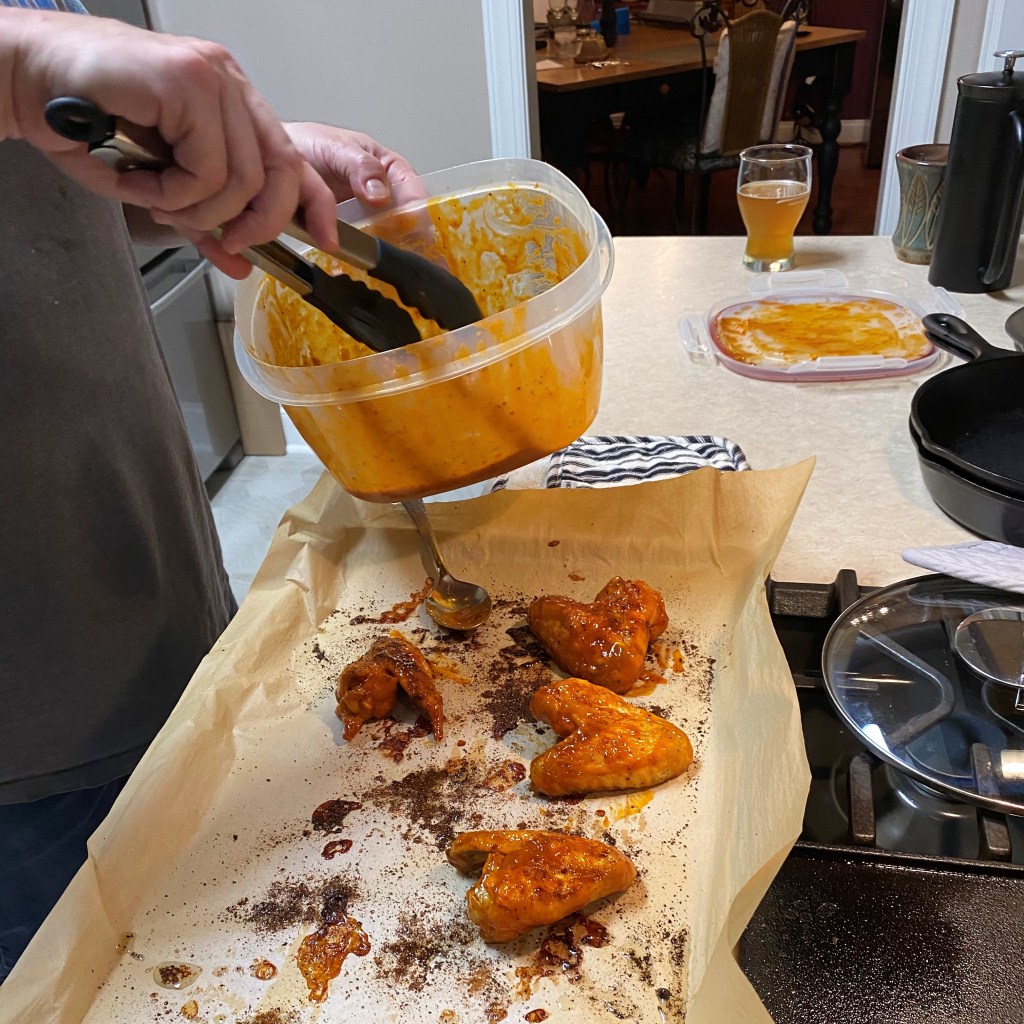
I’ll walk you through it with pictures, or you can keep scrolling for more detailed description. There’s also a downloadable version you can print for your recipe files. Begin by setting a steam basket over a pot of gently boiling water.

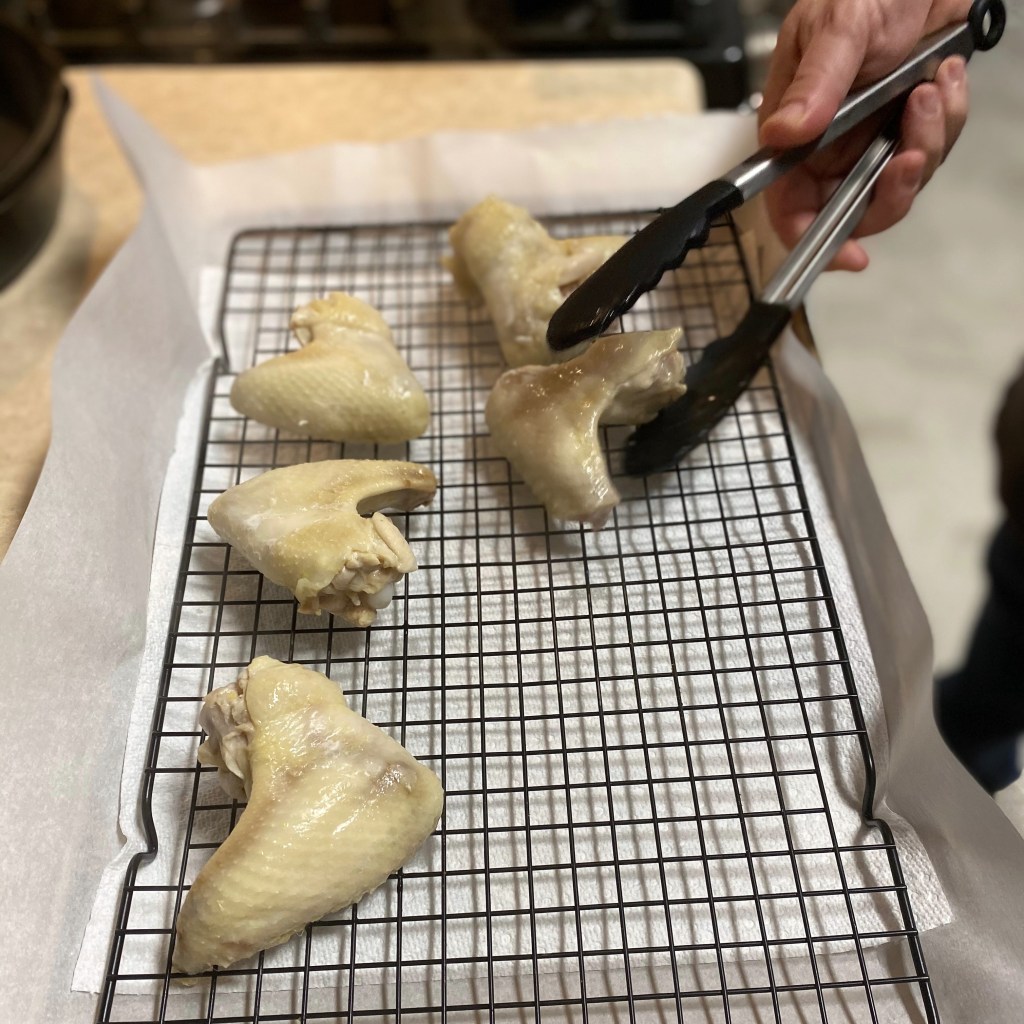
  1. Bring a couple inches of water to a boil in a medium saucepan fitted with a steamer basket and tight-fitting lid. Line a rimmed baking sheet with paper towels and place a cooling rack over the towels.
  2. Add the chicken wings to the steamer basket, working in as many as will fit at a time. Steam the wings for 10 minutes, then arrange them on the cooling rack. Repeat with remaining wings and then cool a few minutes at room temperature, allowing most of the steam to dissipate. Cover the baking sheet with foil and transfer the wings to the refrigerator until they are fully chilled, about an hour. This step is important for crisping later.
  3. Preheat oven to 425° F. Remove the chilled wings from the fridge.
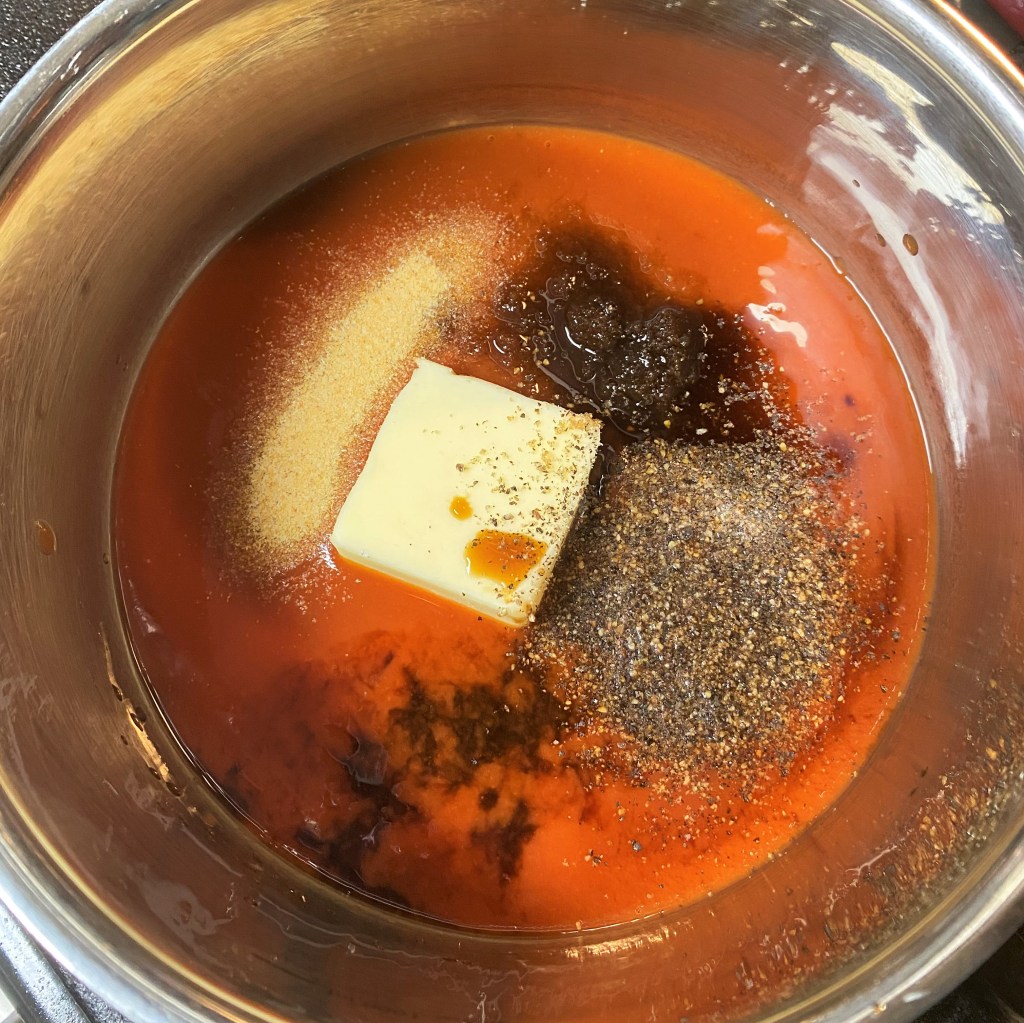
  4. Combine all the sauce ingredients in a small saucepan and heat over medium-low for several minutes, until the sauce is fully blended and slightly thickened. Turn off the burner and cover to keep the sauce warm.
  5. Roast the wings for 40 minutes, turning them once after half the time. The skin should be crispy and golden brown.
  6. Transfer the wings in batches to a large seal-able bowl. Pour enough sauce to coat the wings. Cover the bowl and gently shake to thoroughly coat the wings. Put the wings back into the oven for about 8 minutes to “seal the deal” and bake the sauce into the wings.
  7. Serve with crunchy celery sticks and chunky bleu cheese dressing.
Just South of Buffalo Wings

Want to print this recipe?