Roasted Ratatouille Ravioli

If I had a nickel for every time this year that I’ve told my husband, “I really wanna make some homemade pasta,” well, I’d have at least $1.35. Handmade pasta is a time-consuming project, but it’s so satisfying and gives me such joy that I just had to find the time. Ravioli is my favorite kind of handmade pasta because it gives me creative license not only for the pasta dough but also the filling that gets tucked inside. And— bonus points— I married it with ratatouille, my favorite summer dish. Yeah, this one was extra fun!

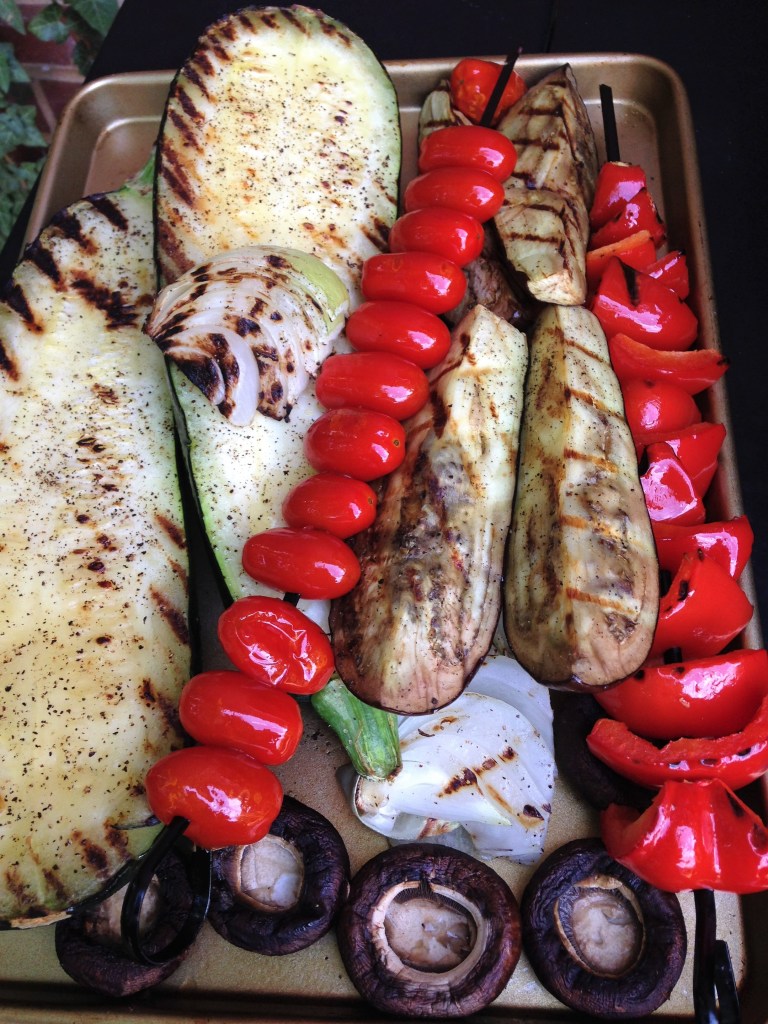
Ratatouille— a stew of eggplant, zucchini, peppers, onions and tomatoes— was indeed the inspiration for my ravioli adventure. I adore the melded flavors of the vegetables, along with the subtly floral Herbs de Provence that is traditional for ratatouille, and I look for new ways to enjoy it every summer. Once the idea hit me to pair all of that with handmade ravioli, there was no going back. 
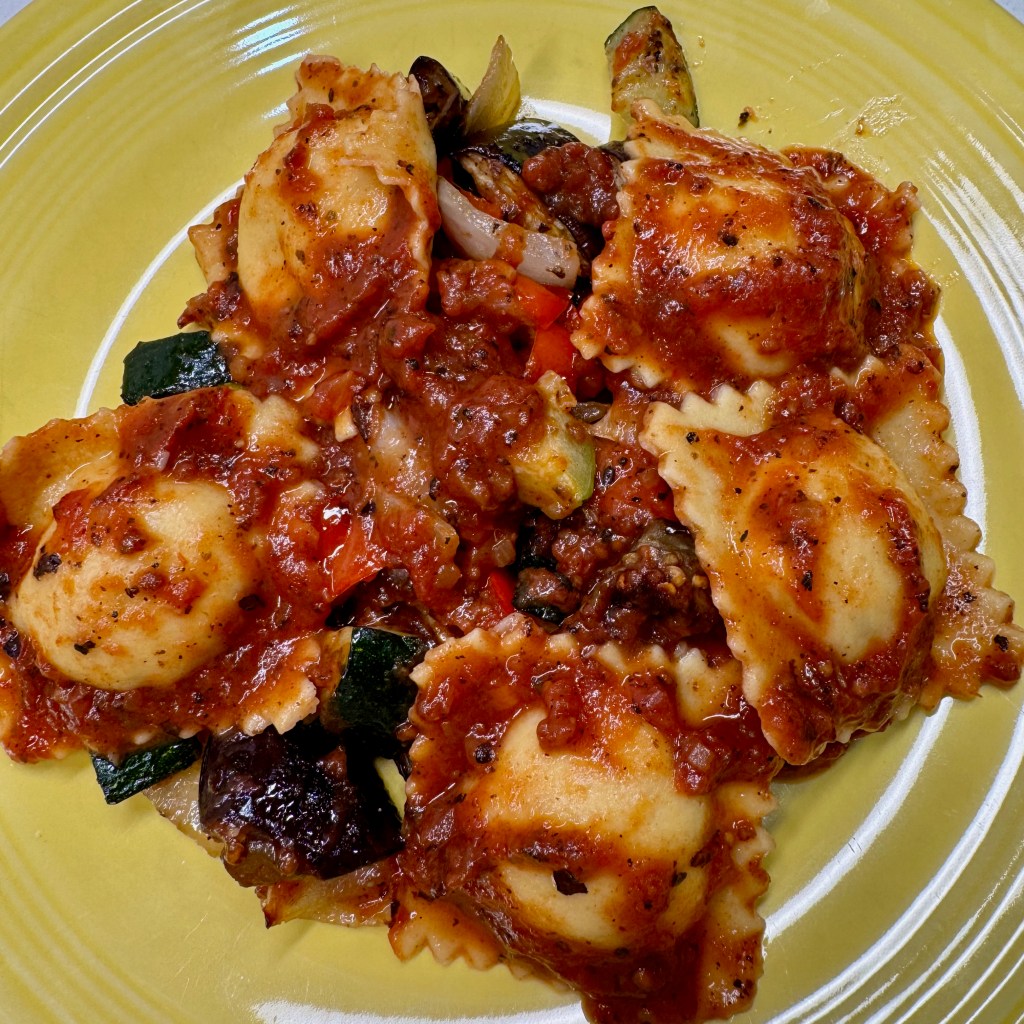
I wish I had made a triple batch of this!

First, the pasta dough

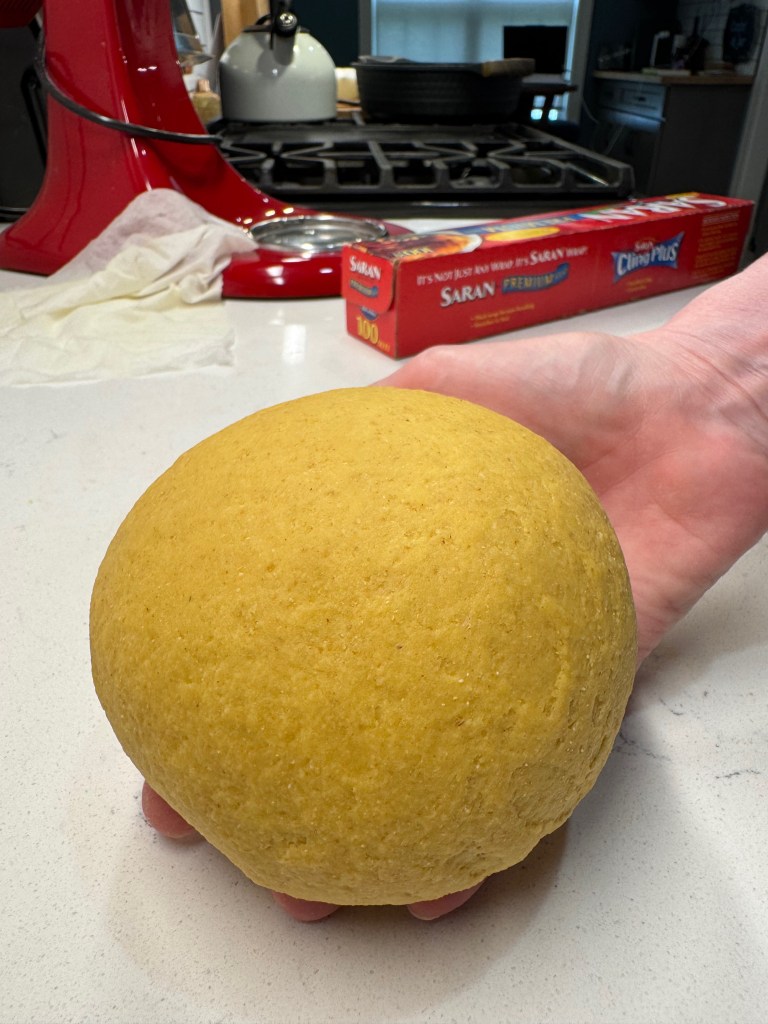
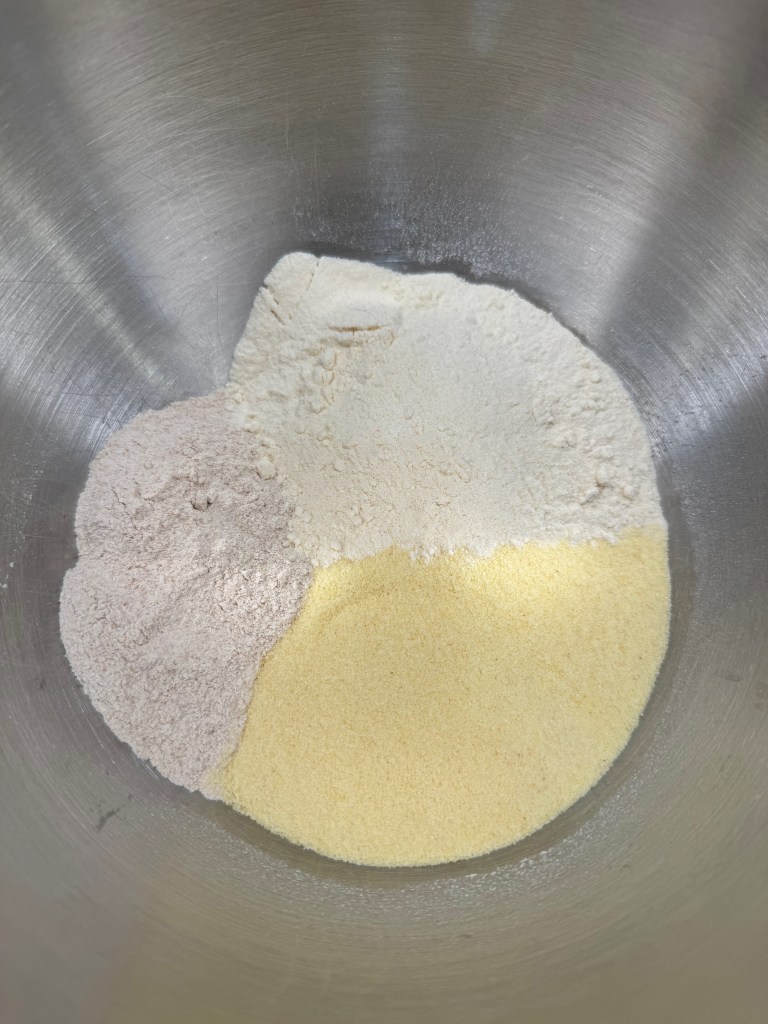
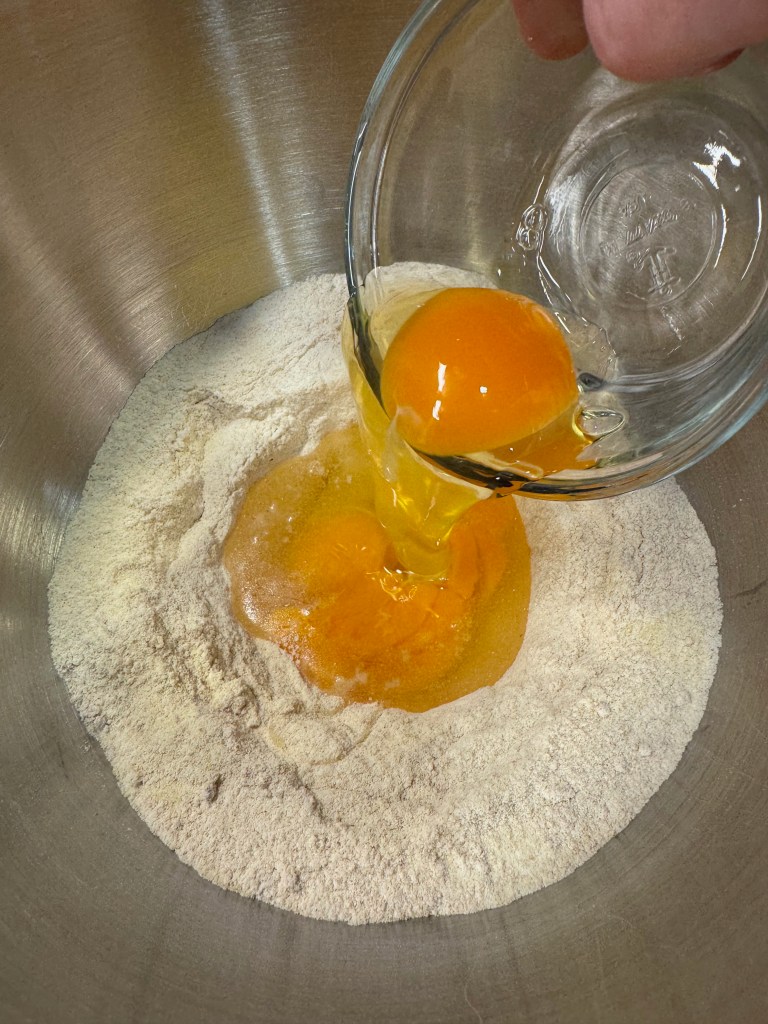
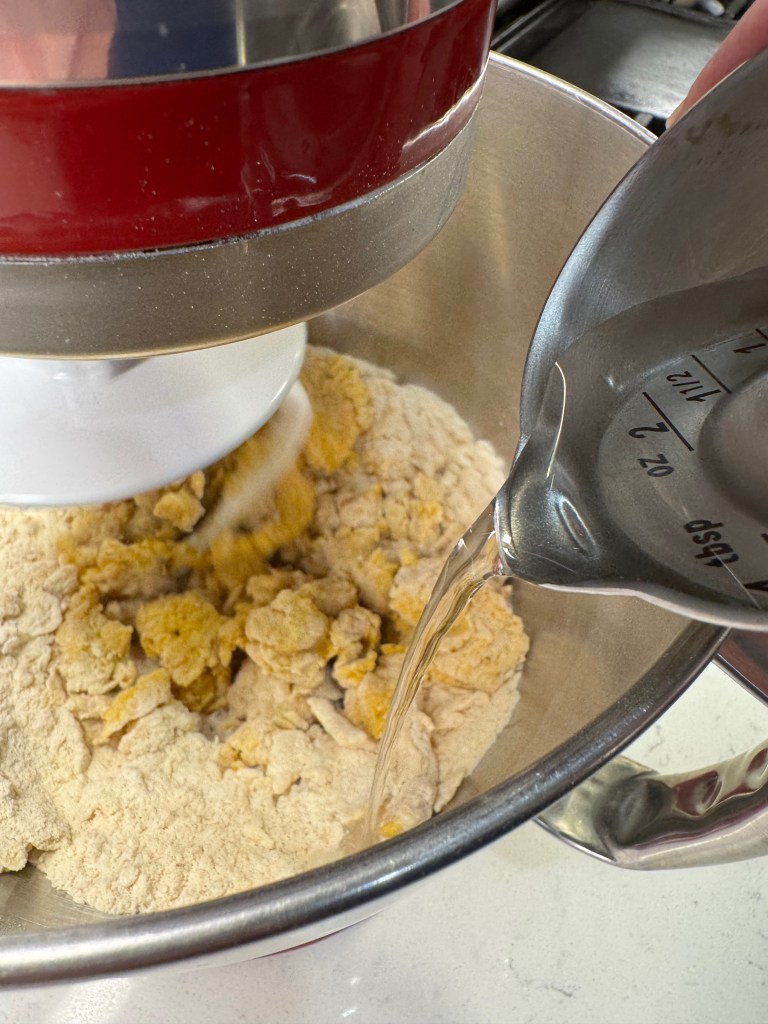
I used a mix of flour, including all-purpose, white whole wheat and semolina. A generous sprinkle of onion powder gave the dough an underlying flavor to support the ratatouille theme, and I gave it a good long kneading to build strength in the dough. I wrapped it up and tucked it into the fridge for a few hours to rest. If you need to save time, you could make the dough a day ahead.
The ravioli filling

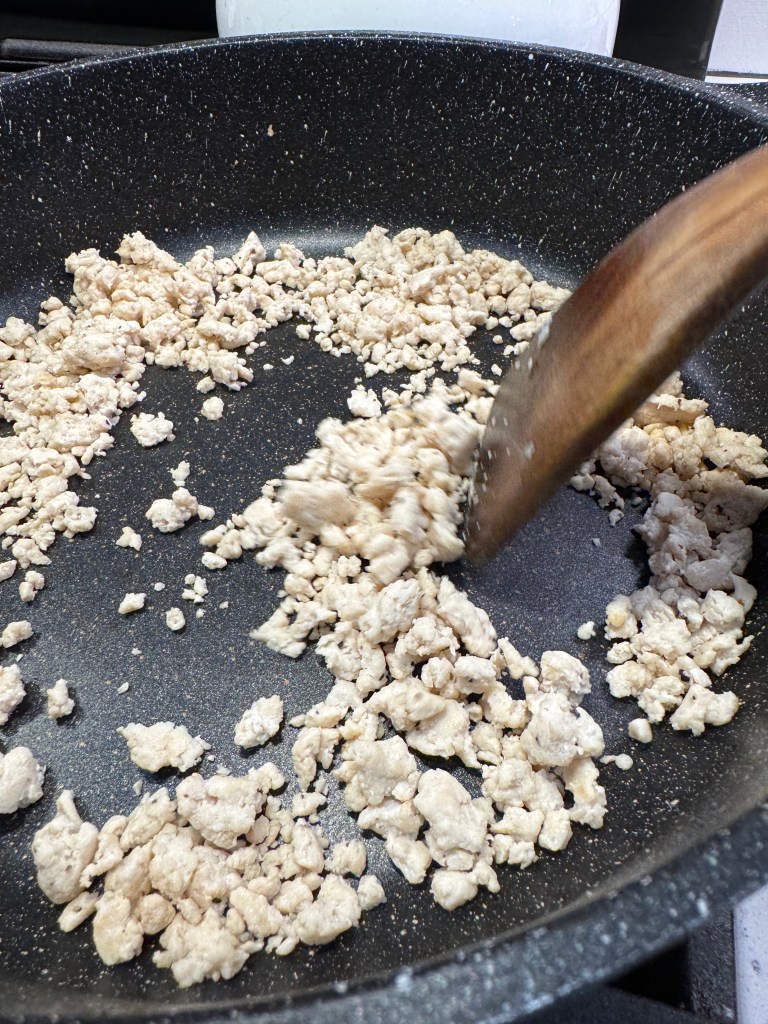
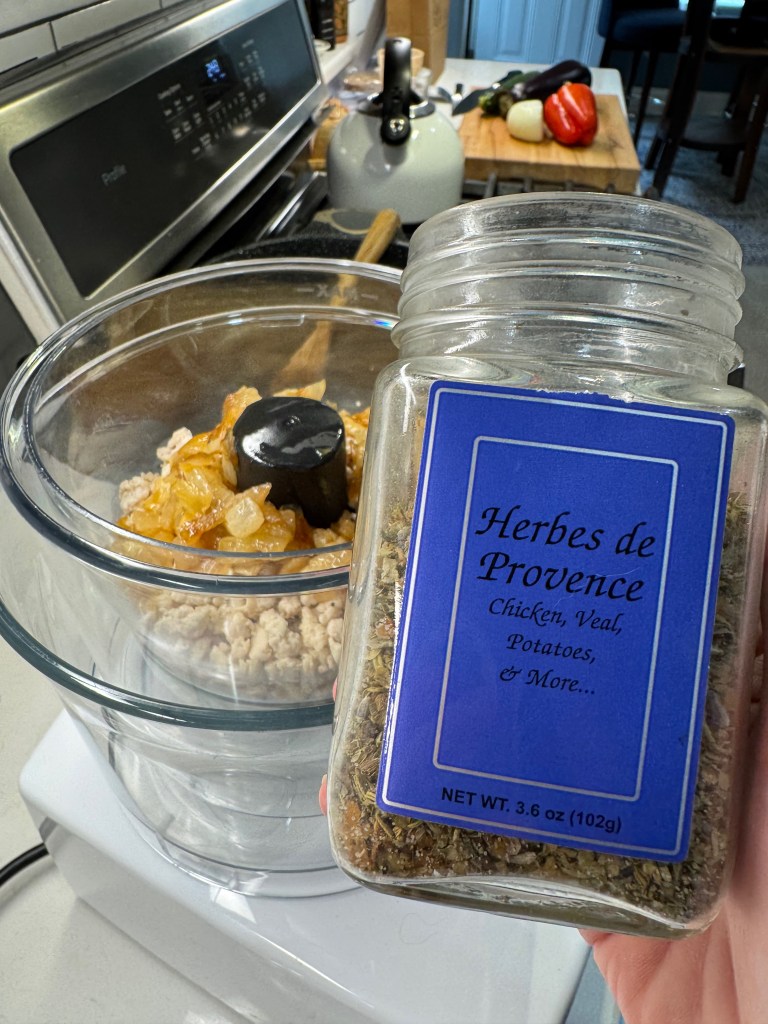
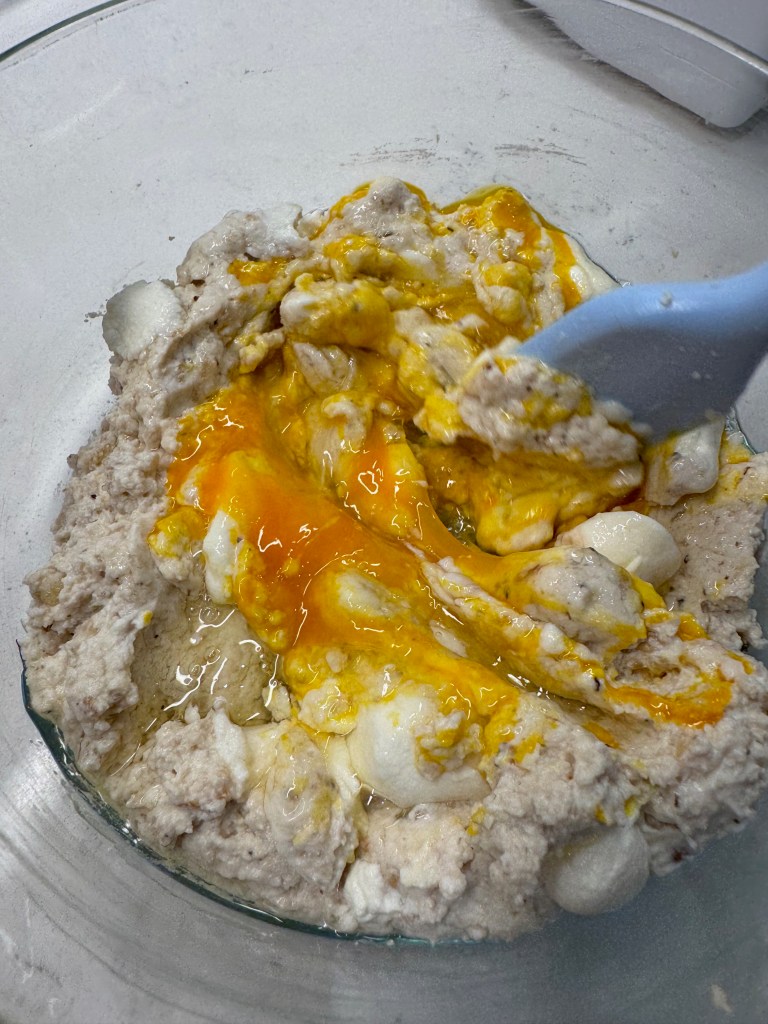
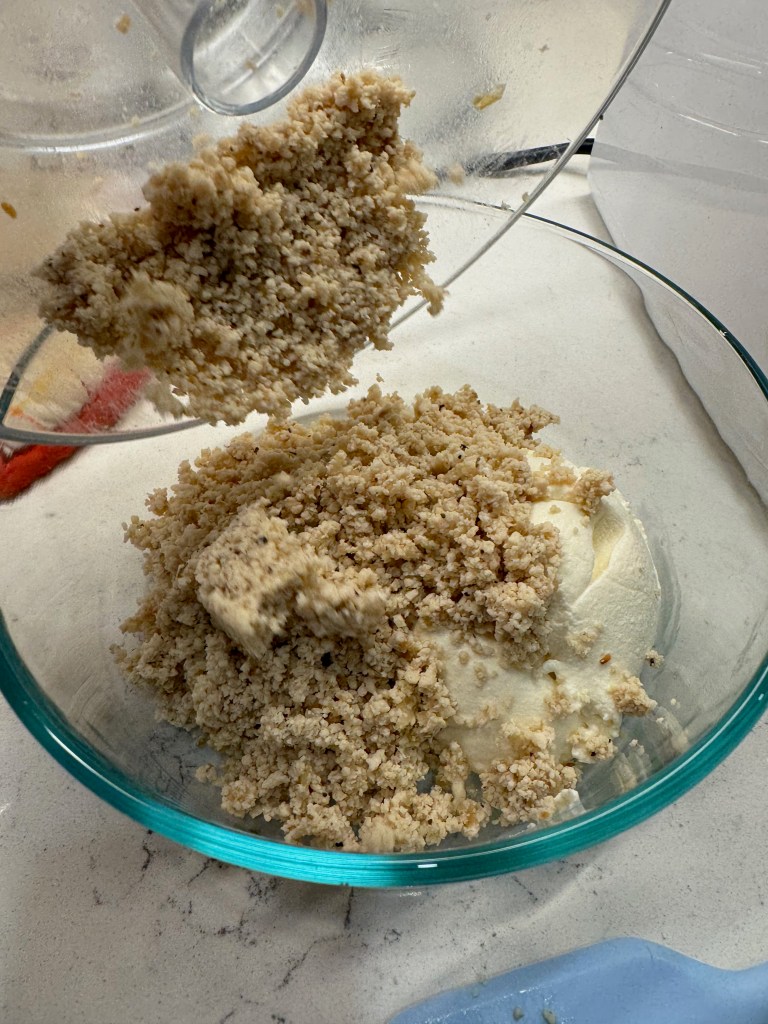
Next up, I pondered the filling for ravioli, which had to be more than just ricotta. After my less-than-great lab report this year, I’ve been more conscious of the saturated fat I consume, and so it occurred to me that maybe I’d incorporate a different protein into the mix. Lean ground chicken worked great, and I pulsed it in the food processor to make it as fine as possible. Also in the mix were golden caramelized onions and a pinch or two of Herbs de Provence, plus some lemon zest, and I blended all of those with strained ricotta and an egg to hold it together. This part of the recipe could also be done a day ahead.


Bend me, shape me, anyway you want me

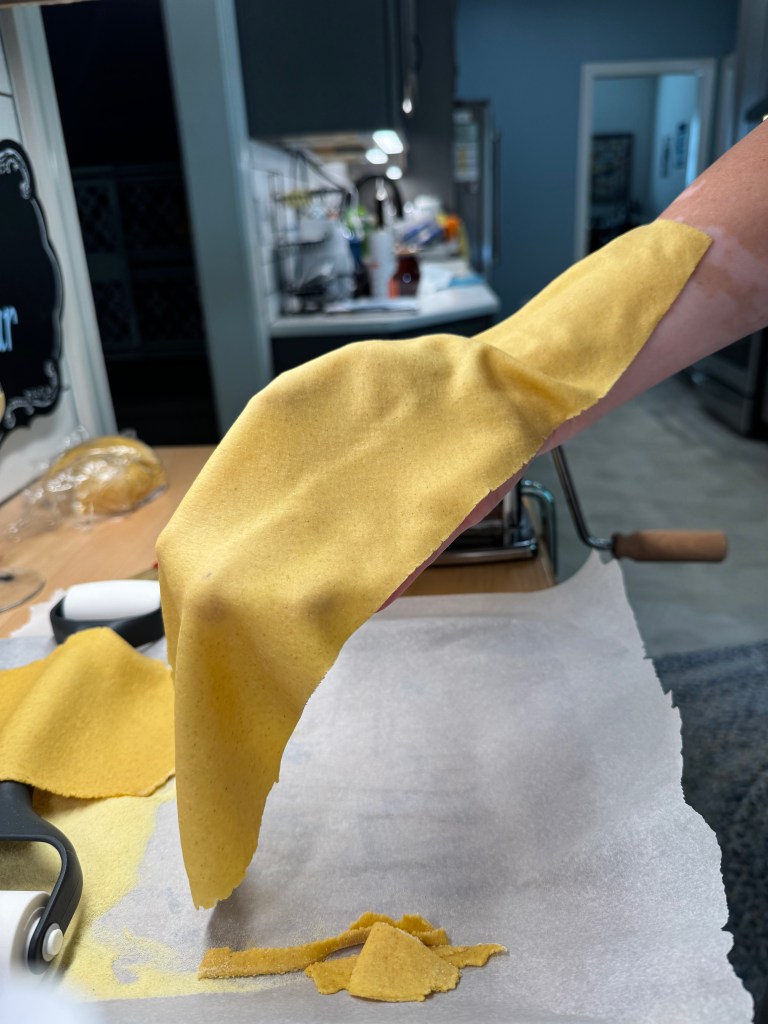
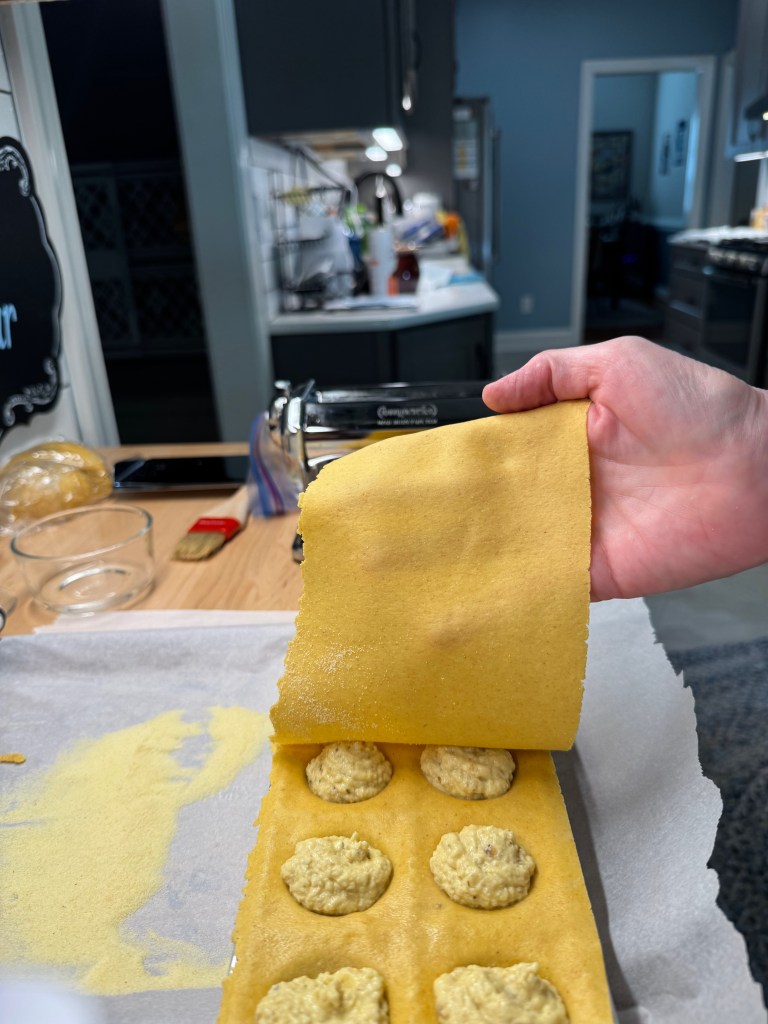
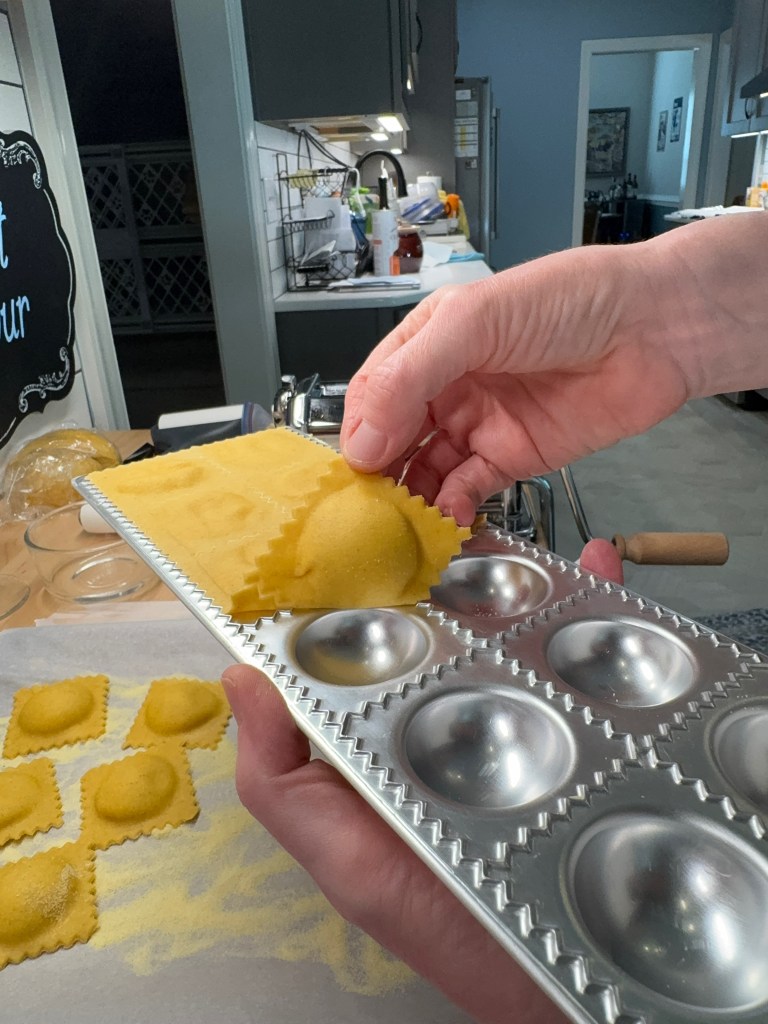
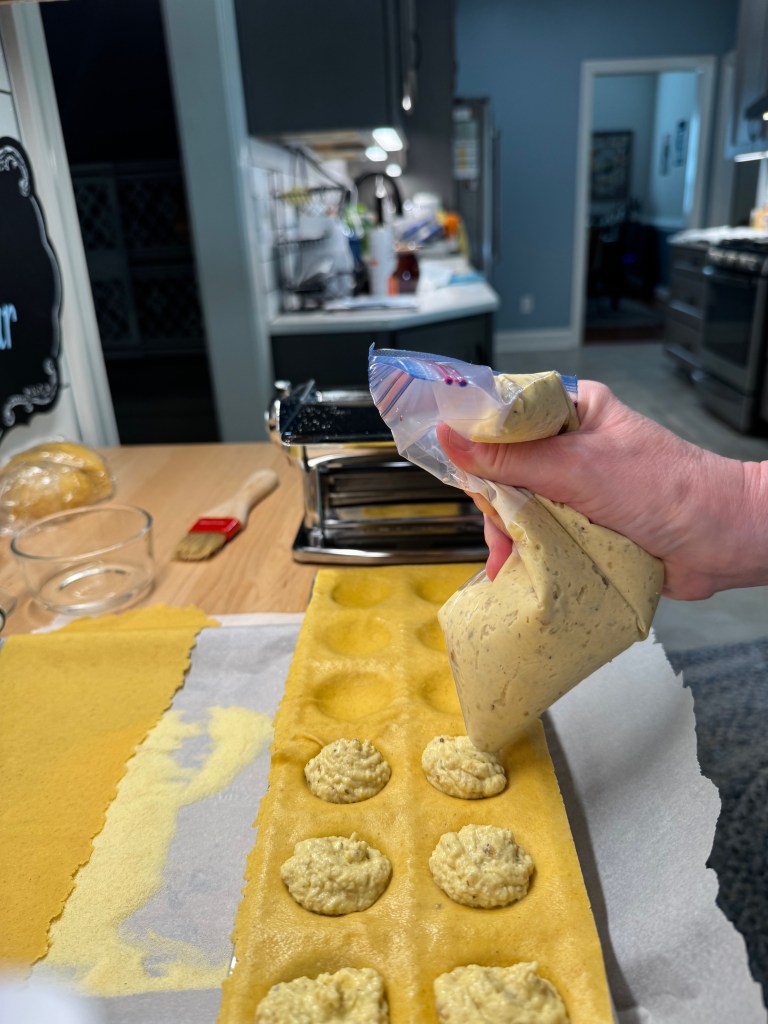
By the time the filling was prepared, I was ready to roll out the pasta dough into thin sheets, and I used my handy ravioli mold to make uniform little pillows. This is the fun part! It’s important when you make handmade pasta that you give it a little bit of time to dry before dropping it into boiling water, so when the ravioli were done, I placed them on a semolina-dusted cookie sheet. For more detailed instruction on how to make ravioli— with or without special gadgets— check out my post for handmade spinach ricotta ravioli, which includes tons of photos and tips, along with lessons I learned myself along my pasta-making journey. 


Ratatouille = EZ-POT

Finally, I made the ratatouille itself, which is delicious as a stew but perfection when roasted. I always remember this French country dish by the acronym “EZ-POT” because of Next Food Network Star season 5 winner, Melissa D’Arabian, who simplified the ingredients of into a five letter description of a dish that really is “e-z,” and usually is made in a “pot.” This little memory trick has saved me on more than one occasion when I craved ratatouille but forgot to make a farmers’ market shopping list. 😉

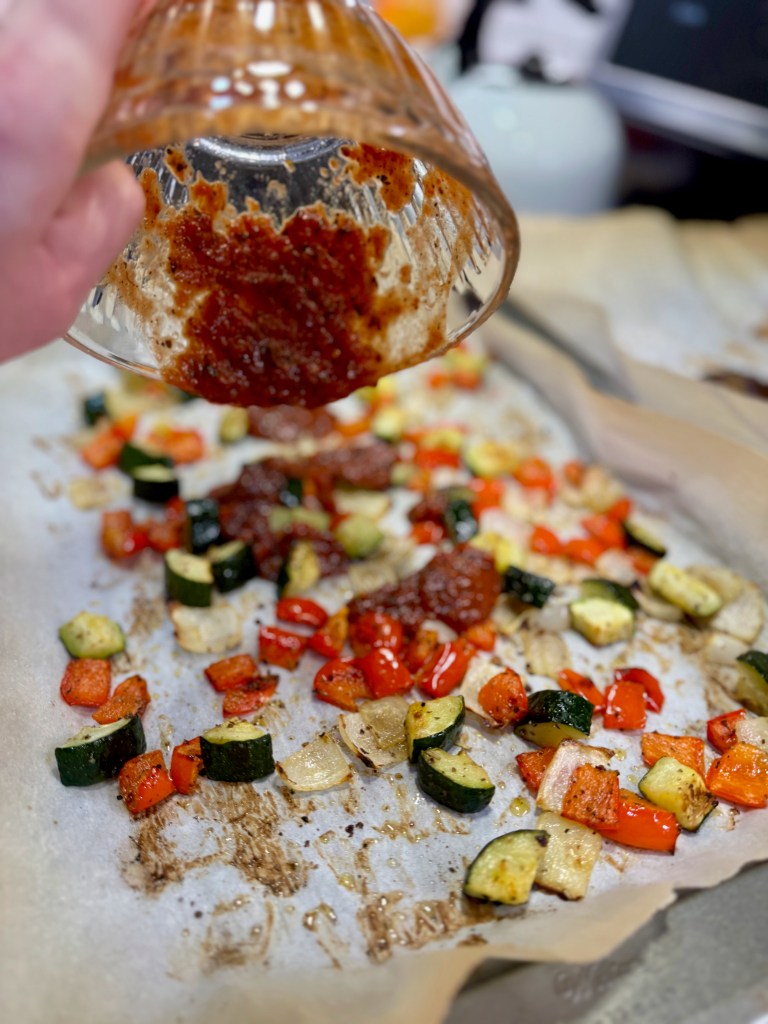
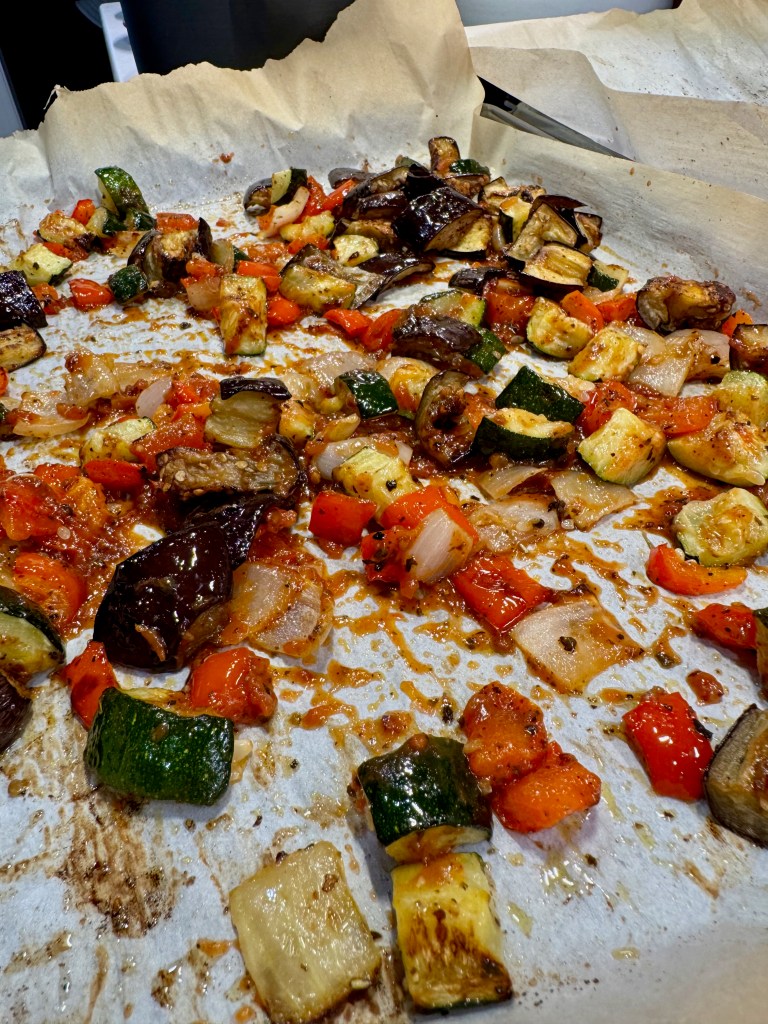
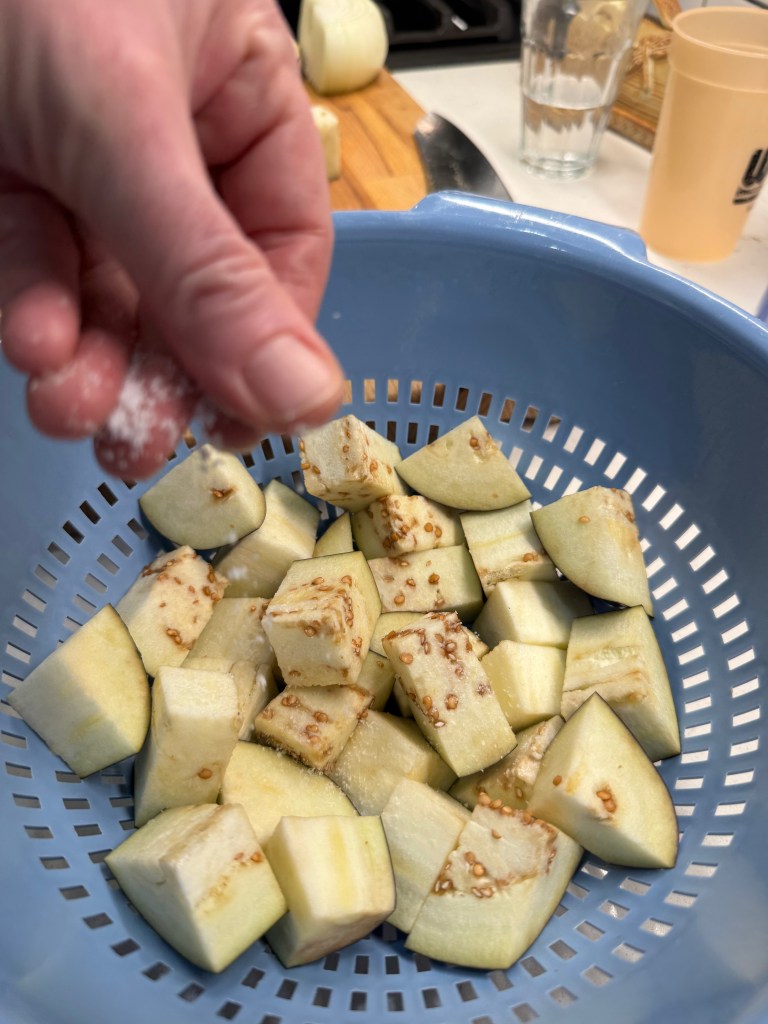
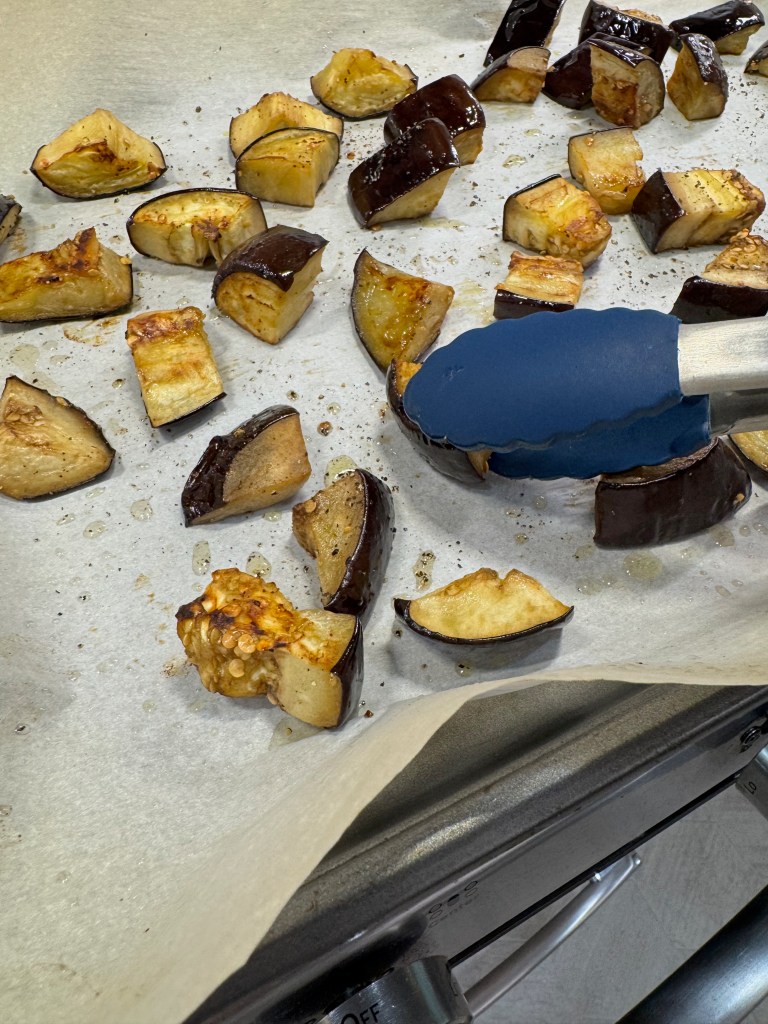
I salted my eggplant chunks for a few minutes first, to help draw out excess moisture, and this worked really well for achieving crispy edges when they roasted. The other vegetables were roasted on a separate sheet, and then I tossed everything gently in a fire-roasted tomato sauce which, if you can believe it, was from a can! Sure, I could have made my own sauce, but I was trying to be thrifty and use up some leftover pizza sauce, and it was a winner! If you make your own sauce, keep the flavors simple and try to make it on the thicker side.

While all of this was happening, I had the water on to boil for the pasta. I love this part of seeing a meal come together, especially one that I’ve pondered for a while, and though it satisfied my desire to make handmade pasta, it somehow also inspired me to want to make more handmade pasta. Stay tuned! 


Roasted Ratatouille Ravioli

  • Servings: 4
  • Difficulty: Intermediate
  • Print

This recipe is split into three parts for the pasta dough, the ravioli filling and the ratatouille vegetables with sauce. If you love the hands-on experience, this is worth the trouble. If the steps are too much for you, it's easy to make the pasta dough and filling ahead and finish the dish one or two days later. Not ready to make your own pasta? No problem! The chicken-ricotta filling and roasted vegetables would be awesome in a lasagna, using store-bought noodles. Adapt it however makes you happy.


Ingredients

  • 165g all-purpose flour
  • 60g white whole wheat flour
  • 45g semolina flour
  • 1/2 tsp. onion powder
  • 3 large eggs, at room temperature
  • 50g to 70g room temperature water

Notes: Depending on your overall environment, you may need to adjust the water somewhat to achieve a dough that is smooth and supple, without being too dry or too wet. If the dough is too dry with the maximum amount of water recommended, wet your hands and knead until smooth. Repeat as needed. You may end up with more pasta dough than is needed for ravioli. Simply roll it out with flour and cut into strips. Let it dry and freeze in zip-top bags. Cook from frozen.

Directions

  1. Combine flours and onion powder in the bowl of a stand mixer, fitted with the dough hook
  2. Make a well in the center of the flour mixture and add eggs. Knead with the dough hook on speed 3 until dough starts to come together (it will be dry). Drizzle in water, a little at a time, until all flour is incorporated and dough is gathered up on the hook. This may take extra water.
  3. Transfer dough to the counter and knead by hand for about eight minutes, until smooth, firm and supple. Wrap dough tightly in plastic wrap and refrigerate at least 30 minutes or up to a day before rolling and shaping.
  4. Divide dough into sections and roll out with a pasta machine or rolling pin to approximately 1/16″ thickness. Use a piping bag to apply filling, then lightly brush another sheet with cold water and seal up each pillow, pushing out any air as you go. Transfer raviolis to a parchment-lined cookie sheet sprinkled with semolina.

Ingredients

  • 1 medium sweet onion, chopped
  • 1 Tbsp. extra virgin olive oil
  • Kosher salt and pepper
  • 1 lb. ground chicken breast
  • 1/2 tsp. Herbs de Provence seasoning
  • 1 tsp. lemon zest
  • 1 cup whole milk ricotta, strained for 30 minutes to remove excess moisture
  • 1 large egg

Note: If you wish, you could skip the ground chicken and double the strained ricotta for a vegetarian version of this dish.

Directions

  1. Sauté onions in olive oil over low heat with a sprinkle of salt. Toss frequently, until all the moisture has evaporated and onions soften and take on a deep golden color. Transfer to a bowl and increase heat to medium.
  2. Add ground chicken to the same pan, cooking gently until meat is no longer pink, but do not let it brown. Season the meat the salt and pepper and allow it to cool.
  3. Add meat mixture and caramelized onions to the bowl of a food processor. Add Herbs de Provence and lemon zest. Pulse a few times until the meat is ground to a fine texture and onions are no longer visible in whole.
  4. Transfer processed mixture to a bowl with ricotta and egg and stir together until evenly blended. Refrigerate this mixture until you’re ready to fill the ravioli.

Ingredients

  • 1 small eggplant (keep the peel on), cut into large cubes
  • 1 medium zucchini, but into large chunks
  • 1 red bell pepper
  • 1/2 medium sweet onion, cut into chunks
  • Extra virgin olive oil
  • Kosher salt and pepper
  • A couple pinches of Herbs de Provence seasoning
  • 2 cups fire-roasted tomato sauce (ours was a thick pizza sauce)

Note: Keeping the peel on the eggplant and cutting it into large chunks is key to getting a crispy outer texture. Aim for pieces large enough that every piece has a bit of peel on it, as this will help the eggplant hold its shape during roasting so that it doesn’t turn mushy.

Directions

  1. Heat oven to 450° F, with rack in center position. Prepare two baking sheets by lining with parchment paper. Place eggplant cubes in a colander and toss gently with 1/2 tsp. salt. Let it rest half an hour, then gently rinse and pat dry before proceeding. Toss with a tablespoon of olive oil on one of the baking sheets and season with pepper only (they will have plenty of salty flavor from the prep stage).
  2. Toss zucchini, bell pepper and onion chunks in a tablespoon of olive oil on the second baking sheet. Season with salt, pepper and Herbs de Provence. Roast both sheets of vegetables for about 30 minutes, turning pieces over halfway through.
  3. Meanwhile, bring a pot of salted water to a gentle boil and add the ravioli by hand to prevent sticking. Cook for six to seven minutes; the pillows should all be floating and the sealed edges of pasta should be tender.
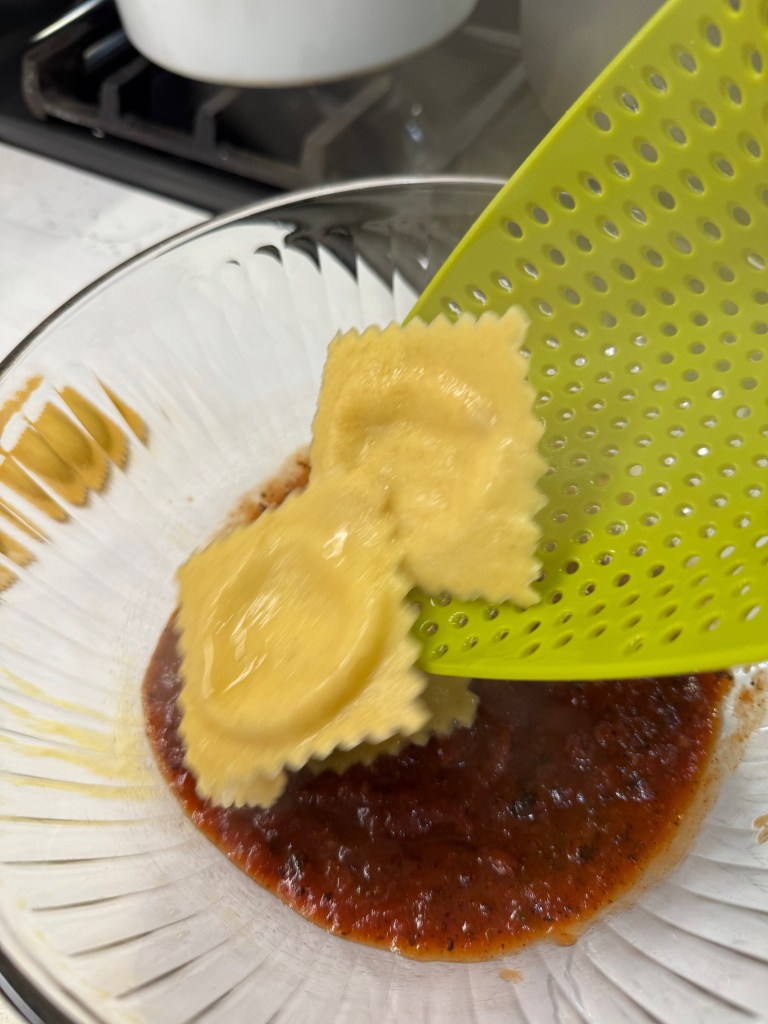
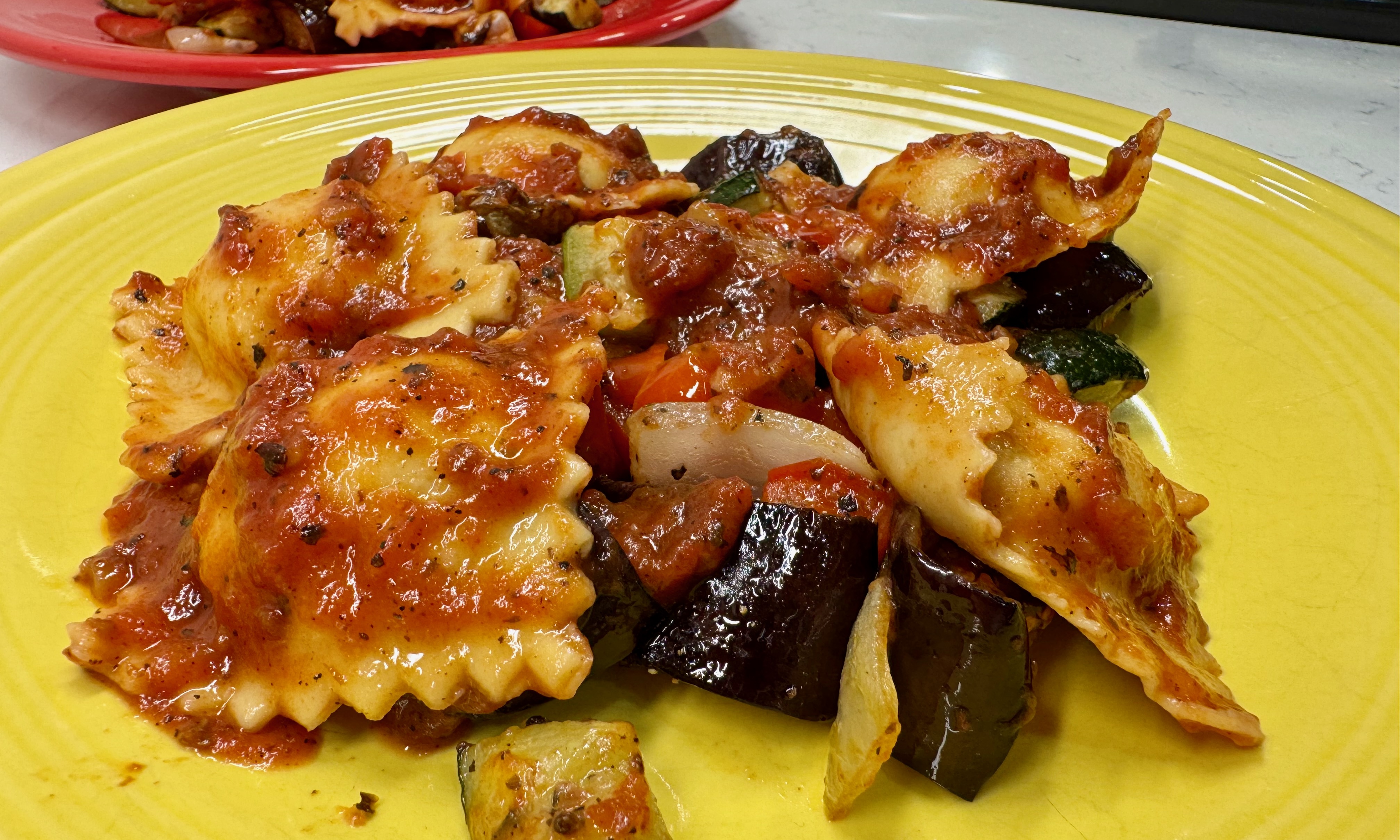
  4. Retrieve the pasta with a vented spoon and transfer directly to the tomato sauce. Toss gently and arrange the ravioli on serving plates. Toss the roasted vegetables in the remaining sauce and spoon over the ravioli portions. Serve at once.

Zucchini Citrus Pasta

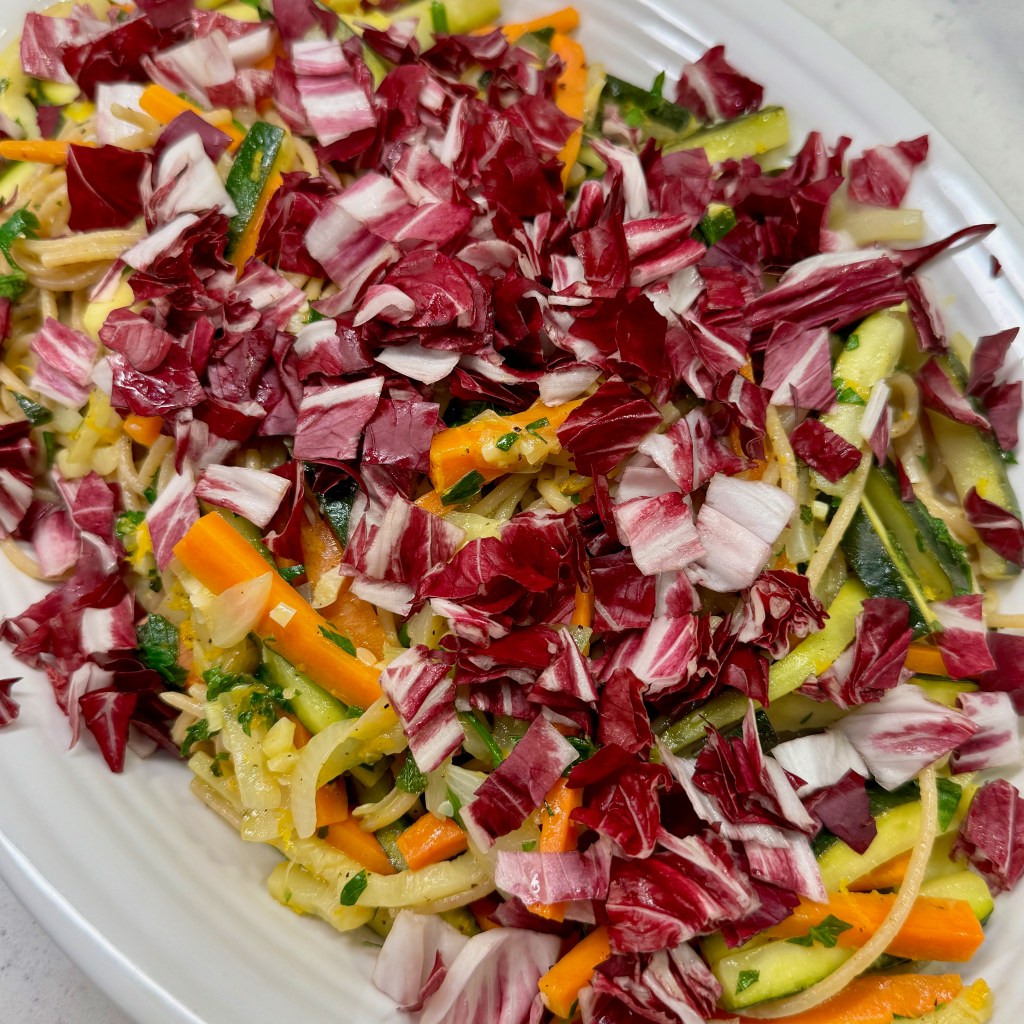
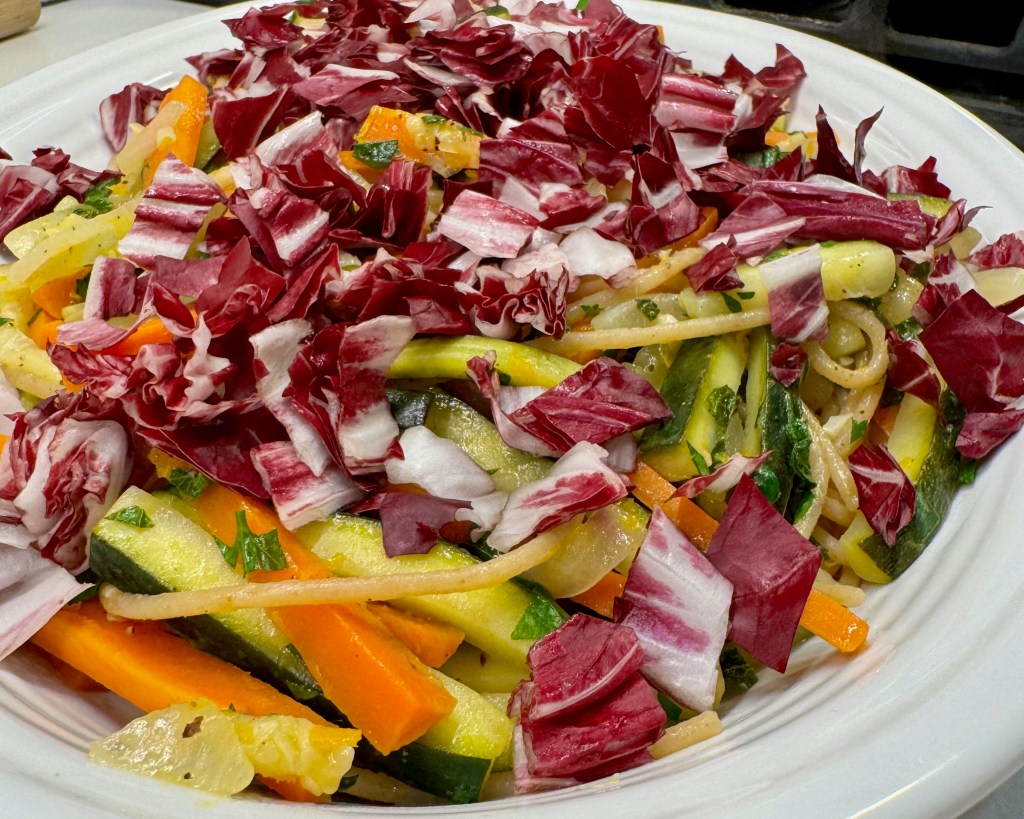
The best thing about summer, besides the sunshine, is all the light and easy food coming our way. From backyard cookouts to easy breezy friend gatherings, there’s always room for one more light and tasty side dish. This colorful platter has refreshing citrusy flavors on top of tender, sautéed zucchini and carrots, chewy-to-the-tooth pasta and a sprinkle of vibrant herbs and crunchy, slightly bitter radicchio. In other words, perfect for summer!

For a lighter appetite, this could be dinner on its own.

I know, of course, that we are still almost two weeks from the summer solstice when the season becomes “official,” whatever that means. But I also know that we’ve had a good number of days tipping toward 90° F, so it feels like summer is already here! Zucchini is one of my favorite summer foods, and though it may be a while before our local farmers start picking zucchini, we’ve seen plenty of it in the supermarket grown in Florida and Georgia, just a couple states away.

My introduction to this zucchini-forward recipe came about 18 years ago, when I was a faithful fan of Rachael Ray’s “30-Minute Meals” on Food Network. You do remember when the channel actually had shows that demonstrated regular people recipes, rather than just over-the-top competition shows, right? Those were the days! 😏

Rachael ruled Food Network in the 2000s (along with Emeril), and I found her casual, not-so-cheflike approach absolutely charming. Her skill was honed not in a culinary institute, but in her Nonna’s kitchen (I can relate) and in an upstate New York grocery store where she did cooking demos. Her food always looked delicious, it was made with common ingredients, and her instruction made even the most gorgeous meals seem approachable. For sure, she’s one of my culinary mentors, and I still love this recipe. Let’s make it!

Mise en place

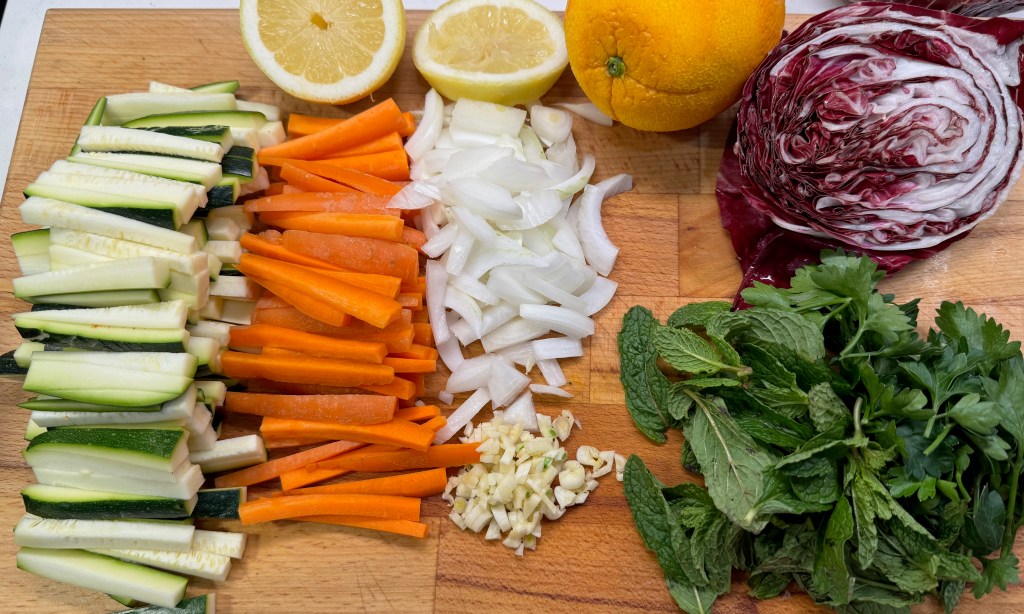
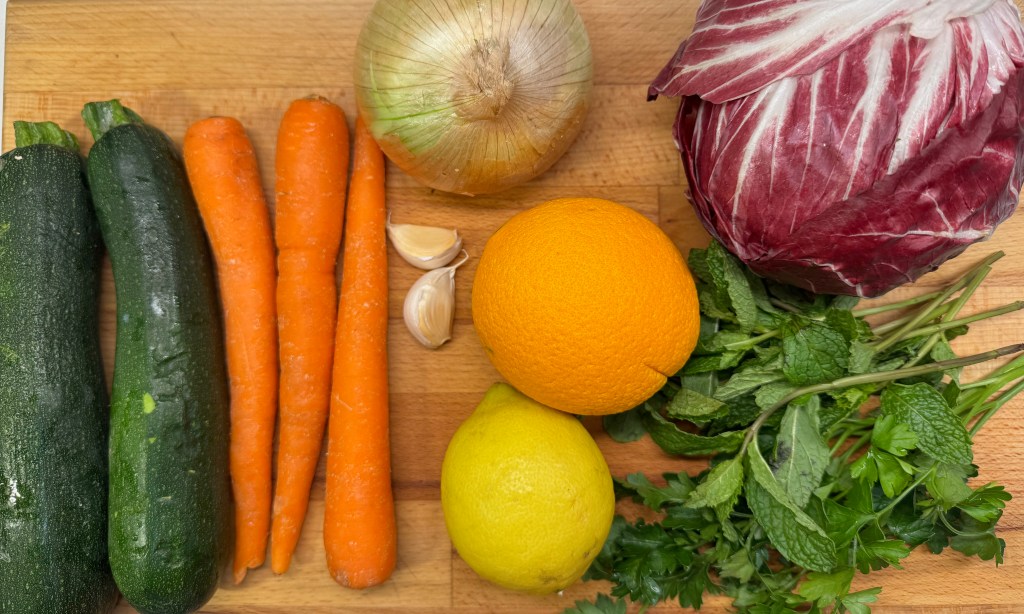
I won’t say that Rachael taught me about mise en place— a French culinary term that means loosely, “get your ducks in a row.” No, I learned that in the 1990s when I worked in a catering kitchen. But Rachael frequently emphasized the importance of organizing ingredients and tools before starting a dish and it’s good advice here, as the recipe goes pretty quickly once it starts.


Multi-tasking for the win

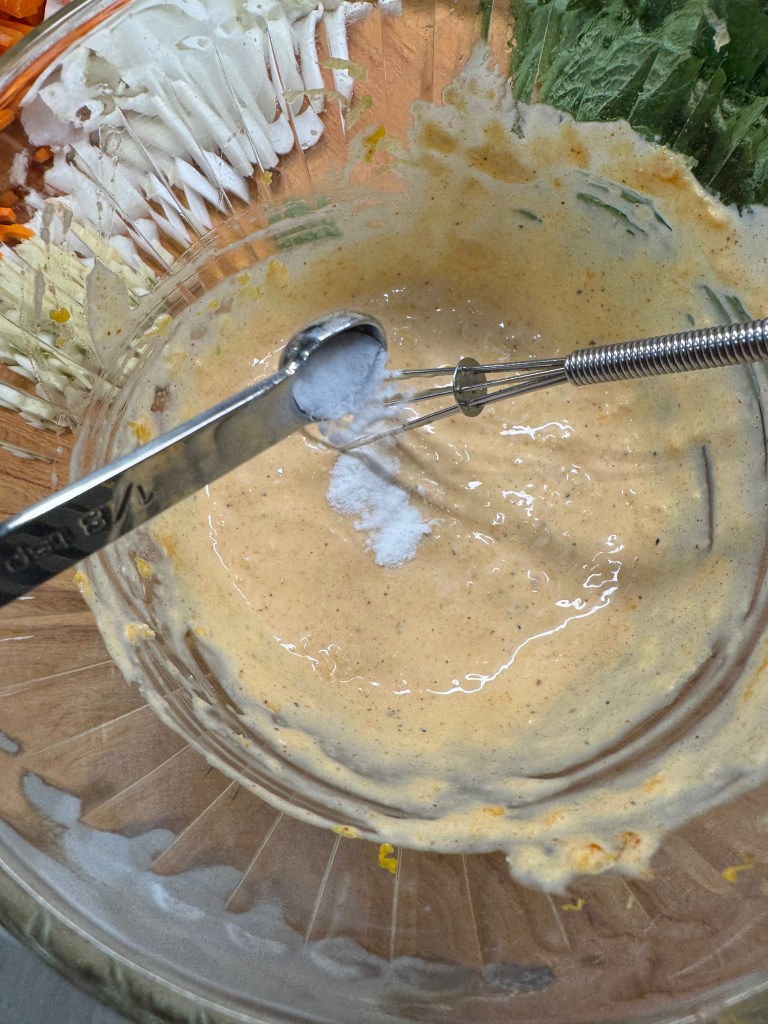
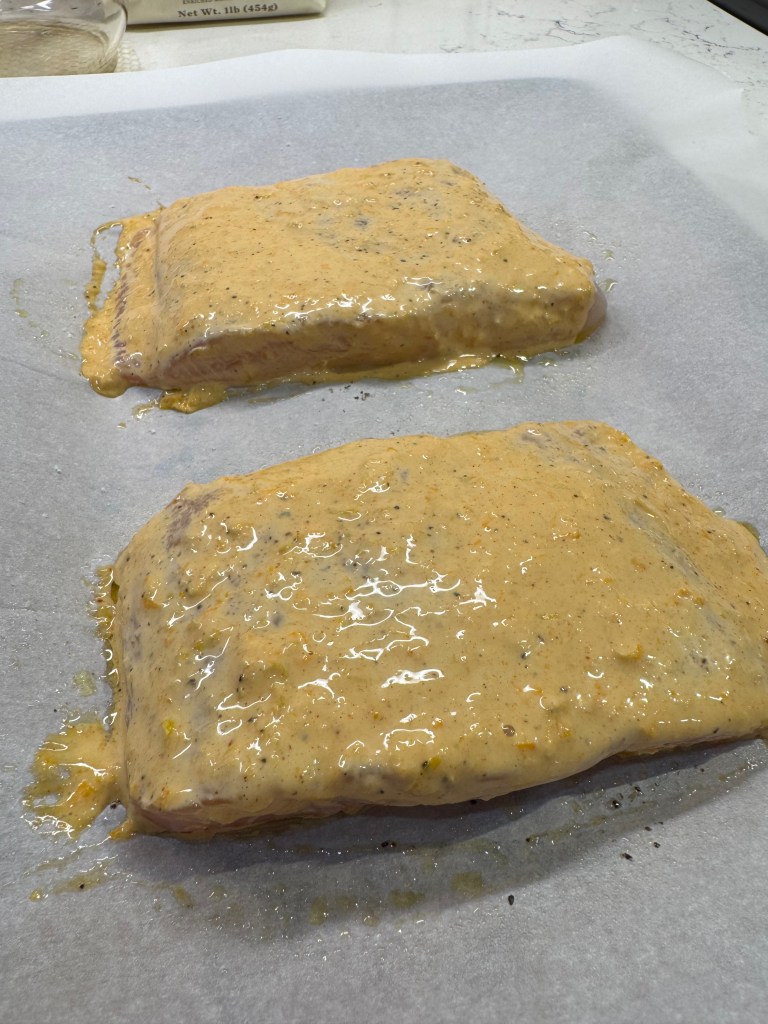
When I made this pretty dish for my husband, Les, I served it with baked halibut, which I seasoned up with the miraculous mayo marinade that I learned a couple of years ago. I mixed up the mayo with some lemon and orange zest, grated garlic and smoked paprika, and then added the pinch of baking soda that gives the marinade a turbo charge. This trick guarantees moist fish every time, so check it out when you have a chance!

This was a true “30-minute meal,” as I prepped all the veggies while I waited for the fish to marinate, and then cooked the dish while the fish was in the oven. Everything was ready at exactly the right time.


On one burner, get a pot boiling for spaghetti, which will be tossed into the dish at the end. Salt that water generously and keep half an eye on it while you work on the veggie part of the dish.

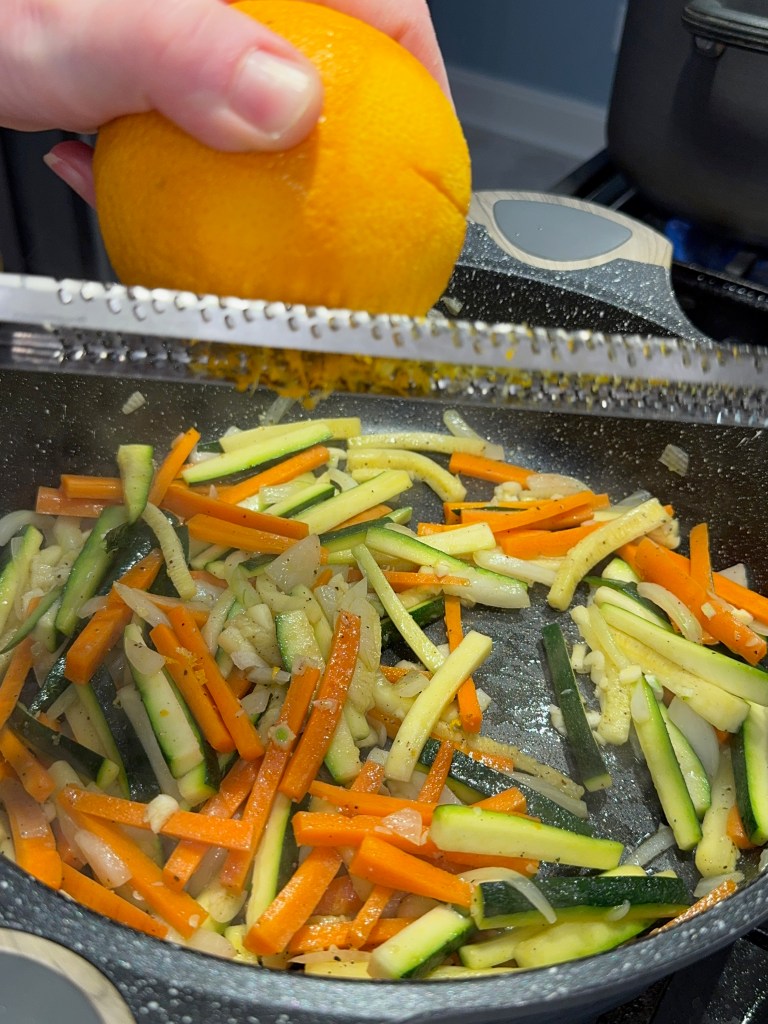
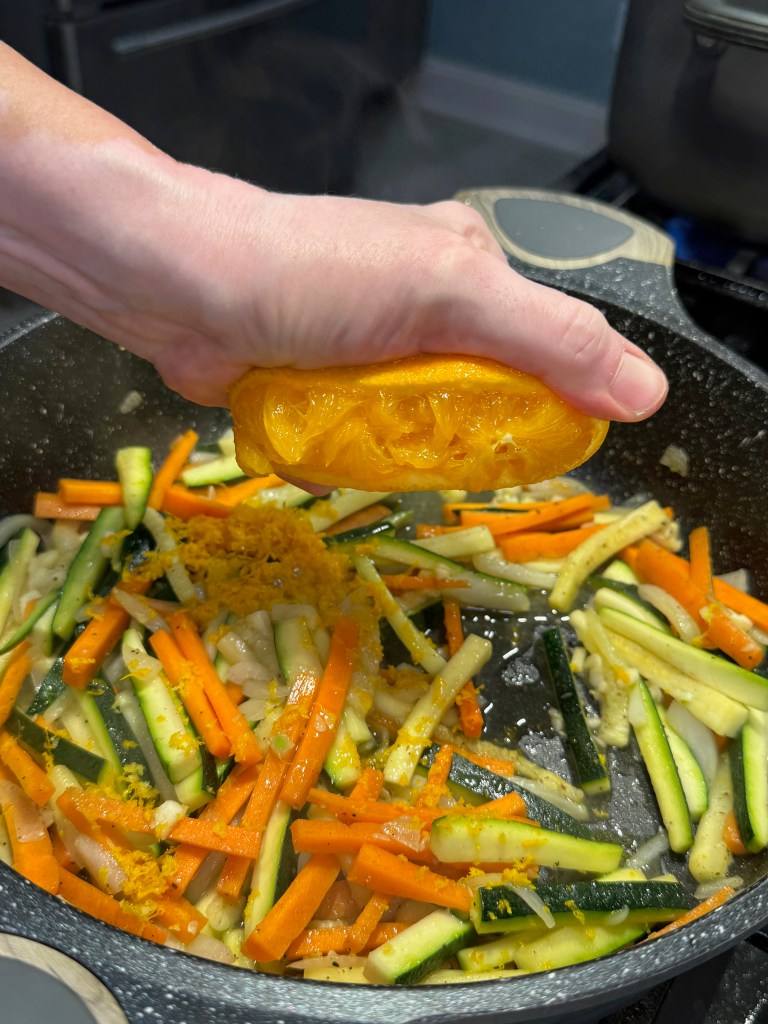
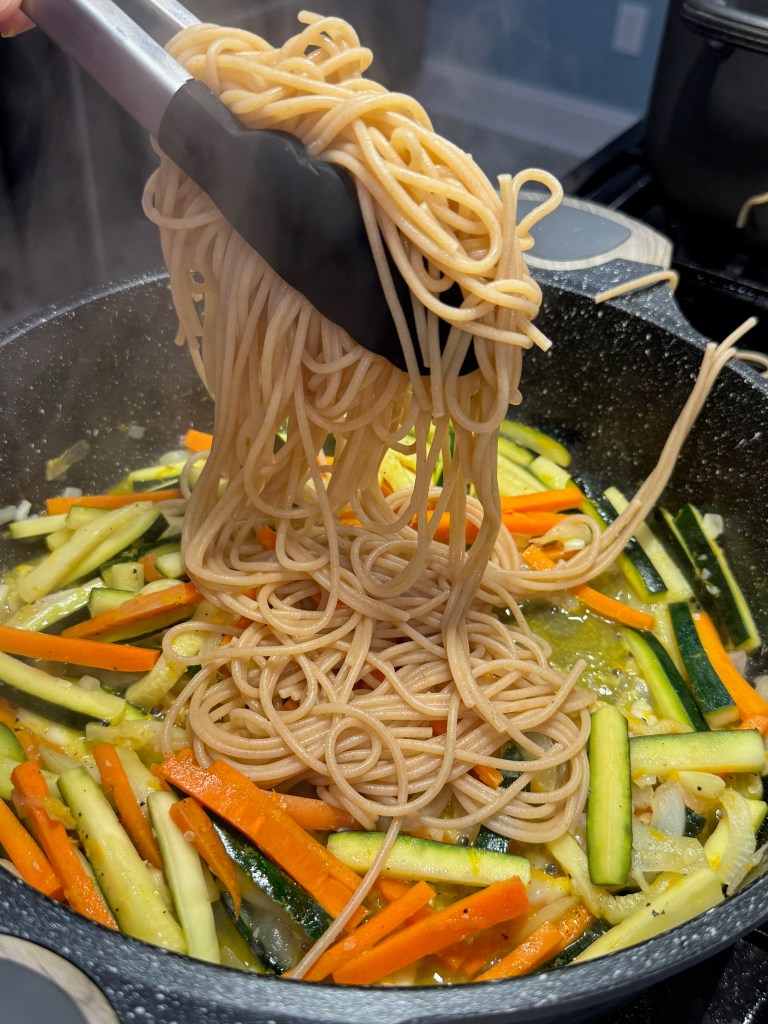
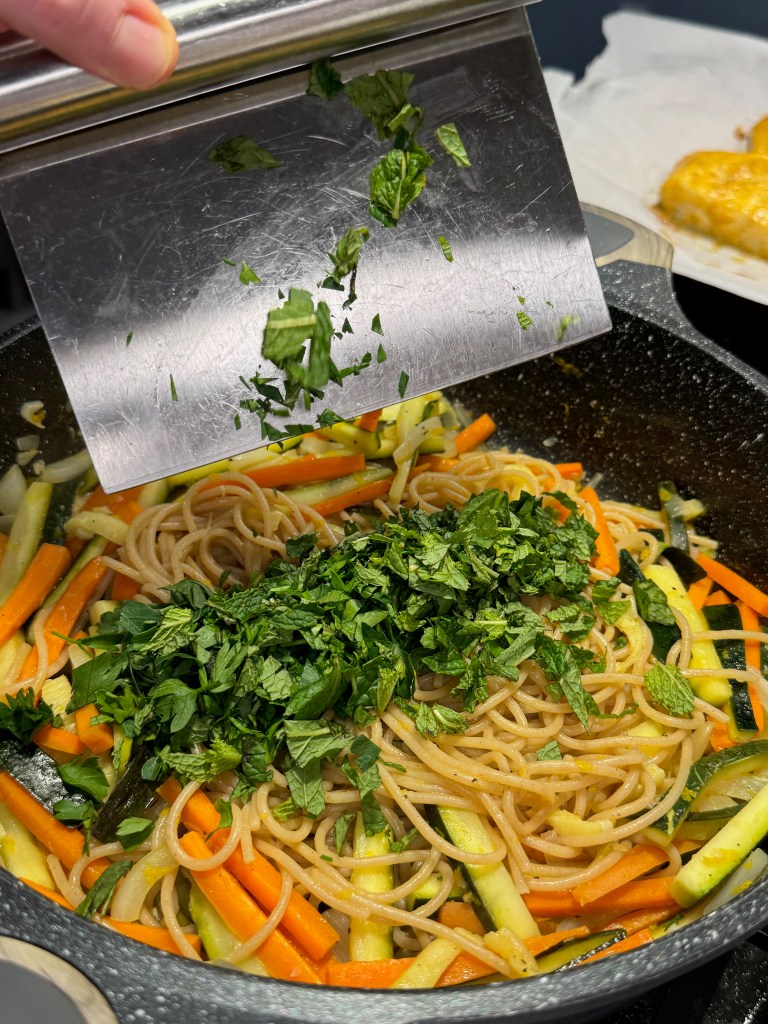
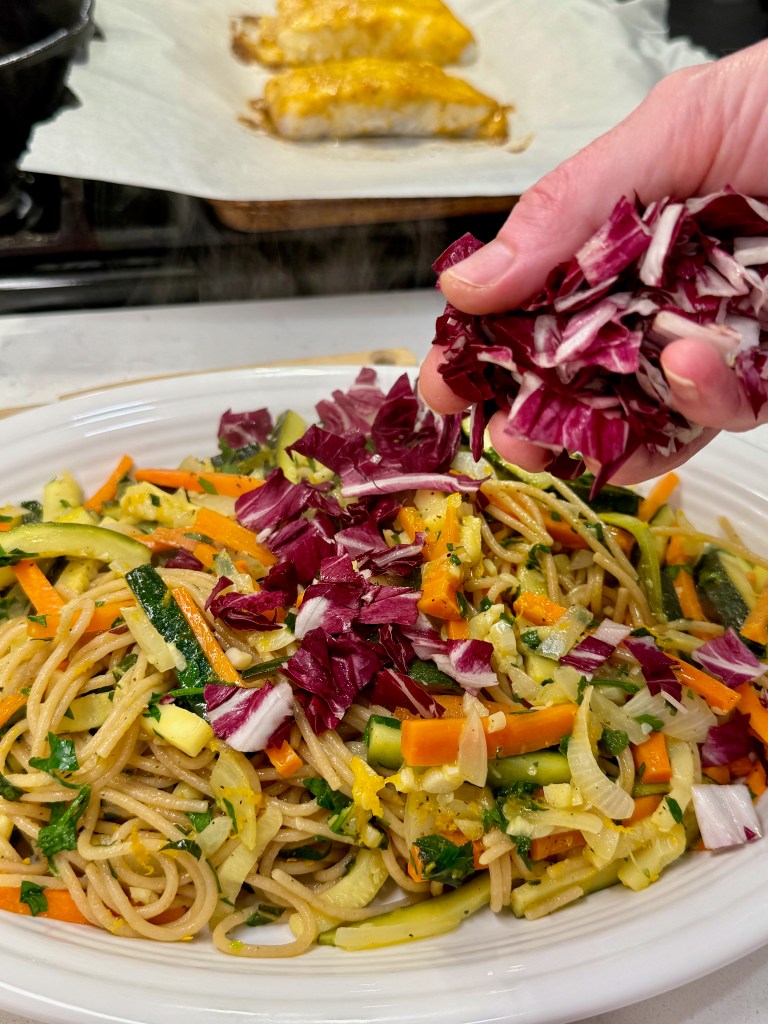
A big swirl of EVOO (as Rachael would say) goes into a large sauté pan for cooking the zucchini, carrots and onions— seasoned, of course— and then you’ll add garlic plus the juice and zest of a lemon and an orange. When the veggies are somewhat tender and the citrus juice has reduced a bit, use tongs to move the cooked spaghetti straight from the hot water to the pan, and toss the whole thing with the fresh parsley and mint. Transfer to a serving platter and scatter the chopped radicchio on top. Yes, it is as easy as it sounds and as delicious as it looks.


I went with my usual whole grain spaghetti for extra nutrition and a slightly chewier bite. As I was tossing the spaghetti with the veggies, it occurred to me that I’d never tried using another pasta shape, but I definitely will next time. Whole grain fusilli or bow ties would both work great, and might even make the dish easier to serve than with spaghetti.

Color, meet flavor. 😋

You’ll find this dish terrific served warm with a lean protein or, if your appetite is light, by itself. And it’s also tasty left over, cold from the fridge or at room temperature. That makes it ideal for taking along to a summer potluck as well as serving up on a busy weeknight. I could not find Rachael’s original recipe on the internet, but I have managed to remember the ingredients and the process over the years, and that’s a testament to the friend-next-door presentation of her cooking shows.

Do you have a favorite TV chef or cook— past or present— who inspires you to this day? Let’s talk about it in the comments!

Zucchini Citrus Pasta

  • Servings: About 6
  • Difficulty: Average
  • Print

This colorful side dish covers all the bases, with bright, fresh flavors and plenty of texture. Cutting the zucchini and carrots into matchstick-sized pieces allows them to cook quickly without turning mushy. Perfect for a busy summer weeknight or a backyard potluck.


Ingredients

  • 2 medium or 3 small zucchini, julienned
  • 2 or 3 medium carrots, julienned
  • 1/2 sweet onion, sliced into crescents
  • 2 cloves garlic, chopped
  • Extra virgin olive oil
  • Kosher salt and freshly ground black pepper
  • Zest and juice of 1 lemon
  • Zest and juice of 1 orange
  • About 1/3 package hot cooked spaghetti or favorite small pasta shape
  • Handful of fresh Italian (flat leaf) parsley, rough chopped
  • Handful of fresh mint, rough chopped
  • 1/2 small head radicchio, rough chopped

Note: This dish is extremely versatile, as it can be served hot, room temperature or chilled. I used whole wheat spaghetti, but any small pasta shape, such as fusilli or farfalle would be great. If you don’t care for mint, fresh dill would also be delicious.

Directions

  1. Place a large, deep sauté pan over medium heat and swirl EVOO around twice (about 2 tablespoons). Add zucchini, carrots and onions to the pan, and season with salt and pepper. Toss and cook a few minutes until the onions are translucent and the carrots begin to soften.
  2. Add garlic, citrus zest and juices, and reduce heat to a simmer so that the liquid doesn’t evaporate too quickly.
  3. Add hot pasta straight to the pan, along with any cooking water that’s clinging to it, as the starchy water will help the citrus sauce cling. Toss to combine.
  4. Add chopped fresh parsley and mint. Toss lightly and then transfer the mixture to a serving platter. Scatter radicchio on top and serve immediately.


Late Summer Succotash with Chicken & Waffles

Something about the change of seasons makes me happy, and this is especially true when we can see Labor Day just up ahead. This time last year, my husband, Les, and I were gallivanting all over New Jersey, Connecticut and New York, visiting old friends, meeting new ones and satisfying our culinary curiosity with so many delicious foods. Our plans this year have kept us mostly at home, and so the transition to fall doesn’t feel nearly as dramatic, but we have at least fulfilled the delicious food requirement. The big food news of our week occurred when we celebrated my hubby’s birthday with a fantastic veal and eggplant Parmesan dish, which he will be proud to share on Comfort du Jour soon (it will be an excellent way to re-welcome the Sunday Supper category).

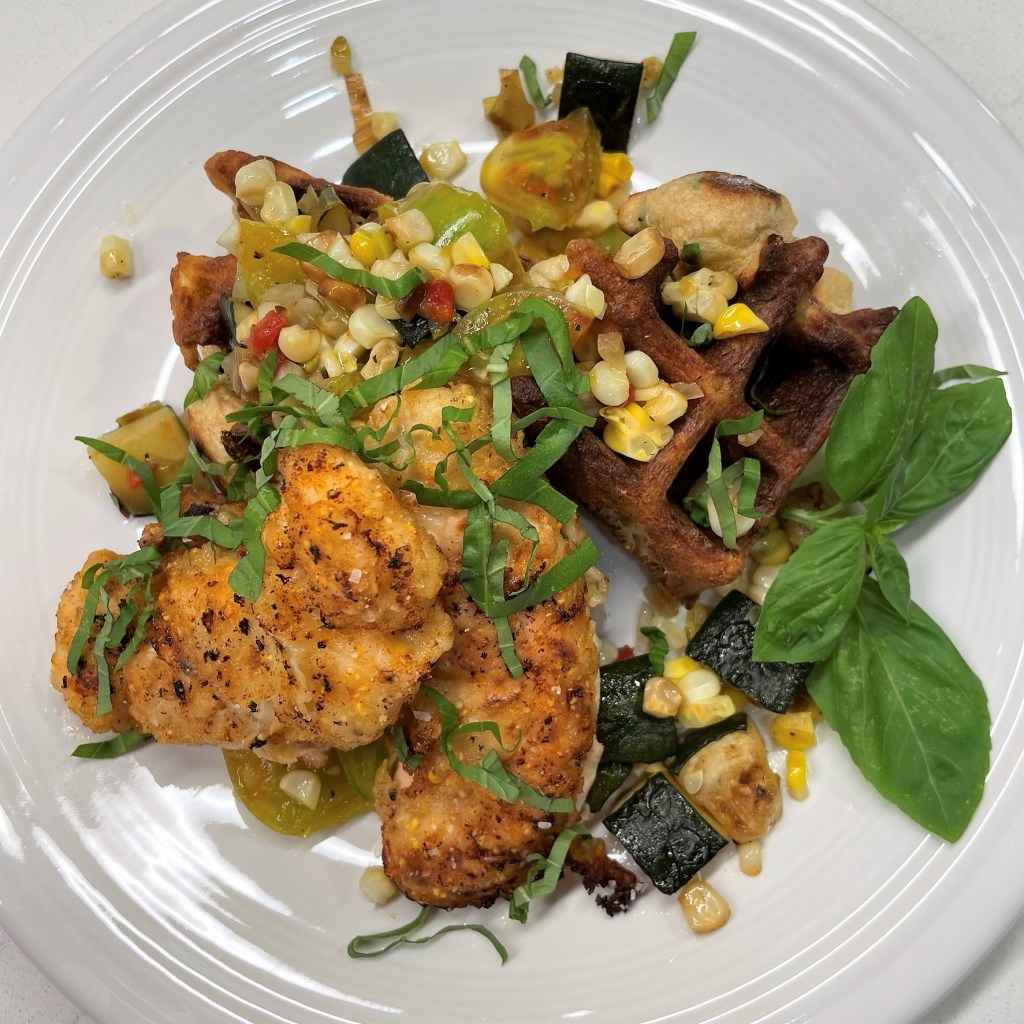
Yes, the countdown to autumn has begun, and I’ll be at the front of the line to greet it. For now, I’d like to share this colorful, late-summer dish that I whipped up last month, just before our garden tomatoes started coming in. It’s a “healthy-ish” play on chicken and waffles, and a great way to hang onto the lingering days of summer as we prepare to roll out the welcome mat for the glorious comfort foods of autumn.


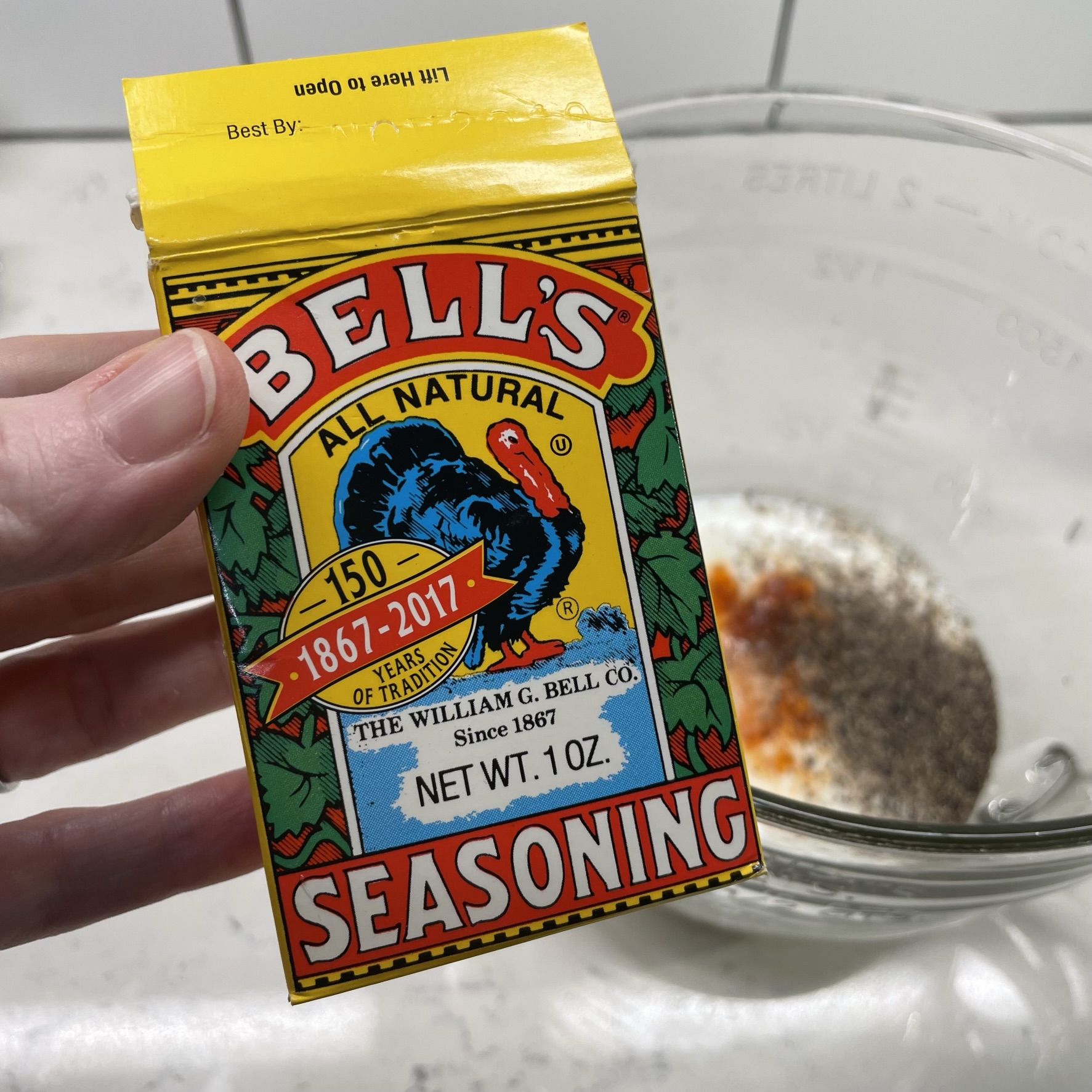
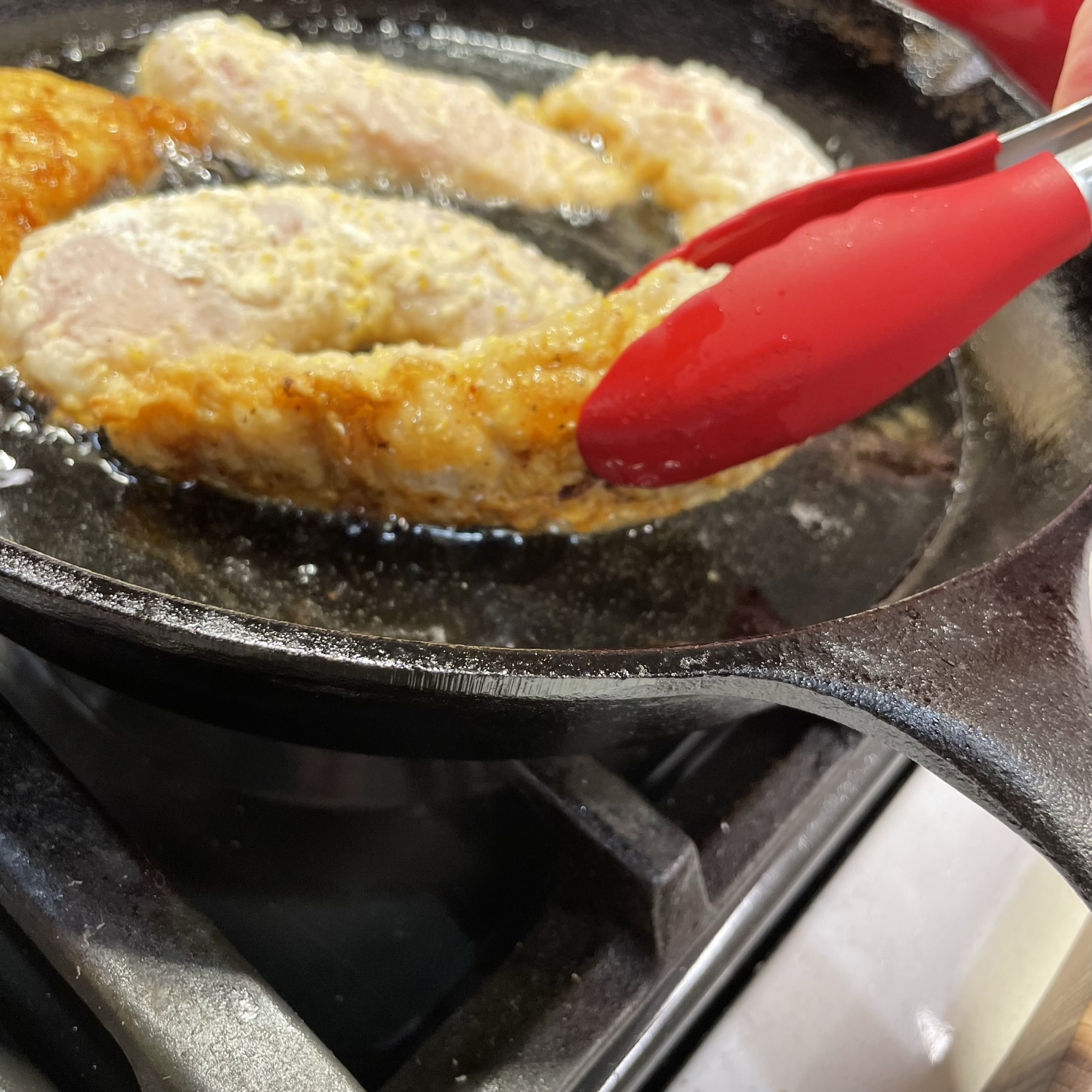
It may seem that “chicken and waffles” could not qualify as healthy-ish, but I did lighten this up in a number of ways. First, I used skinless chicken tenders (rather than skin-on, bone-in pieces), which were drenched in flavor after a two-hour bath in buttermilk, seasoned with plenty of hot sauce and a bit of Bell’s poultry seasoning. Never miss an opportunity to add flavor—that’s one of my key approaches to cooking. Rather than deep frying the tenders, I dipped them in seasoned flour and crisped them up lightly in a cast-iron skillet. And with a high volume of vegetables in the succotash, each serving only included two of the fried tenders. Portion control is one of the simplest ways to reduce calorie intake. 🙂


The waffles for this dish were on the healthy side of things, too, and based on a sourdough pancake recipe from my favorite baking site, King Arthur Baking Company.

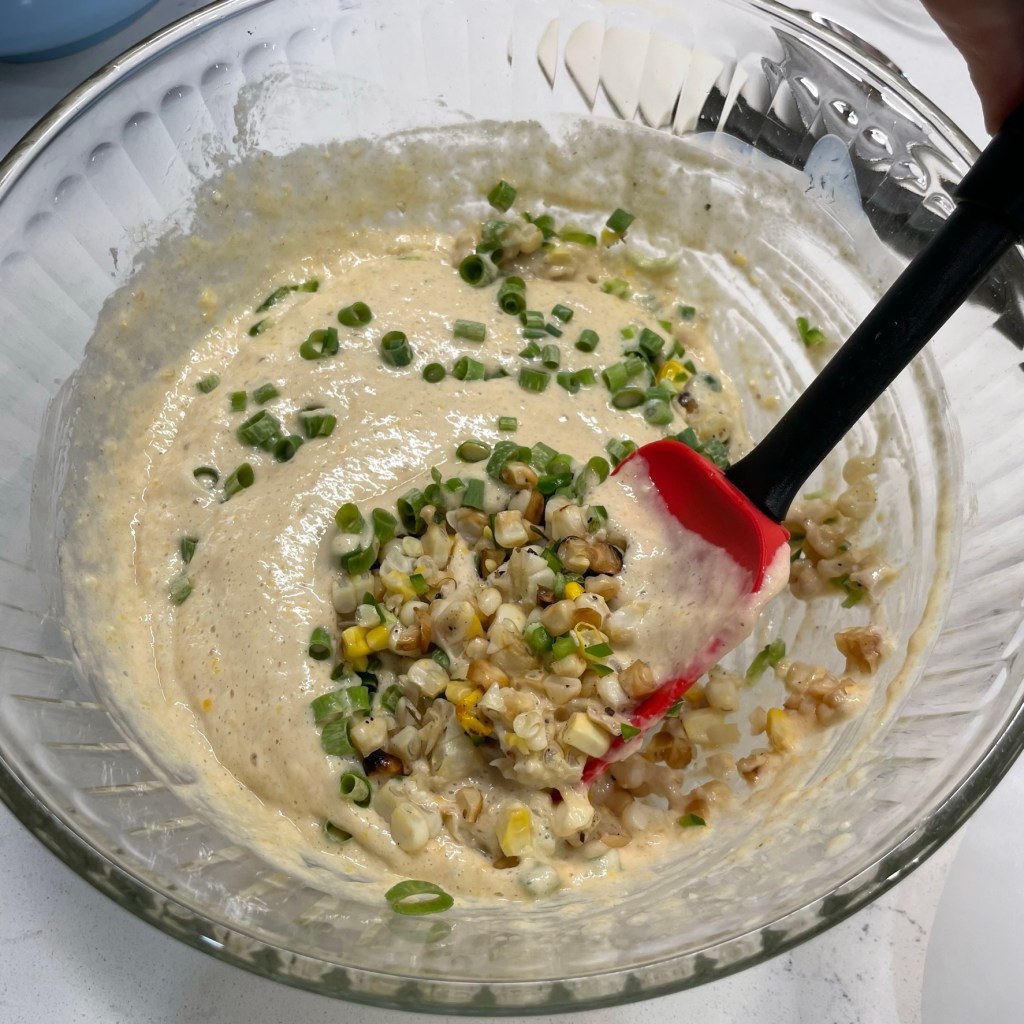
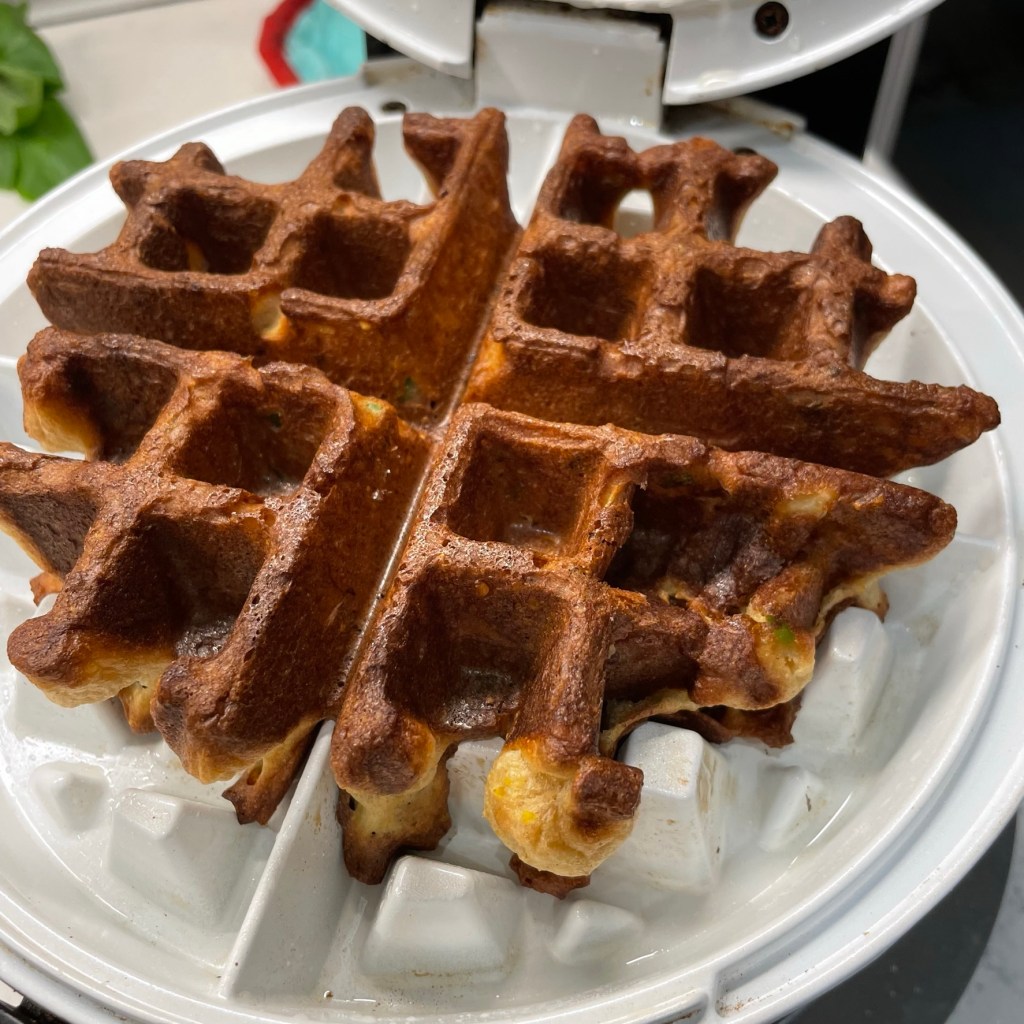
I followed the King Arthur recipe as written, except that I halved it, swapped in white whole wheat flour with a little cornmeal, and bumped up the oil just enough to prevent them from sticking to the waffle iron. The scallions and leftover grilled corn folded into the batter made the waffles extra hearty, and sourdough can’t be beat for this application because of the amazing crispy texture it puts on the waffle exterior. If you aren’t riding the sourdough train, there’s no reason in the world you couldn’t substitute another waffle recipe you like and add the corn and scallions to it.


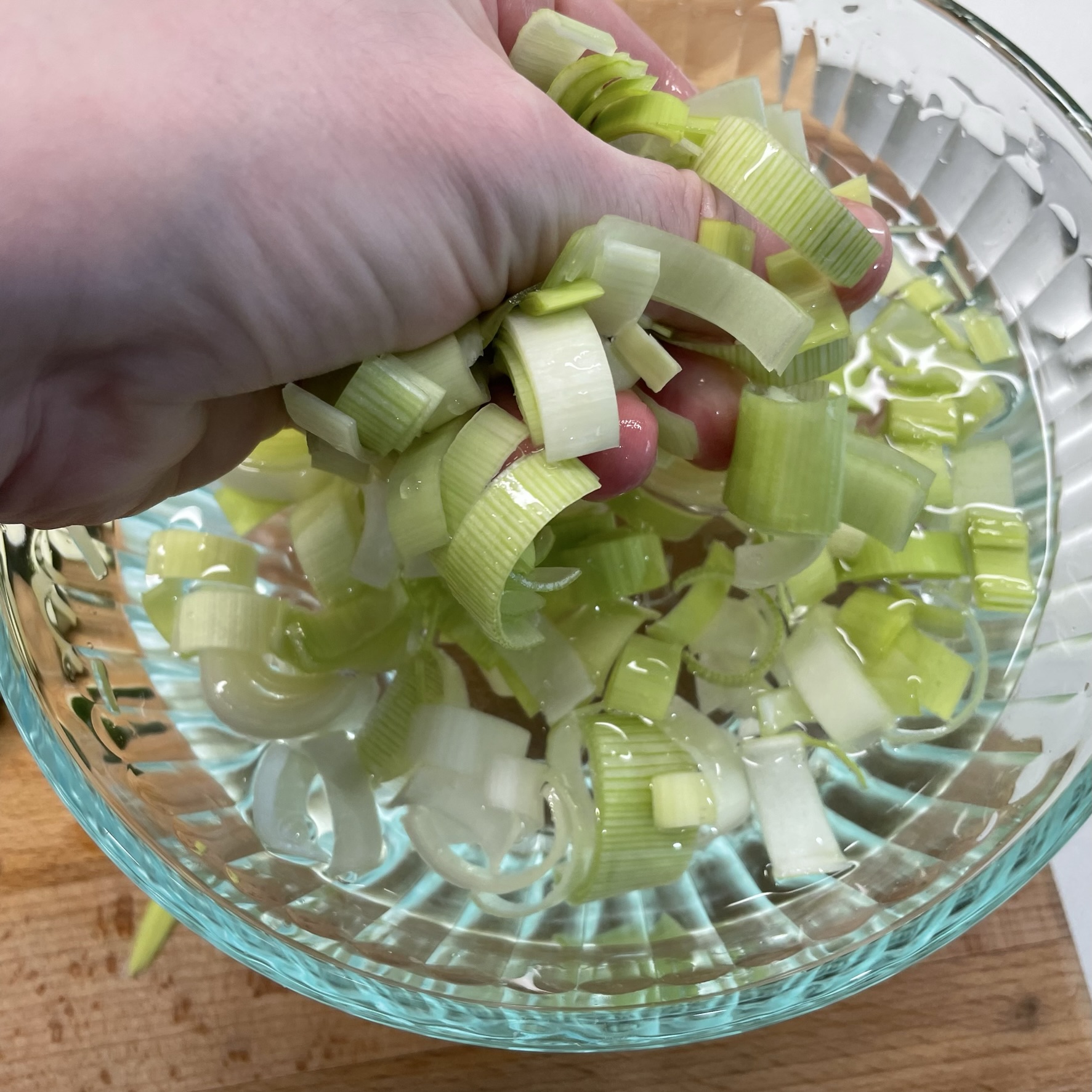
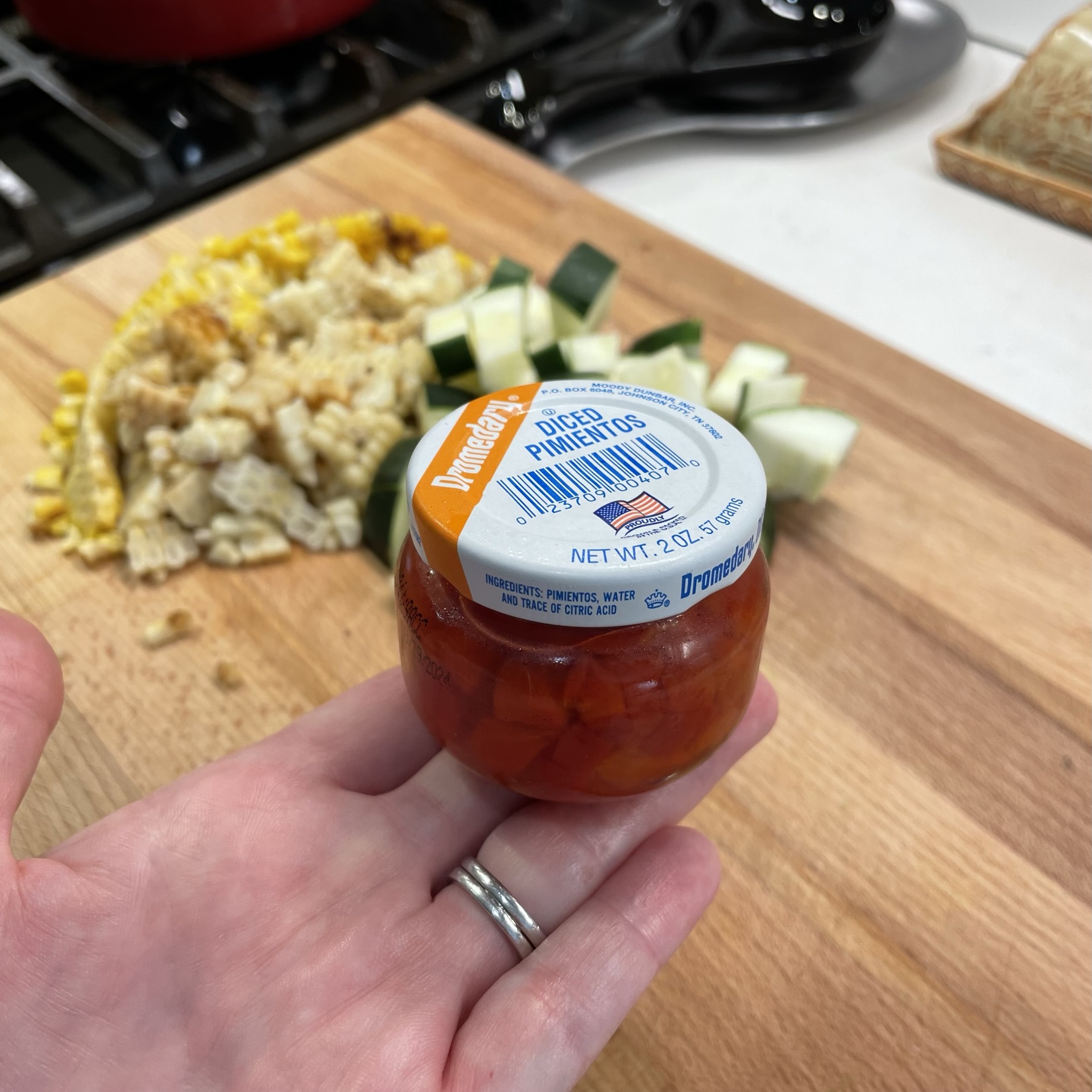
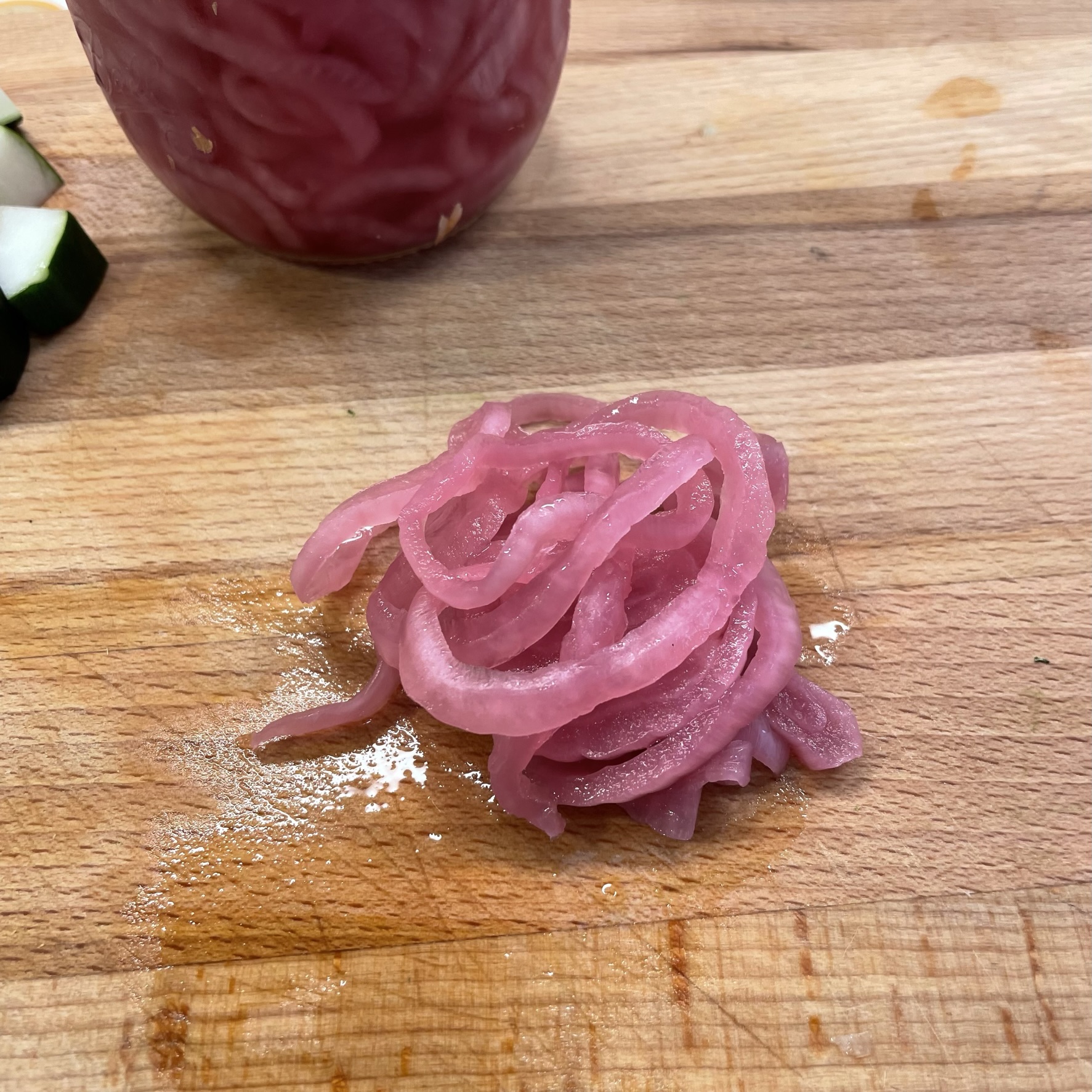
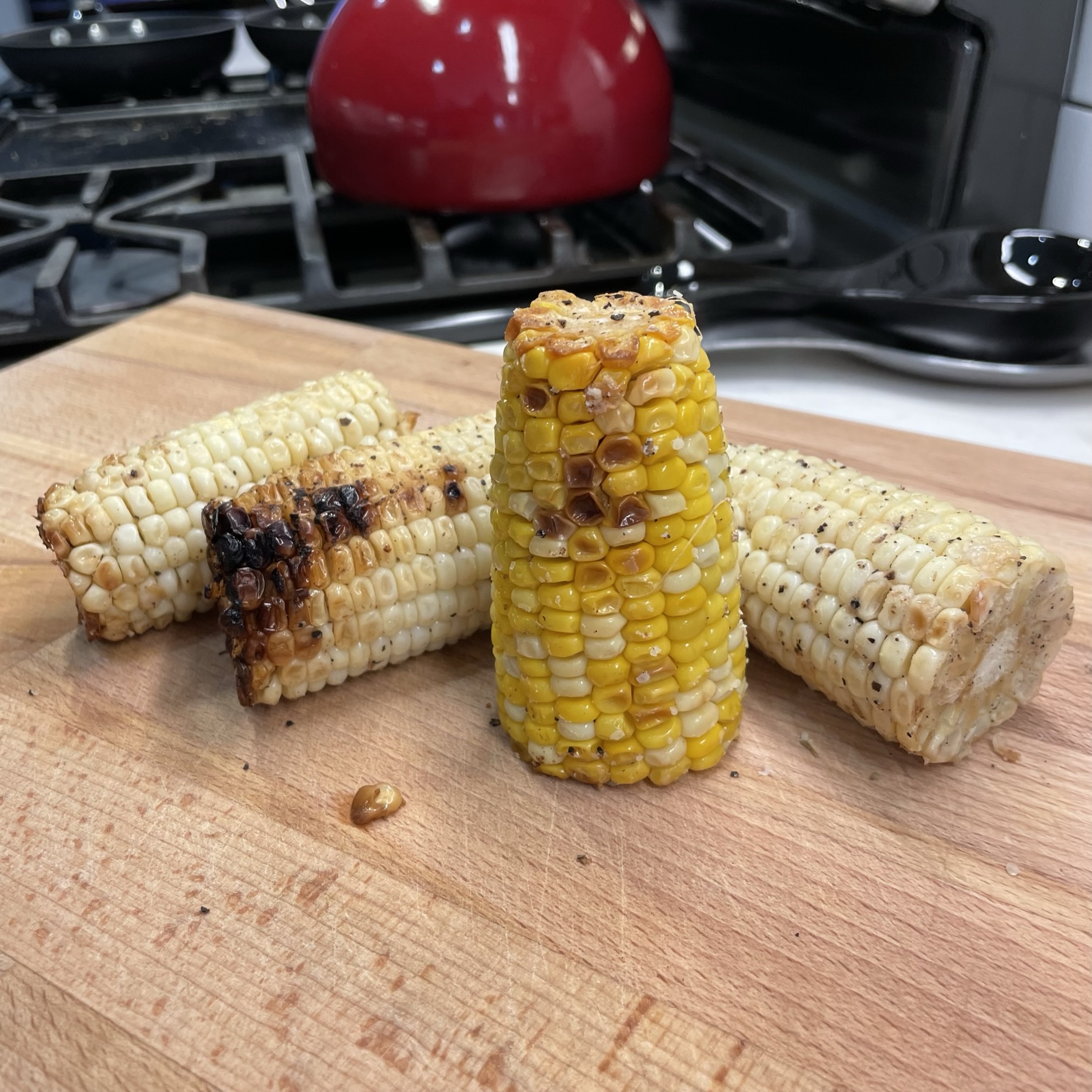
The succotash (technically this isn’t one because it doesn’t have beans) has everything that I love—zucchini (still plenty of it at the farmers’ market), grilled corn, leeks, ripe baby tomatoes, pickled onions and half of a tiny jar of pimentos we had in the fridge. I used one of my favorite prep-ahead techniques for this meal, which is layering the cut-up ingredients in reverse order in a single prep bowl that I can tuck into the fridge until I’m ready to start cooking.


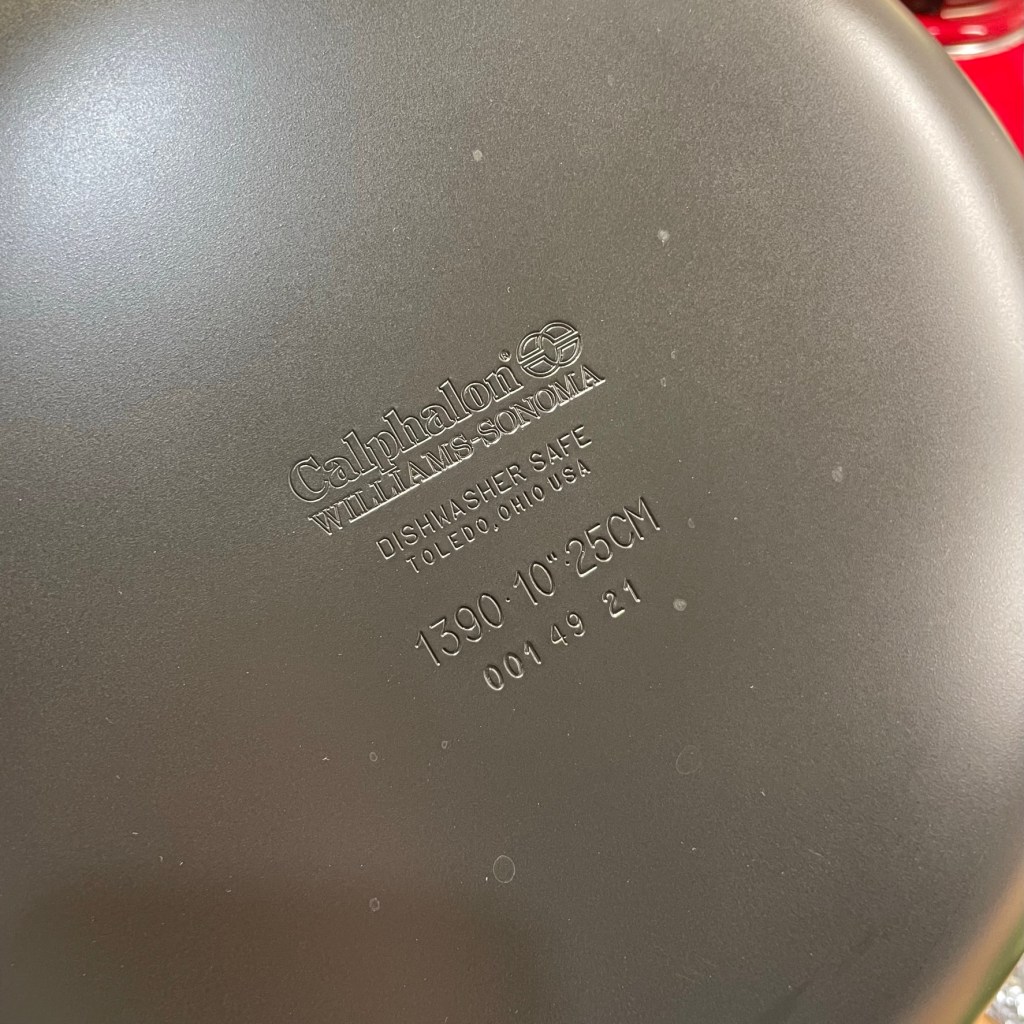
This recipe gave me a first chance to use the new non-stick skillets we bought this summer; Les and I had looked high and low for replacements that didn’t feel chintzy and weren’t made in some factory overseas. Les learned via online research that the only pair of American-made non-stick skillets were a specific set of Calphalon pans that were sold by Williams-Sonoma (most of Calphalon’s products are made in China, but this set is made in Ohio). They are available online if you don’t have a store near you.

The non-stick coating is great, and I love the sturdiness of our new pans, but for me the real test of a new skillet is “how easily can I flip my ingredients?” Sometimes when I have a lot going on at once, I don’t want to take time to pick up a utensil so I’ll employ the flipping technique I learned during my catering days. It worked fine, though the pan was a bit heavy, so I’m counting it as upper-body exercise (and I only lost a few pieces of onion to the floor).


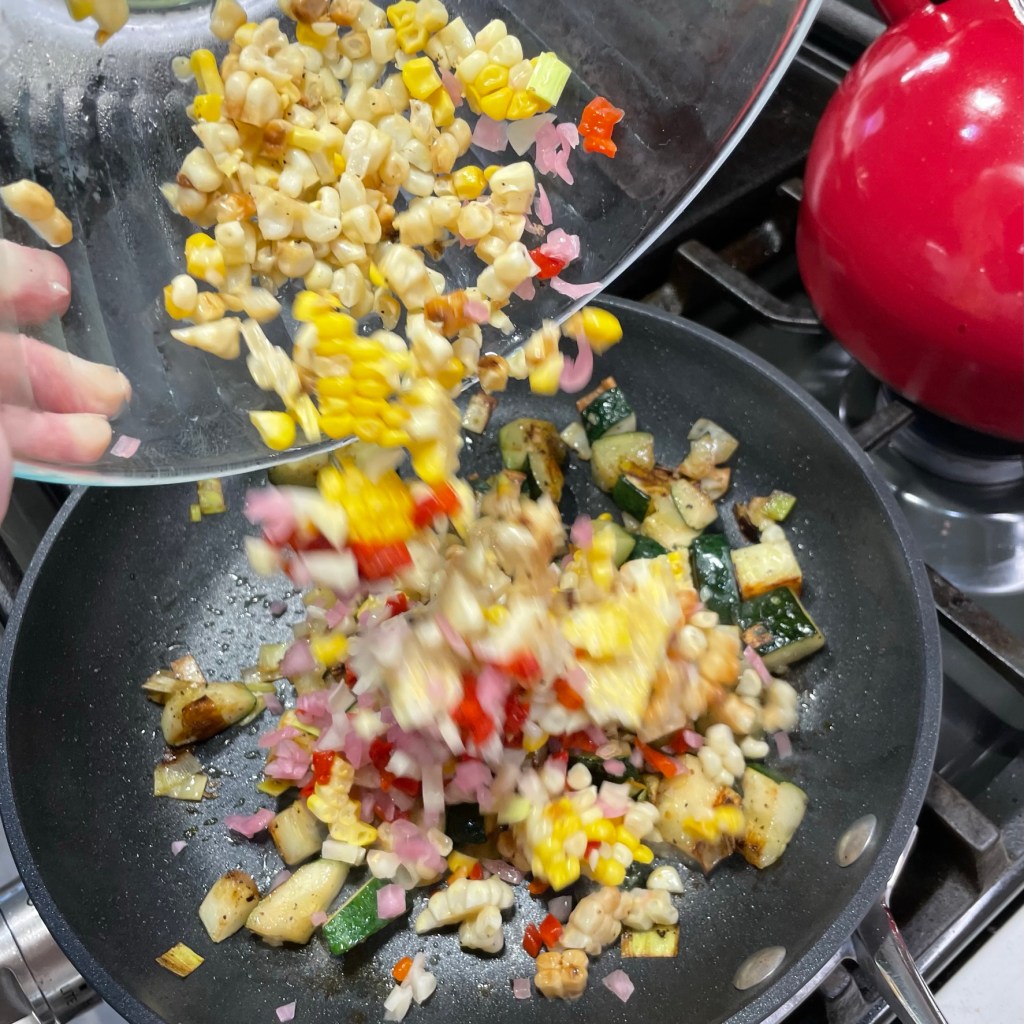
Having one prep bowl filled with vegetables makes cooking a snap, as I simply empty them into the skillet as I need them, and there’s no jumbling around in the fridge to find what I need or washing extra prep dishes. When the zucchini started to become tender, I moved deeper into the bowl for the other ingredients until I had everything in the pan.


All three components of this dish—the waffles, the chicken and the succotash—happen simultaneously, but you could certainly make the succotash ahead and simply rewarm it when you’re ready to serve. Keep the waffles warm on your oven’s low setting if needed, and aim to make the chicken the last thing you prepare. Remember to season it with a light touch of salt from the skillet!

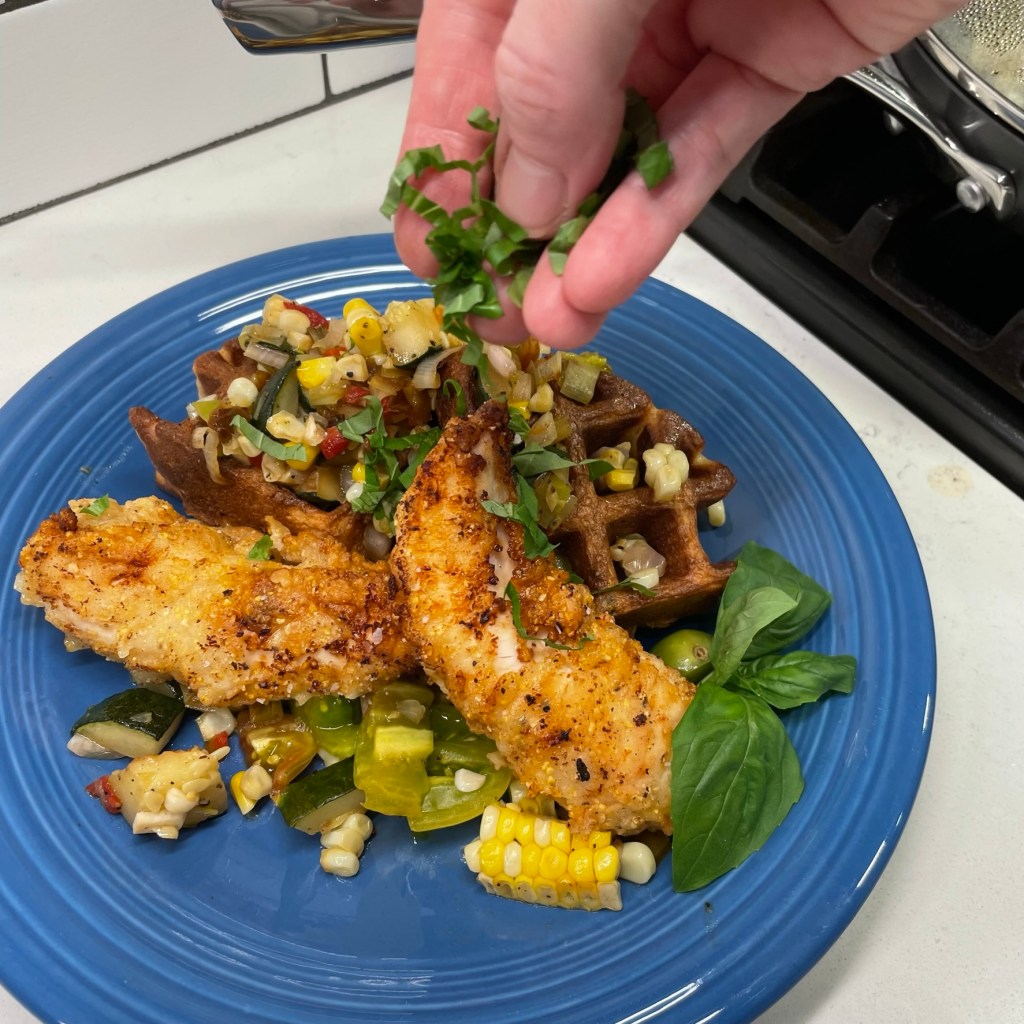
Pile it onto a plate, with the succotash underneath and over top of the crispy waffles, and the chicken tenders leaned against it. Finish the dish with a scattering of fresh chopped basil leaves, and dinner is served!

Not only does this presentation look beautiful, it serves the purpose of keeping everything warm until you make it to the last delicious bite!


Late Summer Succotash with Chicken & Waffles

  • Servings: About 3
  • Difficulty: Intermediate
  • Print

This meal takes some time to prepare, but the combination of sauteed summer ingredients and lightened-up chicken & waffles is well worth the effort! Prepare the three components of this dish at your own pace; if time is limited, the succotash can be made ahead and warmed at serving time. If you plan to make everything concurrently, consider setting the oven to warm and tuck away the waffles or chicken tenders on a rack placed over a baking sheet.

Ingredients

  • 1 pound boneless, skinless chicken tenders, patted dry
  • 1/2 cup cultured buttermilk
  • Up to 1 Tbsp. bottled hot sauce
  • 1/2 tsp. poultry seasoning
  • Salt and pepper
  • 1 cup neutral oil (for skillet frying]
  • 1/4 cup all-purpose flour
  • 2 Tbsp. medium-grind corn meal
  • 1/2 tsp. garlic powder

Directions

  1. In a medium bowl, combine buttermilk, hot sauce, poultry seasoning, salt and pepper. Add chicken tenders to the bowl, tossing to coat. Allow this to rest at room temperature at least 30 minutes, or refrigerate up to a few hours if working ahead. Take them from the fridge 30 minutes before pan-frying them.
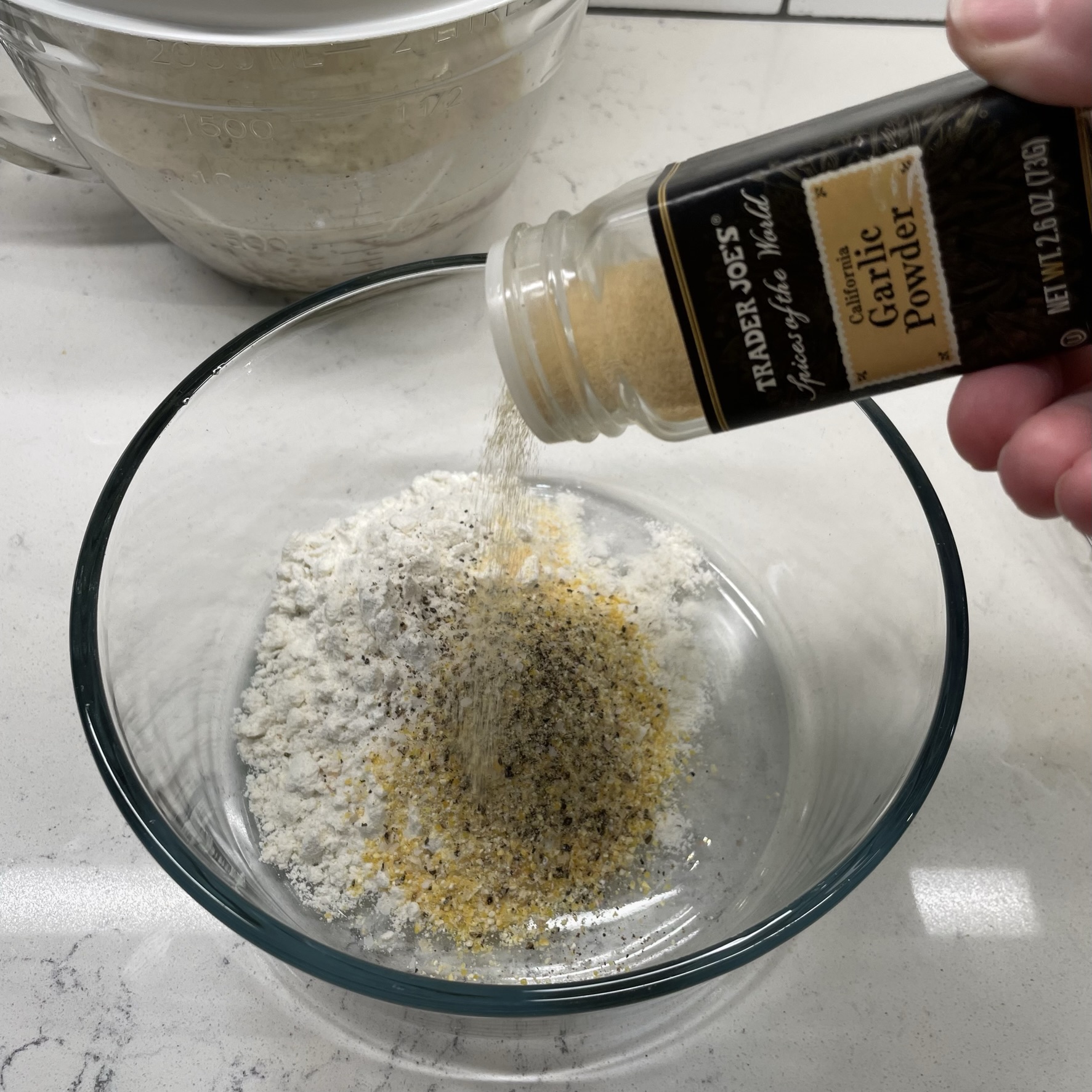
  2. In a small bowl, combine flour, corn meal and garlic powder, plus a few shakes each salt and pepper. Set this aside for breading the chicken tenders.
  3. Heat a cast iron skillet over medium heat, with 1/2-inch oil.
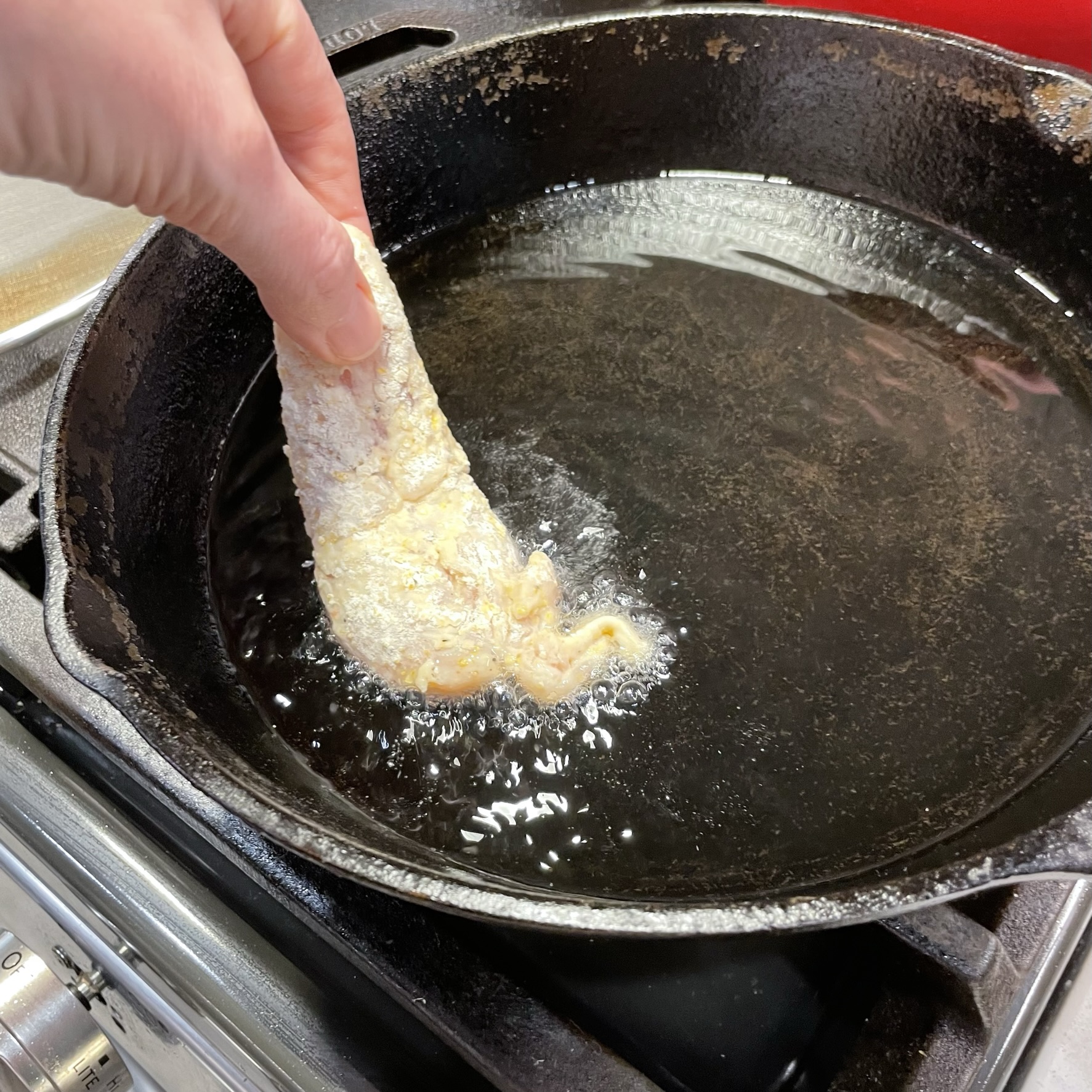
  4. When oil is hot, remove tenders from buttermilk mixture, allowing all liquid to run off. Dip the tenders into the breading mixture; coat evenly without dredging too heavily. Carefully place each tender into the hot oil, taking care to not crowd the pan too quickly, as this will drop the temperature of the oil and result in greasy chicken. Turn tenders when the first side is golden brown; transfer them to a paper towel-lined plate when done. Season immediately with a light sprinkle of salt.

Ingredients

  • 1/4 cup fed sourdough starter
  • 1/2 cup cultured buttermilk
  • 1/2 cup white whole wheat flour
  • 3 Tbsp. medium-grind cornmeal
  • 1/2 tsp. baking soda
  • 1/4 tsp. salt
  • 1 large egg
  • 1 Tbsp. extra virgin olive oil
  • 1/2 cup leftover grilled corn kernels
  • 3 chopped green onions (scallions), white and green parts

Directions

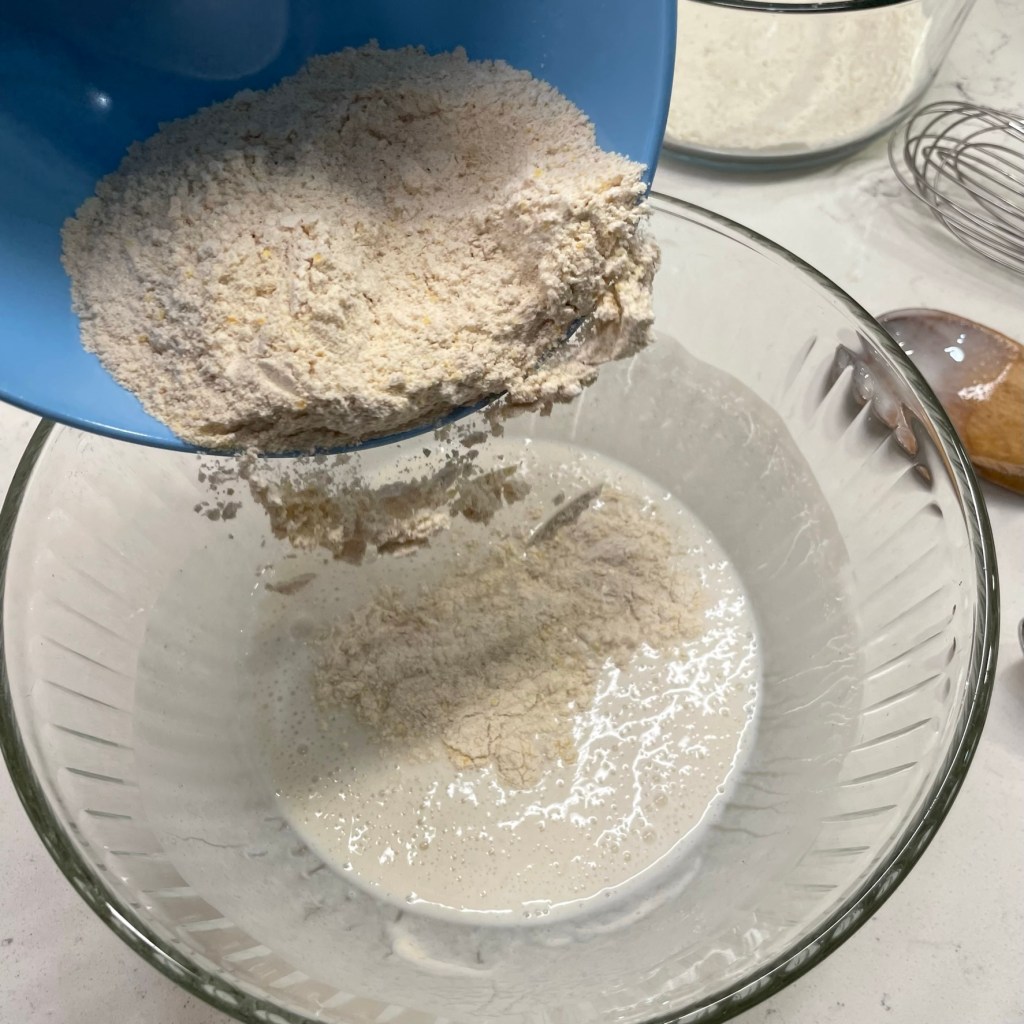
  1. In a medium batter bowl, combine sourdough starter and buttermilk. Add flour and cornmeal. Stir until smooth; cover and leave at room temperature at least 30 minutes, up to about 2 hours.
  2. In a small bowl, combine flour, cornmeal, baking soda and salt. Set aside.
  3. Set waffle iron to medium heat. While it preheats, add egg, oil, soda and salt to the sourdough batter. Stir until smooth. Fold in corn and scallions.
  4. Brush waffle iron with oil. Add a scoop of batter and bake until crispy, following manufacturer’s instructions. As a visual cue, watch for steam to dissipate from the iron. Generally, if the waffles are sticking, they aren’t finished baking. If working ahead, place finished waffles on a rack over a cookie sheet and keep them in a warm (250° F) oven.

Ingredients

  • 1 medium zucchini, chopped into chunks
  • 1 small leek or onion, chopped
  • 1 cup leftover grilled corn kernels
  • 1/4 cup pickled onions, chopped (I like the “pickled” flavor here; substitute anything pickled, such as okra, green beans, cucumber)
  • 2 Tbsp. jarred pimento, drained
  • 2 Tbsp. extra virgin olive oil
  • 1 cup ripe baby tomatoes, halved
  • Salt and pepper
  • Fresh basil or parsley, to garnish

Directions

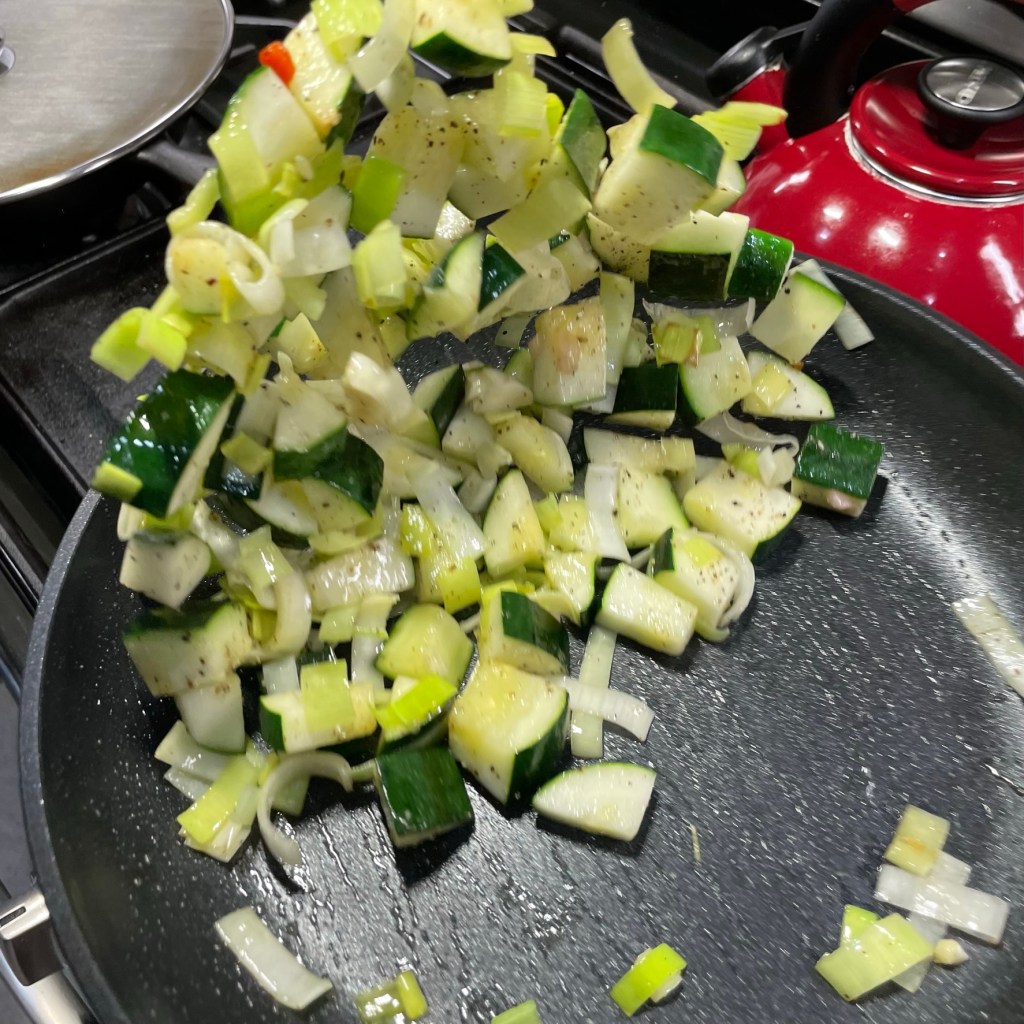
  1. Heat a large, non-stick skillet over medium flame. Add olive oil and saute zucchini with leeks or onions until slightly tender.
  2. Add remaining vegetables, except tomatoes, and toss until evenly combined. Reduce heat to low and cover skillet with a lid so that the pan ingredients can heat through without much more cooking.
  3. Add tomatoes at the end, tossing just to combine.

To assemble the dish, spoon out some of the succotash, and then place a waffle section, topped with additional succotash. Arrange the chicken tenders by leaning them up against the waffles. Sprinkle with chopped, fresh basil or parsley.


Ratatouille Shakshuka

How is it possible that the simplest combination of ripe-at-the-same-time ingredients turns out to be such a mouthwatering flavor explosion, no matter how you put it together?

Any way you plate it, this is a great combo!

I never get tired of rearranging ratatouille—eggplant, zucchini, red bell pepper, onions and tomatoes—and this time, I married the classic Provencal stew with a classic Jewish breakfast dish, shakshuka.

The first time I heard of shakshuka was during a pre-wedding meeting with Rabbi Mark, who formerly led Temple Emanuel in Winston-Salem, where my then-fiancé, Les, is a member. When our ceremony-planning conversation took a detour toward food and cooking (as literally every conversation with me eventually does), Mark asked if I’d ever made shakshuka, the Middle Eastern dish that is a breakfast staple in many Jewish households. I was stumped because I had never even heard of this dish, let alone made it. But that changed quickly, and it has become an occasional favorite at our house.

Shakshuka is a humble and hearty, tomato-based skillet meal, and a great way to use up whatever other vegetables you have on hand, with eggs simmered right into the sauce. It is very similar to a dish the Italians call “eggs in purgatory.” I especially appreciate how simple it is to pull together when I have had a busy week with little time to plan a menu. Up until now, I have made it only with the spicy flavors that are traditional to the northern African region, where shakshuka originated—cumin, paprika, hot pepper, garlic and oregano.

But this time, I took the concept of shakshuka northward across the Mediterranean Sea, into the south of France, using Herbs de Provence alongside all the beloved vegetables of ratatouille. The result, as you can see, was awesome!

Served with a light sprinkle of Parm-Romano blend cheese at the table.

There was so much nourishing comfort in the stewed vegetables, which simmered long enough to become soft and melded, and the delicate herbs were just right. I’m already craving it again!

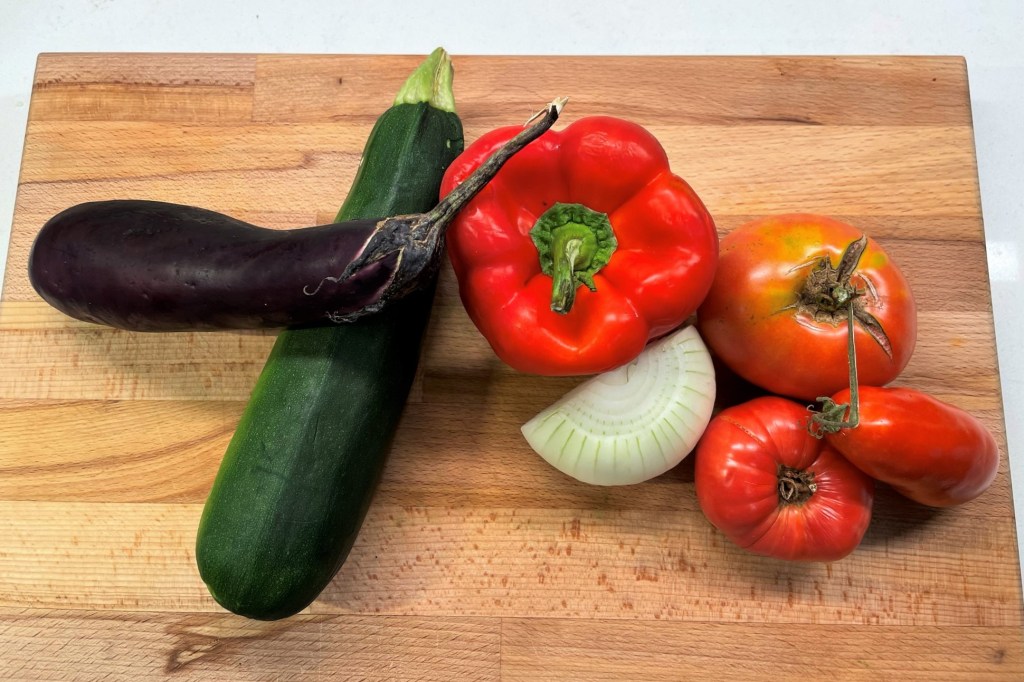
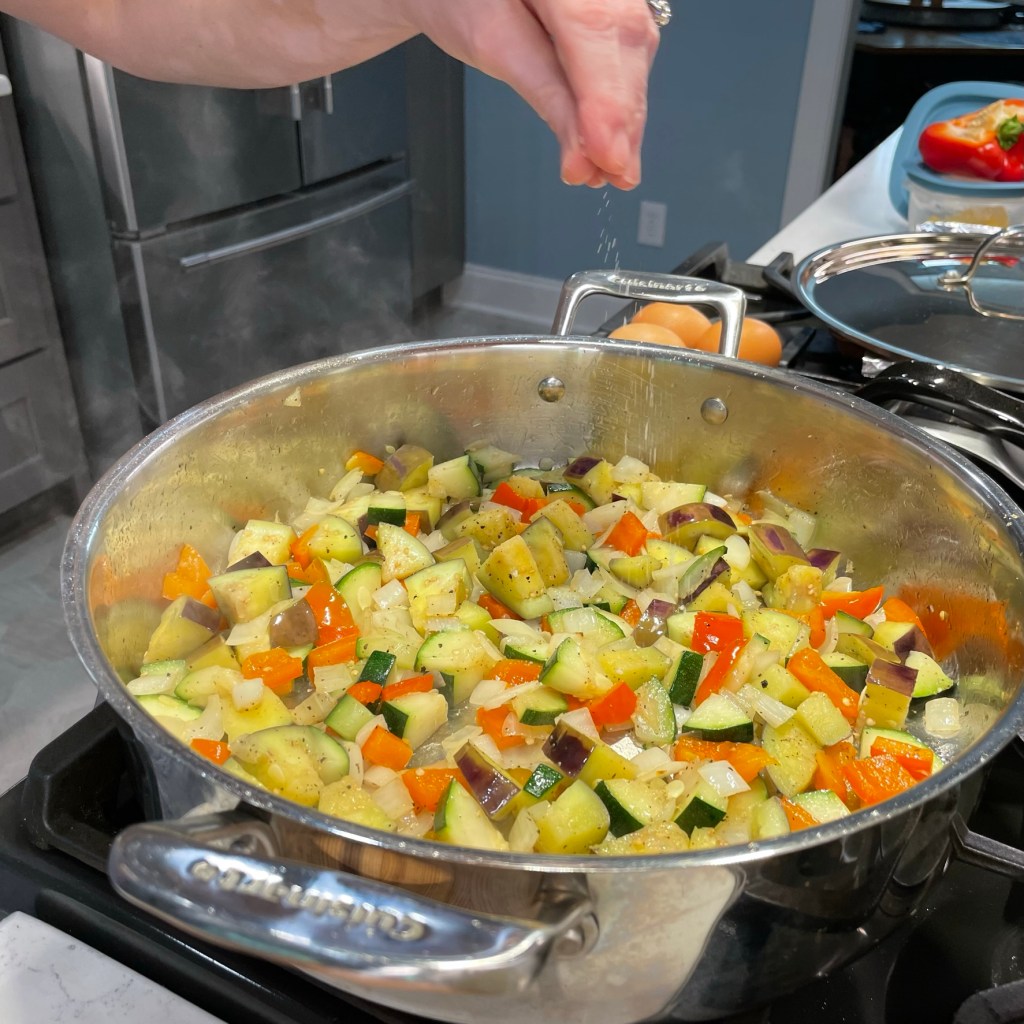
As with most recipes, it’s helpful to have all your ingredients chopped and ready before you begin. For any stew, I like to cut up the vegetables into roughly similar size. This ensures more even cooking, and also makes it possible to get a little bit of everything in each delicious bite. I used a large zucchini, a large “millionaire” eggplant (the slender, Japanese variety), half of a large onion, half of a huge red bell pepper and three fresh, red tomatoes from my garden. In addition to the fresh ingredients, you’ll need a 15 oz. can of tomato sauce, a splash of dry white wine (I used dry French vermouth), a pinch or two of Herbs de Provence, and up to six eggs.

We’re going to need a bigger pot!

That’s a lot of veggies! I made this version of shakshuka in a larger pot than usual because I knew that tossing all of these fresh vegetables in my go-to cast iron would be a serious challenge, and I wanted to avoid making a big mess. The ratatouille also needs to be stirred as it cooks, so be sure your cooking vessel can handle the volume of ingredients as well as the mixing requirement. Choose a pot that has a snug-fitting lid, as this will be important for simmering.

The width of the pot is what matters, so you’ll have plenty of room to place the eggs.

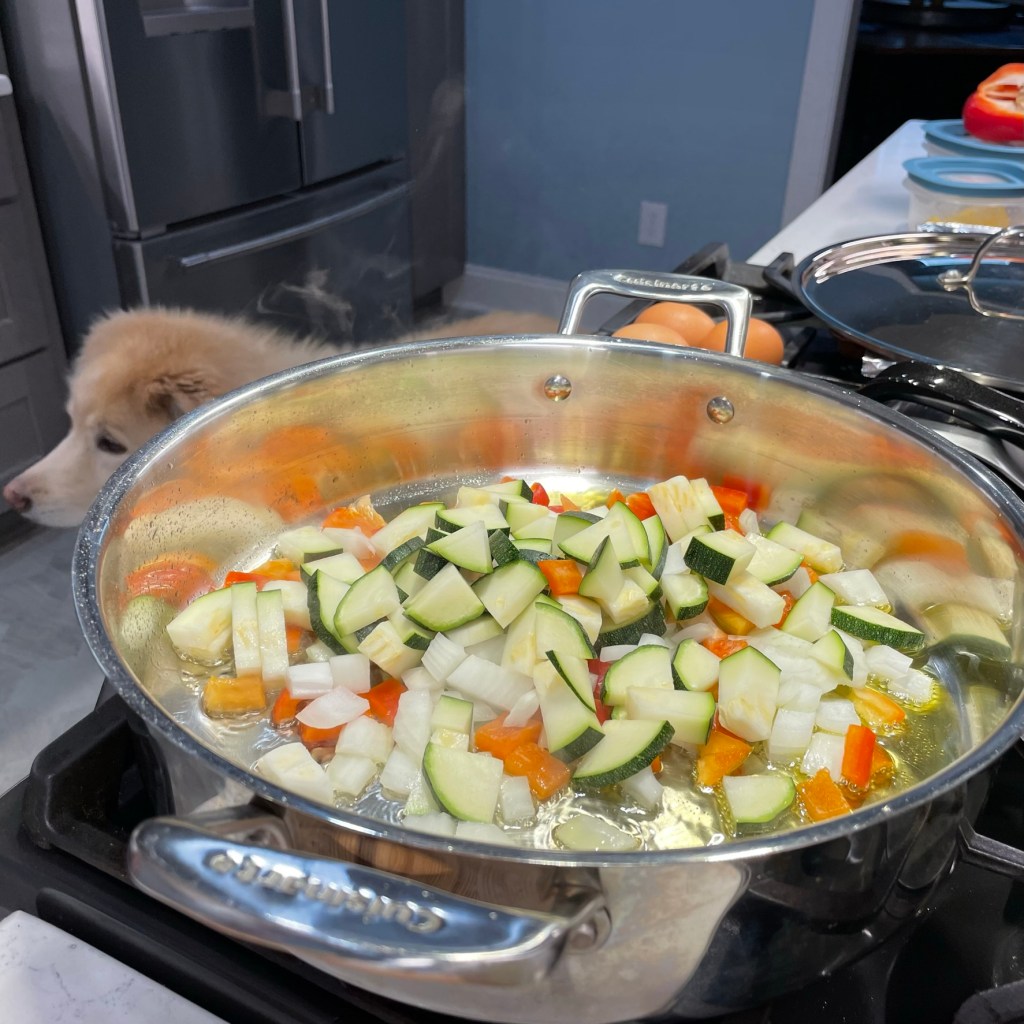
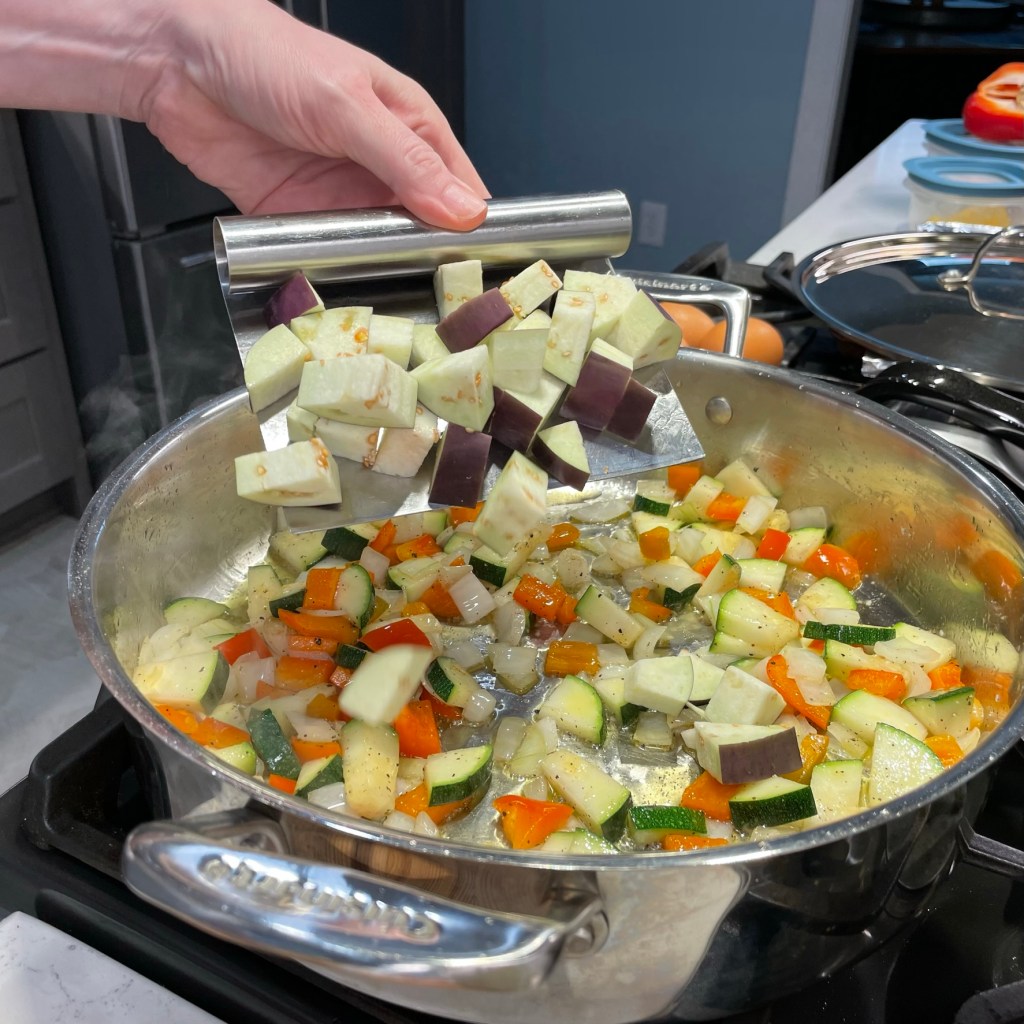
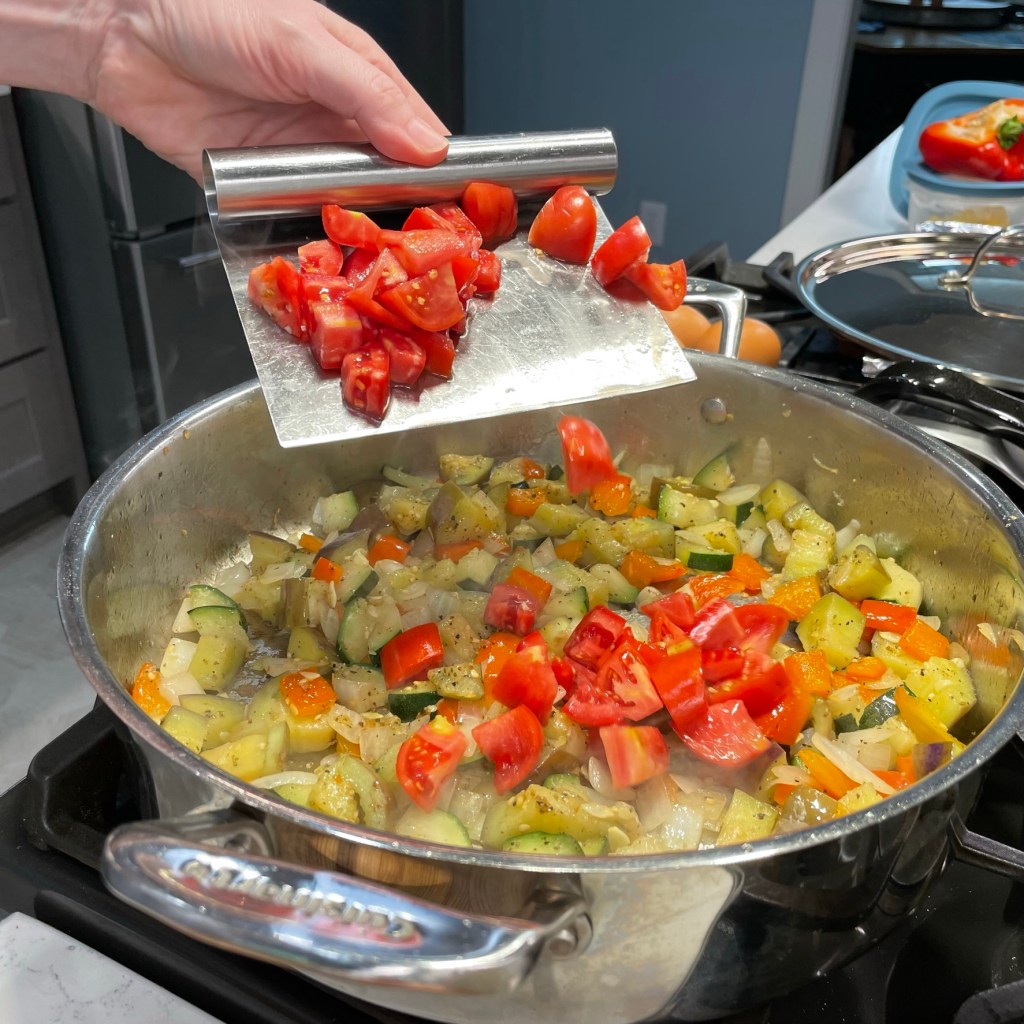
Begin by heating the pan over medium flame. Add oil and start sautéing the vegetables. Eggplant soaks up oil fast so I held that back until the peppers, onions and zucchini had a chance to soften. Remember to season each layer with a pinch of salt and pepper, not only for flavor, but also because salt helps to draw excess moisture from the vegetables as they cook. During this stage, also add a few pinches of Herbs de Provence, a French blend that includes any combination of thyme, savory, rosemary, marjoram and lavender. These are delicate herbs, but they do pack a fragrant punch, so start with a small amount and inch up to taste.


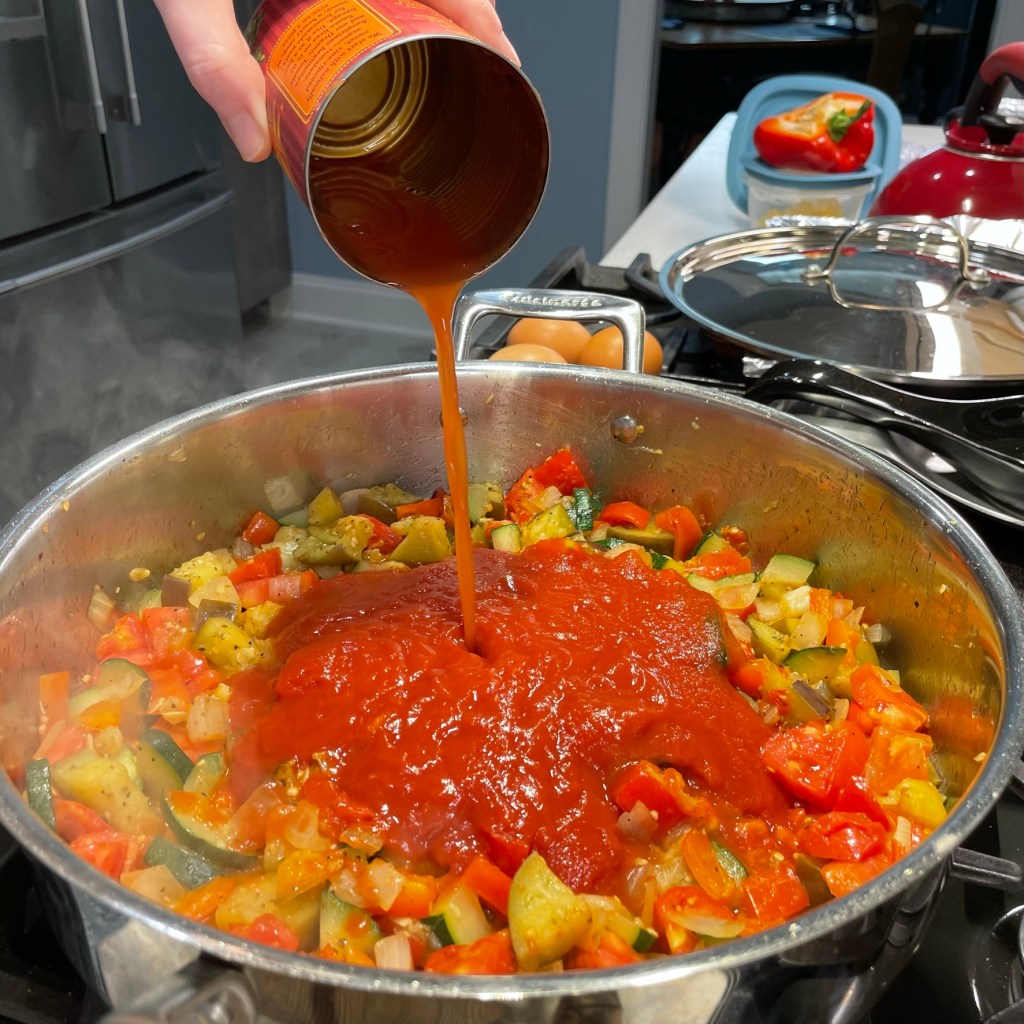
When the vegetables are visibly softened, add the fresh garden tomatoes and give it a stir. Add the tomato sauce and dry white wine. If I have used a canned ingredient, I usually swish the wine around in the empty can to rinse out the last bit of flavor. Another quick pinch of salt and pepper, and then reduce the heat, cover the pan and allow it to simmer for 15 to 20 minutes. The vegetables will continue to soften, melding the flavors together, but the sauce should not reduce too much. While it simmers, take the eggs out of the fridge; they will set in the shakshuka better if they are closer to room temperature.


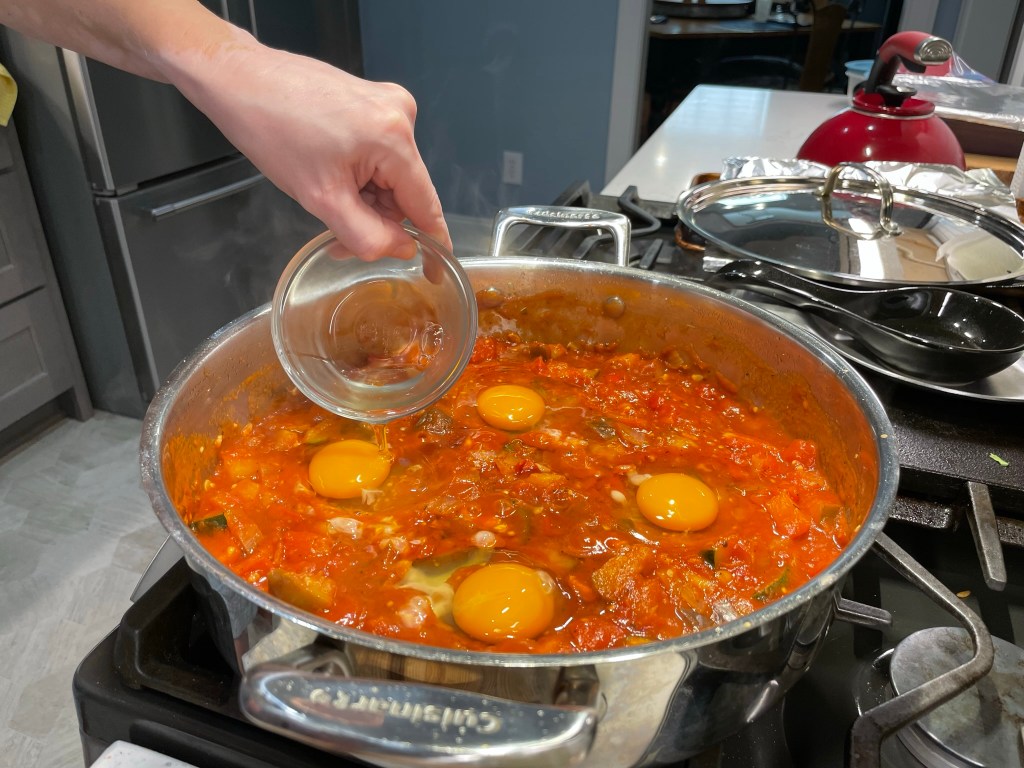
When the ratatouille stew has become very soft, crack each egg into a ramekin dish for easy transfer to the shakshuka. This may seem unnecessary, but trust me when I tell you that it is no fun at all trying to fish out itty-bitty pieces of egg shell that went astray into a big saucy mixture. If anything goes sideways with your cracked eggs, you want it to happen in the ramekin, not in your beautiful recipe!

Give the stew a gentle stir, and then use the back of a large serving spoon to create a slight depression for each egg to rest. This doesn’t have to be perfect, and you only need a spot about 3 inches across for each egg. I had room for six eggs in my large pot, but I only used four because I knew the extras would not warm up well without overcooking. Better to add fresh eggs when you heat up the leftovers.

Cook as many eggs as you plan to serve initially. Make more eggs when you reheat the leftovers.

Slip an egg into each depression and give the shakshuka one final pinch of salt and pepper before covering the pot. Keep the flame set on low and cook for 8 to 10 minutes, until the whites are set but the yolks still have a bit of jiggle to them.

I wish you could smell this! 😋

Scatter fresh, chopped herbs over the dish (I used fresh basil from the garden, but flat-leaf parsley would be nice, too), and serve immediately with a slice of crusty French bread. The best way to serve this dish is to use a wide, somewhat flat spoon to scoop underneath an egg, grabbing as much of the surrounding stew as possible at the same time. Sprinkle on a teaspoon or so of grated Parmesan for a big burst of umami flavor.


Ratatouille Shakshuka

  • Servings: 6
  • Difficulty: average
  • Print

Choose a wide, covered pot for making your ratatouille, and prepare your workstation by chopping all vegetables before you begin.

Ingredients

  • 1 large zucchini, trimmed and chopped
  • 1/2 large sweet onion, chopped
  • 1/2 large (or 1 medium) red bell pepper, chopped
  • 1 large Japanese eggplant, chopped (or about 2 cups of alternate variety)
  • 3 Tbsp. extra virgin olive oil
  • Kosher salt and black pepper to taste
  • Up to 1 tsp. Herbs de Provence (or Italian seasoning, if preferred)
  • 3 small, fresh tomatoes, chopped
  • 15 oz. can low-sodium tomato sauce
  • 2 Tbsp. dry white wine (or dry vermouth)
  • 6 large eggs* (see recipe note below)
  • Fresh basil or Italian parsley, for garnish

Note: If you wish, cook only the number of eggs you intend to serve initially. When you use the leftovers, fresh eggs will yield a better result at that time.

Directions

  1. Heat large pan over medium heat. Add olive oil and saute vegetables, beginning with only zucchini, onion and bell pepper. When the first vegetables begin to soften, add the eggplant and saute until all veggies are tender. Season with salt, pepper and Herbs de Provence.
  2. Add fresh tomatoes, tomato sauce and dry wine, stirring to combine evenly. Reduce heat, cover and simmer 15 to 20 minutes. Remove eggs from fridge during the simmer time.
  3. When vegetables are fulley softened, crack each egg into a ramekin cup for easy transfer into the pot. Use the back or a large serving spoon to make a depression for each egg. Slip the eggs into the depressions, season with salt and pepper and cover the pan.
  4. Cook over low heat about 8 minutes, until egg whites are set and yolks are still slightly jiggly. Serve immediately.


Zucchini & Yellow Tomato Pizza

We are turning a corner on our side-yard vegetable garden, and I am finding myself a bit flummoxed because for the first time in years, we actually have a tomato harvest! When I made the decision to plant this year—and it was definitely my decision, given that I’m the one who is home more during the day to tend to it—I swore that I would pull out all the stops in repelling the deer that reside in the woods behind us. Nothing I had tried in the past worked for more than a week, and dammit, I wanted tomatoes this year! If you have a similar problem, stop playing around with sprays and wind chimes (they don’t work anyway) and stop scattering human hair and soap shavings and whatever else you’ve tried, and just go get one of these—order it now, I’ll wait.

Here’s me, pretending to be a deer approaching from the woods…

The yard enforcer motion-activated sprinkler is by far the smartest thing I’ve bought this year, and friends, we are about to reap the benefit of so many tomatoes!

I planted an heirloom variety this year, called “Brandywine,” and they are large, sweet and juicy—perfect for tomato sandwiches and caprese salads. I am fond of the color of the Brandywine tomato—it’s sort of a blushy pink-red color, rather than the orange-red that is typical. They have a pleated sort of appearance, and a few wrinkly lines on the skin, but I don’t mind it and it certainly doesn’t affect the quality.

There’s nothing better than a simple tomato sandwich for a summer lunch!

Right next to those is a grouping of four Roma tomato plants, and I have been astonished to see how many fruits developed on these plants. They are extra-long fruits, compared to the wimpy Romas at the grocery store, and we are planning on canning a few things with those when they are ready—mainly homemade pizza sauce, I suspect. The Roma tomato is a determinate plant, which means they will likely overwhelm me by ripening all at once. I hope we’re ready!
Our sunbathing beauties!

Finally, the luscious, yellow “Lemon Boy” tomatoes, which were the first ones to ripen, and I love the slight tang they bring to my plate, despite being lower acidity than many other tomatoes. Lemon Boy is a hybrid variety, and it is indeterminate, so I’ll have plenty of fruit to harvest for a few weeks, which I love.

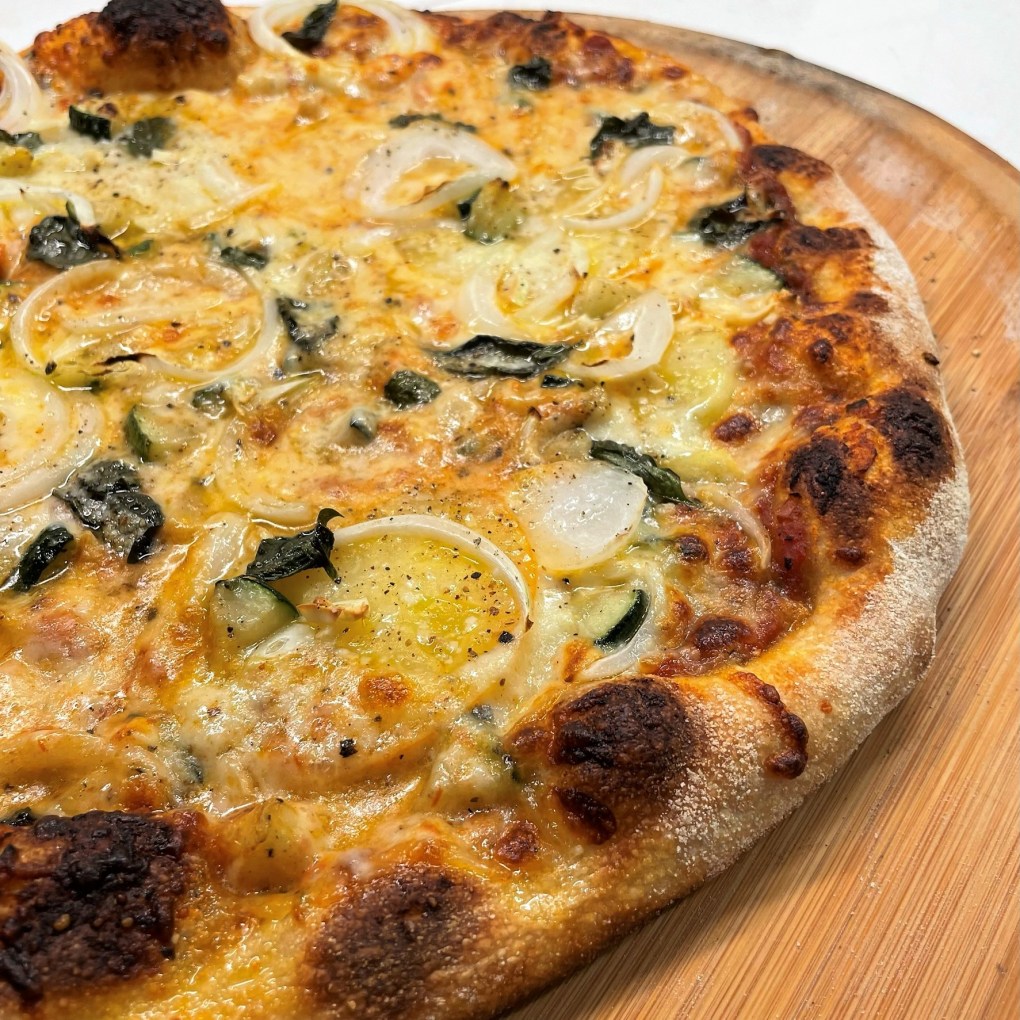
These Lemon Boys are the tomatoes I’m excited to share today, and of all the dishes I’ve made with them recently, this pizza stands out as a favorite because it really speaks to the transition of my garden. To date, I had struggled to keep up with the zucchini yield, and you can bet I won’t ever plant four of those again! It was about three weeks ago that I noticed vine borers had attacked my vibrant squash plant, and you know what that means—game over. I hate those things!

But we had a few squash that were near-ready, so I let them mature before I yanked the infested plants out of the garden. And just about the time I did so, I spotted this perfectly ripe, ready-to-enjoy Lemon Boy.

Hello, handsome! 🙂

I wanted to slice it on the spot and savor it with nothing but a sprinkle of sea salt and black pepper, but I restrained myself and made it a co-star with one of the last zucchini of the season on this summer pie. This dish felt like a passing of the baton in my garden. As my summer squash takes its final bow, the tomatoes are right on cue for center stage, and they were terrific companions on this fresh pizza. I just love this part of summer!


This is a thin crust pizza and it begins with my favorite sourdough base. The sourdough starter and the long, slow ferment in the refrigerator gives my dough a deep, complex flavor and the texture is always just right, thanks to our beloved pizza steel. If you want to level up your pizza game with only one move, this is the thing, right here. It takes the hottest temperature your home oven can put out and intensifies it to make the most beautifully blistered crust that is crisp on the bottom and chewy on top. It’s the closest you can get to brick oven at home.


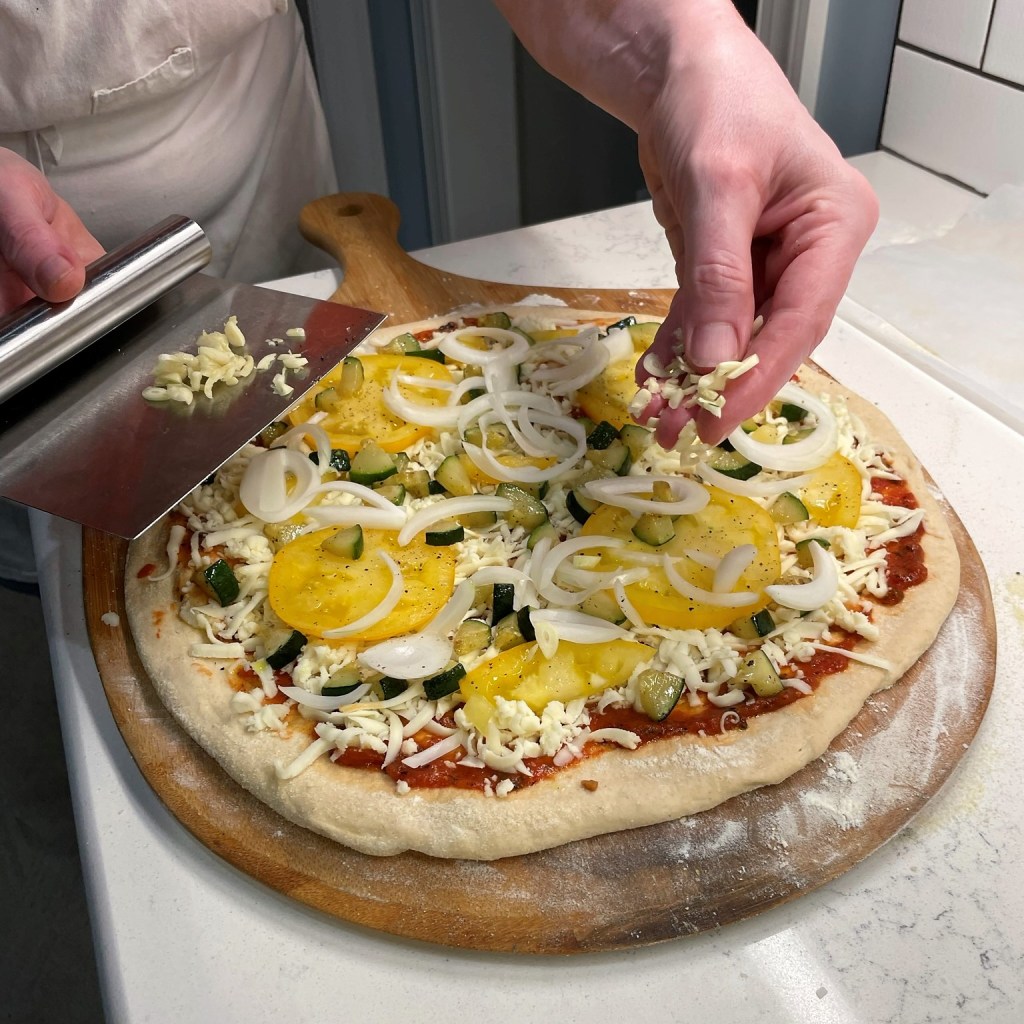
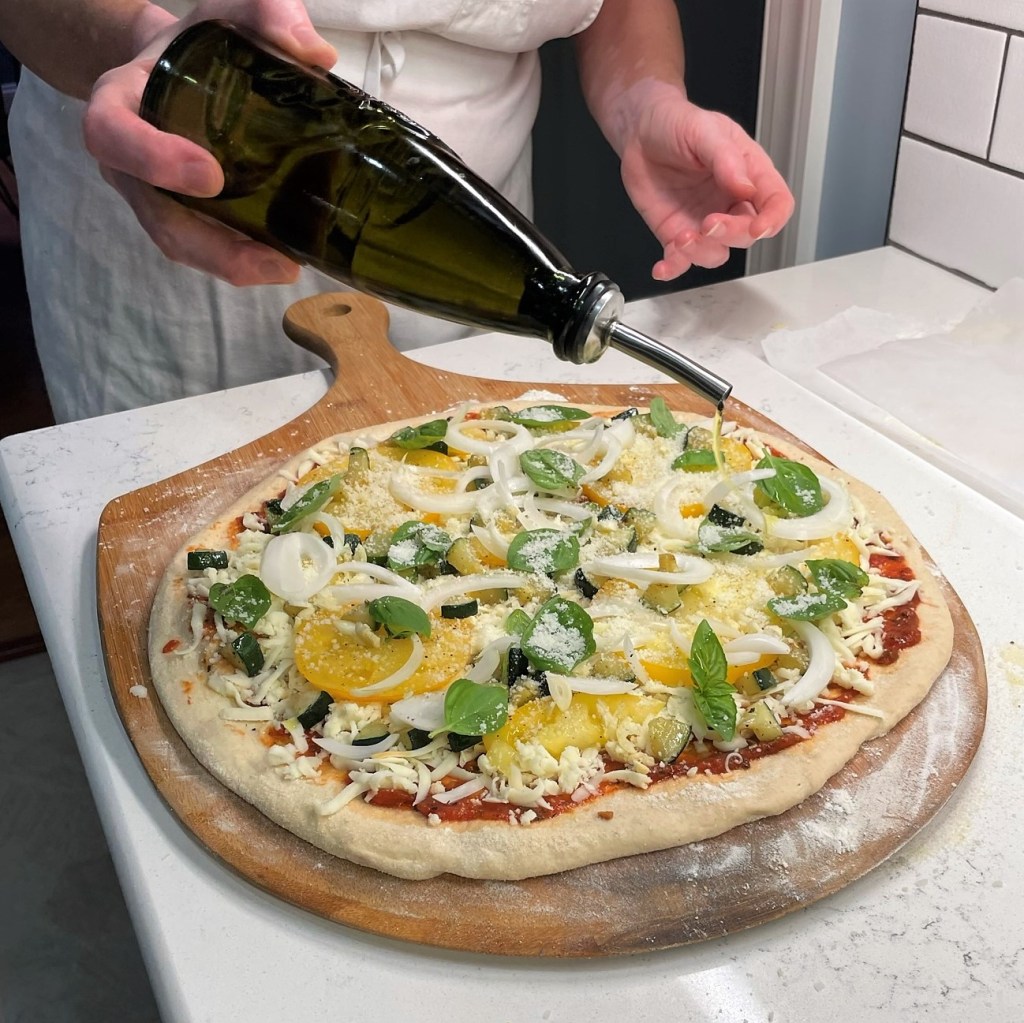
The zucchini was cut up into bite-sized bits and lightly sautéed in a bit of olive oil, and I salted the yellow tomato slices a few minutes ahead, giving the juice and flavor plenty of time to bloom. I didn’t bother taking pictures of these steps because it’s simple enough to figure out. The rest of the pizza is also straightforward, including a store-bought sauce that we love (at least until our Romas are ready), plenty of freshly shredded hard mozzarella, some thinly sliced spring onions that I picked up at the farmers’ market and a scattering of basil leaves, which have also been good to us in this year’s home garden.

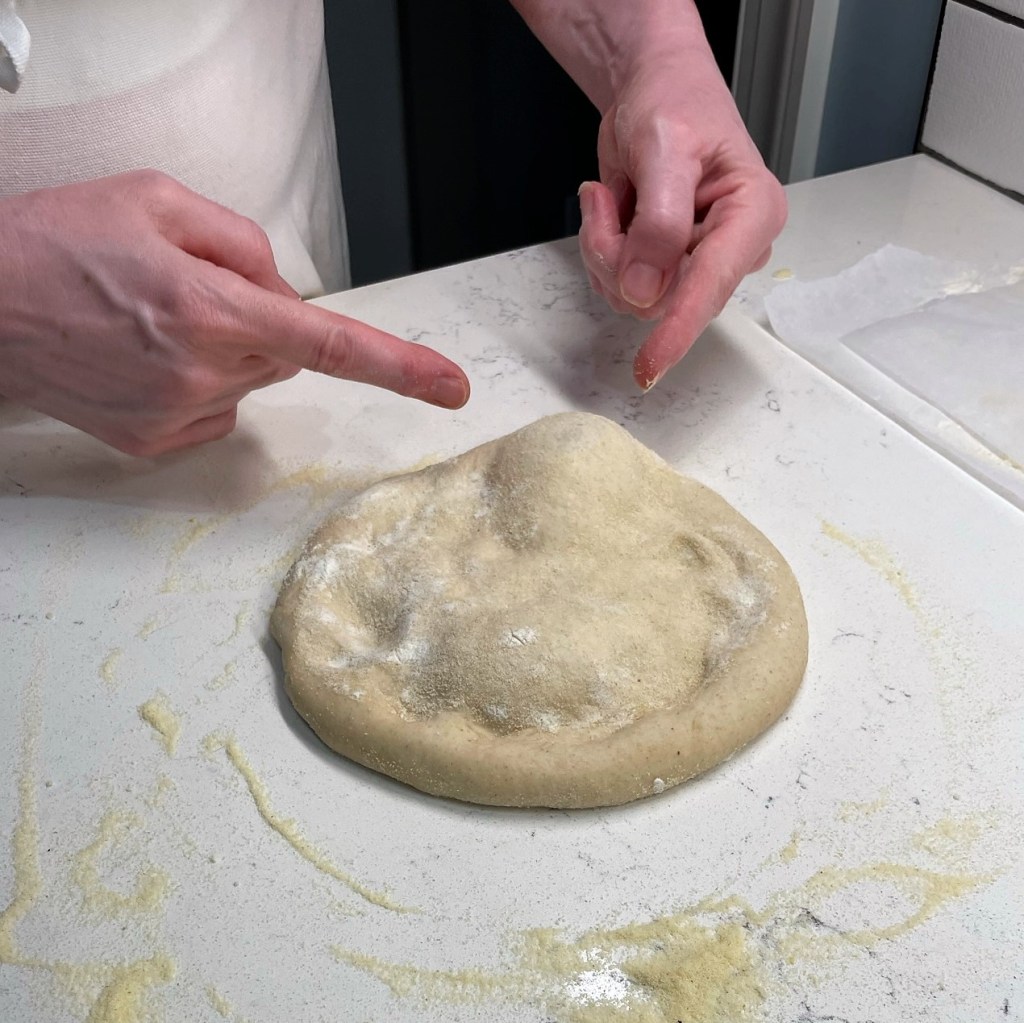
Here’s how it goes, beginning with shaping the ball of sourdough. As always, thanks to my dear husband for his photography skills for this part of the show.


Zucchini & Yellow Tomato Pizza

  • Servings: 8
  • Difficulty: average
  • Print

This dish felt like a passing of the baton in my garden. As my summer squash takes its final bow, the tomatoes are right on cue for center stage, and they were terrific companions on this fresh pizza. I just love this part of summer!

Ingredients

  • 1 medium zucchini, trimmed and cut into small wedges
  • 1 Tbsp. extra virgin olive oil, plus extra for drizzling onto pizza
  • 1 large yellow tomato, sliced and salted to release excess moisture
  • 1 small spring onion (or sweet onion), thinly sliced
  • 2 cloves garlic, chopped
  • 1/3 cup favorite pizza sauce
  • 1 cup shredded, low-moisture mozzarella
  • Salt and pepper
  • 2 Tbsp. finely grated Parmesan or parm-romano blend
  • Small handful of fresh, small basil leaves

Note that my method uses a heavy pizza steel, preheated at 550° F for one hour. If you don’t have a steel, use a pizza stone at the highest temperature recommended for your product. At lower temperature, baking time will require adjustment.

Directions

  1. Place a small skillet over medium heat. Swirl in olive oil and saute zucchini until tender. Transfer to a bowl and let it cool to room temperature. Use a paper towel to blot excess moisture from the tomato slices.
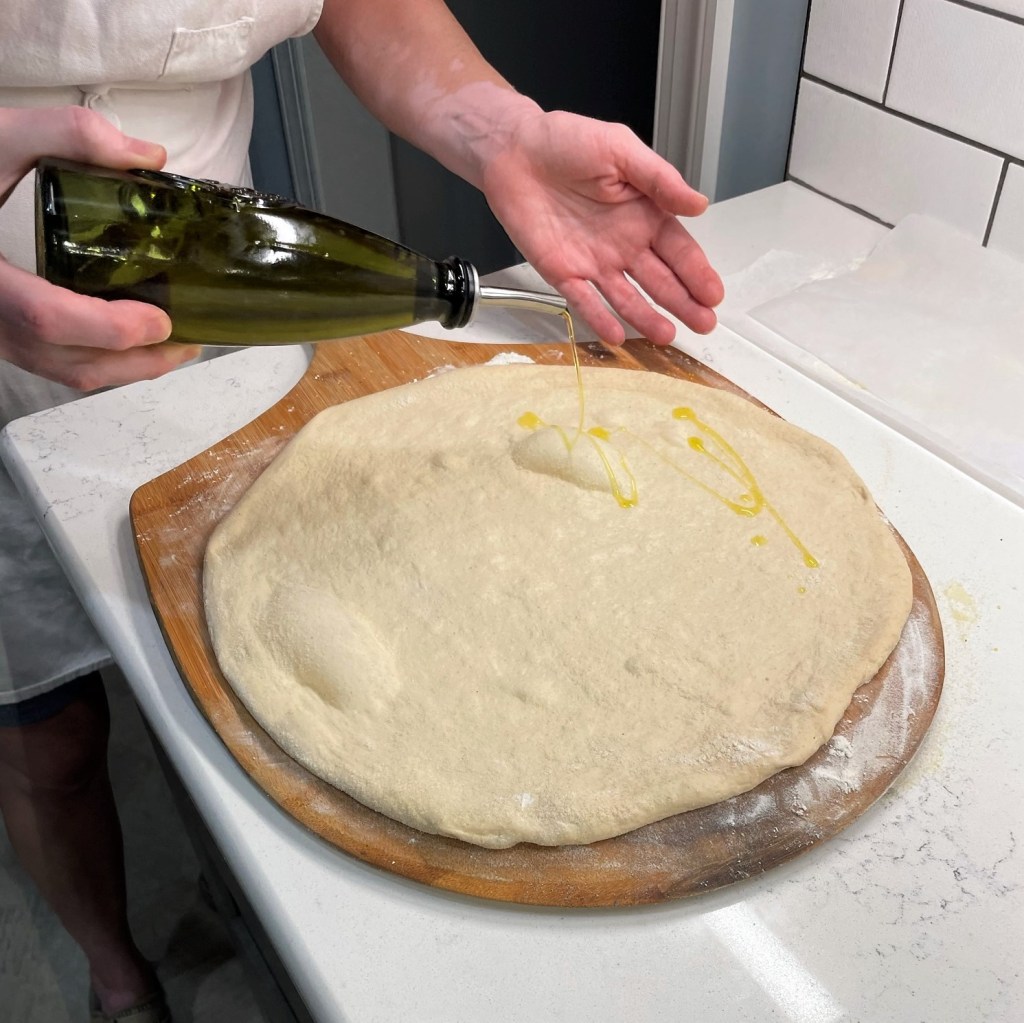
  2. Shape pizza dough into 14″ round, and place on a flour and cornmeal-dusted peel for easy transfer to the oven. Drizzle on a small amount of olive oil and season the dough with salt and pepper.
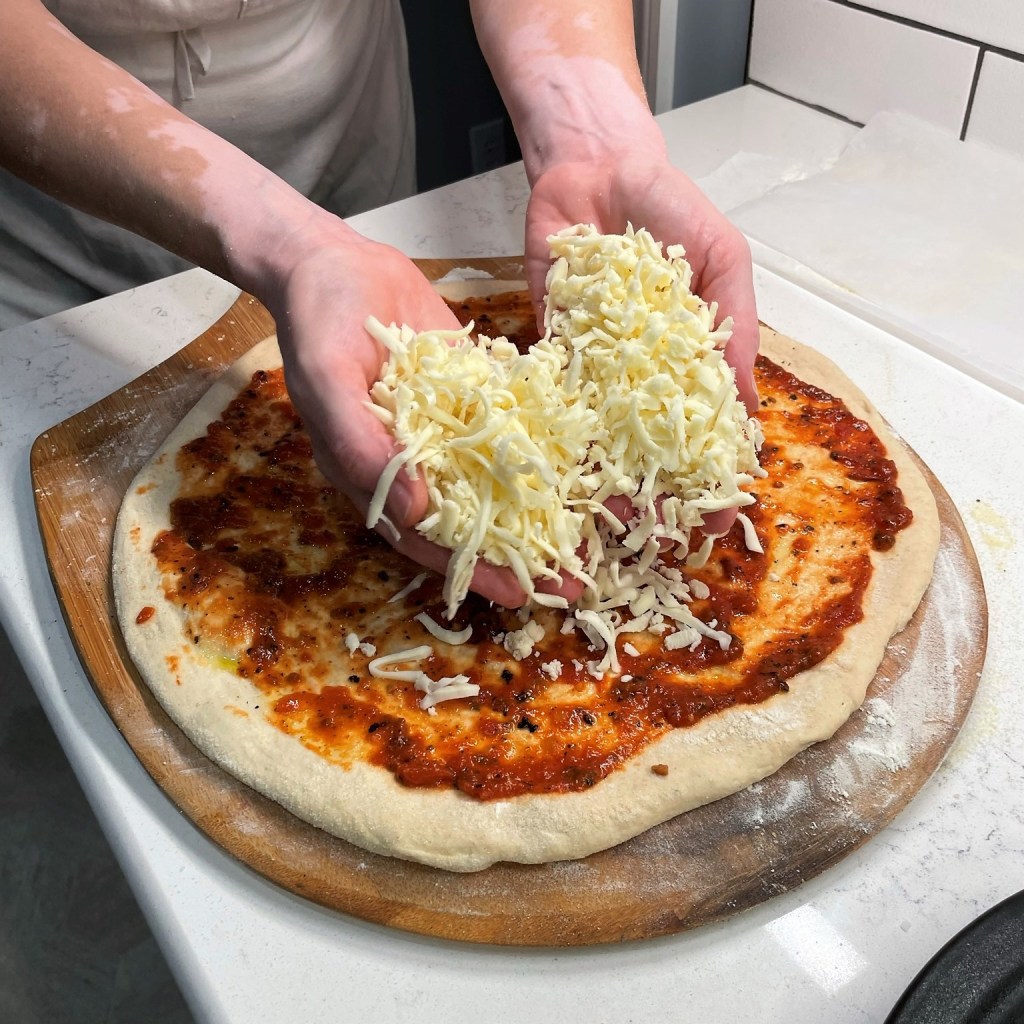
  3. Spread on the sauce, keeping it at least 1/2″ inch from the edges of the dough. Scatter shredded mozzarella over the sauce
  4. Arrange the vegetables on the pizza, beginning with the fresh tomato slices. Follow with the zucchini bits, sliced onions and garlic.
  5. Finally, tuck in the basil leaves for a fragrant bite of summer. Sprinkle the parm-romano blend over the pizza and finish it with a quick zig-zag of olive oil.
  6. Slide onto the preheated pizza steel and bake for 6 minutes, until crust is golden and blistered and cheese is bubbly all over.
  7. Transfer to serving pan, slice and enjoy!


As a side note, it looks like I will be purchasing a second yard enforcer for next year, to keep the squirrels out of the low parts of the garden!

At least the squirrels have smaller mouths! 🙂


Garden Veggie Spiral Quiche

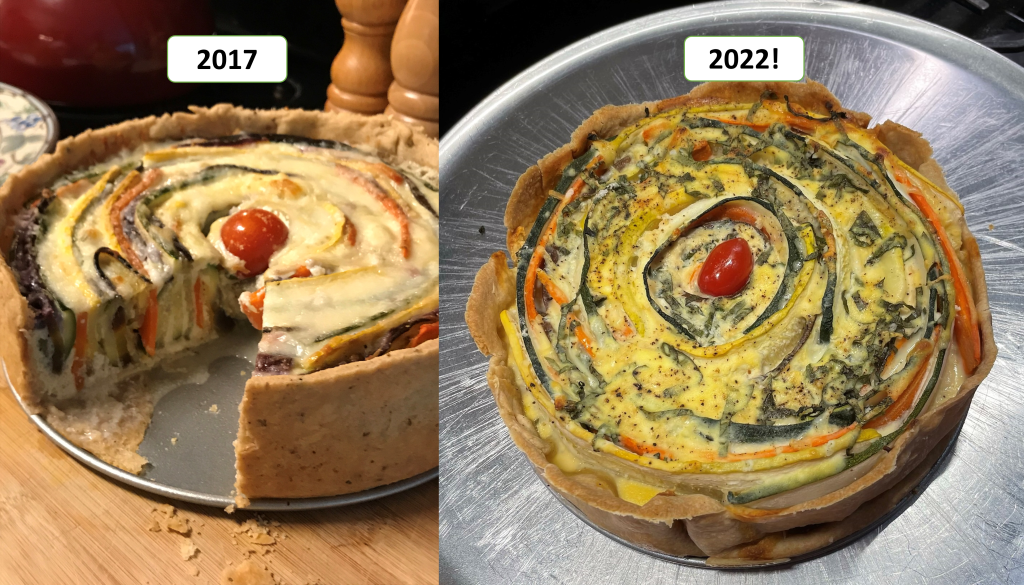
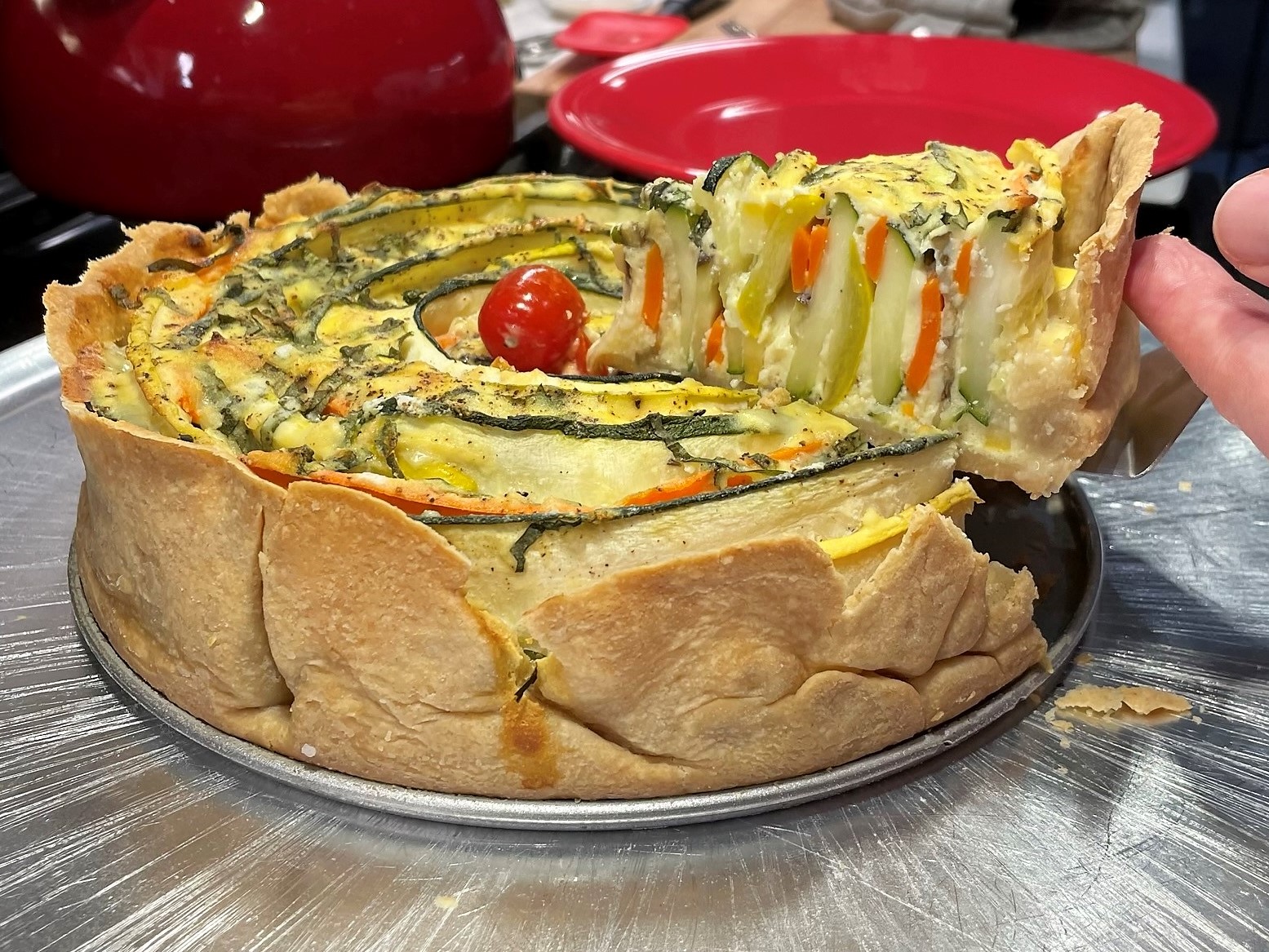
About once a week, my husband, Les, flashes me his phone to announce what has appeared on his Facebook page—“Five years ago, today!” It’s usually a throwback photo of our dog, Nilla, and I always love the ones that were taken years before I even met them. She was an adorable little fluff pup, and he has taken a ton of pictures of her through the years! The other day, though, he presented me with a picture that was instantly familiar— a pretty, fresh-from-the-oven spiral quiche made of fresh zucchini, yellow squash and eggplant from our own garden. The timing was remarkable, given that I had made plans to make the same recipe with veggies from this year’s garden, just days apart from the one I made in 2017. For your comparison, here they are, side by side:

Is it a quiche or a tart? Let’s just call it delicious.

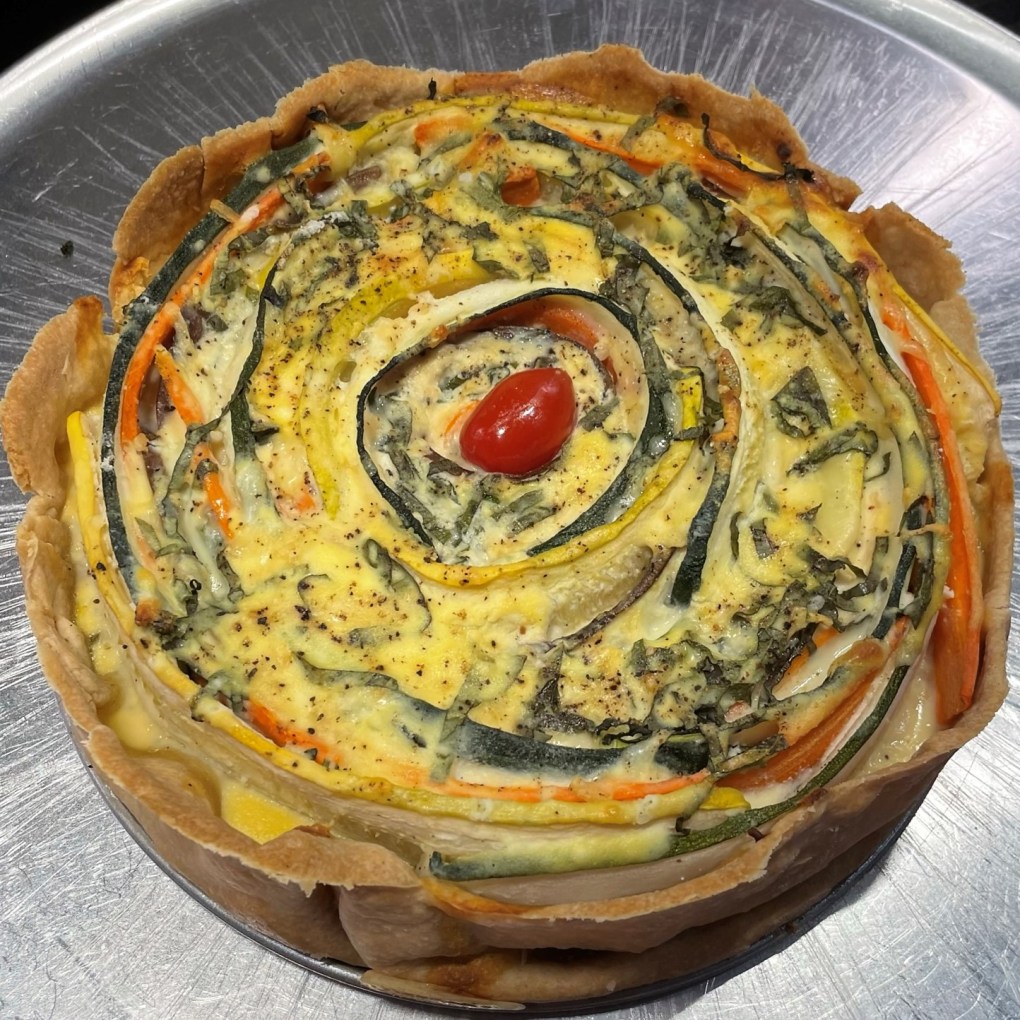
My inspiration for this brunch-worthy dish came directly from Pinterest, but the recipe did not. It was one of those pins that appeared with an exciting image, but no title or description, and a link that led to absolutely nothing. But I took the clickbait in stride because at that point, I had all the inspiration I needed; my mind was already racing with my own ideas for creating such a pretty pie. I’d use thin slices of eggplant and squash from my own garden, layering them around and around inside a blind-baked pastry in my springform pan. I’d slip a few store-bought carrot slices in wherever I could make them fit, and then I’d pour an omelet mixture over the whole thing and bake it until the eggs were set. I was not blogging at that time, so it didn’t occur to me to write down what I had done—I just followed my instinct and used what was fresh from the garden at the time. I had one measly cherry tomato that year (the deer got the rest), and I showcased it by placing it right in the center.

As it happens, the same things are fresh from the garden at the same time this year!

This is a veggie-packed quiche! I ended up swapping the parsley for fresh basil, and I skipped the fresh onion and garlic.


This was a delicious, meatless dinner, and I dressed up our quiche servings with a generous spoonful of marinara sauce and some sprinkles of our favorite parm-romano blend cheese. It was hearty and satisfying, and just look at all those layers of vegetables.


I began with a homemade pastry dough, but there’s no reason you couldn’t use a pre-made crust; be sure it’s the kind you can roll out, rather than a crust already in a tin. Because of the spiral, this will work best in a baking pan with straight sides. I used a springform pan, but a regular 9-inch cake pan with straight sides will work fine as well.


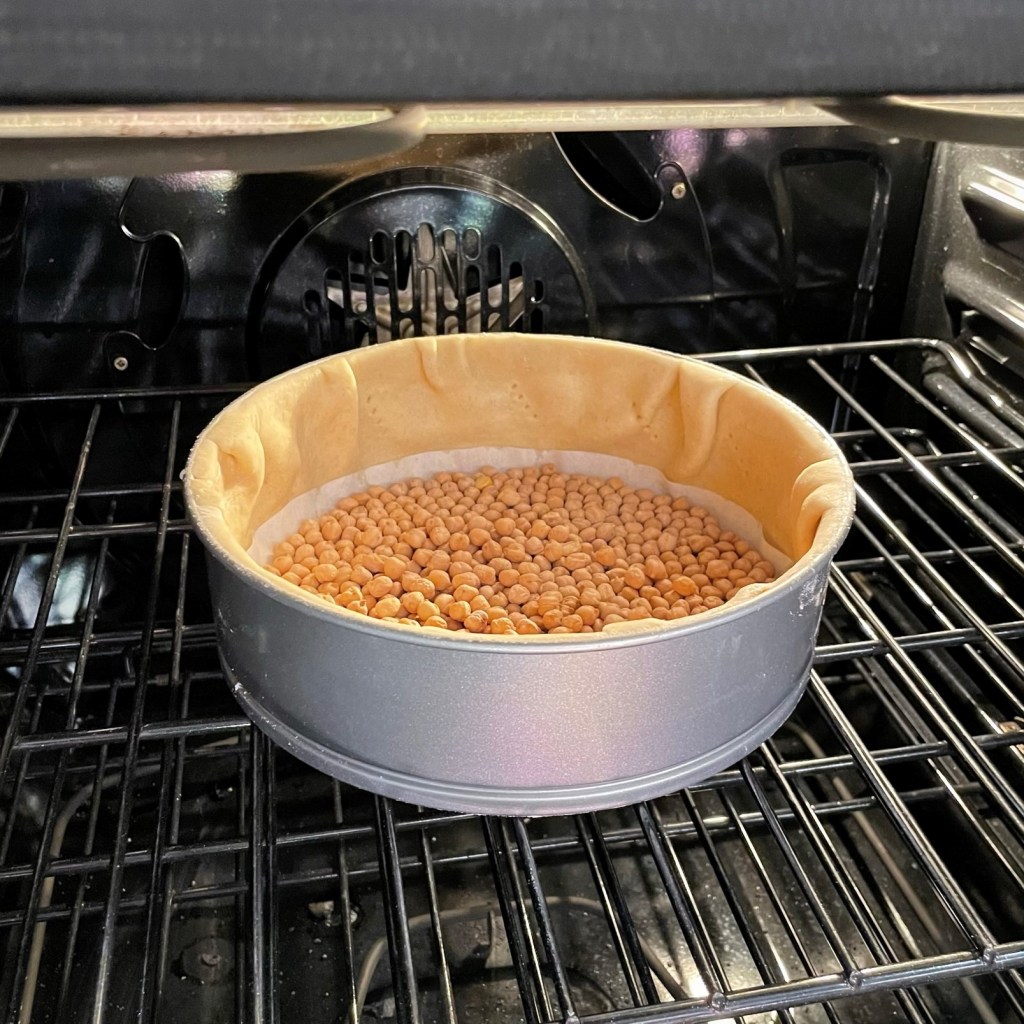
At this point, I made a mistake and you have probably already spotted it. Trimming off the excess dough, even with the top of the springform pan, seemed like the logical thing to do. But I didn’t take into account that the crust would shrink during blind baking, and the pan did not have any slope to keep it in position. The better choice would be to keep a bit of dough hanging just over the edge of the pan. Or, as I suspect was my method in 2017, use a double layer of foil to hold the pastry in place during baking. So, my advice here is, “do as I say, not as I do.” 😊

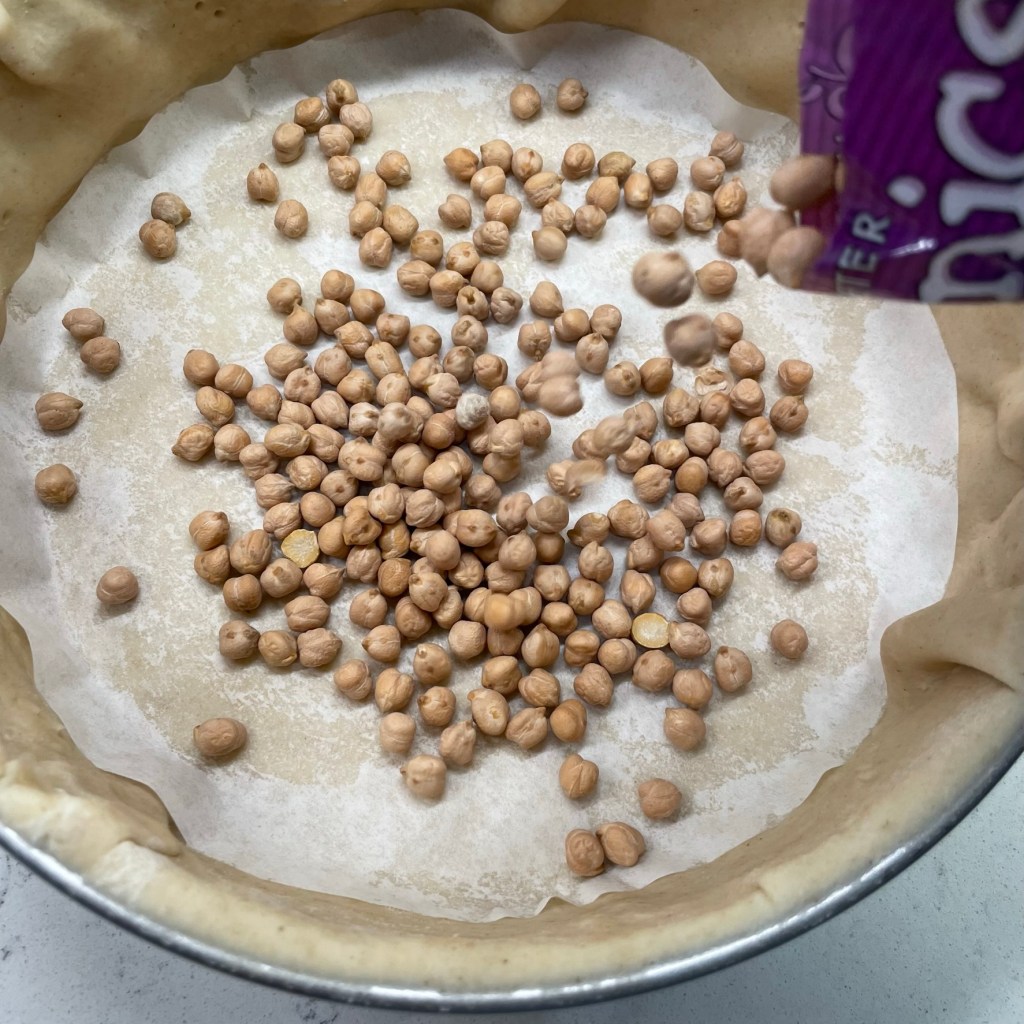
Follow whatever blind-baking method feels right to you, and check on it during baking. I docked a few holes in the pastry (the bottom and the sides), laid a parchment round into the pan and filled a shallow layer of dried beans to keep it from bubbling. One of these days, I will buy some pie weights! As you can see, my trimming method backfired, and the dough slid down the sides a bit. Live and learn—let’s call it “rustic,” shall we?


Allow the crust to cool completely while you prep the veggies. Trim and slice the zucchini, squash, eggplant and carrots into 1/4” thin planks. This was a task for the mandolin, which is serious business, so I didn’t attempt to take pictures of that process. Use a knife if you must and aim to keep the planks as uniformly thin as possible. The carrots were cut into thinner, 1/8″ slices. Sprinkle all the veggies with salt and pepper and arrange your ingredients for easy assembly. Combine beaten eggs with ricotta and whisk evenly. Shred the cheese and chop the basil into strips.


When the pastry is cooled, layer the zucchini and eggplant slices around the pan, overlapping them slightly to eliminate gaps. Don’t worry about keeping the slices even—it’s natural for some of them to sit higher in the pan—and expect that you may have a few veggie planks left over. Wiggle in the carrot slices wherever they fit, and then sprinkle the shredded cheese and sliced basil over the tart.


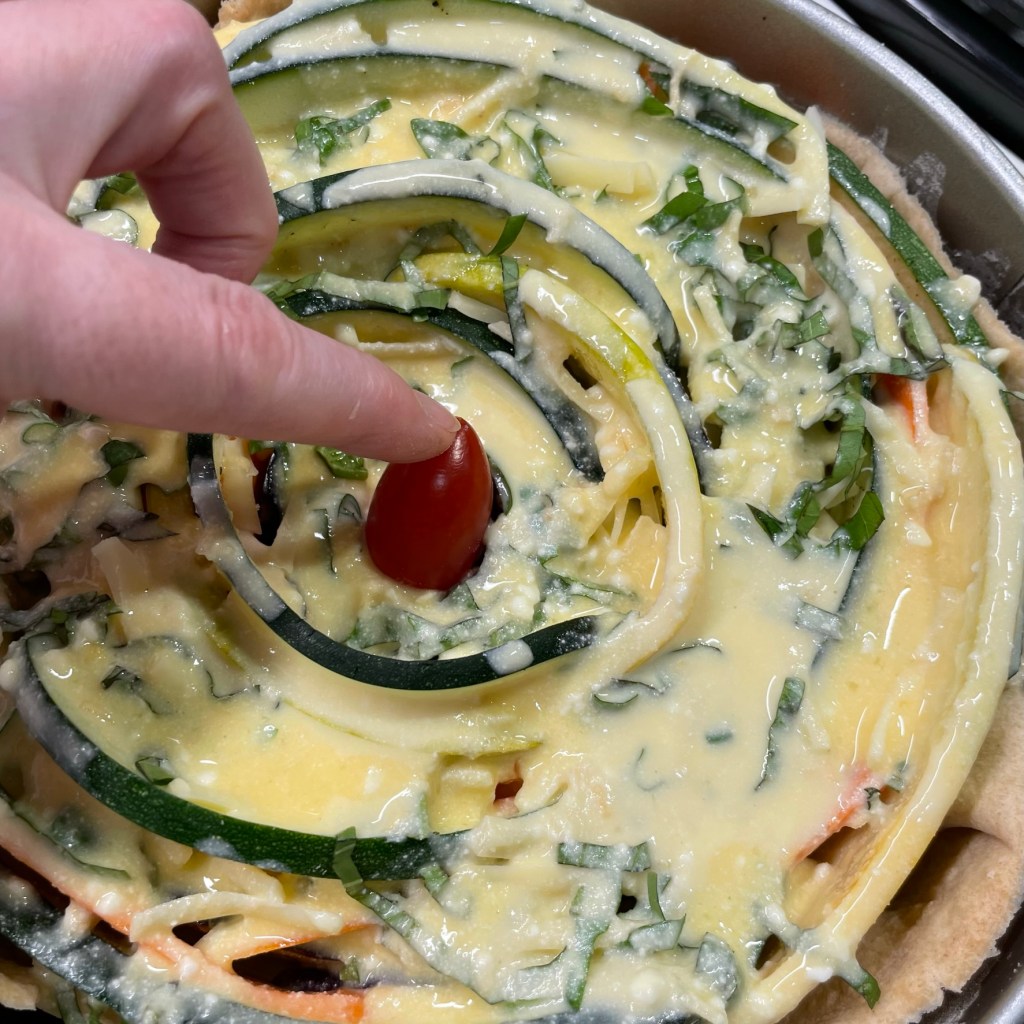
Pour the egg-ricotta mixture slowly over the veggie swirl, taking care to let it seep evenly as much as possible. This was a bit tricky with mine, given that my pastry had collapsed in several places, but it worked out OK. In a nod to my 2017 tart, I also placed a cherry tomato in the center before I slid it into the oven. About an hour later, the eggs were set and the veggies were tender, but there was a fair amount of excess moisture pooled on top in spots.

I used a paper towel to blot away the excess moisture, and tucked it back into the oven for another minute or two.

The moisture was not disastrous, and it didn’t make the crust soggy, but next time, I’ll salt the vegetables longer to draw out moisture, the same as I do with eggplant for moussaka or eggplant parm, and my instructions reflect this suggestion, too. More lessons learned. 😊


Garden Veggie Spiral Quiche

  • Servings: 8 wedges
  • Difficulty: intermediate
  • Print

It’s fun to make, and uses up some of the fresh veggies coming out of the garden! This was delicious for Meatless Monday, or make it the star of the show at a summer brunch.

Ingredients

  • 1 rollout pie pastry (store-bought or homemade; my recipe is below)
  • 1 large or 2 medium zucchini, sliced lengthwise into 1/4″ planks
  • 2 medium Japanese variety eggplant, sliced lengthwise into 1/4″ planks
  • 1 medium yellow or zephyr squash, sliced lengthwise into 1/4″ planks
  • 3 medium carrots, peeled and sliced lengthwise into 1/8″ planks
  • Kosher salt and black pepper
  • 4 large eggs
  • 1/2 cup ricotta
  • 1 tsp. dried minced onions
  • 1/2 cup shredded gruyere or cheddar cheese
  • Small handful of fresh basil leaves (or substitute Italian parsley)
  • Marinara sauce and grated parmesan, for serving

Directions

  1. Preheat oven to 350° F. Prepare and blind-bake the pastry in a 9″ springform or other straight-sided cake pan. Allow it to cool to room temperature.
  2. Spread out the veggie planks and season them generously with salt and pepper. Allow them to rest for about an hour, to draw out some of the moisture. Blot dry with paper towels. Select a smaller, “bendy” slice or two for the center of your quiche.
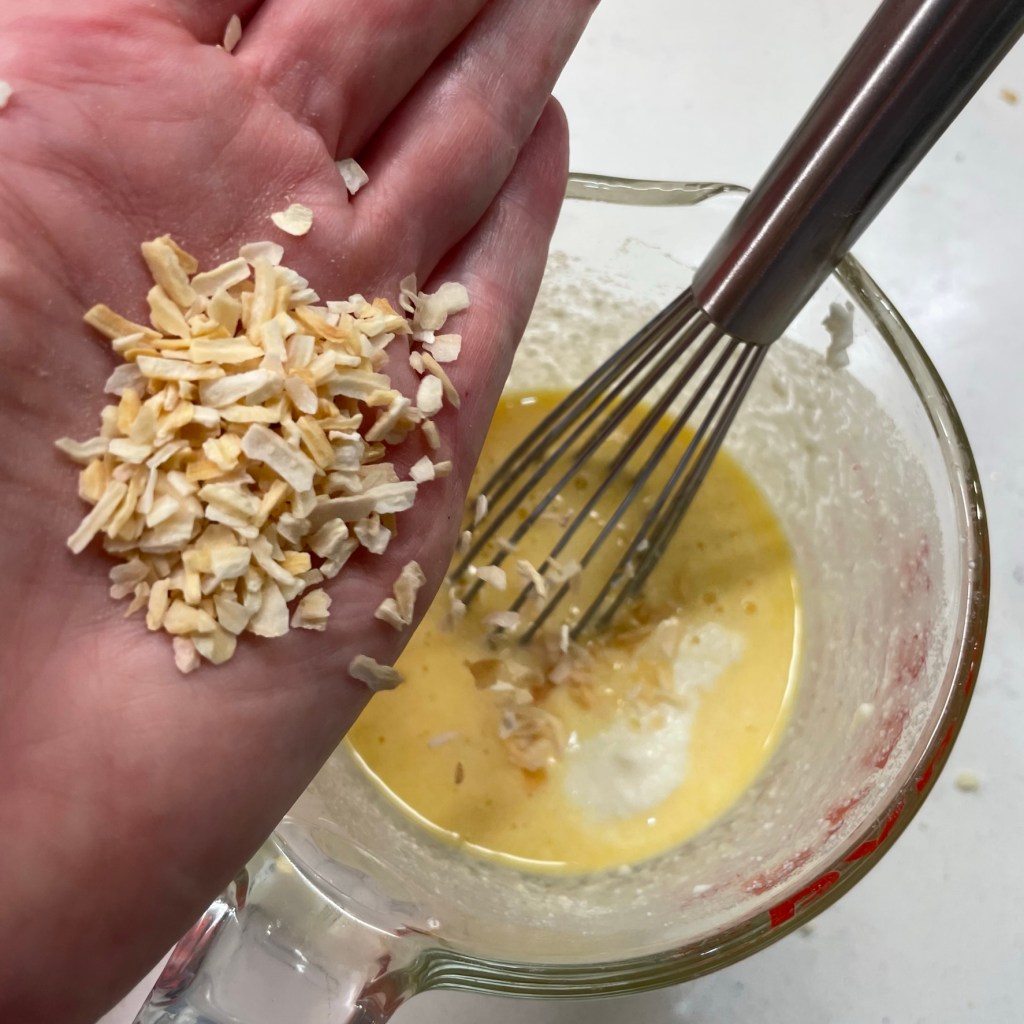
  3. Whisk together the eggs and ricotta until evenly blended. Stir in dried minced onions.
  4. Arrange zucchini, eggplant and yellow squash planks in the cooled pastry crust, overlapping slightly and alternating veggies for visual interest. Wrap the reserved slices tightly around your index finger and place it in the center (it will unwind to fill up the space). Tuck carrot slices in wherever you can make them fit.
  5. Scatter shredded gruyere all over the veggie spiral. Slice or tear the basil leaves and scatter those over the quiche as well.
  6. Carefully pour the egg mixture over the tart, taking care to let it seep down between the veggie planks. The mixture may or may not come all the way to the top.
  7. Bake the quiche at 350° F for about an hour, until eggs are fully set and vegetables are softened. Let it cool at least ten minutes before slicing and serving.

Use your favorite pie pastry recipe, or take a shortcut with a store-bought, roll-out crust. Below is the recipe I used for mine.

Ingredients

  • 1 cup all-purpose flour
  • 1 cup whole wheat pastry flour (or white whole wheat)
  • 1/2 stick unsalted butter, cold, cut into small cubes
  • 1/8 tsp. kosher salt
  • 1/3 cup very cold water

Directions

  1. Combine the two flours and salt in the bowl of a food processor. Pulse one or two times to evenly mix.
  2. Scatter the butter cubes all over the flour. Pulse about five times until the butter bits are smaller and coated in flour.
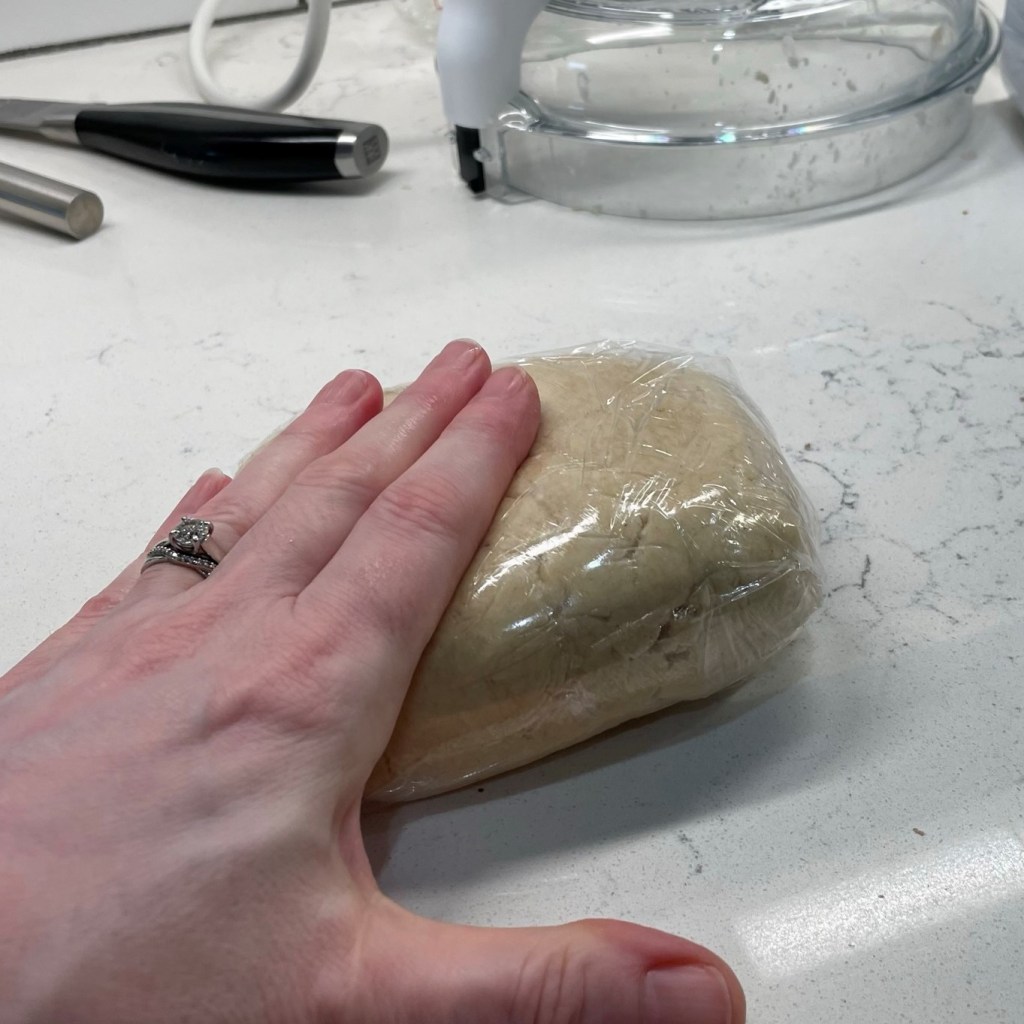
  3. Slowly pour the cold water into the chute of the processor. Run continuously as you add the water, and mix just until the dough forms a ball. Turn the dough out onto a piece of plastic film; wrap it up tightly and refrigerate at least one hour or up to overnight.
  4. To blind-bake the pastry, preheat oven to 350° F. Roll the dough out on a lightly floured countertop and drape it into the springform pan; trim off excess, but allow the dough to catch the edge a bit. Use a fork to prick a few holes into the dough; this helps reduce puffing while baking. Lay a piece of parchment over the bottom of the crust and fill with ceramic beads (or dried beans work well). Alternative, gently lay a doubled sheet of foil directly over the raw crust and up the sides. Bake for about 20 minutes, just until pastry is set but not golden. Allow it to cool before filling.


Zucchini Sunshine Pancakes

“Zucchini—it isn’t just for dinner anymore!”

As I whipped up our breakfast this past weekend, I kept imagining this as a useful advertising slogan for anyone who is, like me, trying to use up an explosion of squash coming out of the garden this time of year. It’s easy to get bored with eating it the same few ways, and it occurred to me this week that I had not tried many ways to incorporate zucchini into a breakfast dish. Sure, I have occasionally tucked leftover sauteed zucchini into an omelet, but I wanted something more interesting—something new. The weekend is the only time I venture beyond the most basic of breakfasts, and though I considered making a version of morning glory muffins (subbing zucchini for the usual shredded carrots), I wanted something simpler, and that’s what made me think of pancakes.

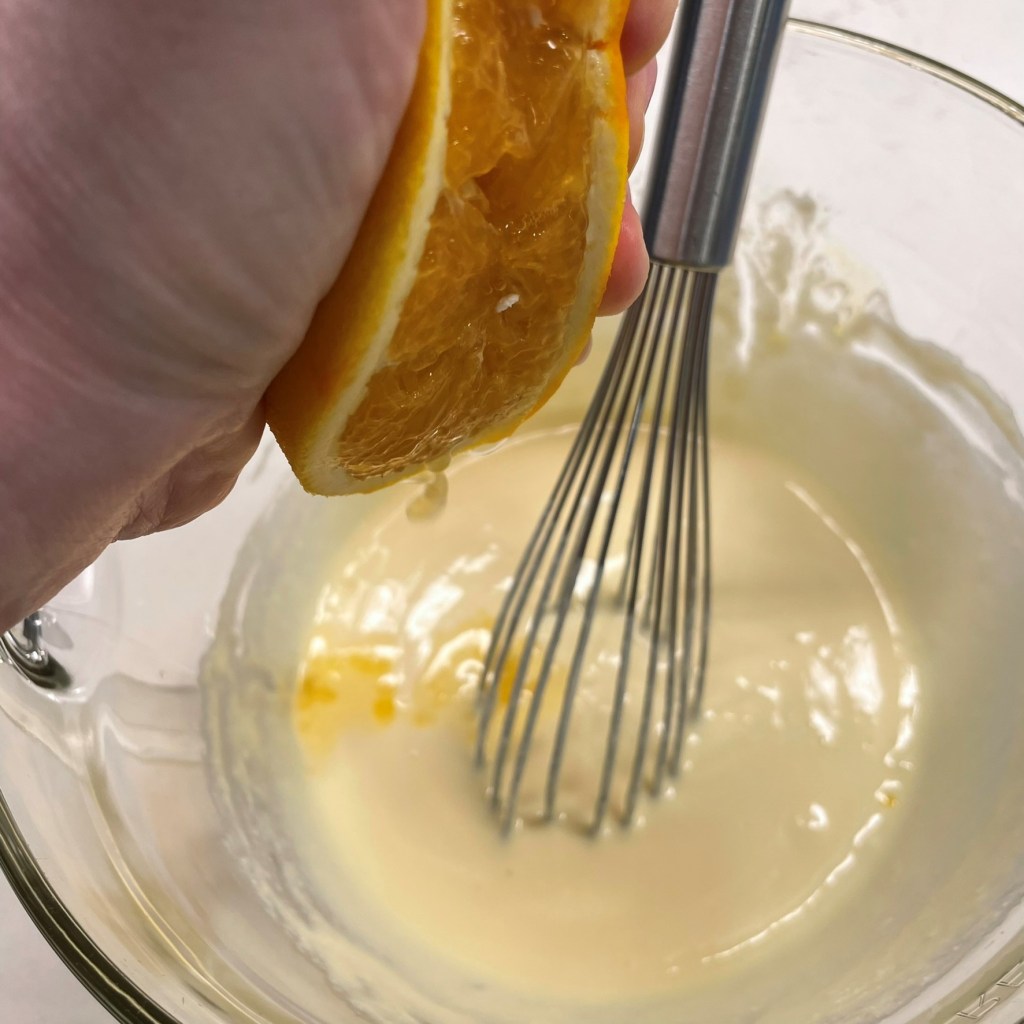
Shredded zucchini would cook quickly inside a pancake batter, I figured, and I could use up a decent amount of this summer vegetable (which is technically a fruit) that has overtaken my countertop and refrigerator. Fresh citrus—in the form of juice and zest from a lemon and an orange—would make the overall flavor of my zucchini pancakes bright and sunny, just like the Saturday morning we would enjoy them.

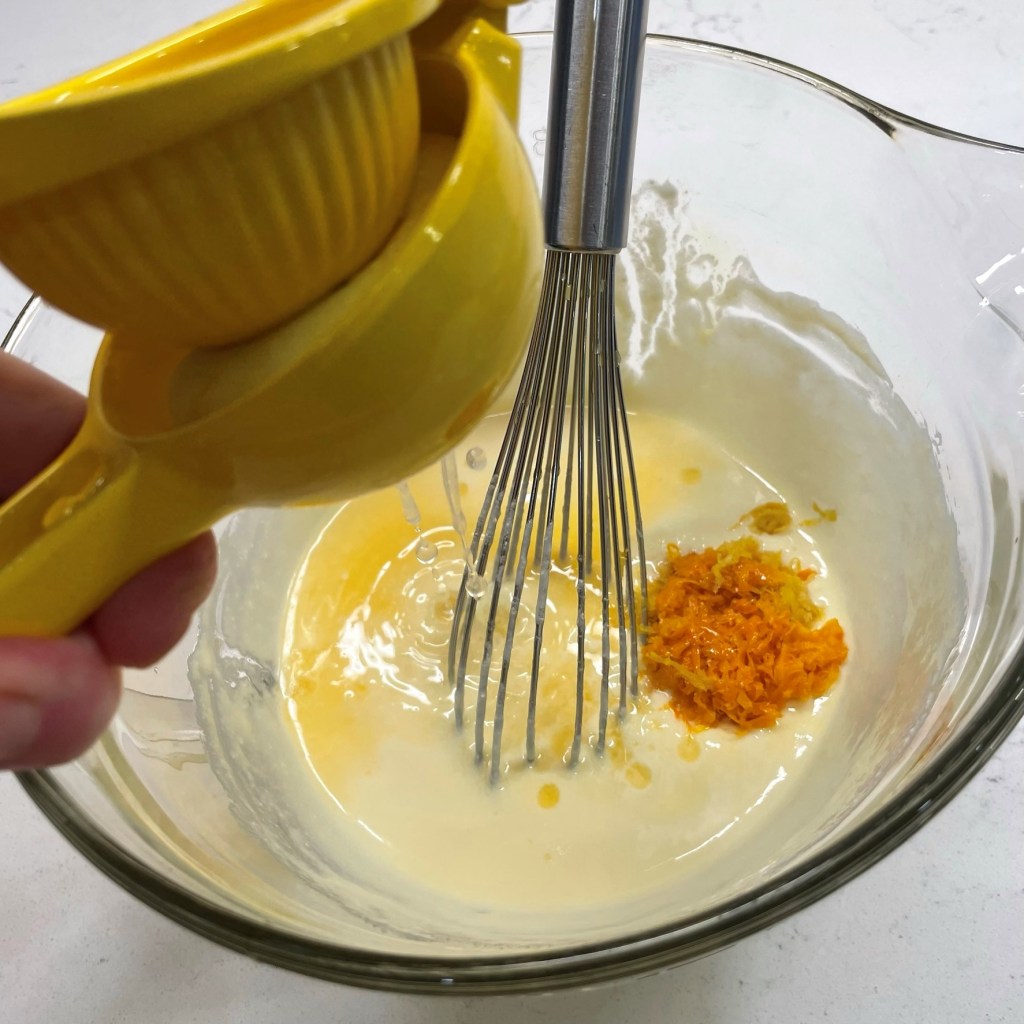
The bright citrus was like a shot of sunshine in my zucchini pancakes!

For the body of my pancakes, I used a tried-and-true recipe that already has its own health benefits. Unlike typical, carb-heavy pancakes, these are packed with protein, thanks to Greek yogurt, ricotta and whole eggs (which also offer an assist in leavening the batter). The only flour in the mix is white whole wheat (King Arthur brand), and I added a few quick shakes of ground cinnamon to spice things up.   


What I love about these pancakes, other than the fact that they have lots of good-for-me ingredients, is that I don’t suffer any sugar shock effect a few hours after breakfast. Whole grains provide complex carbohydrates, which help keep blood sugar levels stable longer than highly processed white flours. And the protein from the yogurt, ricotta and eggs keeps my hunger at bay for hours. I have made these pancakes dozens of times, and this is the first time I’ve jazzed them up with extra ingredients, though it surely won’t be the last.

Grab an apron, and I’ll show you how easily I whipped them up!


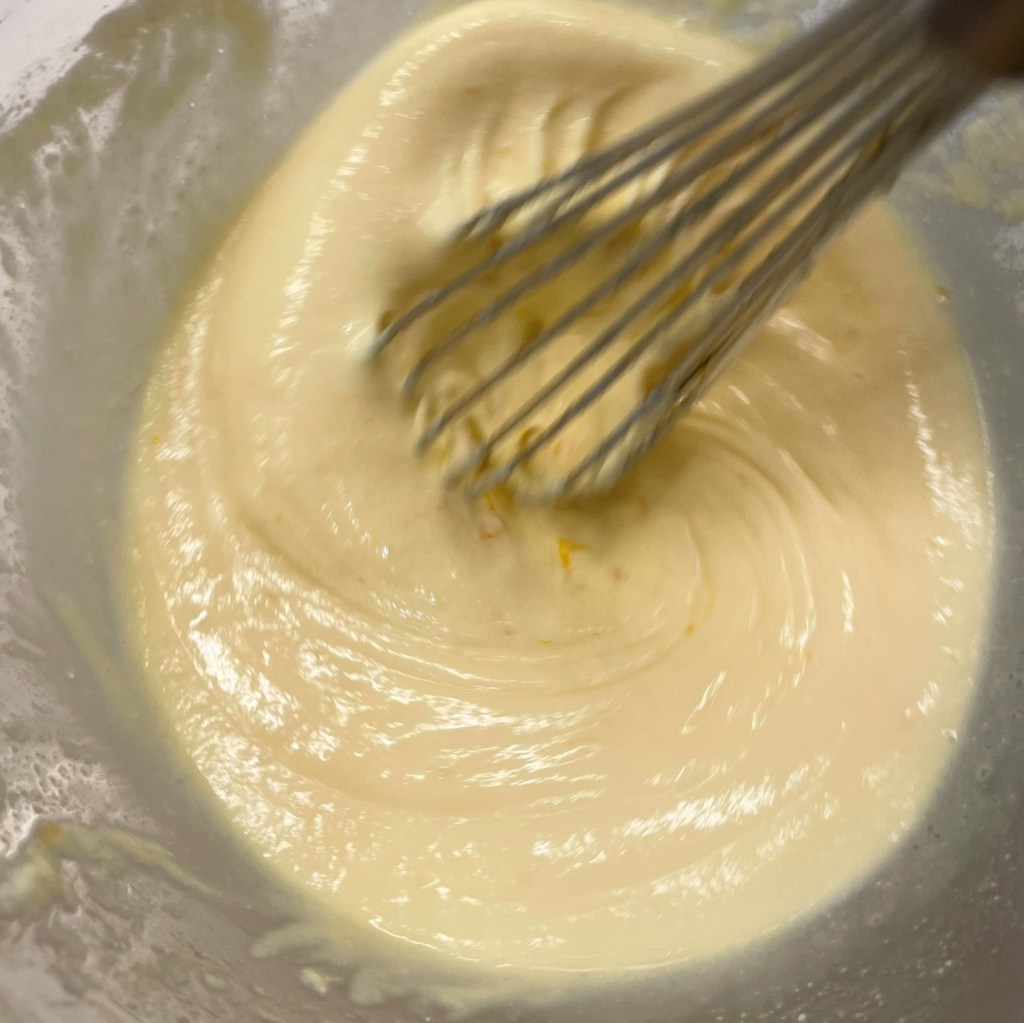
The first step is to get the wet ingredients blended really well. A whisk is the best tool for this, or you could use an electric mixer. Get the mixture smooth and even, and then squeeze in the orange and lemon juices. Whisk it again to incorporate the juice and zest of the citrus fruits.

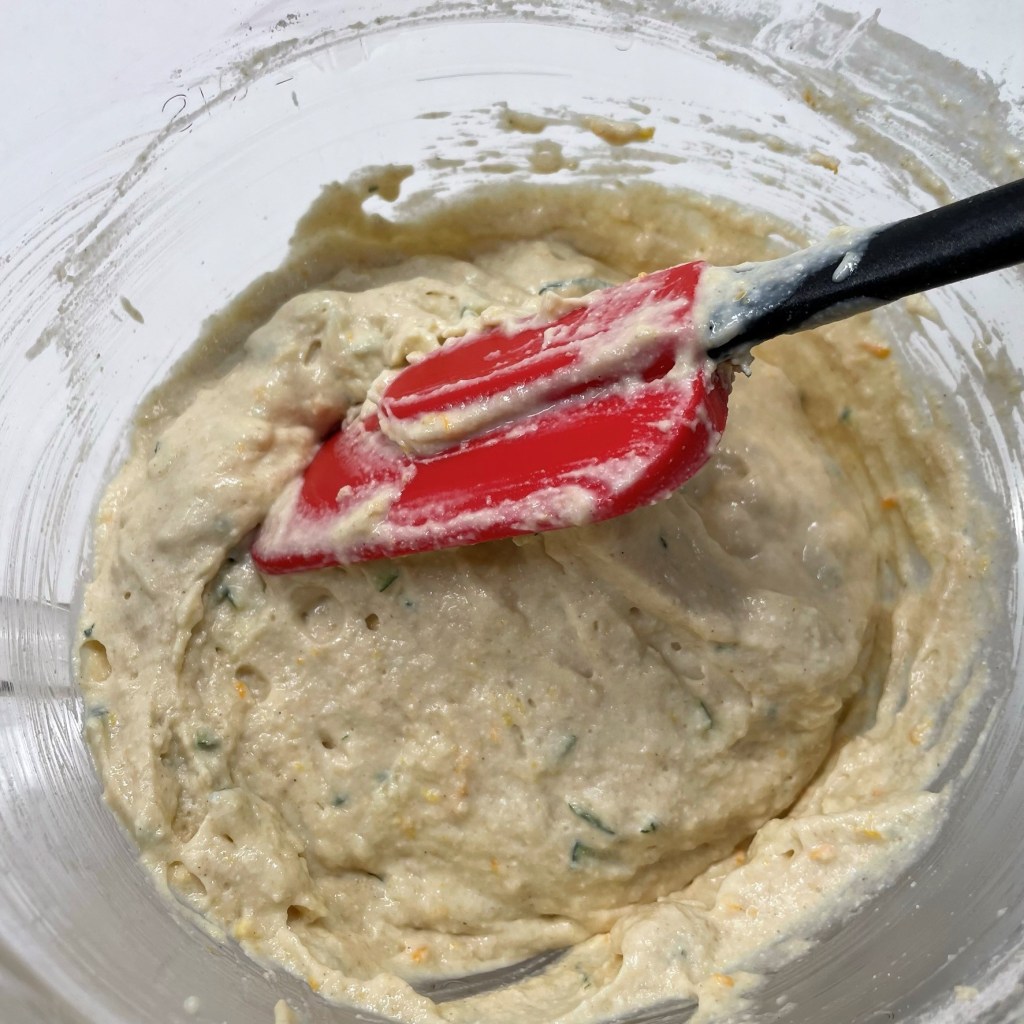
Next, blend in the shredded zucchini and flour mixture. I did this in stages, the same as I did recently for my Healthy-ish Zucchini Bread with Drunken Raisins recipe. You want to avoid overworking the mixture once the flour hits the batter, because excess stirring causes gluten to develop, and that results in a tough pancake. Stir or whisk in about half of the shredded zucchini first, then fold in half of the flour mixture, then the remaining zucchini and then the remaining flour ingredients. Folding is easy—use a wooden spoon or silicone spatula to circle the bowl, turning the batter over onto itself. I did this “folding” action about 10 times, until I couldn’t see any unincorporated pockets of dry ingredients.


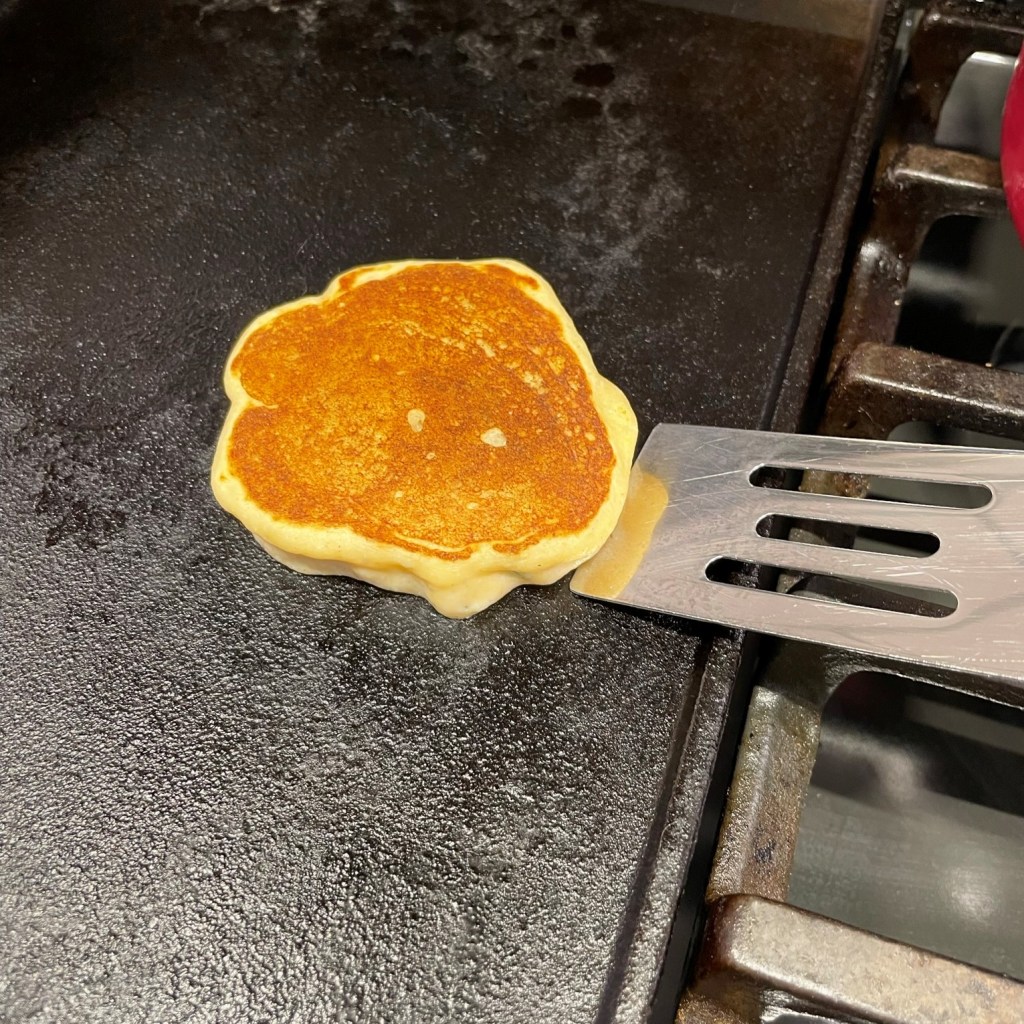
Any pancake or waffle batter performs best when it has a chance to rest several minutes after mixing, so I waited until the batter was ready before I began heating my range-top skillet. You can use a large cast iron pan or an electric skillet if that’s what you have. Heat the cooking surface over medium heat, leaning a little toward medium-low. This is a tricky thing, because every stove is different, and even different burners on the same stove can have a different heat output. I have found that the best way to ensure the temperature is right is to make a couple of small “test” pancakes. Your heat should be at the point that the first side of the pancake is golden brown at about the point that the edges begin to look dry on top. If it’s too brown, reduce your heat slightly and try another test pancake. If it’s too pale, increase the heat slightly and try again. It’s nice to have a test pancake for another reason as well—you get to sample the goods!


When you’ve confirmed the griddle temperature, carefully spoon or ladle out your pancakes onto the heated skillet or griddle, about 1/4 cup per pancake. Keep some distance between them for easy turning, and keep them relatively small to ensure the middle cooks through. Mine were no larger than the palm area of my hand, and I didn’t bother trying to make them in perfect rounds. The yogurt and ricotta make for a heavier batter than is typical for regular pancakes, so the visual cues for doneness are also different. You may not see large bubbles form and pop on the surface; watch for the edges to appear slightly dried out, and a little bit of swelling in the center of the batter. It should take about four minutes for the first side, and two more to finish them.


My camera angle didn’t quite capture the rising action of the pancakes after they were turned, but when you make them, you’ll see that they puff up quite a bit on the griddle. Every bite was fluffy, tender and satisfying, with the fiber goodness of zucchini and the light, sunshine-y citrus.  

Every bite of these zucchini pancakes had a bright, citrus-y flavor, like sunshine on a fork!

Serve these with real maple syrup or switch it up with a spoonful of warmed marmalade or tangy lemon curd.


Zucchini Sunshine Pancakes

  • Servings: about 10 pancakes
  • Difficulty: average
  • Print

Shredded zucchini and citrus provide a fresh burst of summer flavor in these protein-packed pancakes. For best results, let yogurt, ricotta and eggs stand at room temperature for 20 minutes before mixing.

Ingredients

  • 1 cup plain, Greek-style yogurt (stir well before measuring)
  • 1 cup ricotta cheese
  • 3 large eggs (or 2 extra large)
  • Juice and zest of 1/2 lemon
  • Juice and zest of 1/2 navel orange
  • 3/4 cup shredded fresh zucchini, blotted dry with paper towels
  • 1 cup white whole wheat flour (I like King Arthur brand)
  • 3/4 tsp. baking soda
  • 1/4 tsp. ground cinnamon
  • Pinch of kosher salt
  • Real maple syrup or warm marmalade, for serving

Directions

  1. Whisk together (or mix with electric mixer) the yogurt, ricotta and eggs until the mixture is smooth and even.
  2. Stir in juice and zest of lemon and orange.
  3. In a separate bowl, whisk together flour, baking soda, cinnamon and salt.
  4. Whisk or stir half of the shredded zucchini into the yogurt mixture. Add half of the flour ingredients to the bowl and fold gently with a wooden spoon or silicone spatula to combine. Fold in the remaining zucchini, and then fold in the remaining flour ingredients, folding about 10 times to ensure all the flour is fully incorporated.
  5. Preheat griddle or skillet to medium/medium-low temperature. Allow pancake batter to rest during this time.
  6. Cook a test pancake to ensure heat is correct; the pancake should be golden brown on the first side when the edges appear dry on the top. Spoon or ladle about 1/4 cup of batter per pancake onto the skillet; the batter will be thick, but resist the temptation to thin it or spread it out into flatter rounds. Pancakes should be ready to turn after about 3 minutes. Stack them on a platter to keep them warm until all pancakes are cooked.
  7. Serve hot with real maple syrup or warmed marmalade.


Zucchini Tzatziki

Remember that song from long ago“Anything you can do, I can do better?” I believe it was from the musical, Annie, Get Your Gun, and I had it on repeat in my mind as I was putting shredded zucchini in the starring role for this popular Greek condiment. A typical tzatziki would be made with grated cucumber, but the sheer volume of zucchini coming from my garden has me changing up everything these days. I thought there was a good chance zucchini could stand in for the cucumber—alongside the Greek yogurt, minced garlic and fresh herbs—and it really worked!

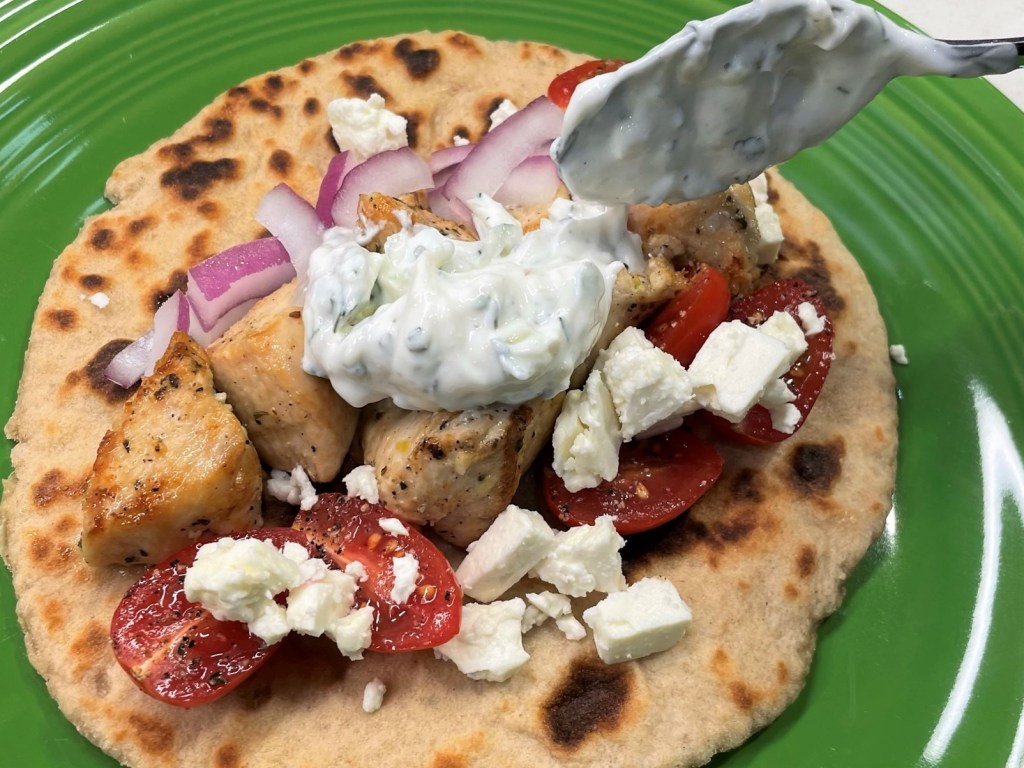
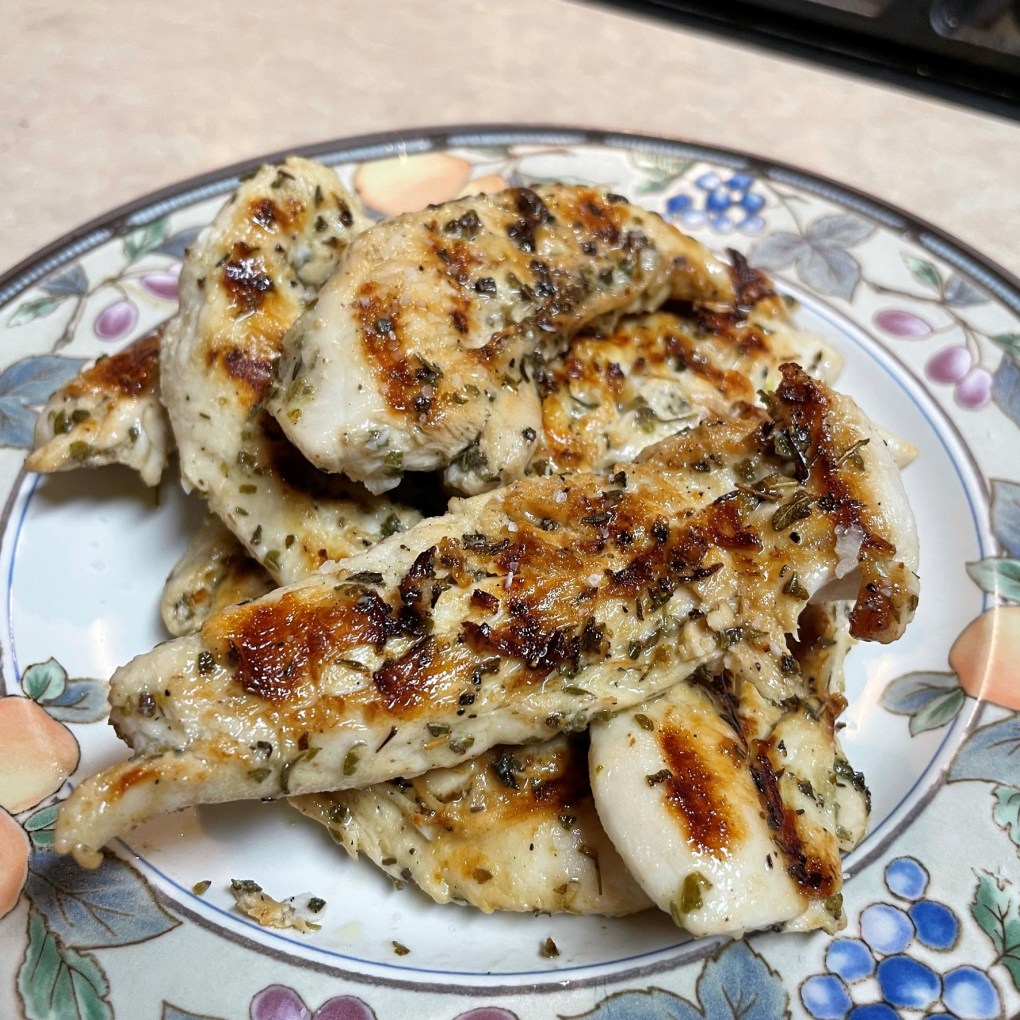
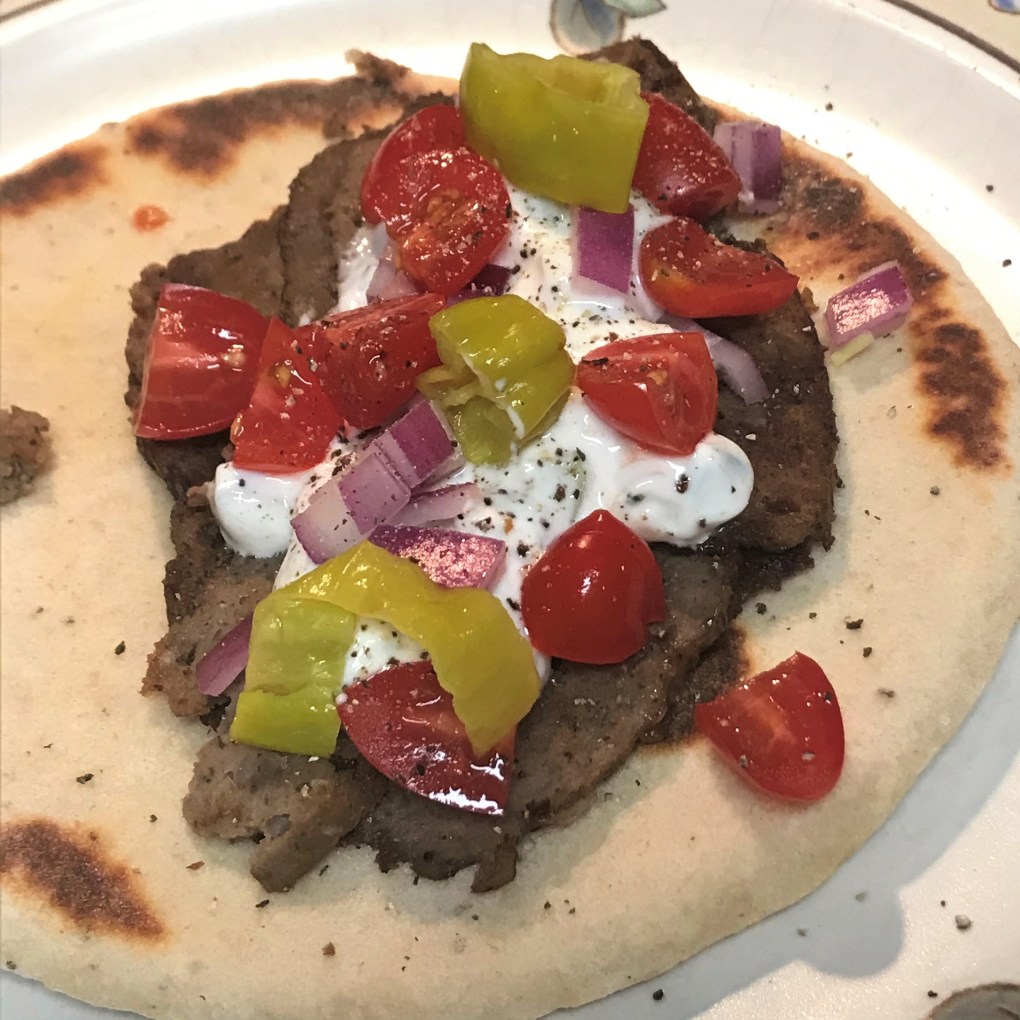
We enjoyed this zucchini tzatziki over July 4th weekend, with grilled chicken souvlaki and grilled shrimp. And it was just as delicious last night with the leftovers!

Zucchini was an excellent understudy to the usual cucumber in my tzatziki!

If you find yourself with an over-abundance of zucchini, as I expect is probably the case for everyone who has planted it, then give this a try.

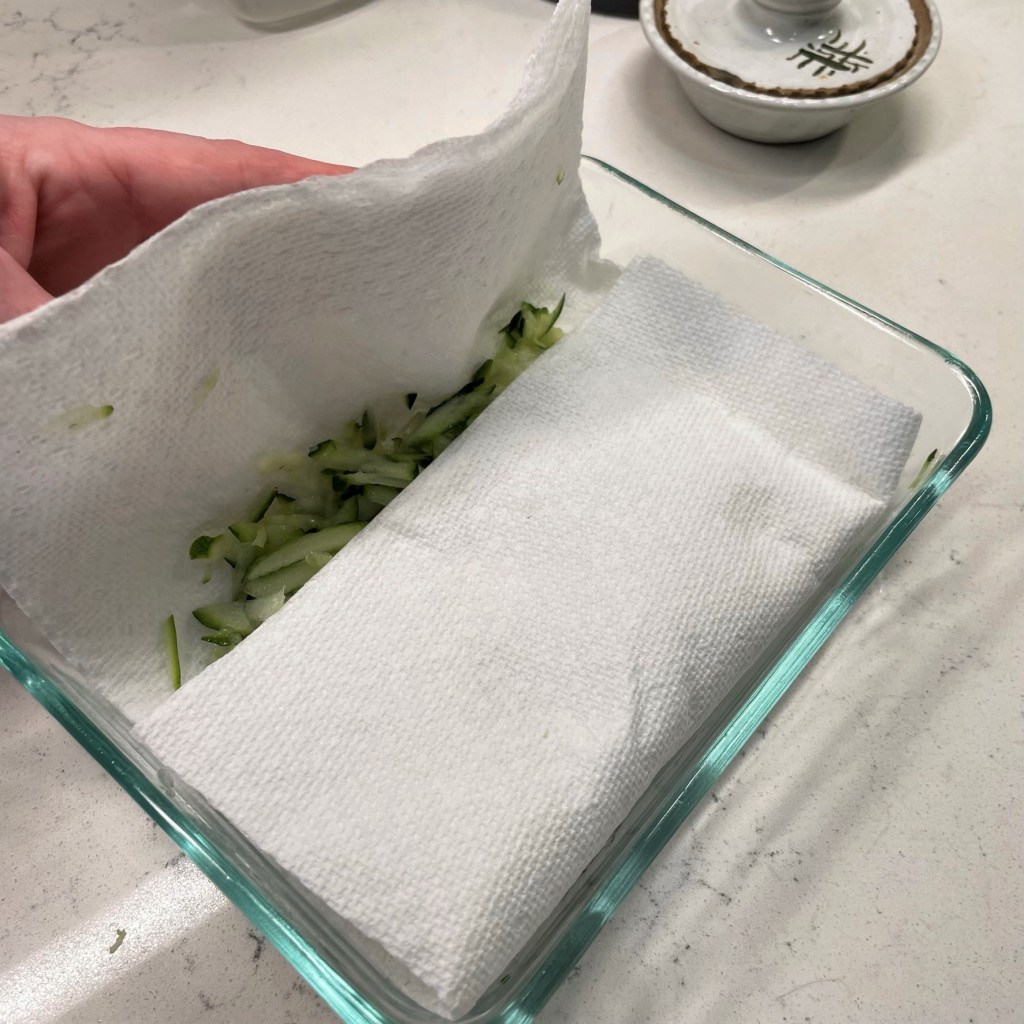
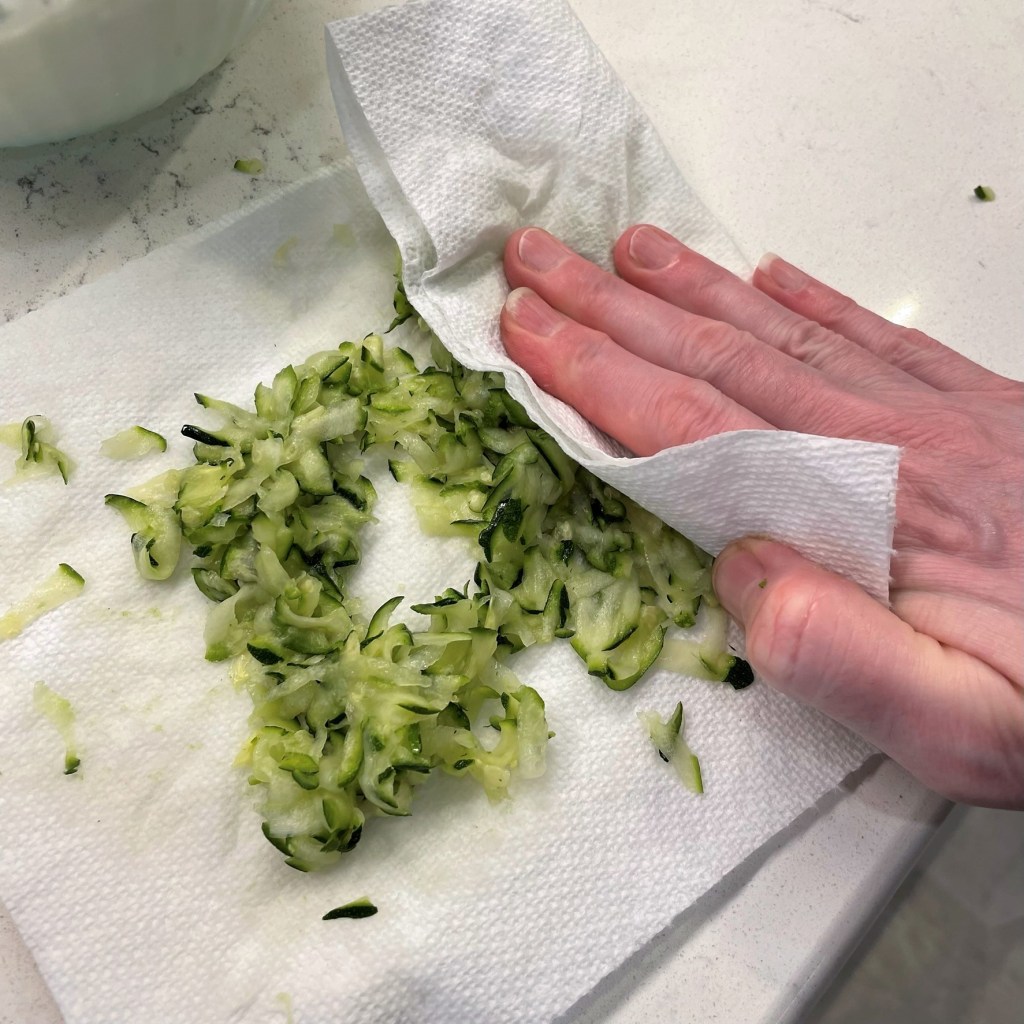
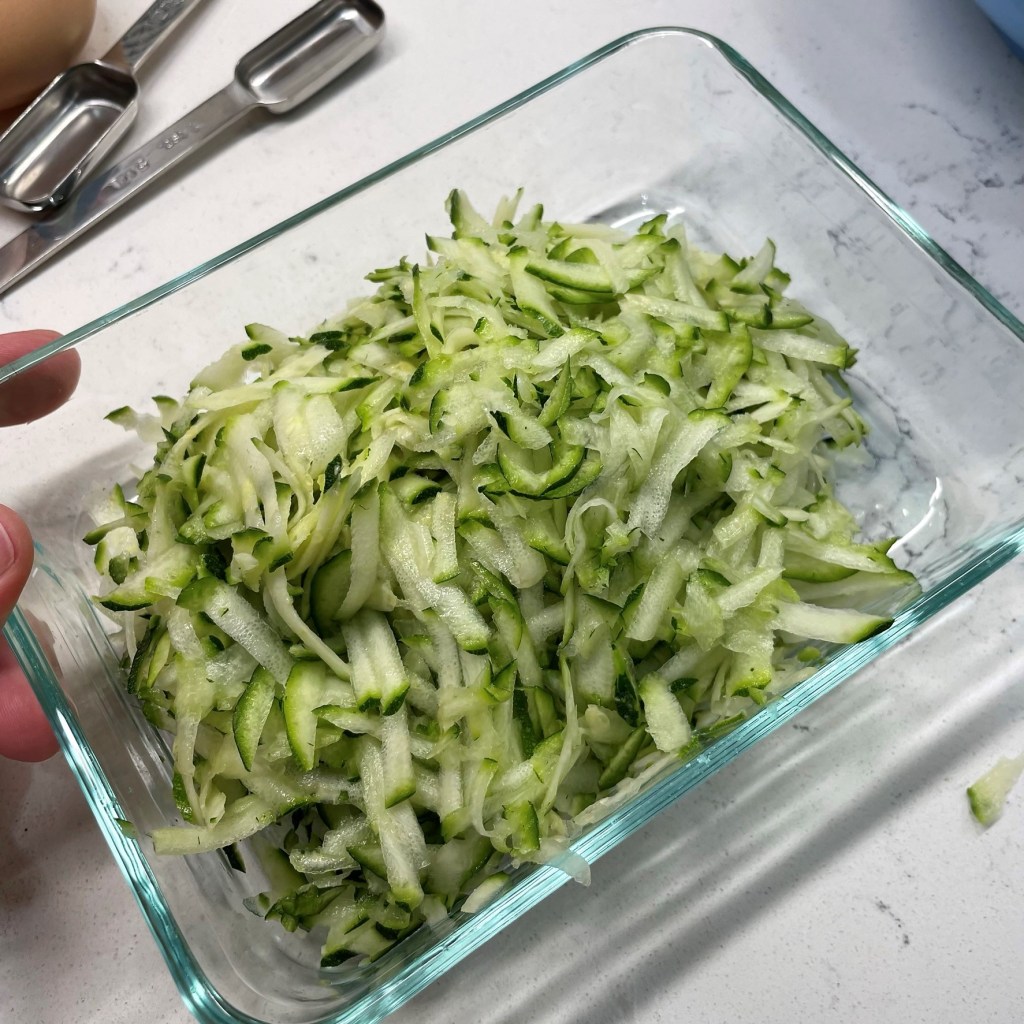
As with cucumber, the zucchini needs to be salted generously and rested in layered towels so that the excess moisture can be released. The amount of salt used to draw out the moisture is almost exactly the amount needed to season the dish, so it works out well.


Next, stir and measure out the Greek yogurt into a small bowl. Add the drained zucchini, finely chopped fresh garlic, black pepper and fresh herbs—dill and mint are traditional, so that’s what I used—and give the whole thing a big stir. Adjust the salt to your liking; it may not need any extra at all. Cover and refrigerate the tzatziki until you’re ready to use it. Stir it well just before serving.


Tzatziki is so flavorful, with a garlic bite and the cooling nature of the mint and dill. I could eat it all summer, and now that I know how well zucchini works in this recipe, I’ll be doing it this way again. Below is a printable version of the recipe, and keep scrolling to find a few more delicious ways to enjoy tzatziki. 🙂


Zucchini Tzatziki

  • Servings: 1 cup
  • Difficulty: so easy!
  • Print

This recipe is an easy way to use up an extra zucchini squash, and it was a fun twist on a classic Greek tzatziki sauce.

Ingredients

  • 1 smallish unpeeled zucchini, shredded (about 1 cup)
  • 1 tsp. kosher salt (for drawing moisture from the squash)
  • 1 cup plain Greek yogurt (I used 2% milkfat)
  • 2 or 3 cloves fresh garlic, finely minced
  • 1 Tbsp. fresh dill, chopped
  • 1 Tbsp. fresh mint leaves, chopped
  • 1/4 tsp. freshly ground black pepper
  • additional salt, to taste

Directions

  1. Spread zucchini shreds evenly across a double layer of paper towels, or on a clean kitchen towel (choose one that is lint-free and not washed with fragrance or fabric softener). Sprinkle salt all over the shreds, tossing them a bit to ensure even coverage. Fold the towel up to contain the zucchini in a “packet,” and put it in the fridge for a couple of hours. I placed my zucchini packet in a shallow glass dish to prevent drips.
  2. Transfer salted zucchini to fresh layers of paper towel and blot well to wick away lingering moisture. You may be surprised how wet the original paper towels are, and a great deal of the salt will be soaked into them as well.
  3. Stir the Greek yogurt and measure it out into a small bowl. Add the zucchini shreds, garlic, herbs and black pepper. Stir to combine. Adjust salt to your liking.


Keep the tzatziki refrigerated until ready to serve. It will keep in the fridge for several days, but may separate over time. Give it a good stir just before serving.


Healthy-ish Zucchini Bread with Drunken Raisins

When it comes to eating healthier, getting started is the hardest part. I’ve had fun making rich and decadent foods for me and my husband, especially since I started Comfort du Jour. But I’m on a roll with healthy swaps in the kitchen lately, and we are certainly not suffering for it; I dare say we may be enjoying our foods more than ever, and some of that is because we are giving up guilt, but not flavor. It helps a great deal that my commitment to lightening things up is timed exactly to the start of garden season and especially to the arrival of so much fresh zucchini.

I will admit that I have been surprised by the prolific yield of our zucchini plants, given that one of the four we planted was crushed when (apparently) a startled deer fell on the trellis. The plant was tied to grow up through the trellis and there was no way to release it from that mishap without pulling up all four plants. I figured that one was a goner, but nature always amazes me with its resiliency, and I am pleased to report that after a rough start, the crushed plant has rebounded and is still producing blooms. We have literally picked squash each day for the past week, and I’m scrambling to come up with fun ways to use them all.

These beauties are coming in faster than I can use them!

I have loved zucchini bread since I was a kid, and I set out to modify an old family recipe to reduce the oil and sugar without sacrificing flavor or texture. The original recipe was handed down from my maternal great-grandmother, and it has always been delicious as written, but includes some things I don’t use in my own kitchen today, like “vegetable oil.” I had a few ideas in mind, such as subbing in Greek yogurt for a portion of the oil, and melted butter for the rest—the way I see it, if a recipe must have fats, they should at least contribute richness and flavor—and I reduced the overall amount of sugar by a fourth, using a combination of cane sugar and brown sugar (the latter keeps the zucchini bread nice and soft). As always, I also substituted whole wheat pastry flour for half of the total amount, because white flour is just empty carbs.


There was one more special switch-up in my modern version of my Great-Gram’s zucchini bread; I had this idea to embellish the bread with rum-soaked raisins for a fun twist. But would that have been OK with Grandma? As a young adult, I had the great fortune to know my great-grandmother, but I had no recollection of her ever taking a drink, so I paused over these rum-drenched raisins. On this twist, I consulted my aunt, who also likes to make healthy changes to time-honored dishes, but still respects the family heirloom recipes, as I do.

“I think she would be delighted,” was Aunt Joy’s reply, as other family members had recently confirmed to her that Grandma did enjoy a little nip on occasion. I have no doubt that she would have accepted my other changes, and I could even imagine exactly what she’d say, in her sassy, Norwegian accent:

“Sure, just use whatever you’ve got. You’ll know what to do.”

Despite being at least 6 inches taller than her, I looked up to my great grandmother in every way. ❤

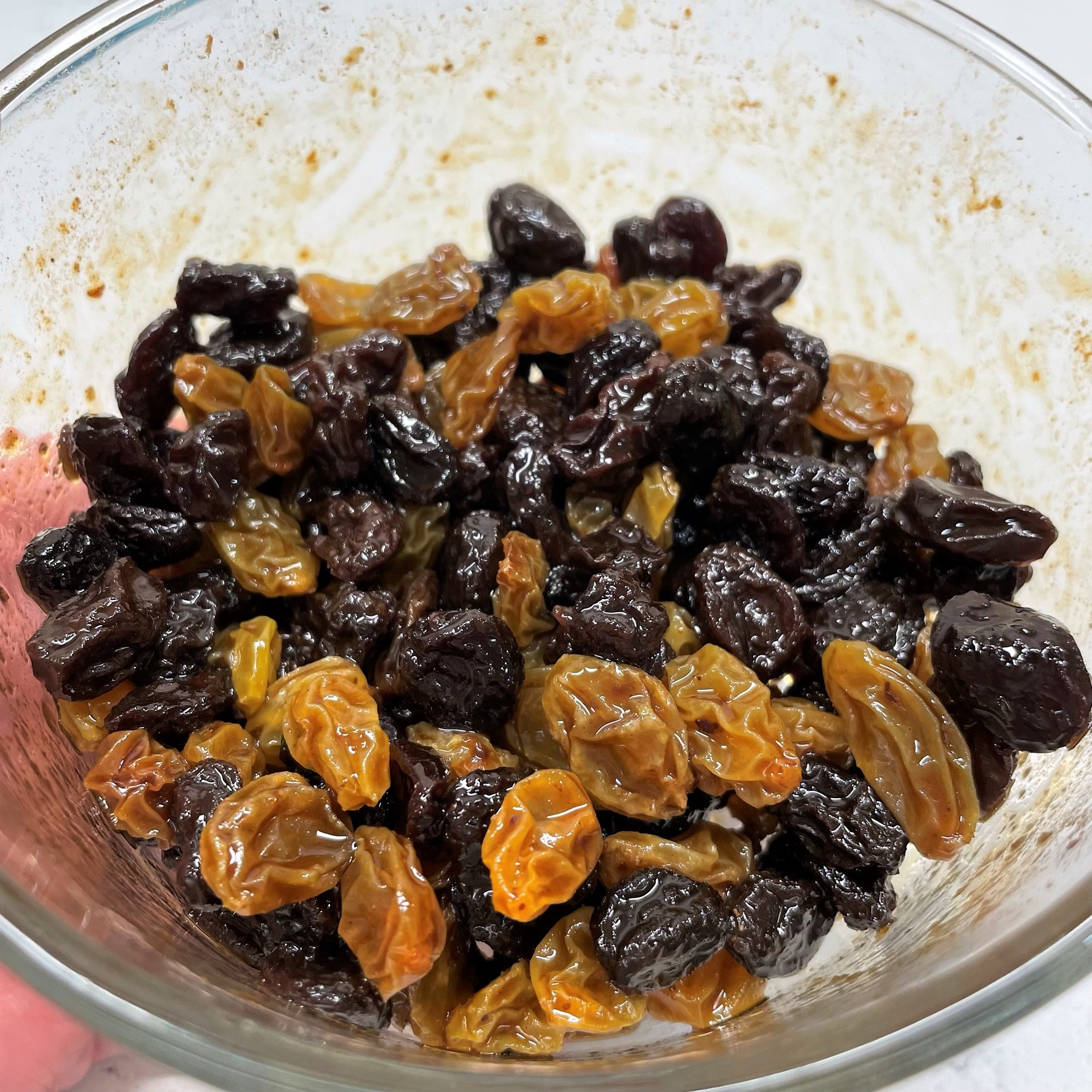
The only thing Grandma might have fussed about was just how long I had been soaking these raisins in rum, which I’m only slightly embarrassed to admit has been since, ahem, Christmas or so. I had doused them in Jamaican rum in an effort to revive them (they were desperately dry), and I intended to use them in a holiday treat but got distracted. Then I figured I’d put them in banana bread, but I kept either forgetting or changing my plan. We have moved these raisins around in the fridge for months, and by the time the zucchini started coming in, they weren’t just tipsy, they were plain drunk!

There are worse things to be soaked in than rum.

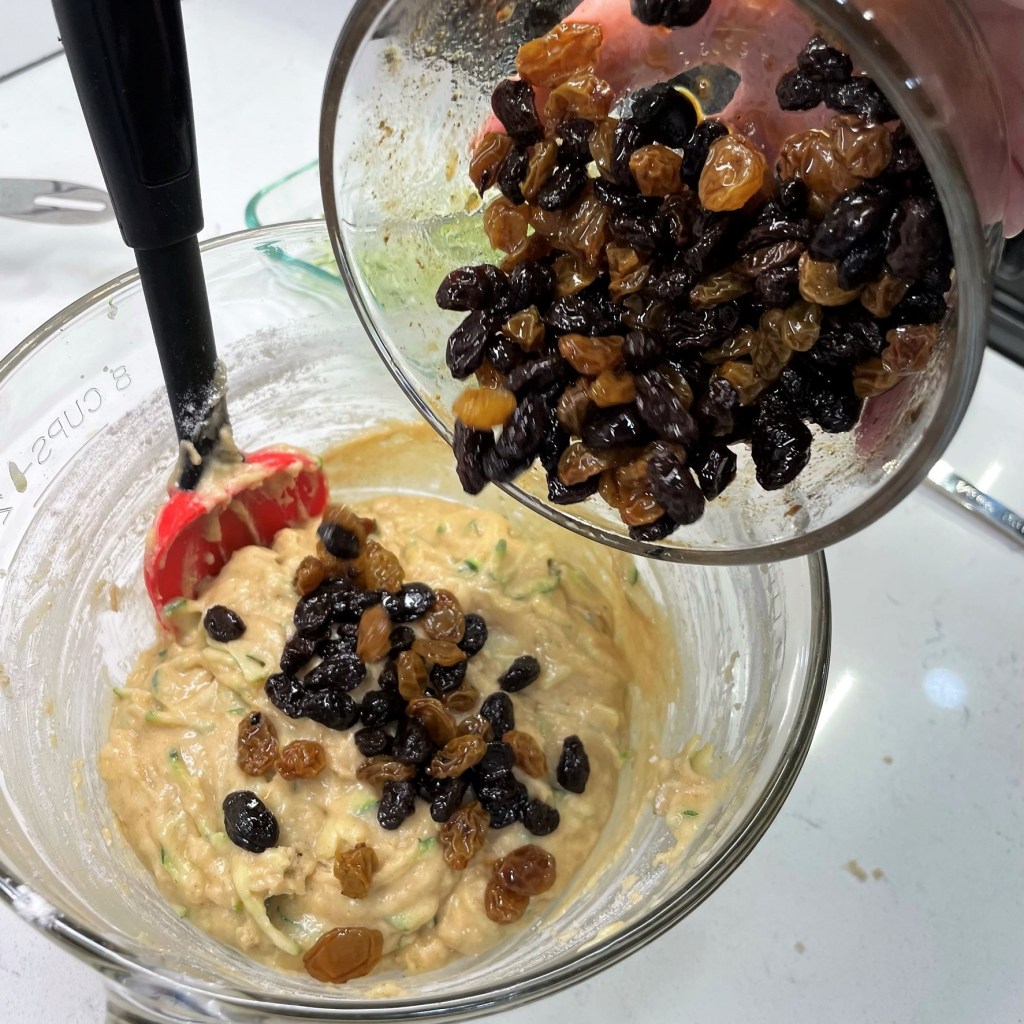
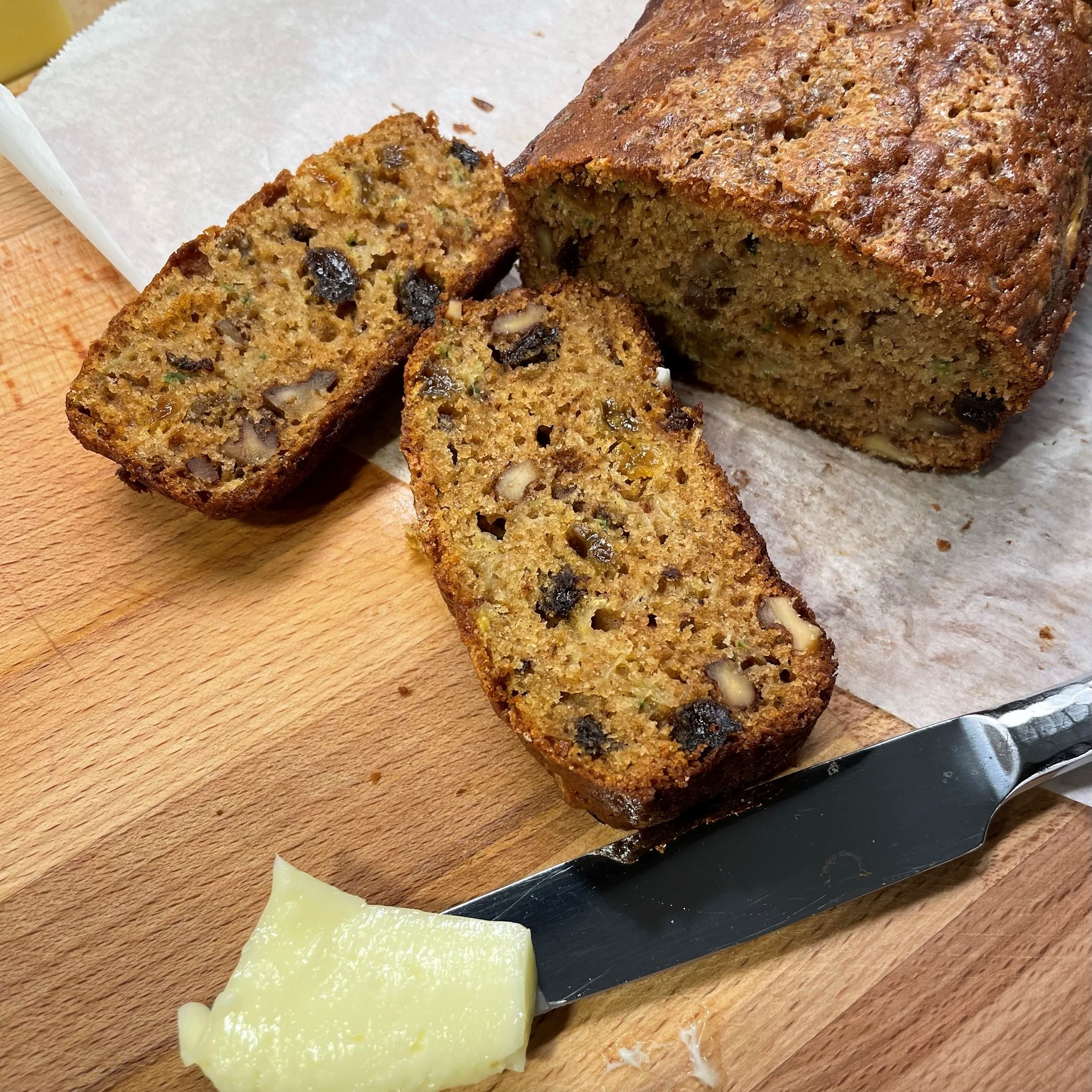
Obviously, not everyone has a bowlful of drunken raisins hanging around, and that’s perfectly fine. Soaking for a few hours or a couple of days will get the job done, and as the rum (or bourbon or orange juice or whatever you use) absorbs into the dried fruit, the natural sugars seep out into the liquid, forming a syrup of sorts. That sweetness adds the special something to this zucchini bread, and you honestly don’t taste any alcohol. It’s more about making them super plump before baking, as you can see in these juicy jewels of sweetness, nestled in among the toasted walnuts and all those shreds of fresh zucchini.

The raisins are so soft and sweet!

To get this recipe started, I first wrote down all the substitutions I planned to make, and I also cut my Great-Gram’s recipe in half, because her instructions were for two loaves. I find it challenging to change a recipe on the fly, and I probably should have mentioned that when I wrote about “the problem with recipes,” given that it is a frequent challenge for me. We have a small household—just me and my husband—and unless I am cooking to entertain, I like to make things in small amounts. I wrote out the exact amounts of all the ingredients I’d be using for a single loaf, and arranged them on the counter. At our house, we call it mise en place, the French term that means, “all in its place, lined up, ready to go.”

If I don’t set it up this way, I will forget something!

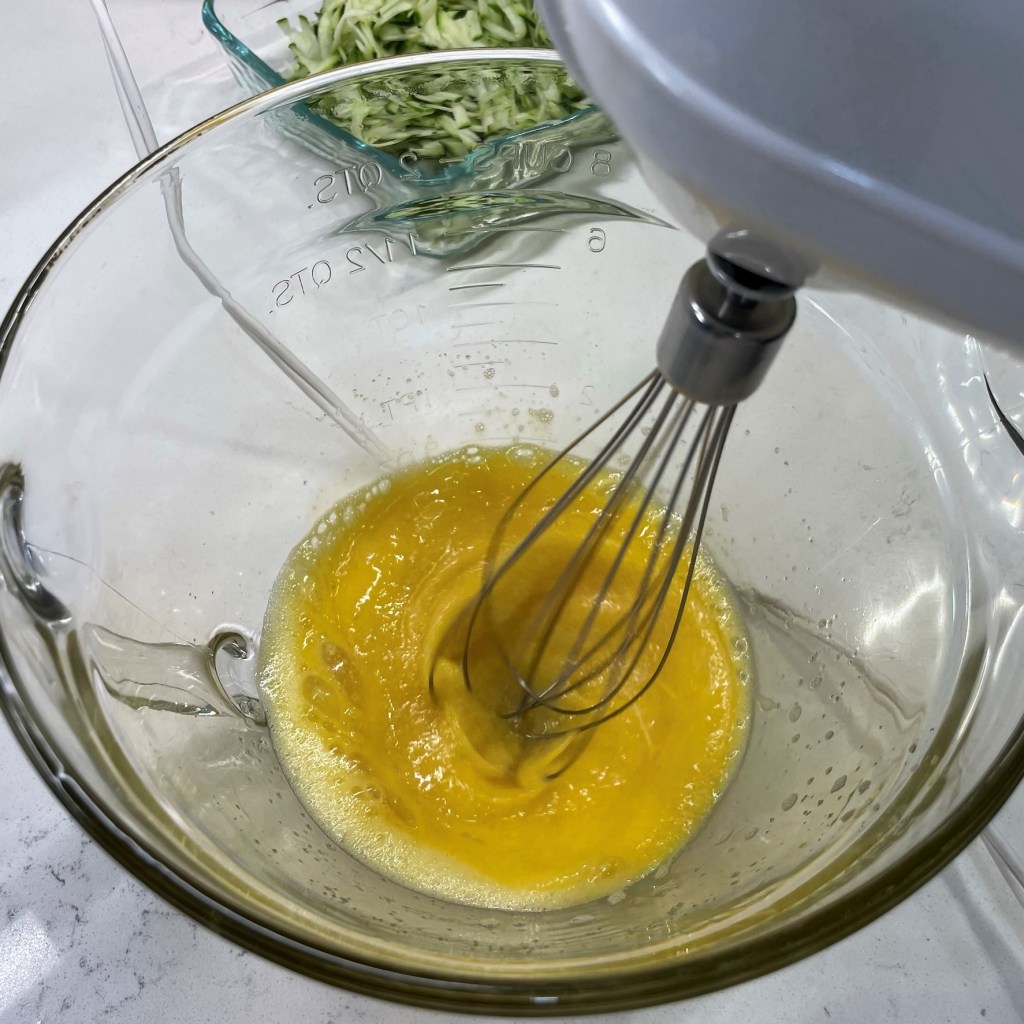
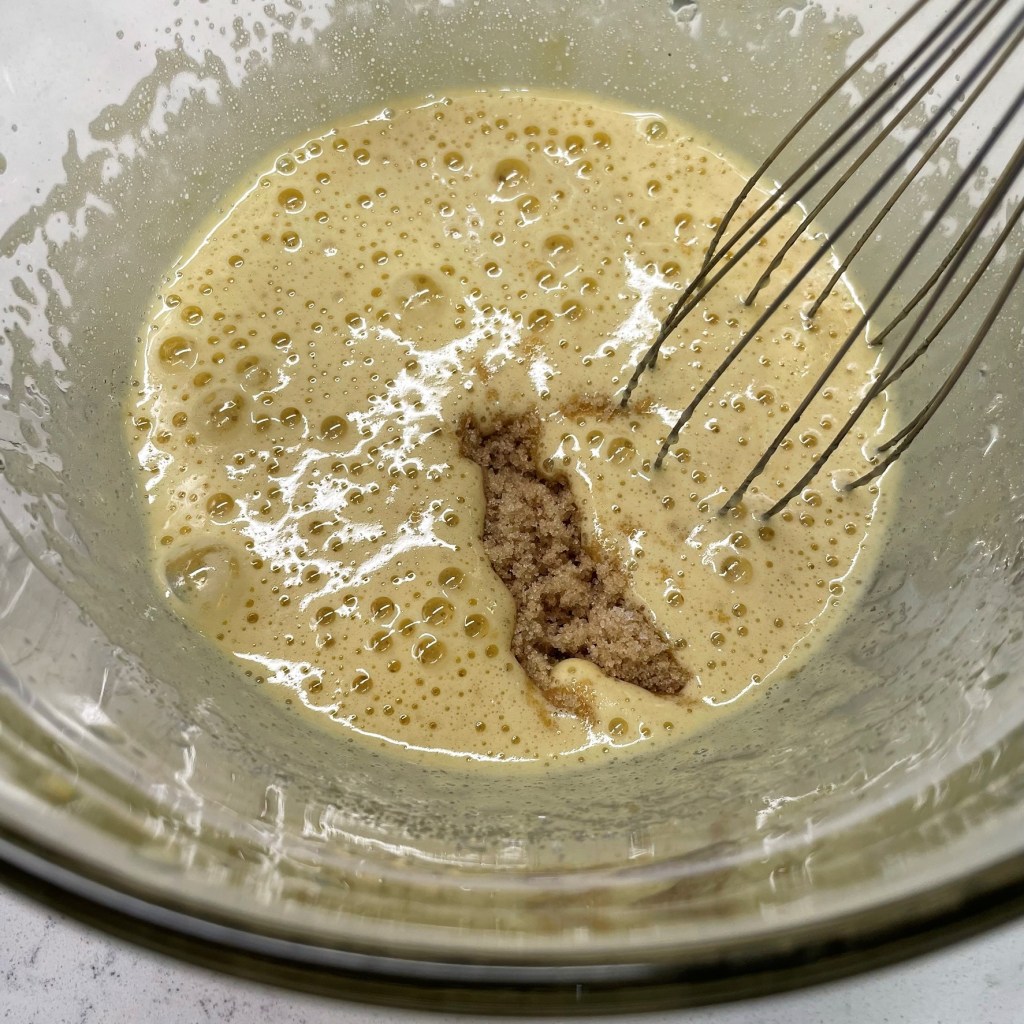
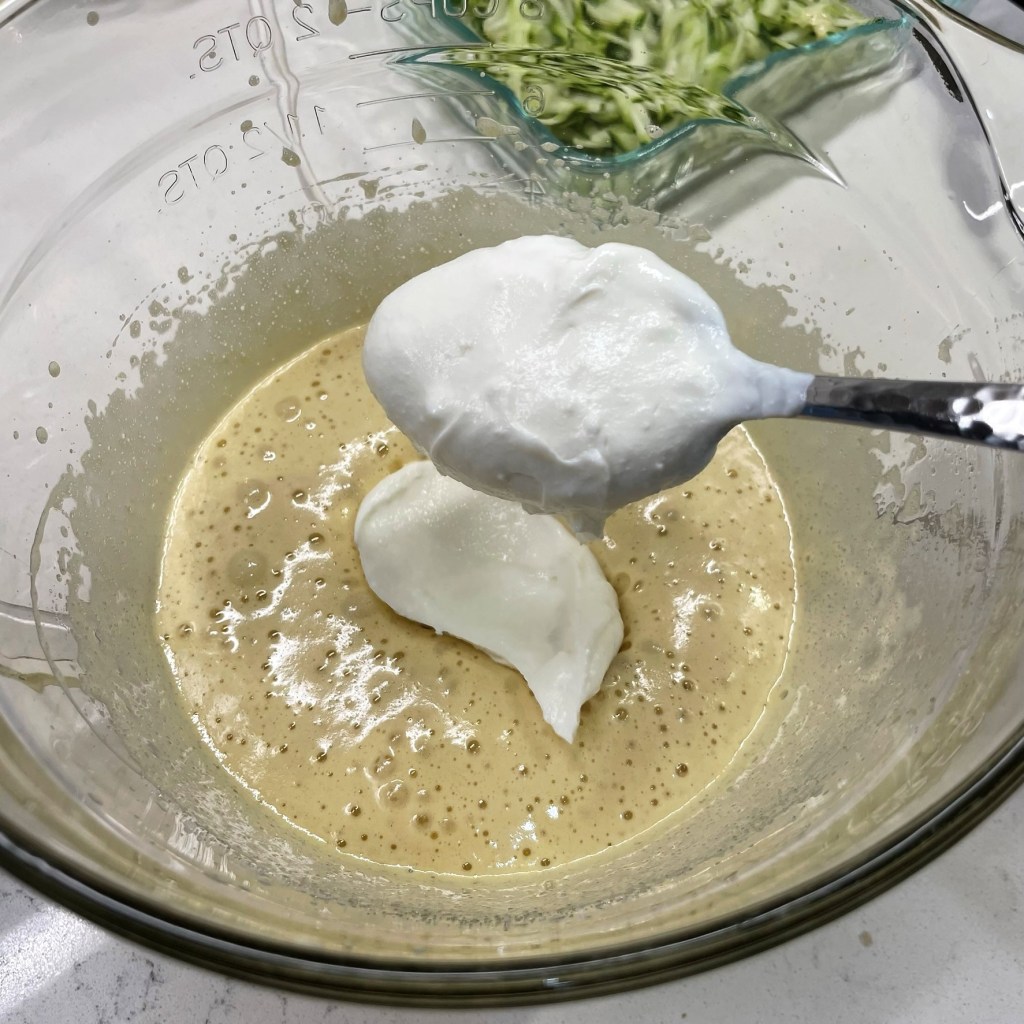
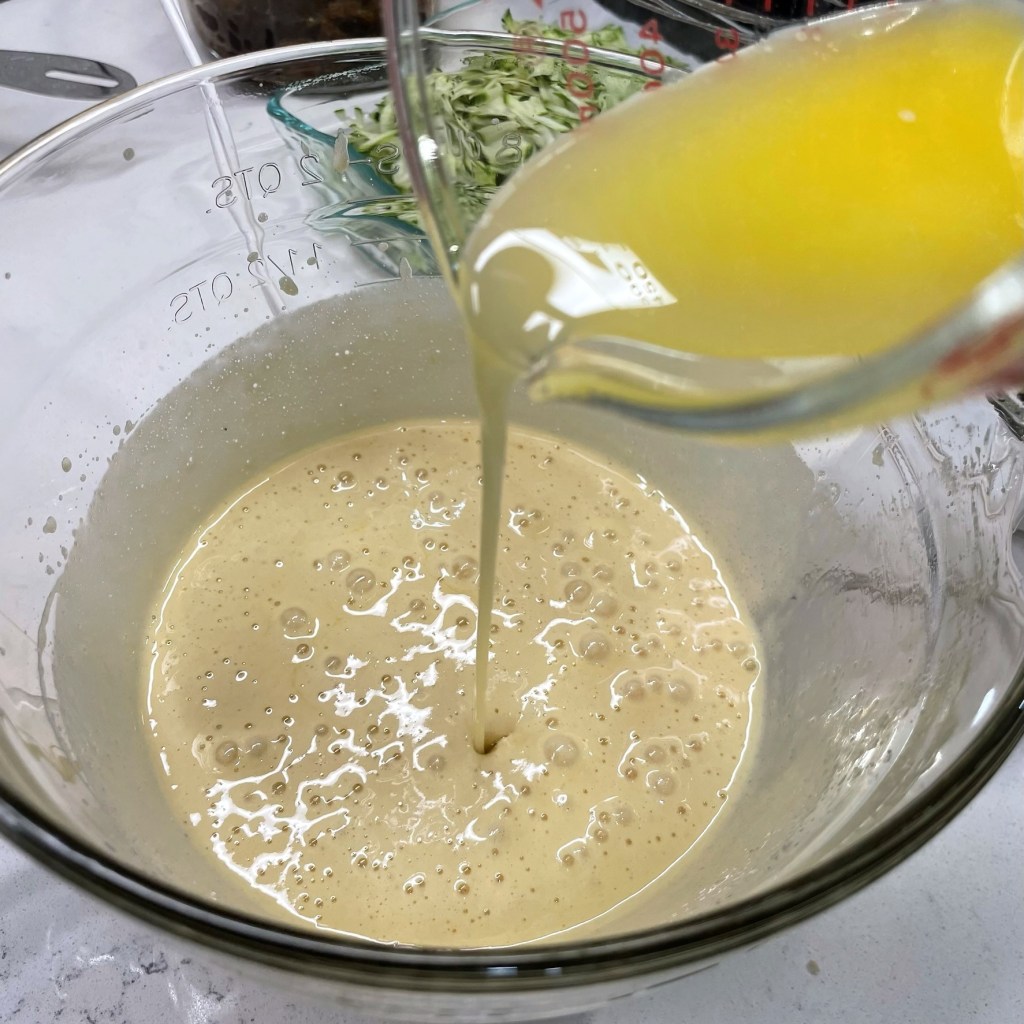
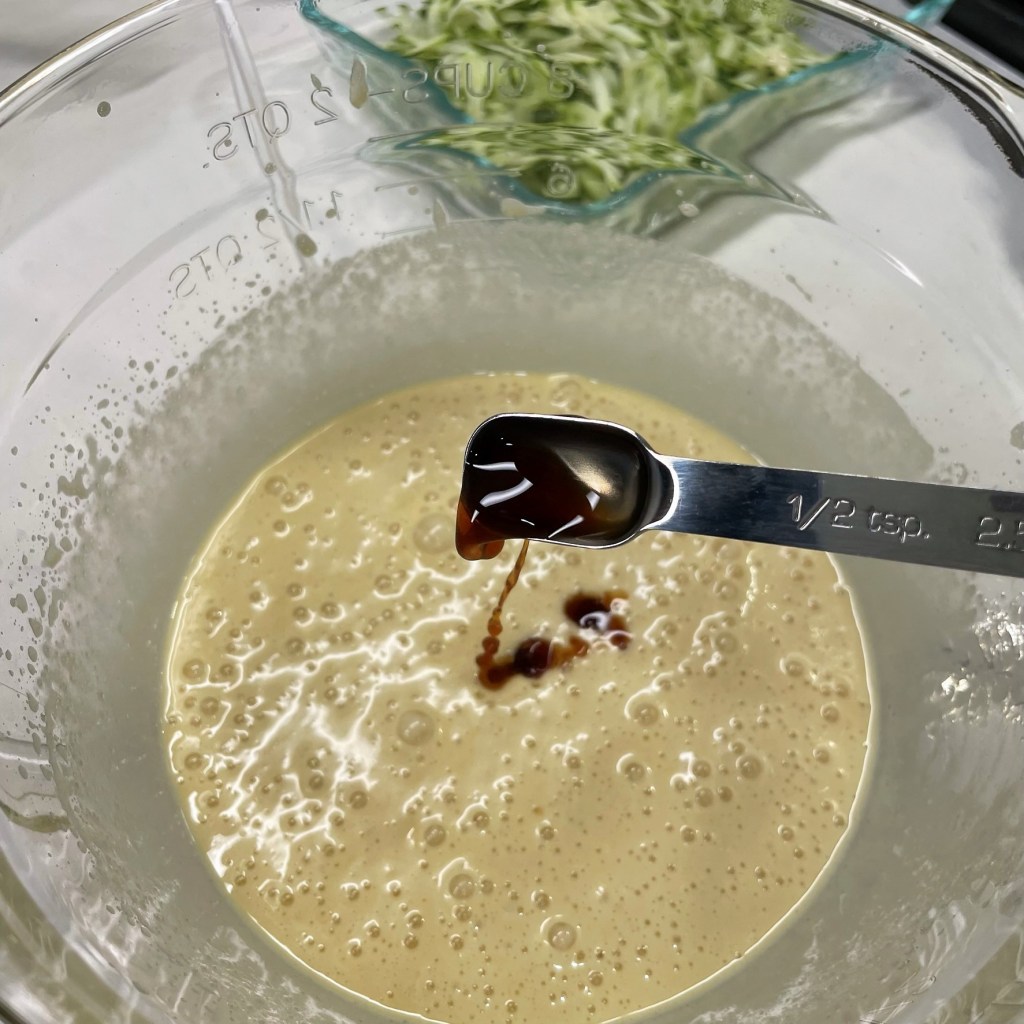
The eggs were whipped first, and I started with a hand whisk but quickly switched to my electric mixer with the single whisk head attachment. Despite my excitement in outfitting my kitchen with new, upgraded small appliances, I have thus far refused to replace my handheld mixer that I have had since the late 90s. There isn’t anything special about it, except that it was made in the USA and still works great after all these years. My Great-Gram probably had one just like it, and she would heartily agree that “they don’t make things like they used to.” After the eggs are whipped and foamy, I added the sugar, a little at a time. Then the yogurt and melted butter. The original recipe didn’t call for the vanilla yet, but I find it easier to mix that into a batter with the wet ingredients, so in it went.

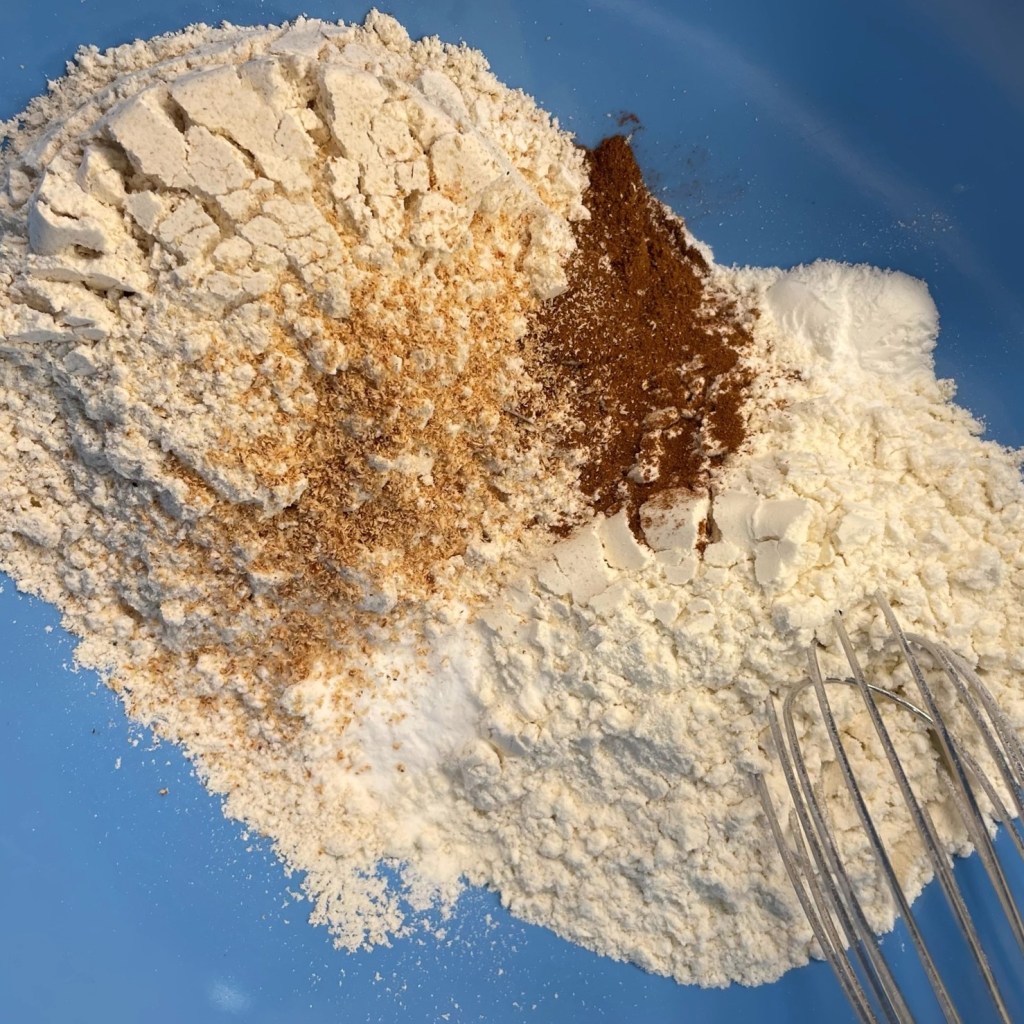
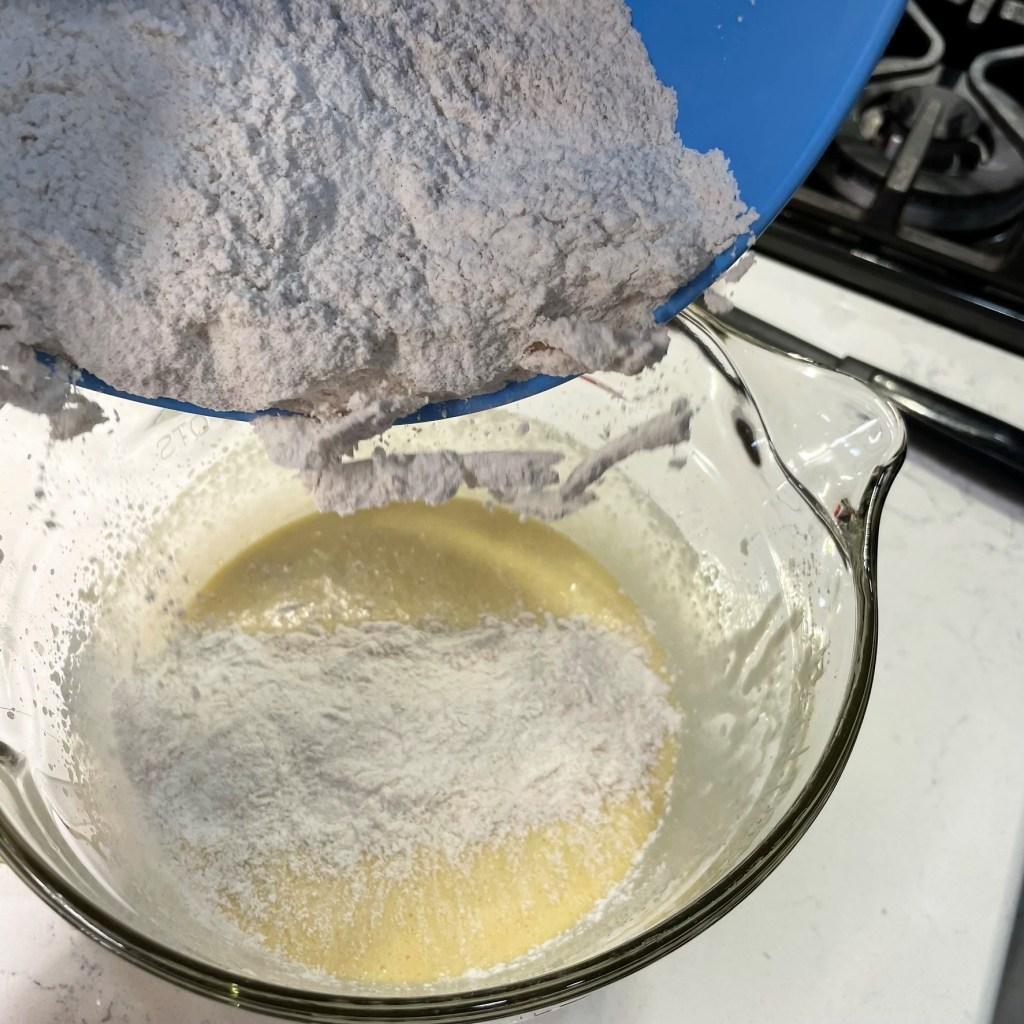
The dry ingredients got whisked together in their bowl—this is important, because you don’t want the baking soda or cinnamon to clump up when they hit the wet ingredients—and they were added to the egg mixture a little at a time, alternated with the shredded zucchini. Blending and folding a little of each in stages ensures more even mixing without overworking the batter (which would make the bread tough).

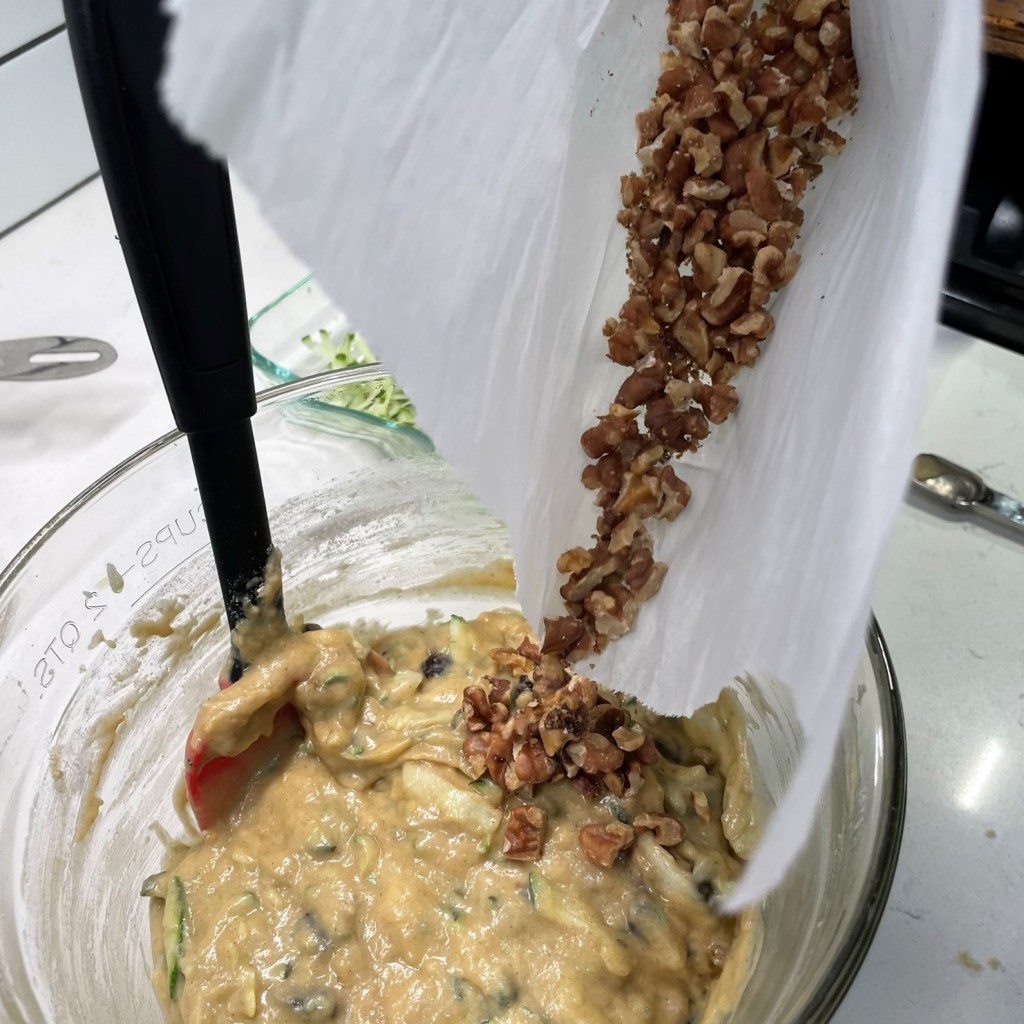
Finally, the drunken raisins and toasted walnuts were folded into the batter, and my modernized, somewhat health-ified version of zucchini bread was ready for the oven!

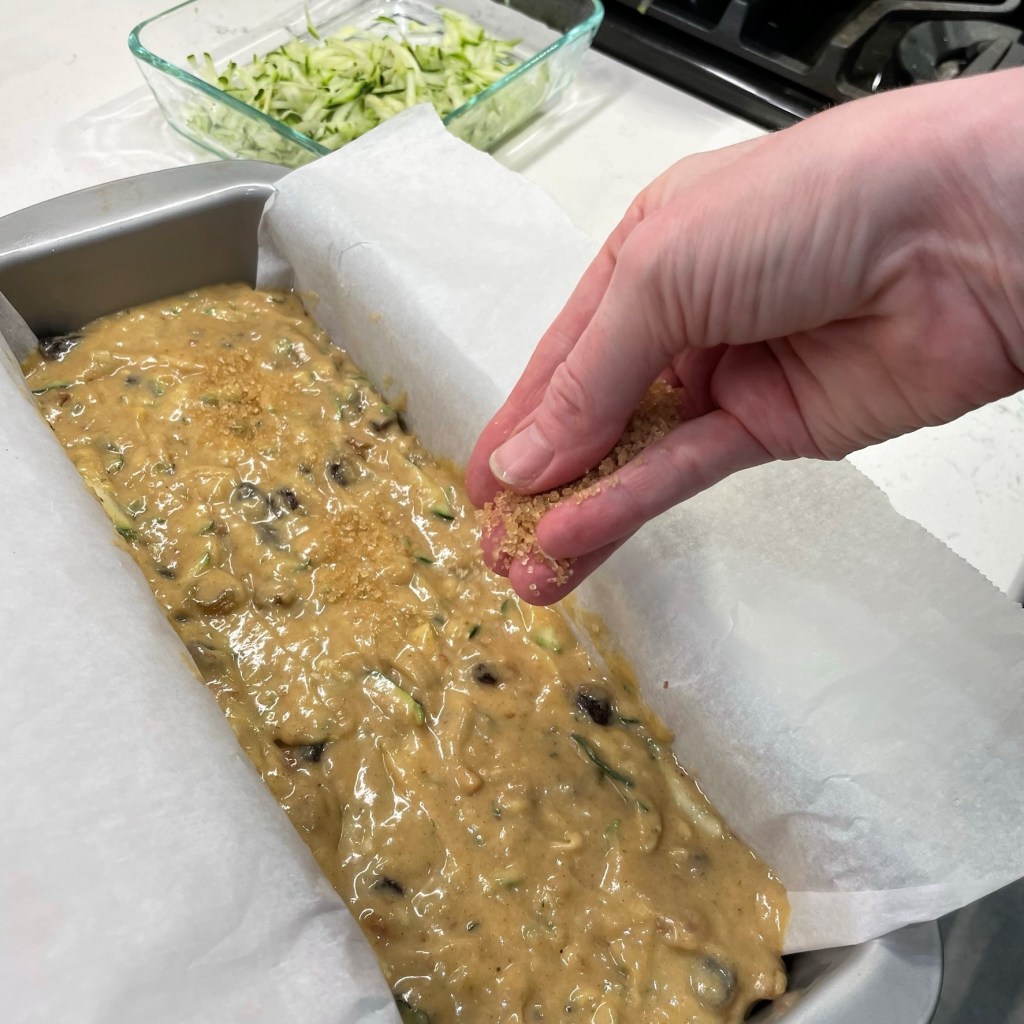
Grandma’s recipe said to grease and flour the pan, but I made a hammock of parchment paper instead, for easy lifting of the finished loaf. I’ve never liked inverting a soft loaf of quick bread; it’s too easy to break it and I don’t care for the unsightly rack marks it leaves on top. No oil or greasing is necessary here—just lay the parchment into the pan with a bit of a flap hanging over each long side, and then pour in the batter. For a nice crunch on top of the loaf, I sprinkled on a tablespoon of turbinado sugar just before baking.

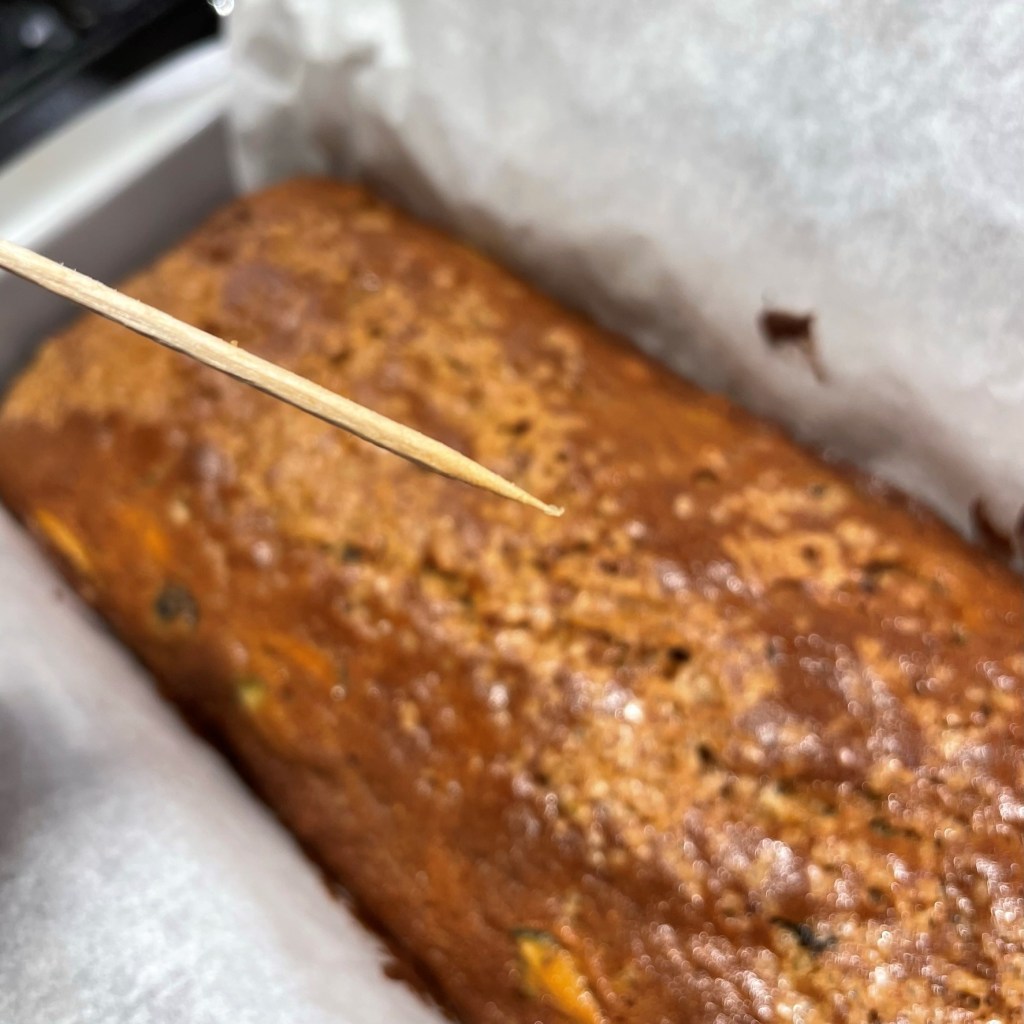
The house smelled sooo good while this was baking, and 55 minutes later, a clean toothpick confirmed it was done. There’s no doubt, this quick bread would be a winner with my great grandmother. It’s packed with plenty of garden-fresh zucchini, and with reduced fat and sugar—plus the substitution of whole grains—I can enjoy it for breakfast or dessert without guilt.


Healthy-ish Zucchini Bread with Drunken Raisins

  • Servings: about 12
  • Difficulty: average
  • Print

I’ve made a few “lighter” adjustments to a family heirloom recipe, and the result was delicious. My raisins were soaked in rum, but you could also use whiskey or bourbon, or skip the alcohol and soak them instead in orange or apple juice.

Ingredients

  • 2 eggs
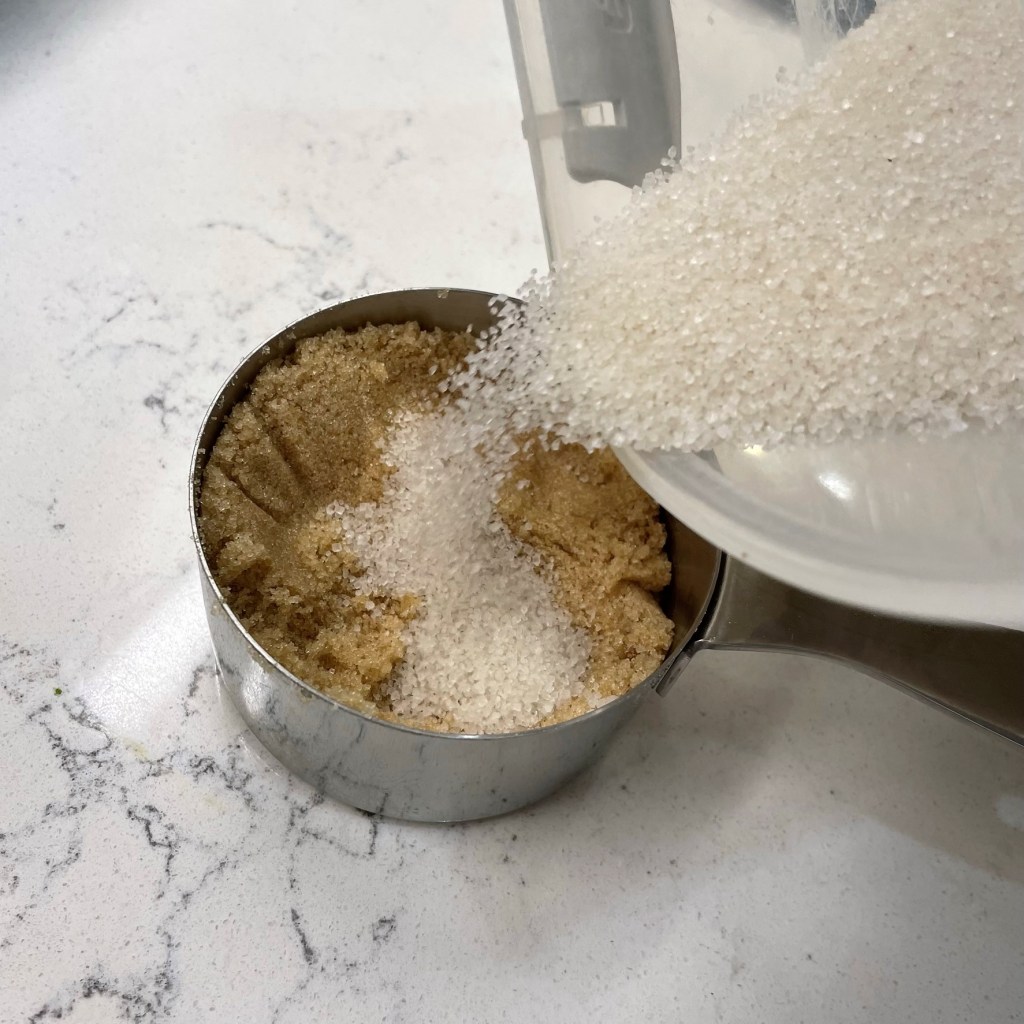
  • 3/4 cup sugar; I did halvsies of white and brown sugar
  • 1/4 cup plain Greek yogurt (stir it well before measuring)
  • 4 Tbsp. melted butter
  • 3/4 cup all-purpose flour
  • 3/4 cup whole wheat pastry flour
  • 3/4 tsp. baking soda
  • 3/8 tsp baking powder
  • 1/2 tsp. kosher salt
  • 1/2 tsp. ground cinnamon
  • a few scrapes freshly grated nutmeg
  • 1 cup grated zucchini (unpeeled, large holes on a box grater)
  • ½ cup raisins (soak them at least a few hours, with just enough rum to cover them)
  • ½ cup chopped walnuts, optional (I toasted them in the oven 8 minutes first)
  • ½ tsp. vanilla
  • 1 Tbsp. turbinado sugar (for sprinkling over the surface of the batter before baking)

Directions

  1. Preheat oven to 350° F. Toast walnuts if using, and allow them to cool while you prep the batter.
  2. Whisk together flours, baking soda, baking powder, salt and spices.
  3. Use a handheld mixer to beat the eggs until they are light-colored and fluffy. Add sugar gradually, blending to dissolve and fully incorporate it. Blend in yogurt and then butter.
  4. Using a silicone spatula, fold 1/3 of the dry ingredients into the egg mixture, alternating with 1/2 grated zucchini and repeat, ending with the dry ingredients. Fold in raisins and walnuts.
  5. Pour batter into non-stick (or greased, floured) bread pan. I laid in a sling of parchment, so I could lift the baked bread out rather than inverting it. Sprinkle the surface evenly with turbinado sugar.
  6. Bake in lower third of oven for 55 minutes, until toothpick inserted in center comes out clean. Cool at least 20 minutes in pan, then transfer to a rack to cool completely.


This zucchini bread is delicious when served warm. Wrap leftovers snugly in aluminum foil at room temperature or refrigerate for longer storage.


Moroccan Zucchini “Boats”

One clear advantage to growing your own garden vegetables is that you have a wider range of varieties and sizes of veggies to choose from. I can find zucchini, for example, at my local supermarket, but only smallish ones that can be fried, steamed or skewered. Because this year we gave in to the deer and decided to forego attempting our own garden, I had to go to the farmers’ market to get a large zucchini, like the ones everyone gave away for free this time of year in my hometown. I appreciate that unlike grocery store produce, whatever I bring home from the outdoor market was probably hanging on the vine mere hours before.

You can make a generous meal from a foot-long zucchini!

On our last visit to the market, I was specifically on the lookout for large zucchini because I wanted to make a “boat” out of it. I have enjoyed stuffed zucchini for years, dating back to my hometown days and first apartment meals. Through the years, I have made them with sausage stuffing, ratatouille flavors or Italian-themed ingredients, depending on what else I had in the fridge at the time.


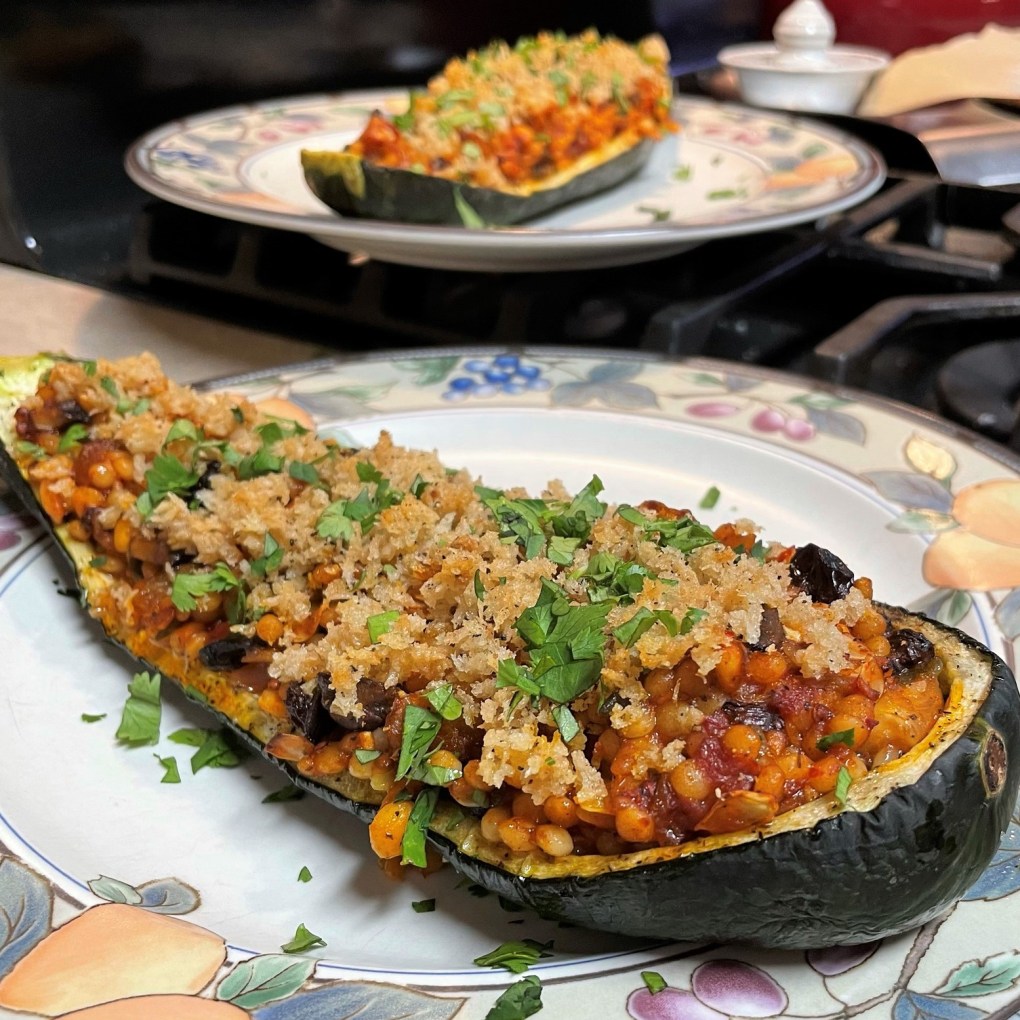
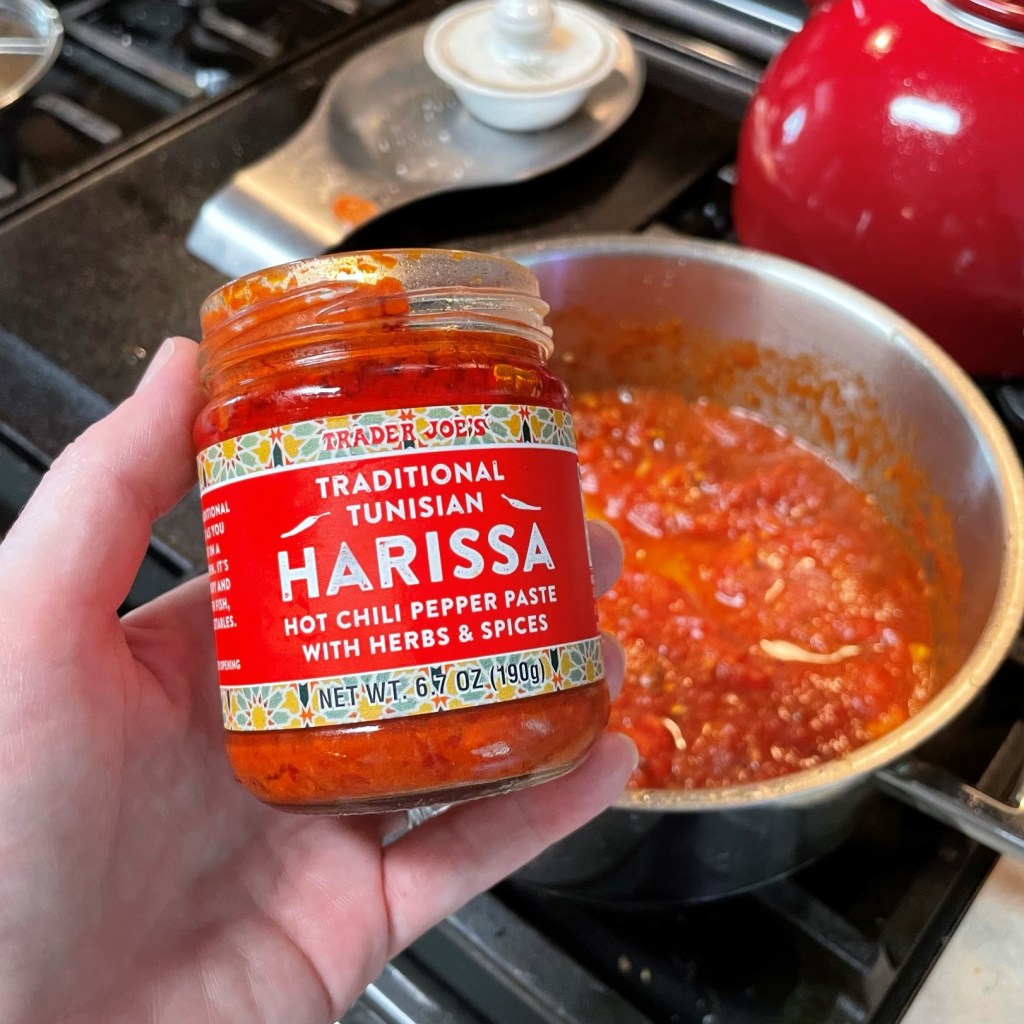
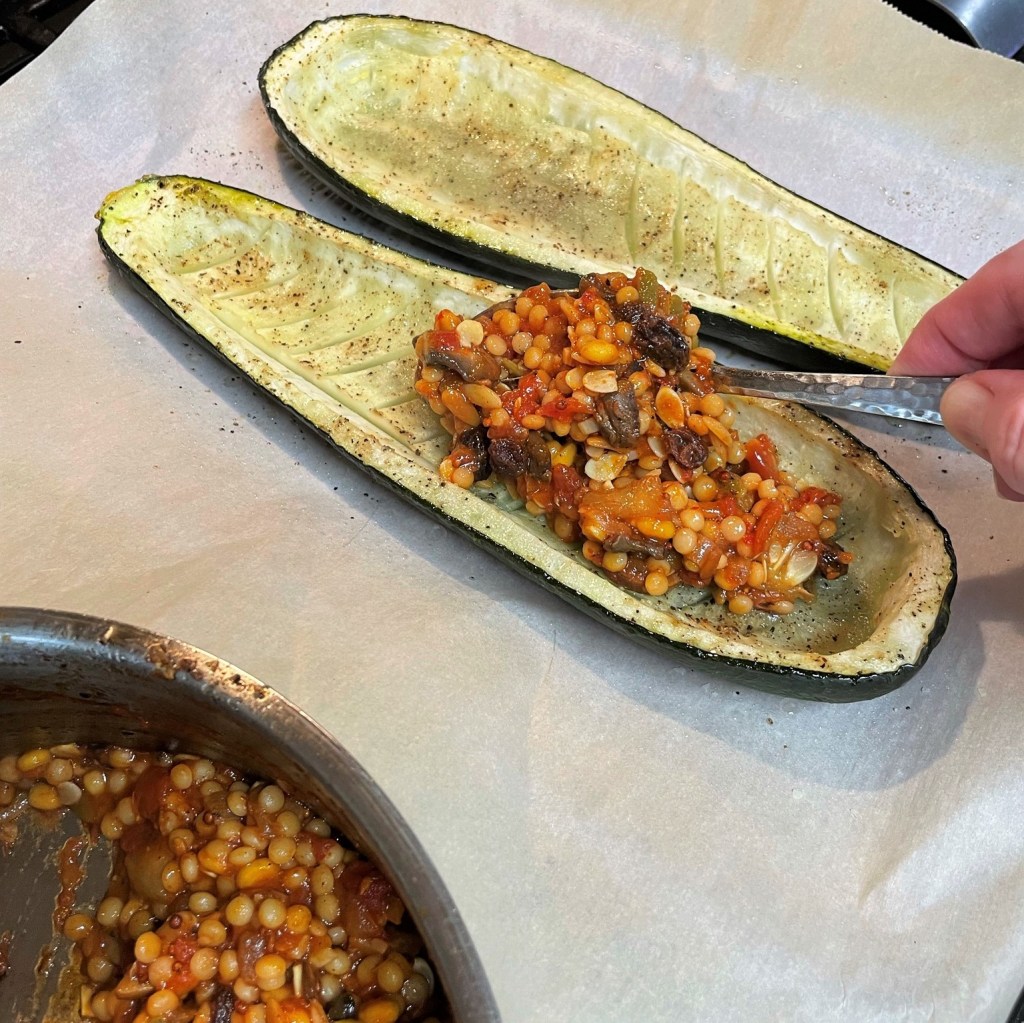
This time, I kept it entirely plant-based and gave it a spicy Moroccan twist. Israeli pearl couscous found its way into the mix, along with tomatoes, onions, mushrooms and garlic. I added a robust harissa paste for a big afterburn flavor. It was a double win for me—I got my wish for a hearty garden-based meal, and it was a fun flavor twist that my heat-loving hubby enjoyed, too.


Harissa is a staple seasoning of North African cuisine. It packs a spicy punch, so use it sparingly.

Ingredients

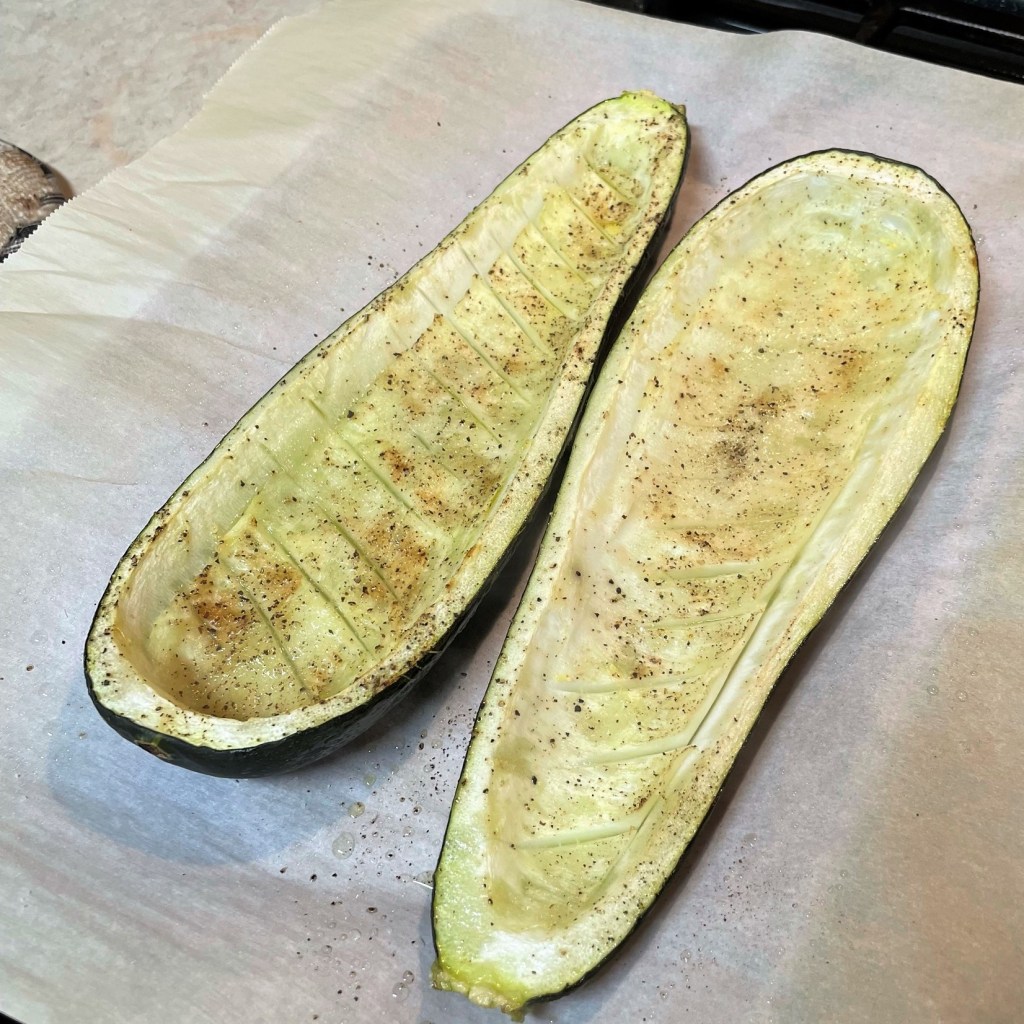
Large zucchini, halved lengthwise and insides scooped out

Olive oil spray

Kosher salt and freshly ground black pepper

1/2 cup Israeli couscous* (see notes)

1 cup vegetable broth

1/2 medium sweet onion, chopped

4 or 5 large cremini mushrooms, cleaned and sliced

2 cloves garlic, finely minced

Half of a large can of whole peeled tomatoes with puree*

1 tsp. harissa paste (more or less to taste)

1/4 cup panko breadcrumbs

2 Tbsp. melted vegan butter*

Fresh chopped parsley for garnish


*Notes

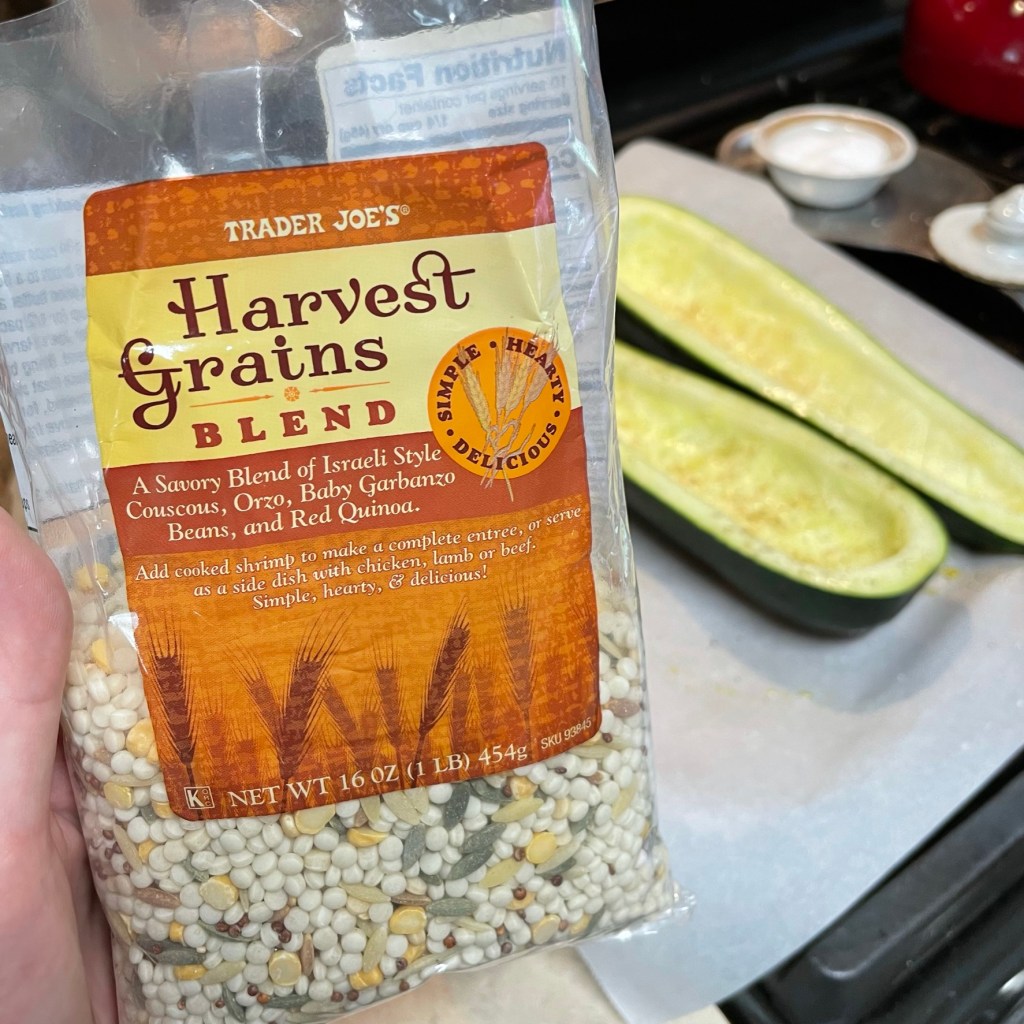
Couscous is essentially really tiny pasta, and for this recipe, I used a blend from Trader Joe’s that combines Israeli (“pearl”) couscous, which is larger than regular couscous, with various other ingredients, including split baby garbanzos, orzo (another tiny pasta) and quinoa. Any type of cooked grain would work here, including bulgur, freekah, wheat berries or even brown rice. You need about 1 cup cooked.

I almost always have San Marzano tomatoes in play in my kitchen, and half of a 28 oz. can was about right for this recipe. Use a standard can of diced tomatoes or, obviously, go for fresh! 🙂

There are so many good options for non-dairy “butter.” I am fond of the olive oil version made by Country Crock. It looks, melts and spreads just like dairy butter.


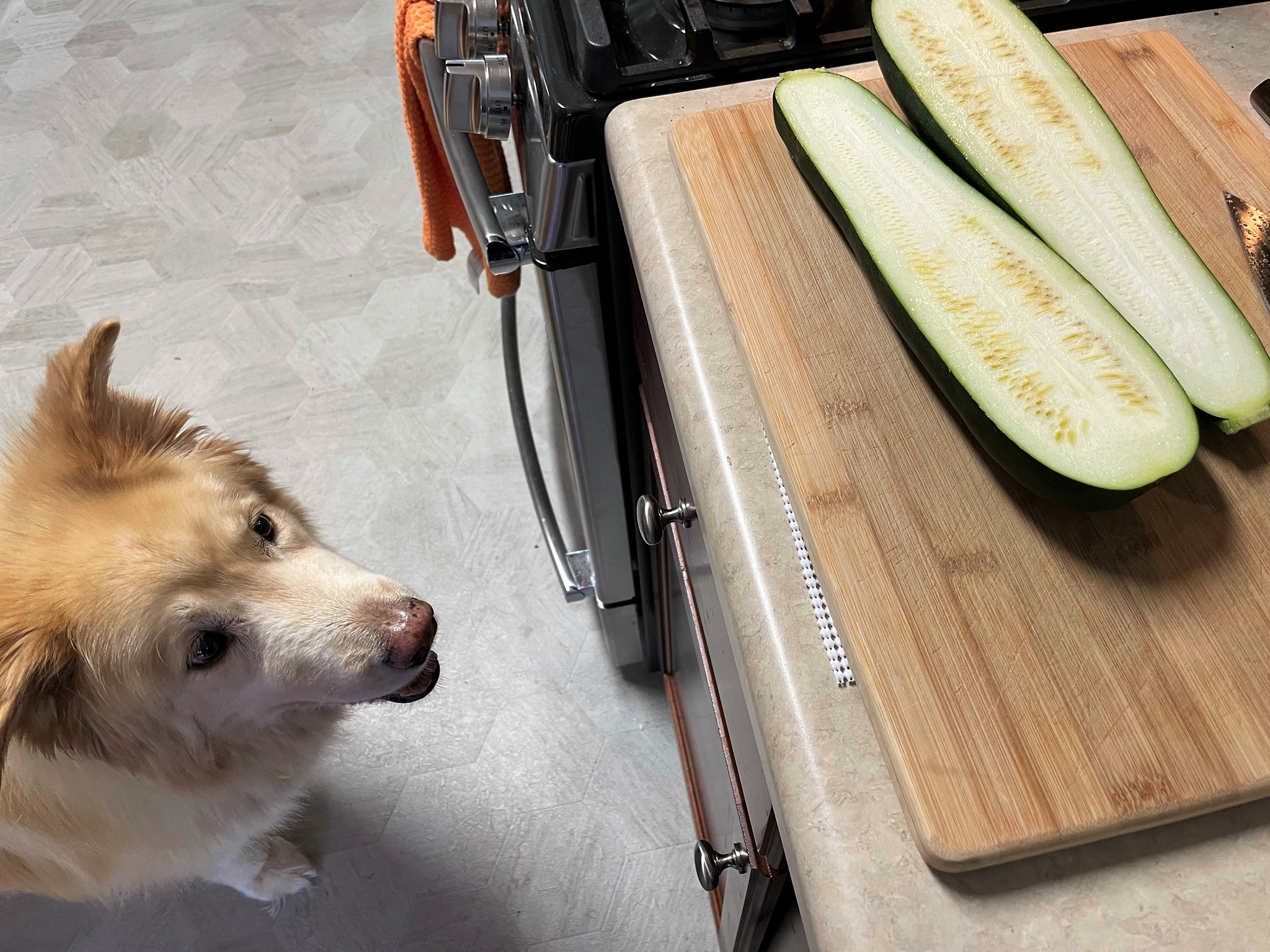
As usual, Nilla is ready and waiting for a piece of vegetable to fall! ❤

Instructions

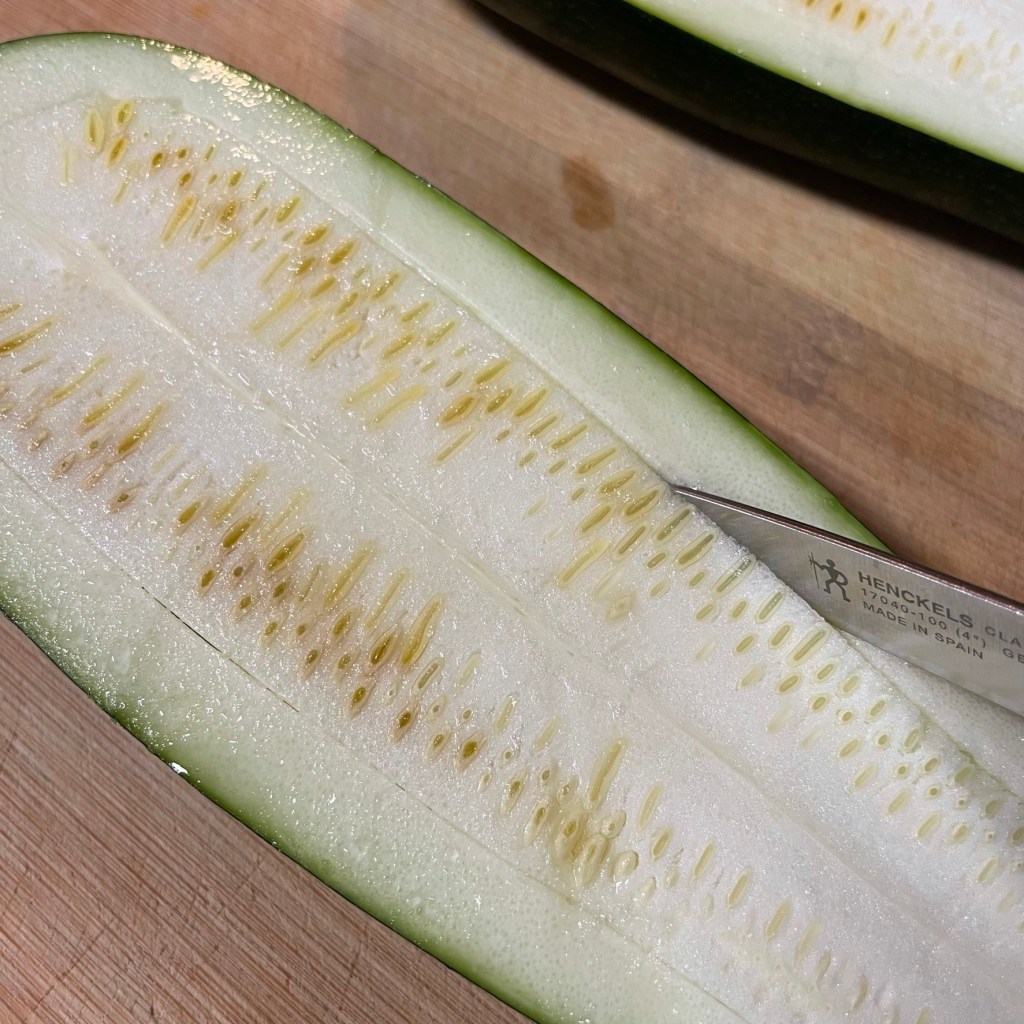
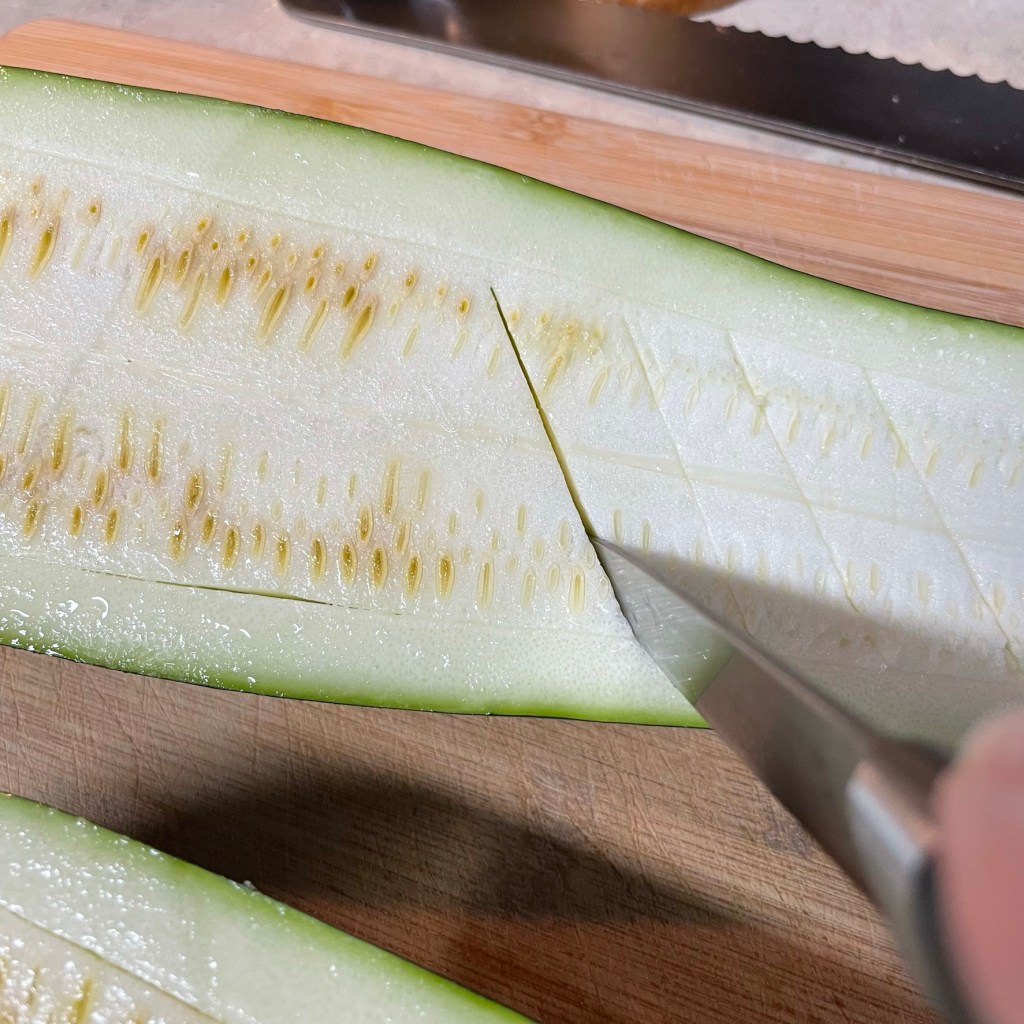
Here’s a quick visual walk-through for making this yummy, plant-based zucchini boat. Steps are listed below, along with a downloadable PDF for your recipe files. Enjoy!

  1. Preheat oven to 350° F, with rack in the center position. Line a baking sheet with parchment paper.
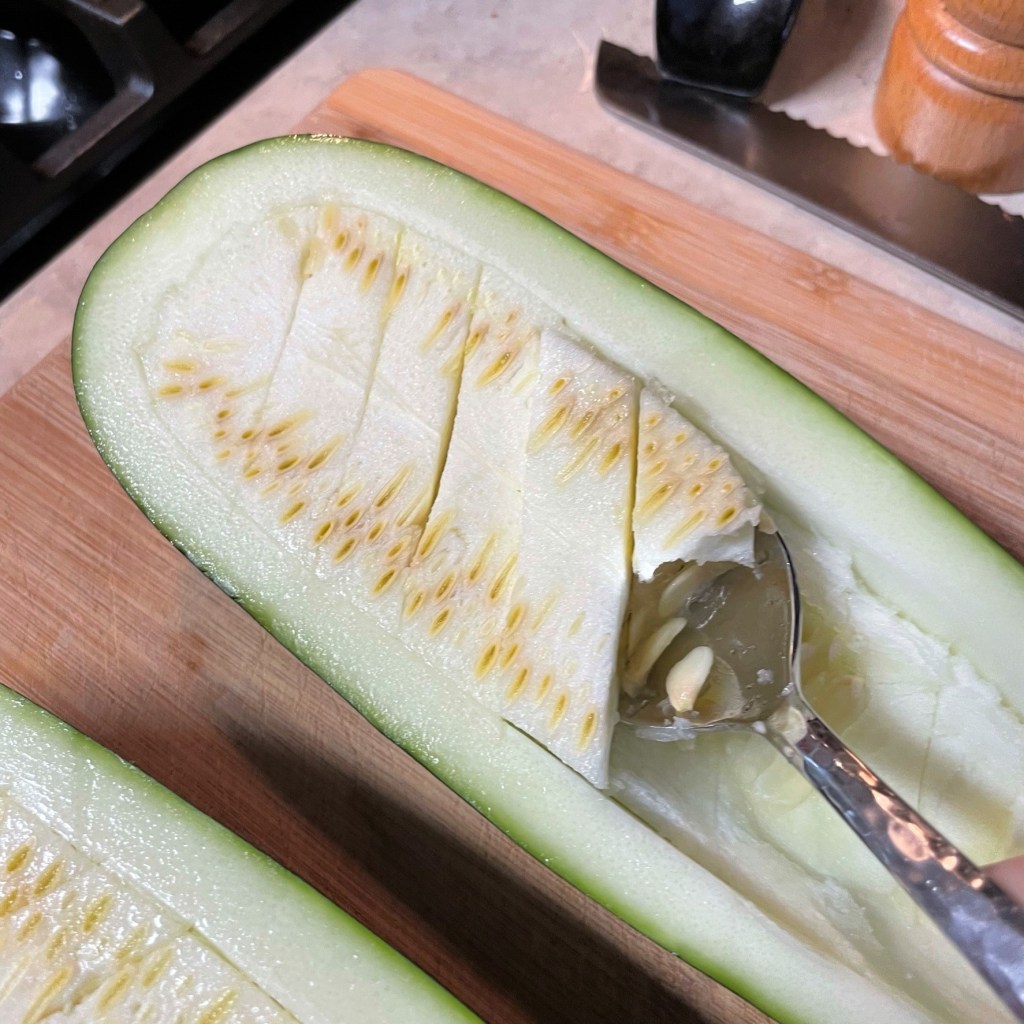
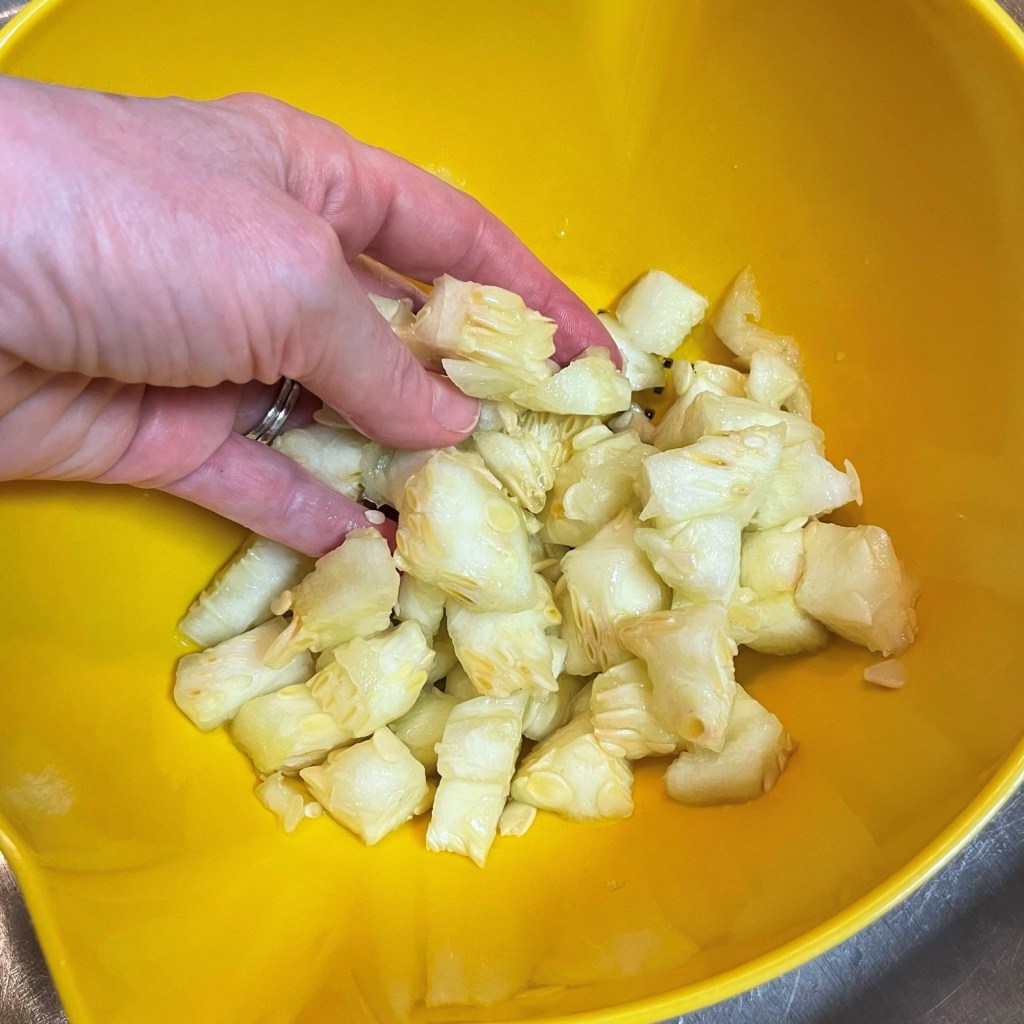
  2. Cut the zucchini in half lengthwise, then score the inside to scoop out the seedy flesh. Cut the flesh up into chunks and toss with salt in a colander to remove excess moisture.
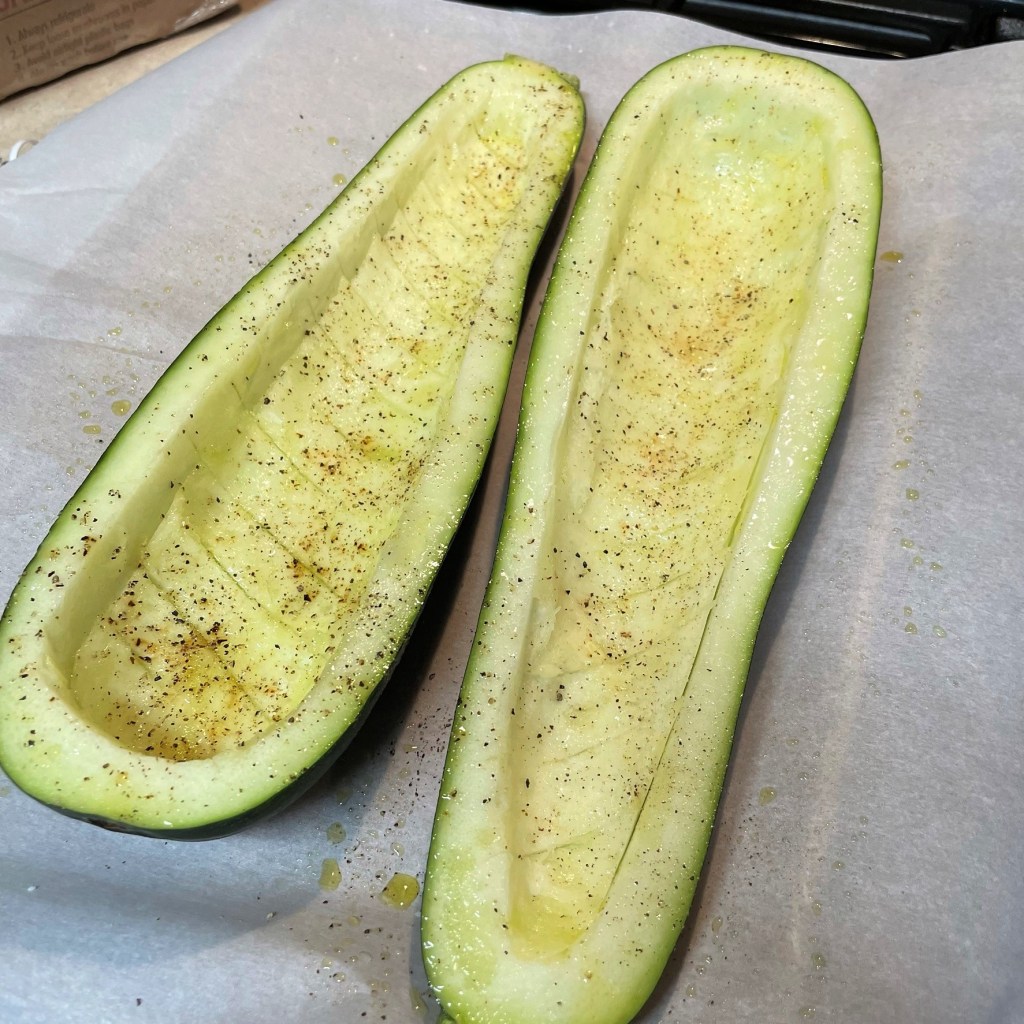
  3. Drizzle, brush or spray olive oil onto the cut sides of the squash and season generously with salt and pepper. Lay the squash on the parchment and roast for 30 minutes, or until squash is tender.
  4. Meanwhile, cook couscous according to package instructions, using vegetable broth in place of water to afford additional flavor to the dish.
  5. Heat a medium sauce pot over medium heat. Add a generous swirl of olive oil and sauté the onions until softened and translucent. Add mushrooms and zucchini chunks to the pot and cook until tender. Transfer the mixture to a separate bowl.
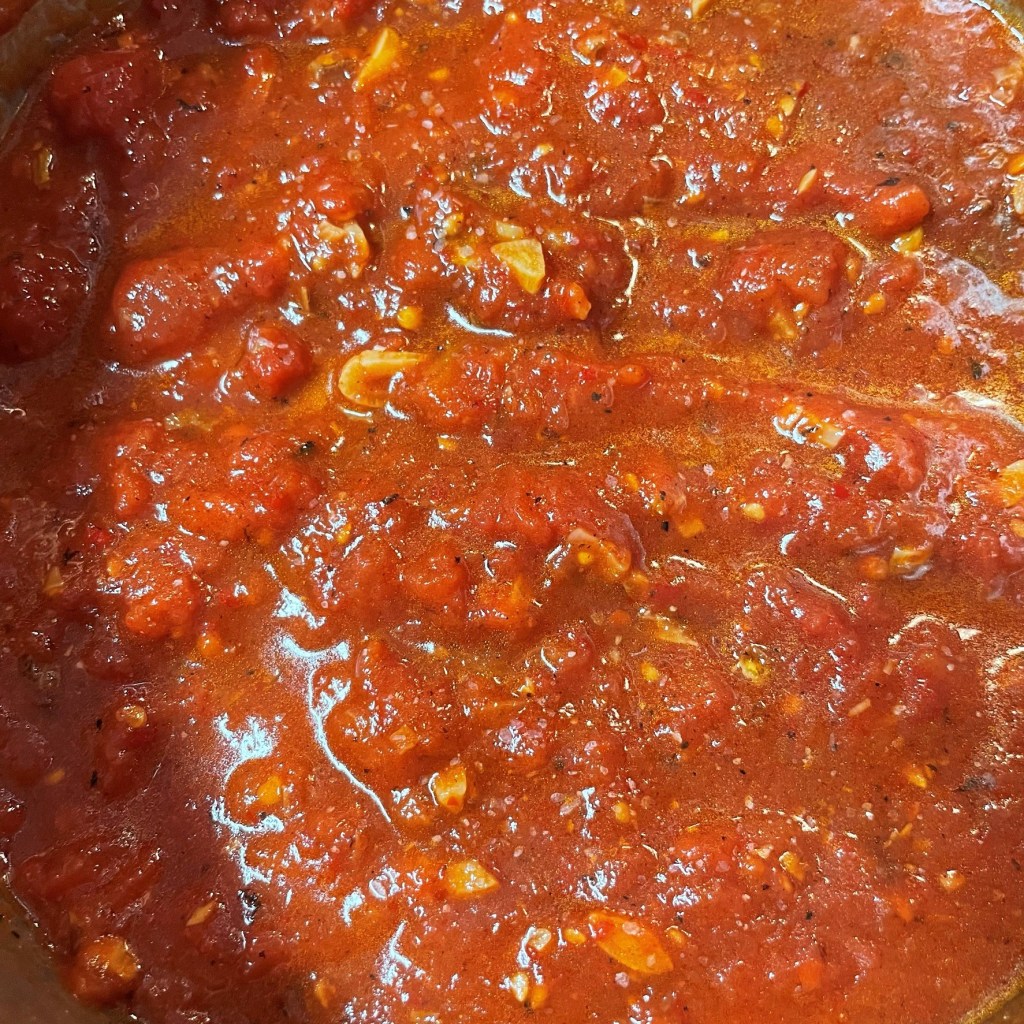
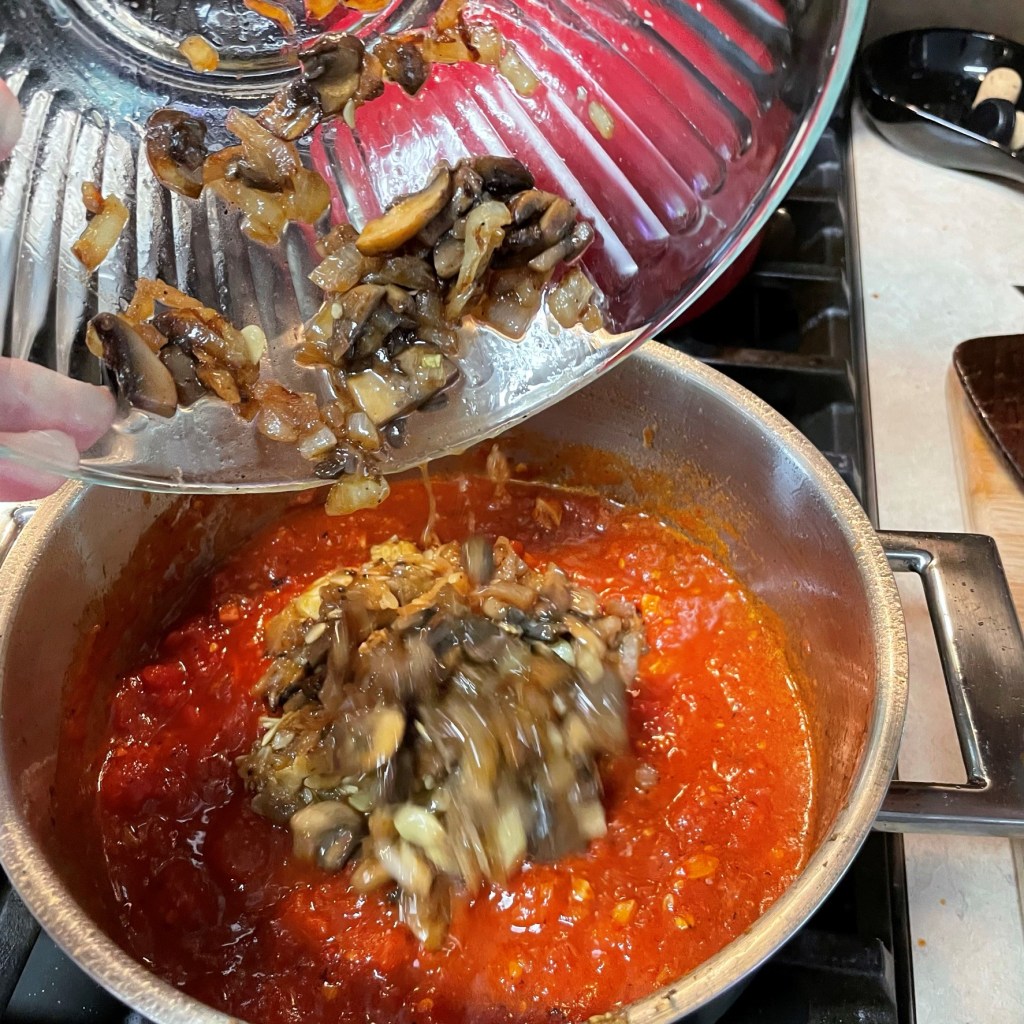
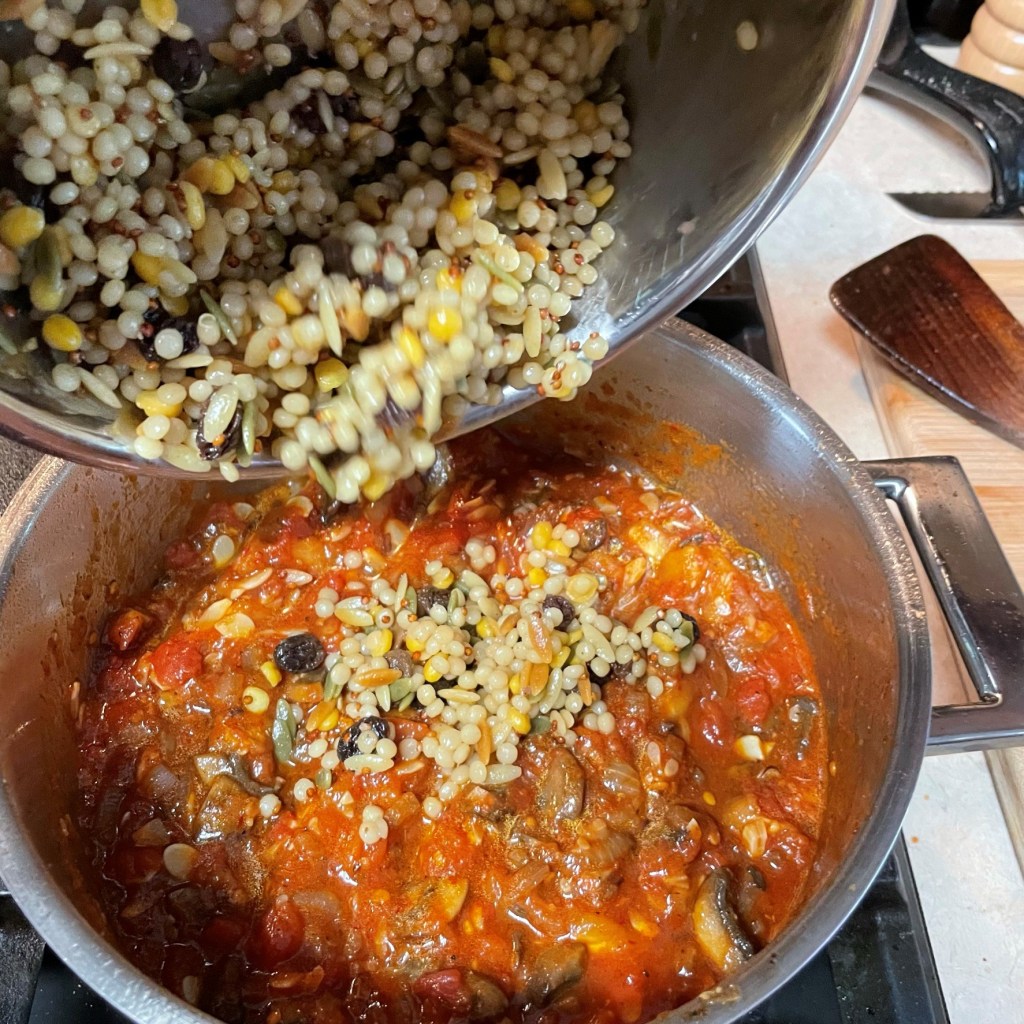
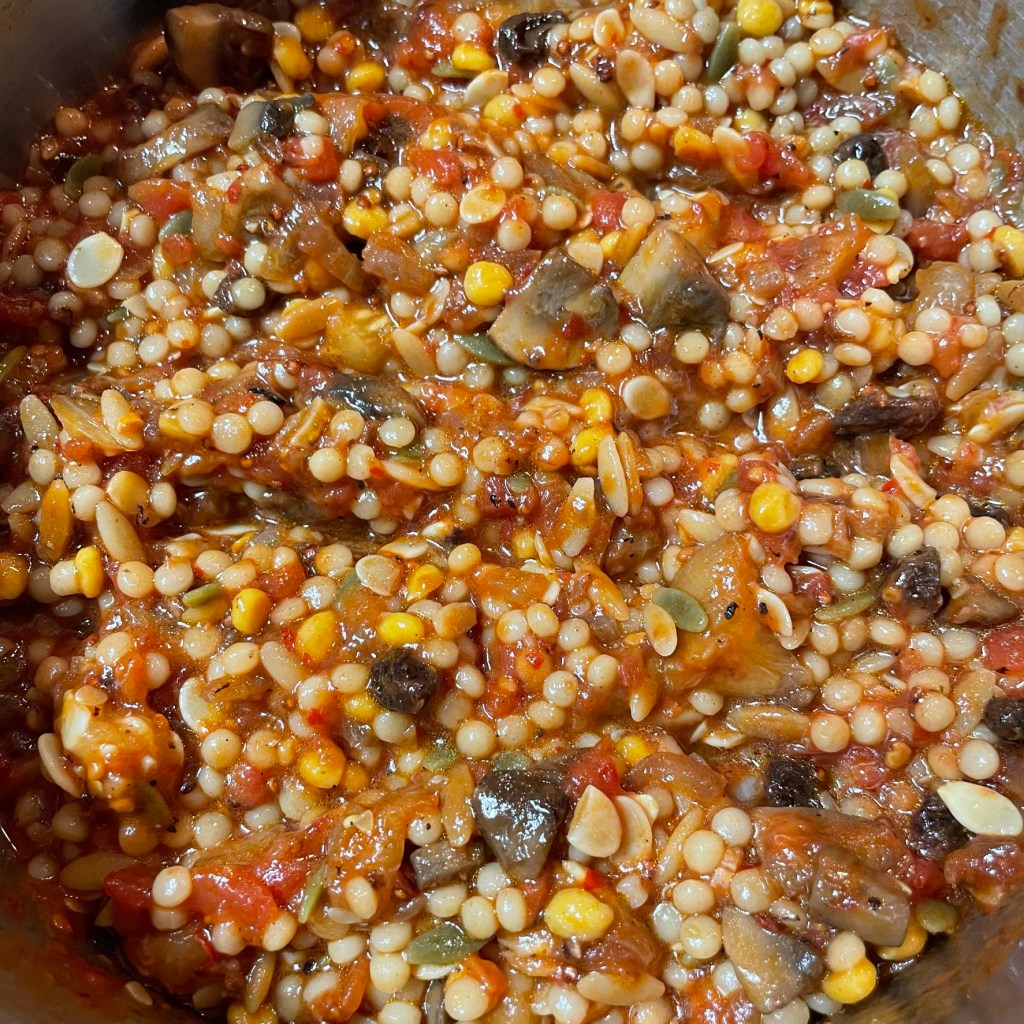
  6. Add another swirl of olive oil to the sauce pot and simmer the tomatoes and garlic over low heat until the tomatoes are soft enough to break when pressed. Stir in harissa paste and adjust seasonings to taste. Return the onions and mushrooms to the tomato mixture, along with the cooked couscous and the reserved salted zucchini pieces.
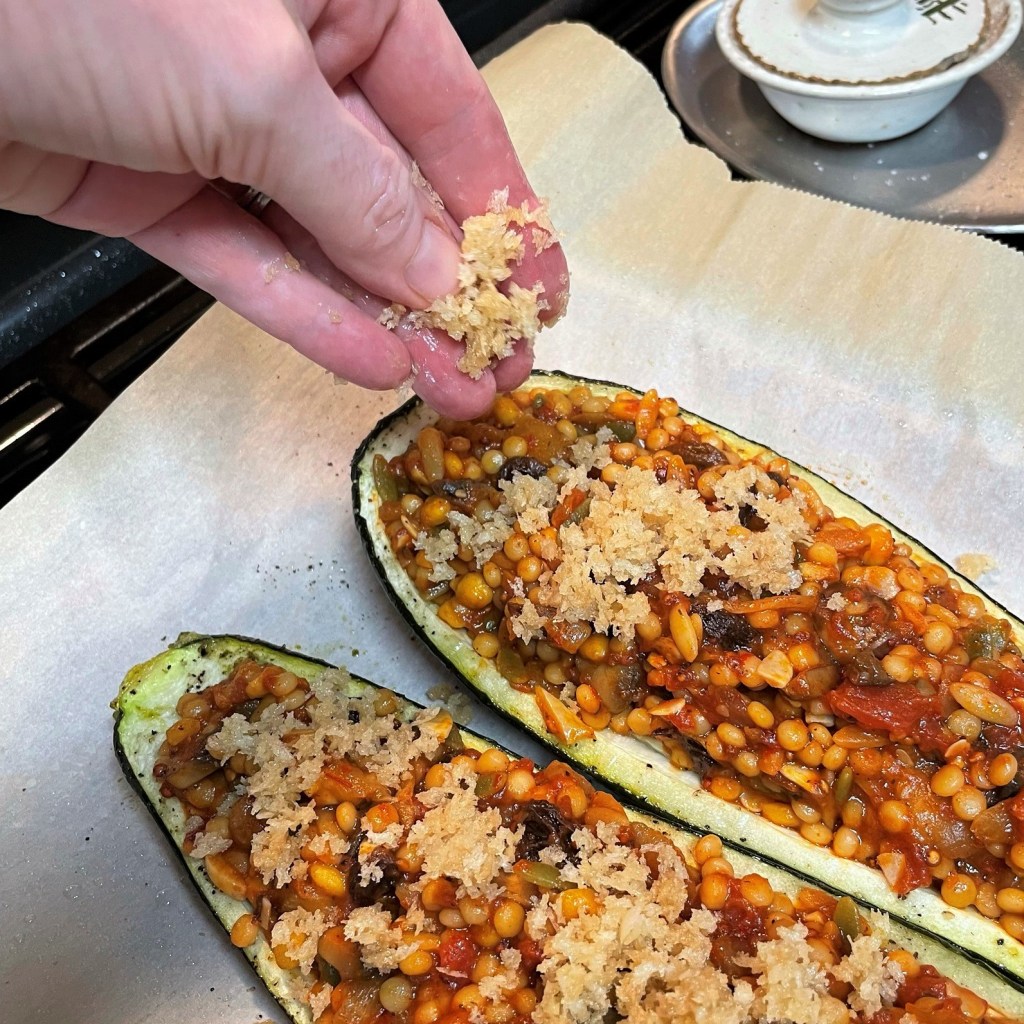
  7. Melt the vegan butter and toss with the panko crumbs, salt and pepper.
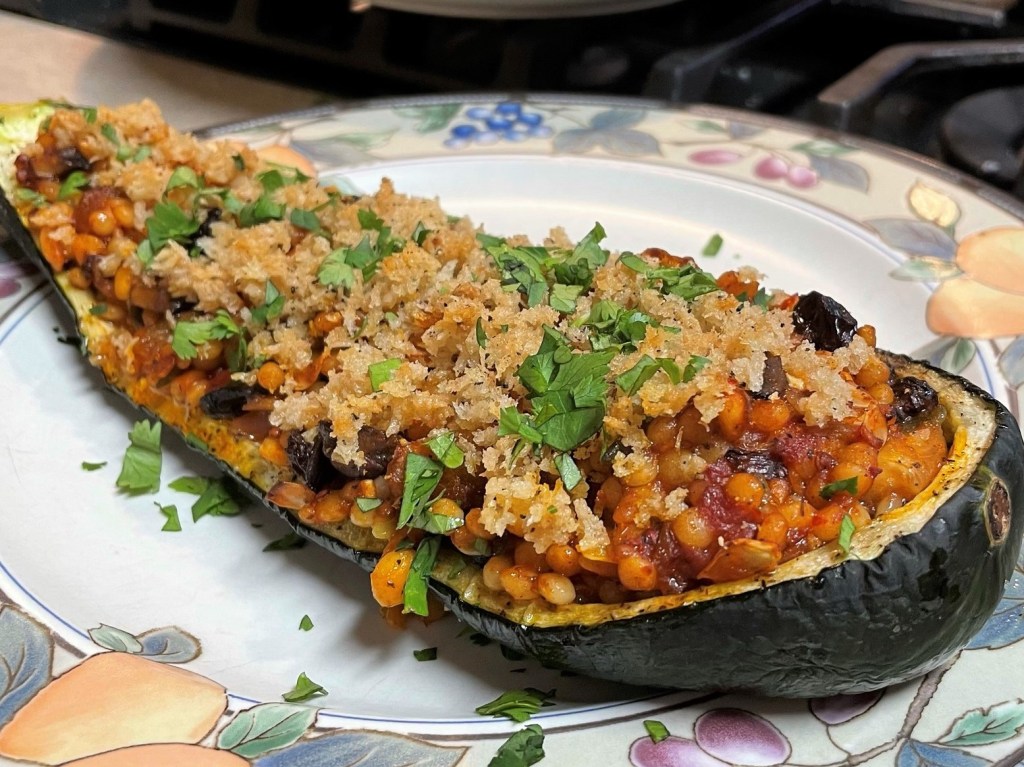
  8. Spoon the couscous filling into the zucchini shells. Top with buttered panko crumbs. Return the zucchini boats to the oven and bake until crumbs are browned and crispy. Serve with chopped parsley sprinkled on top.

Delicious and satisfying!