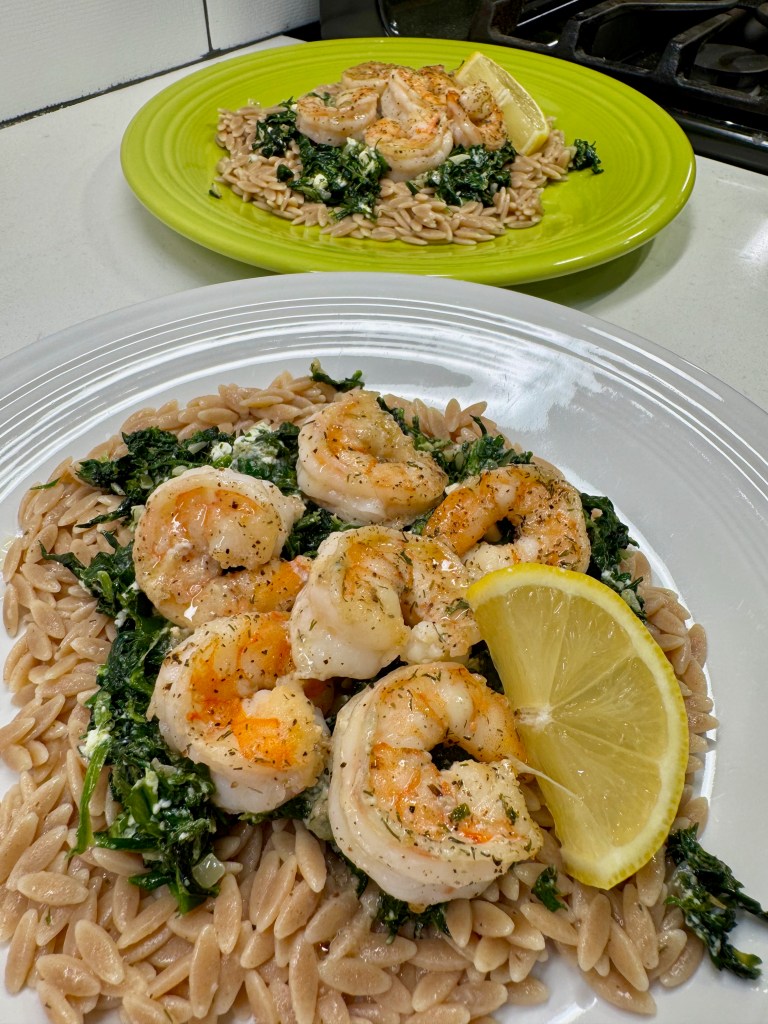
Spanakopita Scampi

Thank goodness for frozen shrimp. I mean this sincerely, as there are many times when life is too busy and even the best-laid plans can’t be pulled together in time to feed the hungry faces in my house. 

We have a weekly ritual here that begins around Sunday morning, when my husband, Les, and I sit down with our respective calendars, the long-range forecast displayed on one of our phones, and we do our best to map out what we are going to do about dinner in the week ahead. This includes a quick inventory of what we already have in the fridge and freezer, consideration of what nights might be good for cooking outdoors, acknowledgement of whether one of us has a hellish workday that week, and— last but not least— how much time we can allot to said meals and which of us will be cooking them.  

It’s a lot of moving parts and sometimes, our meal game falls apart and we need to punt. 

On such an occasion recently, I postponed a more-involved food plan in favor of this ad hoc dish, which turned out so good that I wrote down the ingredients to share it here. It’s something of a mashup of Italian shrimp scampi and Greek spanakopita, and it met all the requirements for a busy weeknight: quick, easy, flavorful and relatively healthful. 

Not too shabby for a last minute improvisation.

What ingredients do you need for spanakopita scampi?

My dish features peeled shrimp (fresh or thawed), garlic and plenty of olive oil, onions, spinach, feta, lemon, parsley and dill. And though I had both angel hair and linguine pastas— two options I’d typically reach for when making scampi, I decided to use the whole wheat orzo that was feeling ignored in the pantry. Orzo is a staple pantry ingredient in Greek cuisine, so it seemed a logical stand in for the spanakopita element of the dish, but almost any small pasta shape you like would work fine.

The most time-consuming part of this meal was thawing and prepping the shrimp, a task that I almost always hand off to Les’s capable hands. If you’re in a hurry, purchase shrimp that is already peeled and deveined to save valuable time. 

How to make spanakopita scampi

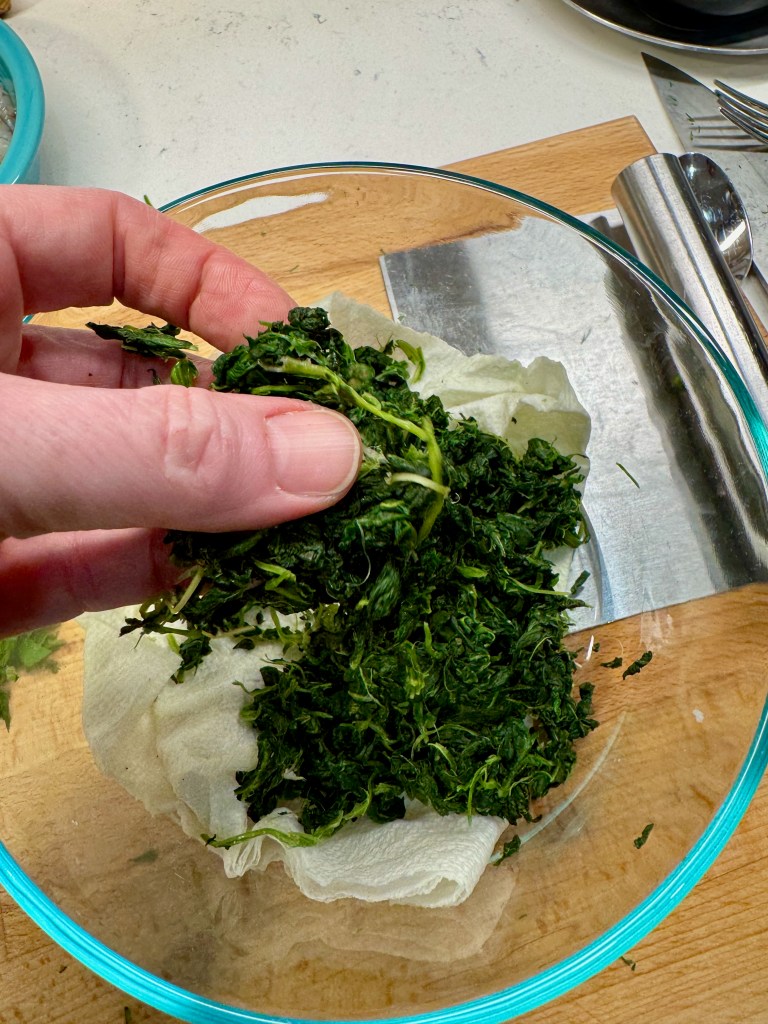
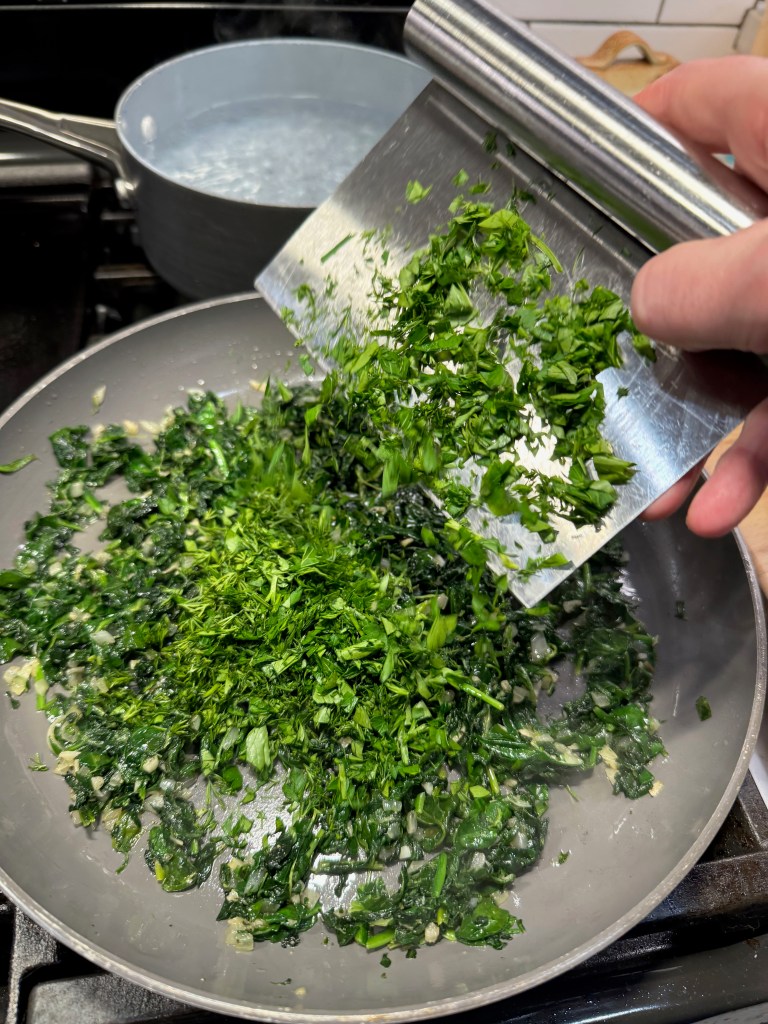
Everything else comes together quickly, beginning with a patient poaching of minced garlic in a large sauté pan. This should be done at a very low temperature, with almost no bubbles evident, so that you don’t burn the garlic. After about 10 minutes, increase the heat and add the diced onions, tossing to soften them in the warm, garlicky oil. Add the chopped spinach (I didn’t have enough so I supplemented with some thawed and squeezed frozen spinach), and then the fresh herbs.
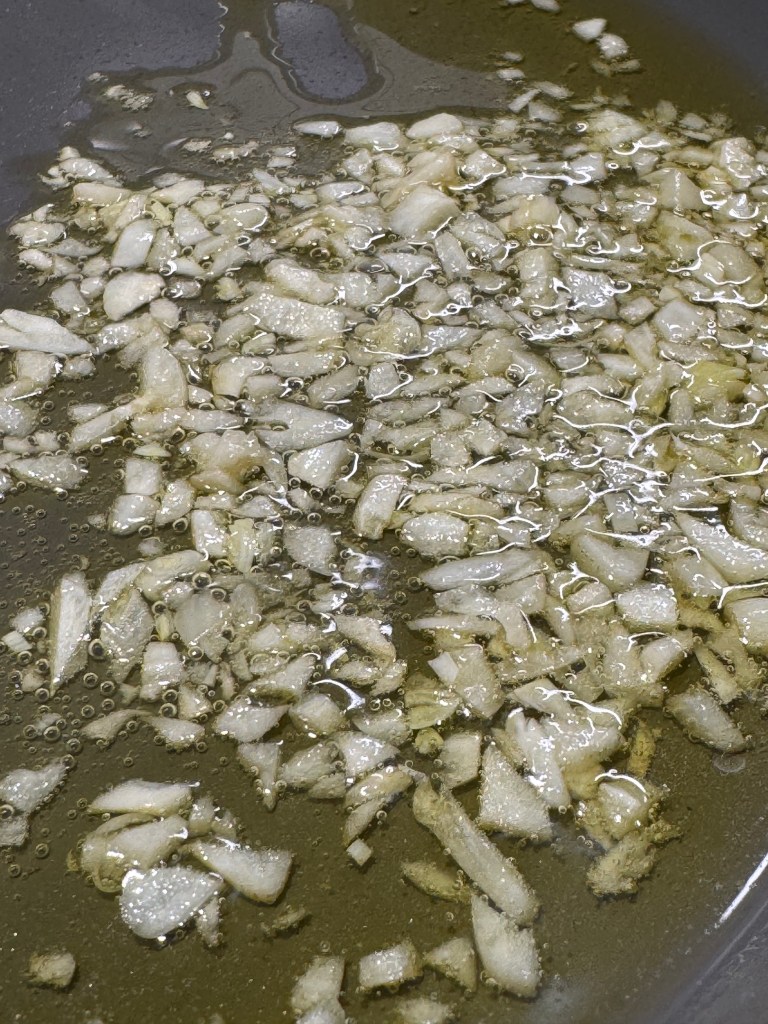
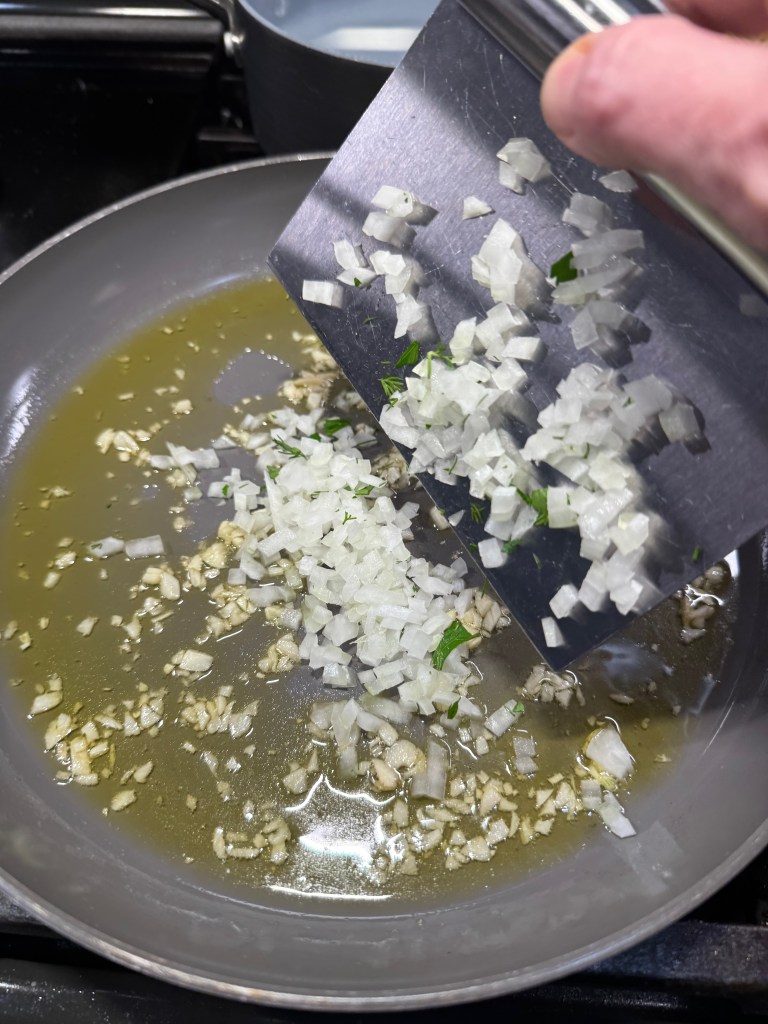
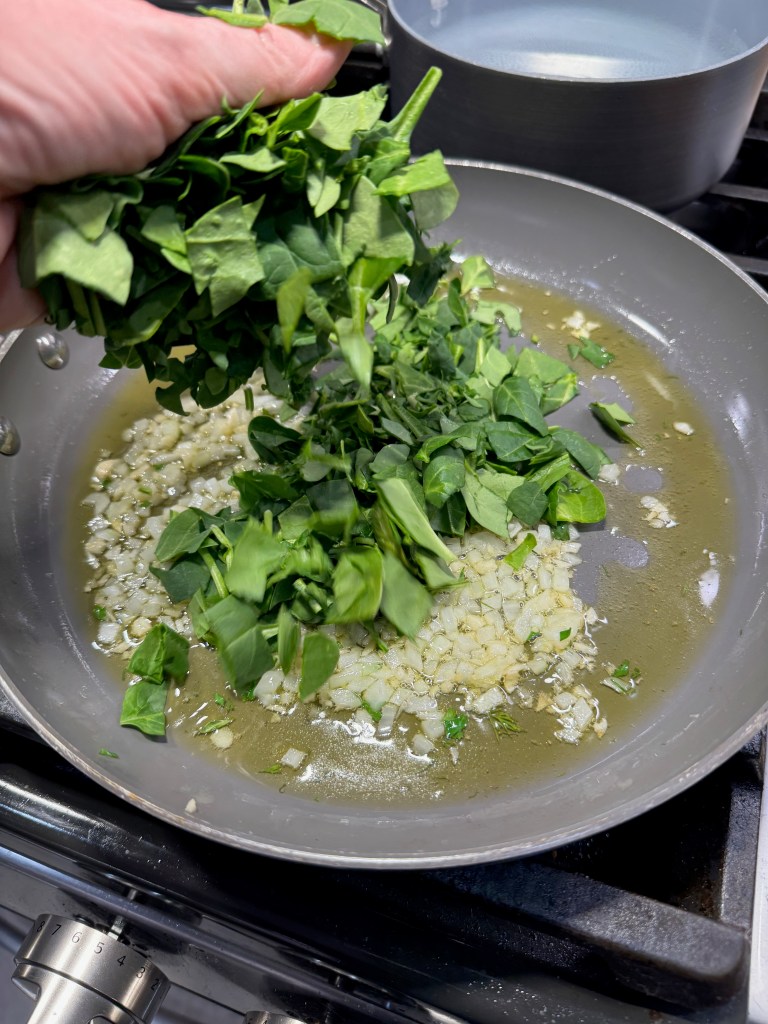
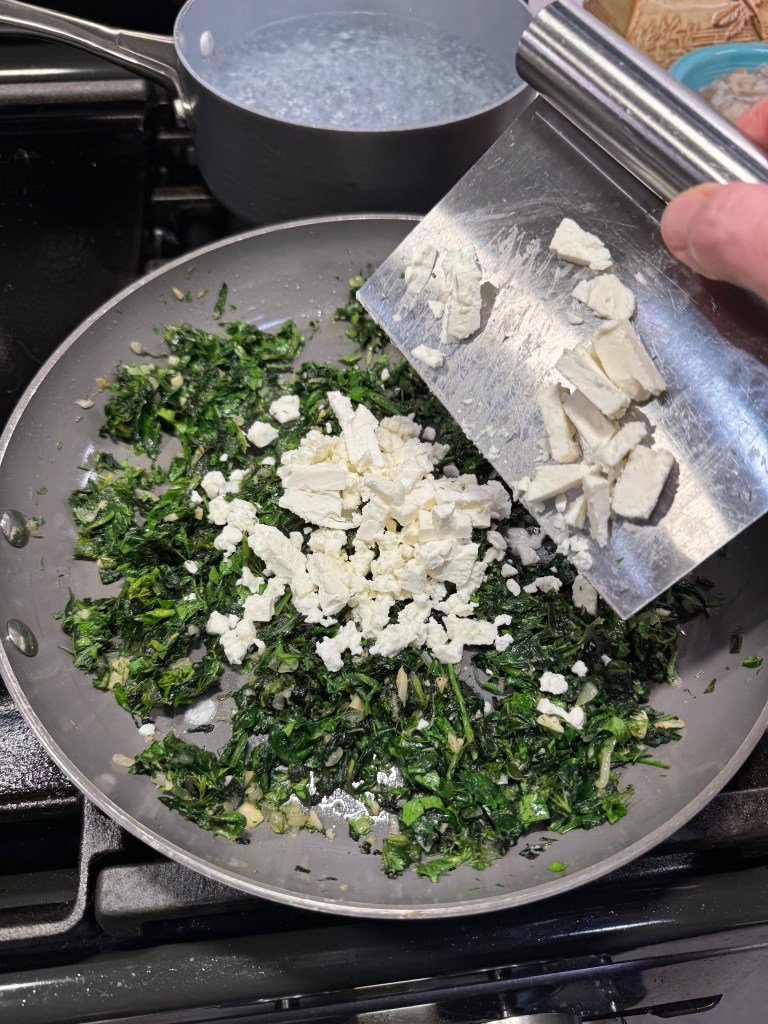
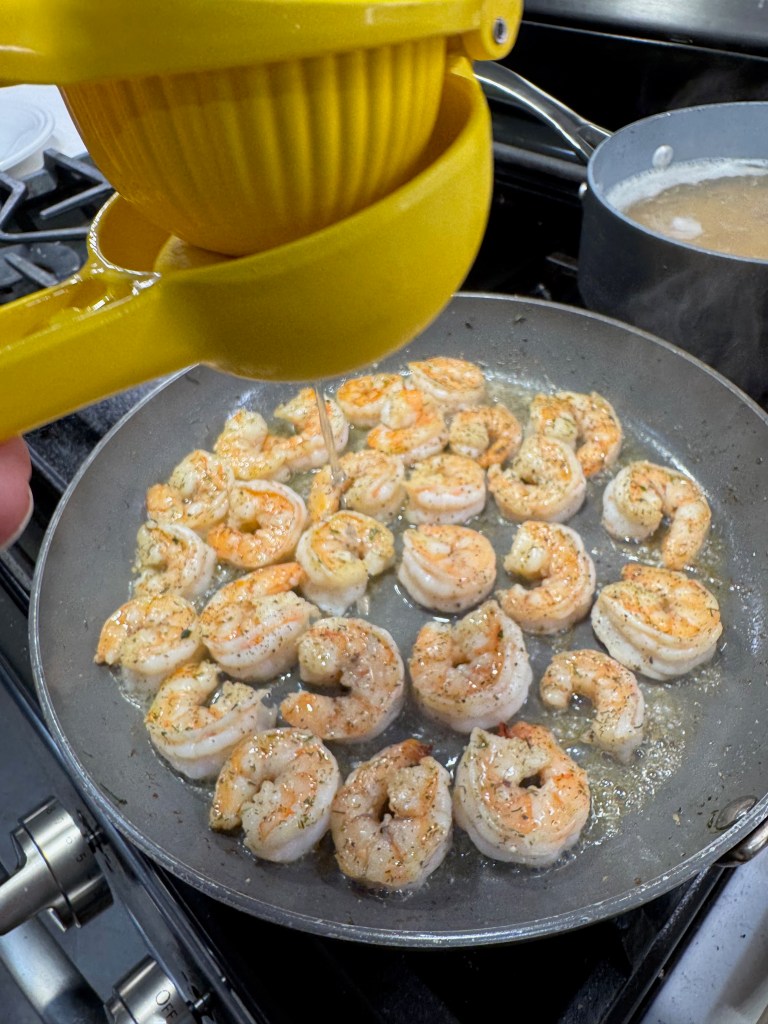
Get the orzo going and toss the feta into the spinach mixture, then transfer that to a bowl and keep it warm. Heat some more olive oil in the same pan, or a bit of butter (or both), and cook the shrimp until it’s just barely a pink/coral color. Always use a delicate touch when cooking shrimp, as it only takes one extra minute to overdo it. My method is to place the shrimp into the hot pan one at a time in concentric circles, and by the time the last shrimp goes in, the first is ready to turn. If you can see a bit of color on the inside curl of the shrimp, that’s your sign to turn it over and cook the other side. The smaller ones will usually cook faster, and if your burner has a hot spot (as mine does), then check the ones there first.
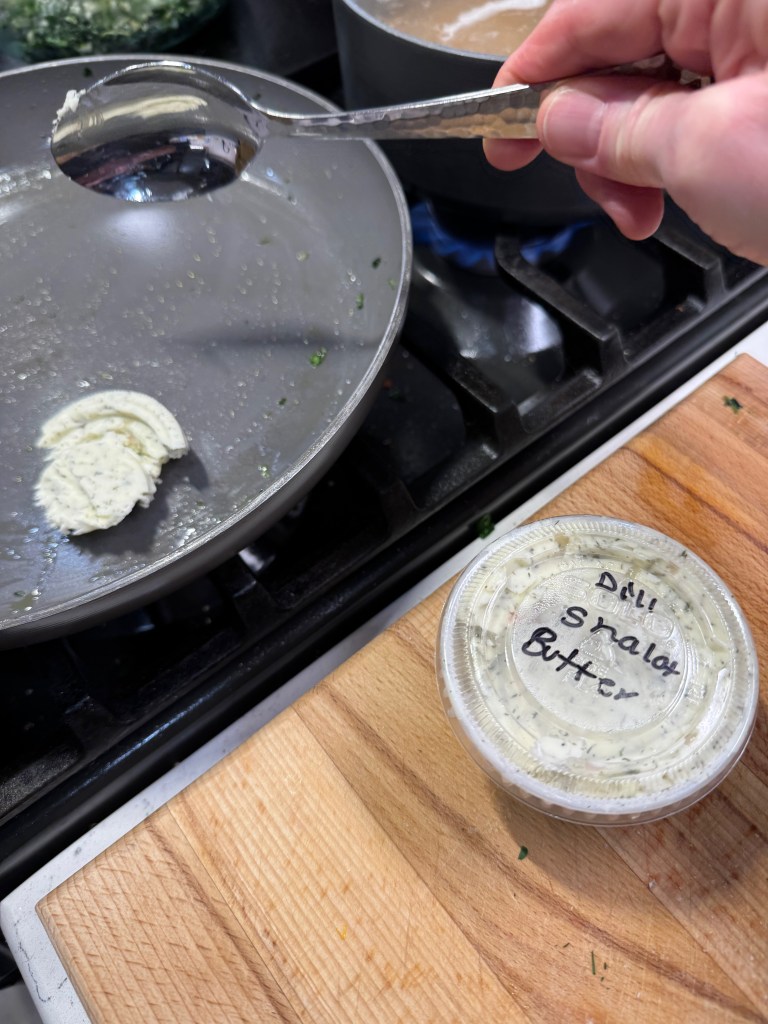

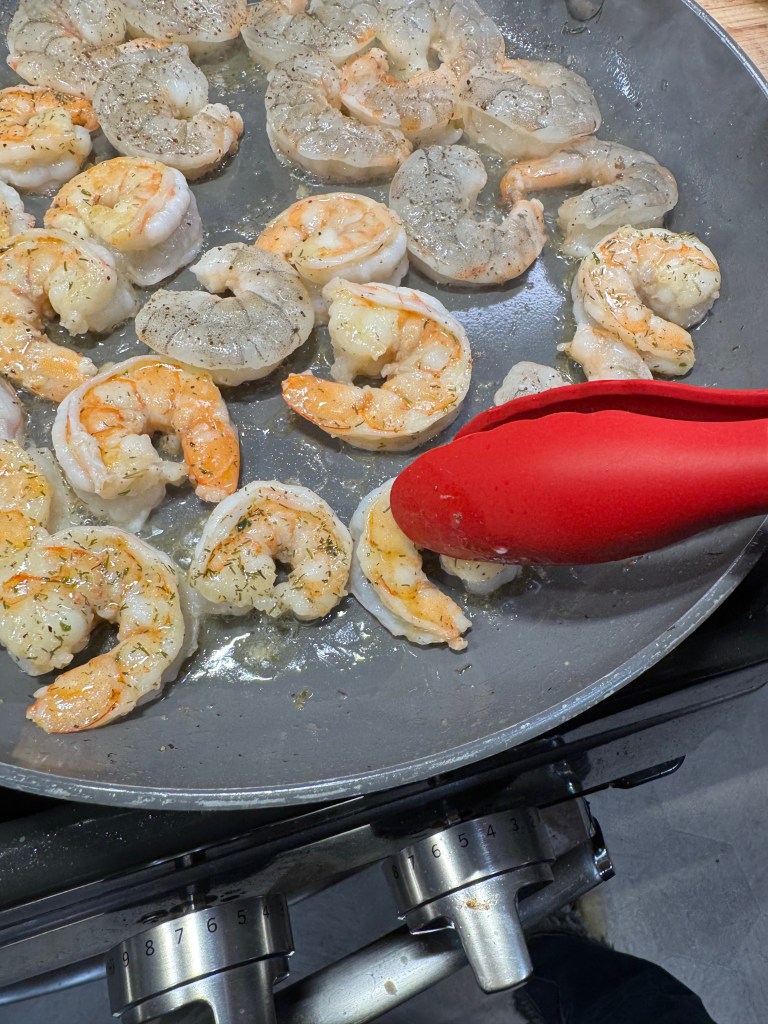
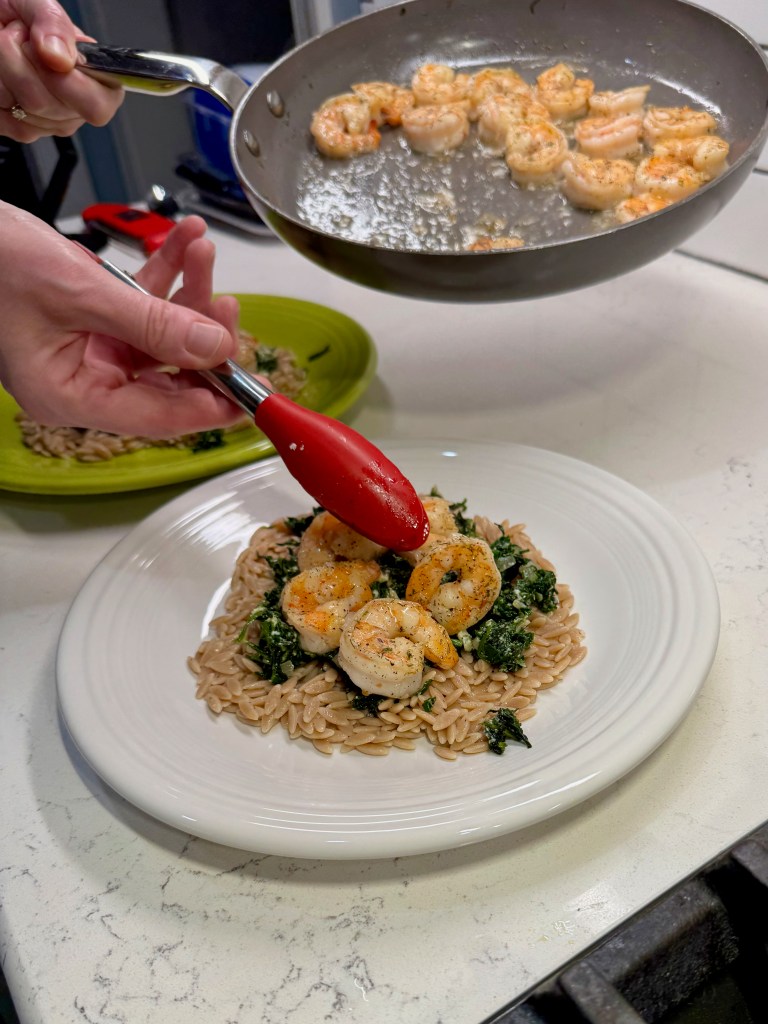
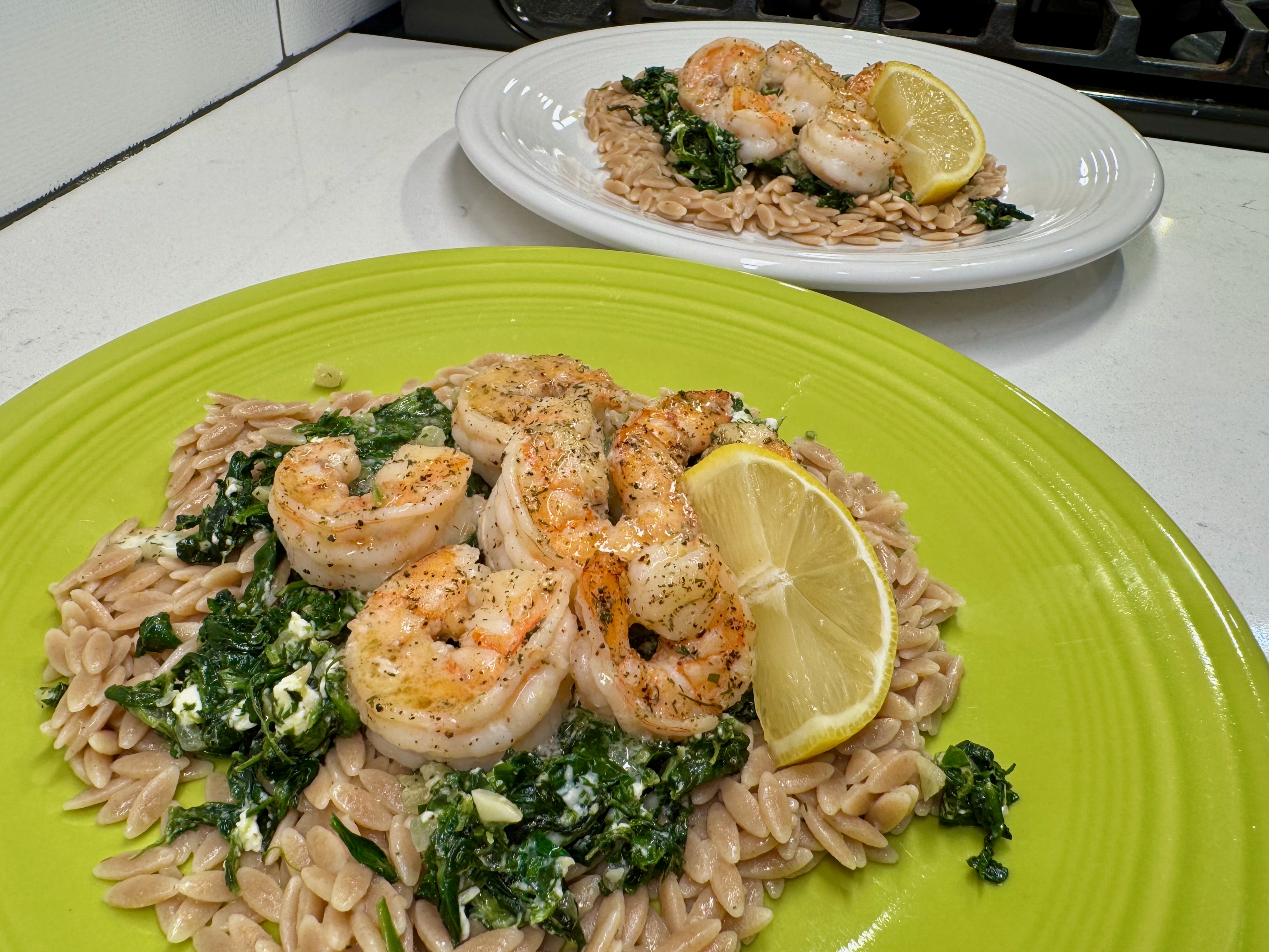
When all the shrimp have been turned over, squeeze fresh lemon over them and turn off the heat. Drain the orzo and toss it in a bit more of butter. Plate it up with the warm spinach-feta mixture and shrimp. Enjoy!

Spanakopita Scampi
  • Servings: 4
  • Difficulty: Average
  • Print

This is a quick and easy weeknight dinner that combines two of my all-time favorite Mediterranean classics. If you don't have orzo, use any kind of small pasta shape that you have on hand.


Ingredients

  • 2 Tbsp. extra virgin olive oil (possibly more for cooking shrimp)
  • 2 cloves garlic, minced
  • 1/3 cup diced sweet or yellow onion
  • Kosher salt and freshly ground black pepper
  • 4 fat handfuls baby spinach leaves, rough chopped* (see notes)
  • A handful each of fresh dill and flat-leaf parsley, chopped
  • 1/3 cup feta, drained and cubed or crumbled
  • 1 Tbsp. butter* (see notes)
  • 1 pound fresh wild-caught shrimp, peeled and deveined
  • Juice of 1/2 fresh lemon
  • Cooked orzo and fresh lemon slices, for serving

Note: Fresh spinach is best, but if you don’t have enough, you can supplement with some frozen chopped spinach. Microwave it in a glass dish until thawed, then press out as much water as possible and add it to the onions after they’re already softened. Proceed with the rest of the recipe as usual.

I was fortunate to have a bit of “dill and shallot” compound butter left over from another recipe, and it was perfect for cooking the shrimp! If using regular butter or oil, consider adding a few shakes of dried dill weed at this step, or reserve a bit of fresh dill for sprinkling over the top of the finished dish.

Directions

  1. Please a large skillet over low heat and add two generous swirls of olive oil with the garlic. Cook this very low and slow, with almost no bubbling action in the pan, so that the garlic become very soft and fragrant. It should take about 10 minutes, and this mellows the flavor of the garlic. Too much heat will give the garlic a burned and acrid taste.
  2. When the garlic is softened, increase the heat to medium and add the onions. Season with salt and pepper and toss to sauté until onions are translucent. Add spinach by the handful, tossing until each handful has wilted before adding the next. If supplementing with frozen spinach, wait until the fresh spinach has fully cooked.
  3. Add fresh herbs and toss for about 30 seconds, then add feta and remove the pan from heat. You may either transfer this mixture to a bowl (keep it warm) and use the same pan for the shrimp, or use a second pan for the shrimp.
  4. Add butter (or oil) to the skillet over medium heat. Place shrimp down in the hot butter and season with salt and pepper, and a quick shake of dried dill if you have it. Watch the shrimp closely, and turn them when you notice the color changing on the inside curl. Depending on the size of your shrimp, two to three minutes total should do it. After the shrimp has cooked on the second side, squeeze the fresh lemon juice into the pan and toss to coat.
  5. Toss cooked orzo with a bit of butter or oil, and serve it with the spinach mixture and shrimp piled on top. Add a lemon slice on the side for one last burst of freshness.


Shrimp Scampi Pizza

There is a special meal tradition at our house on New Year’s Eve. Our annual celebration of fancy pizzas began in 2018, right around the time that I was working to perfect my sourdough pizza crust. Les had shared his memories of the amazing White Clam Pizza he enjoyed while living near New Haven, Connecticut, and we decided to try one at home for New Year’s Eve. It turned out so good that we repeated it the next two years, and in 2020, we added a second specialty flavor to our repertoire— the Oysters Rockefeller Pizza. Last year, we tweaked tradition yet again, trading in the white clam pie with this creative twist on the classic Italian pasta dish, shrimp scampi. Why wouldn’t the flavors of garlic, shrimp, parsley and lemon be amazing on a blistered sourdough crust? Turns out, they most definitely are.


As with most of my specialty pizzas, this one takes a little time to prepare, but the good news is that you’ll do most of it in advance so that you have plenty of time to relax with a cocktail or mingle with guests (or both). There are three components to this pizza, and I’ll break down the details in photos ahead of the click-to-print recipe card at the end. You’re going to love this pizza!

My method for pizza baking

First things first, we bake all our pizzas in a regular home oven, preheated to 550° F with a baking steel on the rack. This combination of slab steel and maximum temperature helps us replicate the effect of a brick oven. If you don’t have a steel, you can get similar results with a pizza stone, but be sure to follow the manufacturer’s guidelines so that you don’t accidentally crack your stone under this extreme heat. With this method, you also need a pizza peel, which looks like a long-handled paddle. It’s helpful for easy transfer of the pizza into and out of the oven.

Our pizza stone doesn’t get much action since we invested in the baking steel.
Whichever you choose, you’ll need a peel for easy transfer of the pizza.

About the pizza dough

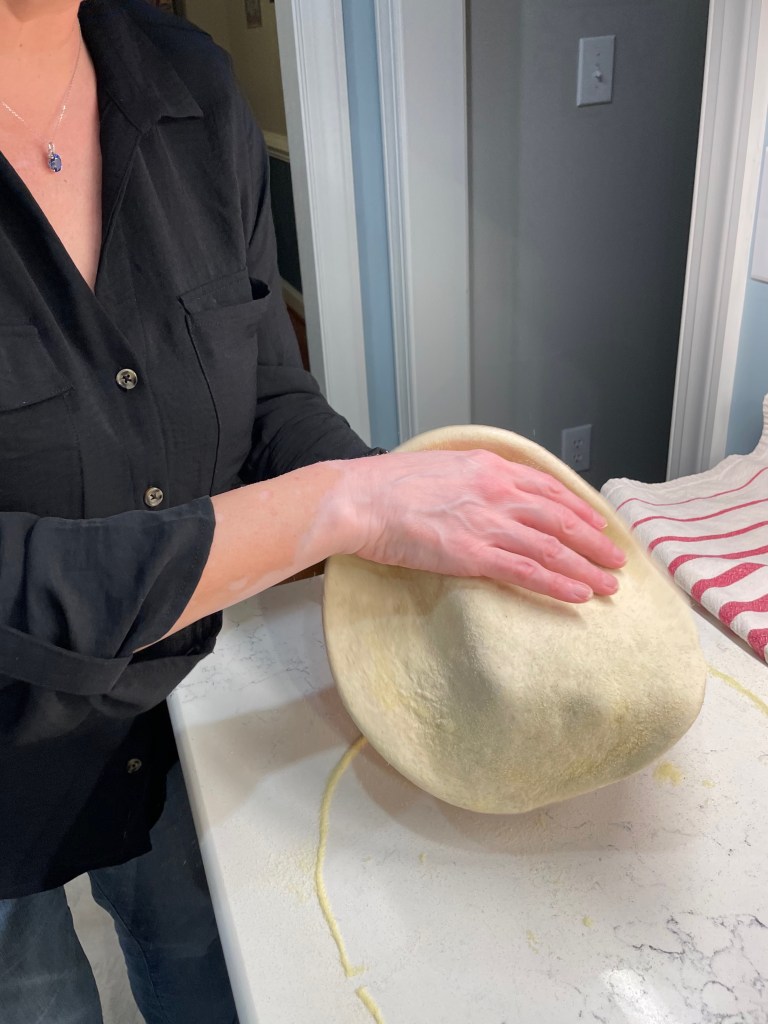
Second, my pizza dough is homemade from sourdough starter, and the shaping method is crucial to the kind of texture you see in my photos. We never use a rolling pin on the dough, as this deflates all the lovely air pockets. If you aren’t on the sourdough train, it’s no problem— you can use a yeasted dough or even a store-bought dough if you have a favorite that you trust. The link for my pizza dough also includes a yeast option, if you want to make your own without sourdough. Bring the dough to room temperature when you’re ready to bake.


Cheez, Louise

Traditional scampi— the kind that’s piled onto a dome of angel hair— would not have any kind of cheese. But for my pizza, which does not have a base sauce, I’ve opted to scatter a bit of freshly grated mozzarella over the dough so that the shrimp curls have something to rest on. This is the firm variety of mozz, not the soft variety that is common for Caprese salad. Skip the pre-shredded stuff from the grocery store, as it is packed with an anti-caking agent that also prevents even melting.

My recipe also calls for parm-romano blend cheese, which we make in bulk at home because we use so darn much of it. A good Italian-made Parmesan is acceptable here, but again, do not use the pre-grated stuff. A special occasion pizza deserves the freshest cheese, and a few flicks of a microplane grater will bring big results, I promise.

The star of the show— shrimp

Finally, choose the right shrimp and for the love of flavor, don’t use pre-cooked. Choose fresh large shrimp— somewhere in the 20 pieces-per-pound range is just right— and buy them with the shells and tails on, as you’ll use those parts for the scampi sauce. Be sure to remove the “vein” from the curled back of the shrimp, and take note of the steps below for marinating them a few minutes before baking.

Let’s get cooking!

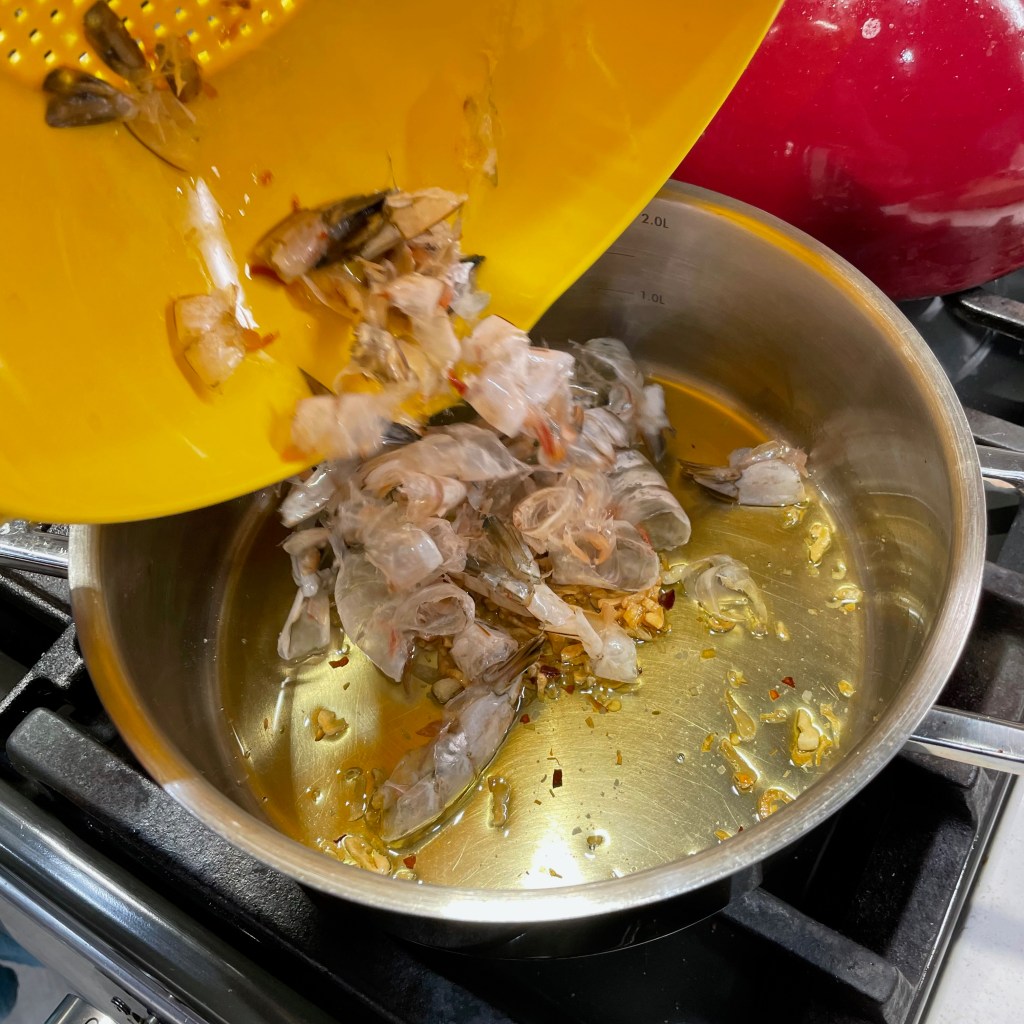
The sauce happens in two stages, beginning with what will seem like a ton of garlic and the parts and pieces that remain after you clean and set aside the shrimp. You’ll sauté the garlic at very low temperature for about 20 minutes, and then you’ll toss in the shrimp shells and tails for a gentle braising in dry vermouth. 


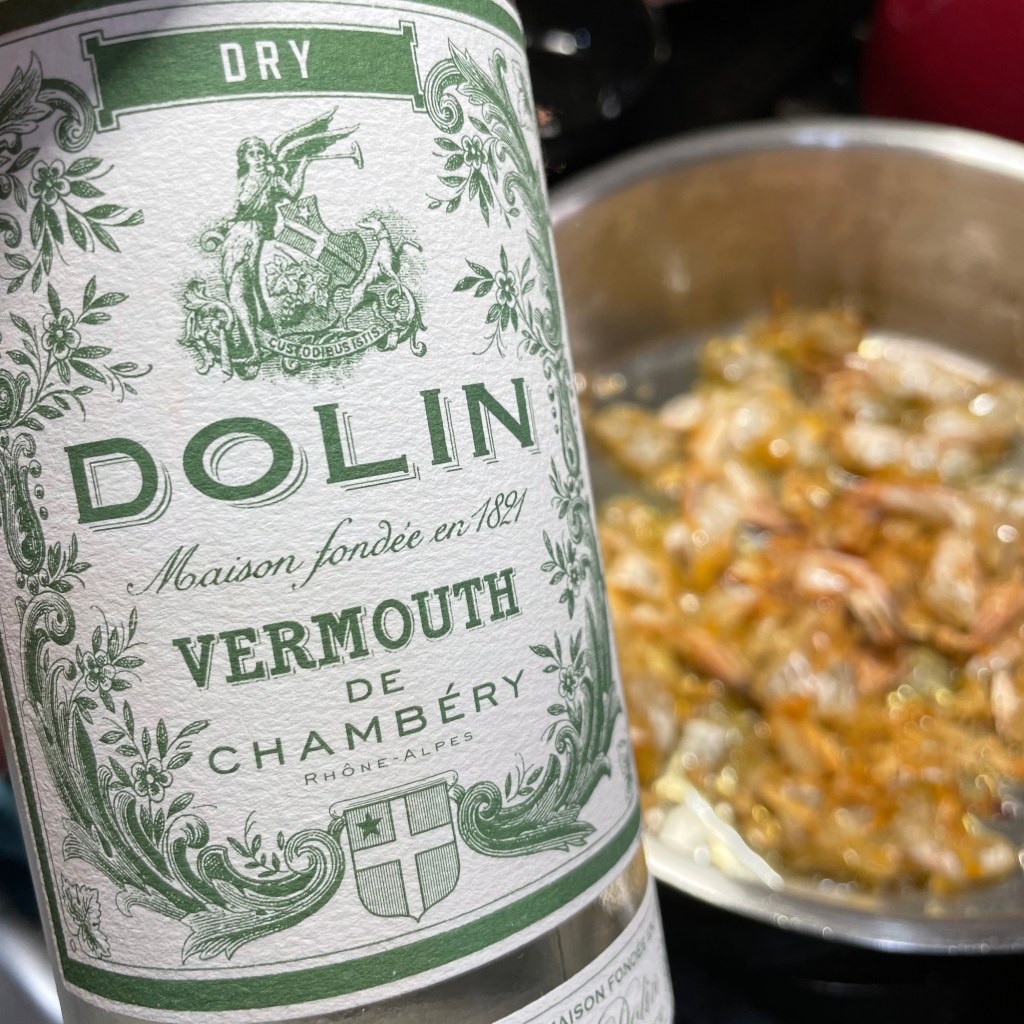
Vermouth— one of the primary ingredients in a martini— is what I always have open, but you are welcome to use a dry white wine such as pinot grigio if that’s more your style. Either way, add only enough to cover the bottom of the pot, and be sure that each shell is at least partially submerged. This will go for about 30 minutes at low heat, until most of the liquid has evaporated. Strain out and discard the solids, and you’ll be left with a small amount of deeply flavored, shrimpy-garlicky oil.


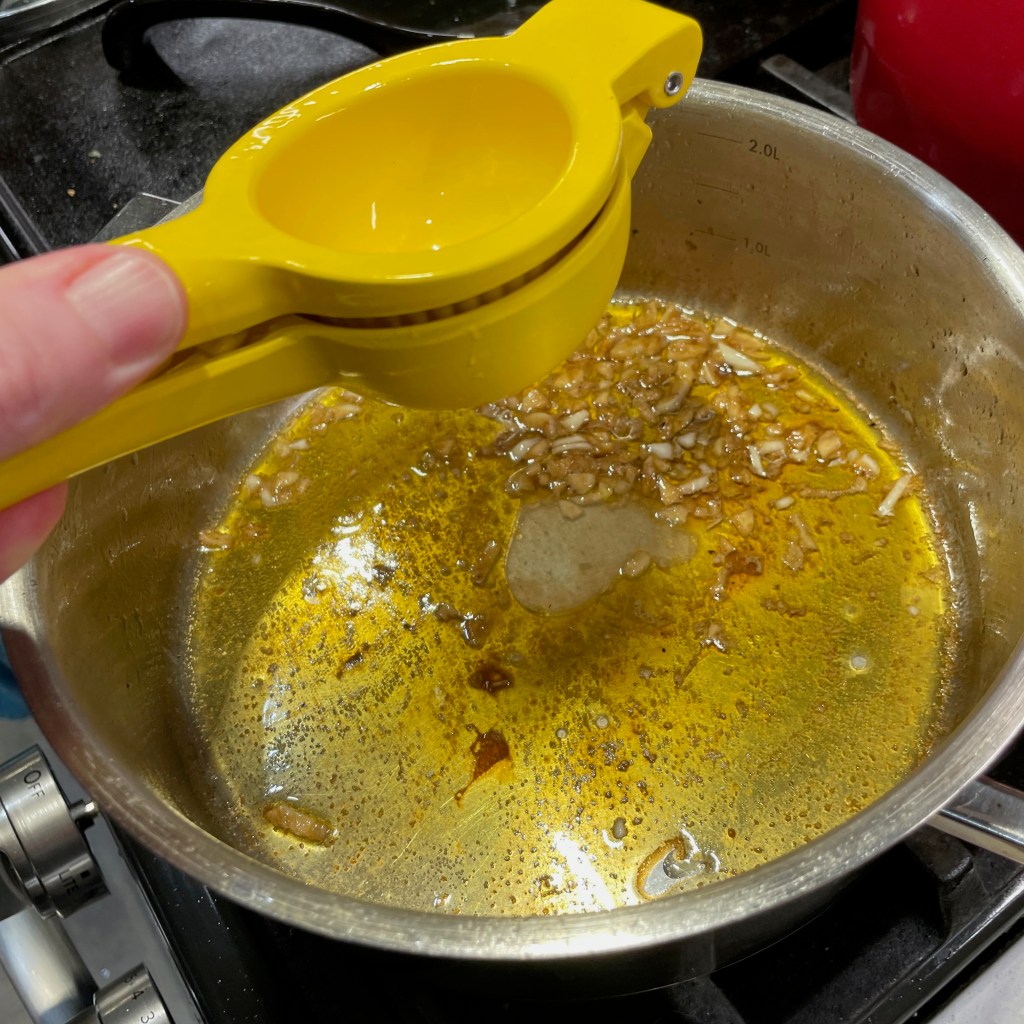
Next, transfer the strained base back to the pan over medium heat and add more minced garlic to it. Squeeze in the juice of half a lemon and simmer this until the garlic is softened (don’t let it burn!), and then turn off the heat. Add finely chopped parsley and swirl in a tablespoon of butter. Transfer to a straight-sided jar and use an immersion blender to whiz this mixture up into a smooth, garlicky butter sauce that you’ll drizzle onto the pizza when it’s hot from the oven. If you’re working ahead, this can be refrigerated and then brought to room temperature just before pizza baking.


Marinate the shrimp

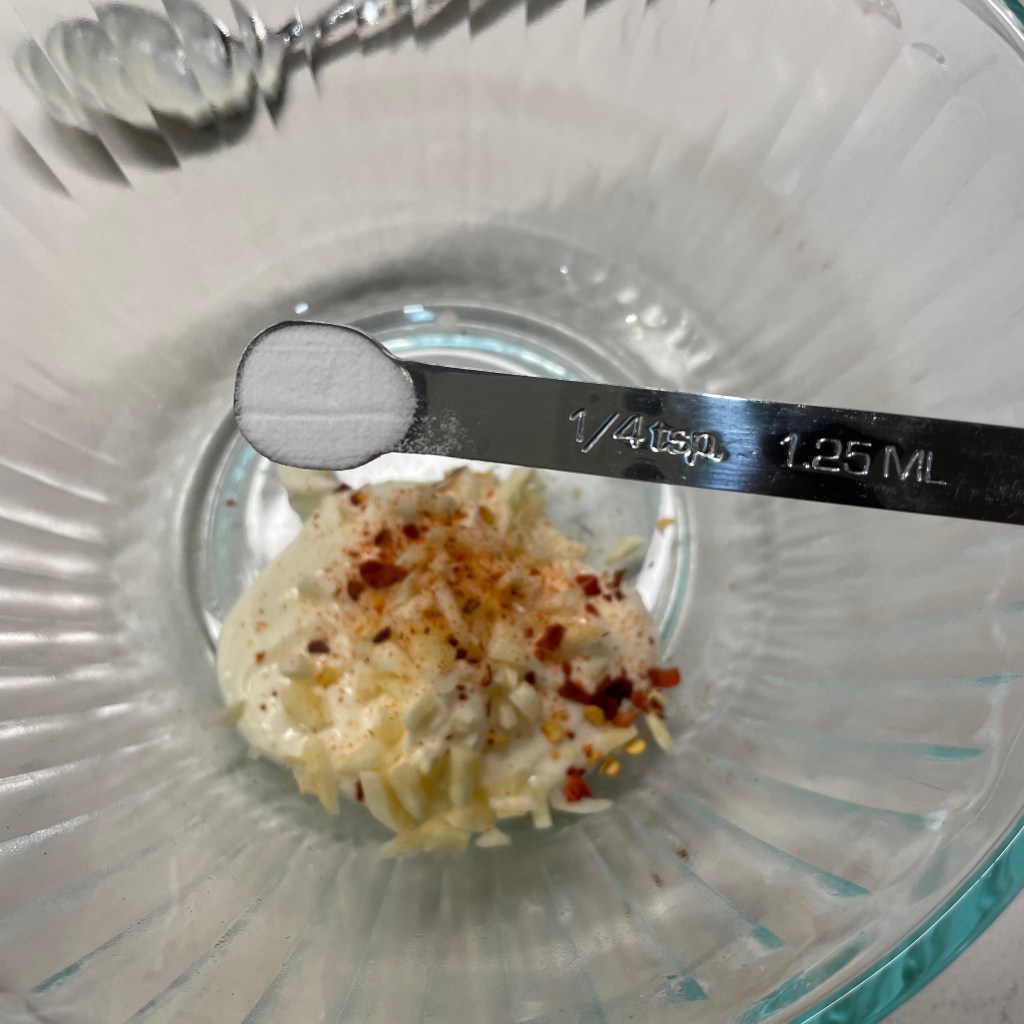
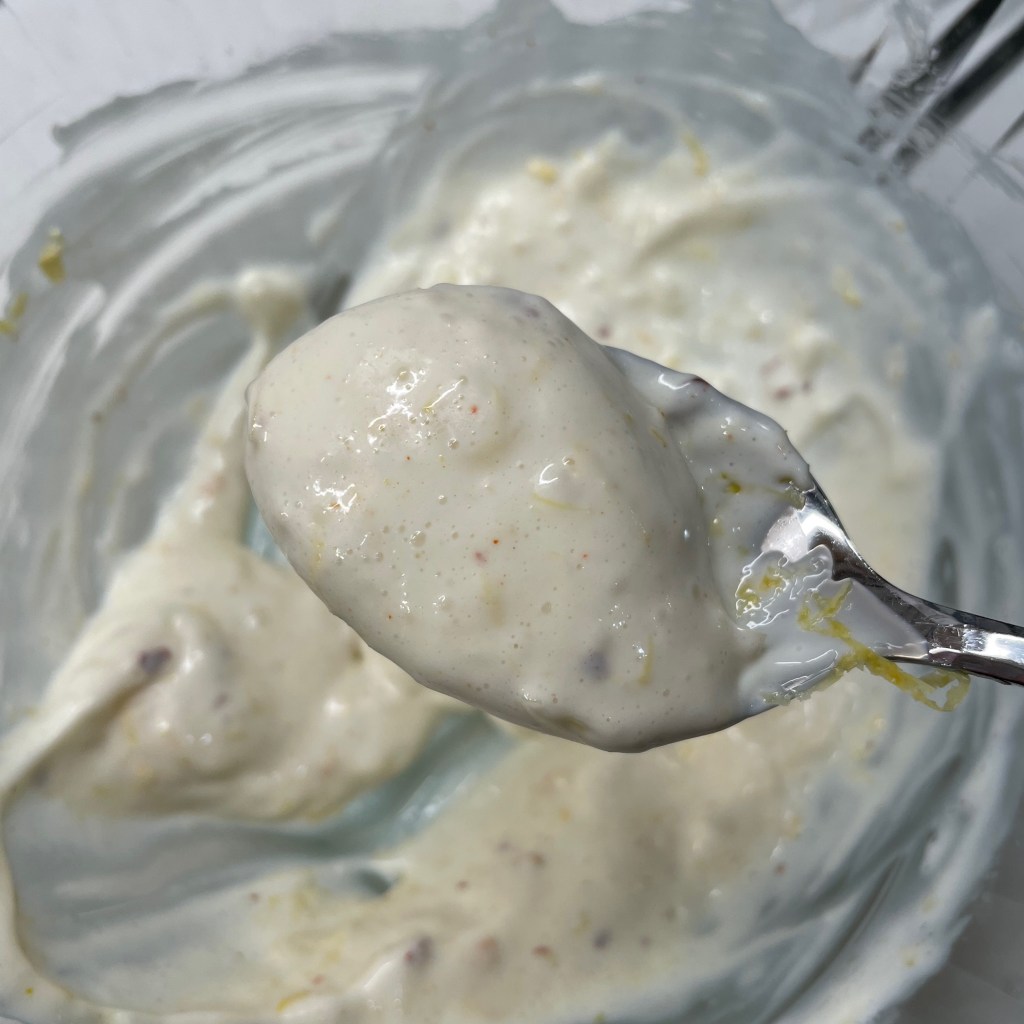
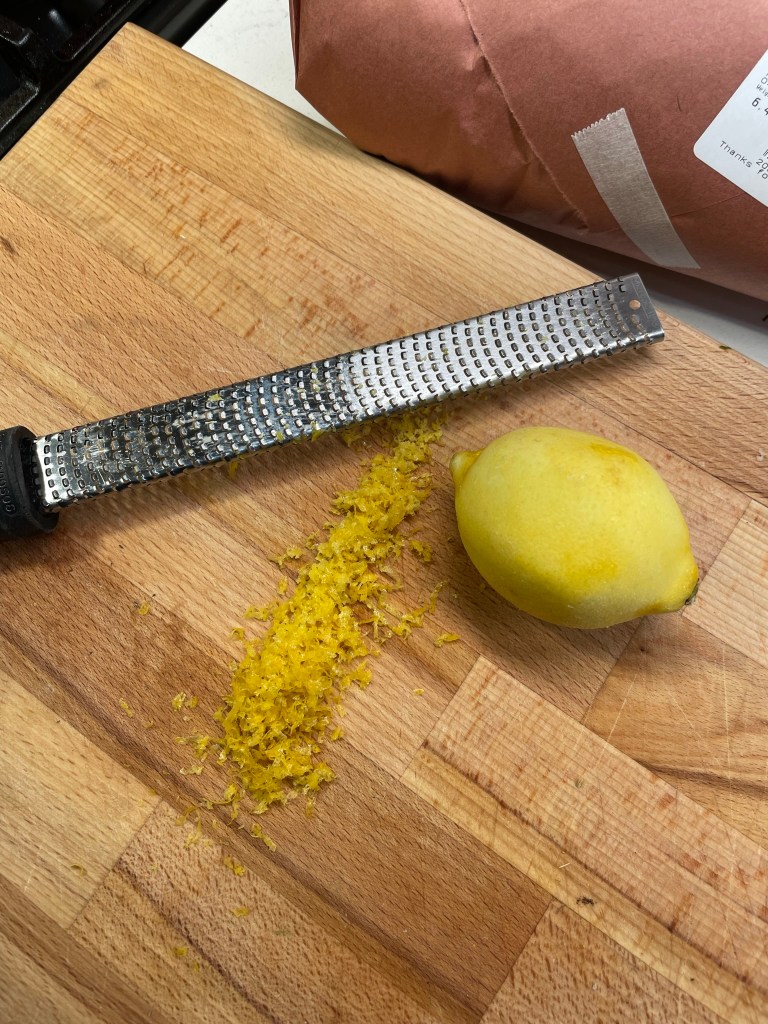
Now, do you remember the temperature this pizza will bake? Five hundred, fifty degrees! Under such extremes, the delicate shrimp needs a little protection, and I’m treating it with the mayonnaise trick I learned from rock star chef Kenji Lopéz-Alt. There is yet another clove of minced garlic in here, plus the zest of a small lemon and a shake of red pepper flakes. And then, the magic ingredient— baking soda! You can read all about my discovery of this technique here, if you wish, but suffice to say that it transforms the marinade to flavor the shrimp and protect it from the high heat. Twenty minutes will do it, but wait until just before pizza time for this step.


Time to build the pizza!

Prep a pizza peel by rubbing in flour and then medium grind cornmeal, and hand-shape the pizza dough into a 14-inch round. Drizzle it with olive oil and season with salt and pepper. Next, scatter a sparse amount of the freshly grated mozzarella onto the dough as a base for the shrimp, and a quick shake of red pepper flakes. Arrange the shrimp (including that mayo marinade) onto the pizza. Give the whole thing a dusting of parm-romano cheese and slide it into the oven. Set a timer for 6 minutes (or longer, if using a pizza stone).


The preheated baking steel retains a great deal of heat, and the high temp of the oven ensures that the crust as well as the toppings will be perfectly browned in this time. Drizzle on the garlic-shrimp butter sauce, toss on more fresh parsley and one more dose of parm-romano blend cheese.


The cheese and garlic butter will melt into the pizza, creating a perfect bite of tender shrimp, intensely flavored butter and garlicky goodness! This will be one of the two pizzas on our table this year as we count down to 2024. 

Now, care to guess what other pizza I’ll be trying this New Year’s Eve? Hint: it’s more seafood. Stay tuned! 😉

Shrimp Scampi Pizza

  • Servings: 14-inch pizza
  • Difficulty: Intermediate
  • Print

Don't let the number of steps scare you away from making this insanely delicious pizza. None of them are difficult, and you'll be greatly rewarded for your effort!


Ingredients

  • 1/4 cup extra virgin olive oil
  • 5 to 6 cloves fresh garlic, peeled and sliced thin
  • Kosher salt
  • A few shakes red pepper flakes
  • Shells and tails of 3/4 pound uncooked shrimp
  • 1/4 cup dry white wine (or vermouth, as I prefer)
  • 2 additional cloves garlic, minced
  • Juice of 1/2 lemon
  • 2 Tbsp. fresh parsley leaves, finely chopped
  • 1 Tbsp. butter

Notes: Don’t skimp on the garlic in this component! It plays a prominent role in scampi, and though it may seem like too much, you’ll end up straining most of it out of the sauce base, so use enough to give it plenty of flavor.

Directions

  1. Add olive oil to a heavy-bottomed pot placed over very low heat. Add first amount of garlic, salt and red pepper flakes and steep for about 20 minutes. Watch this carefully to be sure the garlic doesn’t burn; it should just barely simmer around the edges of the garlic.
  2. Add shrimp shells and tails to the pot and toss until shells begin to turn pink. Raise heat slightly to medium-low. Add dry vermouth and simmer until liquid is mostly evaporated. Cool to room temperature and then strain out solids through a mesh strainer.
  3. Wipe out the pot and add strained shrimp stock, minced garlic and lemon juice. Cook over low heat until garlic softens. Turn off heat, stir in parsley and whisk in butter.
  4. Transfer sauce to a straight-sided jar and use an immersion blender to puree until smooth. Set aside or refrigerate and bring to room temperature before baking pizza.

Next, marinate the shrimp. If you make the marinade ahead, wait until last minute to add the baking soda.

Ingredients

  • 1/3 cup mayonnaise
  • 1 clove garlic, peeled and minced
  • 1 or 2 shakes red pepper flakes
  • 1/4 tsp. baking soda
  • Zest of 1 small lemon
  • 3/4 pound wild-caught shrimp, peeled and deveined

Directions

  1. Combine mayo, garlic, red pepper and baking soda in a bowl large enough to hold the shrimp.
  2. Stir in lemon zest and toss shrimp in the mixture. Set aside for 20 minutes before assembling the pizza.

Time to bake: The oven should be preheated to 550° F for one hour with pizza steel placed about 8 inches from the top heating element of the oven. Dust pizza peel with flour and medium grind corn meal for easy transfer of the pizza to and from the oven. If you don’t have a peel, use the back of a cookie sheet to slide the pizza in, and grab the crust with tongs to pull it out when it’s finished.

Ingredients

  • 11 oz. pizza dough ball, at room temperature
  • Drizzle of olive oil
  • Salt and pepper
  • 1/3 cup freshly shredded hard mozzarella
  • A few shakes red pepper flakes
  • 2 Tbsp. parm-romano blend cheese
  • Additional parm-romano and chopped Italian parsley (for final garnish)

Directions

  1. Shape dough by hand into a 14-inch round and place it on prepared peel. Drizzle oil all over dough and give it a quick seasoning of salt and pepper.
  2. Scatter mozzarella over pizza and shake on red pepper flakes. Arrange shrimp over mozzarella. Sprinkle parm-romano cheese all over pizza.
  3. Slide pizza onto hot steel and bake for 6 minutes. Remove from oven and spoon over the garlic sauce, concentrating on the shrimp (don’t worry, it will melt and ooze everywhere). Sprinkle with parsley and additional parm-romano cheese. Serve immediately.


Porchetta

I woke up this morning, fully aware of Autumn. I did not need the calendar to tell me that it has officially begun; the weather spells it out quite clearly— gentle rain from the mid-season tropical system moving up our coast a few hours away, cooler temperatures and a stillness that I haven’t witnessed since I’m not sure when. Even the cicadas, which North Carolina sees and hears every summer, have gone about their business.
This is my favorite time of year, and the gears in my mind are churning out visions of stews and soups and homemade breads and all-day roasts. I tolerate the blistering heat of these southern summers only for the joy of autumn, and it should come as no surprise that the foods are my favorite thing. This is the start of Sunday Supper season!

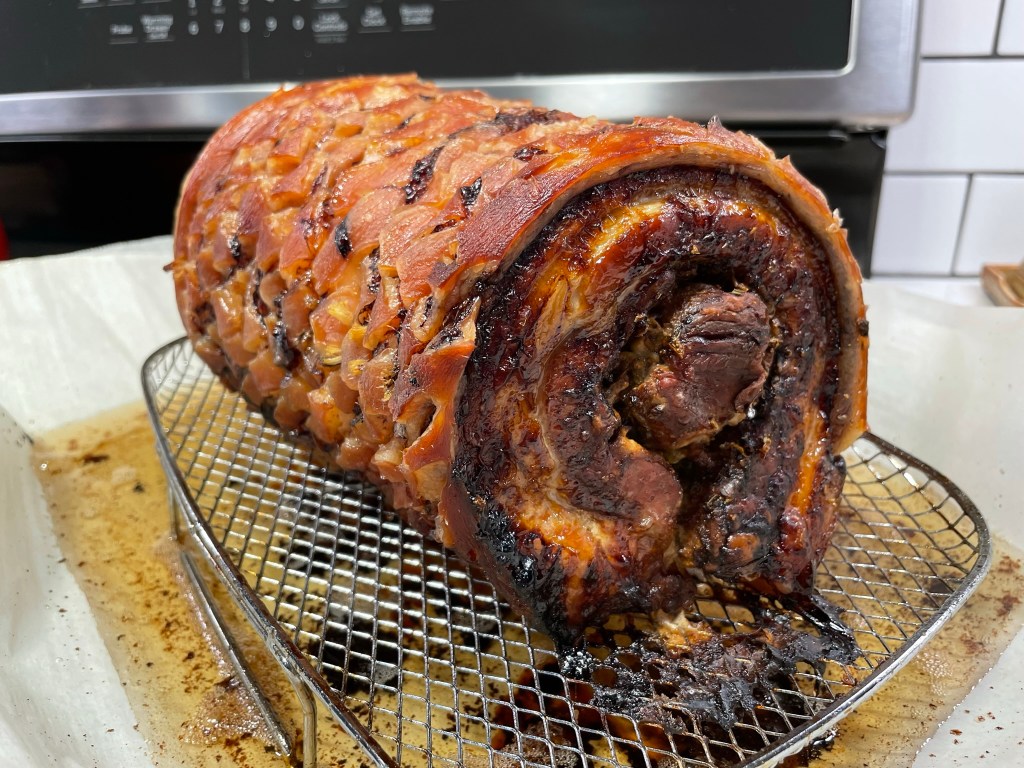
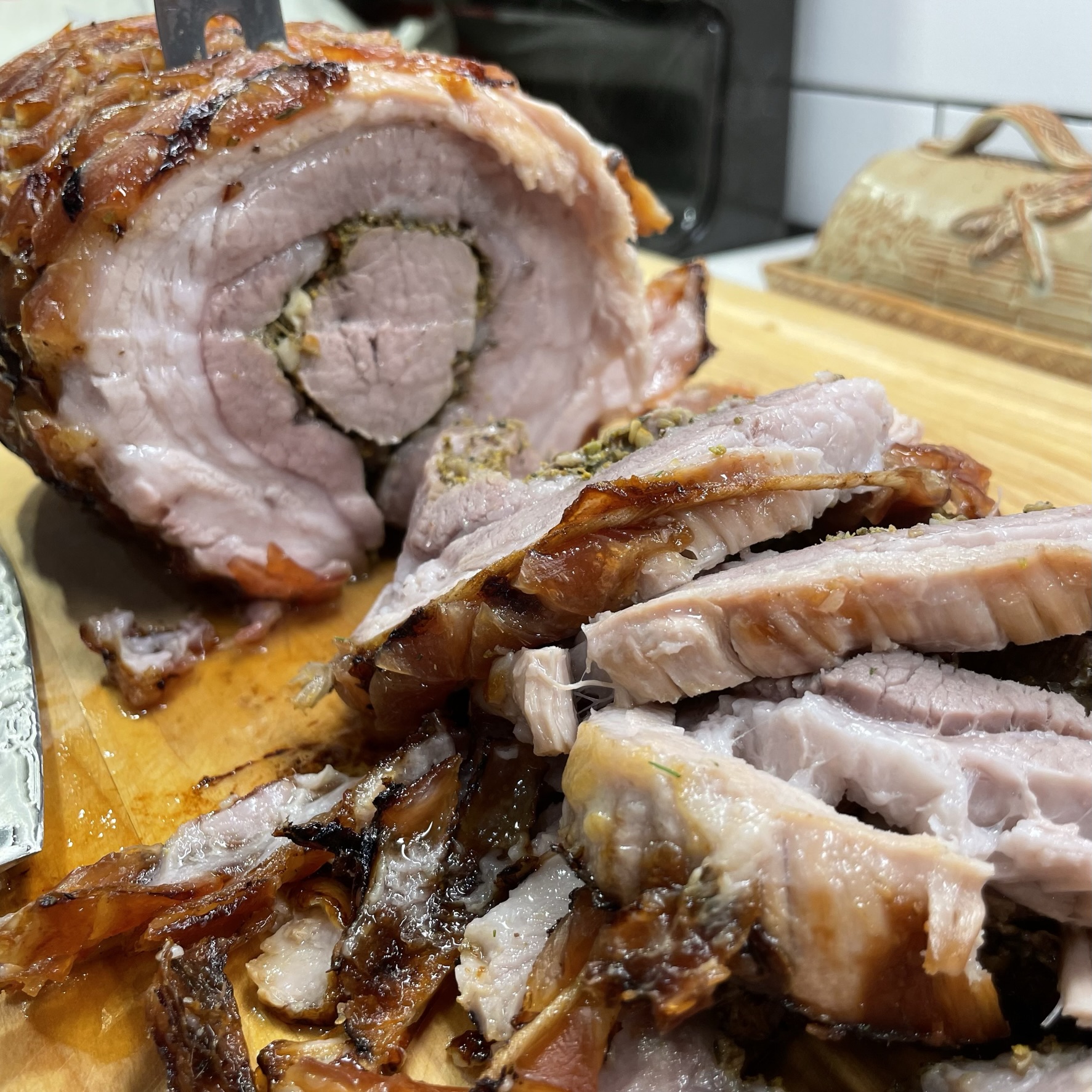
Porchetta— a recipe of central Italian origin— had been on my culinary bucket list since before I started this blog, and for the life of me, I don’t know why I imagined it to be complicated. As roasts go, it was probably one of the simplest I’ve ever made. Perhaps it is because I have looked it up so many times over the years that I already had a sense of how to make it. Or maybe it really is just easy. I’ll let you review my process and decide.


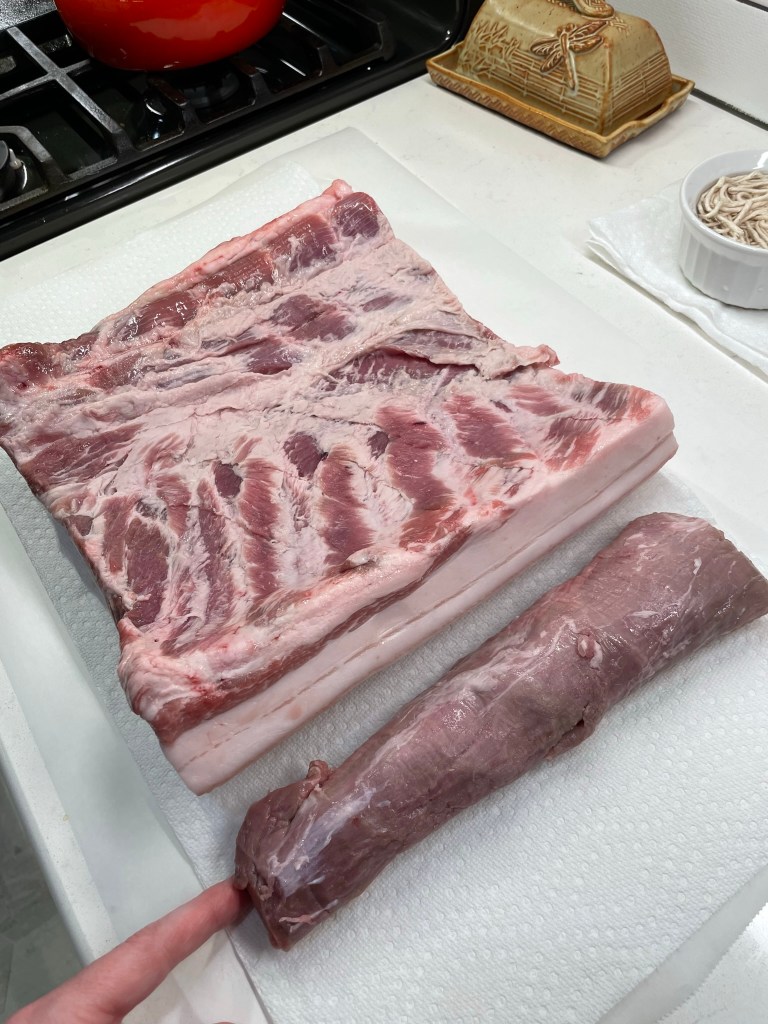
There are many, many recipes for porchetta on the internet. Opinions vary (of course) about what makes it truly authentic, and this argument seems to be regional. In some parts of Italy, it might be an entire suckling pig that is stuffed with herbs (or not) and roasted. In others, it would be only the pork belly, rolled upon itself with a filling of the pig’s entrails (yuck). Still others have you wrapping the belly around a pork loin or (as is the case with mine) tenderloin.

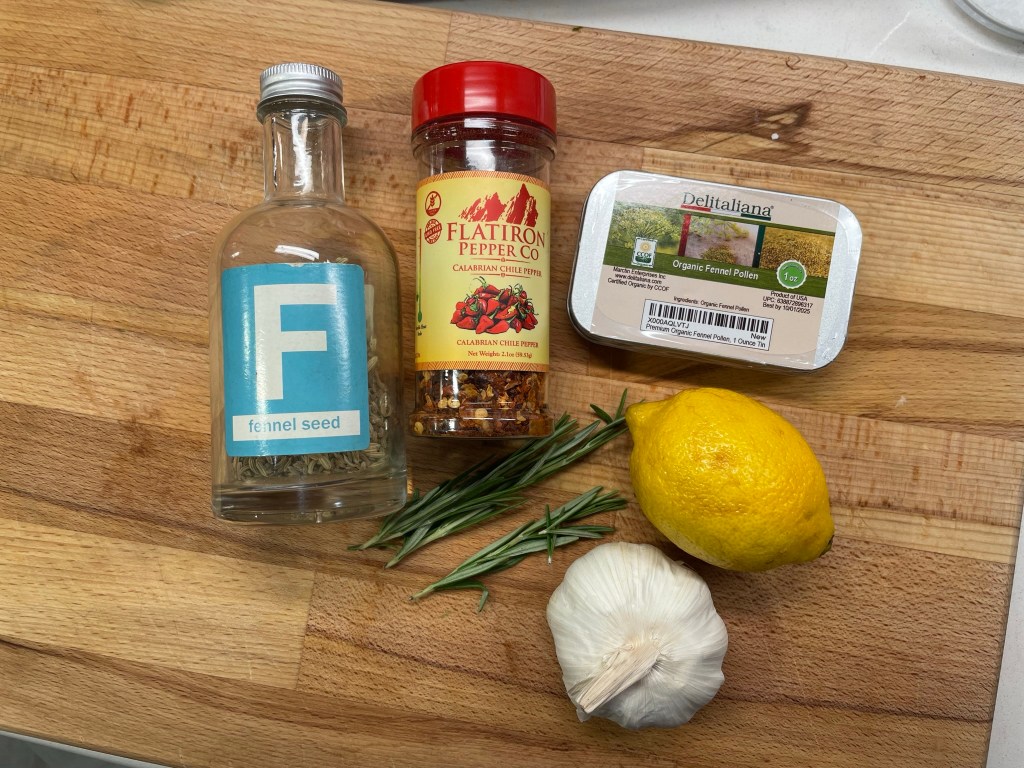
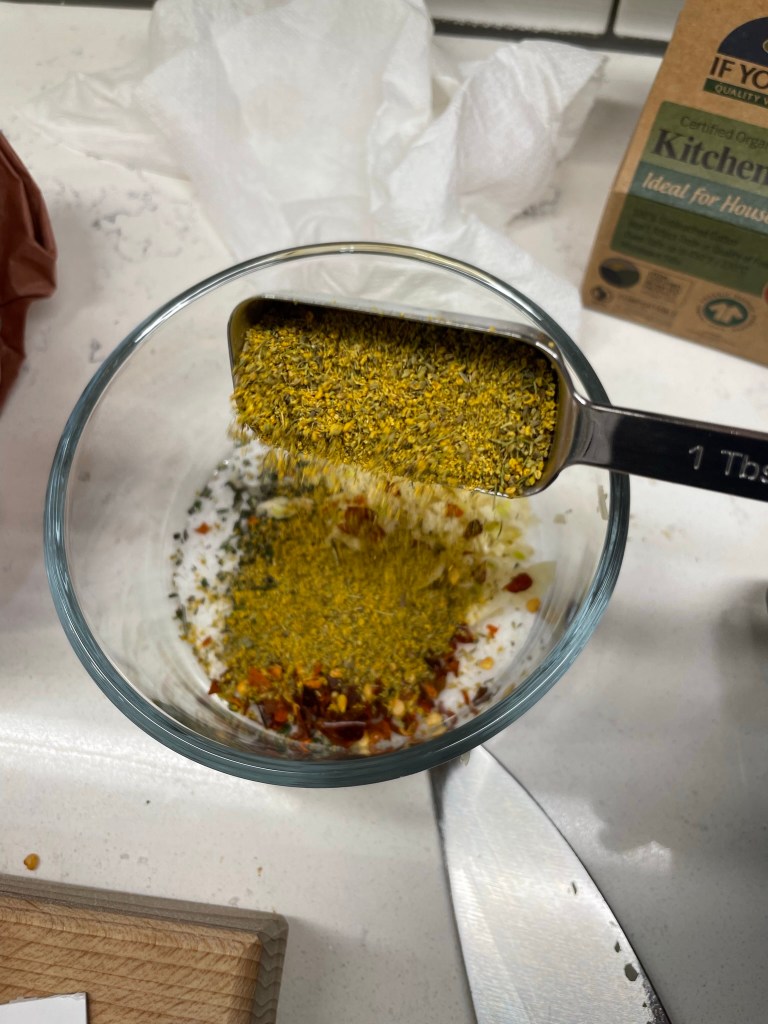
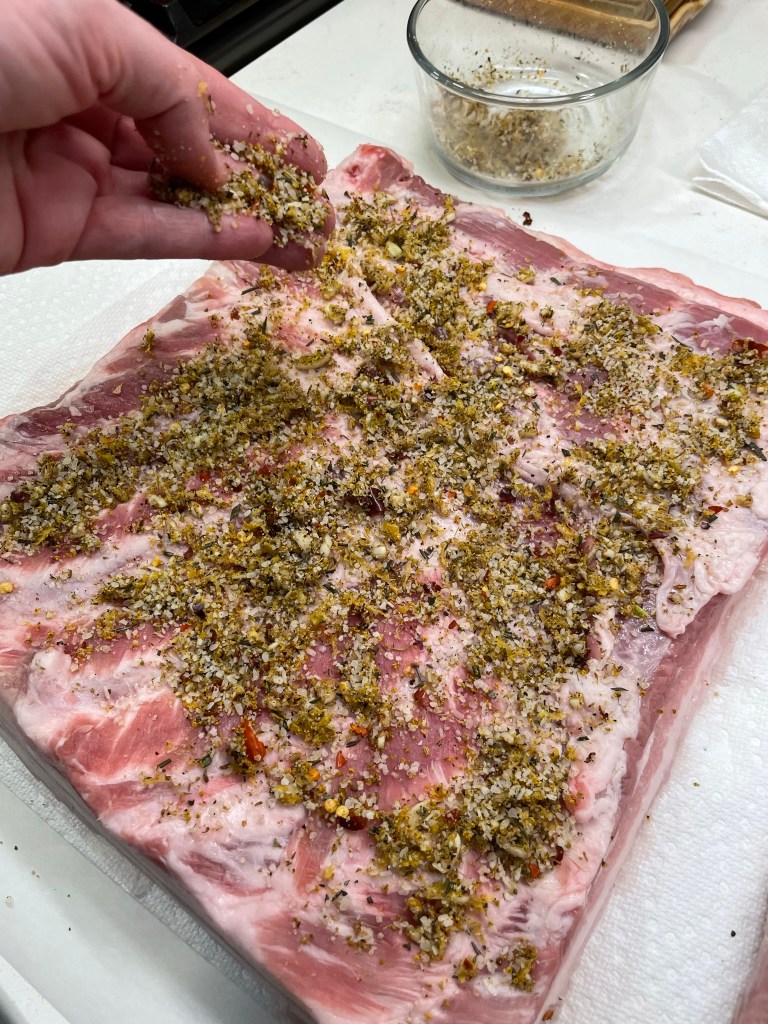
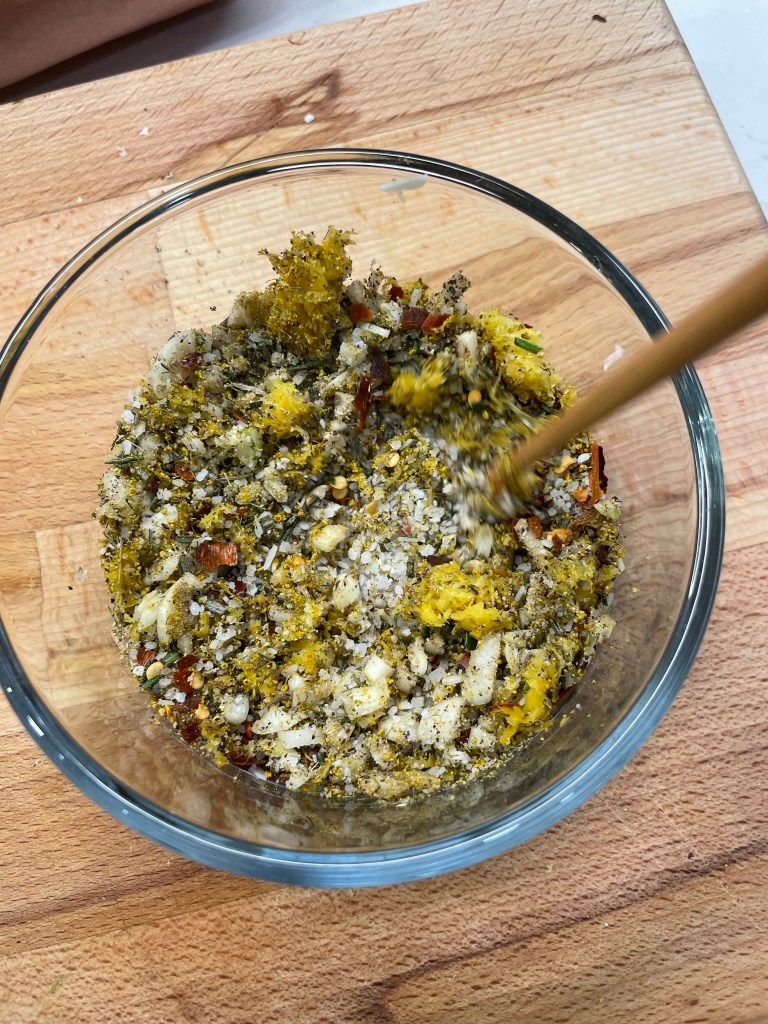
My kitchen is not located in any region of Italy, so I took a few liberties, based on what sounded like the most flavorful “authentic” option. My filling was very fragrant and herbal, with garlic, fennel and rosemary, plus a generous spoonful of lemon zest and a few shakes of dried Calabrian chile flakes. I want to make another batch of this just as aromatherapy when I’m having a bad day.


In my research, I learned that there is a difference between fennel seed and fennel pollen, the latter of which I had to purchase online because no stores around here carry it. Perhaps where you are, an Italian market could set you up with some. The fennel pollen is very delicate and fragrant and is distinctly brighter and lighter than fennel seed. The small tin, which is roughly half the size of an Altoid tin, set me back about $18, but I only used one-quarter of it. 


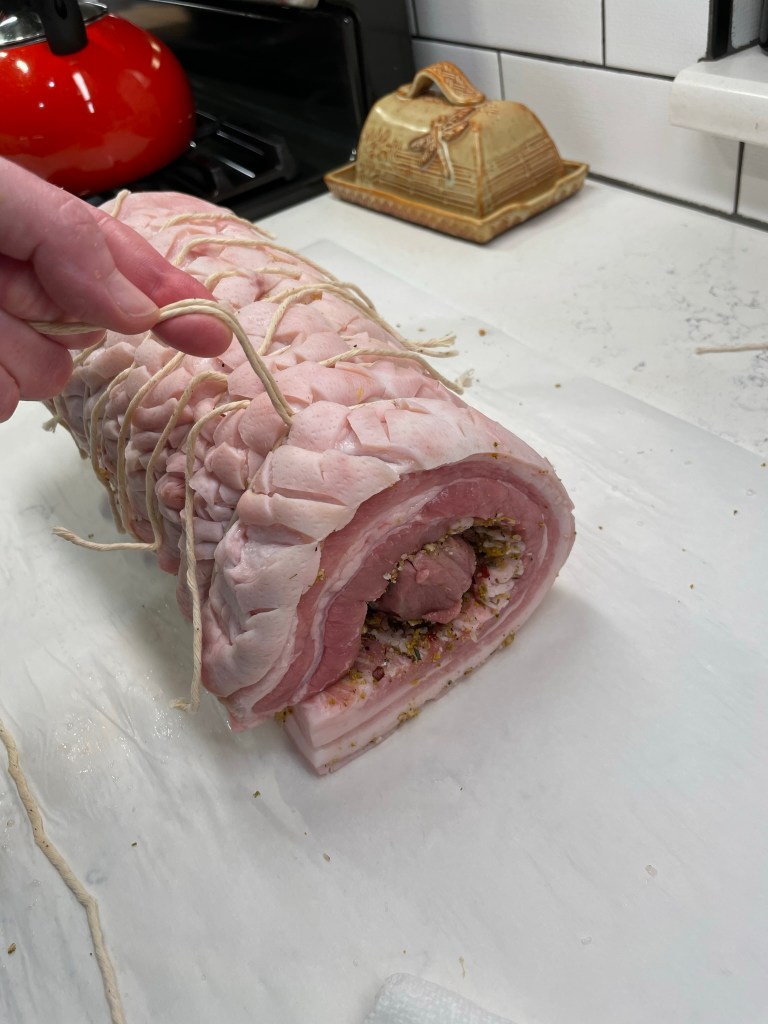
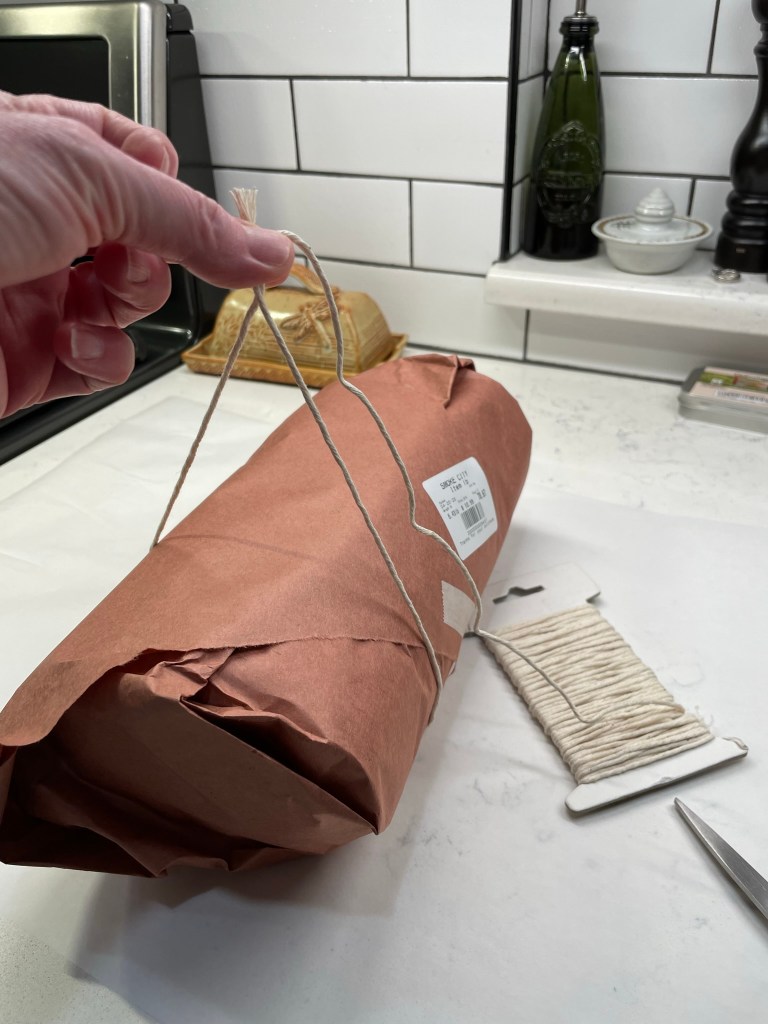
Putting the roast together was so easy. I began by measuring a piece of kitchen twine around the package of pork, and then I cut several pieces to that length and soaked them in cold water, for tying up my porchetta. My local butcher had cut the belly piece to match the length of the tenderloin, and even took time to show me the right steps for success, as the belly must be rolled in a certain direction for easy slicing and perfect tenderness.

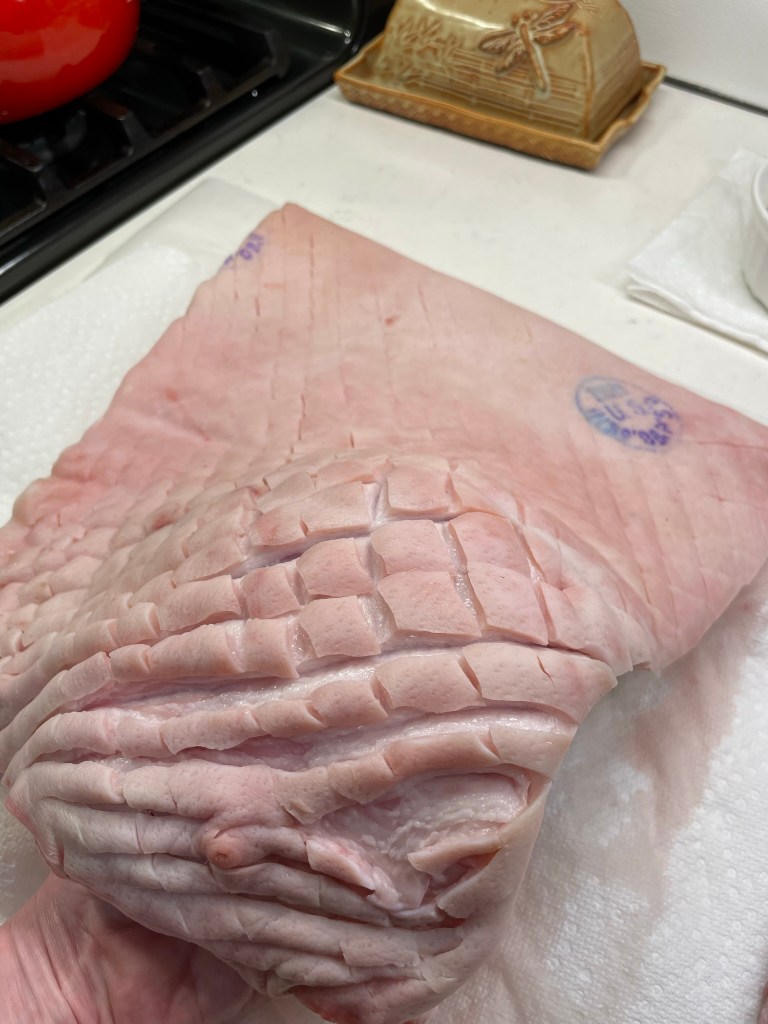
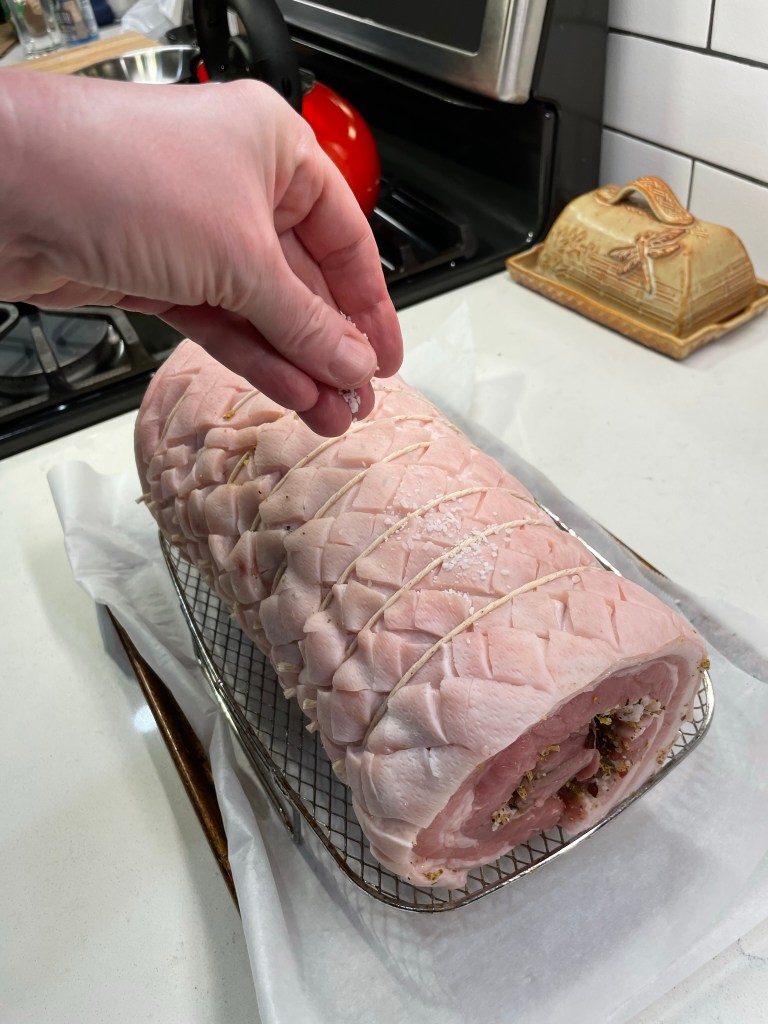
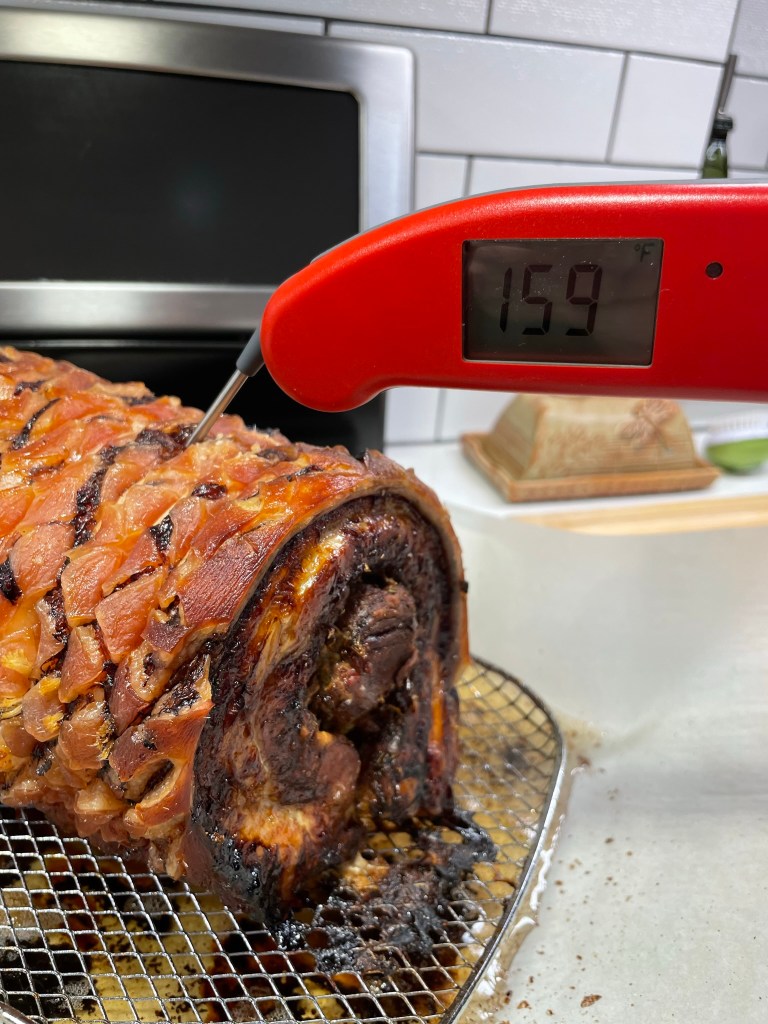
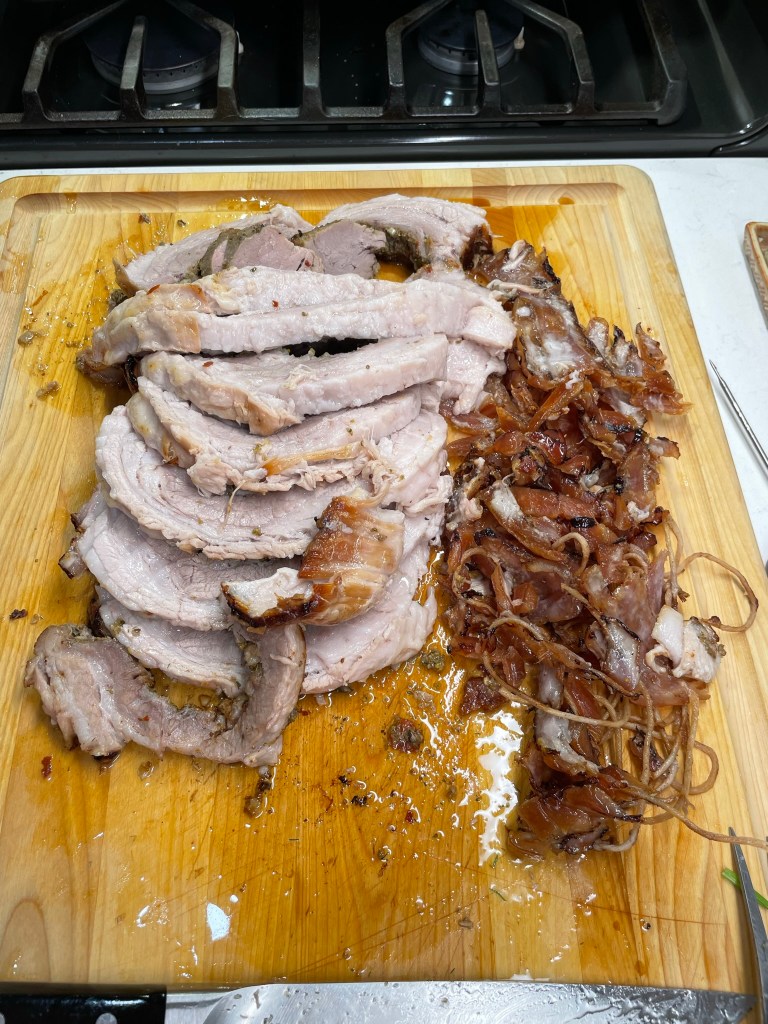
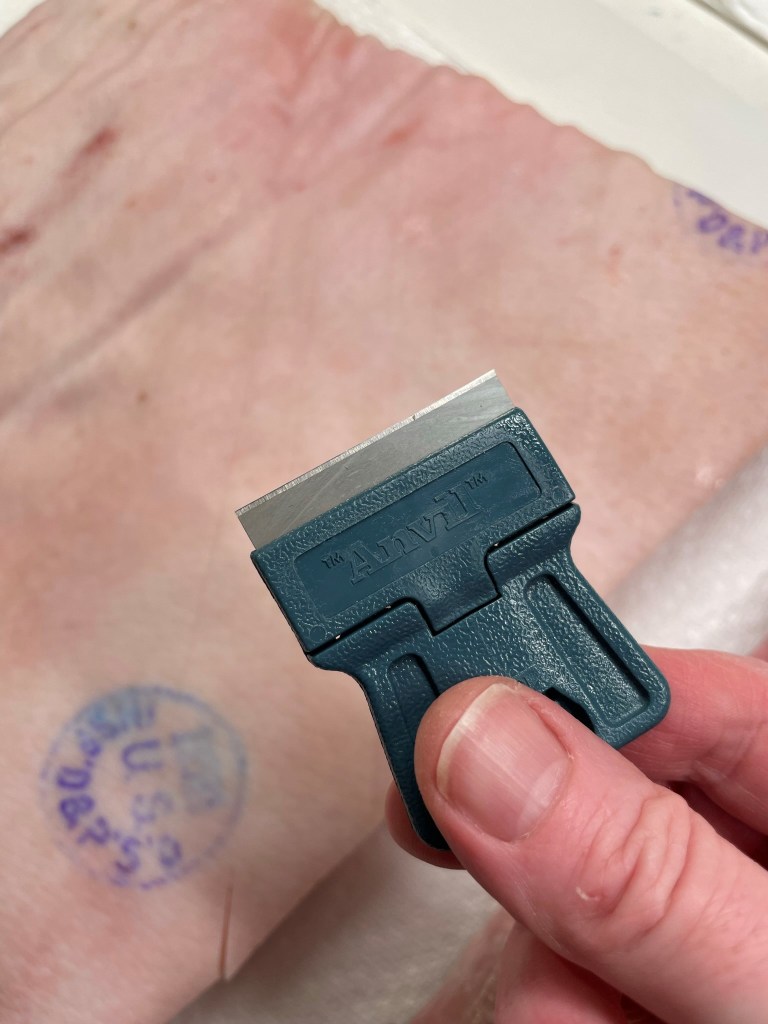
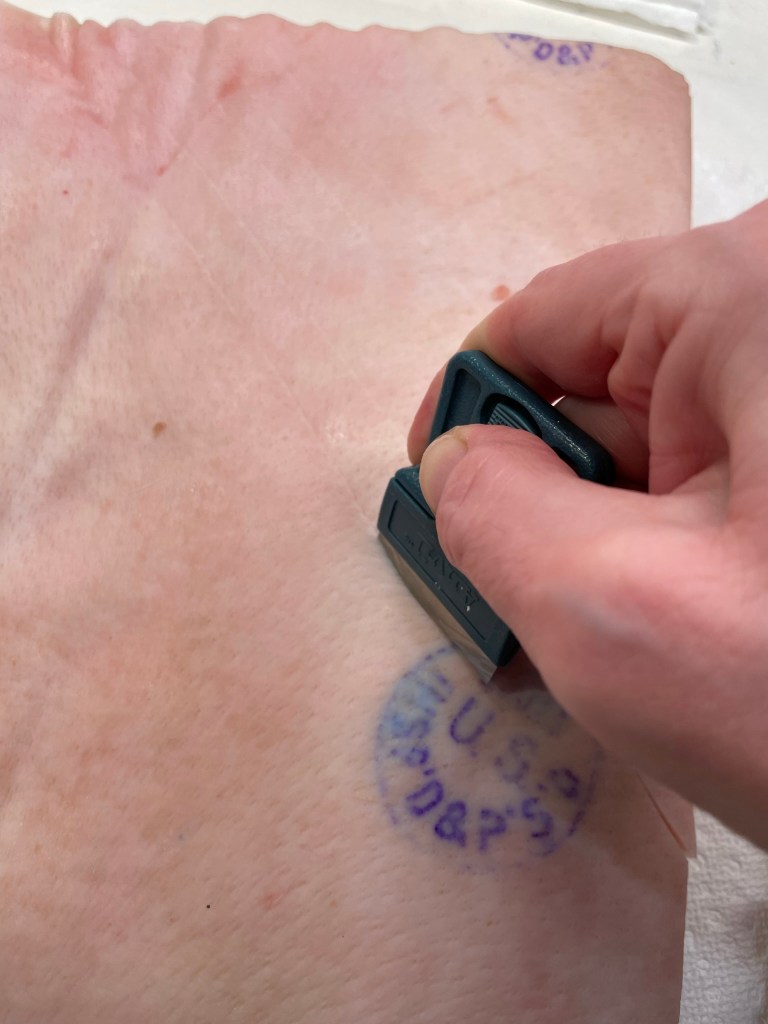
He had also echoed what I had seen in every recipe, which is that the roasted skin should be golden brown and “crackling” crisp. To achieve this, I scored the skin side of the belly in a crosshatch pattern, which would ease the rendering of the thick layer of fat. This process is simple to do, but you need to use something very sharp to cut through the heavy skin. I opted for a razor blade scraper— yep, the same kind of tool you’d use to scrape paint off a window pane. It may sound odd, but it was perfect because it was easy to control the cuts and nearly impossible to go too deep. Scoring the skin this way also made it more flexible for wrapping around the tenderloin.


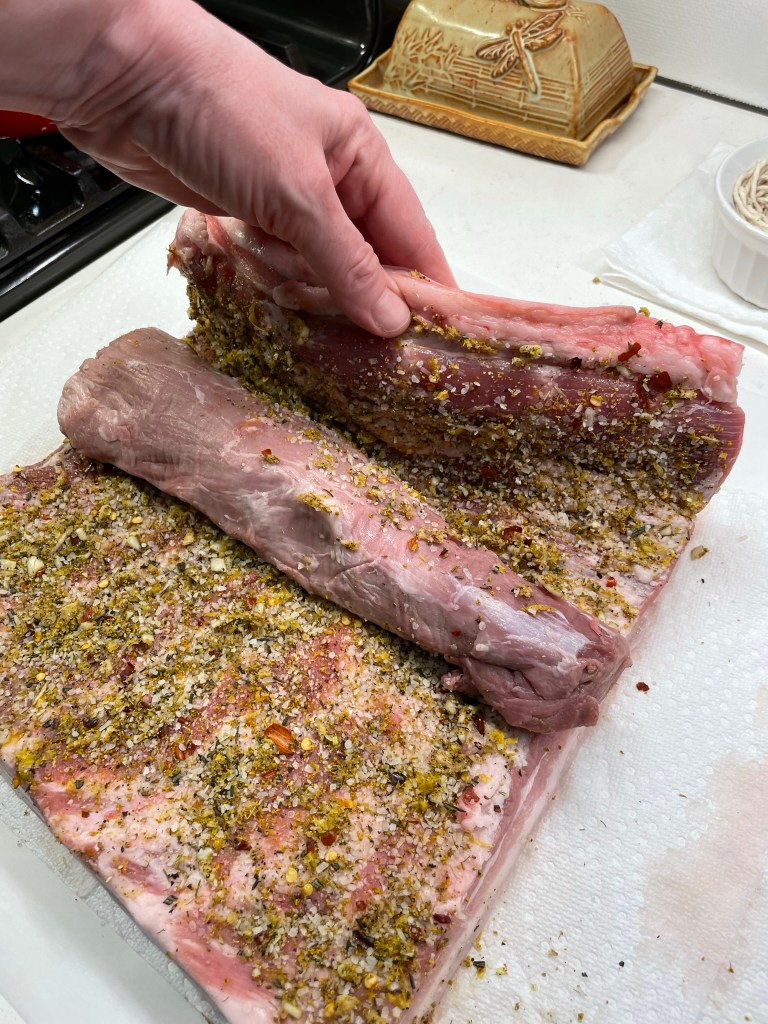
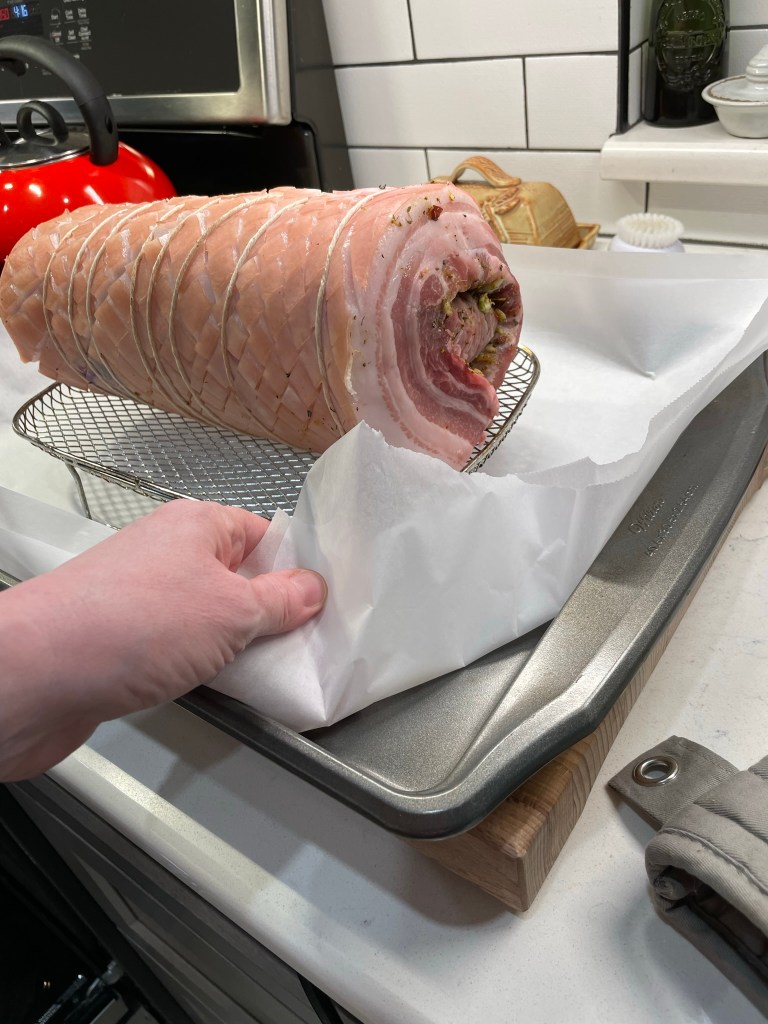
I spread that aromatic filling evenly over the inside of the pork belly, all the way to the edges, and rolled it up around the tenderloin and then laid it across my soaked twine pieces. I tied it up, sprinkled it all over with kosher salt and laid it on a rack to dry out overnight in the fridge. If it seems counterintuitive that drying out the meat before roasting leads to a juicier finish, believe me, I feel you. This was a huge mental hurdle for me when I first read about dry brining, but I have such incredible results that I will never look back.


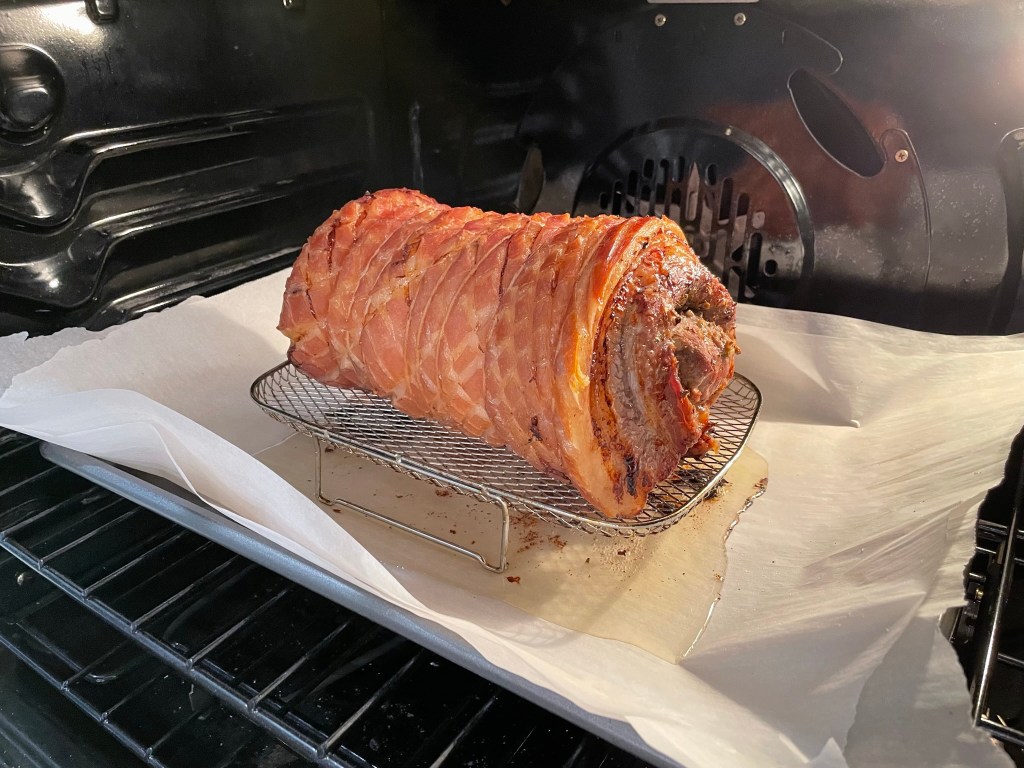
Eighteen hours later, when I was ready to roast my porchetta, I pulled it from the fridge and gave it some time to rest at room temperature while I preheated the oven to 350° F. There was nothing left but to roast it!


Sometimes the simplest dishes intimidate me, and I attribute this to unfamiliarity. I don’t have an ounce of Italian heritage, so nobody in my family has ever made porchetta. The only way to overcome insecurity in the kitchen is to muster up the courage to try that new thing. I’m thrilled to move porchetta into the done column on my bucket list!


It may surprise you to know that porchetta is likely a one-and-done for me, but not for any bad reason. The roast was off-the-chart delicious, easy to make, and it produced fantastic leftovers.

My hesitation for a repeat begins with the cost. Sure, a grocery store pork belly and tenderloin would be cheaper than the $70 I spent at my local butcher. But we don’t buy a lot of grocery store meat because we object to most conventional production methods. Our local butcher sources its meats from area farmers who follow sustainability practices such as regenerative farming. This is better for the environment and the animals, and also a vast improvement in terms of flavor.

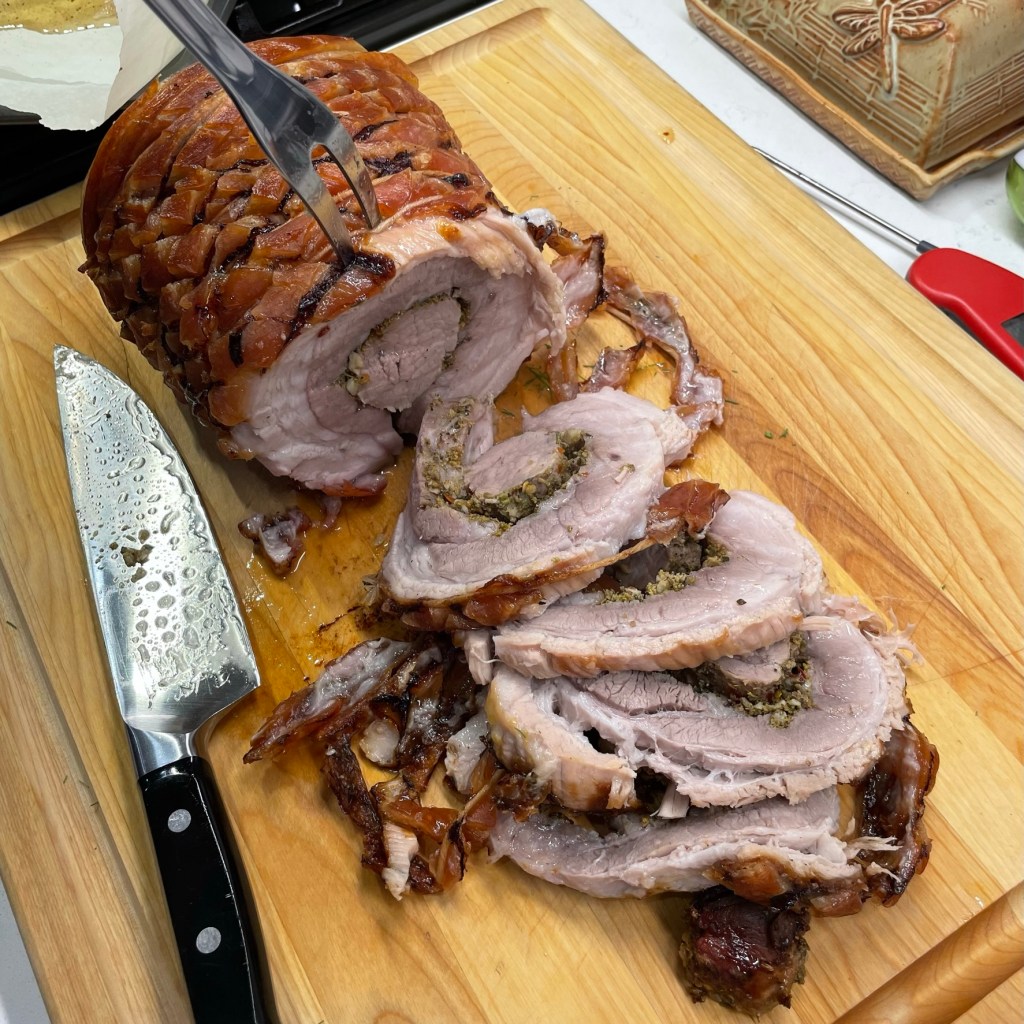
Porchetta is not the kind of thing you can make in small quantity for a party of two, though, which is how we usually cook and eat. I might consider making it again for a special occasion meal with guests, but many of our friends steer clear of fatty meat, and that is another point of contention for us. A single slice of porchetta includes the equivalent of three to four pieces of bacon, and that’s a lot of fat to consume in one meal, no matter how delicious (and boy, oh boy, it is). With more practice, I could probably figure out how to tie up and roast the porchetta for more even fat rendering, so that we didn’t end up with a lot of bulky fat that was not suitable to eat.


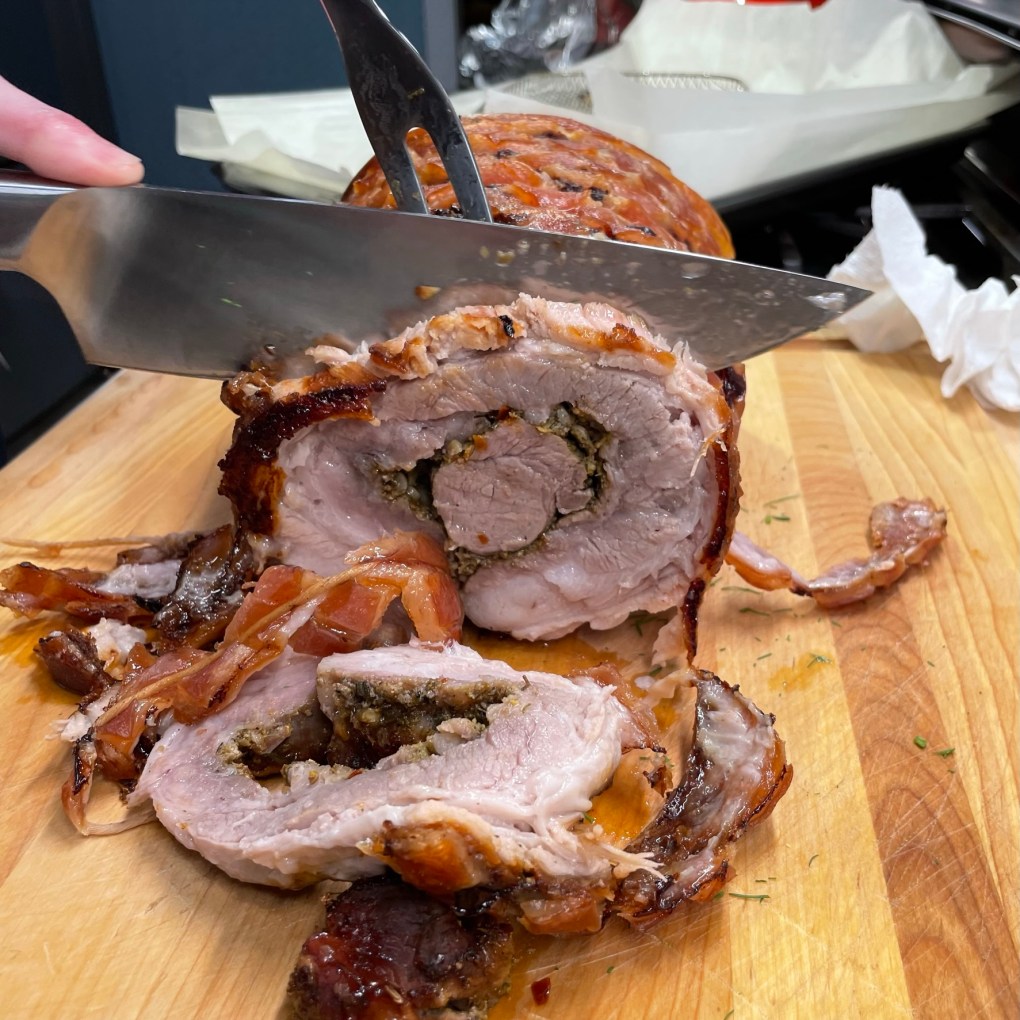
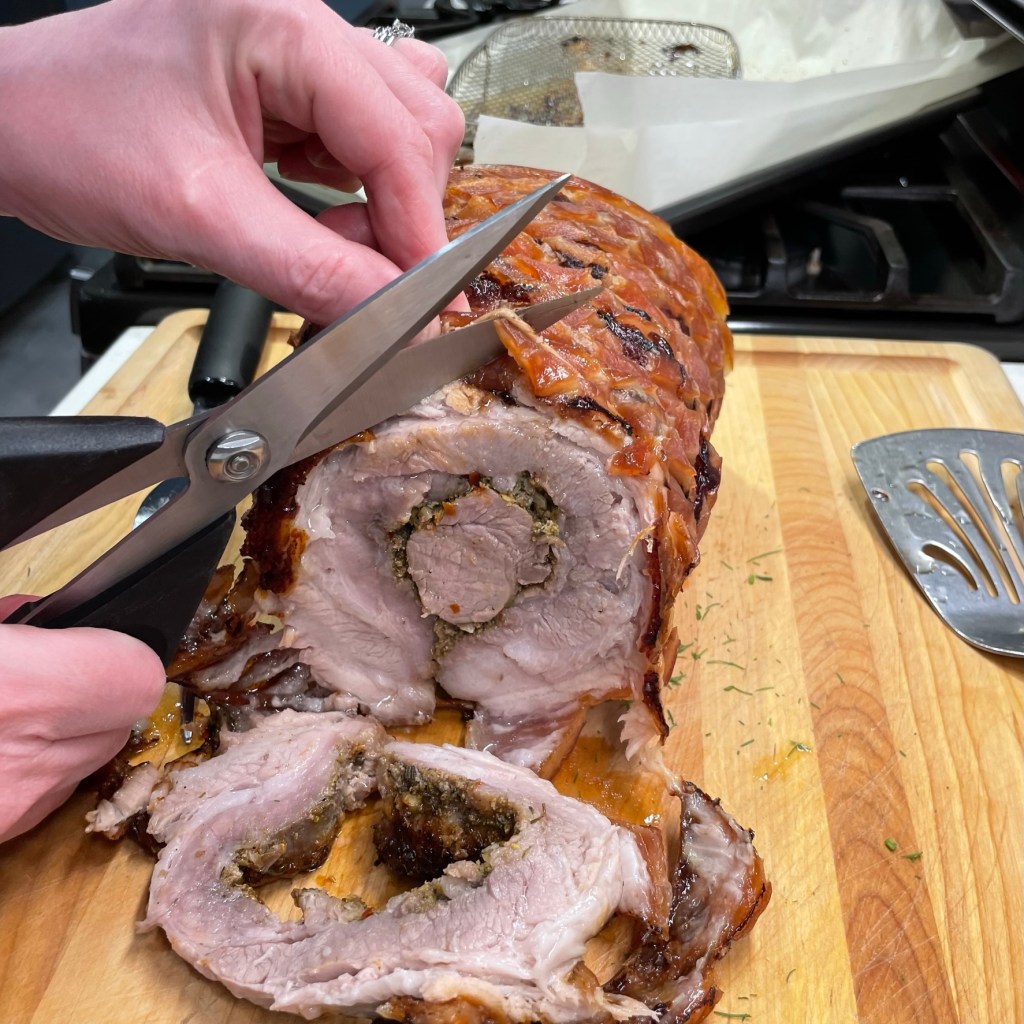
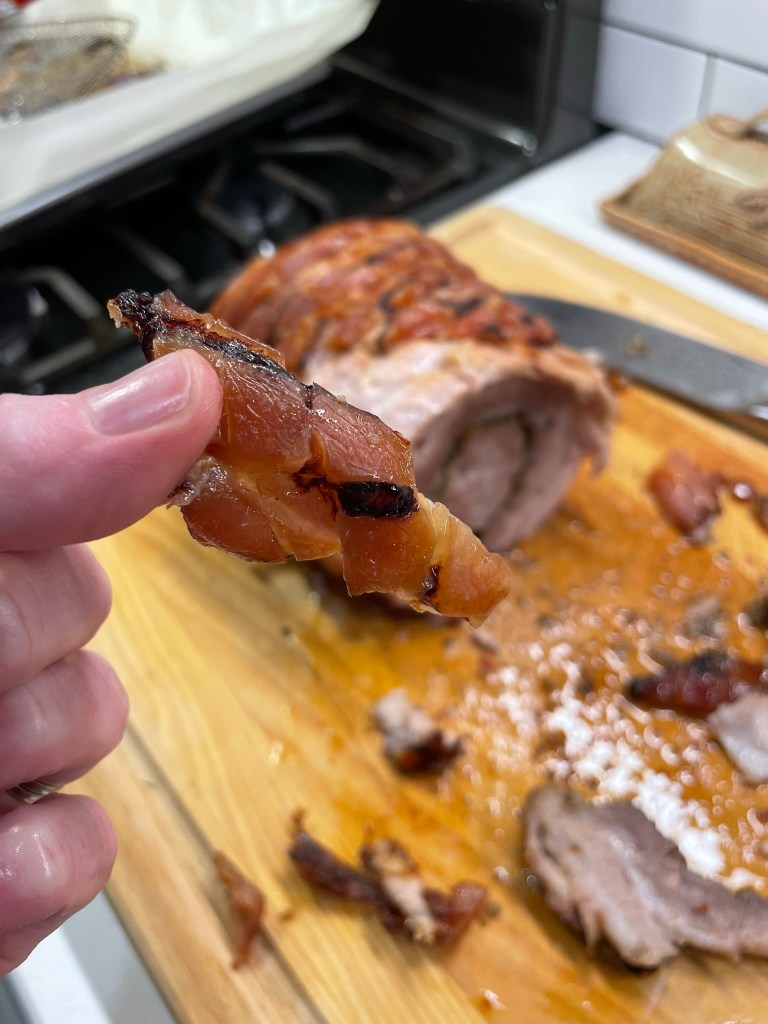
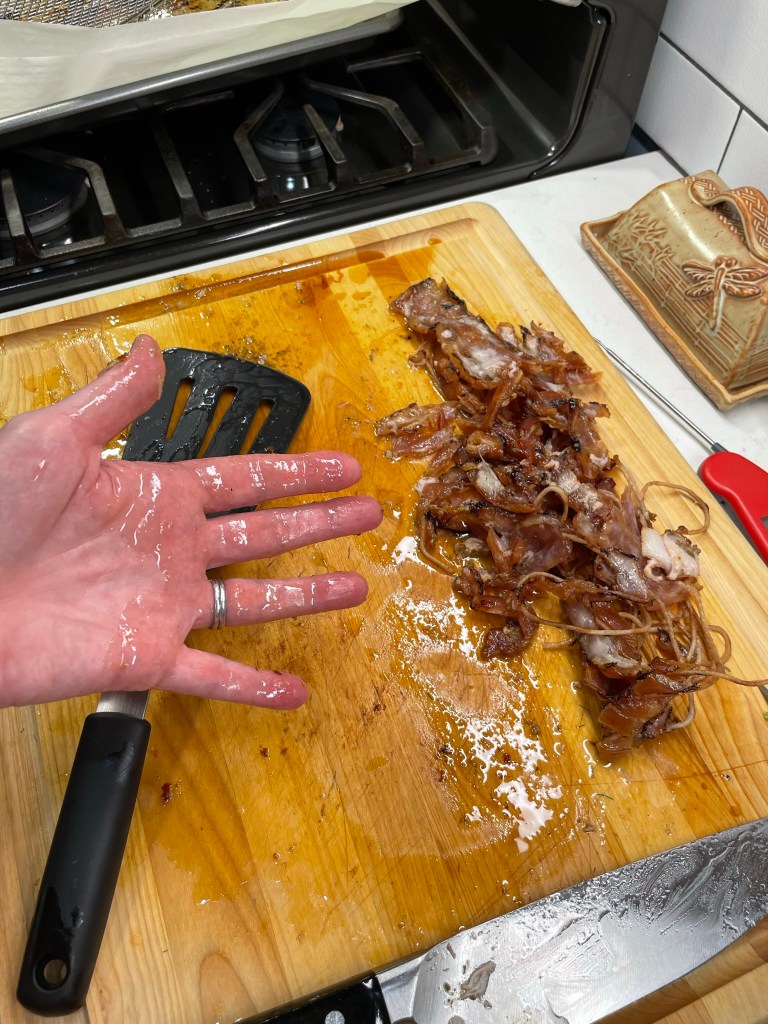
Finally, there’s the skin, which— for all the ruckus and raving about the crackling crispness— did not impress me much. Our porchetta did get very crackly, but that “perfect” skin simply is not edible. It was like biting into a Lego. And the hardness of the crackled skin also made slicing the porchetta quite challenging. If I ever do make this again, I’d probably score the skin in straight squares rather than on a diagonal, so that I can use the score lines as a guide for slicing. But it’s still kind of a waste because you can’t eat that beautiful skin.

Here’s what I’m thinking: the best things about this porchetta were its tenderness and the incredible aroma and flavor of the filling. So why couldn’t I apply the fennel pollen mixture to some other cut of marbled pork? Maybe a boneless, butterflied shoulder, which I could roll up with the herb filling and slow roast (or smoke— wouldn’t that be something)? I’m even imagining that incorporating the fennel pollen filling ingredients into a homemade sausage isn’t a terrible idea, so don’t be surprised if that shows up here in the near future.

If you have been jonesing to try porchetta yourself, it’s definitely worth the effort, and maybe you’ll find something useful for your own experience in my click-to-print recipe below. Please slip a note in the comments if you have tips that might make it worth a second run for me, and do let me know what autumn meal you’re most looking forward to!  

Porchetta

  • Servings: About 8
  • Difficulty: Surprisingly easy
  • Print

There's so much incredible flavor in this Italian-born pork roast, and the leftovers are even tastier!


Ingredients

  • fresh pork tenderloin
  • fresh pork belly, cut to length of tenderloin
  • kosher salt, weighing 1.5% of total meat weight
  • 2 Tbsp. fresh minced garlic (this was about 5 cloves)
  • 1 Tbsp. fresh lemon zest (organic is best)
  • 1 Tbsp. fennel pollen (tricky to find; check Italian market or online)
  • 1 tsp. red pepper flakes (I love the Calabrian chiles from Flatiron Pepper Co.)
  • 1 tsp. fresh rosemary, chopped (I would have used more of this if my hubby was a fan)
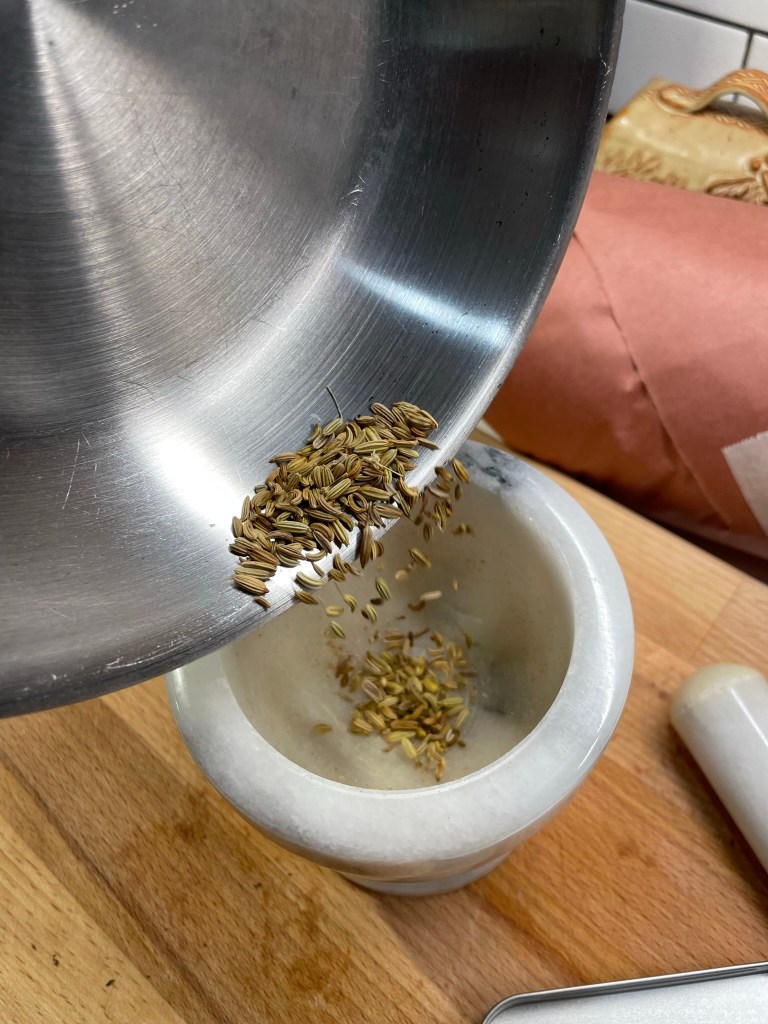
  • 1 tsp. fennel seed, toasted until fragrant and then crushed to nearly a powder
  • About 30 twists of freshly ground black peppercorn

Notes: You will need a few things for success with this recipe. First, kitchen twine for tying up the roast. Plan for at least 5 feet, and soak it in cold water while you prep the roast. Also, a roasting rack to keep the porchetta above the pan during overnight fridge rest and roasting. Finally, a good meat thermometer to help you track the internal temperature.

Directions

  1. Score skin side of the pork belly with very sharp knife or razor blade. This will help render the fat better during cooking, plus it will deliver a crackling skin. Scoring also makes the belly a bit more flexible for easier wrapping around the tenderloin.
  2. Cut several pieces of unbleached butcher’s twine, long enough to wrap and tie around rolled up belly. I used the packaged meat to help me determine how long I needed the pieces to be. Soak the twine lengths in cold water until ready to wrap.
  3. Mix the herb filling, including salt that equals 1.5% of the meat weight.
  4. Line a sheet pan with parchment or foil and place a small roasting rack on it to hold the porchetta roast.
  5. Spread the herbal filling over the meat side of the pork belly, all the way to the edges. Place the tenderloin on the belly, perpendicular to the lines on the cut sides of the belly. The sides of the belly resemble the lines of bacon.
  6. Roll up the roast, but not so tightly that you lose the filling. Check the open ends; the tenderloin should look as if surrounded by a ring of bacon.
  7. Place the rolled roast across several soaked pieces of twine and tie it up, securing each twine with a knot. Sprinkle the porchetta all over with about 1 teaspoon kosher salt and place the sheet pan (uncovered) in the refrigerator overnight, up to 24 hours.
  8. Remove roast from the fridge and bring to room temperature while preheating oven to 350° F. Oven rack should be slightly lower than center.
  9. Roast uncovered for about 4 hours, until skin is crackled all over and internal temperature is 160° F. Cover loosely with foil and rest for about 15 minutes before slicing.


Not Quite Pizza Sauce

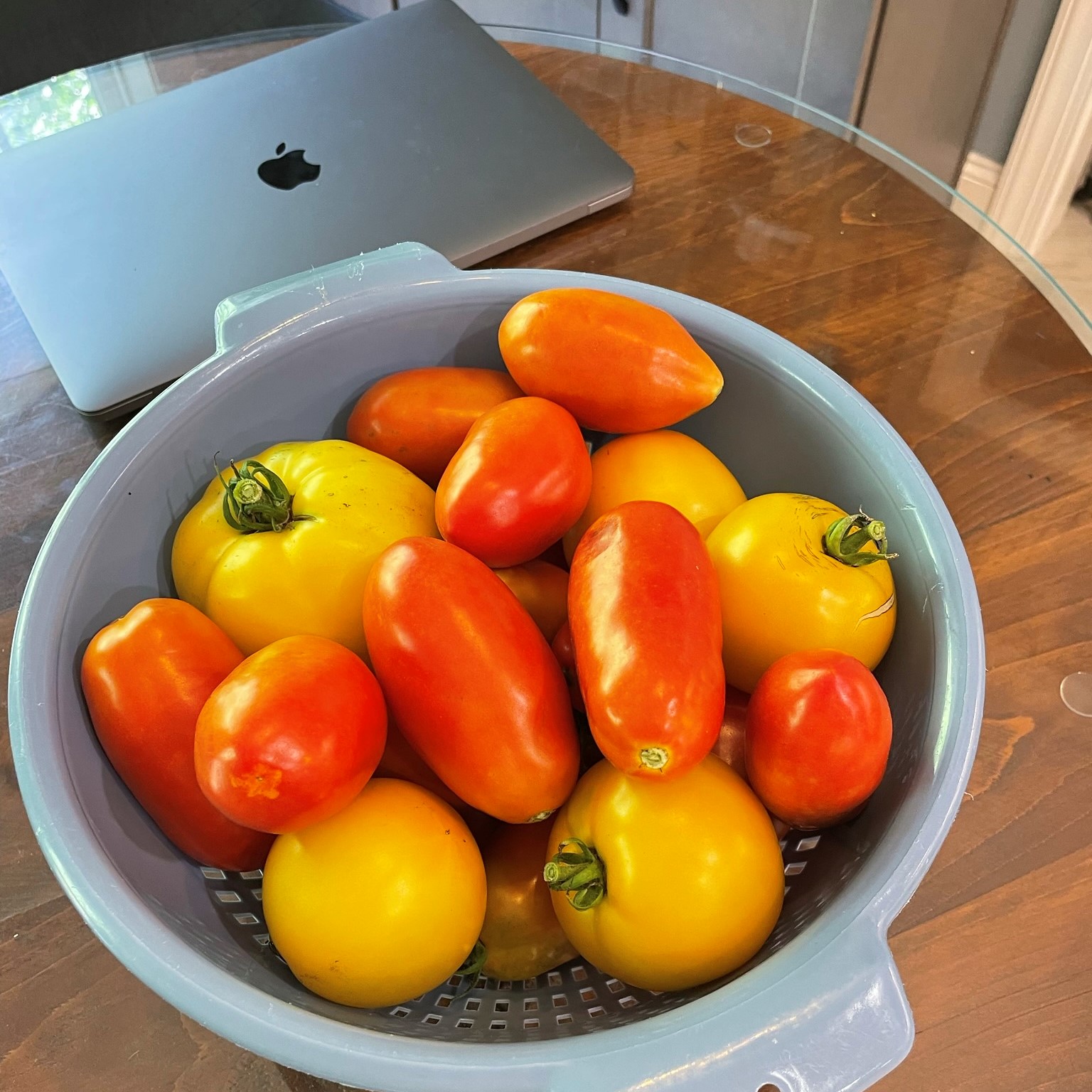
Now that we’re fortunate enough to have a garden again, thanks to Terrie’s persistence, we have a bounty of summer tomatoes to deal with.

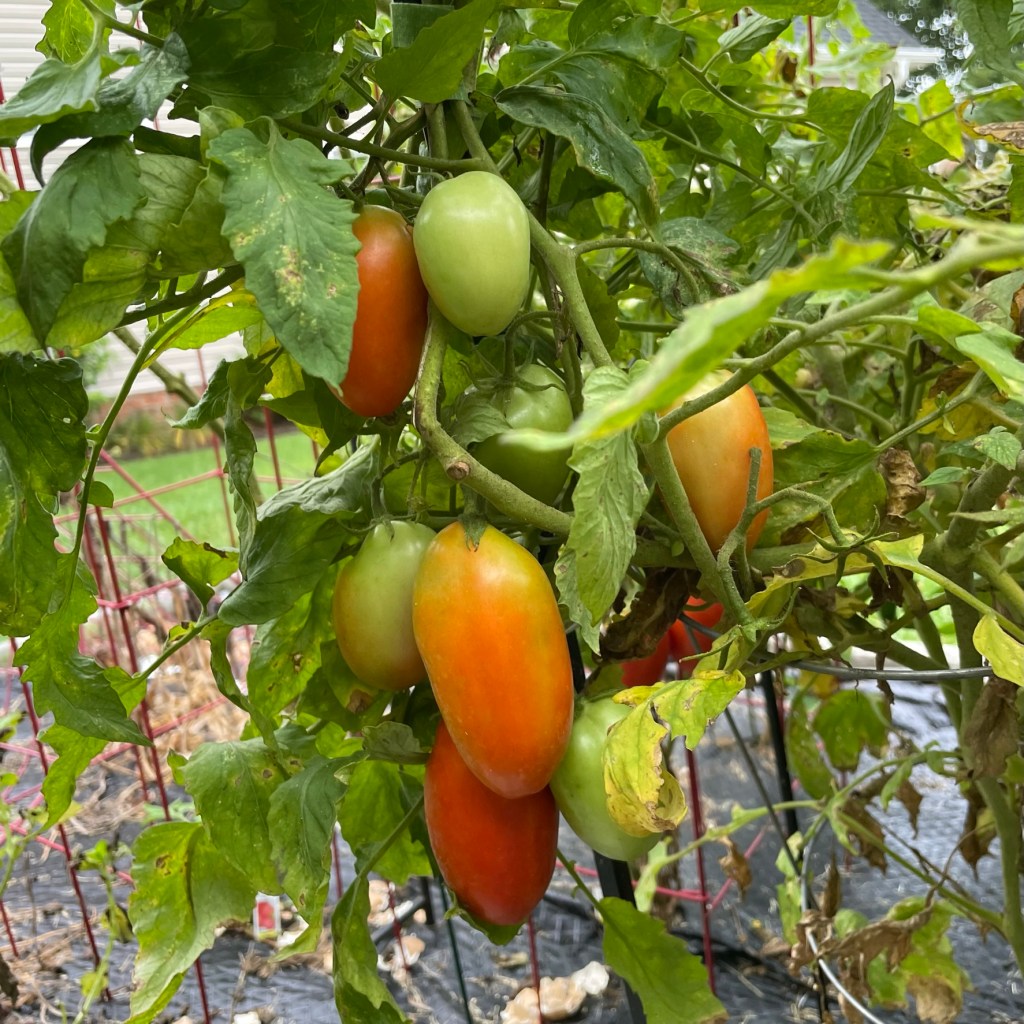
And recently I had the chance to create a pizza sauce. I used to always make my own sauce when I made pizza (pre-Terrie, pre-sourdough) with store-bought dough. But we’ve been using sauce we buy at a market because there’s quite a variety now and they’re way more flavorful than even just a few years ago. But homemade sauce, that’s the good stuff. And we have fresh Roma tomatoes, so why not?

Every day, we’ve come in from the garden with another haul.

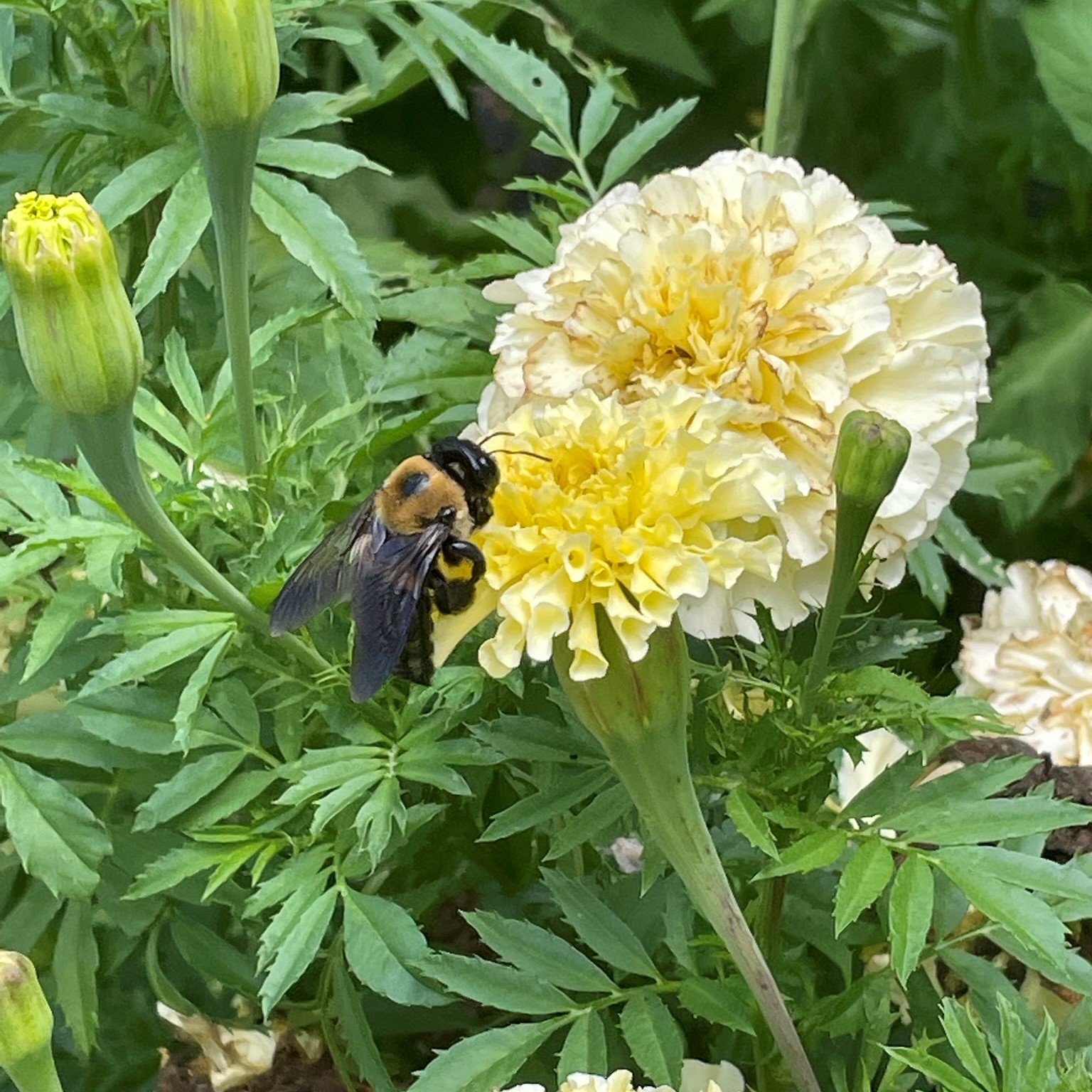
As an aside, I should note that I’ve been gardening and canning off-and-on for 25 years, but several years ago conceded gardening to Terrie for two reasons—the persistence of the deer wore me out, and in 2013, I had an allergic reaction to yellow jacket stings and was advised by my doctor that activity in the grass where yellow jackets hung out could be dicey for me. And our raised-bed garden is right in the middle of a lot of grass. Every time I go near it, I always see bees buzzing and I’m on high-alert mode.
I know you mean well, Buddy.

But back to the story. Sauces are a big thing for me. Before Terrie, I would concoct all kinds of sauces for things I grilled. My go-to sauce for grilled chicken, for example, was a combination of five ingredients that I can still name from memory even though I’ve not made it that way for years: a base barbecue sauce such as Sweet Baby Ray’s, Italian dressing, Kraft Catalina dressing, duck sauce (most often Saucy Susan brand), and some splashes of either soy, teriyaki or hot sauce depending on my mood.

Under Terrie’s watch, however, we have eliminated anything containing ingredients such as high-fructose corn syrup (bye-bye Sweet Baby Ray’s) and soybean oil (see ya, Kraft Catalina). The result is that we’ve eliminated a lot of my go-to’s, and to be honest, I don’t mind that. When I create a sauce now, it’s with more natural ingredients and usually means I’m investing my own labor, starting with sautéing vegetables and ending by blending. That’s how it was to be when I told Terrie I wanted to make a pizza sauce.

To increase my knowledge, I searched the inter-webs for pizza sauce recipes. I know how to create “Sunday gravy,” but a homemade pizza sauce from scratch is a different animal. Do you know that almost every recipe out there, including in the cookbooks we have at home, all start with one can (28 ounces) of plum tomatoes? So I changed the search to include “pizza sauce using homegrown tomatoes.”
We’ve had so many fresh, meaty Romas. I’ll use canned tomatoes in January.

The problem is I was mostly interested in a recipe by one of Terrie’s favorite chefs, J. Kenji Lopez-Alt. And he also used canned tomatoes. I remembered another bit of Terrie’s constant advice—don’t be married to a recipe; use your instinct. As a result, I used the Lopez-Alt recipe as a baseline but was able to embellish it with my own touches, like fresh tomatoes.

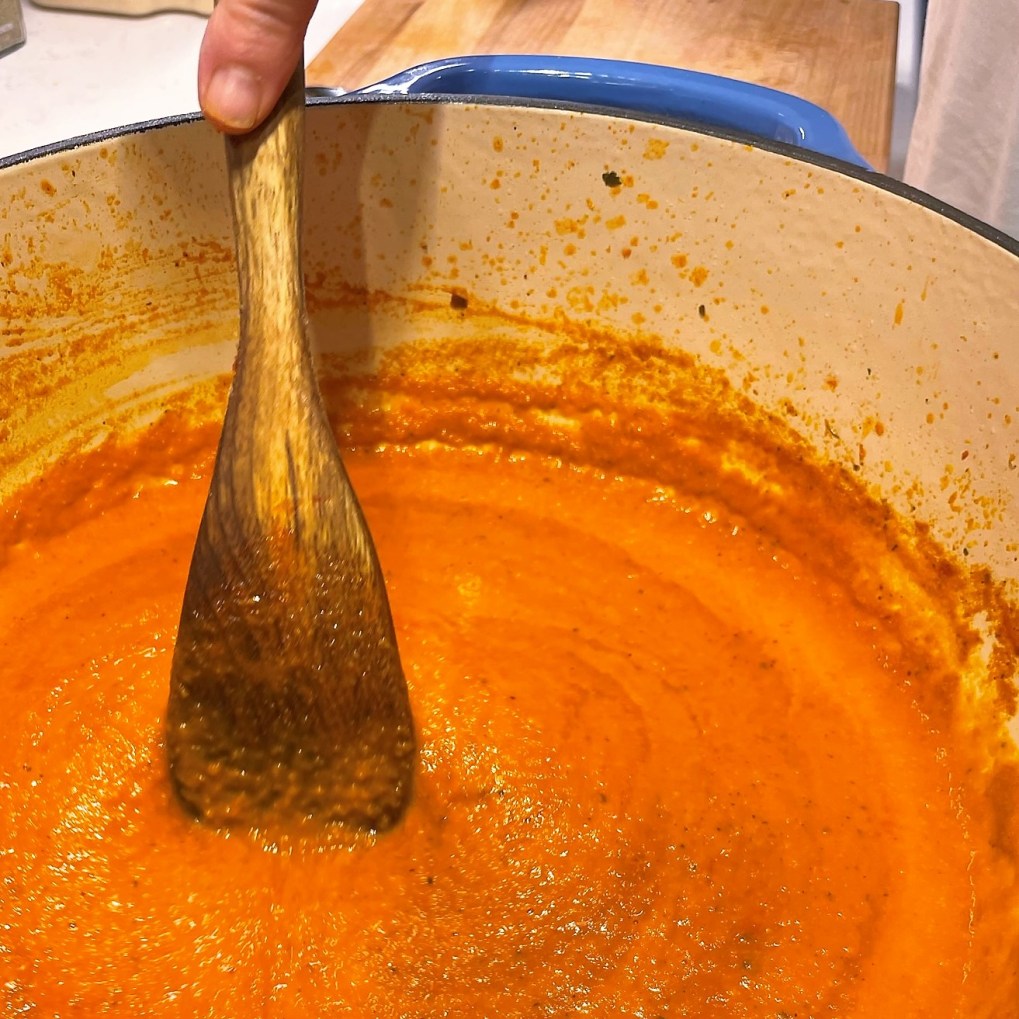
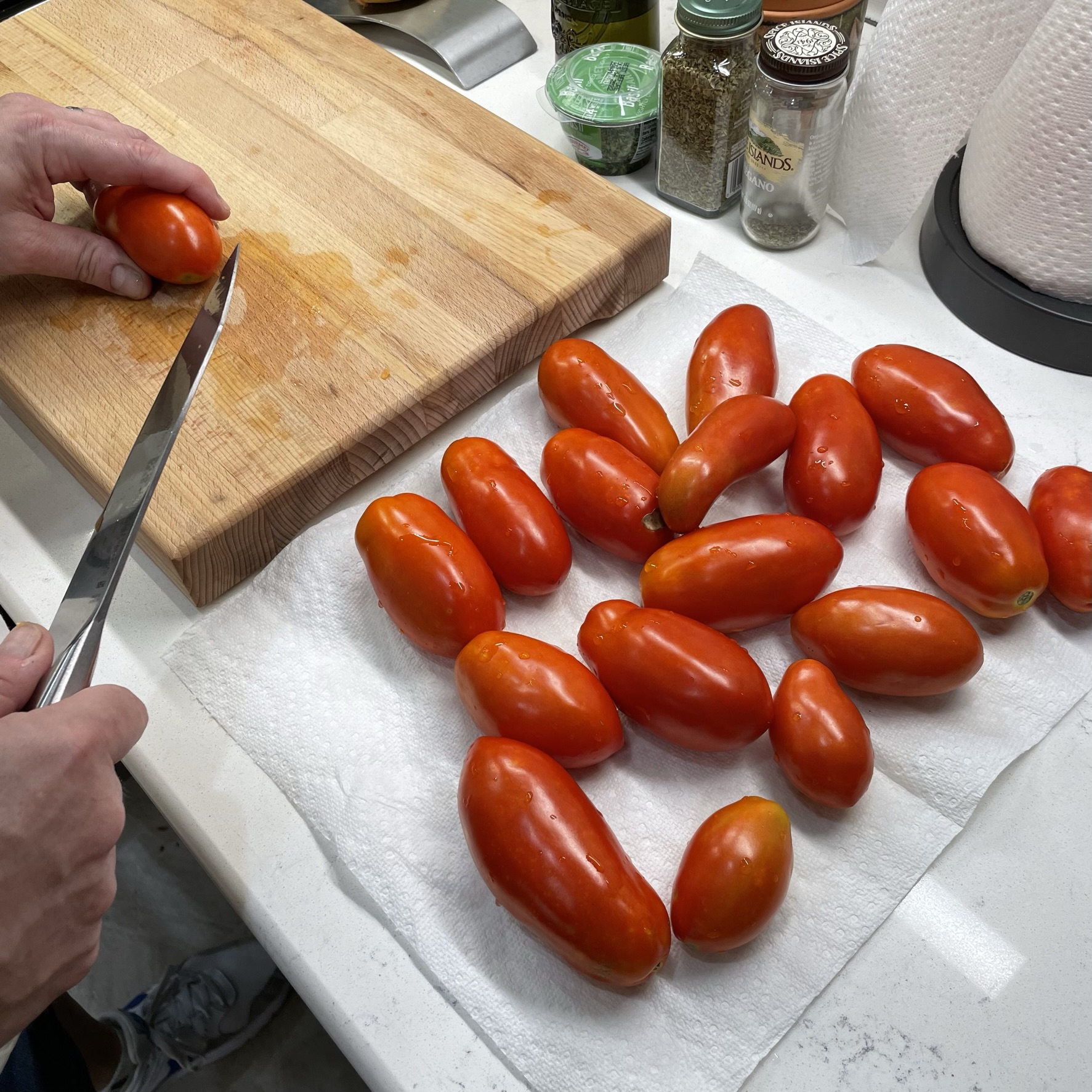
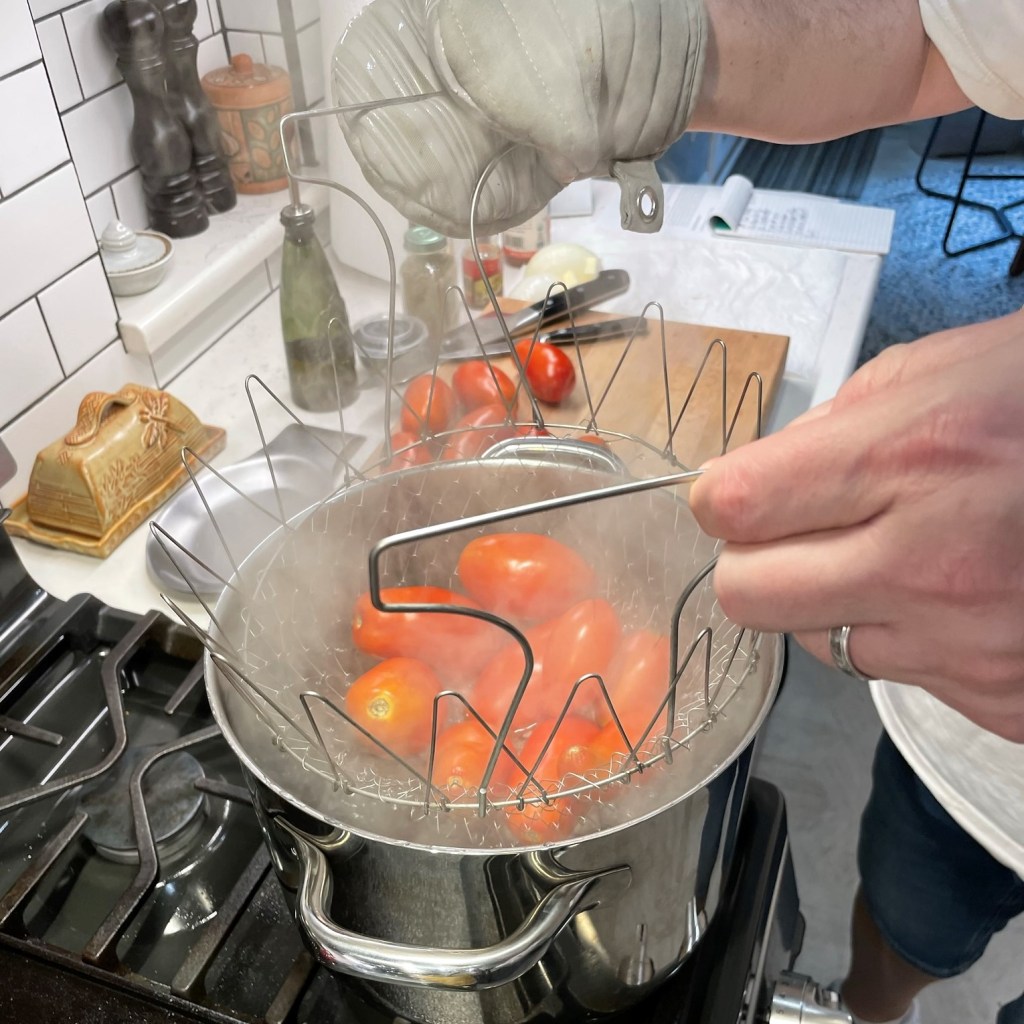
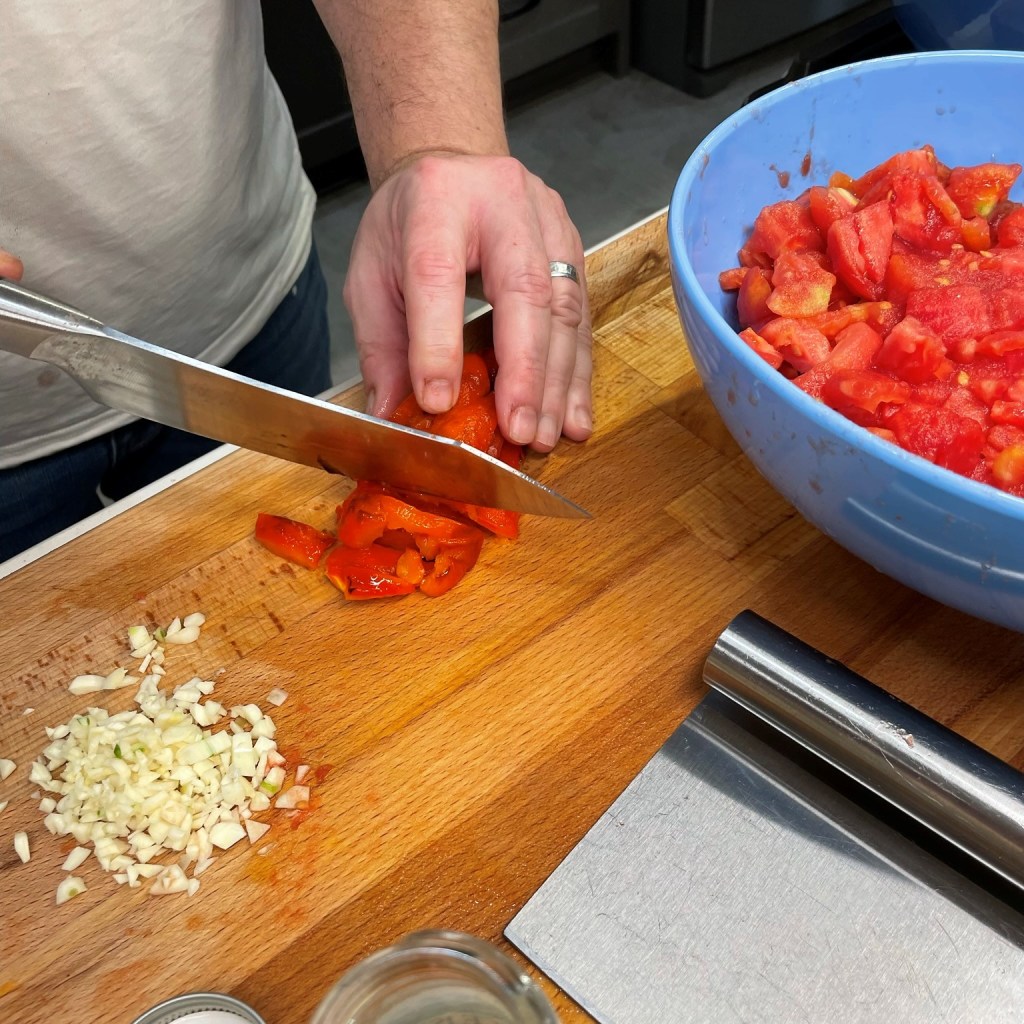
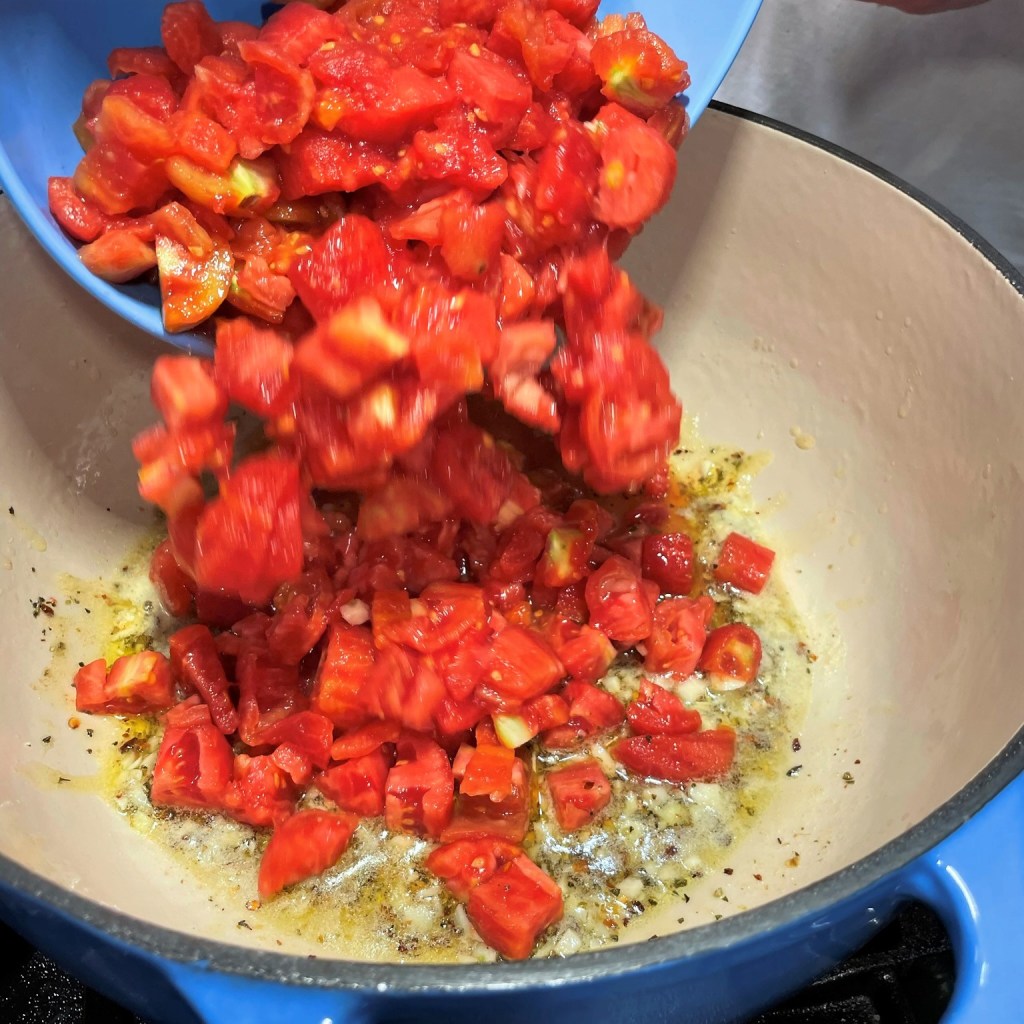
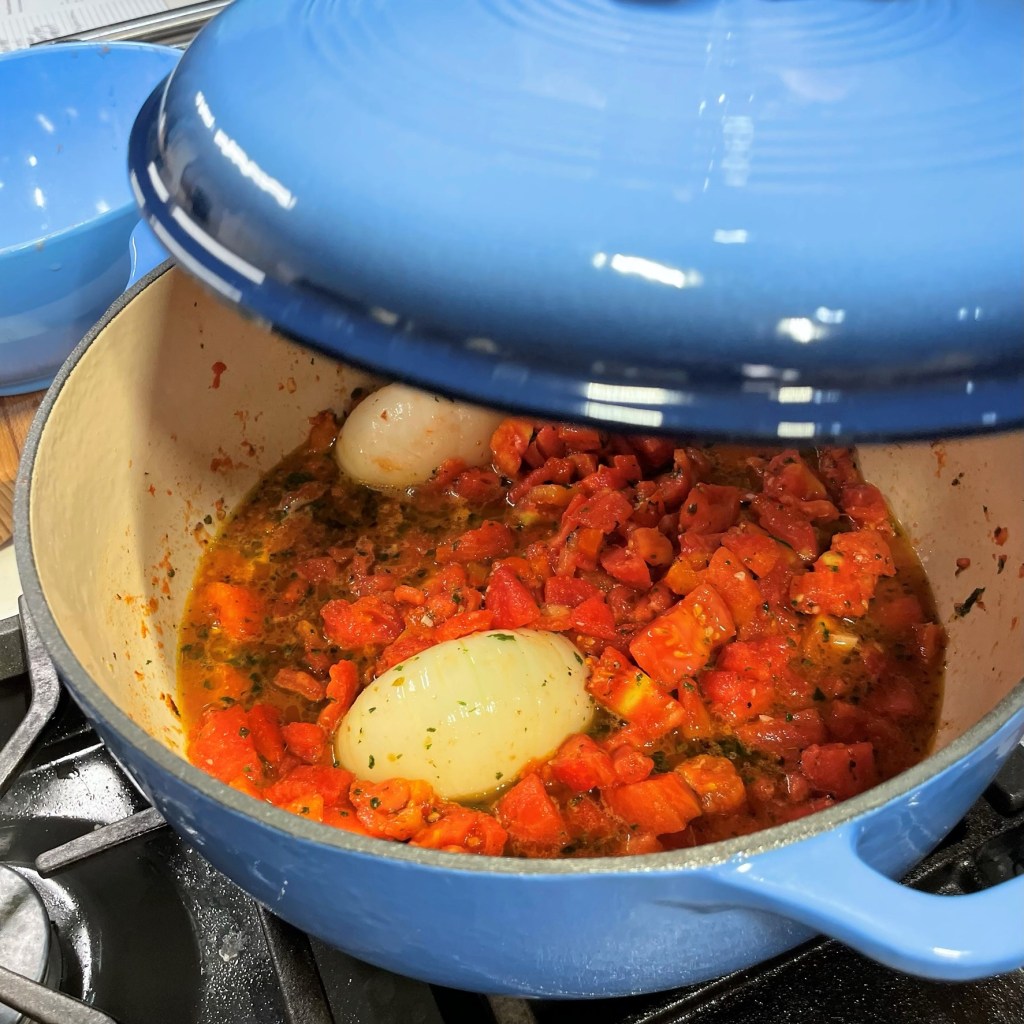
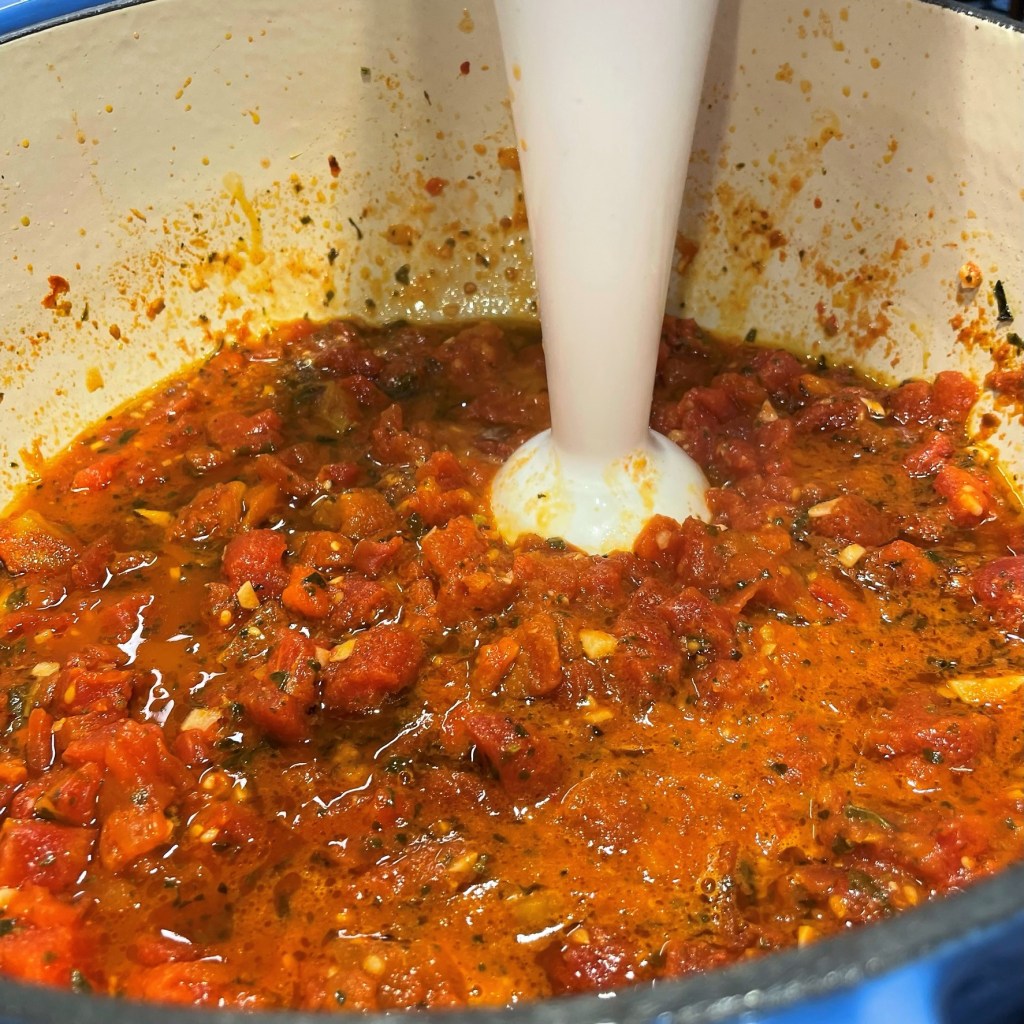
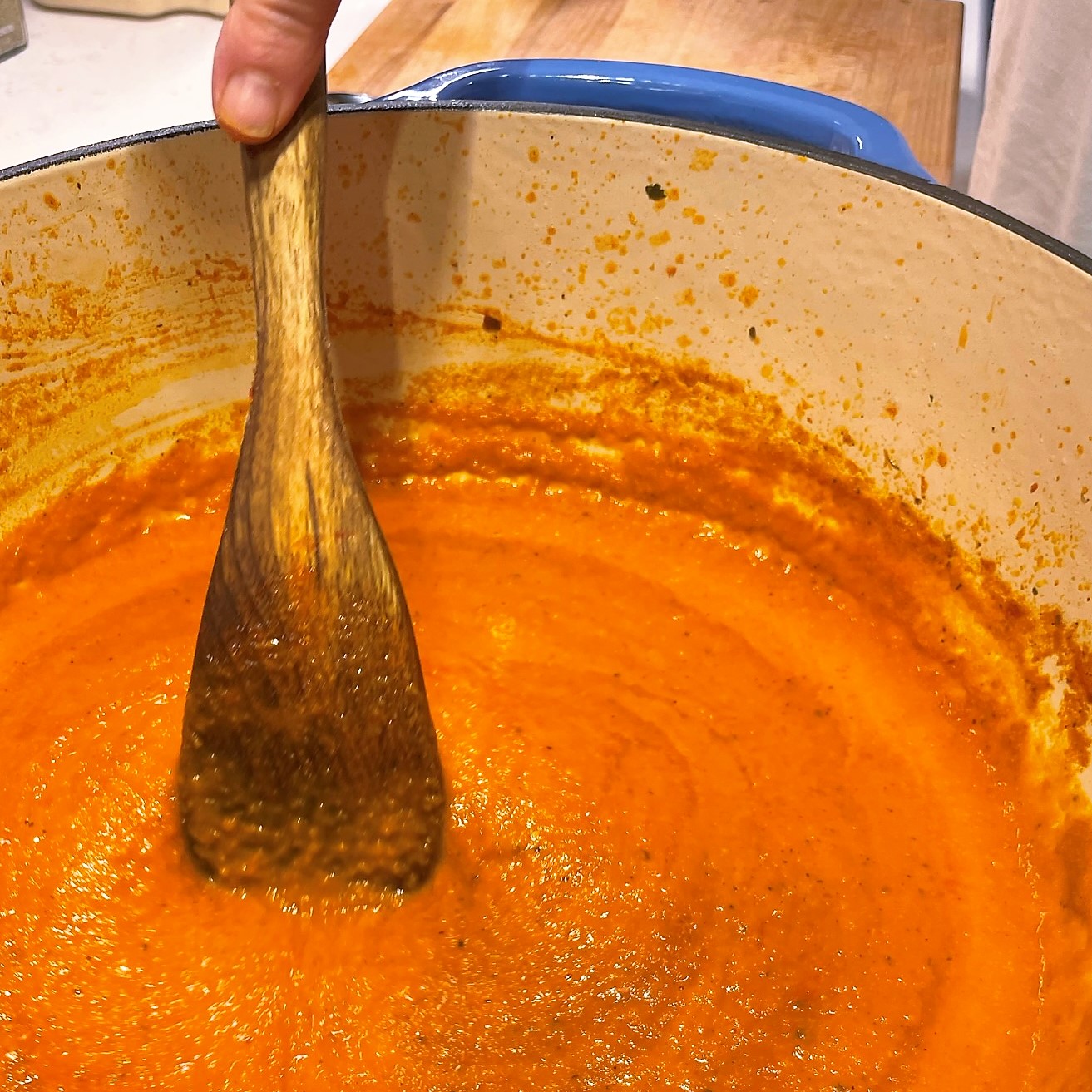
This included blanching (and then ice bathing) the tomatoes, sautéing garlic and some seasonings in a combination of olive oil and butter, roasting and dicing a sweet red bell pepper, and then adding an onion cut in half for the cooking (but removing at the end), then whizzing it up smooth with an immersion blender. The end result was amazing!

Use an immersion blender to puree it nice and smooth.

There was just one teeny problem. It’s not quite pizza sauce.

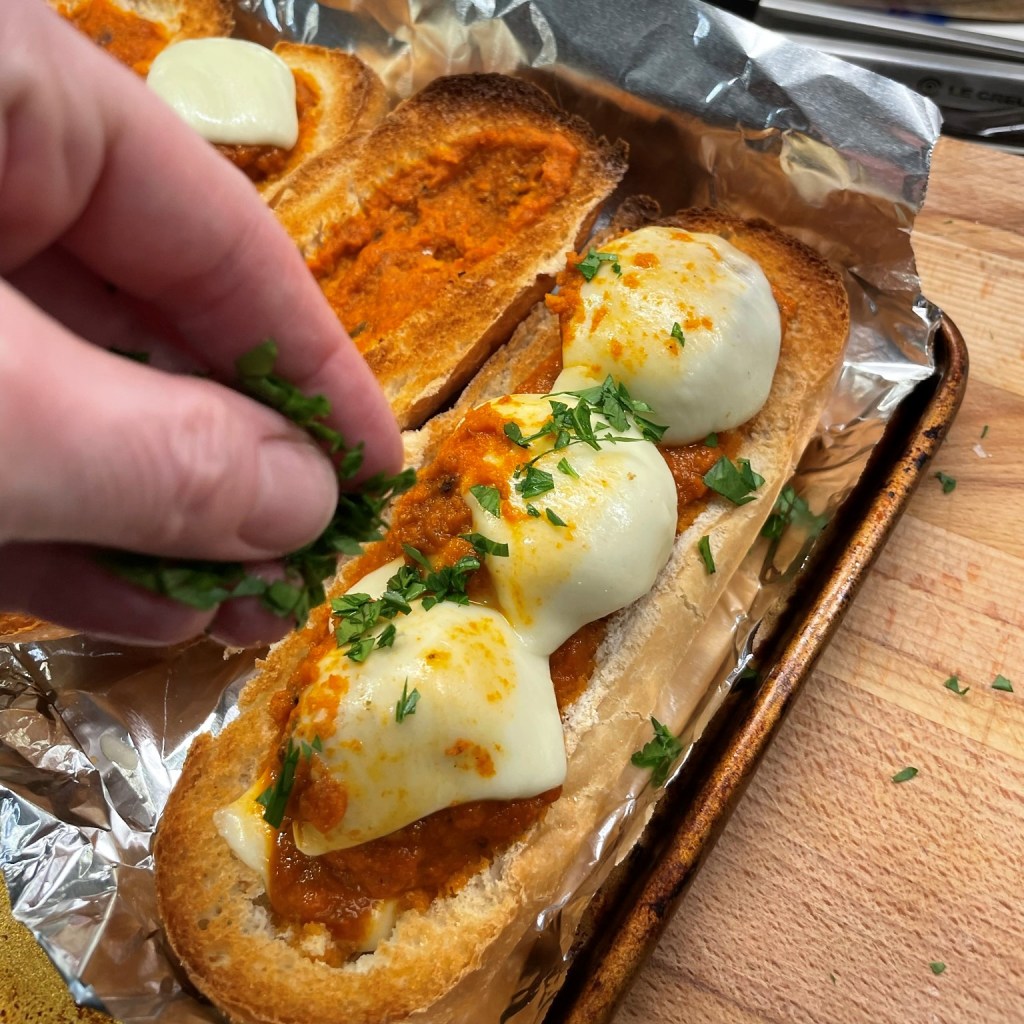
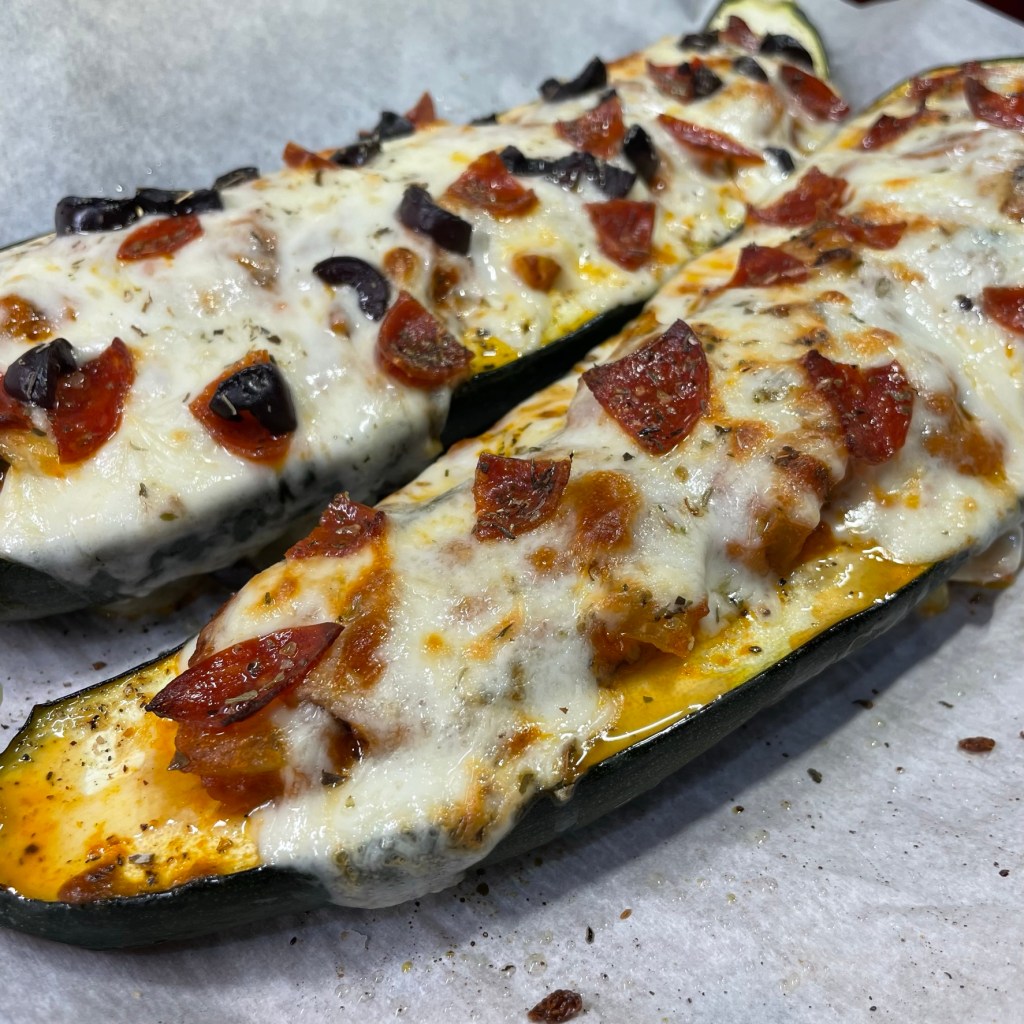
Rather, the sweetness of the red bell pepper and spice of the red pepper flakes meant it read uniquely, a cross between roasted red pepper sauce (like the one linked here that I made last summer) and something akin to vodka sauce (but without vodka, go figure). It was more complex than I wanted for pizza, which to me is a more tomato-forward and simple taste. We wound up using this sauce instead for turkey meatball subs. The subs had a tangy, bright pop thanks to our garden ingredients, and Terrie promises to share her recipe for the meatballs soon. The rest of the sauce (and meatballs) found its way into a stuffed zucchini boat, thanks to inspiration from a recent post on Dorothy’s New Vintage Kitchen.


As for my desire to make pizza sauce, well, we still have plenty of Roma tomatoes coming in. Stay tuned.


Not Quite Pizza Sauce

  • Servings: 6 to 8, depending on use
  • Difficulty: average
  • Print

My intention for pizza sauce turned into something more interesting and complex, perfect for topping pasta, Italian meatball subs or even lasagna. I used fresh Roma tomatoes from our garden, rather than canned tomatoes. If you use canned tomatoes, choose a 28 oz. can of Italian plum tomatoes and reduce the simmering time by half.

Ingredients

  • 3 pounds fresh Roma tomatoes, cleaned
  • 2 Tbsp. extra virgin olive oil
  • 2 Tbsp. unsalted butter
  • 1 small red bell pepper, roasted (instructions below)
  • 3 cloves garlic, smashed and minced
  • 1 1/2 tsp. dried oregano flakes
  • 1 1/2 tsp. dried basil leaves (or 2 good-sized sprigs fresh basil)
  • Kosher salt and black pepper to taste
  • 2 generous pinches red pepper flakes
  • 1 large sweet or yellow onion, peeled and cut in half from stem to root end
  • 3 Tbsp. grated Parmesan cheese (or the Parm-Romano blend that we are so fond of at our house)
  • 1 or 2 tsp. sugar, to taste

Directions

  1. Bring a large stock pot of water to a boil for blanching the tomatoes. Score the blossom end of the tomatoes to make it easy to peel them. Plunge the tomatoes into the water and let sit until you can see clear signs of the skin splitting. Have a good-size pot or bowl filled with ice water to chill the hot tomatoes and keep them from cooking once they are blanched. Then peel the tomatoes, give them a rough chop and set aside.
  2. Quarter the bell pepper and press the pieces to flatten them, skin side up, on a foil-lined baking sheet. Set the oven to broil setting and roast peppers for about 10 minutes, until charred but not burned. Transfer the pepper pieces to a bowl and cover to steam, which will allow easier peeling. Dice the pepper.
  3. In a large non-reactive pot on a low flame, heat the oil and butter until the butter melts. Add the garlic, oregano and pepper flakes. If using dry basil, add it now, too. Continue cooking on low for 2 to 3 minutes, then add the tomatoes, and salt generously. Add the onion halves, Parmesan cheese, fresh sprigs of basil (if using that) and roasted red pepper. Bring to a low boil, then reduce heat and cook on low until volume is reduced by up to half (about two hours).
  4. Remove the onions (and basil sprigs if you used fresh), and then process the sauce with an immersion blender until smooth. Continue to simmer on low, and taste and season it from that point to suit your palate.
  5. Serve immediately over pasta or whatever dish needs a bright Italian sauce. This also can be refrigerated (the flavors really shine after a couple days in the fridge), but probably should be used within a couple of weeks. Or you can freeze it.


Tahini-Lemon Sauce

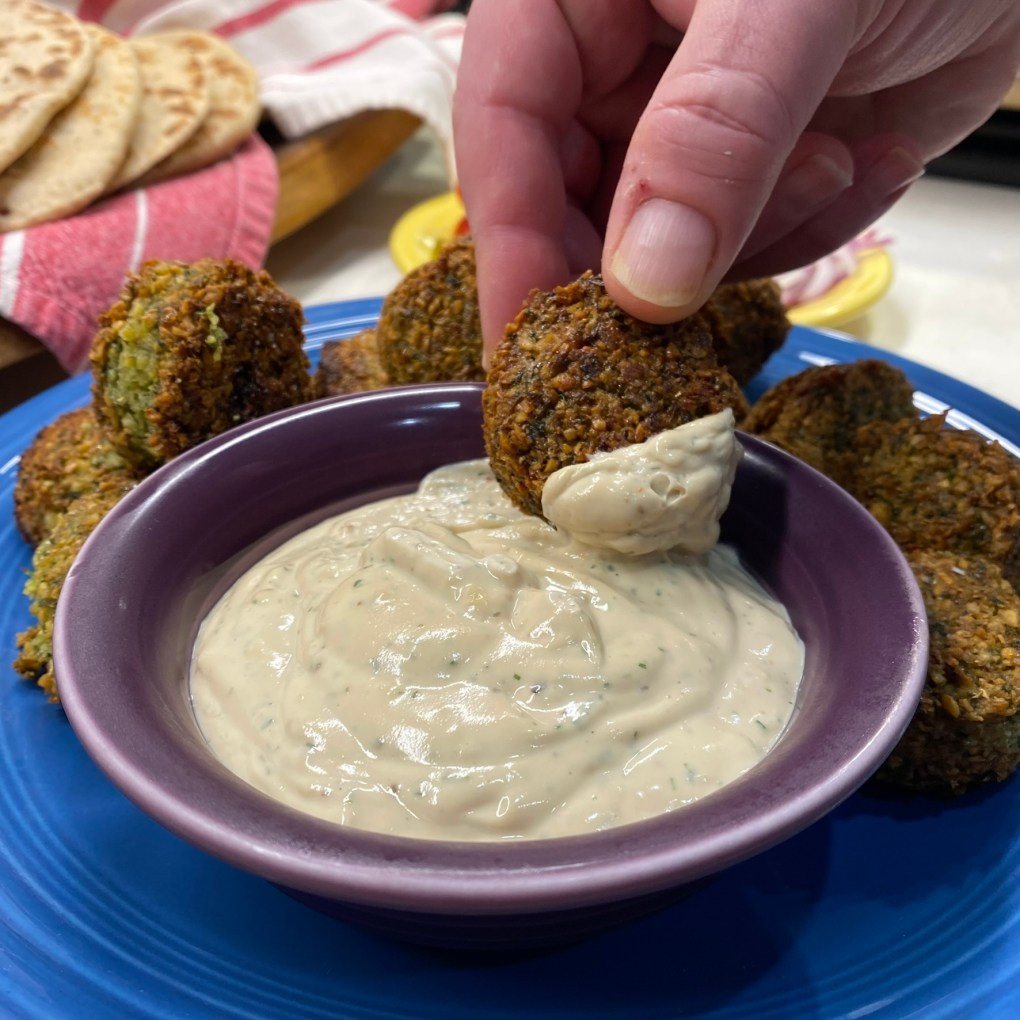
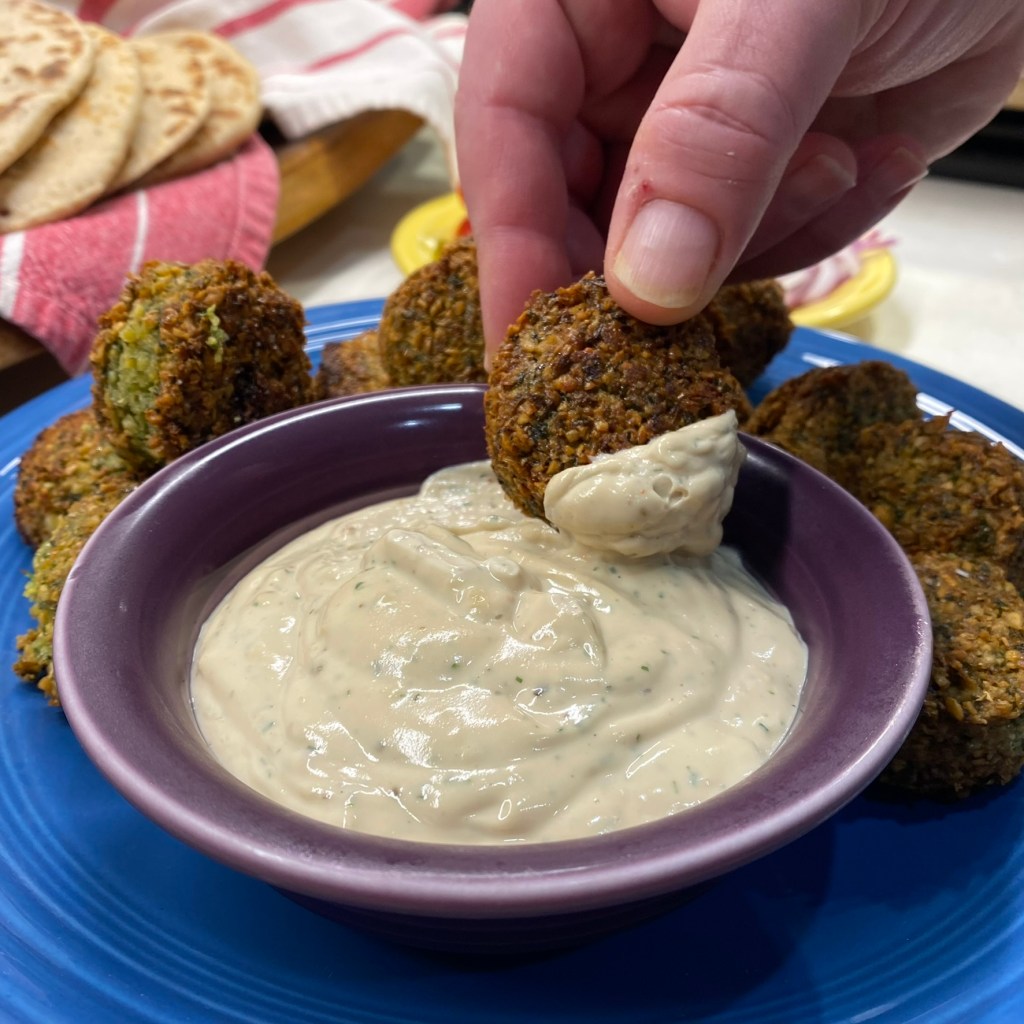
One of my favorite condiments is tzatziki, the Greek yogurt-based topping that is perfect for anything you put on a pita, including gyro and souvlaki. The zesty zing of garlic and cooling notes of grated cucumber are an easy, refreshing way to pile on the flavor. But for a vegan dish, such as the falafel I made recently, tzatziki is off the table. We wanted a flavorful topping that still had a Middle Eastern vibe, and one that could play many roles, as a dipping sauce, topping or dressing.

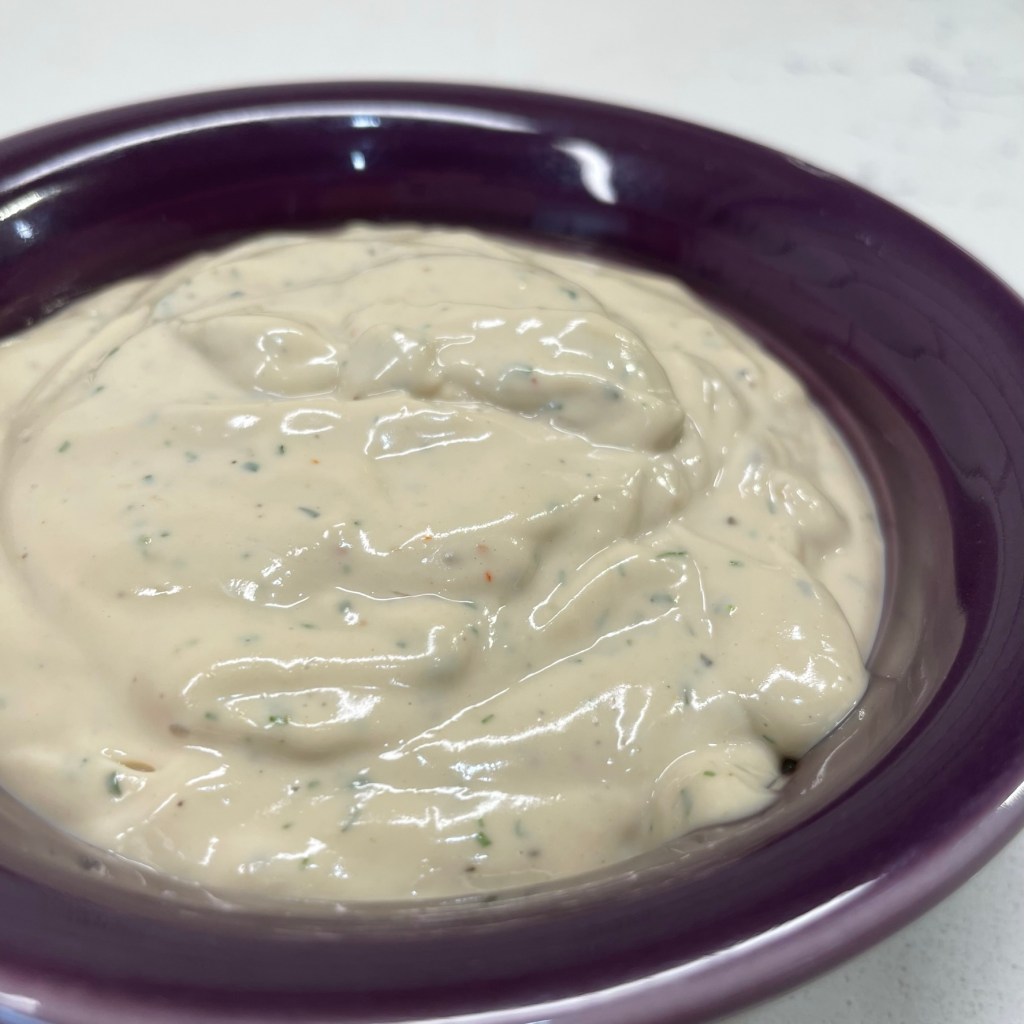
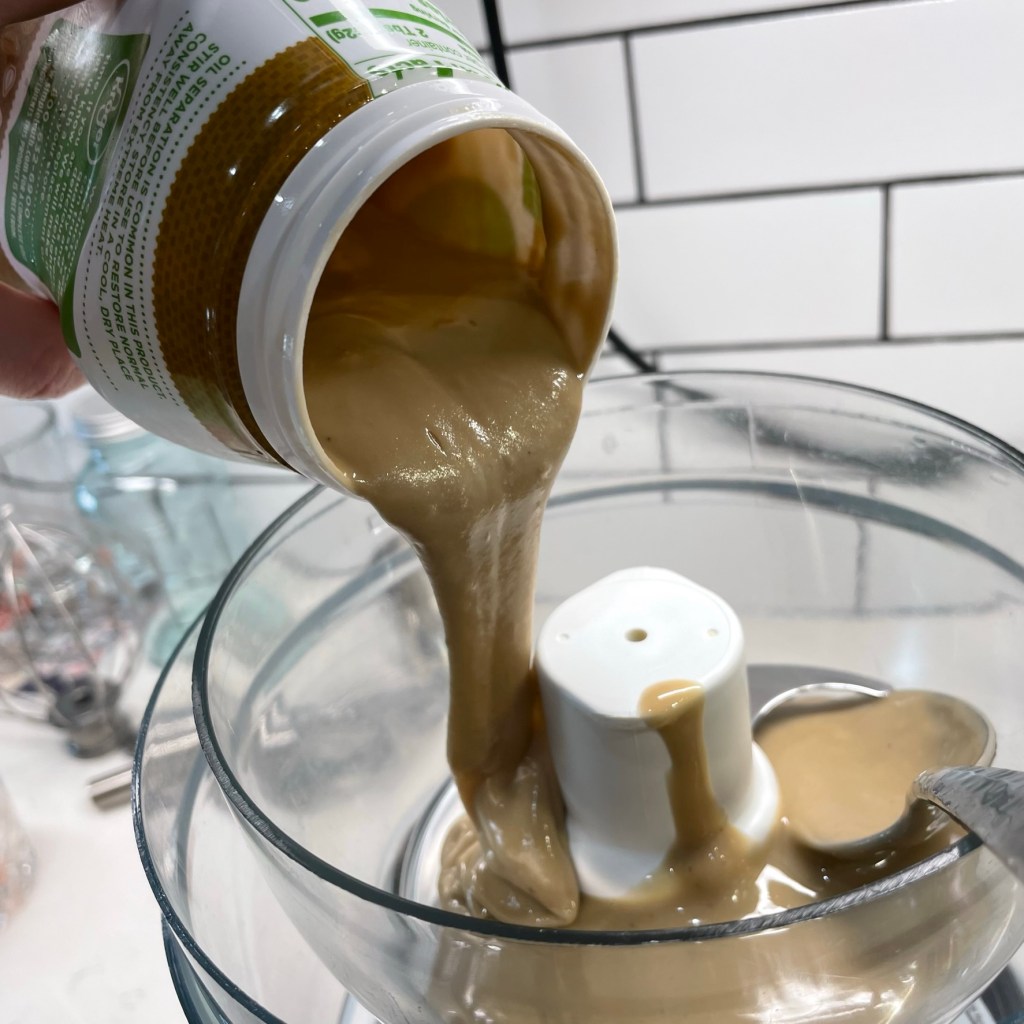
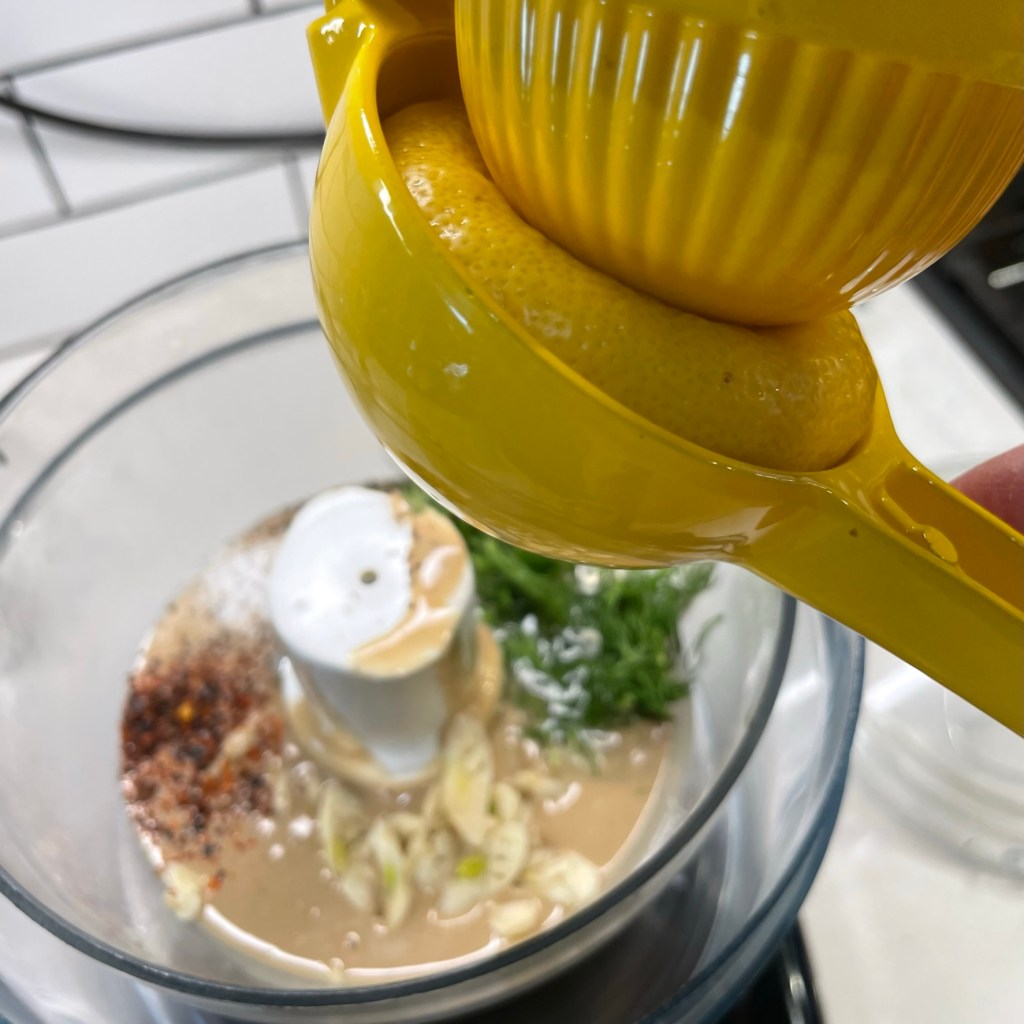
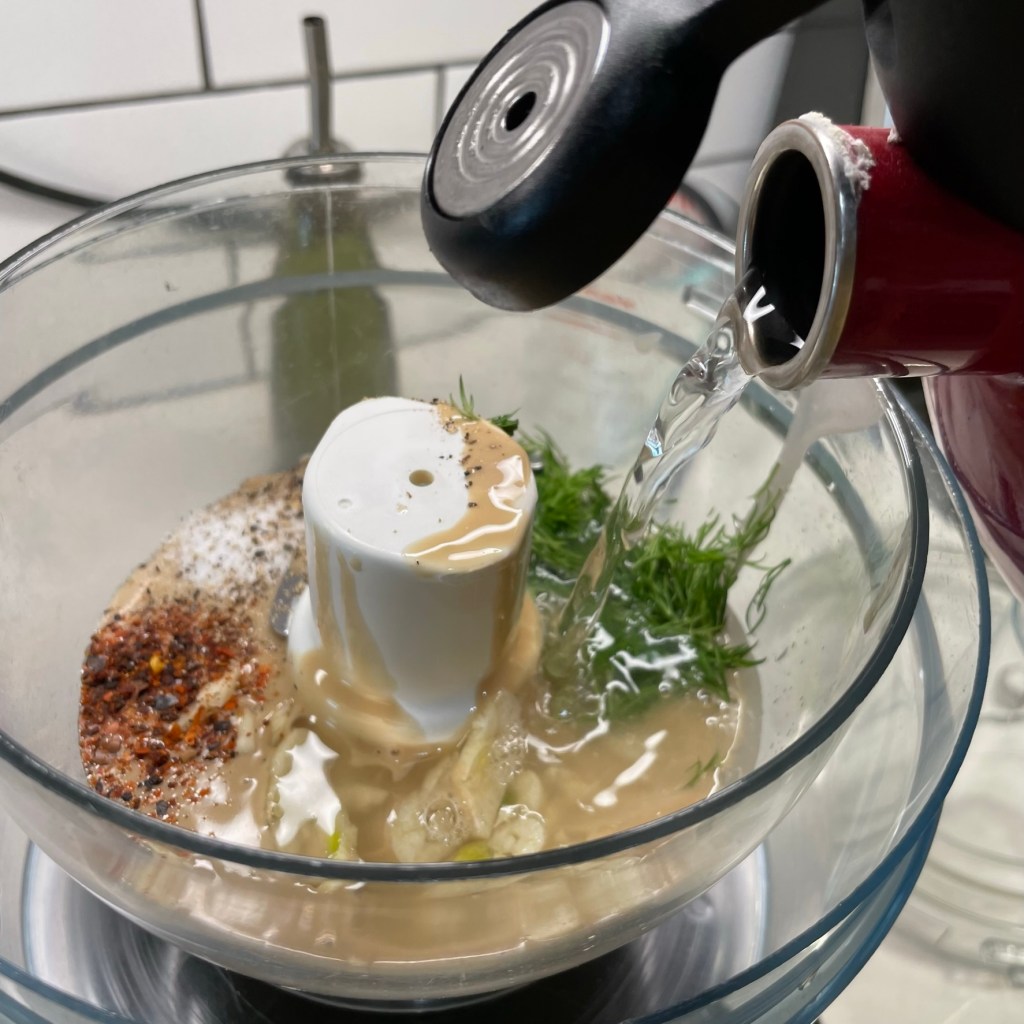
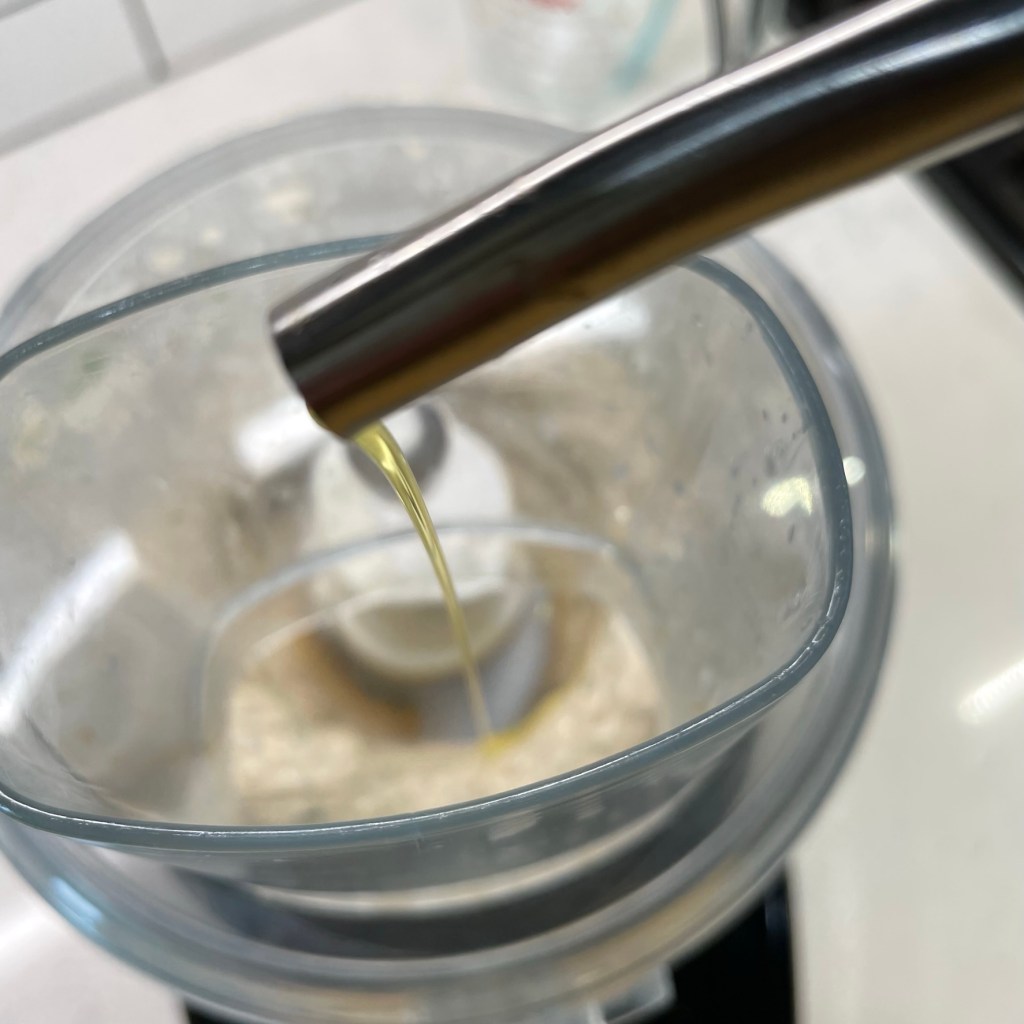
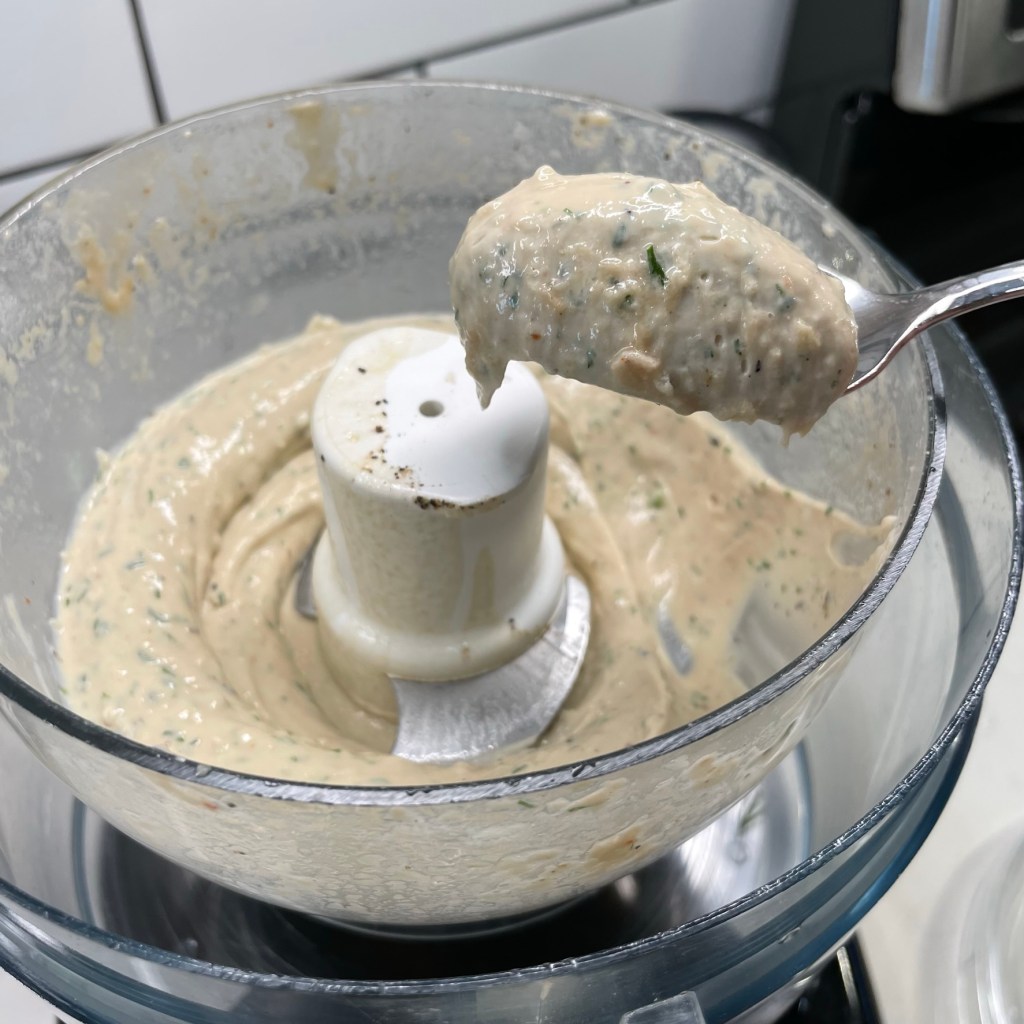
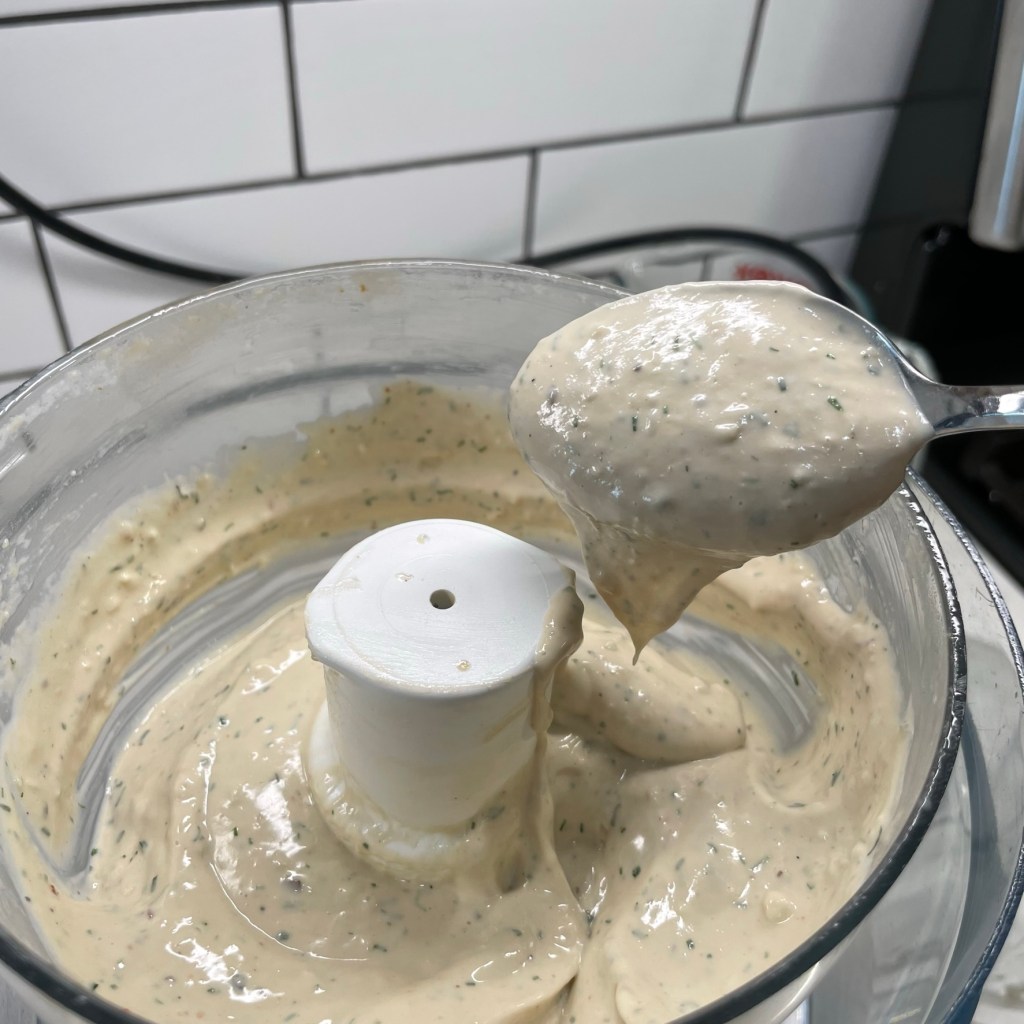
That’s how this tahini-lemon sauce came to be, and as I whizzed up the ingredients in my food processor, it occurred to me that this sauce is basically hummus, minus the chickpeas. All the other components of hummus are in there—the tahini, which is a sticky paste made from ground toasted sesame seeds, fresh garlic, fresh lemon juice, salt, spices and good olive oil. Processing these ingredients results in a smooth, completely emulsified mixture that can be thick or thin, depending on how much water your blend into it. For my purposes this time, I kept it on the thicker side as a perfect dipping agent for my falafel, but I can easily see the benefit of thinning it to pour onto a salad or Buddha bowl.

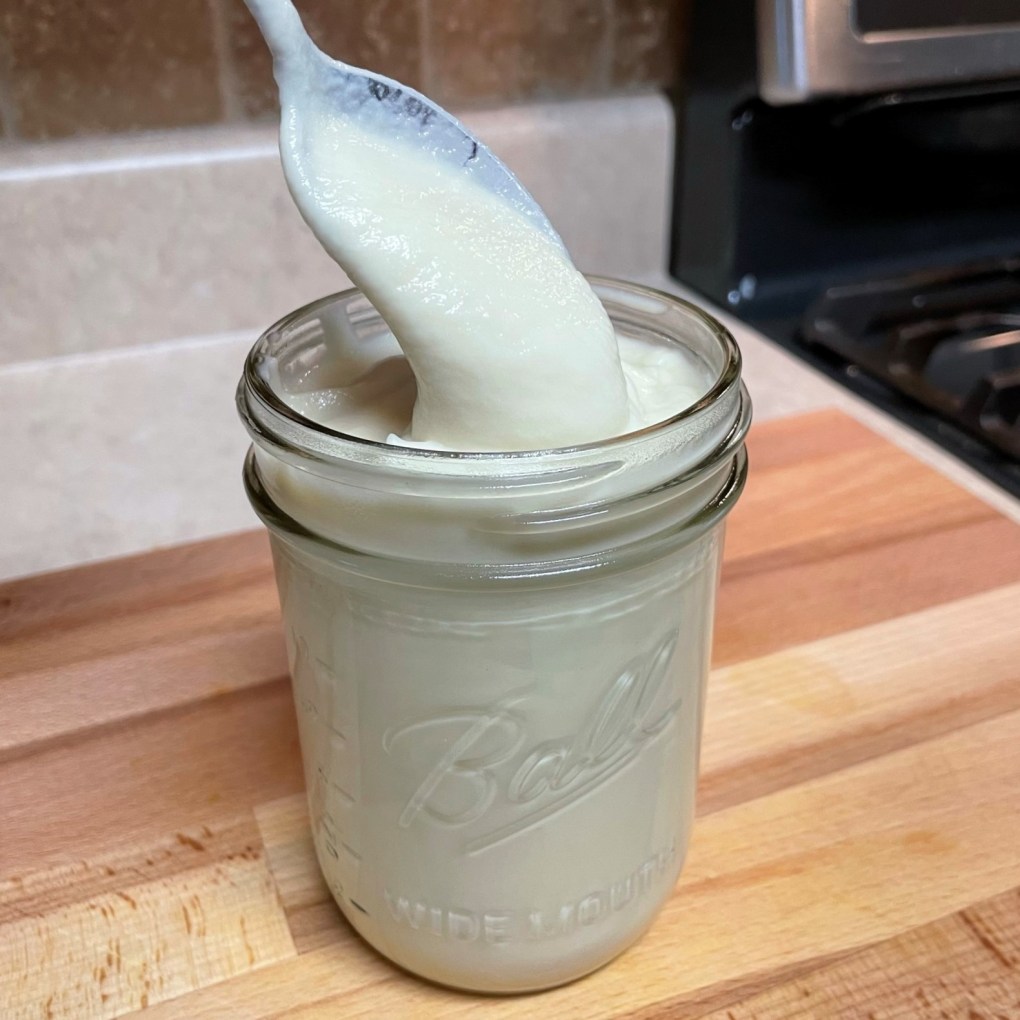
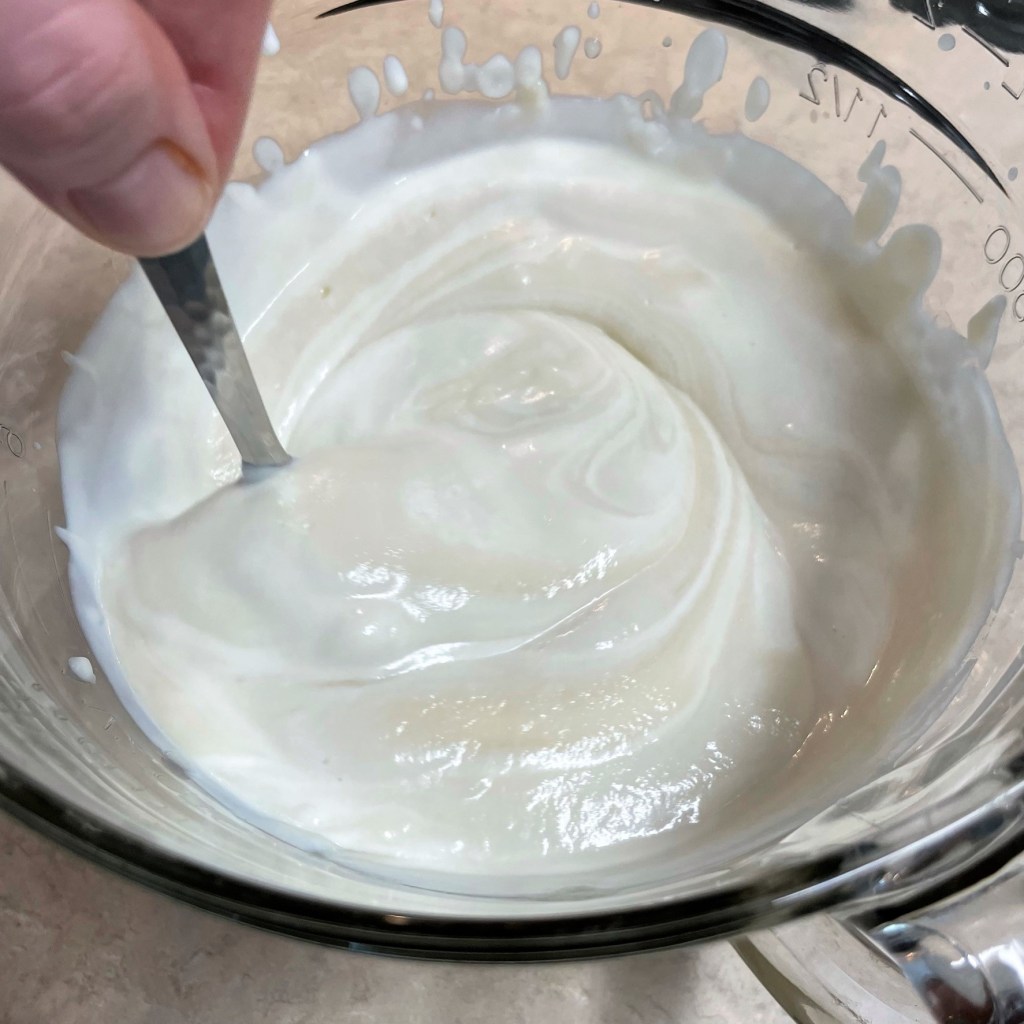
This tahini-lemon sauce is smooth, silky and creamy, but with no mayonnaise or dairy.

My husband’s adult daughter has adopted the vegan lifestyle, and I am always on the lookout for easy foods to make when she visits. This tahini-lemon sauce fits the bill, and it’s so tasty that we non-vegans won’t feel like we are missing out on anything.

Enjoy!


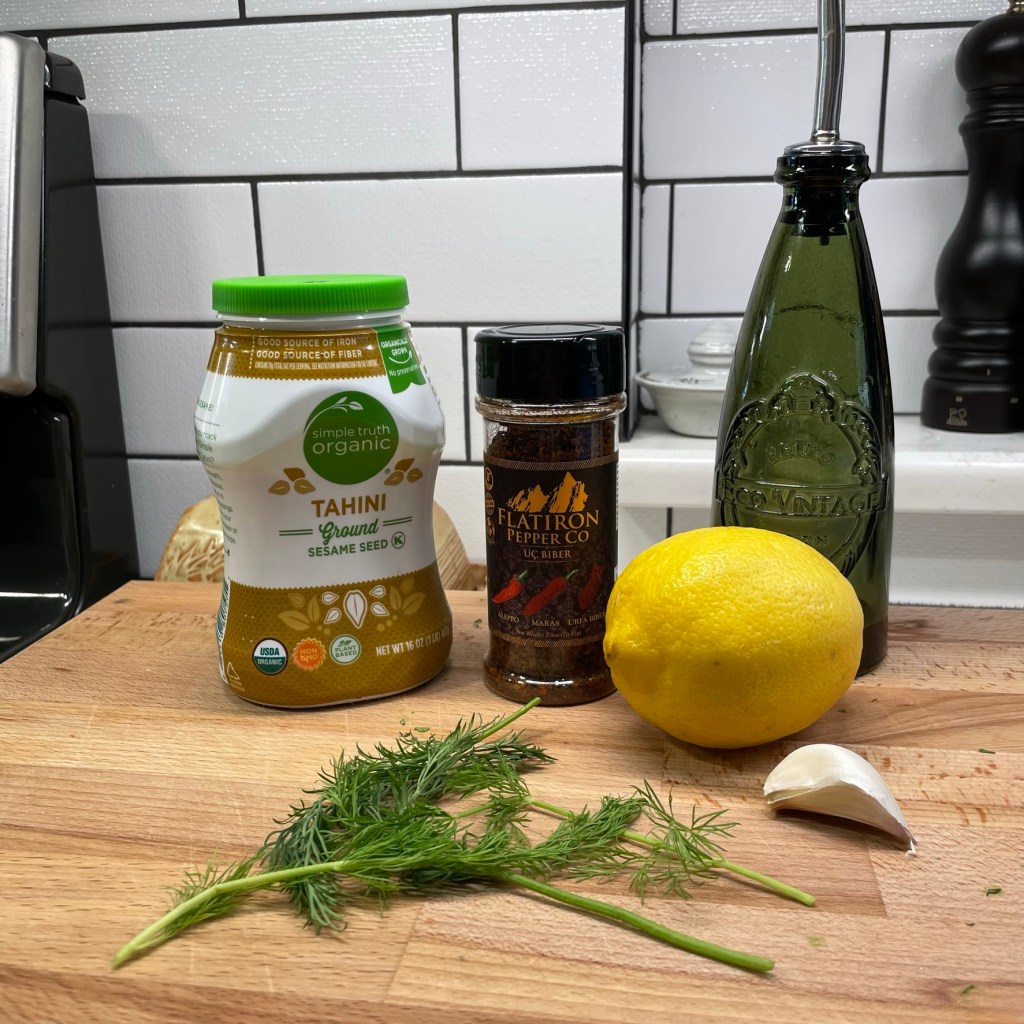
Ingredients

1/2 cup tahini paste

2 cloves garlic, chopped

Juice of 1 large lemon

A few shakes of crushed red pepper* (see notes)

2 Tbsp. fresh dill leaves

1/4 cup water (or more, for thinner sauce)

3 Tbsp. extra virgin olive oil


*Notes

The crushed red pepper flakes that you see in pizza restaurants would be fine here, but if you can get your hands on Aleppo pepper, that is even more in keeping with the Mediterranean flavor profile. We used a three-pepper blend (Aleppo, Maras and Urfa) from Flatiron Pepper Company, and their rep informed me that it will be back in stock in a few months. I’ll update this post at that time to include a link, in case you’d like to check it out.

(UPDATE: It’s back! You can use this link to check out the Uc Biber blend.)


Instructions


No-Guilt “Alfredo”

There is a common occurrence around 3 am at our house, and it usually results in a new recipe idea. You see, when I find myself unable to stay asleep, my middle-of-the-night solution is to pick up my smart phone and start looking at Pinterest. It doesn’t take long before my insomnia-driven wanderings, combined with the rabbit-hole algorithms of their platform, usually leads me to imagine putting a ridiculous, over-the-top twist on favorite classic foods. On a recent sleepless night, however, I was inspired in a different way.


Thank you for the reminder!

If there is truth in this quote (and, of course, there is), then I owe myself, and especially my physical body, an apology. At times, my enthusiasm for trying new things has caused me to put undue emphasis on foods that don’t serve me well, at least in terms of good health. I cannot eat s’mores ice cream and root beer-glazed baby back ribs all the time. I have to strike a balance with some good-for-me foods, too, and I’m overdue for some healthier stuff.

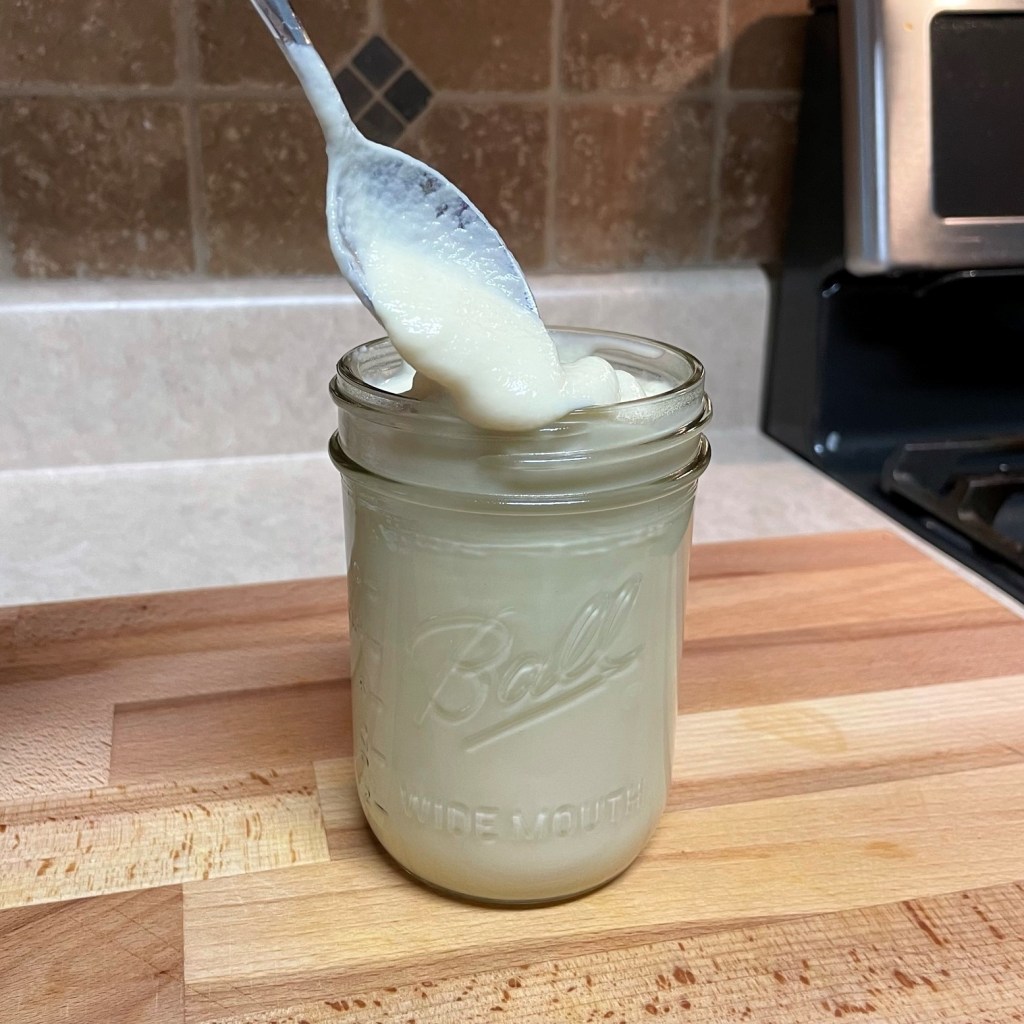
Rather than switch to an unsustainable “all salads” kind of menu plan, I decided to pull out some old tricks and use vegetables in creative ways to lighten up some foods that would otherwise be rich and decadent. The first recipe I drew from my archive is this silky “Alfredo.” It satisfies all my cravings for rich, creamy sauciness, but without the guilt or side effects associated with eating a ton of cream, butter and cheese. What kind of culinary wizardry is this, you may ask? And what ingredients could possibly achieve this?

Yes, really!

Yes, the same fiber-rich vegetable that stands in for carbs as rice and pizza crust can also be transformed into a ribbony, sumptuous sauce that’s ready to be draped over your favorite whole grain pasta or veg’d out even further onto spiralized zucchini noodles. All you need is some broth, a bit of olive oil to roast the garlic and a good, powerful blender. After you puree it to smooth, silky perfection, you can swirl in a little cream for richness and a spoonful or two of Parmesan for zest and a lovely umami flavor. Of course, if you prefer to keep it entirely dairy free, you can do that, too. Perhaps swirl in a bit of creamy oat milk or almond milk and a tablespoon of nutritional yeast. Finally, a touch of olive oil emphasizes the silky mouthfeel that is just as important as ingredients for creating a satisfying food experience.

Forgive me, I was eating it straight from the spoon.

But does it really taste exactly like real Alfredo? Obviously, no, because it’s cauliflower. But it has a creamier texture than you would ever expect from such a fiber-rich vegetable, and it’s an easy, inexpensive way to satisfy your craving for creamy without the dietary downside. The roasted garlic provides a savory depth of flavor, and you can add just enough cream or half and half to trick your taste buds into thinking it is a traditional Alfredo. You will never miss the high-calorie ingredients, I promise, and this also happens to be a great way to “sneak” some veggies into a meal for an unsuspecting loved one.

In addition to the obvious use as a sauce for pasta, you could use this concoction in place of a béchamel in a casserole or veggie lasagna, or increase the broth or milk of choice and turn it into a creamy base for a comforting vegetable soup. As a bonus, you can warm up the leftovers without breaking the sauce into a greasy mess.


Ingredients

1 large head fresh cauliflower, separated into roughly uniform florets

1 or 2 whole bulbs garlic, roasted* (see notes)

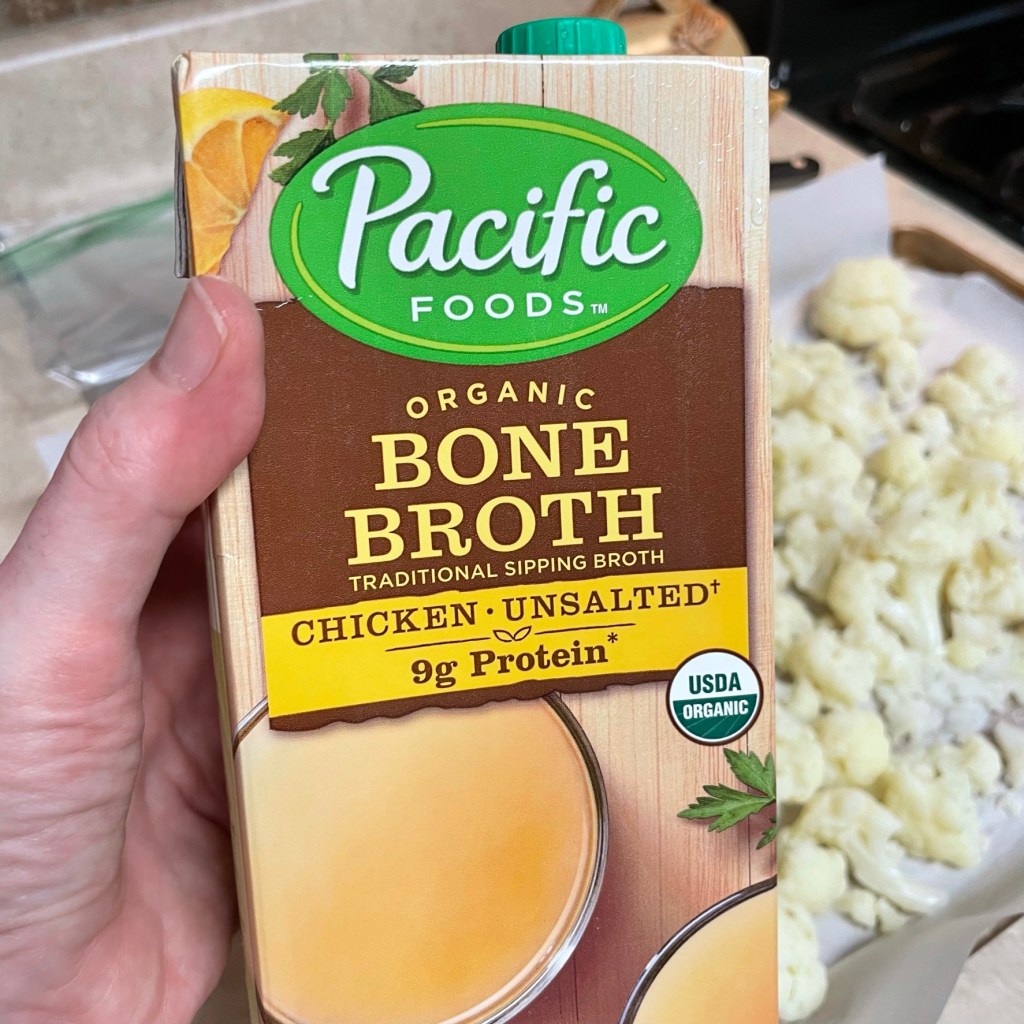
1/2 cup chicken bone broth* (or mushroom or vegetable broth)

Salt and pepper

1 Tbsp. mild, neutral olive or avocado oil

3 Tbsp. half and half*

2 Tbsp. parm-romano blend*


*Notes

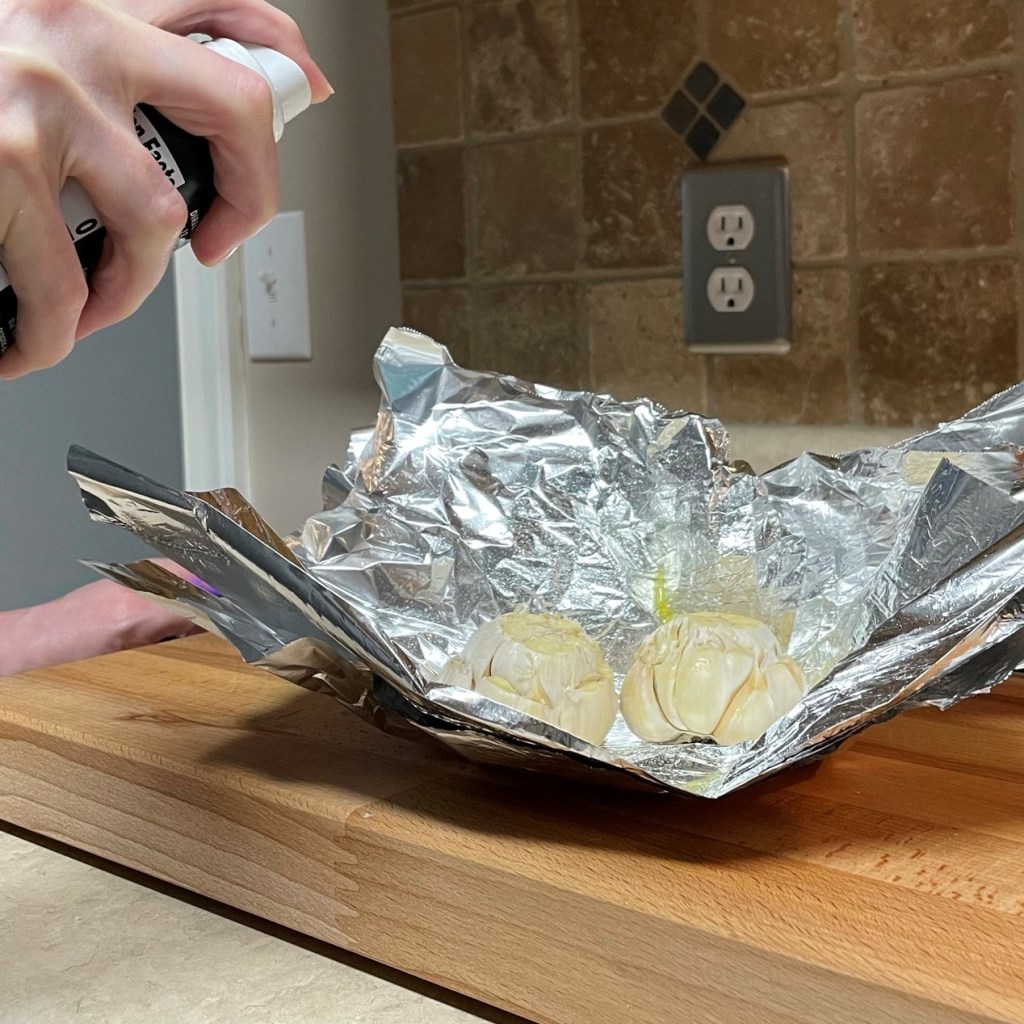
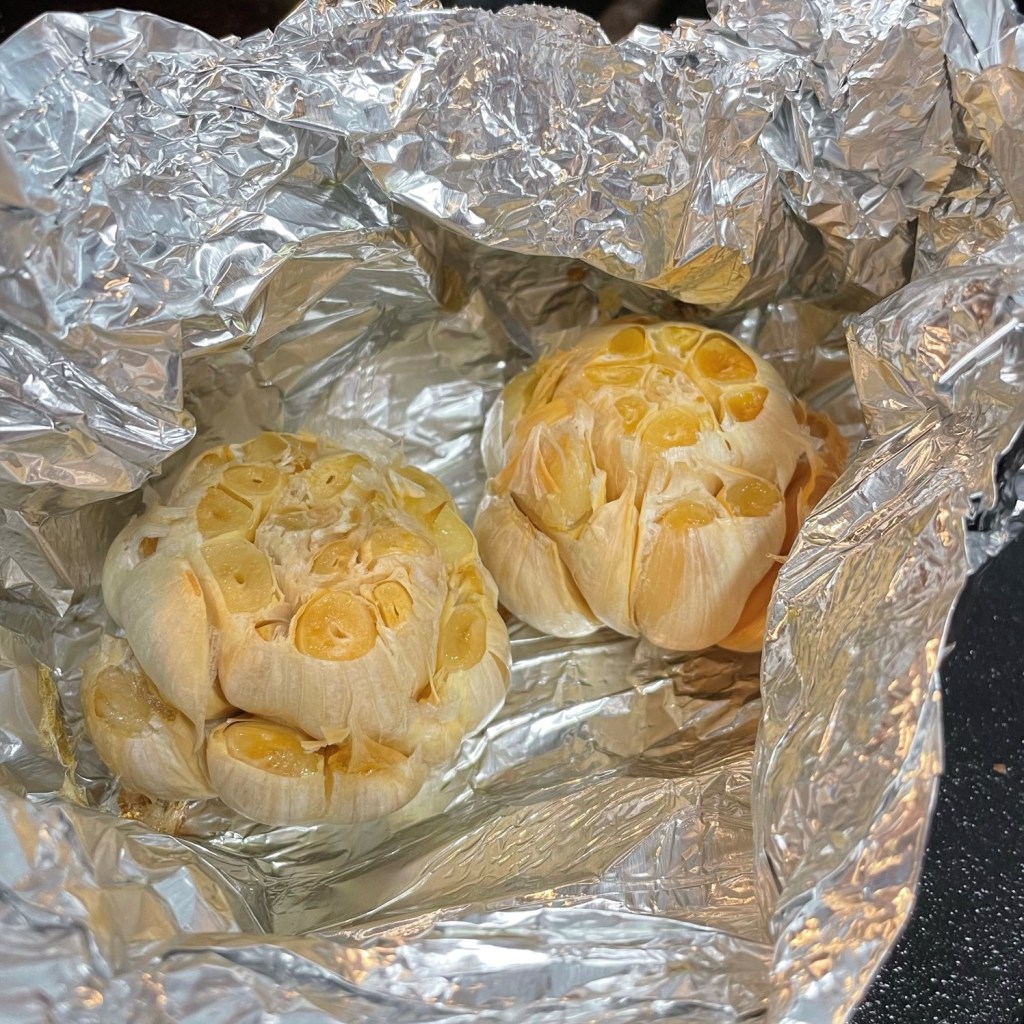
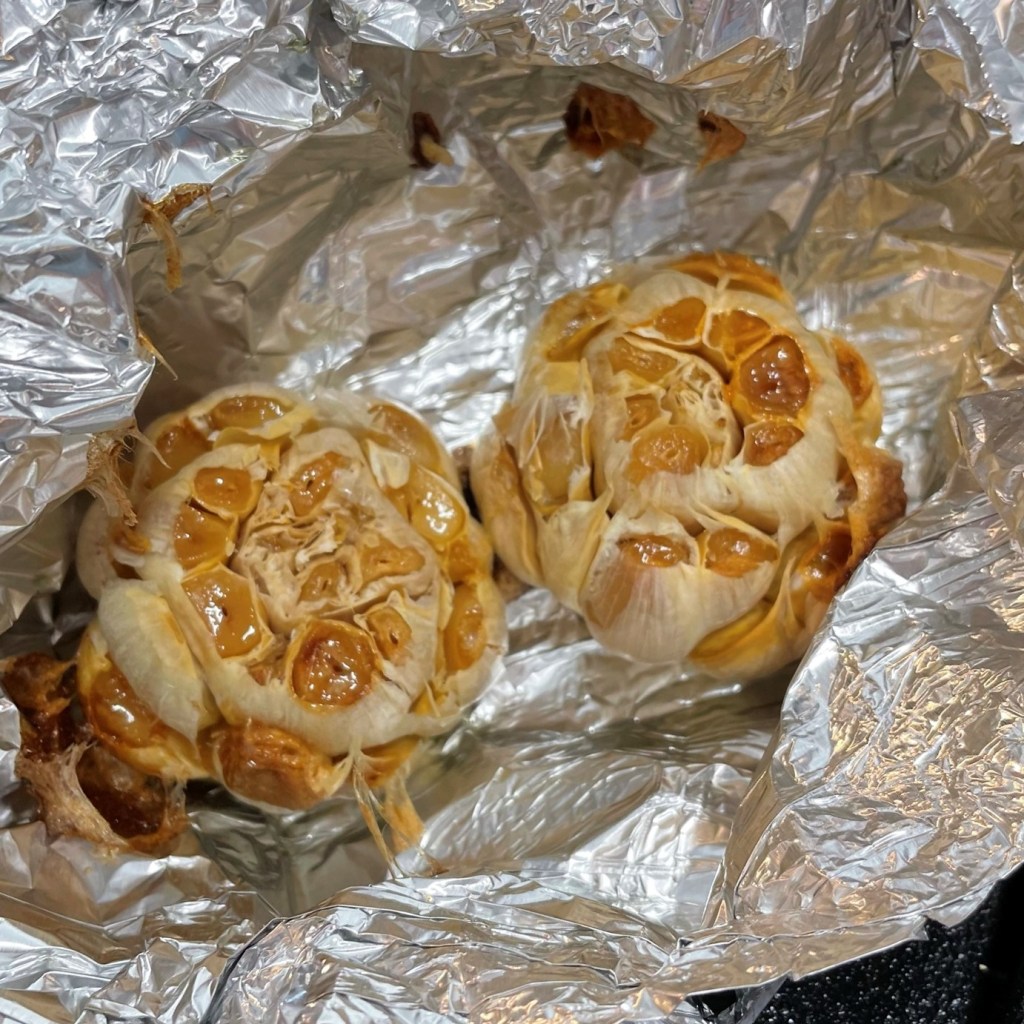
If you are a garlic lover, I recommend using both bulbs of roasted garlic, which has a rich, mellow flavor because of the slow roasting. If you have never roasted garlic before, please give it a try because it is one of the best ways to add a rich flavor to a veggie-centered dish. Use the instructions I offered in my previous post for roasted garlic (a.k.a. best flavor ever), or if the oven heat is too much for your late summer comfort, a quick internet search will lead you to instructions for making it in an instant pot or slow cooker. Whatever method you choose, roast the bulbs until they are very soft, and a deep golden color.


I used chicken bone broth in my no-guilt Alfredo sauce, because I wanted the rich, savory flavor and I was not concerned about keeping it vegetarian. If you prefer, use a mushroom or veggie broth, preferably one that does not contain tomato, which changes the flavor significantly. You know what else would probably be really good? Miso broth!

I used bone broth because I had it open, but any vegetable broth or mushroom broth will work fine too.

The dairy items are totally optional, and depending on your preferences or diet restrictions, you have plenty of choices. OK with dairy but need it low fat? Try evaporated milk. Want it vegan? Go for a creamy (unflavored and unsweetened) oat or almond milk and consider adding a tablespoon of nutritional yeast for a cheesy, nutty flavor that is reminiscent of parmesan. Want your veggies and still craving cream? Add more half and half or heavy cream. You’re the boss. 😉


Instructions

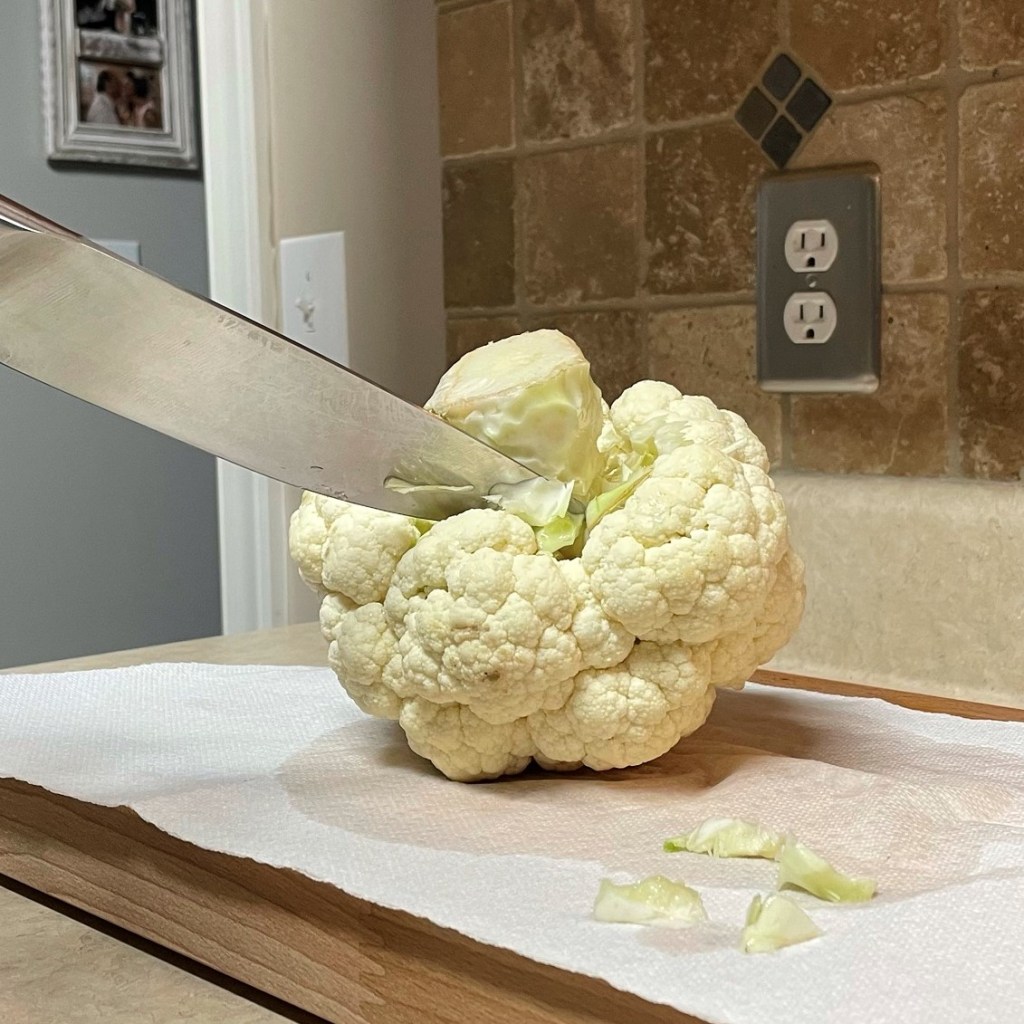
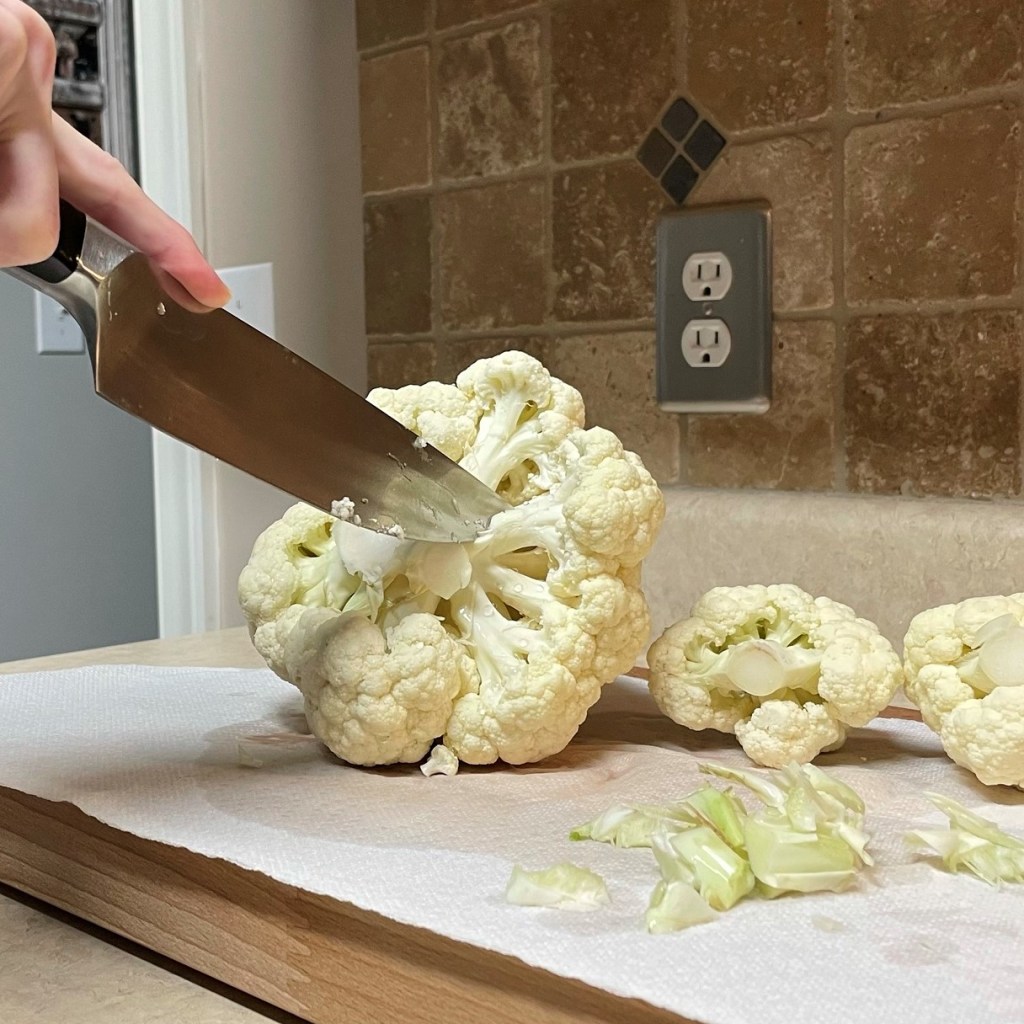
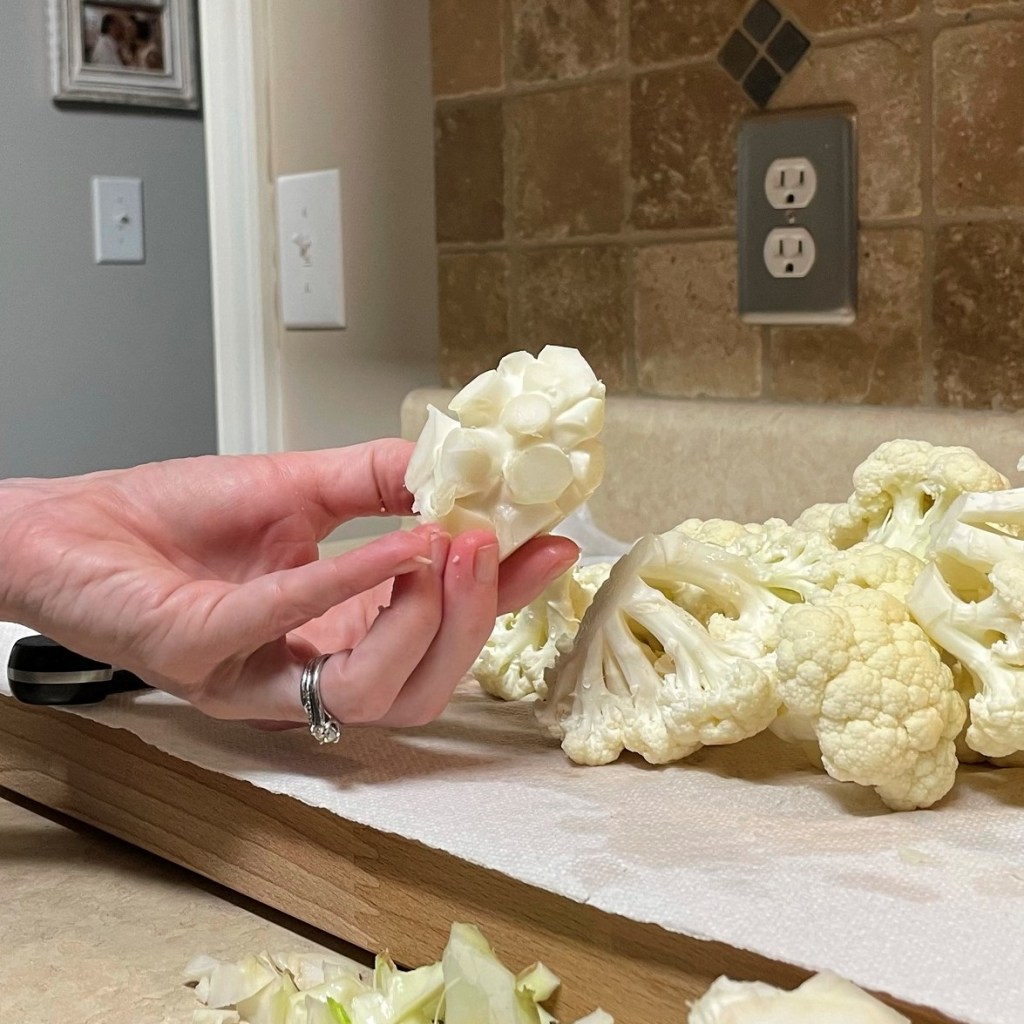
  1. Rinse and dissect the cauliflower into florets of approximately the same size to ensure even cooking. Use the thick stem parts, too, but trim off all visible layers of leaves.
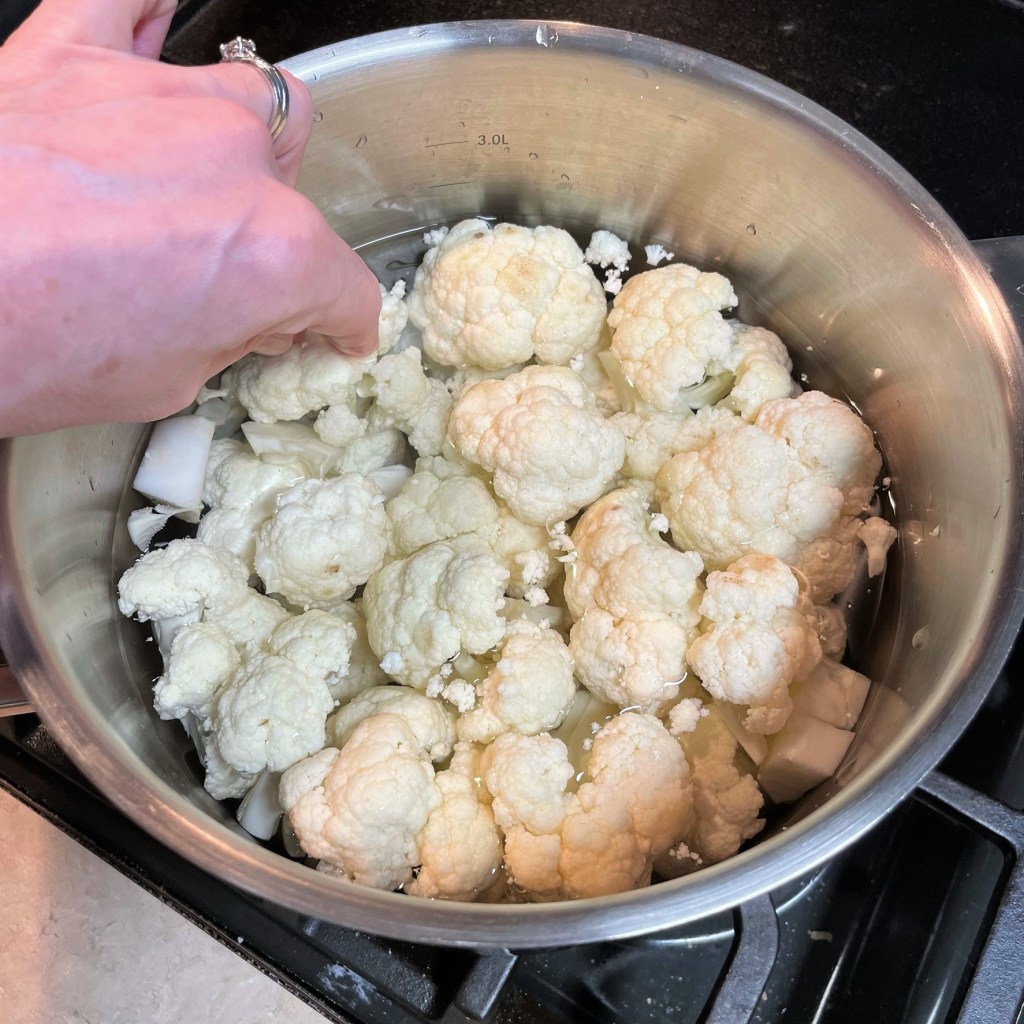
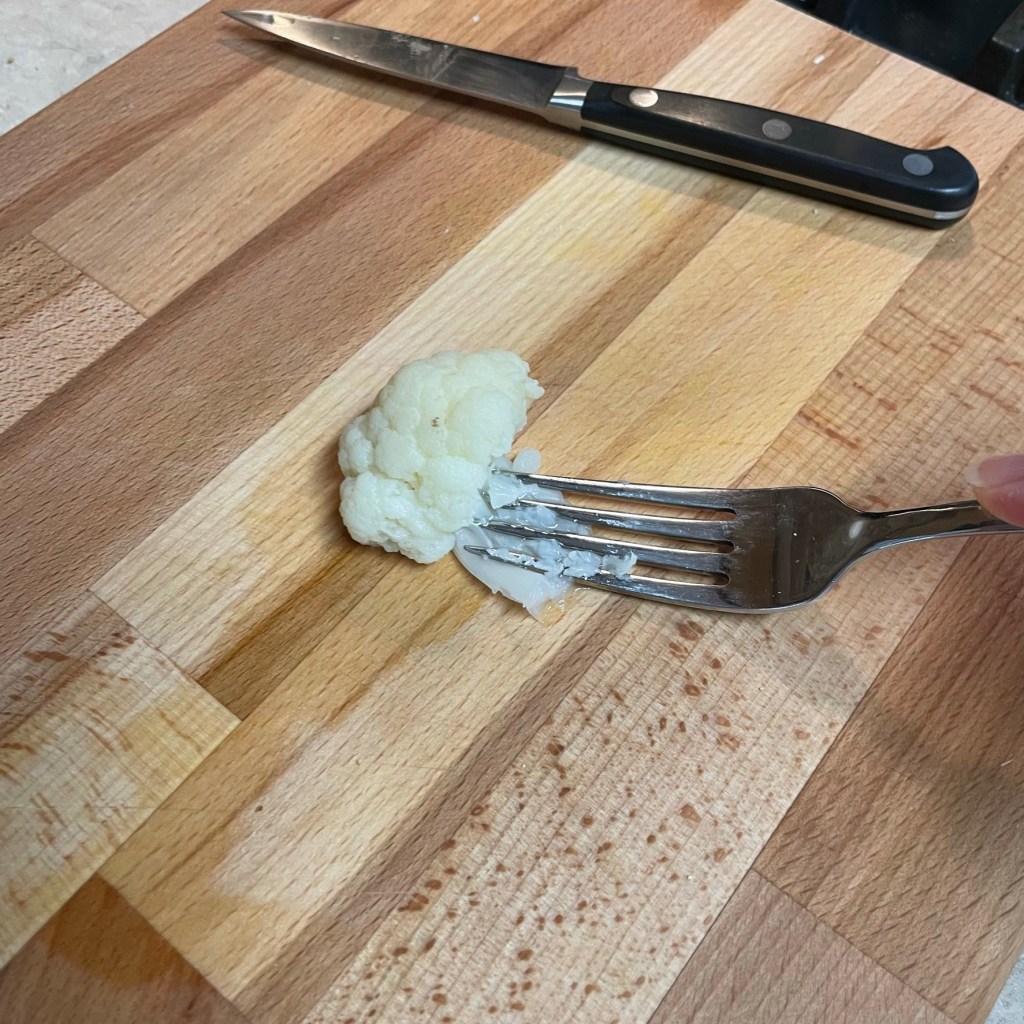
  2. Add enough cold water to just cover the cauliflower in a large, heavy-bottomed sauce pot. Bring to a gentle boil and add a teaspoon of kosher salt to the water. Cover the pot and simmer over medium-low heat until the thickest stems and pieces of cauliflower are tender enough to be easily smashed with a fork.
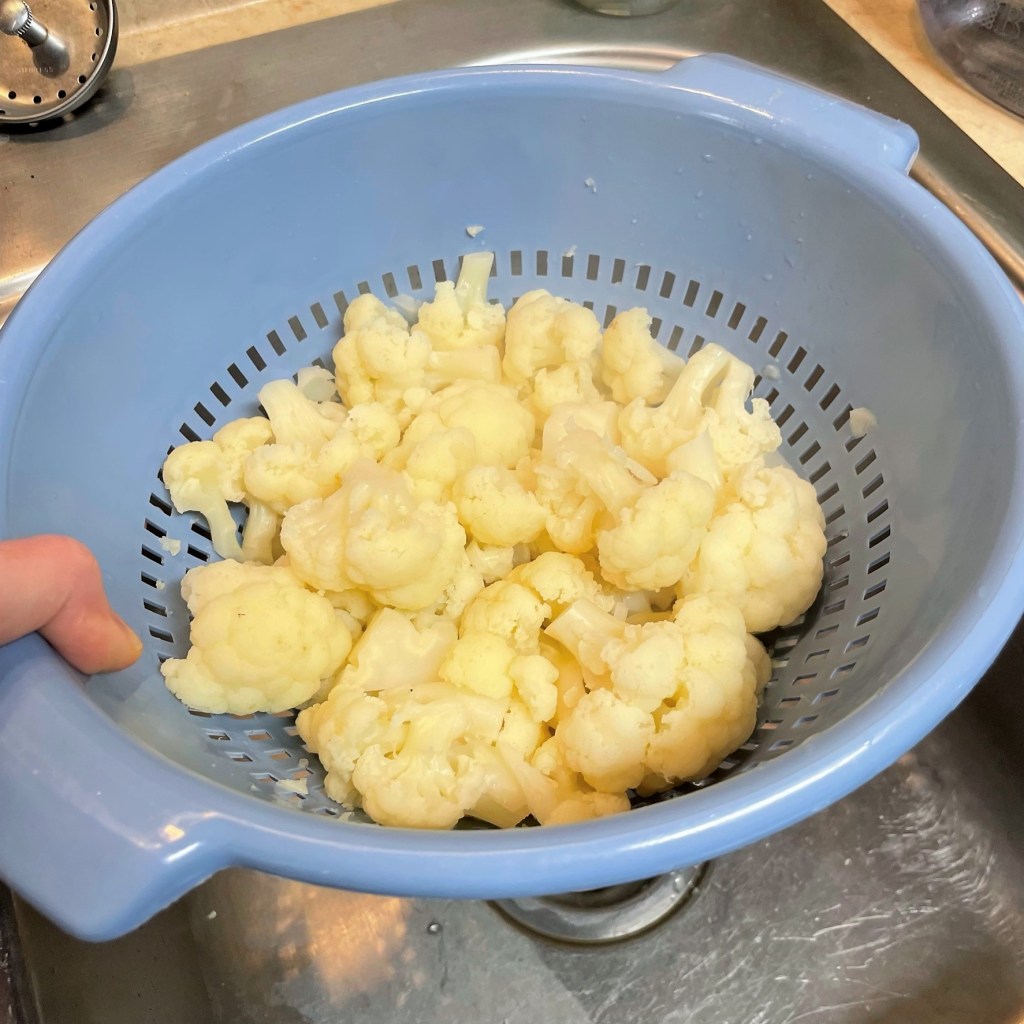
  3. Drain the cauliflower in a large colander. Spread it out onto a parchment-lined baking sheet to cool a bit, and also to evaporate all of the excess moisture from the cauliflower.
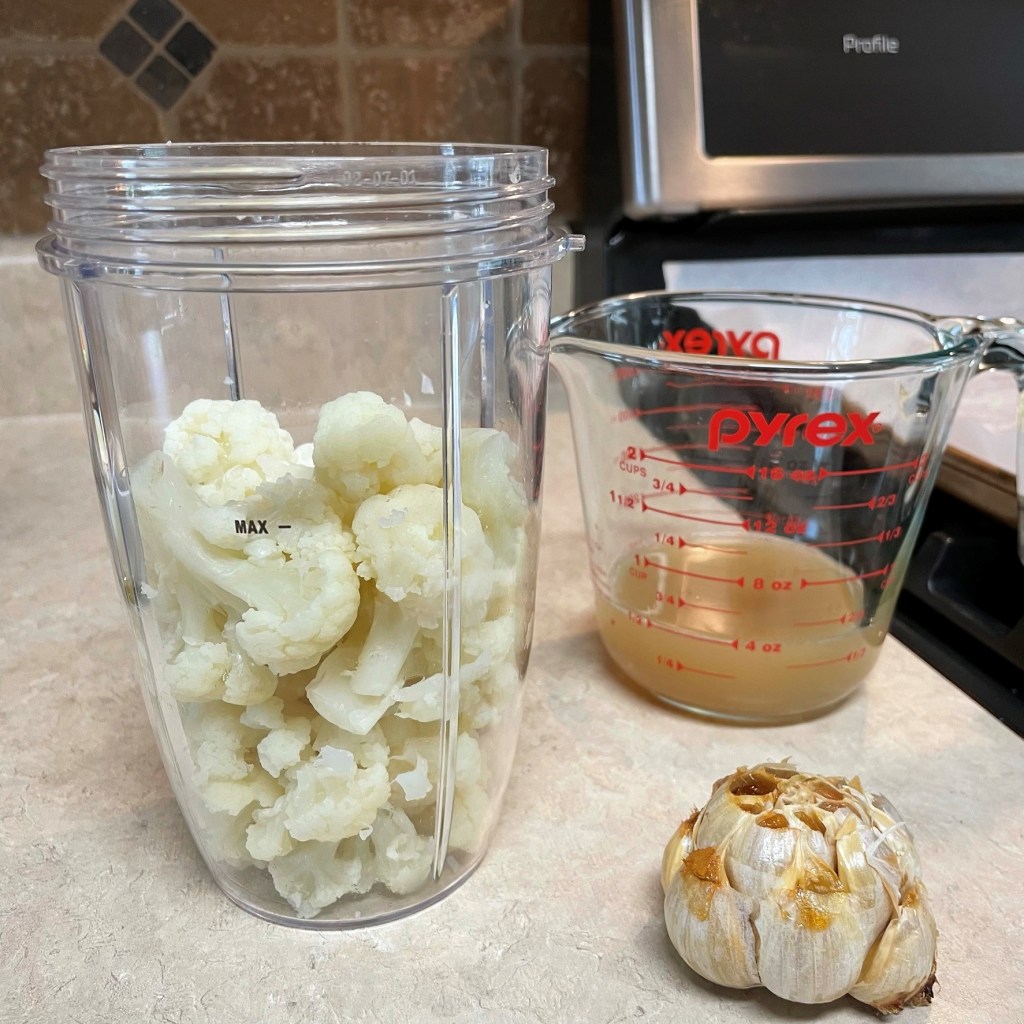
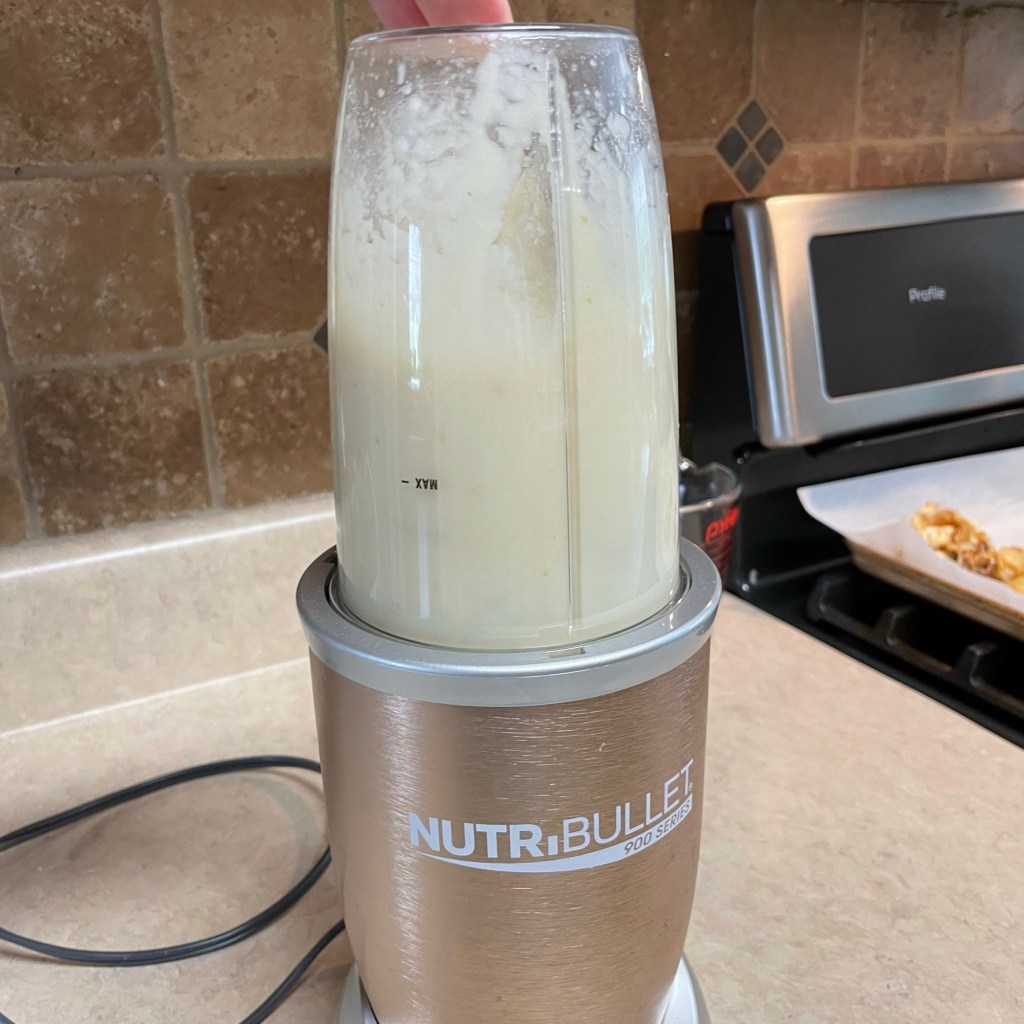
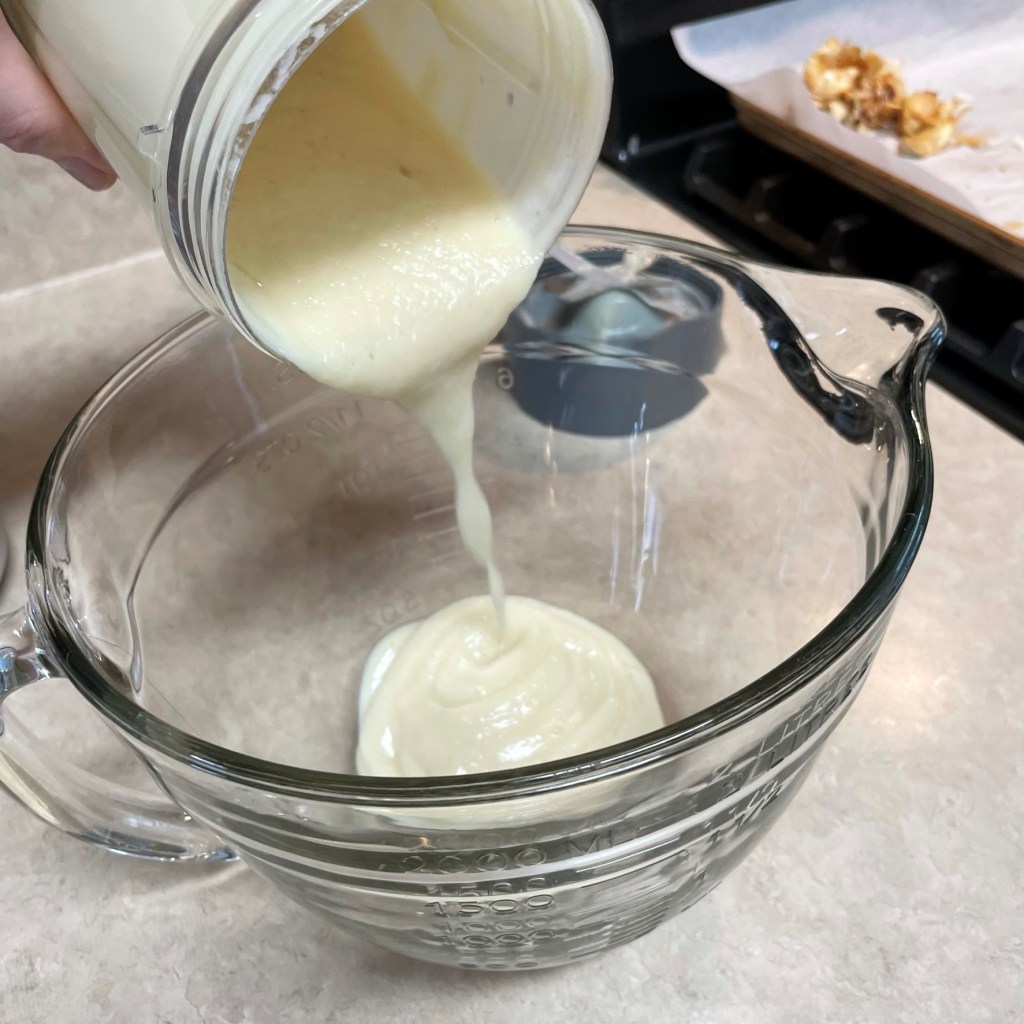
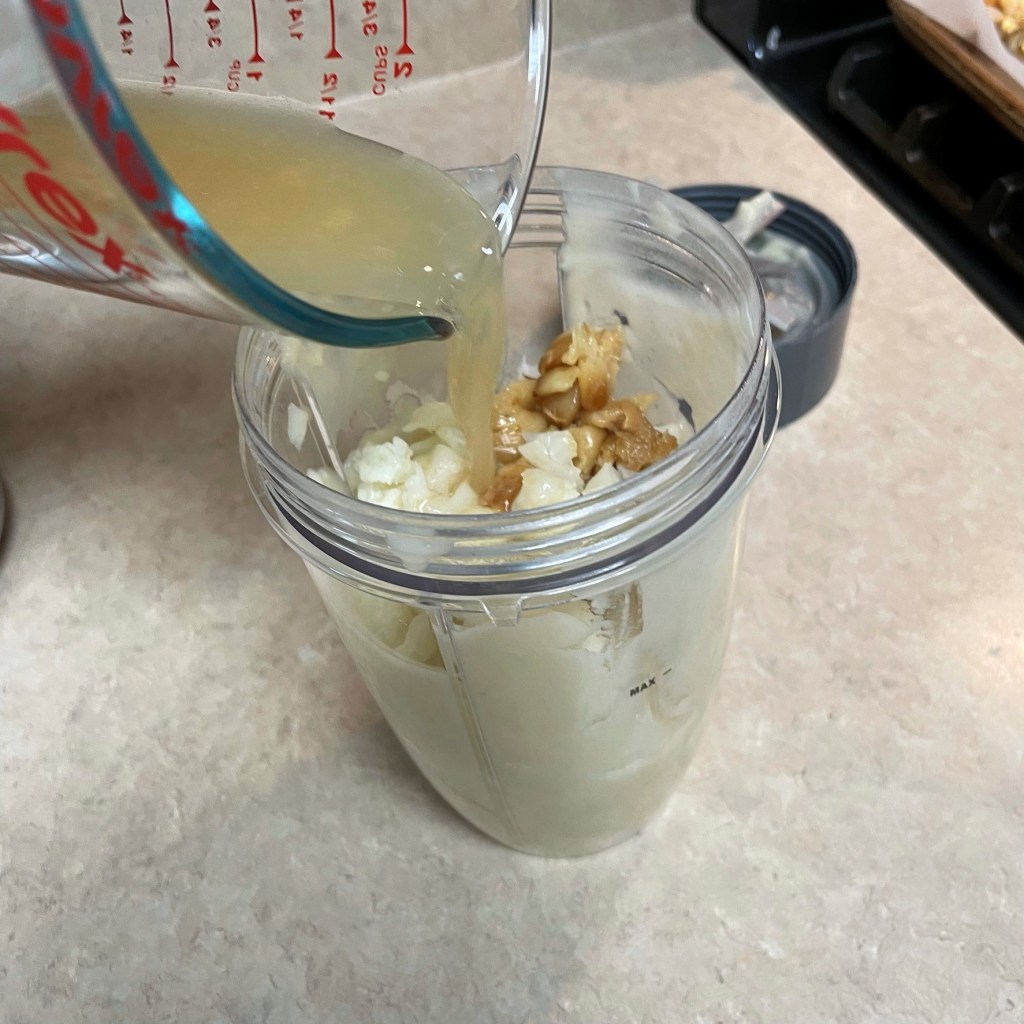
  4. Combine the cooled cauliflower, broth and roasted garlic in a good blender, working in batches if necessary. Pulse a few times at first, then puree steadily until the mixture resembles sauce. Transfer mixture to a large bowl.
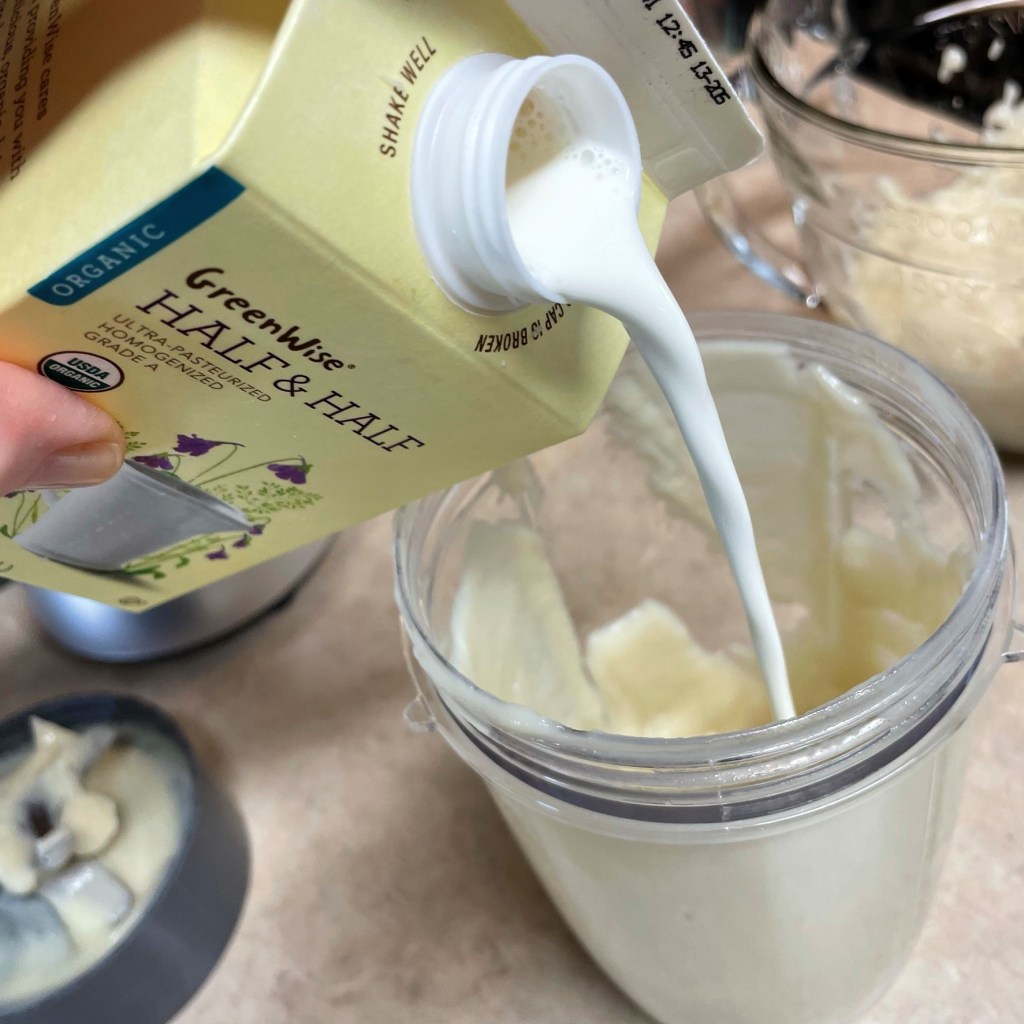
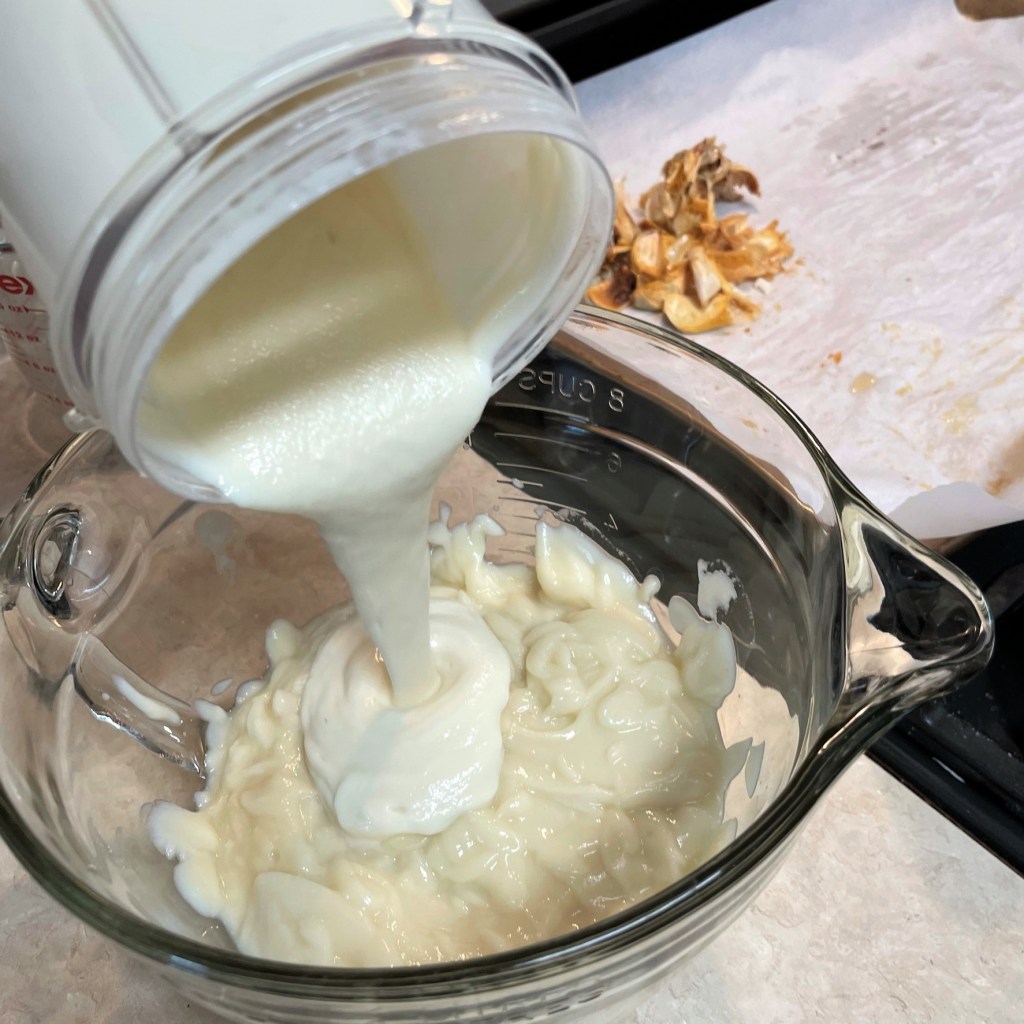
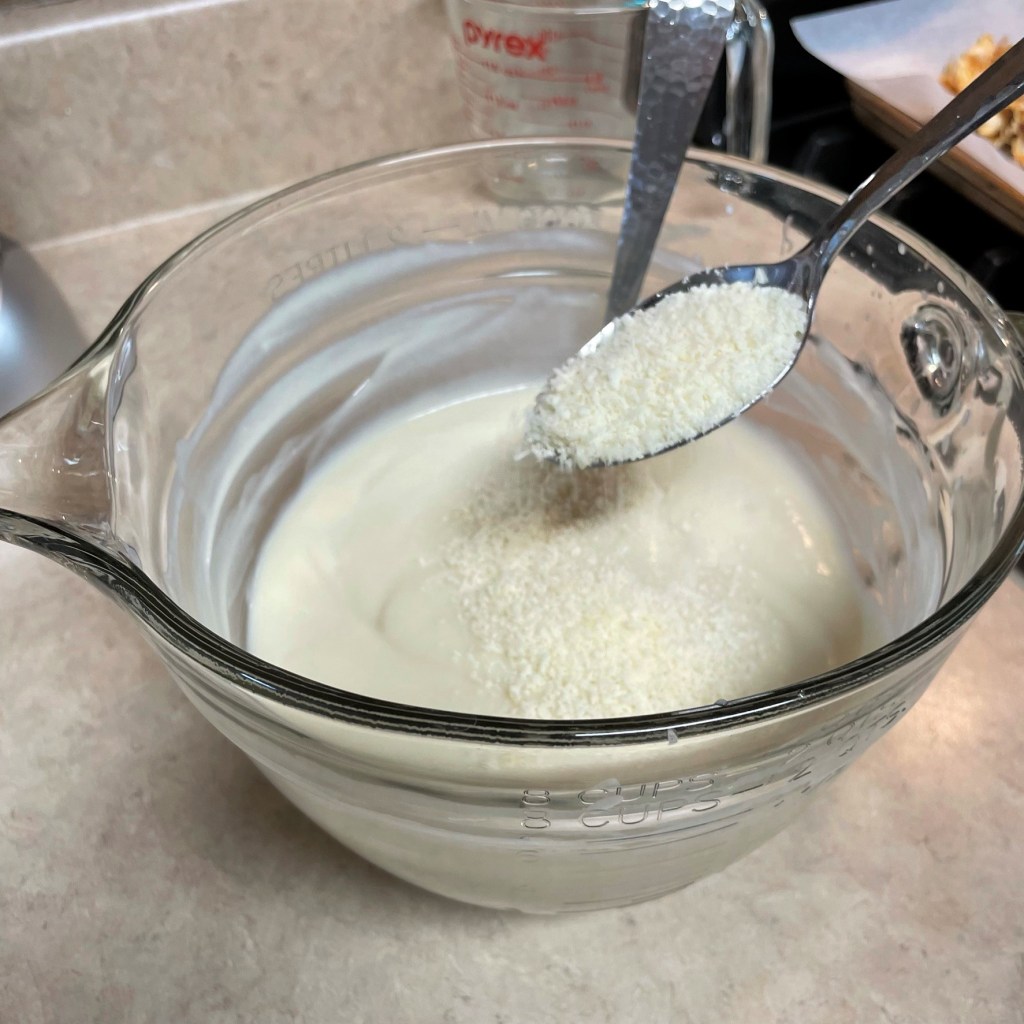
  5. Use a splash of additional broth or half and half (or substitute) to blend out the remaining sauce that clings to the sides of the blender. Stir that into the sauce, along with parm-romano blend, parmesan or nutritional yeast.
  6. For additional silkiness, stir in a tablespoon of mild, neutral-flavored olive oil or avocado oil. This will help your no-guilt Alfredo maintain a glossy saucy look and also adds a dose of heart-healthy Omega-3 fats.

Served with handmade (sun-dried tomato) pasta, roasted broccoli and easy sauteed shrimp.


Artichoke & Garlic Hummus

In six short weeks, life will be turned upside down for my husband, Les, and me. This is when our kitchen tear-out will begin, and we are beginning to shift our expectations as we prepare for the eight weeks or so that we will be “without” a kitchen. Welcome, friends, to our “in-between” kitchen!


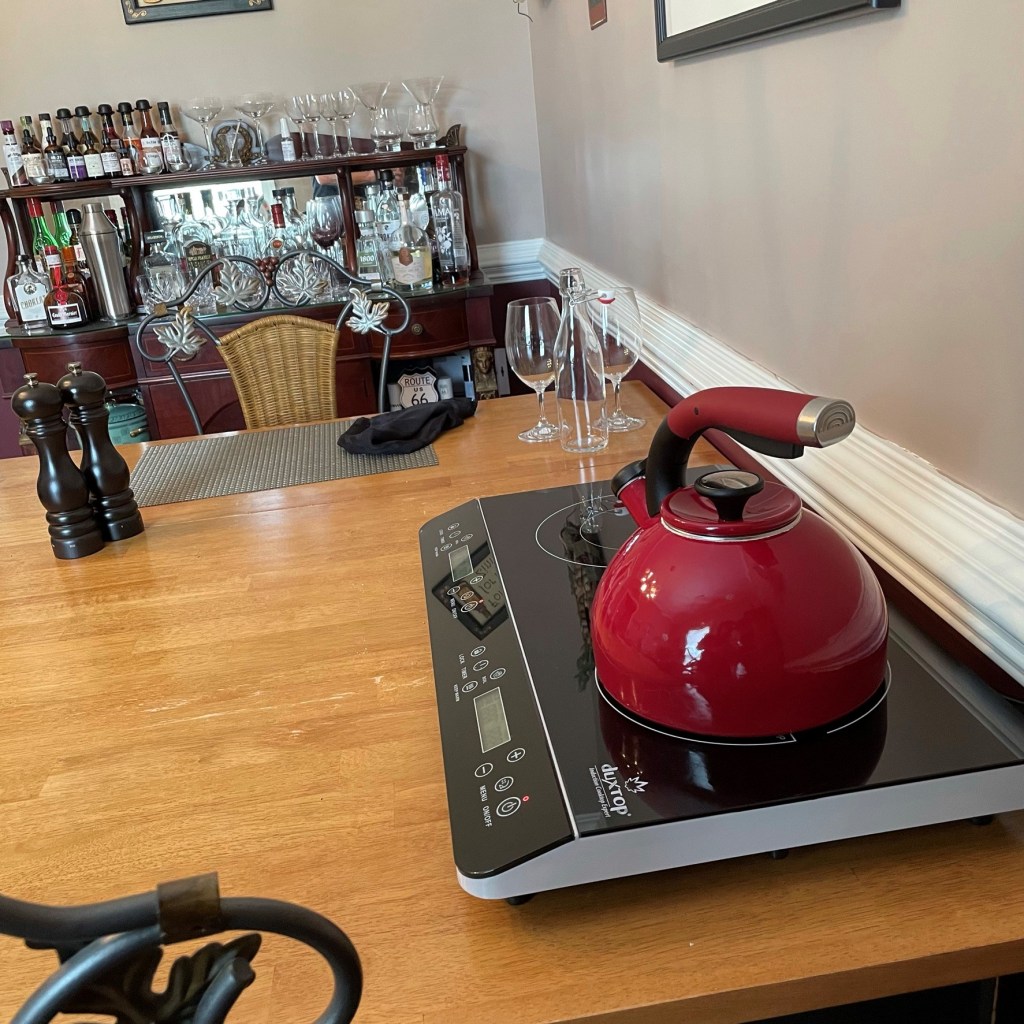
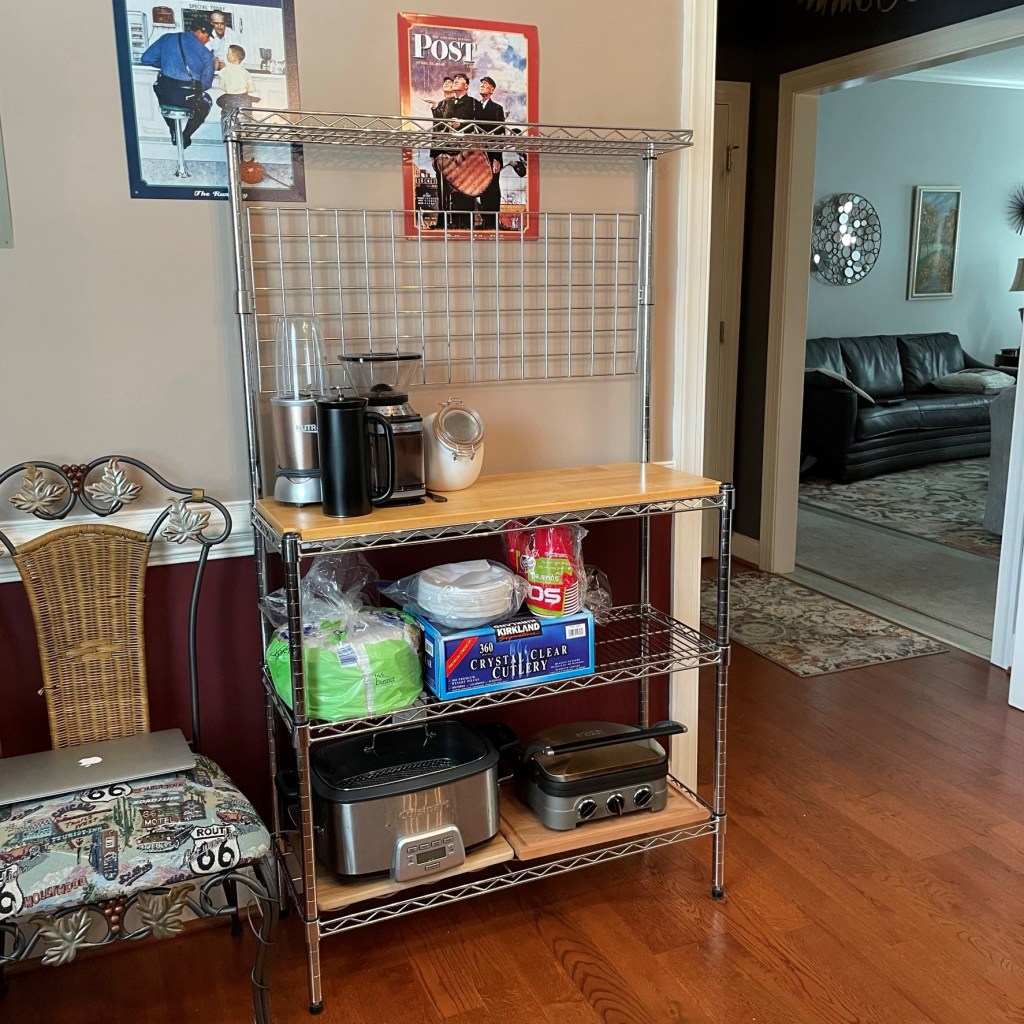
We have rearranged our dining room space to accommodate a baker’s rack that will hold some of the appliances that will help us get through the chaos. A new two-burner induction cooktop will allow us to do simple stove-top cooking, including heating water for my daily dose of French press coffee. We will make good use of our slow cooker, toaster oven and the panini griddle that doubles as a waffle iron. We have the gas grill for outdoor cooking, and so far, the only thing I haven’t quite figured out is how I will make bread without our oven, though don’t be surprised if I use one or more of the above to make it happen!

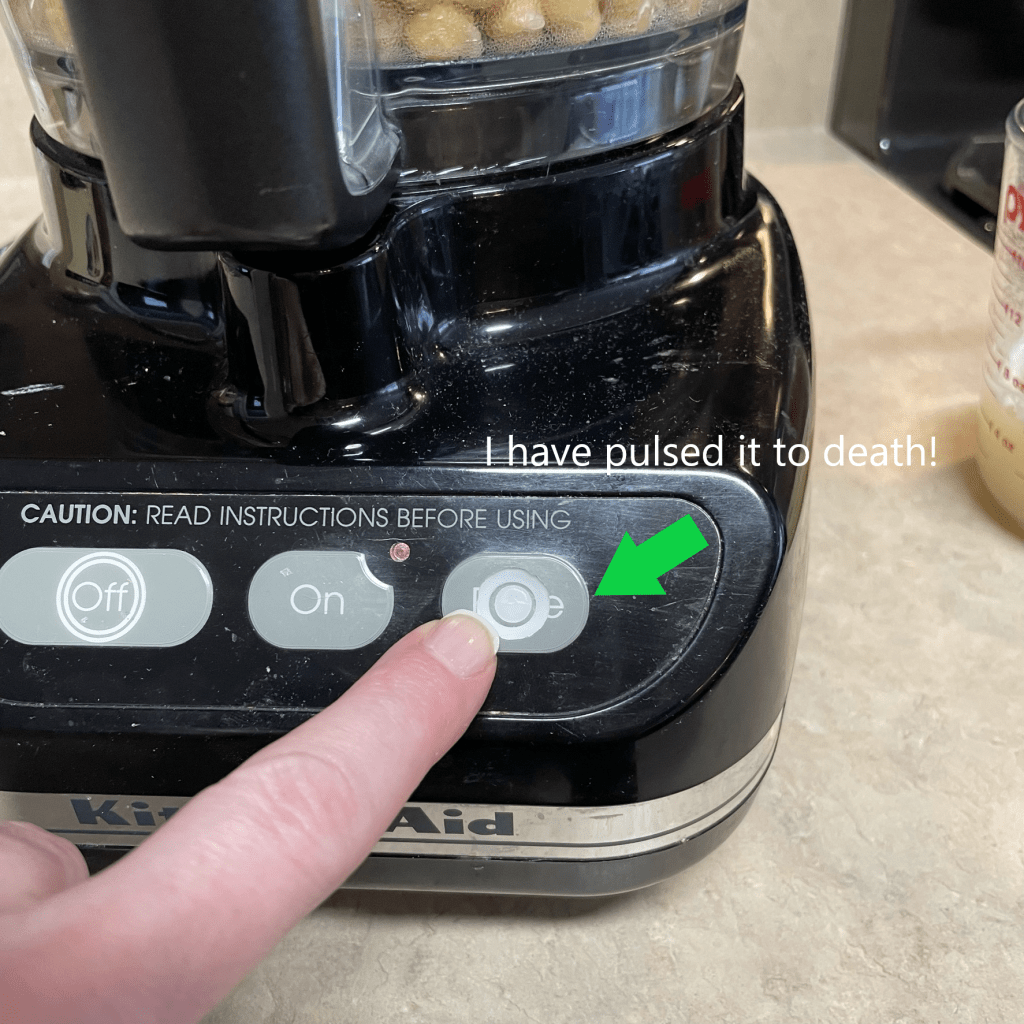
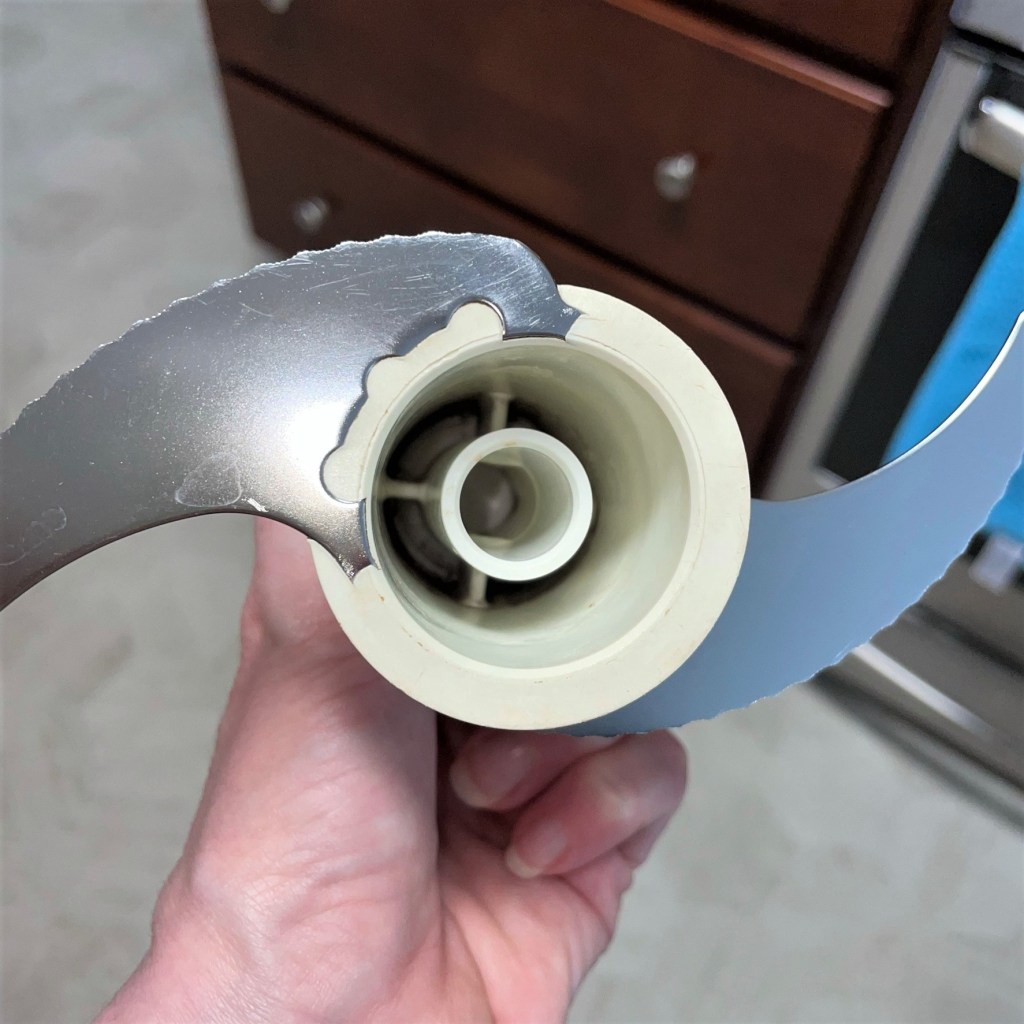
As we are preparing for the load out of the old kitchen (not to mention a bevy of random pantry and freezer ingredients), I’m giving all of our other small electrics a chance to prove themselves worthy of a spot in our new space. One item that will be (sadly) getting the boot is our KitchenAid 11-cup food processor, but not because we don’t use it; on the contrary, this thing gets so much action, it is on its last legs. The protective film over the power buttons has become brittle and is completely worn away from the pulse button, the feed chute is cracked and the inside of the “S” blade stem has some dried-on crud that I have not been able to remove. I have had the appliance nearly 20 years, and KitchenAid no longer makes my model (or any of the parts), so my only choice will be to replace the machine.


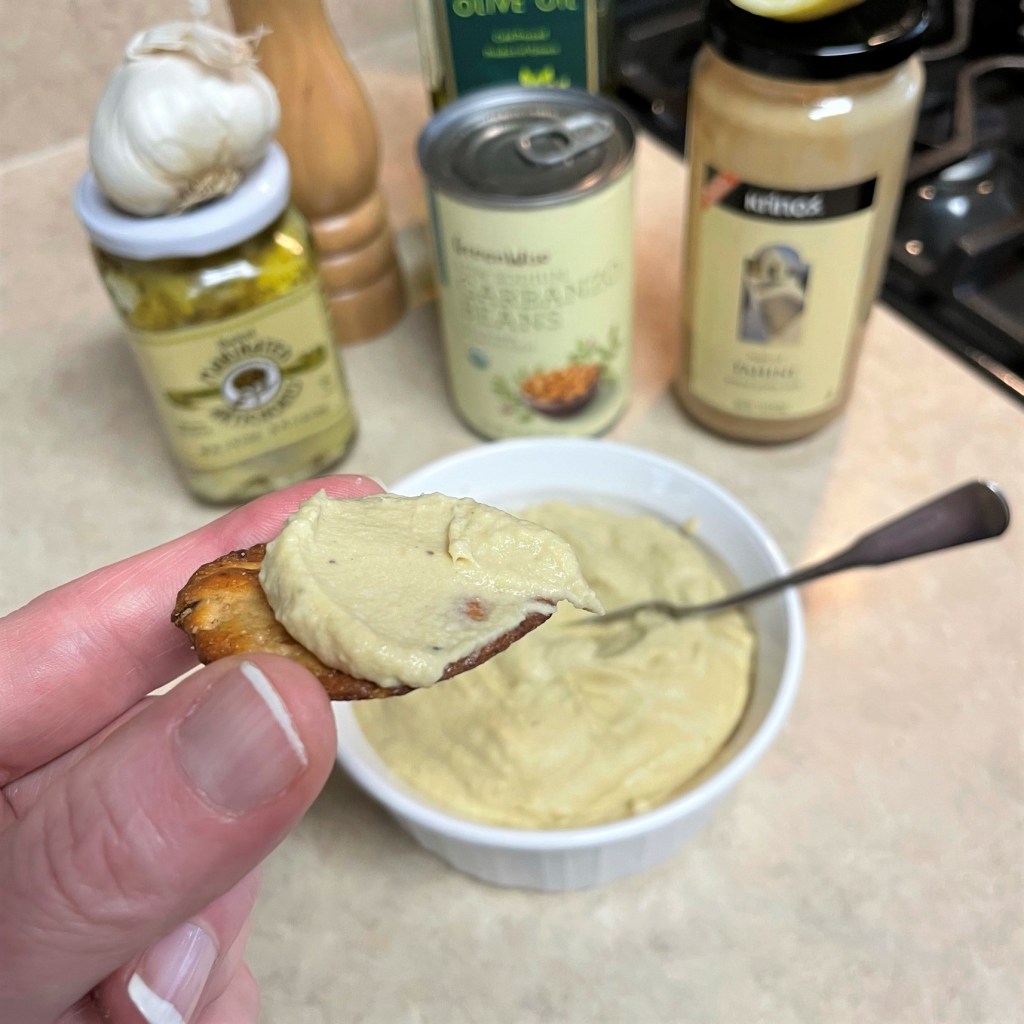
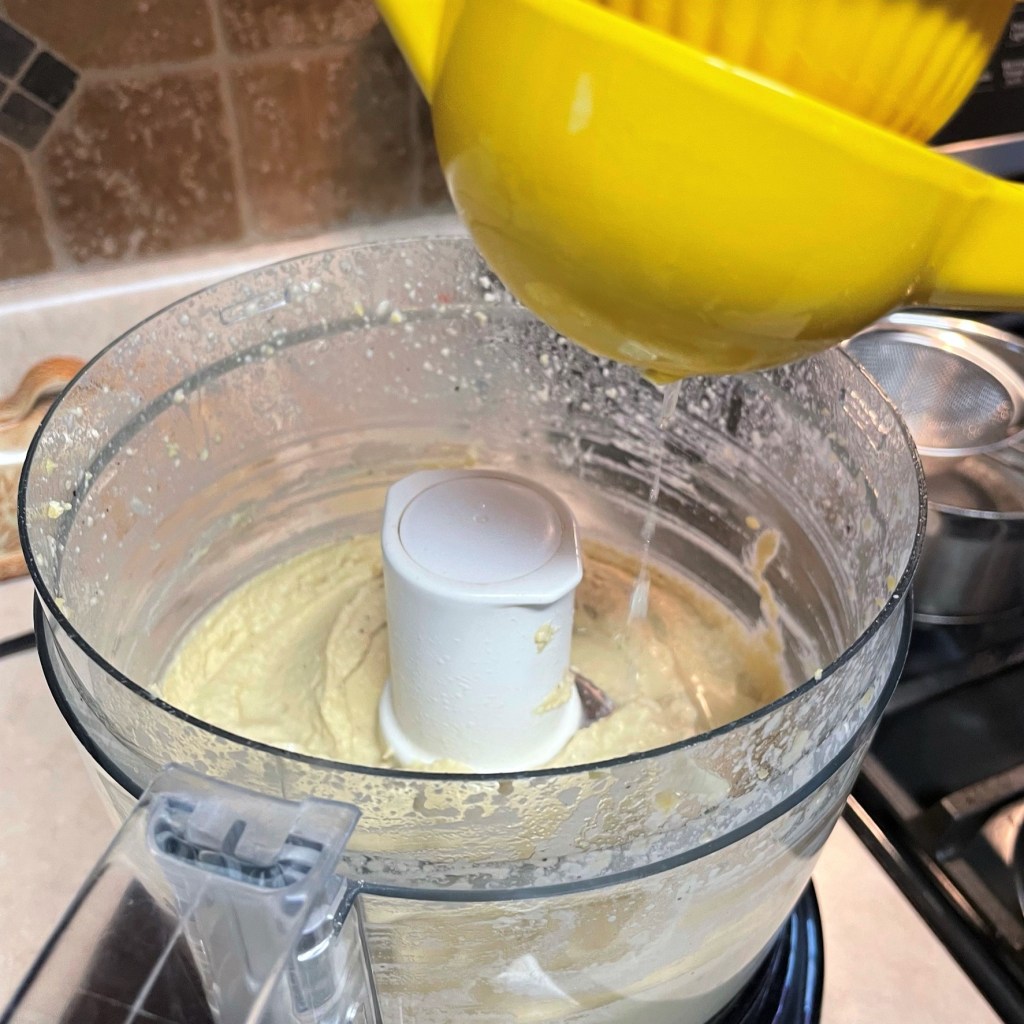
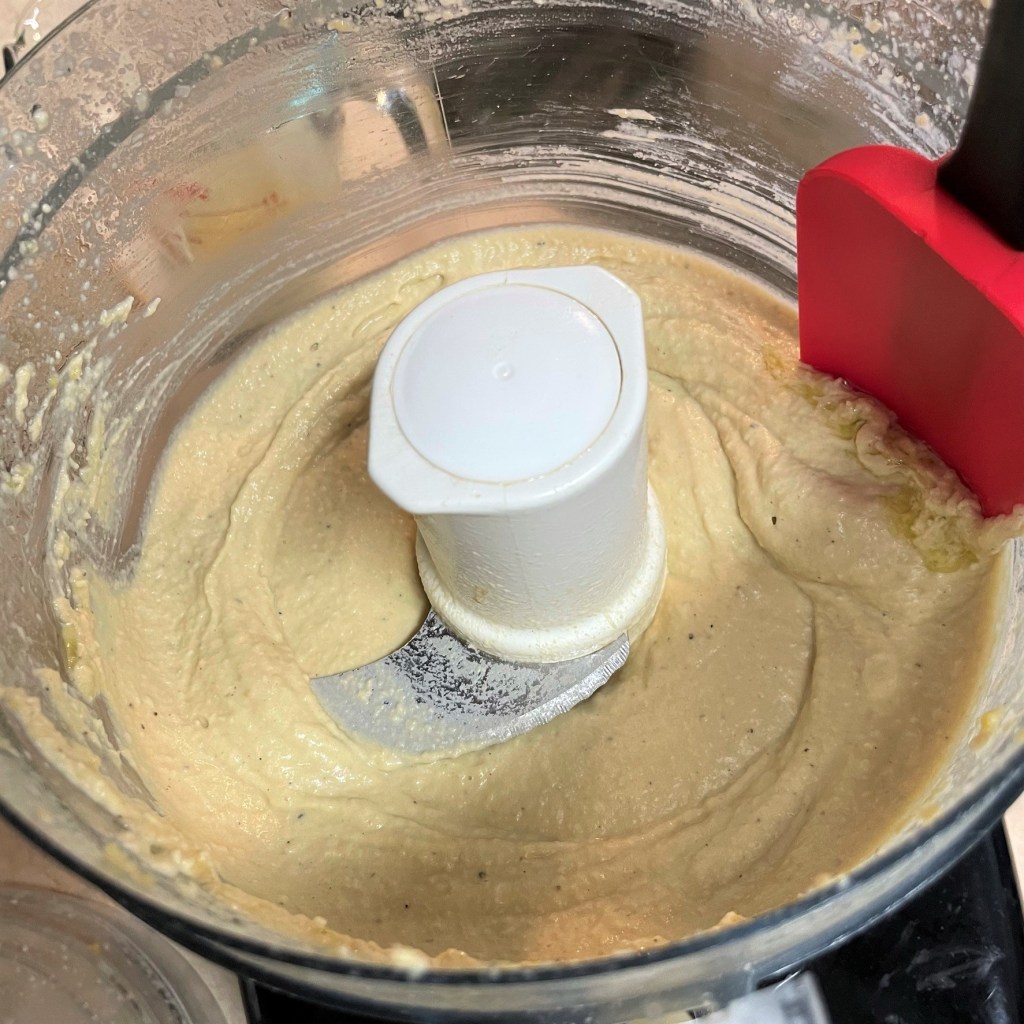
Until then, I’ll keep going with recipes like this one, for easy homemade hummus made with garbanzo beans, lemony artichoke hearts and lots of fresh garlic. Hummus is one of my favorite “blank canvas” foods, and it’s so simple at home, it makes no sense to buy it. The other key ingredients include tahini, olive oil and a squeeze of fresh lemon, which is a perfect highlight to the tangy artichoke. 

Warm the garbanzo beans to soften them up before you begin and use a food processor or a good blender for best, smoothest results. Enjoy your hummus on crackers, chips, crostini or fresh veggie slices.


It’s so much tastier than store-bought!

Ingredients

15 oz. can garbanzo beans, with liquid

3 Tbsp. tahini* (see notes)

2 to 3 cloves garlic, finely chopped

About 1/2 cup marinated artichoke hearts*, drained and rough-chopped

Juice of 1/2 lemon

Kosher salt and pepper

3 Tbsp. extra virgin olive oil


*Notes

Tahini is a paste made of ground sesame seeds. It is available in most larger supermarkets, usually in the same section as olives, or perhaps in the international aisle.

The artichoke hearts I used were Trader Joe’s, marinated in sunflower oil, vinegar and spices. If you use plain hearts, consider adding a pinch or dried herbs (dill or oregano would be great), and either way, drain all the excess liquid from them.


Instructions


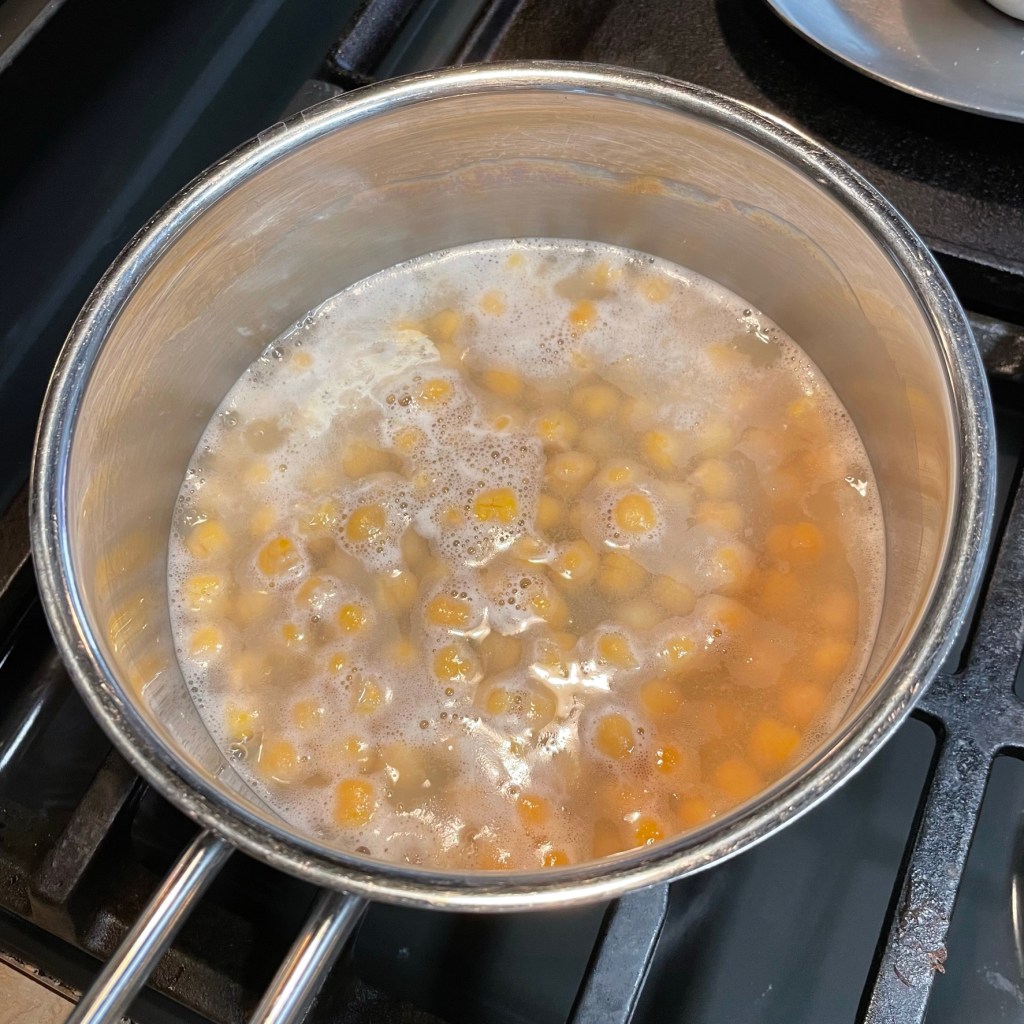
Pour the entire contents of the canned garbanzo beans into a small saucepan. Heat over medium-low heat until mixture just begins to boil. Remove from heat and drain liquid off beans, but do not discard it (you’ll use it for blending).

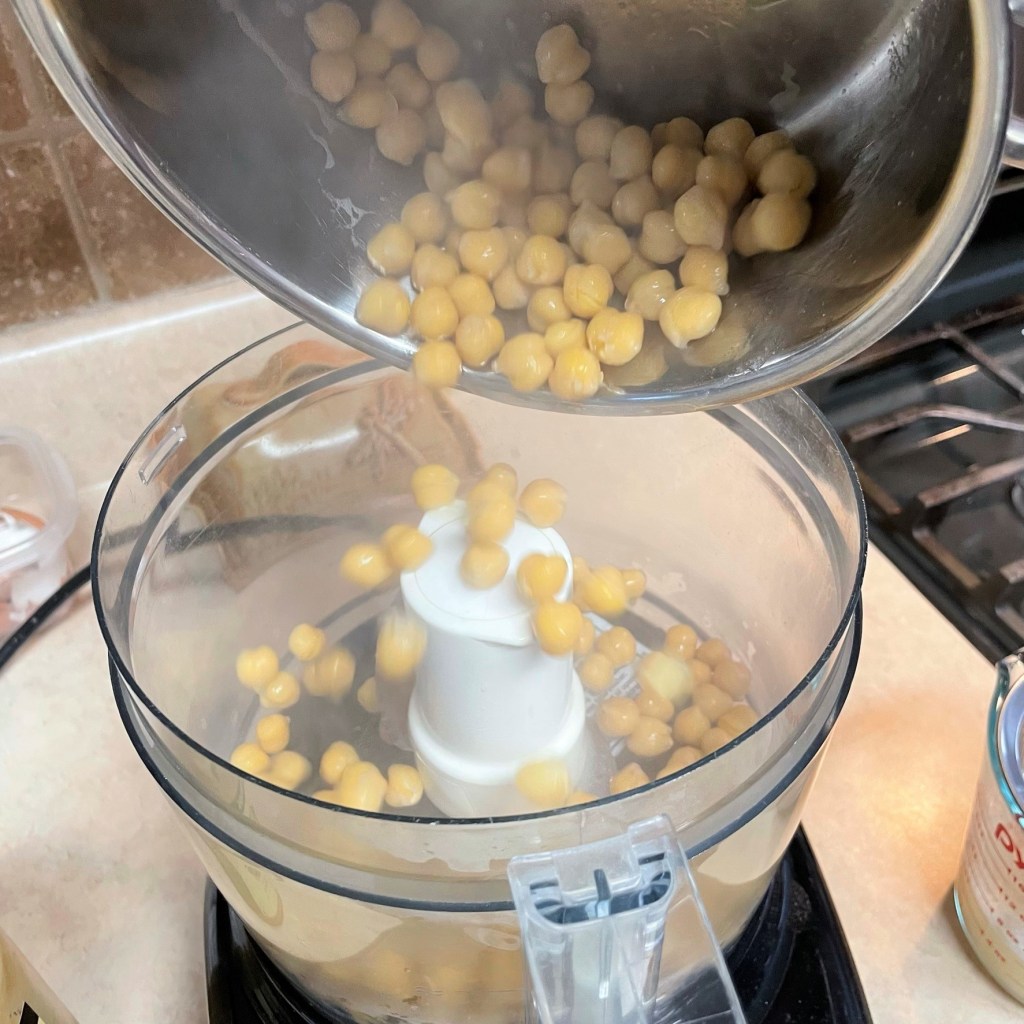
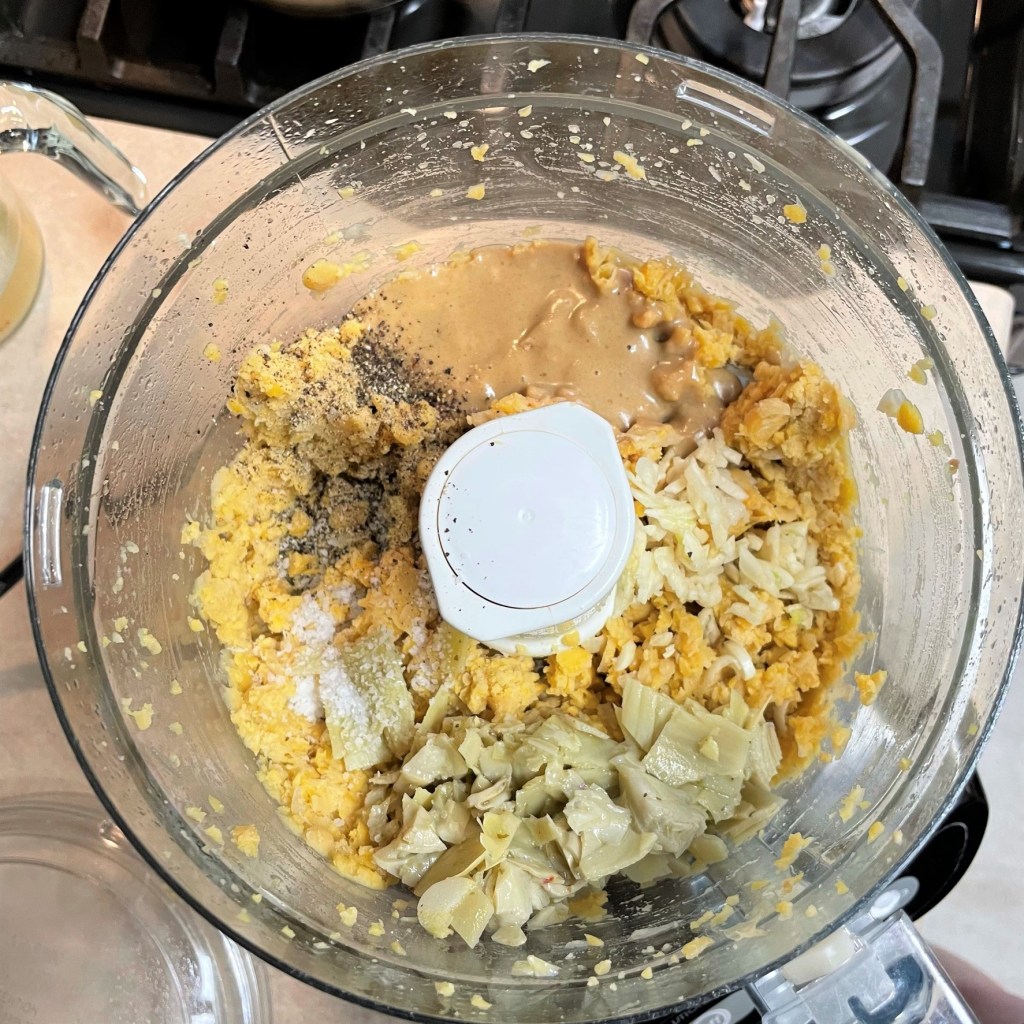
Transfer warm beans into a food processor or blender and pulse a few times to grind the beans into a meal-like texture. Scrape down sides of the processor bowl. Add tahini, garlic, artichoke hearts, salt and pepper. Pulse a few times to combine. Scrape down the sides again.

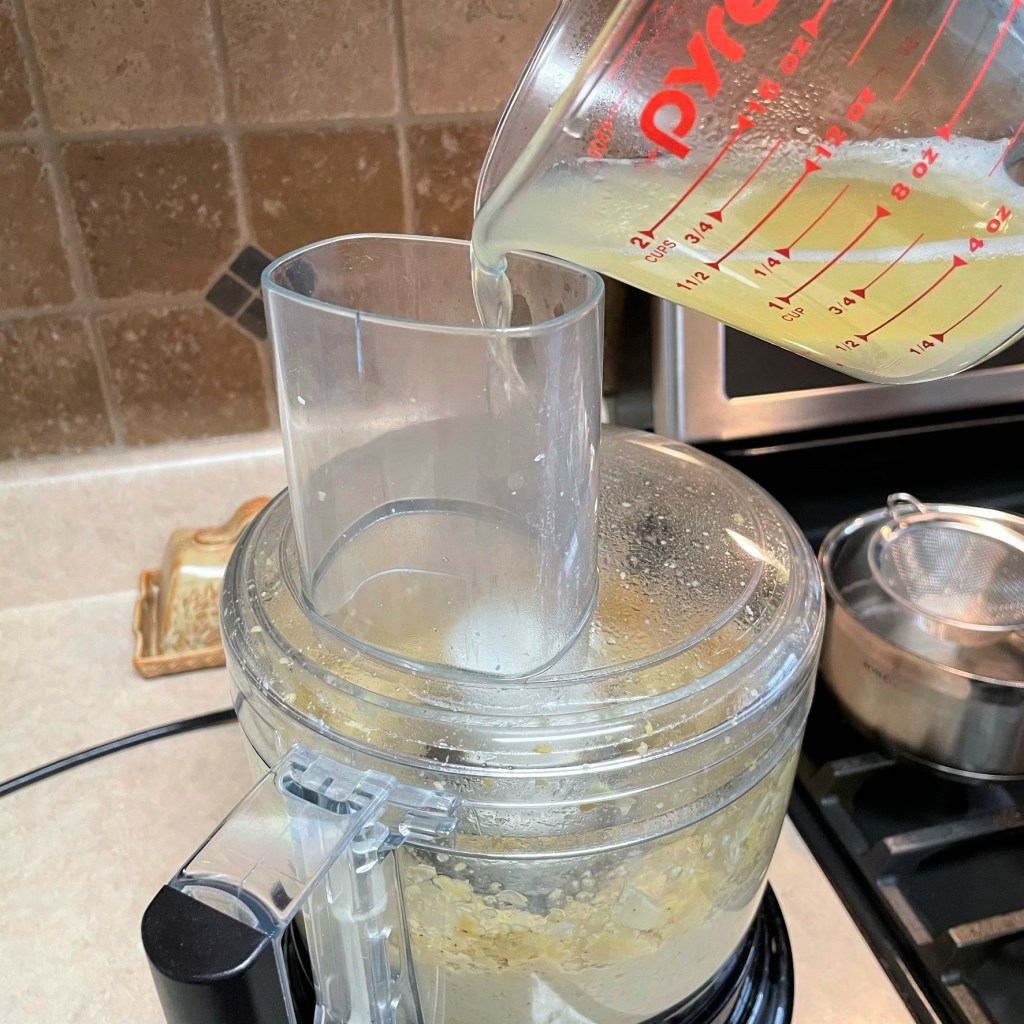
Turn processor on and run continuously while slowly pouring about 3 tablespoons of the warm liquid into the processor. Blending slowly will help to emulsify the ingredients into a smooth blend. Add more or less of the liquid, depending on your preference for hummus consistency. Remember that the mixture will become firmer after chilling. Scrape down sides once more.

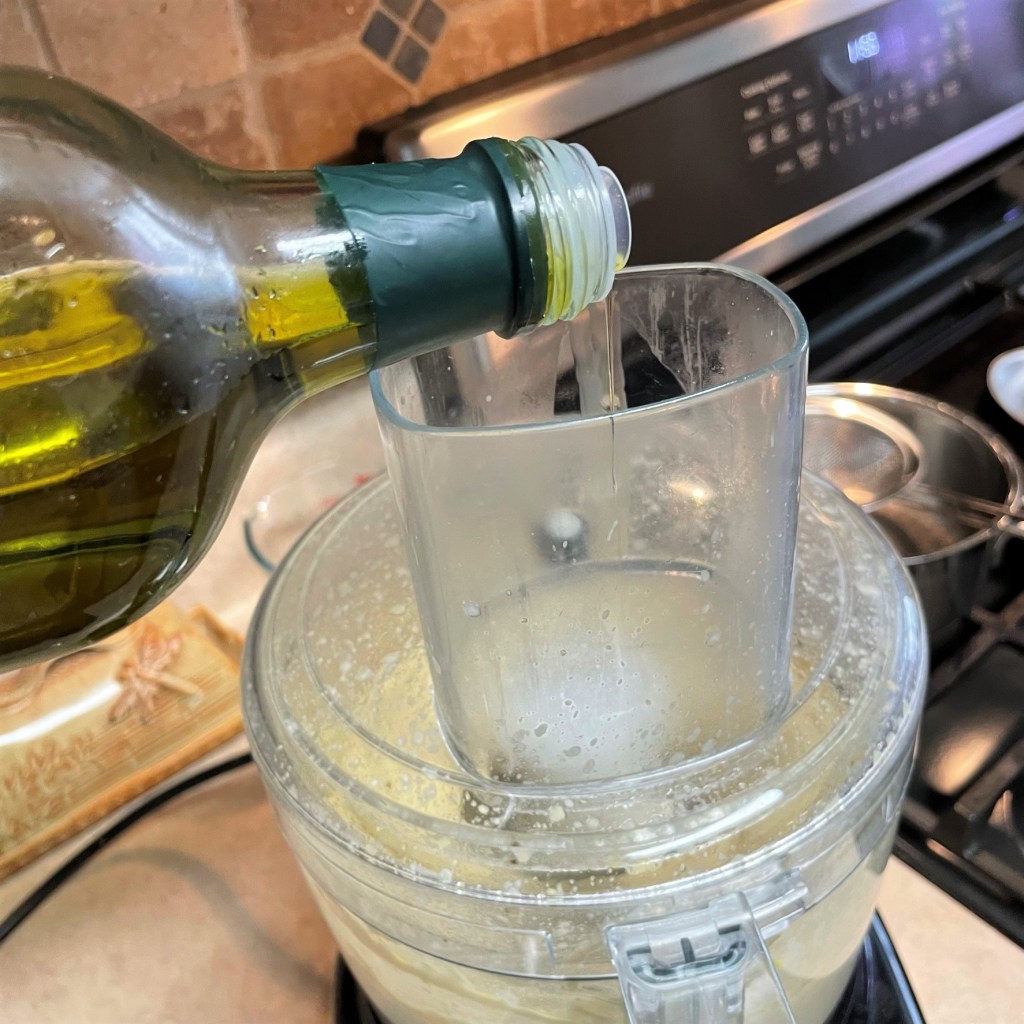
Run processor continuously and slowly blend in about 3 tablespoons of extra virgin olive oil.

Transfer hummus to a bowl and refrigerate, covered, for up to a week.


Artichoke & Garlic Hummus


Green Goddess Dressing

Don’t be surprised to see a lot of late winter recipes showing up here with highlights of fresh summer herbs. No, I haven’t lost track of the seasons (not possible with all the bad weather news everywhere). It’s more a situation of appreciating the Christmas gift that keeps on giving.

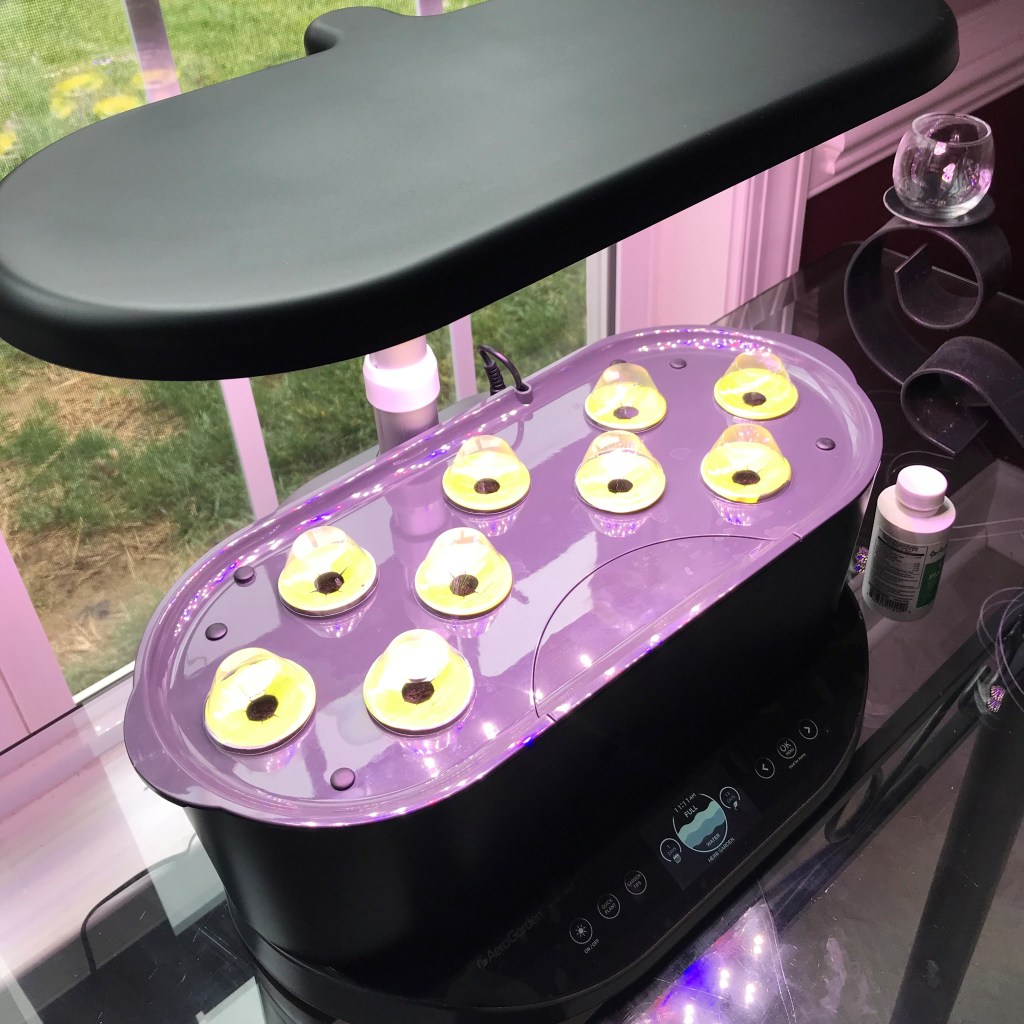
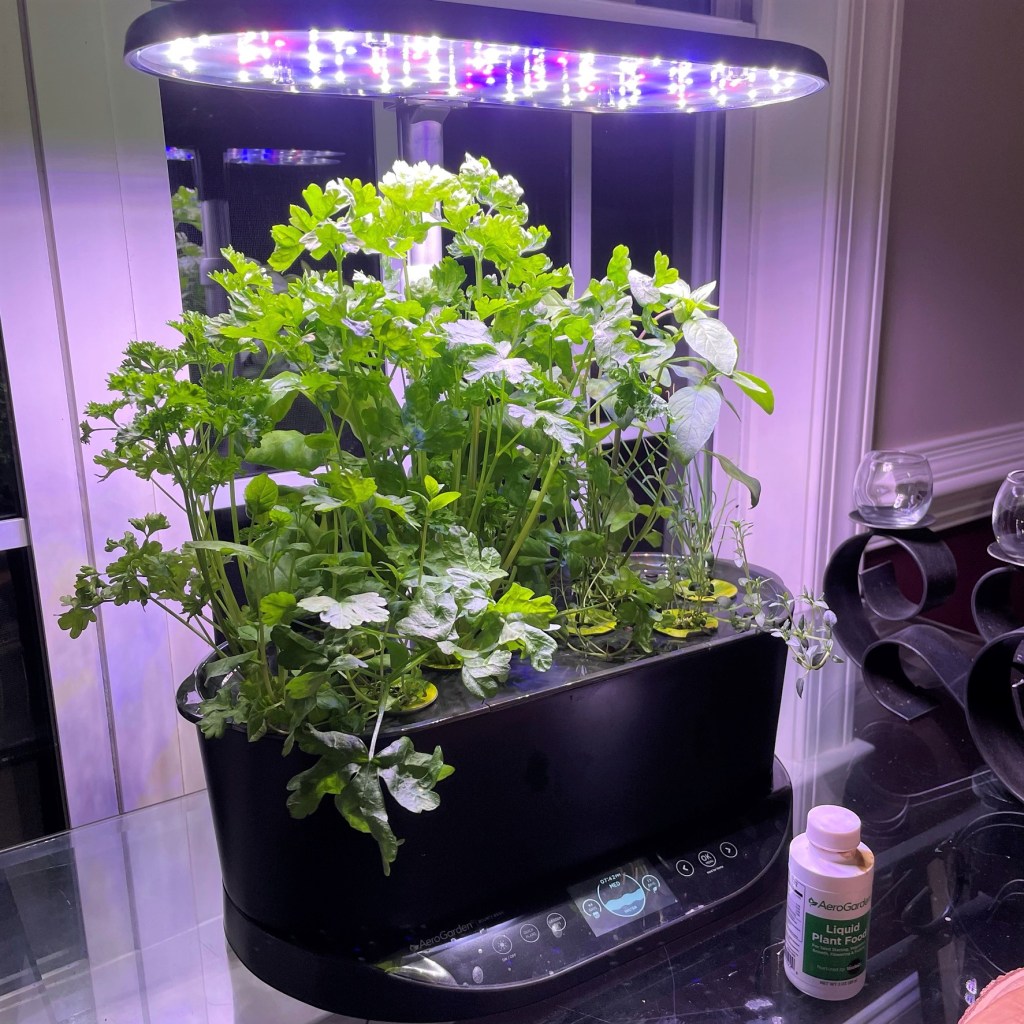
My husband, Les, undoubtedly tired of my chronic lament over the deer having eaten my summer garden, gifted me this year with an AeroGarden. It’s a hydroponic, countertop device with individual seed pods for growing whatever your heart desires (or, at least, whatever is legal in your state). Knowing my love of using fresh herbs in the kitchen, Les opted for the herbal variety pack, which included two basil varieties, chives, mint, thyme and two kinds of parsley.

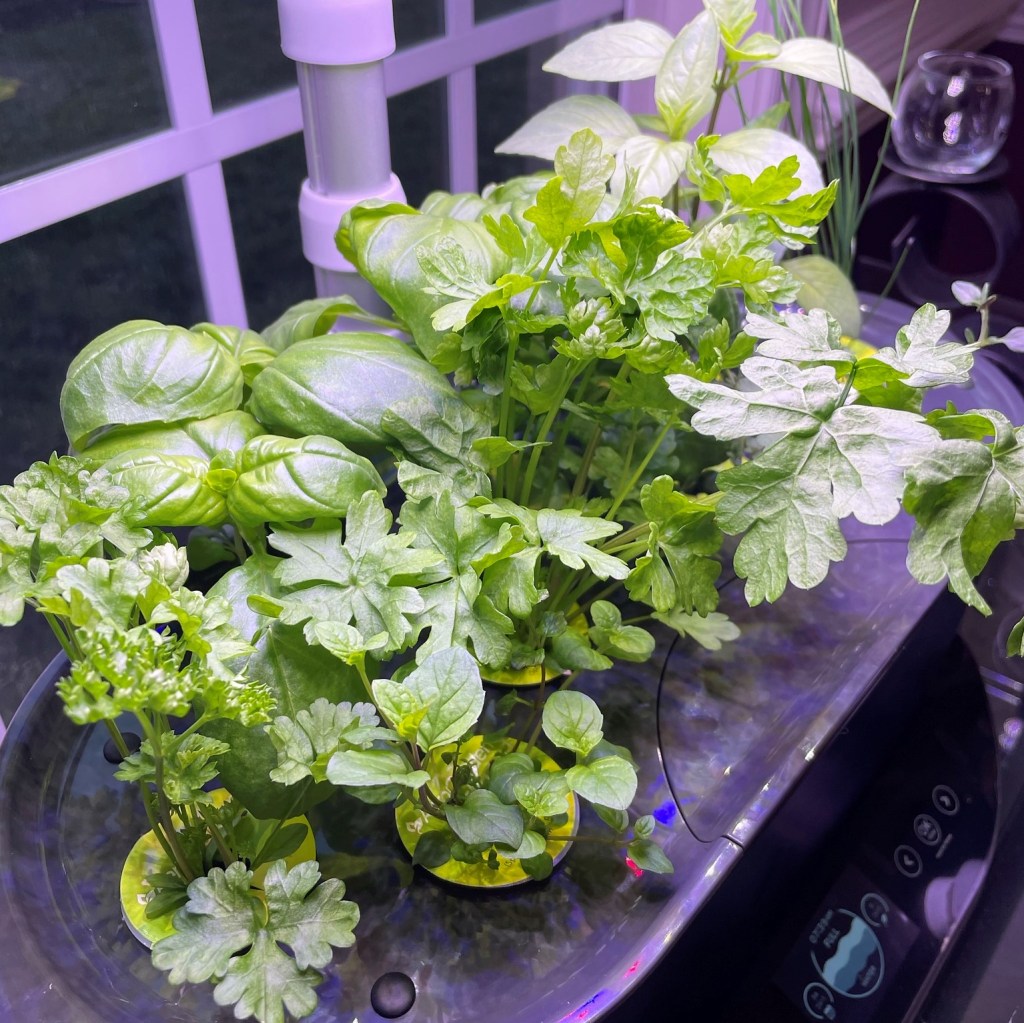
At first, the thing just sort of sat on the table by the kitchen window, blazing its bright blue light across the kitchen for 15 hours a day. The thing comes on by itself at 5:00 a.m., waking the pets, who then wander in to wake us, because they know it must be almost time to eat. It took me a couple weeks to adjust to this new growing schedule, about the same time that tiny sprouts emerged, first from the Genovese basil. It has been fun to watch our little herb babies grow. 🙂


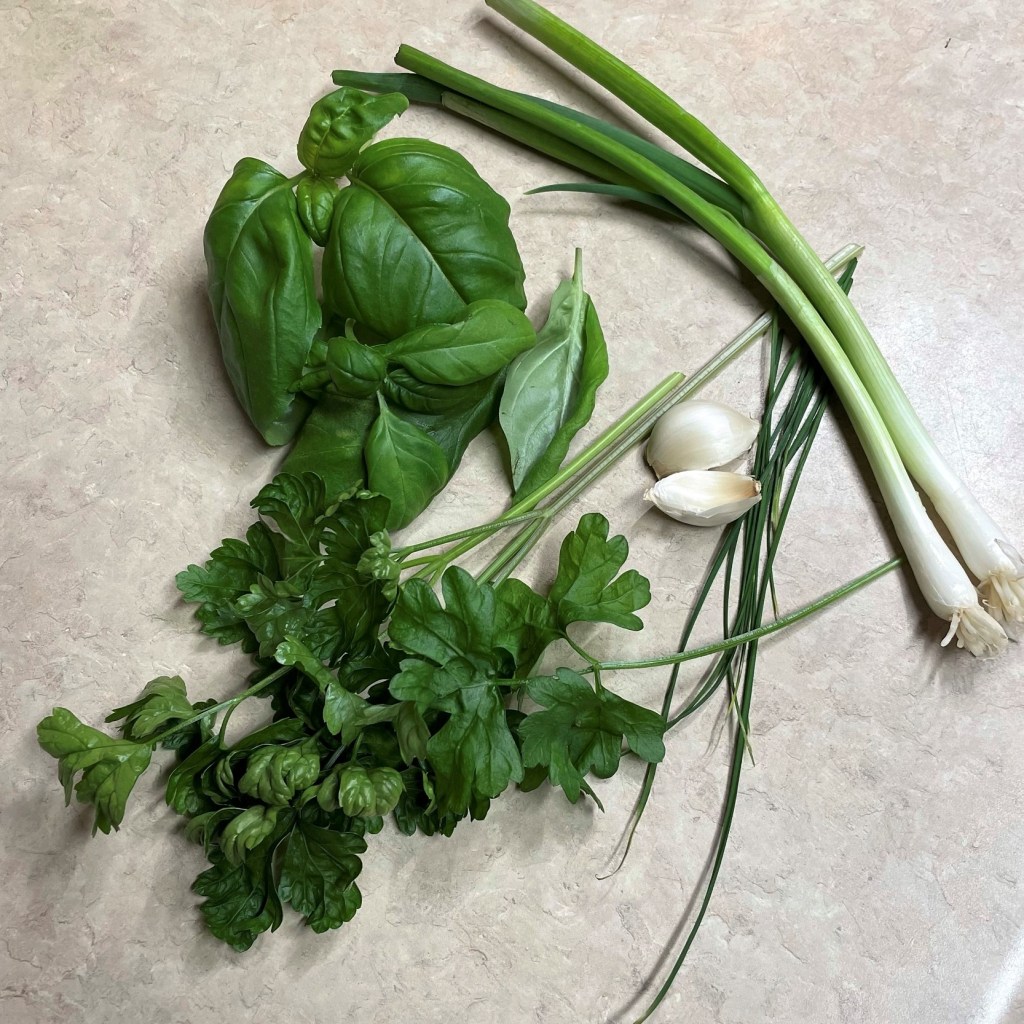
What began as a fun “let’s see what happens” Christmas gift has turned into a “holy moly, what are we gonna do with all this parsley” adventure. By Valentine’s weekend, I realized I needed to do something with the parsley before it consumed the kitchen, as my outdoor basil did last summer in the backyard garden. Les had asked for simple embellishments to our romantic dinner of lobster tails, including roasted asparagus and a Caesar salad (his fave).

“How do you feel about green goddess dressing,” I asked. And so it was.

Green goddess is a throwback food, originally created in the early 1920s at a San Francisco restaurant, and at that time the dressing included mayonnaise, chives, scallions, parsley, garlic, anchovies and tarragon vinegar. By the late ‘40s, The New York Times published a recipe for it, and it hit the grocery shelves in bottled form about 1973. Thank you, Wikipedia, for all that helpful information.

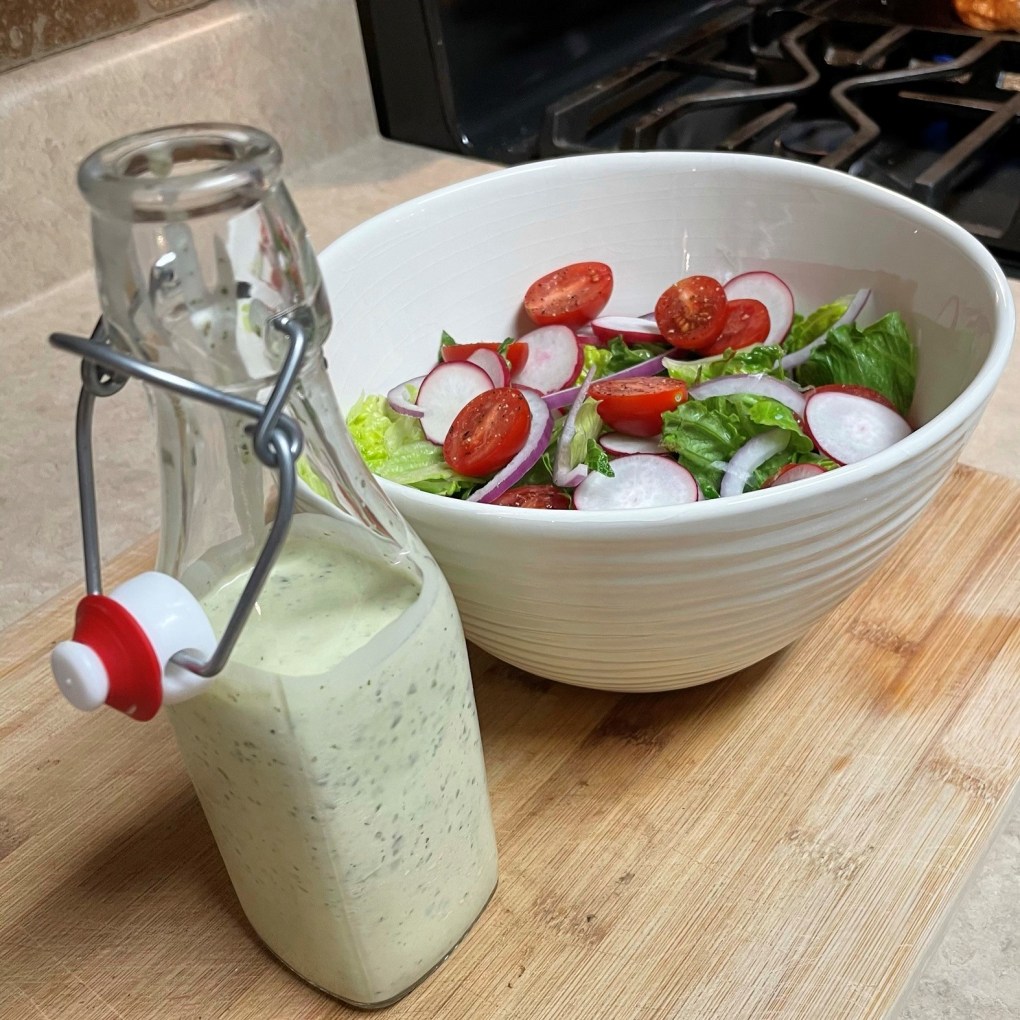
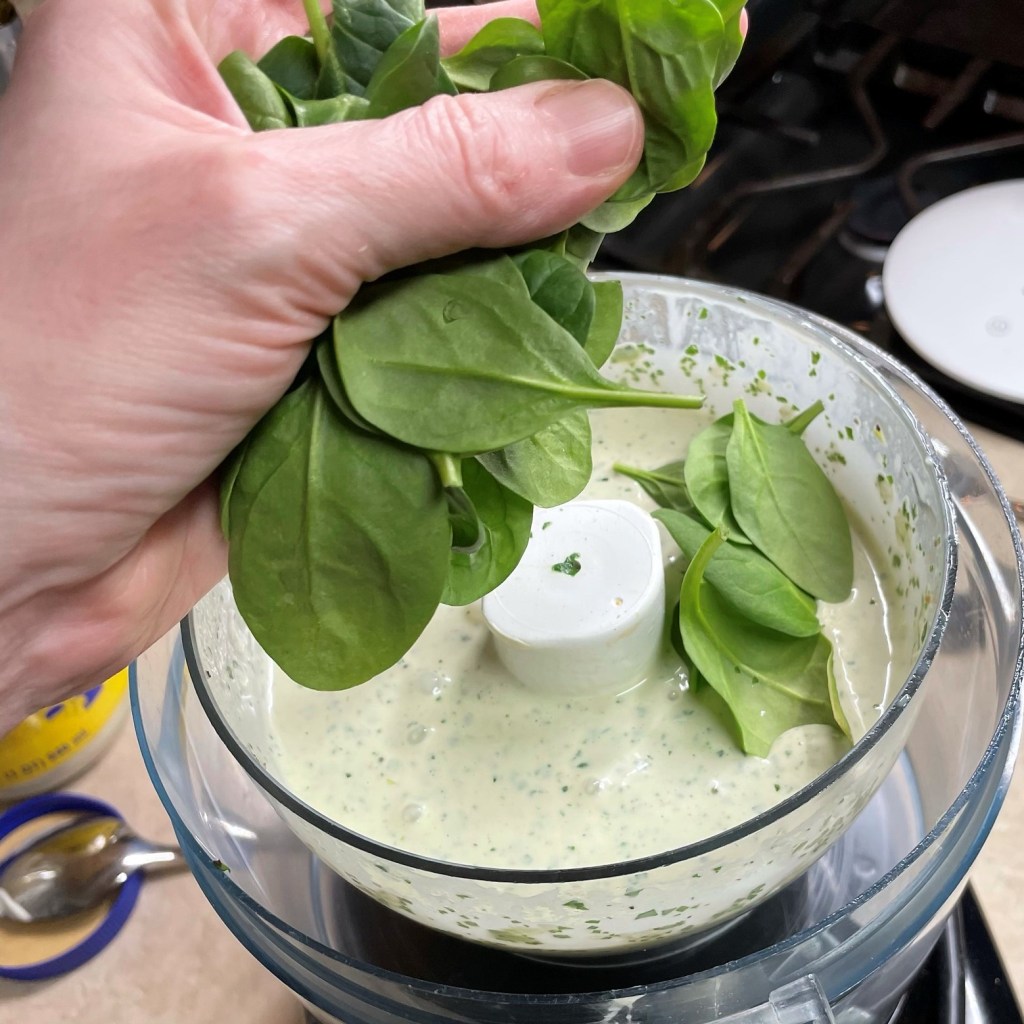
Like any other recipe, green goddess can be switched up to match your flavor (and consistency) preferences. If you want to use it as a dip, ease up on the buttermilk and add more mayo. Hate basil? Leave it out and use extra parsley. If you are gaga for garlic, double it—or roast it for milder flavor. I went rogue a little bit and added a small handful of baby spinach leaves to this version (hey, they’re green), and I love a recipe that is so flexible. The dressing seems to me a mash-up of ranch and Caesar, but with a bounty of freshness to punch up the flavor and, thankfully, a perfect vehicle for freshly picked herbs.

I’ve made my own salad dressing for years, and this was my first green goddess but definitely not my last. Obviously!


Ingredients

1/4 cup thick cultured buttermilk

Small handful of fresh basil leaves

Small handful of curly or flat parsley leaves

Several stems of fresh chives

2 scallions (white and green parts), trimmed

2 cloves fresh garlic

4 to 6 fillets of anchovy, to taste* (see notes)

2 tsp. prepared Dijon mustard

Juice of 1/2 fresh lemon

Kosher salt and freshly ground pepper

1/2 cup mayonnaise

1/4 cup whole milk Greek yogurt

Small handful fresh baby spinach leaves (optional)

1 to 2 Tbsp. extra virgin olive oil


*Notes

Remember that anchovies are fairly salty on their own, and you may or may not want additional salt in the mix. If you prefer to omit the anchovies, consider substituting a few shakes of Worcestershire sauce to add a similar punch.


Instructions


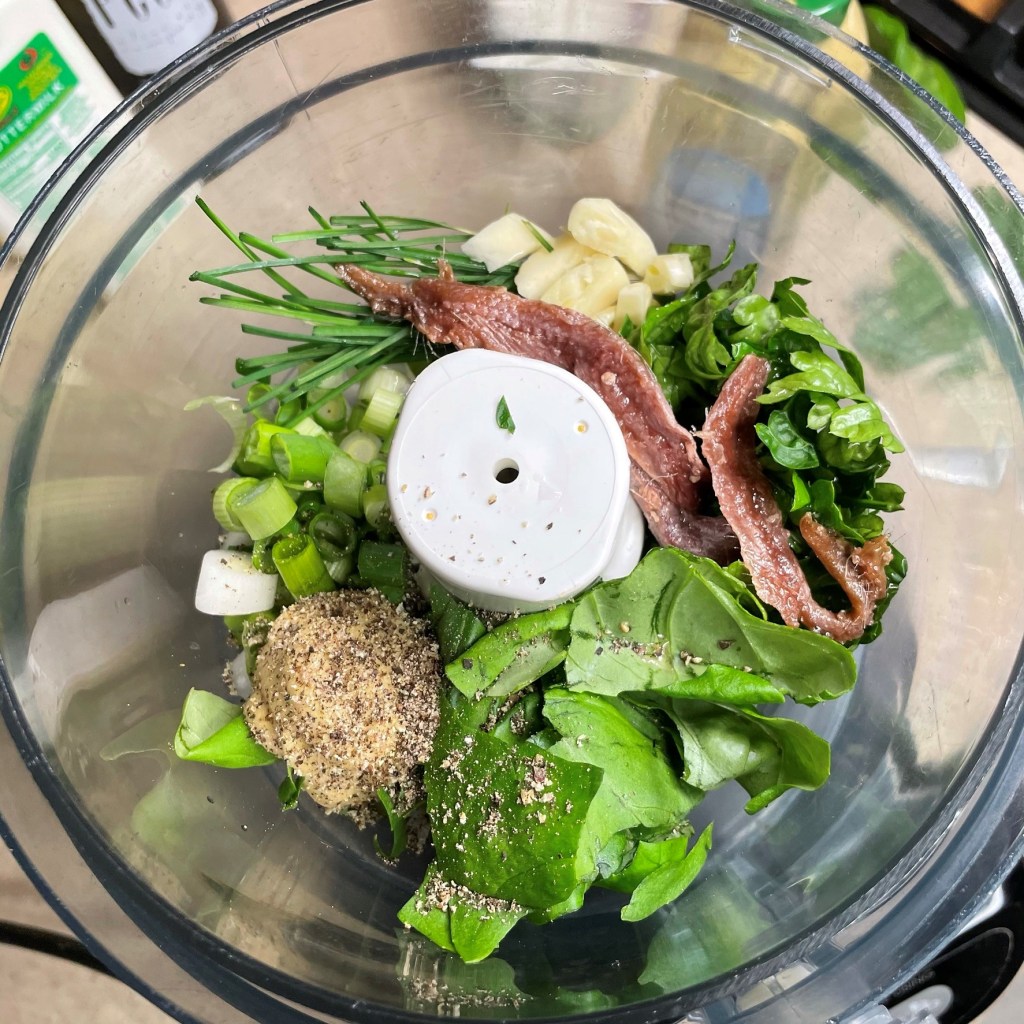
  1. In the small insert bowl of a food processor, combine herbs, scallions, Dijon, salt and pepper, anchovies and lemon juice. Pulse several times to chop herbs into somewhat uniform mixture.
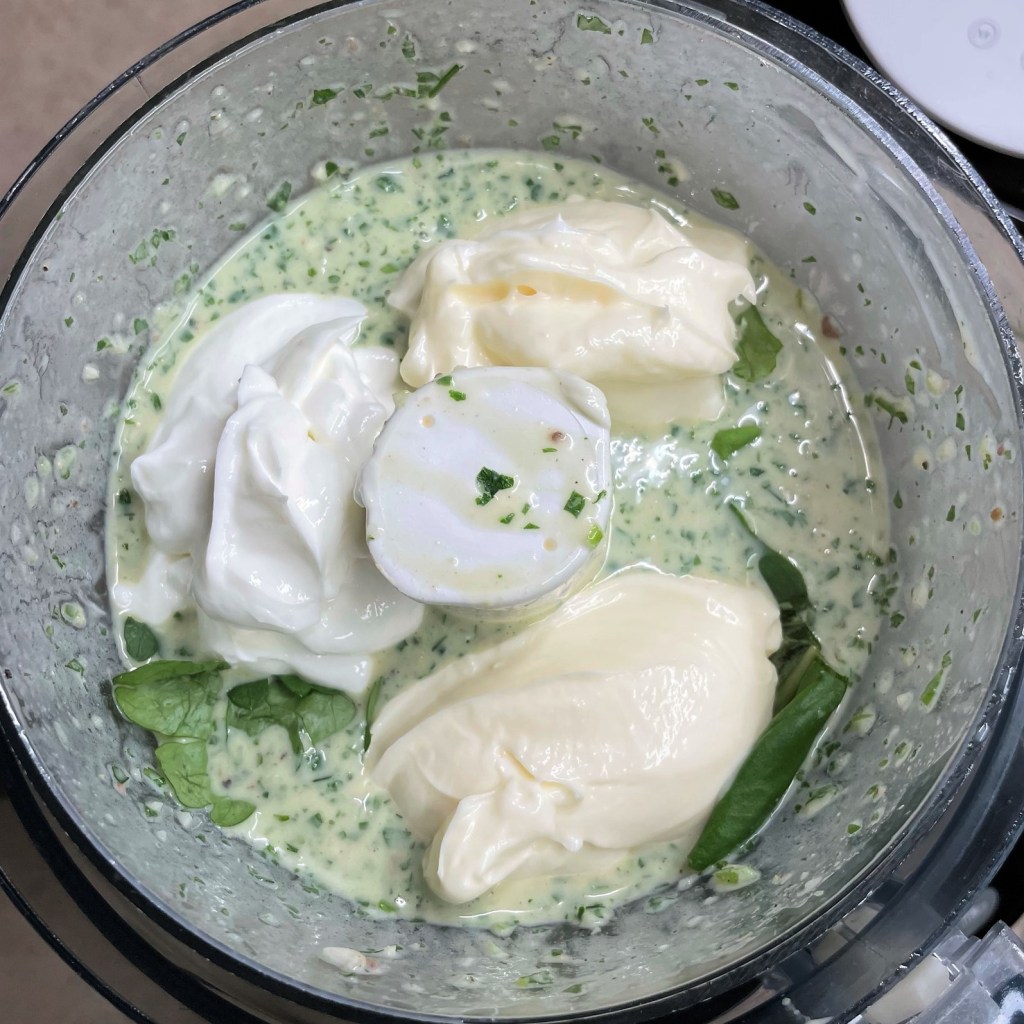
  2. Add mayonnaise and Greek yogurt and pulse about 8 times. Give it a taste and adjust seasonings or ingredients as desired, pulsing to incorporate additions.
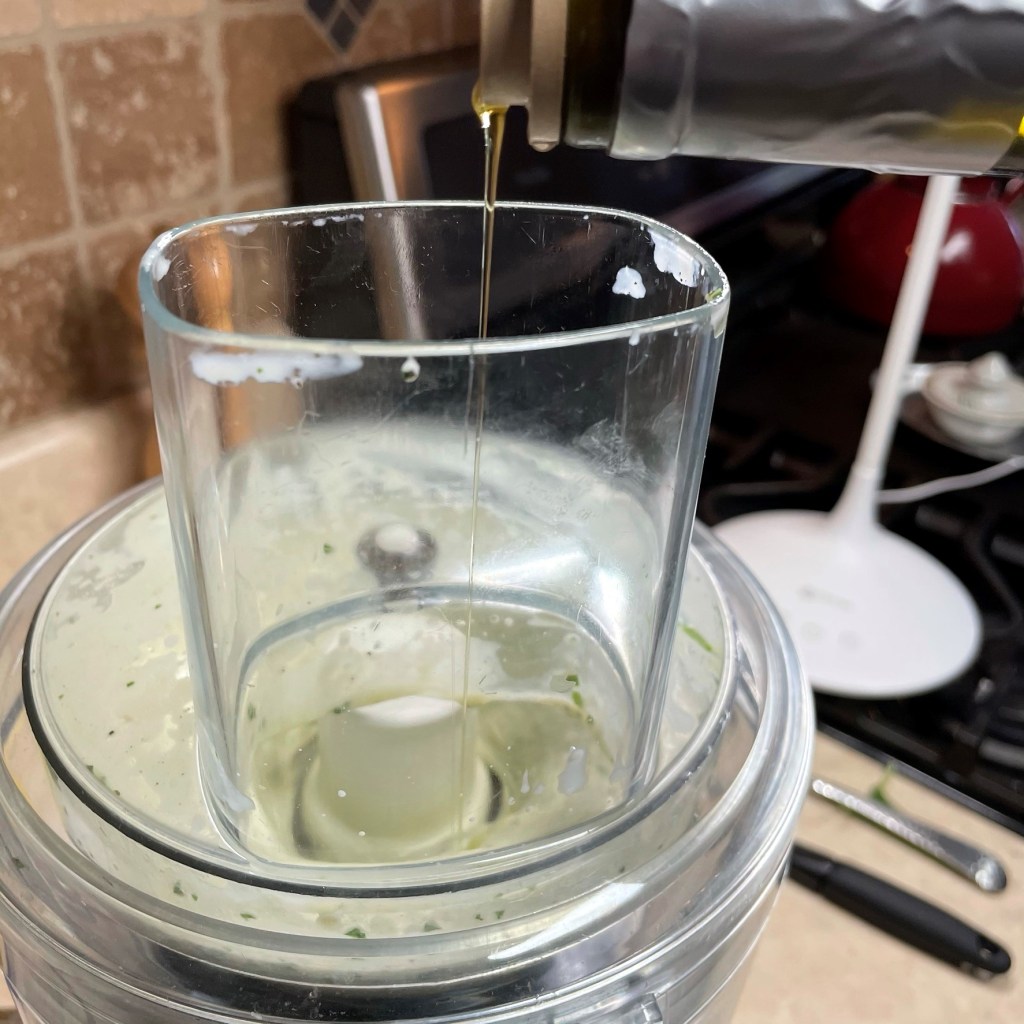
  3. Turn processor on steady and slowly drizzle olive oil into the dressing. Transfer dressing to a bowl and chill several hours or overnight.
Great as a dressing for crisp salad, or dipping sauce for fresh cut veggies!

Want to make this dressing?


Scampi with Asparagus

It happens every time. The start of a new year is filled with good intentions, as everyone makes their resolutions to get fit, lose weight, improve their health. This is the reason for all the TV ads for gym memberships, weight loss products and home exercise equipment. It isn’t a terrible idea, of course, but there are simpler (and more sustainable) things we can do to get back into better habits, and most of them begin in the kitchen.

Along with many other people at the end of holiday indulging, I’m tired of so much rich food and find myself aching for fresher, lighter fare. After the heavy flavors of Thanksgiving dishes, it was spicy that I craved. But after the double whammy of Christmas and New Year’s, and all the sweets and booze that came with them, I just want to eat something—anything—fresh. Oh, and easy would be nice, too!

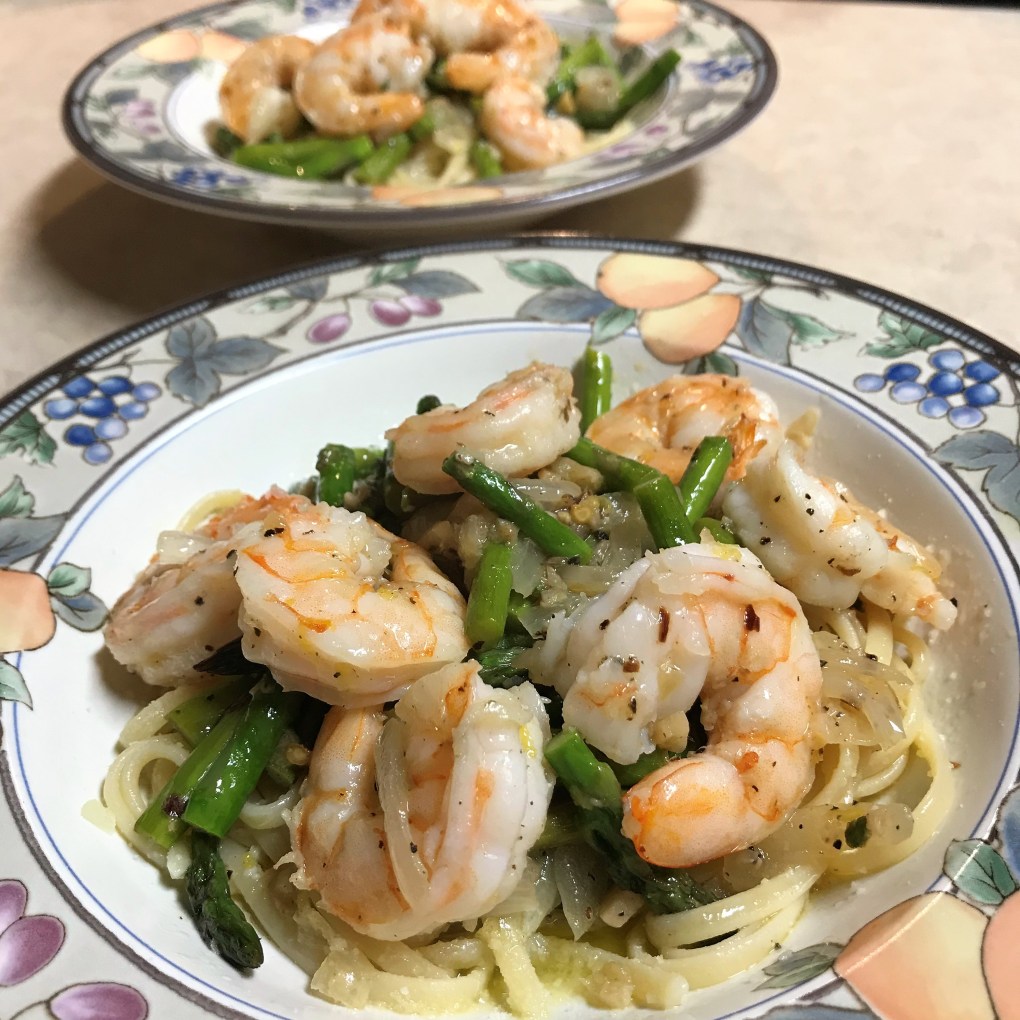
That’s where this recipe comes in, and there’s plenty to love about it. The dish is light and lemony, with big, juicy shrimp and bright, barely-crunchy asparagus. Piled high on a bed of al dente pasta, it looks like it came from a restaurant kitchen, and it tastes like fresh air after all the decadence we’ve plated in this house over the past six weeks.

You don’t have to go to a restaurant for a beautiful, tasty seafood dish. This one is easy to make at home!

Scampi is a simple dish to make, and the main thing to embrace is patience. You will cook the garlic slowly in olive oil over low heat, which allows it to essentially poach rather than sauté. This low and slow approach leads to the soft, mellow garlic flavor that is distinctive in scampi. And yes, it is a fair amount of oil, but remember that extra virgin olive oil is monounsaturated—what nutritionists call “good fat.” The meal will satisfy, and there are health benefits to boot. Sounds good to me!

If you don’t care for asparagus, sub in another crisp green vegetable, maybe some sugar snap peas or fresh broccolini. Or skip the sauteed veggie and serve the scampi alongside a salad. After the holidays, you deserve whatever fresh flavors suit your craving. Make it your own.

Serves: 2
Time to make it: About 35 minutes

Ingredients

2/3 pound fresh or frozen (uncooked) shrimp, 16-20 count* (see notes)

1/4 cup extra virgin olive oil

5 cloves fresh garlic, chopped

1/2 medium sweet onion, halved and sliced in crescent moon shapes

1/2 pound fresh asparagus, trimmed and cut into 2-inch pieces

A few shakes crushed red pepper flakes, if you like it spicy

Juice of 1/2 lemon, plus the zest

2 portions linguine or angel hair pasta

A few shakes of parm-romano blend cheese, for serving

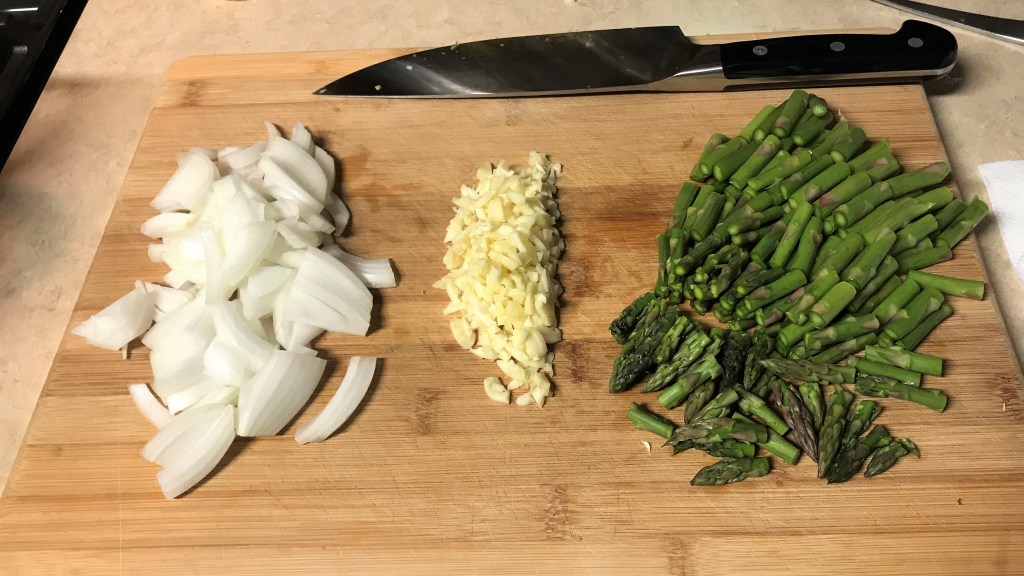
Five cloves is a lot of garlic for two dinner portions, but the slow simmer mellows the flavor. Cut the onions and asparagus into similar sized pieces.

*Notes

The “count” on shrimp refers to its size, and represents the average number of shrimp per pound. The higher the number, the smaller the shrimp. I have no problem with using frozen shrimp, especially because supermarkets often receive the shrimp frozen anyway. For many reasons, including food safety, fair trade and human rights, I always purchase shrimp harvested in the U.S., and my preference is white gulf shrimp. It’s sweet and juicy, whereas some other types of shrimp can be sharp and briny. Check with your seafood department for flavor recommendations, and whatever you purchase, be sure to thoroughly clean and de-vein it (instructions for this at the end of the post).


Instructions

  1. Place a large, non-stick skillet over low heat. Add olive oil and garlic (plus the red pepper, if using) and leave it alone. When the oil heats very slowly, the garlic gets softer and more mellow, which leads to the flavor we all know in scampi. Rush this step and the garlic will burn, which is definitely not delicious. Expect this low, slow cooking to take about 20 minutes.
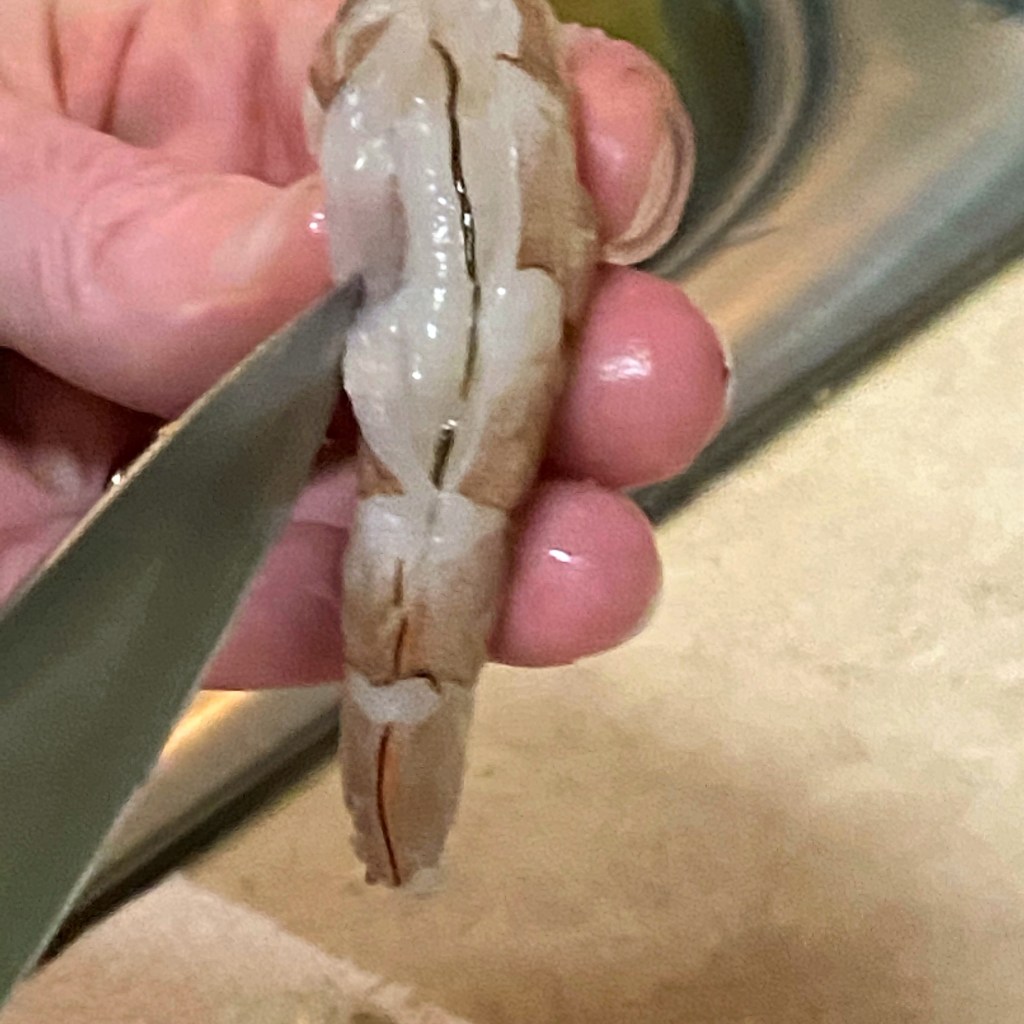
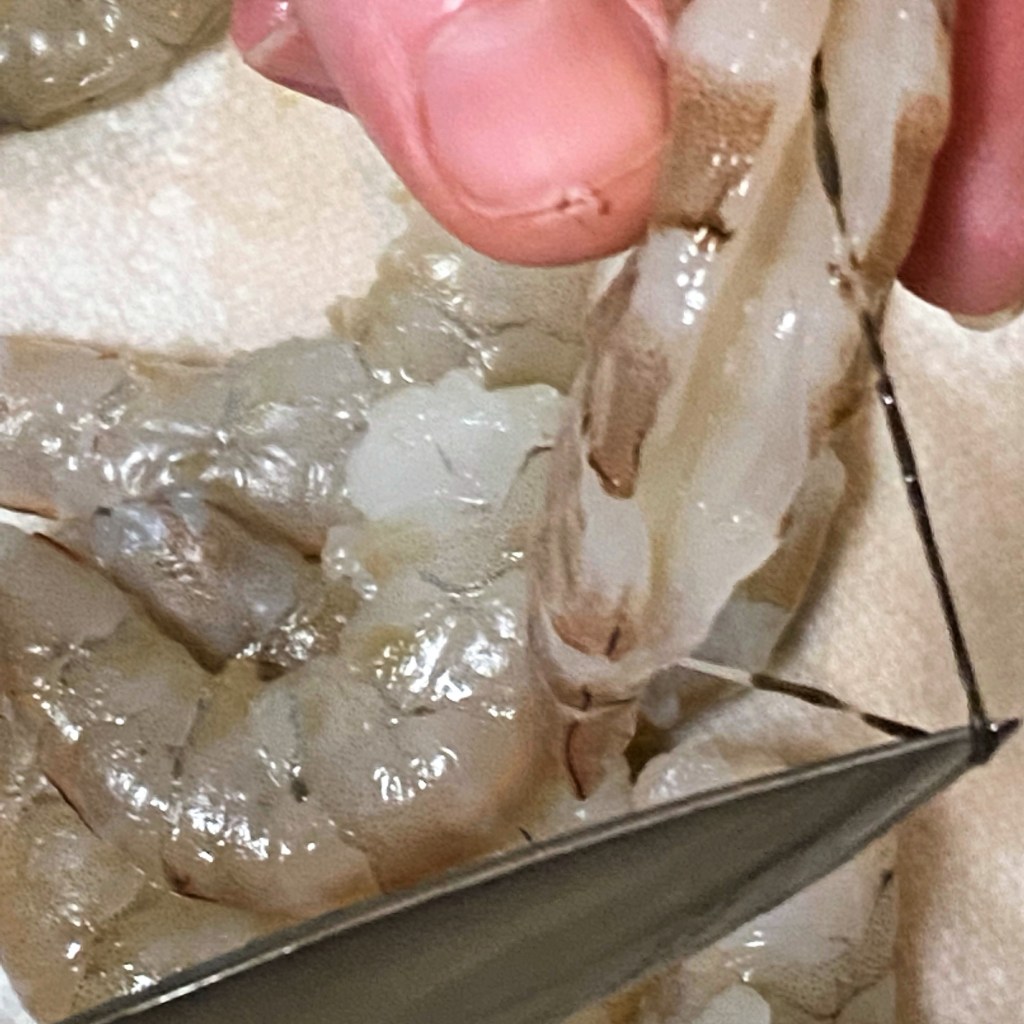
  2. Thaw the shrimp (if frozen), and then peel and de-vein each one. If you have never done this before, it’s easy but extremely important, and I’ve provided some images at the end of the post to walk you through it. Removing the peel is pretty simple. Next, use a sharp paring knife to make a shallow cut down the outside curved part of the shrimp, revealing a dark stringy thing. I hate to tell you, but this isn’t actually a vein—it’s a digestive tract. Disgusting, but important to know. Slip the sharp tip of the knife underneath this nasty thing and pull it out. Lay the cleaned shrimp on layers of paper towel and set aside for now. If working ahead, cover and refrigerate.
  3. Bring a large pot of water to boil for cooking the pasta. Season it generously with kosher salt and (once boiling) add the pasta, stirring to prevent sticking. Cook until al dente, according to directions on the pasta box. While this is underway, continue with the recipe below.
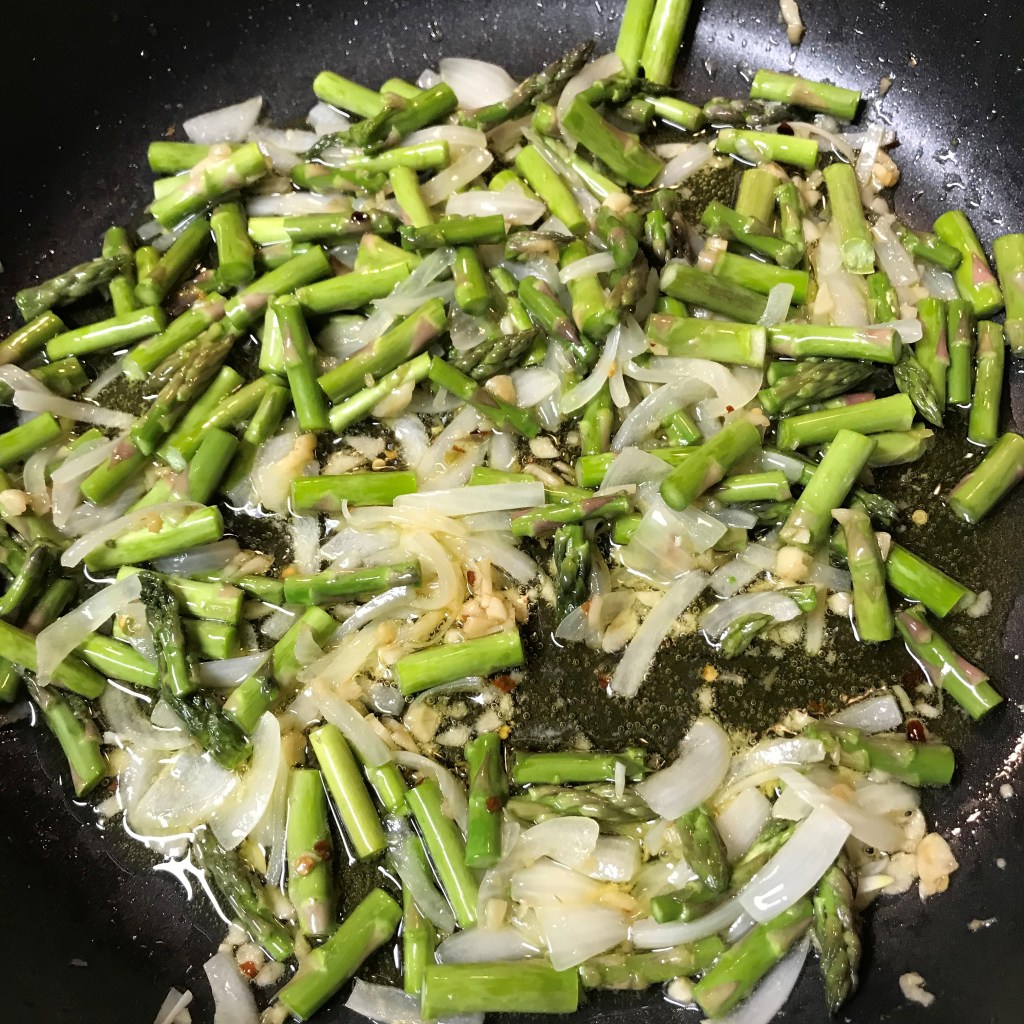
  4. After the garlic has poached about 20 minutes, turn the skillet heat up to medium. When oil begins to bubble around the garlic, add the onions and asparagus and sauté 5 to 7 minutes, until the onions are translucent and the asparagus is slightly softened but still bright green.
  5. Move the veggies to the outer edges of the skillet and arrange the cleaned shrimp in the center. Cook only long enough for the bottom of the shrimp to become pink and opaque.
  6. Turn the shrimp, season the whole skillet with salt and pepper, and add in the lemon zest. Squeeze the lemon half over the mixture and continue to cook until the second side of the shrimp is cooked. Move all the skillet ingredients to the outer edges.
  7. Using tongs, move the cooked pasta directly to the center of the skillet and swirl it around to coat it with the flavors of the skillet.
  8. Arrange the pasta on serving plates or bowls, hit it with a little parm-romano blend, if you’d like, and top with veggies and shrimp.

Want to make this dish?


Here’s the down and dirty on de-veining

For goodness sake, do not skip this important step. As noted above, the “vein” in the outer curve of shrimp is actually a digestive tract, and the gunk inside is what’s left of the critter’s most recent meal (yuck). Food safety experts haven’t expressed serious concerns about eating it, but if it grosses you out (as it does me), grab a sharp paring knife and get that thing outta there!


Garlic Mashed (Terrie’s favorite potatoes)

I can’t remember exactly when I ditched boxes of potato flakes and started making mashed potatoes the real way for Thanksgiving (and every other time I wanted mashed potatoes). But I can say the process has evolved over the years. As my wife, Terrie, creator of this blog often says, cooking is about being inspired, taking chances and elevating your dishes. Just as I continue to try new methods and ingredients on the first dish I ever successfully created (chili), I’ve tweaked these garlic mashed potatoes over the past 20 years. In fact, they didn’t even start out as garlic mashed!

When I was growing up, I would sometimes take the baked potatoes my mother made, scoop out the innards, add margarine (Parkay, to be specific) and mash. It seemed to make them more tolerable.

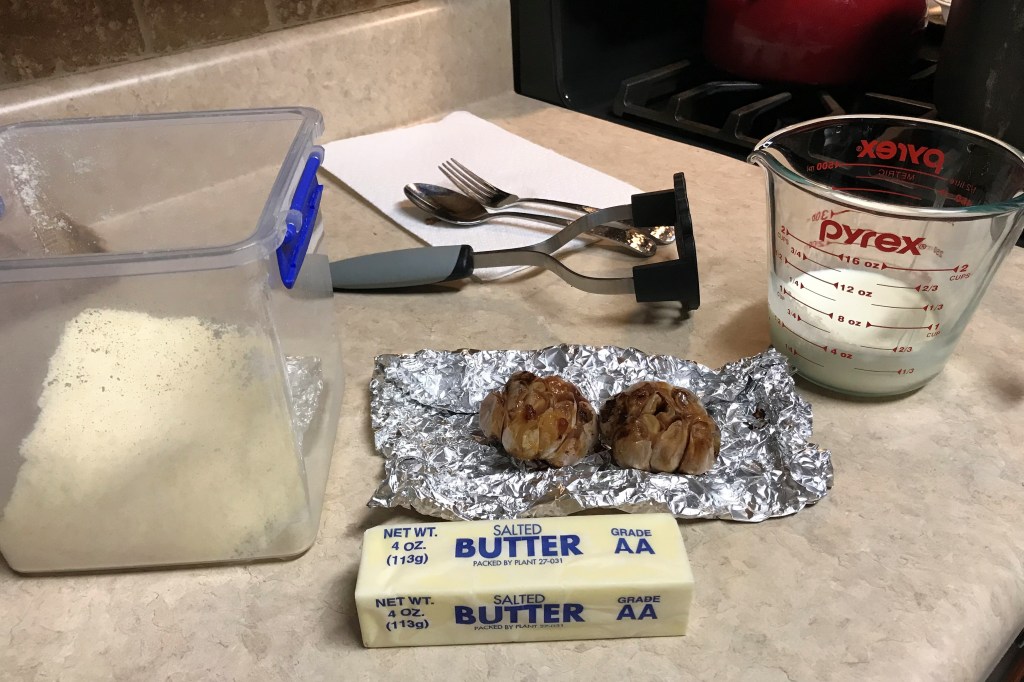
For the current version, I’ve upped the ante by adding real butter, roasted garlic, our grated parm-romano blend and heavy cream, none of which were in the early year versions of this dish. About a decade ago, I decided to experiment with the potato mix. I loved Yukon Gold and had a hunch doing a 50-50 mix of Yukon and russet would work well. I was right. The garlic mashed I’m serving up here is a silky blend of flavor that kind of melts in your mouth. I usually add more butter than what the recipe calls for. Just because, as Terrie and I say about certain recipes, “There’s too much butter (or parm-romano blend, bacon, bourbon, chocolate). Said nobody. Ever.”


Ingredients (makes 6-8 servings)

1 large garlic head, roasted

Extra virgin olive oil (or spray)

2-3 medium to large Russet potatoes

2-3 medium to large Yukon gold potatoes

4 Tbsp. (half stick) salted butter (with the option to add more)

4 oz. heavy cream (with the option to add more)

1/4 cup parm-romano blend (with the option to add more)

Salt and pepper to taste


Putting it together

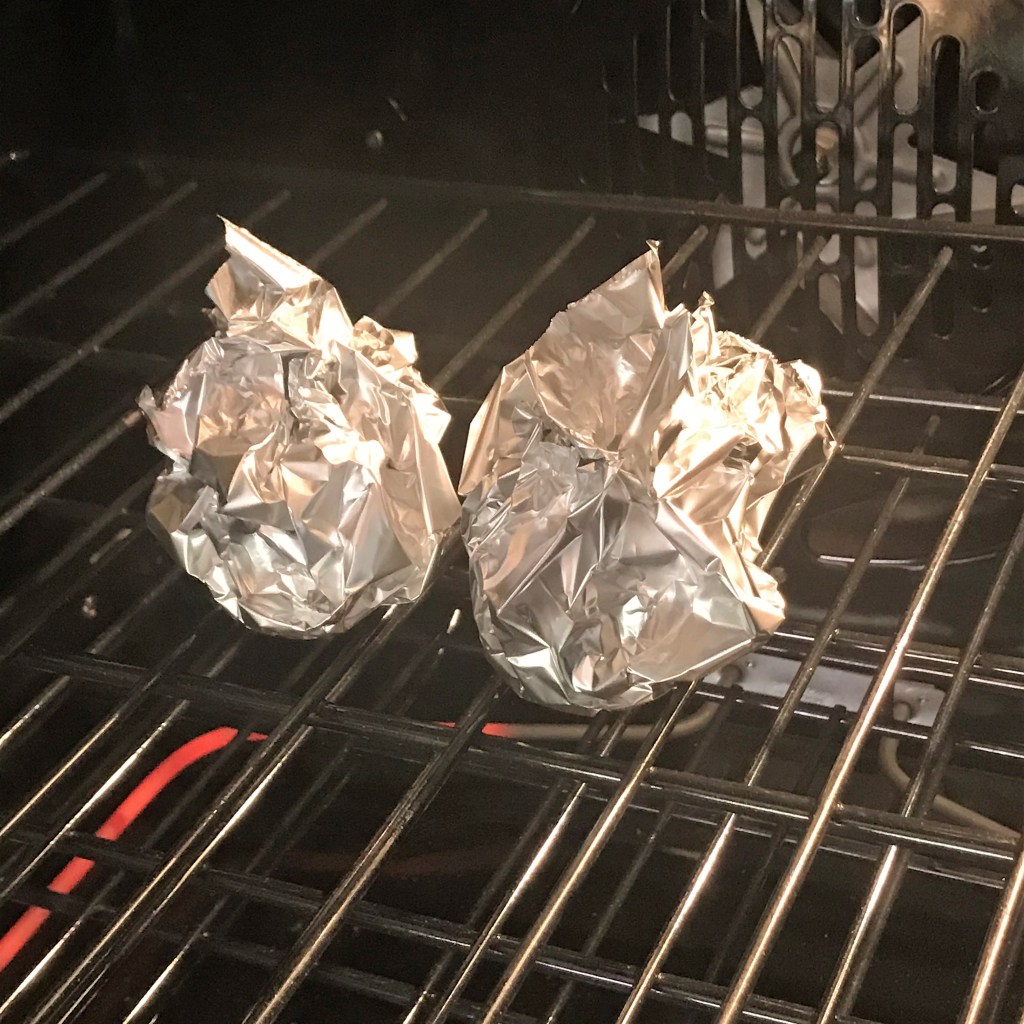
Preheat oven to 350° F. Roast the head of garlic by cutting off the top, adding oil (olive oil preferred) either from a bottle or a spray can. Wrap tightly in foil and roast for about an hour. You can check out Terrie’s post from yesterday for more detail and step-by-step pictures, but it goes like this:

Peel and dice the potatoes and heat stove-top on high. As the water begins to boil, add salt and reduce heat to simmer. Cook until potatoes are soft enough to pierce with a fork. Drain potatoes and return to pot.

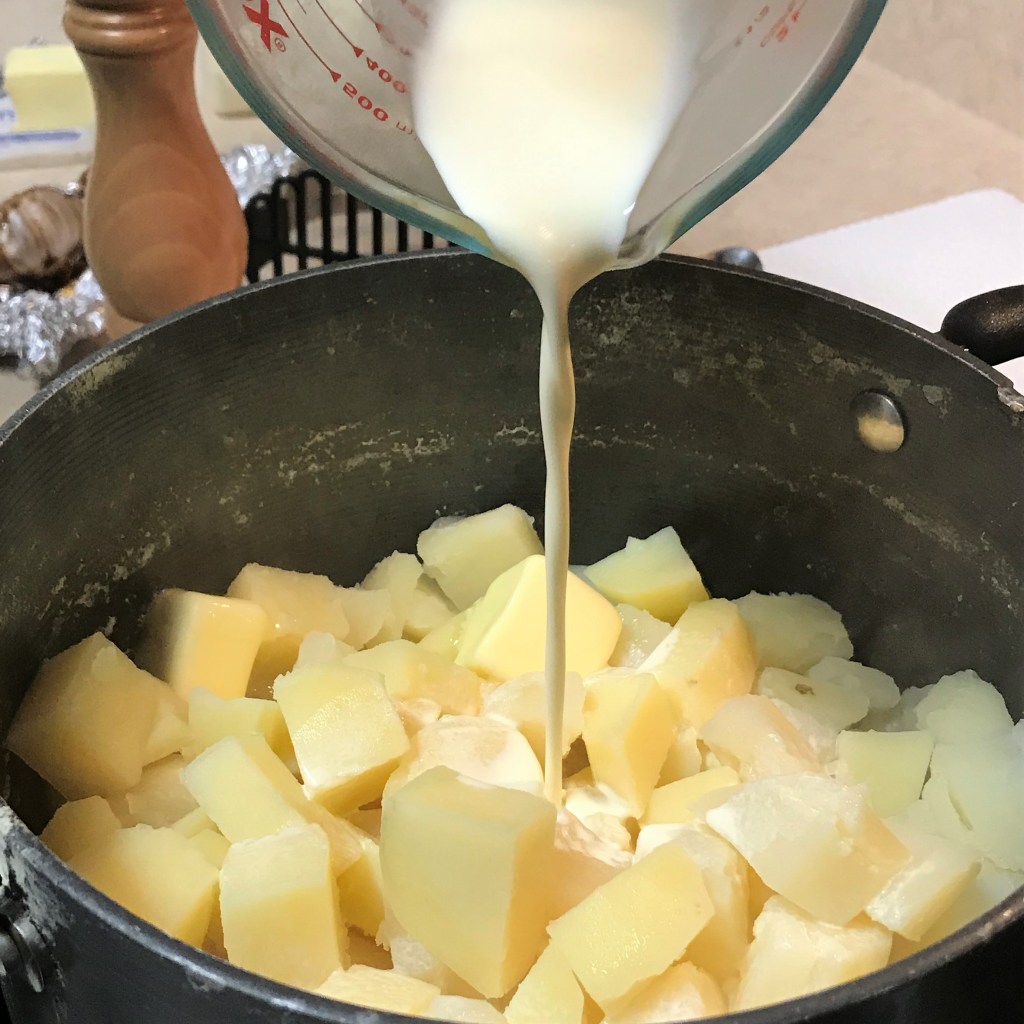
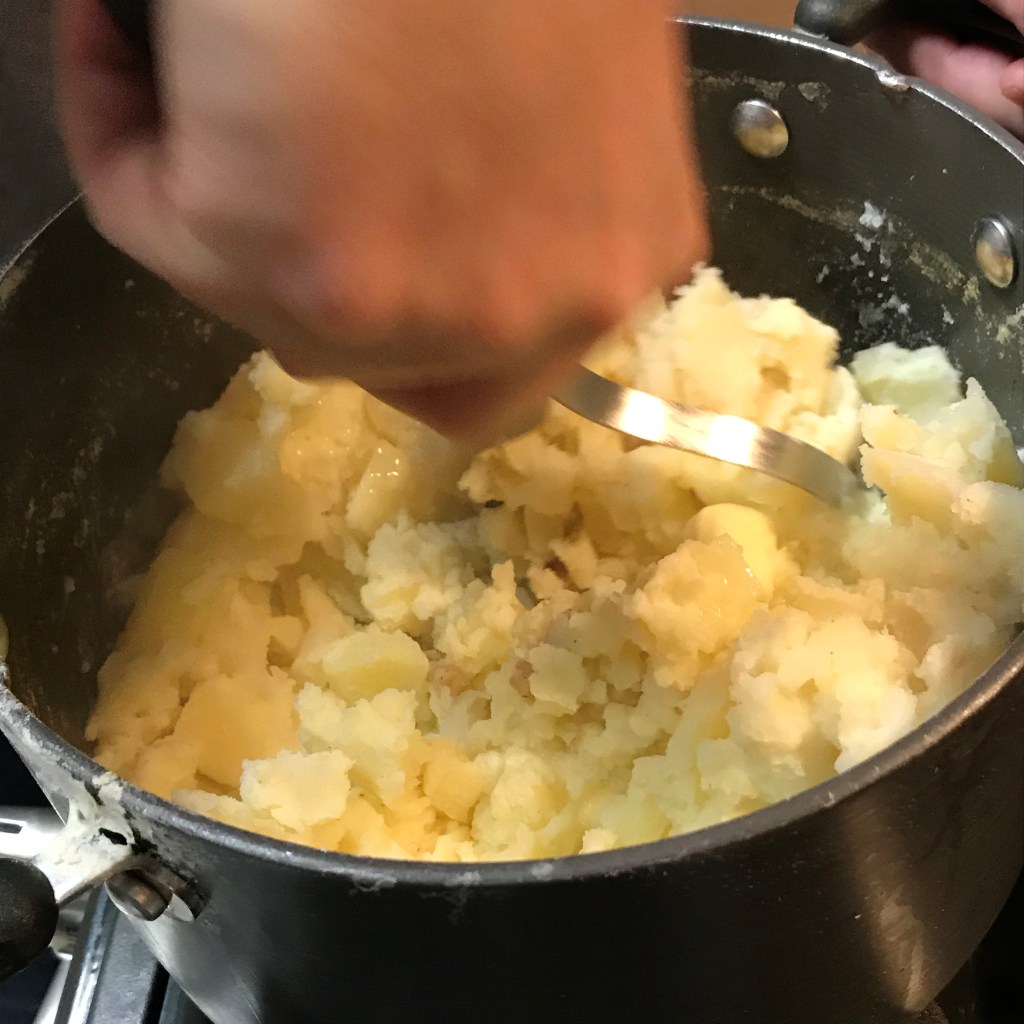
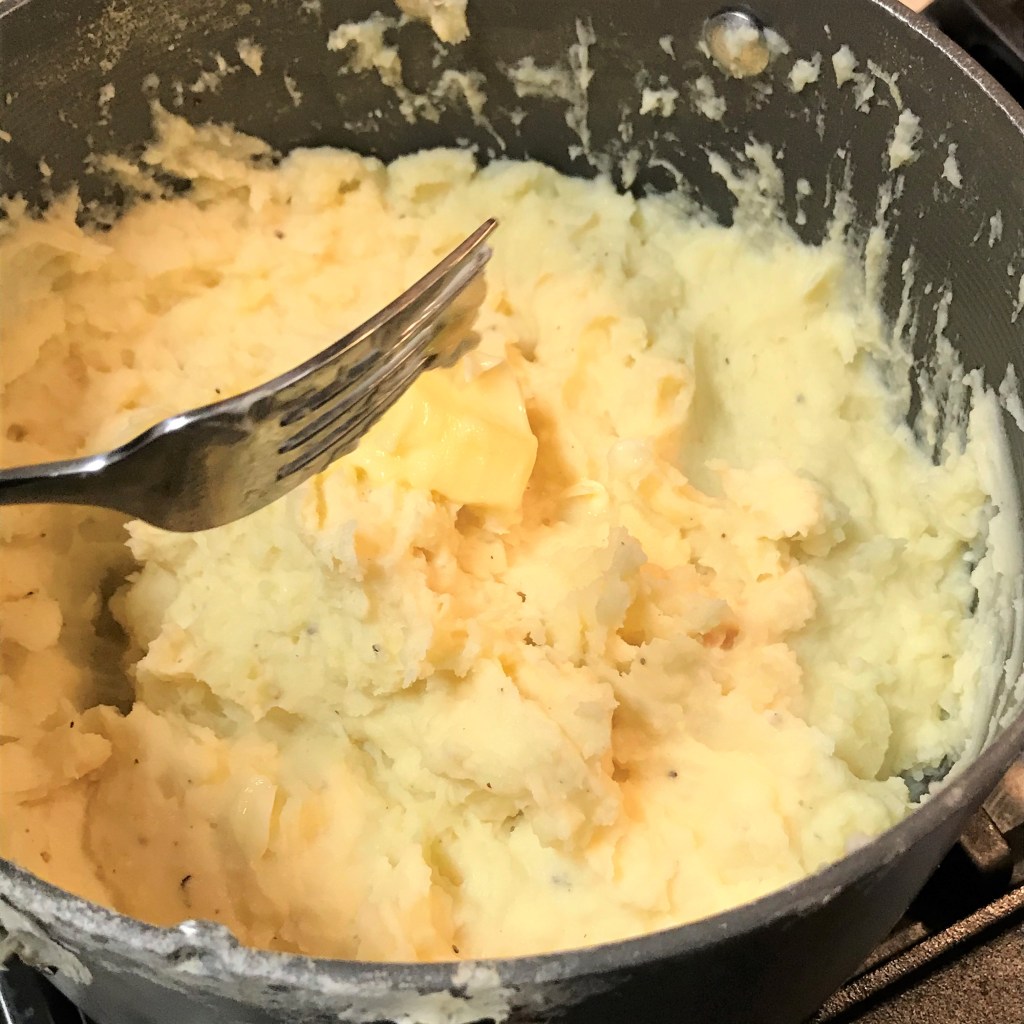
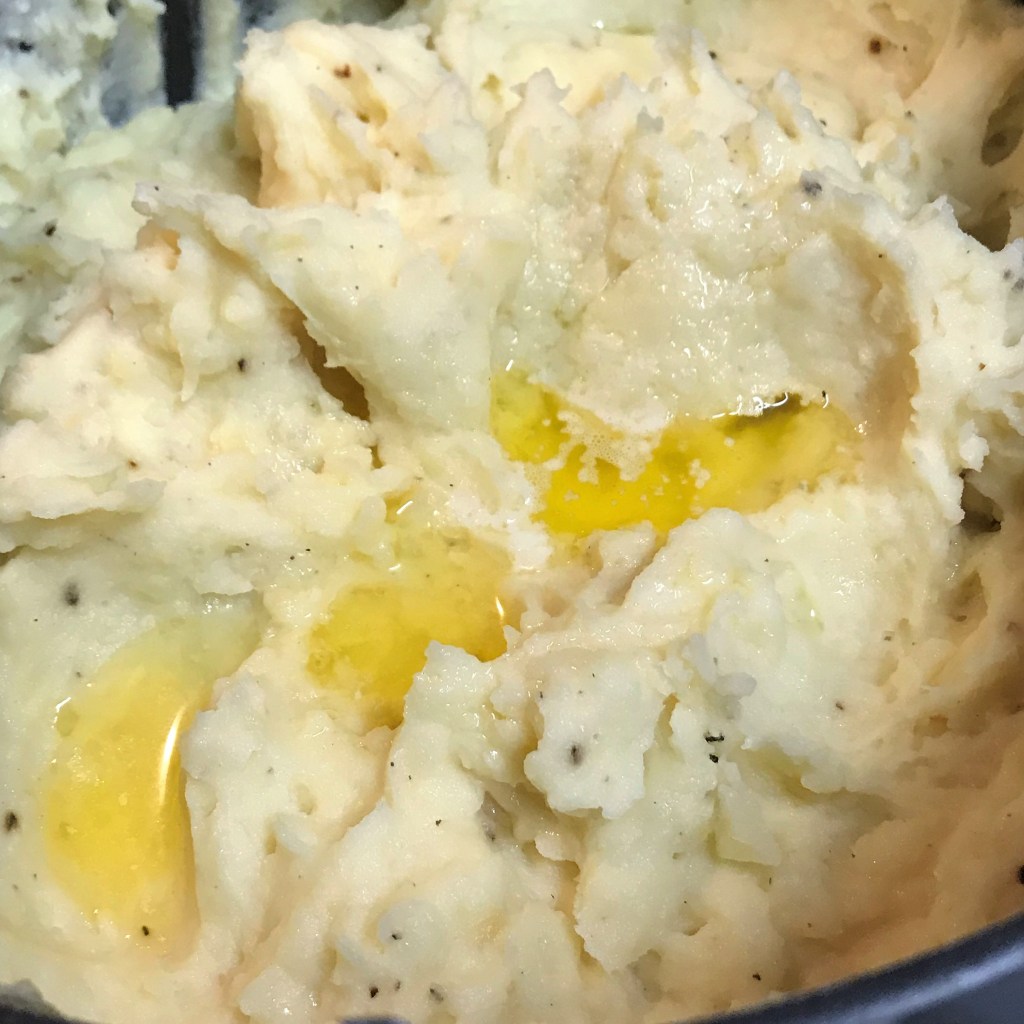
Add butter and heavy cream, add salt and pepper. Squeeze out the roasted garlic bulbs into the potatoes. Use a potato masher and mash by hand if you like. Or use a potato ricer if you like (before adding ingredients) for an even silkier texture. There was a time when I added the blend to a stand mixer, but I’ve since disavowed those years (the potatoes get too pasty).

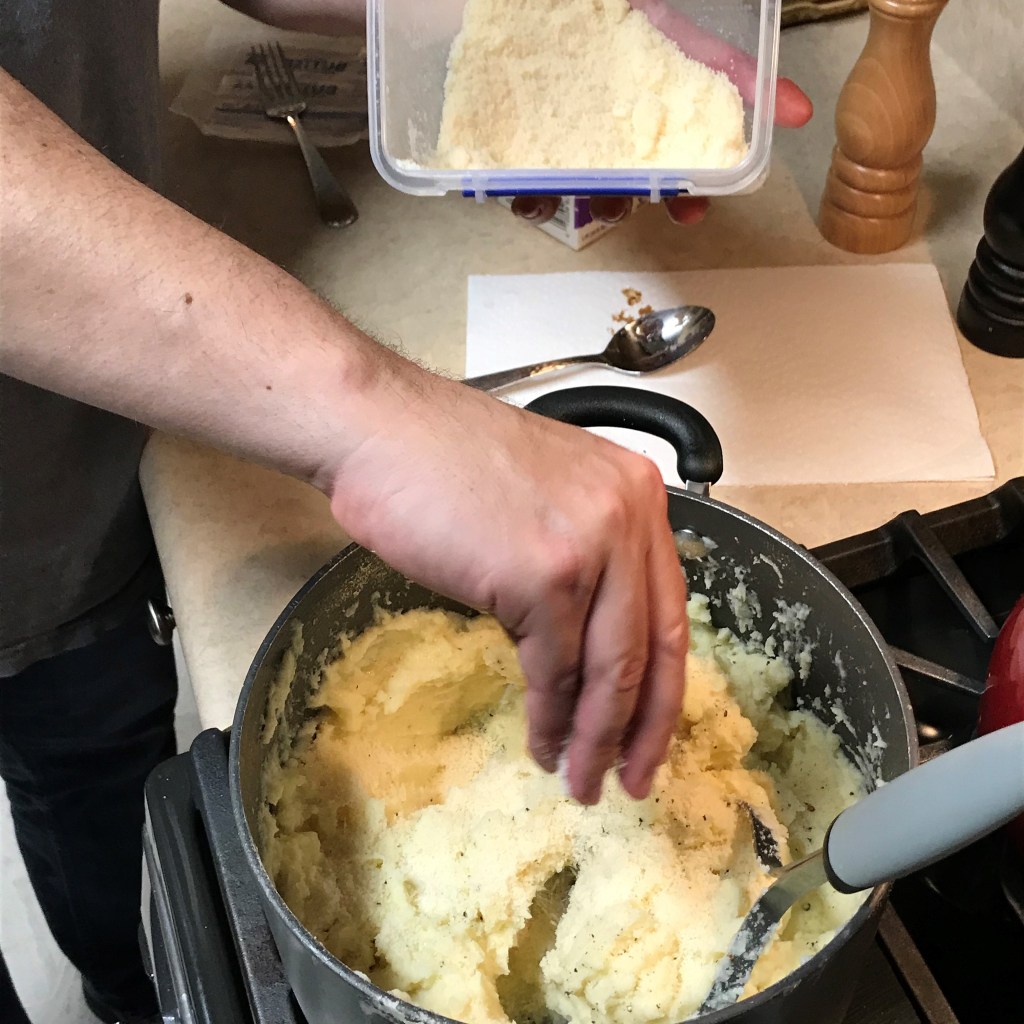
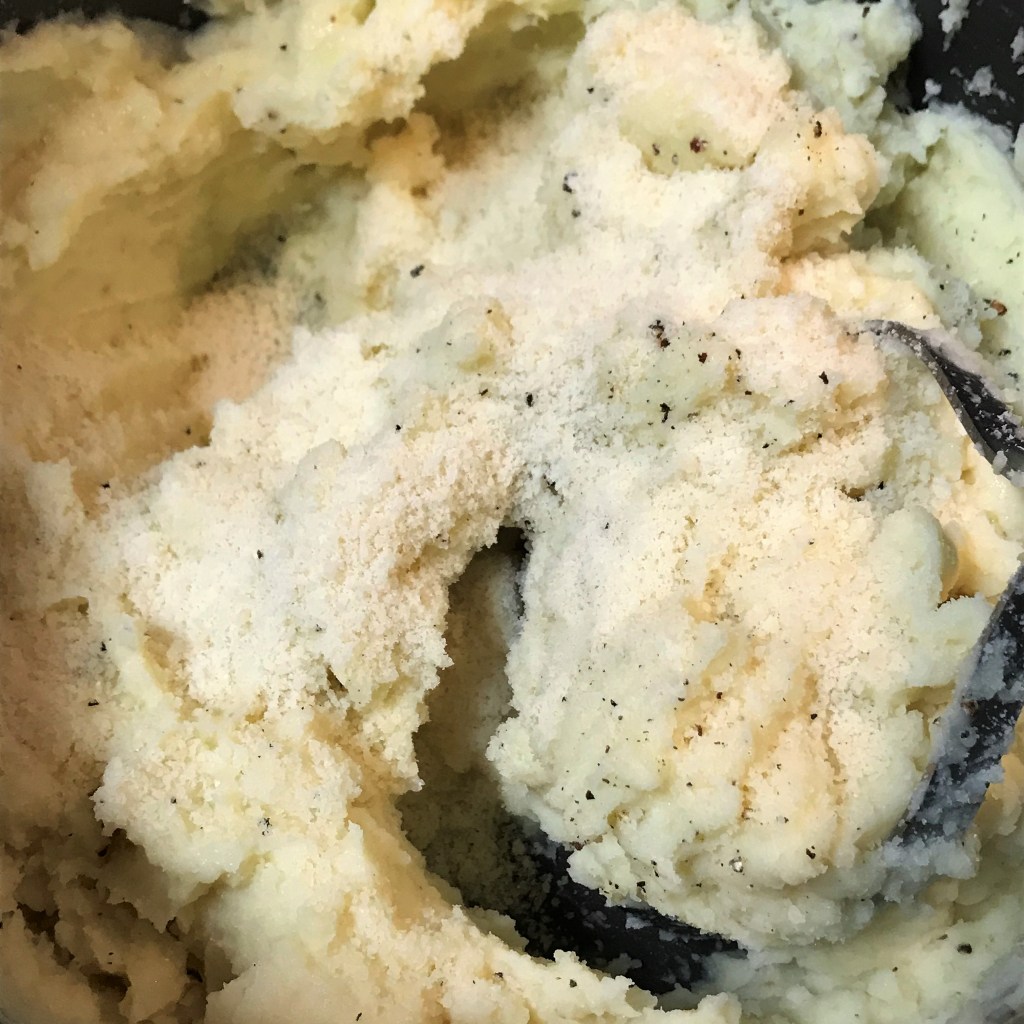
As you mix, continue to taste, adding salt and pepper as needed, but also adding additional butter and/or cream if it feels too potato-ey. Add the grated cheese blend and continue to mash until it completely disappears into the mix, which won’t take long.

Serve with an additional pat of butter, gravy or your own preferred alternatives. Terrie is already eating it straight from the pot.

Now we have perfection.

Terrie’s note:

The blend of potatoes Les uses makes these so special because the Yukon golds are smooth and creamy, while the russets add a soft fluffiness. The roasted garlic and parm-romano add new levels of savory flavor. They are good for Thanksgiving, but we also make them as a side for more casual meals, such as meatloaf, steaks, pork chops and beer can roasted chicken. I confess that I’m always on the lookout for another new main dish that would be an excuse to make these again. Feel free to share your ideas in the comments section. 🙂
Want to make this recipe?