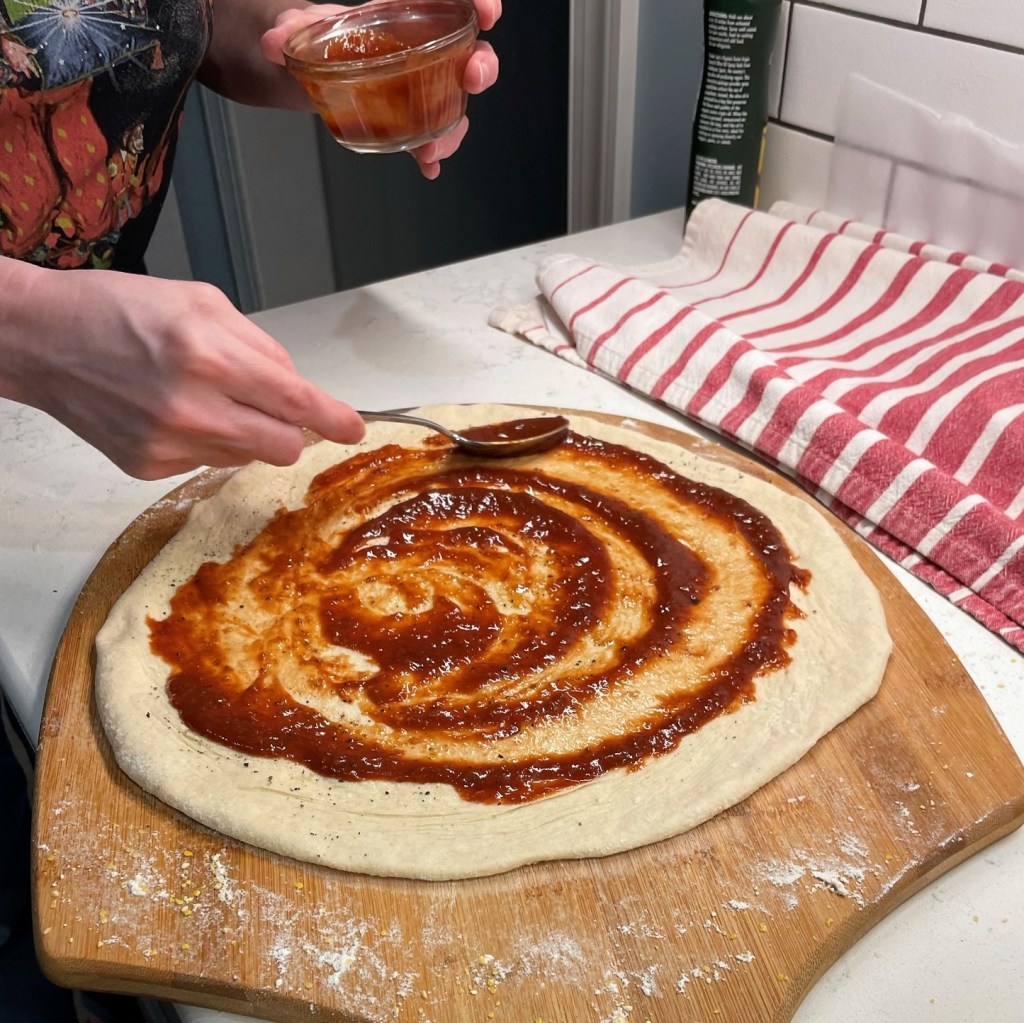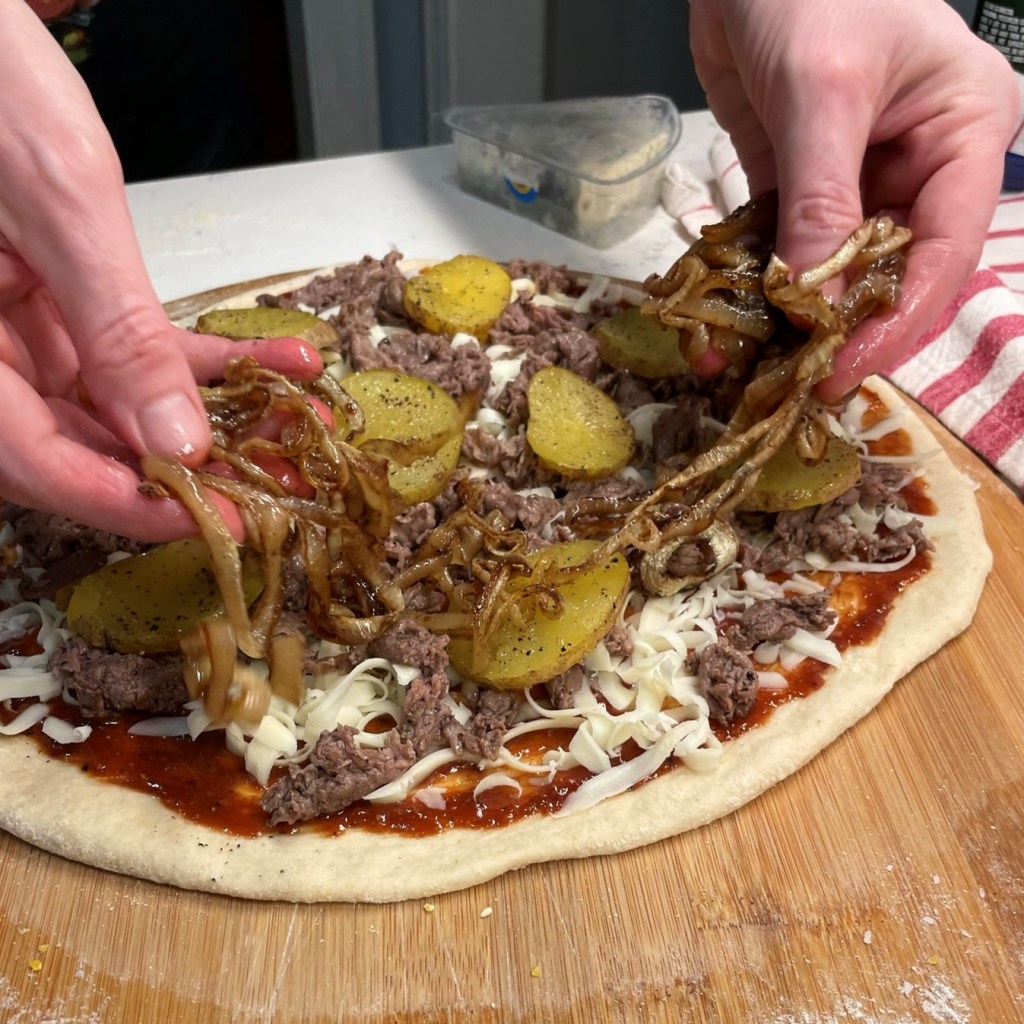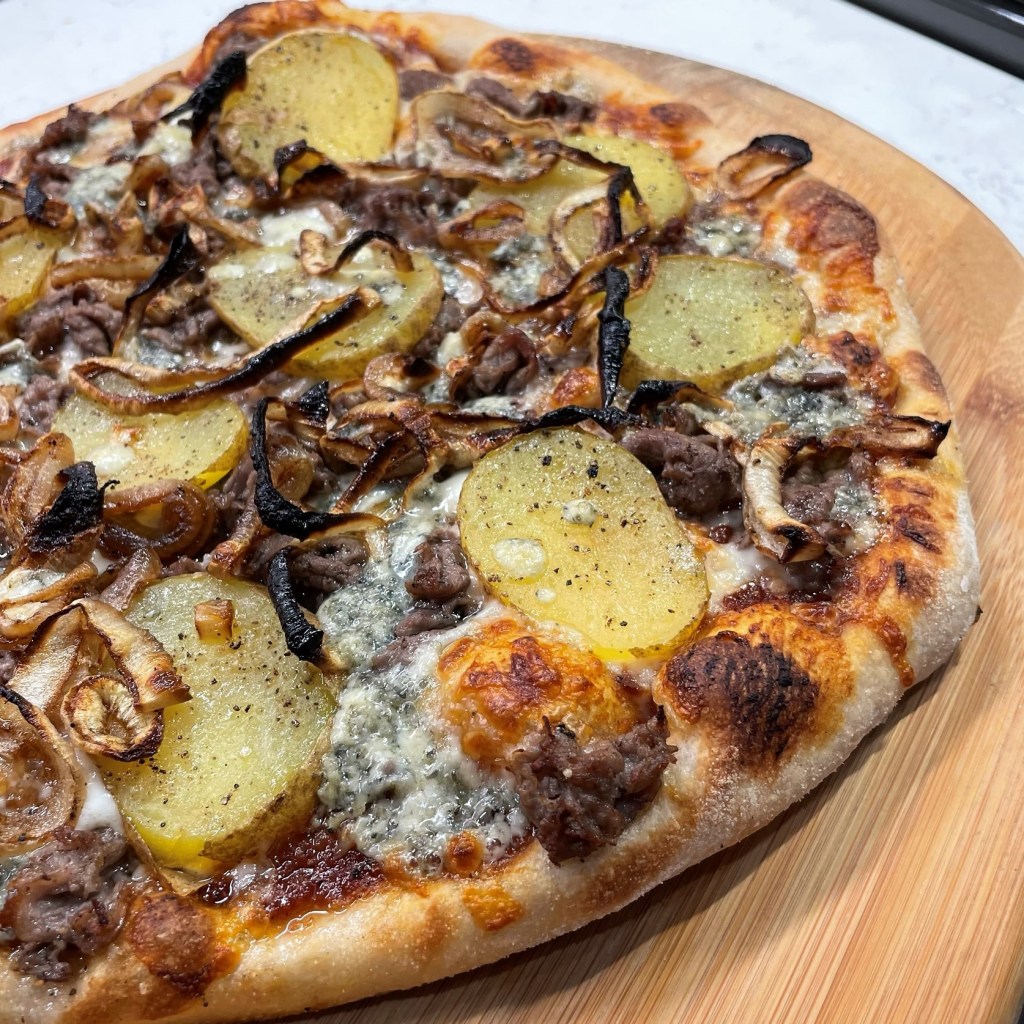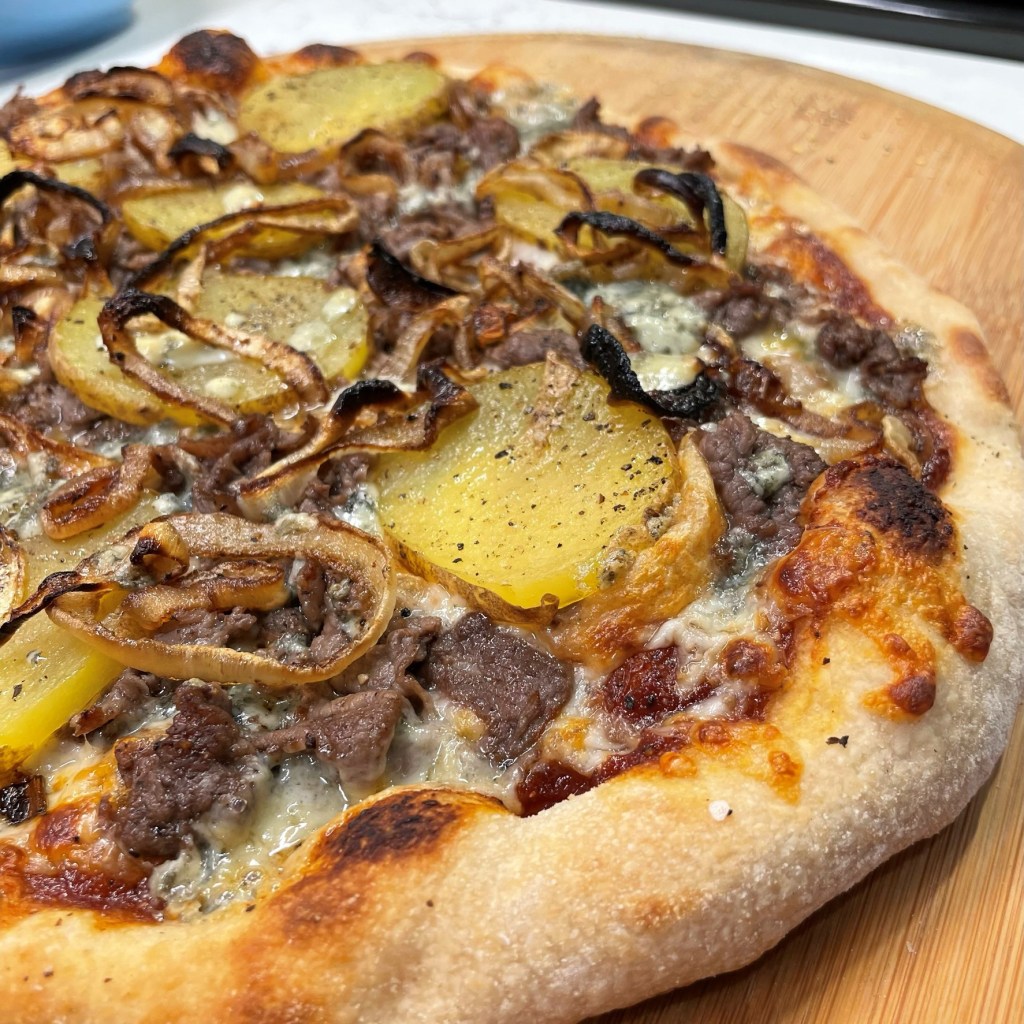
Clambake pizza — a delight for Leos!

My interest in astrology has always been one of curiosity. I’ve never been fully invested in the idea that my personality was pre-determined by the stars or whatever phase the moon was in when I took my first breath at the exact latitude and longitude where I was born. I mean, for starters, if I were to ask all-knowing AI for a general description of Leo, this is what I get. Honestly, does this sound like me? 

OK, I’m guilty as charged. 😂

I want to say that it’s all a bunch of hooey, but the Leo description is very much on point. Ahead of my milestone birthday recently, I looked up Leo traits and another related prompt came up in my search: “the best foods for Leos.” This oughta be good, I thought, given that I can count on one hand the foods that I don’t like. The first site that popped up was Harry & David— you know, the mail order fruit basket company— and here’s what it suggested:

Leo (July 23–August 22)

Corn, clams, spinach, and mozzarella are some of the foods to which this fire sign is drawn. This is due in part to some — such as tomatoes — being in season during the sunny summer months when Leos are born.

The moment I read that, I knew exactly what to do.

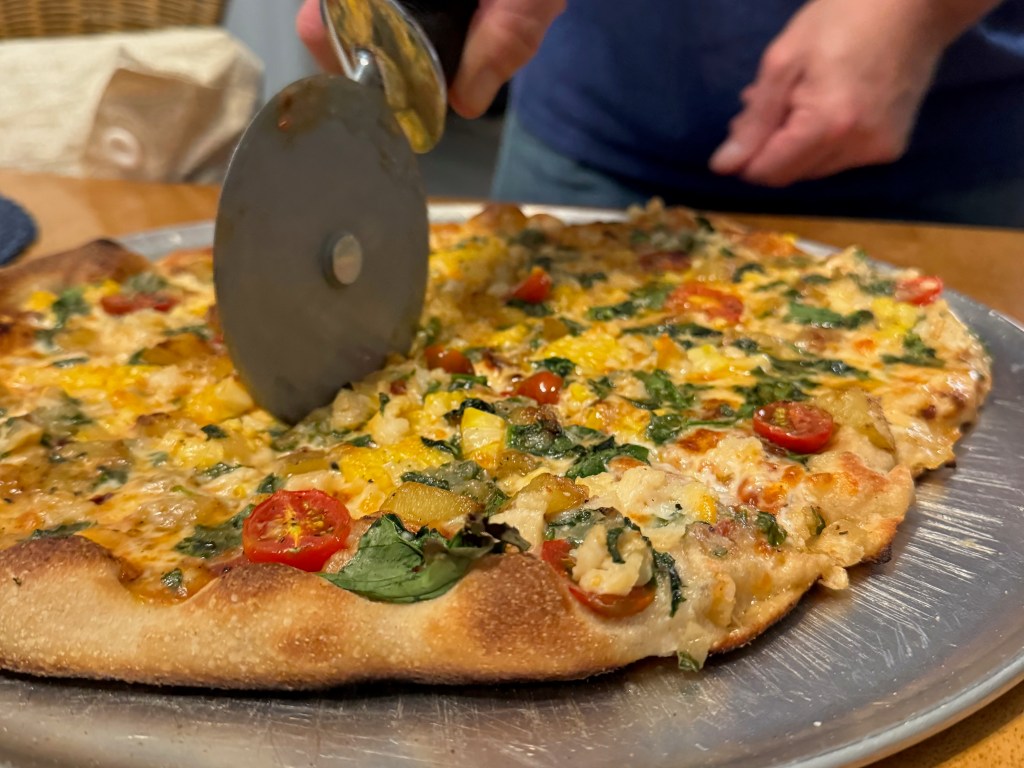
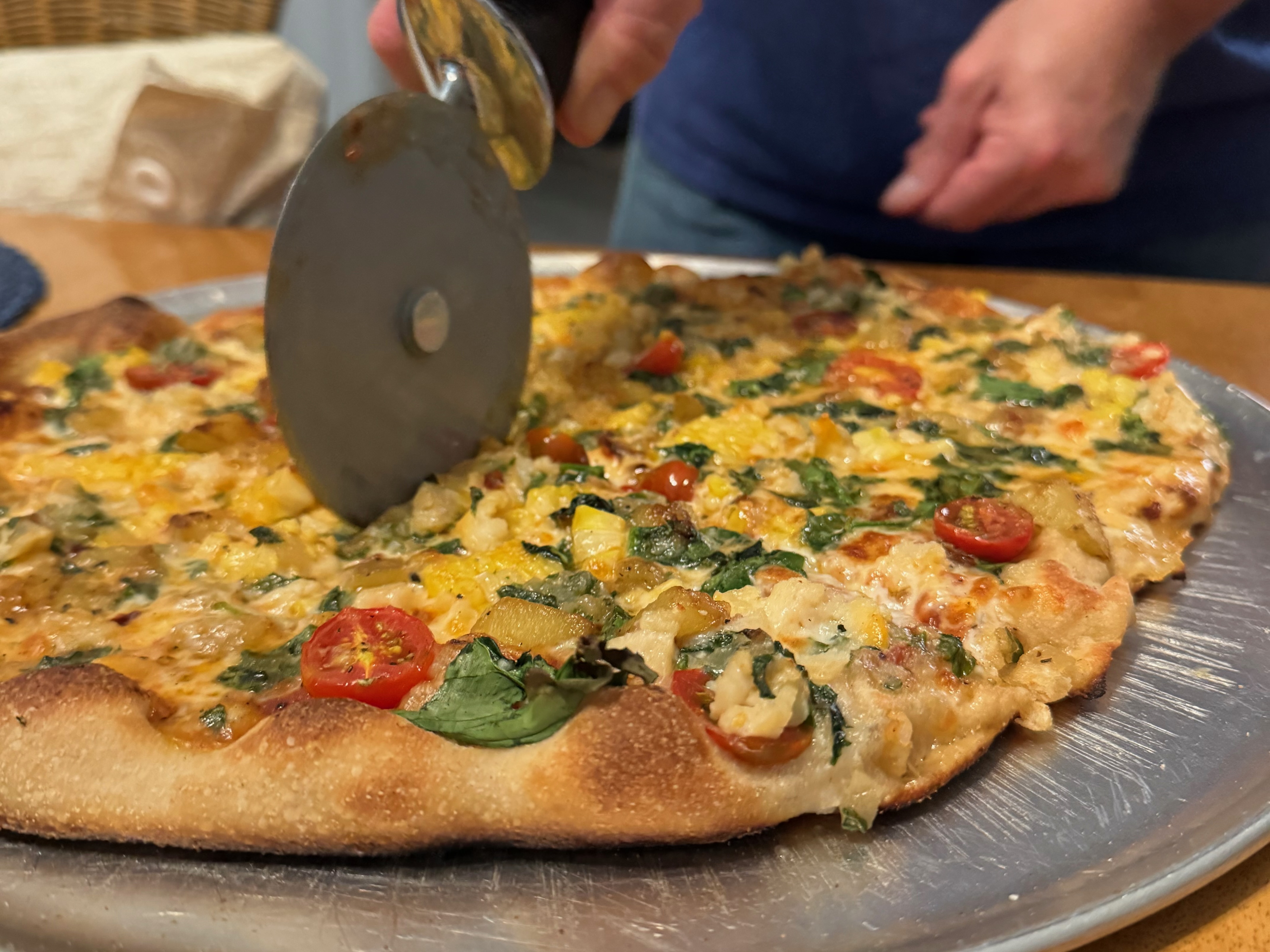
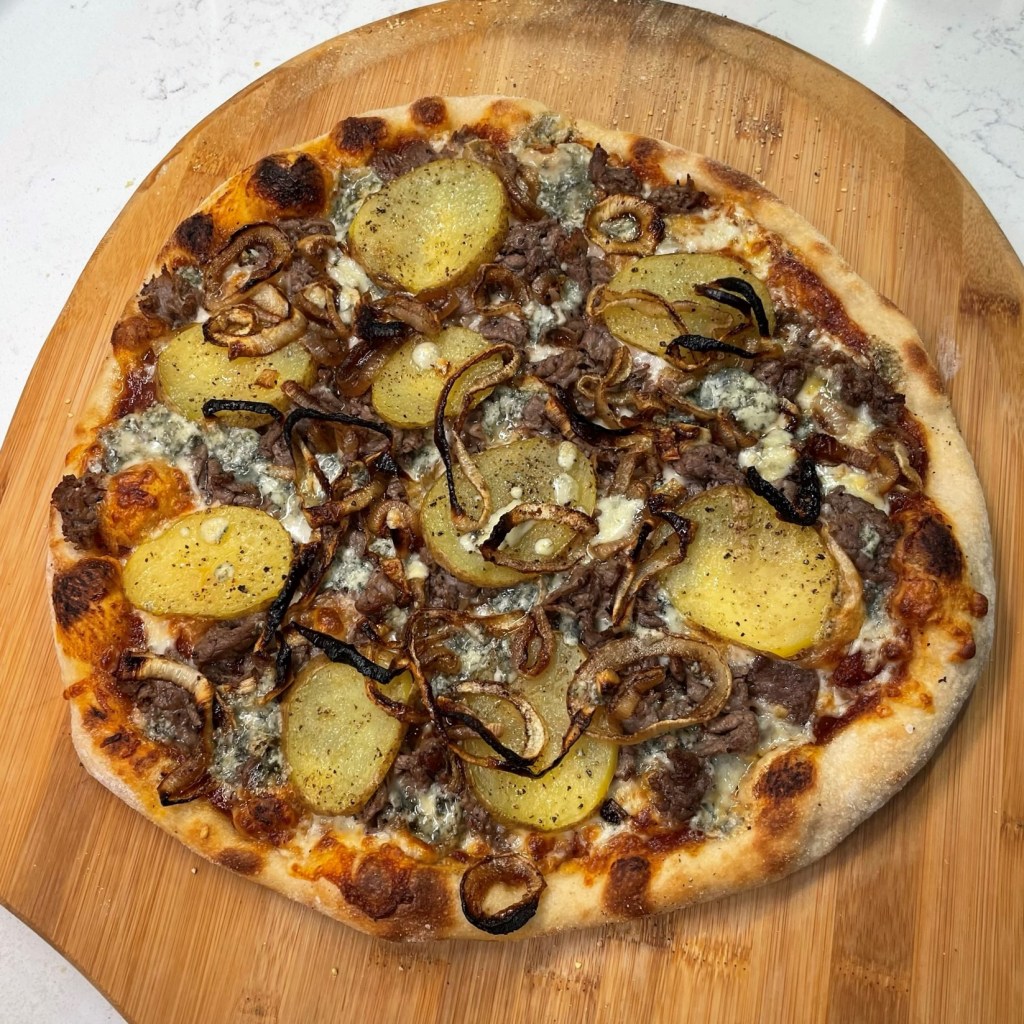
Behold, the clambake pizza!

The clambake connection

Clambakes are not exactly “native” to North Carolina, but we did have a fun one associated with the Crosby pro-am golf tournaments that used to be held around here. This was a charity tournament that Bing Crosby started at Pebble Beach many moons ago, and his widow, Kathryn, moved it in the mid-1980s to Bermuda Run just outside Winston-Salem, where it stayed for 15 years. 

The golf tournament was unsanctioned, so we didn’t always see big-name pros, but there were plenty of stars from the stage and screen and it was always an exciting week in our small city. Anyone could go to the tournament, but tickets to the clambake were highly coveted— I was only able to get in because I dated a guy who worked for Cadillac, one of the sponsors.  It’s where I first fell in love with the music of a barely known country artist named Vince Gill, and everyone who saw him at Groves Stadium knew in an instant that he would become a huge star. Let’s enjoy his breakout song while we talk about this pizza, shall we?

Press play for an enjoyable musical accompaniment!

Ingredients for a clambake pizza

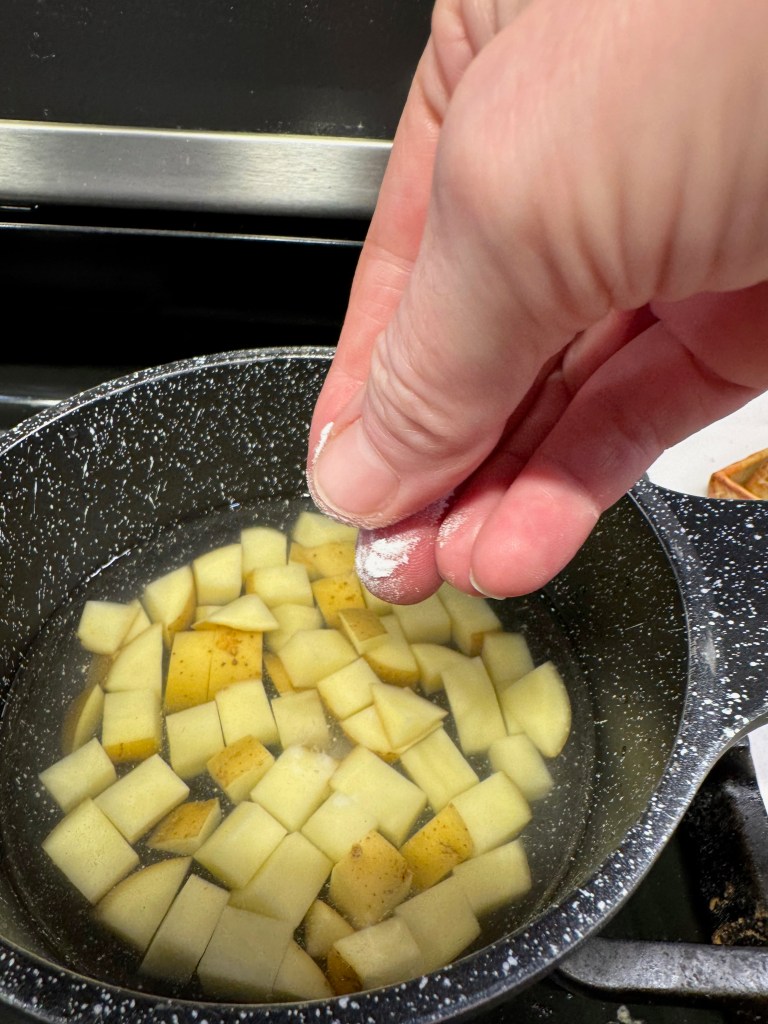
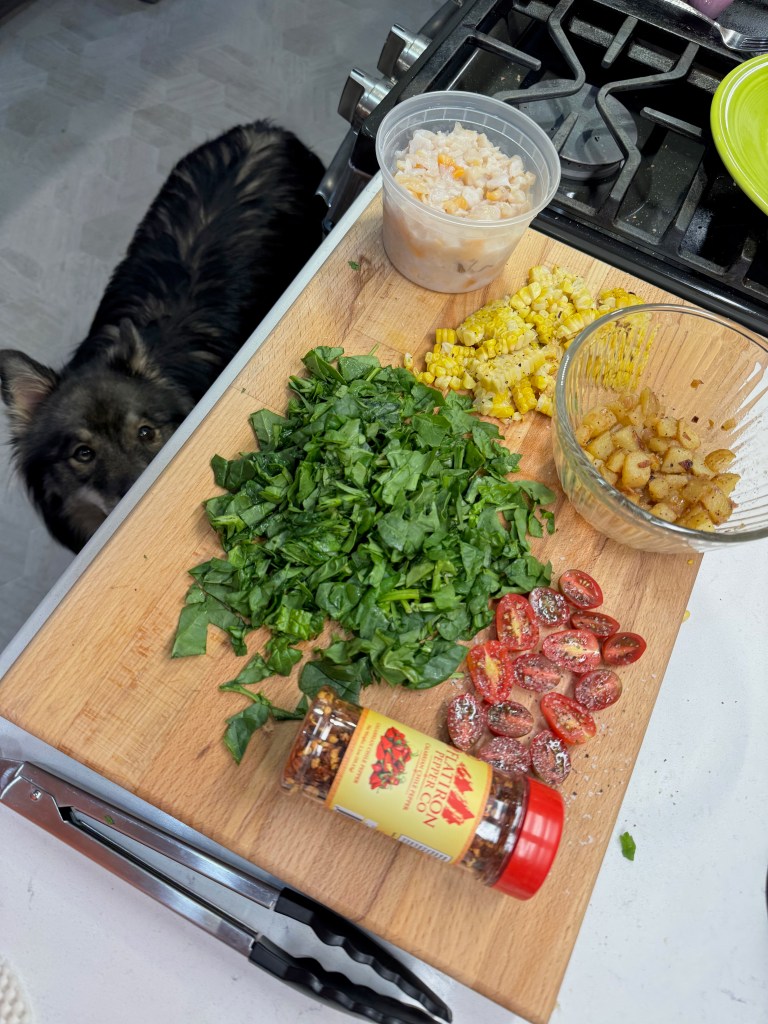
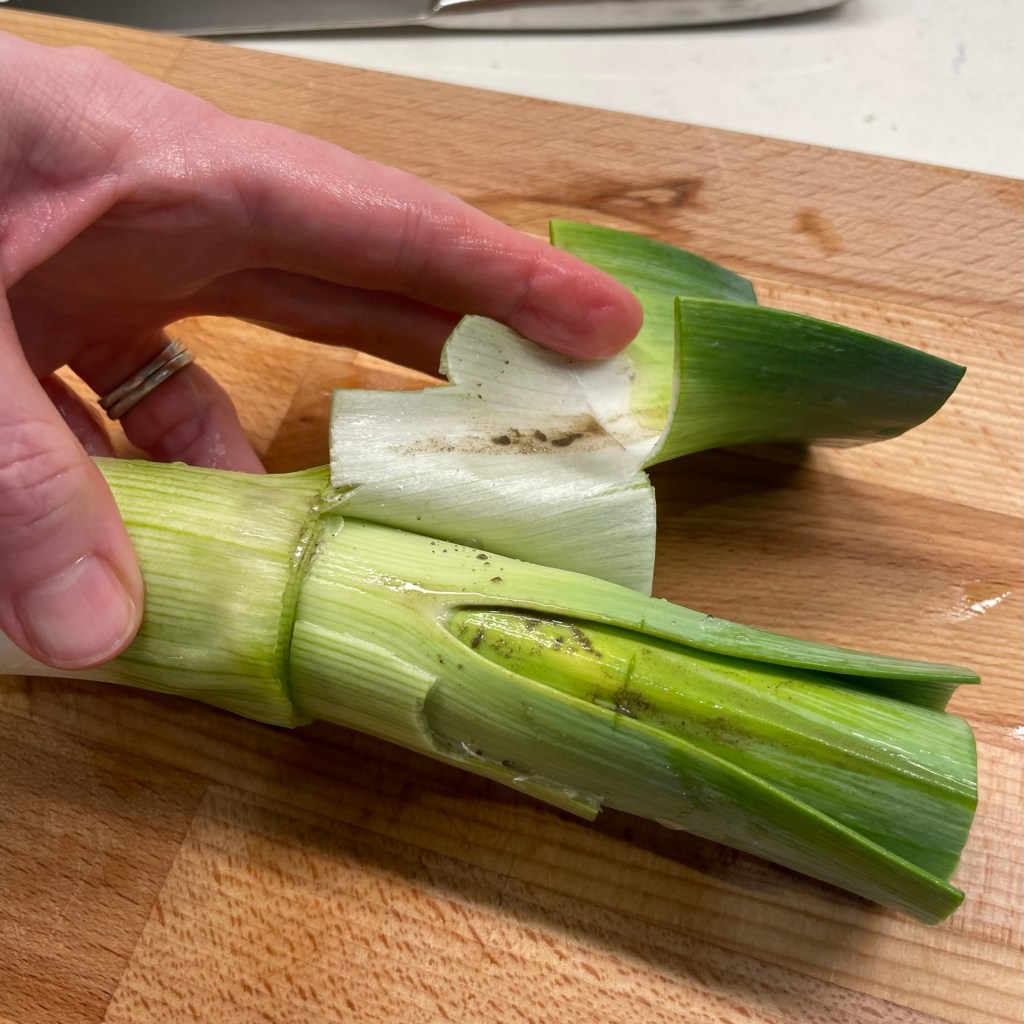
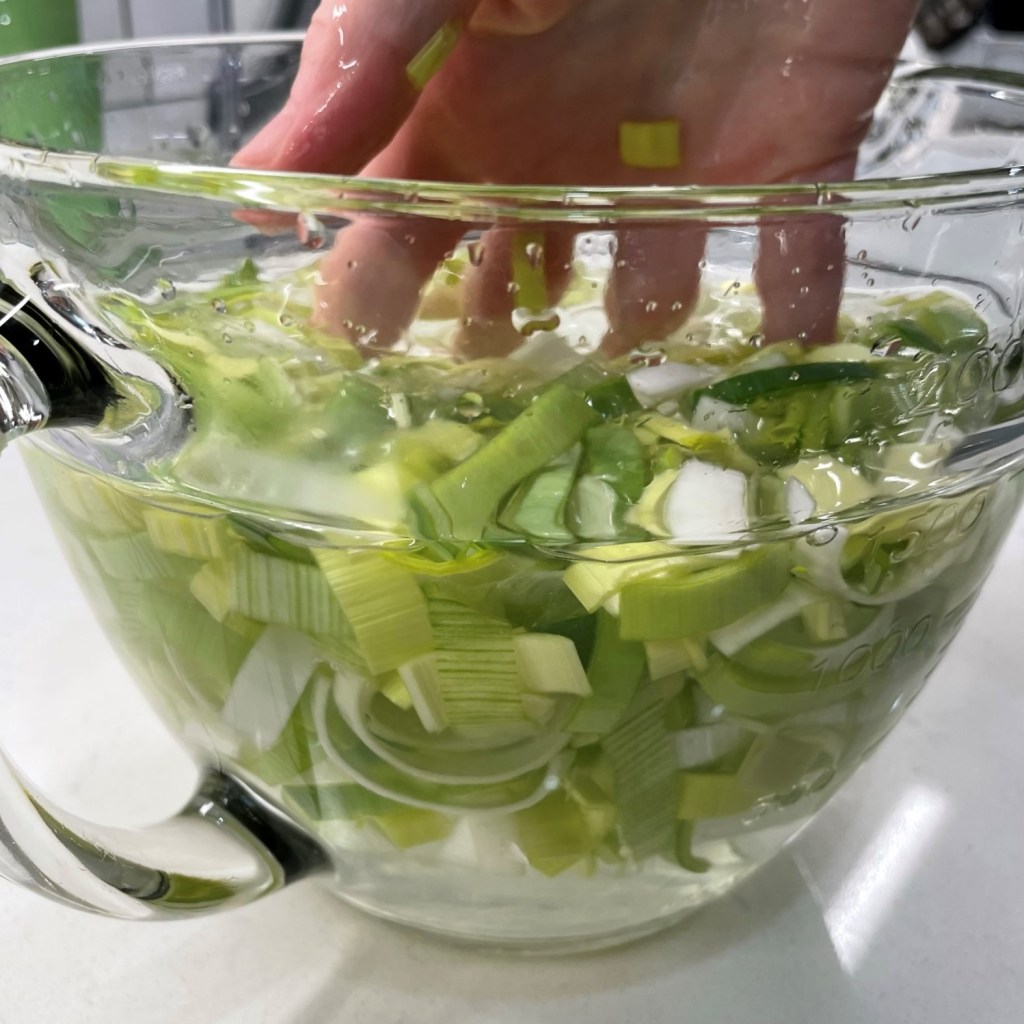
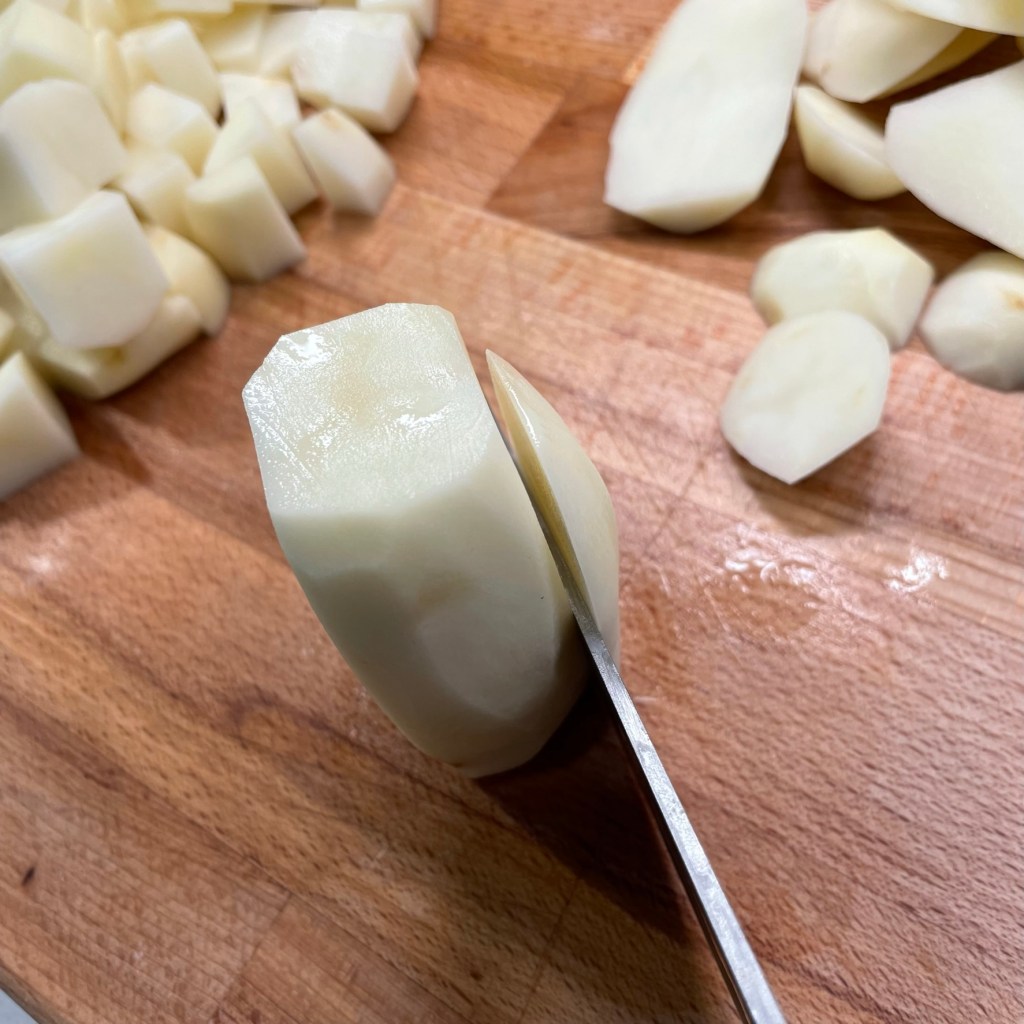
A typical clambake is outdoor cooking at its finest yet most humble. Simple ingredients, cooked over a smoldering fire until the natural flavors of ocean and earth reach their peak. Clams, corn, potatoes, onions, fresh herbs and lemon are the basic ingredients, and my list of “Leo-approved” foods was already overlapped quite a bit. Spinach would be great on this pizza, and baby tomatoes would add a nice pop of color and acidity to balance the richness of the clams. Potatoes may seem like an odd topping for pizza, but it worked really well on my steak and potato pizza a few years ago, so why not? I parboiled cubed Yukon golds and then fried them up in butter with the shallots. 


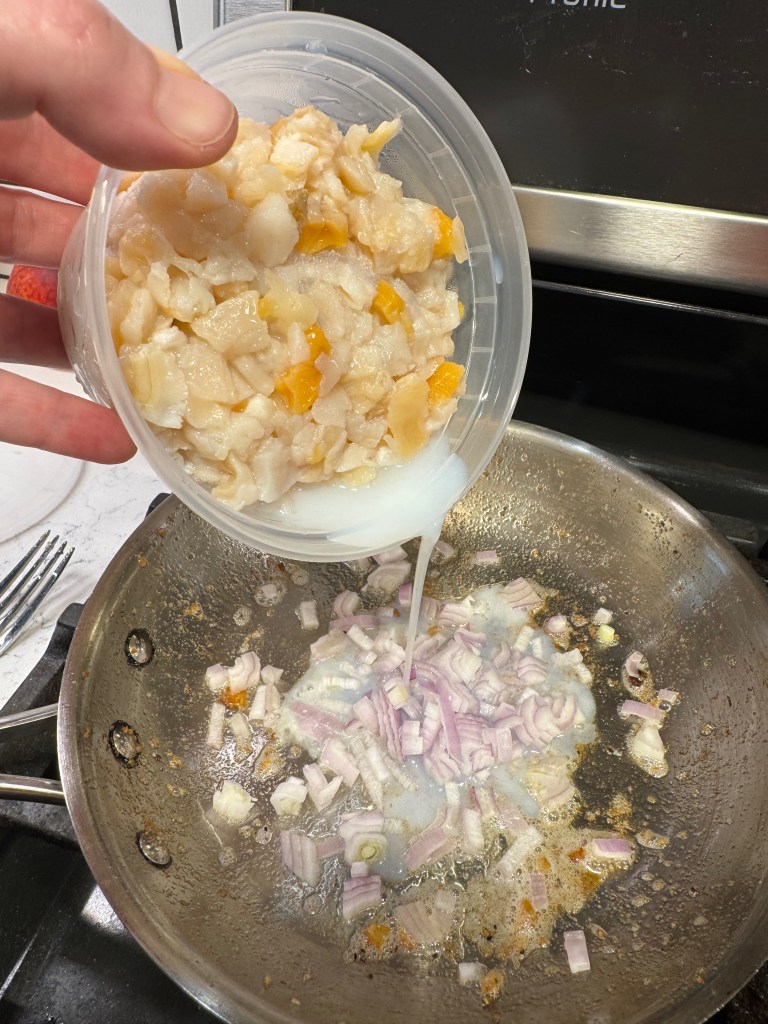
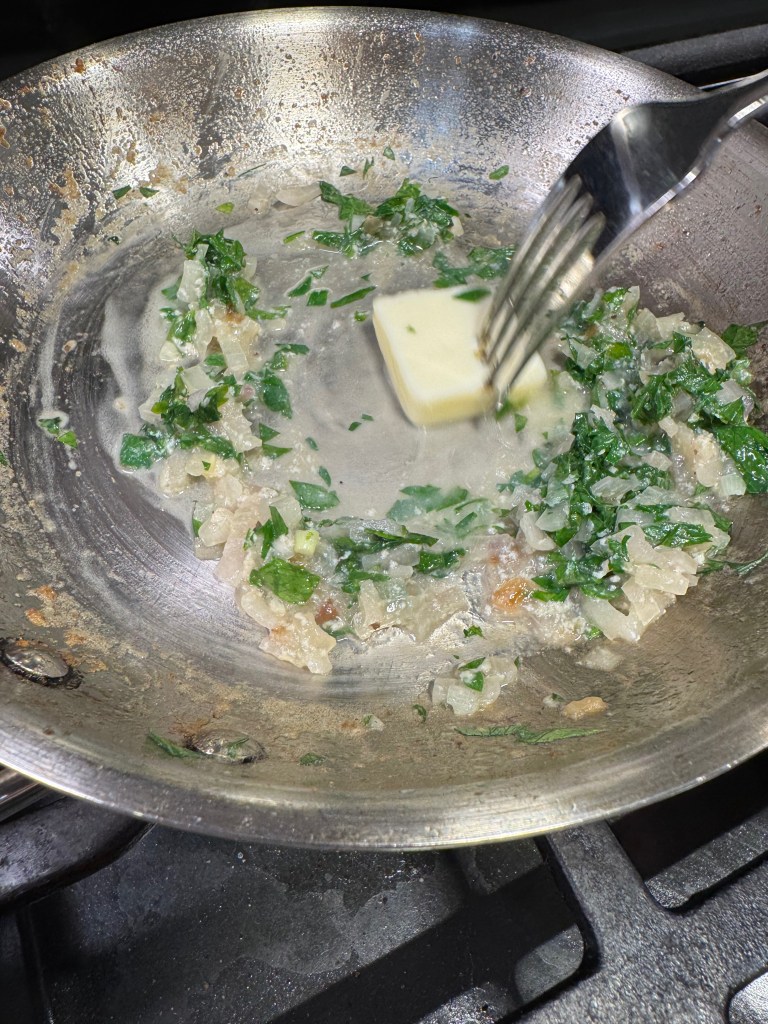
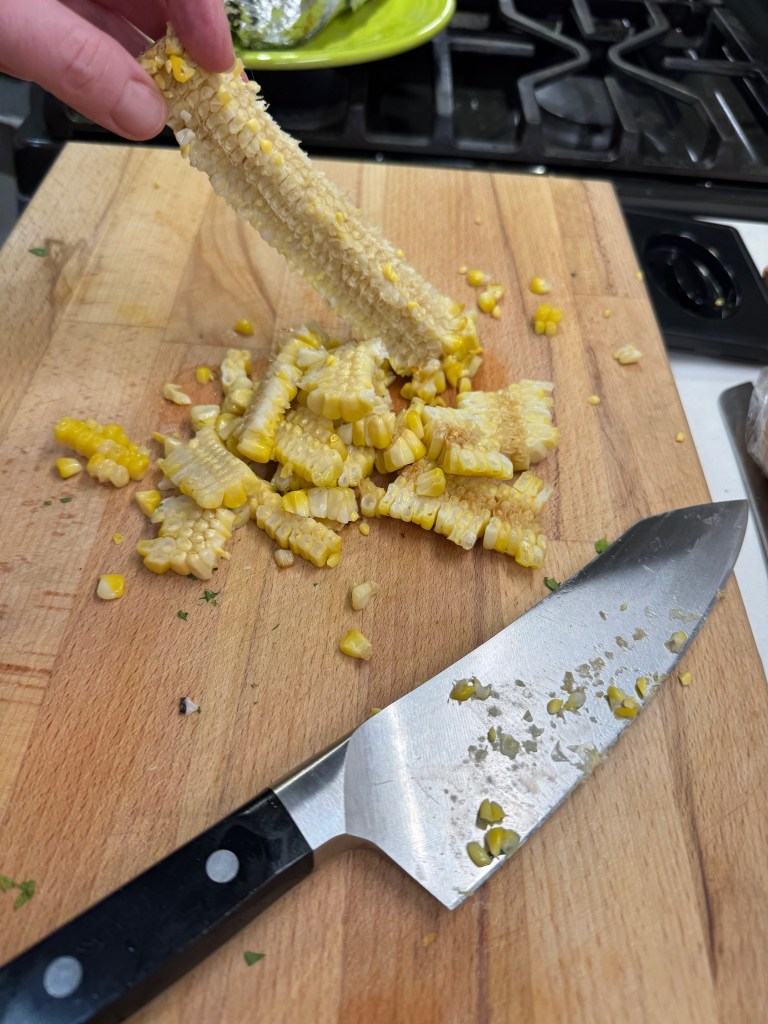
My littleneck clams came from my favorite local seafood shop— fresh from the Atlantic, already cleaned, shucked and chopped. For obvious reasons, they couldn’t go onto the pizza in their shells. After the potatoes were crisped up, I poured the flavorful clam “liquor” into the pan, and swirled in some butter with fresh parsley to dollop on the pizza before baking. I stripped an ear of grilled corn and chopped up the baby spinach, and we were ready to rock and roll.


Cooking pizza on the grill

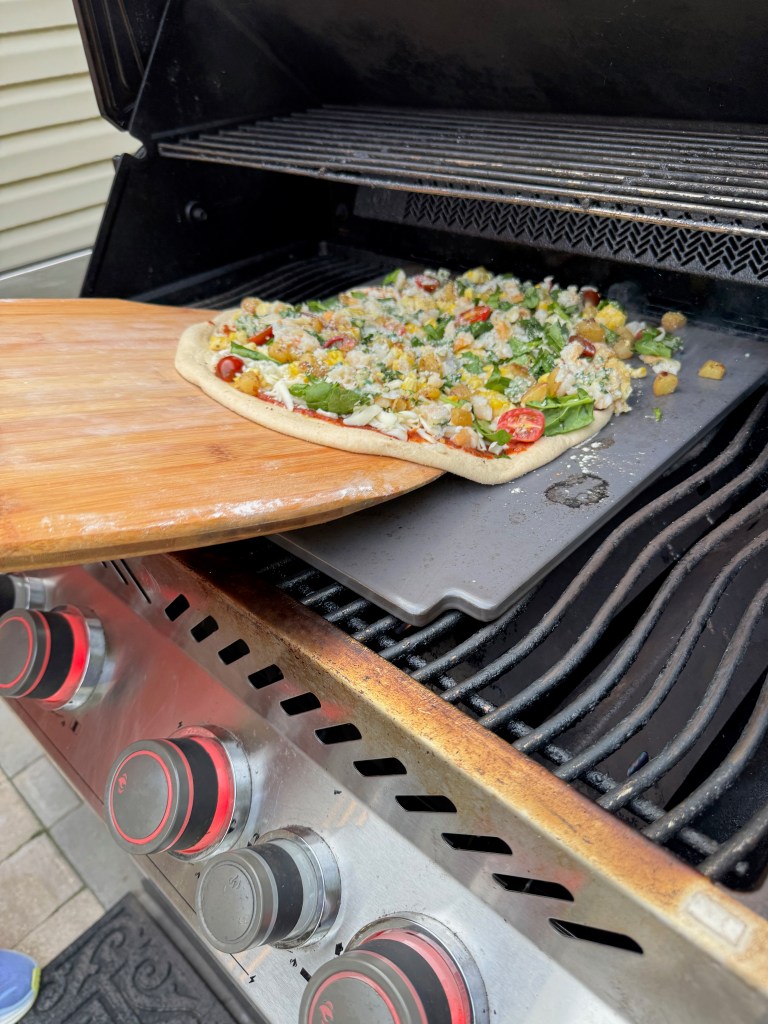
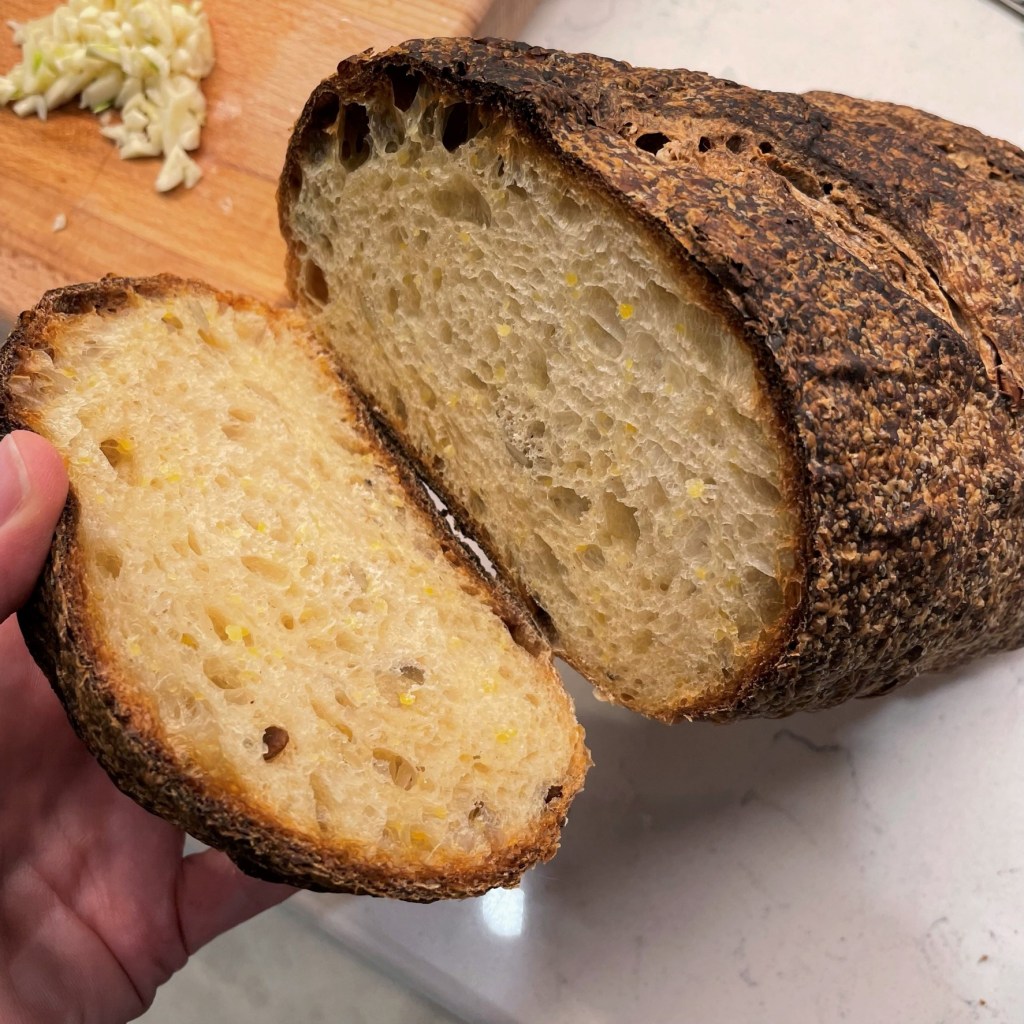
My pizzas are usually done in my home oven, outfitted with a 3/8”-thick slab of steel, preheated to 550° F for at least an hour. In other words, hot! For this one, though, my husband and I did the baking outdoors (clambake style!) on our Napoleon gas grill, which gets even hotter than the oven. We purchased a Weber pizza stone that works great for summer baking when we don’t care to heat up the house. Les handled all of that while I prepped inside, beginning with shaping my dough into a 14-inch round and laying it on a flour- and cornmeal-dusted bamboo peel.


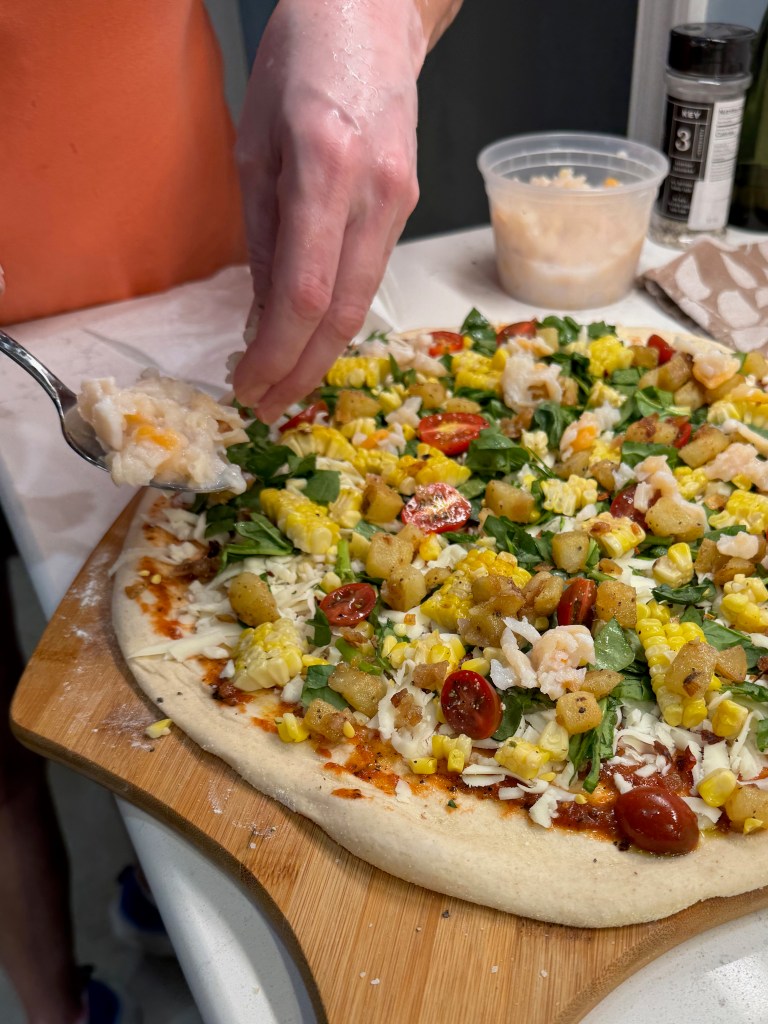
The toppings are straightforward, and I’ve put the wettest ingredients— the corn, tomatoes and clams— on top of the drier ingredients. I want them to get the benefit of the heat without creating too much steam underneath, which would wreck my crust. The clam liquor-butter mixture was laid on last in dollops and this was ready for the bake!


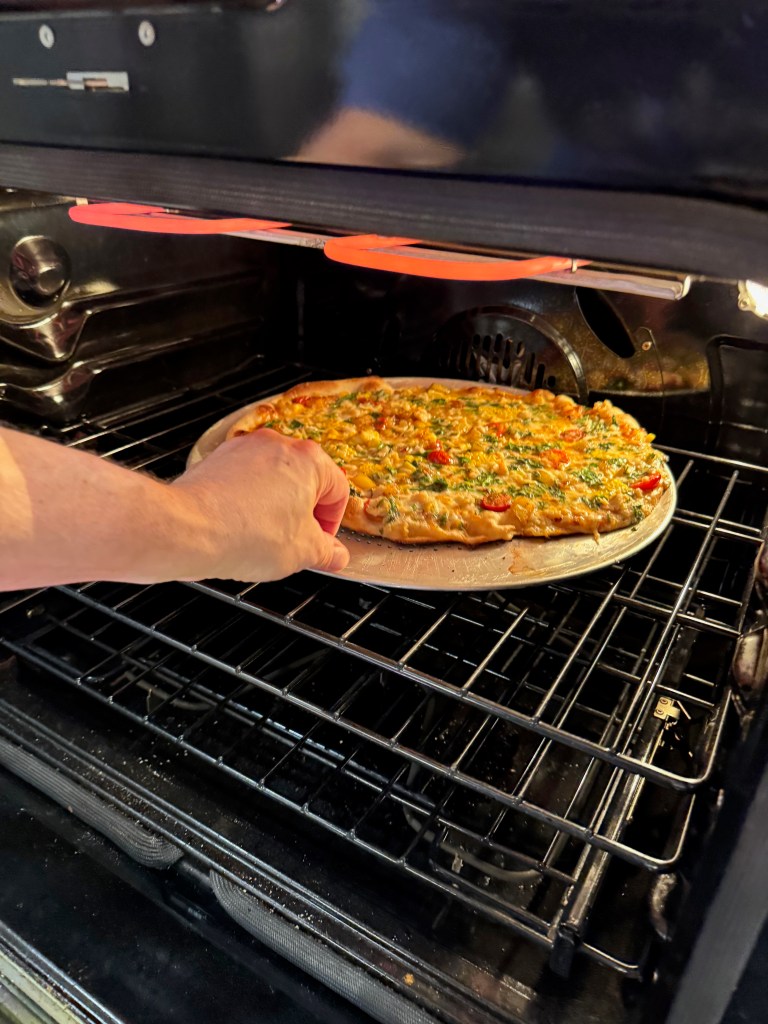
One minor shortcoming of our grill for pizza is that the top of the pizza doesn’t have a chance to brown as it would in the oven. Solution? Easy— we just slide the finished pie under the high broiler in the oven for 30 to 60 seconds. Voila! Blistered crust and perfectly browned toppings, but without heating up the whole house for hours in the dead heat of summer. 

It even smells like a clambake!

So how was this lovely creation, made of Leo-favored ingredients and served up on this last day of my zodiac sign? Delicious! My husband and I have both come to love clams on pizza, ever since our trip to New Haven and our own adventures with white clam pie, which I’m now Jonesing to do again soon. This fun interpretation brought plenty of other tasty ingredients into play, and we could taste each of them. The tomatoes were a good addition, and the trick of reducing the clam liquor with the buttered onions really added a great finishing note of ocean flavor. Would I make it again? Definitely! And I probably won’t wait until Leo season rolls back around. 

Tomorrow is the first day of Virgo. Now, I wonder what they like to eat? 😉

Clambake Pizza

  • Servings: 6 slices
  • Difficulty: Average
  • Print

Apparently, my zodiac sign (Leo) loves clams, corn, spinach and mozzarella. What else could I do with this information but make a clambake pizza?


Ingredients

  • 2 Tbsp. salted butter (half for cooking onions, half for clam-herb butter)
  • 1 small shallot, minced
  • 1 medium Yukon gold potato, cubed and boiled to al denté tenderness
  • A pinch of baking soda in the potato cooking water
  • 11 oz. pizza dough ball, at room temperature
  • 1/3 cup favorite pizza sauce
  • 3/4 cup freshly grated firm mozzarella
  • 1 ear of grilled corn, stripped from cob
  • A handful of cherry or grape tomatoes, halved and salted
  • A fat handful (about 2 cups) fresh baby spinach, rough chopped
  • A few shakes of crushed red pepper, if you like heat
  • About 1 cup fresh chopped littleneck clam meats (reserve some of the liquor for the herb butter)

Notes: My pizzas are baked on an oven steel, preheated to 550° F for one hour. Alternatively, bake on a pizza stone designed for a gas grill, following temperature instructions for your stone and adjusting time as needed. Either setup will help you achieve a brick oven-style pizza at home.

Directions

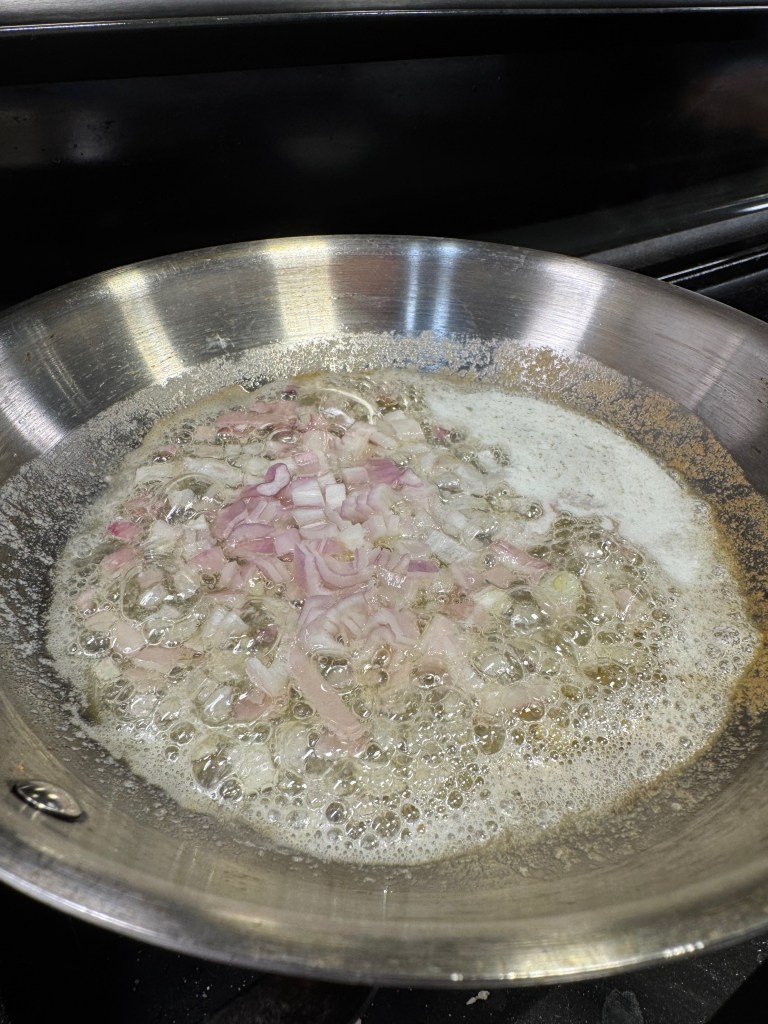
  1. Heat a small sauté pan over medium heat with a tablespoon of butter. Sauté the shallots for a few minutes until slightly softened. Drain the potatoes and add to the pan, tossing to crisp up the sides.
  2. Transfer the cooked potatoes to a small bowl. Pour some of the clam liquor into the sauté pan with the shallots and butter and simmer to reduce the liquid. Remove from heat and swirl in the other tablespoon of butter, along with the fresh parsley. Set this aside as a final topper to the pizza.
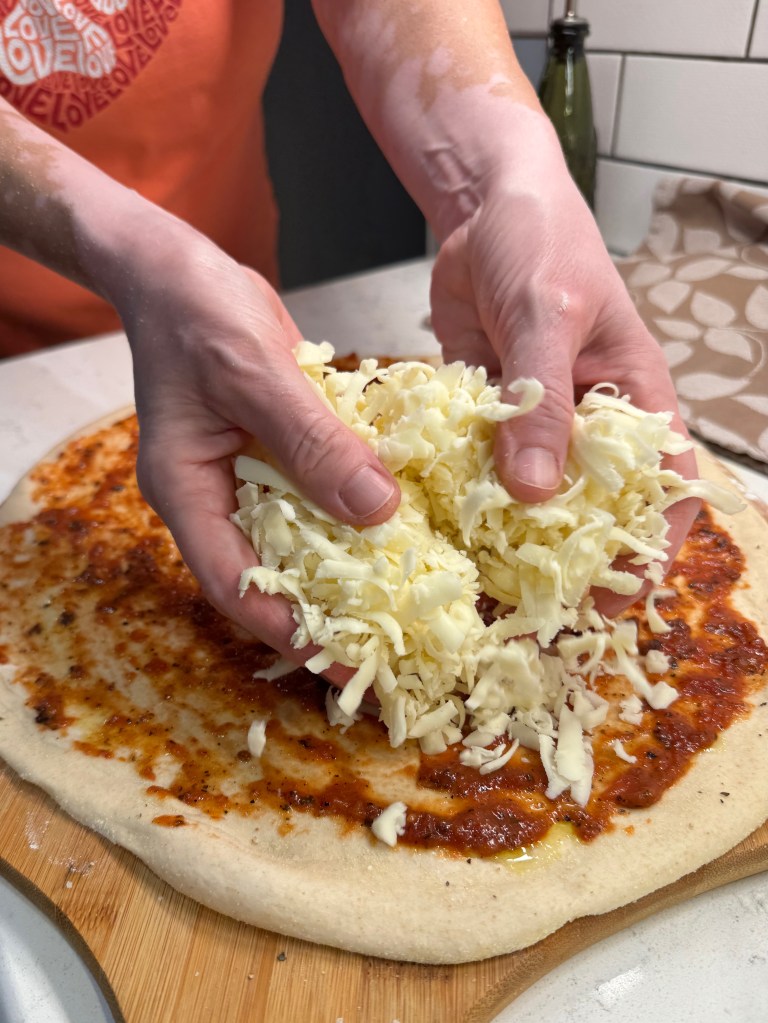
  3. Shape pizza dough into a 14-inch round and place it on a flour- and cornmeal-dusted peel. Swirl sauce over the pizza and scatter the mozzarella all over it.
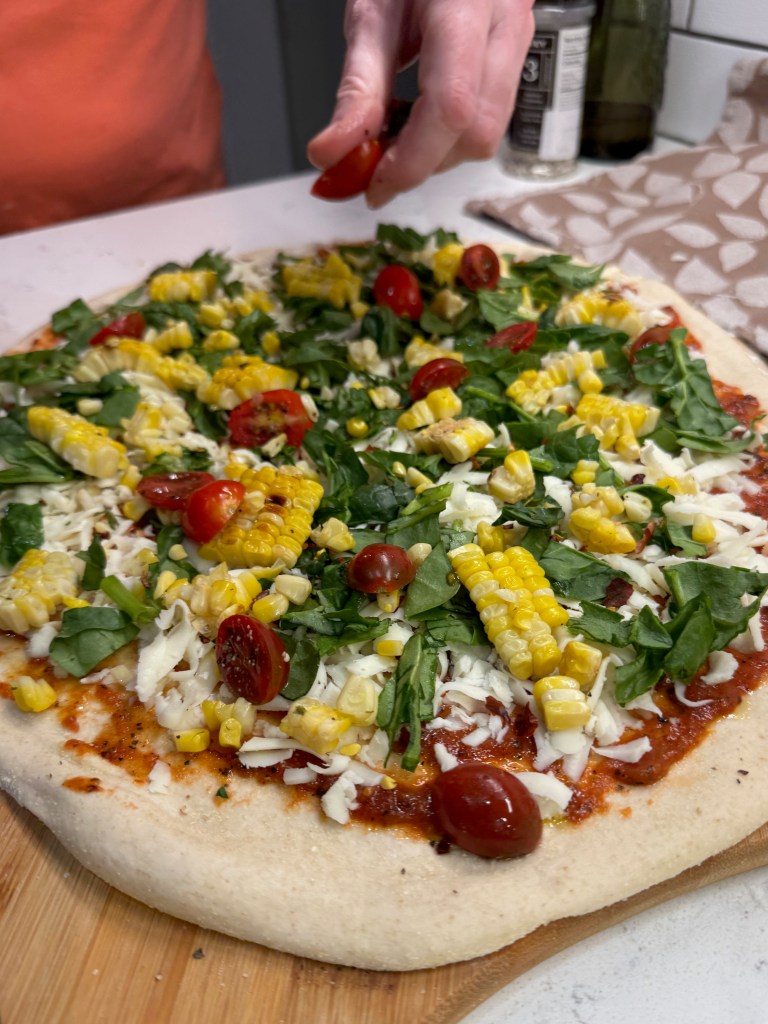
  4. Layer toppings on, beginning with the spinach, pepper flakes and corn, then the tomatoes, potatoes and clams. Finally, arrange dollops of the clam liquor-infused herb butter all over the pizza, emphasizing the clams as much as possible.
  5. Transfer to the pizza to the preheated steel (or stone) and bake for 6 to 7 minutes, using peel to turn pizza at the 4-minute mark. If baking on the grill, transfer finished pizza to a heatproof pan and slide it under the high broiler of your oven for up to 60 seconds, to get the roasted appearance of an oven-baked pie.
  6. Wrap any leftover slices individually in aluminum foil. Reheat on a preheated griddle or skillet, loosely tented with foil. This preserves the crispy texture of the crust while allowing the cheesy topping to melt.

Just for fun…

A few famous Leos: 😎 Looks like I’m in excellent company!

Jennifer Lopez
Barack Obama
Mick Jagger
Helen Mirren
Antonio Banderas
Sandra Bullock

Charlize Theron

Steve Carell
Meghan Markle
Arnold Schwarzenegger
Halle Berry

Madonna
Steve Martin
Tony Bennett
Martha Stewart


Crub – My Norwegian Family Tradition

There are some recipes that look almost too good to eat. Friends, this ain’t one of them. 😏

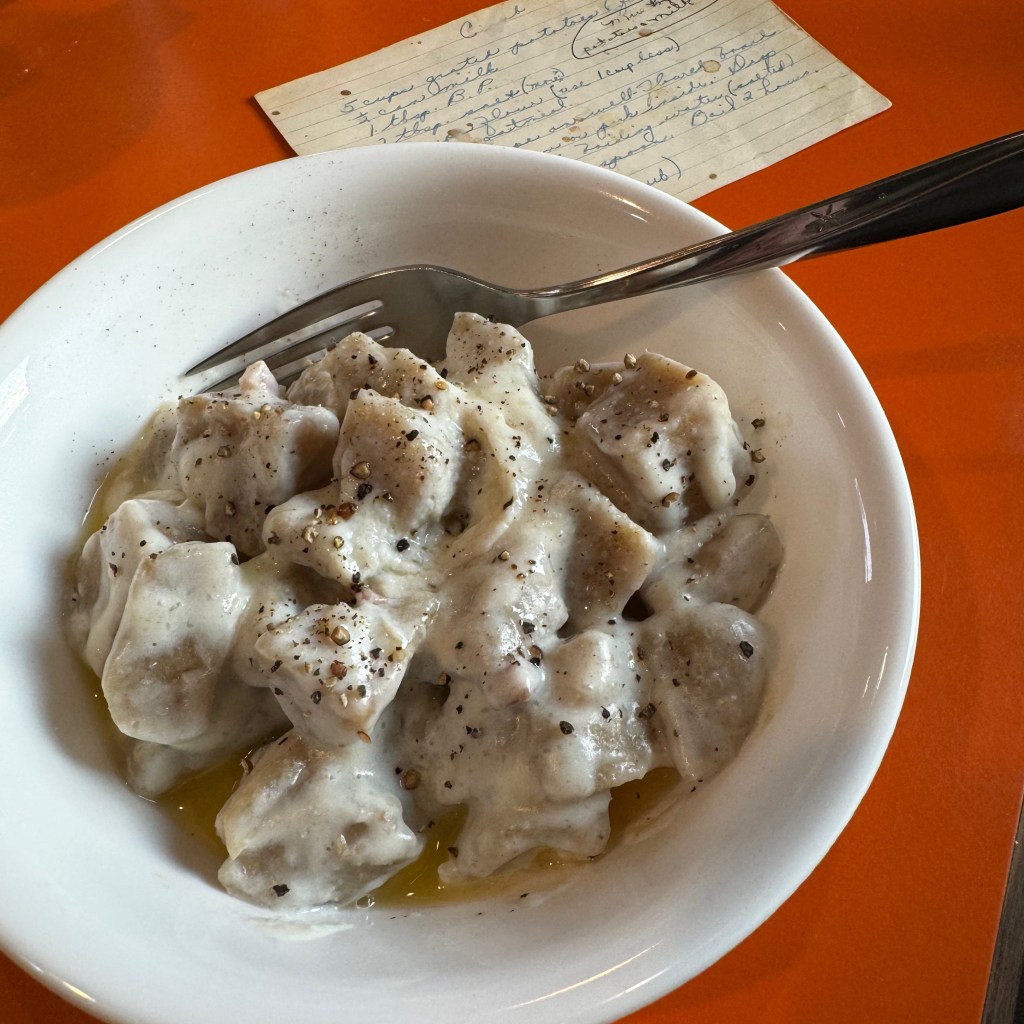
I have spent a lot of time sharing other people’s traditions here on Comfort du Jour, but today I’m paying tribute to my dear grandmother, whose hands made this recipe, just as her mother’s hands before her, and her grandmother’s, and so on. As I tried to describe to my foodie friend, Dorothy, what crub, my family’s favorite food tradition looked like, it became crystal clear that this is a dish I love not for its splendor, but for the family history it represents.

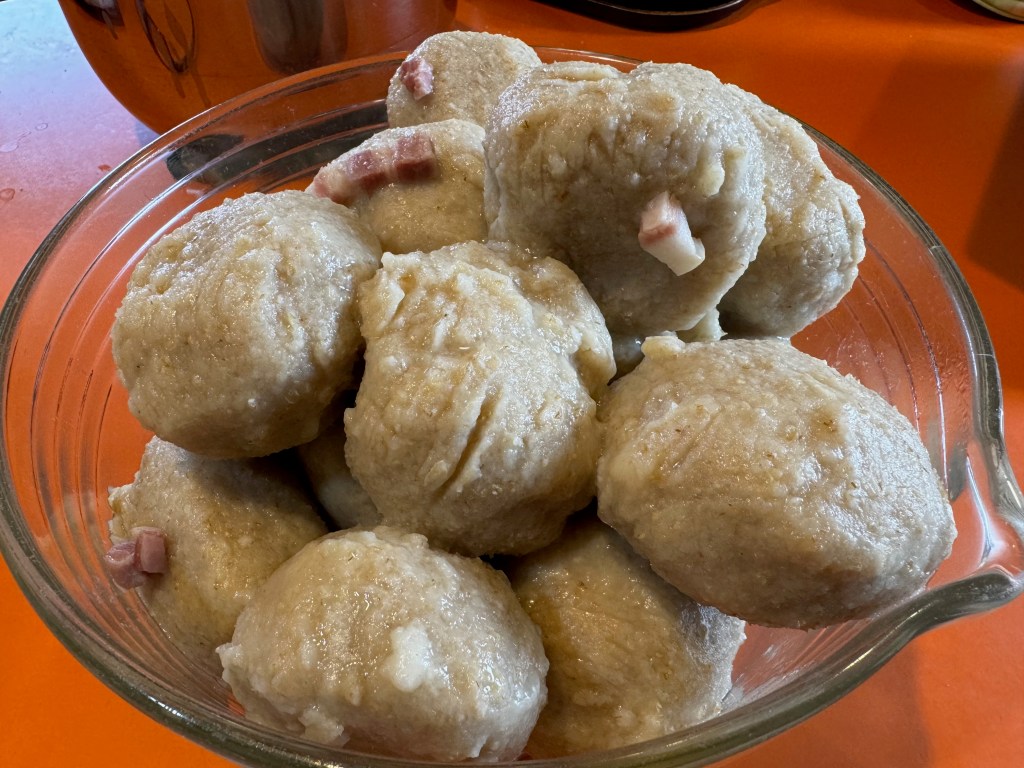
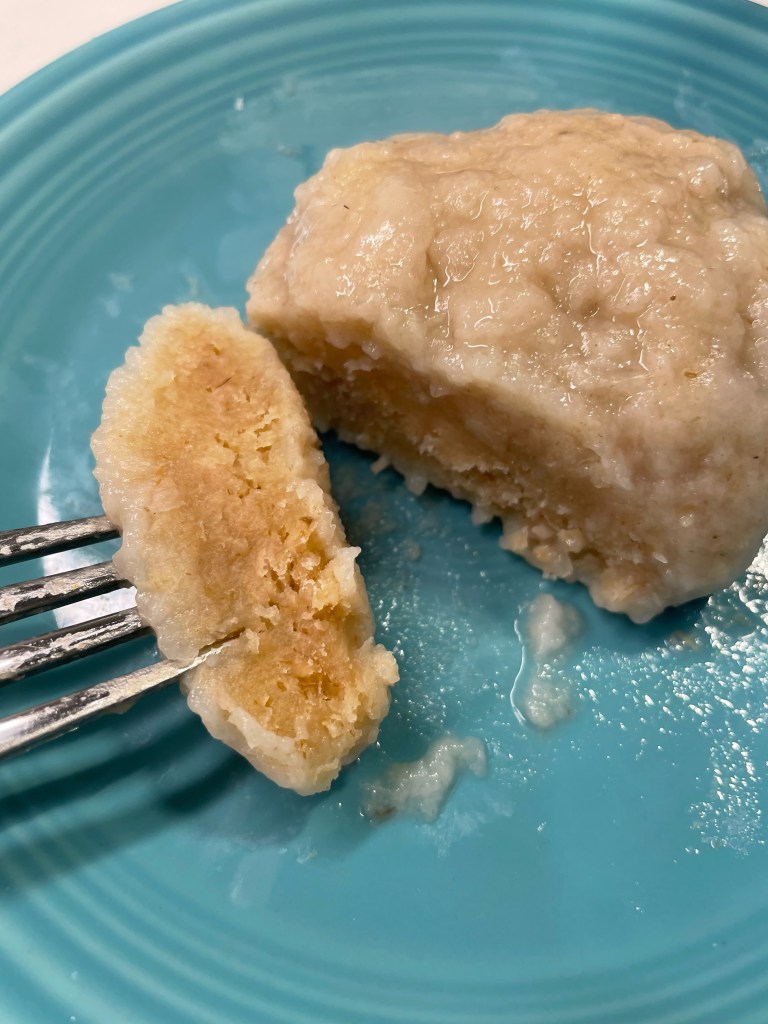
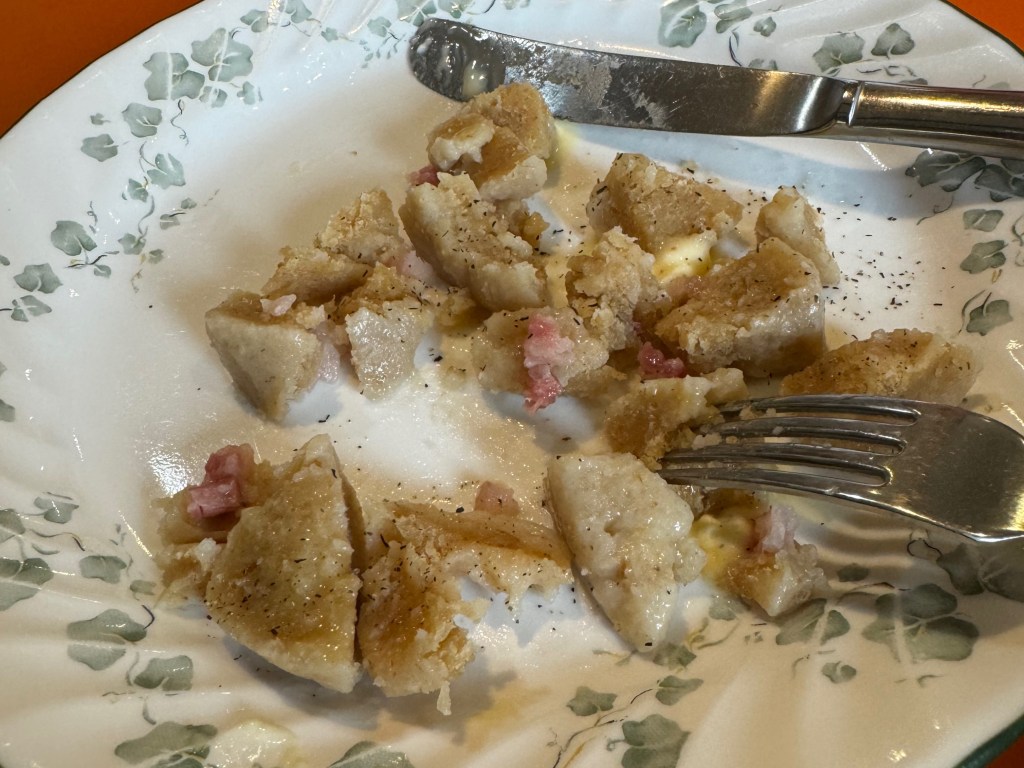
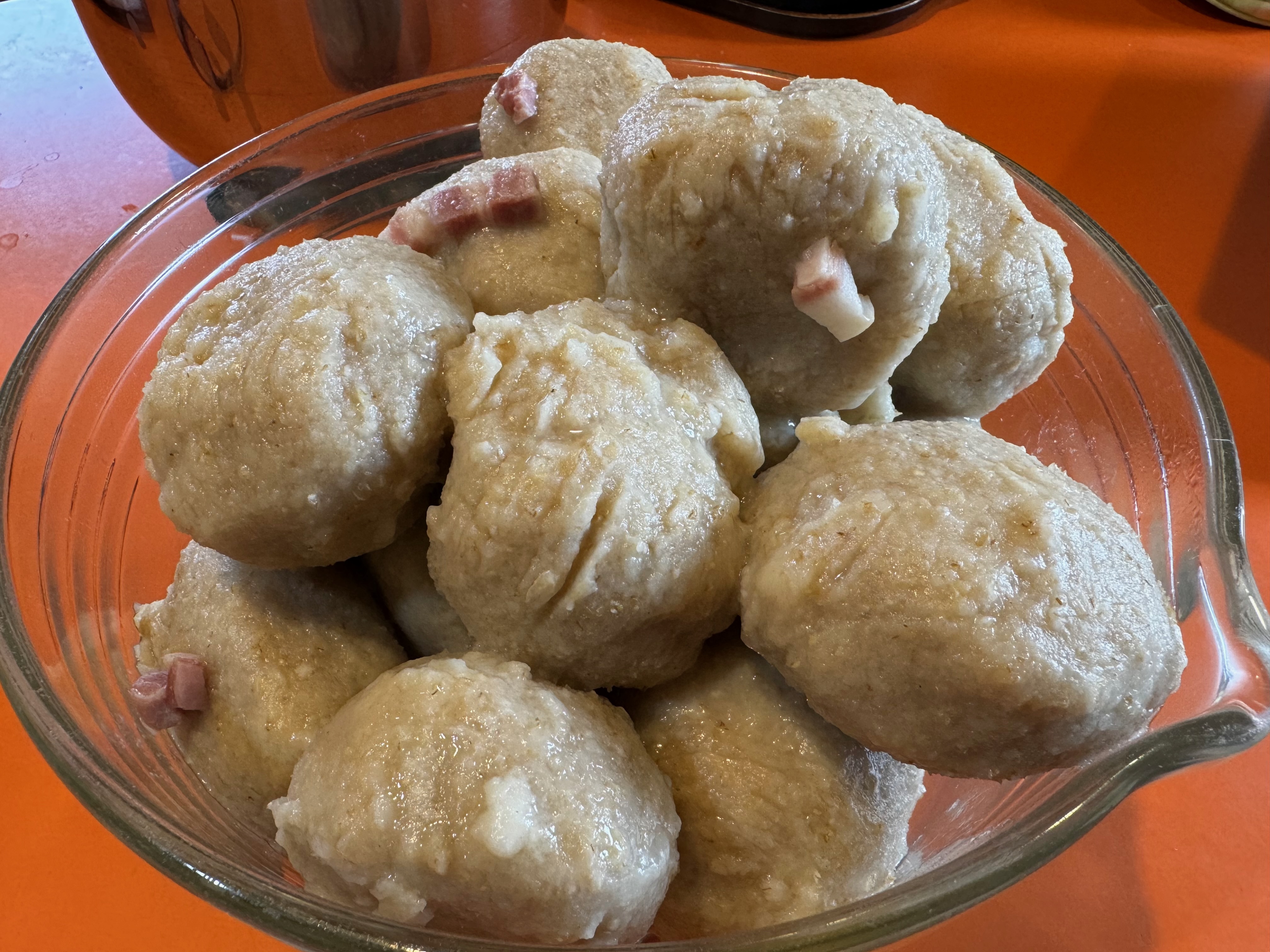
“Imagine a gray, lumpy, salt pork-filled potato and oatmeal dumpling blob,” I said, further noting that the lumps are boiled in salted water for two hours until they are done through. Dorothy replied coyly that she was salivating at the very thought of it. 😂 There’s no denying, crub does not have instant appeal. My cousin, Dave, rightly proclaims that crub is, at best, an “acquired taste.” In our case, though, as fourth-generation descendants of Norwegian immigrants, we are naturally prone to like it, just as Italian descendants are born to love pasta.

From my earliest memories, a visit to my maternal great-grandparents’ home in rural Upstate New York would have sometimes meant being greeted at the door by the aroma of these gray, lumpy blobs simmering on the stove. Despite its appearance, crub is hearty, filling and deeply satisfying. I don’t expect oohs and aahs in the comments section, but I will say that anyone who has ever waxed nostalgic over family tradition can appreciate the place that this humble food has in the hearts (and bellies) of my people.
This makes me miss my grandmother so much.
It’s a family thing

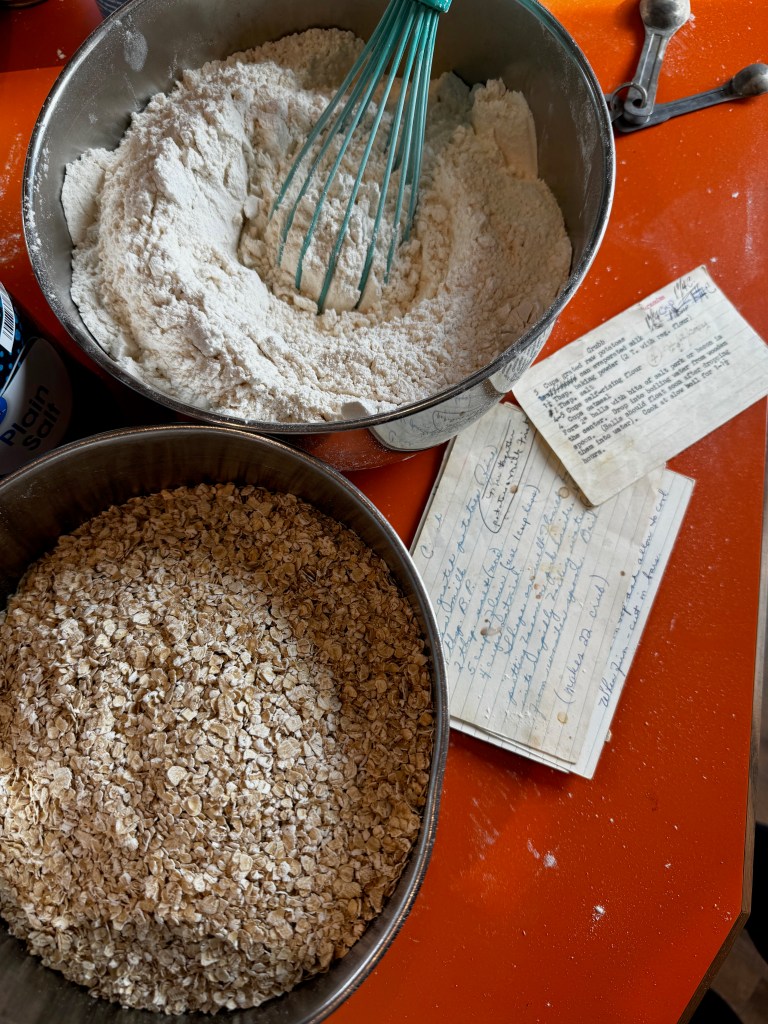
I had special reason to enjoy making crub recently, as I spent a few days with my Aunt Joy at her home in Montana. In the days ahead of my first visit in 13 years, our anticipation for this familiar meal became stronger, and rolling up our sleeves to make crub together proved to be a wonderful way to share happy (also sad, and sometimes funny) memories of our loved ones. We pulled out various spatter-stained recipe cards and attempted to decipher all the “helpful” notes in parentheses, knowing that we would ultimately have to channel the wisdom and experience of our ancestors to get it right. There are specific rules that must be followed, as I painfully learned a few years ago when I tried to make this on my own. That first effort resulted in a sticky mess and very dense, gummy crub.  


What are the ingredients for crub?

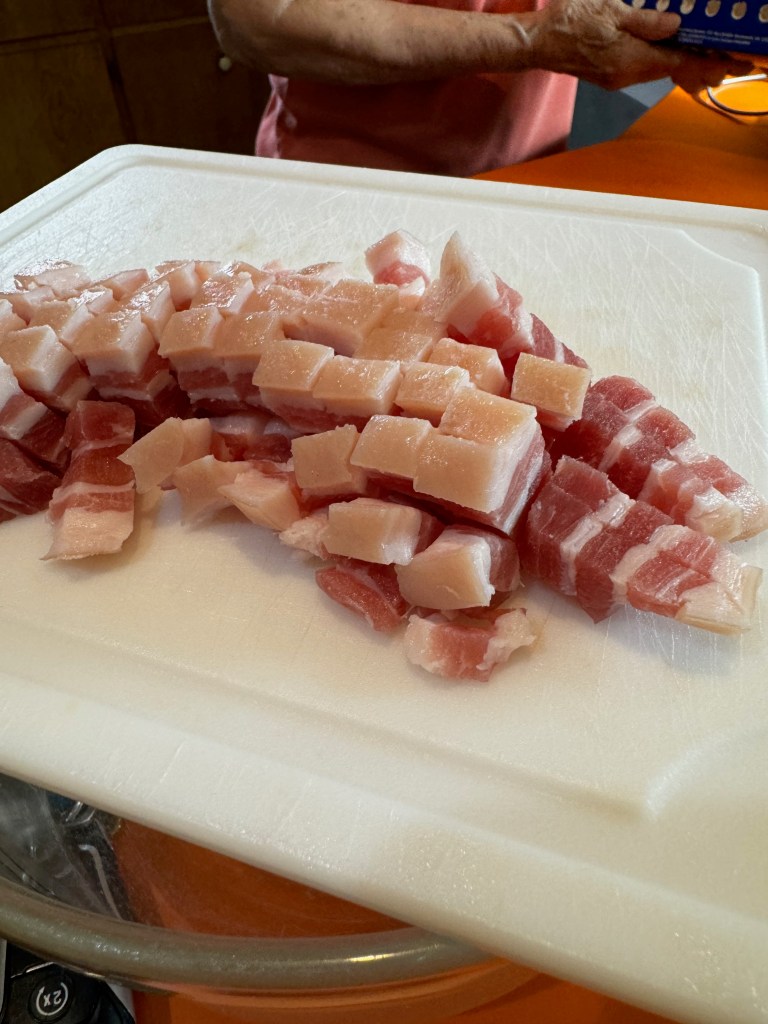
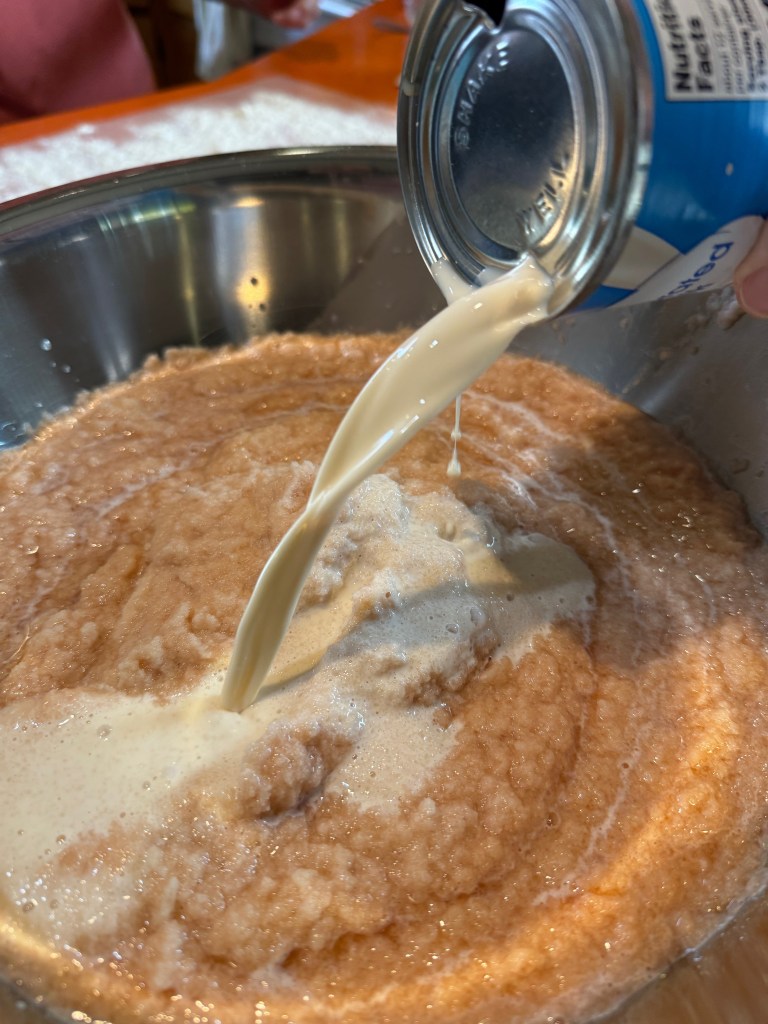
“Use old potatoes,” suggested one of Aunt Joy’s recipe cards, and this is likely for the starch content in older potatoes vs. new ones. Also, it has to be russet potatoes— waxy ones just won’t do. Quick oats work much better than old-fashioned rolled oats, as their smaller size and pre-cooked form allows them to more easily take up the recipe’s liquid. Your baking powder must be fresh, of course. Finally, the amount of evaporated milk must be sufficient for moistening the dry ingredients without overdoing it, and this was a tough point, even for Aunt Joy, because the amount on the recipe card was in “cans.” But did that mean the 5-ounce can or the 12-ounce can? We imagined that my great-grandmother was there with us, coaching us to “add enough to make it look right,” and we figured out the larger can is the standard. Salt pork is ideal, both for stuffing inside the crub dumplings and also for adding flavor to the cooking water.


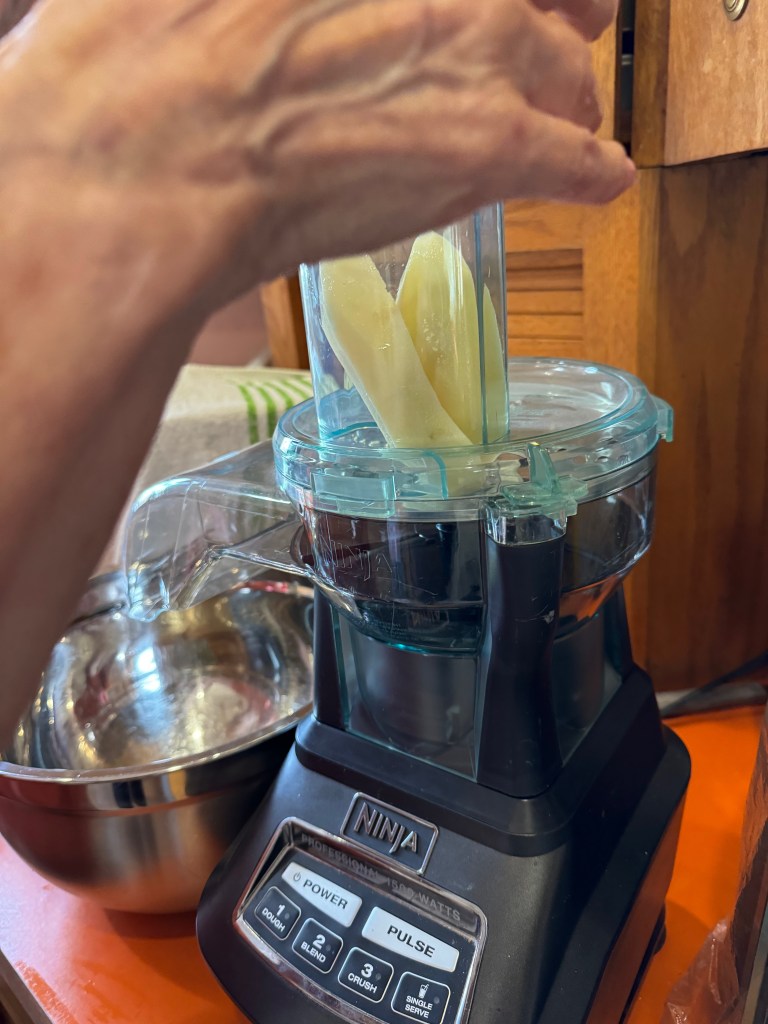
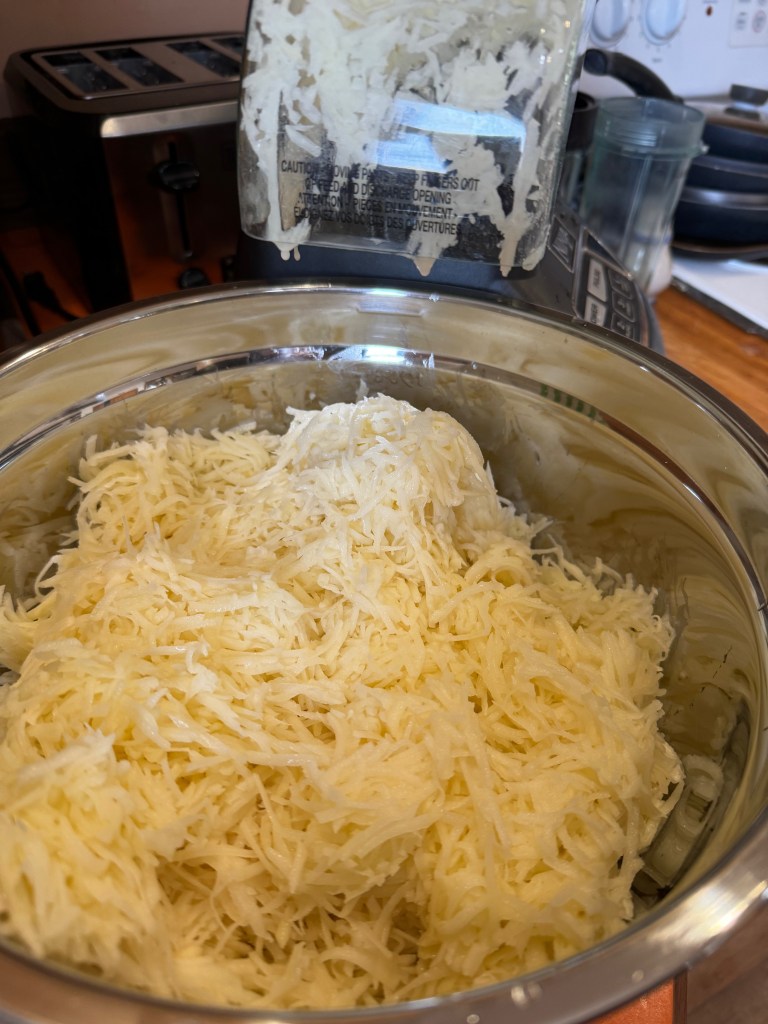
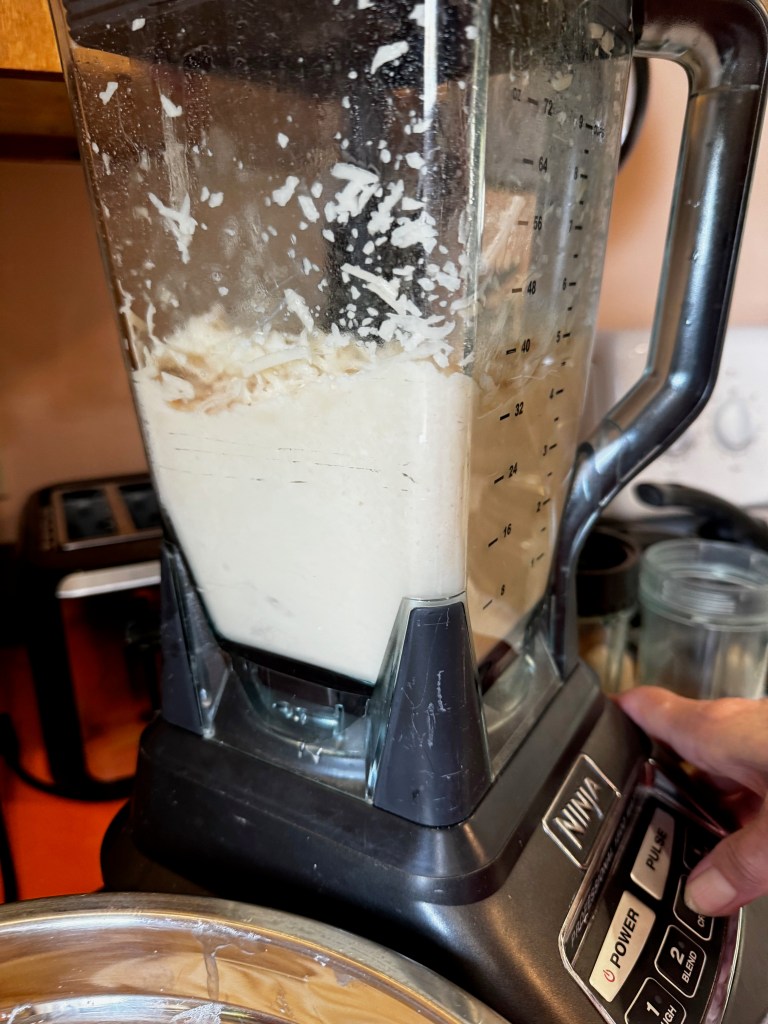
As with many traditional family recipes, crub is a bit of an ordeal to make (which helps explain why it was not an “every Sunday” kind of meal). It requires multiple bowls, large cooking pots and several square feet of counter space. It takes as long as two hours to prep and two more to cook. And don’t expect cleanup to be a breeze, either. The recipe involves peeling, grating and blending lots of potatoes, which inevitably turn pink from oxidation no matter how quickly you work.


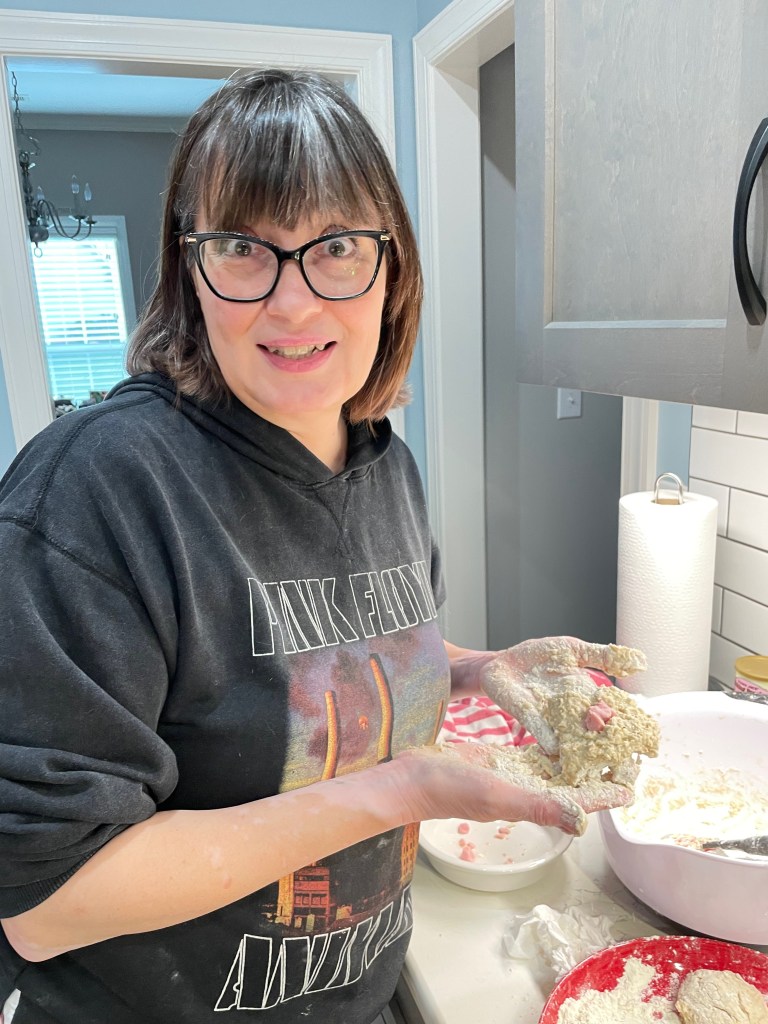
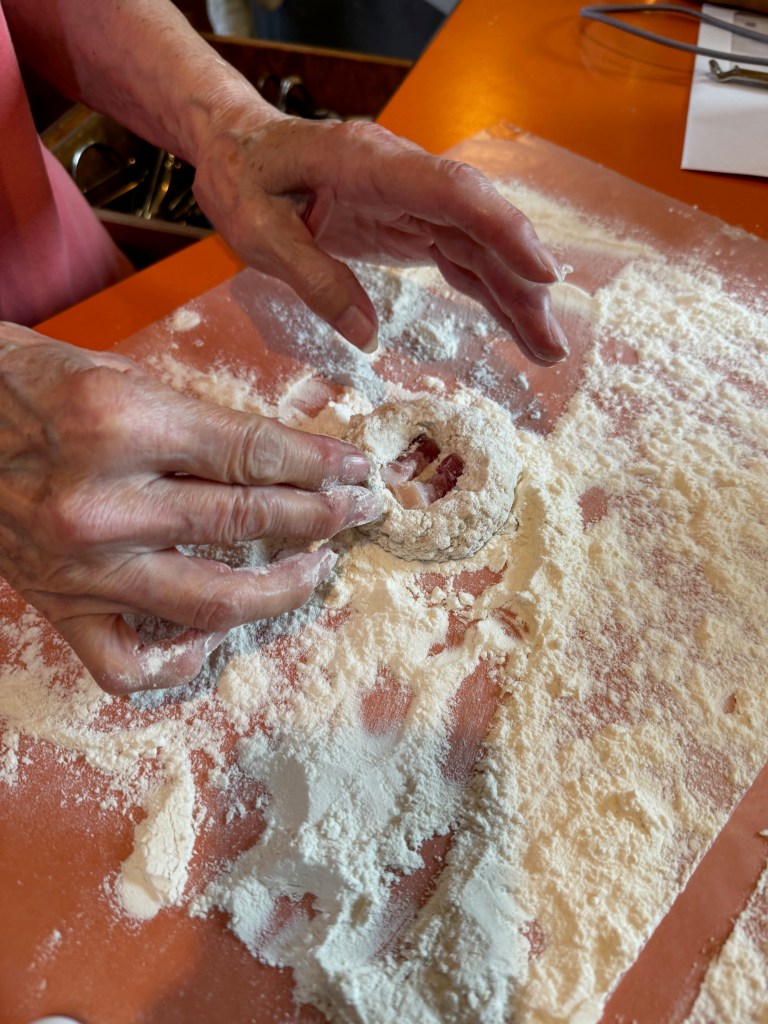
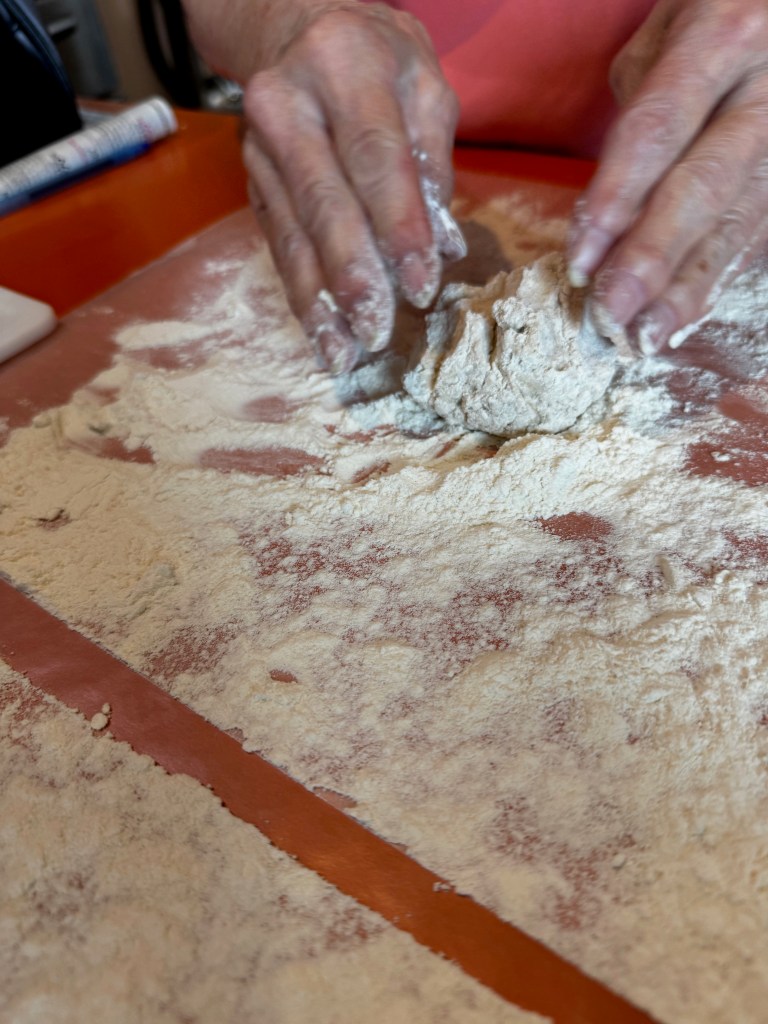
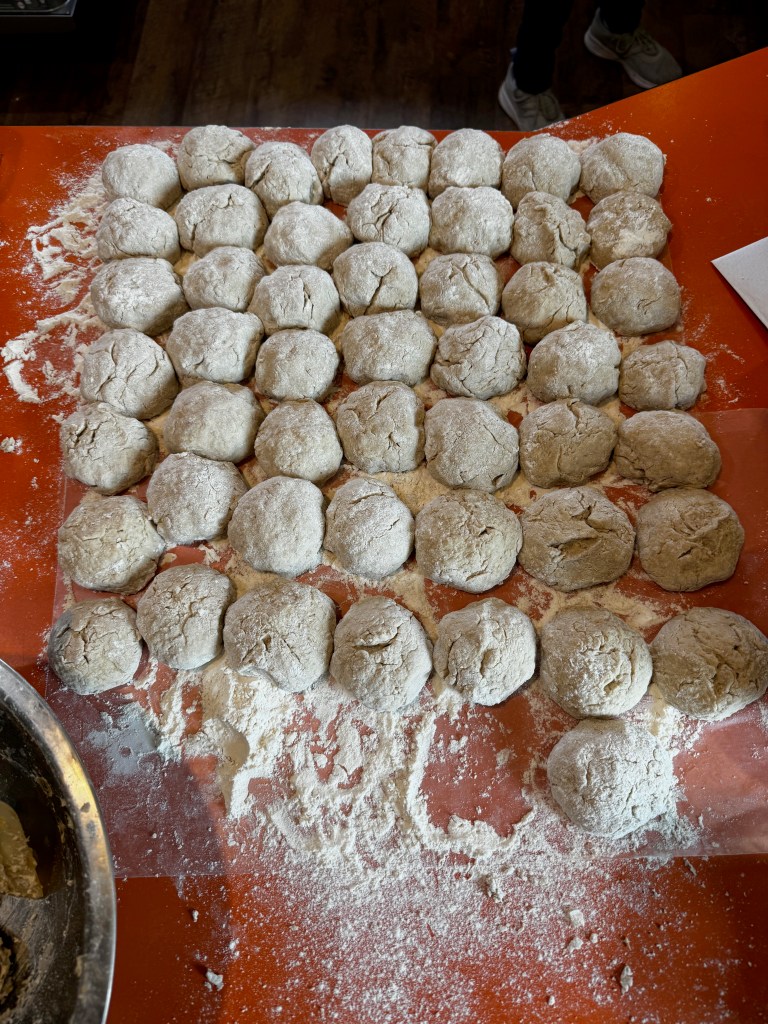
It helped a lot to have our tools and ingredients mise en place, and this was especially important for not making a mess of everything with our very sticky hands! A couple of sheets of waxed paper did the trick for keeping the flour where we needed it.


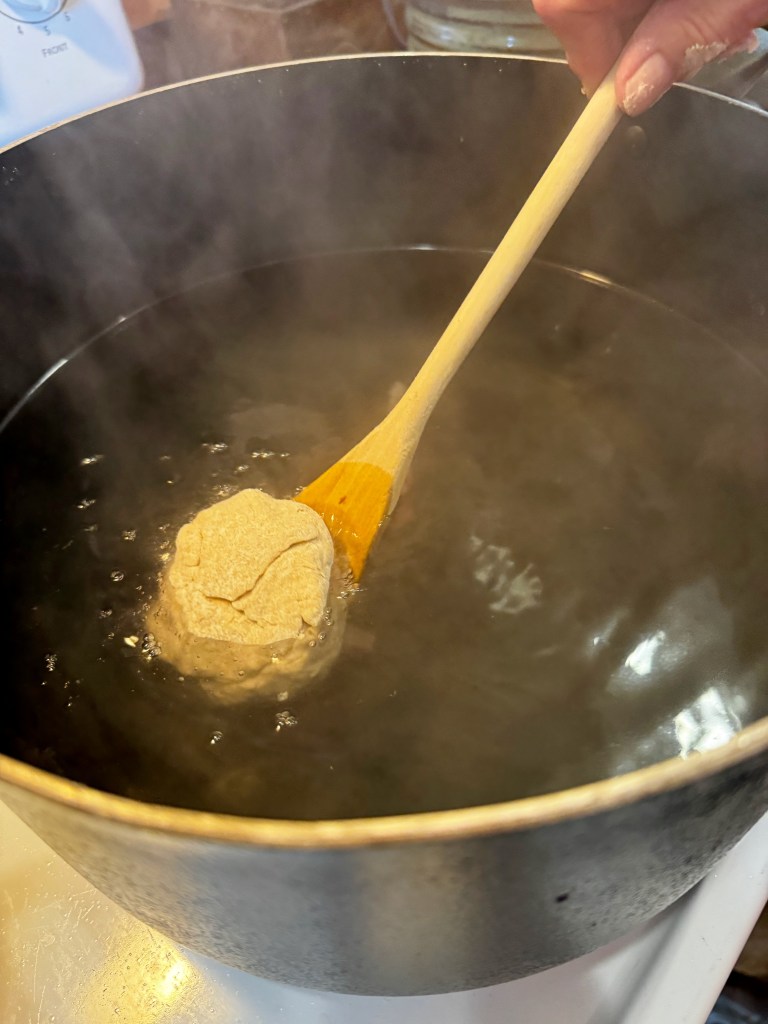
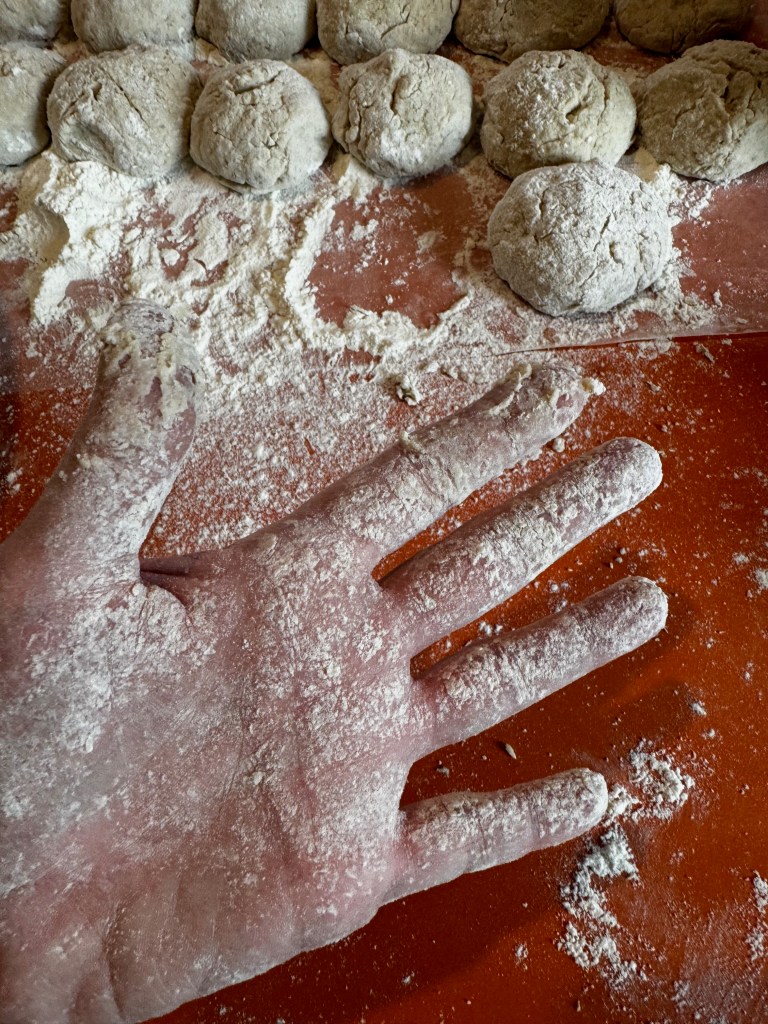
Aunt Joy broke out her big ice cream scoop to measure out the crub dough into equal lumps, and then, with floured hands, we pressed to make an indent in each for a piece of salt pork. Shaping the crub into balls was easy to do with plenty of flour, and we lined them up until the pots were at a good, steady boil. 


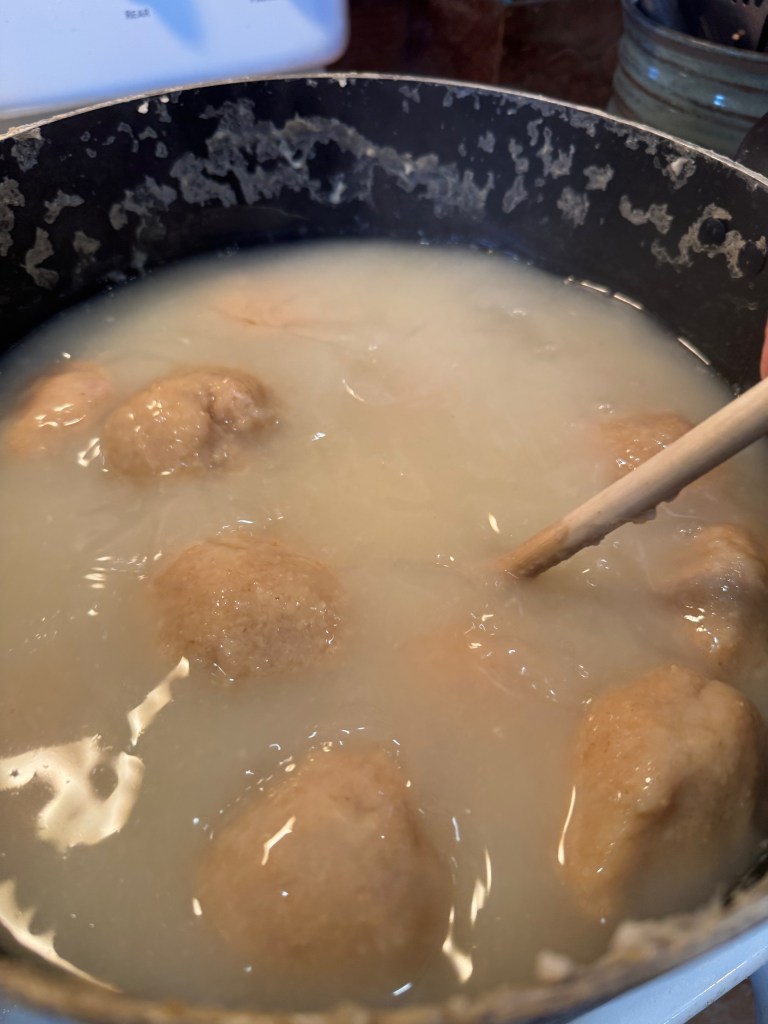
The first few crub clung for dear life to the long-handled wooden spoon we used to transfer them into the boiling pot, but eventually the spoon developed a slippery layer of cooked dough and the remaining crub slid right off with almost no effort. After every few crub, we gently nudged the ones that had settled onto the bottom of the pot, loosening them to float up into the water. We made a double batch and ended up using three very large pots.


The dumplings simmer for as long as two hours, until a cross cut reveals that they are cooked all the way through. If they seem dense and very firm inside, they need additional simmer time. Once done, enjoy them with butter, salt and pepper.

Worth the work and the wait! ♥️

Transfer leftovers to a large covered bowl and refrigerate, or load them into a gallon size zip top freezer bag and freeze for later. 


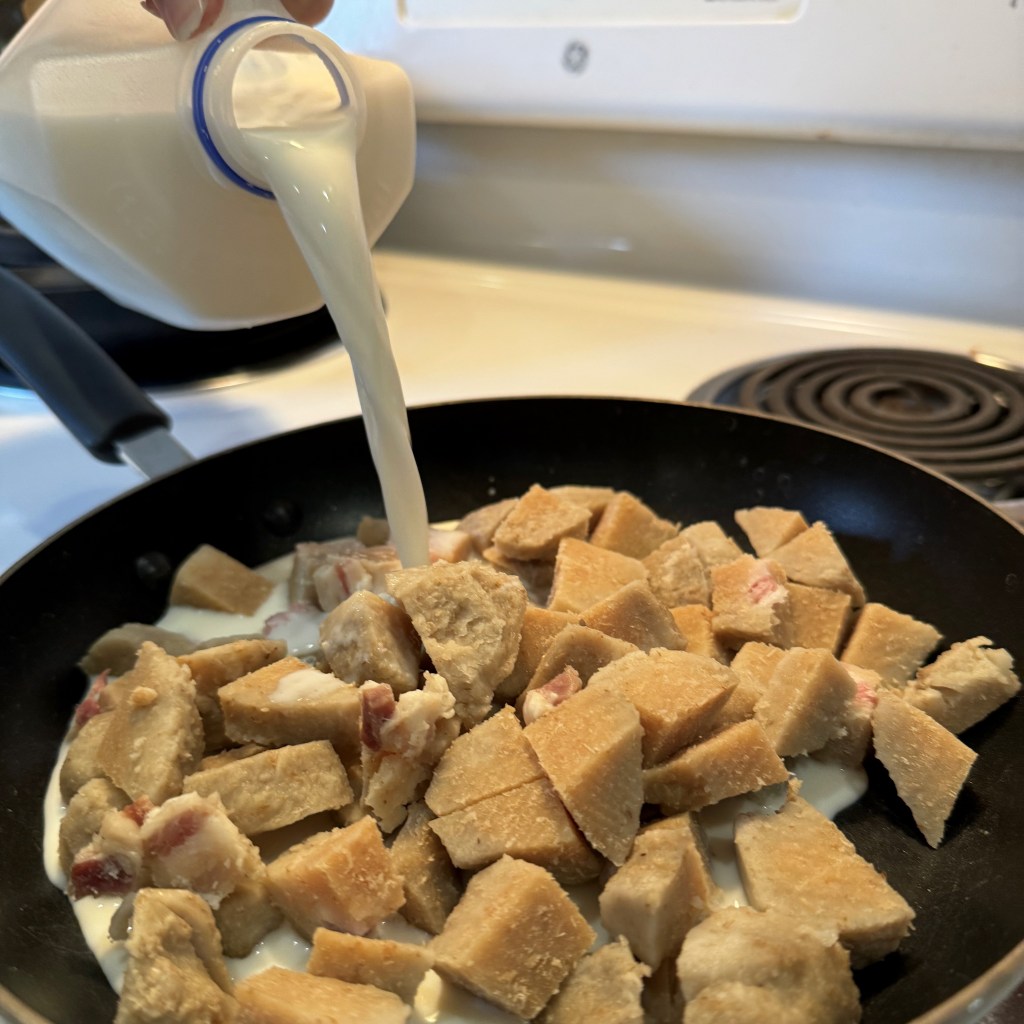
Reheat by cutting crub into chunks or slices. It’s best simmered in a bit of milk and then served with butter, salt and pepper. If you’re feeling ambitious, you can bring a pot of water to boil and simmer them again until they are warmed through. Or, if you’re in a hurry for crub, place cut-up pieces on a plate and microwave until warmed through. 

Norwegian Crub

  • Servings: 12 regular people, or 6 Norwegians
  • Difficulty: Intermediate
  • Print

This is one of the truly traditional recipes that my maternal family has made for years. Why, you might ask, would we spend all day for these gray-beige lumps? Easy, because they taste like home.


Ingredients

  • 5 cups peeled and finely grated russet potatoes (this will be about 3 pounds)
  • 12 oz. evaporated milk, or equivalent amount of plant milk (oat milk would be just right)
  • 5 cups all-purpose flour (scooped directly from bag)
  • 4 cups quick-cooking oats
  • 2 Tbsp. baking powder
  • 2 Tbsp. table salt
  • 1/2 pound salt pork, cubed (optional for stuffing inside crub)
  • About one cup additional flour, for rolling and shaping
  • Additional salt, for seasoning the cooking water

Notes: Be sure that you have plenty of time before you begin this recipe. Prepping and cooking both take a long time.

Do not substitute rolled or old fashioned oats, as their hearty texture does not absorb the liquids well enough for even doneness.

Line up all your other ingredients before you shred and process the potatoes, to minimize the oxidation that turns them pink.

Directions

  1. Bring one or two very large pots of water to boil on the stove while you prep the crub. When the water comes to boil, salt it generously and add a few pieces of the salt pork or even a pork bone if you have one.
  2. Combine flour, baking powder and salt in a large bowl and whisk to distribute the leavening ingredients. Measure the oats out into another bowl, so that the proper amount is ready to be added all at once to the potatoes.
  3. Process the shredded potatoes by pulsing in a blender or food processor. You don’t want a puree, but a coarse, wet mixture of finely ground potatoes.
  4. IMPORTANT: Measure the ground potatoes (with liquid) into a very large mixing bowl. You need five cups, no more and no less. If you have potatoes leftover, consider adding them to a chowder or soup. Add evaporated milk to the measured potatoes and stir to blend.
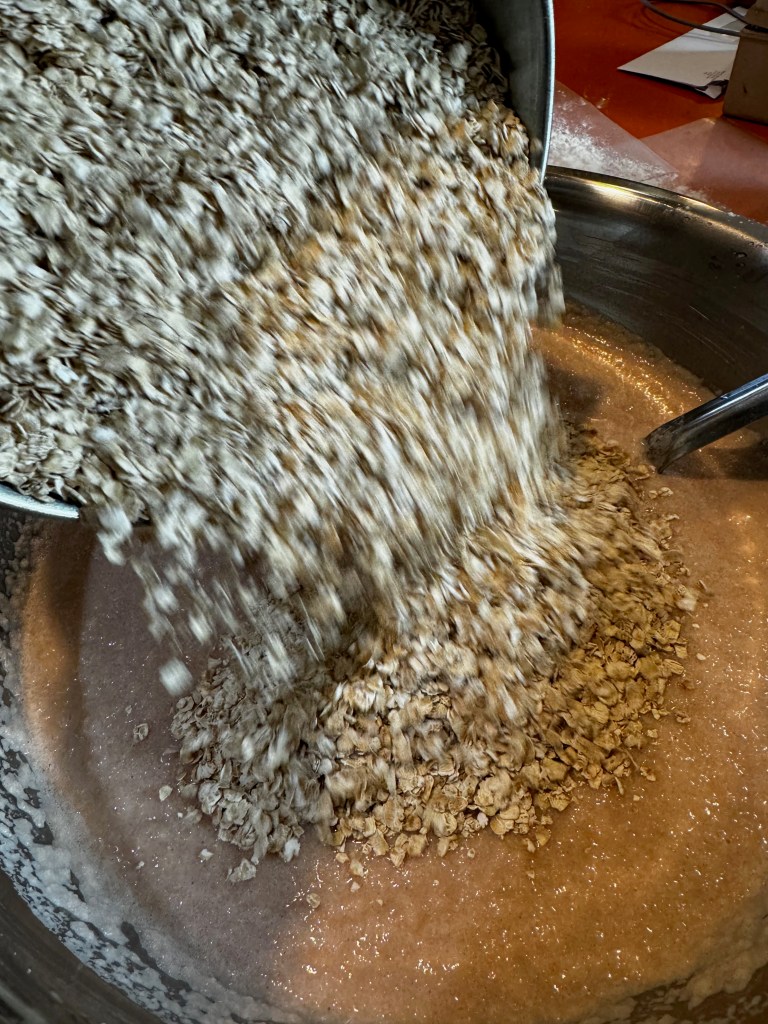
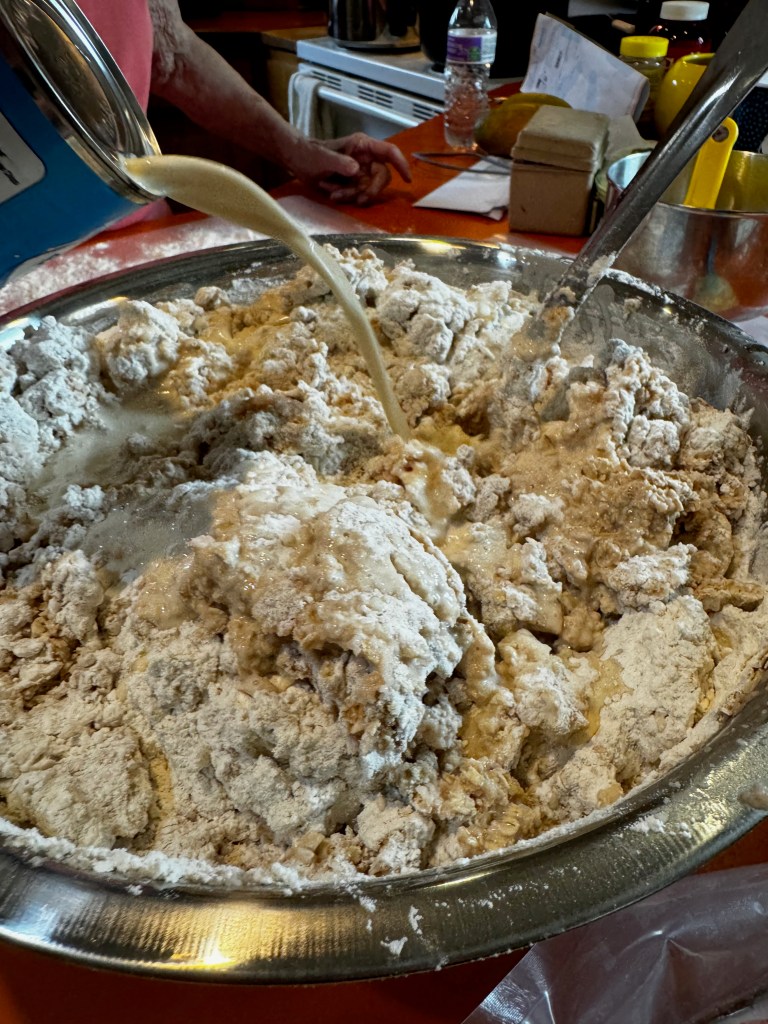
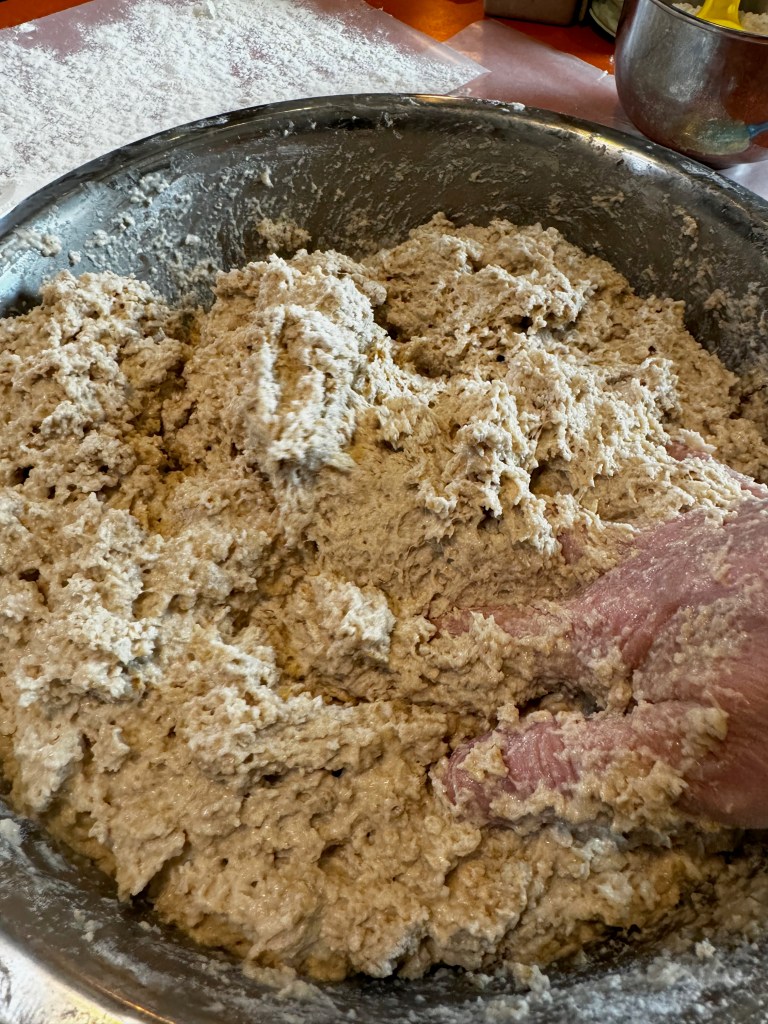
  5. Add oats and flour mixture to the potato bowl all at once and stir, fold or mix by hand until the dough is evenly mixed with no unincorporated flour. Use an ice cream scoop to measure out evenly sized dumplings onto a heavily floured counter or board. Each crub should be approximately two and a half inches across.
  6. As you go, press a shallow hole into the center of each dough ball and add a piece or two of salt pork inside. Use floured hands to shape the dough ball around the pork, forming the balls into tight, meatball-shaped dumplings. Line them up on waxed paper until all dumplings are formed.
  7. Use a long-handled wooden spoon to gently transfer the dumplings into the seasoned boiling water. Work quickly until all dumplings are in the water. After every few dumplings, gently nudge any that remain stuck near the bottom of the pot. They should begin to float fairly soon after introduction to the water.
  8. Bring the pot(s) to a full boil, then reduce heat and simmer at a gentle boil for about two hours. Sample a crub when you think they may be cooked all the way through. It should be somewhat dense but not heavy or sticky.
  9. Crub can be served immediately, but it also keeps very well in the refrigerator or freezer. Leftovers can be warmed in a number of ways; dip them into simmering water to revive them, cut them up and simmer in milk or (as a last resort) place cut up crub on a plate and warm in the microwave until heated through.


Romesco Potato Salad

Well, here we are, staring down the unofficial end of summer. Labor Day weekend is upon us in the U.S., and though it signifies the waning days of summer, we are hardly ready to trade in our shorts and flip flops for boots and cozy sweaters. It’s still plenty hot, and we still have weeks— if not months— of good grilling weather remaining.

If you’ll be grilling out this weekend, and perhaps looking for a different take on potato salad, I have a fun one for you. This salad was the result of wracking my brain for another mayo-free potato side, not unlike the potato salad with chive and parsley pesto that I shared at the start of summer. That was a NY Times Cooking Recipe, and this one happens to be inspired by another recipe from the same site.  

It had already occurred to me that romesco sauce would be a delicious flavor to apply to potato salad, when lo and behold, a recipe appeared in my inbox for a “romesco egg salad.” There was confirmation for my inspiration, and I was off and running.


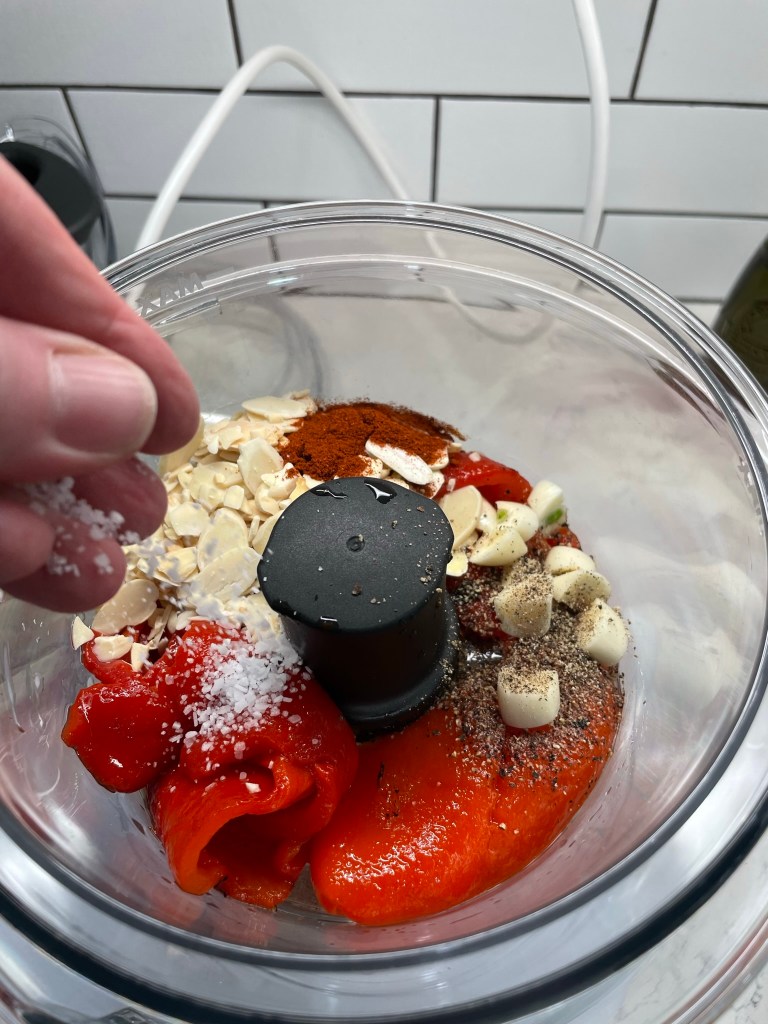
Romesco, in case you are not familiar, is a Spanish-inspired sauce made of pureed roasted red pepper, almonds and paprika. Typically, it would include roasted tomatoes, but I omitted those to keep my sauce thicker. It is sometimes also blended with stale bread to give the sauce more body, but I didn’t want carbs on carbs, so I skipped that, too, which also kept it gluten free. My romesco is spiked with garlic, vinegar, sherry and capers for extra bright flavor, and a peppery extra virgin olive oil holds the whole thing together. The sauce was delicious and substantial for dressing a potato salad.


What I like about this salad, besides it being free of greasy mayonnaise that separates at the first hint of heat, is that it packs a ton of flavor that you might not expect on a potato salad. The roasted red pepper lends more than enough moisture to keep the tender boiled potatoes from feeling sticky or dry, and the smoked paprika, capers and hard boiled egg give it an unmistakable flair of Spanish cuisine.


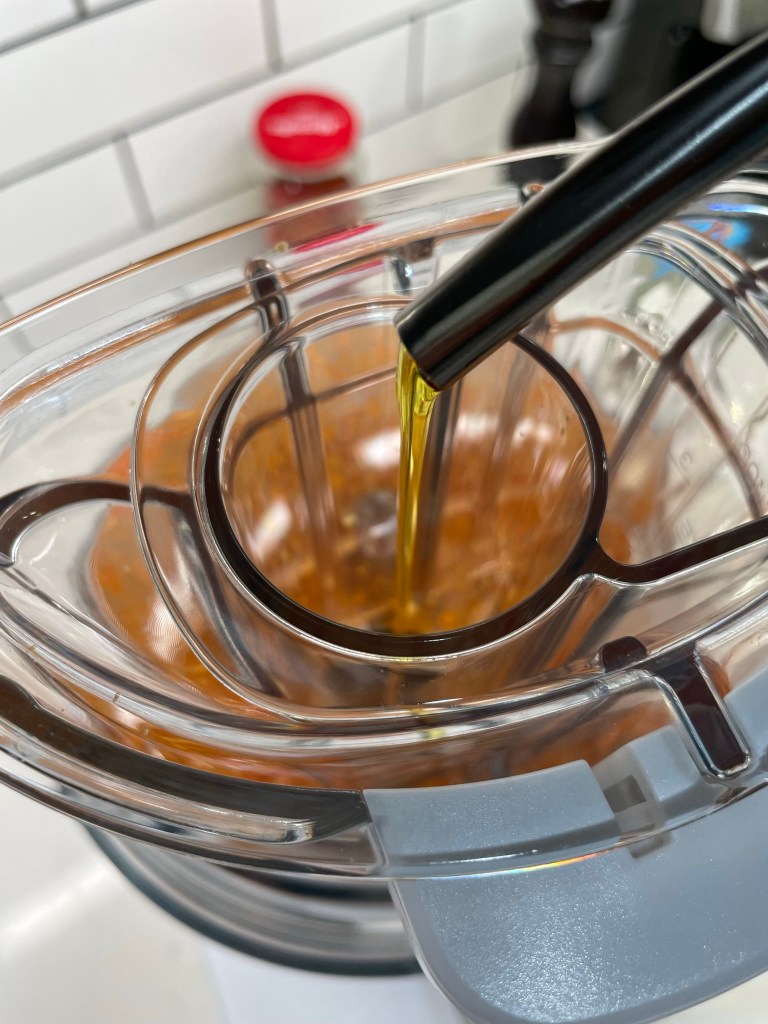
It comes together easily, especially if you use jarred roasted red peppers, as I did for this one. Simply process together the romesco ingredients, seasoning as you go, and then fold it into tender cooked baby potatoes. A few hours to chill it down is all you need, then top it with chopped eggs, onions, capers and parsley, and this is potluck-ready! 

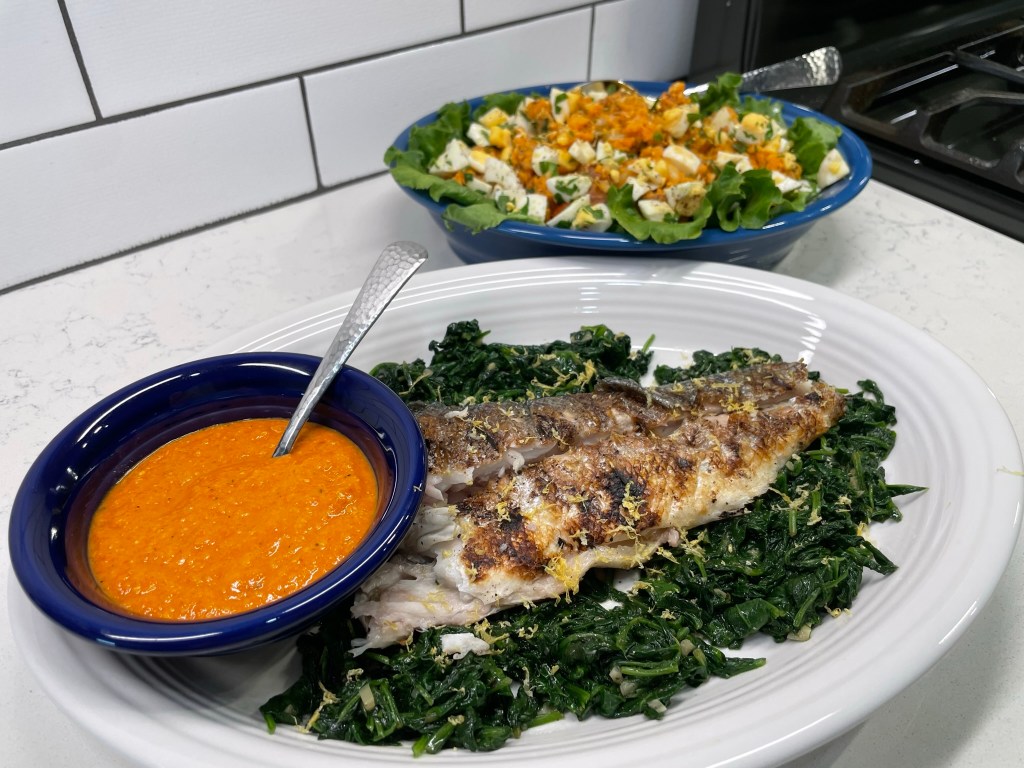
We enjoyed this romesco potato salad at our house on Fourth of July weekend, but it would be a perfect way to celebrate the end of summer while also welcoming in some of the bolder flavors of fall. It would be excellent alongside a grilled skirt steak or zesty marinated chicken breasts, or keep it light and healthy— as we did, by serving it alongside a grilled whole branzino. 


This recipe made enough romesco to dress the salad plus a little extra to serve on the side with the grilled fish. If you don’t want the extra, simply prepare an extra half-pound of potatoes. But trust me on this, you’re going to want the extra. 😁


Romesco Potato Salad

  • Servings: About 6
  • Difficulty: Average
  • Print

The Spanish-inspired flavors of roasted red pepper, paprika, sherry and almond lend a zesty flair to this mayo-free potato salad!


Ingredients

  • 1 pound itty bitty red potatoes
  • 3 eggs, hard boiled, cooled and peeled
  • 1/2 cup roasted red peppers
  • 1/3 cup almonds
  • 1 Tbsp red wine vinegar
  • 1 Tbsp sherry (see recipe notes)
  • 3/4 tsp smoked paprika
  • 2 cloves garlic
  • 1/3 cup evoo; add 2 Tbsp at first, drizzle remaining in while processor runs
  • Kosher salt and freshly ground black pepper, to taste
  • Additional roasted red bell pepper, chopped
  • 1/4 cup parsley leaves and stems, chopped
  • 1 Tbsp capers, rough chopped
  • 1/4 cup diced Spanish onion

Recipe Notes: Sherry vinegar is traditional for romesco, but I substituted a 50/50 mix of red wine vinegar and good quality drinking sherry. Odd, isn’t it, that I had sherry but not the vinegar? You will likely only need about 2/3 of the romesco to dress the potato salad. Save the rest for another purpose (it’s great on sandwiches or with grilled fish), or do an extra 1/2 pound of potatoes.

Directions

  1. Add baby potatoes and water to a medium pot. Bring to a gentle boil, then reduce slightly to simmer until potatoes are tender. Drain immediately and let them relax in the colander to dissipate the steam. Lightly smash the potatoes, not to the point of mashing them, but enough to break them open just a bit.
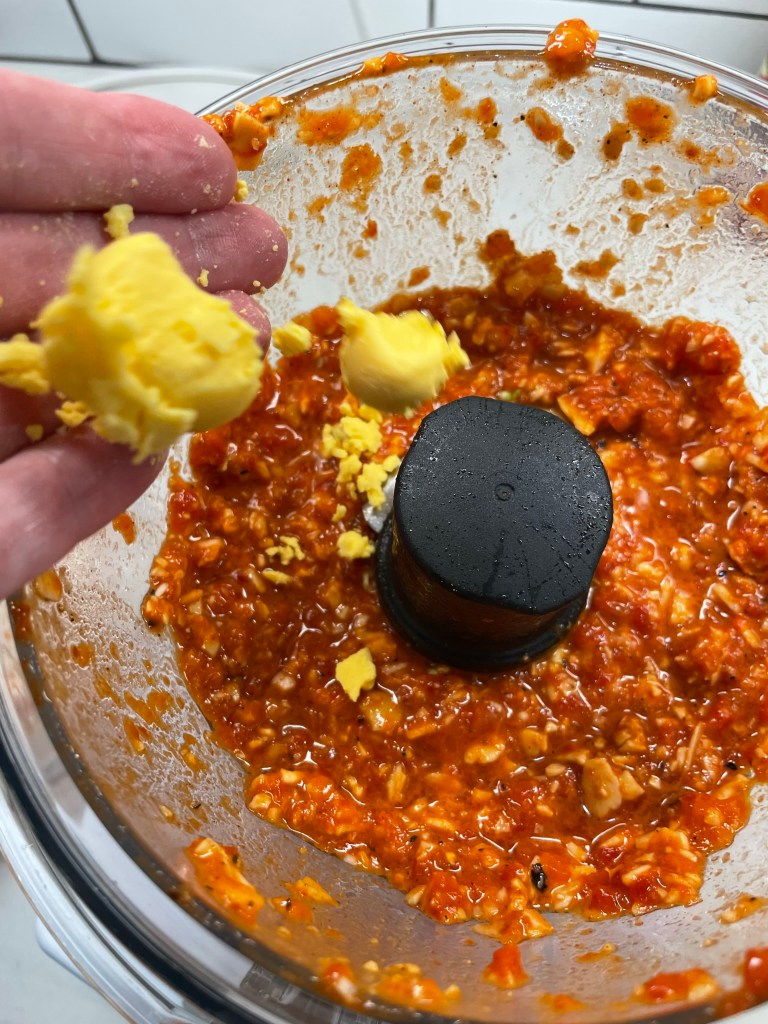
  2. In the bowl of a food processor, combine roasted red pepper, garlic, almonds, vinegar, sherry and paprika. Season with salt and pepper. Pulse a few quick times to roughly blend the sauce. Add one yolk of hard boiled egg if desired. Add two tablespoons of the olive oil and pulse again, then run the machine continuously while you slowly drizzle in the remaining oil.
  3. When potatoes are warm but no longer hot, gently fold in the romesco sauce. You’ll probably want to use a little more sauce than you initially think it needs, as the warm potatoes will absorb some of the moisture in the sauce.
  4. At serving time, top with additional red pepper, onion, chopped hard-boiled egg, capers and parsley. Add one last drizzle of olive oil, if desired.


Potato Salad with Chive & Parsley Pesto

The official start of summer is still a couple of weeks off, but it seems safe to assume that, for most of us, Memorial Day has already ushered in the season. My husband, Les, and I were invited to join some of his old work friends for a backyard cookout that weekend, and our contribution was to be a side dish or dessert. We couldn’t choose, of course, so we made both! Les brought his nearly world famous chocolate chip cookies—one of these days I’ll convince him to share them here— and I picked this salad, which had arrived in my inbox from NYTimes Cooking just a few days before the cookout.

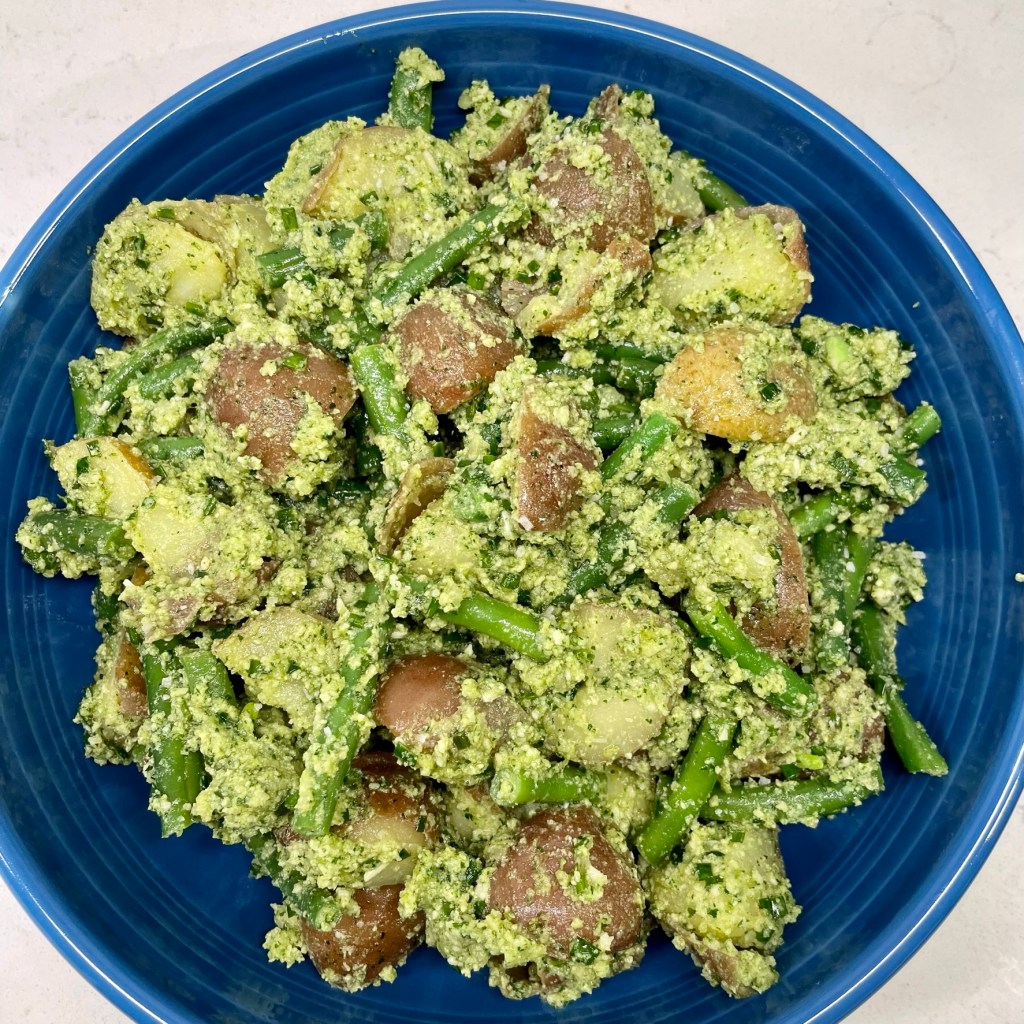
This was a flavorful twist on a typical summer potato salad!

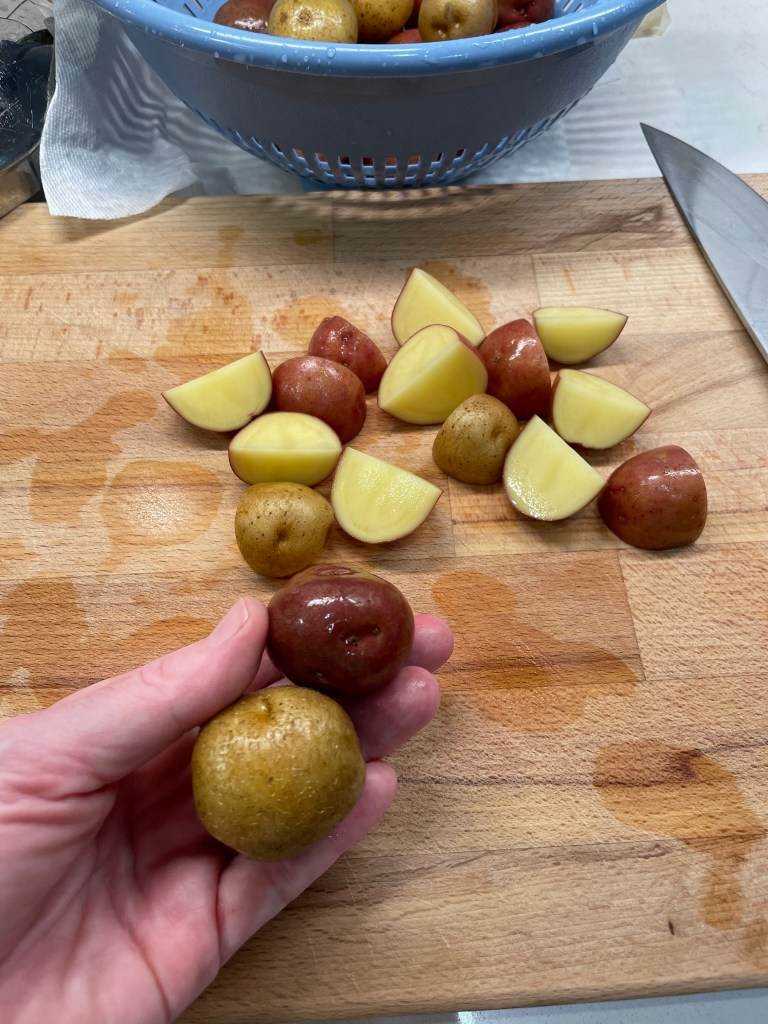
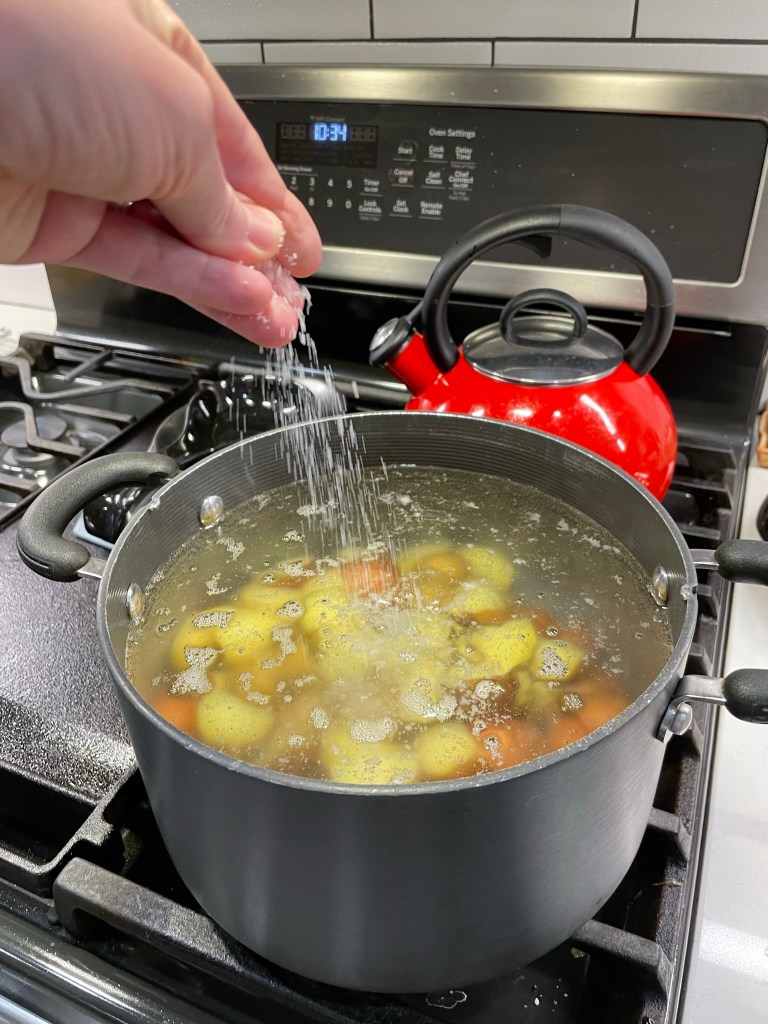
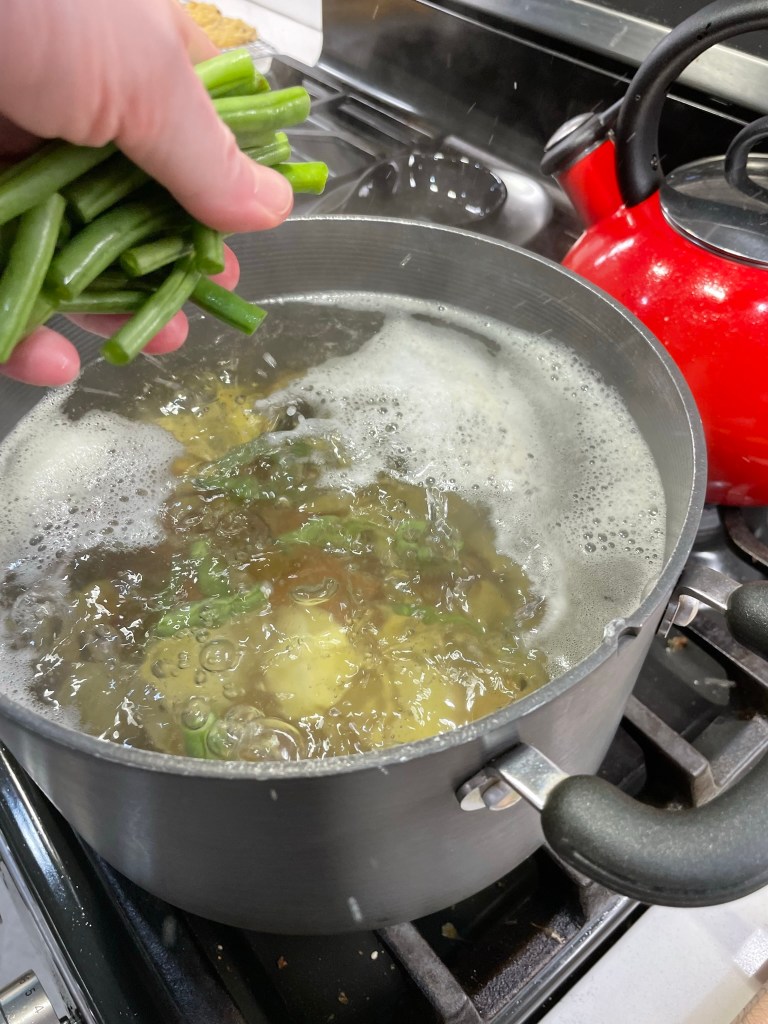
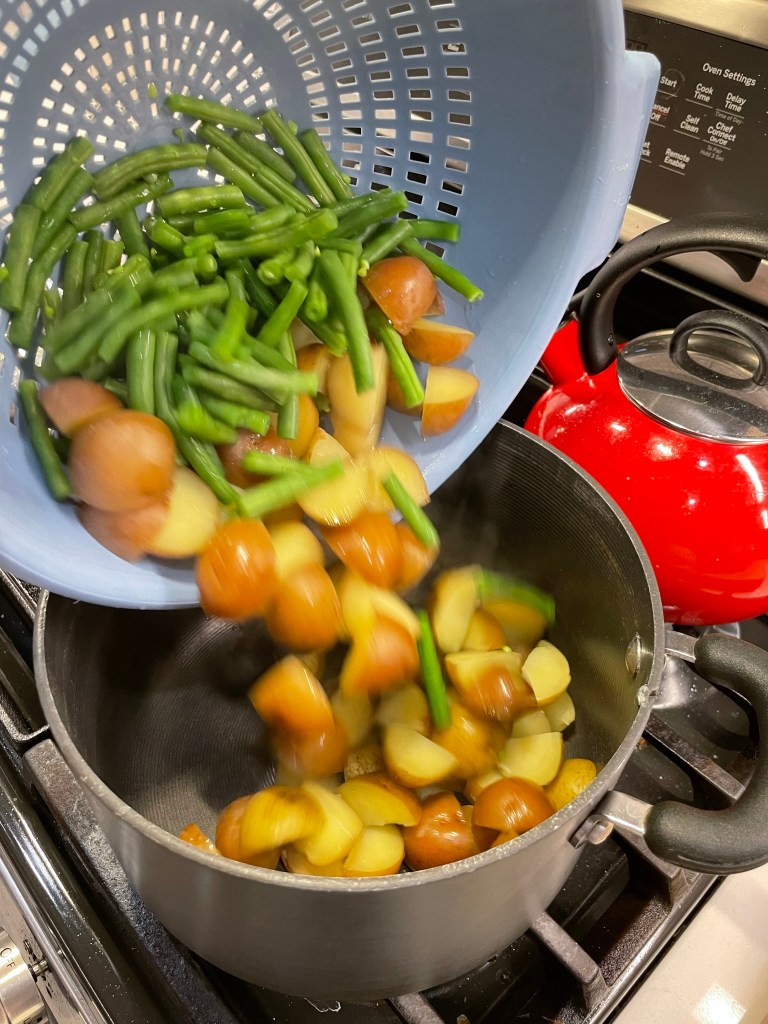
I picked this one for a few reasons. First, I knew that there would probably already be plenty of macaroni salads and mayonnaise-based potato salads, so this would be a change of pace. The dressing here is essentially a pesto, but made with parsley and chives rather than basil. It’s a bright, vibrant salad that looks great on the plate and it “ages” well at a potluck without that greasy, broken mayo coating. There was also the matter of the large bag of baby potatoes Les had picked up at Costco the week before, and we had almost exactly the 2 pounds I needed for this salad! Green beans added a little bit of crunch that was just right, though I can imagine cut spears of asparagus would have been tasty, too. I cut the potatoes into quarters to get more surface area  to hold the pesto, and boiled them until fork tender, tossing in the green beans for the final two minutes. So easy, and all in one pot!


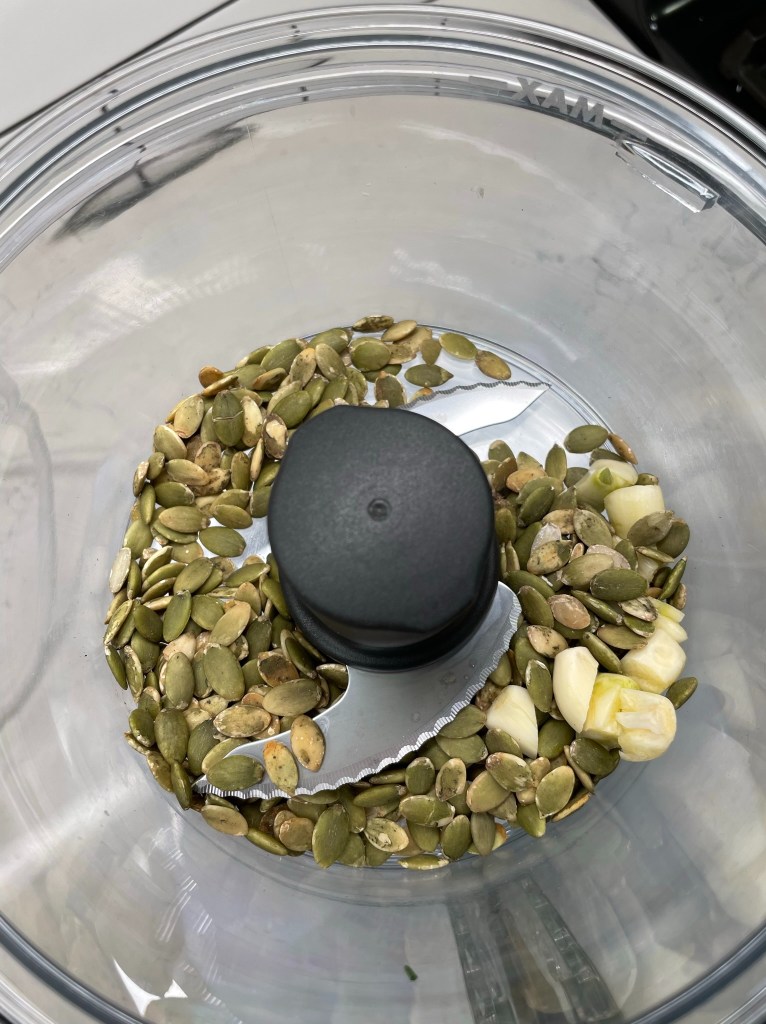
The recipe sounded great as written, but I tweaked it just a bit to satisfy our love for extra garlic. I didn’t have pine nuts but found that toasted pepitas worked great in the pesto and added even more pretty green color. Our parm-romano blend provided a deep savory flavor, and I used a nice peppery olive oil for even more zing.


There was quite a lot of pesto dressing, and I’m glad that I added it gradually, as the potatoes and green beans didn’t need the whole amount. But who minds having a little leftover pesto on hand? It will be delicious on some grilled fish or maybe tossed with shrimp and hot cooked pasta. Oh wait, on grilled vegetables! Mmm.


Just one more thing I’d add about this salad— serve it right away, and make it on a day that you have plenty of people around to eat it. We had a bit left over and found that it fell kind of flat after a couple of days in the fridge.

Potato Salad with Chive & Parsley Pesto

  • Servings: About 8
  • Difficulty: Average
  • Print

I only made a few minor tweaks to this NYT Cooking recipe, and it has already won a coveted spot in my summer side rotation!


Ingredients

  • 2 pounds baby potatoes, scrubbed and halved or quartered
  • 1 Tbsp. kosher salt (for cooking water)
  • 1/2 pound green beans, trimmed and cut into short pieces
  • 1/4 cup roasted pepitas (hulled pumpkin seeds)
  • 3 cloves garlic, rough chopped
  • 1 cup packed Italian parsley leaves
  • 1/2 to 3/4 cup extra virgin olive oil (a bright, peppery one is perfect here)
  • 1/2 cup freshly grated Parmesan or Parm-Romano blend
  • 1 small bunch chives, snipped
  • Juice of 1/2 large lemon
  • Salt and pepper to taste

Directions

  1. Add potatoes to a large pot and cover with cold water. Bring to a boil over high heat, then add salt and reduce heat to a constant simmer. Cook potatoes about 15 minutes, until they are easily pierced with a fork or knife tip. Add green beans only for the last minute or two, so they remain bright green and tender-crisp.
  2. Drain potatoes and return them to the hot pot to allow excess moisture to evaporate.
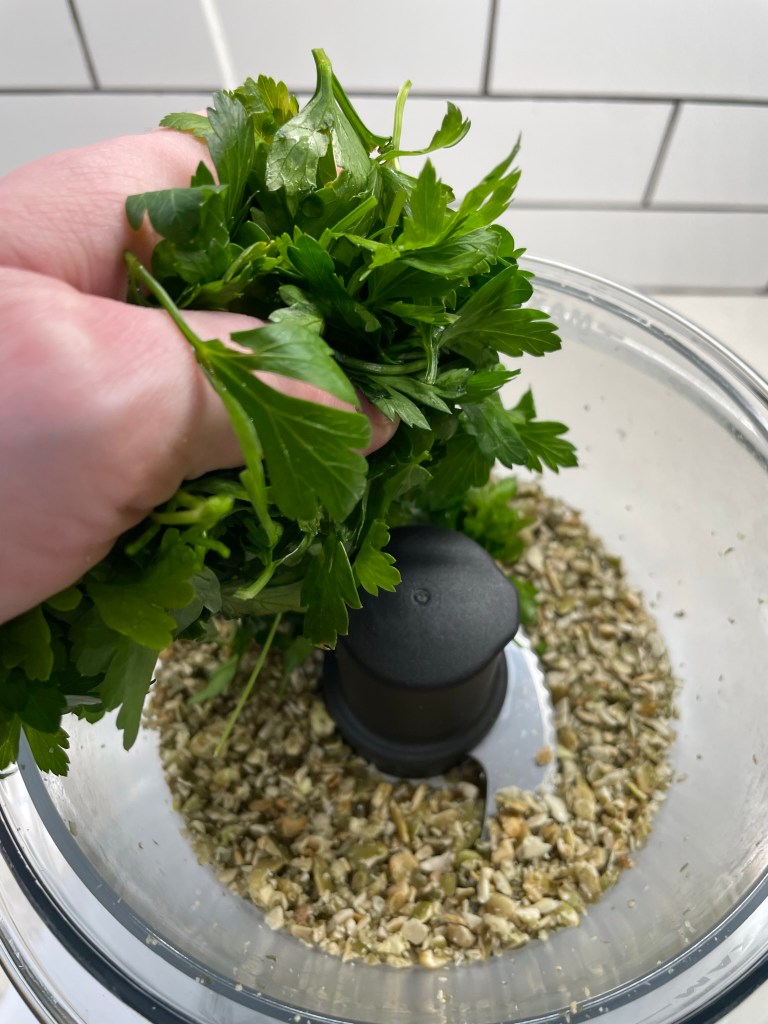
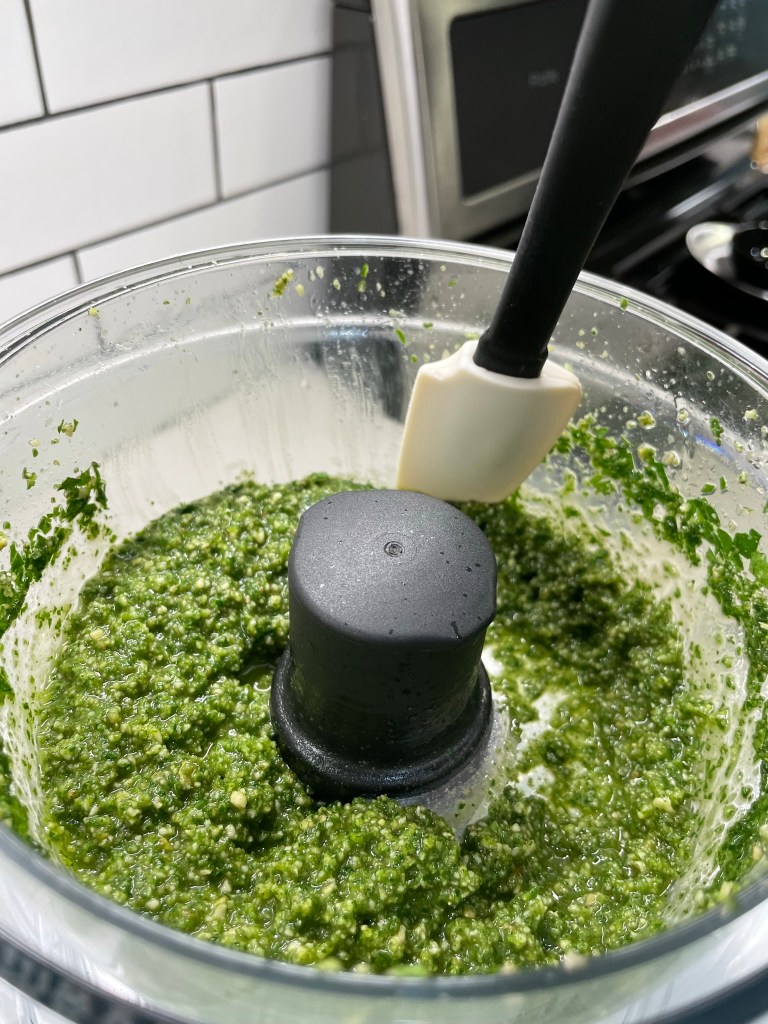
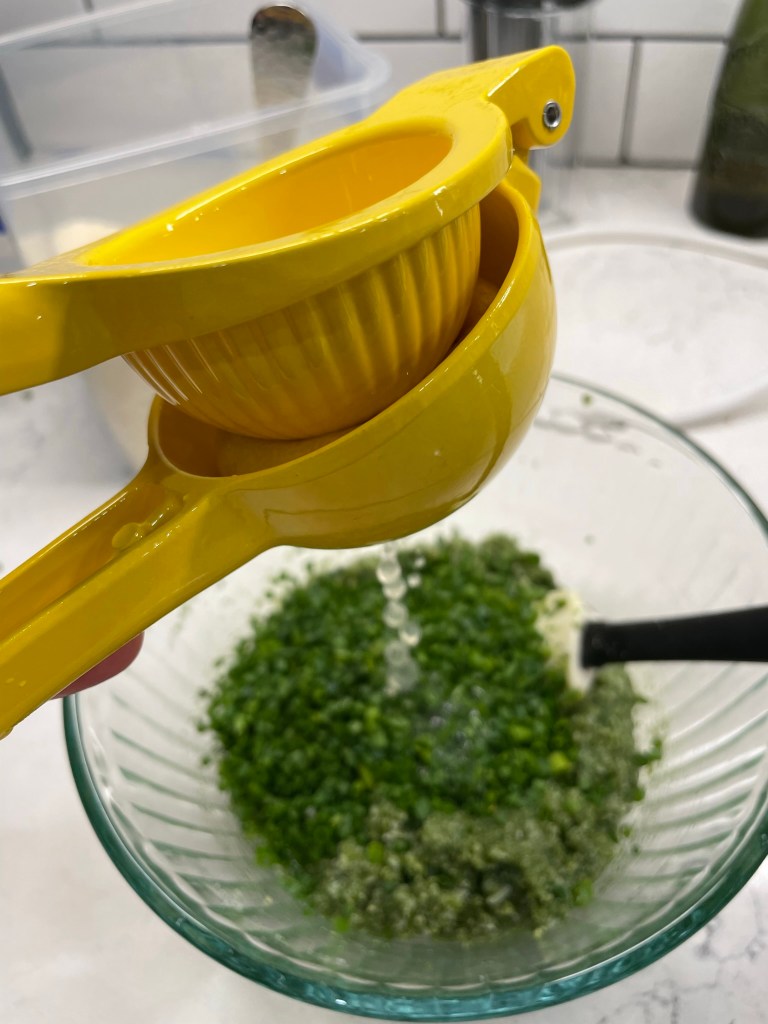
  3. Make the pesto while the potatoes and beans cook. In the small bowl of a food processor, pulse together the pepitas and garlic. Add parsley and pulse several times. Use a small spatula to scrape down the sides of the bowl. Run the processor continuously while you drizzle in the olive oil, and puree until it is an even paste. Transfer the mixture to a large bowl and stir in the Parm-Romano, lemon juice, chives and salt/pepper to taste.
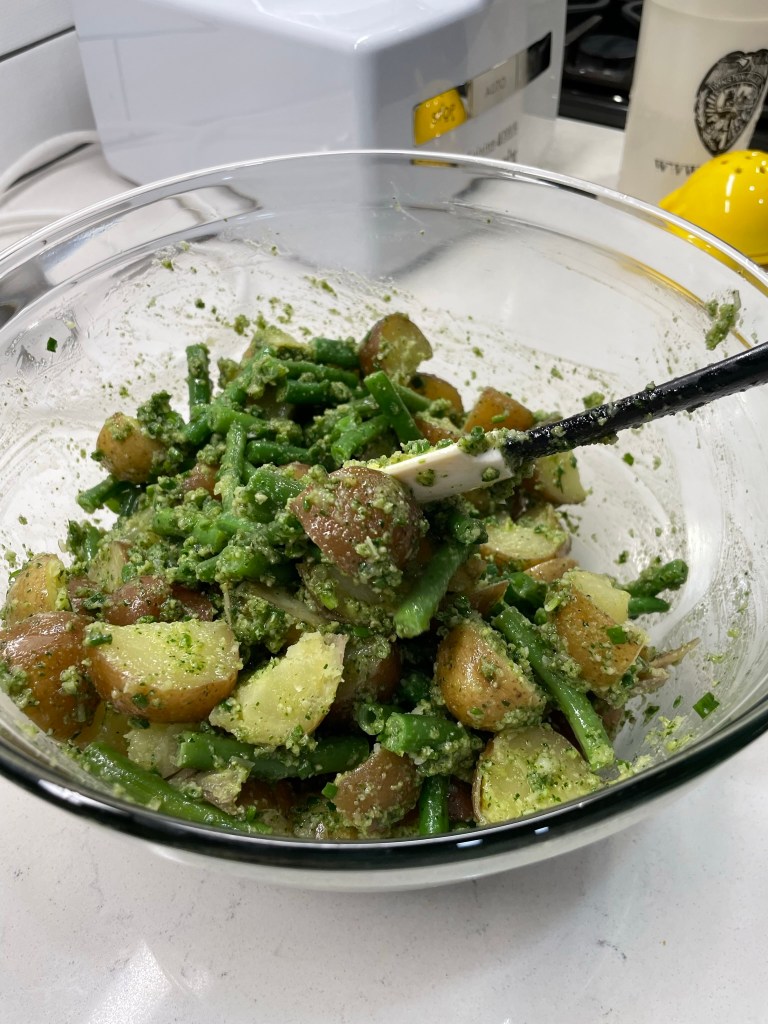
  4. In a large bowl, combine the warm potatoes with about half of the pesto. Fold gently to coat and add more pesto to your liking. Season to taste with salt and pepper. Reserve any leftover pesto and enjoy tossed with pasta or roasted vegetables. It will keep better with a thin layer of extra virgin olive oil floated on top.


Queso Fundido Potato Skins

Ah, Spring! It’s difficult to narrow down what’s best about this time of year— is it the warming temperatures and longer days? The cheerful daffodils that are already in full bloom in the beds in front of our house? I am already envisioning donning my garden gloves and putting down soil for this year’s garden. Easter will be here before we know it, and that’s always a sign of a fresh start. It’s all so exhilarating!

But the thing that everyone around these parts is excited about has nothing to do with weather, flowers or new beginnings. Nope— this month, it’s all about March Madness, baby!

Photo by Markus Spiske on Pexels.com

Many years ago, in what seems like a different lifetime, I worked in the main branch of a large, North Carolina-based bank. The “madness” that I witnessed included executives from the bank clearing their calendars so that they could stand in the lobby of the bank, focused on portable TVs that someone had plugged in right there along the teller line (this was all before the internet and smartphones, of course). Customers who came in to do their routine banking would stop for a few minutes, enjoy snacks that the bank staff brought in for a potluck table, and watch some of the games. Someone kept up with the brackets, to report to visitors which teams had advanced to the next rounds. 

Weird, I thought, for all of this to occur in a business setting on a weekday— but I was the newcomer who had not yet learned that North Carolina has five key religions— Southern Baptist, Methodist, NASCAR, pulled pork barbecue and ACC hoops.

Thirty five years later, It no longer seems weird to me to see people interrupt business as usual to watch a basketball game in the middle of their workday. During my years in radio, I even sat courtside for a couple of those games and it is indeed a thrill. We have plenty of that excitement around here this week, too, as the rivalries intensify at the ACC Tournament, happening right now in nearby Greensboro.


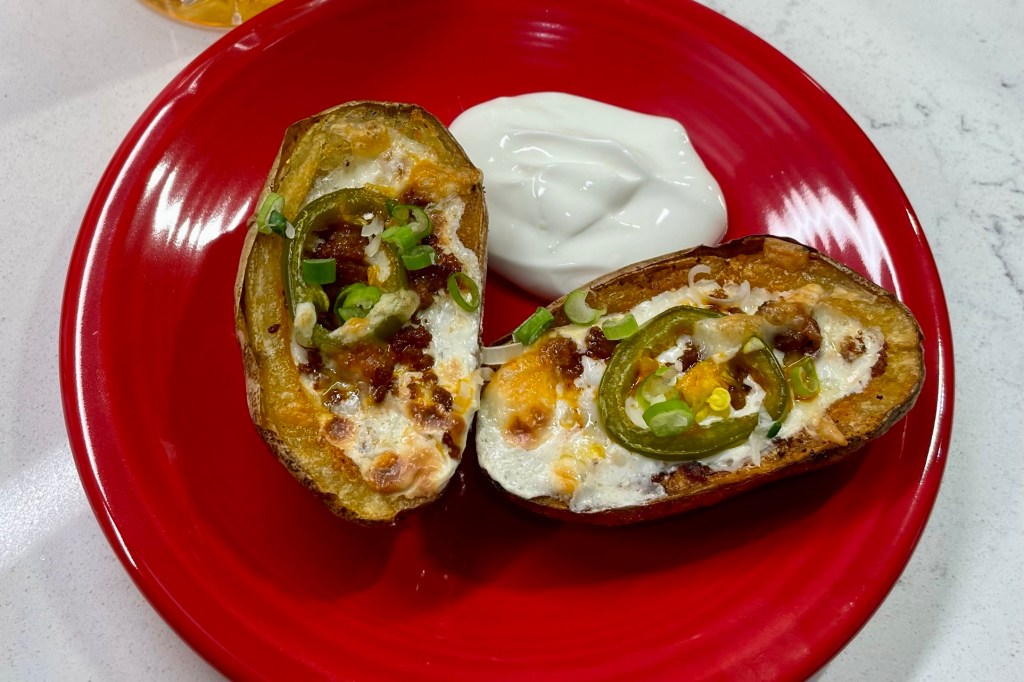
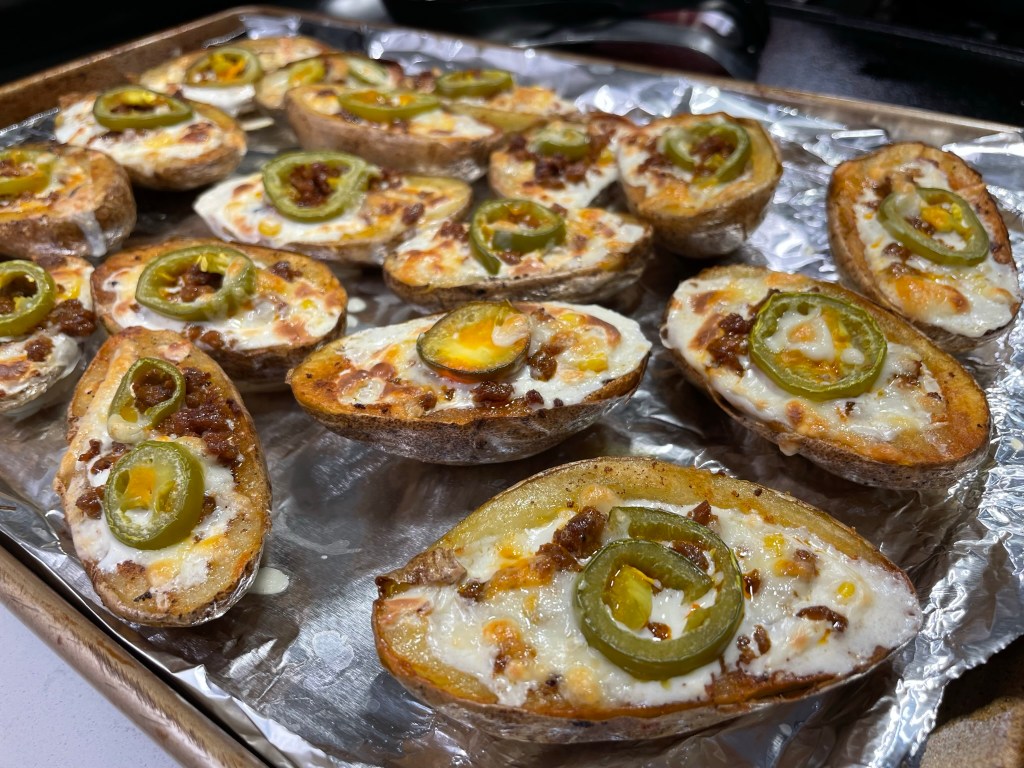
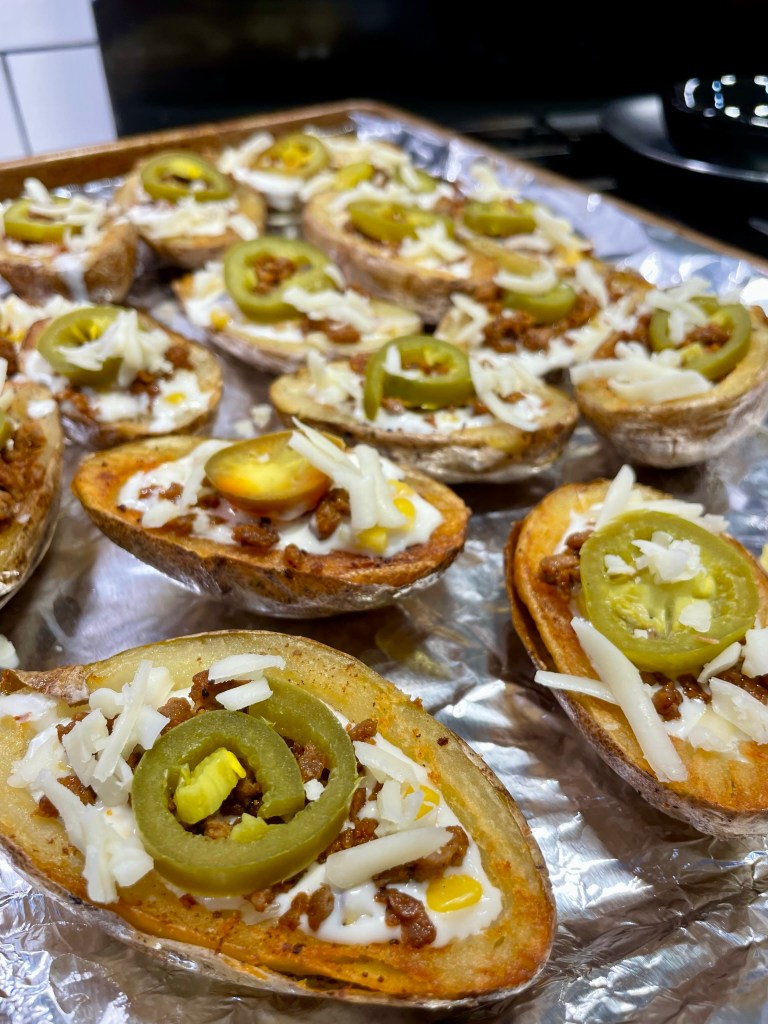
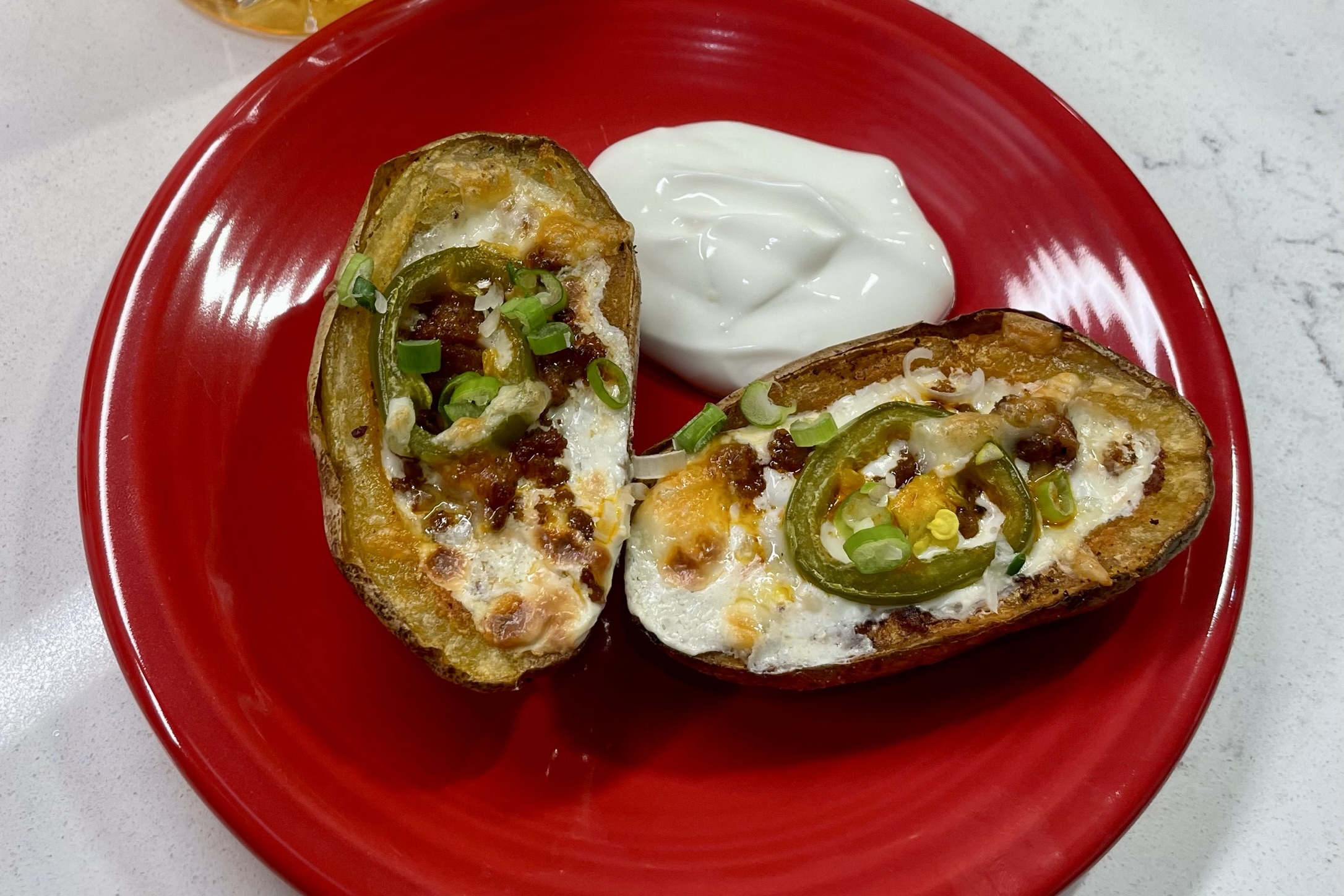
If you need a hearty snack for your own March Madness viewing, consider it done with these zesty Mexican-inspired potato skins, with all the flavors of queso dip inside a split-and-scooped baby russet potato. These little guys can be prepped in advance for the most part, then popped into the oven at the last minute so the toppings— chorizo, fire-roasted corn, queso dip and jalapeño—all melt together in a melty, gooey self-contained snack that’s easy to eat while you’re watching the games. These skins would have really wowed the gang at the bank!


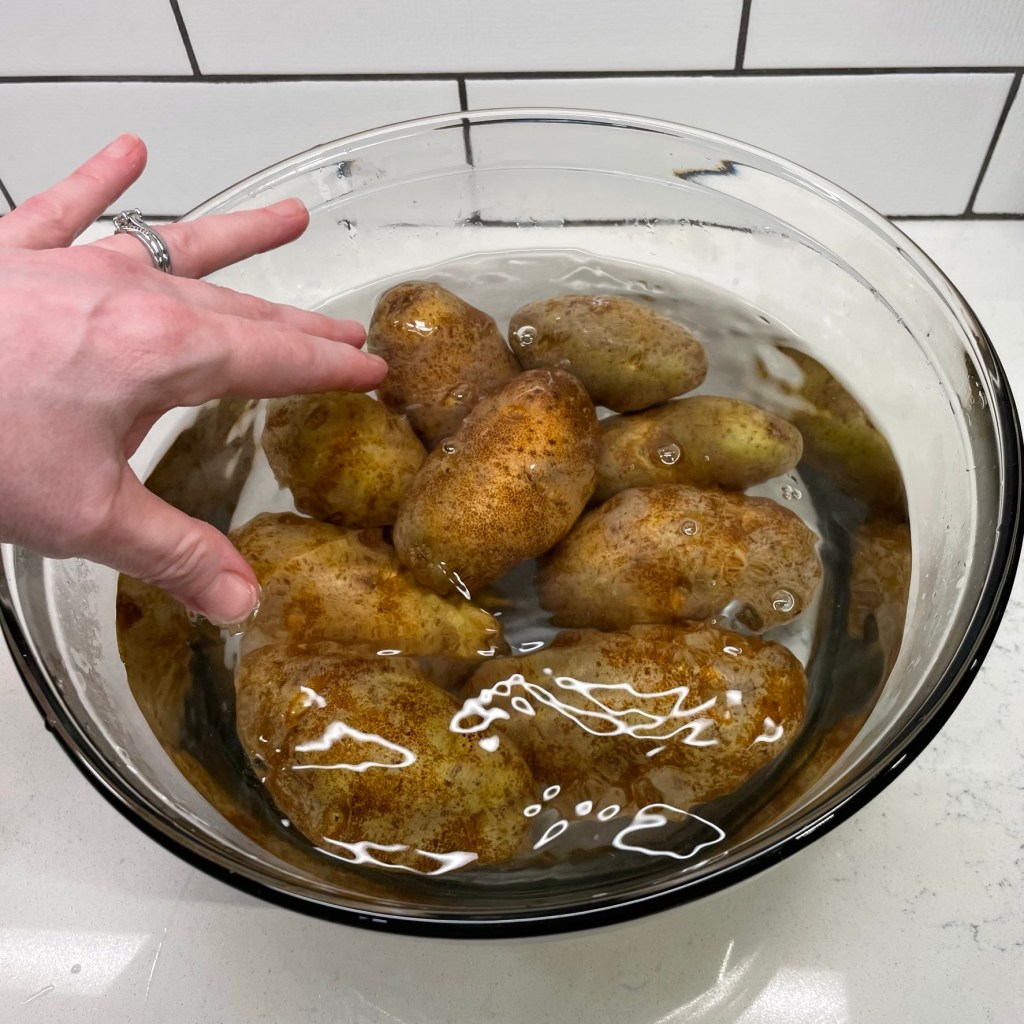
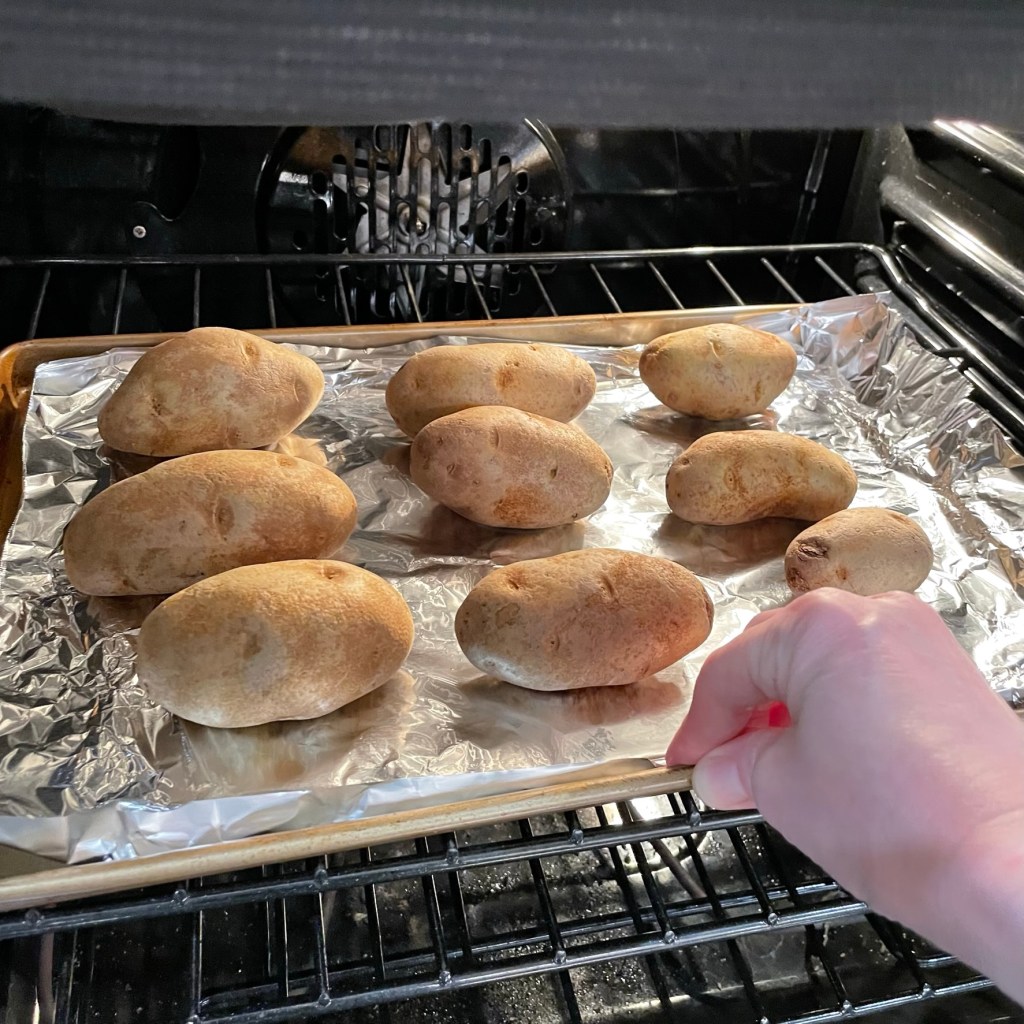
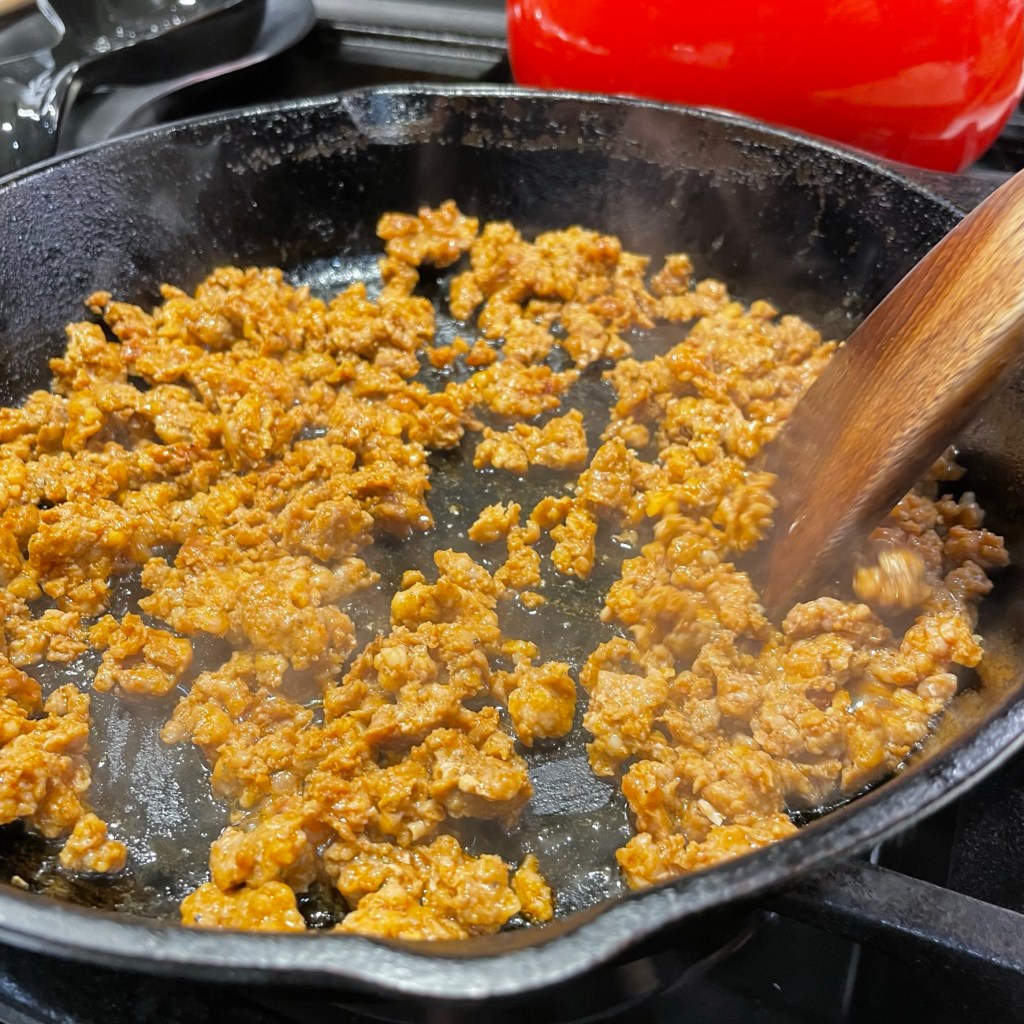
The first step in making them, of course, is prepping and baking the russet potatoes. I chose smallish ones for this recipe so the skins would be better suited to game day snacking. My secret trick with any baked potato recipe is the brine. Yes, I soak my scrubbed potatoes in heavily salted water before baking, and it ensures a crunchy, flavorful skin that is just as tasty as the fillings you put in them. The brining step only takes about half an hour, and the outcome is well worth it. I browned up the chorizo in cast iron while the potatoes soaked, and kept the drippings in the skillet.


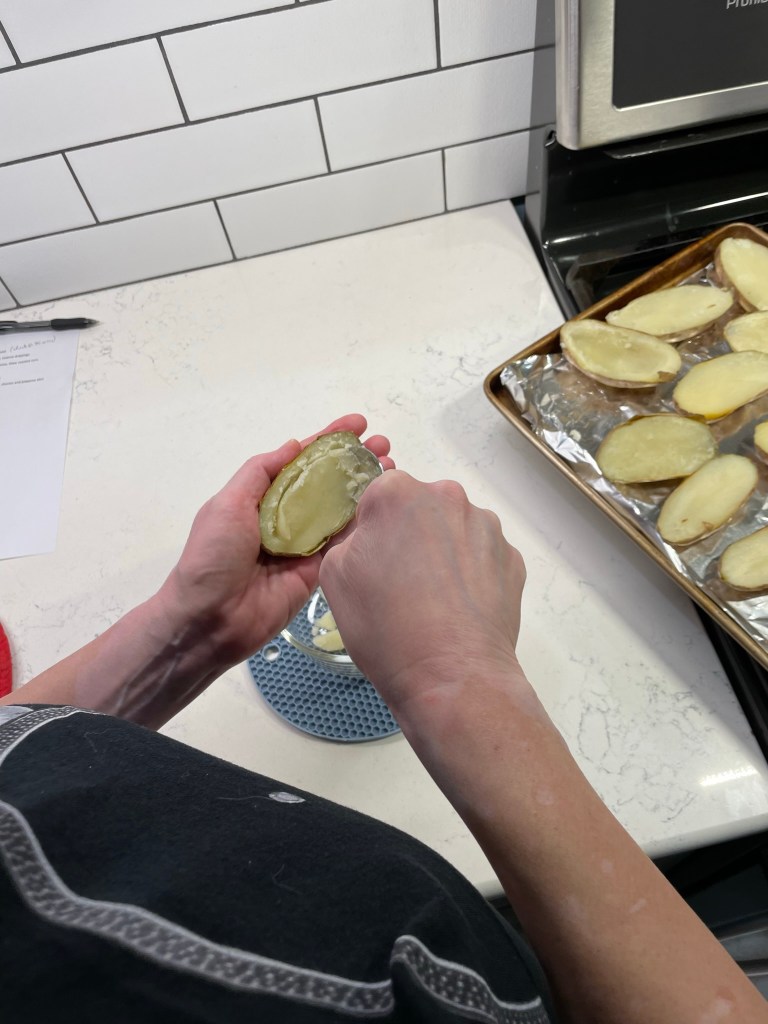
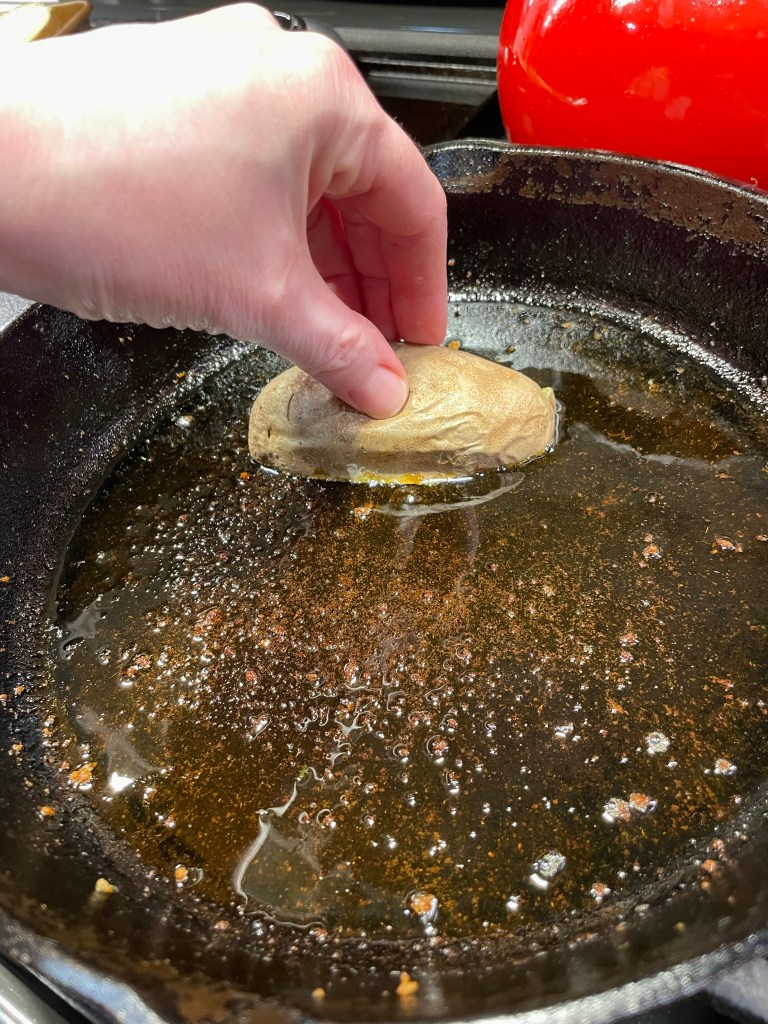
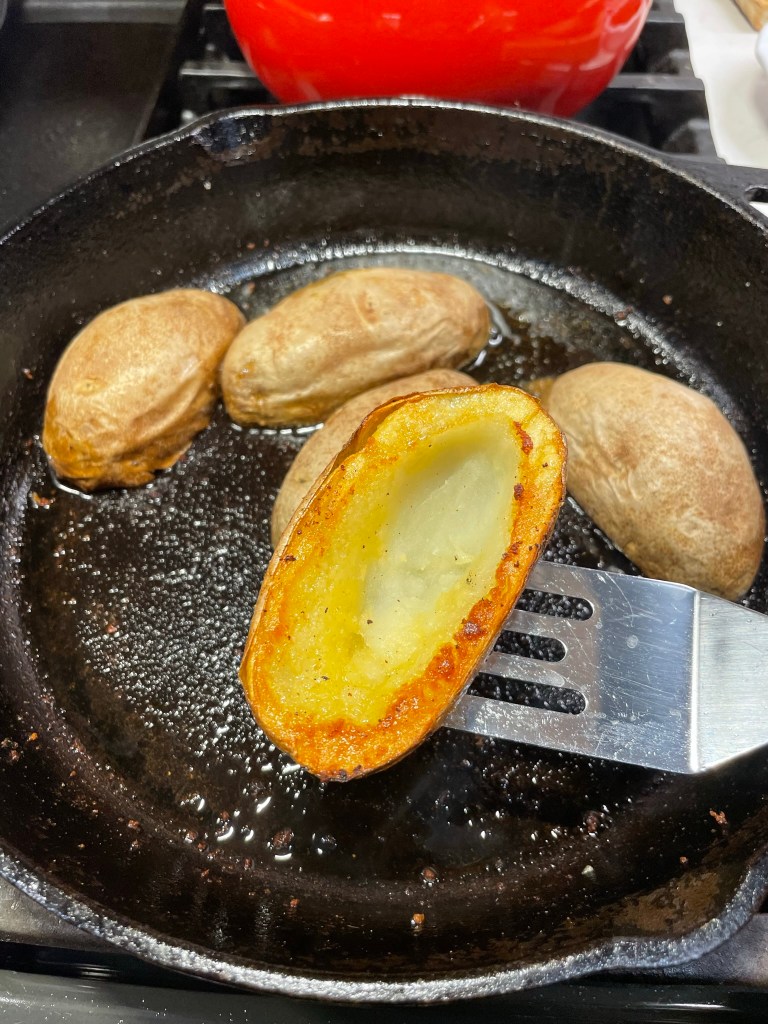
When the spuds were cool enough to handle, I split them in half and scooped out some of the filling, keeping enough to hold the fillings without leaking. You can do whatever you like with the scooped out part; I added them to the current batch of homemade food for Nilla. To give the skins a bit of extra flavor, I fried them briefly (face-down) in the chorizo drippings, just long enough to get those edges crispy. From there, it was just a matter of filling them up with shredded cheese, queso, corn, chorizo and jalapeno.


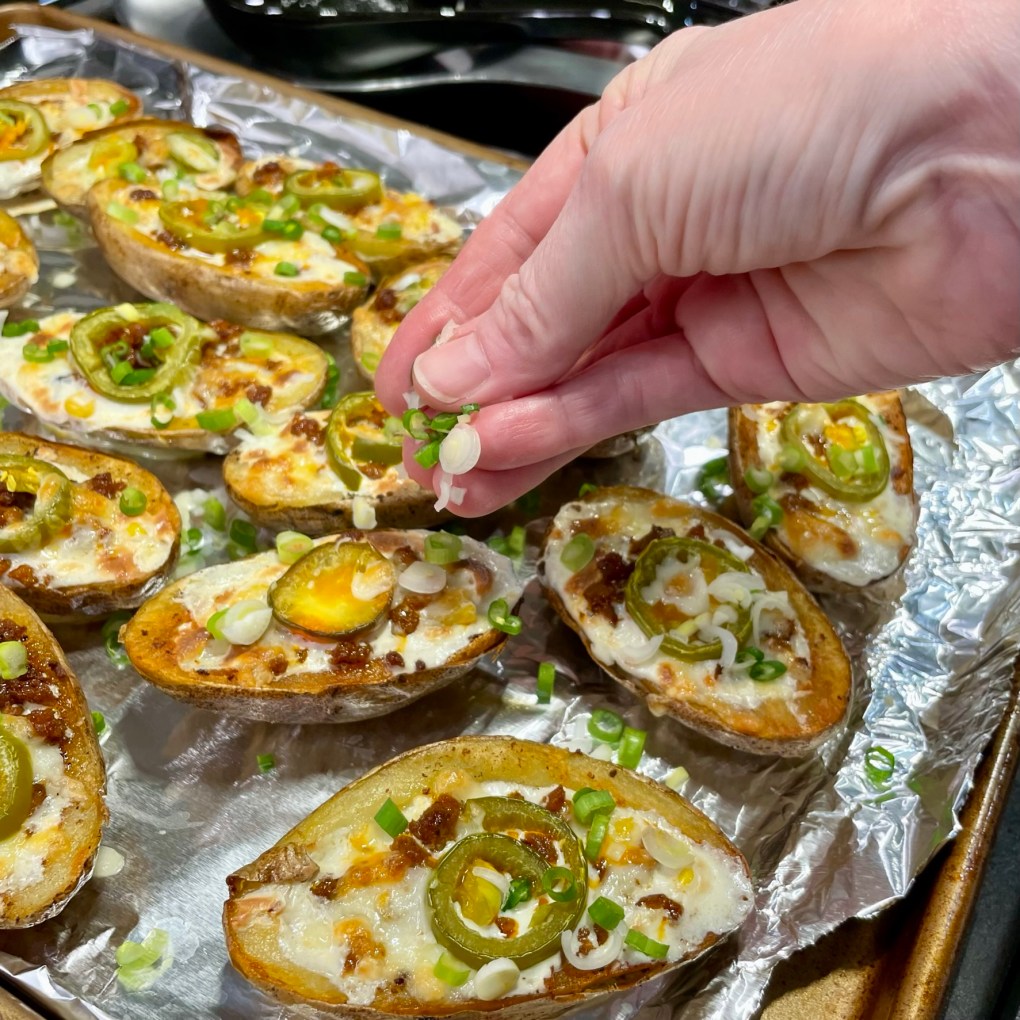
A second trip through the oven melted all the tasty fillings together, and I finished them with a quick scatter of sliced scallions.


Queso Fundido Potato Skins

  • Servings: 16 skins
  • Difficulty: Average
  • Print

This is a fun game day snack that puts a Mexican queso dip twist on classic potato skins.


Ingredients

  • 8 smallish russet potatoes, scrubbed
  • Hot, but not necessarily boiling, water
  • 1 Tbsp. kosher salt (for brining the potatoes)
  • 6 oz. fresh Mexican chorizo sausage* (see notes)
  • 1 to 2 Tbsp. olive oil, if needed
  • 1/2 container Land o Lakes queso dip*, cold from fridge
  • 1/2 cup fire roasted sweet corn
  • 1/2 cup Monterey jack or pepper jack cheese, shredded
  • 16 pickled jalapeno slices
  • 2 scallions, thinly sliced (white and green parts)
  • 1/2 cup sour cream (optional), for serving

*Notes: This recipe uses the fresh, crumbly style of chorizo, not the hard Spanish variety. Our neighbor turned us on to the Land o Lakes queso dip, and we love it! If you don’t find it in your supermarket, substitute something similar from the fresh dairy case.

Directions

  1. Preheat oven to 400°F, with oven rack in center position. Line a large baking sheet with aluminum foil.
  2. Place scrubbed potatoes in a large, heatproof bowl. Sprinkle kosher salt over the potatoes, then fill with enough hot water to cover the potatoes. Swish the water a bit to dissolve the salt. Let them soak for 30 minutes.
  3. Brown the chorizo in a cast iron skillet over medium heat. Scoop the chorizo out into a separate bowl and keep the drippings in the pan.
  4. Dry potatoes with paper towels and arrange on the foil-lined baking sheet. Bake for about 35 minutes, until potatoes are easily pierced with the tip of a sharp knife. When potatoes are cool enough to handle, cut them in half lengthwise and scoop out some of the soft potato, leaving about 1/4-inch around the edges and bottom. Use the excess potato in another recipe.
  5. Place the chorizo skillet back onto medium heat. If the drippings are skimpy in the pan, swirl in a little olive oil. When hot, place the scooped potato skins face down in the pan, to crisp up the exposed edges. Arrange the skins on the foil-lined pan and prepare to fill them.
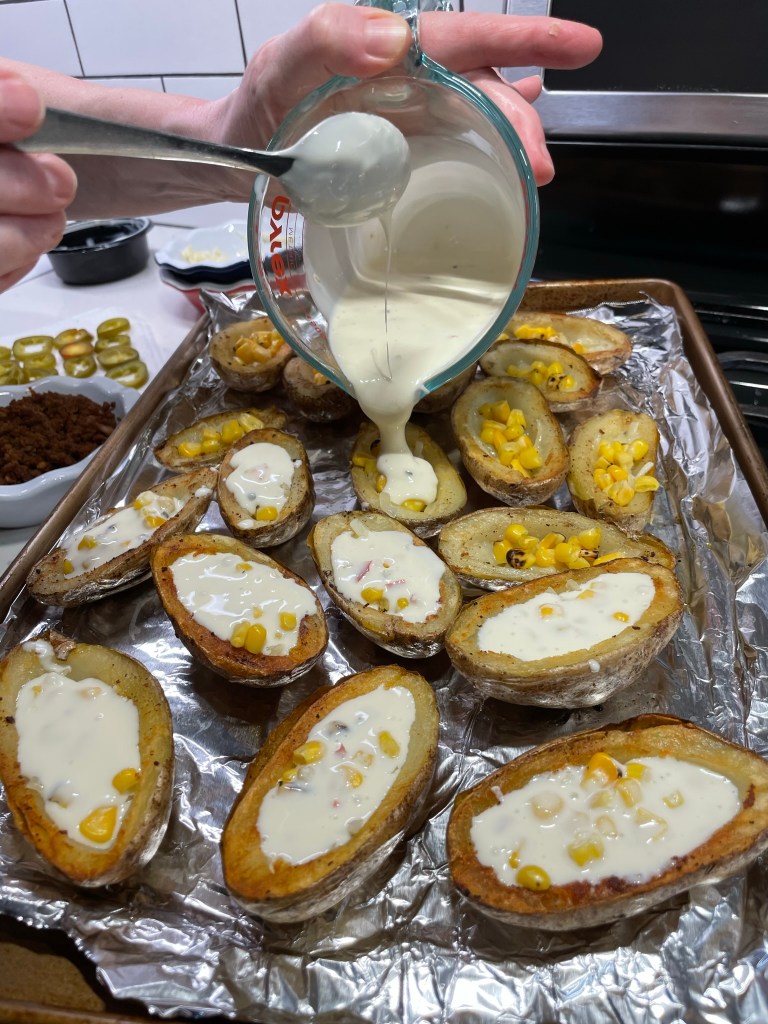
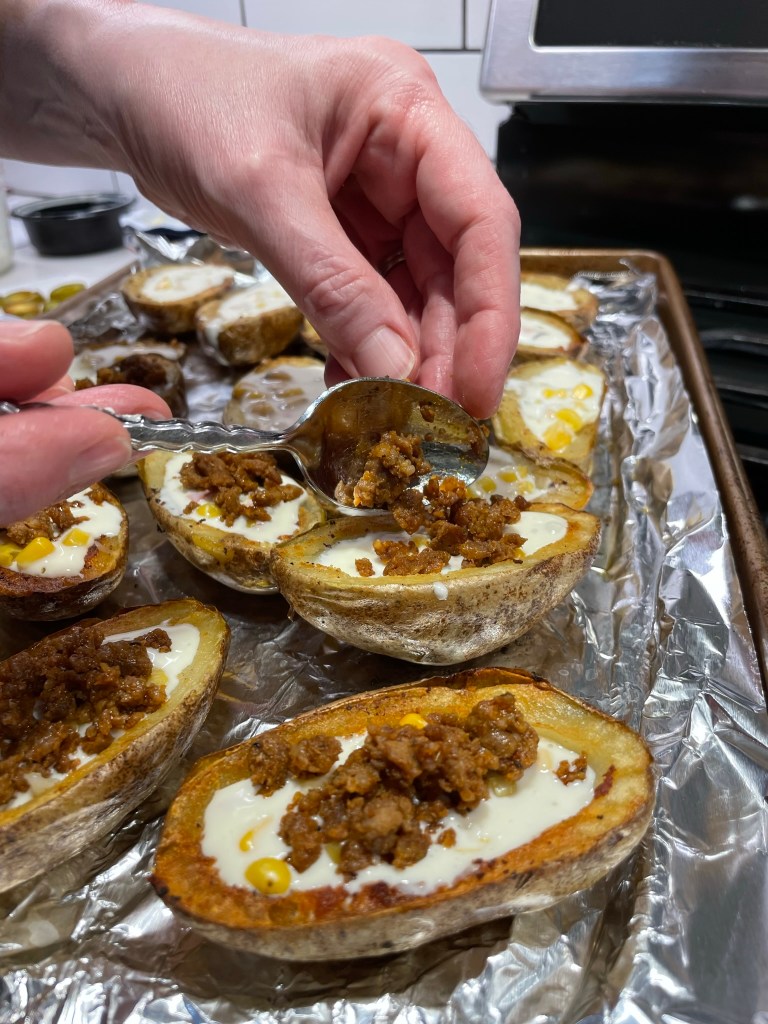
  6. Divide about half of the shredded cheese among the skins and top each with a teaspoonful of the roasted corn. Transfer the queso cheese into a glass measuring cup and microwave about 20 seconds to loosen it up. Pour the queso over the filling in the skins, up to the edges. Top with chorizo, jalapeno slices and the remaining shredded cheese.
  7. Place skins back into the 400°F oven for about 5 minutes, until cheese is melted and bubbly and skins are heated through. Sprinkle with sliced scallions and serve immediately.


My Favorite Vinaigrette Potato Salad

Is there a more ubiquitous summer side than potato salad? But just because it’s always there hardly means it’s the best thing on the table. One of my most cringe-worthy food memories of childhood was played out on repeat at summer gatherings with family, friends and neighbors, and seeing what happened to the potato salad—which, many times, was little more than sticky, cooked potatoes with some hard-boiled eggs and mayonnaise. I know you’ve seen this, too, when it gets a little bit warm and separates into a greasy, gloppy mess with that thin filmy crust on the surface. Is it any wonder everyone passes over it in favor of potato chips? Nothing ruins a picnic faster than bland potato salad, slick with broken mayonnaise. Bleh.

It’s a shame to not give the versatile potato a greater chance to shine! If you are bored with potato salad or stuck in a rut with a recipe that gets left behind on the picnic table, maybe you just need a different approach—one that doesn’t depend on a heavy, mayonnaise-y coating to give it flavor because, honestly, mayo doesn’t have much flavor to begin with. Here’s something a little different and for me, it’s a winner every time.


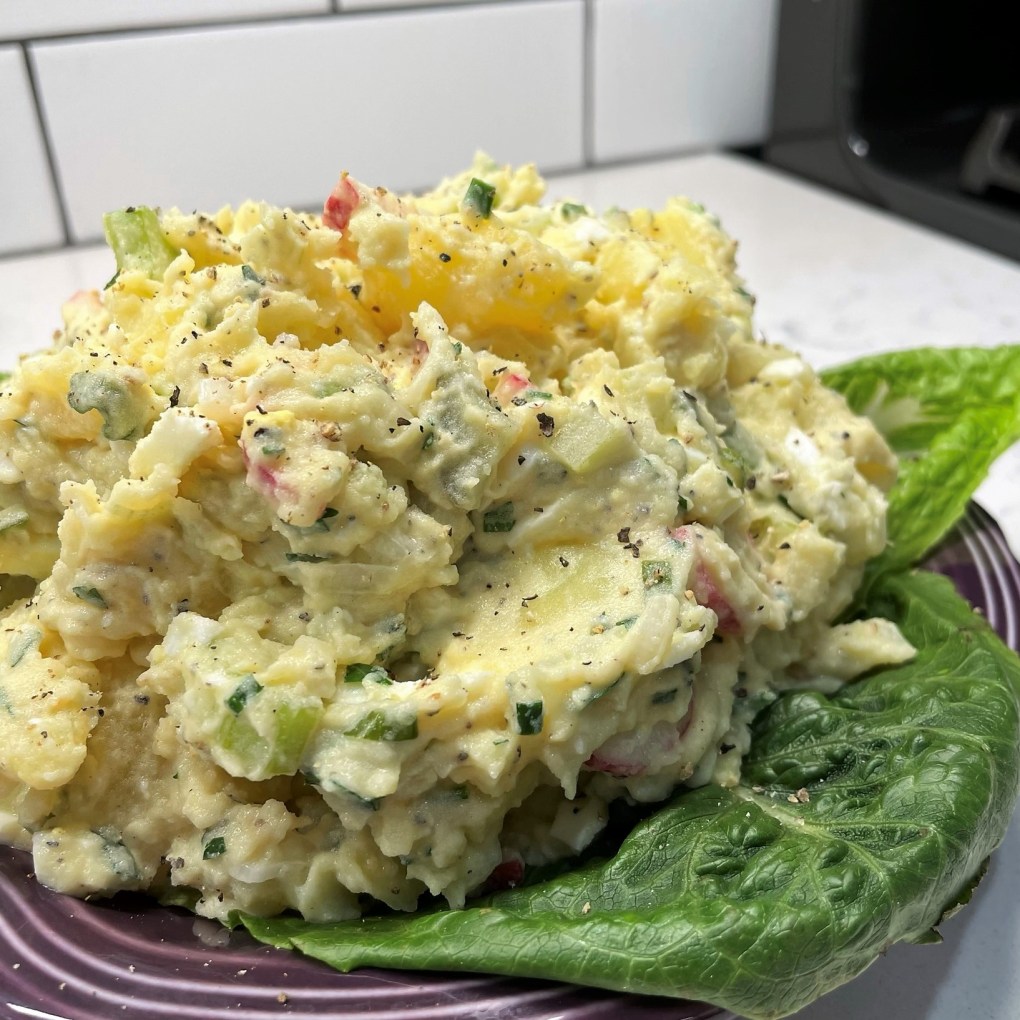
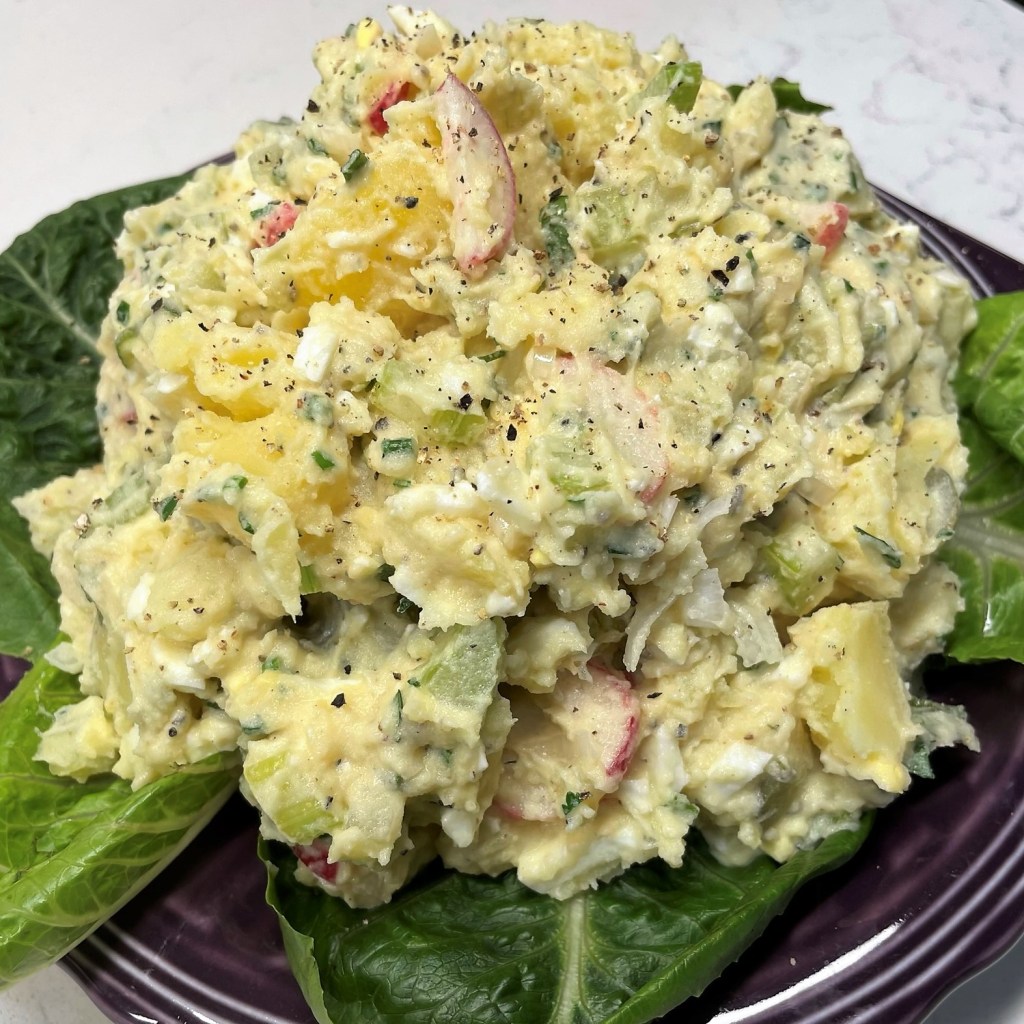
This potato salad does not disappoint, and it could never be accused of being bland because it is doubly dressed—first, with a tangy, heart-healthy vinaigrette that soaks flavor all the way through the potatoes, and then with the slightest amount of mayonnaise-based dressing for a creamy, picnic-ready finish that isn’t greasy and doesn’t clump or break.

I’ve made no secret of the fact that potatoes are one of my very favorite foods, and I have shared a few fun twists on potato salad here on Comfort du Jour, but of all the versions I like to make, this one is my favorite (especially in summer), and for a few fun reasons.

Any kind of potato works

You can use starchy russets, baby reds or Yukon golds (my favorite, and my choice for this post). Peel the skins or keep ‘em—your call. The only thing to consider with the waxy style of potatoes is that they will absorb slightly less of the dressing, so you would want to proceed in stages to be sure it’s to your liking. But flavor-wise? Whatever you like is going to work.

This salad is adaptable

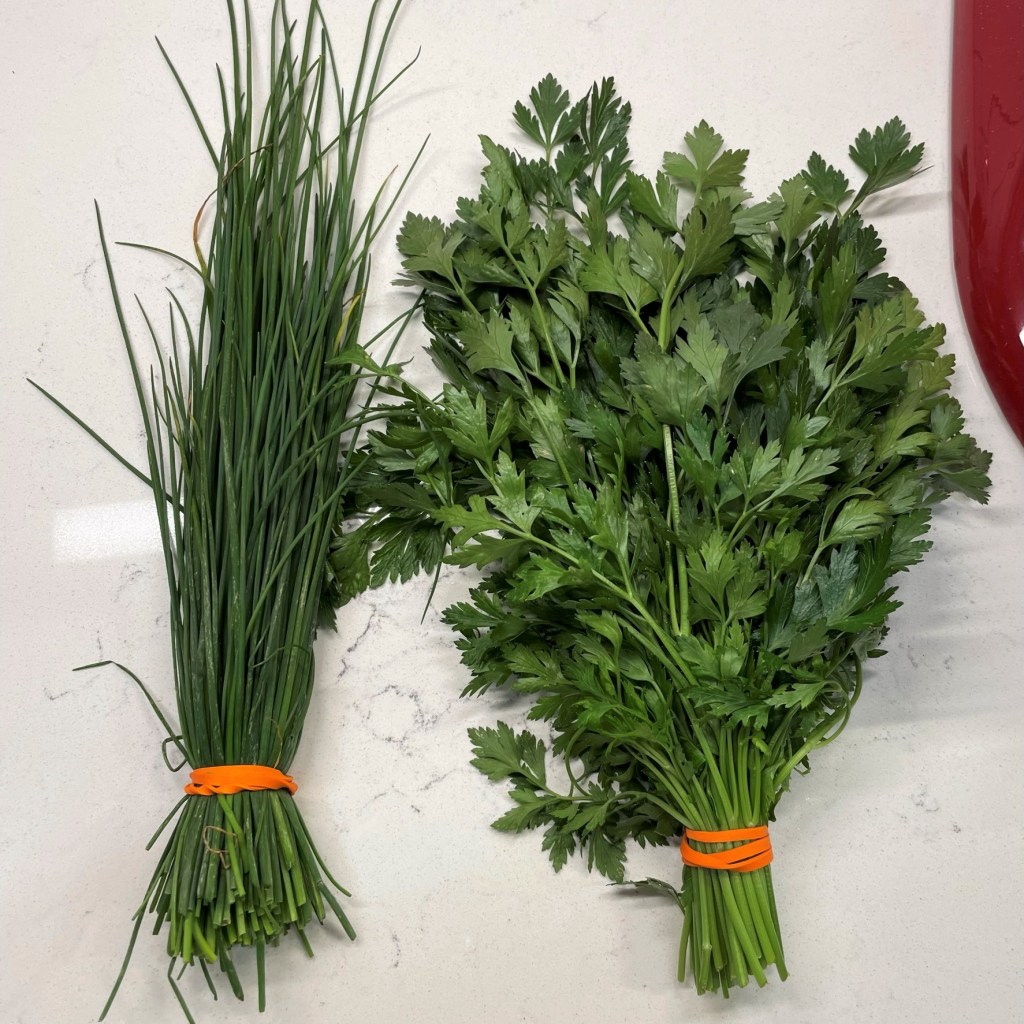
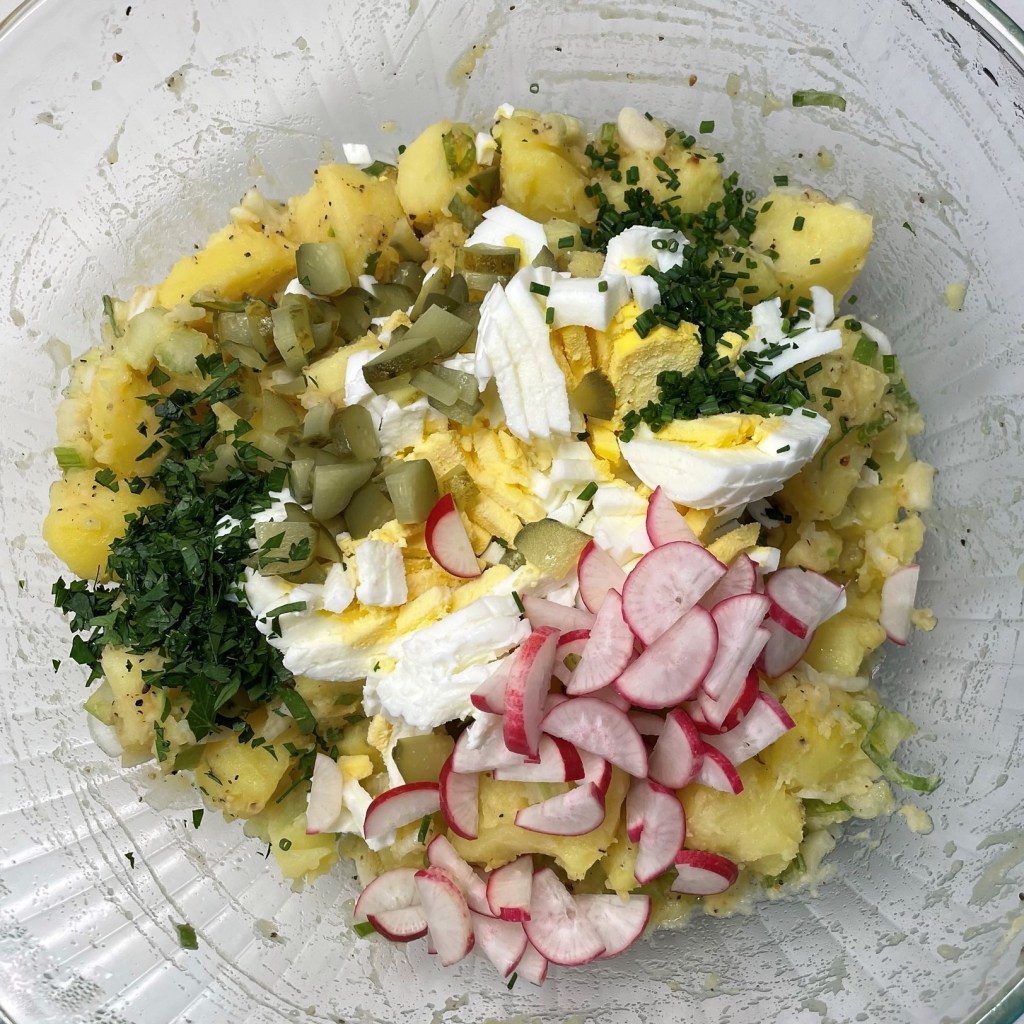
My main goal for any kind of salad is variety of texture, and you can adjust this one many ways by changing up the mix-ins. My go-to combination of mix-ins usually includes hard-boiled eggs, chopped pickles, crunchy bits of celery or radish (or both), fresh onions and any kind of fresh herbs. But that leaves it open for interpretation—I could swap out the chopped pickles for chopped olives and skip the onions but add some minced bell pepper. Dill has a completely different flavor than basil or parsley, so that’s another layer of options you can customize to your liking. As long as your ingredients are not overly wet (like tomatoes), the options are nearly endless.


It is not drenched in mayonnaise

We go through a lot of mayo at our house (mostly for my husband’s beloved tuna sandwiches), but it is not my favorite ingredient for dressing potato or pasta salads. Mayonnaise, which is essentially an emulsion of egg yolks and oil, is just plain heavy. And if you add mayo to cooked potatoes, you might notice that it takes a lot of it to keep them coated so the potatoes don’t seem dry, especially if your potatoes lean more starchy than waxy. Too much mayo is never appealing and it definitely is not healthful. Almost all its calories are from fat, and though recent reports have debunked the idea that warm mayonnaise is solely responsible for post-picnic foodborne illnesses (the culprit is usually the meat or fish that is dressed in the mayo), there’s no disputing that it looks completely unappetizing.

It’s actually delicious!

Unlike the typical mayonnaise-only potato salads, this one is mostly flavored with a tasty vinaigrette-style dressing that you can customize to your own palate. You can use a fancy French vinaigrette, a balsamic vinaigrette, a zesty, Italian-style vinaigrette or even a store-bought vinaigrette. There are only two types that I would not recommend, and for different reasons. An entirely fat-free vinaigrette is not ideal, because the extreme water content will turn your cooked potatoes soggy. The dressing should have some amount of oil in it, and you can choose one with heart-healthy fats, such as extra virgin olive oil or avocado oil. I also would not recommend a sweet, fruit-flavored vinaigrette, such as raspberry. It would be tough to choose mix-ins that would work with those flavors. It’s best to stick with a savory one.


The vinaigrette is added to the cooked potatoes while they are hot—immediately from the pot after draining is best—and it only takes a few minutes for it to be absorbed. After the potatoes cool, you simply add your favorite mix-ins and a very small amount of mayonnaise, blended with equal amount of sour cream (or Greek yogurt) and a touch of Dijon mustard for extra flavor. I like to add celery seed as well, but this is optional.


Our little secret…

Here’s one more nugget about this potato salad, and it is good news for anyone who can’t have (or doesn’t want) mayonnaise. This salad technically does not need mayo at all! The vinaigrette soaks so much flavor into the hot potatoes that you could skip the mayonnaise altogether and send it straight to the fridge for serving, just as it is—almost like a German potato salad, but chilled and delicious for summer!


My Favorite Vinaigrette Potato Salad

  • Servings: 8
  • Difficulty: average
  • Print

What I love about this potato salad is that it is double-dressed. First, it’s flavored with vinaigrette, from the inside-out, while the potatoes are still steaming hot. The vinaigrette absorbs into the chunks for great flavor in every forkful. Then, when it’s cool, add your favorite salad mix-ins (aim for variety of textures) and a creamy dressing that has very little mayonnaise for such a large batch of salad. Enjoy!

Ingredients

  • 1/2 cup prepared vinaigrette dressing (see below for my favorite blend)
  • 1 1/2 pounds small Yukon gold potatoes, cleaned and cut-up (peeled or skin-on)
  • 1/2 cup each finely chopped onions and celery
  • 2 Tbsp. mayonnaise
  • 2 Tbsp. sour cream or plain Greek yogurt (reduced-fat versions are fine)
  • 1 tsp. Dijon mustard
  • 1/2 tsp. celery seed
  • favorite mix-ins (I like hard-boiled eggs, chopped pickles or capers, radish slices, minced fresh herbs; avoid high-moisture ingredients such as fresh cucumbers)
  • Salt and pepper to taste

Directions

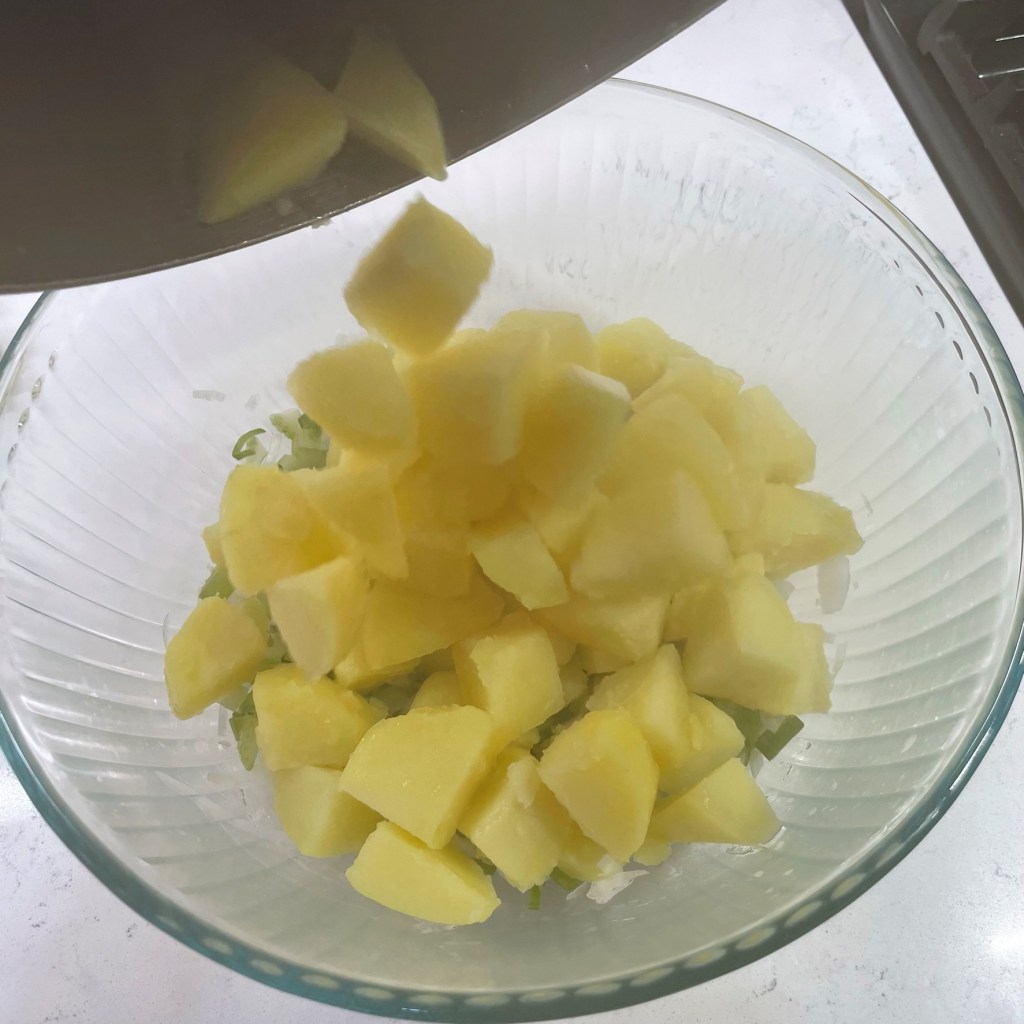
  1. Prep and simmer potatoes until they can easily be pierced with a knife tip, about 25 minutes.
  2. Add finely chopped onions and celery to a bowl large enough to mix the potato salad. When potatoes are tender, drain them and immediately add them to the bowl. Fold with a spatula to distribute the onions and celery throughout. Season with a couple pinches of salt.
  3. Pour the vinaigrette over the hot potatoes. Gently fold with a spatula to mix the vinaigrette evenly with the potatoes. It will take a few minutes for the vinaigrette to be absorbed. Allow them to cool at room temperature. If you wish, you can refrigerate the potatoes before adding the creamy dressing.
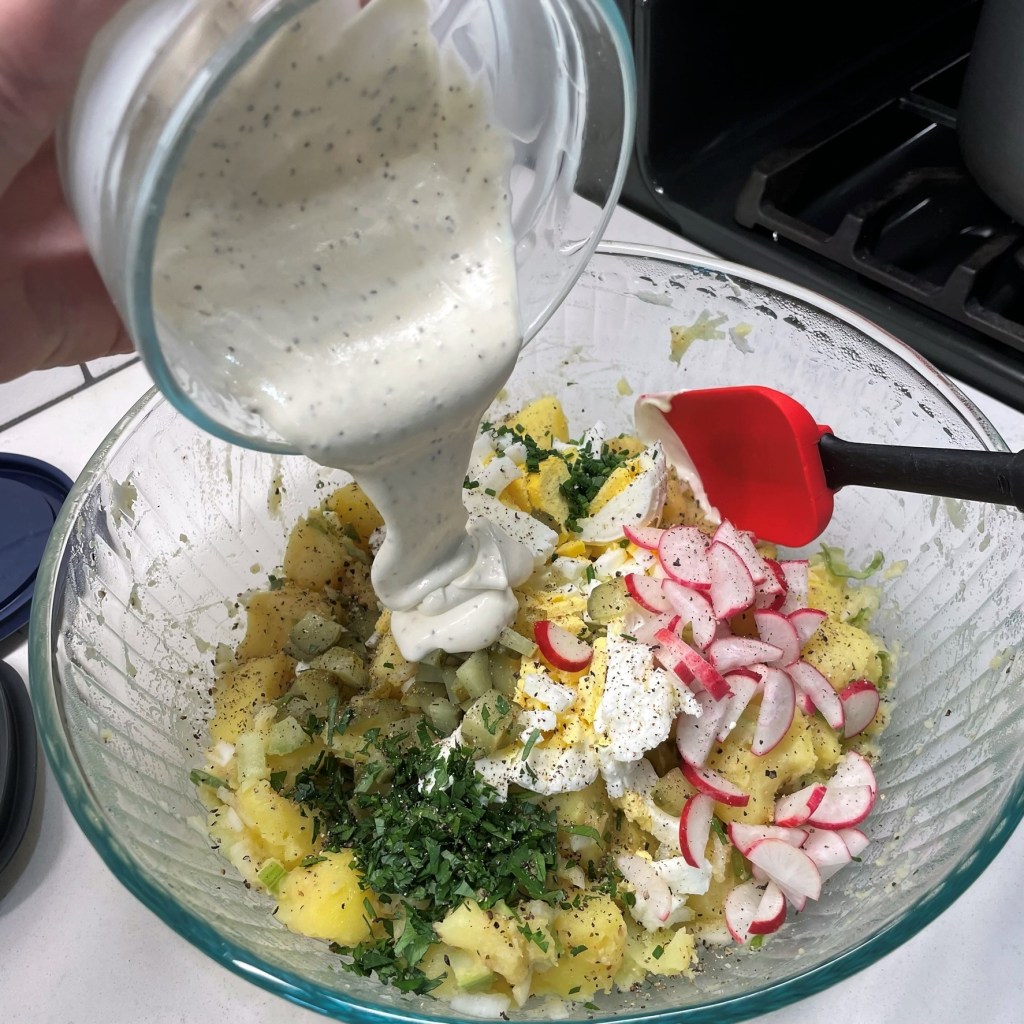
  4. In a small bowl, combine mayonnaise, sour cream, Dijon, celery seed, salt and pepper. Add your favorite salad mix-ins to the vinaigrette-drenched potatoes. Pour dressing over the bowl contents and fold gently to combine and coat the potatoes. Adjust salt and pepper to taste.
  5. Refrigerate the potato salad until completely cold. Serve alongside your favorite summer cookout fare.

Any savory vinaigrette dressing is suitable for this potato salad, but I do not recommend using an “oil-free” version. The excess moisture may make the potatoes too mushy. Here’s my easy, go-to vinaigrette dressing recipe, but between you and me, at least half the time I make this salad, I use Good Seasons Italian. 🙂

Ingredients

  • 3 Tbsp. red wine vinegar
  • Juice of 1/2 lemon
  • 1 tsp. Dijon mustard
  • 1/2 tsp. sugar
  • A few shakes of garlic-pepper seasoning
  • Salt and pepper to taste
  • 1/4 cup extra virgin olive oil (or another heart-healthy oil, such as avocado)

Directions

  1. Combine vinegar, lemon juice, Dijon, seasoning, sugar, salt and pepper in a small bowl or glass measuring cup.
  2. Gradually drizzle olive oil into the mixture while whisking vigorously. The Dijon mustard will help emulsify the mixture.


Steak & Potato Pizza

At our house, we have our share of classic, pepperoni-and-cheese style pizzas. But I really enjoy bringing unexpected toppings to a pizza—to shake up the pizza, yes, but also to enjoy other favorite food combinations in a new way. Just about any meal can be transformed into a pizza, and if you have any doubt, peek at my Pizza Party page to see some of the other fun combinations we’ve enjoyed over the past couple of years. Even I was surprised to see how easily Buffalo wings, oysters Rockefeller or jambalaya can be transformed into a perfect, tasty slice.

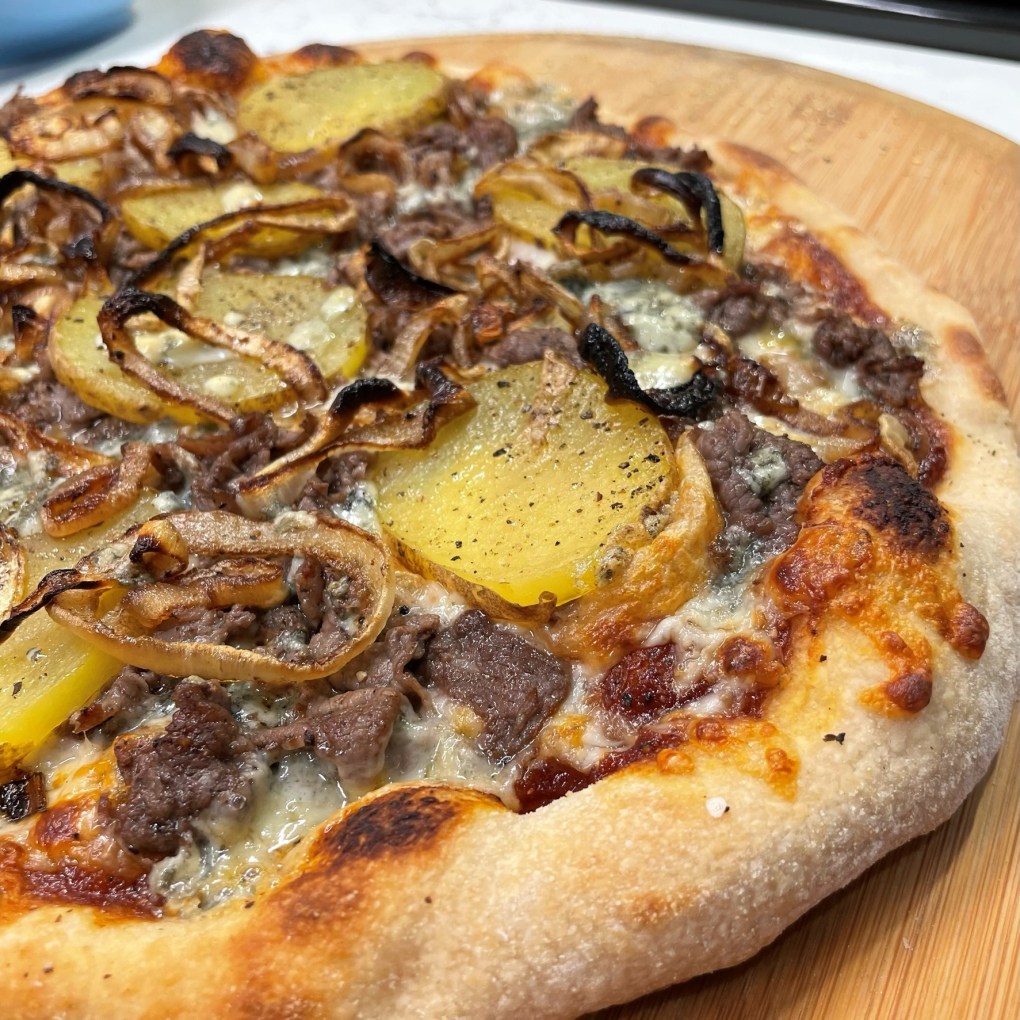
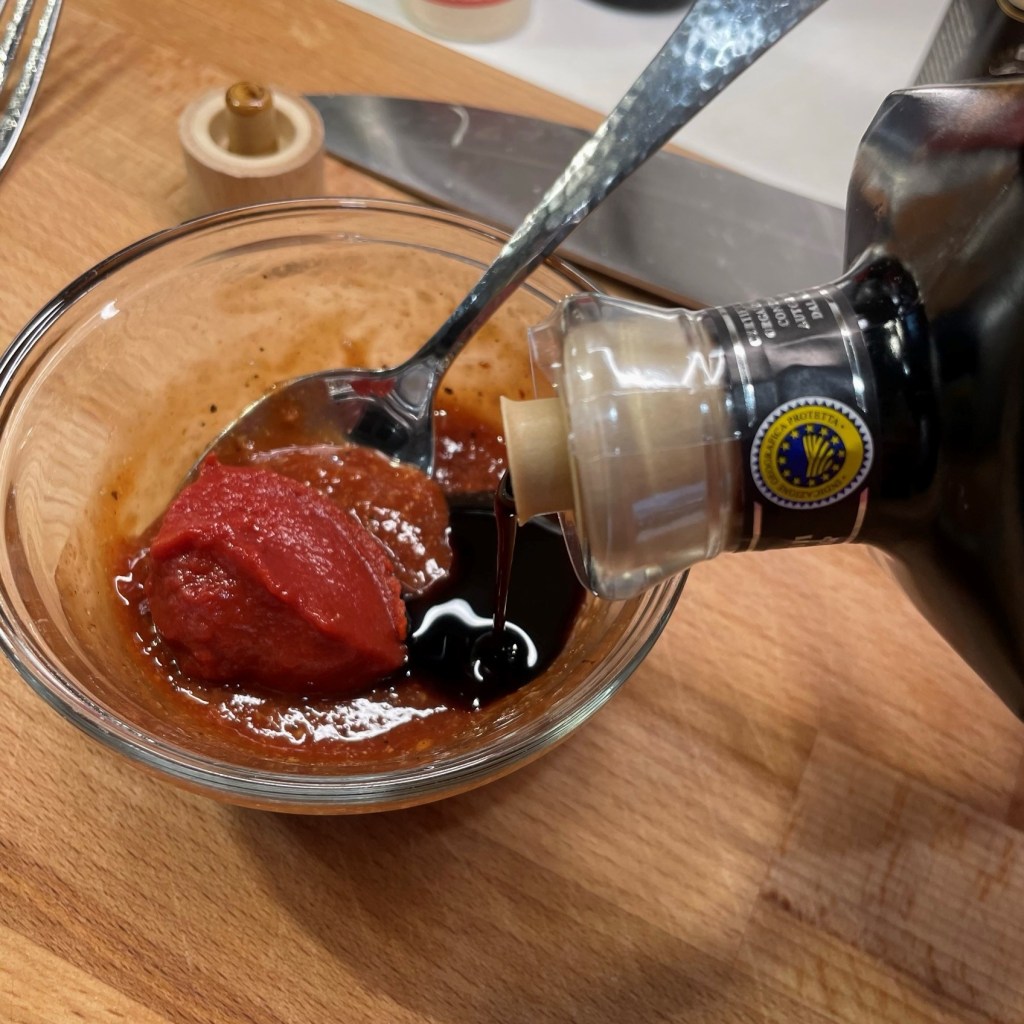
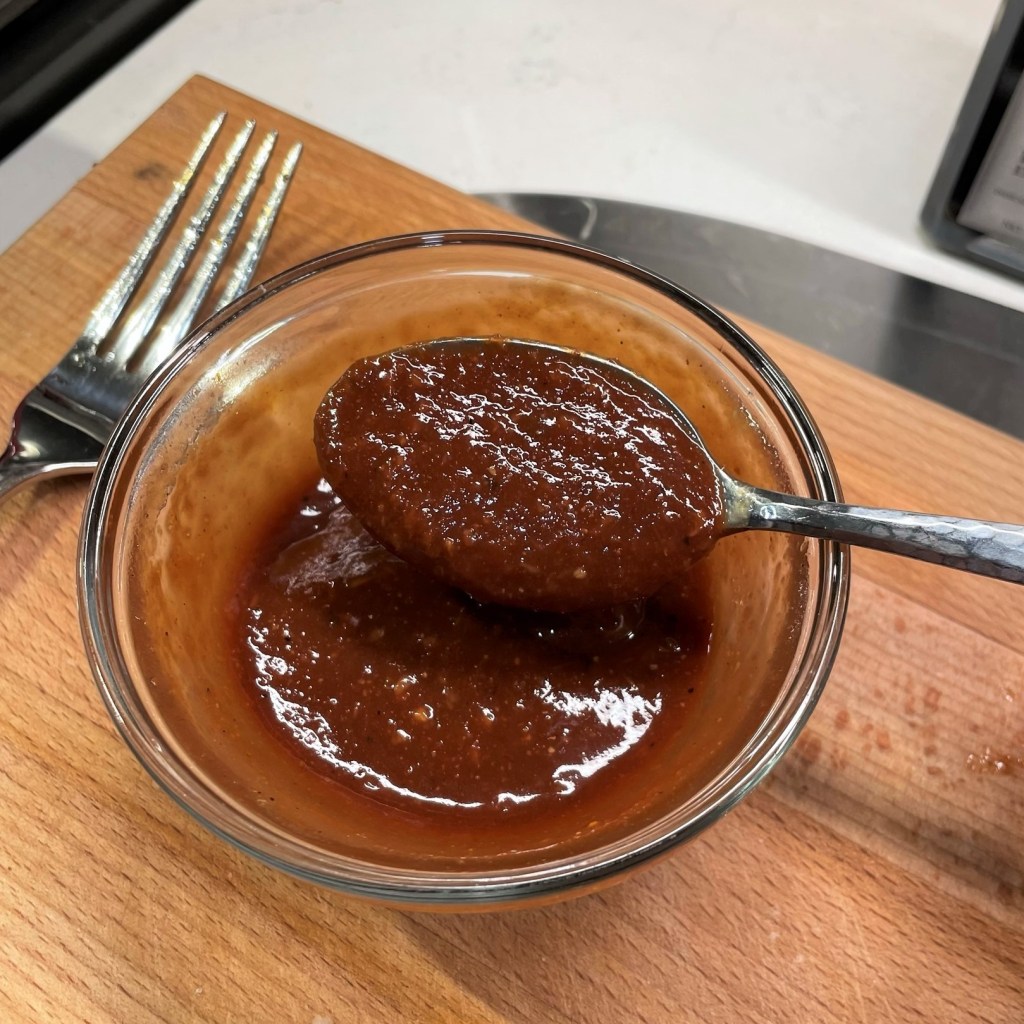
My goal with this pizza was to recreate the experience of dining at a classic steakhouse, but without the heavy, overstuffed feeling that always seems to follow a glorious meal of steak and potatoes. I knew that balsamic roasted onions belonged on this meat and potato pie, and definitely a touch of bleu cheese, but I needed a minute to figure out the sauce. A typical red sauce wouldn’t do, but I found a few things in the door of the fridge and whipped up an easy steak sauce that was tangy, spicy and just slightly sweet.

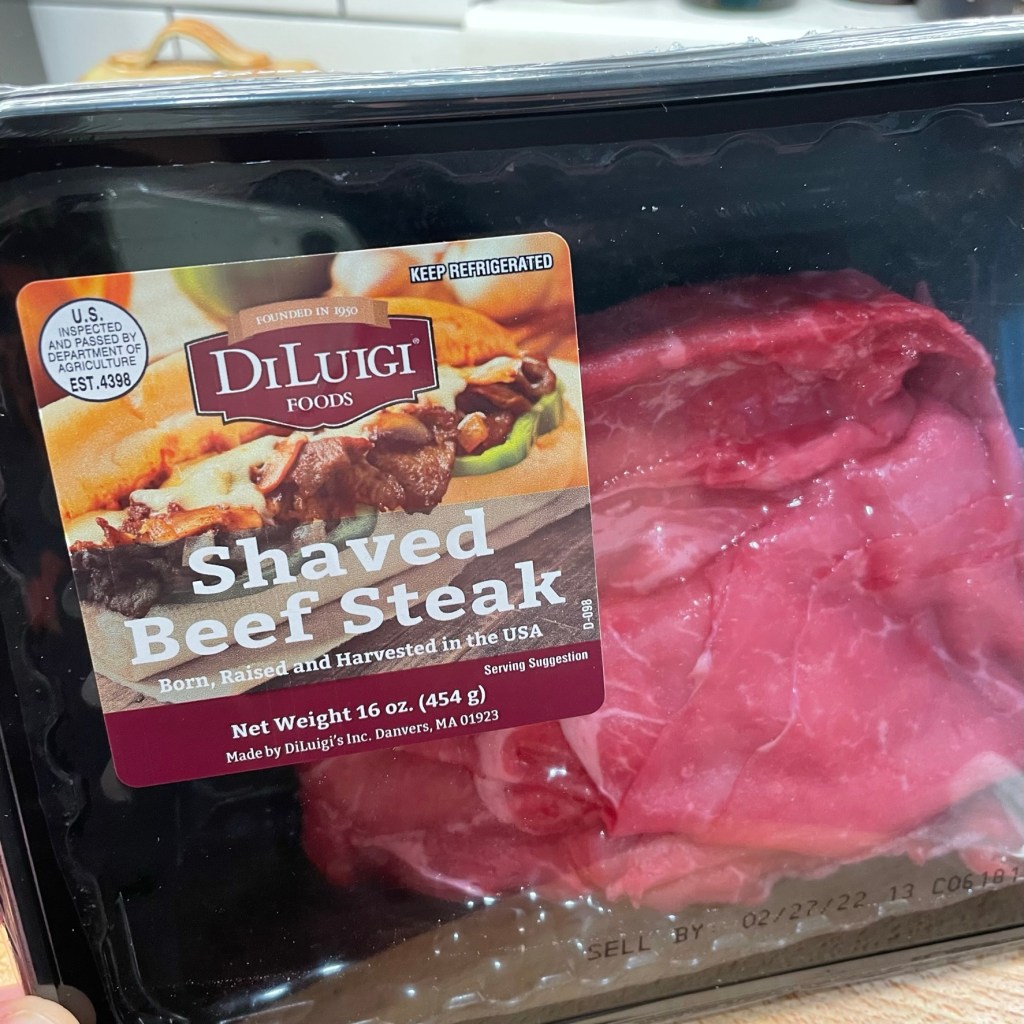
A thin crust is right for this pizza and lets the steak and Yukon gold potatoes take center stage. If you have leftover steak, slice it really thin for this pizza. Or follow my lead and use half a package of shaved steak—the kind you’d cook up for a Philly cheesesteak.  I used mozzarella on the base, but Monterey jack or any other mild, neutral cheese would be a good choice as well.


The result was just right, with enough meat to satisfy but not so much to overwhelm. The Yukon gold potatoes were soft and creamy, and the accent of bleu cheese reminded me of a real steakhouse dinner. Except, of course, for the belly bloat or the outrageous steakhouse price.


Ingredients

1 ball sourdough pizza dough

3 Tbsp. homemade steak house (recipe below, or use your favorite)

1 cup shredded mozzarella

1/2 lb. thinly shaved steak

1 large Yukon gold potato, boiled until fork-tender and sliced thin

1 medium sweet onion, roasted and drizzled with 1 Tbsp. balsamic vinegar

2 oz. bleu cheese crumbles


Steak Sauce

2 Tbsp. natural ketchup

1 Tbsp. Worcestershire sauce

1 Tbsp. dark balsamic vinegar

1 Tbsp. tomato paste

1 tsp. hot sauce (any kind you like)

1/2 tsp. prepared horseradish

1/2 tsp. Dijon mustard

1/4 tsp. garlic powder

1/4 tsp. onion powder

Salt and pepper to taste

Thin with a little water if needed


Instructions

Prepare the onion by slicing it into thin rounds. Arrange the slices on a parchment-lined baking sheet and drizzle them with olive oil. Roast at 350 for about 30 minutes, or until onions have softened and the rings slide apart evenly. Drizzle with balsamic and roast another 10 minutes, taking care not to burn the onions. Set them aside to cool.

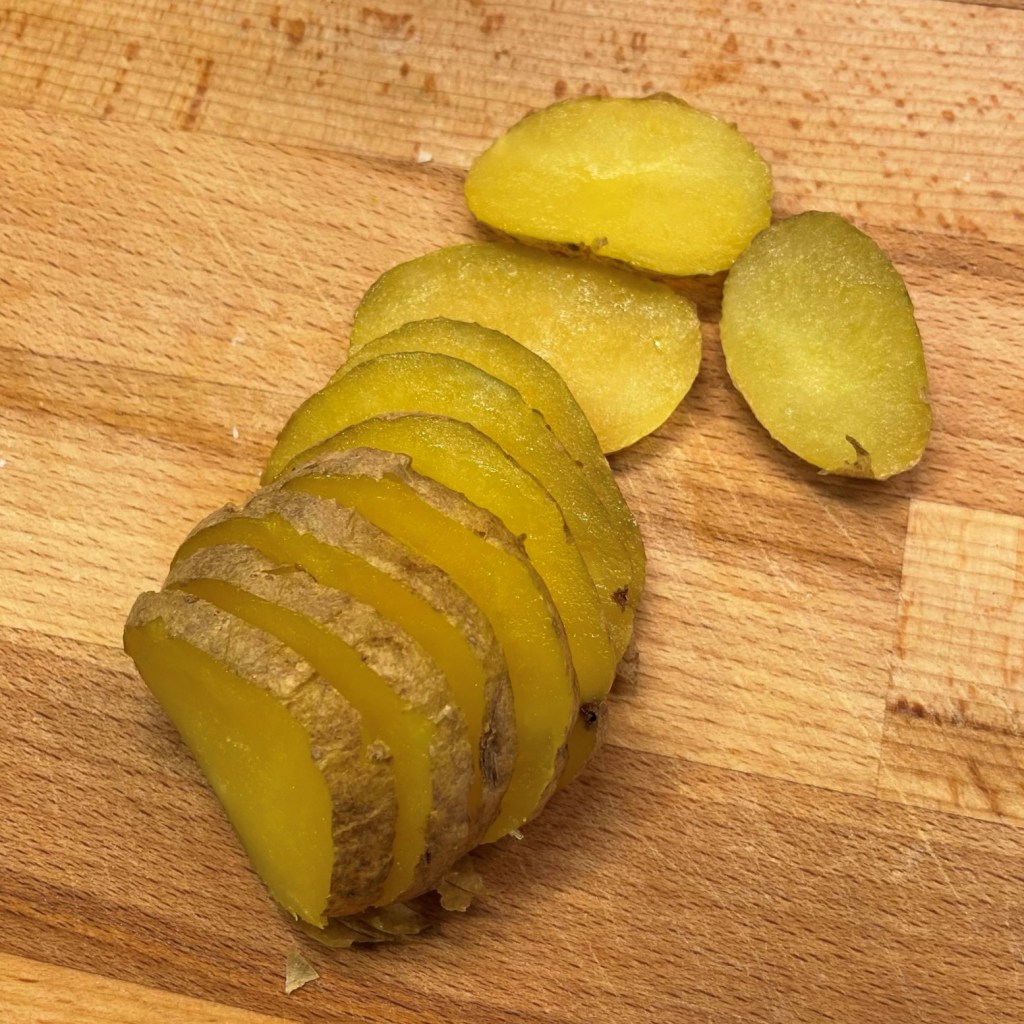
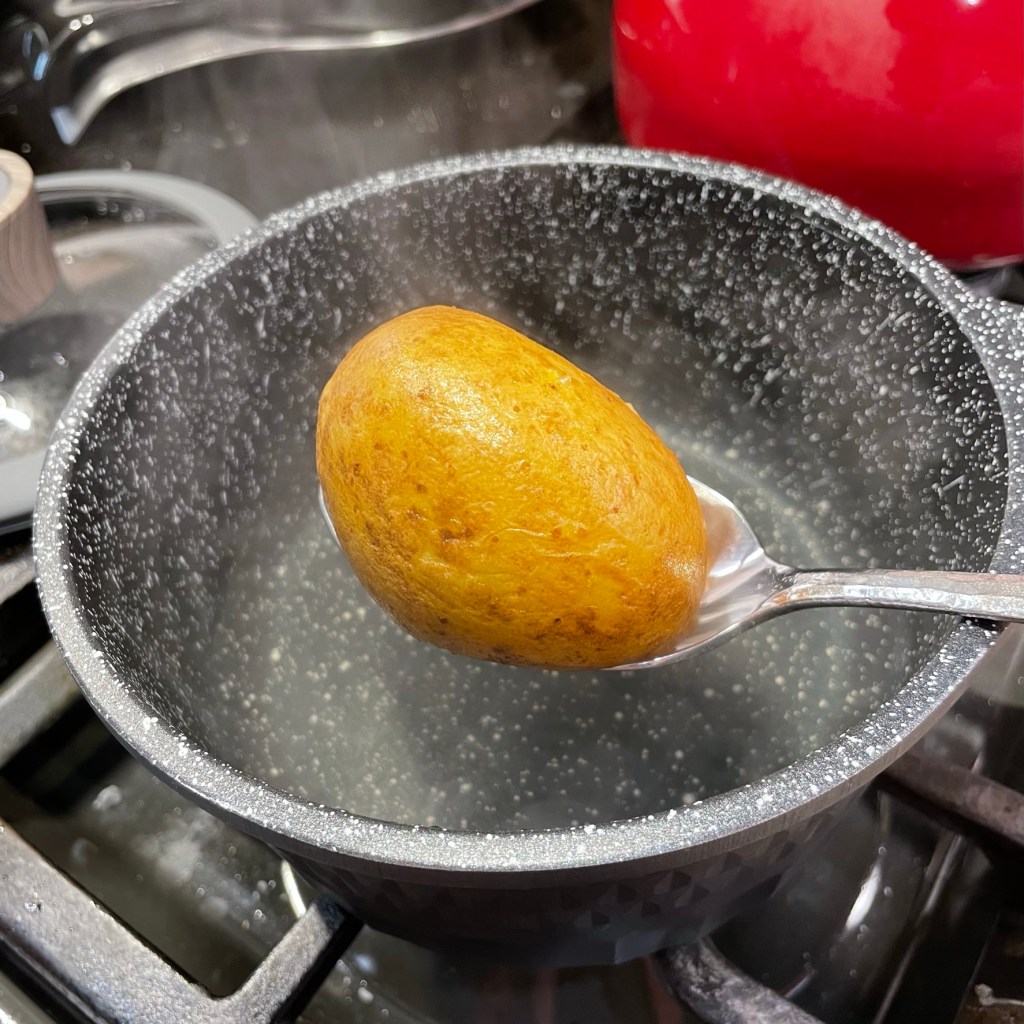
Meanwhile, boil the Yukon gold potato until it can be pierced with the tip of a knife, but not to the point of being too soft. Let the potato cool completely, then cut it into slices about 1/4” thin.

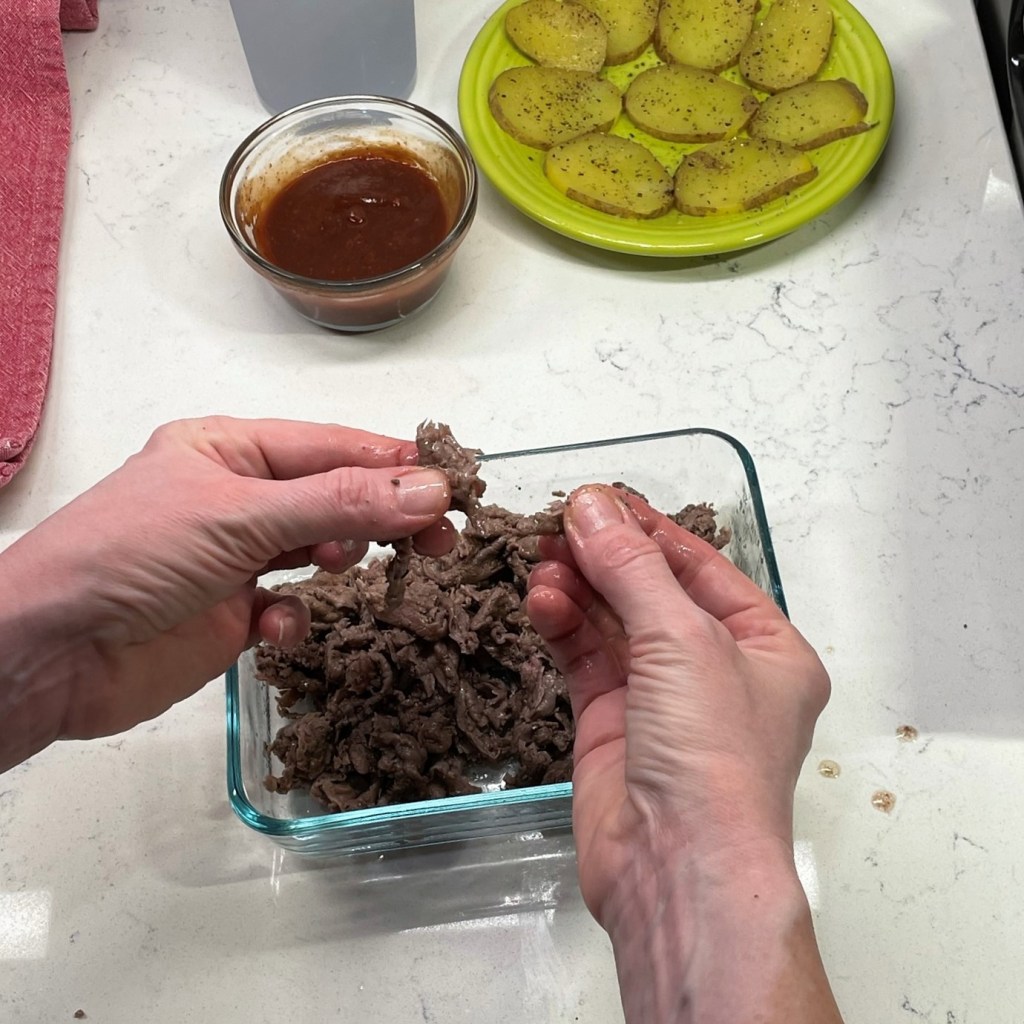
Sear shaved steak in a small amount of olive oil just until lightly browned. Shred steak into smaller, bite sized pieces and season with salt and pepper. Set aside until ready to make the pizza.

Shape pizza dough into a 14” round and transfer to a floured and cornmeal-dusted pizza peel. Season the dough with salt and pepper, then swirl on about 1/4 cup of the steak sauce. Scatter mozzarella all over the sauce. Arrange the shredded steak over the cheese, followed by the potato slices and the balsamic onions. Place dots of bleu cheese crumbles over the top of the pizza.

Slide the pizza into a very hot (550° F) oven, preferably onto a pizza steel or stone. Bake for 6 minutes, until cheese is bubbly and crust is golden brown.


Corned Beef Shepherd’s Pie

For the first year in a long time, I did not do my usual DIY Corned Beef for St. Patrick’s Day. The continued time warp caused by COVID, combined with yet another home renovation project that has just begun at our house, has left me a little flustered and out of my routine. So, there’s that, plus a discovery that I made in our freezer.

Last year, we did two huge briskets in my homemade corned beef brine—one was fated to be a classic corned beef with cabbage and carrots, and the other went the extra mile to become smoked pastrami—and I recently uncovered not one, but two packages of said meat that have been hiding in the depths of our freezer drawer. I couldn’t justify making more until we finished what we already had, but what does one do with a pound of vacuum-sealed, sliced corned beef, other than the obvious sandwiches?

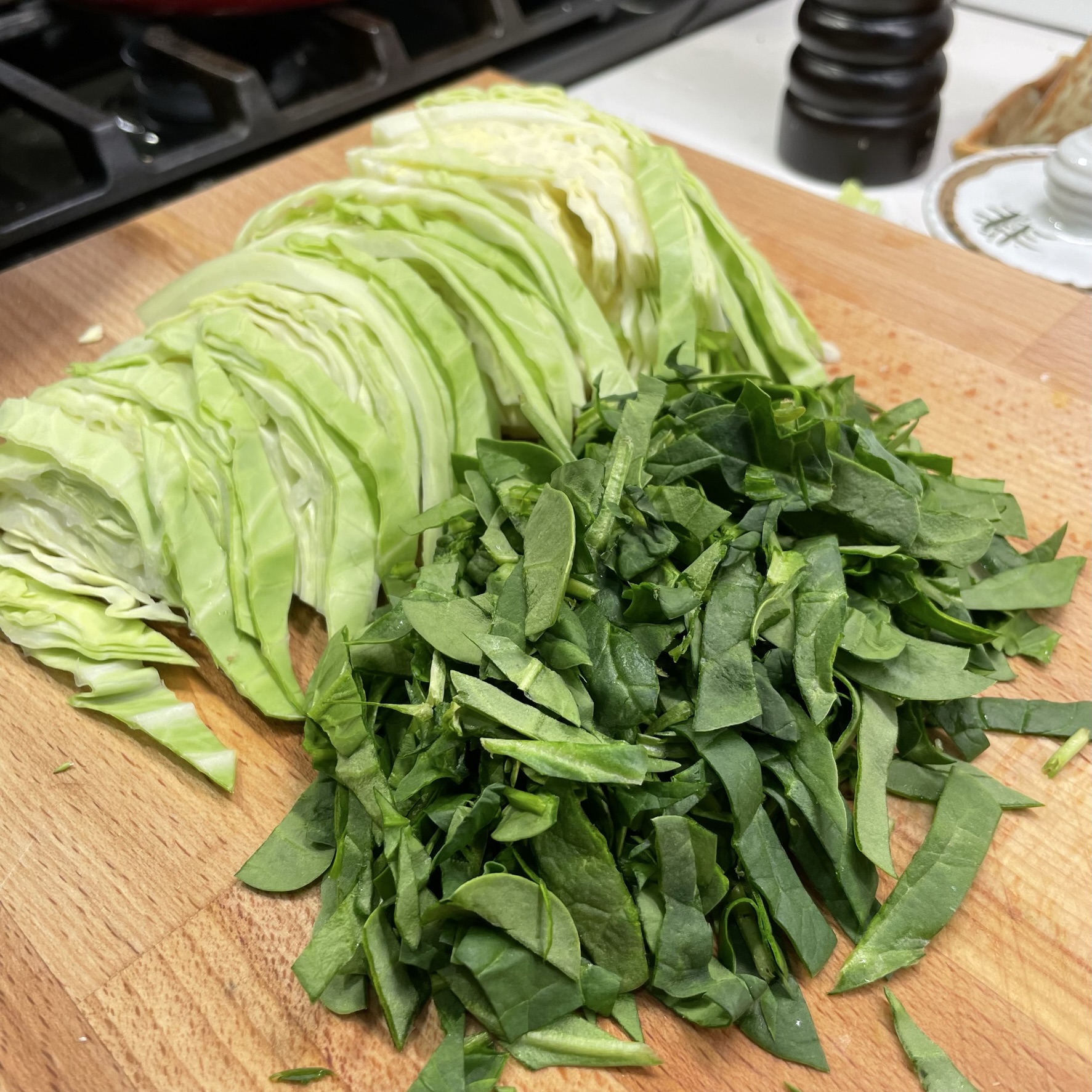
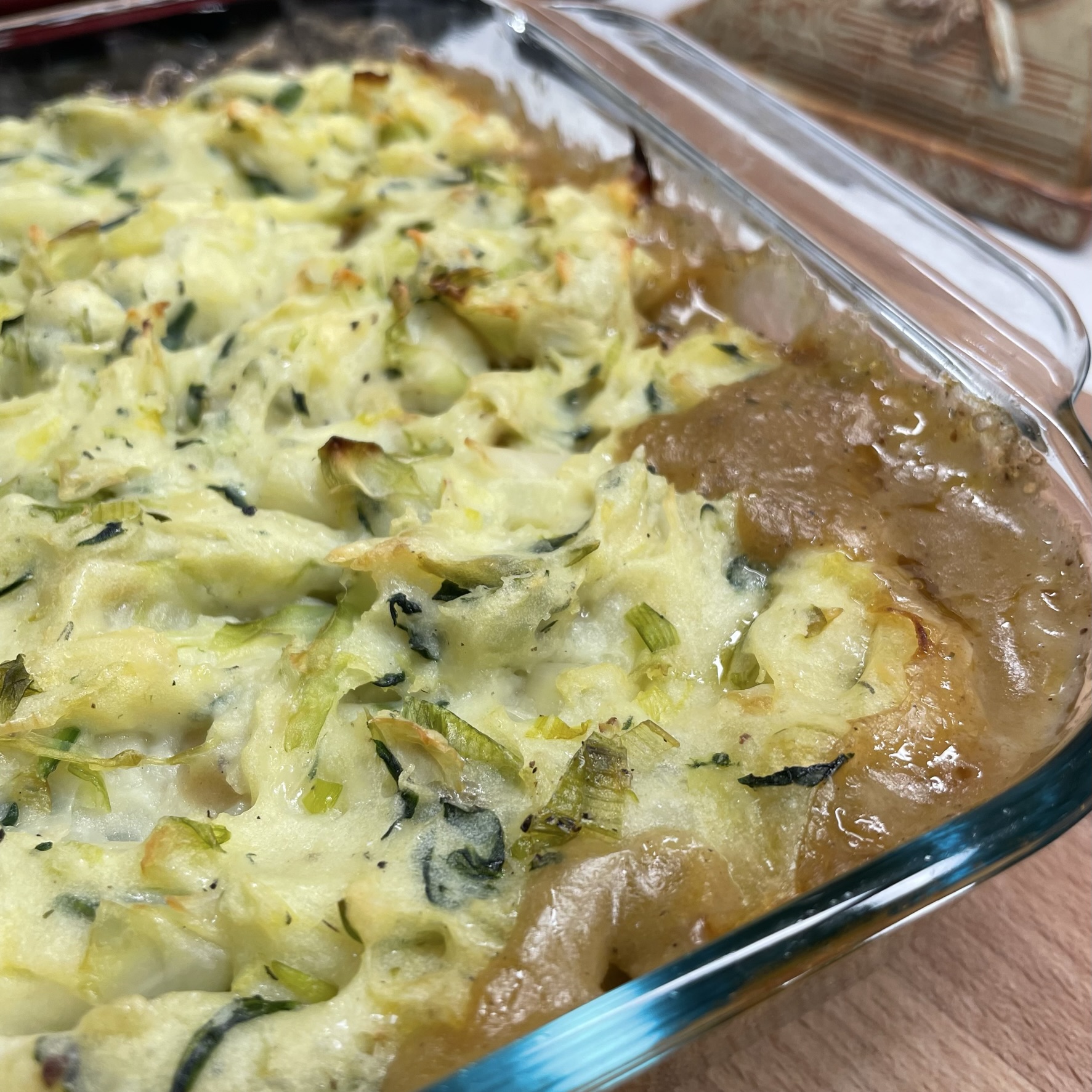
I love cooking up fun foods for special occasions, and shepherd’s pie is a classic for St. Patrick’s Day. A typical shepherd’s pie is made with ground meat (usually lamb or beef), peas, carrots and mashed potato topping. But I could not pass over the entire St. Pat’s celebration without the old standby of corned beef and cabbage. Last year, I shared my recipe for colcannon (which I also love), so I whipped up a new batch of that as my pie topper, and I picked up two fun (and Irish) ingredients to give the colcannon extra body and a boost of sharp flavor. Irish white cheddar was a no-brainer, and when I sought out a package of Irish butter (which I only splurge on this time of year), this embellished version jumped right into my basket!

This is how they make Irish butter even better!

Well, that was lucky! Butter that is already flavored with fresh herbs would make this dish even quicker to prepare.

I channeled my grandmother a little bit in making this dish. She was the absolute queen of leftovers, a real whiz at transforming a random thing from the freezer into a full-blown meal that had leftovers of its own. The shepherd’s pie was delicious, perfectly festive for the occasion, and finally helped me use up the frozen corned beef that I forgot I had.

If you’re staring down your own corned beef leftovers, give this dish a go. If you happen to have leftover cabbage and carrots, or leftover mashed potatoes, too—well, you’re way ahead of the game.

A shepherd’s pie is a fun way to revisit the classic flavors of corned beef and cabbage, and this reheats beautifully, even in the microwave.
Ingredients

There are three specific components to this easy dish, and I’ll break down the ingredients list and instructions accordingly. Follow along with the slides and scroll to the end of the post for a downloadable version you can print or save for your recipe files.

Corned Beef & Cabbage Filling

2 Tbsp. garlic and herb Irish butter

1/2 small head green cabbage, chopped

1 cup baby carrots, cut into bite-size chunks

1/2 large onion, chopped

1 lb. leftover corned beef, sliced or cubed

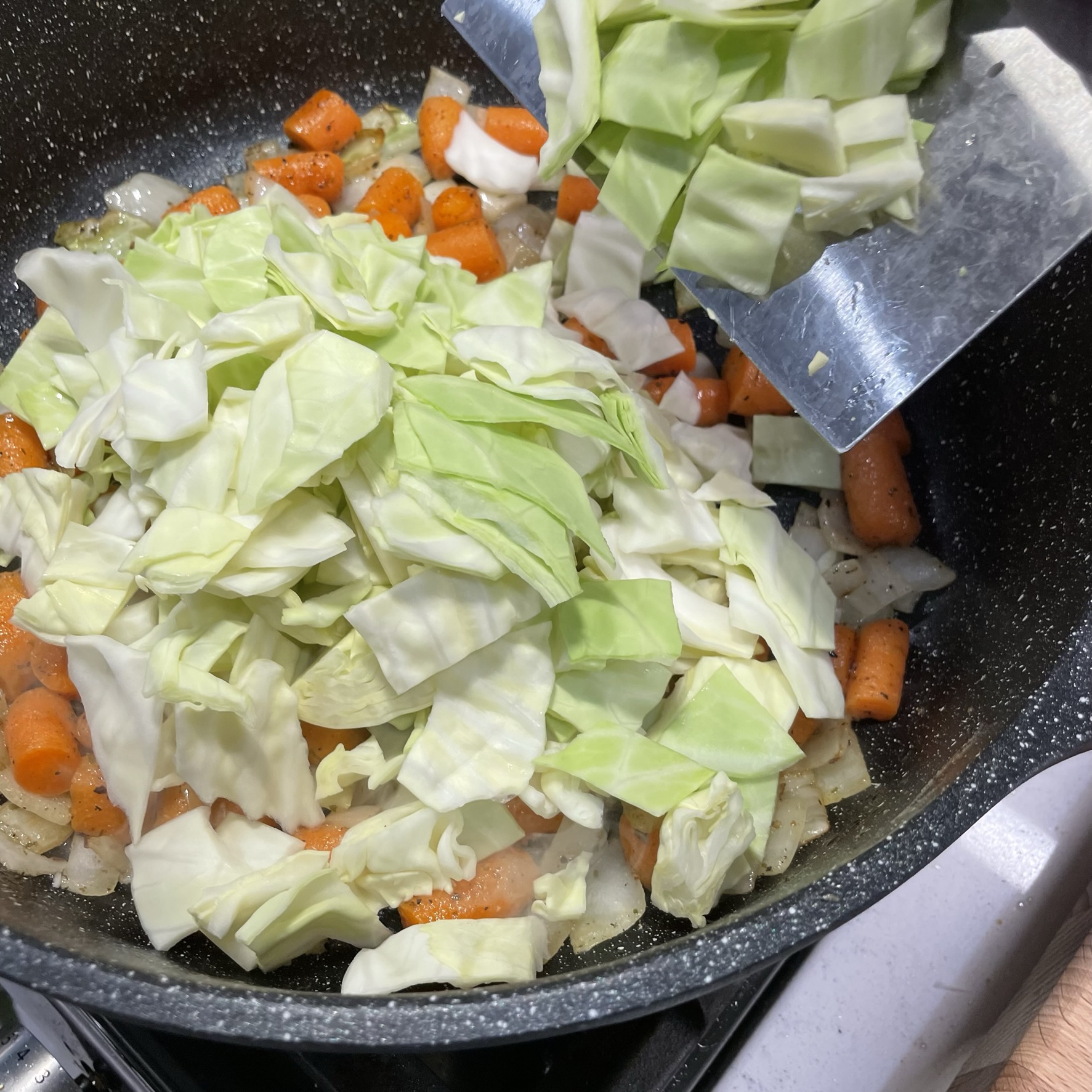
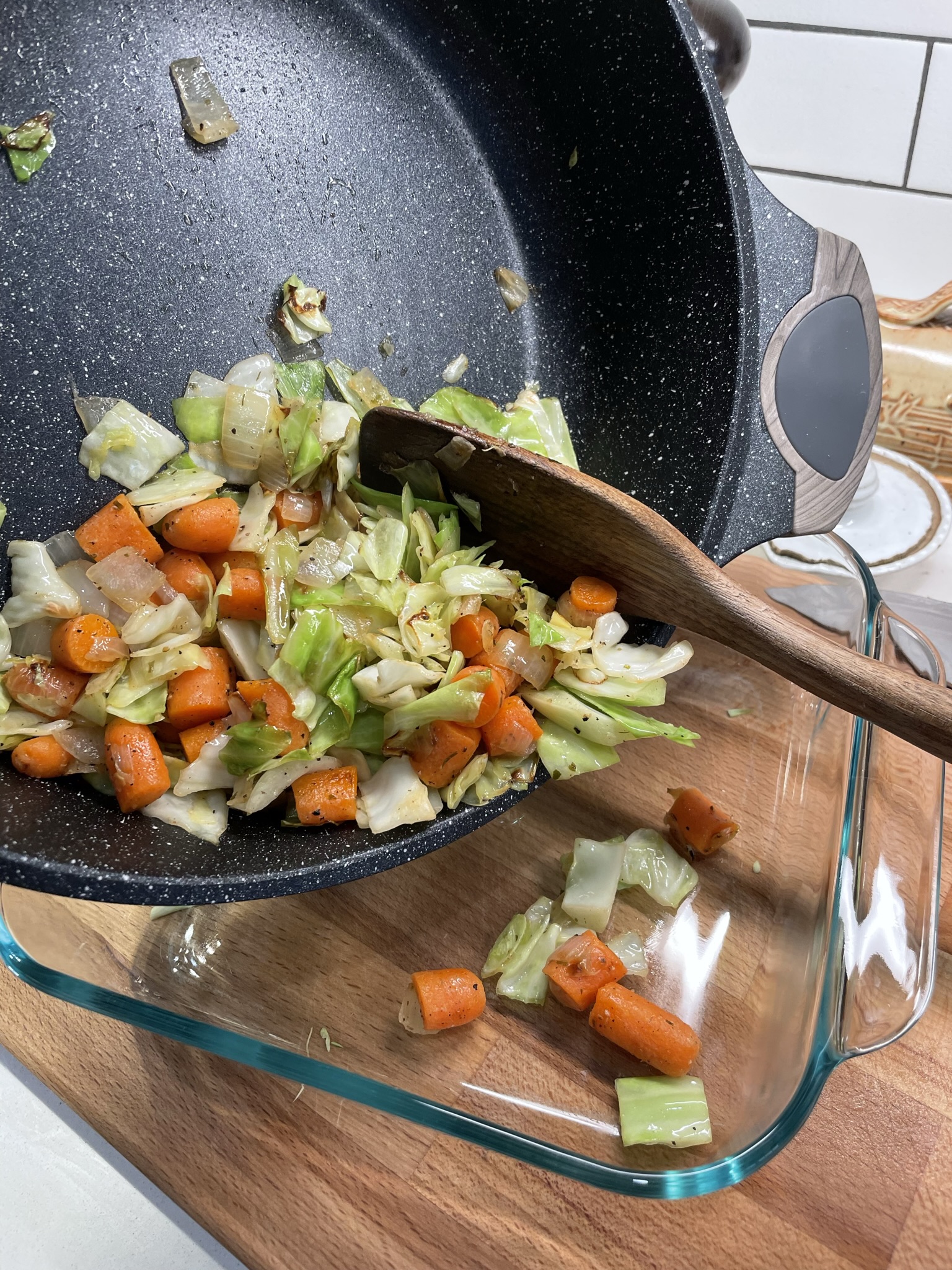
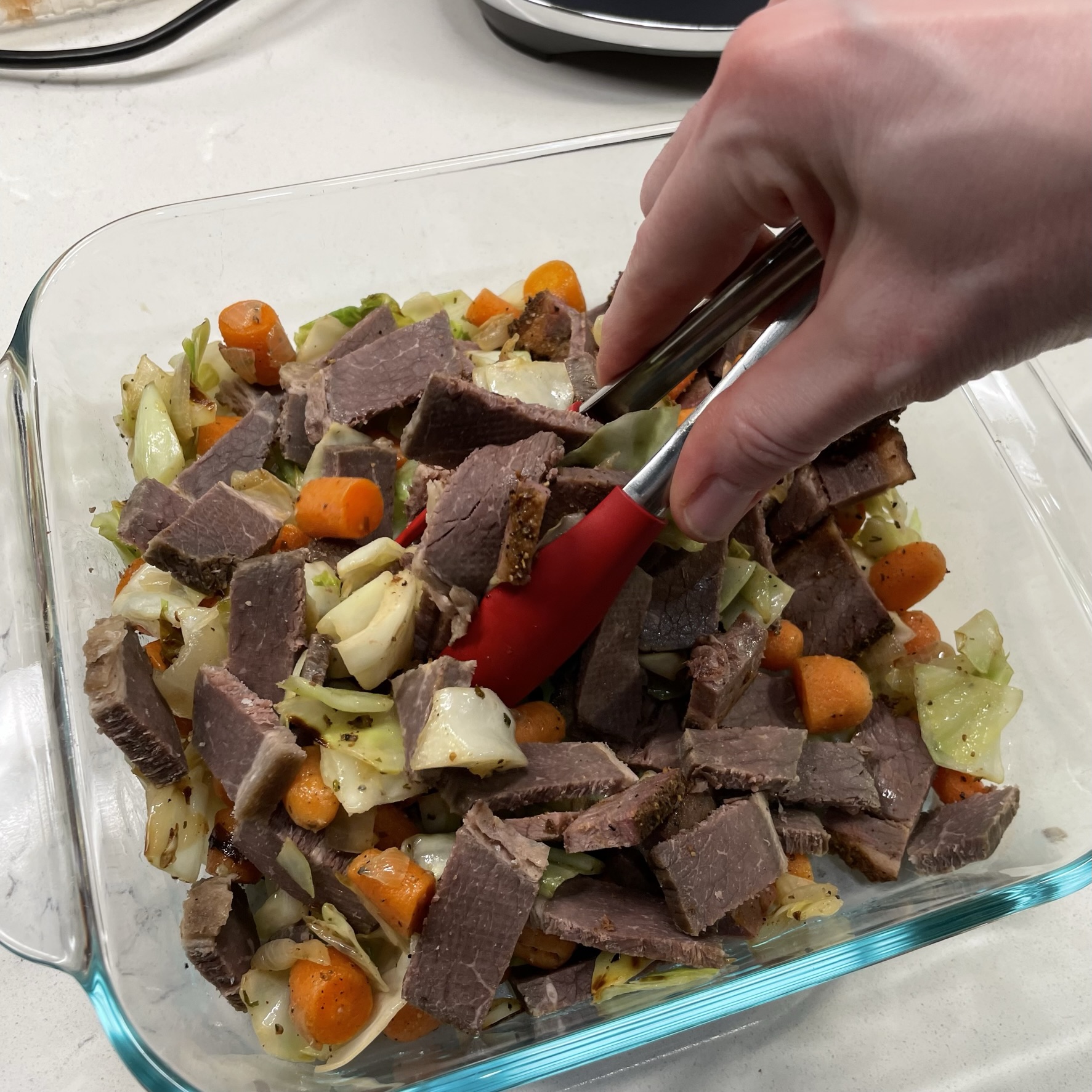
Melt the butter in a large sauce pot or skillet. Sauté the carrots, onion and cabbage until the onions are translucent and the cabbage is soft. Season with salt and pepper and transfer to a glass 8×8 oven-safe casserole dish. Set aside, adding the corned beef later when you are ready to assemble the dish.


Colcannon with Irish Cheddar

1 lb. peeled potatoes, cut and cooked until tender (I used 50/50 russet and Yukon gold)

2 Tbsp. garlic and herb Irish butter

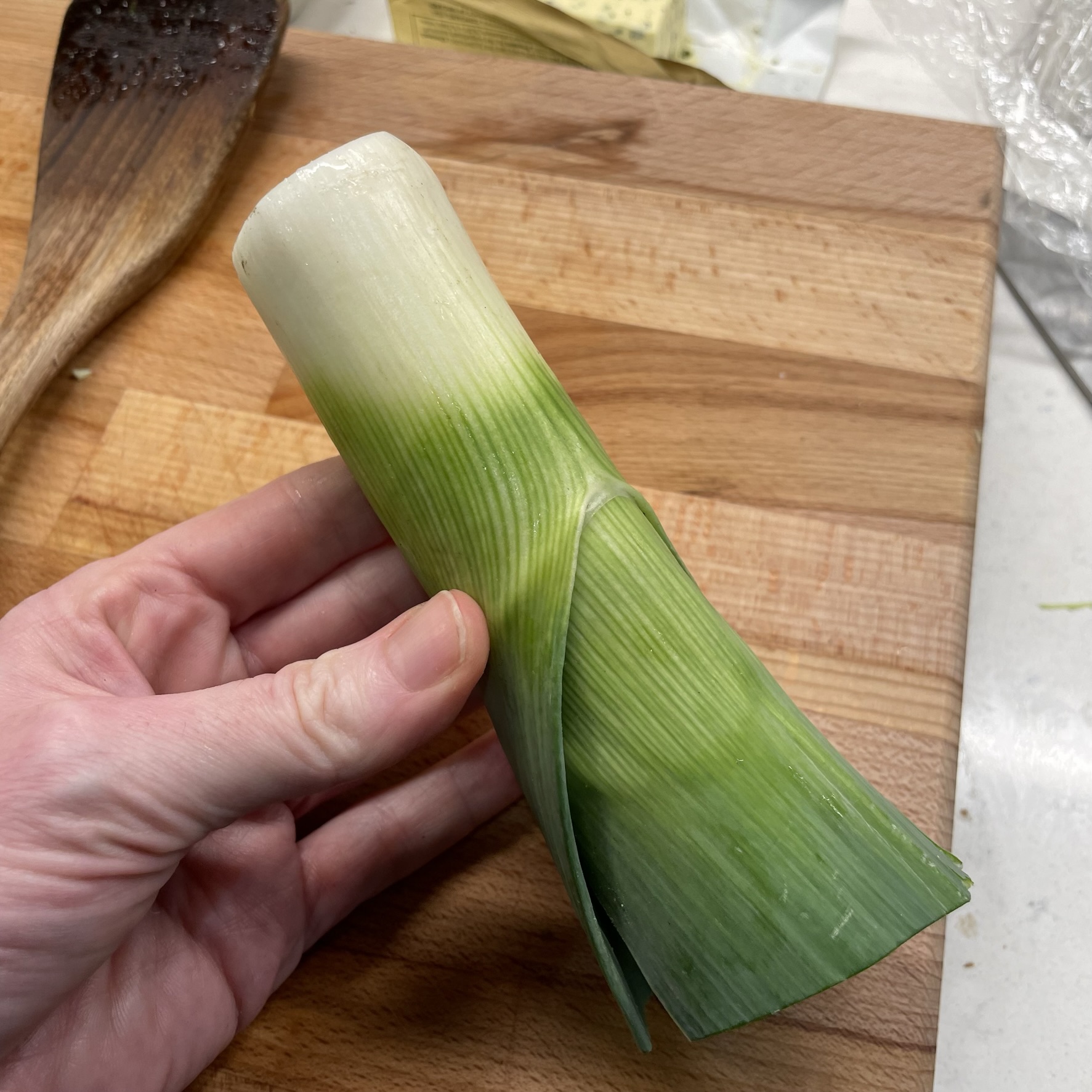
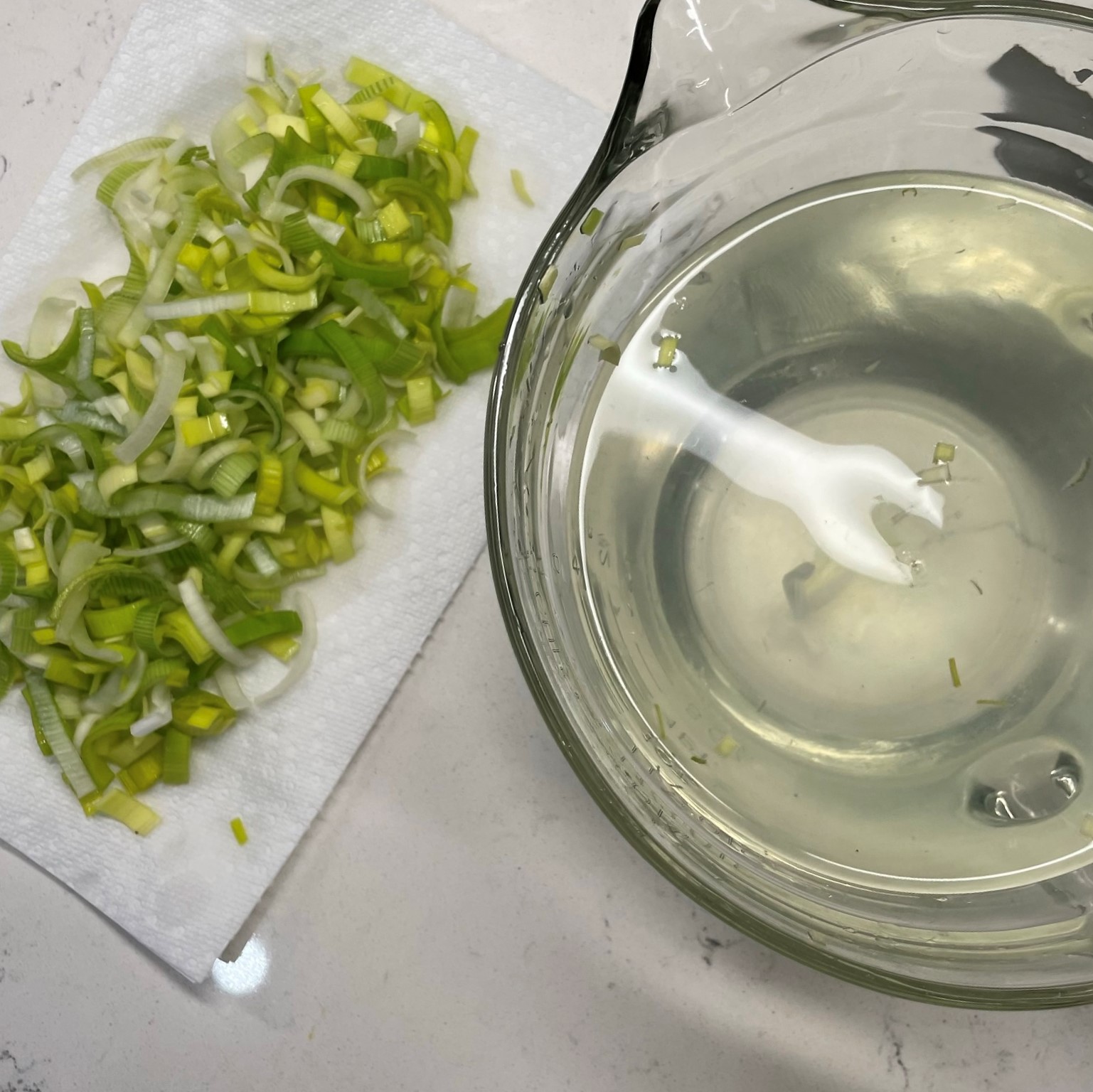
1 leek, cleaned and sliced into half-moon shapes

1/2 small head green cabbage, sliced thin

A fat handful of baby spinach leaves, rough chopped

1 cup shredded Irish white cheddar

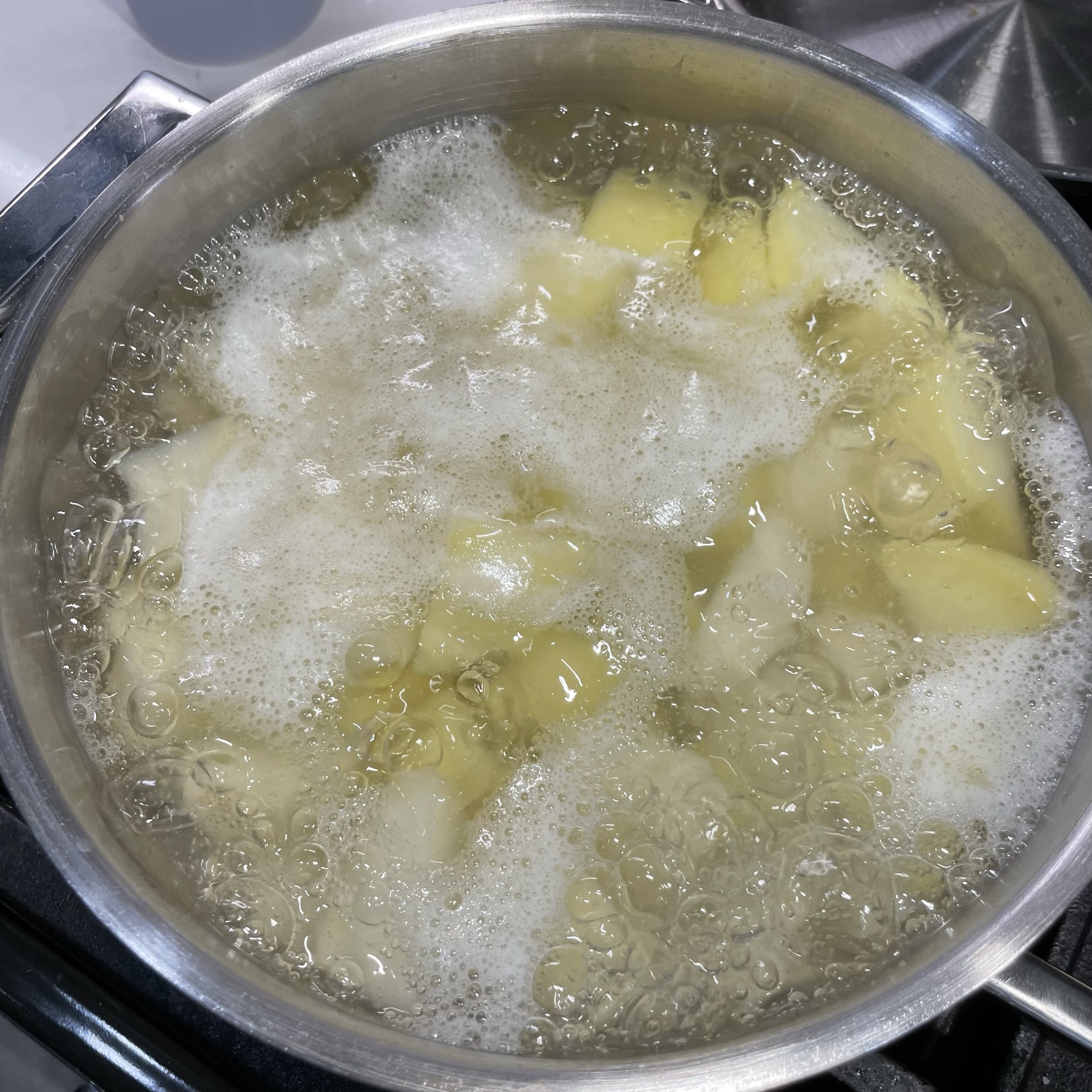
Get the potatoes cooking (don’t forget to season the water with a generous pinch of salt!) and drain them when they reach fork-tender stage.

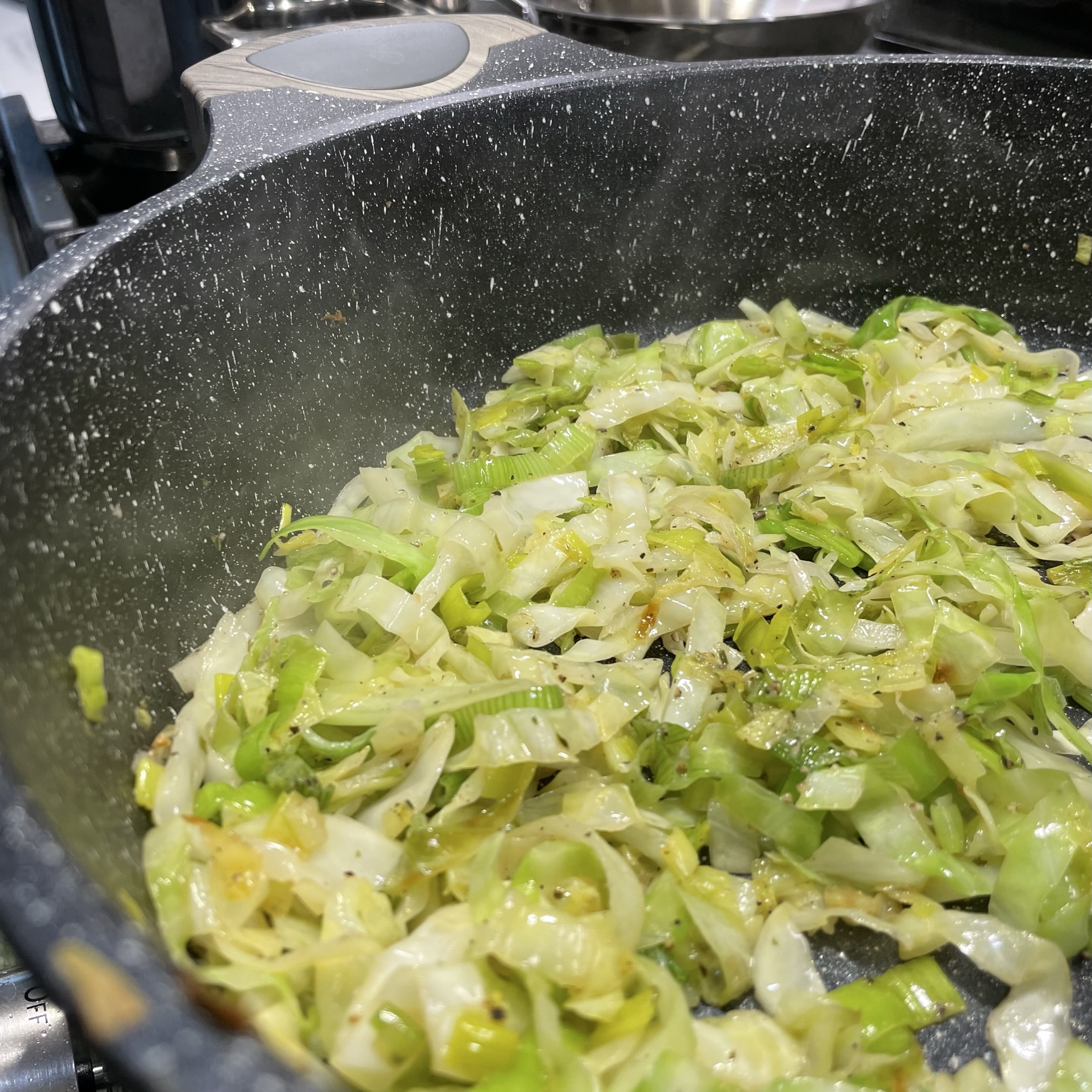
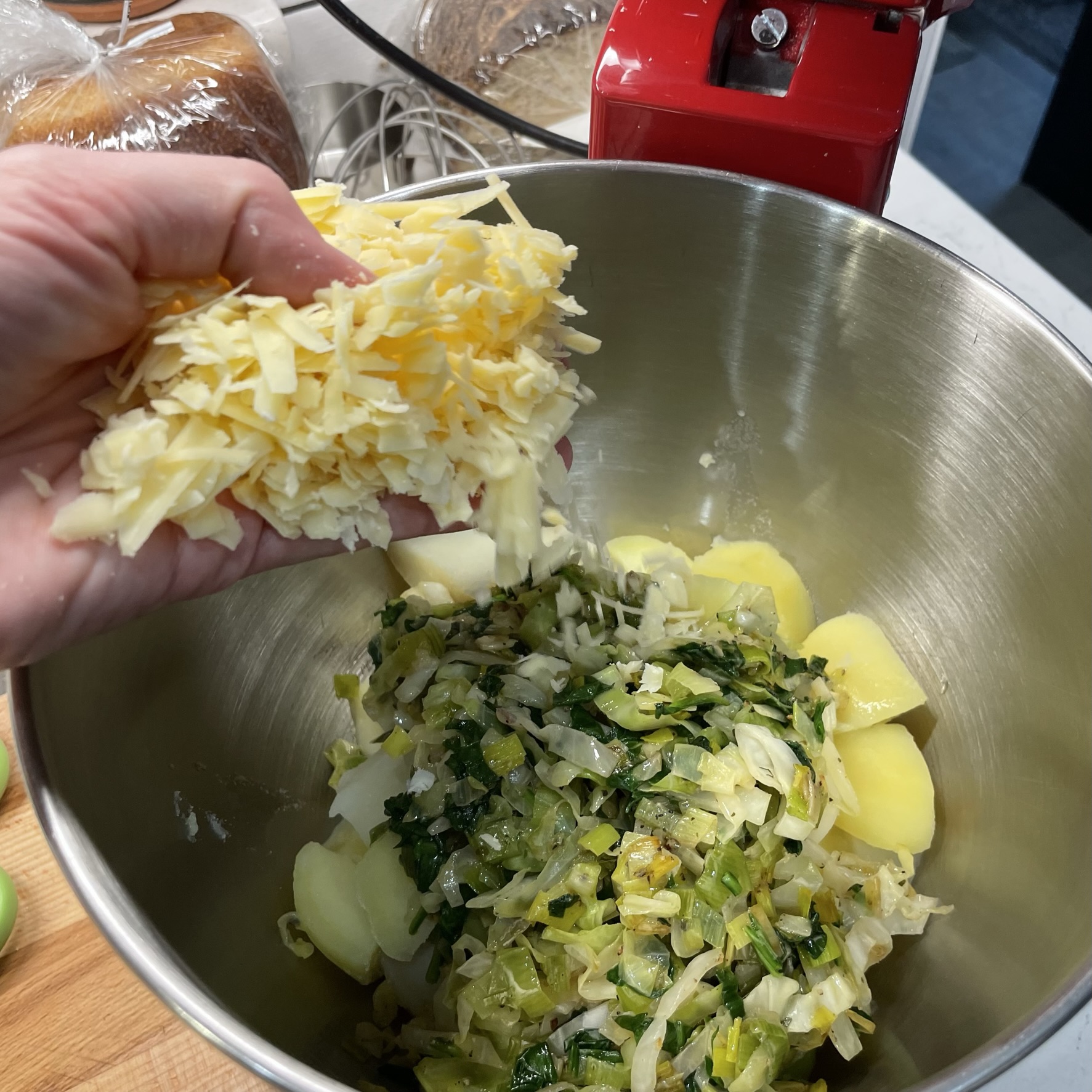
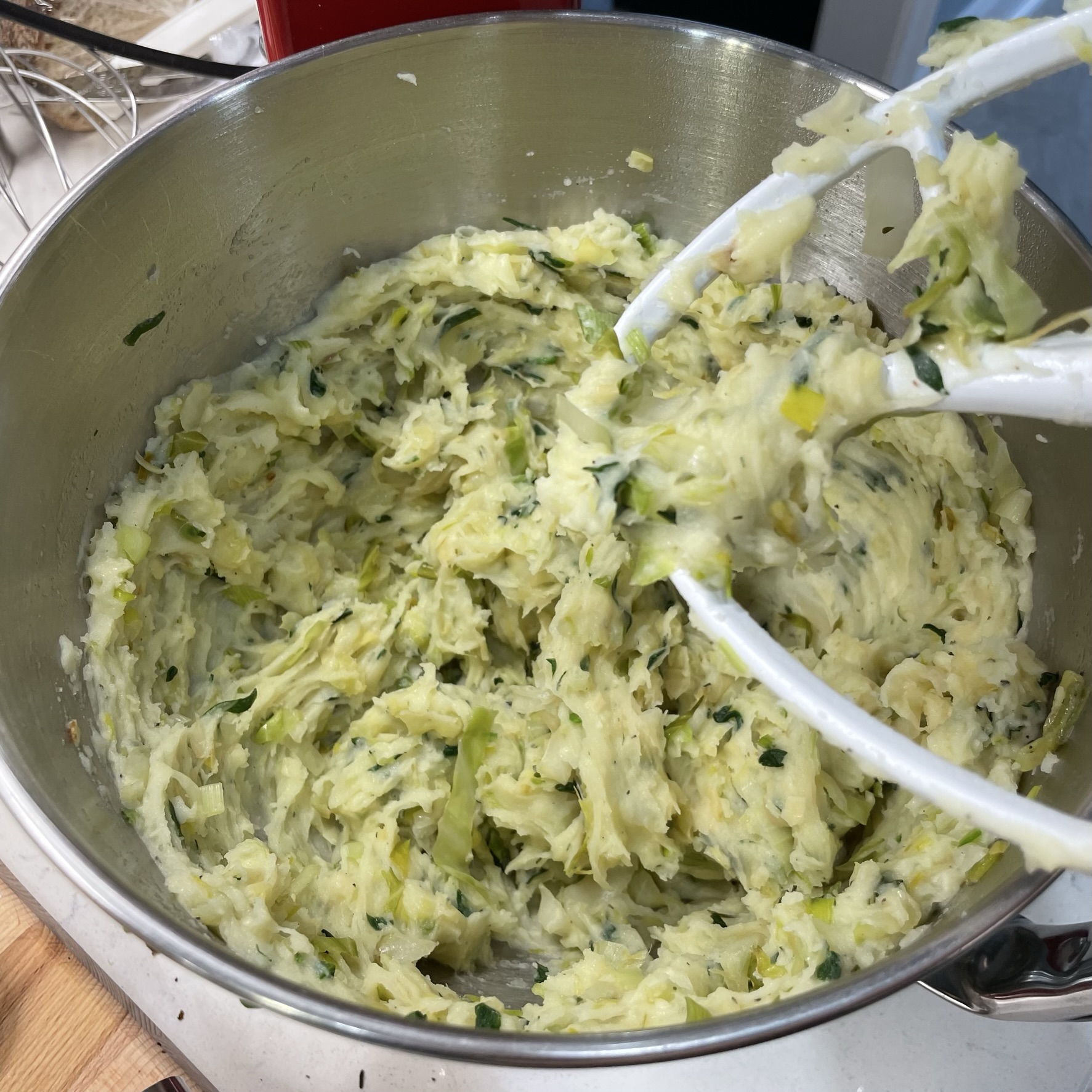
Meanwhile, melt butter in the same sauce pot or skillet used for the corned beef and cabbage filling. Add the leeks and cabbage and cook until tender (season them). Turn off the heat and add the spinach to the pan. Toss it around to wilt the spinach. When the mixture is somewhat cool, add it to the cooked potatoes and mash them together. Stir in the white cheddar and set aside.


Gravy

2 Tbsp. garlic and herb Irish butter

2 Tbsp. all-purpose flour

2 cups low-sodium vegetable broth (or beef broth)

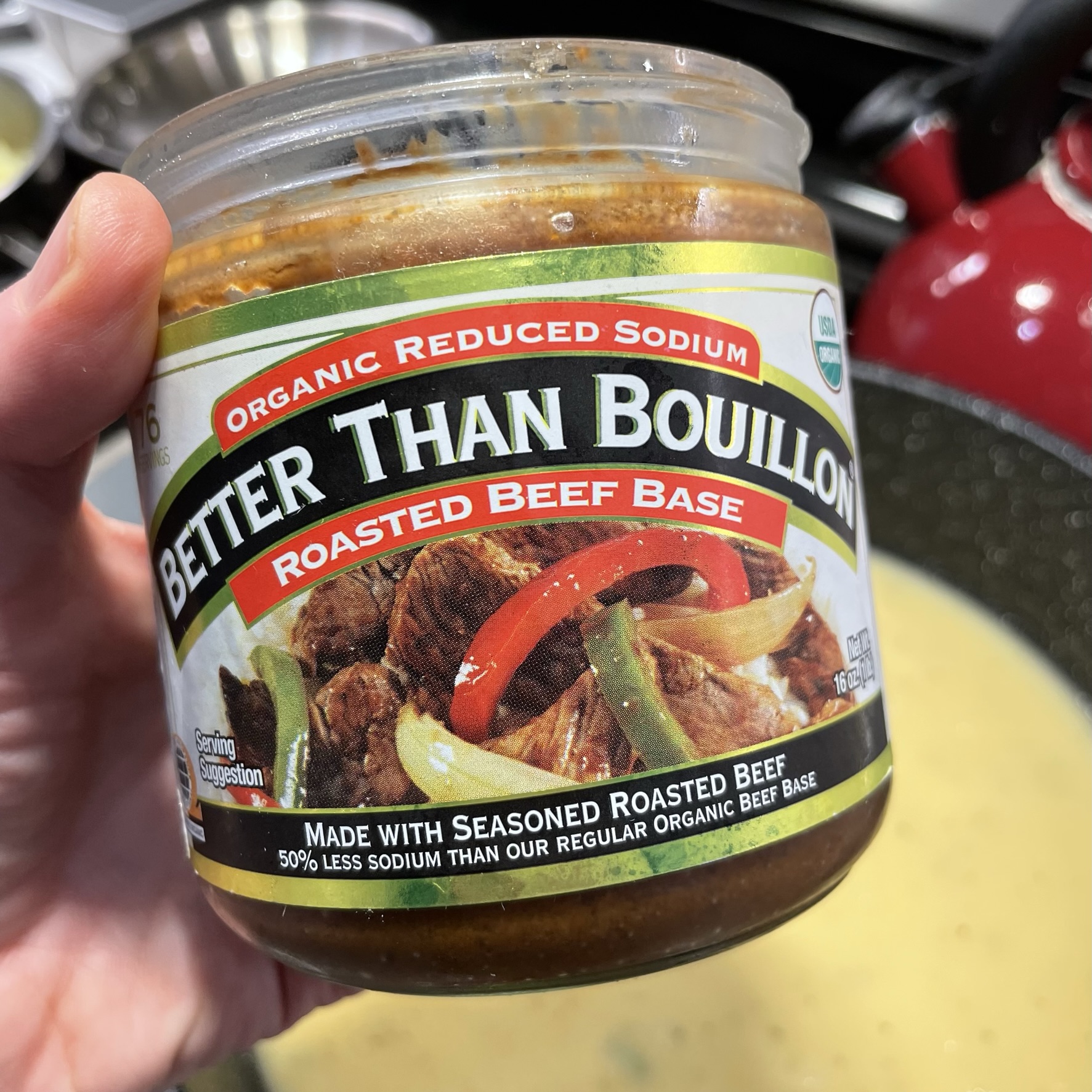
2 tsp. beef base (optional, to boost beef flavor if using veg broth)

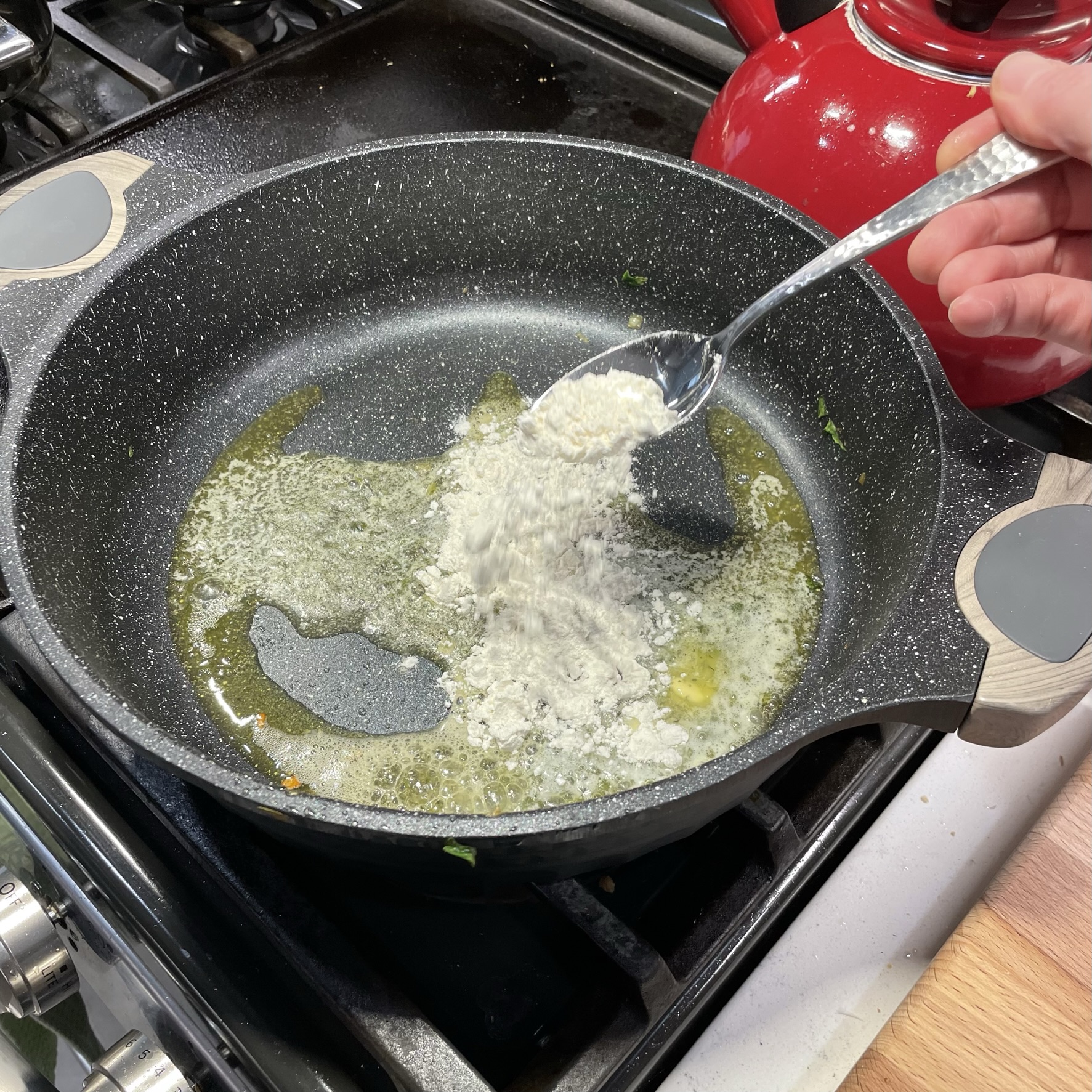
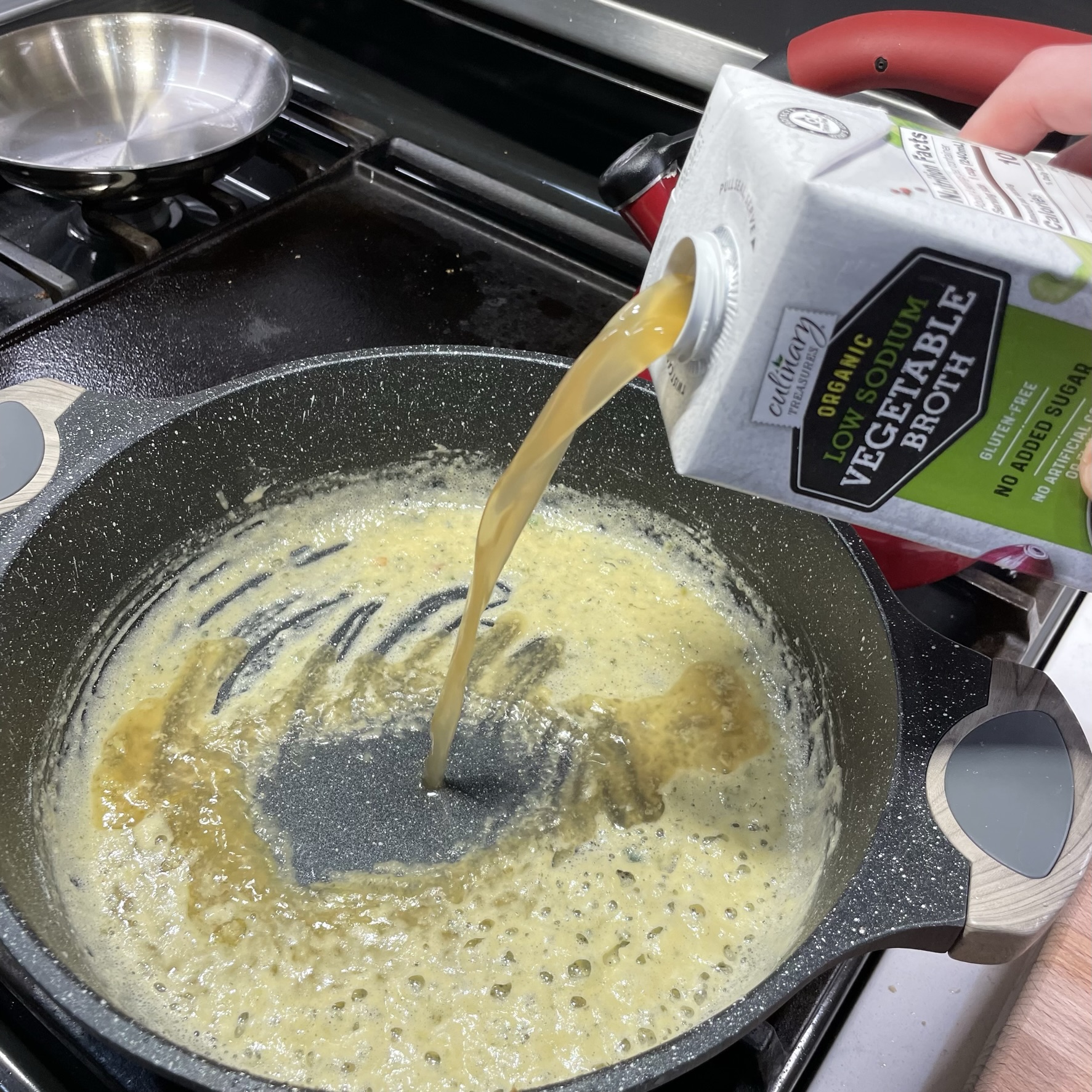
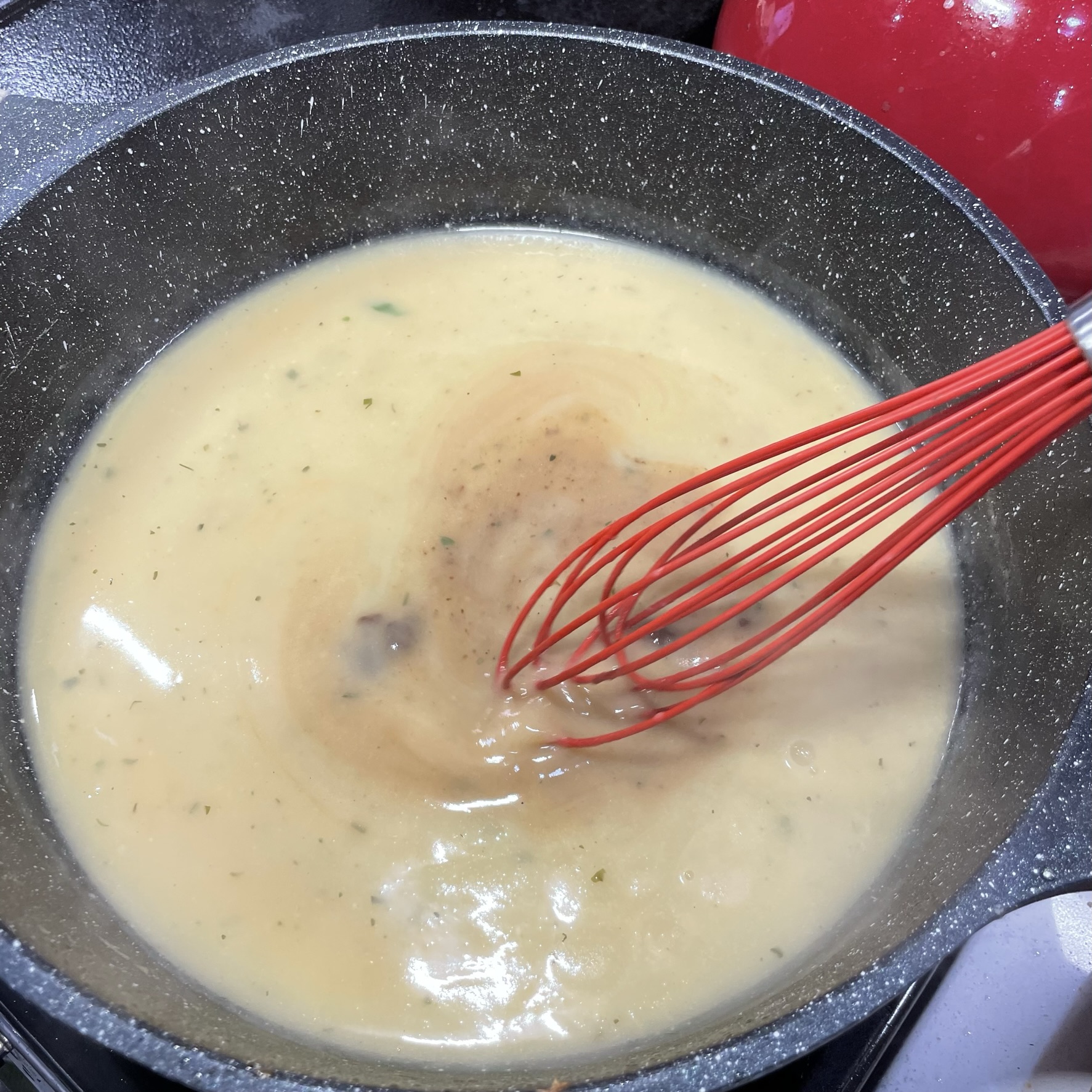
Melt the butter in the same skillet and add flour, whisking until the mixture is foamy with a slightly nutty aroma. Whisk in broth, cooking and stirring until the mixture is thickened. Add beef base, if desired, to deepen the flavor. Or, if you happen to have a Guinness in the fridge… I’m just sayin’.


Put it all together – Preheat oven to 350° F.

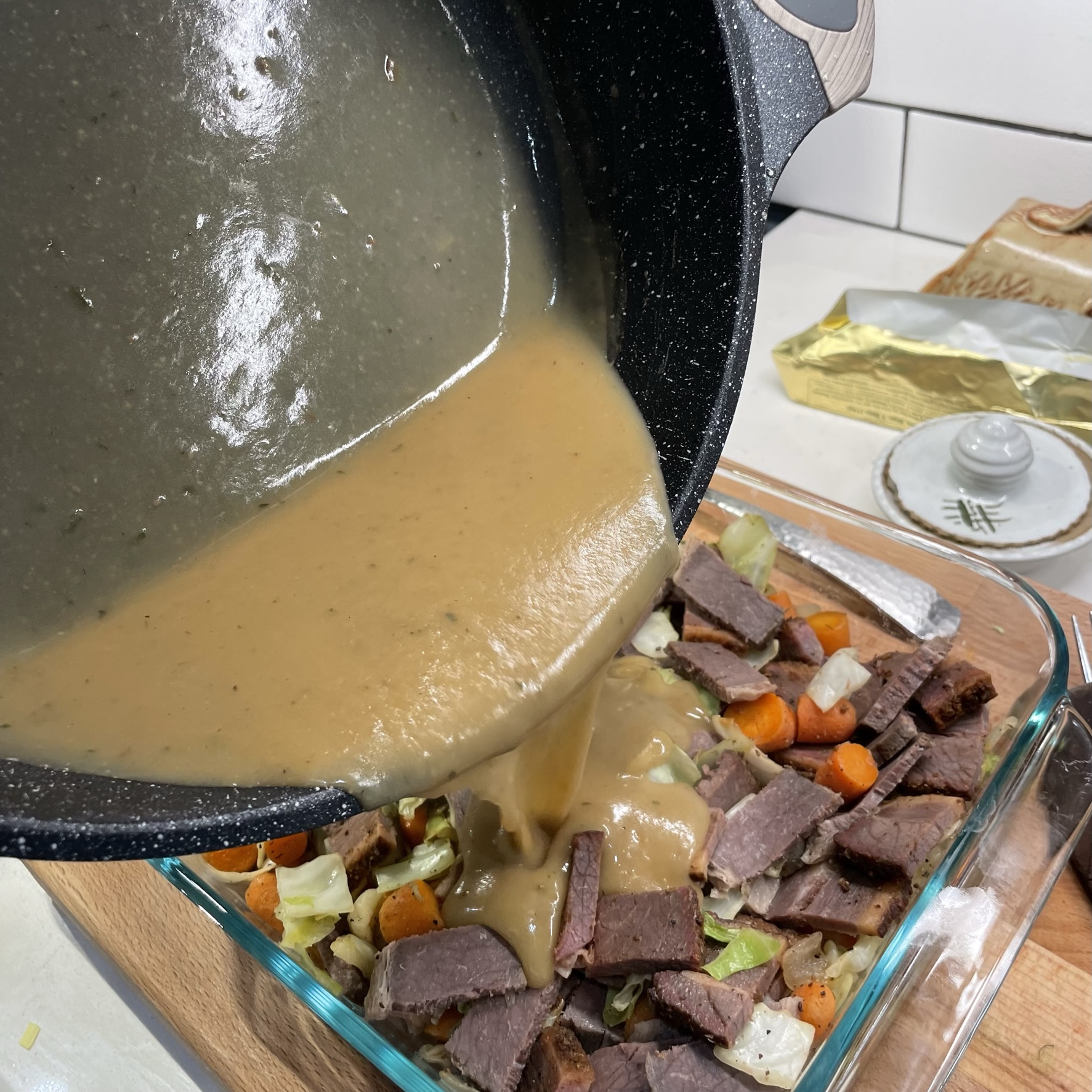
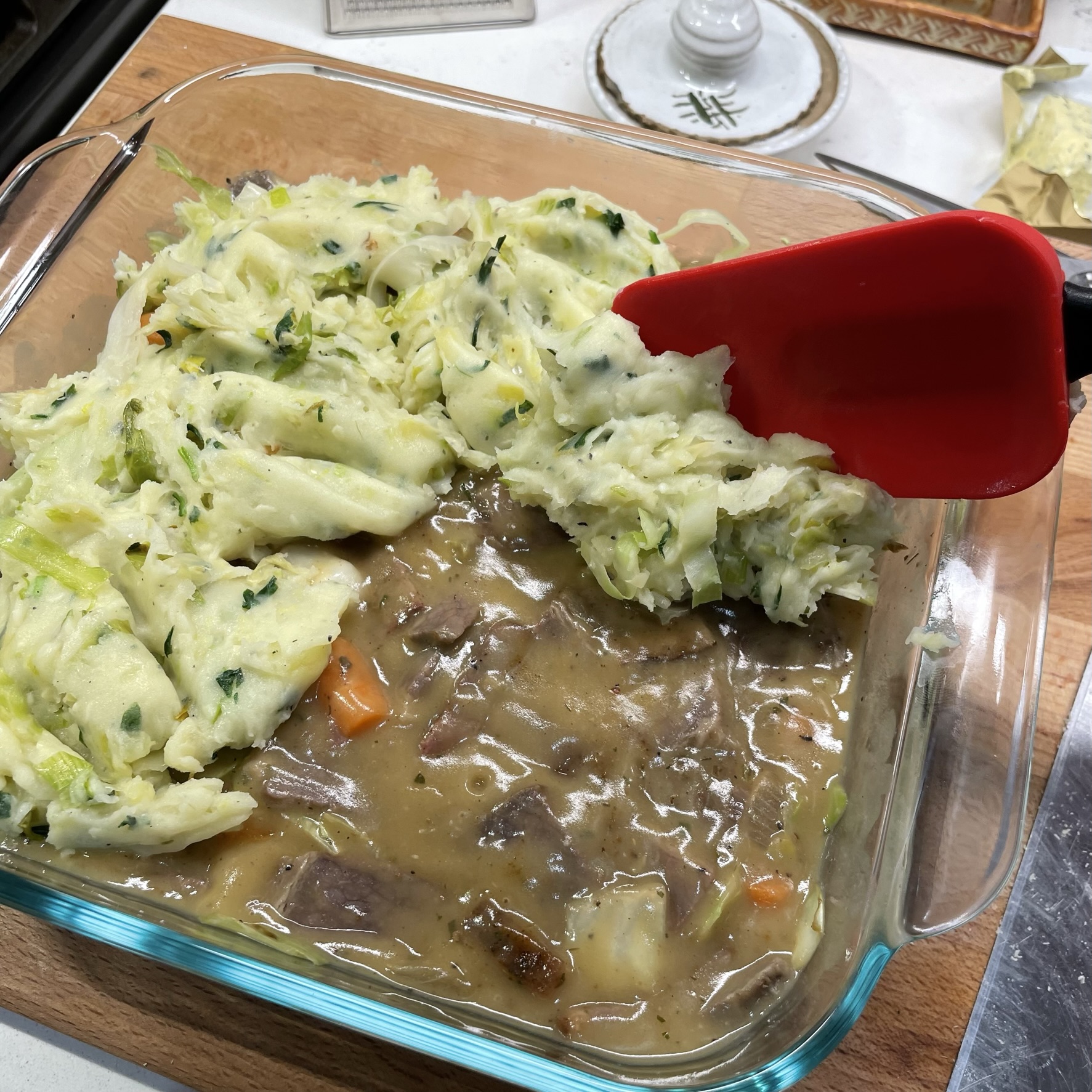
Add the corned beef chunks to the cabbage and carrot mixture and toss to mix it in the casserole dish. Pour the gravy evenly over the filling. Top with dollops of colcannon (don’t smooth it) and bake for 45 minutes, until gravy is bubbling from underneath and colcannon has turned lightly crispy on its peaks.


White Borscht

Like many of you, I have been filled with agony over Russia’s violent aggression against Ukraine, disgusted by the flippant and cavalier attitudes presented by deniers and Putin sympathizers, and worried that there is little I can do to make a tangible difference in the lives of the Ukrainian people. And yet I feel a kinship with them and want to do something, anything, to show my support.

One of the primary reasons I started Comfort du Jour was to build community with others who, like me, feel deeply connected to the world through food. It is the most universal need of humanity, yet very personal because of the customs and traditions woven into our individual and collective heritage.

Last week, a message from Sam Sifton, the founding editor of New York Times Cooking, arrived in my email inbox and it confirmed that I am not alone in this desire to use food to demonstrate solidarity. Sifton described being inundated with reader requests for recipes for borscht, a traditional sour soup that is common across all of Eastern Europe, most notably with Ukraine. I could not resist digging into the variety of recipes he offered in response to his readers, and this one in particular caught my eye.

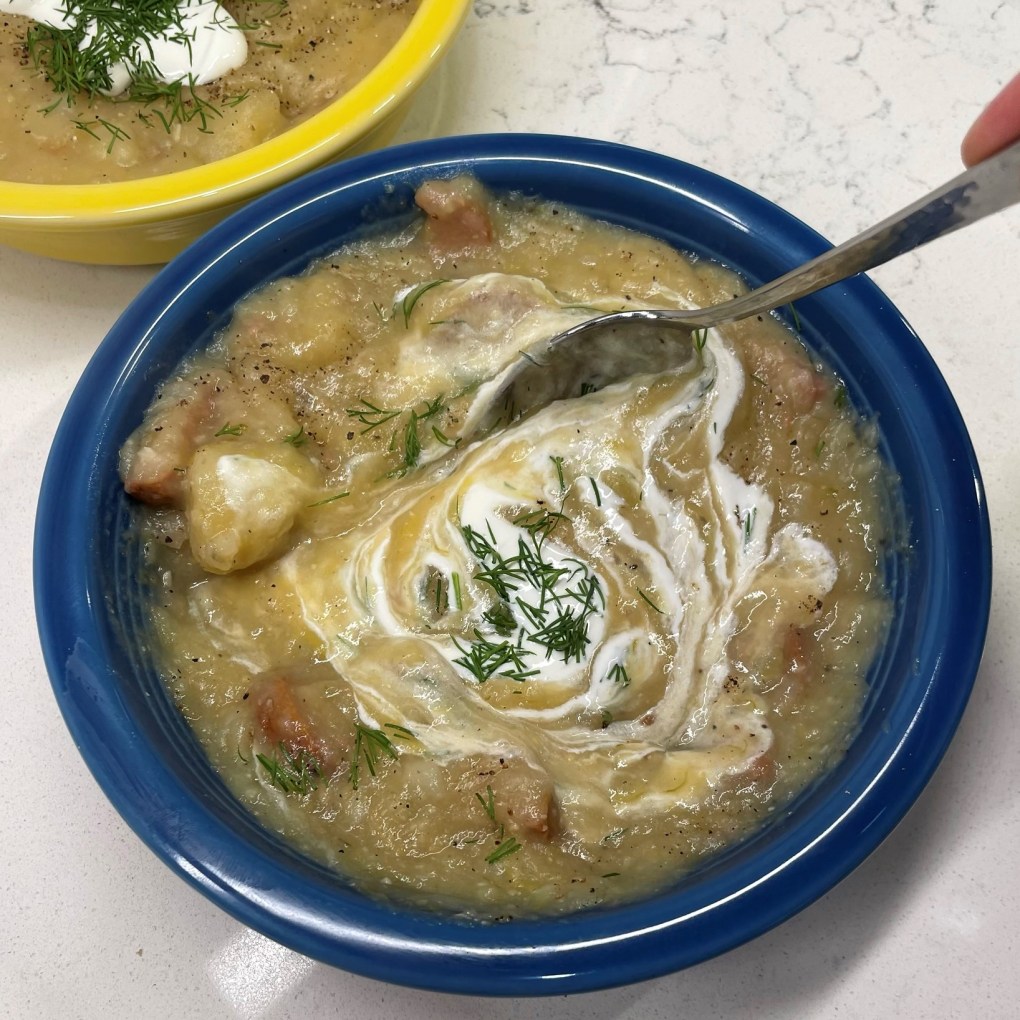
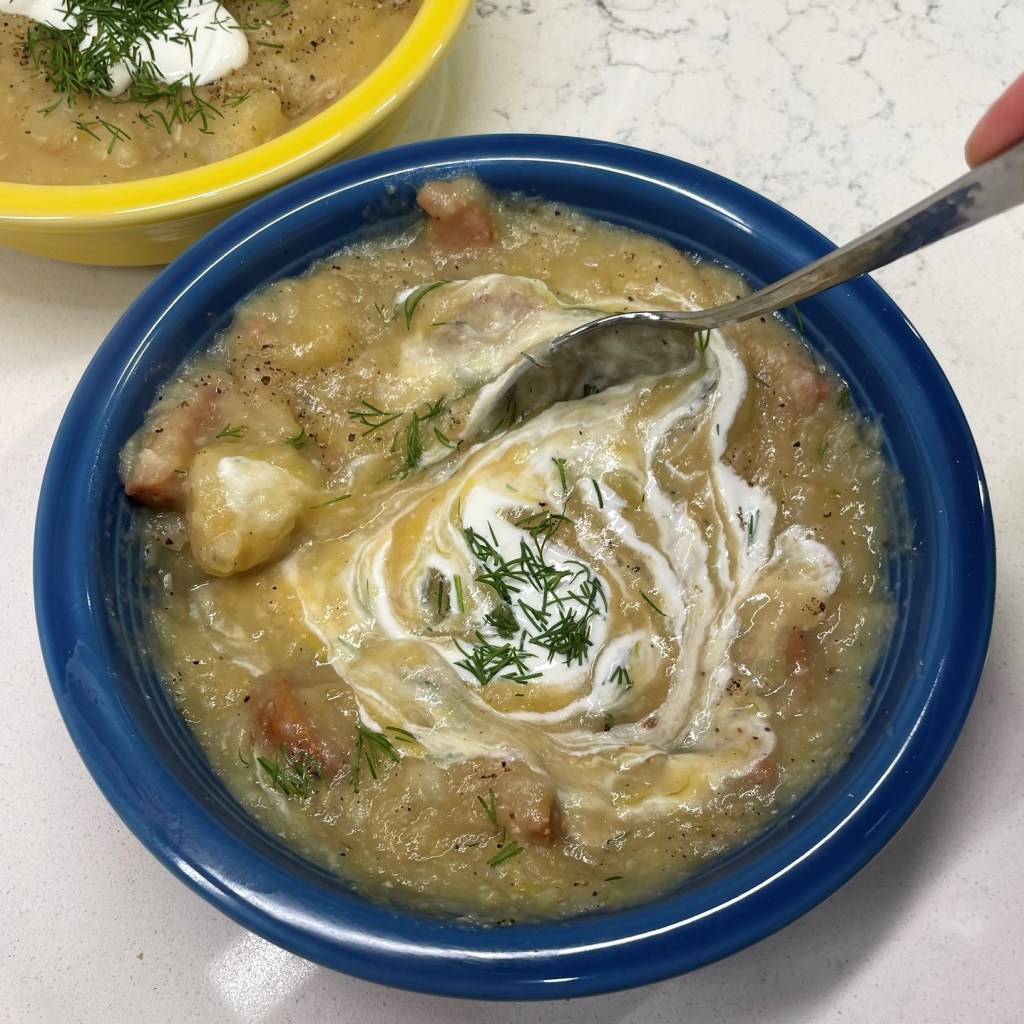
Most borscht recipes are based on red beets, and though I adore their earthy flavor, my husband (whose Hungarian mother used to make beet borscht for herself) does not. This version, named “white borscht” by chef and author Gabrielle Hamilton, features potatoes and kielbasa, and seemed more in line with my husband’s palate. The original recipe suggests using real pork kielbasa, but I have substituted a lower fat turkey kielbasa. I also cut the butter amount in half and stirred in a little sour cream at the end rather than the crème fraiche suggested by the recipe’s author.

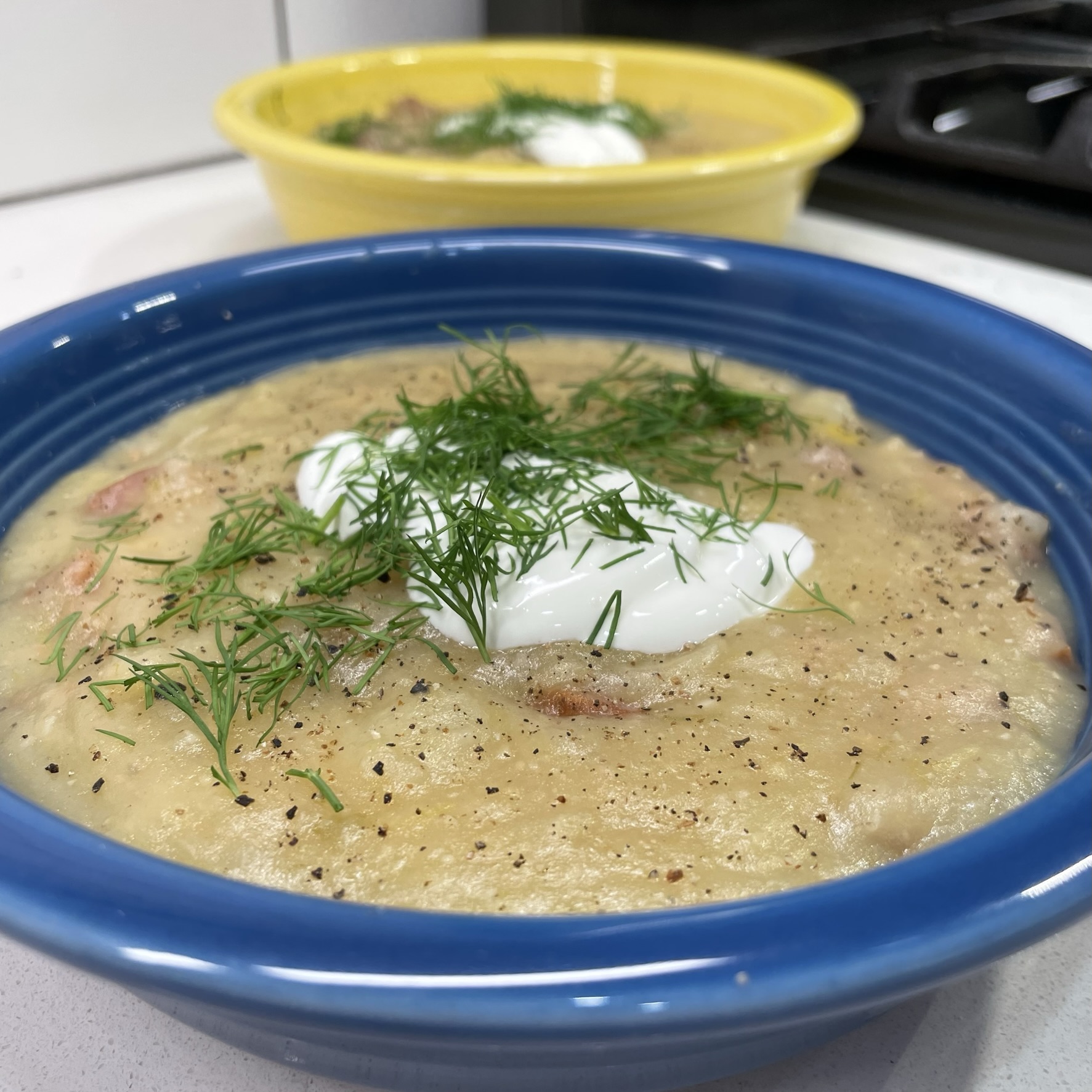
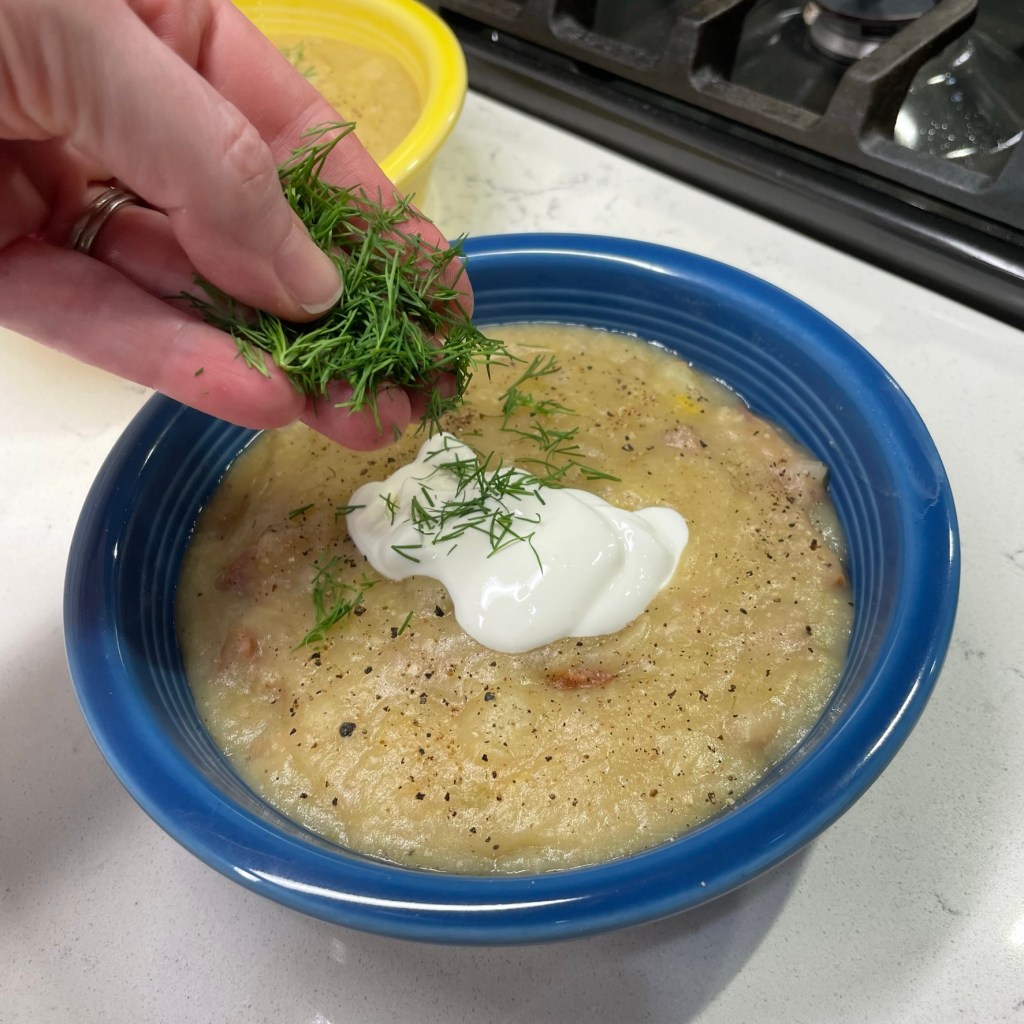
The sour cream and dill add a touch of freshness to this hearty, humble soup.

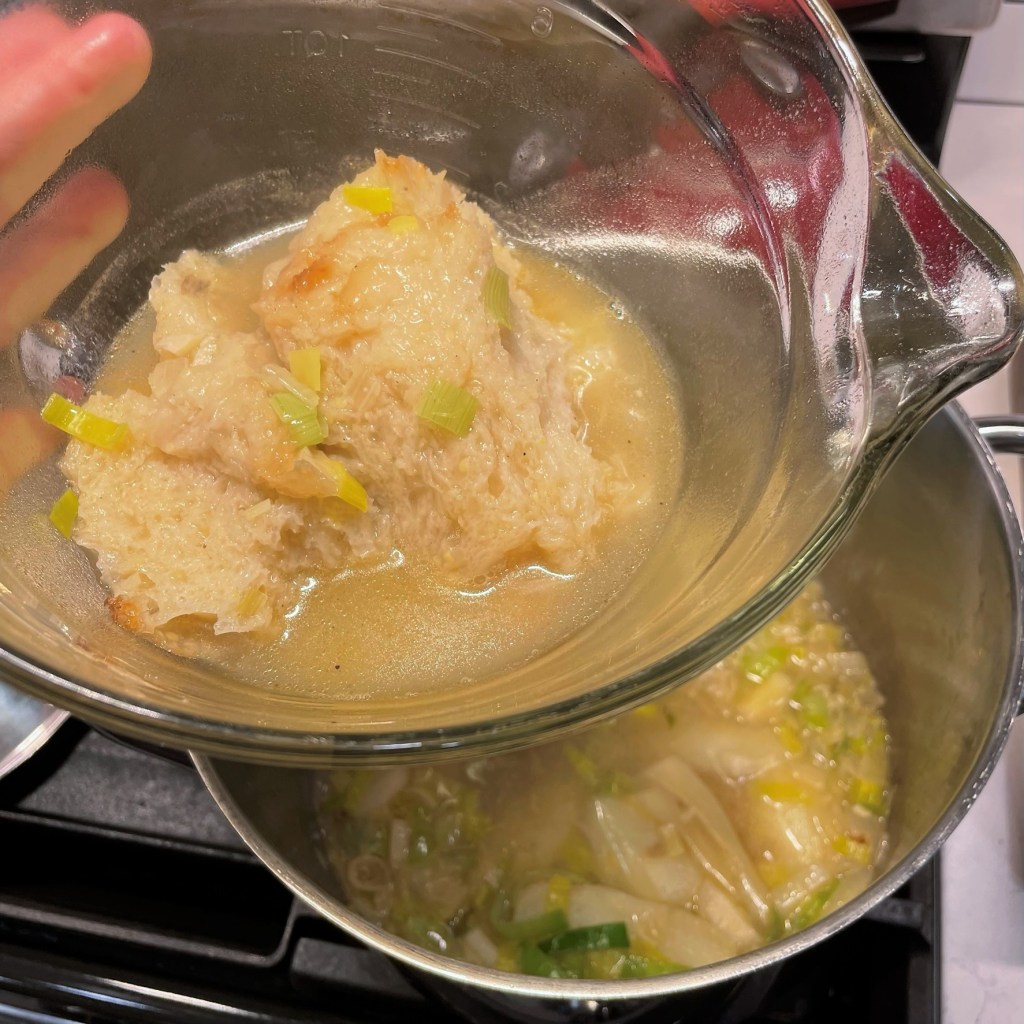
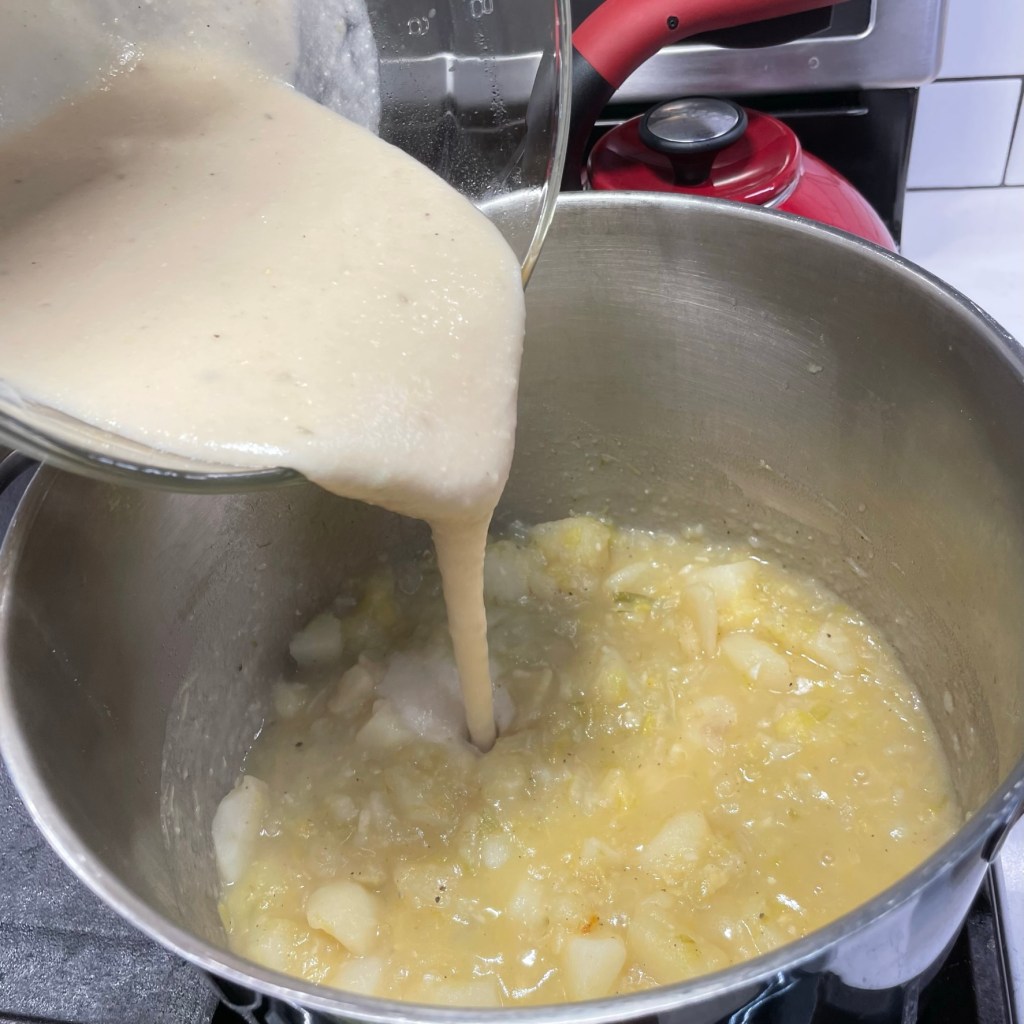
As always, my exploration into other cultures’ cuisine has taught me some lessons, and one thing about this soup surprised me. I have long assumed that Eastern European soups are “sour” because of fermentation or added vinegar (and sometimes they are), but this soup is both soured and thickened with a hefty chunk of sourdough bread, which I always happen to have on hand. This method of soaking and pureeing the bread was a genius move by the author, as it gave the soup a sturdy, almost creamy, texture, as well as a distinctive sour flavor. Always more to learn in the world of food, isn’t there?

My only regret is that I cannot make an enormous vessel of this soup to feed and comfort all of Ukraine, but I hope that somehow, sharing this experience will ripple across time and space to ensure the courageous people of that nation that they do not stand alone. 🇺🇦


Adapted from https://cooking.nytimes.com/recipes/1021711-white-borscht

Note: The original recipe linked above is only available to paid subscribers of New York Times Cooking (which I am), but my adaptation is very close to the original, except for the aforementioned substitutions and the fact that I halved the recipe for our family of two.


Ingredients

1 lb. smoked turkey kielbasa, cut into three or four pieces

6 cups filtered water

2 dried bay leaves

4 Tbsp. salted butter, divided

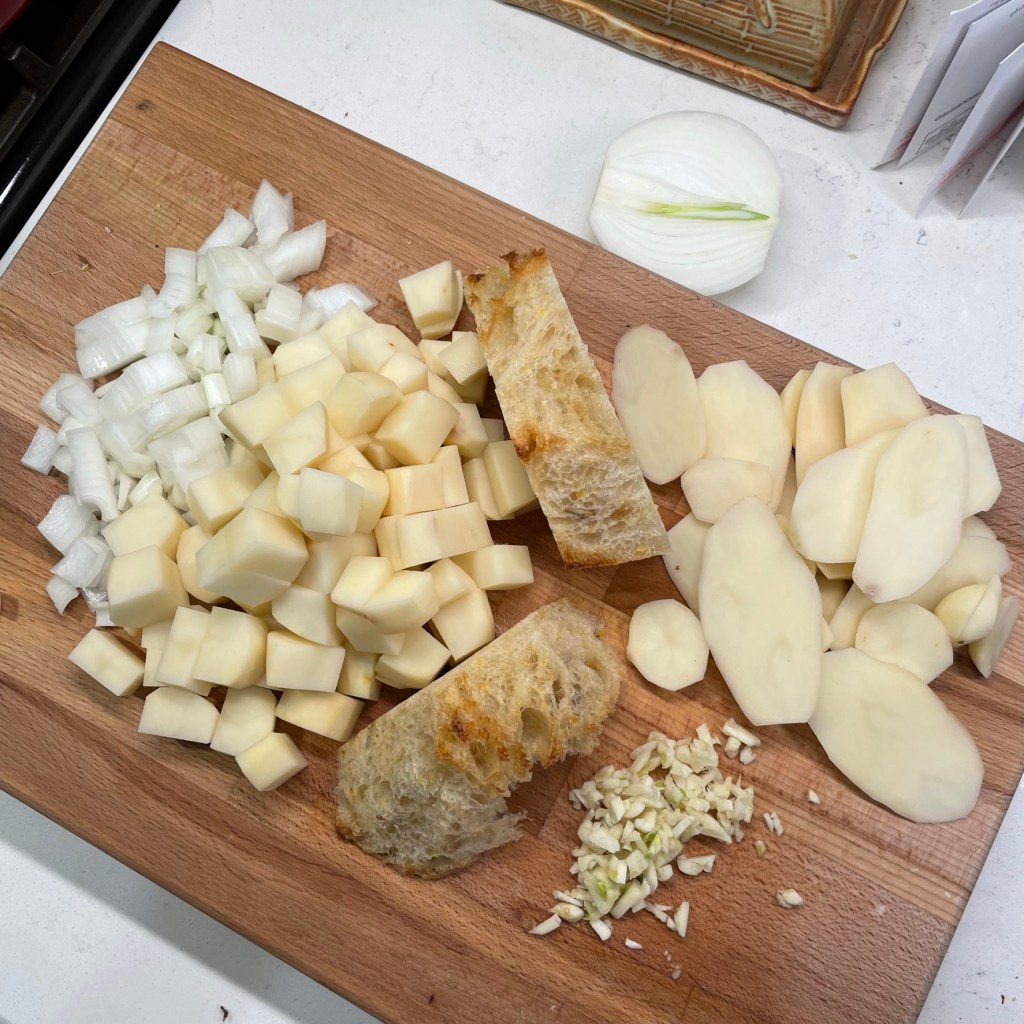
1 medium yellow onion, chopped

3 cloves garlic, smashed and minced

1 large leek, cleaned and cut into thin half-moon slices

Kosher salt and about 1 tsp. ground black pepper

A large piece of dense sourdough bread*, crusts trimmed (see notes)

1 1/2 lbs. russet potatoes, peeled

About 1 cup chicken or vegetable broth*

Sour cream and fresh dill for serving


*Notes

Note that real sourdough bread is made from a sourdough starter. Some grocery bakeries take a shortcut that embellishes yeast bread with citric acid, and it is not the same. If you don’t have sourdough bread, consider picking up a loaf from an authentic bakery or use a (seedless) rye. I confess that the sourdough loaf I had on hand was dotted with pumpkin seeds, but after pureeing, this did not have a bad effect on the finished borscht.

The recipe that inspired me did not call for broth, other than the one created by simmering the kielbasa, but in my first-attempt jitters, I accidentally simmered my soup longer than I should have and needed more liquid to keep it from becoming mashed potatoes. It isn’t a bad idea to have some broth at the ready for this purpose. I used a version of vegetable broth called “No-Chicken” broth, and it was perfect for making up the difference in liquid without affecting flavor.


Instructions

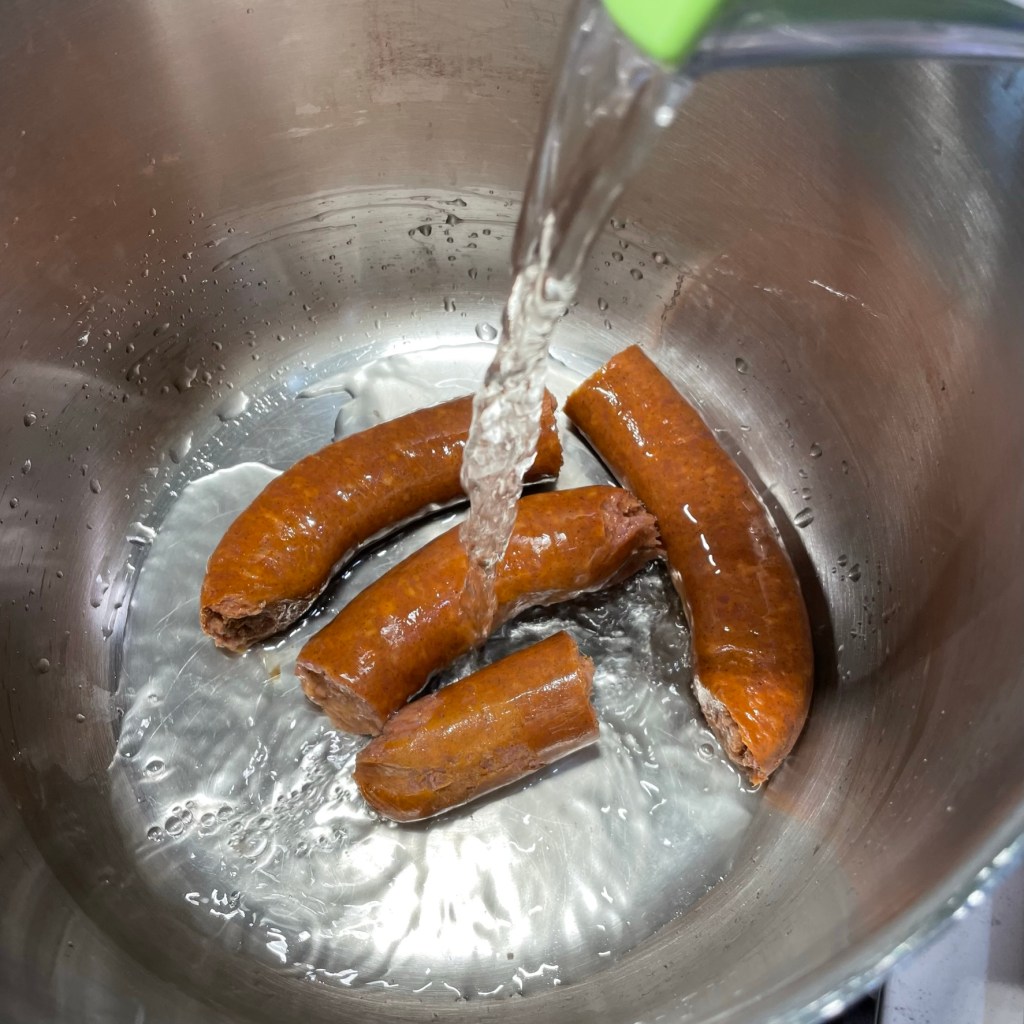
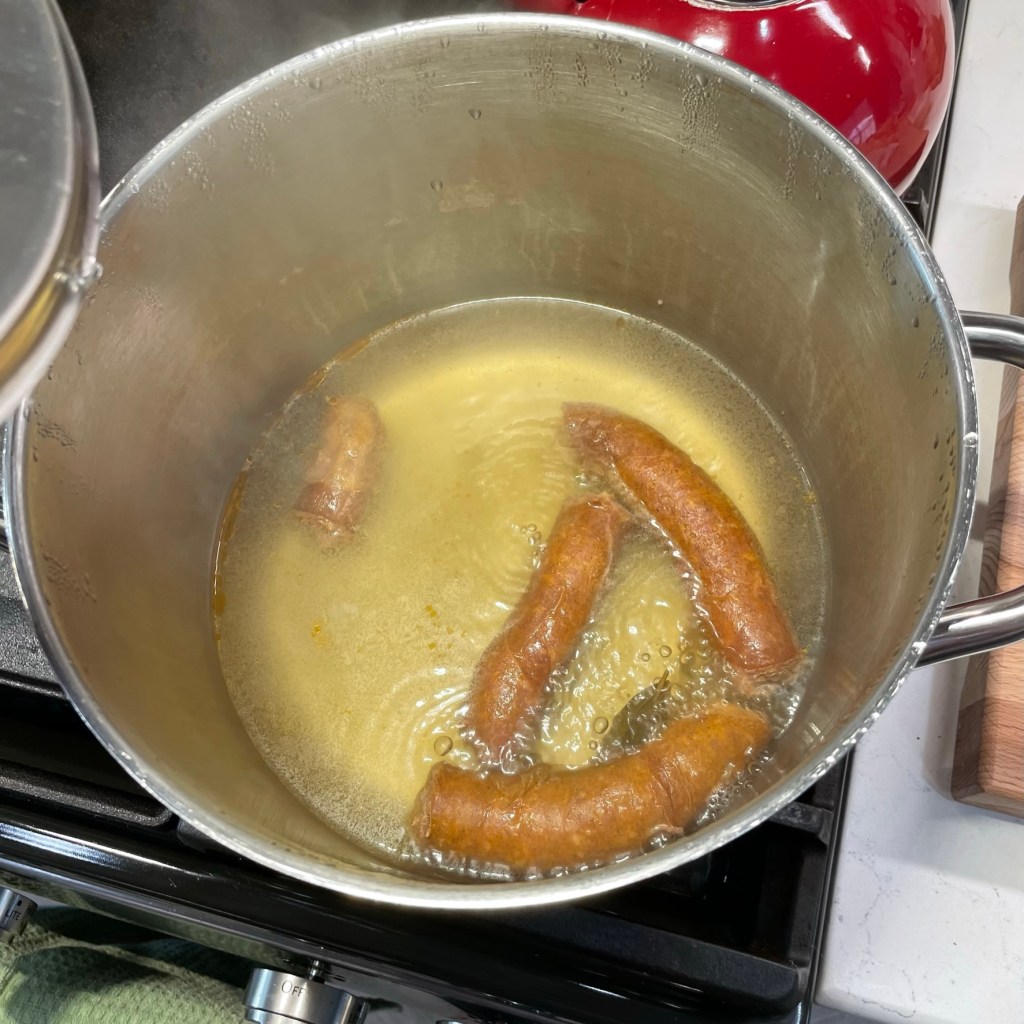
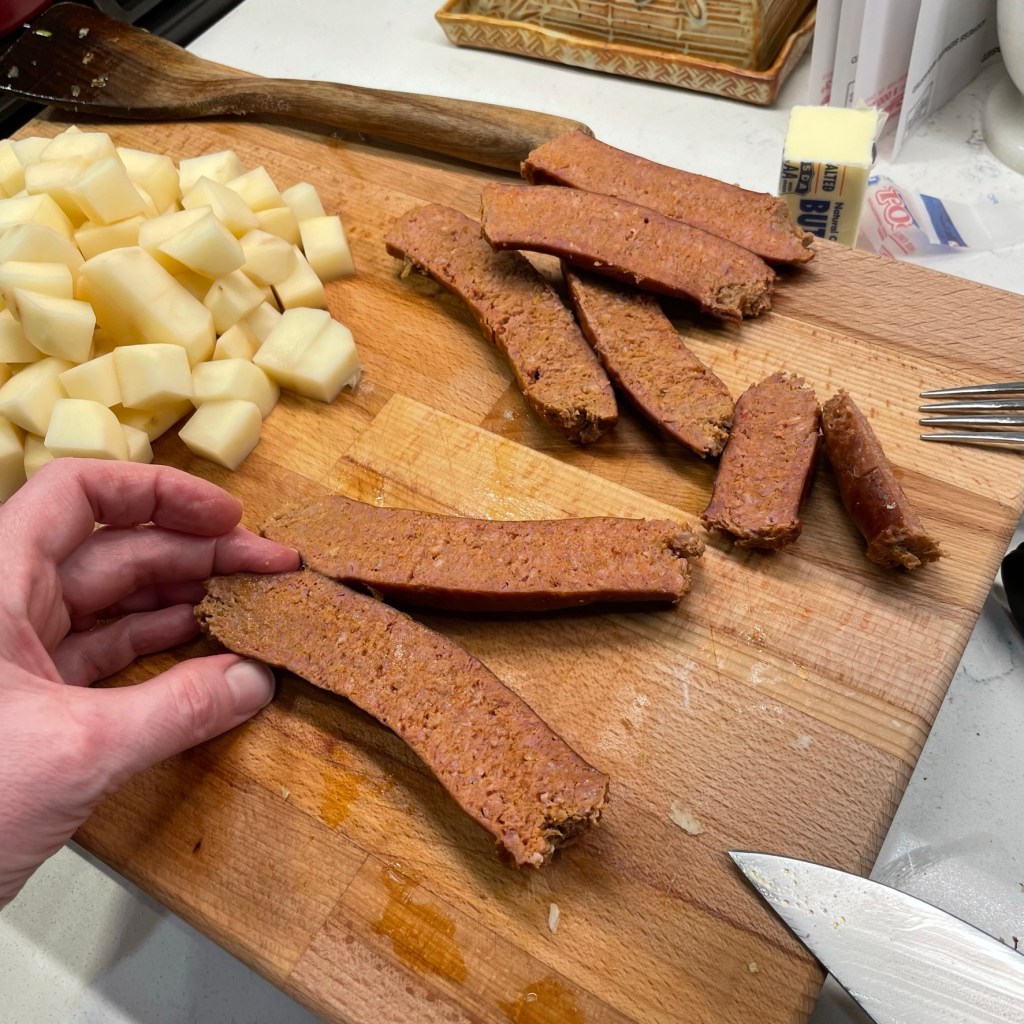
  1. Place the kielbasa chunks in a large soup pot and cover it with the filtered water. Add the bay leaves and bring to a boil, then reduce heat to a simmer for about 20 minutes.
  2. Prep the potatoes by cutting off the sides and ends, creating mostly flat sides on the potato. Keep the potato scraps in one pile and cube up the rest into a separate pile.
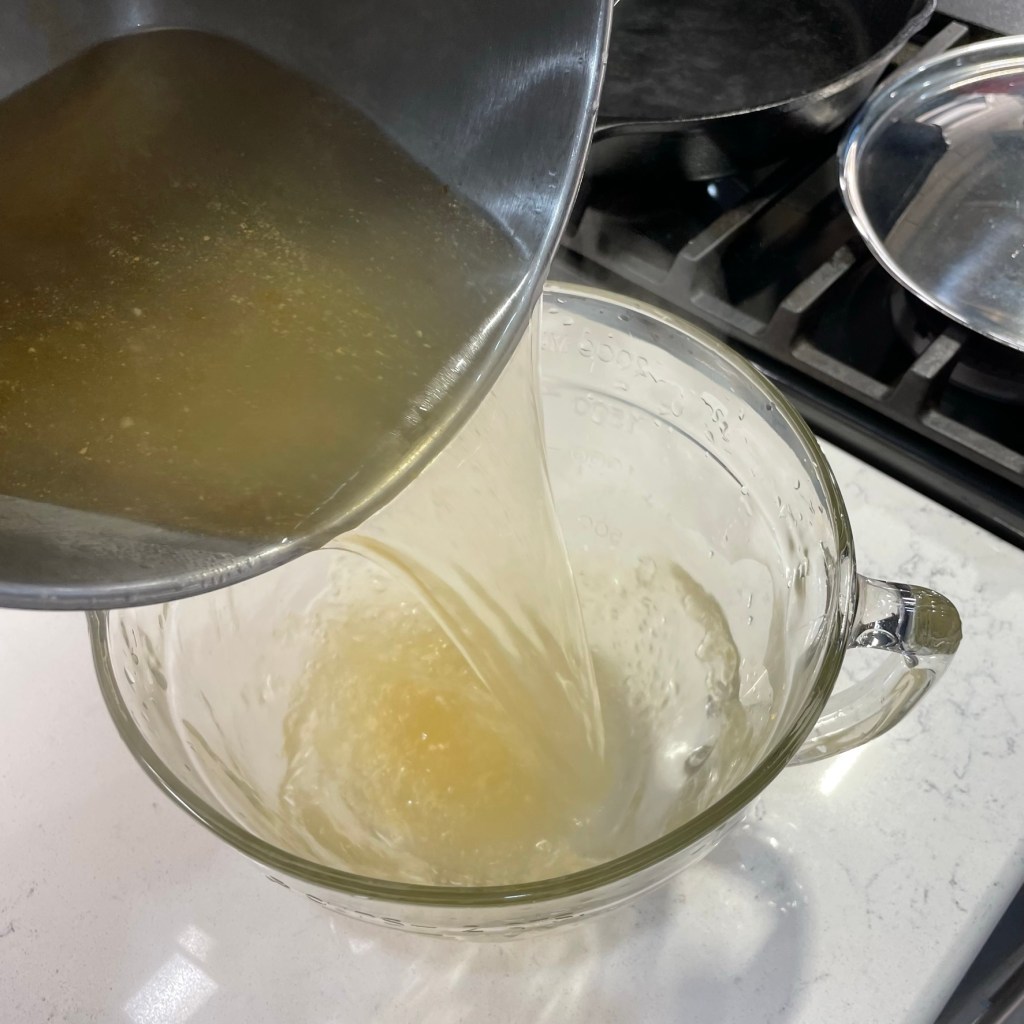
  3. After simmering, the kielbasa should be noticeably swollen, and small droplets of fat from the kielbasa will be swirled throughout the broth. Use tongs to transfer the kielbasa to a cutting board. Pour the broth into a large bowl or measuring pitcher.
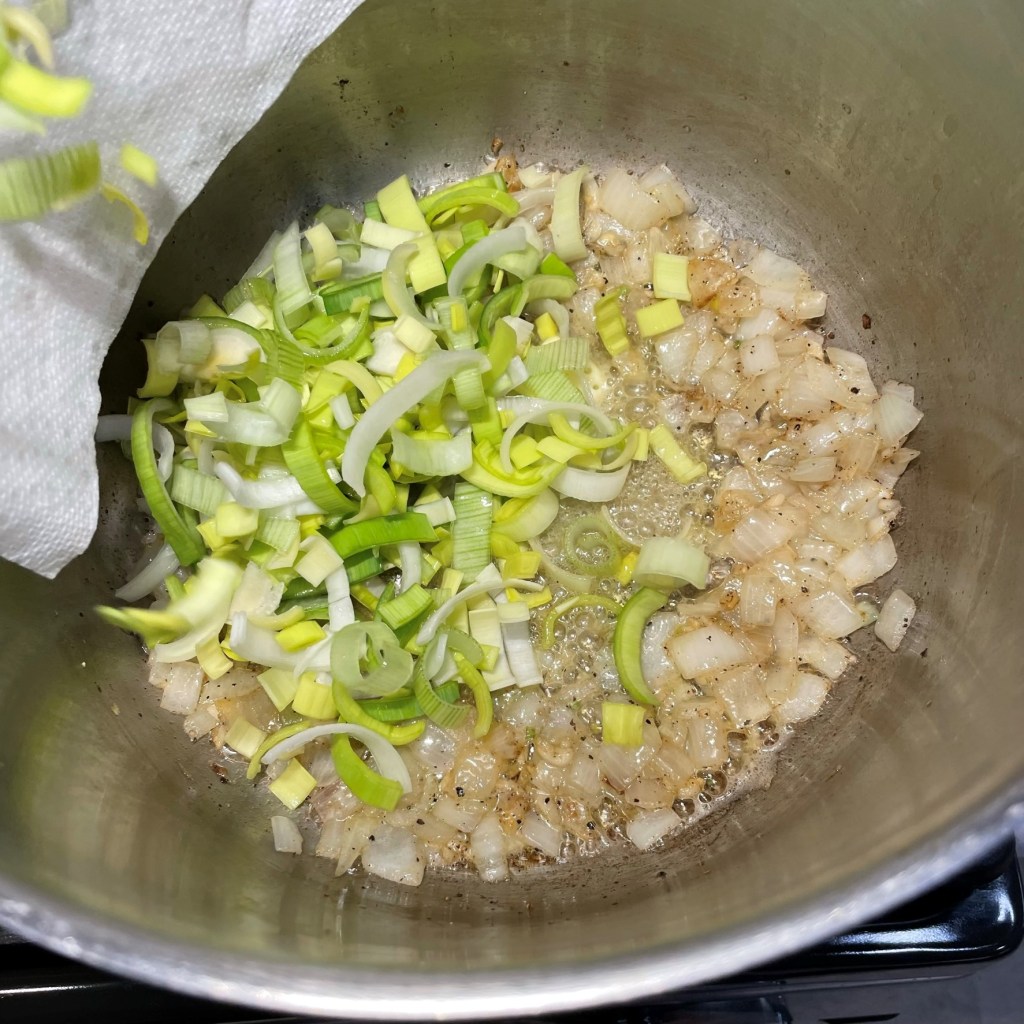
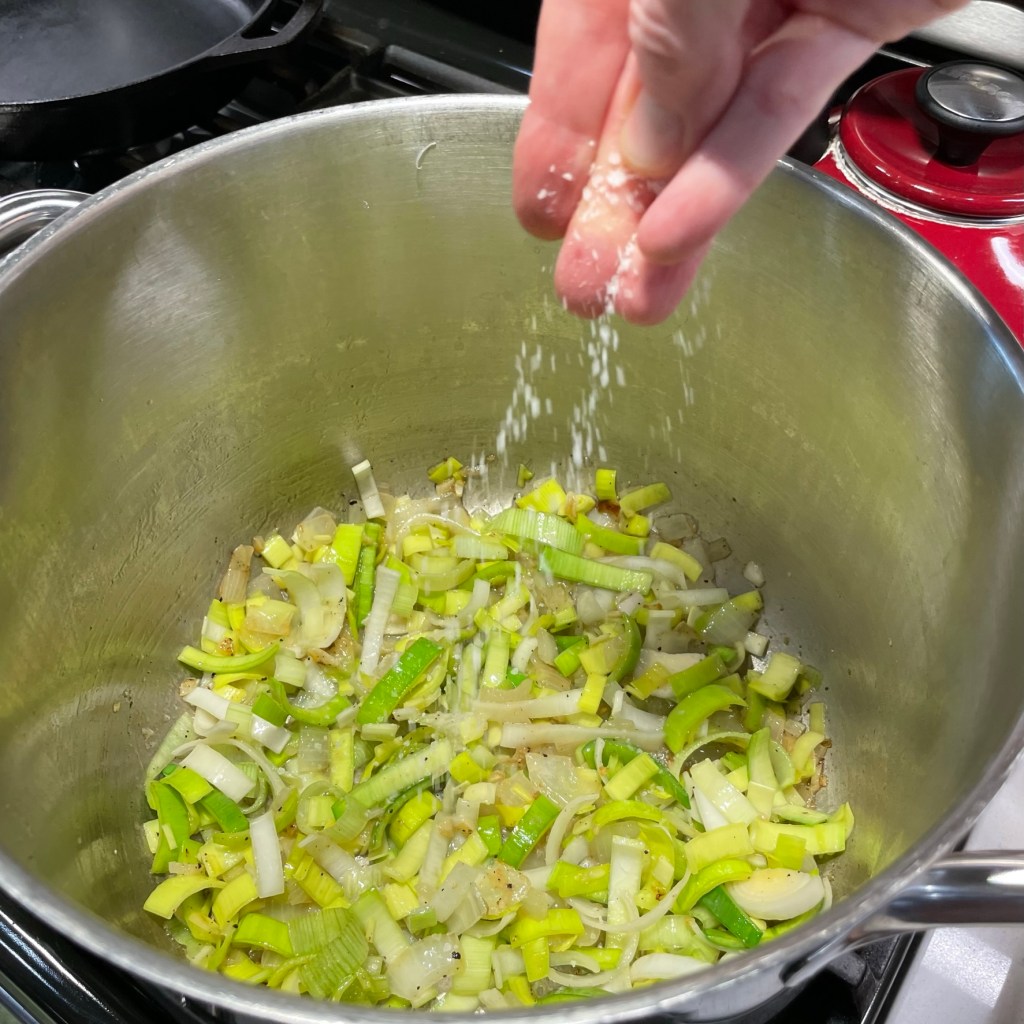
  4. Into the same pot, melt two tablespoons of the butter and sauté the yellow onions and garlic with salt and pepper for about five minutes, until tender. Add the remaining butter and leeks to the pot and sauté two more minutes, until those are also tender.
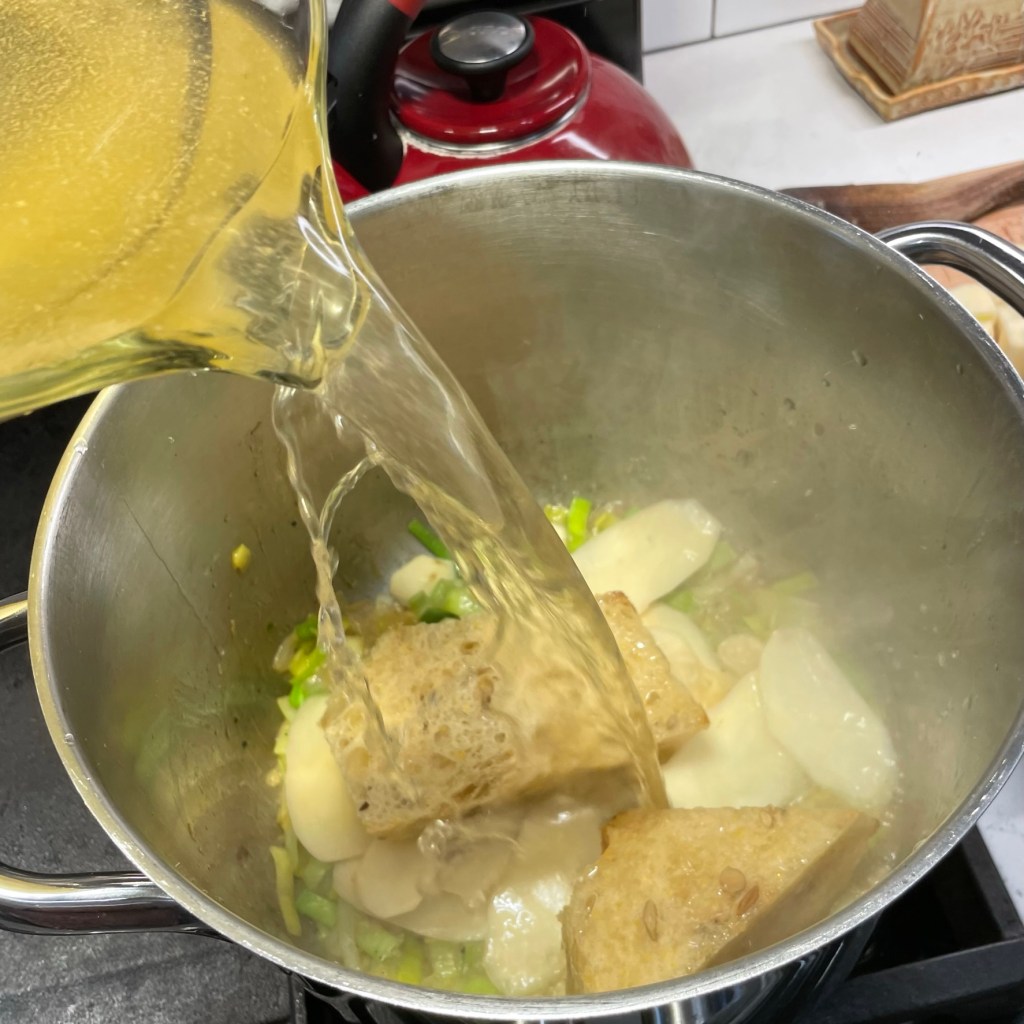
  5. Add the scraps of potato and the large chunks of sourdough bread to the pot. Pour about 2/3 of the reserved broth into the pot and simmer until the bread looks completely bloated, about 10 minutes. Use a large, slotted spoon or tongs to pull out the sopping bread into the measuring pitcher with the remaining reserved broth. It’s OK if some of the leeks and onions tag along. Set the pitcher aside to cool for a few minutes.
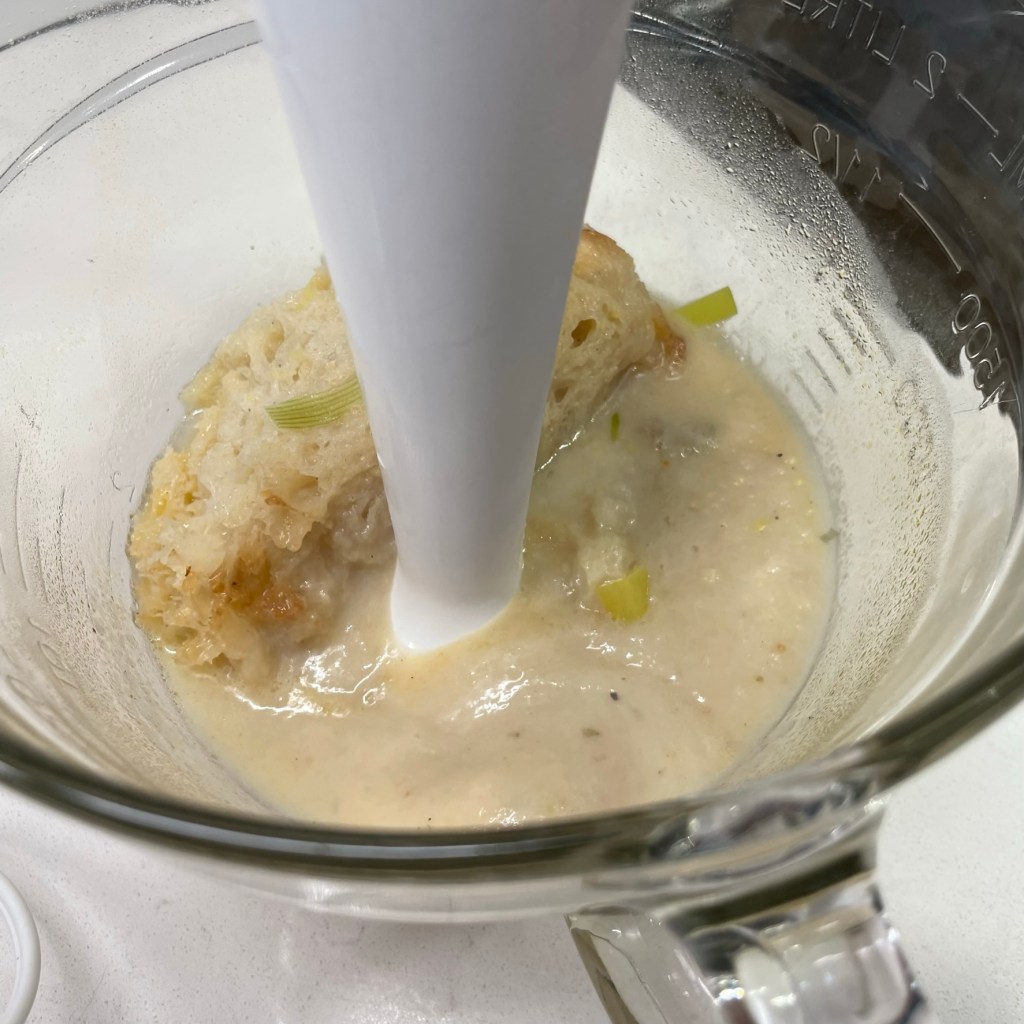
  6. Add the potato cubes to the pot, along with enough broth or water to just cover them. Heat to a boil and then simmer for about 15 minutes until potatoes are slightly tender. While that simmers, use an immersion blender to puree the sopping sourdough with the liquid in the bowl or pitcher.
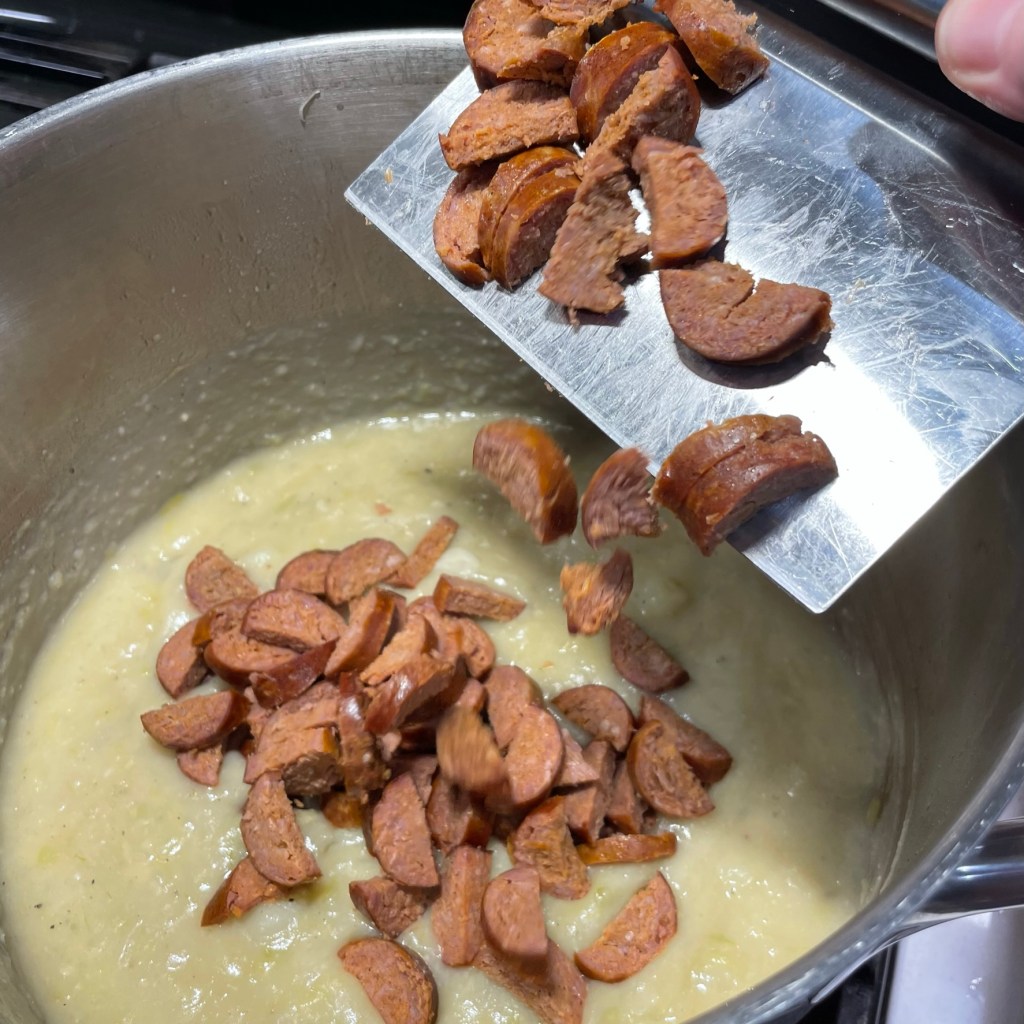
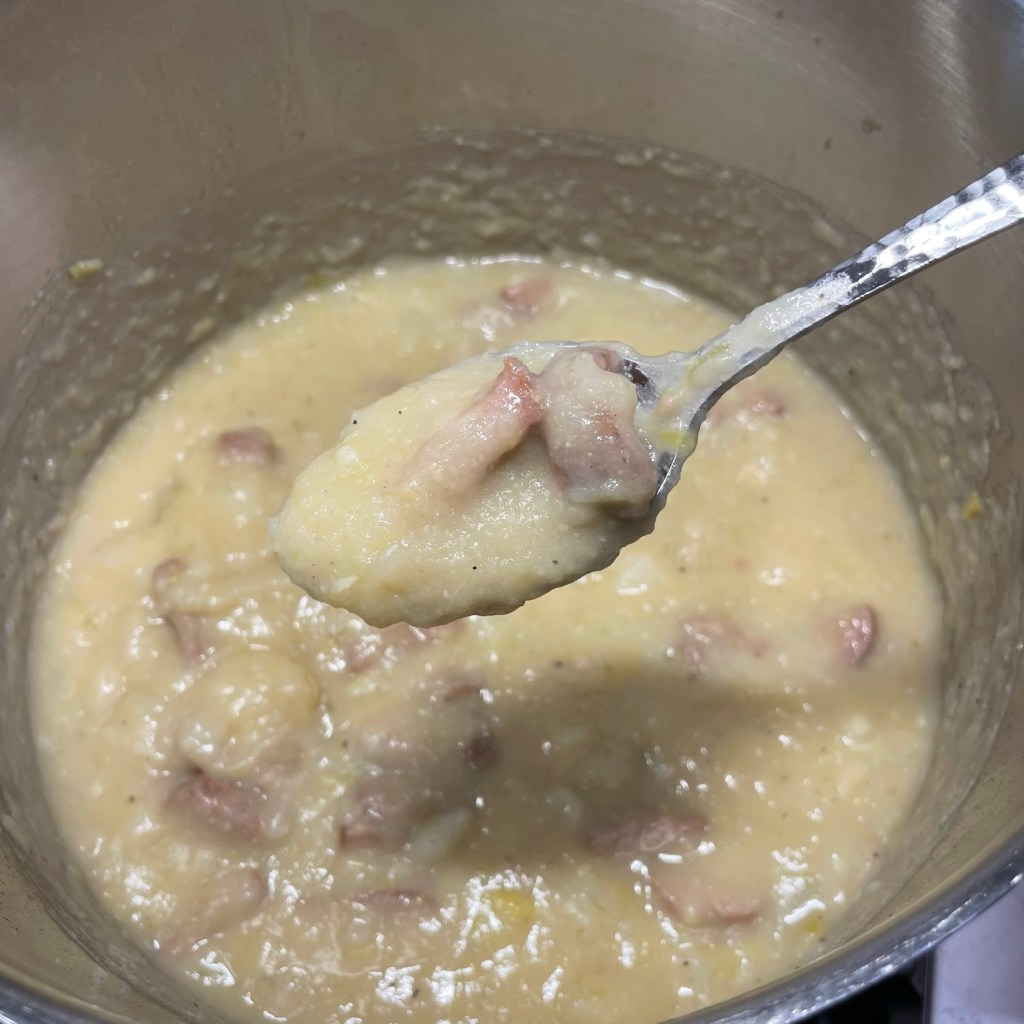
  7. Stir the puree mixture back into the pot, along with the kielbasa. Adjust salt and pepper to taste. Simmer just until heated through, as continued cooking will cause the potatoes to turn mushy.
  8. Serve the white borscht with a dollop of sour cream and a sprinkling of fresh dill.


Easy, Creamy Potato Soup

As far as I am concerned, the best thing about winter is the soup. When the weather is cold, damp or just generally crummy, a piping hot mug of soup is like a reset button for my winter-weary soul. And you know what makes soup even better? An easy recipe that doesn’t take all day, uses the simplest of ingredients (so I don’t have to run to the store to make it), and can be customized with almost any extra flavors one could imagine. This creamy potato soup is ticking all those boxes for me.

Soup is one of my favorite comfort foods ever, and that probably dates back to days that I stayed home sick from school. On those rare occasions, I would get dropped off at my grandmother’s house, where I’d spend the day napping to the soothing sound of her cuckoo clock, sipping some variety of last-minute, homemade soup and watching TV under a soft afghan from the big, upholstered wing-back chair in her den. My Gram could whip up a soup from thin air, it seemed, and to this day, a “what’s-in-the-fridge” soup is my favorite kind. Is it possible that I may have feigned illness on occasion, just to enjoy that kind of day? Why, yes, that is certainly possible. Sometimes a kid just needs a little extra comfort—the kind only a grandma and a warm cup of soup can deliver.

I have outgrown the days of pretending to be sick, but I still yearn for the cozy comfort of a warm mug of soup, especially when gloomy weather has me down. I’ll take any kind of soup; chowders, stews, bisques, broth with noodles, minestrone—they are all on equal footing for me. My husband loves soup, too, but his preference is specifically for cream-style soups, so this one was a double win at our house.

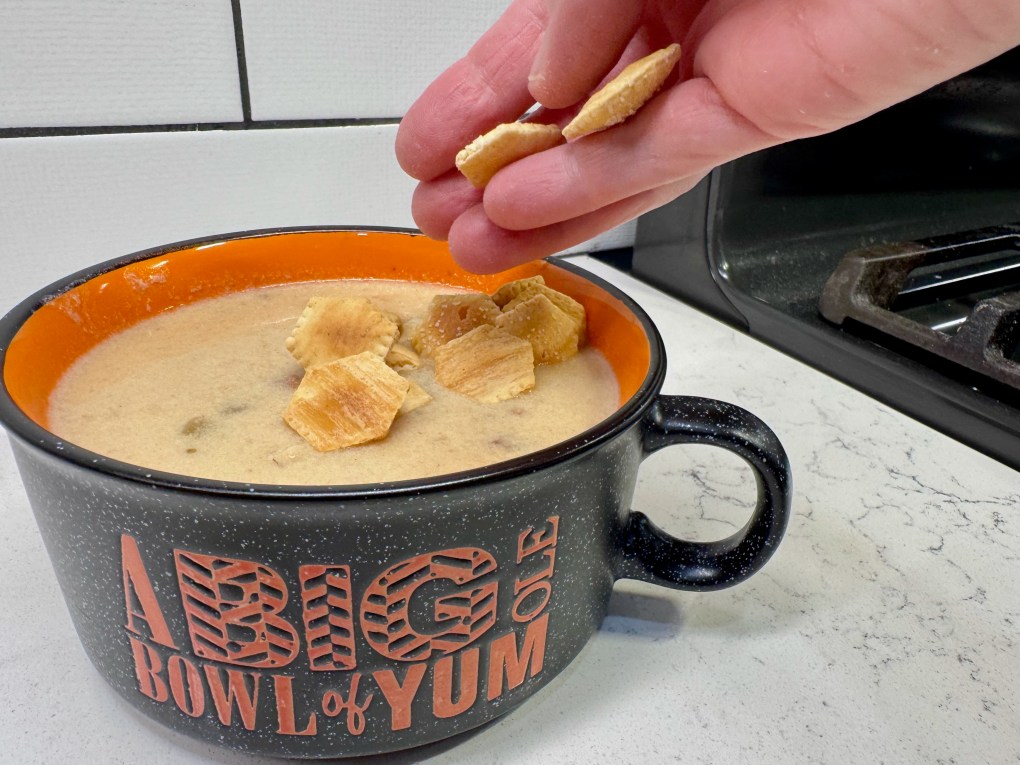
Sour cream, shredded cheddar, bacon and chives makes this easy soup a satisfying meal!

We had fun dressing up our creamy potato soup like a loaded baked potato—with sour cream, chives, cheddar cheese and crispy bacon pieces on top. But it would be very easy to keep the base of the soup and swap in different enhancers, such as roasted broccoli florets, sautéed mushrooms, frozen corn, cubes of ham or whatever else takes you to your happy place.

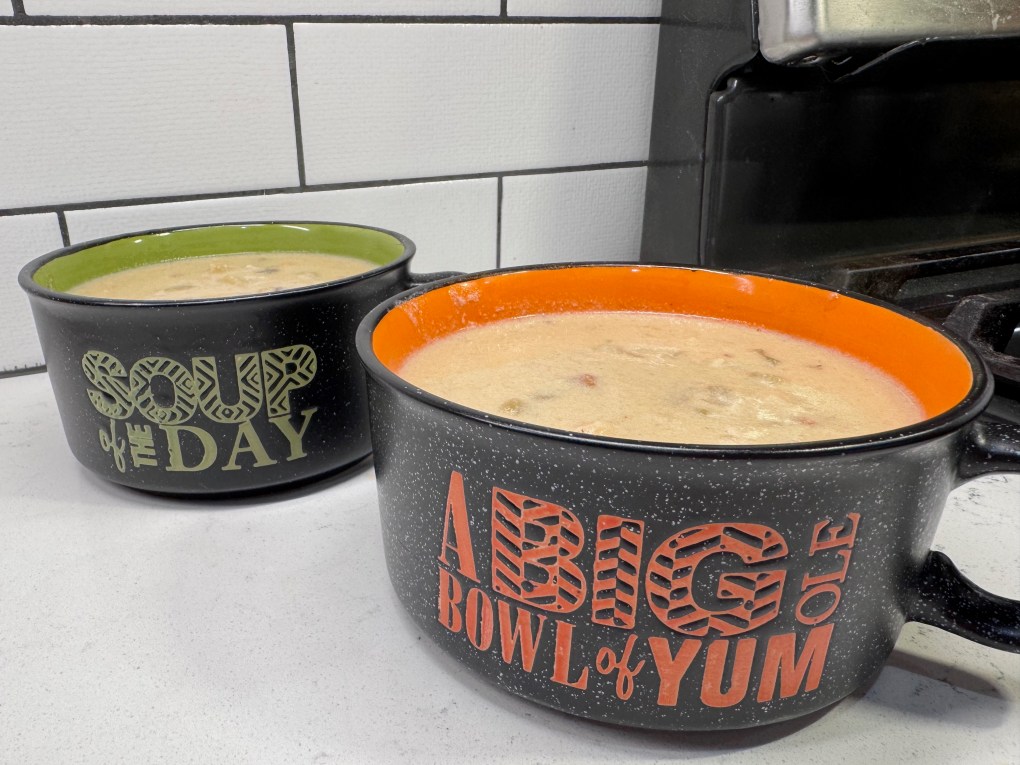
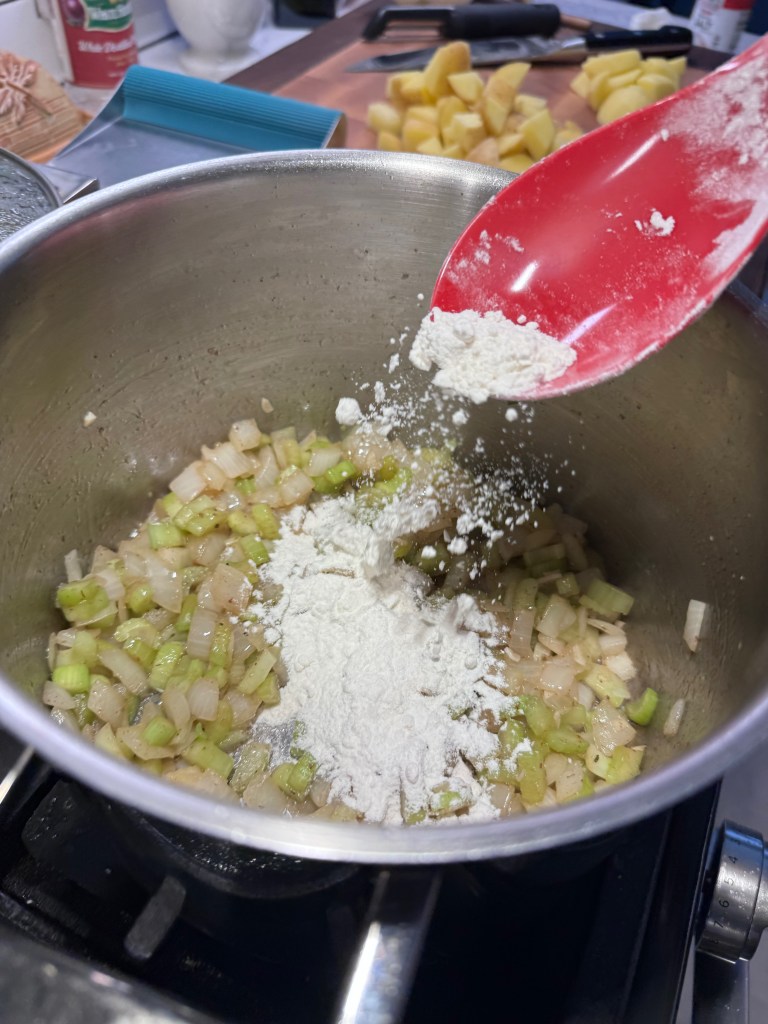
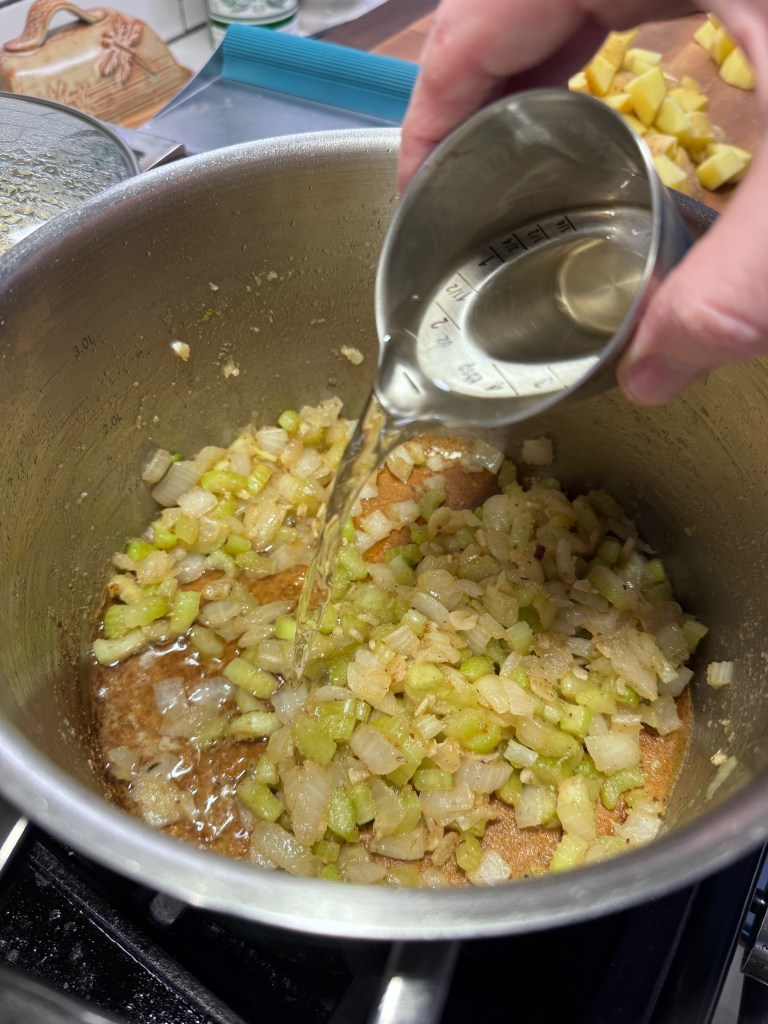
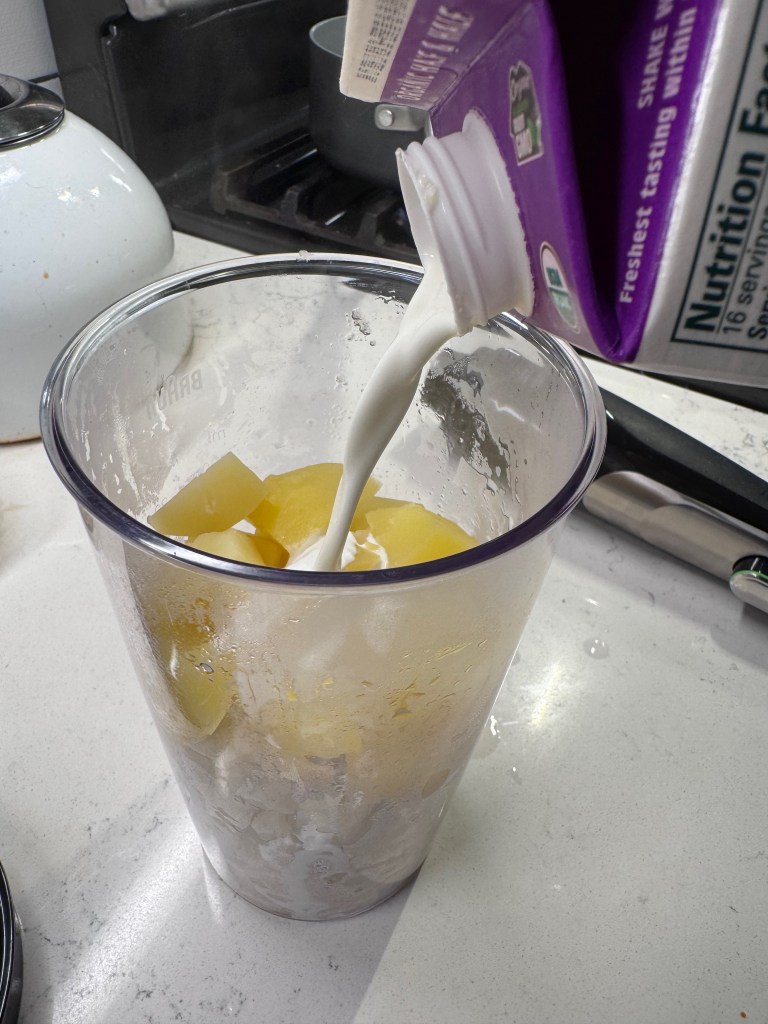
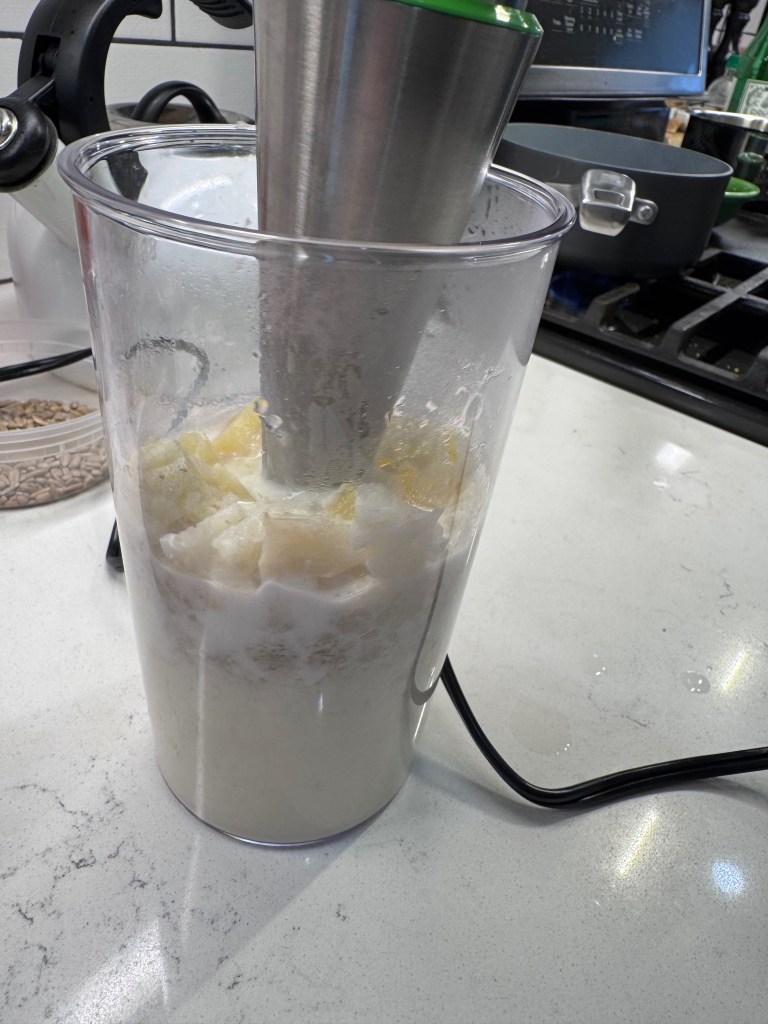
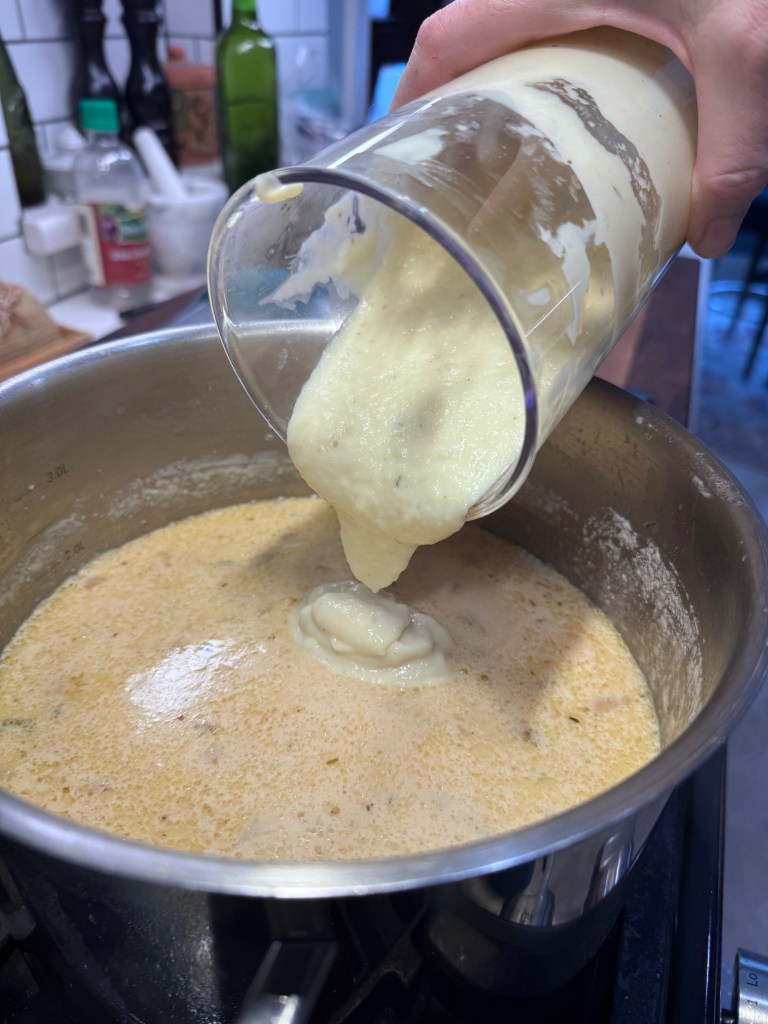
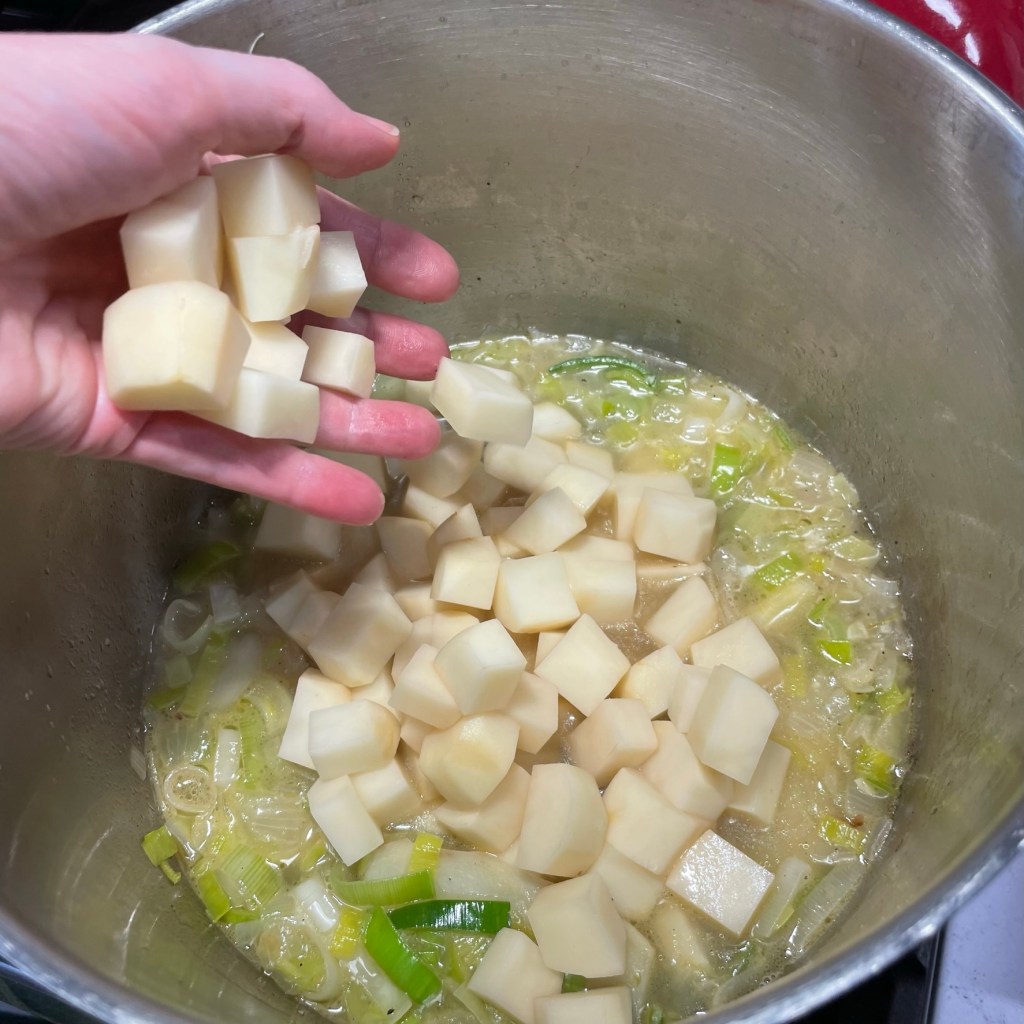
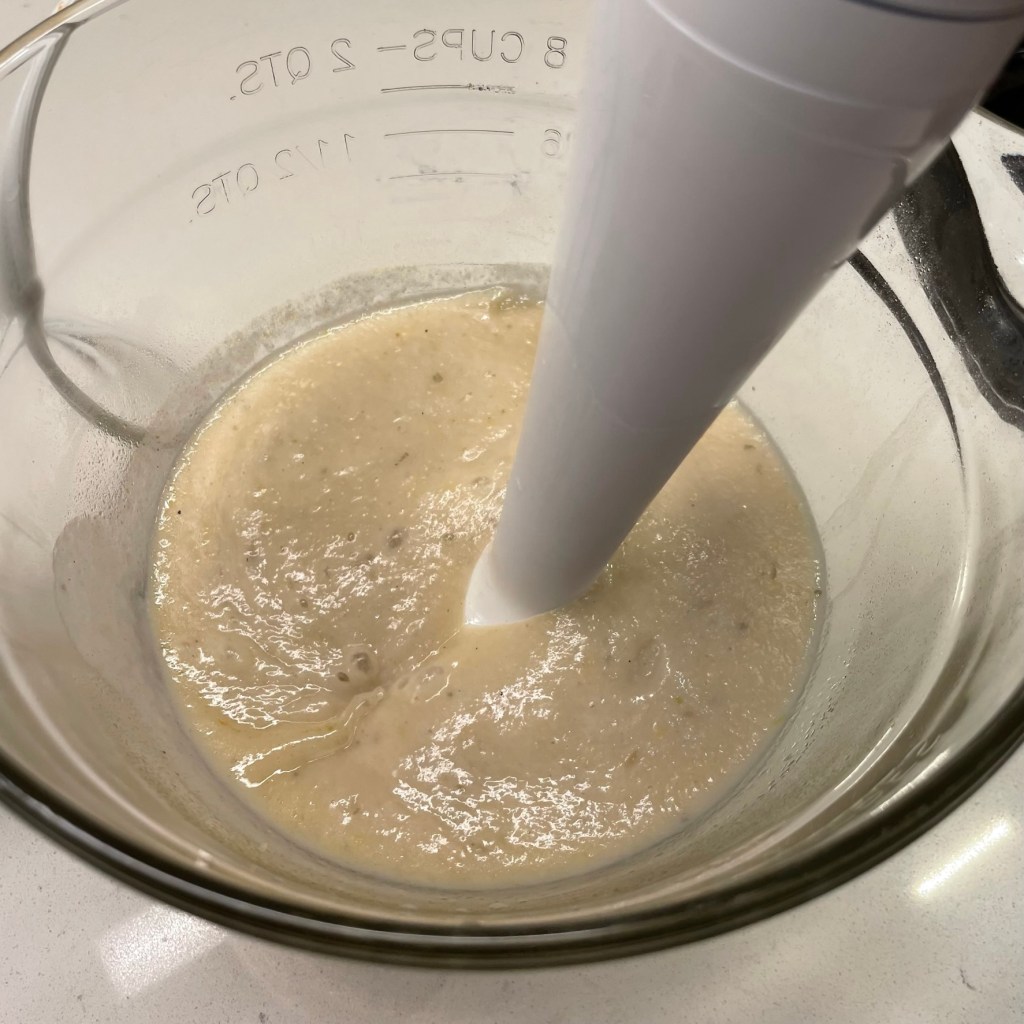
This potato soup is very easy to make, and despite the ultra-creamy, silky appearance, it has no heavy cream whatsoever. Buttery Yukon gold potatoes were the key element for my recipe, but you could use any combination of gold, red or russet potatoes, as long as some of them will hold their shape after simmering. Peel or don’t—whatever works for you. I thickened the soup with a slight amount of roux, made from the drippings I had from crisping up the bacon (but you could swap in butter or olive oil), and a combination of low-sodium vegetable broth and milk, then I used my trusty immersion blender to puree it halfway. It was every bit as luxurious and comforting as a cream-based soup, but with far less guilt!

We still have almost four weeks ’til the official arrival of Spring. As luck would have it, there is at least a pound of potatoes remaining in the kitchen, so I’m pretty sure this one will be on the menu again by the weekend, just in time for another round of colder temperatures.


This recipe makes 4 entrée servings or 6 appetizer servings

Ingredients

3 Tbsp. bacon drippings, butter or olive oil

1/2 large onion (about 1 cup), chopped

3 ribs celery hearts, trimmed and chopped

Salt and pepper

2 Tbsp. all-purpose flour (gluten-free 1:1 flour works for this also)

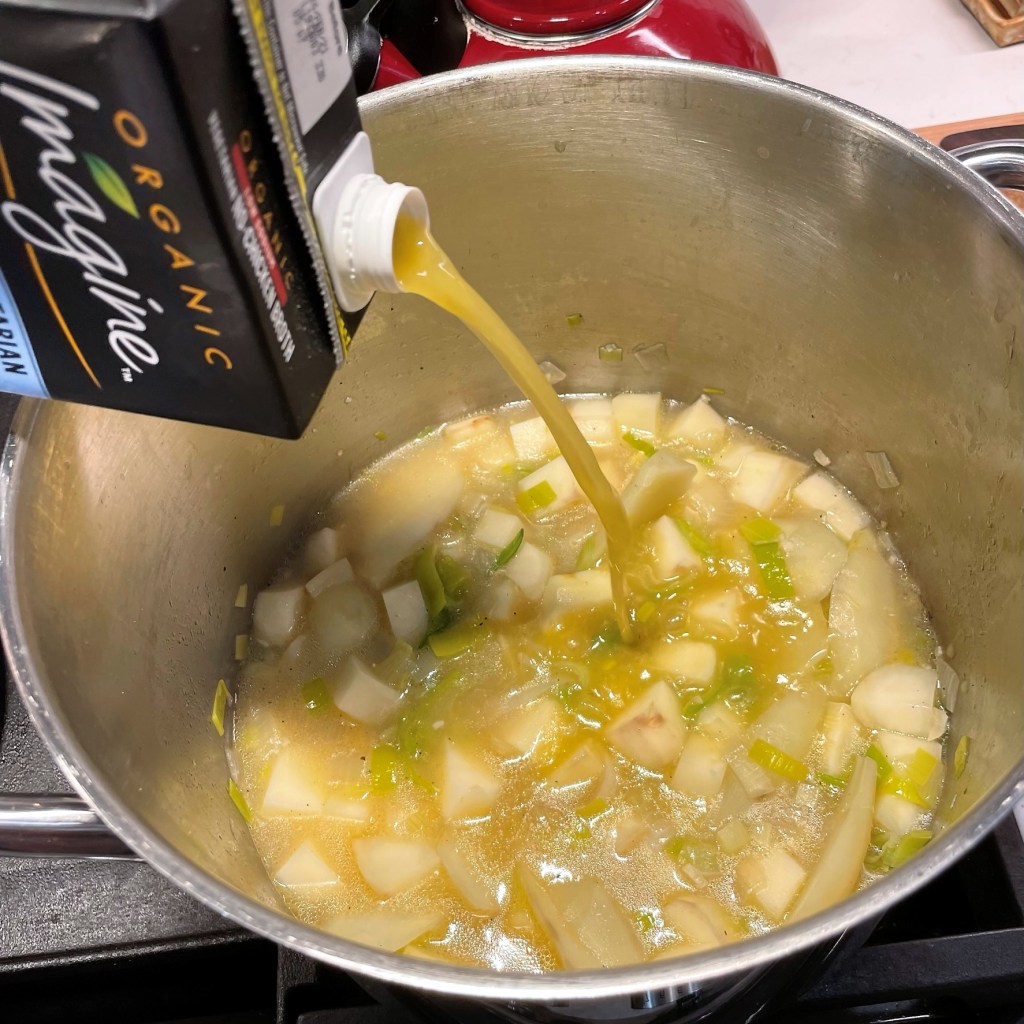
2 cups low-sodium vegetable broth* (see notes)

2 cups milk*

About 1/2 tsp. ground cumin

About 1 lb. Yukon gold potatoes, scrubbed and cubed (peel if you wish)

Toppings and stir-ins of your choice


*Notes

Vegetable broths vary widely in ingredients; for best results, choose a broth that does not contain tomatoes. The brand I like for this is Imagine vegetarian “no-chicken” broth. It has a rich golden color and seasonings that are very reminiscent of chicken broth.


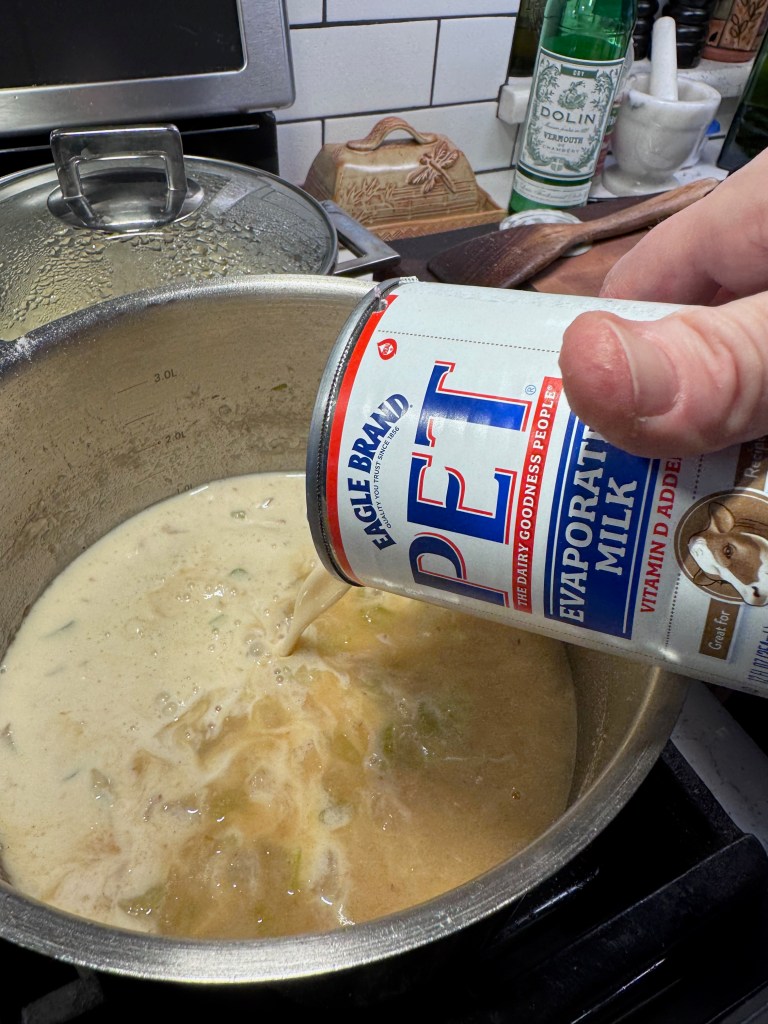
I used a combination of whole milk and canned evaporated milk in my recipe, primarily because I only had 1 1/2 cups of fresh milk. Feel free to substitute 2% or skim milk if you’d like; the flavor will be less rich overall, but the roux will still give the soup a thick and creamy consistency, and you can also achieve creaminess with the immersion blender technique.


Instructions

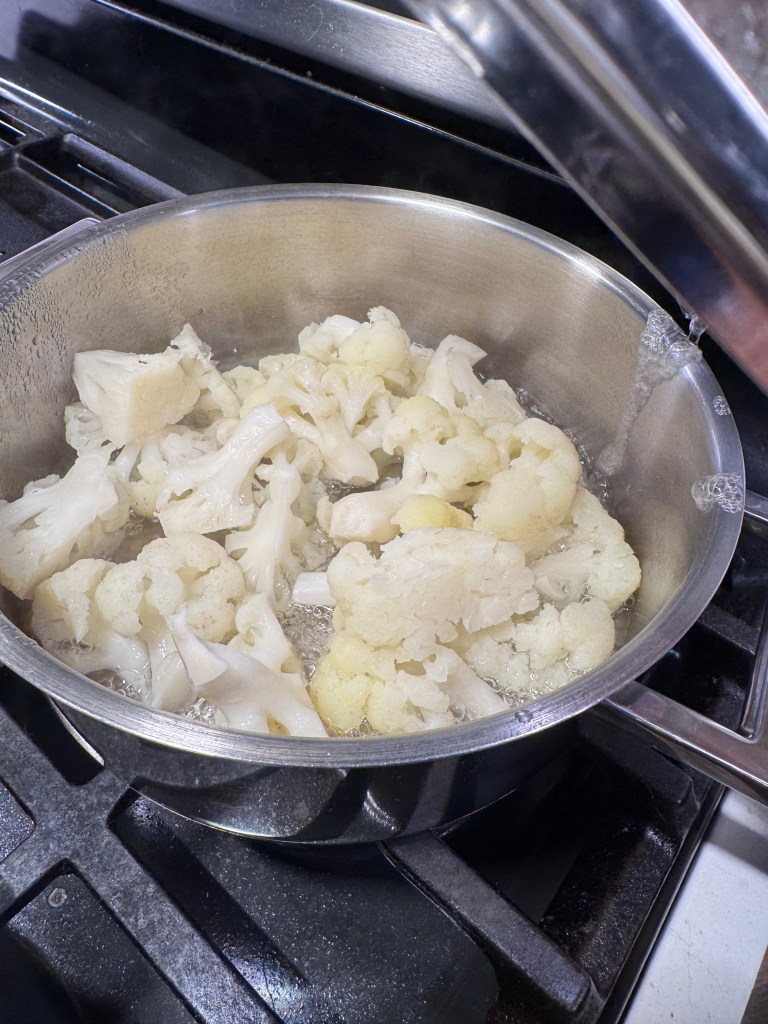
Step up to the stove with me and I’ll walk you through this easy recipe. Keep scrolling for a downloadable recipe that you can save or print for a rainy, gloomy day. 🙂

Old Man Winter, you are no match for this soup.